Pages Menu
RssFacebook
Categories Menu

Posted by on Jul 31, 2009

Following in the Footsteps of St. Ignatius Loyola

Following in the Footsteps of St. Ignatius Loyola

Company - Summer 2009 Cover

Company - Summer 2009 Cover

On the feast of St. Ignatius Loyola, founder of the Society of Jesus, AKA “The Jesuits,” it seems fitting to look at one of the many ways the men (and women) who have come after him and his first group of followers have continued to serve God’s people – bringing the fruits of their experience of God’s presence in our world (a contemplative experience) into the messiness of everyday active life. This approach has been called “contemplation in action” and is a fundamental of Ignatian spirituality.

Ignatius and his friends, like many young men of his day, thought it would be a great idea to go to the Holy Land and convert all to Christianity. They had taken the standard vows of poverty, chastity and obedience that are common in religious orders. But they also took a vow to do whatever the Pope needed them to do. They suggested to the him that they go to the Holy Land on this mission and he turned down the offer. Instead, he asked them to preach and teach in Europe. It was a time of much upheaval in the Church. The Reformation/Protestant Revolution was in full swing. The Church was divided. Much of what we would call faith education was needed, along with basic education in reading, writing, mathematics and the other classical subjects. So the Jesuits got started in the education business and have continued their schools and universities to this day!

Then as now, people with money can afford excellent schooling for their children. People with fewer resources have fewer choices. Recently, members of various provinces of the Society in the United States have embarked on a program to provide high quality Catholic education for children of families whose income is under 75 percent of the median per-capita income of their city. These children would not ordinarily have the option of attending a private high school or even dreaming of attending college. Yet in 22 schools around the country, the dream is being realized.

The schools started in 1996 with Cristo Rey Jesuit High School in Chicago. The great challenge for any private school is how to fund the costs of providing the educational program. How can the faculty be paid? Where will classes be offered? How can the rent be paid? At Cristo Rey, a unique solution was proposed. Corporate sponsors would provide entry level pay for students that would cover about 70% of tuition. Four students would share each job – each working one day per week. The other days the student would attend classes. Class days would be a bit longer than normal and the students would have a longer school year, but they would get a full year of education that way. Families that could afford to pay some tuition would do so. Others would receive additional financial aid to make their education possible. Students would also receive intensive training in the basics of functioning in the corporate world during the summer before their first year in the school, so they could be successful in their work. The combination of academics and real-world work experience in meaningful jobs has proven to be a key to the success of the school. It has been so successful, in fact, that other schools have been opened in other cities.

In 2008-09 the Cristo Rey Network  included 22 schools. Another two are opening this fall. In cities across the country, young men and women who would not have had much of a chance even to finish high school, are not only graduating from high school, but most of them are going on to colleges and universities. From there they are going out into the corporate world and entering successful careers in business, science, education, etc. The Ignatian charism (vision) of education of all students, both rich and poor, continues to bear fruit in our day.

Cristo Rey’s story has been told in a new book, More than a Dream: How One School’s Vision is Changing the World. 

Cristo Rey and other schools in the network are also featured in the Summer 2009 issue of the Jesuit magazine, Company, the world of Jesuits and their friends. The Summer issue is not online as of this date, but it should be there within a few weeks.

A.M.D.G.

Read More

Posted by on Jul 30, 2009

Having a Martha-like day on the Feast of St. Martha – July 29

Having a Martha-like day on the Feast of St. Martha – July 29

Martha, Mary and Jesus

Martha, Mary and Jesus

I’ve spent the feast of St. Martha doing a lot of very Martha-like things. You’ll remember the story of the day Jesus came to visit Martha, her sister Mary, and their brother Lazarus. Jesus always traveled with something of an entourage in those days. There were the apostles, of course. But there were also many others who followed along the way or came out to see Him as He passed through their towns. When He came to visit, it was a big deal.

The role of women in Martha’s day was not unlike that of today in some ways. Women were responsible for making sure there was food and drink prepared for the guests. Martha took her role seriously and set out to make sure all the guests were treated well and had what they needed. I can understand her actions. I’ve often found myself doing the same thing – whether in my own home or in another’s. I’m an oldest child and a daughter. I learned very early in life to look out for the needs of others, whether younger siblings or visitors to our home. Yet much to Martha’s dismany (and sometimes to my own in a similar situation), her sister Mary wasn’t helping. Mary was sitting with the guests, listening to Jesus.

Martha complained to Jesus about Mary’s actions and Jesus’ reply must have astounded her and any others who heard it. “Marth, Martha. You are anxious and worried about many things. There is need of only one thing.  Mary has chosen the better part and it will not be taken from her.” (Lk 10: 38-42)

Throughout history, we’ve read this passage and debates have raged interiorly and publicly about the relative choices and positions of the two women and women in general. That’s not the theme of this post. Something else struck me this week. There’s another side to Martha.

We often get stuck on the image of Martha as anxious and concerned about many things. Yet another side of Martha appears in the story of the raising of Lazarus. In that story, Jesus arrives in Bethany after His friend has died and been in the tomb for three days. Lazarus is well and truly officially dead. Martha goes out to meet Jesus on the road. She chides Him for not arriving in time to save Lazarus from death. She also tells Him of her belief that God will do whatever He asks. She professes her belief in life after death and then makes a great statement of faith. “I believe that you are the Christ, the Son of God, he who is coming into the world.” (Jn 11:27) She makes this statement before Jesus raises Lazarus from death. Before His own death and resurrection. Martha – the woman worried about many things – is also a woman of great faith.

So, as I spent my day caring for a baby grandson, cooking, doing laundry, and squeezing in the bookkeeping for my household and business, I tried also to remember to be open to the Lord’s coming in all things. And at 11 pm, while the baby played happily after a too long nap, I penned these words!

Read More

Posted by on Jul 25, 2009

Theologika’s Birthday

Today, July 25, is the second  anniversary of Theologika’s blog. Two years ago we began this great adventure of researching and writing on topics we hope are of interest to our readers around the world. It’s been fun to learn about the lives of saints – both new to us and old friends from childhood. We’ve written about books we’ve been reading and mused about their philosophical and theological underpinnings.  We’ve shared some of our own thoughts about controversies of our times, both as Americans and as Catholics. We’ve brought our training as anthropologists to bear in considering some of the challenges we all face as citizens of the world.

In this coming year we plan to share with you some of the resources we’ve found – some organizations that exist to help make the world a better place, many, if not most, started by the response of ordinary people to the challenges they see in the communities around them. People of faith who belief in the depths of their being that injustices must be righted, that we must stand with the oppressed and help as best we can to end the oppression, that sometimes all we can do is be with those who suffer and share their lot. Christians have a long history of doing just that. Yes, we’ve made mistakes. Yes, sometimes we’ve gotten lost and acted more as oppressors. But through it all there have been people who listened to God’s call to serve. Many of them we recognize as saints today. Their witness lives on in the institutions that grew from their vision. And a new generation follows their example and reaches out to meet the challenges of today.

I hope you continue to check in with us in the coming year. There’ll be some interesting groups and individuals, as well as some very worthy causes, to broaden your horizons. And there are still lots of saints, books, controversies and everyday musings on the wonders our God has done and continues to do in our lives that will merit comment in our blog.

Thanks for visiting and reading our blog. See you again soon!

Read More

Posted by on Jul 17, 2009

“Who was that saint who was a mercenary, Mom?”

“Who was that saint who was a mercenary, Mom?”

St. Camillus de Lellis

St. Camillus de Lellis (feast day July 18) was the man in question. An earlier post gives more details of his life. However, in brief, here’s a thumbnail sketch of it. Born in the mid-1500s, he founded an order of religious men who dedicate their lives to the care of the sick and dying. But before be became the founder of a religious order, he was a soldier, a mercenary, a gambler, and overall rowdy fellow. His mother, who was nearing age 60 when he was born, had a dream in which she saw him wearing a cross on his chest. Those condemned to death wore crosses on their chests on their way to their execution, so she feared that he would grow up to be a criminal or leader of criminals. She died when he was about 13 and didn’t see his rowdy adolescence and young manhood. I assume she continued to intercede on his behalf after her death — and her prayers were answered. By the time he was 25, his life turned around and he dedicated his remaining years to care of the sick.

Today we take it for granted that Christians/Catholics will care for the sick and dying. We have many hospitals and religious orders that do just that. But in his time, it was a new idea. Sick and dying people who found themselves in hospitals rather than receiving care from loved ones in their beds at home were often neglected, fed as little as possible, sometimes beaten and even taken to the morgue before they were actually dead. Camillus believed that was wrong and set about to change that reality. He began working in a hospital from which he had been ejected as an unruly patient. He got rid of employees who abused patients and brought in others who would treat their patients with care and compassion. As he explained, “We want to assist the sick with the same love that a mother has for her only sick child.” It was not to be just a job or an impersonal service. In caring for the sick, the understanding of St. Camillus and his brothers in the order was that they were caring for Christ as they cared for the sick and dying.

Camillians were among the first to go out onto battlefields and care for the injured and dying. In this, they preceded today’s Red Cross by approximately three centuries. The red cross on a black cassock worn by Camillus and his followers was a reminder to them that hospitals, like churches, were also houses of God and the voices of the sick were music in God’s garden.

The life of Camillus de Lellis is a reminder to us that God does not call perfect people to do great works. God calls everyday, ordinary people to step up and try to make things better in the day to day world of their lives. Those who have not suffered a bit, gotten bumped around a bit by life, or even crashed into chasms of suffering from which they could not emerge without help are generally not going to be as capable of letting God work through them. If we think we can do whatever it is ourselves, then we don’t let the power of God burst through us to do it so much better. Saints like Camillus de Lellis show us how much can be done when we let God lead.

Read More

Posted by on Jul 13, 2009

Saint of the Day: St. Henry of Germany, Holy Roman Emperor

Saint of the Day: St. Henry of Germany, Holy Roman Emperor

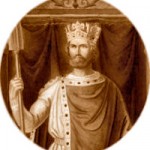
7_13_henry2Holy Roman Emperor = Saint  – Is that even possible? Apparently so.

St. Henry of Germany was born to the Duke of Bavaria (in south Germany) on May 6th 973. He was educated by St. Wolfgang, the Bishop of Ratisbon. In 995 Henry succeeded his father as Duke of Bavaria.

Emperor Otto III of the Holy Roman Empire was Henry’s cousin. Upon Otto’s death in 1002, Henry seized the royal insignia from Otto’s companions. His succession was strongly contested, but with the help of the Archbishop of Maniz, Willigis, Henry secured his royal election and coronation on June 7th, 1002. Henry was not crowned Holy Roman Emperor until 1014. He was the fifth and last emperor in the Ottonian dynasty.

As king, Henry worked on consolidating his power. He led successful campaigns against Poland and Italy. He became King of Italy in 1004, and established a lasting peace with the Poles in 1018.

Henry was convinced by Pope Benedict the VIII to make another campaign in Italy. In 1022 Henry set out to counter the growing Byzantine Empire. His objective was to capture the Byzantine Fortress of Troia in southern Italy. Henry used three armies in this campaign, but none of them were able to take Troia. One army, led by Pilgrim, Archbishop of Cologne, captured Pandulf IV, Prince of Capua and extracted oaths of allegiance from the principalityof Salenro and Capua. Henry sent Pandulf IV off to Germany in chains and put Pandulf of Teano in his place as prince. Although Henry failed to take his main objective, he was satisfied in knowing that western imperial authority still extended into southern Italy.

So, how much money did Henry have to bribe the Ministry of Magic with in order to become a Saint? (see Harry Potter for reference). Seizing royal insignia, arranging his rise to power, campaigning, all hardly seem to be Saint-like activities.

But Henry was not all about war and power. Henry was a prayerful man and was very generous to the poor. In fact, in addition to strengthening the German Monarchy, he also worked toward making a stable peace in Europe and helped to reform and reorganize the church. He strongly enforced clerical celibacy, but this was also for his own benefit, so that the public land granted to the church would always return to him upon the death of the cleric and not pass to an heir. This also ensured that the Bishops remained loyal to him (for he was the one to give them their power), which provided protection against ambitious nobles. Henry established multiple monasteries and arranged care for the poor. He built the Cathedral at Bamberg, which became a center for scholarship and art. Along with St. Odilo of Cluny and the other monks at Cluny (in France), Henry supported many religious reforms.  

At one time, Henry came down with an un-named illness and was miraculously cured at the Benedictine Monastery in Monte Cassino. From then on, Henry was very active in promoting Benedictine Monasticism.

Henry was married to St. Cunegund. They had no children and it is said that they had a mutual vow of chastity.

Henry died in 1024 and was canonized in 1146 – the only German king to be canonized. And no, he did not have to bribe the Ministry of Magic. A combination of securing and spreading Faith, caring for the poor, reforming the church, and remaining celibate and prayerful, Henry became a saint through his own actions. He is the patron of the childless, the disabled, Dukes, Kings, people rejected by religious orders, the handicapped, sterility and of the Benedictine Oblates.  


P.S If you  have not figured it out already, this post was not written by Kathy, but by her daughter Rosie 🙂

Read More

Posted by on Jul 12, 2009

St. Maria Goretti – July 6

St. Maria Goretti – July 6

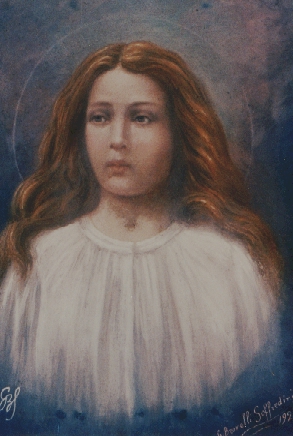
See full size image

The feast of St. Maria Goretti often leaves me feeling conflicted. Maria Goretti died in 1902 of stab wounds inflicted during an attempted rape when she was 11 years old. On her deathbed, she forgave the man (a 20 year old) who had mortally wounded her. He was the son of the family with whom Maria and her family were living. After serving his prison term, he lived an exemplary life as a lay member of the Capuchins (one branch of Franciscans). He was present for Maria’s canonization in 1950.

Apart from the speed with which the canonization process moved forward, I find myself wondering what it was that distinguished Maria Goretti from the thousands of other girls and women who have been raped and/or murdered by men who should have protected them. What made her suffering and death different from those of the other innocent victims of violence and violation among the women of the world?  Surely she is not the only one who has forgiven her attacker? Would she have been praised or even forgiven if she had submitted without a fight in the hopes of living on? What happens to victims who are not killed? What happens to those impregnated by their attackers?

Violence against women and girls has been a technique/weapon of war for centuries. When we hear of it today ocurring in non-Western countries, we “tut-tut” about the incivility of such behavior. We speak of enemy combatants versus innocent civilians. Generally we simply expect the women and their children to be helped and supported by their families and communities, though we know this is rarely the case. And we look down on cultures in which a woman who is no longer a virgin can never find a husband (read “social identity and security”) or be accepted as a respected member of her community. 

But are we in the Western world all that much better in the way we respond to women who have been raped? Recently I heard a prose poem on National Public Radio that quoted women who had been raped. They told about the experience and the reactions of their families, spouses, friends, police officers and medical personnel. They spoke of the fear and shame and sense of vulnerability they experienced in the moment. And then they told of the aftermath – as spouses treated them angrily or forced themselves on their wives in a sort of reassertion of ownership of their wives’ sexuality. They told of insensitive law enforcement officers and medical personnel, who assumed that their lack of physical wounds or signs of having been beaten meant that they had consented to the violation.

The poem ended with words I won’t soon forget, “I thought they would understand.” It was clear that the more hurtful and profound rape was the emotional and social one that these women were now forced to live. These women who are our sisters, mothers, neighbors, and friends.

So I think there are some fundamental questions we need to ask ourselves as a Christian community. How do we care for and support the woman who was the victim of this terrible aggression? How do we help her feel safe in her home again? How do we help her if she finds herself pregnant and alone afterwards? What if she is still a child herself? What if the strain of bearing her rapist’s child threatens to drive her over the edge into madness? How understanding and accepting are we if she submitted in order to save her life and/or that of her other children rather than fighting to the death?

While it is beautiful to praise a child who resisted the advances of a much older man and died as a result, I pray that we not stop there. Please, may the terrible accusation, “I thought they would understand” never be leveled against us because we focus too narrowly and insist that only one path through that awful valley of darkness is the right and praiseworthy one!

Read More