Pages Menu
RssFacebook
Categories Menu

Posted by on May 31, 2012

A Fourth Gift of the Holy Spirit: Counsel or Right Judgement

A recent issue of the Costco Magazine, The Costco Connection, included an article on Sir James Dyson, inventor of the Dyson vacuum and an number of other products. The article described the history of the development of the vacuum as a way of also relating the process that Dyson went through in the development of his business and his values.  One of the most compelling aspects of the story was Dyson’s clarity about his decision to produce the best vacuum possible.  Sir James went through 13 years of failures (5,127 prototypes), near bankruptcy, 2 lawsuits, rejections, illicit copycats, and supply problems.  But, in it all he knew his concept was right.  He also did not mind working alone.  Now that his product is a huge success (number one in the UK) he is quite happy to let go of total control of his business to a group of engineers.  He is very involved but not hovering.  Dyson has never been concerned with a certain timeline for getting products from concept to marketing.  He told The Connection, “I don’t care how long things take.”  He also states: “Failure is to be celebrated–That’s how we learn.  I learned from each of my mistakes. That’s how I came up with a solution.  So I don’t mind failure.”  There is not a shred of religious talk in this article but it is in fact full of Gospel values and the basic principles of Right Judgement.

This gift of the Holy Spirit was exclusively referred to as Counsel” until the end of the 20th century.  The more recent use of “Right Judgement”  for this gift points to the balance needed in availing oneself of the gift.  “Counsel” has always emphasized the active need for and role of the Holy Spirit in determining the truth and making decisions.  The term “Right Judgement” emphasizes the role of the person.  In Catholic thinking, both God and the person are involved in the constant process of identifying what is real and what is best and correcting one’s course towards these.  Some religious groups emphasize either the sovereignty of God in the process or the sovereignty of the person. Catholicism holds both in balance.  The Tradition is sufficiently optimistic about humanity to affirm the role of free will and yet well aware enough of human weakness to affirm the need for grace.   Another term for this gift is Discernment.

James Dyson speaks of not being afraid of being alone, of failure, of learning new things, or of long processes.  With these values as his foundation, he is in a perfect place to make good decisions.  The only thing he is missing from this life stance is the place of God in his perceptions and actions.  Why does it matter that God be involved if Dyson is so successful and reportedly happy?

In the article, Sir James reports that he loves to invent and has a passion about setting one goal after another and working toward them.  All of that is fantastic on one level.  On another level, one could ask if a person might let God get a word in edgewise about the over-all direction of his life?  The surrender of that basic orientation of life is incomprehensible  to nonbelievers.  The idea that life is a dance with the Spirit is crazy to the successful person in the normal secular context.  Dyson is happy, so why bother with him?  My inclination is to leave him alone, but a large part of me has had a lot of experience with universal human limitation.  By definition, James Dyson (and all of us), does not have access to the sum of his full potential.  At this point, he is controlling all variables of his life as far as he perceives them.  The idea of consciously referring himself to a high reality is not in his view.

In seeking Right Judgement, a person first lives a life as open to the truth as possible.  With specific aspects of life, such as job, relationships, health, education, finances, civic involvement, or faith, a person is expected to do as much as possible to grow in knowledge of these things and self-knowledge in relation to these things.  Beyond this, he or she can bring these things to prayer.  Doing a daily exercise of putting different aspects of life or the way the day has gone in front of God can open up a type of detachment in which one can sort through how a specific part of one’s life or the whole day feels.  If I ask for an openness to my finances I may see that I fritter away money on creative projects that I end up not doing, supplies I never use.  If I ask for an openness to the truth of my health and consistently feel a kind of anxiety about how I eat, I can let this commitment to the truth carry me past the desire not to see the truth and ask to see why I am troubled.  I may like to collect things, but I may never face the fact that as long as I am in debt I should not be buying anything unnecessary. In Right Judgement, I learn to identify my feelings when I entertain helpful ideas or unhelpful ideas.

Two days ago I knew I needed to get gasoline for my car because I was going to go on a trip the next day.  As I got off the freeway to go to a store, I approached a gas station I know well and a voice inside me said that I should go in there right now and get gas.  I absolutely, positively did not want to do that.  I was tired and sick of errands and obligations and wanted to continue up the street to the last errand and get that over with.  I would get gas later (in some vague gas station– who knows where?).  This was just a bald case of procrastination.  My brain forced me off the road into the gas station.  I saw an inner vision of a taller me as a parental figure leaning over me saying, “You will be so messed up tomorrow if you don’t get gas today.  You will be yelling at yourself as you pay 20 cents more per gallon for gas in San Francisco!!  Go get the d…n gas and quit whining.  You will feel so much better.”   It is the same inner conversation when calling for a dental appointment, walking the dogs two miles, or setting up my durable power of attorney.  I do not want to deal with complications (as if procrastinating on these things will not create any complications!). Right Judgement helps us identify the feelings around the truth versus the feelings prompted by false reasons to do or not do something. With Right Judgement I ask God to send me whatever imagery or feelings will clarify what is His will and what is best for me.

Right Judgement always involves self knowledge.  We often choose out of very deep desires and fears.  If I recognize that I am in pain over never being noticed in my family, then I will understand why I often get depressed at bigger family gatherings.  I will see that I can be quite happy being in the same room with these insensitive people or on a inner tube in a murky river with them if I bond with someone like my sister-in-law or a cousin.  With Right Judgement I will begin to see if I regularly surrender appropriate control of life to overbearing people.  I might see that I give up on things I want for myself legitimately before I even begin to figure out how I might get them.  I will feel the difference between longings I should pursue and guilt or laziness I should ignore.

We can ask for and receive this inner feedback at any time.  We may not want to hear or feel the motions of the Spirit versus our own appetites or emotions, but they are there all the same.  The more we obey the loving, healthy voice, the easier it gets.  Thanks be to God!

Read More

Posted by on May 27, 2012

The Gift of Wisdom: Ancient but Pertinent?

When I think of Wisdom my mind always throws up pictures of Michelangelo-like figures with ponderous looks on their faces.  The scene is very serious and feels absolutely irrelevant to my life.  A second later I am seeing two figures on a canvas mat  struggling to get control of a situation.   Both images are important and both apply to me.  Living in a wise way is very important and serious and this life skill plays out in my life as a pitched battle between my ego or inner child and God.  We are down on the mat wrestling away all day long.  At times the struggle for me to be wise is funny.  I am the child with a Look or Big Hunk candy bar, covered in chocolate who badly needs a bath.  I am wading through my life with a terrific personal coach whom I would like to ignore.  I would like to lay down in my life and be waited upon.  I would like to wave a magic wand and have all my troubles just go away.  Why not?

Wisdom is a gift from God which empowers us to do what is best.  Wisdom is the opposite of impulsiveness, self-indulgence and short-sightedness. In the secular world, wisdom is doing what is best because of fear or because of personal gain.  In the spiritual world, wisdom is sought because it draws us to growth, generosity, inclusivity, justice, love, and heroism.  Wisdom is what God expresses in the world.  When we exercise wisdom, we rise above what we want to consider what is best.  The two might be the same.  In any case, the activity of considering what is best frees us from the possible deception that can come by just following my feelings.  Wisdom asks if a thought or course of action is taking us to a bad place in life where we have been before or if a decision is taking us to a positive place.

One of the greatest deceptions in life is called the Pleasure Principle.  According to this principle, if something feels good it is good and if something feels bad it is bad.  This line of thinking is fallacious.  Obviously heroin may feel good, but it is horribly destructive.  Telling a lie may feel good right now and yet end up causing harm to me and a lot of pain.  Eating french fries may feel good now but the health results later may feel quite bad.  There are many things in life that feel bad, such as asking forgiveness or  letting someone inconvenience us, that when performed cause us to feel good almost immediately.  People who are wise can distinguish between short and long term results.  They are committed to the truth and to wanting to be joyful, not just comfortable.

Wisdom takes knowledge and uses it in the best possible ways.  It thinks broadly rather than just individualistically.  Wisdom perceives the interconnectedness and interdependence of everything in the world, so that when we have the gift of wisdom, we live with the Earth and all it inhabitants in mind.  We understand that what we do affects everything on the Earth.  My thoughtful and healthy living affects everyone.  Wisdom therefore does have discipline as a skill.  Another word for this is restraint.  It can be fun not to waste.  It can be really exciting not to be driven by addictions and obsessions.  I can and often am driven by food and things to which I am attracted that I want to own.  I love cinnamon rolls and designer fabric.  I cannot eat the first nor afford the second.  It is so lovely to feel free of pining for these.  Wisdom is sinking in and I do not feel the pull or deprivation of these anymore.  Wisdom has gifted me with excitement over better health and a good hold on my budget.  This process is bound up with good Discernment.  I am aware of the difference of quality in feelings between immediate gratification versus inner peace.

Another feature of wisdom worth considering is attachment to outcomes.  A relative recently said that he wanted to help someone but did not want to be attached to the outcome. By this he meant that he did not need to be in control of what was best for someone.  He also did not see any value in feeling bad if the other person decided not to take him up on his offer.  Implied in this was the fact that we cannot change or fix other people.  Only they and God can do that.  Wisdom sees the sense in all this.  When we are wise, we realize that may see someone else’s situation as it really is or we may not.  We know that only God sees the whole picture.  I may want someone to save money or be less depressed, but I inevitably do not have all the facts.   In any course of conversation or action I take, I should first put the situation in God’s hands and wait to see if the various options I have are out of my fears, anxieties, or anger or something that is best for everyone concerned.

I know several people who are very activated emotionally by the suffering of others.  They want to help people with problems or obstacles immediately.  That’s very understandable and usually good.  But, sometimes it is good to not help people.  We should be compassionate but may decide not to step in and do things for people.  If this decision is motivated by wisdom it may not be easy but it may be best.  We do wise things because they are correct, not because we feel guilty or because we want people to be dependent on us or approve of us.

Wisdom is cited throughout the Bible.  There are free online concordances which can lead to all the references to wisdom.  Reading these texts and ruminating on them can lead to important ideas and graces.

A very good book on wisdom from a non-Judeo-Christian perspective is The Four Agreements by Miguel Ruiz.

Read More

Posted by on May 26, 2012

A Canada Lynx as an Image of God

Instructed to select a picture that catches my eye, gaze on it for a while and see what the Holy Spirit might have for me to see in it, I am drawn to a picture of a Canada lynx and her kitten lying relaxed in a meadow of wildflowers, both with their paws resting on a log. The mother’s eyes are half-closed and the kittens’ eyes are wide open. The mother’s expression at first glance is threatening. If she were a human, I’d say she had a scowl on her face. I wouldn’t want to cross her. The tufts on her ears are pointed up and alert. The kitten, on the other hand, seems relaxed and curious.

After looking at the picture for a while, I realize the mother’s expression is that of a cat who is more relaxed than anxious or threatening. The eyes half-closed are awake and alert, but not concerned that anything threatens her kitten. The two are at peace amid the wildflowers in the spring meadow.

I look at the picture a bit longer, then close my eyes and see something more. Whereas at first glance I identified more with the mother, vigilant for the safety of her kitten, I now see myself as the wide-eyed, unsuspecting kitten, taking each day’s adventure as it comes, feeling safe and peacefully surveying my world from my secure position — resting side-by-side with my protective mother. This image of the protective mother becomes an image of my relationship with God — a God who rests beside me, peaceful and secure yet ever vigilant for my safety.

Check here to see the picture yourself.

Read More

Posted by on May 25, 2012

A Second Gift of the Holy Spirit: Understanding

Events happen, both good and bad, feelings arise, people say amazing or unusual things; but, we may not understand these or perceive why they happened.  We might also be filled with a great peace and have no idea why it arose.  The gift of Understanding is given so that we may perceive the meaning of things.  Understanding builds on but goes beyond a basic intellectual process in which we analyze the causes and meanings of all the facets of life.

God wants us to understand him/herself first.  This is a lifelong process.  As it says in Isaiah 55: “My ways are not your ways.”  As we call upon God and study God in the Bible, the liturgy, and the words of others, we increase in our understanding of how God works in the world and in us.  We might want God to change us or heal us. We might want this right now.  But God may want to leave some aspects of us unchanged or may lead us through a long process.  God’s ways may seem like a long road trip on which we make many stops, sojourn in all kinds of places, get diverted, break down, climb hills, meet the strangest people, etc.  In this process of coming to understand God, we will become more like God.

Understanding moves us closer to the reality we ponder if that reality encompasses goodness, truth, beauty and/or love.   As we understand more and more, we will be capable of understanding even more.  Understanding allows us to be increasingly open and able to incorporate even more awareness because it gives us a mature knowledge of how things work.  After we realize that God works in steps and gradually accustoms us to hard work, we begin to appreciate the progress we have made and not argue so much with the difficult things that come our way.  Frustrations and disappointments start looking like opportunities.  The computer acting up or having someone snap at me can be an opportunity to be an Observer Self and to experiment with putting the computer in God’s hands or taking a deep breath before replying — a response I may never have tried before now.  We may want a hurt or fear to go away and not realize that the way it is going to go away is to have a similar bad experience happen or to relive the original bad experience and be given the grace to go through it with God or with another loving  person.  The more we surrender our lives to God, the more we will understand how God is involved and why things are happening in the way they are.

Understanding includes perceiving who we are and why we do the things we do.  It is the gift to be able to penetrate deeper and deeper into the unconscious and to gain insight into all those good or impaired aspects of ourselves from which we hide. In this gift we travel back into our family and personal histories and see how everyone and all the various ups and downs make sense.  We understand how our era, birth order, ethnicity, gender, socioeconomic class,  personality characteristics, physicality, geography, and religion have contributed to who we are.  Along the way, God gifts us with insight, even into horrendous things that may have happened. It is not that what happened was perfectly fine; but, with understanding we see how God took the terrible and brought something unexpected and beneficial out of it for us.  There can be an understandable and difficult struggle with understanding.  Things that have caused pain are normally repressed.  We do not want to think about them.  These memories may even be unavailable to our conscious minds. Spiritual growth, though, involves integrating the painful into our consciousness so that it can be used in new and positive ways.  Repressed feelings and memories also take energy away from us because it takes quite a bit of psychic energy to monitor and filter repressed material.  Little by little, God draws us to understand ourselves.  We begin to see what is motivating us or blocking us. We also begin to see what our deepest desires are.

Understanding also refers to perceiving the truth about others.  It implies an empathy for others.  Understanding involves getting at the meaning of what is happening in our relationships.  We may think that a particular relationship is about fun or adventure, but it may really be about being competitive with that person in order to feel good about myself.  I may think that someone dominates conversations all the time just to be mean or to get attention, but in fact, that person may be terrified of being seen as him or herself and is trying to distract the group from the supposed truth.  We may be gifted with understanding what is really going on with people.  We may see past the appearances.

Finally, understanding extends to the course of history.  Societal events can be frightening or depressing.  The gift of understanding can allow us to see what God is doing with humanity.  The Paraclete can enter our minds and feelings and make us realize the growth process that lays before us on this Earth.  We can calm down because we see meaning in the challenges that happen everyday.  We can see the freedom that people exercise and the choices they make as part of the struggle to grow up.  God cannot force humans to be good.  We have to learn it on our own.  The gift of understanding gives us a perception of what is happening on this bigger scale.  It allows us to surrender to a God who is smarter than we.  To trust more, to hope more.

Read More

Posted by on May 23, 2012

The Feast of Pentecost, The Holy Spirit and The Seven Gifts: Why it Matters

Today more than ever we dig deep within to center ourselves around calm and inner peace.  We don’t do this to tranquilize ourselves. We do this to be in the best possible position to live fully.  For believers, this includes seeking a real growing relationship with God.  There is a dance going on between our decisions and actions and God’s involvement in our lives, a dance which we call grace.  We have freedom and gifts.  God has insight, power and ingenuity.  If we consent to His involvement in our lives, He can move us into positive places we cannot even imagine.

The person of the Trinity whom we identify as a creative and loving agent of action and change is the Holy Spirit.  This person is believed to be the action of God in the world — both visible and invisible.  One of the names for the Holy Spirit is the Paraclete.  This is an ancient Greek word meaning “one who consoles, uplifts, comforts.”  In the New Testament it also is translated as “helper” and “advocate.”  The Holy Spirit or Paraclete is the divine reality whom we celebrate on Pentecost.  “Pentecost” comes from the word “pente” meaning fifty which refers to 50 days after Easter. At the Last Supper Jesus said he was going to send us the Paraclete.  He let us know that this third person of the Trinity, who expresses the love between the Father and the Son, would be the spirit of Christ operative in the created world — that we would not be alone.

On Pentecost we focus on God as Paraclete in the world of space and time, of the particulars of life.  The Paraclete comforts and uplifts us by working in us and in our lives to give us greater holiness and power for good in the world.  We speak of the work the Paraclete does in us as the Seven Gifts of the Holy Spirit.  We are going to take a look at all seven in a series of posts.  In the Bible there are a number of lists of  spiritual gifts of the Holy Spirit. They can be found in Isaiah 11, Romans, 1 Corinthians, Ephesians, and 1 Peter. These are all indeed gifts of the Paraclete, but many of the “gifts” in these texts are roles and leadership skills that are gifted by God.  The Seven Gifts on which we will focus are basic qualities that all human persons need no matter what they do in life.  We are given these seven gifts at baptism but the Sacrament of Confirmation gives us to grace to live these fully out in the world of decision and action.

Knowledge is the first gift we will consider.  In the everyday world we use knowledge constantly.  It matters that I know how to get my car fixed or that it is important to check the oil periodically.  A dentist needs to know how to work on my teeth.  Knowledge as a gift of the Paraclete who wants to help us grow fully first includes the knowledge of God.  As we mature we will know God more and will also develop in our images, concepts, and feelings about God.  We will come to know ourselves better and better as well.  To the extent that we are open we will come to more and more realistic and energizing knowledge of God and ourselves.  If we fear God we may learn more positive things about God — maybe from talking to others.  If we are depressed we may find out why.  Much of this knowledge is from God.  We think we are learning on our own.  But, in fact, it is the Paraclete who is offering us knowledge all the time.  We have resistances in us and God is working all the time to help us see the truth, often a positive truth.  God presents ideas to us from different angles constantly and we can consent to be open to these prompts.  My eye may fall on a magazine in the doctor’s office and suddenly I can feel myself slightly more inclined to actually do exercise every day.  The ideas in the article, the knowledge, may have made it easier to see how I can move into a new life skill.

Knowledge of others is also a great gift.  I may not know why a neighbor or relative is so hard for me to get along with and then find out that he is in pain all the time.  I may then find out that the medication he is on has terrible side effects from a commercial on television.  Or, I may find out that an adult school near me has a watercolor class that is very reasonable in price.  I may need that for my emotional life.  The Paraclete is gifting us with knowledge internally and from external sources all the time.  We only need to consent to not try to control what the this Consoler sends our way. God sees us totally and knows what we need.  We can practice a daily Examen or a time of reflection on how things are going and ask to see what we need to see.  In that way we can receive the gift of knowledge and become more fully who we were born to be.

Read More

Posted by on May 18, 2012

Seven Gifts and Nine Fruits – Come, Holy Spirit!

Seven Gifts and Nine Fruits – Come, Holy Spirit!


Holy Spirit as Dove

The final nine days of  Easter Season are a time of prayer for the coming of the Holy Spirit more deeply into our lives today. Each baptized Christian has already received the Holy Spirit. Through Confirmation the gifts of the Spirit are strengthened in our lives, so we become adult Christians, ready and able to bear fruit in the world as Christ’s Mystical Body. In a very real way, we are Jesus’ eyes, hands, feet, and heart in our world.

What are these gifts that are so powerful? The prophet Isaiah first listed them in describing the one who, springing from the family of Jesse, would bring justice to the land. “The spirit of the Lord shall rest upon him: a spirit of wisdom and of understanding, a spirit of counsel and of strength, a spirit of knowledge and of fear of the Lord.” (Is 11:2).

Each of these gifts comes from the Spirit of God. The gift of Counsel is sometimes known today as Right Judgement — choosing to act in accord with God’s wisdom and understanding of the way of love. Strength is sometimes called Courage — a courage that goes the distance, even to sharing in the cross. Fear of the Lord is better understood as Wonder and Awe before the powerful love of our God — a sense of “Wow” or “Isn’t God amazing!”

Gifts from God are meant to bear fruit in the lives of their recipients. They are never given to be cooped up or to be a source of personal pride. The fruits of God’s favor are not what we commonly consider to be signs of success, however. They don’t include gaining personal wealth or holding on to a good job. Becoming a celebrity, even if a celebrity because of doing lots of good works, isn’t a fruit of God’s favor. Feeling happy all the time and loving one’s work is not a fruit of the Spirit.

The Fruits of the Holy Spirit are listed by St. Paul in his Epistle to the Galatians. “But the fruit of the Spirit is love, joy, peace, patience, kindness, goodness, faithfulness, gentleness, and self-control.” (Gal. 5:22) These characteristics are not dependent on our success in our work or our efforts to spread the Good News. Even if everything is crashing around us, these qualities will be a sign to all that God is still in charge and will bring good out of what is happening. Some may be more obviously present at one time than at another, but even when God seems far away, the strength to remain faithful to the Gospel’s call is a fruit of the Spirit. The presence of these Fruits of the Holy Spirit also helps us discern whether the way we are following is the way God would choose for us. To the extent that these fruits of the Spirit are present, God’s Spirit is present in our lives and reaching out into our worlds.

Now is the time to pray together for the Holy Spirit to pour out these gifts anew, that we may bear fruit in God’s garden.

Image by Gian Lorenzo Bernini – From Throne of St. Peter stained glass
St. Peter’s Basilica – Public domain


Read More

Posted by on May 15, 2012

Words of Wisdom from Peter Maurin

Words of Wisdom from Peter Maurin


Peter Maurin

Peter Maurin, with Dorothy Day, was a cofounder of the Catholic Worker — the newspaper and movement begun in 1932 to advance the social message of the Gospel for our times. Maurin believed that disconnecting social values from their basis in the Gospels causes the majority of the problems of contemporary society. He believed in the power of individuals to make a difference by living according to a new set of values — ones based on the radical social message of the Gospel.

Though Maurin died in 1949, these words of his offer hope for those who work to create a more just society today.

“The future will be different if we make the present different.”

Image from the Marquette University Archives.

Read More

Posted by on May 11, 2012

Blessed Julian of Norwich Feast Day — “All is Well”

Blessed Julian of Norwich Feast Day — “All is Well”


Julian of Norwich - Stained Glass Window from Church


May 13 is the unofficial Feast Day of Julian of Norwich, the English mystic and saint of the Middle Ages.  We cannot be sure of her birth and dates but she lived approximately from 1342-1416.  Her lifespan and location were situated in times of great distress in England.  Three waves of the Black Death had swept over England and Norwich was particularly hard hit as it was a commercial center, especially of the wool-textile trade with the Netherlands, which brought with it the bacteria from the Continent.  Julian was an anchoress at the church of St. Julian.  We have a historical record of people visiting her for advice and prayers.  We do not know why she was not canonized by the Catholic Church.  One reason is likely that she left behind relatively few writings.  Another is likely because her writings contained teachings that would have been considered controversial by some scholars.  Teachings about Christ as mother and that God sees our sins as a way for us to learn about ourselves would have offended or worried many clerics of her day.

In 1373 we read that Julian had 16 visions in which she was saw and heard revelations related to God, creation, evil, sin,  salvation, and the human person. She recorded these revelations at the time and then some 20 years later produced a longer version, called the Long Text, in which she integrated the many thoughts communicated to her by Christ about the meaning of the 16 visions and locutions.

Julian is optimistic in a time of when people questioned the goodness of life and how God regarded them.  She recorded that Christ said to her that “All will be well and all is well.” She explains how all can and will be well. Julian also recounts wonderfully warm images of us and Christ who holds us tenderly and celebrates us as his “crown.”

Another reason to celebrate this great saint is that she is believed to be the first woman to write a book in the English language.  She is also a pioneer, with Chaucer, in creating literature in Middle English.  After many years of Norman control of England, the French and their language were driven out.  The English language had degenerated into a language of the lower classes with a very poor vocabulary.  Julian is responsible for creating many new and very useful words to articulate her scholarly theological presentations and to give colorful descriptions of what she saw in the visions.

Julian’s texts, which she referred to as the “shewings” (Showings in contemporary libraries), are very inspiring and provide satisfying answers to many questions which Christians have.

Image of Stained Glass Window borrowed from Satucket Lectionary entry for the Feast of Julian of Norwich

Read More

Posted by on May 7, 2012

Quote of the Day: Thomas à Kempis

Quote of the Day: Thomas à Kempis


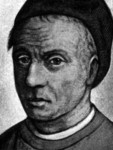
Thomas von Kempen

These words of Thomas à Kempis are a good reminder to us today, as they were to his contemporaries of the 15th Century and have been to thousands of  Christians in the intervening centuries. As we decide what we will do each day and why, the better course is to choose based on God’s criteria.

“God regards the greatness of the love that prompts a man, rather than the greatness of his achievement.”


Read More

Posted by on May 1, 2012

Spiritual Growth and Discernment

Spiritual Growth and Discernment


We make hundreds of decisions every day.  Over and over we express our desires and choices.  In the process we are literally creating ourselves.  This is a very active and hopeful thing.  In the process of decision-making we may make decisions with reflection, deliberation and conscious intent or we may decide out of habit or in reaction to a feeling, without much thought.

Most people think they choose freely what they will have in their lives and what they will become.  I prove that wrong every time I get near most pastries or warm, newly-baked bread.  I am immediately consumed by an intense desire for these.  I really have to remind myself of my commitment to feeling better rather than to reveling in sugar and all that baked goods symbolize for me.  Simple carbohydrates make me feel terrible physically but they also temporally fill an empty hole inside my psyche.  When I chose not to eat them I feel strong emotional forces pulling me toward that class of foods.

Noticing the different feelings inside me and my thought patterns as I struggle to get past the Cinnamon and Almond Ring at Trader Joe’s is really revealing.  I’m a grown person but I become very little and whiny as I  crawl over to the vegetables and lettuce just beyond the bread and pastries.  After all, I work hard and deserve a treat!  I could just eat a slice and throw the rest away.  I actually could do that  (and I have in the past).

The desire to be closer to God requires letting God tell me what would please him.  That sounds very old fashioned and odd.  But, there’s no way around it.  Knowing God is knowing what is best — best for me and best for the world.  I cannot eat sugar and refined carbohydrates and feel good.  I just can’t.  I love that stuff!!  Knowing God and growing in holiness means that I would like to know which actions in my life would help me to be happy.  Discernment is the skill with which I can learn to evaluate what is the best choice at any juncture in my road every day, all day long.  There are certain feelings and thoughts that characterize good decisions and others which characterize poor decisions.

Learning those and applying them seems easy enough.  One of the problems is that most of us have been fooling ourselves for years about what seems best — because we all love a plausible excuse to eat coffee cake or to buy new clothes when we really don’t need any, etc.  And, some of us have been unconsciously choosing what we think other people want for us,  so we do not know how we feel about most things in life.  What if I dislike red sweaters but have been given a number of them because I look good in red?  What if I really dislike a timeshare at Tahoe but almost the whole family loves it? What if I want to go back to school but would have to inconvenience a lot of people?  There are ways to know the truth of what is best and to know the ways I postpone the truth and get in my own way.

Becoming mature in these skills, also called discernment, involves attention to our minds, feelings and imaginations.   I realized many years ago that my imagination can be both helpful and unhelpful.  My imagination can help me image myself as a happy person when I learn new skills or improve relationships.  My imagination can also tell me that facing someone’s anger will destroy me.  That frightening image is probably not true.  Someone’s displeasure at me does not have to harm me.  My imagination does not have to motivate me to do actions that are not necessary or helpful.  My mind can help me get to the truth of how I make decisions.  My mind can also help me slow down as I go through life.  I can become an observer and can use my mind to see what my usual processes in life are.  I can use my mind to consider my feelings and images.  I can recognize if I am peaceful or afraid.  I can also see if frightening images are being thrown up in front of me which are not true but set me back.

This reflection process sounds cold to me but in fact I find it an adventure.  When I know that someone is upset with me I automatically feel that any interaction with that person is going to be frightening.  But, I have found lately that not avoiding a conversation and instead standing my ground has been almost exhilarating.   Nothing bad happened.  The other person may have a point or may be wrong, but either way I am not overwhelmed.  I can listen to his or her words and make decisions in the midst of the confrontation.  I can observe myself wanting to run away and talk myself into being calm.  Wow, what an advance!

Everything so far applies to any situation in which I want to know what my unconscious mind is doing and also when I want to observe what others are doing.  In the midst of worry or upset, I can pray for the peace to see what the influences are: whether feelings, thoughts or images.  I can use this information to make decisions.

Of the three sources of information, our feelings usually provide the most important information for discernment.  Although I have in mind emotional feelings when I say this, I also believe that our bodies provide valuable information in their reactions to thoughts and circumstances.  If I make a decision about my job and do not sleep that night, I want to ask why that reaction happened.  In the morning I may feel terrible physically but still feel I have made the right decision.   It may be that my mind worked during the night to consider all the options once again.  If I decide to move to another city but feel inner turmoil which I try to shut up, I may need to dig deeper, beyond my conscious reasons for moving to see if I am also moving for another reasonable but destructive reason e.g. to please my mother.  The saints are people who became good at distinguishing between inner peace and inner anxiety or deception.

To use the example above, my mother may be lonely.  I may feel guilty for not visiting her or calling her. But, I may have a very good job which I love and so I should not move.  There are ways to work with the circumstances and feelings of guilt without moving.  Doing that work requires facing the truth and the possible displeasure of someone.  But, it would also mean that I am honoring my true self at this time.  I need help to do discernment.  I cannot have detachment from my feelings of fear or attachment to approval on my own.  I pray throughout the day.  I first ask for insight —  that I not be blind.  I want to see if I am avoiding anything.  I prefer to know what my reality is.  Secondly, if I have to decide about something, I ask for help to see what is best and to be able to do it.  This happens a lot with how I use my time.  I usually have a mental or written list of what I want to do in a day.  I ask God to help me know what is most important.  I usually see what is best, but I often argue about it.  I want to do it all.  I want to paint the front door when it is 50 degrees and damp outside.  I want to spend the morning sewing when I need to file paperwork and write.  I want to cook three different recipes when I should just get one done.

The discernment which is going to make me happier is going to be a process in which I see what my feelings, thoughts and images are.  It is going to require that I make a commitment to follow what brings me inner peace.  It is also going to require that I use strategies to counter negative thinking and pressure from others or the Enemy of our human nature.  The more skilled at countering this, the more likely I am to be at peace.  When I am ambivalent, I experience much more pressure than when I am clear that I am not going to be doing actions motivated by emptiness,  fear, or pride.

At some point we have to surrender to the truth if we want to be happy.  We have to follow the footprints of inner peace.  If an option before us brings us peace and joy, then we are on the right path.  If an option brings us turmoil or a feeling of shame, we are operating out of poor motives.  We need to go back to see what is driving us and pray for the strength to make the right decision.

“A Fork in the Path” – Image by K. Pozos


Read More