


Come to the Water – Abundant Gifts of Love
 I think I was in late high school when I first really heard Isaiah’s prophecy of the generous abundance of the Lord’s gifts to all who come to receive them. It was a silent retreat and the retreat master assigned me this reading. I remember feeling totally blown away by it.
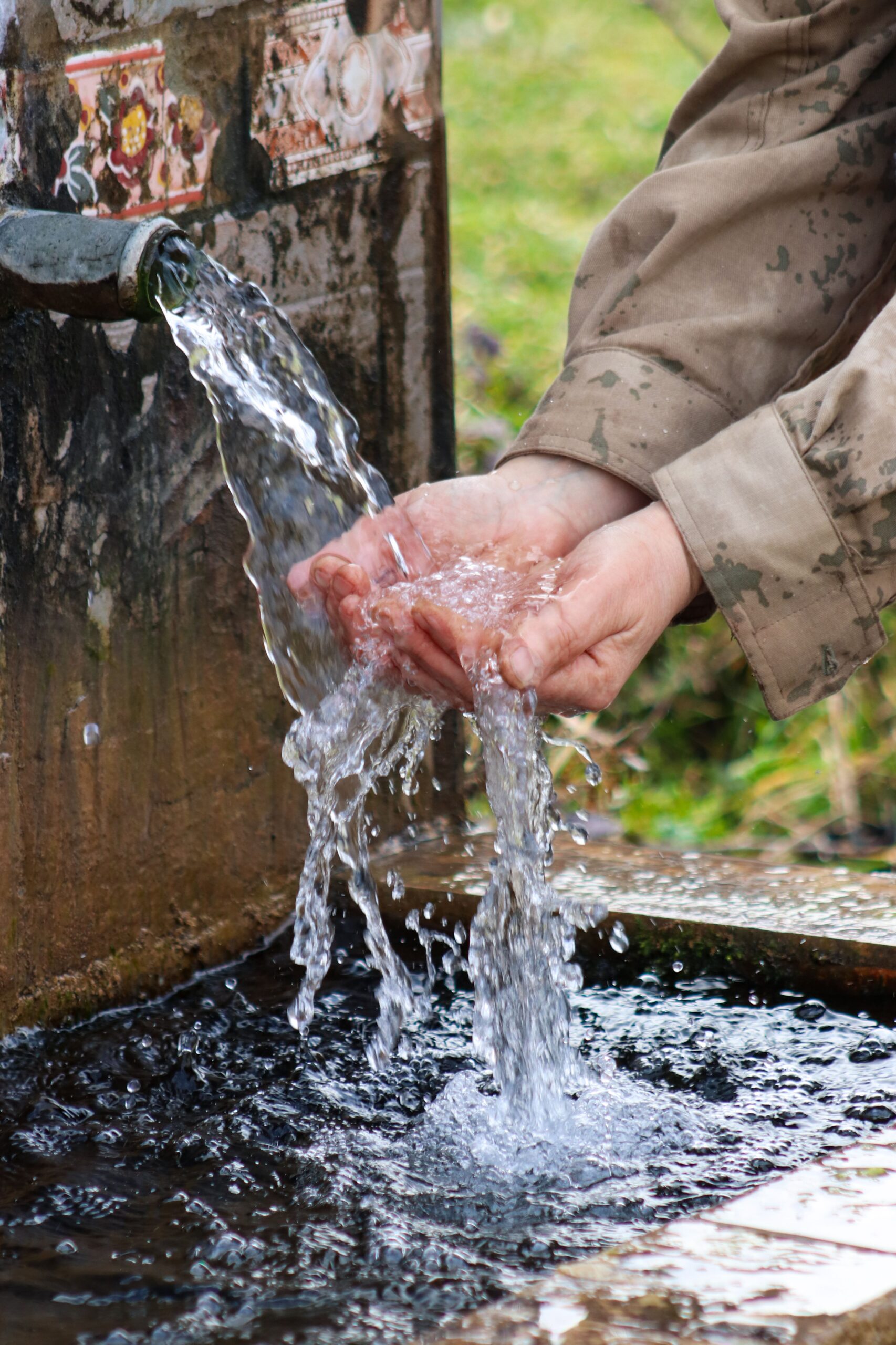
“All you who are thirsty, come to the water! You who have no money, come, receive grain and eat, come, without paying and without cost, drink wine and milk!”
Like most Americans, I had grown up with the notion that success and the good things of life are the fruit of an individual’s hard work and commitment. I had no sense of the tremendous advantages I had received from the educational levels of my parents and the social connections and stability I had always taken for granted.
“Come to the water.” “Come, without paying and without cost!” What an amazing thing.
And yet, that is the promise. The Lord of all, creator of heaven and earth, wants to give us all we need. “Come to me heedfully, listen, that you may have life.”
Listen. “I will renew with you the everlasting covenant, the benefits assured to David.” (Is 55:1-3)
The covenant is a two-way agreement. It includes the expectation that those in need will find help and those from other lands will be treated fairly and welcomed to their new home. It includes sharing what we have, our abundance, with those who for whatever reason are not able to earn enough to afford the basics for themselves and their children.
It’s not necessarily an easy thing for those of us who have been blessed with safety and security in our lives. Yet it is essential as far as the Lord is concerned.
Jesus himself gave us an example of this kind of giving. His cousin John had been arrested by King Herod and was being held without trial. John had been a prophet, known for baptizing people in the Jordan River and announcing the coming of the Anointed One. He had spoken out against one of Herod’s acts and was imprisoned.
When word arrived that John had been executed, Jesus wanted to be alone for a bit, to process the loss of his cousin and probably also to deal with the growing understanding that his own preaching and activities could just as easily get him into trouble with the authorities. It was time to go and pray a bit – without all the crowds of people.
But that wasn’t to be. The crowds followed him out into “a deserted place” where there were no villages or other services. He had crossed the lake to get there. They had seen where he was going and started walking. They arrived about the same time he did.
Jesus’ response to this unexpected gathering tells us a lot about how the Father is likely to react to us too. “His heart was moved with pity for them and he cured their sick.” He didn’t get huffy. He didn’t send them away. He didn’t yell at anyone. He simply began healing those who came to him.
As the day got later, and the crowds continued to press closely, the disciples advised him to send the people away, so they could get to a village and buy food. But Jesus rejected that advice. “Give them some food yourselves.”
They didn’t have much to share themselves – just five loaves of bread and two fish. Enough for the small group of disciples to share, but just barely. Certainly not enough to feed such a large crowd. But that didn’t deter Jesus. “Bring them here to me.”
Then Jesus showed us firsthand what the Kingdom is about. He told the people to sit down and they did. Thousands of people on the grassy field. Just as he would later with the bread and wine at his last supper with his friends, he offered a blessing, broke the loaves and fish and gave them to the disciples to pass out among the people.
The disciples moved through the crowd, sharing the food. The people passed food among themselves. In a great wave of blessing, all in the crowd received plenty to eat. “All were satisfied,” we are told. In fact, there was so much food at the end that when the scraps were picked up they filled twelve baskets! Twelve – the number of the tribes of Israel. Food for all. (Mt 14:13-21)
The abundance of the love of the Lord and of the gifts he has for each of us is unimaginable. It’s not because we work hard or live good lives. It’s because he loves us. He loved us into being and he keeps on loving us as we bumble along and keep learning how to love too.
“Come to the water.” “Come, without paying and without cost!”
And when we do, we find as St Paul declares, that nothing “will be able to separate us from the love of God in Christ Jesus our Lord.” (Rom 8:35, 37-39)
We who live as part of the community, the Eucharistic community in which we still bless, break, and share the body of the Lord, are called to serve each other with the same abundant love and care as Jesus did. Welcome the stranger. Feed the hungry. Heal the sick. Teach the children. Find homes for those who have none and clothes for those who need them.
It’s not always popular. It’s often seen as impractical and foolish. Many think it rewards laziness. But in my experience, there’s a lot we don’t know about others, their life experiences, their limitations, the physical, neurological, and emotional challenges they face. And as we reach out and offer even a smile and a kind word, healing occurs. Hearts warm. Hope flickers into life again.
“Come to the water.” “You who have no money, come, receive grain and eat.” “Listen that you may have life.”
It’s not always easy, but as we remember that we too are called and equally in need of this food and love, we find we too are blessed in the encounter. We too receive the water of life and bread of hope. We receive life.
Peace.
Readings for the Eighteenth Sunday in Ordinary Time – Cycle A
Here’s a beautiful rendition of John Foley’s composition, Come to the Water.
Read More

























_sull%27Italia),_china_su_graphia,_Giovanni_Guida_2020.jpg)