Thoughtful Reflections on Religious Experience
Fidelius and Diabolus: The Not So Gay Marriage Dialog by RandyPozos on Monday 20 October 2008 5:24 pm PDT
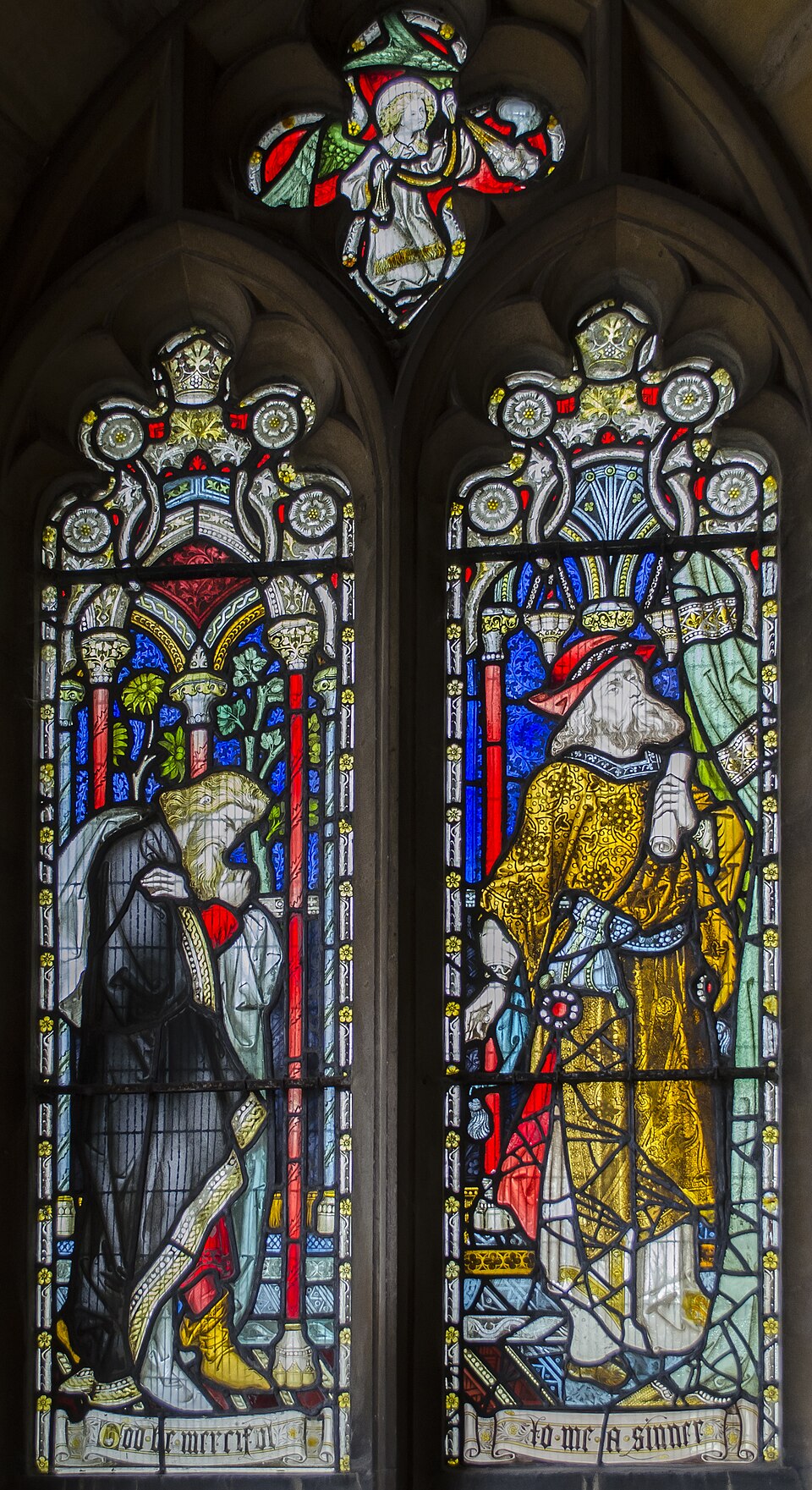
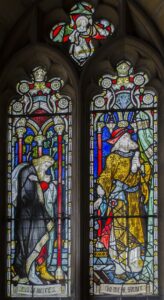
Image taken from oneyearbibleimages.com

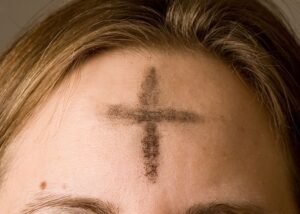
Image taken from oneyearbibleimages.com

Diabolus: How’s it going?

Fidelius: You know we can’t talk - why do you persist?

Diabolus: That might be true if I were the Devil, but what if I’m your conscience?

Fidelius: There are no views but those of the Church.

Diabolus: True, but what about Church teaching, which acknowledges the “Sensus Fidelium” or Sense of the Faithful?

Fidelius: Stop bugging me Diabolus.

Diabolus: How do you know that’s my name?

Fidelius: You’re tempting me to think for myself. You’re torturing me.

Diabolus: No one can control your mind and heart. What’s bothering you?

Fidelius: I will take my counsel from my confessor, not from a post-Pepperoni heartburn!

Diabolus: “Pepperoni.” What a great name! Why don’t you call me that?

Fidelius: You are what you are.

Diabolus: And what is that?

Fidelius: The Tempter, the Evil One.

Diabolus: Have I ever suggested that you do anything wrong? Did I set your eye to wandering or encourage you to blow up when the Angels didn’t make the pennant?

Fidelius: Good people are tempted under the guise of good.

Diabolus: So, you’re a good person?

Fidelius: Yes. Generally, that is.

Diabolus: So then, why are you thinking about “it” again.

Fidelius: What “it”?

Diabolus: You know. Your conflict about gays.

Fidelius: They’re disgusting, you know that.

Diabolus: That’s not an uncommon opinion.

Fidelius: They make me squirm - and now they want to get married!

Diabolus: So, you think that it would be better to encourage them to stay with promiscuity as opposed to having a life of fidelity?

Fidelius: There can be nothing good in an act that is “intrinsically evil”.

Diabolus: So, you mean that you and Cynthia have never done anything “kinky”?

Fidelius: Shut up. We’re married.

Diabolus: My point exactly. You know, pleasure in marriage used to be called concupiscence.

Fidelius: What’s that?

Diabolus: You know - messed up like everything else after the fall of Adam and Eve.

Fidelius: So now you presume to teach me moral theology!

Diabolus: No. You learned it at that expensive Catholic college. Remember - the one you drank your way through?

Fidelius: Yeah, but it was after Vatican II. They weren’t Catholic anyway.

Diabolus: You mean like old Father Sullivan, who came to class in his cassock with the old yellowed pages on St. Thomas Aquinas?

Fidelius: He was different.

Diabolus: Yeah - he made you sweat to get a “C”. Not like the easy liberal that you gave you a “B+” for some beer can “sculpture” you threw together at the last minute.

Fidelius: Yeah, he was real.

Diabolus: Wasn’t he the guy that told you to have a happy sex life when you got married?

Fidelius: How do you know that? That was in confession!

Diabolus: Remember? I was there.

Fidelius: All I felt was so dirty.

Diabolus: You thought that he was going to throw the book at you.

Fidelius: Yeah, but he didn’t.

Diabolus: But there was a sin you didn’t confess.

Fidelius: What do you mean?

Diabolus: You remember. The time you stopped your fraternity brothers from beating up David Farnsworth, the fag?

Fidelius: He wasn’t gay - besides, “fag” isn’t politically correct.

Diabolus: Yeah. That’s why you found him dying in the AIDS ward a few years later at St. Mary’s, when you were helping the administration get their finances in order! A young guy out of business school and you go through the wrong door!

Fidelius: He never had a chance.

Diabolus: What do you mean? We all have free will. We all make choices.

Fidelius: His only moral choice was not to have sex.

Diabolus: He could have had a partner. You know - spend their lives together and all that? Maybe adopt a kid?

Fidelius: It would have been one mortal sin piled on another. He’d be deeper in Hell than he is now.

Diabolus: You don’t believe that.

Fidelius: Well, I heard Fr. Sullivan got to him before it was too late. But Purgatory’s no picnic.

Diabolus: So why did you pay for the Plenary Indulgence for him?

Fidelius: I didn’t pay for it. I just made an offering.

Diabolus: Strange. All this good will. Did you have a thing for this guy?

Fidelius: He was a guy. Got it? Like anybody. He deserved some decency, some respect.

Diabolus: But not a home.

Fidelius: He wasn’t homeless. He was making good money as an attorney.

Diabolus: No one to come home to; just work, parties, the bars …

Fidelius: He knew marriage was for straights. He was a good Catholic.

Diabolus: Yeah right. A gay can be a good Catholic; as likely as the Good Samaritan.

Fidelius: The Samaritan was real.

Diabolus: Maybe - or was he just a way for Jesus to show up the “good” people who had no compassion?

Fidelius: We can’t encourage gay culture. We’d be undermining the family; the basis of society.

Diabolus: Right. We can’t encourage a culture of life and fidelity.

Fidelius: It’s wrong. Remember, God made Adam and Eve - not Adam and Steve.

Diabolus: An interesting piece of demagoguery, but it doesn’t seem very compassionate.

Fidelius: The kids’ll get the wrong idea. They’ll think it’s okay.

Diabolus: Is that why so many gay people hate themselves?

Fidelius: It’s not my problem.

Diabolus: David became your problem when you saved him from that pack of apes.

Fidelius: I would have done it for anybody. Nobody deserves that kind of hate.

Diabolus: So where do you stop on this slippery slope?

Fidelius: It’s easy. The Church says, don’t beat ‘em up but don’t let ‘em get married.

Diabolus: That’s why you and Cynthia have only 3 kids - after 20 years?

Fidelius: We couldn’t have afforded more kids. You know that. With Cynthia’s problems it probably would have killed her.

Diabolus: So you love your wife more than God?

Fidelius: There’s a difference between God and the Church.

Diabolus: So who’s being the Devil now?

Fidelius: It’s in the Apostles Creed… “I believe in God, the Father Almighty.” Toward the end it says “I believe in one, holy, catholic, and apostolic church.”

Diabolus: Conscience. That weasel thing you picked up from those liberal priests!

Fidelius: It was a Vatican II thing. I had to write a paper on it.

Diabolus: So you did learn something!

Fidelius: Only because Fr. Sullivan made me re-write it 3 times.

Diablolus: I can’t imagine St. Thomas being on the side of conscience. He was a real theologian - and a saint.

Fidelius: Yeah. It’s a big thing for him - like it was for those Moslems philosophers he studied.

Diabolus: They only blow up stuff.

Fidelius: Conscience. You know - ”formed according to the teaching of the Church.”

Diabolus: So why did Aquinas end up on the list of forbidden books so long?

Fidelius: He was accused of subjecting God to human reason.

Diabolus: Well I gotta go. Time “to prowl about seeking the ruin of souls”.

Fidelius: What about me?

Diabolus: You’re hopeless!

Fidelius: Hopeless?

Diabolus: Just the opposite, I’m afraid. No sale here today.

Fidelius: What about gay marriage?

Diabolus: Deciding that by a crowd? I like lynchings. Remember? But you know, it’s not my thing. You should look at that WMD “weapons of mass destruction” bracelet you wear.

Fidelius: It’s WWJD! What would Jesus do?

Diabolus: Yeah. I wonder. Later dude.. out’a here..

Saint of the Day - St. John Vianney: August 4 by RandyPozos on Tuesday 5 August 2008 12:42 pm PDT


St. Jean Baptiste Marie Vianney (1786-1859) was the parish priest of the village of Ars and is known primarily by that title even in English, “The Cure d’Ars”. Canonized in 1925 St. John Vianney is the patron of parish priests. In many respects he is a thoroughly modern saint.

He was born into the midst of the French Revolution and into a devout rural family who worshiped in secret with outlaw priests who refused to become state functionaries. The upheaval of the revolution closed schools, hospitals, and other institutions. For the first time in human history, the state asserted itself without religion as it destroyed the old Catholic order - the Ancien Regime. The “Goddess of Reason” was enthroned in the Cathedral of Notre Dame in Paris. Priests, nuns, and the Catholic nobility were killed, forced into hiding or exiled.

After the revolution subsided, Napoleon attempted to gain complete control of the Church in France and even took control of the Papal States, removing the Pope from Rome and bringing most of the Cardinals to Paris. In 1812 Napoleon’s fall began with the disastrous retreat from Russia in winter. The Industrial Revolution would follow, ending forever the cultural matrix of European Christianity.

St. John Vianney’s 73 years of life would span the trauma of the ending of the Divine Right of Kings to the rise of the rights of the common man. He would become emblematic of a Catholicism redefining itself, as it was torn from the 1,500 years of prerogatives and burdens of its affiliation with the state dating from the reign of the Emperor Constantine.

St. John Vianney began by re-asserting the centrality of God in his own life and supporting those in the parish who still practiced the faith. It is important to note that his vocation was in itself something of a miracle. Due to the upheaval of the times, he had no formal education until he was 20 and had great difficulty with Latin. To make matters worse, he got drafted by Napoleon and ended up as a deserter in hiding. An unlikely amnesty made it possible for him to return to his studies. If there hadn’t been such a severe shortage of priests, it is possible that he would never have been ordained.

His personal example of holiness in terms of his prayer and his charity to all made a deep impression. Sunday had become just another workday. Taverns were places of dissolution and much of the social order had broken down. “Dances” were part of a wild party scene involving promiscuity and adultery. Orphans and the disabled were exploited and left to fend for themselves. Over several decades, he led a movement to remedy these problems and to encourage religious devotion, while promoting service to others.

When the bishop attempted to assign St. John Vianney to other parishes, the community protested until the bishop relented. By our standards, his personal acts of penance and mortification, his meager diet, and short hours of sleep, appear to be excessive and even harsh. Reports that he was assaulted by the Devil at night strike us as bizarre, maybe even pathological. Yet they were witnessed by men in the parish who came when they heard the commotion.

Interestingly, he was not severe with his parishoners or penitents in the confessional. In fact, he was known for having won over a prominent woman who was a Jansenist and led her from a severe and demanding conception of God.

Not all of his fellow priests agreed with his approach or pastoral style. In fact, we might say that his special gifts in his historical circumstances may have created the ideal of the parish priest as a solitary super hero, like the desert fathers or the anchorites of the early Church. This calling is something one can respond to, but it cannot be fabricated and put on like a suit. Fr. John Cihak, in “St. John Vianney’s Pastoral Plan”, helps us understand how his example can guide parish priests today.

There is one major factor that is alluded to in the wonder of St. John Vianney’s life and ministry, but it is especially important for all of us who are parishioners today. God worked extensively in the life and ministry of St. John Vianney through his family, those who sheltered him as a deserter, and the people of Ars. Whether the pastor is single or married, the position is one of the most exposed and the most lonely. In denominations with a married clergy, and in the case of Eastern Rite Catholic priests and Latin Rite Catholic deacons, the spouses and children of clergy have a special opportunity and burden that only we can support by our prayers, understanding, and kindness toward them.

Feast of the Day - The Sacred Heart of Jesus by KathyPozos on Friday 30 May 2008 6:11 pm PDT

The Feast of the Sacred Heart is celebrated 19 days after Pentecost each year. This year we celebrate it today, May 30.

Devotion to the Sacred Heart began to develop in the Middle Ages, but it was considered a private devotion, not a specific feast day. Saint Margaret Mary Alacoque  (1647-1690), a French nun and mystic, promoted devotion to the Sacred Heart in its current form and over time it was adopted as a formal feast. This devotion also includes Mass and Communion on the first Friday of each month.

A friend of mine was raised Catholic in an Irish family in Rhode Island. One day we were talking and laughing about some of the funny things that had happened when we were girls. She told of the time a non-Catholic friend of hers was visiting her family for the first time. The friend, a young man, commented that he was always shocked when he went into Catholic homes and was immediately confronted with a statue or picture of Jesus, with his heart showing - pierced and bleeding. He said something about how glad he was not to find that image in her parents’ home. He had begun to think that all Catholics were somehow off balance with this insistence on having the image around them. Then they went around the corner into the living room, and there was the picture on the wall, where it couldn’t be missed by anyone!

My friend and I were working together at the time. As we went around the corner into my home office, what was on the wall, but a picture of the Sacred Heart - more modern than the traditional one in her home, but unmistakably still, the Sacred Heart. We just laughed and knew again how much we had in common!

So what is it about the Sacred Heart? First, it’s important to remember that it’s not really about worshipping a physical human heart. The Feast of the Sacred Heart reminds us of the overwhelming love of God for us, as seen in the love of Jesus for us. As the Son of God, second person of the Blessed Trinity, Jesus became one of us, lived as one of us, died as one of us. God’s overflowing love poured through Jesus to us. It still does. Symbolically, Jesus’ pierced heart is a reminder that love is not always easy. It can be costly. Love flows out of the heart of God as the water flowed out of the heart of Jesus when pierced by the centurion’s sword. Nothing can stop that love’s flow but our refusal to accept it.

The Sacred Heart also reminds us that Jesus always forgives. God always forgives. Nothing we can do will keep God from loving us and forgiving us. We can turn away, but God is always there calling us back. Hoping we will once again accept love and mercy. Because God’s mercy is unfailing, all we need do is ask and accept it.

In celebrating the Feast of the Sacred Heart, we are called to love as Jesus loves, forgive as Jesus forgives and be compassionate and merciful as Jesus is compassionate and merciful. A tall order for our human hearts, but one to which, with the help of Our Lord, we are called.

Easter Communion or Condemnation? by RandyPozos on Monday 31 March 2008 1:15 pm PDT

holy-communion.jpg

To receive communion during the Easter season has been a long established precept of the Catholic Church. It is a practice that we should examine more closely. To receive Christ in the Holy Eucharist requires one to be in the state of grace - free of serious or mortal sin. We are advised - wisely - to put our souls in order. We are to turn away from sin and return to the community through the grace of absolution. There must be peace and love in our hearts and a definite change in our lives.

Fr. Burke, a Discalced Carmelite from Australia, expands on the notion of communion in terms of our living out the Sacrament of the Holy Eucharist in our shared lives as Catholics and Christians. In his article, “St. Teresa and Two Spiritualities in the Church Today,” at http://www.carmelite.com/, Fr. Burke explains St. Teresa of Avila’s views on legalism as opposed to true and complete union with God and each other. It is well worth reading.

Fr. Burke has put into words what I have been feeling ever since I read selections from the popular blog, Cafeteria Closed, by Gerald Naus, who writes as Gerald Augustinus. Naus came to the United States from Austria in 1997. A former Jehovah Witness, he became a Catholic in 2005. His views are decidedly Restorationist. Unfortunately, they are generally stated in tones of arrogance, condescension, or condemnation. His posts on culture, politics, and religion are inflammatory and provocative, akin to those of Rush Limbaugh and Ann Coulter, except that Catholicism is now the justification for neo-fascism. Naus’s recent post, On the Status of Palestinian Education, uses photos and a few inflammatory lines to libel all young Palestinian men. One might argue that many of Naus’s views are Catholic in the officially regressive sense, but there seems to be little of Christian charity or communion about them. From this narrow point of view anyone who does not agree with him is wrong and should be attacked. As a major blogger, Naus has a large following in which to sow his seeds of dissension.

You will know them by their fruits. (Mt 7:20)

christ-of-maryknoll.jpg

For those who love Christ, remembering His passion and death is always an occasion for sorrow. However, such human acts as compassion are never simple. The pain of the impending loss of a loved one - anticipatory grief - can be worse than the actual loss. In fact, when death finally comes, we often feel guilty about experiencing relief. My friend Jim lost his father when Jim was in eighth grade, after a protracted two year battle with cancer. When we talked about it a couple of years later, Jim confessed that he still felt more relief than grief.

Of course, we couldn’t experience compassion without a close identification with the other. This becomes very complex in the person of the Christ. He did not fight his enemies. He did not curse. He did not condemn. He forgave. He blessed. This human-divine reaction to an injustice that is almost as inconceivable as it is enraging provides no adequate psychological outlet for the post-Freudian soul. How can we proclaim and fight for justice if God Himself did not? Tragically, the consolation in the Gospels and the wider testimony of the New Testament - that no evil, no matter how overwhelming, how senseless, can ever separate us from the love of God in Christ Jesus - escapes us. (Romans 8:38-39) Instead of experiencing this Passover of the Lord - the Blood of the Lamb on the door posts and lintel of our home that spares us from the Angel of Death - we run out into that night of despair by focusing on the ways we have been complicit with that evil.

When we hear that we are saved from a life defined by suffering and pain without meaning and no exit, we can think that we were saved from something we deserved. “Evil as you are … who among you would give his son a scorpion when he asked for bread?” (Loosely taken from Luke 11: 11-13) is a stark reminder to the disciples that Jesus could not conceive of His Father wanting anything less than we ourselves would want for our own children. Just as our children are all too much in our own image and likeness, we are in God’s. The teaching and life of Jesus in this regard is at odds with the vengeful patriarch of the Old Testament who punishes and chastises. (Lest we be tempted to think that Jews hold or held onto to this concept, we should remember that Jesus was not the only Jew who presented a view that had grown beyond it. The are interesting similarities between Jesus and his contemporary, Hillel the Elder.)

Enter God’s protectors:

“Ah hah! Now he has said it on his very own blog! Your own words condemn you. God doesn’t care about sin, you say. There are no consequences, no punishment, no reckoning. You present a God who is merciful, but not just. If Christ did not die for our sins how was the Father appeased? How is he the sacrificial victim?”

The Blogger Offers a Parable:

Once upon a time, there was a wonderful teacher who healed by word and touch and saved people from all kinds of physical, psychological, and social maladies. He made the mistake of speaking truth to power and telling religious and civil leaders that outward observance only made them into whitened sepulchers. They waited for the right time and got a close friend to betray him, and they took him off to Guantanamo, and then transferred him to a third world country, where he was tortured to death by specialists trained at the School of the Americas. Like so many thousands of his time, he was supposed to have become one of the disappeared. Fortunately for us, He didn’t stay dead and he didn’t stay hidden. Strangely though, he left again, said he would return, and in the meantime the were supposed to wait for a Holy Wind to make everything clear.

Yet His disciples wanted an explanation. If He was truly God’s Son, how could this have happened to Him? If he really was the Messiah, how could he have failed? He was just as maddening as those parables he used to tell them. Where are the answers? It was like one of those Eastern religions. “The question is the answer.” And that other junk the Beatles found in India, under the influence of something other than the great American mystic, Jack Daniels.

God finally sent them someone they could understand - sort of. “Like, well, yuh see, dude- God don’t need sacafices, ” The voice of the aging surfer was hoarse with too many years of funny cigarettes, his faced etched with too much salt and sun, his eyes opaque while he waited for the waves to rise. “It’s like, all ’bout love. All God wants is love. The torture and sufferin’ part, that’s what we do to us and each other. Man, like the Teacher Dude, the Guru Guy, like he couldn’t hang out forever. ‘Cause like, you guys were all brain dead on a kind a gnarly bad trip. Like he let it happen. The tube was closin’. Like there was just the wipeout; like really bad at Mavericks. He did it to show y’all that if yah stay in the water and go for it, sooner or later it’s gonna happen if ya stay true to the search for the Big One.  Dude, got some extra change? My old lady’s on me for the rent, like ya know.”

The words of reproach, as the seeker turned away, were familiar. “That sucks man. What a waste. I came to hear some guy explain some @$#%?! blogger’s crappy parable. I could’a been watchin’ the game on my big screen.” So he zipped up his jacket and marched straight home, out of the saving mystery, ignoring the glory of the sky, the dazzle of the water, and the carpet of color and bird song all about him.

Holy Thursday on the California Coast by RandyPozos on Thursday 20 March 2008 11:42 am PDT

cal-coast-spring.jpg

Holy Week on the California coast, from Pt. Mendocino above San Francisco to the Mexican border, is a place of spring time sun, deep blue skies, and blossoming flowers. At the Equinox, the ocean loses its grayness and picks up more yellows, subtle greens and muted turquoise. The salt air becomes more pungent, as the kelp forests put on new growth to accommodate the explosion of trillions upon trillions of sea plants and animals. The succulents and coastal chaparral burst out in purples, roses, and pinks, peppered with the bright yellow of sour grass blossoms. The Santa Cruz redwoods seem to stretch, fresh washed from the winter storms, looking forward to the morning and evening fog that gives them sustenance and flourishes their layered ecosystems that change every 20 feet upward, dancing in the dappled ray filled sunlight of the forest canopy.

It is a time of happiness and rejoicing. Sunglasses come out, flip flops slap the pavement, and shorts replace the winter denim, even though the day time temperatures are barely in the mid-60s. It is the coming of First Summer, before the Fog Season that begins on Memorial Day in late May and ends on Labor Day in early September. On the Central Coast, we host our first guests during Spring Break and settle in to enjoy the peaceful days before our June to August onslaught of shivering, fog-bitten visitors and their much welcome tourist dollars.

Aren’t we supposed to be down or at least subdued during Holy Week? How can we rejoice Saturday evening and Easter if we have somehow not rationed that joy? We should at least lament our unfaithful adherence to our Lenten resolutions - right? Christ’s terrible torture and death stayed the arm of a rightfully vengeful Father, so shouldn’t we show at least some token of fear for not being swept out into hellfire? If God’s Spring and Passover are any indication, maybe Cotton Mather had it wrong. Maybe we are a lot more than “Sinners in the Hand of an Angry God.”

If we, and all creation, are the overflowing love of the Trinity, are we the products of a God who can somehow demand the death of the the Eternal Word Made Flesh, God’s very immediate recognition and instantaneous self-acceptance, who shares the eternal dance of the Three in the joy of the Holy Spirit? Yes, much of the language that shapes our souls is a reflection of the fallen world where the Word “pitched his tent” - the actual Greek expression we use in the Creed. Yes, Jesus died and saved us in his rising from the dead. Yes, Jesus is the Lamb of God. Yes, we are the reason, we are his motivation for sharing our lives and submitting to the capital punishment of being tortured to death by an occupying superpower. Perhaps, the gravest sin of pride is to even think that we were the cause. Yes, God as Love couldn’t bear to leave us to the fate of hatred, despair, and alienation.

Why should people celebrating their rescue be glum, depressed, lost in narcissistic guilt? Why is this night different from any other night? It is the Passover of the Lord. If we are not washed in joyful Spring, can we share the Passover meal? Can we have any part in Him?

Feast of the Day: Conversion of St. Paul - January 25 by RandyPozos on Friday 25 January 2008 5:45 pm PDT

st-paul-conversion.jpg

January 25 is the feast of the Conversion of St. Paul (Acts 22). Most of us are familiar with the story. Saul - his original name - was a Pharisee who was persecuting the very first Christians. (At that early stage believers called themselves Followers of the Way. The name Christian would come about later in Antioch)

St. Paul was on his way to Damascus with documents authorizing him to arrest and bring back Christians to Jerusalem for trial by the religious authorities. Scripture makes no reference to a horse, which is usually part of the depiction of the scene in which St. Paul is blinded by a bright light and falls to the ground. He hears a voice utter the now famous words “Saul, why are you persecuting me.” In the exchange, St. Paul asks who it is that is speaking to him - the response, ”I am Jesus, the Nazarene..”

According to scripture, we know that Paul was from Tarsus and that he was also a Roman citizen. His letters to the early congregations (churches) are the oldest documents in the New Testament. They reveal a man who is thoroughly Jewish in his mode of thinking and speech. Yet he is Christianity’s link to the larger Hellenistic world.

For those who like to emphasize the important role of St. Peter in the development of the Church, it can come as a shock that he and St. Paul disagreed so strongly about the incorporation of non-Jews, or gentiles. Some of us contemporary Catholics - with a certain sense of ironic humor - see this conflict as the first among many between a Pope and a theologian.

What is most significant about St. Paul’s conversion is his acceptance by the leadership of the early Christian community. Although they had substantial reasons to distrust his sincerity, they forgave an enemy - even one who had been an accomplice in the stoning of St. Stephen, the first martyr. They forgave a man who arrested and imprisoned their family members and friends. The book of the Acts of the Apostles shows that the leadership and the community had their misgivings, but they helped the repentant Saul to demonstrate his conversion, acting as mentors, teachers, and friends. Some helped more than others, and many not at all, yet it was enough.  And as they say… the rest is history.

The Feast of the Holy Family by KathyPozos on Monday 31 December 2007 1:50 pm PDT

flight-to-egypt.jpg

The Feast of the Holy Family falls on the Sunday between Christmas and the Feast of Mary, Mother of God, January 1. The readings for the day focus on qualities that make for happy relationships between people, including members of families.

Sometimes when we focus on the Holy Family as the model for family life, we get bogged down with the perfection of Jesus and Mary, the holiness of St. Joseph, and the impossibility of actually living a perfect life ourselves. Then we write off their example as just another bit of pious nonsense that has nothing to do with the reality of crying babies, mortgage payments, difficult bosses, and all the other stresses that come with marriage and family. For those who are not married and/or don’t have children, the feast can seem irrelevant or even be a painful reminder of unfulfilled hopes.

So, I find myself wondering, what is it that makes a family, any family, “holy?” It seems to me that if the Holy Family is to be a model for the rest of us, that must mean that we are also to be “holy.” What made them holy?

Being holy does not mean having no problems or challenges in life. Holiness, it seems to me, lies in how we handle those difficulties that come in every life. After all, without the problems, difficulties, challenges, “crashes,” struggles, “hitting bottom,” or whatever we call it, we would never need to turn to God for help. We could just continue blithely on our way, assuming everything is fine, and in the best American cultural sense, be “rugged individuals” who can make it on our own.

But that isn’t what the spiritual life and journey are all about. Our spiritual lives are about learning from our mistakes, growing in wisdom, reaching out for help and community, being purified in God’s love, so that we can run joyfully to the Lord at the end of our days.

When we look at the lives of Mary, Joseph and Jesus, we find that they were filled from the beginning with many of the same challenges faced by other families. An unexpected, unplanned pregnancy, one outside the marriage; governmental demands that upset a family’s plans; taxes; inconvenient timing of a birth; the necessity to leave home and become refugees in another land; a child who feels grown up enough to go off on his own at the age of 12 without telling anyone where he’ll be; the death of a spouse or parent; a child whose life choices and career don’t meet the expectations of the family or community; the untimely death of a child. All these things were part of the lives of the Holy Family, as they can be part of our own lives. What made Joseph, Mary and Jesus holy as a family was their response to these challenges and their loving support of each other through them.

Joseph’s first recorded response to Mary’s pregnancy was compassion. He did not want to expose her to the penalties of the Law. He loved her and wanted her to be safe. When the angel told him in a dream that Mary had not been unfaithful, he accepted her as his wife. He made a home with her and supported her through the pregnancy and birth. He took her and Jesus to safety in Egypt, again following the instructions received in a dream. When it was safe, he took them back to their home in Nazareth cared for them and made a home for them.

Both Mary and Joseph must have “pondered” many things along the way. Many things did not make sense at the time. They really didn’t know what God had in mind. Jesus was a normal child. He had to learn how to be a man and how to respect and love the people around him. Mary and Joseph taught him by their actions as well as their words, just as we teach our children more by the way we act than by our words. It’s no surprise that people in families tend to share many gestures, facial expressions, attitudes and beliefs. The Holy Family would not have been different in this. So the characteristics we seen recorded about Jesus were probably in great part those he learned from his parents.

So in this week following the Feast of the Holy Family, as we enter a new calendar year tomorrow, I hope we can take their example as one that exemplifies the kind of relationships that result from heartfelt compassion, kindness, humility, gentleness, patience, forgiveness, and love (Col 3:12-17). These qualities are not ones that stem primarily from feelings, but rather they are attitudes and behavioral choices to which we are all called.

A Limrick for Christ the King by KathyPozos on Saturday 1 December 2007 6:00 am PDT

the-exalted-jesus.jpg 

It’s nearly a week now since the feast of Christ the King, but today I received a limrick in the mail that was written last Sunday by a member of my home parish, St. Patrick Parish in Spokane, Washington. On this last day of the liturgical year, I share with you Dennis Johnston’s reflection on the readings for Christ the King. (The accented syllables are the ones to be stressed when reading the limrick.)

Sure we célebrate nów Christ the Kíng,
To his lóve and light álways we clíng.
In His Kíngdom Etérnal
We shun dárkness inférnal –
For forgíveness, faith, mércy we síng!

 Thanks, Dennis, for your gift of this poem.

And thank you, Yom Jae Won, of Korea for your painting, “The Exalted Jesus“ shown here. 

Don’t Feed the Bears or the Deceiving Spirits by KathyPozos on Thursday 29 November 2007 6:00 am PDT

bear-cubs.jpg

When I was growing up, Yogi Bear was a popular cartoon. Yogi lived in “Jellystone Park” and, with his sidekick, Boo-Boo, took it as his mission to defeat the park ranger and get picnic baskets from the tourists. It was all very silly and funny to watch.

In the actual world, “Don’t Feed the Bears” was and is a serious statement. Bears are wild animals and play an important role in the environment. However, bears that get used to eating human food or bears that come close to humans can be dangerous. Cute little cubs have fiercely protective mothers who do not hestitate to defend them.

As an adult, I have come to observe that there are other beings who should not be fed. This is the story of one person’s encounter with one of those beings.

It had been a difficult day. The children were out of sorts. She was short of sleep. Her husband was worried about problems at work. Nothing seemed to be going right. To top it all off, like the proverbial cherry on the banana split, he had criticized her housekeeping or some such thing. (Later she couldn’t even remember what it had been.) She got the children to bed, the dog to the kennel and went to bed herself.

Usually, when she’d had a day like that, a good night’s sleep took care of the problem and the next day went better. But that night she couldn’t sleep. She was too angry. She kept going over and over in her mind what had happened and how unfair and unjust it all had been. The time dragged on and she couldn’t calm down. She tried praying the rosary, because often that helped her go to sleep when she was upset or worried, but that didn’t help either.

Finally, it occured to her to ask God to take away the anger and resentment so she could get some sleep. No sooner said than done! Her eyes were closed and she was lying on her side. She had the sensation of the blankets being flung back off of her - and at that instant, there was a cold, bright, bluish flash of light which stung her leg and then was gone. She no longer felt angry or resentful, but rather peaceful and ready to sleep. Thanking God, she drifted off to a restful night of sleep.

A couple of weeks later, she was talking with a friend about what had happened. The friend has the gift of healing, so she knew he wouldn’t think she was making it up. She described what had happened and he said that he could see, looking with his mind’s eye at the scene, what she had not seen. Behind her as she lay on the bed, a golden light appeared. (Golden light is often associated with the divine or the holy - as in halos around the heads in pictures of saints.) The golden light moved over her and exposed the deceiving spirit, forcing it to flee. The spirit had stung her as it left, in anger at being exposed. Then the golden light had covered her and let her rest.

I have often reflected on this woman’s experience. I had never really thought of anger, resentment, jealousy and the other negative emotions as spirits or as having any real “being” outside of the individual person. It would seem that I was mistaken.

I am now very careful about what emotional states I nurture. When I am angry, I try to remember not to feed that “spirit” by dwelling on how I have been wronged. Feeding these deceiving spirits only strengthens them and allows them to reach out and hurt others through me. They tell me I am the one who was hurt, but in my heart of hearts I know that “it takes two to tango” and despite what they might have me believe, I am rarely a totally innocent victim.

In these days of the ending of one liturgical year and beginning of the next, when the readings speak of the last days and of judgements to come, maybe we would all do well to make a sign and post it in our hearts, “Don’t Feed the Deceiving Spirits!”

Categories

  • Angels (3)
  • atonement (13)
  • Christian Unity/Ecumenism (3)
  • Communion of Saints (7)
  • Conversion (25)
  • Doctor of the Church (19)
  • Edith Stein (2)
  • Eucharist (6)
  • Ever Ancient / New (46)
  • everyday revelation (69)
  • Faith and Reason (51)
  • Faith in Action (98)
  • Fathers of the Church (8)
  • Feasts - liturgical (54)
  • Festive recipes (3)
  • Forgiveness (12)
  • God in All Things (36)
  • Gratitude (16)
  • Holocaust (3)
  • Incarnation (21)
  • It's to laugh (1)
  • Jewish / Christian Relations (3)
  • Korean Martyrs (1)
  • Liturgical year (42)
  • love (35)
  • Marriage (5)
  • Ministry (1)
  • Miracles (13)
  • Missions (10)
  • Mother Teresa (3)
  • Mystics (11)
  • Pagan/Christian Relations (1)
  • Pope John Paul II (3)
  • Pope John XXIII (2)
  • Pope Paul VI (1)
  • problem of evil (9)
  • Sacraments (9)
  • Saints (107)
  • Salvation (24)
  • Second Vatican Council (5)
  • Site logistics (4)
  • Social Justice (31)
  • spiritual growth (67)
  • spirituality (53)
  • St. Augustine (1)
  • St. Faustina Kowalska (1)
  • St. Francis of Assisi (2)
  • St. Ignatius Loyola (2)
  • St. Jerome (1)
  • St. John Chrysostom (1)
  • St. Joseph of Cupertino (1)
  • St. Matthew (1)
  • St. Robert Bellarmine (3)
  • St. Therese of Lisieux (3)
  • St. Vincent De Paul (1)
  • St.Thomas of Villanova (1)
  • Theodicy (2)
  • Thomas Merton (1)
  • Uncategorized (10)
  • Virgin Mary (6)
  • Vocation (2)
  • Yom Kippur (1)
  • Youth Ministry (1)
  • Monthly Archives

  • January 2009
  • December 2008
  • November 2008
  • October 2008
  • September 2008
  • August 2008
  • July 2008
  • June 2008
  • May 2008
  • April 2008
  • March 2008
  • February 2008
  • January 2008
  • December 2007
  • November 2007
  • October 2007
  • September 2007
  • August 2007
  • July 2007
  • Recent Posts

    Recent Comments

    RSS Subscription

    Subscribe by Email

    Enter your Email


    Preview | Powered by FeedBlitz

    Visitors

    Locations of visitors to this page

    Creative Commons LICENSE

    This work is licensed under a Creative Commons License.