
Conduct Your Affairs With Humility
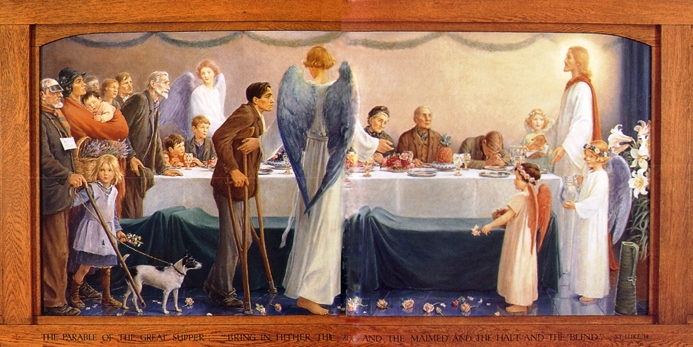 “You can catch more flies with honey than with vinegar.” This old saying is as true today as it has ever been. Yet again and again, we see powerful men and women behaving as if only their words or whims matter. All will/must obey quickly or lose position or favor. “I alone will decide …” “I alone can solve this problem.” “I alone, I alone, I alone…”
Is this really the way it works in life and in relationships of people or nations? History and experience say not really. Those who attempt to rule by force or intimidation eventually fail.
On the other hand, does simply saying “yes” to the demands of the powerful bring them to change their ways and seek the good of the community over their personal gain? No, not at all. In fact, they count on people quietly complying with their demands, whether out of fear of losing their own power or position or of having harm done to them and their families.
The powerful wield a wide array of resources and typically don’t hesitate to employ them against those who question their perspective or their actions. Don’t like the quiet opposition of a former government official? Just drop their access to security services funded by the government. Make them pay for their own security to protect from the risk of an unbalanced supporter of the one in power coming with weapons to kill them. We’ve seen this play out frequently in the past few weeks in our own country. It’s no longer the preferred response only of dictators in foreign countries.
How then are we to understand the admonition of Sirach, collector of bits of wisdom, in the book of Proverbs? “Conduct your affairs with humility.” What is humility? How does it show up in real life?
Humility is an attitude of recognition that one does not know everything, nor does one always see the best solution to a difficulty. It’s not a false declaration putting down or seeking to minimize one’s own gifts. We each have gifts we are to use for the benefit of others. But we also must admit that we need to work with and learn from others too.
So, Sirach continues, “… you will be loved more than the giver of gifts.” The greater the gifts received, the more important to be aware of the possibility of learning from others. One never knows when a gem of insight or wisdom will fall from the lips of a child, or a person with less education, or a person who has fulfilled a very humble role in life. “The mind of a sage appreciates proverbs, and an attentive ear is the joy of the wise.” Sir 3:17-18, 20, 28-29)
Honest people, people willing to listen to the experience of others and change their opinions and positions in disagreements will learn and grow. The experience of the lowly can be expressed in many ways and bring about changes in the way services are delivered and evaluated. Those willing to listen to the words of those with “boots on the ground” may find that academic theories or the ideas of those whose only experience is what they read in a book or heard on the radio or television have less to offer. Boots on the ground lead to eyes that can see more clearly the actual lay of the land – what will work, what will help, what is the best approach to resolve today’s issues.
Jesus too cautioned his followers about seeking the place of honor at all times. It’s far better to be in a position of being called to a place of higher honor than told to move down to a place of lesser honor.
But Jesus went a step farther. Typically, when we plan a gathering or a meeting, we make a list of guests based on priority of importance in our lives. We want to be sure the folks who can help our careers are invited, those whose respect we crave. We invite those whom we hope will return a favor sometime, or those we want to influence. However, Jesus says we are not to worry about inviting only those who might invite us in turn or bring some benefit to us. Instead, we are to “invite the poor, the crippled, the lame, the blind…” When we invite God’s “Little ones,” we invite God himself to our table. When we stand up for those with little or no power, we are standing up for God himself. And Jesus promises, “blessed indeed will you be because of their inability to repay you. For you will be repaid at the resurrection of the righteous.” (Lk 14:1, 7-14)
The resurrection of the righteous. Are we to expect blazing fire and gloom? How about trumpet blasts and storms? Voices so frightening we beg not to hear them ever again?
According to the author of Hebrews, this is not what we await or are to expect. Having approached the city of the living God, the heavenly Jerusalem, we may expect to see angels gathered in joy and those counted as firstborn of the Lord because of the way they live the law of love. God, the father and creator of all will be present, judging with love and understanding, as will Jesus who opened the new covenant to us all through the gift of his death and resurrection. (Heb 12:18-19, 22-24a)
The resurrection of the righteous will be seen in love and joy, as the family of God gathers from all lands – the everyday, ordinary people who live lives of humility and joyful service.
And we today? What are we to do? How do we live lives of humility, justice and peace? How do we speak and act as witness to the presence of God in our lives? How will we speak to the powerful our words of witness to the requirement of love of neighbor as ourselves? How will our humble care for newcomers, asylum seekers, those who have lived among us for decades as immigrants help protect the human rights of all. How will we reach our representatives and convey our support for those who have no power? How do we share the experience of love and the insights of the powerless who speak to us through their pain and fear as their rights are denied and their very lives are endangered?
We are called to conduct our affairs with humility this week. The kingdom comes into the world one day at a time, one action at a time.
Together let us join as witnesses of the coming of the Lord into our world. Let us speak on behalf of those facing hatred or danger. Let us share what we have with those who have little. Let us contact our representatives with our concerns about the changes occurring nationally that endanger the health and safety of our neighbors, whether in the field of immigration, healthcare, communications, food security, access to education, or so many other topics.
Let us go out into our week filled with courage, strength, and the humility to know we can’t do everything alone, but together, we can help usher in the Kingdom of peace and justice, the Kingdom of God.
Readings for the Twenty-second Sunday in Ordinary Time – Cycle C