Pages Menu
RssFacebook
Categories Menu

Posted by on Jul 10, 2021

Kindness and Truth, Justice and Peace – Signs of the Kingdom

Kindness and Truth, Justice and Peace – Signs of the Kingdom

The readings for the Fifteenth Sunday of Ordinary Time (Cycle B this year) begin with an event in the life of Amos the prophet (Am 7:12-15). A priest from the temple in Bethel named Amaziah essentially tells him, “Get lost!”

This might at first glance seem like a clash between the roles of priest and prophet. Anthropologists have noted these clashes in many societies. The priest’s role is to uphold the religious system and offer the necessary sacrifices to the local deity. The prophet’s role is to stand outside the gates and call for changes in the status quo when things get too unbearable for the poor and others outside the favored classes. Once the changes have been made in a society, the priestly class re-establishes a new status quo and all moves forward peacefully again.

To a certain extent this is what we see happening here. But there’s more to it than meets the eye. The Promised Land has divided into two kingdoms. The northern kingdom is known as Israel. The southern is Judah. Bethel is in the northern kingdom which has been quite successful in expanding into lands we now know as Syria and Iraq. The nobles are doing very well personally. The religious leaders are also profiting from the elaborate religious ceremonies, including sacrifices to local gods of the conquered areas. The religious establishment is favoring the ruling class rather than reminding them to care for the poor as well, and that favor is being returned.

Roving bands of prophets move throughout the land, speaking in the style of oracles – using puzzling language and leaving people to figure out what the oracle means. These prophets earn their living as they move from place to place from people who want to know what the future will bring – much like “fortune tellers” today.

Amos is from Judah. He is a shepherd and “dresser of sycamores.” He is not a member of any band of prophets. He is a respectable man who earns a good living from his work. But God called him, instructing him to go to Israel (the northern kingdom) and call the rulers and people there back to the covenant. When Amos obeys, his message is not welcomed and Amaziah tells him to go home!

This might have been the end of the story, but Amos does not back down. He explains his professional background as nothing remotely resembling a prophet and makes it abundantly clear that he has been called by God to deliver the message. The very next sentence he speaks is: “Now hear the word of the Lord.”

The Book of Amos was the first prophetic book in the Hebrew Scriptures. It became something of a template for the prophets and prophetic books that followed, including Isaiah, Jeremiah, and Ezekiel. The primary offense of the Kingdom of Israel? Failure to care for the poor, the widows and orphans, the conquered, and foreigners.

Psalm 85 puts it very clearly: kindness and truth meet, justice and peace kiss. Truth springs from the earth, while justice looks down from heaven. Justice, the right order of things, is based on kindness to each other. Only when the conditions of justice are met can there be peace and salvation.

The letter to the Ephesians (Eph 1:3-14) begins with a reminder of God’s blessings for those called to the community of believers. All things are summed up in Christ, according to God’s plan from before the world was created. We are chosen to be the adopted children of God, through his son, Jesus.

Finally, we see Jesus (Mk 6:7-13) sending out his twelve closest followers two by two to heal the sick and drive out “unclean spirits.” They are not to take anything but a pair of sandals with them on the journey. Their mission is not to the rich. Those who judge the importance of the messenger by appearances only would never give these messengers the time of day! But to those who welcome them and their message of repentance (turning back to God), healing of the sick and deliverance from demons is possible.

Remember, in those days what we know as mental illness was attributed to possession by evil spirits. This is not to say that such spirits don’t exist. They can cause a lot of trouble for any who listen to them. However, healing of the hurts, anger, frustration, and divisions that plague human relationships and can make mental illnesses worse is truly a form of driving out unclean spirits/demons too. When minds and hearts are healed, it can lead to obviously changed lives.

Kindness and truth, justice and peace – all are signs of the kingdom. May they characterize our lives in this coming week and into the years to come.

Read More

Posted by on Jul 7, 2021

God Calls “Ordinary” People

God Calls “Ordinary” People

The readings for the Fourteenth Sunday of Ordinary Time speak to us of the experiences of three “ordinary” people. These three men were seen by their families and communities as just regular folks. No one expected them to be any different than the rest of their group. They would grow up, have a trade or role in the community, marry, have children, grow old, and die – just like everyone else!

But that was not to be. God had different plans for them. Blessedly, these men listened and responded to the call they received.

Ezekiel

Ezekiel (Ez 2:2-5) lived at a time when Israel was conquered by the Babylonians – a people who lived to the east in an area we now know as Iraq. He was a priest in Jerusalem and was captured early in the war. He was taken to Babylonia and no one would have expected anything good to come of that. Yet that misfortune was the start of something special. In Babylonia, the Spirit came to Ezekiel, setting him on his feet and sending him on a mission. The mission? To tell the people of Israel in exile there that God was still their God, despite their refusal while still in Israel to live by the ancient covenant and rules of their faith. He was to speak using very specific language, “Thus says the Lord God!” These words identified him as a prophet – one who spoke the word of God.

A prophet in the Bible is not one who foretells the future. The prophet is the one who speaks the word received from God. Typically, that word proclaimed by the prophet is not one the people want to hear. It calls them back to a life that might seem to be more restricted and controlled. Often the prophet meets great resistance. But for those communities who respond and obey the word proclaimed by the prophet, it can become a life leading to inner peace and to justice in the community and among the nations.

The Psalmist

Does this mean all is well for the prophet or for those who try to follow the Lord’s call? Not at all. The psalmist speaks  in Psalm 123 for those who have had their fill of the mockery and contempt heaped on them by people who have rejected the Lord’s ways. “Have pity on us, O Lord, have pity on us.” Show us your mercy and end this suffering! Enough already!

Saul of Tarsus – Paul

The second ordinary man is Saul of Tarsus. Saul was originally trained as a tent maker, but he had studied the Law and was a teacher in Jerusalem. He sincerely believed the followers of Jesus were unfaithful to their Jewish roots and traditions. They were the kind of folks who got everyone else in trouble – the kind of trouble that led to them being conquered by neighboring nations. Saul set out to arrest Jesus’ followers and root out this dangerous group. But Jesus met him on the road to Damascus and called him personally to go out and tell the world the good news of the Resurrection and the Kingdom of God.

Saul, now known by his Latin name as Paul, set out to do just that. He traveled all over the Middle East and Greece. Eventually he ended up in Rome and died as a martyr there. His letters are some of the first documents we have from the early Church, earlier even than the Gospels.

In today’s reading from his second letter to the people of Corinth (2 Cor 12:7-10), Paul speaks of his weakness. He has received a tremendous gift in the experience of his calling, but he is still an ordinary guy. He battles physical and spiritual weaknesses just like everyone else does. He has asked to be relieved of these weaknesses, but that is not how grace works. The Lord’s gift of life and love works through the weakness of those who witness to him. Paul declares to the people of Corinth and to us, “When I am weak, then I am strong.” The same deal applies to us.

Jesus of Nazareth

Finally, we hear what happened when Jesus went home to Nazareth (Mk 6:1-6). He has had a tremendous experience of being called at his baptism in the Jordan River and the time in the desert. He has seen people healed of physical and psychological ailments at his touch. Yet when he goes home to his family and religious community, no one is willing to believe he should have anything to say to them. He is not a trained, certified religious teacher. He is a carpenter and the son of a carpenter. An “everyday Joe.”

In response, Jesus quotes a traditional saying: “A prophet is not without honor except in his native place and among his own kin and in his own house.” He was unable to work wonders or heal people at home, because they were not open to receive the gift he had to offer.

Prophets in our midst?

We look back on these men and their experience. How easy it would be to say, “I would never do that to a prophet that came to me!” Yet it is all too easy to overlook the gifts of those we love – the ordinary people who come to us with a word or insight that might well help us on our way to holiness.

Let’s pray today that we be open to the prophets in our midst. The ordinary folks who speak God’s word to us.

Photo: Michael and Marjorie Brewer – Two ordinary people of faith

Read More

Posted by on Jun 27, 2021

“God did not make death…”

“God did not make death…”

“God did not make death, nor does he rejoice in the destruction of the living.” The readings for the Thirteenth Sunday of Ordinary Time begin with this surprising statement from the book of Wisdom (Wis 1:13). Furthermore, the world and its creatures are “wholesome” and justice (God’s design of the right order of things) “is undying.” Physical death is merely the result of the envy of the devil, not something that can stop God’s gift of life.

The Lord rescues his faithful ones, brings them up from the netherworld, changes mourning into dancing. We respond by giving thanks, in the words of the psalmist (Psalm 30).

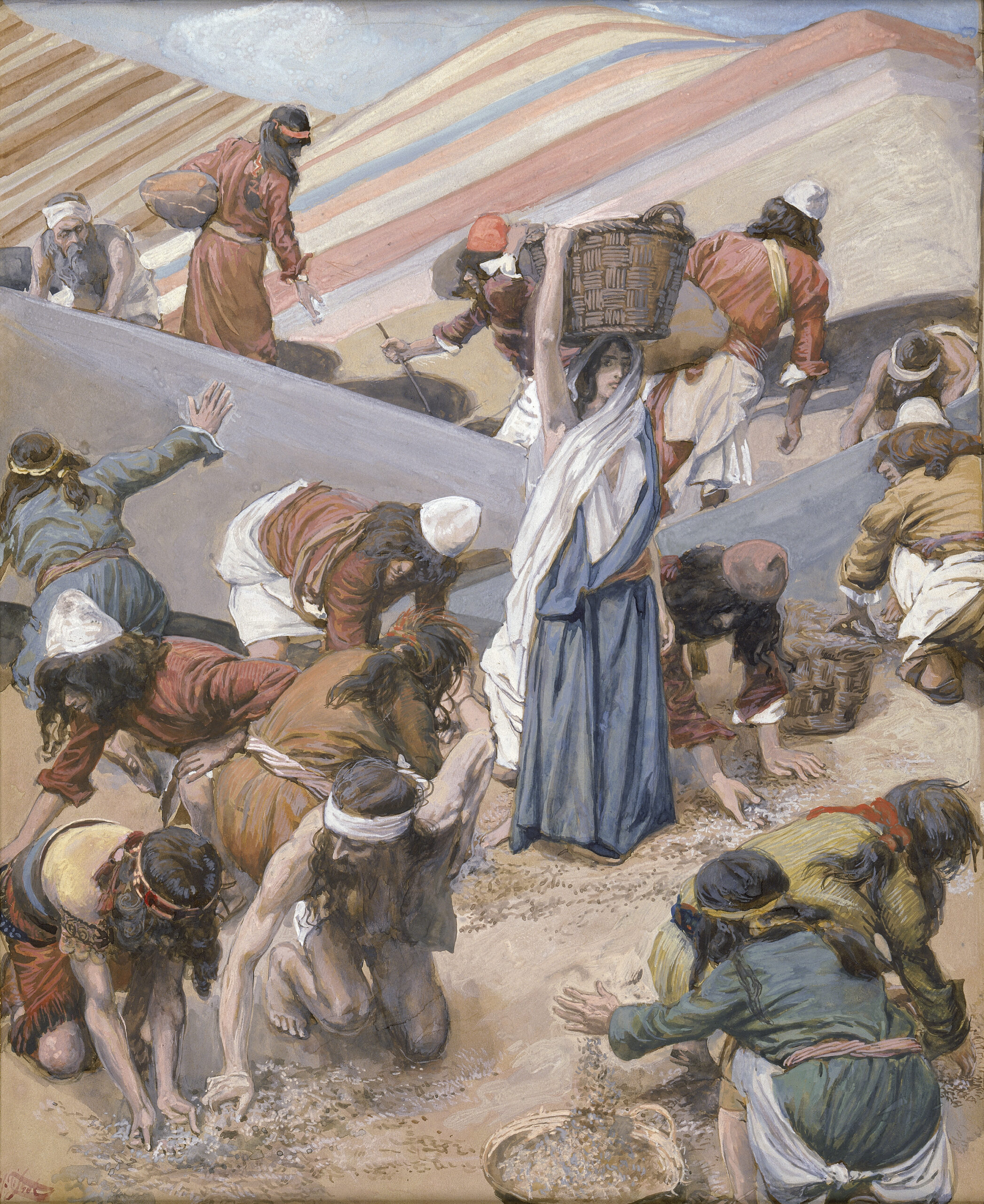
St. Paul asks the community at Corinth and us as well, to share what we have with those in need. We the community respond to the gift of our Lord by sharing what we have received, just as Jesus, the Word of God, entered into our human experience and shared fully in it. As was the case of the Israelites in the desert, those who have much aren’t to have more than their share and those who have only a little ought not to end up with less than their fair share of the manna (or other gifts) needed for life.

Finally, St. Mark tells of two healings. Jairus, an official from the synagogue, asks Jesus to heal his child. Jesus goes immediately with him.

On the way to the child, in the hustle and bustle of the crowd, a woman who has suffered with a hemorrhage for twelve years touches his cloak. She is hoping for healing. Immediately power goes from him and she is healed. Jesus notices this and asks who touched him. The others are amazed. In such a crowd, lots of people were touching and bumping into him. But the woman comes to him, in great fear because she has broken several rules by touching him, and confesses what she has done. Jesus does not scold her. Instead, he tells her that her faith has saved her and that she may go in peace, cured of her affliction.

Jesus then continues to the home of Jairus, where the child now has died before Jesus reaches her. Yet Jesus takes her hand and tells her to get up. The original Greek words distinguish between what Jesus said and what she did. Our English version uses the same word, arise, for both what Jesus told the girl to do and her rising from death. But in the original, Jesus said she should “get up” and the child “arose,” the same term used to describe Jesus’ own Resurrection.

These readings speak of the great hope we share as Christians. It’s particularly relevant for me just now, as I have had to say goodbye to both my mother and father in these past 5 weeks. I find myself remembering another time when both loss and hope were very present in my life.

Birth and Death – Somewhat similar transitions

Almost 40 years ago, when I was pregnant with my second child, my grandfather passed away in December and my father-in-law (who was only one year younger than my grandfather) in January was dying as well. He had cancer and it was a slower, more painful process than my grandfather’s passing. I asked God why death had to be so hard. The response surprised me. I was reminded that birth is not easy, either for the mother or for the child. The child is happy and at peace in the womb. Every need is met, even those unrecognized. Nothing has to be done. It’s warm, peaceful, pleasant. It might be getting a bit tight, but it’s still possible to stretch and move around. Who would want to get squeezed and pushed and forced through a narrow opening into a bright, cold, and unknown world! Yet that is what must happen for life to continue. And, oh what a gift life here on Earth is or can be for us. I don’t think there are very many of us who would willingly return to the womb after tasting the joys of life outside.

Death is not an end, it’s a new birth into a life of even greater beauty and freedom. Our bodies wear out and we move on to new ones. Sometimes it happens after a long life. Sometimes things happen that make it impossible for our bodies to work anymore, and we move on. But, hard as it is for those of us who remain, life continues. We rise to a new way of living. The limitations of our aging or injured bodies are removed and we share in the life of love of our loving parent in the great dance of life.

“God did not make death, nor does he rejoice in the destruction of the living…”

We hold on to this promise.

Read More

Posted by on Jun 20, 2021

Seas and Storms – In all Seasons of Life

Seas and Storms – In all Seasons of Life

The sea and its storms speak to us today, the 12th Sunday of Ordinary Time, of the power and love of God. We who live or have lived by the sea are intimately aware of its power and unpredictability, as well as its seasons.

Before I moved to Santa Cruz, I had no awareness of the subtle moods of the ocean’s seasons. But after over thirty years of living a block from the shore, I can tell from its colors, sounds, smells, and tides what season of the year is upon us. In winter, I can predict the coming of stormy weather several days in advance, even when the skies are sunny and beautiful. The ocean waves begin to roar about three days before a big storm arrives in the winter. (We don’t typically get storms in the summer on California’s Central Coast.)

We speak of stormy times in our lives too. Sometimes all is well and predictable. We know pretty much what to expect when we wake in the morning and as we go through the day. Other times are not.

Job (Jb 38: 1, 8-11) had just experienced many days and weeks of loss. His family, his flocks, his reputation, and his very health had all been stripped away. He called out in anger and frustration to the Lord, demanding an answer – “Why have you done this to me? What is the meaning of this?” (Not an exact quote, but that’s the sense of it.)

God’s response was to remind Job that humans are not the ones who set things up originally. Humans can’t control what happens in nature or their lives. It was foolish even to expect that they might! This was not a really satisfying response from a human perspective. Yet even so, by responding to Job’s cries of anger and frustration, God somehow reassured Job. By the end of the story, Job has recognized God’s place as the one in charge and he has received a new family, livelihood, and place in society.

Storms are both literal and figurative in our lives. The psalmist (Ps 107: 23-31) speaks of literal storms that blow across the waters and the rejoicing of those tossed around during the storm when the Lord answers their prayers and calms the sea. St. Paul (2 Cor 5:14-17) speaks more figuratively of the transformation of life as new life and a new creation have sprung forth from the death and resurrection of Christ. “Old things have passed away; behold, new things have come.”

Jesus and his friends experienced both kinds of storms. The one in today’s reading (Mk 4:35-41) was physical. A storm came suddenly while they were crossing the Sea of Galilee. The boat was filling with water. Drowning was a very real possibility. Then they woke Jesus. He shouted to the stormy seas to be still. In the original Greek, the word used was more akin to our “Shut up!” than to the more polite “Quiet! Be still!” of our translation. Jesus did what only God can do – he calmed the stormy sea.

Today, as then, we turn to him in stormy times. He may not calm or take away the hard things we are experiencing. Sometimes these things are a necessary part of life. But he is with us through them. We hold on to the life raft of his promise and presence until the storms die down and peaceful times return.

See you at Mass, as we give thanks for his presence with us, calming the storm!

Read More

Posted by on Jun 15, 2021

A Mustard Seed Story

A Mustard Seed Story

Jesus’ parable of the mustard seed in the gospel of Mark always brings a smile to my face.

When I was a girl, my mother always made dill pickles. She used the same recipe her mother, grandmother, sisters, and brothers used. But each family’s pickles tasted a bit different.

No one knew why that should be until one of my aunts, who was a home economics teacher, decided to experiment with the ingredients. She made pickles one day using the same batch of cucumbers and dill from the garden, and the same brine. Then she put identical amounts of all but one ingredient into the jars. Each jar had one ingredient in a larger amount than the other jars did. Several months later, when the cucumbers had matured into dill pickles, she tasted them. The key to the spiciness of her pickles in comparison with those of all the rest of the family turned out to be the amount of mustard seed she put in the jars. She used a heaping measure of the seed. Others used a level one.

The mustard seed we all use(d) for pickles is a relatively large seed. It’s far from being “the smallest of all the seeds on the earth” as is the seed described by Jesus in St. Mark’s gospel. However, these mustard seeds were the only ones I had ever seen.

When I began teaching fifth and sixth grade religious education classes, I included this parable among the ones I shared with the children. I brought some of the seeds with me to class and asked them to glue them into their books on the page on which they had written a bit of the parable and drawn a picture of a tree with birds in it. I always cautioned them not to eat any of the seeds. Invariably, one of the boys would taste one anyway. He would then need to race from the room to get a drink of water! They asked why I had given them something so spicy and I would remind them that I had told them not to taste them.

Still, I wondered about the description of these seeds as being the smallest on earth. I knew that lettuce seeds and snapdragon flower seeds were much smaller.

Then I met Paul. Paul was from India and came to live with us for a while. He introduced me to South Asian foods, including curries, chapattis, and other delights. One of the ingredients he used was mustard seed. This was a tiny brown seed, not much bigger than the period at the end of a sentence. It was not the big yellowish one we used for pickles. It gave a lovely richly spicy flavor to the food, though it was subtle when used appropriately in the recipes.

When I met this variety of mustard, I began to understand the parable of the mustard seed. A tiny little seed could indeed make a big difference in the flavor of a food. It could grow into a much larger plant as well. Birds and other animals could thrive in its shelter.

Was the mustard seed of which Jesus spoke really the same as these mustard seeds used in cooking? Maybe not. There is a plant known as a mustard tree that grows in the Middle East. It has yellow flowers and tiny seeds. It’s more of a shrub than a tree, but it can grow to be up to 20 feet tall

Whether or not the seeds we identify as mustard seeds for cooking are the same ones Jesus mentioned is really not the important thing. What matters is that very small things can grow into much larger ones and have an effect far greater than their size.

The kingdom of God is truly like the mustard seed. It appears in very small and unobtrusive ways. No one would think twice about it or about the prospect that it could be important in any way. Yet as the poor receive food, clothing, shelter, opportunities, respect, health care, and other necessities of life, as justice (the right order of things) is restored, the kingdom begins to blossom and grow. God works with tiny things to bring about great wonders. A shoot from a tree can grow into a massive new tree high upon a mountain. A tiny seed can grow to be a beautiful flower or a tall tree sheltering birds and other creatures. And the harvest of justice marks the arrival of the Kingdom of God.

Read More

Posted by on May 30, 2021

Trinity Sunday – A celebration of a fundamental mystery of our faith

Trinity Sunday – A celebration of a fundamental mystery of our faith

The mystery of the Holy Trinity is celebrated today, the first Sunday after Pentecost. It is a mystery that Christians have been contemplating and trying to comprehend since the earliest days of the faith. We believe in a God who is One, yet we also claim that God is Father, Son, and Holy Spirit. How can that be? Most religions simply say that there are many gods. Maybe there’s one high god in their system, but there are may others too. We Christians don’t agree. God is One. Yet there is a wondrous complexity to that One.

In the first reading today, we hear Moses reminding the Israelites of the history of their relationship with God. These are the children of the people who first left Egypt forty years earlier. Moses reminds them of the wonder of the fact that the same God who created the heavens and the earth has chosen them to be his special people, his special friends. More than that, he rescued them from slavery and now has led them through the desert to a land that will be their own. God cares about them and has given them a set of rules and guidelines that will allow them to live together in peace in their new homeland. God has chosen to enter into a relationship of love with humans. God will provide for his people as a parent provides for children.

The second reading, from the letter of St. Paul to the Romans, reminds us of the role of the Spirit of God. The Holy Spirit, the holy breath of God, the Spirit of Love leads the children of God. But this relationship between humans and the divine Spirit is not one of slavery or coercion. There is no need to fear God who is Spirit. God calls us children. We are to think of God as a Father, a Dad, a Papa. With Jesus, the Son of God, the Word of God, we become heirs of the glory of God as we live the life to which we are called. All the wonders of a loving relationship are ours.

In the Gospel reading, we hear the end of St. Matthew’s account of the life of Jesus. Jesus calls his remaining eleven disciples to a mountaintop. There he commissions them to be apostles, the ones who will go out and tell the world what they have seen and heard: that the man Jesus, Son of God, has been “given all power in heaven and on earth.” He sends them forth to baptize people from all the world, bringing them into a relationship of love with the same God and Father who chose the Israelites so long ago. They are to baptize in the name – the power and authority – of the Father, and of the Son, and of the Holy Spirit. He also promises that he will remain with them always, to the end of the age.

We live today in this love of God. Baptized into this relationship. Most of the time we are as conscious of it as a fish is of the water in which it lives. But the love of God surrounds us and permeates our being. Father Creator, Beloved Son, and Holy Spirit. One God, in a dancing trinity of love and relationship which catches us up into the dance.

Read More

Posted by on Mar 17, 2021

A Symbol of St. Patrick

A Symbol of St. Patrick

St. Patrick first went to Ireland as a teenager, kidnapped by pirates. After his escape from captivity and slavery, he became a priest. Eventually he also became a bishop. He returned to Ireland as an adult and began to teach the people about God and our Catholic, Christian faith.

This window from St. Patrick Church in Spokane, WA combines many symbols into one image and merges their meanings to tell us of Patrick.

The pointed hat at the top is a bishop’s mitre. The mitre is a symbol of his role and authority as a bishop and leader of a Church community in a particular place in the world. The bishop is responsible to lead and guide many smaller communities of believers.

The cross on the right side of the window tells of Patrick’s role as a missionary. As a missionary, he is one who brings the Good News of the life, death, and resurrection of Jesus to those who have not yet heard it.

The shepherd’s crook on the left tells of Patrick’s role as a shepherd of souls.  It also reminds us that he was once a slave set to work as a shepherd by his owner.

Finally, the shamrock is a plant native to Ireland and has come to represent that nation. The shamrock was used by Bishop Patrick as a symbol of the Holy Trinity – one God who is Father, Son, and Holy Spirit.

Together we are reminded of a teenage shepherd, kidnapped and enslaved, who escaped but returned to share the joy of the Gospel with a foreign nation, and eventually with all of us.

Window detail from St. Patrick church in the historic Hillyard neighborhood community of Spokane, WA.

Read More

Posted by on Jan 10, 2021

The Baptism of the Lord – 2021

The Baptism of the Lord – 2021

What a week we’ve all had! What should have been a routine process in the Congress of the United States of America – the certification of the results of the presidential election in the United States – was anything but routine. Challenges to state totals by representatives of other states. Rioters invading the capital building. Law-makers taken to safety and in hiding for their own protection. A president who encouraged the rioters. Senators and Representatives being accosted and booed when they are in public. Is there any good news? Where can we find hope? Lots of questions rise in everyone’s minds.

This Sunday, as a new week begins, we celebrate the feast of the Baptism of the Lord. Jesus was a good man, a carpenter, son of a carpenter, in a small town in Galilee. He lived in a conquered land. All knew the power of Rome and of the soldiers who enforced order. Those who wanted to live to an old age didn’t make waves or draw attention to themselves. But a prophet, who happened to be Jesus’ cousin, was baptizing people at the Jordan River – not too far away. John was telling people that the long-awaited Messiah was near, maybe already in their midst. It was time to get ready – to turn from their sins and welcome God’s Anointed One.

Jesus went to see for himself what was happening. He felt a call to enter into the water and become closer to the Lord God. As he entered the water and was plunged into it (to be baptized means to be plunged into ….) he experienced the coming of the God’s Holy Spirit, gently filling his heart and telling him, “You are my beloved son: with you I am well pleased.” He left the river with much to contemplate – a changed man, with a new awareness of who he was and who he was called to be. He went to the desert to pray and sort things out. When he returned, he began sharing what he had learned of God’s love and plan for humanity. The mission had begun.

Listen carefully to those words spoken to Jesus at his baptism. Our Father speaks those words to each of us as well. We who have been plunged into the life of God at our baptism and anointed with the Holy Spirit in Confirmation, are God’s beloved children.

We are called to the water. We are offered all we need for life, given freely by God. We are offered forgiveness when we mess up. We are promised life.

May we hold fast to this promise as we reach out to those with whom we agree and those with whom we disagree. Respect for each other as human beings, compassion, sharing of visions for the future, rejection of violence, and work for reconciliation are now our calling. We are children of one Father, brothers and sisters of the Lord, anointed by God’s Spirit. With Jesus we go forth into our world to bring words of peace, justice, and healing in times of great distress. Can we be peacemakers? Can healing occur? Will justice become a reality for all. Will we be part of the solution or part of the problem?

On this day, we pray for courage, wisdom, and strength to listen to each other and seek common ground. Our country and our world have need of these gifts.

Read More

Posted by on Apr 5, 2020

Palm Sunday – Jesus Comes to Jerusalem

Palm Sunday – Jesus Comes to Jerusalem

Palm Sunday has arrived once more. In 2020, as we deal with the challenges of a worldwide pandemic, it seems a good time to look carefully at the story of Jesus’ entrance into Jerusalem as he began the last week of his public ministry.

Here’s a word search puzzle to try, share it with children and friends, and reflect on what it all meant then and now. If you can’t find all the words, check here for the solution, but spend some time searching for them and reflecting first!

Read More

Posted by on Nov 29, 2019

Knocking Over Stones and Setting Them Back Up Again

Knocking Over Stones and Setting Them Back Up Again

The day dawned overcast and cold. Snow was expected within a few days and the family had gathered to celebrate the 90th birthday of our mother/grandmother/great-grandmother/sister/aunt. While all were there, a group of the men went outside to do some of the maintenance tasks that require more agility and strength — things like cleaning out gutters, washing windows, and so forth.

I watched from an upstairs bedroom, making beds and tidying up a bit. Some of the men were piling fallen leaves around the bases of the rose bushes in the back yard flower bed. A small child, a bit over 2 years old, was happily playing as the men worked. His father was keeping an eye on him while he worked.

Eventually the child noticed a stack of balanced rocks in the corner of the garden. He came closer to the rocks as I watched, fascinated with the way they were just standing there. I could tell he was going to knock them over by the way he approached and reached out towards them. I thought about opening the window quickly and calling out to him to stop, but I didn’t. I just watched. There would be no serious harm done if the rocks fell over.

Sure enough, the hand stretched out, the rocks were touched, and over they went. The child was a bit surprised. He hadn’t expected that to happen. But he wasn’t frightened or upset, just surprised. His father came over and squatted down beside him. Together they looked at the now fallen rocks and talked about what had happened. Then father picked up the first rock and laid it carefully on top of the larger stone that had been the base of the tower. The child reached to pick up the next one, and father helped him get it up and onto the first one. This continued until the entire stack of rocks had been rebuilt.

I’ve thought quite a bit about what I observed that morning. It could have ended so unhappily if father or anyone else had become upset about the results of the child’s curiosity. But everyone just took it in stride. A child had learned something about the world and gravity. He learned about putting uneven things together so that they stay balanced. And he learned that when he breaks something, he can help put it back together again. All very positive things to learn at a young age.

What did I see and learn?

I saw a beautiful example of how God observes our actions. Sometimes we reach out and touch things that will fall or break or should not be touched for another reason. Sometimes we do it deliberately. Sometimes accidentally. God does not interfere. God keeps watching as we learn what happens when we do that particular thing. God knows that we don’t always foresee the effects our actions will have. But God knows that we have to experience many things in order to learn.

I saw that when things have been broken and are put back together, they don’t always look the same. Sometimes they take a different shape or form. They are still beautiful, but in a different way.

I saw the wisdom of God in giving us family, friends, companions, and other people in this world. Like the father of my great-nephew, other people help us make things right again. They help us pick up the pieces of things that have fallen and maybe even been broken. Their acceptance allows us to learn without carrying a huge load of fear or shame around with us.

I saw a real-life example of reconciliation. Something was broken. Someone offered forgiveness. Together the broken was put back together for the enjoyment of the family community.

Putting the rocks back together in our lives

As we come to the end of our liturgical year and the beginning of a new one, it’s good to remember that our God watches us with great love, sending others to help us along the way. In the sacrament of Reconciliation, the priest acts on behalf of God, offering forgiveness from both God and the  community, and helping us find ways to heal and repair what we have broken. In the penitential rite at the beginning of each celebration of Eucharist (Mass), we also ask for and receive God’s forgiveness. We ask each other to pray for us and help us in becoming more loving followers of Our Lord.

May we, like the little child I watched, always be open to learning new things in this coming year, trusting that when we make mistakes, others will help us see what has happened and help us to put things in order again. May we be forgiving of the mistakes of others, and quick to admit our own, asking forgiveness in turn. Together, like the father and son I watched, we journey through life on our way to our Father who watches with a smile as we work together to put the stones back into a new and still lovely order.

Peace.


Read More