Pages Menu
RssFacebook
Categories Menu

Posted by on Jul 18, 2025

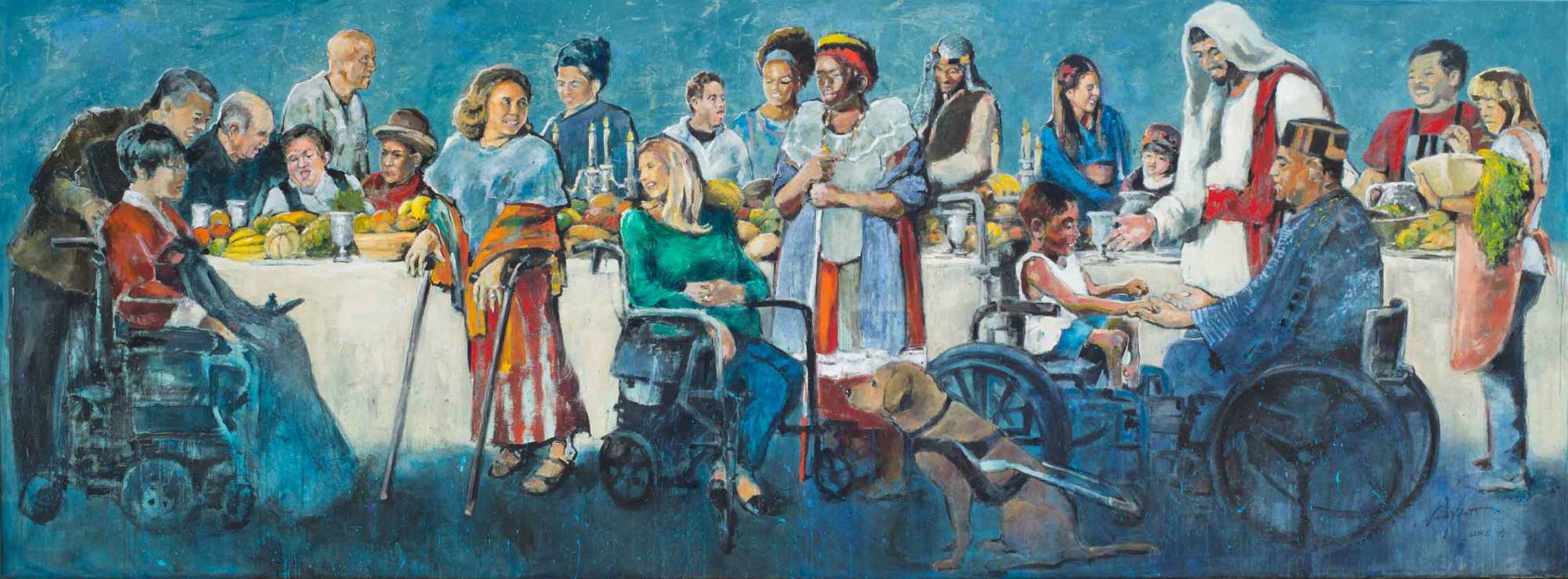
The Day the Lord Came to Dinner

The Day the Lord Came to Dinner

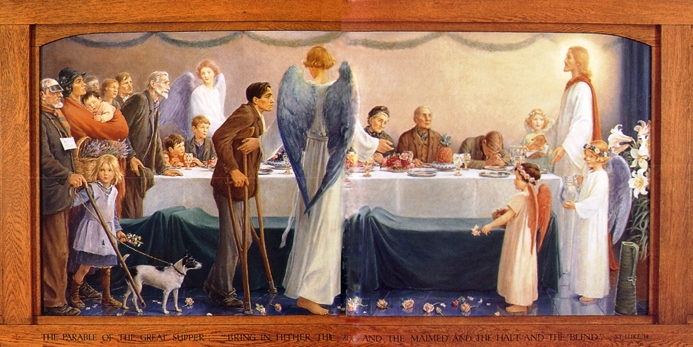
Imagine for a moment that you got a letter, special delivery, saying the King of England was coming to dine at your home tomorrow evening. Once you got over the shock, how would you prepare? You’re an ordinary person, with no servants or staff to make things happen. Your home is well lived-in, not always perfectly tidy, but comfortable.

What are the most important things or rooms to have clean? What will you serve for dinner? Which dishes should you use? Why would the King ever think to come to your house? So very, very much to do in such a short time… How can it be possible to get everything ready on time?

In a great whirl of activity, the house is cleaned, the meal prepared, best clothes are worn, and at the appointed time, the King arrives. It proves to be a memorable dinner, because, surprise, he can be just a regular guy when he’s not acting as King!

Now most of us will never have this challenge land on our doorstep. Kings  don’t often drop in for dinner and I would guess most of us have never received a letter from the King of any country. Still … there are times when hospitality is the most important thing we can offer.

One very ordinary day, Abraham and his wife Sarah were camping by the terebinth of Mamre. A terebinth is a shrub from the cashew family that grows to be the size of a tree and also produces turpentine. They traveled with their sheep from one part of the land to another. But this particular day was noteworthy.

It was around the middle of the day and getting hot. Abraham came out of the tent, perhaps to cool off in the shade of the tree. He noticed three men approaching as he left the entrance of the tent. Visitors were not common in those days and places, so he ran out to greet them and invite them to stop for a meal and a rest in their journey. He was delighted when they agreed to do so. It would be a chance to catch up on the news from far away.

He quickly went into the tent and asked Sarah to make rolls for the meal, using plenty of fine flour. He chose a choice steer and ordered a servant to prepare it to be eaten. Then he took curds and milk, along with the meat of the steer and the rolls and served the three visitors a fine meal. He stood beside them as they ate, ready to provide for anything more they might request.

After they finished eating, they asked Abraham where his wife might be. He responded that she was in the tent. A modest woman would not go out to meet strangers in those days. One of the visitors told Abraham that in a year when he, the visitor, returned, Sarah would have a son.

Now Abraham and Sarah were both old and they had never had children, so this sounded pretty far-fetched. In fact, Sarah laughed out loud at the preposterous thought! But as it turned out, she did have a son the next year and his name meant, “I laughed.” (Gen 18:1-10a)

It wasn’t the King of England who visited Abraham and Sarah. It was the Lord who came without warning and happily accepted the hospitality of a man and his wife. The blessing of their gift of hospitality by the Lord opened the door for all the blessings that would follow through the centuries, from the time of Abraham to the present.

Jesus too stopped in for dinner unannounced on occasion. One day he visited the home of his friends Martha, Mary, and Lazarus. His visit was unexpected and there was much hustle and bustle in the house and kitchen to get dinner ready. The men were not expected to help fix dinner. Their role was to visit with and entertain the guests. The women were to get the food ready and serve it.

But this day, Mary couldn’t resist the urge to sit with those around Jesus and listen to him talk. He was always such an interesting person. Martha, on the other hand, was very aware that an important part of the team was missing from the kitchen. What was Mary thinking! She needed to be in the kitchen helping. No excuses.

When Martha went to Jesus to demand that he send Mary to help in the kitchen where she belonged, she got a surprise. Jesus responded, “Martha, Martha, you are anxious and worried about many things. There is need of only one thing. Mary has chosen the better part and it will not be taken from her.” (Lk 10:38-42)

Wow. That would be hard to hear, I imagine. How can it be that not doing what is needed to provide for a guest is better? Yet there’s an important lesson for all of us here. Sometimes we can’t and don’t need to make sure everything is organized and ready on time or in the usual way. Sometimes we simply need to stop and listen and learn what is really important for that moment. The gift of the present moment can’t be replaced. Somehow, folks will find food to eat. They may need to work together in unfamiliar ways, but generally no one starves for want of getting into the kitchen and preparing the food that’s there! In the meanwhile, there are treasures of wisdom that will be missed if the focus is too strictly on what is expected of each person at any given time.

The Lord came to dinner that day. They didn’t know he was the Lord. He was their friend, Jesus of Nazareth, who happened to be a traveling preacher and healer. Maybe even a prophet. His words to Martha that day were really a reminder that there’s a time to take off the apron of management of the kitchen and hosting the meal and instead sit to be present with the guests, honoring the gift of their presence.

Years later, in his teaching, St. Paul explained to the Colossians that all the hardships and suffering he had experienced through his many years of travel and teaching were worthwhile. They made it possible for him to share the great wonder of the incarnation. Christ is present now in each person in the community, following the death and resurrection of Jesus. Each person may bring the presence of the Lord into every encounter with another. As we live as a community, or as a family, or as individuals with friends, we bring the presence of the Lord to our encounters. When we gather at the table at home, the Lord is present with us. When we gather at the table of Eucharist, the Lord is present with us. (Col 1:24-28)

We don’t need to receive a letter announcing the coming of a special guest. Each person we encounter, each person with whom we share our lives, brings the possibility of meeting the Lord in a new way. The big challenge we face is to remember to stop and listen, to hear the deeper message of love. Not always easy. Often we miss the boat. But always an important goal.

This week, may we remember to take time to welcome each person who joins us at table. Even the family with whom we eat every day! There’s always something that can be learned or shared if we take time to listen and ask questions. And when we meet others outside the family, may we be open to hear the Lord’s voice from them as well.

Peace and joy be yours as the Lord joins you for dinner.

Readings for the Sixteenth Sunday in Ordinary Time – Cycle C


Read More

Posted by on Jul 13, 2025

Hidden in your Hearts

Hidden in your Hearts

Children’s songs are passed down from generation to generation, sometimes with slightly different words, but with essentially the same tune and ideas. One such song is “Goin’ on a Lion Hunt.” I learned it as a Brownie Scout and we sang it through the years around campfires or in troop gatherings. It was always fun to act out the words as in the song we came up to a tree and had to “go around it” or a creek or a field and had to “go through it.” Of course, when we finally found the lion, we were far from prepared for the sight and had to repeat all of the motions in reverse as fast as we could until we arrived safely at home!

Quest stories are a feature of most cultures. A person is presented with a challenge and must go forth, away from all that is familiar, in search of the answer to the question, or a treatment for an illness or enchantment, or their true calling in life. Sometimes the quest includes other persons of about the same age. Sometimes, the hero must go alone, seeking advice from those met along the way, including spirits and animal friends. Trials abound, traps for the unwary, surprise sources of inspiration, and eventually, the goal of attaining the wisdom or prize of the quest.

Many of my favorite stories have been those of quests, especially those that include young people and some historical or mythological characters as well. It’s fun to learn about other cultures or historical events through the eyes of observers who are witnesses or participants in them.

Sometimes we think a quest must also be necessary to figure out God’s will for us. What are we to do? What does God want of us? Where will we find the answers? Surely something important enough to please a divine being must be big and elusive!

Yet shortly before his death, Moses spoke to the Israelites, descendants of those who had been enslaved in Egypt and freed through Passover. “If only you would heed the voice of the Lord, your God, and keep his commandments and statutes that are written in this book of the law…” It sounds like these commandments must be something difficult to find. But no, the command “is not too mysterious and remote for you.” It’s not up in the sky or across the river. It’s not like going Lion hunting – through many dangers and challenges.

“It is something very near to you, already in your mouths and in your hearts; you have only to carry it out.” (Deut 30:10-14)

Already in our hearts? How can that be? What are the commands that can be in our hearts?

The Law states very clearly what is expected. “You shall love the Lord, your God, with all your heart, with all your being, with all your strength, and with all your mind, and your neighbor as yourself.”

OK, but what does that mean in terms of actions? A scholar of the law asked Jesus that exact question one day. “Who is my neighbor?”

Jesus didn’t send him on a quest to find the answer to the question, though in a novel he might have done so. Instead, he told the man a story.

“A man fell victim to robbers…” The poor man was stripped of his clothing, beaten, and left half dead by the side of the road. We’ve heard the story many times. A priest saw him and moved to walk on the other side of the road. A Levite, a person who could assist with sacrifices in the Temple, also crossed the road to avoid contact with the injured man. Only a man from a stigmatized group, a Samaritan, stopped to help the injured man.

The Samaritan was “moved by compassion” and stopped to offer first aid and care. He took the man to an inn, carrying him on his own animal. He had to continue on his journey the next day, but he paid the innkeeper to continue to care for the wounded man, promising to pay any additional cost of the care when he returned.

Jesus asked the scholar, “Which of these three, in your opinion, was neighbor to the robbers’ victim?” When the scholar answered, “The one who treated him with mercy,” Jesus confirmed his observation. “Go and do likewise,” he said. (Lk 10:25-37)

Compassion, mercy, kindness, forgiveness, gentleness. All are signs of obedience to the commands of the Law. They are shared among all people.

Jesus, “the image of the invisible God, the firstborn of all creation” through whom all was created, who holds all things together, tells the young man, “Go and do likewise.”

Each of us is included in that command. “Go and do likewise.”

We are born into a family, a culture, a nation, and we learn the ways of those who raise us. Some of those ways may not exactly be loving or welcoming of differences among peoples. Some may be hostile to ways of being that are not acceptable to “our people.” Some are fearful of outside influences and seek to remain “pure” in beliefs and actions. Some are afraid of change.

In a way, we each have a quest on which we embark as we grow up. We learn the ways and expectations of our families and peers with our mothers’ milk, and we take them as absolute truth when we are very small. As we grow, we learn of other peoples and other ways. We seek to find the right way to live as human beings.

In our quest, Moses told the people, we are not to think it necessary to go up to the sky to find the Lord’s command, nor are we to think we must cross the sea to find it. It is already near to us, “already in your mouths and in your hearts.”

Jesus too tells us that the place to look is within our hearts – to look for mercy and kindness and compassion that reaches out to those in need, those who are not from our own group, those who may be from other countries or ways of living. We each have gifts from the Father that are to be used for others. Part of our quest is to identify those gifts. One way to do it is by serving others. Opportunities open up, walls fall down as we approach, a smile opens the door to a heart.

Jesus is “the head of the body, the church … in him all the fullness was pleased to dwell, and through him to reconcile all things…” (Col 1:15-20)

Following his instructions, may we too go out this week and serve our fellow travelers on the way with gentle, compassionate, acceptance and understanding. We’ll meet some amazing people and have some wonderful adventures along the way.

Readings for the Fifteenth Sunday in Ordinary Time – Cycle C


Read More

Posted by on Jul 6, 2025

Two by Two and Away We Go

Two by Two and Away We Go

There’s an old song that includes a phrase I couldn’t find on the internet, but which I remember clearly. The phrase is from a little ditty and it goes, “Hey Dearie Dee and away we go, heigh ho, heigh ho, heigh ho.” It’s similar to songs from “Pinocchio” and “Snow White,” but the song I learned as a child had a different tune to go with these words.

This little song came to mind as I was thinking about the Gospel reading. Jesus sent seventy-two of his disciples out, two by two, to tell of the coming of the Kingdom, as well as to heal the sick. The disciples went out without any provisions, trusting in the goodwill of the people of the communities they would visit for meals and places to sleep. They came back amazed at the fact that they were able to heal the sick and even to “cast out demons.” Jesus was not surprised at this, encouraging them to continue to trust they would be protected from dangerous creatures such as scorpions and snakes.

Interestingly, the phrase regarding snakes in the Gospel is in quotation marks – the power to “tread upon serpents.” In the Book of Genesis, it’s the serpent in the Garden who tricks Eve into disobeying God by eating the fruit of the Tree of the Knowledge of Good and Evil. In this, Jesus is saying that spirits which oppose the Kingdom can be defeated as well. However, and more importantly, he reminds them and us, “do not rejoice because the spirits are subject to you, but rejoice because your names are written in heaven.” (Lk 10:1-12, 17-20) 

In some ways, the buddy system we see in youth organizations such as Scouting is similar – designed to protect participants, aid in learning new skills, and offer built-in companionship for activities. When things are going well, a buddy shares the joy. When things are hard, a buddy is there to share the difficulties and offer encouragement to keep going. Buddies also help each other figure out why things aren’t going as expected and what alternatives might work better.

Jesus and the early Christians used the buddy system too. Jesus traveled with a group of disciples. Paul and the other apostles traveled with companions on their journeys. The people they met formed communities, sharing what they had and working out differences of opinion. Early Christians tussled over the importance or need for circumcision. They tried to understand the meaning of the crucifixion. They suffered violent opposition from the authorities or influential people in the cities and towns they visited.

Yet through it all, they worked together to understand and share a completely new insight. Through the cross of Jesus and through baptism into this mystery, something new emerges. People become more than they were before the experience. They are a new creation, a new people, not divided by historical family ties into Jews and Gentiles, but one that is the new people of God.

Paul speaks of bearing the marks of Jesus on his body. Many times he suffered physically for his testimony to unwilling audiences, including at least one occasion when he was stoned and left for dead. Yet each time he continued forward, shaking the dust of the unwelcoming community from his feet and traveling on to the next town. (Gal 6:14-18)

Through the witness of the first Christians, a new community was born. This new community was a direct descendant of those who returned from exile in Babylon and rebuilt the city of Jerusalem and the temple of God on the holy mountain where it had been historically. The city is still in the same place today and the holy mountain continues to be a holy place for Jews, Christians, and Muslims.

Isaiah presents the Lord speaking of Jerusalem as a mother who nurses her child, calling on all to rejoice at her restoration. “Be glad because of her, all you who love her; exult, exult with her, all you who were mourning over her! … As nurslings, you shall be carried in her arms, and fondled in her lap … in Jerusalem you shall find your comfort.” Jerusalem will prosper again, says the Lord, and the people will rejoice and flourish as the power of the LORD becomes clear to those who serve him. (Is 66:10-14c)

Once again, we are not hearing about a solitary person. An entire people are included in this call to rejoice. The city was rebuilt and, like many cities through the course of history, it was conquered multiple times afterwards. Foreign rulers came and went. The city was destroyed more than once. But it’s always been rebuilt. And those who rebuild it rejoice in its rebirth.

Through the life and ministry of Jesus and the apostles, as well as all their successors through the ages, we too rejoice in the Lord’s presence and working in the world.

We too are called to go out into our own worlds of home, families, friends, work, community, and the wider world to share the Good News of God’s love and the coming of the Kingdom of God. Two by two symbolically, we encourage each other. Sometimes the interaction will be more solitary, but always we know we are part of a larger community and we share our experiences with each other. The message is not always welcome. It can be difficult to explain why we behave as we do, why we refrain from certain activities because they would harm or demean others, why we share what we have even if we don’t have as much as others might have. But with the support of our families and communities, we move forward in faith.

As we move through this next week, with all the potential changes and uncertainty it will bring, may we remember that we are not alone. We are a community, a group of people who have met the Lord as we reach out in service to those most vulnerable among us. We have met the Lord in our worship, in our sacraments, in our own quiet prayer times. We have met the Lord in the beauty of creation, the wonder of a sunrise or sunset, the roar of the sea, the power of a wind or thunderstorm. We have met the Lord in the help we ourselves have received in the hard times – brought for us by our buddies in the journey.

May our eyes and ears be open to see and hear – “Two by two and away we go, heigh ho, heigh ho, heigh ho!”

Readings for the Fourteenth Sunday in Ordinary Time – Cycle C


Read More

Posted by on Jun 22, 2025

Bread and Wine – Sacrifice to the Lord

Bread and Wine – Sacrifice to the Lord

Bread. Wine. Two ancient foods that nourish and bring pleasure, even joy, to millions of people today and untold millions of millions of people through the ages. Before the days when humans first domesticated animals and raised them for a source of food, they dried and ground plants, mixed in some liquid, heated the mixture on stones by a fire, and ate their bread.

Bread is one of the most important foods ever developed by humans. It comes in many flavors, shapes, and colors. It is made of many different grains, though wheat is the most commonly used. Some breads are leavened, others are not. Methods used to make the bread rise (leavened bread) are varied. Some use naturally occurring yeast, others use manufactured yeast. Some use chemicals such as soda or baking powder. Others use steam or forcing bubbles into the dough.

All are recognized as critical elements in the of food, of nutrition for life and growth, for humanity.

It is striking as we celebrate the Feast of the Body and Blood of Christ, that bread and wine are the elements associated with this gift of himself given to us by Jesus at the Last Supper.

Often, we think of Jesus as the Lamb of God. And in terms of the tradition of sacrificing young animals to a deity, this makes sense. After all, in our foundational stories we hear of animals being sacrificed. Abel’s sacrifice of a lamb was accepted, while Cain’s sacrifice of first fruits was not. It wasn’t, of course, because the farmer’s gifts were less valued, just that he hadn’t given the best of the crop. But that’s another story for another time.

For a pastoral people, the sacrifice of animals was the most common way to honor and seek the favor of their God. It’s noteworthy, therefore, that even before the establishment of the Covenant between God and Abram, in which his name was changed to Abraham, we hear of the thanksgiving sacrifice of Melchizedek.

Melchizedek was a king at Salem (Peace), a place later known as Jerusalem. Abram and his men joined the forces of Melchizedek in defeating the invading armies of five other kings, and rescuing his brother Lot, whom they had captured. (Gen 14:1-17)

After this successful campaign, Melchizedek, who was also a priest, offered a sacrifice of bread and wine in thanksgiving and blessed Abram. (Gen 14:18-20)

Bread and lamb were part of the Passover meal, celebrated at the time of the Exodus and annually after that. Wine was used by all for drinking. Water alone was not safe – too much danger of bacterial contamination. So wine was mixed into water (or vice versa), making it safe to drink.

After the Resurrection, St. Paul enlarges our picture of the importance of bread and wine, with his first letter to the Corinthians. We often think of the Gospels as the first stories of Jesus’ life, but Paul’s letters came earlier. In this letter, he writes of what he has heard from the eyewitnesses present at Jesus’ last meal, his disciples.

I received from the Lord what I also handed on to you, that the Lord Jesus … took bread, and … broke it and said, “This is my body that is for you. Do this in remembrance of me…This cup is the new covenant in my blood. Do this, as often as you drink it, in remembrance of me.” (1 Cor 11:23-26)

Whenever we come together in prayer, remembering as we break and share the bread, He is present and giving himself to us, to nourish our lives of faith and discipleship – the bread of life. We do the same with the wine we share – his life’s blood poured out for all, to share divine life with all.

From the very beginning, we as a community have shared the meal. When we do it, we enter a different dimension or realm of reality. We don’t always notice. We’re used to it. But visitors from other cultures or faith traditions notice something different, something special when we really enter into our liturgy of thanksgiving.

An early taste of the great generosity of God can be glimpsed in the experience of the very large crowd who went out into an arid countryside to hear Jesus’ words. John tells us the crowd numbered five thousand men – that didn’t include women and children! Even today, that would be an amazingly large crowd.

Evening was approaching. People were going to need to eat. Practical folks would send them home or to the nearest town to get food. That’s what the disciples recommended. But Jesus never claimed to be practical. He trusted the Father would provide.

“Have the people sit down in groups of about fifty.” This done, he took the food offered – five loaves and two fish, blessed them, and started breaking off pieces to share them with those gathered. Before long, everyone had eaten their fill. More surprising – there were 12 basketfuls left over! (Lk 9:11b-17)

How it all happened doesn’t really matter, though often that is the first thing we wonder. What really matters is to notice the overwhelming abundance and generosity poured out to and through all gathered in that arid place – enough for all to share and celebrate.

We celebrate the great gift of sharing in the life of God, eating the bread of life, drinking the lifeblood become wine for all to share.

Bread. Wine. Ancient gifts – still bring life today.

How do we respond? How do we take our experience of Eucharist into our daily lives? Do we welcome people from other lands, other communities, other beliefs and traditions? Do we share food, clothing, healthcare, education, opportunities for a better life?

This is our call. As disciples of the Lord, sharers in the life of the Lord, may we open our hearts this week and do our share of the work of bringing the kingdom to birth!

Bread and wine – life to share.

Readings for the Solemnity of the Most Holy Body and Blood of Christ


Read More

Posted by on Jun 15, 2025

The Lord Possessed Me – Wisdom Speaks!

The Lord Possessed Me – Wisdom Speaks!

There is something uniquely satisfying about creating something new, something unique, something for which there may not be a pattern already handy. A vision pops into mind of what might be, generally not already fully formed, but an inkling that “Gee, this would be fun to try – let’s see where it goes!”

Sometimes the idea doesn’t work out – too complicated, too expensive, too…  Other times, with a bit of time, the idea develops and something beautiful comes into being.

When I was teaching religious education many years ago, I always had the children work on a cross-stitch project before class started or when they finished drawing the picture and writing a short paragraph about the lesson into their books. At that time, I had a combined 3rd and 4th grade class. One project had a series of symbols of common prayers, but with children from two grades, and knowing half of them had already completed the symbols project, I decided to do something different the next year.

We were learning about sacraments that year, so I thought, “Why not make something for the parish that could be used at Mass?” Just a simple little thing, right? RIGHT!

I designed a pattern for the children – a grapevine, with clusters of grapes. Half would do the pattern one direction and the other half would do it the opposite direction.They set out to do it with a will. Some understood quickly how to do cross-stitch. Others needed more help. But all worked diligently on their panel. By the end of the year, only one had finished – he was already doing cross-stitch at school, so it was easier for him.

The next year I was expecting a baby in January, so I passed the class on to another teacher. I set to work finishing the panels. A couple of years later, after sewing a chasuble, combining the panels, and sewing it onto the garment, it was finished. Some of the children proudly presented it to the pastor at Sunday Mass.

It is such a delight to see it used. Doesn’t happen very often, but still, beautiful.

The many adventures in creating something from scratch came to mind as I read the passage from the book of Proverbs today. It speaks of the joy and delight of the creation of something new and beautiful.

Thus says the wisdom of God:
“The Lord possessed me, the beginning of his ways,
the forerunner of his prodigies of long ago;
from of old I was poured forth,
at the first, before the earth.

Wisdom was there before creation – part of the Creator’s very being, pouring forth into all that was created. Wisdom was the craftsman, in Spanish – the architect, the delight of the Creator working to bring all that had been envisioned into being.

“I was beside him as his craftsman,
and I was his delight day by day,
playing before him all the while,
playing on the surface of his earth;
and I found delight in the human race.”

Such a wonderful image – our Creator, possessor of Wisdom from before all time, delights in wisdom, playing through of creation and delighting in it, including in all human beings. (Prv 8:22-31)

The love of God is poured forth into the world through Jesus as we believe and accept it. God can give nothing but love, because God is Love. God’s Spirit, the Holy Breath of God, breathes out that love to all – into the very depths of our being. As we open our hearts to receive it, we share in the delight of wisdom dancing and playing through creation. As we care for the environment and our fellow people, the spirit of truth speaks to us, helping us understand the message of Jesus, sharing all that comes from the Father. As he reminds us, “Everything that the Father has is mine” and the Spirit “will take from what is mine and declare it to you.” (Jn 16:12-15)

We celebrate this wonder of one God – Father, Son, and Holy Spirit. We don’t really understand it. We think in terms of our human experience of separate identities and characteristics. But whenever the Father is present, so are the Son and the Holy Spirit. Wisdom dances in delight, poured forth from God into all of creation and our very lives. We don’t always notice, but when we do, it’s like seeing a magnificent sunrise or sunset, or crafting something truly beautiful, or hearing a delightful birdsong, or watching the love and trust of a child with a loving parent.

This week, as we go through our days, may we be open to hear the whisper of wisdom still pouring through our world and our lives, creating something new and beautiful each day that we may not yet perceive. May we trust that we are loved even when things are hard. God is present there too, with us, sharing our experience, holding and carrying us through it all. (Rom 5:1-5)

Share a smile. Give a hand to someone who needs it. Encourage someone who is struggling. Welcome a stranger. Speak up for someone who is being silenced.

The Lord is present in our lives and days. Wisdom isn’t pushy or loud. May we watch for her in the quiet moments, opening our hearts to her working in our lives and in the world around us.

Readings for the Solemnity of the Most Holy Trinity (aka, Trinity Sunday) – Cycle C


Read More

Posted by on Jun 13, 2025

Celebrate Pope Leo XIV with Chicago

Celebrate Pope Leo XIV with Chicago

June 14, 2025 – Celebrate with the Archdiocese of Chicago

The Archdiocese of Chicago is celebrating the selection of one of their own as Pope Leo XIV with Mass at Rate Field in Chicago on June 14, 2025. Pope Leo will speak by video to all who are gathered there, with a special message to the young people of the world.

Tickets are sold out, but for those of us who can’t be there in person, we have another option. The celebration will be live-streamed from the website of the Archdiocese, as well as on You Tube.

The program begins at 2:30 pm CDT. Mass will be celebrated by Cardinal Blase Cupich at 4 pm CDT. Tune in from wherever you are, just be sure to calculate the time for your own time zone!

See you there!

Worship aids and programs are available in PDF on the website: https://www.archchicago.org/popeleoxiv

The YouTube link is: https://www.youtube.com/watch?v=ymA4qt-DOBs

Read More

Posted by on Jun 8, 2025

Lord Send Out Your Spirit

Lord Send Out Your Spirit

Living beside the ocean, one becomes intimately aware of seasonal changes in its mood and the shifting weather patterns that accompany those moods. In late spring and summertime, the ocean is mostly rather calm. Sometimes there’s better surf than others and people come from other areas to go surfing, happily riding the waves, but the ocean is quiet. We don’t hear the waves crashing on the shore or the winds raging across the water and over the land. As fall approaches, we hear the sea lions and birds returning from their summer journeys chatting away happily, but the ocean is still mostly quiet.

But in the winter, it’s a different story. The waves begin to crash on the shore with little warning. We hear them a block or more away. The crashing can continue for a day or two before the storm arrives at the shore, its raging far out in the ocean awakening the waves. When we hear the waves begin crashing onto the rocks and cliffs along the shore, we know it’s time to be sure things that can blow away in a storm are put away or safely secured outside. The strong winds will follow and rain will pelt down until the storm has raced on to the east, bringing water to the land once again.

The winter storms have passed now and spring has brought flowers and drying fields. (It’s coastal California here and grass is green in the winter and dry in summer.) Easter season has reached its end and Pentecost has arrived.

Pentecost is a festival with ancient roots. It was a day of celebration long before Jesus’ time. Fifty days after the Sabbath of Passover, the gift of the Law to Israel, handed to Moses by the Lord, is celebrated. The official name of the festival is Shavuot, the Feast of Weeks.  It is traditionally the wheat harvest festival. The name Pentecost simply means fifty.

Like Easter, Pentecost has a Vigil celebration. In the vigil, the readings trace salvation history from very early times. Beginning when all people spoke the same language, the story of the Tower of Babel is told, explaining how it came to be that we no longer understand each other’s words. Then comes the story of the gift of the Law, given by God to Moses, accompanied by thunder, lightning, clouds, smoke, earthquakes and the sound of the trumpet. The readings that follow recount the promises and examples of results of the Lord’s sharing of the Spirit, bringing life to dry bones, promising that the people would see visions and prophesy when the Lord poured forth his Spirit on the world.

Wind, fire, clouds, smoke – the coming of the Lord is a big deal. Like the waves crashing on the shore before the winter storms arrive.

Fifty days after the sabbath following Passover, the disciples were still a group of very frightened people. They remained in hiding in the Upper Room, fearing for their lives if it were known they were followers of Jesus. They had seen the Risen Lord, but who would ever believe it! And the Roman authorities and the leaders of their own people would not be happy to hear that the problem of Jesus had not gone away with his execution…

But Jesus had promised more than once to send the Spirit, the Advocate, who would remind them of all he had taught them. This Spirit would take them even farther forward in their understanding of the Father and his love for all people and all of creation. It was too much for them to understand before the Resurrection.

On the morning of Pentecost, the promise was fulfilled. “Suddenly there came from the sky a noise like a strong driving wind, and it filled the entire house… There appeared to them tongues as of fire, which parted and came to rest on each one of them. And they were all filled with the Holy Spirit and began to speak in different tongues, as the Spirit enabled them to proclaim.”

Wind, fire, power from on high. And the ancient division from Babel was overturned. Their words could be understood by all who heard them. “We hear them speaking in our own tongues of the mighty acts of God.” (Acts 2:1-11)

We all share in this life, this anointing with the Spirit of God. Through our baptism, we enter into the community of the children of God. In Confirmation, we receive the grace to begin speaking more clearly the Lord’s presence and word through our lives and our words.

As a community, we share the Good News with our world. God loves each and every person, totally and without reservation. Creation is good and worthy of our loving care. Those with special needs are to be loved and receive the extra care they may need. Strangers must be welcomed, because they too are our sisters and brothers, children of God.

Through the Spirit, the Holy Breath of God, the barriers among peoples are broken down. Barriers of language are vanquished. Differences among our cultures or our physical appearance no longer matter. Our infinitely creative Father likes diversity! We are all equal in God’s sight and love. We are all included in the great big hug God offers to his children.

As Pentecost comes this year, may our ears be opened to hear the Lord’s voice calling us to welcome all we meet, all who come seeking opportunity, all who are ready to offer their own gifts from God. Those gifts take many shapes and forms. The child who will never mature to adulthood may offer a simple, beautiful appreciation of the present moment that the rest of us miss in our hurry to do the next thing on our list. The older person who depends on others for help has stories to tell that remind us of other times and places filled with love. The delight of the newcomer who finds safety and acceptance and opportunity in a new land is to be treasured and appreciated.

We never know where or when we will meet the Lord. So, this week, let’s be open to meeting him in each person we meet. Let’s reach out with a smile or a kind word. Let’s offer patience and humor when delays arise. Let’s live as if God really loves us and we know it. Because, tell you a secret, he does! Just as the waves on the shore carry news of what’s going on farther out to sea, the smiles and little kindnesses tell the story of the love of God.

Lord, send out your Spirit. Fill the hearts of your faithful and renew the face of the earth!

Readings for Pentecost – Cycle C


Read More

Posted by on Jun 1, 2025

Our Choices – Look Back or Look Ahead

Our Choices – Look Back or Look Ahead

In times of transition, we often feel we must choose between loyalty and nostalgia for “the old ways” and dreams and hopes of “better days ahead.” This is especially true when roles, expectations, and opportunities have changed from older ways to newer ones. Change is never easy and changes that involve our ability to live in society, in our families and with our customary ways of making a living, are particularly hard to manage. All too often it seems that whenever opportunities open for one person or group, they close for others.

In point of fact, the notion that if you get something better, then I will, as a direct result, get less of the good thing or even something worse is not truly the way it works out in practice. In anthropology, we call this concept “Limited Good.” In reality, limited good doesn’t actually play out. When one group gets a better opportunity and options for a good life, others from other groups can also benefit. Their opportunities to move ahead are also enhanced. “A rising tide raises all boats” is an expression describing this phenomenon on a societal level. When workers from other nations, for example, come looking for work, those already here who need help caring for livestock, or picking crops, or building homes, or caring for children, find willing help. The newcomers fill a need not easily met by the existing resources of the communities into which they move.

We have two options in these situations. We can look back with nostalgia and seek to return to the good old days – to make something Great again. The other option is to look forward and work to make things better for everyone – to open new opportunities and help those less prepared to be able to move into them. This option lets the rising tide help everyone.

Those who have been left behind when economic opportunities collapse around them are much more likely to believe folks who promise to resolve the problem by tossing out newcomers or others who are different in appearance. It’s all too easy to point fingers and accuse. It’s much harder to offer new, attractive opportunities that are open to all.

In the world today and in the Church, we are in a time of transition once again. The gap between income/opportunities for the very wealthy and those open to the very poor and even those in the middle has been increasing dramatically. We see this around the world, both in terms of individuals and in terms of nations. It happens again and again. Sometimes very rapidly.

How do we move forward to bring opportunities for health, safety, education, housing, nutrition and hope to all? Do we look back and try to recreate some of those “good old days” that seem so attractive in the movies? Or do we recognize that those days may have been good for some of us, but were quite restrictive for others of us? Is it really the case, for example, that as women or members of minority groups have opportunities for education, men necessarily have fewer opportunities? Or is it possible, instead, that we can find ways for both men and women of many different backgrounds to bring valuable skills and insights to their jobs, communities, and families – loving, respecting, and supporting each other in the process? In the Church, how will being open to hear the voices of everyday people enhance the mission of sharing the message of the Kingdom of Love?

All of this comes to mind as I reflect on the experience of the disciples during the period after the Resurrection. For forty days, Jesus showed up among them and continued to teach them. He clearly was alive. What was not clear were the implications of his return from death. Also, at least at first, they didn’t always recognize him at first glance. He was different. He still spoke of the Kingdom, as he had before his passion, death, and resurrection, but what did that mean? He reminded them of “the promise of the Father” that they would be “baptized with the Holy Spirit.” But what did that mean? (Lk 24:46-53)

So they did what people so often do. They drew on their prior experience and expectations. “Lord, are you at this time going to restore the kingdom to Israel?” Can we go back to the good old days and Make Israel Great Again? After all, someone who can rise from the dead ought to be able to defeat the greatest power in the world – Rome! And then We could be the ones in charge – the rulers of the world…

But Jesus was not tempted by this thought. Again, he reminded the disciples that times and seasons of the Father’s plans for the world were not for humans to know in advance. What was important to know and remember was just one thing. They would receive power when the Holy Spirit came to them and they would become witnesses of what they had seen. This witness was not to be confined to their local families and communities in Galilee. They would speak in Jerusalem, and also in Judea, Samaria, and out into the rest of the world.

The first step was to stay in Jerusalem and wait for this gift. With that promise, he was taken from their sight – lifted away. Two men in white clothing suddenly were there with them and reminded them to return to Jerusalem, promising that Jesus would return one day. (Acts 1:1-11)

The disciples were not to try to recreate the good old days of traveling with Jesus from town to town and witnessing the miracles he worked. They were to go out, and through their witness, wonders would be worked. People would see new options for living  with each other as a community. The poor would receive help. The oppressed would find freedom. And most wondrously, all would have the chance to know the love of the Father through the caring of the community of Followers of the Way of Jesus.

Nine days passed, then on the feast of Pentecost, the promise of the coming of the Spirit was fulfilled.

For now, as we celebrate the Ascension and in these coming days we remember the time of waiting  between the Ascension and Pentecost, we pray. Jesus was taken into heaven, and as a result of the Father’s gift, humans would receive the Spirit of wisdom and revelation (Eph 1:17-23) – enlightenment to see the hope and riches of the glory of the Lord inherited by all through Jesus, our high priest. (Heb 9:24-28; 10:19-23)

We are called to be people of hope – people who look forward, building a world in which everyone has opportunities for lives of dignity and hope.

May we this week remember to trust the Spirit to work among us and come upon us once again, in all the power and joy and hope of the family of God. We can do great things, but only when we trust that doors will open, opportunities will arise, and the Lord will work through our simple actions of love and caring for those we meet.

Readings for the Solemnity of the Ascension of the Lord – Cycle C


Read More

Posted by on May 25, 2025

No Unnecessary Burdens

No Unnecessary Burdens

Those who have children may well have discovered that when a child wants to play on an organized sports team, there’s far more to the deal than simply showing up for games. Beyond the cost of the program itself, there’s the need for a uniform, special shoes, special equipment that’s the right size for the child, transportation, and regular required practice times (regardless of other previously scheduled aspects of family life). All that must be handled before a single game is played.

Yet despite the inconvenience of it all, parents continue to sign their children up to play sports, take dance classes, join Scouts, and be part of other activities that encourage the children to learn new skills, test their limits, and learn to work, play with, and lead others.

In the early years of the Christian community, as those who were part of the original group of disciples went out to share the good news with people outside Jerusalem, they also found some unexpected complications, especially as they moved out into non-Jewish lands.

Paul and Barnabas, as they began teaching in Asia Minor, found the message of the coming of the kingdom to be much more easily accepted by the Gentiles with whom they spoke than by the Jewish communities there. When others came out from Judea and met the Gentile Christians, some began to insist that Gentiles needed to become Jewish in order to be followers of Jesus. That would involve circumcision and obedience to Jewish Law and traditions. The idea caused a great deal of consternation among the Gentile converts, as well as Paul and Barnabas. “There arose no little dissension and debate…” about the issue, so Paul, Barnabas, and some others went to Jerusalem to consult with the apostles and other leaders there.

In what was the first council of the Church, the Council of Jerusalem, the apostles and elders met to discuss the question. Should new members of the community be required to live by Jewish law (the Torah) or not? The decision was made that obedience to traditional Jewish laws, including circumcision of males, was not necessary for new Christians. Only four conditions were set as requirements. Christians were not to eat the meat of animals sacrificed to idols. Christians were not to eat blood. They were not to eat the meat of animals that had been strangled. And they must not engage in “unlawful marriage” (a.k.a. intimate relations outside of marriage).

In a letter sent to the Christian communities of Antioch, Syria, and Cilicia, the apostles and elders wrote, “It is the decision of the Holy Spirit and of us not to place on you any burden beyond these necessities…” Keeping free of those four prohibited activities was all that was needed for “doing what is right.” The highly complex system of laws that governed every aspect of faithful Jewish life was not required anymore, based on the guidance of the Holy Spirit. (Acts 15:1-2, 22-29)

Jesus himself told his disciples before he died that there was far more they would need to know as they moved forward as his followers. He promised that those who loved him and kept his word would be loved in return by the Father. “We will come to him and make our dwelling with him.” Then he gave them a word of encouragement, “The Advocate, the Holy Spirit, whom the Father will send in my name, will teach you everything and remind you of all that I told you.”

Jesus knew that most of what he was telling his friends was beyond their ability even to imagine. Who would ever have imagined that he would rise from the dead? Who could comprehend what he was saying about being one with the Father? But here he was, telling them not to worry. “Peace I leave with you; my peace I give to you.”

So much more than they expected or could understand until the whole thing played out was now suddenly upon them as he spoke that night before his passion began. “I have told you this before it happens, so that when it happens you may believe.” (Jn 14:23-29)

At the Council of Jerusalem, the Holy Spirit did indeed teach the community something new. No unnecessary burdens need to be laid on those who come to follow the Lord.

In the Book of Revelation, we see something similar. The holy city of Jerusalem, coming down from heaven shone with God’s splendor, like a precious stone. It had high walls (for protection) and twelve gates. Twelve always stands for the tribes of Israel. The fact that Jesus had twelve apostles was related to this as well. They were seen as the stones on which the walls of the new city rested, “the twelve apostles of the Lamb.”

Jerusalem historically was the city in which God dwelt in the temple. Yet in Revelation, there is no temple in the city coming down from heaven. We are told, “its temple is the Lord God almighty and the Lamb.” The glory of God provided light “and its light was the Lamb.” (Rev 21:10-14, 22-23)

Again, no burdens of having to offer animal sacrifices in the temple in the new Jerusalem, the new community of the Lord.

As we live our lives in Christian communities today, we are also called not to put unnecessary burdens on others. People from many backgrounds, many traditions, many lands, many languages all come together as believers. We bring the riches of faith to share with each other. As we join together to serve the Lord in the community around us and throughout the world, we too need to remember that others don’t have to live exactly as we do in order to be loved by God. In those who can’t work or those who don’t have money for food for themselves and their children even though they are working, or those who arrive with nothing but hope as they flee for their lives from their native countries, in all of these, we meet the Lord. He is there, lifting the burdens of his sisters and brothers through our hands and willing hearts.

We don’t serve the Lord by imposing our religious beliefs or traditions on others. We serve by meeting others where they are and sharing the love of God by listening, sharing what we have, and enjoying the precious time we have to spend here and now.

We are a community that stretches around the world today. We are not first and foremost members of a powerful nation that imposes its will on others. We share something much deeper and more powerful – the love of the Lord, the gifts of the Holy Spirit and the fruits of their flowering in our lives of service, with our sisters and brothers in every land.

May we this week be aware of the burdens we might be imposing on others and try to lighten our expectations of them, so that the love of God will shine through us and out into our world.

Readings for the Sixth Sunday of Easter, Cycle C


Read More

Posted by on May 18, 2025

Opening the Door of Faith

Opening the Door of Faith

One lovely summer day, a girl of about 9 or 10 years wanted to go out and skate. She already had her skates strapped to her shoes when her mother told her to pick up one of the family’s Melmac bowls that was sitting on the back step and bring it inside. The girl was furious. She had just put on her skates and now would have to take them off. Likely there would be other things she would have to do once she got inside with the bowl, and she might not get back outside to skate again!

She angrily stamped on the bowl and it broke in half – right down the middle. It was one of the family’s regular meal dishes and relatively recently purchased. She hadn’t intended to break it, but the deed was done.

This kind of offense, from a child with a temper, could not go unaddressed. Her mother had to do something to make it clear this kind of behavior was not acceptable. But spanking was not going to do any good. The girl would not change her behavior based on that threat – she was beyond that age.

The mother’s solution was to pick up the bowl, setting one side inside the other. Then she told the girl that the bowl would have to be replaced. The full set was needed each day for the family meals. So, the girl would have to do extra work to earn the money to buy the new bowl. Furthermore, the girl was not allowed to go back outside to skate that day!

That was the last time the girl ever stamped on a bowl. Not the last time she ever lost her temper, but that’s a different story for a different time…

The challenge of getting people to do what is best for a family or a community, a nation or a world, is multi-faceted. In general, through the centuries, we have begun to learn that violent treatment or responses don’t reliably lead to reform or better personal decision-making. On the contrary, they more often lead to more violence – a tit-for-tat kind of relationship. You hurt me, so I will respond by doing something to hurt you. The cycle goes on and on for generations and only becomes more costly as weaponry becomes more destructive or access to social media spreads outrage and anger more broadly.

In accounts of the first missionary journey of St. Paul and his companion, Barnabas, we see a different type of response to opposition and even to violent rejection. Paul and Barnabas traveled through Asia Minor on these journeys, entering city after city, going to the synagogue, and sharing the news of Jesus’ life, death, and resurrection. They always went first to the Jewish community, including Gentiles who had converted to Judaism. The message was received by some, but often the leaders of the community rejected it. When the message was rejected, Paul and Barnabas spoke to non-Jews, those known as Gentiles.

The message was received much more easily in the Gentile community because there were not so many years of expectation of the coming of one type of Messiah. The idea that the Messiah had come, not just for the Jews but for everyone, was welcomed by groups of people in each town they visited. They stayed for a while, teaching and encouraging the new followers of the way. Sometimes they had to leave quickly, chased out by angry townspeople or authorities. At least once they were stoned. They got up and left that town afterwards, having survived the experience. The rejection and physical abuse they suffered were accepted as part of the cost of their ministry. Following the example of Jesus, they did not return evil or curses for that which they received.

On their way back to Antioch, the town from which they had initially departed on their journey, they visited the communities of faith which had grown up as a result of their first visits. They encouraged the people and their leaders to “persevere in the faith” – as we would say: “hang in there!” The hardships they were enduring because of their faith were part of the cost of faithful discipleship, part of entering the kingdom of God.

They reported to the community in Antioch what “God had done with them,” opening the “door of faith to the Gentiles.” (Acts 14:21-27)

The night before he died, after Judas left the Upper Room, Jesus gave his friends “a new commandment.” What was it? “Love one another.” Not just a little bit. Not just when people are behaving well. Not just because they feel like it right now. “As I have loved you, so you should also love one another.”

Jesus was aware that he was going to be betrayed, yet he did not say that only those who were faithful were to be loved. Everyone was to be loved. Loved and forgiven because they are loved.

The characteristic by which the world will know a person to be a disciple of Jesus is clear. “This is how all will know that you are my disciples, if you have love for one another.”

That love that is characteristic of the disciple opens the door of faith for others to enter. (Jn 13:31-33a, 34-35)

John’s Book of Revelation describes what happens when that door of faith is open. God dwells with the human race. He is with them, wiping tears from their eyes in the hard times, ending the power of death and pain. “The old order has passed away.” And “the One who sat on the throne said, ‘Behold, I make all things new.’” (Rev 21:1-5a)

The One who sat on the throne? Remember who that one was? The Lamb! It’s the Lord Jesus who makes all things new in love and forgiveness.

All things new. What a wonderful promise.

What does that mean for us today? Through the centuries, the community of faith has shared the news of Jesus. Sometimes we have done it in gentle ways, with loving service as the hallmark of our witness. Sometimes, we have totally missed the point of Jesus’ words about love. We have tried to force people to receive the Good News in a way that actually came across as Terrible News. Like the mother who had to decide how to deal with the daughter’s temper and the broken bowl, the response can be love-based or it can be a response that tears down the person who has not responded as we had hoped.

When we force people to behave in ways we believe are correct, as in just the way we personally behave, we don’t respect the reality of God’s presence within them and their experience of that presence.

When we share the news of God’s love through loving service, the welcoming of immigrants, the poor, asylum seekers, the old, those with learning differences, those who struggle with mental or physical illness, that news can take root and grow.

Our words and service must be offered to all, including those with whom we disagree. Patience, loving service, a willingness to seek common ground, and forgiveness when tempers flare or harsh words erupt are all part of the witness to which we are called.

How will we respond today? Will we slam shut the doors to close out others who come from different places and different histories? Will we refuse to help, to share from our abundance so that those whose lives have not been blessed with that same abundance can at least have the basics of food, clothing, shelter, schooling, and healthcare? Do we say that people should just work harder, when they are already working two or more jobs to keep a roof over the heads of themselves and their families? Or do we offer help with food and access to healthcare and housing?

If we are truly a community of followers of Jesus, we are called to open the door of faith to others whom we meet, whether those with whom we are familiar and share a common history and culture or those who come to us from other lands and cultures. That door of faith has a single key – the love that is to be characteristic of the followers of Jesus. “Love one another as I have loved you.” Totally, without restraint, and filled with respect and compassion.

The kingdom comes, all will be new, when the news we share is truly the Good News of the presence of God in the community of loving service. Let us encourage each other and work together to continue to share the promise of new life and the love of God in our day to day lives. May we together learn to offer and receive forgiveness for the times we fall short. Through the loving care and guidance of the One who loves us, we learn to serve all we meet. And then, the door to faith can open for all.

The world awaits our witness and outreach in loving service.

Readings for the Fifth Sunday of Easter – Cycle C


Read More