Pages Menu
RssFacebook
Categories Menu

Posted by on Dec 1, 2024

A Time for Hope and Preparation

A Time for Hope and Preparation

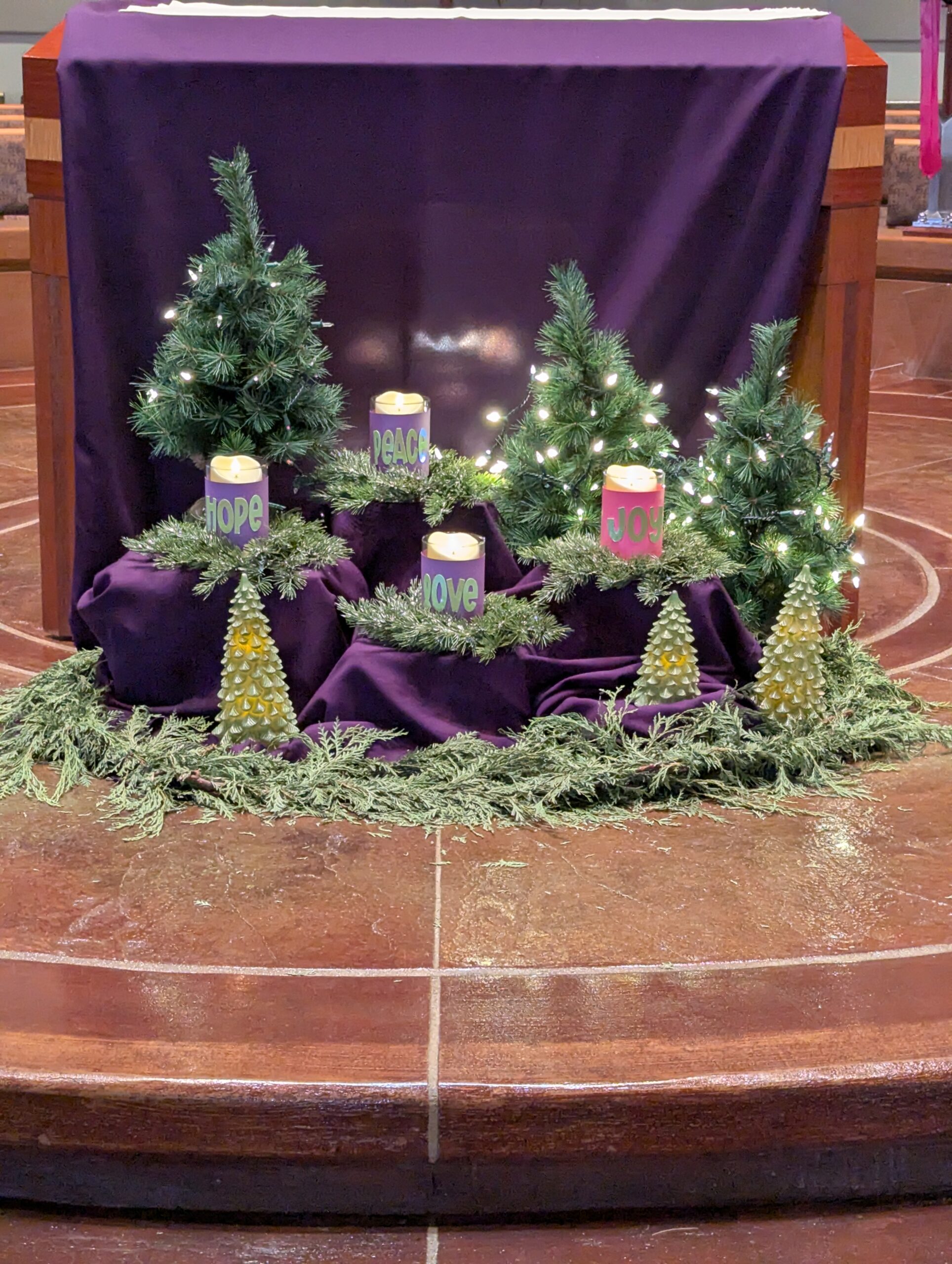
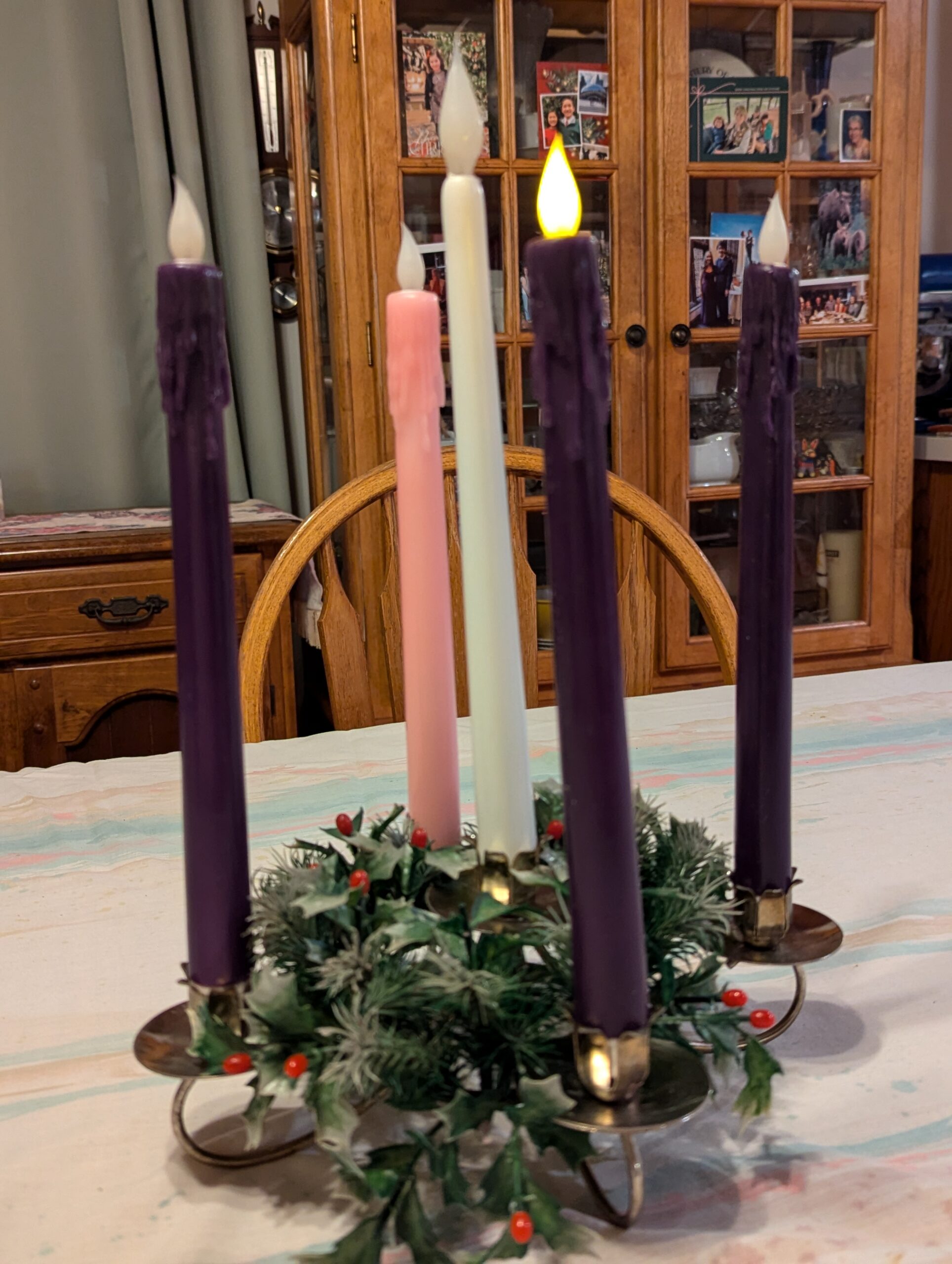
A new year begins again. This one doesn’t follow our typical calendar of 356 days. This one is set to begin on the fourth Sunday before Christmas. The season celebrated during this brief time is known as Advent – a word meaning “arrival.”

The First Sunday of Advent looks forward with hope to the coming of Christ. This year, we also enter into the final weeks of preparation for the Jubilee year which will begin with the opening of a special door of St. Peter’s Basilica, the Holy Door, in Rome on December 24. This door is sealed at all times outside of Jubilees.

The them of this Jubilee is “Pilgrims of Hope.” The readings for this day support the theme of hope on the way.

The Prophet Jeremiah lived in the times just before and during the Babylonian conquest of Jerusalem and the destruction of the Temple. He attributed the military defeat by the armies of Babylon to unfaithfulness to the Covenant, particularly on the part of the ruling royal family. He predicted the conquest and lived to see it happen. Yet he never stopped sharing the messages of hope he received from the Lord. He spoke the warnings and the frightening messages, but he also spoke the hopeful ones.

“The days are coming…” “I will fulfill the promise I made to the house of Israel and Judah…” “I will raise up for David a just shoot…”  “Judah shall be safe…” Jerusalem will be called “The Lord our justice.”

Terrible things may happen. Nations will be conquered. Peoples will be displaced. But the Lord is still present. The Lord will take care of the people of the Covenant. A new leader will come, raised up by the Lord and doing “what is right and just in the land.” It is a time for hope in the Lord’s word. (Jer 33:14-16)

As a child and man of the Covenant, Jesus was immersed in these traditions of national independence and prosperity, transitions in which the nation moved away from the Covenant’s guidance, and resulting ultimate conquest by another nation.  Each time the cycle played out, eventually the Lord was seen to intervene and bring the nation back to prosperity and safety.

As his life neared its end, Jesus spoke of what would happen at some time after his death. He was not naïve about the risks he was taking by being in Jerusalem and preaching the message he had come to deliver. He knew it would not likely end well for him. He spoke prophetically about what would happen at the end of time, when the Son of Man returned to Earth in triumph. The description of the “signs in the sun, the moon, and stars, and on earth” sound like things many of us have seen in our lifetimes, but the sense of the words is that they will happen on a much larger scale. “People will die of fright in anticipation of what is coming upon the world…”

Yet Jesus does not tell his followers to be afraid when fearsome things begin to happen. They/We must not allow ourselves to be pulled into fear or anxiety or indifference to what is happening in the world around us. Jesus says, “Stand erect and raise your heads because your redemption is at hand.” The changes coming will be challenging. There will be hard things that must be faced and addressed. But “Be vigilant at all times and pray that you have the strength to escape the tribulations… and to stand before the Son of Man.” (Lk 3:12-42)

As the followers of Jesus went out into the world to share the word of what they had seen and experienced, communities grew in many cities. St. Paul and others wrote to the people in these cities, encouraging them in their faith, continuing to teach them and deal with the problems that arise in human communities. He wrote to the Thessalonians to encourage them to strengthen their hearts in preparation for meeting God. He and other early Christians expected Jesus’ return to be very soon after the Resurrection. That proved not to be the case, but the advice remains firm for us today as well. We are all to behave in ways pleasing to God and follow the instructions we have received, with the help of the Lord Jesus. (1 Thes 3:12-4:2)

As we move through these next few weeks toward Christmas and toward the official beginning of the Jubilee Year, we are called to continue our faithful following of the Lord’s teaching on justice and loving service.

This is a time of transition in the United States. Transitions are happening in other nations as well. The requirement to live in love, service, and justice for all does not end. It is not based on who wins elections. It is not negotiable.

We must continue to help those in need. We must continue to support those who come to our nation from afar, seeking opportunities and safety from violence and persecution. We must offer a smile and friendship to those among us whose bodies don’t necessarily outwardly meet our expectations of who they are. We must protect children and families, giving help and support so they can have the chance to get through hard times and back on their feet. We must care for the sick and those who are unable to care for themselves any longer. We must reach out to support others around the world who are living in difficult conditions and need a helping hand. We are called to live the Beatitudes and be Pilgrims of Hope on the journey through life.

We are all in this life together. We have different gifts, different opportunities, different wounds and challenges, but we are all in this together. We must help each other, not get in the way of and push aside those who are different than we are.

Pilgrims of Hope. Are we ready for Christmas? Probably not yet. Are we ready for the Jubilee? Maybe not yet. Are we excitedly preparing? I sure hope so. It’s a special blessing to live in this time. Jubilees don’t happen often. Let’s take advantage of this one to live and work in hope.

Readings for the First Sunday of Advent – Cycle C


Read More

Posted by on Nov 24, 2024

¿Qué esperamos de un rey?

¿Qué esperamos de un rey?

Desde mucho antes del nacimiento de Jesús y el comienzo de lo que ahora se llama Anno Domini (A.D.) o E.C. (la Era Común), hombres fuertes y a veces mujeres poderosas han gobernado sobre pueblos y tierras. Por lo general, estas personas obtuvieron poder a través de la violencia y luego se enriquecieron con el comercio, los bienes y los impuestos que fluían a través de sus tierras y hacia sus tesoros.

Recientemente, he estado leyendo The Silk Roads: A New History of the World (Las Rutas de la Seda: Una Nueva Historia del Mundo), por Peter Frankopan. Publicado hace casi una década, el autor se remonta a más de 4.000 años, a los reinos del Creciente Fértil y al Código de Hammurabi, rey de Babilonia. Lejos de ser Europa el centro de poder e influencia en el mundo, las tierras desde Mesopotamia hasta China y Mongolia eran ricas y poderosas. El comercio, el aprendizaje, la tecnología, la ciencia, todo prosperaba a lo largo de las Rutas de la Seda entre Asia y Europa. Los hombres fuertes lideraron a los guerreros en la conquista de las tierras vecinas una y otra vez, hasta bien entrado el presente, ya que las nuevas tierras se han convertido en las grandes potencias. Todavía no he terminado de leerlo, pero espero seguir disfrutándolo.

Todo esto nos viene a la mente al llegar al último domingo del año cristiano, la celebración de Cristo Rey del Universo.

¿Qué esperamos de un rey? Históricamente, los reyes eran los suficientemente fuertes como para conquistar y mantener tierras. Cuando sus hijos heredaron el trono, se esperaba que ellos también fueran guerreros, que defendieran sus tierras y tomaran tierras de otros siempre que fuera posible. Eran hombres a los que había que temer. Sus caprichos eran ley y su cólera mortal. Los matrimonios de los gobernantes se concertaban para crear alianzas entre los reinos. Cuando por alguna razón el matrimonio no funcionaba, o ningún heredero varón sobrevivía para hacerse cargo del reinado, el reino se tambaleaba y muchas vidas se perdían.

Hoy esperamos a alguien que lidere y gobierne con justicia. Muchas monarquías comparten el poder de gobierno con representantes elegidos por el pueblo al que gobiernan. La monarquía británica es un ejemplo de ello. El rey ya no tiene un poder ilimitado sobre la vida y la muerte de sus súbditos, pero siguen siendo llamados súbditos.

Los líderes autocráticos, a menudo elegidos por los ciudadanos de su nación, se parecen más a los reyes de la antigüedad. Su favor trae poder y riquezas a aquellos que les sirven y obedecen sus deseos. Quienes se oponen a ellos se encuentran en el exilio o en prisión, a menudo de por vida.

Entonces, si esto es lo que es un rey, ¿por qué celebraríamos a Cristo como Rey?

Cuando Jesús fue arrestado y llevado a juicio en el Sanedrín, se le preguntó si afirmaba ser el Hijo de Dios y el Mesías. Cuando se le preguntó directamente: “¿Eres tú el Mesías, el Hijo del Bienaventurado?” Jesús respondió: “Yo soy; y veréis al Hijo del Hombre sentado a la diestra del Poder y viniendo con las nubes del cielo”. (Mc 15, 61-62). Por esta declaración, fue condenado por blasfemia.

Las palabras de Jesús se hicieron eco del relato del profeta Daniel al describir las visiones que había visto durante la noche. “Vi venir a uno semejante a un Hijo del Hombre, sobre las nubes del cielo…” Este Hijo del Hombre fue presentado al Anciano y se le dio “dominio, gloria y realeza” sobre todos los pueblos del mundo, una realeza interminable e ilimitada. (Dn 7:13-14)

A pesar de haber sido condenado por blasfemia, Jesús no debía ser ejecutado por su propio pueblo. Las autoridades romanas tenían que autorizar cualquier ejecución. Sin embargo, la blasfemia no era un delito que acarreara la pena de muerte, y mucho menos la crucifixión.

Cuando las autoridades llevaron a Jesús ante el procurador, Poncio Pilato, el delito del que se le acusaba era traición, es decir, la pretensión de ser rey. Pilato interrogó a Jesús antes de emitir un juicio. —¿Eres tú el rey de los judíos? Jesús respondió preguntando si Pilato quería saberlo por sí mismo o solo establecer un punto legal. La respuesta bastante exasperada de Pilato fue que eran los sumos sacerdotes quienes lo habían entregado. —¿Qué has hecho?

Jesús no negó ser un rey, pero señaló que el reino en cuestión no era terrenal. Ninguno de sus seguidores luchaba para protegerlo o rescatarlo. —¿Entonces eres rey? —dijo Pilato—. “Tú dices que soy un rey”, respondió Jesús, una forma formal de decir “Sí”. Luego explicó que vino al mundo “para dar testimonio de la verdad”. (Juan 18:33b-37)

Jesús fue condenado. El letrero sobre su cabeza decía: “Jesús el Nazareno, el Rey de los judíos”.

Un rey cuyo reino no son las tierras y el poder, sino la verdad y la justicia. No es la justicia que castiga a los que intentan arrebatarle tierras o poder. Justicia que asegura a los pobres comida y refugio y la oportunidad de vivir su dignidad humana. Justicia que protege a los niños y a los refugiados. Justicia que abre los corazones para amar y aceptar a los que son diferentes a ellos. Justicia que acoge a todos y cuida de la tierra y de toda la creación. Justicia que dice la verdad al poder, como Jesús lo hizo a Pilato. Justicia que es un testimonio de la verdad del amor de Dios por todos.

Este es el Rey del Universo a quien celebramos. Aquel a quien las visiones del Apocalipsis aclaman. “Jesucristo es el testigo fiel, el primogénito de los muertos y el gobernante de los reyes de la tierra”. Él es el que “nos ama y nos ha liberado de nuestros pecados… nos convirtió en un reino, sacerdotes para su Dios y Padre”. (Ap 1:5-8) Él es quien nos llama a vivir las Bienaventuranzas. Aquel que sanó a los enfermos, alimentó a los hambrientos, consoló a los afligidos y se dio a sí mismo en testimonio de la verdad.

Muy lejos de lo que solemos esperar de un rey. Sin embargo, él es el Rey que nos eligió y cuyo ejemplo estamos llamados a seguir. Gracias a Dios.

Lecturas para la Solemnidad de Nuestro Señor Jesucristo, Rey del Universo – Ciclo B

En Inglés

Read More

Posted by on Nov 24, 2024

¿Qué esperamos de un rey?

What Do We Expect in a King?

Since long before the birth of Jesus and the beginning of what is now called Anno Domini (A.D.) or C.E. (the Common Era), strongmen and sometimes powerful women have ruled over peoples and lands. Typically, these people gained power through violence and then became rich from the trade goods and taxes that flowed through their lands and into their treasuries.

Recently, I have been reading The Silk Roads: A New History of the World, by Peter Frankopan. Published nearly a decade ago, the author reaches back over 4,000 years, to the kingdoms of the Fertile Crescent and the Code of Hammurabi, King of Babylon. Far from Europe being the center of power and influence in the world, the lands from Mesopotamia to China and Mongolia were rich and powerful. Trade, learning, technology, science – all were thriving along the Silk Roads between Asia and Europe. Strongmen led warriors in conquest of neighboring lands again and again, well into the present as newer lands have become the great powers. I haven’t yet finished reading it, but I look forward to continuing to enjoy it.

This all comes to mind as we arrive at the last Sunday of the Christian year, the celebration of Christ the King of the Universe.

What do we expect in a king? Historically, kings were the ones strong enough to conquer and hold lands. When their sons inherited the throne, they too were expected to be warriors, to defend their lands and take lands from others as well whenever possible. They were men to be feared. Their whims were law and their anger deadly. Marriages of rulers were arranged to create alliances between kingdoms. When for any reason the marriage did not work out, or no male heir survived to take over kingship, the kingdom was shaken and many lives were forfeit.

Today we expect someone who will lead and govern justly. Many monarchies share governing power with elected representatives of the people they govern. The British monarchy is an example of this. The king no longer has unbridled power over life and death for his subjects, but they are still called subjects.

Autocratic leaders, often elected by citizens of their nation, are more like the kings of old. Their favor brings power and riches to those who serve them and obey their wishes. Those who oppose them, find themselves in exile or in prison, often for life.

So, if this is what a king is, why would we celebrate Christ as King?

When Jesus was arrested and taken to trial in the Sanhedrin, he was questioned about whether he claimed to be the Son of God and the Messiah. When asked directly, “Are you the Messiah, the Son of the Blessed One?” Jesus answered, “I am; and you will see the Son of Man seated at the right hand of the Power and coming with the clouds of heaven.” (Mk 15:61-62). For this statement, he stood condemned for blasphemy.

Jesus’ words echoed the account of the prophet Daniel as he described the visions he had seen through the night. “I saw one like a Son of man coming, on the clouds of heaven…” This Son of man was presented to the Ancient One and given “dominion, glory, and kingship” over all peoples in the world, an unending, unlimited kingship. (Dn 7:13-14)

Despite having been convicted of blasphemy, Jesus was not to be executed by his own people. Roman authorities had to authorize any execution. However, blasphemy was not a crime that would incur the death penalty, let alone crucifixion.

When the authorities took Jesus to the Procurator, Pontius Pilate, the crime of which he was accused was treason – the claim to be a king. Pilate interrogated Jesus before passing judgement. “Are you the king of the Jews?” Jesus responded by asking whether Pilate wanted to know for himself or only to establish a legal point. Pilate’s rather exasperated response was that it was the chief priests who had handed him over. “What have you done?”

Jesus did not deny being a king, but he pointed out that the kingdom in question was not an earthly one. None of his followers were fighting to protect or rescue him. “Then you are a king?” said Pilate. “You say I am a king,” responded Jesus, a formal way of saying “Yes.” He then explained that he came into the world “to testify to the truth.” (Jn 18:33b-37)

Jesus was condemned. The sign above his head read: “Jesus the Nazorean, The King of the Jews.”

A king whose kingdom is not lands and power but truth and justice. Not justice that punishes those who try to take lands or power from him. Justice that assures the poor have food and shelter and a chance to live their human dignity. Justice that protects children and refugees. Justice that opens hearts to love and accept those who are different than themselves. Justice that welcomes all and cares for the earth and all of creation. Justice that speaks truth to power, as Jesus did to Pilate. Justice that is a testimony to the truth of God’s love for all.

This is the King of the Universe whom we celebrate. The one whom the visions of Revelation acclaim. “Jesus Christ is the faithful witness, the firstborn of the dead and ruler of the kings of the earth.” He is the one “who loves us and has freed us of our sins … made us into a kingdom, priests for his God and Father.” (Rv 1:5-8) He is the one who calls us to live the Beatitudes. The One who himself healed the sick, fed the hungry, comforted the mourning, and gave himself in witness to the truth.

A far cry from what we usually expect in a king. Yet he is the King who chose us and whose example we are called to follow. Thanks be to God.

Readings for the Solemnity of Our Lord Jesus Christ, King of the Universe – Cycle B

En Español


Read More

Posted by on Nov 16, 2024

Missed the Rapture Again?

Missed the Rapture Again?

We have a joke in the family that gets repeated once in a while. Living in a tourist destination community, we are used to seeing busy highways and local roads at certain times on weekends and during holidays. But every so often, when we would usually expect the highways to be full, they aren’t. On those days, returning home, one or another of us will note, “Well, we missed the Rapture again!”

Our liturgical year is drawing to a close. We have celebrated Advent, Christmas, Lent, Easter, and all the days in-between. We have heard God’s word proclaimed in Scripture, through worship, and in our daily lives for another year. We hope that we have grown a bit in wisdom and grace as we have in age.

Now, here we are again, at the last two weeks of the year. The readings speak of final days and describe cosmic disasters that bring an end to all and usher in the final coming of the Son of Man.

If we look at these readings literally, and look at the state of the world today, it can be terribly distressing. Is the world really coming to an end? Are we among those left behind to suffer for our evil behavior? Is there any hope? Did we miss the Rapture?

Objectively speaking, things are something of a mess out there in the world. For that matter, sometimes at home they’re a mess too. We’ve come through a world-wide pandemic, with economic and social upheavals as a result of it. We see wars raging in Africa, Europe, and the Middle East. War has been threatened in Asia as well. One long one in Afghanistan ended, but there are other areas of conflict that have not risen beyond the level of “trade wars” yet. Families are under stress. Inflation has been high, because of many pandemic and trade war-related issues. Unemployment has come down dramatically, but it was high for a while when businesses had to close or cut back due to the pandemic and associated supply-chain problems. Food costs have risen. Housing is in short supply. And so on and on.

On the physical front, we are having to deal with droughts, wildfires, floods, earthquakes, and all the natural “disasters” that occur when humans and the forces of nature meet in dramatic ways. How many hurricanes or cyclones or typhoons should any area have to endure? Why so many tornados? Will the rains come so the fires stop? Why so much rain at a time? Can’t we have just a bit and when we need it rather than all at once?

People are divided over how best to deal with the economy, with the wars that are raging, changes in what we expect of our environment, emerging understandings of gender, the role of women and others who have traditionally been kept at lower status than the leadership of our communities and of industry, to mention just a few issues. Elections around the world are reflecting the divisions among us over how to move forward. Lots of fear and angst are expressed in these votes.

When the victors emerge, again, there is dismay among one group and rejoicing by others. Yet we are all still in this together. None of us got out in a Rapture of any sort. None were swept up to Heaven for protection while God deals with the messiness of the lives of the rest of us. We all missed the Rapture!

The readings from Daniel speak of the distress that can arise in life. The book of Daniel was written during a period of conquest and persecution under King Antiochus IV, a Selucid King ruling from 167-164 BCE. They offer hope that an end will come to the trials of the age and that peace will come. There is a mention of the dead rising again to life and of others remaining dead. (These conversations continued into the time of Jesus and his followers. We even hear them today!)

Nevertheless, the reading ends on a note of promise. “The wise shall shine brightly like the splendor of the firmament, and those who lead the many to justice shall be like the stars forever.” (Dn 12:1-3)

Things can get very bad, very frightening, very distressing, but hope is not lost. Wisdom will continue to shine forth and people will emerge who will continue to work for justice and peace.

So, who is this Son of Man person? “Son of Man” as used in the readings today is the title given to an apocalyptic figure who comes to the rescue. The individual is human, but gifted with special powers to accomplish God’s work and then be raised to Heaven. Daniel speaks of the Son of Man as the one who will come to make all right again. In the midst of great turmoil and destruction, the Son of Man will come with power and glory. Those found worthy and faithful will be rescued before all ends.

Jesus tells his followers that no one knows when the end of the world will come, when the present age will end, but a time will come when all is concluded. Worlds end. Do they always end physically? No. But we are to be alert to see the signs of change, of transition, in our day. (Mk 13:24-32)

Where do we see these signs? That is the big question. Where do we see the love of God shining into our lives and our world. When God comes, it will not be as a punishing, vindictive bully who is out to get revenge on all who have done him wrong! God is Love. Love doesn’t behave that way.

So where do we see the signs of the coming of the Son of Man? Where do we see the Lord in our lives?

We see the Lord in those who reach out to others, including those with whom they disagree. We see the Lord in those who work to protect others who are being persecuted because of who they are and how God made them. We see the Lord in those who seek to assure that children and their families can get enough to eat and still have a place to live. We see the Lord in those who care for the sick. We see the Lord in those who work to protect prisoners from abuse. We see the Lord in those who step up to serve in leadership roles that allow them to enact laws protecting rather than exploiting the weak and powerless.

We see the Lord in the work of those who are willing to give of their time, talent, treasure, and lives to serve others and make a better world for all. Jesus gave us a set of guidelines in the Beatitudes. He told us where to find him in the story of the Last Judgement. He willingly faced torture and death, put his very life on the line, in the process of reconciling humanity with our Father, the creator of all.

We missed the Rapture, all of us. Now it’s time to learn from the fig tree, to see the signs around us, and to roll up our sleeves and get to work. It’s time to continue to work and build a world of love and support for our sisters and brothers, wherever they are from, and whoever they are. We’re in this together. The Kingdom is coming to birth among us. Let’s get going!

Readings for the Thirty-third Sunday in Ordinary Time – Cycle B


Read More

Posted by on Nov 13, 2024

Widows, Children, and the Kingdom

Widows, Children, and the Kingdom

The doorbell rang at about 11:30 one morning and when I answered, I was met by a middle-aged man who greeted me in friendly terms and introduced himself as a Jehovah’s Witness, visiting folks in my neighborhood. Would I like to spend a few minutes and talk about the Bible? First question after asking about whether I believe in God, “Do you ever think about or read the Bible?”

Now, for those who know me, that question has a pretty obvious answer. However, this man was a stranger. When I explained that I regularly write about the Bible readings for the Sunday liturgy, his response was, “Oh, then you read the Bible?”

We talked a little bit and he asked about prayer and what might be an important prayer. I suggested, and he agreed, that “The Lord’s Prayer” is fundamental. He began to recite, “Our Father, who art in Heaven, hallowed be thy name. Thy kingdom come….” At that point he stopped. “What do you know about the kingdom?”

I was surprised by his reaction when I said that the Kingdom is here and now. We live in and help bring the Kingdom into the present reality of the world in which we live. Our actions and reactions to what we experience are all part of this process.

He seemed rather dismayed and was ready to educate me further about the Kingdom as it will one day be manifest in concrete form. However, for better or worse, I had been working when he came calling and I needed to complete a couple of things before afternoon, so I excused myself from further conversation. He left, voicing the thought that “We should meet again one day soon and talk further about this.”

In the light of recent events and the political power of some of the fundamentalist streams of the Christian tradition that played a role in the election, I had been pondering the stories of the widow whose was willing to trust God and feed a stranger and the widow who gave all she had to the Temple treasury. What do these stories tell us about God and about the Kingdom of God? The encounter with this unexpected visitor helped focus my thoughts.

When King Ahab ruled in northern Israel, he married a non-Israelite woman named Jezebel. She worshiped the god of her people and led Ahab to do the same. The prophet, Elijah, spoke up and called upon Ahab to return to exclusive worship of the Lord. As a result of Ahab’s refusal to do so, a drought came upon the land and there was much suffering. Eiljah was forced to flee the land, as Jezebel was determined to get rid of him permanently! He went north to a small town called Zarephath in Phoenicia. (The town still exists and is now called Surafend.)

When Elijah arrived at the gate of the town, he found a widow who was collecting sticks outside the town walls. He asked her for a small cup of water to drink and she headed back into town to get it for him. He asked her also to bring him a small bit of bread to eat with the water. At that, she stopped and explained her situation.

Widows in the ancient world had no one who protected them or would help them survive. These were patrilineal families. When a woman married, her family no longer took any responsibility for her welfare. Her husband’s family had total responsibility. If the husband died, his family no longer felt any need to care for her, particularly if there were any challenges in the relationship. She would no longer be providing heirs for the family. She was disposable.

In this case, the widow had a son, but he was a child. There were no guarantees he would grow up. She was on her own and there was a drought. They were down to their last handful of flour and just a touch of oil. Enough for one more tiny meal. Then they would die of starvation. No social safety net. No food for the poor. No meals at school. No food stamps. They were going to die.

Elijah reassured her and made her a promise. “Do not be afraid. Go and do as you propose. But first make me a little cake and bring it to me. Then you can prepare something for yourself and your son. For the Lord, the God of Israel, says, ‘The jar of flour shall not go empty, nor the jug of oil run dry, until the day when the Lord sends rain upon the earth.’”

This was a big chance she was taking. Bring food to a stranger first, then feed her son and herself? And he was not one of her people. He was a foreigner, from another land with which relations had been filled with conflict in the past. But she took a chance on him and the promise of his God.

Elijah lived with her and her son until the time the rains came again, over three years later. The jar never ran out of flour and the jug of oil continued to have enough to make their meals until the rains came again and food became available.

The widow of Zarephath took pity on a stranger, a foreigner. And because of her willingness to help him, she and her son survived. (1 Kgs 17:10-16)

Many years later, Jesus and his followers arrived in Jerusalem from the Galilee. They sat in the Temple, watching the people coming and going. Then as now, people offered monetary sacrifices to God in thanksgiving for gifts received and in hopes of receiving God’s favor in a practical way – with success or healing or other tangible signs of fortune and blessing. They dropped coins into the treasury as one form of sacrifice.

Many people offered these gifts. Some offered quite large sums. Quite likely it was not terribly quiet. Imagine pouring a bag of coins into a bucket, jar, or bowl. Coins are not quiet as they fall.

Jesus had been speaking to his disciples about the importance of not looking at obvious signs of wealth or influence as indicators of holiness, honesty, or trustworthiness. These images of success were not signs that the example of those who were wealthy or influential should be the model of behavior to be followed. “Beware of the scribes, who like to go around in long robes and accept greetings in the marketplaces… and places of honor at banquets.” Why? “They devour the houses of widows and, as a pretext recite lengthy prayers.”

These were folks who cheated the poor and the vulnerable out of their money by offering to pray for them! Sadly, we still see this phenomenon today. Promises are made that if you just give me money, I will be your advocate and make sure to fix everything for you, so all will go in your favor and you will not suffer anymore. I can and will fix things. And people give them money and hope in their promise!

Jesus did not buy this as acceptable. He instead praised a widow who dropped a couple of small coins into the treasury. Their total value was just a few cents, a couple of pennies. Not much worth to anybody. But unlike the gifts of the wealthier folks who were pouring bags of coins into the box, she gave all she had. This was the last money she had. How would she survive? (Mk 12:38-44)

The widow’s gift of everything is challenging. How do we deal with this kind of generosity and faith in God’s care? How do we understand the decision of the widow of Zarephath?

Each of these women is presented as a worthy example of trust in God. One is not a member of the Chosen People. She is a Gentile, a foreigner to Israel. Yet she was saved by trust in God’s promise, delivered by a stranger, a refugee.

The Kingdom of God is here among us today. We see it in the same concrete ways it has appeared in past ages. Christ has entered into the heavenly sanctuary, opening it for the outpouring of divine love, the very life of God. Salvation is here through the self-offering of Jesus himself. (Heb 9:24-28)

The Kingdom of God is growing here and now when the hungry are fed, strangers are welcomed and helped, people are accepted and loved regardless of their gender, women are respected and their choices supported, those without housing are helped to find shelter, those who are imprisoned are visited and given opportunities to begin again and make better choices, those needing work find opportunities opening to them, and so many, many more signs of the presence of a loving community who know themselves to be loved and pass along that love are shining forth. We live the Kingdom through our daily decisions and actions. We don’t have to wait for God’s presence in some distant heaven. God is here now! The Kingdom of Love is here now. We are Christ’s hands and feet, his eyes and heart, opening to love those we meet and share the love with them here and now, through very practical actions and decisions.

As we approach the end of our liturgical year, may we remember these stories. May we trust that when we live the Beatitudes, caring for those less fortunate, those who need help and seek a safe refuge, we will help build the Lord’s kingdom in a land that welcomes all, just as our Father in Heaven loves and welcomes all of us.

Readings for the Thirty-second Sunday in Ordinary Time – Cycle B


Read More

Posted by on Nov 3, 2024

Love – Worth More than Burnt Offerings

Love – Worth More than Burnt Offerings

She was a large woman, tall and heavy-set, with dark skin and a unique way of dressing. I most frequently saw her with a portable grocery cart full of her possessions alongside a road in town. There was a creek running in a channel down the middle of the road, with trees and brush in which one could spend a night or rest during the day undisturbed by passersby and she often went there. She seemed to have health problems and getting around was clearly not always easy for her.

She dressed in clothing that looked like she might be from the Middle East, with her head and most of her face covered in scarves and robes that reached down over her legs. I suspected she might be Muslim, but I only saw her along that busy road ordinarily, so there was no opportunity to find out more about her.

Then one day, she came to mid-day Mass at a local chapel. Over a period of several weeks, I often saw her there. We always smiled at each other, but we didn’t typically talk much. She sat off to the side, behind a short partition that separated out a side altar and entrance from the rest of the body of the chapel. There was room for her and her cart in that section.

After Communion one day, she had her rosary in her hand and dropped it over the side of the partition. A woman picked it up and handed it back to her. She accepted it with a smile and a comment, “You are close to the Kingdom of God. Thank you.”

I later learned as we walked together after Mass on our way home that she tested people that way. She would drop something and see if they would pick it up for her. If they did, she knew it would be safe to trust and befriend them.

Time went on and my family situation changed. I was no longer able to attend daily Mass. I kept an eye out for her around town, but it’s been over 15 years since I last saw her. I think of her often. She wore the coverings for her head, face, and body in solidarity with her “sisters around the world” who have no choice but to wear them, regardless of how warm or hot the weather is. She was a prophet in our midst, saying little with words, but much with her way of dress and behavior – finding those close to the Kingdom.

Close to the Kingdom

A scribe, an educated man, approached Jesus one day and asked him what the first, most important of all the many commandments was. (There are 613 commandments in the Torah, the first five books of the Bible, not just the ten that we usually think of as The Commandments.)

Jesus responded without hesitation, reciting the Shema, the fundamental statement of Jewish tradition and worship. “Hear, O Israel! The Lord is our God, the Lord alone! Therefore, you shall love the Lord, your God, with all your heart, and with all your soul, and with all your strength.” This statement is called the Shema because it begins with the Hebrew word shema which means “hear.” Jesus continued beyond the traditional Shema, giving a second command, as important as the first. “You shall love your neighbor as yourself.”

The scribe was pleased with Jesus’ response. He summed it all up by noting that to love the Lord with one’s whole heart, understanding, and strength and to love a neighbor as yourself “is worth more than all burnt offerings and sacrifices.”

Jesus praised the scribe for his understanding, “You are not far from the kingdom of God.”

No one asked any more questions. It had all been said. This is what it was all about. Love of God and of neighbor. (Mk 12:28b-34)

The focus on love as a response to God is fundamental in the Jewish and Christian traditions. It is found right after the statement of the basic ten commandments in the book of Deuteronomy. Moses presented the requirement to the people that they love the Lord and follow his commandments, so they could be blessed with a long, prosperous life in a land of abundance which the Lord would provide. The Shema summarized the Lord’s command to love and be loyal to him. (Dt 6:2-6)

Love is a word that we often equate to romantic love. But in this context, it has a different meaning. Love here means to be loyal to someone or something. It requires a commitment to stick together through thick and thin and a promise that the Lord has something good that will come to those who are loyal to him even in hard times.

Jesus showed us how to be loyal to the Father through hard times when he accepted death rather than deny the kingdom he had come to proclaim. The author of the Letter to the Hebrews notes that as our high priest, he was “holy, innocent, undefiled, separated from sinners, higher than the heavens.” The one who is perfect in love is the one who always speaks on our behalf to the Father. (Heb 7:23-28)

So how does this all relate to my friend and her little test?

As citizens of the Kingdom, we are called to Love the Lord, as the Shema declares, with all our heart, all our soul, and all our strength. We are also to love our neighbors, with the same strength and commitment we have given to the Lord. We are to love them as ourselves, looking out for their interests as we would our own.

We can preach all we want to about Jesus, about the Law, about the Commandments, about purity in our thoughts and behaviors, about how we worship. But if we don’t really love and respect each other, if we don’t help each other willingly and without expecting anything in return, if we only speak to those with whom we agree or who look like us or who live respectably like we do, then we are missing the point of the Kingdom! Do we stoop to the ground to pick up something a person we don’t know has dropped? Do we take time to smile and chat with a child or a baby as we wait in a line? Do we wait our turn patiently to get through a traffic light or move ahead on the freeway? Are we kind to those who don’t meet our society’s standards of beauty? Do we trust that others may have valid reasons for doing things differently than we ourselves might do?

If we insist on forcing our opinions or our ways of doing things on others, are we really living what Jesus taught? Are we really loving God and neighbor? Are we loyal to the God who made us as free persons and therefore choose to support others in their free response to God’s love?

This week, many decisions will be made that affect what life will be like in the years to come. Some of them will be politically based. Some will determine the direction of countries in the months and years to come. Some will simply be the ones that affect ordinary folks in living out life as family.

Let us pray for the wisdom to choose wisely, to love each other and support each other’s freedom to choose how each moves forward in life. Let us resolve to lend a hand in support of those we meet along the way. Sometimes an action as simple as bending over to pick up a rosary for someone else is a sign of closeness to the Kingdom of God.

This love in action, offered without recrimination or condemnation, is “worth more than all burnt offerings and sacrifices.” It is what brings us into the kingdom of God,” right here and right now.

Readings for the Thirty-first Sunday in Ordinary Time – Cycle B


Read More

Posted by on Oct 27, 2024

Ephraim is My First-born

Ephraim is My First-born

In patriarchal societies, the first-born son holds a special place of honor and authority. This person will inherit leadership of the family upon his father’s death. He will get extra privileges and opportunities that are not open to his brothers, and certainly not to his sisters. His mother may refer to him with special terms of affection not shared with her other children – my king, my prince. He will get away with behavior that would draw punishment for other children in the family. And all siblings will be taught that his will is to be obeyed as they go through life.

This may sound like the reality of life as a member of a royal family and indeed most of the royal families of our day are headed by men. As we saw with Queen Elizabeth II, it’s no longer essential to be male to rule an empire, but it’s a relatively rare phenomenon. In most Western societies it is not as strictly the norm, though certain elements remain to this day.

The prophecy of Jeremiah regarding the return of the Jewish people from exile in Babylon includes an interesting statement, therefore. (Remember, this was a patriarchal society.) The Lord says through Jeremiah, “I am a father to Israel, Ephraim is my first-born.”

Ephraim was the second-born son of Joseph. Joseph was one of Jacob’s twelve sons, but far from being the first, he was actually the eleventh. His mother was Jacob’s favorite wife, Rachel. Joseph married a woman in Egypt and had two sons, Manasseh and Ephraim. Given the general rules of patriarchal society, there’s no way Ephraim would be considered anyone’s firstborn! Yet Jeremiah, speaking for the Lord in prophecy, says Ephraim is the Lord’s firstborn.

How could that happen?

Jacob was a twin, born second to his parents, Isaac and Rebecca. His older brother sold his right to the blessing reserved for the firstborn to Jacob for a bowl of food one day. Rebecca helped Jacob fool Isaac into actually giving the blessing to Jacob. The inheritance of the promised leadership of the family passed to Jacob. It could not be withdrawn and reassigned.

Jacob had to flee to another land to escape his brother’s anger. There he met Joseph’s mother. He married both Rachel and her sister Leah. (It’s a long story …)

Eventually, he had twelve sons and at least one daughter, with two wives and their servants as mothers to his children. Joseph was sold into slavery in Egypt by jealous brothers. (Another long story…)

When the family was reunited, Jacob was delighted that Joseph had sons and adopted them as his own. As Jacob neared the end of his life, he had blessings for each of his sons. When he came to Joseph, he gave the blessing to the younger son, Ephraim rather than to Manasseh. Joseph tried to correct his father, but Jacob insisted and gave Ephraim the blessing reserved for the firstborn son.

At the time of the conquest that led to the exile in Babylon, the lands settled by the descendants of Ephraim were among the first conquered in the north of Israel. In the midst of all of the sorrow and pain of the conquest and exile, Jeremiah spoke words of hope. Importantly, he also spoke words of affirmation of the value of people who had very little status in their society. Anyone with physical limitations or disabilities, women – especially when pregnant – and children were considered to be second class and often “unclean” and therefore  were kept away from ordinary folks.

Jeremiah, speaking the word of the Lord, declares “Shout with joy for Jacob… The Lord has delivered his people, the remnant of Israel.” Then he adds something amazing as he promises to gather his people from all the ends of the world. This promise specifically includes the blind, the lame, the mothers, those who are pregnant, and the children themselves. He will lead them back to their homeland, consoling and making level roads with brooks of water nearby to quench their thirst on the journey. Why? “For I am a father to Israel, Ephraim is my first-born.” (Jer 31:7-9)

The Lord does not treat us as if we were members of a patriarchal society and need to remember that the powerful are born to rule, regardless of their fitness to do so. Those who care for the vulnerable – the women and children, those with handicaps, those who flee for their lives from their homelands, those who are poor. These are the ones the Lord calls his firstborn. These are the ones we are to imitate and serve as our sisters and brothers.

Jesus also treated those who were marginalized with care and respect. He healed Bartimaeus from the blindness that had limited his options to begging by the side of the road to get enough to buy food and shelter.  Jesus didn’t assume anything, however, when he heard Bartimaeus’ call and told his followers to call him over. Instead, he respectfully asked, “What do you want me to do for you?” Bartimaeus responded, “Master, I want to see.” Jesus healed him on the spot, “Go your way; your faith has saved you.” His sight was restored immediately and he followed Jesus on the way to Jerusalem. (Mk 10:46-52)

In Mark’s Gospel, this healing is the last one before Jesus arrived in Jerusalem. The events we remember during Holy Week followed.

Reflecting on Jesus’ role in sacrificing his life in witness to his calling to proclaim the Kingdom and experience everything it is to be human except sin, the author of the letter to the Hebrews reflects on the role and calling of the High Priest. The High Priest in the days of the temple was chosen from among the people, called to represent them before God and to offer sacrifice in the most sacred part of the temple. Dating from the time in the desert, even before the temple had been imagined, God called individuals to fulfill the role of offering these sacrifices. It was always a calling from God, not a position that a person could campaign to gain. Even Jesus was selected to act as high priest, called by the Father and anointed priest in a way that could never end. Jesus, the one through whose sacrifice of his own life freed all, was the son begotten by the Father to accomplish this great task, to end the division between God and humanity. (Heb 5:1-6)

God does not look at our status, our birth order, our gender, our physical appearance, our physical prowess, our strengths when looking at us. God looks at our hearts, at how we love and respect each other, at how we reach out to help and support each other. How do we help the poor? How do we treat those who seek shelter here when they must leave their homes in other lands? How do we care for those with special needs? How patient can we be with those ahead of us in line at the grocery store? How do we share the road, especially if we are running late? How do we share our riches so that others will have enough too?

We are at a time of great turmoil in the world and in our nation in these days. We are called to be open and to love, not to slam shut the doors of our hearts, our lands, and our pocketbooks, hoping to keep out the needy and those who fear for their lives. If and when we slam shut the doors, we become blind to the love of God and the saving grace gained for us by our great high priest, Jesus. May we this week and in the weeks to come allow ourselves to be healed of the blindness that keeps us from seeing God’s presence in those around us.

“Open my eyes, Lord, Help me to see your face, Open my eyes, Lord, Help me to see!”

Readings for the Thirtieth Sunday in Ordinary Time – Cycle B

Open My Eyes – Song by Jesse Manibusan

Read More

Posted by on Oct 20, 2024

Growing to Greatness in the Kingdom

Growing to Greatness in the Kingdom

Tevya, in the musical, Fiddler on the Roof, is an ordinary man who must work hard to support his family. He dreams of being rich and all the privileges and comforts that being rich would bring. His musing turns into a song that sums it up.  “If I were a rich man … all day long I’d biddy biddy bum, if I were a wealthy man … I wouldn’t have to work hard … I’d build a big tall house with rooms by the dozens right in the middle of the town…” He has many big dreams of all he could do and all the honors that would be his, “If I were a wealthy man!”

For better or for worse, Tevya is not alone in his dreams of a life of ease and honor. Most of us wish at one point or another that we had just a bit more, so we could do something that we hope and believe will be fun or make our lives easier.

Two of Jesus’ disciples, Zebedee’s sons James and John, also had high hopes and dreams. They came to Jesus and said, quite reasonably they thought, “We want you to do for us whatever we ask of you.” Whatever – not exactly a clear, specific request to which one might easily respond with a yes or no answer.

As it turned out, their request was not something small or insignificant. “Grant that in your glory we may sit one at your right and the other at your left.” In any sort of organization, business, family, community, those who sit at the right and left hands of the boss or leader have extraordinary power, privilege, and access.

Jesus didn’t laugh at them or tell them to “go jump in the lake” or anything that would belittle their request. Instead, he asked if they would be willing to go through the suffering that he would have to experience himself. “Can you drink the cup that I drink or be baptized with the baptism with which I am baptized?” (Note, baptism in this sense had nothing to do with being washed symbolically, plunged, into water and coming out a new person. This was being plunged into suffering, dishonor, and death.) They responded that they were willing and Jesus assured them that they would indeed share that suffering themselves. However, the honor of sitting in the place of honor in the kingdom was not his to give.

The other disciples were outraged when they heard what James and John were requesting. Jesus had to explain to all of them that the kingdom of God is not like the hierarchies of power and respect we see in society around us. It’s not the powerful who are the great ones. It’s the ones who serve others, who give themselves to bring justice for the poor and those who have no power. (Mk 10:35-45)

This is not an easy thing to do. It’s especially hard for those of us who have had lots of opportunities and privileges as they have grown up. For those whose lives and careers have focused on working hard and getting ahead socially, who have sacrificed so their children would have more opportunities to advance and live easier lives – this does not make sense at all. “I worked hard and got where I am without any hand-outs. Why should someone else get help? Why should I have to pay taxes so someone else can get by without working like I did?”

We hear this kind of thing all the time, especially during political campaign seasons. It’s hard to think of giving up what we have in order to share with those who have not had the same opportunities or social capital.

But that’s not how we are called to move forward and upward in the kingdom. “Whoever wishes to be first among you will be the slave of all.”

Those who challenge the powerful nearly always pay a high price, whether in terms of money, security, power, or reputation. The powerful do not like opposition. Think of those whom we have seen in even the past ten years or so – people brave enough to vote against the dictates of their political parties or who have stood up to aggressors who have tried to take the lands or property of those with less power. Many have been insulted. Some were voted out of office. All have experienced suffering because of their unwillingness to go along with something that is wrong or to bring suffering to those without power.

Those who choose to work for the common good and help the powerless gain access to the resources they need to move into a more secure life, these typically have to accept that they will never be rich. They will spend what they have to help their students, for example. They will share what they have with refugees. They will gather food that would be wasted and share it with the elderly or the poor.

The reward for many who oppose the powerful who are focused on themselves and their wealthy friends is persecution, ridicule, and sometimes loss of life. This is nothing new. The Prophet Isaiah describes one such person who suffers because of his faithfulness to the Lord’s call. The Servant is crushed in infirmity. Yet, in giving his life to counter the effects of wrongdoing (sin), the will of the Lord will be accomplished and the servant’s descendants will have more options. Many will be helped and saved because of the faithful service of one individual. (Is 53:10-11)

Through faithful service, each person grows gradually, step by step to greatness in the kingdom. Greatness does not come through money or influence. It comes through sharing the gifts we have. It comes from helping when it’s hard and forgiving when we have been hurt. In service we discover the presence of the Lord in the faith of those we meet along the way. Those who have little in the way of riches or power may have great wealth in their lives of faith and sharing.

Jesus himself went through all that we experience, from childhood, through adolescence, young adulthood, and moving into his role as an adult in his community. He had parents and relatives, the life of a skilled carpenter in his village, and a life of faith. He also became a traveling teacher and healer – a prophetic voice calling those he met to closer friendship with God. He experienced all aspects of human life, except sinning himself. When the time came, he gave his life in witness to the truth he had proclaimed. As the author of the Letter to the Hebrews reminds us, “we have a great high priest who has passed through the heavens, Jesus, the Son of God.” From him, we will find mercy and grace to help us in growing into the kingdom ourselves. (Heb 4:14-16)

One step at a time. One encounter at a time. One sacrifice at a time. One smile at a time. One gift of respect at a time. One sharing in our own riches and privilege at a time. One reaching out and walking hand-in-hand with a sister or brother human being.

We grow into the kingdom of God, the kingdom of Love.

Readings for the Twenty-ninth Sunday in Ordinary Time – Cycle B


Read More

Posted by on Oct 13, 2024

Wisdom’s Surprising Abundance

Wisdom’s Surprising Abundance

I love reading the comics each morning with breakfast. Sometimes I laugh (there’s a reason they’re called “the funnies”) and sometimes I nod my head in agreement. I share them with family and friends and sometimes cut them out and put them on the refrigerator, so I don’t forget the wisdom or the chuckle they embody.

This morning, Pearls Before Swine, by Stephen Pastis, offered a beautiful perspective on wisdom.

There is a character, a donkey who has a grey beard, wears glasses, and stands upright on the top of a hill waiting for folks to come with questions about life. This character is known as the “Wise Ass on the Hill.”

In today’s strip, he comes down off the hill and walks along a sidewalk, entering a café where two of the other characters are having tea and coffee. They ask why he is not up on the hill and his response is prophetic. “There is no past. There is no future. There is only the present moment… Hug your loved ones… celebrate the moment that you’re in.”  (To read the entire strip and the rest of its wisdom, visit the site.)

The message of this character today speaks deeply to me and is consistent with the messages in the readings for this Twenty-eighth Sunday in Ordinary Time.

The book of Wisdom was written about 100 years before the birth of Jesus. It was written in Greek by a member of the Jewish community in Alexandria, Egypt. The words are attributed to King Solomon, known as “The Wise.”

Solomon tells us, “I prayed, and prudence was given me; I pleaded, and the spirit of Wisdom came to me.”  Wisdom was more important to Solomon than power or honors, better than gold or silver, health or beauty. Her splendor outshone everything. Yet, he assures us, “all good things together came to me in her company.” She is, in fact, the mother of all of them. (Wis 7:7-11)

The rest of chapters 7 through 10 speak of Wisdom, Solomon’s request for her guidance, and her role in protecting her followers. Wisdom is one of the gifts of the Holy Spirit, shared with all who seek her help and presence in life. “She is an aura of the might of God and a pure effusion of the glory of the Almighty… And she, who is one, can do all things, and renews everything while herself perduring…” (Wis 7:25-27)

To hear Solomon speak, as is believed in many traditions, the good things of life come as gifts from God for those who are faithful. Follow the rules and you will be blessed, you will be rewarded in a positive way. Break the rules, and you will suffer, either now or in the future.

But there’s more to it than that.

Bad things do happen to good people. Why?

Silver and gold, wealth and influence, somewhere safe to live, health, friends … all can be positive in their own way. Yet all can be barriers to wisdom as well. If I never have to worry about where the money will come from to pay a bill, I might think it was because I have been judged worthy to have no need for help. If I live in a safe community, with good housing, schools, public services, and access to health care, I might think it’s only because I have worked hard and now deserve these blessings, all on my own. I might even begin to worry that someone else will work harder than I do and take it all from me. Or someone might receive what I have as a gift, rather than working hard themselves.

When wealth, respect, following the laws, and doing all that has been required of us don’t protect us from bad things, we question the reason. When all is going well, we assume it’s because we are being rewarded for being good people.

The young man who approached Jesus, asking what he would need to do to inherit eternal life most likely shared this understanding. Jesus reminded him of the commandments of the Law. The man responded that he had followed them since childhood. Jesus loved him and his commitment in obedience to the Law. Then he added one more thing. ”Go, sell what you have, and give to the poor and you will have treasure in heaven; then come, follow me.”

This was a bridge too far. To give up what he had, what he had worked for, what his family status gave him, that was too much. “His face fell, and he went away sad, for he had many possessions.”

There was a gate in the wall that surrounded the city of Jerusalem. It was very small, mainly for people and perhaps a donkey or horse. It was too small for a camel to pass through easily. People called it the eye of a needle.

Jesus turned to his friends and spoke words that ring true today, “It is easier for a camel to pass through the eye of a needle than for one who is rich to enter the kingdom of God.” Startling words – “who can be saved?” blurted out the disciples. Jesus’ response? “For human beings it is impossible, but not for God.” Those who give up everything for Jesus and the gospel (the good news) will receive all they need in this life and eternal life in the next. (Mk 10:17-30)

Will it be easy? No. Will there be misunderstandings and opposition? Yes. Does wisdom preclude a comfortable life? Sometimes. Do riches take many forms, sometime in disguise? Yes. Does God keep promises? Yes, absolutely.

The word of God, living and effective, can discern all that people are thinking. Nothing is hidden from the word. This word brings the gift of wisdom to us and looks for its fruit in our lives. Whether faithful or not to that word, all will be known in the end. (Heb 4:12-23)

Wisdom is a gift that lives deep within a person. It serves as a guide in decision-making and a source of comfort when things move in unexpected directions.

This week, let’s resolve to live in wisdom, in the present moment, hugging those we love, celebrating the blessings we have received, and sharing them with those we meet. Wisdom is freely offered to each of us. May we have the grace to accept the gift and live in wisdom’s freedom.

Readings for the Twenty-eighth Sunday in Ordinary Time – Cycle B


Read More

Posted by on Oct 6, 2024

Bone of my Bones – Flesh of my Flesh

Bone of my Bones – Flesh of my Flesh

Foundational myths are those stories that help a people explain and understand how things came to be. All peoples have them. They provide the undercurrent of common knowledge that supports the ways of doing everyday things and out-of-the-ordinary things for both leaders and everyday ordinary folk.

In the first chapters of the Book of Genesis, we hear two foundational myths from Hebrew culture. The first tells of the creation of the universe and all it holds. The second tells more about human origins, including how humans came to be and how things got to be so challenging.

How we came to be

The world had been created, we are told, but it was barren. A stream bubbled forth from the land, wetting the clay as it flowed. From that clay, the Lord formed a human being, breathing life into his nostrils. With the breath from the Lord, the human, a man, came to life.

The place was totally barren. There was nothing there. So, the Lord planted a garden, the Garden of Eden. The stream became a river that flowed through the garden and became four great rivers, including the Tigris and Euphrates. These rivers were named in the story, so we know where all this is said to have happened.

The garden was lovely, filled with plants and food. But it was a bit lonesome. There was no one with whom to share the beauty or sit down and share a bite of fruit.

The Lord noticed that the man was lonesome, so he decided to give him a companion. He created many different kinds of animals and birds. The garden was filled with their calls. But none of them proved a fit companion for the man, the adam (man) who had been formed of the adama (ground). The man was still lonesome.

Finally, the Lord made the man sleep deeply. He took a rib from the side of the man and formed it into another being, one like the man. This being would be the equal of the man and his partner. She was not taken from his head, so not superior. She was not formed from his foot, so not inferior. She was formed from his side, to be his equal, his partner in life.

When the man awoke, he was delighted to receive the woman from the Lord. “This one, at last, is bone of my bones and flesh of my flesh.” He named her Ishsha (woman), noting that she had come from Ishah (her man, her husband). (Gn 2:18-24)

We know the names of these two first people as Adam and Eve. Adam and Eve were created to be partners in the journey of life. They were to share intimate love and cling to each other, leaving all others aside.

Our Story Continued

This foundational myth continued, explaining how Adam and Eve left the Garden of Eden when they came to know the difference between good and bad. The adventures of this couple and their children have been told and retold through the centuries. The basic assumptions of the story have shaped the beliefs and interactions of millions of men and women. They continue to be foundational for more millions into our own times.

What does the story mean for us?

What then do we draw from this story? How does a story so old, with so many untied ends, continue to shape our thinking and our ways of organizing our communal lives? Are we to take it literally, or are we free to look at the underlying lessons that it conveys? How might later interpretations of the story have shifted our perceptions, so that we now understand it differently?

All are important questions as we reflect on this story and what it means in our lives today.

Generally, we look to our own family and cultural community to tell us where we fit in the grand scheme of things.

If we are in a patriarchal, patrilineal, patrilocal culture, for example, we assume that our identity comes from the line of our fathers and grandfathers. We live in the communities in which our fathers grew up. Our mothers come into the family from another patrilineal family and leave behind their own family in the process. On the day a woman is married, in this example, she may not be allowed to return to her parents’ home at all, because now she belongs to her husband’s family. His family are now responsible for her support and the support of any children she may have. Men have the highest prestige and privilege. Women are expected to do what their husbands order and have no status outside the protection of the men. In some cultures, they may not leave the home without a male family member as their escort and chaperone. If they are divorced, they have no recourse. They may find themselves without financial support or protection and their children remain with their father’s family. Girls are not valued as much as boys because they will be given to other families in marriage. They will not continue the family line.

Things are different in a matriarchal or matrilineal culture. In these cultures, women are the leaders. The mother’s brother is the disciplinarian for the children, not their fathers. Their inheritance comes from their mother’s line. Their name will be from their mother’s line. Women are free to end a marriage and do not lose their social status in such cases. Women are free to come and go as they please. They make decisions for the community and must approve major changes. Daughters are valued because they continue the family line. Boys will be part of the lives of their sisters as well, helping to raise her children.

In our Western society, we trace our family lines from both sides of the family. It’s a bilateral cultural system. We have cousins from both sides. We can find help and support from relatives on both sides of the family. No one is automatically disgraced or socially abandoned by families in case of the legal dissolution of a marriage. In fact, spouses can be held responsible for continued support of the children and the spouse with fewer resources. However, in many ways, our culture continues to demonstrate its ancient patriarchal influences.

This is all important to keep in mind when we read that men and women were created to become one flesh, leaving behind their parents to form a new family. This is the original ideal for marriage, a foundational myth that has continued through Hebrew, Christian, and Muslim communities. And yet… It has been through multiple transformations along the way, but still remains there in the depths. Each cultural group that has received this teaching has heard it in the light of their own experience. Since the original three traditions have been fundamentally patriarchal, the interpretation of the story has favored the privileges of men.

In our world today, the questions of the rights of women, their place in the religious community, their freedom to make their own decisions and to pursue their own callings within the communities in which they live, and the extent to which their identity is to be subsumed into that of the men in their lives, are in transition and discussion.

With changing views on the place of women in family and society, it becomes necessary to evaluate the role of men as well. It’s not an easy time or an easy process. Yet it’s essential and we will get through it.

The bottom line

Humans are created to live with each other, to be companions to each other, to engender and raise children together. Yet humans are not all just the same. We are only beginning to understand the genetic basis of our gender identity – it’s not determined exclusively by which chromosomes we have. The genes on the chromosomes are far more important than we ever dreamed until recently. Our talents, interests, and gifts are not determined by our chromosomes. So much more is at stake. Finding the balance moving forward is not and will not be easy.

Our challenge today is to take the ancient foundational myths and see more deeply into their meaning. We are created to be together. We thrive on loving relationships. We need stability and love to grow. We learn through the tough times we experience and are helped by the love of a God who was willing to experience them himself, as one of us.

So, we rejoice with the author of the letter to the Hebrews who reminds us that the one “for whom and through whom all things exist…is not ashamed” to call us brothers and sisters. (Heb 2:9-11) We are children of God. We must accept the kingdom of God like a child, coming to the Lord and accepting his blessing. (Mk 10:2-16)

We were made wondrously and are oh so varied, each person. May we rejoice and celebrate love in its multi-colored and patterned forms.

Readings for the Twenty-seventh Sunday in Ordinary Time – Cycle B


Read More