A Quiet Presence in the Storm
 Droughts, fires, floods, famines, plagues, wars, discord among communities and families – so many, many difficult and destructive things happening all at once these days. It’s hard to know how to respond in ways that are constructive and supportive of all the best in humanity.
Hard as it is to be hopeful sometimes, we do well to remember that living together in peace has never been a hallmark of the human experience. We generally do better at being good to each other within our local communities, but we don’t always succeed even there. Some folks always seem to get left out for one reason or another. Anyone outside our local community is suspect. We don’t trust those folks, assuming we even credit them with being human.
-
- What if they want our food?
- What if they take our homes?
- What will they do to our sons and daughters?
- Are they even human? Probably not! They do things so differently than we do…
- And so it goes. Again and again in human history.
So much for the history of human interaction. What about the craziness and unpredictability of the weather?
-
- Will the rain come in time for the crops?
- Will the migrating animals we need for food, clothing, and shelter come through our area again this year?
- Will it ever stop raining? It just keeps coming and the creek is rising. It’ll be coming in the front door soon! I
- It’s so darned hot – even the sun-loving crops are dying in the fields!
- The forest and the grasslands are burning out of control. The skies are black and the sun is orange!
Who is causing all this chaos? It must be an angry god! This was the explanation proposed for thousands of years to these very real challenges which we still face today.
When the prophet Elijah defeated the prophets of Baal, he got in so much trouble with the wife of the king that he had to flee. He went off by himself, expecting simply to die alone somewhere. But the Lord sent a messenger with food for him and told him to go Mount Horeb, otherwise known as Mount Sinai, the Lord’s mountain where Moses received the Law. There he was to wait for the coming of the Lord.
Elijah obeyed and arriving at the mountain, he went into a cave for shelter. The Lord told him to go stand on the mountain, outside the cave. There the Lord would pass by in his sight.
Elijah obeyed and went to the mouth of the cave. As he waited there, just inside the cave, the wind blew wildly, and the earth shook, breaking rocks as if they were dry bread. Then fire came, blowing over the side of the mountain and consuming everything in its path. But the Lord was not in the fire.
Finally, there was a very quiet stillness and just a hint of a whisper. This was the moment in which the Lord was passing in front of Elijah. Elijah used his cloak to cover his face and went to stand at the foot of the cave, as the Lord had instructed him to do.
The Lord was not present in the fire and wind and earthquake. All of those can do great harm. Yet they were not signs of the Lord’s presence. The Lord was present in the quiet whisper of what might have been a gentle breeze. (1 Kgs 19:9a, 11-13a)
A quiet peace also marked Jesus’ response to the challenges of a great storm.
Once he had fed the crowd of over 5,000 people who had come to hear him teach and heal the sick in the countryside across the lake, Jesus went off by himself to pray. He often did this. He had sent his disciples off in the boat to go home too. He could walk home the next day. It wasn’t that far.
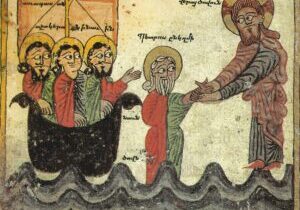
But a storm came up on the lake that night. The boat was being tossed around and the wind was blowing it in the wrong direction. Jesus saw it happening and began walking across the water to them.
Think about it. A man whom you consider to be a teacher and healer is now walking on the water of a stormy sea! Since that is clearly impossible for a human to do, it must be a spirit of some sort – a ghost! It’s a terrifying thought for most people and the disciples were no exception.
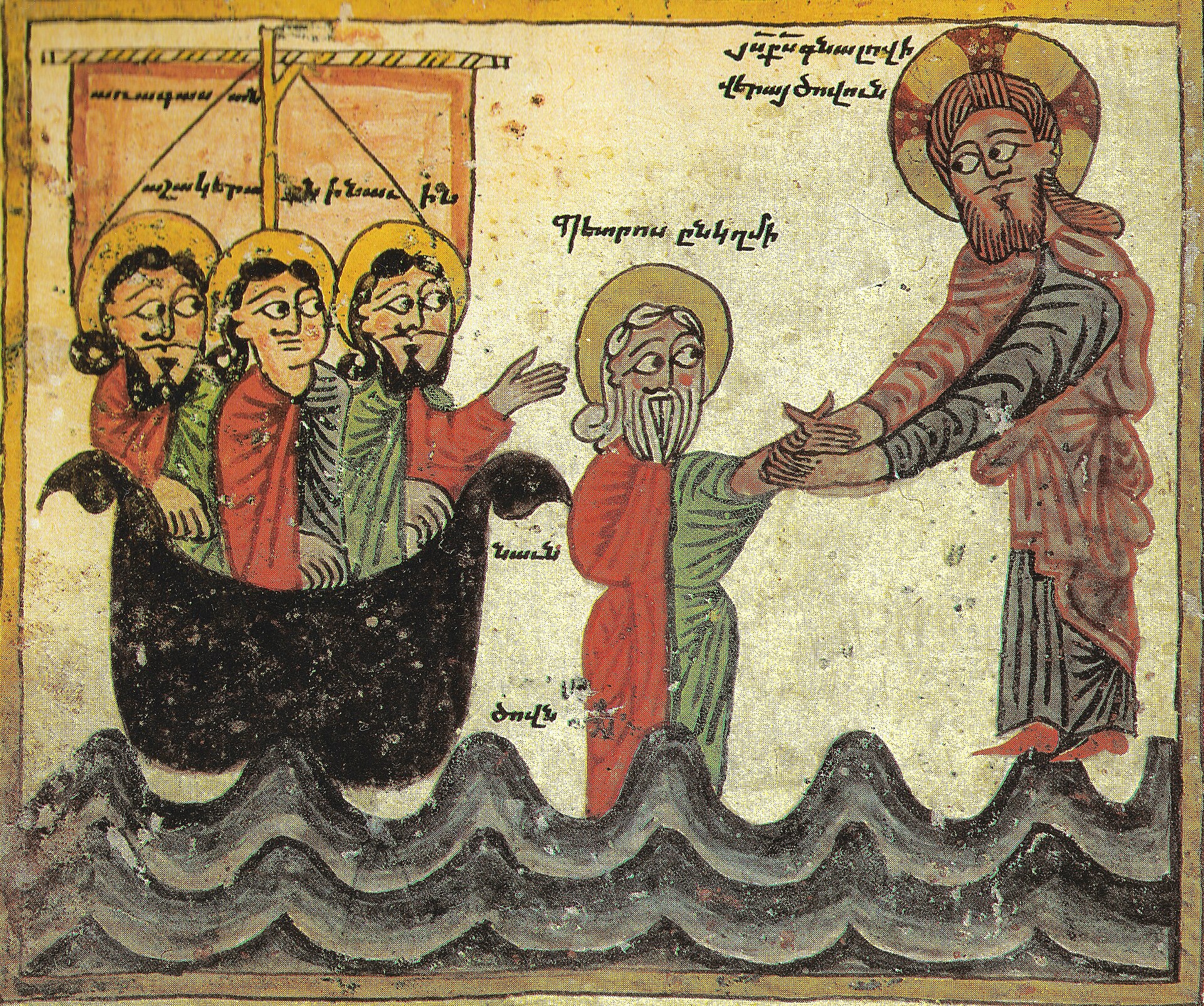
Jesus saw their fear and called out to them not to be afraid. Peter wanted to be sure. “Lord, if it is you, command me to come to you on the water.” “Come,” Jesus responded. And Peter, ever brash Peter, hopped out of the boat and began walking toward Jesus. Then he came to his senses and panicked. As he began sinking, he cried out to Jesus to save him and Jesus responded immediately, taking him by the hand and getting him back to the boat.
“Why did you doubt,” Jesus asked Peter. He asks us the same thing today. Why do you doubt? Why do you not trust me?
St. Matthew tells us the disciples paid him homage – “Truly you are the Son of God.” (Mt 14:22-33)
Do we really believe his words too? When he says we are to feed the hungry, clothe those who have no clothing, find homes for those without them, welcome and help those who come from other lands, care for the sick, visit those in prison or are otherwise isolated from the community, why do we doubt that he really meant it?
In our own lives, how do we pay him homage? Do we lock ourselves away and build walls to keep people out? Do we stop people who don’t look like us and toss them out of the country? Do we refuse to help parents who can’t earn enough to buy food and provide homes for their children? How do we pay him homage?
He has already told us. We are called to find the Lord present in the storm, quietly calling each of us to be bearers of peace and help within our world. We begin with our families and communities, but we must also reach out and welcome others who come to our communities needing help and support to work and contribute to the well-being of all. We are called to live the truth that Jesus is the Son of God, come to share our lives and lead us into a better way to be humans and communities of life and love.
Not all in our families or communities will agree with how this is to happen or with what urgency. St. Paul felt a great pain and frustration that his religious and national community did not quickly recognize Jesus and become followers of the way. (Rom 9:1-5) We who deal with these kinds of conflicting visions within our nations and families experience some of the same pain.
Yet we are still called to follow the call we hear from the Lord. Only in the continued witness of our lives of service and outreach can Love quietly continue to reach out and transform hearts and lives. Our refusal to break engagement with families and friends in violent or in negative interactions will be essential for the rebuilding of those relationships and building the kind of open, loving communities across our local communities, nations, and the entire world that are characteristic of the Kingdom of God. When the needs of those least able to fend for themselves are being addressed, all benefit as their gifts and talents shine forth for the good of all.
A quiet presence in the storm – the one who brings gentle kindness and healing to all who will accept it, in union with our sisters and brothers around the world.
As we move through our lives this week, may we remember to watch for those who need help, to be kind to those we meet, to speak up for those whose needs are being denied, and to trust that the Lord will be present in those quiet moments of fellowship and service as we work to build a better world community for all.
Peace be with you on the journey.
Readings for the Nineteenth Sunday in Ordinary Time – Cycle A
Read More