Pages Menu
RssFacebook
Categories Menu

Posted by on Apr 27, 2025

Powder, Powder, Pretty Baby

Powder, Powder, Pretty Baby

In the old black and white picture, a cute little baby girl is sitting on the floor in front of an open cabinet door. She is wearing only a diaper and is covered in white powder, as are the inside of the cupboard and the floor around her. Her face, hair, and entire body are covered with the powder as she innocently smiles and says, “Powder, powder, Pretty Baby.”

The image comes to mind this week as we reflect on the early experience of the apostles after the Resurrection. The apostles all ran away or denied Jesus during his arrest and trial. Only John stood by the cross with Jesus’ mother and the other women. Yet on the first night after he rose, he came to them, appearing inside a locked room. His first words to them were, “Peace be with you.” He didn’t scold them. He didn’t stand silently waiting for an apology. He didn’t even laugh at them. He simply offered them a greeting, “Peace.” All that had happened, all they had messed up, all the disgrace they felt, all was forgiven. “Powder” all over the floor, but no condemnation, no punishment.

To their amazement, Jesus didn’t stop with forgiving all of them. He breathed forth the Spirit on them, giving them the same power to forgive.

This ability to forgive after having been forgiven is worth thinking about in more detail.

When hard things have happened, when we have made mistakes in judgement, done things that are just plain wrong or hurtful, or been unwilling to do the right thing in difficult situations, we carry a burden within ourselves. Sometimes we describe it as a heavy heart. People of other cultures might describe it differently, but it’s there and it gets in the way of being open and joyfully allowing love and mercy to flow out into our relationships with other people and the world around us.

What Jesus did for the Apostles was to remove that burden of a guilty heart, replacing it with a heart that is gifted now to forgive others. Where there was a blocked channel, there is now an open stream or gully through which mercy and healing can flow.

Thomas wasn’t there the first night. When he heard what had happened, it just made no sense at all to him. They must all be delusional! Not going to believe that nonsense about Jesus having risen and appeared to the others unless he sees it himself. They’re just overwrought!

What a surprise for him the next Sunday evening, when Jesus again showed up in the locked room with them. Downright embarrassing! Jesus knew what Thomas had said, so he called him to touch his wounds – hands and side – then told him to believe what he had been told. Thomas responded with a fervent prayer of faith – “My Lord and my God.”

We are also included in this scene. As we remember the encounter with Thomas and the other disciples, we are brought into the room with them. Jesus declares that though we have not physically seen his wounded, risen body, we are blessed because we too believe. We too have been forgiven. (Jn 20:19-31)

After the Pentecost experience, the Apostles told everyone they met about what they had seen and experienced of God’s coming in Jesus and his resurrection. They went to the Temple and spoke of Jesus there. Wondrous healings and other signs accompanied their witness. They didn’t even have to touch people to heal them. Simply passing by them on the streets, their shadows falling on people waiting by the side of the road, brought healing. (Acts 5:12-16)

When we open our hearts to receive forgiveness and healing, the power of love and healing we receive can continue to flow out into our world too. Jesus has come for all peoples at all times. His love flows through us, as we allow it to do so. If we refuse, he doesn’t blast his way through. He waits until we are willing to be healed and open the channel again. But make no mistake, he is waiting right there beside us, hoping we’ll open to allow his love to flow forth.

This Easter week we have experienced the loss of our dear Pope Francis. He has returned to the Father, a faithful servant who made mistakes in his life, learned from them, and received forgiveness. He lived and learned, coming to see the Lord’s presence among the poorest of the poor. He spoke and acted on behalf of children, immigrants, the elderly, prisoners, the frightened, and the sick. He challenged us to care for the Earth in ever more concrete ways, protecting this common home of ours as we grow in numbers and use of resources. He opened doors to leadership to those denied such opportunities for centuries. Women and lay people from around the world were given the opportunity to serve in ministry and offer their reflections on how the Spirit is calling all of us to move forward into this third millennium of Christianity. His influence will long remain in our Church and world community.

In the days and weeks to come, we will discover who will be the next Bishop of Rome and heir to the Chair of Peter, leader of the Roman Catholic community. We pray for the Lord’s guidance as our cardinals meet and make the choice, remembering that ultimately, it is Jesus who is in our midst, calling us to remember that he is the firstborn of the dead, alive now forever in triumph over death and all barriers to love. (Rev 1:9-11a, 12-13, 17-19)

That little girl, covered in powder, was picked up and loved by her mother. Her mother, grandmother and school-aged aunts and uncles laughed as they helped clean things up. The powder was washed off her. The floor was swept. The cupboard was cleaned out. And the powder found a safer place, higher up in the cabinet!

In the family picture album, the picture is proudly, fondly displayed, with the inscription in Mom’s handwriting: “Powder, Powder, Pretty Baby.” I don’t consciously remember the event, but as I grew up, I was always reassured when I saw that picture that no matter what I did, that Pretty Baby was loved and forgiven. Mercy and love were free to flow out into the world.

As we move through this next week, may we remember to be open channels for Divine mercy and love to flow into our world. There is so much anger, fear, and distrust flowing just now. The Lord needs each of us to open our hearts and let His love flow into the world too. It’s more powerful than anger or hatred. But it doesn’t force its way. It flows only when we are willing to be open and let it through.

Readings for the Second Sunday of Easter, Sunday of Divine Mercy – Cycle C


Read More
Posted by on Apr 16, 2023

That You May Have Life in His Name

That You May Have Life in His Name

The Gospel According to John concludes with the statement that “Jesus did many other signs in the presence of his disciples that are not written in this book.” The signs that have been included were selected to help others believe “that Jesus is the Christ, the Son of God” and as a result have “life in his name.” There is an Appendix that was added at some point after these final words from the twentieth chapter, but most scholars agree that the Appendix was written by someone else.

John divided his account of the Good News of Jesus’ life into two sections: The Book of Signs and The Book of Glory. The Gospel opens with the famous Prologue, “In the beginning was the Word.” The book of Genesis begins with the same phrase, “In the beginning.”

The Book of Signs starts with Jesus’ baptism at the Jordan River and concludes with his triumphal entry into Jerusalem on Palm Sunday. The Book of Glory begins with the washing of the feet of his disciples and a long teaching on love and trust in God at the Last Supper. It continues through his passion, death, resurrection, and appearances to his friends, including Mary Magdalene in the garden.

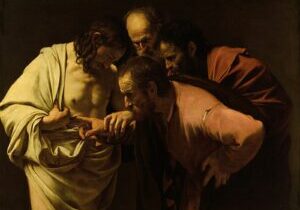
The story of Jesus’ appearance to his friends in the locked room on Easter Sunday night and his return visit a week later when Thomas was present as well, are the final stories of the Book of Glory. (Jn 20:19-31) In these two stories, Jesus appears among his friends without warning or notice of any kind. He is simply and suddenly there with them. His first word to them each time is the greeting, “Peace be with you.” This peace is a deeply existential peace. No matter what happens, this peace will remain. It is a peace that is lived. It is a peace that brings healing and forgiveness – a peace that leads to community and life. His words to Thomas sum up nicely Jesus’ love for all those who would never meet him in person but who would become his followers through the centuries: “Blest are they who have not seen and have believed.” The Resurrection peace of Christ extends to each of us as well.

On the Feast of Pentecost, the Holy Spirit blew into the lives of the disciples in a very special way. They stopped being afraid and hiding from the authorities. Instead, they stepped into the public eye and began to witness boldly to their experience of Jesus’ coming and his resurrection. Many people believed their witness and began to gather together to live as a community. St. Luke describes their lives in the first part of the Acts of the Apostles. They shared what they had, cared for those who had little, gathered to pray at the Temple, broke bread in their homes as Jesus had instructed them to do, and shared their meals together. The community grew rapidly and shared a sense that they had been saved and given new life through the teaching and sacrifice of Jesus. The resurrection changed everything. New life was theirs. (Acts 2:42-47)

As the community grew and spread into other areas, the sense of new birth and a living hope through Jesus’ resurrection became a characteristic of its members. The letter of St. Peter (1 Pt 1:3-9) reminds those who believe in Jesus that an imperishable inheritance is waiting for those who remain faithful. Through their trust and perseverance in loving Christ, they will reach their goal, the “salvation of your souls.” The teachings of those who were witnesses to the actions and teachings of Jesus have led those who were not present to share the same faith with those who were. And all will have “life in his name.”

It has been one week since we began our celebration of the Resurrection. Will Jesus be present in our homes at the end of this day? Where and how will we see him? How will we offer forgiveness to each other for times we have been hurt? How will we seek forgiveness for the times we have hurt others? And as loved and forgiven sisters and brothers of Jesus, where is the Lord sending us? To whom will we bring the good news of God’s love?

Readings for the Second Sunday of Easter

Read More

Posted by on Apr 24, 2022

Mercy – A welcoming back into the circle

Mercy – A welcoming back into the circle

Easter is both a day and a season. For fifty days, we bask in and reflect upon the great mystery of the Resurrection. The Sunday after Easter, the Second Sunday of Easter, is also known as Divine Mercy Sunday. We have a chance on this day to notice God’s loving presence in our lives, even when we are not consciously aware of that presence and possibly even actively turning away from it.

Many years ago, I was teaching a group of 5th and 6th graders in our parish religious education program. I had the children for two years at a time, so we got to know each other well. One year I had a girl in the class who was quite bright. She could also be quite impulsive and outspoken. Everyone liked her and she was a natural leader.

I always started class by calling the children into a circle. We recited a verse, sang a prayer, and then prayed for their special intentions before I began to present the topic of that day. One day, she was not feeling ready to begin class when I called them together. We met after school on a Thursday, so they were all tired of school by that time of day. I made class as little like school as possible, to help them enjoy our time of learning together. But she was not ready to stop visiting with her friends and enter into our lesson. Instead, she turned her back to me and commented that she didn’t like what I had just said to her, so she wasn’t going to join us.

There we were. A group of ten to fifteen people in a circle, ready to begin our time together and one person had turned away from us. The other children were astounded at her behavior and clearly wondered what I would do.

What would you do?

Here’s what I did. I spoke to the other children and called their attention to what we were seeing. We were all there together happily, in a circle and ready to begin our activity. One person had turned away. It was a beautiful example of what happens when we choose not to do what the Lord is asking us to do. What happens when we choose to go our own way and refuse to go the Lord’s way. The Lord and the community are still there waiting and inviting us to join the circle. We turn away. As soon as we turn back, we are immediately incorporated back into the group.

When my student realized that she had just given me a perfect example of what we were going to be learning that day, she turned back immediately, filled with apologies to her classmates for giving me a chance to teach them through her example. Of course, all was forgiven and we continued with the lesson. That year we were learning about God, prayer, and sacraments. It was just perfect timing!

The Gospel reading from St. John today speaks of something similar (Jn 20:19-31). It is Easter Sunday evening. The disciples are gathered in the upper room. They don’t really understand what has happened. It’s the first day of the new week, the day after the Sabbath. And here appears Jesus. The first thing he says to them is, “Peace be with you.” To show them he wasn’t a ghost, he showed them his hands and his side, pierced by nails and sword. Again, he spoke to them, “Peace be with you.” Not a word of condemnation or scolding for having run away or denied him. Just Peace.

Then he went even further, breathing on them the power of the Holy Spirit, the Spirit who is love, giving them authority to forgive the sins of other humans. This is pretty amazing stuff. Humans can forgive like God does and on behalf of God?

Thomas wasn’t there that night. He didn’t believe a word of it. No sir, not a word of it. Furthermore, he made clear, he would not believe until he had seen for himself and touched the nail marks and the sword wound in Jesus’ side. A week later, Jesus appeared again and called Thomas to touch his hands and his side, instructing him to believe now. Jesus also spoke words that ring through the centuries to all of us, “Blessed are those who have not seen and have believed.” We are some of those millions and billions of people who have believed without physical evidence of the Lord’s resurrection.

The people of Jerusalem saw the evidence of his resurrection in the community that formed among them, caring for each other and those around them (Acts 5:12-16). They recognized the power of healing that flowed through them and brought the sick out to be seen and healed. Many joined the community because of the love they saw among those who were already followers of the way.

We too see the Lord’s presence in the community around us. We experience it in the actions of other members of our community. We see healing and forgiveness that draw families and communities back together. As the early followers of Jesus were noticed, people who have seen the love within our families and communities have also been drawn to seek the Lord.

On Easter Sunday, the eighth day of creation dawned. A new start for humans and for our relationship with God burst forth. A community came into being that would grow and eventually encircle the globe, a community of love and forgiveness. A community led by “one like a son of man” who is “the first and the last, the one who lives.” The author of the Book of Revelation shares with us this vision he received and the encouragement to continue in faith as a community (Rev1:9-11a, 12-13, 17-19). In obedience, he writes down what he has seen, because it is happening and continues to be happening, not just then, but into our times and into the future. The circle of Divine Love and community is always present. We are free to turn toward the circle or to turn away. Divine mercy waits patiently for each of us to turn back into the circle and rejoin the dance of life.

As we move forward during this season of Easter, how do we welcome those from whom we may have become estranged?  How do we reach out in love and forgiveness? How do we seek reconciliation with those whom we have hurt? How do our communities welcome the stranger or encourage the one who has grown tired and lost hope? How can we be the face of the Lord’s mercy and love? How do we receive it in our own lives?

It’s a new day. Creation is new and our relationship with God is fresh and ready to grow. The Lord is Risen! Mercy is ever-present! Alleluia.

Read More

Posted by on Mar 24, 2015

Coming Soon — An Extraordinary Holy Year of Mercy

Coming Soon — An Extraordinary Holy Year of Mercy

Pope Francis - Canonization_2014-_The_Canonization_of_Saint_John_XXIII_and_Saint_John_Paul_II_(14036966125) - Jeffrey Bruno - Creative CommonsOn March 13, the second anniversary of his papacy, Pope Francis announced a special year of prayer and other special activities to celebrate God’s unlimited mercy. The announcement was made as part of the Pope’s homily while he was presiding over a Lenten penance service. Divine mercy is one of the Pope’s major themes in his preaching and pastoral activity. The year will officially begin on the Feast of the Immaculate Conception (December 8, 2015) and end on the Feast of Christ the King (November 20, 2016). The Holy Year of Mercy also marks the 50th anniversary of the close of the Second Vatican Council. It will be marked by special ceremonies and liturgies. Since this Holy Year is outside the traditional 25 or 50 year interval for regular Holy Years it is called an Extraordinary Holy Year.

The Pope declared:

Dear brothers and sisters, I have often thought about how the Church might make clear its mission of being a witness to mercy. It is a journey that begins with a spiritual conversion. For this reason, I have decided to call an extraordinary Jubilee that is to have the mercy of God at its center. It shall be a Holy Year of Mercy. We want to live this Year in the light of the Lord’s words: “Be merciful, just as your Father is merciful. (cf. Lk 6:36)”

Jubilee years began in 1300 with Pope Boniface VIII and are traditionally held every 25 years. The concept of the Holy Year is modeled on the Old Testament Jubilee Year in which the fields rested, slaves were freed, and debts were forgiven. The Jubilee Year specified in Leviticas was to be held every 50 years.

Traditionally, the Jubilee door of St. Peter’s Basilica is opened at the beginning of Holy Years to symbolize the return of penitents to the faith. Additionally, special plans are being made for the celebration in 2016 of Divine Mercy Sunday, the first Sunday after Easter.

See a video of the announcement here.

Read More

Posted by on Apr 18, 2012

Coming Soon — An Extraordinary Holy Year of Mercy

Divine Mercy – Entering the Locked Rooms of our Hearts


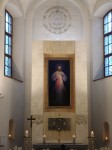
Divine Mercy Sanctuary in Vilnius

Divine Mercy Sunday falls each year on the second Sunday of Easter. On this day we hear the story of Jesus’ appearance on Easter evening to his disciples who were hiding in the locked room where they had celebrated their last meal with him only a few days earlier. They were confused, frightened, bewildered, incredulous, and all the emotions in-between. They knew he had been executed. They knew that for the most part they had deserted him in his time of suffering. Yet the women had come bearing the message that he was risen from the dead. Peter and John had found the tomb empty. And now … here he was before them.

What would he say? “You blankety-blank sorry excuses for friends — I don’t know what I ever saw in you!” “How could you abandon me?” “Go take a long walk off a short pier.” “I’m done with you!”

The rest of us might have said such things. Such feelings would be accepted as only human. But Jesus said nothing of the sort. What did he say? “Peace be with you.” Not just once. He repeated it that night and again the next week, when he came again, with a special mission to reassure Thomas of his resurrection.

The early disciples were ordinary men and women like all of us alive today. Like them, we hide away, locking our fears, hurts, anger, doubts, shame, and uncertainty deep within. We hesitate to let anyone see or touch us in our pain, even our Risen Lord. So he comes to us too and offers peace. The mercy and absolute forgiveness of God are ours through Jesus. As our deacon, Patrick Conway, reminded us all Sunday morning, our best response is to allow Jesus to enter into our lives in their deepest, most hidden and hurting areas with God’s loving mercy and healing power. When we receive Communion, we, like the disciples in that locked room, find our Lord and Savior in the midst of our lives and we too receive the power to forgive and the gift of being forgiven.

As we bask in the gift of Divine Mercy this week, may the mercy, love and peace of the Risen Lord be with each of us. Then may we carry God’s mercy forward with us to all we meet in the year to come.

Painting by Eugene Kazimierowski.
Photograph by Alma Pater.
GNU Free documentation license.

Read More

Posted by on May 7, 2011

Sharing in Divine Mercy

The second Sunday of Easter is known as Divine Mercy Sunday. The Gospel reading (Jn 20:19-31) tells of Jesus’ appearance to His disciples in the Upper Room on Easter Sunday evening. He appeared among them, wished them Peace, showed them His wounds and asked for something to eat. Then He breathed on them, the breath of the Holy Spirit,  and told them to forgive sins. He told them to continue the work He had begun, taking the Good News of God’s love out to all the world.

When I was growing up, the message of this Gospel’s story of the granting of power to forgive sin was generally presented in terms of the power of priest to forgive sins in the sacrament of Penance (now more often known as Reconciliation). However, as I listened to the Gospel proclamation last Sunday, the Good News I heard was of the gift given to all of us as followers and disciples of Jesus – the power to forgive those who hurt us in some way.

Forgiveness does not come easily to anyone. When hurts come along, it’s often much more satisfying to plot revenge, or bask in a stew of martyred pouting or otherwise hold on to the hurt. But Jesus knew something we often miss. The one most hurt, the one most diminished, the one who suffers most from such behavior is the one who engages in it! Perhaps that is why He was so quick to forgive those who had abandoned and denied Him just a few days earlier.

As we live our calling as followers of Jesus, we share the task of bringing forgiveness, reconciliation and peace to our families, communities, nations and world. Anything that stands in the way of this mission is to be suspect. We can’t forgive through our own power. Some wounds are just too deep for our human ability to heal. But Jesus is with us and He can heal them if we are willing to open them to His touch. And as we receive healing, we are called to pass it on, so that the waves of forgiveness and healing at last embrace all the people of the world. It’s truly a noble calling.

Peace be with you.

Read More