Food for the Journey
 The prophet Elijah had a problem – her name was Jezebel, wife of King Ahab. Jezebel was not an Israelite and she worshiped gods other than the Lord. More seriously, she got her husband to offer sacrifices to her god, Baal, and she ordered that all the prophets of the Lord be killed. When Elijah demonstrated clearly that Baal was not really a god and did away with Baal’s prophets, Jezebel ordered his death. He fled into the desert and lay down under a tree, praying for death to come to him there.
It is at this point that we pick up Elijah’s story in today’s reading from the first book of Kings (1 Kings 19:4-8). Elijah begs the Lord for death. He’s had enough of being a prophet and always being in trouble, having to flee for his life again and again. He wants it all to end. But that isn’t what the Lord has in mind. Elijah is awakened by an angel who tells him to get up and eat. Obediently, he does so, then lies down again to sleep. But the angel of the Lord returns and again tells him to get up and eat more, the journey will be long. Elijah obeys once again. He eats the food provided and drinks what he has been given to drink. Then he gets up and begins to walk.
He walks for forty days and nights to Mt. Horeb, the mountain on which the Lord gave Moses the Law. There he meets the Lord and receives instructions regarding which men are to be anointed as the next kings and prophets. That story is for another Sunday. For today, the important thing for us to remember is that the Lord God provided food that would sustain Elijah for a very long journey.
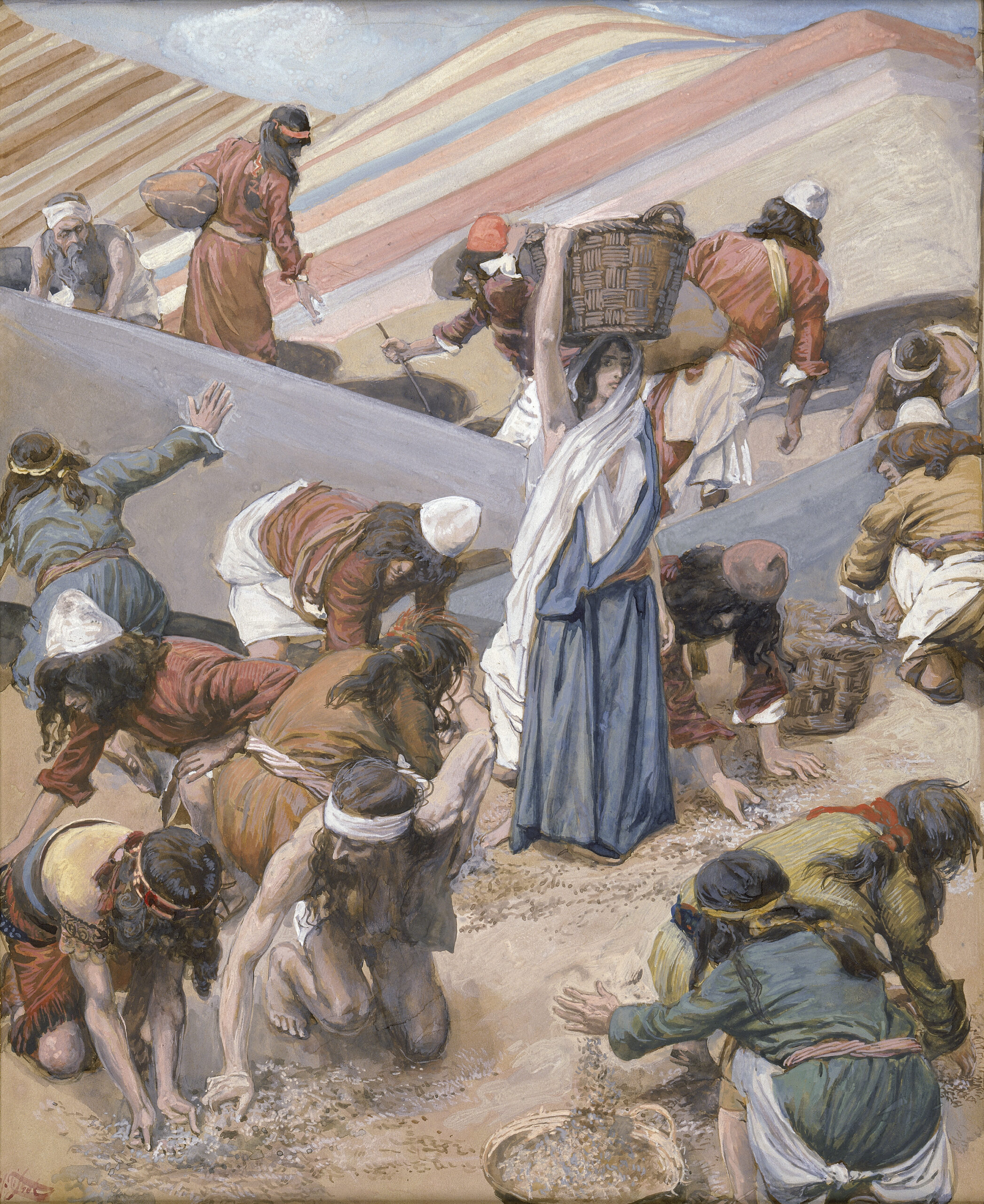
Another Kind of Bread from Heaven
Jesus continues to deal with the question of bread from heaven in St. John’s account of the aftermath of the feeding of the five thousand men (Jn 6:41-51). People in the city knew Jesus and his family. He had grown up in a nearby town. How could he possibly presume to claim to have been sent from heaven?
Jesus doesn’t back down. He goes farther in his claim to authority, saying that the Father will draw people to him. Furthermore, Jesus himself has come from the Father, has seen (the word implies either spiritually or physically) the Father, and will give fullness of life (everlasting life) to those who believe what he says. Finally, he declares, “I am the bread of life.” This living bread comes from heaven and is to be given physically, in the flesh, for the life of the world. Jesus gives himself to gift eternal life to humanity.
This radical notion drew the first Christians together and shaped their identity. As St. Paul reminded one community (Eph 4:30-5:2), they were God’s beloved children because Christ loved all of us and gave himself as a sacrificial offering to the Father. As Christians they/we belong to God through our baptism and that fact is to show in our lives. We must leave behind anger, bitterness, shouting, and all other forms of hatred and malice. We are to be known for our kindness, compassion, and readiness to forgive each other. We who share the body of the Lord cannot, must not, fail to live in love. An important reminder in our day too.
Our loving Father has given us food for the journey of our lives. We don’t know where our lives as Christians will lead us. We don’t know who we will meet along the way. We don’t know who might be angry with us when we speak the truth of God’s love for all. We don’t know who might be hungering for a word of love or forgiveness or compassion. What we do know is that we can hold on to the promise Jesus gives us. The bread he gives, the living bread that came down from heaven, brings life in all its fullness to those who receive it. Just as Elijah received food that took him to Mt. Horeb, we too receive food that will take us to meet our God in our world today.
See you at Eucharist.
Read More