Pages Menu
RssFacebook
Categories Menu

Posted by on Feb 12, 2023

Going Deeper with The Law

Going Deeper with The Law

In the Sermon on the Mount in St Matthew’s Gospel, Jesus says several times, “You have heard that it was said … But I say to you…” (Mt 5:17-37) Each of the things Jesus says takes the requirement farther than the original teaching from Mosaic Law seemed to go. It’s not enough to refrain from murdering someone, even getting angry and holding on to the anger is too much. It’s not enough not to be unfaithful to a spouse. Even harboring unfaithful thoughts is too much. It’s not enough not to swear a false oath. Don’t swear oaths at all. You really have no way to back it up.

We so often are tempted to split hairs. Well, she didn’t really say I couldn’t stop for ice cream on the way home, she just said to come home! Well, it’s only a little untruthful, what difference will that make? What right does he have to tell me what to do anyway? It won’t hurt anything to do it my way instead! And so we justify what we want to do, regardless of what is asked of us.

But Jesus wants us to look at the underlying meaning of the commandments. How do we live out the spirit of the law rather than the letter of the law. It’s in the spirit of the law that we learn the wisdom of God and choose life. He was very clear on this. He didn’t come to overturn the Law. He came to fulfill it.

Does that mean that we have to take everything we hear in scripture at face value, even if our culture is very different from Jesus’ culture? No. But we need to understand what the reasoning was for his teachings. For example, when he speaks of divorce, it is about a different social reality than we know today in our Western culture. In his time and culture, a man could divorce a woman, but a woman could not divorce a man. Beyond that, once a woman was married, she was the responsibility of her husband’s family. Her family was no longer responsible to support her in any way. If her husband divorced her, there was no one to look out for her. She had no income, no home, no support. That’s why Jesus spoke of such women as having to commit adultery. It was the only way a lot of them could survive, but their survival method put them in violation of the letter and spirit of the law.

How about that business of gouging out an eye or cutting off a hand that causes us to sin? Not to be taken literally at all. But we need to act definitively sometimes to cut out the things from our lives that lead us to make the wrong choice or to go down the wrong road. If watching TV in the evening leads me to get angry with the baby who interrupts my watching, it’s not the baby’s fault. I need to cut out the TV watching. If having the computer in my bedroom leads me to watch YouTube rather than do my homework, maybe I need to keep and use the computer only in a public area of my home. If being around people who are smoking or drinking makes me want to do it too, or if I can’t resist their offers to join in, maybe I need to hang out with other people.

Sirach (15:15-20), long ago, presented a series of choices the Lord offers that ring true today. Fire or water? Life or death? Hang on to anger and revenge – you’ve chosen a fire that will eat at you and eventually destroy you. Choose water and you can be washed clean of the anger and other negative emotions – you are choosing life. Wisdom comes as we choose the path of life again and again over time. And sometimes, it comes as a result of having to turn from the wrong choices and the messes that have resulted when we made them. Turning from death to life.

God doesn’t force us to do anything we don’t want to do. That is a key reality of love. Freedom to choose. But God also doesn’t shield us from the consequences of our choices. God is simply there to help us pick up the pieces when we realize our mistake and make better choices the next time around. Then God gives us a big hug to let us know how much we are loved, even when we mess things up royally.

So, as we listen to the readings from Sirach, St. Paul (1 Cor 2:6-10), and the Gospel today, with all of these more demanding instructions, let’s remember that we are called to hear a deeper meaning to the rules. We’re to hear the meaning that seeks to call us to be our best selves and choose the path of life and love rather than sinking more deeply into the morass of anger, selfishness, deceit, and all that goes with them, all the while thinking we are keeping the rules as they are literally formulated. We are called to go deeper.

Readings for the Sixth Sunday in Ordinary Time – Cycle A


Read More

Posted by on Feb 5, 2023

Light and Salt – Justice for the Poor

Light and Salt – Justice for the Poor

Salt of the earth, light for the world – the essential calling of the disciple is to live a life that shines with the goodness of the Lord, a light that shines in the darkness, so those who see it understand the glory of the Father in heaven. (Mt 5:13-16) Jesus is very clear on this point. It’s useless to live in a way that hides the light of love from others or that does not season interactions with love and care for others, because then God’s glory can’t shine forth into the world of human social life.

This insight of Jesus was not unique to him. We often think that Jesus thought up most of what he taught, but actually, there is a long tradition in Judeo-Christian thinking that focuses on the interaction between those who have the necessities of life and the power that goes with it and those who do not.

The prophet Isaiah spoke very clearly of this (58:7-10), in words that many of us first heard spoken by Jesus about the final judgement in which the “sheep” would be separated from the “goats.” “Share your bread with the hungry, shelter the oppressed and the homeless, clothe the naked when you see them…” These words of Isaiah were spoken to a people returning from exile in Babylon. To the extent that they created a new society in which justice and care for the poor and oppressed were foundational, the light of that society and its people would break forth like the dawn into the world. The Lord would be present among them and be a source of protection and healing for them. “Light shall rise for you in the darkness…”

This kind of life is not to be a source of pride for Jesus’ followers. It’s certainly not a message that is easily accepted in a world in which those with power don’t easily share resources with those who have nothing to give them in return. But as St. Paul points out (1 Cor 2L1-5), the persuasiveness of the message of the Gospel is the result of the demonstration of Spirit and power that flow from the positive change that the foolishness of the message and lifestyle produces. Doing hurtful things leads to anger and revenge – an intensification of the evil that provokes them. Doing good things for others leads to more goodness being shared.

How does this play out for us today? We have a lot of social safety nets that are intended to help protect and support those who for one reason or another are unable to earn the money needed for food, clothing, shelter, healthcare, and education for themselves and their families. These programs provide essential support to a lot of people that we might not ordinarily realize are struggling.

As an insurance professional specializing in health insurance, I hear a lot of stories from people struggling to keep food on the table and a roof overhead for themselves and their children. I often work with middle-class people who suddenly find their income crashing and discover that what they always took for granted is not guaranteed for all in this country. I explain how the social safety net works, based on my own experience with it, and encourage them that it’s not the end of the world if they need to move to Medicaid (known as Medi-Cal in California) for a period of time. I encourage them to look at the supplemental nutrition programs for their families (aka, food stamps) and to take advantage of the help, so that they have a chance of getting back on their feet. Sometimes I work with people who will never be able to support themselves, due to illness or injury, including mental illness or addiction. It is a great joy to me to be able to offer help to those who are despairing of ever living a “normal life” again. On more than one occasion, I have had people react with tears of joy to know that their prayers have been answered and help is available. Not a common experience in the insurance field.

And yet, there are still folks who have even less and don’t qualify for this governmental help. We think of refugees and asylum seekers in this category. It’s not easy for them to get along and figure out how the very different legal and socio-economic systems here work. Lots of people are involved in helping and offering a welcoming hand to these new arrivals.

Once they have been here for a while, there are still obstacles. I worked with a young person the other day who is a DACA recipient. They can’t get a policy through the Affordable Care Act marketplace because we as a nation have not yet come to terms with the fact that these young people are ours just as surely as if they had been born here. We have raised them and educated them and shared our dreams, visions, and expectations with them. They have jobs and businesses and are giving back to the country which raised them. And yet some of us still want to throw them out because their parents brought them here so they could be safe from the violence or oppression in their native communities. Fortunately, my young client was able to afford insurance outside of the subsidized plans. Not all are so fortunate.

How do we react to the discrepancies in income and opportunity in our country. Do we work to make sure the hungry have enough healthful food to live a decent life? Do we complain that a homeless person has been given a cell phone so they can get medical care and other essential services? Have you tried to find a pay-phone in a telephone booth lately? Without a cell phone, it’s next to impossible to access basic services if one does not have a home.

As you may have guessed by now, these are questions and issues about which I am rather passionate! I see too many folks on a daily basis who are struggling and I know the great blessing that having folks who are willing to share their bread with the hungry, to clothe the naked, and find homes for the homeless can be.

If you ever wonder about the wisdom of the Gospels and of efforts to help those who struggle, I encourage you to volunteer with others from your Church community or other social service programs. Get to know some of the folks who serve and some who are served. There’s a tremendous richness in the encounter and a deep, deep faith among those who have nothing but faith to hold onto.

“Light shall rise for you in the darkness, and the gloom shall become for you like midday,” says Isaiah. “Your light must shine before others, that they may see your good deeds and glorify your heavenly Father,” says Jesus.

Here we go on the journey together.

Readings for the Fifth Sunday in Ordinary Time – Cycle A

Sunday Mass at Resurrection Catholic Community, Aptos, CA

Read More

Posted by on Jan 29, 2023

He Went up the Mountain

He Went up the Mountain

The Beatitudes are front and center in the liturgy today.  Jesus goes up the mountain – just as Moses went up the mountain to receive the original Law, a short part of which are the 10 Commandments. Matthew’s positioning of this teaching as taking place on the mountain makes it clear that this is the new law which Jesus is bringing to all right from the beginning. (Mt 5:1-12a) It’s not given to him by God, as the Law was given to Moses. He is the one teaching them.

Yet what Jesus is teaching is not entirely new. The prophets long before the time of Jesus called the ordinary people, the humble of the earth, to follow God’s law, seeking justice and humility, speaking the truth, living in peace, and taking refuge in the name, the power, of the Lord. Jesus too speaks of the humble, ordinary folks of the earth. It’s not the rich and powerful who will make up the kingdom of heaven or make it a reality on Earth. It’s those who are not ambitious for power and fame but who are hungry for righteousness, for doing what is right and good rather than what might be more profitable. It’s those who are merciful and look at the world with pure hearts, those who work for peace and who mourn the losses caused by greed or ambition.

This is the new law Jesus brings to us, laid out right near the beginning of his public life, shortly after the call of his first disciples. Yet it’s not a law that will be easy to accept or to live by. He speaks clearly of persecution, insults, and evil worked against those who will follow this law. Still, the reward for faithfulness is the kingdom of heaven, a kingdom in which their hunger for justice will be satisfied, they will experience mercy and be comforted. They will be known as children of God. Not a bad outcome, all in all.

Easy to live this way? No. Not at all. Does it make sense in everyday life? No, not really. Yet it’s the foolish who live as he teaches who will show the way to life. It’s only through the grace, the help of God, that we can live this new way.

We have been called and have received an amazing gift, to live in the Lord and by the wisdom he brought to that mountainside. The kingdom begins as we live as he has called us to live, following the instructions he gave so long ago.

The Beatitudes are not the entire teaching from Jesus on that day on the mountain. As was the case with the original Law given on Mt. Sinai, there is much more that Jesus taught his disciples that day. We’ll be hearing more of this right into the beginning of Lent on Ash Wednesday. Here we go on the journey. Much to see and learn as we travel along the way with Jesus.

Readings for the Fourth Sunday in Ordinary Time – Cycle A

Read More

Posted by on Jan 22, 2023

A Voice Calls to You – Do you hear?

A Voice Calls to You – Do you hear?

Have you ever received a phone call, a text, or a letter inviting you to an event or an activity that you would never have considered attending? It might even be an invitation to something that you didn’t know existed, something so totally out of character for you that you are surprised anyone would ever associate you with that!

My initial reaction in these moments is to decline. “No, I can’t possibly do that.” “I don’t have time.” Usually I don’t say, “Are you crazy? Why would you think I would ever be associated with something like that?” I may be thinking that, but I try to be polite as my mother taught me.

Nevertheless, there have been times when I didn’t say no to the invitation. Invariably, I have learned something important in the process.

I was never into rock and much of the contemporary music of my day as a teen and young adult. As a result, the thought of attending a Grateful Dead concert never entered my mind. Yet as an adult in the late 70s and early 80s, I was working with a group, the Seva Foundation, that was trying to combat preventable blindness in Nepal. (I discovered I was not good at fundraising in the process, but that’s another story.)

One of the folks with whom I was working knew someone from the Grateful Dead and was able to instigate the planning of a benefit concert that included some members of the Dead, along with many other folk and rock artists who were well-known musicians and activists. We were invited to attend as well.

That night, as we stood in line at the will-call ticket booth, a young woman ahead of us, clearly rather “spaced-out,” approached the booth. She went up to the window and warmly greeted Jahanara, who was handing out the tickets. Jahanara smiled and greeted her in return. It was clear the young woman was not there to pick up tickets, but it didn’t matter to Jahanara. There was a warm smile and a wish for a happy evening. Then the young woman walked away peacefully.

I have often reflected on that encounter. I don’t know that I would have had the grace that Jahanara exhibited that night. I might instead have been irritated that the young woman had wasted my time and that of the folks in line. But I think Jahanara’s response was the way Jesus would have responded. I have never forgotten that moment of grace.

Liturgically, we are in a time of hearing about the events in Jesus’ life that led to its climax with his passion, death, and resurrection. We have heard about John the Baptist’s testimony. Today we hear about what happened after John had been arrested by Herod but before his execution. (Mt 4:12-23) Jesus moved from Nazareth to Capernaum and began his journey of preaching: “Repent, the kingdom of God is at hand.”

Capernaum is on the shore of the Sea of Galilee. It’s a very big lake and many folks made their living as fishermen. As he walked along the lake, he saw Andrew and Simon throwing their nets into the lake. He called to them, “Come after me, and I will make you fishers of men.” That seems a crazy thing to say and they responded in an even crazier way. They left their nets right there and walked on with him. Then they saw two other brothers, James and John, in the boat with their father Zebedee. Jesus called them as well. They left their father and went off with him.

These were absolutely outrageous things to do. Totally irresponsible and unheard of. Yet because they heard the invitation and responded, they became witnesses to the greatest event of salvation history – the reconciliation of humanity with God.

Most of the time our own encounters with strangers don’t seem to have cosmic implications. Most of the people we meet on the street or in the grocery store are pretty ordinary folks, with ordinary lives and hopes. But I think we make a great mistake if we assume that because they seem ordinary, there is nothing special about them. Each of us is here for a reason. We mostly have no clue what that reason is, but God has a reason for each of us to be here. There is someone we are to greet. Someone with whom we are to share a smile. Someone who just needs to be seen by another person and treasured as one of God’s special ones.

When Jesus comes into our lives, it’s not generally going to be with trumpet blasts and fanfare. Very likely it will come in the form of an invitation to do or try something that we would not ordinarily do. Who would ever have thought the I would go to a concert and enjoy the music of the Grateful Dead? But I did and it was a wonderful experience. And in the process, I saw the Lord reaching out in kindness to a young woman who needed to hear a gentle word that night.

Jesus continues to walk among us, mostly unseen. He is present in each one of us and wants us to reach out to each other and to those we meet, sharing the great love the Father has for each of his children. We too are called to leave our ordinary “nets” and follow along with him. He will make us fishers of men, women, and children too.

A voice is calling. Do you hear him?

Readings for the Third Sunday in Ordinary Time

Read More

Posted by on Jan 15, 2023

I did not know him …

I did not know him …

John the Baptist spoke these words about Jesus, “I did not know him, but the reason why I came baptizing with water was that he might be made known to Israel.”

The context for these words is not crystal clear when we hear them read at Mass. We are used to the stories in the first three Gospels, the Synoptics, that tell of John baptizing Jesus. We also have heard that the mothers of Jesus and John are cousins, so we expect that the boys would have known each other while they were growing up. But these assumptions aren’t necessarily correct. They come from our perspective as people from a culture in which kinship is established through the lines of both our fathers and our mothers. This was not the case in Jesus’ culture. One’s mother had to be Jewish for a child to be born a Jew, but kinship was established through the father’s line. Also, one child grew up near Jerusalem while the other grew up in Nazareth, several days’ journey to the north.

John the Evangelist, in his Gospel, also tells us about Jesus and John the Baptist, but this story has a different focus. (Jn 1:29-34) In the section of the Gospel that comes just before John identifies Jesus to his own disciples as the Lamb of God, John has been speaking with those who came out from Jerusalem to find out what the heck he was doing and to ask who was he to be doing it! That is one of the readings we typically hear in Advent liturgies. As we enter into Ordinary Time (that is to say, Counted Time), we hear the rest of the story.

John breaks his account of Jesus’ life into two books: The Book of Signs and The Book of Glory. Just before the Book of Signs, we find the Prologue, with its famous line, “In the beginning was the Word.” This is a new beginning of the history of the relationship between God and creation.  Just as in Genesis, “In the beginning …” The Prologue summarizes the themes of the entire Gospel and notes that John came ahead to testify to the light so that others might believe when his identity became known.

The Book of Signs presents key events in the life of Jesus that point to his divine origin. Thus, the Book of Signs picks up the story with John’s testimony to those from Jerusalem: “There is one among you whom you do not recognize – the one who is to come after me..” The very next day, as Jesus came towards him, John suddenly exclaimed to those around him: “Look! There is the Lamb of God who takes away the sin of the world! … I did not know him …”

In the Synoptic Gospels, written by Matthew, Mark, and Luke, we are told that John baptized Jesus. In Matthew’s account, John demurs, but Jesus insists that they do it that way. Immediately afterwards, the Holy Spirit descends on Jesus like a dove and the words, “This is my beloved son” are heard coming from the heavens. John the Evangelist also speaks of this event, but with a different focus and in more detail. In his account, John the Baptist declares a second time, “I did not know him.” It was only when “the one who sent me to baptize with water told me” that the descent of the Spirit like a dove from heaven would be the sign of the chosen Servant or Son of God that he was able to recognize Jesus as the one.

John the Baptist immediately testified to what he had seen, telling his disciples that this man was the one, the long-awaited Lamb of God.

Isaiah also spoke of one or ones who would be Servants (or Sons) of God. (Is 49:3, 5-6) The terms were used interchangeably. These were ones called by God from among the people to be faithful to the covenant and lead their nation back to a right relationship with God as their nation was rebuilt. The rulers were not necessarily going to be the ones who would do it right. Yet God would call people from among the community and through them Jerusalem and her people would become a light to the nations and salvation would reach to the ends of the earth.

Paul too makes it clear in his greeting to the people of Corinth (1 Cor 1:1-3) among whom he had lived for over a year, that all of them, Jews and Gentiles alike, had been called to holiness in Jesus. To them and to us comes his greeting: “Grace to you and peace from God our Father and the Lord Jesus Christ.”

Today, I invite you to pray with me for the grace to see God’s servants among those I meet each day. In seeing ordinary folks who are living witnesses to love and grace and forgiveness in their lives, we begin to see the face of the Son of God among us as well. We don’t always recognize him. It’s way too easy to get focused on our tasks and responsibilities, our concerns and our worries. Yet he is there among us, day to day, in the middle of it all. At the grocery store. At school. At the office. Walking along the beach. Playing in a puddle. Helping someone shovel water out of a flooded home.  All the many activities of our lives.

“I did not know him…” With God’s help and prompting, may we say with John, “Now I have seen and testified …” The Son of God is here with us now.

Readings for the Second Sunday in Ordinary Time – Cycle A


Read More

Posted by on Jan 8, 2023

Epiphany – The Light Shines Forth

Epiphany – The Light Shines Forth

A great light shining forth in the darkness. A manifestation of something unusual. A new understanding of something. All are included as meanings of the term epiphany and are not mutually exclusive. More than one meaning can apply to any particular situation.

Since ancient times, Christians have referred to various events in the life of Jesus of Nazareth as epiphanies. He was born. He was visited by wise men from the east. He was baptized. He was seen after the resurrection. All of these events have been described by the term Epiphany.

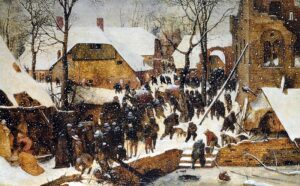
The Epiphany of the Lord, celebrated in the Roman Catholic Church on the first Sunday following January 1, is the day we remember the visit of the sages from the East. These scholars watched the skies for signs that something important was happening somewhere in the world. Each part of the sky, each constellation, carried a meaning. If something changed within that section, it meant something was changing for humans too. Accordingly, when they noticed a new light appearing in a region of the sky related to the land of Israel and to royalty, they went to see who had just been born. (They lived close enough to this event to go for a visit!)

St. Matthew (Mt 2:1-12) tells of their visit and gives us an historical time frame that also tells us approximately when Jesus was born. “In the days of King Herod …” Herod was king from 37 to 4 BC, so Jesus was born during that time. The travelers stopped at the royal palace to inquire for the new child, a reasonable thing to do, given that the child was born to be a king according to the stars.

The wise ones were sent on to Bethlehem, where indeed they found the child and his parents, no longer in a stable, but in a house. Their gifts were shared and they returned home without checking in again with Herod. An angel had warned them in a dream that Herod was not to be trusted.

This event was and is seen as the first time non-Jews were welcomed into the new manifestation of God’s kingdom of love for all humans. In the past, it had been understood that people would come from all over the world to Jerusalem, to the house of the Lord. But the full meaning of the prophecy of Isaiah (60:1-6) was not totally obvious. “Nations shall walk by your light … your sons come from afar and your daughters in the arms of their nursemaids.” These words originally were spoken in terms of the return from Babylon to Israel. But the early followers of Jesus understood them to refer to people of all nations who would become part of the people of God, children of the covenant centered in Jerusalem.

On this day we celebrate that we are included among the many nations that rejoice at the light dawning with the coming of Jesus. We bring the gift of ourselves to the community of faith. Together we offer our gifts and talents along with the bread and wine on the altar. We sing of three kings coming to visit a baby. May we also sing with reference to our own lives. “Star of wonder, star of night … guide us to the perfect light.”

If you have time and are so inclined, it’s fun to make a Kings Cake / Rosca de Reyes to share with family and friends on this day.

Illustration: The Adoration of the Magi in the Snow – 1563 by Pieter Bruegel the Elder – Look for the magi in the lower left corner of the painting!

Read More

Posted by on Jan 1, 2023

Mary of Nazareth – Mother in Faith

Mary of Nazareth – Mother in Faith

The first day of each new calendar year we celebrate the wonder of God’s blessing in becoming one of us. Without the consent of a young woman, barely past girlhood, it could never have happened. This is not a case of a deity forcing himself on a woman or seducing her. The child is not a demi-god. This child, born of this young woman, is fully human and fully divine. It’s a mystery that we can’t explain and it took many years before it was established as the formal, uncontested, belief of the community of Followers of the Way, the Christians.

We hear the blessing the Lord God instructed Moses to bestow on the people. (Num 6:22-27) “The Lord bless you and keep you! The Lord let his face shine upon you, and be gracious to you! The Lord look upon you kindly and give you peace!” And how does God do that? In the fullness of time, God comes among us as a child, his very own Word made flesh, a son. And because of this great gift, we too share in the reality of being children of God. (Gal 4:4-7)

Was this just for the rich and powerful of the world? No. It was first announced to a teenage girl, who agreed to become the mother of this very special child, then to the man who would be his earthly parent, and when he was born, to shepherds. Shepherds were not admired or particularly respected folks. They lived with their sheep. But they heard the words of the angels and believed. They visited the child and his parents, then returned praising God for this gift. (Lk 2:16-21)

The Gospel today concludes with the statement that on the eighth day after his birth, the child was circumcised (making him a member of the Jewish community) and given the name Jesus, as instructed by the angel before his birth.

“And Mary kept all these things, reflecting on them in her heart.”

We too are called to reflect on them. Mary became Mother of God. She wasn’t protected from the hardships of daily life. She didn’t always understand what was happening. She certainly didn’t expect this baby to grow up to become an itinerant preacher and miracle worker. Her heart was broken as she saw him die. Yet from the beginning, she agreed to be his mother, raising and loving him, reflecting on it all in her heart.

We honor her today and imitate her faith in our daily lives.

Read More

Posted by on Dec 30, 2022

Family In Its Many Facets

Family In Its Many Facets

Families come in many shapes and sizes. It’s something of a cliché to say that, but it’s true. We are each part of a family. Some are born into the family in which they grow up. Others are chosen and adopted into a family. Some are sheltered and loved by a family into which they were not originally born. But families are an essential part of the healthy development of any human being.

And about that many shapes and sizes part – there’s a lot of variation there too.

In some cultures, only one’s father’s side of the family are considered to be relatives. In others, it’s mother’s side. In a few (our own included), both sides of the family are relatives.

Then there are the “fictive kin” – the folks with whom relationships are established by choice of adults in the life of a child, or later by the individuals themselves. Godparents are fictive kin, for example, considered to be sharers in the responsibility of raising the child.

There are folks to whom we give kinship titles simply because they are older adults in our community or the network of friends of our relatives. We had several older women whom we called Grandma when I was growing up. One was the mother of an uncle by marriage. Another was the mother of friends who generously shared her love with us too. In some cultures, adult men and women are addressed as Uncle or Aunt.

And then there are the families that grow together in close friendship through many years spent together. We shared our lives with another family as children. Our parents became very close friends over the years. We traveled to see each other often and spent Thanksgiving together nearly every year. (The roads were too dangerous for regular travel again until February or March after that weekend.) When they moved to our community, we shared meals and time together at least a couple of times a week. We are still fond of each other and enjoy our time together.

These thoughts come to mind as we celebrate the Holy Family. Jesus was born into a family. When Joseph accepted Mary as his wife, he became the legal and social father of Jesus. How the conception of Jesus occurred didn’t matter. Joseph became Jesus’ father, responsible for loving him, teaching him, raising him to be a good man. Joseph did a fantastic job of being a father, just as Mary did a marvelous job of being a mother.

Jesus, Mary, and Joseph were not an isolated family. They lived, loved, and grew together within a community of other people in their village. This foundation prepared Jesus to go out when the time came and share the news that each of us is loved as a child by the Creator of all. We are so loved that we are to call that creator Dad/Daddy/Papa/Father. The term he used is Abba and is used by children to this day to speak to their fathers.

On this Feast of the Holy Family, let us rejoice in the gift of family and pray that in our lives we too will grow in wisdom, age, and grace through our days spent in ordinary activities and the special times that we share. May we each become part of a Holy Family too, dancing our way into eternity.

Readings for the Feast of the Holy Family

Read More

Posted by on Dec 23, 2022

Sometimes things don’t go as expected.

Sometimes things don’t go as expected.

Have you ever had one of those days when you get up in the morning with all sorts of plans and almost immediately they start getting derailed? I think they happen to all of us from time to time. Sometimes the plans can be picked up again the next day. Other times they are simply gone and we have to move on to the next step.

This kind of experience is not unique to people of our time. Ahaz in the eighth century BC was king of Judah. The Assyrians were moving south, conquering any nation that wasn’t willing to be one of their territories. Ahaz had to decide whether to ally his kingdom with that of Israel to the north, which was planning to resist Assyria, or whether to trust God to help and protect his kingdom and its people. The Lord told Ahaz to ask for a sign, anything at all, to indicate that the Lord would be with Judah in the days to come. Ahaz refused to ask for a sign and Isaiah spoke a prophecy of what would be the sign. “The virgin shall conceive, and bear a son, and shall name him Emmanuel.”

Many generations later, a young woman was visited by an angel and agreed to become the mother of a child. The challenge was that she was only engaged, not yet married. The man to whom she was engaged cared about her enough that he didn’t want to denounce her to the authorities as having been unfaithful before she was even married. He decided to end the engagement quietly, so she could go away, have the child, and continue to live. The penalty otherwise could have been stoning.

Joseph went to sleep after making that decision and was visited in a dream by an angel, a messenger of God. The angel reassured him that Mary had not been unfaithful. The child had been conceived by the power of the Holy Spirit. The angel told him the name he was to give the child. It was the same name given to Mary for her child when Gabriel visited her with God’s request. Jesus. The angel quotes the prophecy from Isaiah in which the child is called Emmanuel. The name Emmanuel means “God is with us.”

Joseph believed the words of the angel. He took Mary into his home as his wife. This descendant of David became the father of Jesus by choosing to accept him as his son. The ancient promise made to David that the Messiah would come from among his descendants was to be fulfilled. The sign given to Ahaz was also fulfilled.

Like Ahaz, Joseph, and Mary, we don’t always know what will come of the unexpected in our lives. We can only trust that somehow, God is in charge and will make things right.

Readings for the Fourth Sunday of Advent, Cycle A

Read More

Posted by on Dec 11, 2022

Here is Your God

Here is Your God

Today is the Sunday known as Gaudete Sunday – Rejoice Sunday! The Third Sunday of Advent. The readings all point towards the coming of God’s kingdom.

Isaiah (35:1-6a,10) speaks of the God coming with vindication and recompense to save the people. When that happens, “the eyes of the blind will be opened, the ears of the deaf will be cleared.” The lame will walk freely and those who are unable to speak will sing. Those ransomed by the Lord will return singing to their land. These words were spoken to a people invited to return to exile from captivity in a foreign land. Many needed a lot of convincing. They are in invitation to us as well. Will we need as much convincing?

Here is Your God.

Where? A question asked through the ages.

St. James (5:7-10) encourages the people of his time, “Be patient … until the coming of the Lord.” Farmers must wait for their crops to grow and mature. We too must wait for the kingdom to grow and mature. Don’t complain. The Judge will be here soon. Remember the prophets. The words they spoke reflected a reality that was to come, not a reality they were already experiencing. We too must be patient.

John the Baptist’s disciples asked Jesus point blank, “Are you the one who is to come?” (Mt 11:2-11) John had preached repentance and the coming of one who would judge wrongdoers. Was Jesus this one?

Jesus responded by referring to the words of Isaiah: “The blind regain their sight, the lame walk, lepers are cleansed, … and the poor have the good news proclaimed to them.” This is the sign. These are the things that will happen when the Lord comes to rescue all of us.

Jesus did not repudiate John. He praised his cousin for his faithfulness to his calling – to be the one calling from the wilderness to prepare the way of the Lord.

Jesus concluded his answer to John’s disciples with the words, “Blessed is the one who takes no offense at me.”

How do we recognize the coming of the Lord? Will it be through the advent of great signs and wonders in the sky, or floods and earthquakes, or other frightening things? No. It will be as we see God’s little ones receiving care and attention. Healing, education, shelter, adequate nutrition, and the chance to live with the dignity of the children of God.

Blessed are we when we do not take offense at the efforts of our sisters and brothers who work to bring social justice and peace to our world.

Rejoice! The Kingdom of God is near! The Lord is coming into our midst!

Readings for the Third Sunday of Advent – Cycle A

Read More

Posted by on Dec 4, 2022

“A Shoot Shall Sprout from the Stump of Jesse”

“A Shoot Shall Sprout from the Stump of Jesse”

Redwood trees in California grow to tremendous heights and can live for thousands of years. Their bark is highly fire resistant. Even when fires come, the trees historically have lived on, scorched, but still standing. They have very tiny cones for such large trees. Folks who visit redwood forests sometimes assume that these giant trees must have very deep roots in order to continue to stand tall through the centuries, sometimes supporting other trees and plants that grow high in their crowns. They wonder how such small cones can lead to the sprouting of such massive trees.

In actual fact, redwood trees have shallow roots. Their roots intertwine with those of the surrounding trees and together, they hold each other up. Their cones and tiny seeds are not essential to the continuation of the forest either. Though some trees can grow from seed, most do not. More commonly, new shoots sprout up from trees that have reached the end of their days and fallen to the ground. These new baby trees grow to new heights of their own. The fallen trees are sometimes called nurse trees.

Redwoods came to mind when I read the words of Isaiah (11:1-10) about the coming of the one who will restore peace among all creatures and with the Lord who made them. “On that day, a shoot shall sprout from the stump of Jesse, and from his roots a bud shall blossom.”

Jesse was the father of David, the shepherd who was secretly anointed to become the second King of Israel. Many years had passed and the kings of Israel were not always faithful to the Lord in their role as leaders of the nation. It was as if the tree of Jesse had been cut down or had fallen and died. Nothing remained but the stump – descendants of Jesse and the promise that the messiah would come from his line.

Isaiah reminded the people that the promise still remains. A new leader will arise from Jesse’s line. This new person will not be a corrupt king. No, the spirit of the Lord will rest on this one, bringing gifts that will set him apart from others. Wisdom, understanding, counsel, strength, knowledge, awe in the face of the wonder of the Lord. This person will judge justly, care for the poor, strike down the ruthless, do away with the wicked, and bring peace to the world. Even the world of the animals will become a place of peace in this vision. When this time comes, the Gentiles will see the signal set up from the root of Jesse and seek out the dwelling of the Lord.

It’s a wonderful picture, one which is still in the process of development. Like the growth of a redwood tree sprouting from the root of a fallen mother tree, it takes time and patience. Fortunately for us, the Lord has all the time in the world!

St. Matthew describes the mission of Jesus’ cousin John. (Mt 3:1-12) John was born about six months before Jesus. As an adult, he spent time in the desert. When he emerged from that sojourn, he began to call the people to repent and turn back to God. “The kingdom of heaven is at hand.” He spoke of himself as a voice “crying out in the desert, Prepare the way of the Lord.” People came from far and wide to the Jordan River to hear his message. He baptized people there, symbolically washing away their sins by plunging them into the water of the river.

Religious leaders came out from Jerusalem to see what he was doing, and probably to tell him to stop. But he spoke out against their assumption that because Abraham was the father of the nation, God would not hold them to account for the wrongs they had done. “God can raise up children to Abraham from these stones.” What was really needed was repentance for wrong-doing and a choice to live justly.

John spoke of the coming of his cousin, the one who actually was the promised messiah. “The one who is coming after me is mightier than I … He will baptize with the Holy Spirit and fire.” A new day is coming. A new presence of the divine is coming into the world. Be ready. The shoot has sprouted and the Spirit of the Lord is upon him.

Many years later, St. Paul encouraged the Romans to endure in hope and in harmony as they live as a community of faith. There is to be no distinction between those who are Jewish and those who are Gentiles. Christ welcomes all. He came first to the Jews, in fulfillment of the prophecies and promises made over two thousand years of their history. But that doesn’t make the descendants of the first Israelites better than those who were not the children of Abraham, Isaac and his line. It simply means that the ultimate goal has now been reached. Gentiles are drawn to “glorify God for his mercy.” God’s actions among the Jewish people have borne the long-promised fruit. Humans are unified as one people again and all sing praise to God.

We are in the second week of Advent now. The coming of the Lord among us is both a remembered historical event that we will celebrate at Christmas and a daily event in our lives, as we meet him in the people with whom we interact each day. One day, we will also meet him when the angels lead us into the eternal kingdom.

How are we preparing? Are we taking time to notice the Lord’s presence? Are we rejoicing in the little things? Can we trust that everything that truly needs to be done in the next days and weeks will get done and what doesn’t get done is maybe not all that important?

Let’s promise each other that we will try to stop for a few minutes each day to reflect on the ways in which goodness sprouts from roots hidden deep in the ground, high in the trees, or within each person. May we be blessed with a recognition of the presence of the Lord in each day of our lives.

Readings for the Second Sunday of Advent – Cycle A

Here’s a good article on Redwood trees.

Read More

Posted by on Nov 27, 2022

Time to Wake Up!

Time to Wake Up!

A new year begins today! Much of the world around us is focused on big sales and preparing for Christmas. But with the First Sunday of Advent, we begin a new year. We light the first candle on our Advent Wreath. We turn our focus to preparing for the coming of Christ. We look forward to a new set of liturgical readings as well. This year we will hear from St. Matthew as he shares the story of the coming of the Messiah.

How does the Messiah come into our lives? How do we prepare for his coming? Is there something different we should be doing? Why do we need to do anything differently at all?

The beginning of a new liturgical year is a bit like the beginning of a school year, after a long summer vacation of sleeping late and playing outside long into the evening. It is not always a welcomed thing to have to get up on time to get to school again. And yet, there is an excitement to be back together and to start doing and learning new things.

We have come through a year of hearing St. Luke’s stories, both those told by Jesus and those told by others about him. What new things will we learn this year?

Isaiah tells us about the time when the exile of Israel in Babylon was drawing to an end. (Is 2:1-5) The people had received permission and encouragement to return to their own land again. Folks who had seen Jerusalem destroyed and who had begun life anew in Babylon were not necessarily excited about returning to a ruined city and once again starting over. They had become comfortable in their new homes.

Isaiah calls them back. “In days to come, the mountain of the Lord’s house shall be established as the highest mountain… All nations shall stream toward it…” He foretells a time when people from all over the earth will listen to the Lord’s voice, ruling from Jerusalem, judging the nations, and bringing peace to the world. He calls, “O house of Jacob, come, let us walk in the light of the Lord!”

It’s a new time, a new day, a new hope for the peoples of the world.

The psalmist, in Psalm 122, speaks of Jerusalem as well. “Let us go rejoicing to the house of the Lord.” Jerusalem is the city in which the Lord’s house is located. There the people give thanks. There the judgement seats are set up for the house of David. There the prayers are offered for peace, prosperity, and good things for all peoples. Truly a place for rejoicing.

St. Paul also speaks of waking up in his letter to the Romans (13:11-14). “It is the hour now for you to awake from sleep.” Salvation is at hand. The time of darkness, with all the awful things that can happen in the dark, is passing away. It’s a time for light and life, for conduct reflecting the light of the Lord Jesus. So “put on the Lord Jesus Christ” in this new day and age. Wake up! Let go of the past. Decide each day to live in the light of this new day.

Finally, St. Matthew (24:37-44) relates Jesus’ instructions regarding the final times – the time when the Son of Man will come at last. He begins with an example familiar to all. “In the days of Noah” it was like it will be when the Son of Man comes. Folks lived their daily lives. They ate and drank. They married and gave their children in marriage. They had no clue anything was going to change in their lifetimes. If they noticed Noah’s preparations for a changed reality, they didn’t believe it or change their way of life. The kept on keeping on and enjoying their lives. And then the flood came and they were unprepared.

Similarly, says Jesus, when the Son of Man comes, it will be a surprise. Some will be taken and others will remain behind, living life as they are accustomed to live it. He says, “Stay awake!” Would those left behind have remained behind if they had been paying attention and noticed that the Son of Man had come?

We do not know the day or the hour when we will meet the Son of Man. It doesn’t need to be a great earth-shaking calamity in which the world is destroyed or Jesus comes on a cloud to judge all the people of the world. The day will come on which each of us meets the Lord in person. There are no guarantees when we get up in the morning that we will go to bed at night. And vice versa.

As we begin this new year, it is good to remember that all can change in an instant. So we must remain alert and prepared for meeting the Lord. It may be that we meet him in another person. It may be that we see the Lord’s hand in a beautiful sunrise or sunset or in the smile of a child. It may be that we meet him as we make that final transition into eternal life. Wherever and whenever we meet him, pray with me that our eyes will recognize his loving presence.

Wake up! Get ready! A brand new year of life and growth in love awaits us.

Happy New Year!

Readings for the First Sunday of Advent, Cycle A


Read More
Posted by on Nov 20, 2022

A King with the Common Touch

A King with the Common Touch

Most of the time, we Americans don’t pay a lot of attention to what’s going on in the world of royalty, except for the times there are scandals or public disagreements among the royals. But this year was different. Queen Elizabeth of England passed away and we witnessed the transition of positions among members of her family. Her son Charles is no longer Prince of Wales. He is now King Charles. His own firstborn son is now next in line for the throne, becoming Prince of Wales. There was much pageantry, much emotion, and great interest in the process, not only in Great Britain, but around the world.

Part of the reason for so much interest in the lives of royalty is that most of us have lives that are far from royal. We are fascinated by the power and the privileges of these men and women. We don’t see the day-to-day reality of their lives as human beings behind the scenes of their royal duties. Privacy gets maintained for the most part by those who work in the palaces and for members of the royalty. But the freedom to slip out of the palace and go to the grocery store or down the street to the park on a short walk is not part of the reality and privilege of royal life. What we might call “the common touch” is not a general feature of life for kings, queens, and their families. They are kept in a royal bubble.

As we come to the last Sunday of our liturgical year, the question of kingship arises. This is the Solemnity of Our Lord Jesus Christ, King of the Universe, more commonly known as the Feast of Christ the King. What does it mean for us to say that Christ is King? We don’t have kings and queens whose actions affect our daily lives. The majority of humanity does not. Yet we speak of Jesus as King of the Universe.

This feast celebrates the reunion of the human with the divine. The readings remind us of the ways kingship and down-to-earth relationships with ordinary people go together in God’s world.

We begin with the story of how David, a former shepherd boy, came to be king of all the tribes of Israel. (2 Samuel 5:1-3) David was anointed by the prophet Samuel to be the second king of Israel while Saul was still king. He was the youngest son of his parents and not at all seen as a person who might one day be king. However, the Lord told Samuel that each of the older brothers was not the one He had chosen. Finally, after Samuel had met and rejected each of the older boys, David’s father called him in from tending the sheep. Samuel anointed him immediately and David went back to tend the sheep.

As time went on, David left the sheep to take supplies to his brothers in Saul’s army. There he defeated Goliath, then as time went on, led soldiers against the enemies of Israel, avoided being hunted down and killed by King Saul’s armies and allies, and eventually was asked to be king of some of the tribes. After Saul’s death, the leaders of the tribes joined together and asked him to be king of them all. They noted, “The Lord said to you, ‘You shall shepherd my people Israel and shall be commander of Israel.’” This man, who had literally been a shepherd, was entrusted with the care of all his people. There was no hereditary monarchy yet in Israel. Saul’s sons did not inherit their father’s throne automatically. A man with the common touch, who knew a life of caring for animals and people, became the leader and ruler of the tribes.

St. Paul, in his letter to the Colossians, (1:12-20) reminded his brothers and sisters to thank the Father for making them ready to share in the life of God’s kingdom, for rescuing them from the power of darkness and transferring them to the kingdom of the beloved Son. He quotes a beautiful statement of the role of Jesus in history: the image of the invisible God, firstborn of all creation. Creation came about through him. All things are held together in him. He is the beginning, the firstborn, head of the church, the one who holds all together. And how can this be? “All the fullness was pleased to dwell” in him and “through him to reconcile all things for him.” Jesus, through his death, made peace between heaven and earth once again. This King, this word that brought all into being, didn’t hesitate to become a human being, a “common person.”

As Jesus hung on the cross, a sign was placed above his head. The sign read: “This is the King of the Jews.” It was a mocking notice to all who passed along the road that opposition to Roman rule would not be tolerated. Those passing by saw the sign and taunted Jesus, “If you are King of the Jews, save yourself.”

St. Luke described the scene for us. (Lk 23:35-43) Two men were crucified with Jesus. One of them joined the folks who were taunting him, but the other spoke up. He reproached the other man and then spoke directly to Jesus. “Remember me when you come into your kingdom.” Jesus did not look down on or condemn the man who was being executed for having committed a serious crime. Instead, he promised, “Today you will be with me in Paradise.”

Jesus had the “common touch.” He was an ordinary person, who just happened to be the one in whom the fullness of God was also dwelling. He brought the Almighty and the created ones into union again. He was and is a King in the best sense of the word. He is also one of us, in the best sense of what that means.

Today we celebrate the gift of such a King. We are called to live as he did and help build the kingdom through our daily lives. He led the way. We follow and model our lives on his. And in times of trouble, he reaches out from the place of suffering that he experienced and holds us tight, helping us bear our pain and remain trustingly in his embrace, until we too are raised to new life. He did it for the thief on the cross. He does it for each of us too. We give thanks for this great gift.

Readings for the Solemnity of Our Lord Jesus Christ, King of the Universe – Cycle C

Read More

Posted by on Nov 13, 2022

Little Things Matter

Little Things Matter

Last Friday evening we had a small earthquake. I was with a group of people at a retreat when there was a bit of a jolt and shake of the room. Not a big one, but definitely noticeable. I don’t know how large it was. We have all lived in California long enough not to be bothered by a small earthquake. The speaker didn’t even notice it, because he was moving around a bit.

Little earthquakes are a welcome feature of this coastal land. They release some of the pressure that builds up constantly as plates in the earth move past each other. We had a considerably larger one a couple of weeks ago, though, so I think it’s definitely time to update the “earthquake supplies” and be sure we have enough water and food stored outside the house. Wouldn’t hurt to update the clothing either. A teenager can’t very well wear clothing stored outside for him when he was a small child! When we start getting quakes more frequently that are big enough to notice, it can be an indication that a larger one is coming. We saw that in 1989!

As humans, we like exciting things, things that are pleasantly unexpected, fun to do and out of the ordinary. We remember them and talk about them for years afterwards. The everyday ordinary things of our lives can’t hold a candle to them, though they take up most of our time.

We’re at the next-to-the-last week of Ordinary Time now. Soon a new year will begin. We look to last days and remember how as Christians we are always preparing for the coming of the Kingdom and the return of Christ. We tend to forget that the Kingdom has already begun. It is growing and spreading through our actions here and now. But it’s much more enticing to look for the signs and wonders that might announce major changes that the whole world would notice. Then we could stand up straight and proclaim, “See, I told you so…”

But it doesn’t work like that.

Throughout history, people have tried to live in good and holy ways. The people of ancient Israel were no exception. Yet it always seemed that those who didn’t follow the Law and who didn’t live justly were rewarded with better lives here and now than those who did. How could that be? The prophet Malachi encouraged them to keep trying. (Mal 3:19-20a) He spoke of the day of the Lord that would come “blazing like an oven” and destroy those who do evil. Those who lived good lives would then see the rising of the “sun of justice with its healing rays.” This was a reference to a symbol found throughout the Middle East, a solar disk with wings that hovered over the earth. For the just, the wings provided shelter from the burning heat.

Some of the people of Thessalonica also expected the return of the Lord on a timely basis. No need to work hard and build up savings for the future, or even for today. The Lord was coming soon. No one was going to starve. Someone would make sure the children got food. More important to point out what bad things others might be doing, so they would quit worrying about work or worldly cares and prepare for the last day!

St. Paul did not agree. (2 Thess 3:7-12) In fact, he notes, he and his companions worked at their trades to support themselves during the time they lived in Thessalonica. He was a tent maker and always supported himself – the demand for tents was constant in the ancient world. He also points out that each of us is to mind our own business, not waste our time pointing out the failures of others. Each person is to carry out their own responsibilities and not expect to live on the charity of others.

Of course, this latter instruction can be misinterpreted to imply that absolutely everyone must work to support themselves. That would be incorrect. There are people who are not able to work, whether because of a disability, illness, injury, or other misfortune/limitation. As a community, we are responsible for each other. But we are not to waste our time criticizing others. We are to care for those in need and be bearers of God’s love to all we meet.

The little things matter. Everyday tasks have a purpose. All are to share in the ordinary rather than expect the extraordinary to happen on our own schedule.

Jesus ran into this with his followers as well. (Lk 21:5-19) When they got to Jerusalem, folks were amazed by the beauty of the temple. It was a place of wondrous beauty, adorned with precious metals and jewels. People had given rich gifts to make it a place worthy for their Lord God to dwell among them. In fact, when the temple was destroyed by the Romans in about 70 AD, the riches from the temple were taken to Rome and used to fund the construction of the great Colosseum there!

Jesus warned the people who were marveling at the temple’s wonders that it would one day be destroyed. So they asked, “When will this happen? And what signs will there be when all these things are to happen?”

His response was less than satisfying to them. Rather than giving them a date and time, he cautioned them not to be fooled. Many would come predicting that all was coming to an end. In fact, terrible things would happen again and again. This was and is a long-standing pattern among peoples of the world – both in ancient times and today. Even without considering the battles between peoples, there are earthquakes, fires, floods, famines, and many other disasters. But these do not indicate that the end is near.

Instead of giving a timeline for the end of times, Jesus makes it clear that their lives will not be safe or secure as his followers. There will be times when they face great opposition, perhaps even trials and death. St. Luke includes this as part of his Gospel because by the time it was written, these things were already happening to the community. They have happened through the centuries and continue to happen even in our times.

Nevertheless, Jesus offers reassurance. Don’t waste time worrying about what you will say if ever the time comes that you must testify to your faith or experience of his life and love. Live each day doing what you are called to do by your faith. When the time comes to testify, you will be given the words you need to say. As a result, people who might not otherwise ever hear the Lord’s word and promises, will have a chance to hear them. God will protect you, though you might not survive physically. Your life, the life you have in and through Christ, will be saved.

So we keep on keeping on. We get up in the morning. We do the work that awaits us. Along the way, we meet our family and friends. We see or speak with co-workers. We meet people on the street. We wait patiently in line at the grocery store. We smile at those we meet. We offer a word of greeting or encouragement. We hold our tongues when tempted to speak harshly. We wash the dishes yet again. We make the beds, dust the house, sweep the floors, pull the weeds, make the phone calls, balance the books, teach yet another group of children, repair another set of brakes on a car, and so move through our days and lives. Each of the small things we do in these days is important. It touches others. To the degree that we do it with love and patience, they will know the love of God, because they will have known the love we carry inside us from God.

Little things matter. Little earthquakes. Little acts of kindness. Little acts of forgiveness. And with God’s help, when the time comes for the big ones, we’ll be in practice and ready.

Readings for the Thirty-third Sunday in Ordinary Time, Cycle C

Read More

Posted by on Nov 6, 2022

Playing the Long-Game on God’s Team

Playing the Long-Game on God’s Team

Several things have been on my mind this week. We have just celebrated All Hallows Eve, All Saints, and All Souls. The weather is changing. In the Northern Hemisphere we are settling into our school and colder weather routines. It’s getting darker. We’re beginning to get rain on the Central Coast of California. Other areas are seeing snow already.

While much of the hemisphere settles in for a long winter sleep of the vegetation, here the grass is sprouting after a long, dry summer and early fall. By Christmas, all will be green and beautiful. Wildflowers will be in bloom and it will feel to someone from farther north to be spring already. I must admit, it took me a while to get used to this.

But despite the appearance of spring outside, it is dark earlier and colder. Rain gear is needed and with the humidity, warm coats are a must.

We play the long-game in our lives in the natural world. Nothing happens overnight. Things just begin, grow, and reach their term over an extended period. Sometimes what develops is objectively good. Sometimes not so much.

On the grand stage of international relations and the history of peoples, the long-game of God becomes even more important. We are all called to play our part in it.

In the second century before Jesus was born, Greek warriors, led by Alexander the Great, conquered much of the known world. Palestine was one of the conquered lands. The Greeks were not a people who encouraged the peoples of conquered lands to continue their own religious beliefs and traditions. Conquered people were expected to worship the Greek gods instead of their own. This applied to the people of Israel as well. Some of the Jewish leaders encouraged the people to go along with their new rulers. But not all agreed to that and resistance arose, led initially by Mattathias, son of John, and later by his own son, Judas Maccabeus. It was a time of great turmoil and struggle. Eventually, the Greeks were conquered by the Romans, who allowed Jews to worship as they pleased, as long as they did not contest Roman rule. But that’s a story for another time.

As we near the end of our liturgical year, we listen to the witness of a group of Jewish martyrs during the years of Greek rule of their land. Their story is told in the second book of Maccabees. (2 Mac 7:1-2, 9-14) Seven brothers and their mother had been ordered to eat pork, in direct opposition to Jewish law. All refused. One by one, they were tortured and killed, with their mother being the last to die. Each brother got a turn to speak and each testified of his willingness to die rather than to break God’s law. They spoke of their trust in “the King of the world (who) will raise us up to live again forever.” The Sunday reading only includes the stories of the first, third, and fourth brother, but the story of all is found in the complete text.

The brothers and their mother recognized their place in God’s long-game. They knew that whatever happened to them, God was still in charge and would not abandon them. They might not/would not survive this time of witness/martyrdom, but God would raise them back to life – a life that would not end.

St. Paul recognized by the last months and years of his life that the return of the Lord was going to be part of God’s long-game too. Originally, Christians thought and taught that Jesus would return during their lifetimes. The end of the world was coming soon. But as time went on, it became clear that it was going to take longer.

Paul writes to the people of Thessalonica (2 Thess 2:16-3:5) to encourage them to keep up their hopes and good work, encouraged by the grace and love of the Lord Jesus Christ. He asks God to bless them and strengthen them to live in faith through good deeds and words. They are to carry on Christ’s work in their families and communities. He also asks them to pray for him, for protection from those who have lost faith or never believed. Finally, he prays that the Lord will continue to guard them and guide them in their lives of faith, helping them to carry on their lives of faith with the strength of Christ.

Jesus too speaks today of the reality of life after death. (Lk 20:27-38) A group of students of the Law, the Sadducees, did not believe in life after death. The concept was one that had developed slowly in Jewish thinking and was not accepted by all. Trying to trap Jesus into falling into either the camp that believed or the camp that didn’t, and thereby enter into the religious politics of the day on one side or the other, they presented a case study.

A man was married, but his wife had no children before he died. According to the Law, the man’s brother was to marry his brother’s widow. (It was allowed to have more than one wife at that time.) He too died without her bearing a son. The son would have been considered the child and heir of the first brother. This continued through a total of seven sons and marriages. The woman never had a child. Eventually, all had died. They asked Jesus, “Now at the resurrection, whose wife will that woman be?”

Jesus answered, but from a totally different perspective than consideration of inheritance of family position or heritage. Those who die no longer are bound by traditions such as marriage. They are free like angels. They are children of God and cannot die again.

Jesus knows that God’s approach is to act over time, touching the hearts and minds of people, so that gradually humans come to live as members of the Kingdom of Heaven in their daily lives. It’s a long-game strategy, but it is consistent with the reality that God created us to be free to make up our own minds about what to do and how to act. God doesn’t force anyone to act justly or lovingly. No one is forced to forgive or to accept suffering or criticism rather than act evilly or curse the opponent. Each person must decide personally how to react in good and hard times.

It’s a bit like the struggle sometimes waged in households over what kind of language is acceptable for children and adults to use. If everyone is using foul language at school or at work, is it OK to use it oneself? What alternatives are there? How can one be part of the group and not behave exactly like everyone else? Does it really make any difference in the long run?

Pope Francis, speaking to the Catholic community of Bahrain recently, encouraged them and all of us to do what is good “even when evil is done to us.” He continued, “There will be cases of friction, moments of tension, conflicts and opposing viewpoints, but those who follow the Prince of Peace must always strive for peace. And peace cannot be restored if a harsh word is answered with an even harsher one. No, we need to ‘disarm,’ to shatter the chains of evil, to break the spiral of violence, and to put an end to resentment, complaints, and self-pity.”

This is long-game language and strategy. We are all called to play the long-game on God’s team.

I pray that you and I will have the courage and strength to make decisions that lead to reconciliation and peace in our families, our communities, and our world in the days and weeks to come. We are going into the holidays soon. A new year will begin for our Church community in just a couple of weeks. 2023 will be upon us before we know it. Now is the time to commit ourselves to the long-game of God’s kingdom, to build a world of peace, forgiveness, and mutual care and support.

Go team!

Readings for the Thirty-second Sunday in Ordinary Time – Cycle C

Read More