Pages Menu
RssFacebook
Categories Menu

Posted by on Jan 21, 2024

Diversity – Broader Than We Expect?

Diversity – Broader Than We Expect?

Each month, Pope Francis asks people around the world to join him in prayer for a particular intention. This month, January 2024, he is asking us to pray for the gift of diversity in the Church. Specifically, his prayer is,

“We pray that the Holy Spirit may help us to recognize the gift of different charisms within the Christian community and to discover the richness of different traditions and rituals in the Catholic Church.”

This prayer is focused on diversity within the Christian community, with its varied history, traditions, and rituals. As a worldwide community, people from multiple traditions, cultural understandings, and expectations all share in the same fundamental set of beliefs and practices. However, the ways those beliefs and practices are expressed can vary dramatically.

When my husband and I were first married, for example, we often found that we were divided by the bonds of a common religion. We were both Catholic from birth and grew up in actively Catholic families and communities. But the specifics of which customs, which saints, and which fundamental requirements and expectations of Catholic life were most important differed in many ways. Northern European Irish/German traditions were different from Mexican-American traditions. It took many years to recognize and anticipate the expected practices from our childhood experience and know which ones were going to be more important to each of us. With experience and many years of practice, we mostly have this worked out, but we still trip up from time to time.

As a Church, we have a long way to go, but the reforms of Vatican II have given a great foundation and permission for us to recognize and value the incarnation of our God within the many cultures of our world. We can now pray for diversity and acceptance of the many charisms, the gifts of the Spirit in our daily lives. We no longer need to demand that all peoples around the world understand or celebrate God’s presence in human history in exactly the same way, nor that they live their lives in the same way.

This struck me as an apt insight when I read the story of Jonah and his arrival in the ancient city of Nineveh with a message from God. (Jon 3:1-5, 10) Nineveh was the capital city of the Assyrian empire. It was very large – a three day walk to cross from one side of it to the other. The Assyrians were long-time enemies of the Israelites. They had battled more than once. Assyrians had actually destroyed the Northern Kingdom of Israel in battle. Many of the people of northern Israel had been killed, many driven into exile. Jonah and others in his community hated the Assyrians. No love was lost between the people of Assyria and the people of Israel.

Imagine Jonah’s surprise and horror when the Lord told him to go and warn the people of the enemy capital that their city was to be destroyed because of their evil behavior. That was exactly what he would have cheered! Destruction of an enemy’s capital, a warning not to mess with one’s own God – who could ask for more? And for this to happen without any loss of life among one’s own people? Fantabulous!

But no. God wanted the people of Nineveh to be warned, to have a chance to escape this horror. So, he called Jonah. Jonah tried to escape his task, boarding a ship to cross the Mediterranean, but that didn’t work out. He ended up in the belly of a whale for a bit, after having been tossed overboard by the crew and then being deposited back on the shore where he started. At that point, he gave up and headed to Nineveh. Entering the city, he began to proclaim its coming destruction. In only one day, the city and its leaders took heed. They proclaimed a fast, put on simple, uncomfortable, penitential clothing (sackcloth), and changed their behavior. With this quick response, there was no longer any reason to punish the city, so God relented and all was well.

Was Jonah happy? Not at all! He had hoped the city would be destroyed. He went away and pouted for a while. But again, how he got over it is another story for another day.

What strikes me about this story is that God did not pay attention only to the people of one culture, with one set of traditions. God cared about the people of Nineveh too, enough to send an unwilling prophet to call them to repentance. Though not members of the Chosen People, they were also a people about whom God cared enough to call them to reform and live.

The city of Nineveh still exists. It has a different name now. We call it Mosul. And God still cares for the people of Mosul and the rest of the Middle East, with all of their different traditions.

How about Jesus? Were his followers all from the same background or occupation? Not really. Some were fishermen. One was a tax collector. One was involved in politics – on the more revolutionary side. Saul/Paul was called after the resurrection. He was a Pharisee, an educated man, a student of the Law, who was active in persecution of the early followers of Jesus.

Mark tells us about the call of Peter, Andrew, James, and John. (Mk 1:14-20) They were fishermen from two different families who were working with their families along the shore of the Sea of Galilee when they met Jesus. Jesus himself was a carpenter, a tradesman. All were men who were accustomed to working and supporting themselves and their families. When Jesus walked by the boats as they were cleaning up after fishing – repairing nets, getting everything ready for the next day’s work – he called them to follow him. Amazingly, without hesitation, they left their nets and followed him. They didn’t reject their families or communities, but they left the nets and fishing to follow and learn from him. His other followers also left their jobs immediately when he called them. There was something compelling about the man and his invitation. He was open to them, just as they were and with their own particular backgrounds and family stories. Others who followed him but weren’t in the inner circle were also a diverse group. Women, men, well-to-do, middle-class, and poor. All were represented among Jesus’ followers. He was also recognized as a special person by non-Jews. Remember the Roman centurion whose son was healed by Jesus?

The followers of Jesus were a diverse lot. Jesus may initially have thought he was sent only for the Hebrew people, but his encounters with the Samaritan woman at the well and the Syrophoenician woman who begged for healing for her child opened his eyes to the fact that God cares for all people, not just those who worshiped at the temple in Jerusalem. God cares for humans in all our diversity.

That being the case, when do we need to start welcoming and treasuring our diversity? Right now.

St. Paul reminded the folks in Corinth that time is passing quickly. (1 Cor 7:29-31) It is still passing quickly. We don’t know the day or the hour when our time will end. We don’t know when the Lord will come again. We must live the calling of our life now, welcoming the diverse members of the human community whom we meet along the way.

We don’t have time to hold on to old ways or restrictions. The freedom of the children of God allows us to step beyond our regular restrictions and expectations. We can be open to see God’s hand in the lives of others who are not part of our immediate family or community. We can see God’s face in the immigrant, the undocumented, the hungry, the little ones in our churches and schools who are still learning the social rules, the neighbor across the back fence, the person who cuts ahead of us in line at the grocery store, the addict begging on the street. God is present in each one. God loves the diversity of humanity and hopes we are free enough to enjoy it too.

It’s going to take time for all of us to feel comfortable with the myriad forms of diversity among our fellow human sisters and brothers. Our own cultural traditions and explanations of how-things-are will continue to jump to the forefront when we encounter other ways of being and of doing things. I pray that we can become open to listen deeply to those we meet and hear the goodness within each, which is reaching out to meet the goodness within us. When cultural practices diminish the freedom and well-being of others, it’s important to question them. The same is as true for practices in our culture as for those in other cultures. However, we must always remember that God is the creator of all and through all shines forth in marvelous beauty and colorful light.

May the Holy Spirit, still at work in the Church and in the larger Christian community, lead us to newly recognize, cherish, and support the many gifts, talents, and richness of our many world traditions and varied rituals. May we be unafraid to see our expectations of roles and expression of our deepest selves be broadened by exposure to other ways of life. The diversity is greater than we might imagine. The Holy Spirit will lead us as we explore the marvels of God’s human creation. We just need to be willing to open our hearts and see.

Readings for the Third Sunday in Ordinary Time – Cycle B


Read More

Posted by on Jan 14, 2024

Called by God to be …

Called by God to be …

Members of Christ, Temples of the Holy Spirit, Called by God.

Each of us is especially treasured by God, created to be unique, and given gifts to share freely. Yet, since we are born into families and cultures with characteristics and expectations that are shared by many others, we don’t always recognize our uniqueness or our inherent value. We hear and observe that we are like our parents, grandparents, aunts, uncles, cousins in many ways. We join together with others of our general age and interests, finding comfort and encouragement from our peers, as well as challenges that make us examine our own values and require us to make choices that are not always easy.

When and how do we hear the Lord’s voice calling us to the unique service only we can give? Sometimes the call is obvious. Often it is a subtle urging and growing sense that a certain path is to be followed or that a particular dream is ours to bring to our world.

Samuel, for example, was still very young when he was called. His mother was already old and barren when during a visit to the temple she asked the Lord for a child. The next year when her son was born, she recognized the great gift she had received. She and her husband consecrated their son to serve the Lord at the temple when he was old enough to leave them. He worked with Eli, a priest who served at the temple, learning how to serve in that role and care for the Ark of the Covenant which was there. God was present among his people where the Ark was present.

One night, Samuel was awakened by a voice calling his name. (1 Sam 3:3b-10, 19) Naturally, he assumed Eli needed something and hurried to him. Eli woke up when Samuel came asking what was needed and sent him back to bed. The same thing happened three times. By the third time, Eli figured out what was going on. He told Samuel that if he heard the voice again, he was to respond, “Speak, Lord, for your servant is listening.” When the voice awakened him a fourth time, Samuel did as he had been instructed. The Lord spoke to him directly and called him to service as a prophet, one who would speak the Lord’s words to the people and lead them in the Lord’s service. This was before there were kings in Israel. The prophet’s words were intended to be taken as the Lord’s guidance for what to do as a people, in good times and in bad.

No one expected Samuel to become a prophet. He was not in any sort of training program for this role. He was still very young. No one would have thought to listen to his words as those of the Lord. Yet that is what happened when the Lord chose him for the role. He served for many years as the Lord’s prophet. Eventually, when the people were determined to have a king like the neighboring peoples did, he voiced the Lord’s warning that kings were over-rated and would not be a great idea for them. True as this turned out to be, the people were determined, so with the Lord’s help, Samuel selected and anointed Israel’s first king. When that one didn’t work out well, the Lord sent Samuel to anoint David as successor to Saul. But that’s another story.

Bottom line, the Lord called Samuel. Samuel didn’t go looking for the job!

Two of John the Baptist’s disciples were standing with him one day when Jesus walked by them. (Jn 1:35-42) John commented, “Behold, the Lamb of God.” What a strange thing to say about a person, but John had never pretended that his role was to do anything other than to call people to repentance and to prepare the community for the coming of the Anointed One, the one sent by God to restore the ancient relationship between God and humans. By John’s time, most expected someone who would lead the country to freedom from domination by foreign powers, but still, he recognized Jesus and pointed him out to his own followers.

Andrew and the other disciple followed Jesus. He noticed them and asked them, “What are you looking for?” Notice that he spoke first. When they asked where he was staying, he invited them to come and see. After a few hours of conversation, Andrew left and got his brother Simon. He told Simon they had found the Messiah and brought him to Jesus. Again, Jesus took the initiative. He greeted Simon by giving him a new name, Peter, the rock.

These three men heard the call of the Lord when they met Jesus. At least two of them had been looking for the Messiah whom John had foretold, but they had no idea he would show up the way he did in their lives, inviting them to come and have a chat. Simon had no idea his future would be completely changed when his brother urged him to come and visit with Jesus.

Many, many other people have heard the Lord’s call through the centuries. The traditions and expectations of their cultures have shaped their understanding and practices when interacting with the Lord. Sometimes the cultural patterns and behaviors have not been compatible with their new life as sisters and brothers of the Lord, children of God. This was the case in Corinth, where St. Paul admonished the new Christians to recognize and remember that their bodies are temples of the Holy Spirit. (1 Cor 6:13c-15a, 17-20) They are not to behave as if there were nothing special or sacred about them.  God has loved them and claimed them at a high price, the sacrifice of his Son.

God calls each of us too. Some have said that God doesn’t call people directly anymore, but in my experience, that is incorrect. God does call people. Sometimes the call is subtle. Sometimes it’s more direct. Sometimes we say no. We’re always free to do that.  When we do, God has been known to chuckle and say, “OK, do it your way!” If you ever hear God say this, do yourself a favor, try it his way! It’s sure to work out better in the long run.

We are called – to be members of Christ’s body, temples of the Holy Spirit, and bearers of the love of God into our world here and now. It can be a daunting challenge. But when the chips are down, none of us is alone. The Lord is always with us, inviting us to stop by and have a chat or to join him on the road for a chat. On we go… together!

Readings for the Second Sunday in Ordinary Time – Cycle B


Read More

Posted by on Jan 7, 2024

Epiphany – Seeing God’s Presence Anew

Epiphany – Seeing God’s Presence Anew

Some years it’s easy to celebrate the Feast of the Epiphany of the Lord and hear the prophet’s words, “Rise up in splendor, Jerusalem! Your light has come, the glory of the Lord shines upon you.” (Is 60:1-6) This year, with war raging in the Middle East, it’s more challenging to hear these words and remember that they have both physical, political meaning and symbolic, religious meaning. Those meanings are not meant to be taken as equivalent.

Jerusalem in this context is not just a city in the Middle East. It is not just a city revered by members of three great faith traditions – Judaism, Christianity, and Islam. The prophet Isaiah was speaking of a restored city, a center of life and faith for the Jewish people as they returned from exile. Yet even in this prophecy, Jerusalem is more than just a capital city. Jerusalem is the center from which God will rule the entire world. The city itself is shining in the glory of the Lord – a glory that shines in the darkness and attracts all to itself. This is the city in the symbolic, religious perspective.

Peoples from all over the world will stream to the Lord, made manifest in this Jerusalem, bringing rich gifts with them. The prophecy is not just speaking of the people of Israel as included in the glory of the Lord. This is a vision for all the peoples of the world. All will be welcome in this city of the Lord.

The Psalmist sings of a similar reality. “Lord, every nation on earth will adore you.” The rulers will govern with justice, peace will flower forever, all rulers will bring gifts in tribute to the Lord and the poor and afflicted will find help – “the lives of the poor he shall save.” (Ps 72:1-2, 7-8, 10-11, 12-13)

Another theme enters the picture with this notion of the Lord protecting the poor. The Lord’s glory shines forth and the Lord brings justice and peace and help for the poor. Not the standard expectation of the coming of a deity or a ruler!

Both Saints Luke and Matthew tell of the birth of Jesus in Bethlehem. Matthew (2:1-12) notes this happened “in the days of King Herod.” (That phrase in Matthew’s Gospel has allowed scholars to set an approximate time frame for Jesus’ birth and life based on known facts about the time in which each king and emperor ruled.) While they were in Bethlehem, wise men (magi) came to Jerusalem in search of a “newborn king of the Jews.” Jerusalem was the capital city and Herod was enthroned there, so they naturally assumed Herod would know of the birth of his successor and be happy to have an heir. Herod was surprised by the news and not a little dismayed by it. He had no newborn heir! Jerusalem was not alive with joy over the birth of a new prince.

The wise men, astrologers, had seen a new star in an area of the sky associated with Israel. It was one that indicated the birth of a new ruler, according to their understanding of the movements of stars and other heavenly bodies. The priests whom Herod consulted explained that the child whose birth was long ago foretold would be found in Bethlehem, the city of King David. This was even more disturbing. Absolute and autocratic rulers then and now don’t like to know that ones who will oppose or replace them are out and about. They tend to try to imprison or kill them first. Herod was no exception. He instructed the magi to find the child and return to him with the address at which the family were living. Why? “That I too may go and do him homage.” Yea, right! His plan was to kill the child.

The magi went to Bethlehem and found the family. They presented their gifts for the child and bowed down to honor him. This was a child born to be king, after all. Not fooled by Herod, and warned in a dream not to return to Jerusalem, they returned home by another route, rejoicing in the success of their journey.

The magi were the first non-Jews to visit the newborn child and his family. Prior to that, only local people, including shepherds, knew they were in Bethlehem and that a child had been born. But with the visit of the magi, the Gentile world got its first glimpse of the child who would open the door wide for all peoples of the earth to share in the kingdom of the Lord, the Holy One shining in the new Jerusalem. The glory of the Lord shone forth through the child they found. It was an Epiphany, seeing God’s presence anew.

St. Paul takes the story a bit farther. He is working with Gentiles after having been tossed out by the Jewish communities in which he first preached the Good News revealed to him at his conversion. “The Gentiles are coheirs, members of the same body, and co-partners in the promise in Christ Jesus through the gospel.” (Eph 3:2-3a, 5-6)

The Lord has come. He has come to Jerusalem. He has come for the poor and the rich – for all peoples of the world. Jerusalem is no longer a city belonging to any one people in the religious sense.

Epiphany refers to seeing God’s presence in a new way. In the Christian community around the world and in many cultures, this day of celebration includes not just the magi. It also includes the celebration of the Lord’s baptism, in which the heavens opened and the Spirit descended on Jesus like a dove, revealing him as the one whose coming had been promised from ancient times. (Mk 1:9-11 and Jn 1:29-34) In some communities, it is also a celebration of the first miracle, performed at a marriage in Cana when water was turned into wine and Jesus’ first disciples began to realize that he might be more than just a great teacher. (Jn 2:1-11)

What do we see at Epiphany today? A war is raging, though not yet in Jerusalem. Peoples in the Middle East are fighting and dying once again. Peoples in Europe and Africa are as well this year. Where do we see the Lord’s presence? How does his coming change the equation in these days of so much pain and struggle. How is he present in the lives of refugees and asylum seekers? Where will they find safe homes, where their children will not be menaced by gangs or political parties seeking their own benefit rather than the common good?

Pray with me for peace this day. For justice and mercy. For a willingness to listen and find common ground with our opponents. For a day in which we can joyfully cry out, “Rise up in splendor, Jerusalem! Your light has come, the glory of the Lord shines upon you.” May this Jerusalem be the one in which we are living each day, working for justice, peace, and the good of all of the Lord’s people. May we see God’s presence shining forth anew in our lives and our world.

Readings for The Epiphany of the Lord – Cycle B


Read More

Posted by on Dec 31, 2023

Families Come in Many Shapes and Sizes

Families Come in Many Shapes and Sizes

When one of my children got married, the photographer was ready to take family pictures of the bride and groom with each of their families. The pictures were to be outside in a lovely courtyard. Somewhere around three quarters of the people in the reception hall got up when called to report for the picture. The couple’s friends who were not family had to reassure guests who didn’t know us well, that the party wasn’t over and we would all return soon!

As family members approached the courtyard for the photo session, the photographer first took pictures of the couple. Then, as people kept approaching, he asked if the families were all present now. No, they were still coming. A few more photos of the bride and groom and the question was repeated, followed by a question about whether the groom’s family were all there yet. No, not yet. How about the bride’s family? Yes, those people sitting at that table over there, was the response. So that set of family and couple pictures were taken.

Finally, all of the groom’s family arrived on scene. There were so many of them that the photographer put all of them up on a large outdoor dining area “balcony” and he went down below to take the photos.

The contrast in size of family has played out in many weddings through the years. Once in a while, both families will be large. Often, one will be large and one will be small.

Families come in many shapes and sizes. It’s a fact of life. Some large families are close. Others are not. Some, whether large or small, have members who have differences of opinion on many topics. Siblings, parents, cousins, grandparents – all can find themselves at odds with others in the group over many things. Sometimes relationships become so strained that they break. Sometimes it’s possible to mend the relationship. Sometimes it’s not possible or advisable to do so, especially if there was a history of abuse in the picture.

Looking beyond the immediate picture of nuclear families (Mom, Dad, children), there are larger family structures. The kinship structures of peoples around the world are not identical. In some, kinship is defined by relationships along only the male line. In others kinship is based on the female line. These are quite different from the bilateral, nuclear family kinship system that is characteristic of the majority of families in Western societies today.  In some kinship systems, the family is multi-generational, with the eldest members of the family making the decisions for the younger generations. We call these corporate kinship systems. In nuclear family kinship systems, the individual adults make their own decisions for themselves and their families.

Fictive kinship adds another layer to the picture as well. Godparents, sponsors, people who are close friends of a family, can play roles like those of biological relatives. These systems provide extra support to the family as they raise their children.

This complexity comes to mind as I hear the readings for the Feast of the Holy Family. Jesus, Mary, and Joseph were a family. Parents and child together, making their way through life. Their family was a part of a larger corporate family. Kinship included relatives beyond Mary and Joseph. These relatives worked together to support themselves and their children. Kinship passed through the male line, so Jesus was raised as a member of Joseph’s extended family. Fortunately, for those who keep track of such things, the line of King David was quite large by that point in time, so Mary was also descended from David’s line.

Family dynamics – who is in charge, whose authority is primary, who takes care of whom and when – all play a role in how healthy family relationships are. Sirach presents a picture of family relationships that bear imitation. (Sir 3:2-6, 12-14) The reading is all phrased in terms of the parents and their sons, but that’s a feature of the culture of the time. One could easily substitute our less specifically male terms today to make it more inclusive.

“God sets a father in honor over his children; a mother’s authority he confirms over her children. Whoever honors their parents atones for sins, and preserves themselves from them.”

Sirach admonishes his listeners to be kind, respecting and supporting each other. Older folks care for younger ones. Those younger ones in turn care for the older ones as they age. “Kindness to a parent will not be forgotten…”

St. Paul speaks to the Colossians about living as a community. (Col 3:12-17) The same advice he gives regarding communal relationships applies to successful families too. (Successful in this case is a term referring to loving, supportive families.)

Members of the community are to “put on,” (to wear) compassion, kindness, gentleness, humility, patience, and willingness to forgive as the garments that enfold their lives. In their dealings with each other, grievances are to be forgiven because the Lord has forgiven all. Love is the bond of perfection. And above all, the peace of Christ forms all into one body.

We respond to the word of Christ dwelling within us with prayer, songs, and gratefully living in the Lord’s name.

Returning to the family of Joseph and Mary, we again see a loving family living within their tradition. (Lk 2:22-40) After the birth of a son, the family brings the child to the temple. The child is seen as belonging to God. The parents offer a sacrifice of thanksgiving for him. Poorer families offered two turtle doves or pigeons. Wealthier families offered more elaborate sacrifices. Joseph and Mary were not rich, so they offered the two birds in sacrifice.

While at the temple for Jesus’ circumcision and to offer the sacrifice for him, they met two older people who had been promised the great gift of seeing “the Christ of the Lord” before their death. The first was named Simeon. He took Jesus into his arms and praised God for having sent the child who would become “a light for revelation to the Gentiles, and glory for your people Israel.”

The other person was an old woman, a prophetess named Anna. She too gave thanks to God for having seen the child. She told all she met that this child had at last been born.

None of the people involved in these events knew all that would happen to this family and this child. But Simeon and Anna knew he was special, through the gift of the Spirit’s revelation to them. Joseph and Mary knew they had a beautiful baby boy. They gave thanks for his birth and returned to their home to raise him in a loving family and community. We are told that he grew “and became strong, filled with wisdom, and the favor of God was upon him.”

As we live and grow in our families, may the blessings lived by the Holy Family be with us too. May we grow strong together in faith, trust in God, and loving kindness. Does this mean we go around with our eyes cast down and a serious look on our faces? Absolutely not! We are children of a loving God who has a fantastic sense of humor. We are to be joyful and hopeful. We are to laugh at the funny things that happen and at our own foibles. We are to sit around and tell stories of family and friends, and the amazing things we have seen and heard. We are to care about and for each other, not throwing away anyone. All are loved by God.

On this day and in the new year that is fast upon us, may we grow in wisdom, age, and grace as well. May our eyes be open to see the Lord in each other and in those around us. May we grow hearts that are larger and more inclusive, bringing people who have no families or whose loved ones are far away into our circle of love. We are members of biological families, yes, but we are also members of the family of the Lord. That one is HUGE! May we enjoy meeting and growing together in God’s family of love.

Readings for the Feast of the Holy Family of Jesus, Mary, and Joseph – Cycle B


Read More

Posted by on Dec 23, 2023

Are You Ready?

Are You Ready?

Well, here we are at the Fourth Sunday of Advent. If you are like me, you too have been hearing for several weeks now from people you meet the question, “Are you ready for Christmas?” Some answer that they are. I think many of us answer that we aren’t. Some of us live in hopes that one of these years we’ll be ready by Christmas Eve. This year I’m thinking I might be ready for Christmas by Epiphany! But it’s the Fourth Sunday of Advent and Christmas will happen on schedule, regardless of whether I’m ready or not.

It strikes me that living in God’s time is much like being ready for Christmas, whether on the correct calendar day or not. Things happen when the time is right for them. King David wanted to build a home for God in Jerusalem. The Ark of the Covenant was still in the tent in which it had rested since the Law was given in the Sinai Desert – at the beginning of the 40 years the Israelites traveled in the desert after leaving Egypt.

David had a lovely new palace and decided it was time for God (present in the Ark) to have a nice place too. But the Lord, through Nathan the prophet, told David the time was not right and he was not the right person to do it.  What a disappointment for David! The Lord reminded him that all the military success that had led to peace in the land had been accomplished through the Lord’s support. But although David would not be the one to build a temple for the Ark, one of David’s descendants would rule over a kingdom that would last forever. This ruler and God would have a relationship like that of father and son – a close, loving relationship. (2 Sam 7:1-5, 8b-12, 14a, 16)

Mary was a person who wasn’t expecting anything extraordinary to happen in her life. She was probably in her early teens. Engaged to be married. Ready to live the life of a wife and mother. Excited and likely a bit scared too. After all, it’s a big deal to have a husband and family to care for. And then her life changed. She was visited by an angel, Gabriel by name, who told her God had other plans. Would she be willing to have a child that would not be quite the same as everyone else? Would she be willing to let God work in amazing ways in her life and through her body? Blessedly for all of us, Mary gave her consent. She didn’t have to, but she did. And nothing has been quite the same since that day. Her son, a descendant of David, fulfilled the ancient prophecy. (Lk 1:26-38)

The child born to Mary changed history. His coming ushered in a new understanding of the relationship between God and humans. New ways of living. New ways of forgiving. New ways of service. New understandings of God’s love for even the humblest person.

I don’t know if the house will be clean. The tree is still in the process of being decorated. Some of the tamales have been made. Others are in a “some assembly required” state yet. I think we have gifts for all who will come, but most are not yet wrapped. Fortunately, not everyone will be here on Christmas Day. Some things will keep an extra day or two before they need to be finished. In the meanwhile, I am going to enjoy the Fourth Sunday of Advent and its quick morning to afternoon transition to Christmas Eve.

Are you ready? Am I ready? This is the question of the day. I pray that we are ready to meet the Lord in all the many ways and times he appears in our lives.

May these next few days be filled with the blessing of love and family and friends. The rest of the “trimmings” are just that – trimmings.

Readings for the Fourth Sunday of Advent – Cycle B


Read More

Posted by on Dec 17, 2023

Joy – Much more than simple happiness

Joy – Much more than simple happiness

I’ve been thinking a lot about joy these past few days. Joy is a fruit of the Holy Spirit, right up there with love and peace at the beginning of the list of them given to us by St. Paul in his letter to the Galatians. It’s not a passing phenomenon like happiness. It’s something much deeper that is rooted in the Spirit. Through good times and bad, joy is a response to the presence of God working in us and in the world.

Isaiah speaks of bringing glad tidings to the poor, healing to those whose hearts are broken, liberty to captives, a year of favor. The prophet rejoices in the Lord who brings salvation and makes justice and praise spring forth in the land. (Is 61:1-2a, 10-11) Isaiah spoke in and about the same land in which hearts on both sides of a war are being broken today. How will justice, peace, and joy blossom again? How does joy appear in the midst of sorrow and pain?

Yet in all things, we are called to rejoice. We are to pray unceasingly and give thanks for all that comes to us – we can and will learn and grow closer to God as we do. St. Paul promises that the God of peace will make us holy and ready for the coming of the Lord. (1 Thes 5:16-24)

John the Baptist came to testify to the light that was coming into the world. He was clear with all who came to him that he was not himself the light. His role was to be a voice in the wilderness calling all to prepare the way of the Lord. Another was coming. This other one would be much more important, but in the meanwhile, he himself would continue to call people to repentance and to prepare for the one already present among them, the one who was to come. (Jn 1:6-8, 19-28)

Joy is fundamental in each of these messages. Joy is a characteristic that is more stable than happiness. Even in hard times, one can be joyful, recognizing the sustaining presence of God in the midst of those hard times.

In Surprised by Joy, C.S. Lewis noted that like happiness and pleasure, anyone who has experienced joy will want to have it always. “I doubt whether anyone who has tasted it would ever, if both were in his power, exchange it for all the pleasures in the world. But then Joy is never in our power and Pleasure often is.” Joy is enduring and deep rooted.

Author Michela Summa notes in Joy and Happiness, “joy is not only a direct emotional response to an event that is embedded in our life-concerns but is also tightly bound to the present moment…” She contrasts this to happiness which is experienced at the culmination of a process. Joy is present through the entire process.

Dr. Pamela King, of Fuller Theological Seminary has been researching joy in her work in Applied Developmental Psychology. In an interview in 2020 in Psychology Today, she said:

“I have observed that many people have an enduring and underlying sense of something that is deeper than the emotion of happiness, and I have come to describe this as joy. In my study of joy, I have also noticed that joy is more complex than a feeling or an emotion. It is something one can practice, cultivate, or make a habit. Consequently, I suggest that joy is most fully understood as a virtue that involves our thoughts, feelings, and actions in response to what matters most in our lives. Thus, joy is an enduring, deep delight in what holds the most significance.”

“An enduring, deep delight.” This is something much more than happiness and contentment. This is a quality of openness and acceptance and delight in the presence of God in all things. When all is well and when all is perfectly awful, God is present with us, giving strength and courage. This, as a priest I knew years ago once said, “is pretty good news!” In this we rejoice. In this we trust. In this we move forward on our journey of life.

As we move through this Third Week of Advent and quickly approach the celebration of Christmas, may we pay attention to God’s presence in our daily lives and activities. May we rejoice in those with whom we interact. May we find time to rest in the love of our God who took time to enter into humanity as a real human child.

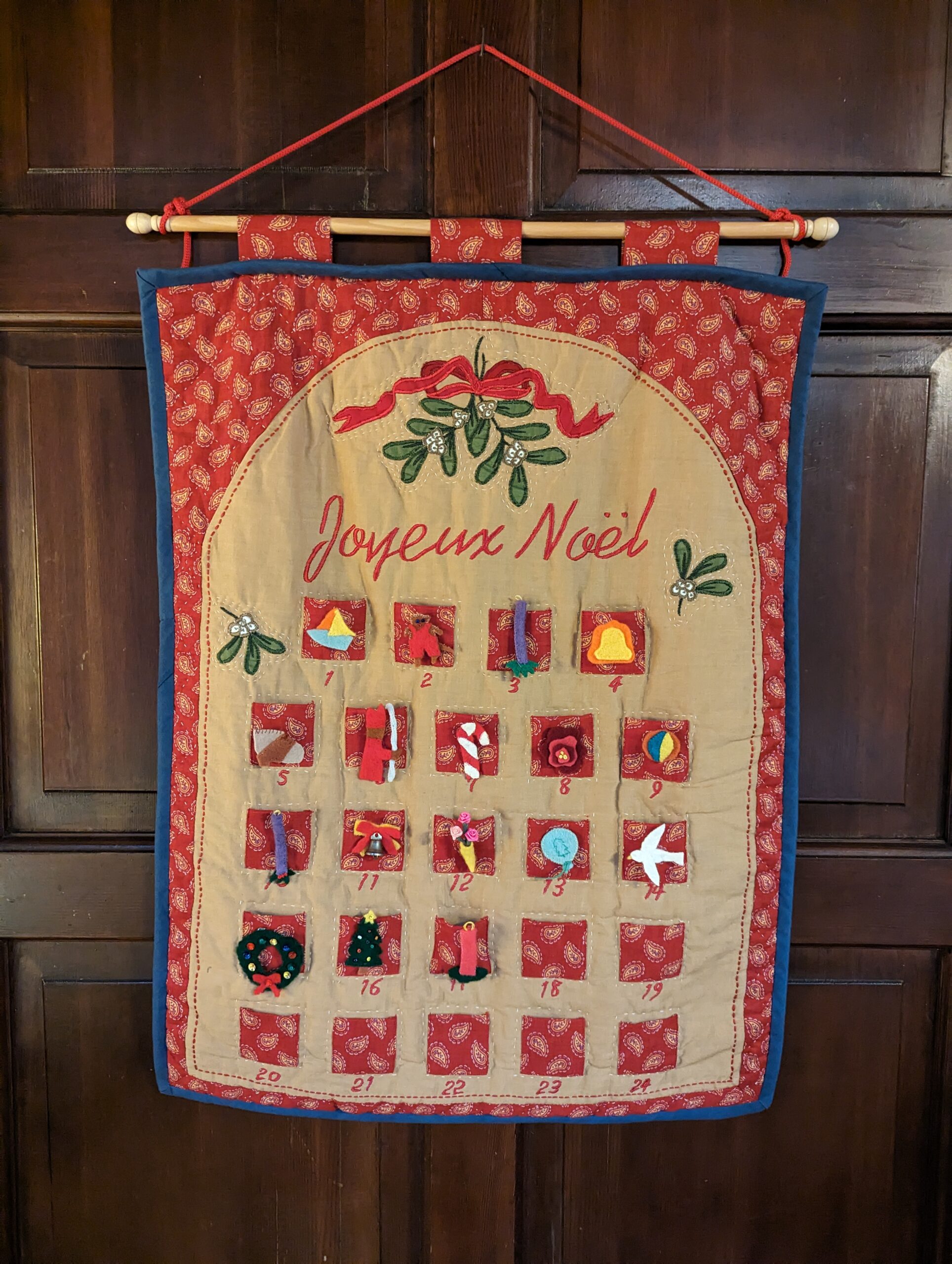
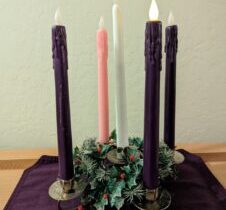
Our family Advent Calendar now includes three candles for the first three weeks of Advent. Today the pink candle joins the festivities, reminding us all to prepare in joy for the Lord’s coming.

Rejoice. The Lord is near!

Readings for the Third Sunday of Advent – Cycle B


Read More
Posted by on Dec 10, 2023

¡Preparen el camino del Señor!

¡Preparen el camino del Señor!

Una voz clama en el desierto, en el yermo, en los lugares indómitos. Es hora de prepararse. “Consuela a mi pueblo” con ternura. El Señor viene.

Isaías proclama la promesa de Dios al pueblo. Él mismo está llegando. Se está preparando un camino recto. Los valles se llenarán. Las montañas serán niveladas. La tierra escabrosa se convertirá en una llanura. La gloria del Señor será revelada a todos. El Señor viene con poder y guiará a su rebaño como un pastor. (Is 40:1-5, 9-11)

Este tiempo de preparación para la venida del Señor no es todo dulzura y estabilidad. Ni mucho menos…

Se están llevando a cabo cambios importantes para hacer posible la venida del Señor. Las barreras deben caer. Hay que llenar valles y cañones de todo tipo en los que los incautos puedan caer o perderse. Las distracciones y la agitación del mundo que experimentamos incluso hoy en día son parte del proceso de preparación para que el Señor venga a nuestro mundo.

Es bueno reflexionar sobre las montañas y los cañones a los que nos enfrentamos en nuestra vida cotidiana. ¿Cuáles son? ¿Dónde y cuándo los encontramos? ¿Cómo se interponen en el camino de nuestra vida mientras preparamos para que el Señor entre en nuestros hogares, nuestras escuelas, nuestros lugares de trabajo, nuestras comunidades de fe? ¿Dónde y cuáles son las rocas que bloquean el camino y que hay que apartar? ¿Dónde están los caminos sinuosos que serpentean lentamente y nunca llegan a nuestro destino? ¿Cómo podrían ser más rectos?

Cuando venga el Señor, también llegará la paz. El salmista canta la promesa de paz del Señor. (Sal 85) “La bondad y la verdad se encontrarán; la justicia y la paz se besarán”. La justicia viene con el Señor, mirando desde el cielo y caminando delante de él, preparando el camino para su venida.

Sin embargo, el Señor no irrumpe en nuestras vidas y exige que estemos listos en el más mínimo instante. Él no apresura el proceso de preparación y crecimiento que los humanos necesitamos. Es paciente, espera que todos tengan tiempo de prepararse. San Pedro nos aconseja que nos comportemos con santidad y devoción para el día del Señor que viene. “Esfuércense por ser hallados sin mancha y sin tacha delante de él, en paz”. (2 Pe 3:8-14)

Y entonces, en el momento señalado, la voz del desierto clamará a nosotros. Nosotros también escucharemos la voz que nos llama. Juan el Bautista apareció en el desierto. San Marcos comienza su Evangelio no con la llegada de un bebé, sino con un recordatorio de que el Señor prometió enviar primero un mensajero, clamando para preparar el camino del Señor. (Mc 1,1-8) Ese mensajero era Juan, un profeta que llamaba a la gente al arrepentimiento. Los bautizó en el río, sumergiéndolos en el agua y lavándolos simbólicamente de sus pecados.

Juan nunca afirmó ser el que había de venir. Prometió que vendría otro, uno poderoso. Uno que bautizaría con el Espíritu Santo, el mismo aliento de Dios.

También nosotros escuchamos estas palabras. El hombre más poderoso señalado por el Bautista ha llegado en la historia. ¿Cuándo y cómo entrará en mi vida y en la tuya, con el aliento santo de Dios para avivar nuestros corazones y enviarnos a ayudar a llenar los valles y nivelar las montañas que aún se interponen en el camino de la venida del Señor? ¿Cuándo recibiremos y aceptaremos el llamado a dar paso al Señor? ¿Cómo seremos portadores de paz para nuestro mundo?

¡Preparen el camino del Señor!

Lecturas para el Segundo Domingo de Adviento – Ciclo B

Versión en inglés

Read More

Posted by on Dec 9, 2023

¡Preparen el camino del Señor!

Prepare the Way of the Lord

A voice cries out in the desert, in the wilderness, in untamed places. It’s time to prepare. “Comfort my people,” speak tenderly to them. The Lord is coming.

Isaiah speaks God’s reassurance to the people. He is coming. A clear road is being prepared. Valleys will be filled. Mountains will be leveled. Rugged land will be made a smooth plain. The glory of the Lord will be revealed to all. The Lord is coming with power and he will lead his flock like a shepherd. (Is 40:1-5, 9-11)

This time of preparation for the coming of the Lord is not all sweetness and stability. Far from it…

Major changes are underway to make the Lord’s coming possible. Barriers must fall. Valleys and canyons of all sorts into which the unwary might fall or get lost must be filled. The distractions and upheaval of the world we experience even today are part of the process of preparing for the Lord to come into our world.

It’s good to reflect on the mountains and canyons we face in our everyday lives. What are they? Where and when do we find them? How do they get in the way of our living in preparation for the Lord to come into our homes, our schools, our workplaces, our faith communities? Where and what are the rocks that block the road and need to be moved aside? Where are the winding roads that meander slowly along and never quite arrive at our destination? How could they be made straighter?

When the Lord comes, peace will also arrive. The psalmist sings of the Lord’s promise of peace. (Ps 85) “Kindness and truth shall meet; justice and peace shall kiss.” Justice comes with the Lord, looking down from heaven and walking before him, preparing the way for his coming.

Yet the Lord doesn’t barge into our lives and demand that we be ready at the slightest instant. He doesn’t rush the process of preparation and growth we humans need. He is patient, waiting for all to have time to prepare. St. Peter advises us to behave with holiness and devotion for the day of the Lord that is coming. “Be eager to be found without spot or blemish before him, at peace.” (2 Pt 3:8-14)

And then, at the appointed time, the voice from the wilderness will cry out to us. We too will hear the voice calling to us. John the Baptist appeared in the desert. Mark begins his Gospel not with the coming of a baby but with a reminder that the Lord promised first to send a messenger, crying out to prepare the way of the Lord. (Mk 1:1-8) That messenger was John, a prophet who called people to repentance. He baptized them in the river, plunging them into the water and symbolically washing them clean of their sins.

John never claimed to be the one who was to come. He promised that another one was coming, a mighty one. One who would baptize with the Holy Spirit, the very breath of God.

We too hear these words. The mightier one has come in history. When and how will he come into my life and yours, with the Holy breath of God to enliven our hearts and send us out to help fill in the valleys and level the mountains that still stand in the way of the coming of the Lord? When will we receive and accept the call to make way for the Lord? How will we be bearers of peace for our world?

Prepare the way of the Lord!

Readings for the Second Sunday of Advent – Cycle B

En Español

Read More

Posted by on Dec 2, 2023

Beginnings, Endings, and Continuity

Beginnings, Endings, and Continuity

One year comes to an end. Another begins. One story comes to an end. Another begins. One way of living ends. Another begins. We see this pattern again and again in our lives. But what about the transitions? Is there anything that remains from the year or story or way of living that carries over into the next?

We have reached the end of a liturgical year, a series of fifty-two weeks of remembering and celebrating the love of God reaching into our human lives. A new year begins for us on the fourth Sunday before Christmas – this very Sunday, the First Sunday of Advent. Do we start from scratch somehow or is there a seamless continuity between the celebration of Christ the King and the beginning of Advent?

The word we use for this time comes from Latin, from a word meaning arrival. Something or someone is coming or arriving. In our Christian tradition, we look for the coming of Christ into our world, both at the end of time and into our own personal time. We also await the celebration of the birth of Jesus, the Son of God and son of Mary.

Do we start with a totally clean slate then? Not really. Jesus was born into human history. Just which day and which year we don’t know. Parents didn’t go to the Court House and record births in those days. Even the presentation of a child at the Temple didn’t get recorded in any way that we can reference officially. The early Church chose late December for the birth date to coincide with the Roman celebration of the return of light at the solstice. Since Jesus is the Light of the World, it made sense to celebrate his coming at that time. It also made it easier not to be noticed while celebrating the coming of a person who was crucified for treason!

So then, Jesus has already come into human history. He has promised to come again at the end of time. When that end of time will be was originally thought to be very soon after his Resurrection. But that too turned out to be a bit delayed. Of course, in terms of the age of the universe, it’s barely a blink in time, but it’s a long time for humans.

The ancient Hebrews waited for a very long time too, with many ups and downs along the way, for the coming of the Messiah. The prophet Isaiah asks the Lord why he lets the people wander away, harden their hearts, and no longer respect his will. He reminds the Lord that he could come in great power and punish them, blowing them all away like leaves carried away by the wind. And yet he concludes, “O Lord, you are our father, we are the clay and you the potter.” We humans and all the world are the work of the Lord’s hand. (Is 63:16b-17,19b; 64:2-7)

St. Paul gives thanks to God for the people of Corinth in his first letter. They have been filled with grace, a share in the life of God, through Christ Jesus. They have received all the spiritual gifts they need as they wait for the revelation of the Lord Jesus Christ. Again, they wait, and as they wait, they live the teachings they have received. (1 Cor 1:3-9)

Jesus reminded his disciples, “Be watchful! Be alert!” Like servants whose master goes on a journey, it’s still necessary to keep watch and be prepared for his return. (Mk 13:33-37)

And how do we keep watch and remain prepared for the master’s return? What have we been taught? What have we been hearing in the past few weeks? Care for the hungry, the thirsty, those in need of shelter, clothing, health care, and all the basic necessities of a dignified human life. All of these are the activities to which we are called as children of the Father and siblings of our Lord Jesus, sharers in the Kingdom of God.

Here is the continuity. We have come to the end of a year of living and learning the ways we are called to serve the Lord. We begin a new year of learning as we prepare to celebrate his coming. And in this time of transition, we are reminded that resting on our laurels and trusting that we have learned enough and all is well is not enough. We must continue to learn and practice what we have learned already. And then we must remain alert so that we recognize the Lord when he comes into our midst.

Happy New Year. May this be a year of joyful growth and surprises as we find the Lord in every corner of our lives.

Readings for the First Sunday of Advent – Cycle B


Read More

Posted by on Nov 24, 2023

Sheep and Goats – Which?

Sheep and Goats – Which?

Sheep and goats represent a frequently recurring image in both Hebrew and Christian scriptures. I don’t know about you, but I have not personally had a great deal of experience with either sheep or goats outside of petting zoos.

Given my great lack of knowledge of either sheep or goats, I asked my sister, who raises alpacas and has a sheep as well, to help me understand how sheep and goats are similar and how they are different. Her daughter-in-law, my niece, raises goats, so my sister also got feedback from her. It made for a very enjoyable afternoon’s texting.

Here’s what I learned.

  • Goats are smarter than sheep and can figure out puzzles, “like how to open a gate.”
  • “Goats are leaders, sheep are followers.”
  • “Goats are hardier and easier to take care of than sheep, in my experience…”
  • Both have similarities regarding food and other animal habits, but there are differences.
  • Sheep will knock over anything or anyone, including the shepherd, who is in the way of where they want to go, especially if they are frightened or in a hurry.
  • Sheep are very food and instinct oriented and will ask for food and water even when they already have them.
  • “Sheep are complete idiots and rude,” quoth the goat herder in a short text.
  • Endearing qualities of goats? “They love treats and are a lot hardier.” Again from the goat herder.
  • Goats will come up to a person and wait to be petted. If they think they are being ignored, “they will stick their heads over the fence so you can scratch their nose or between their horns.”
  • Both sheep and goats can be sources of milk and fiber/wool. Some types are more suited to one or another product.
  • Goats can be used to pull carts. Their horns make it easier to keep a halter on those with smaller ears.
  • Sheep can sleep outside in the snow – their wool keeps them warm under the snowy blanket. When they wake, they can eat snow rather than needing to drink water.
  • Sheep will ‘Pogo’ when they are happy or in a hurry to get somewhere – “hop, hop, hopping … their little feet hitting the ground.”

Many thanks to these two lovely ladies for their insights.

These exchanges left me wondering why it’s the sheep who get the good press in the Bible.

In the Book of Ezekiel, the king and religious leaders of Israel get the blame for having caused the great troubles of defeat and exile of the nation under their leadership. Ezekiel, in a passage before the one we see this day, decried the fact that they had taken advantage of the poor, the sick, the injured, and those who were lost souls among the people. The job of the King and religious leaders, in God’s view as expressed by Ezekiel, is to look out for those who can’t take care of themselves and need help.

Speaking through Ezekiel, God proclaims, “I myself will look after and tend my sheep.” (Ez 34:11-12, 15-17) God promised to rescue these sheep from everywhere they have been scattered and bring them to a safe pasture. This shepherd will go out and find those who are lost, tend the wounds of those who are injured, and heal the sick ones. But “the sleek and the strong” will be destroyed – those who did not use their strength to help and protect the others.

On a final note, the prophecy declares, “As for you, my sheep, … I will judge between one sheep and another, between rams and goats.” (Rams are unaltered male sheep.)

There we go again. Sheep versus goats? There must be something else beneath the surface that a non-shepherding culture doesn’t notice.

It is possible to have both sheep and goats in a herd. Goats can help protect the sheep from predators, because they tend to be more aggressive. They’re not going to turn and run away in panic when they perceive a threat. They eat different plants than the sheep, so the pasture can support more animals.

Ezekiel is not the only one to speak of sheep and goats. In Jesus’ description of the end of times when he will return in glory with the angels and sit in judgement over all the nations, he speaks of sheep and goats as well. Matthew’s narration of this event is the only version of this that we see in the Gospels. (Mt 25:31-46)

People will be divided into two groups, just as a shepherd separates the sheep from the goats. The sheep will be gathered at Jesus’ right hand and the goats at his left. Then he will tell those on the right, “Come … inherit the kingdom prepared for you… For I was hungry and you gave me food…” These were the ones who took care of the hungry, the thirsty, newcomers, those without adequate clothing, the ill, the imprisoned. They are surprised to be singled out for this, especially since they didn’t recall ever doing any of this to/for Jesus personally. He explains that doing it for “one of the least brothers of mine” was the same as doing it for him.

Those on the left-hand side are chided for not caring for the hungry, thirsty, naked, and so forth. Again, they don’t recall ever seeing Jesus needing these things. Yet Jesus applies the same logic to them. What was not done for the little ones, the least of God’s people, Jesus’ brothers and sisters, was not done for him.

Here we still are, with the sheep getting the good press and the goats getting the bad.

I think part of what we are seeing is that the ancient Hebrews started as shepherds, so there’s a long history with these animals and their care. Abraham was a shepherd. He probably had both sheep and goats in his herds. Both species have useful qualities and together they can provide a more complete set of products for supporting a household, especially a group of herders who travel from place to place with their animals. Goats, with their intelligence and tendency to be more aggressive, might be a bit more challenging at times. But these same qualities would make them a useful addition to the mix. The shepherds and their dogs could use the help of other animals in protecting the entire herd. Still, if there are too many goats, it could also be a problem, especially when it comes to growing the herd and mating time. Intermixing the species is not a successful strategy in such instances.

Another thought that comes to mind is that sometimes, it’s best just to follow the rules and do what is the right thing, even if it’s not the most clever or flashy. When we get too clever and try to outfox the rules to get a better deal for ourselves, it’s not going to lead to our serving the poor or those who can’t get a leg up in life on their own. We too easily get focused on our own needs and wants and find ways to justify meeting those first. God, the shepherd, wants us to look out for each other and will support us as we do. We don’t have to go running off slyly on our own like the goats, figuring out how to unlock the gate to have a good life.

One other thought, which comes from Catherine Cory in the Workbook for Lectors that we use in our parish, is that the words translated as sheep and goat do not necessarily refer only to the animals we categorize by that name. She suggests that the term translated as sheep refers to small grazing animals, not just sheep. The term translated as goats refers to small creatures that are “woolly.” She suggests that those Jesus called sheep are the mature ones who are ready to enter the kingdom of God. The others are unready to enter. They have not matured properly and become ready for the kingdom. The way to become ready, is to serve the hungry, the thirsty, the imprisoned, the sick, and so forth. We call these tasks the Corporal Acts of Mercy and we are all called to this service.

As we end our liturgical year with this Solemnity of Our Lord Jesus Christ, King of the Universe, let’s pray that we have grown in maturity this past year and will continue to grow in the year to come. It’s not just the sheep in my sister’s yard who should go hop, hop, hopping quickly towards a special treat or person. We, the sheep of our Lord and God, need to hop, hop, hop along together in joyful service, meeting our Savior in all those we encounter.

Readings for the Solemnity of Our Lord Jesus Christ, King of the Universe – Cycle A

Read More

Posted by on Nov 19, 2023

Worthy Wife, Worthy Husband & Talents

Worthy Wife, Worthy Husband & Talents

Literature written thousands of years ago sometimes presents us with images that seem unnecessarily limited in our times. This is particularly true when we look at gender roles and expectations.

The Book of Proverbs includes many sayings and images that can be taken individually and used to guide one’s actions. It also presents a picture of Lady Wisdom, an ever-present manifestation of God’s powerful presence in our world. One section is written as an acrostic poem. Each line begins with a word from the Hebrew alphabet. The lines begin with the first letter, alef, and the poem’s last line begins with the letter tav, the last letter of that alphabet. (As an aside, the alphabet can be known as the Alef-Bet – the A, B – and as we would add – Cs.)

This poem speaks of the qualities of the ideal wife in the world of that day. (Prv 31:10-13, 19-20, 30-31) Women in those days were primarily responsible for management of the home, raising of the children, and support of their husbands in their activities. They did not have careers outside the home. It was a full-time job to handle the household.

Many years ago, the teacher of a class dedicated to study of Wisdom literature assigned his students the task of writing a “newly discovered” extra chapter for each book studied. It was a way of seeing what the student understood about the book being studied. One student decided to write a parallel chapter for the book of Proverbs, describing the husband, also in an acrostic poem.

The section about the wife begins, “When one finds a worthy wife, her value is far beyond pearls.” Her skills are praised, her outreach and compassion to the poor are noted, her dedication to the Lord is admired, and she is described as meriting praise for her labors at the city gates. It is truly a work of praise and love.

Here’s the missing chapter about the worthy husband, as imagined by a woman in the late 20th century.

A Modern Parallel to Proverbs 31:10-31

A worthy husband, who might find him? He is more precious than gold.
Bountiful is the harvest of his labors.
Confidence in his abilities guides his actions.
Defending the poor, he dares oppose oppression.
Eager for life, he embraces it joyfully, yet
Fails not to recognize physical death as its goal.
Gentle concern endears him to his family and friends.
Humbly he acknowledges his strengths and weaknesses.
Innocently he walks in the midst of intrigues.
Joyfully he provides physical and spiritual support for his wife and children.
Kites he flies with his children and he kisses them freely each day,
Loving them and their mother as himself.
Manager of his earnings, he generously shares whatever he has.
Nature is his ally, she abundantly rewards his good deeds.
Optimistically he faces the future with assurance as he
Prayerfully begins, lives, and ends his day.
Queen of his heart, the wife he has chosen he makes his partner.
Respectfully dealing with all he meets, he is loved in return.
Smiles are his trademark, even during times of trouble.
Truthfully he expresses his thoughts.
Unusually curious, he is continuously questioning,
Vigorously seeking truth.
Wisely guarding his inner privacy, his
“X” or unknown qualities continually surprise his friends.
Youthfully he goes about his work,
Zestfully living each day, he wins praise from all.

We each have talents received from God, who hopes we will use them wisely to spread the kingdom of love and mercy, just as the master Jesus described did when he gave his servants huge sums of money to invest on his behalf. Two of the servants took the money and used it to earn an equal amount. One was afraid that he might lose it and the master would be angry, so that servant buried the money to protect it until the return of the master. Only those who took and used the money were pleasing to the master when he returned. (Mt 25:14-30)

The parable ends with the statement that those who use their gifts, who spend them freely, will be rewarded with more of the gifts they need. Those who hold on tightly to what they have will lose them instead.

The gifts we receive from our Father are to be put to work. Just as the worthy wife buys flax and wool to spin thread and weave fabric for making clothing for her family in the poem, we are to take the talents we have and share them freely. This may be something as simple as sharing a smile with a passing stranger, or patiently waiting in line while a checker helps the customer ahead of us sort out which card to use to pay for the groceries. Sometimes we are asked to share a bit more. A child needs a new coat for the winter. Will we help fund that for a low income family? A family doesn’t have extra money to buy a doll for a child for Christmas. Will we be the ones who help that child receive a precious gift? An older person waits hopefully for a visit from a neighbor. Will we be the ones who stop by to say hello and share a few minutes of friendship? Our church community needs helpers to share our faith with the children and youth. Will we take the time to be with them as they learn of God’s love? Will we share what we have seen?

We all have received many gifts and talents. Men and women, husbands and wives, adults and children – all have something received and something to give. As we approach the end of our Church year in another week, may we be open to hearing the voice of the Lord and growing into the role we are to play in the community of faith.

Readings for the Thirty-Third Sunday in Ordinary Time – Cycle A


Read More

Posted by on Nov 12, 2023

The Lady Wisdom at the Gate

The Lady Wisdom at the Gate

Come with me for a little walk today. It’s a walk through our daily life. We’re going to visit some old friends and some new ones too. Along the way, we’ll see some people we don’t know. One person in particular whom we hope to see will be a model and guide for our journey, the Lady Wisdom.

This Lady whom we hope to see is described in the Book of Wisdom. She is “resplendent and unfading … readily perceived by those who seek her.” This gives us hope for our journey. If we are seeking her, we will see her.

So where do we look for her? And when are we likely to see her? Will she be found in gatherings of teachers and students who are seeking the mysteries of the universe? Will she be present at fine restaurants and banquets where leaders of industry and government meet and share a meal? Will she be at department stores, among the fine clothing and perfumes? How about in the kitchen as we sit and visit after dinner and then clean up the dishes?

Wisdom herself tells us that she will help us find her. (Wis 6:12-16) She will sit outside our door in the early morning, waiting for us to get up and venture out into the world. We might not see her though. We must be looking for her if we hope to see her, keeping our eyes open. What will we see as we go on our way? The homes of our neighbors. The trees and flowers in the gardens. The people getting ready to go to work and school. Those coming home after working through the night. Will we see their joys and sorrows too? Will we notice their hopes and the places they are in need of encouragement and healing?

This Lady Wisdom meets all who seek her as they travel through the day. She makes her rounds and visits all, bringing love and hope and joy with her as her gift. In the process, she opens our eyes to see the needs of others and their joy and gifts as well.

We don’t generally think of wisdom as being masculine or feminine in our daily lives. We think of wise people as those who know many things and make good choices that lead to happy, successful lives. But in scripture, particularly in the Books of Wisdom and Proverbs, Wisdom is more than that. Wisdom is feminine and intimate. There are at least three words that are translated as Wisdom in the Scriptures, but the one in question here is characterized by a sense of intimacy with God. Wisdom is connected with the divine. She is radiant, reflecting the Lord’s light. Wisdom leads us to union with God through our connection with all of creation and all of God’s people.

Wisdom helps us see hope in difficult times. When people we love become ill or die, Wisdom helps us trust that they will rise through the gift of the Lord. (1 Thes 4:13-18) When we meet others who are having hard times financially or personally, Wisdom helps us walk with them, sharing their burden and helping to make it easier. We won’t always be able to resolve the problem or make it go away, but being present can be the most important gift we can give. Moral support in hard times cannot be purchased.

Wisdom also helps keep us on our toes, ready to meet the Lord when he comes. When we have met him in our daily lives, in our contacts with folks who may need a help to support their families, with those who are seeking a safe place to live and raise their children, with those who hope to go to school and enter a career, with those who are sick or dying, and so many, many more, we will be more like the wise virgins of Jesus’ story, who had the oil they needed to keep their lamps burning late into the night. (Mt 25:1-13)

Many years ago, a group called the Medical Missionary Sisters produced an album called “Joy is Like the Rain.” One of the songs was titled, “It’s a Long Road to Freedom.” It is ringing in my head this day. “It’s a long road to freedom, a winding steep and high, but when you walk in love with the wind on your wings, and cover the earth with the songs you sing, the miles fly by.”

When we walk with Wisdom on our journey, we walk in love and the miles do fly by. The Lady Wisdom sits at the gate waiting for each of us to notice her and journey with her through our days. May we be blessed with open eyes to recognize her.

Readings for the Thirty-Second Sunday in Ordinary Time – Cycle A


Read More

Posted by on Nov 5, 2023

Covenants and Family

Covenants and Family

The time spent nursing a child is some of the most precious time ever in the lives of mothers and children. Not all children nurse easily from the beginning of their lives, but once they and their mothers figure out how they can do it, the time together and the sharing become unforgettable – a deep, pre-verbal connection is formed that can last for decades. As a mother myself, who was nursed as a child and watched my siblings nursing as well, I was delighted to have the chance to do so too. Those years with my children were very special, filled with funny happenings, some frustrating times, and many simply peaceful, routine times.

St. Paul speaks of his time with the community in Thessalonika as one in which he and his companions were “gentle among you, as a nursing mother cares for her children.” (1 Thes 2: 7b-9, 13) They shared the amazing, wonderfully good news of God’s coming among us and loving each of us as parents love their children. The response of the people among whom they toiled was a source of great joy to them. He speaks of his gratitude to God for their openness and acceptance of the teaching, which shows forth in their lives. Though Paul doesn’t say it in so many words, in their lives they are examples of the contentment of the weaned child on it’s mother’s lap, happily experiencing the presence of a parent’s love and protection in life of which the Psalmist speaks. (Ps 131: 1, 2, 3)

Both the prophet Malachi and Jesus speak of family ties too when addressing the challenges of their times.

Malachi speaks at a time after the Babylonian Exile. (Mal 1:14b-2:2b-8, 10) He proclaims that the Lord is a great King, with power feared among the nations. Yet the priests who are responsible to lead the people in worship have not lived up to their calling. They have turned away from the covenant, the agreement God made with Levi, their ancestor. Malachi cries out, “Have we not all the one father? Has not the one God created us?” The covenant of the ancient fathers of the community with their God has been broken. This is a great tragedy. Israel is a family, the children of God, yet the priests have not lived up to their part in the relationship. As a result, their family connection as a community with God has been broken and so has their relationship as sisters and brothers in one family. When this happens, community strength is lost and mutual respect is gone.

How and when will the covenant be renewed? Only when the people turn again to God, their father, the one father of all.

Jesus spoke of the Pharisees, who were students and teachers of the Law, and the Scribes, who were advisors, leaders, and teachers entrusted with reading and writing the traditions and teachings that guided the community. He criticized them because they did not live what they taught. To follow all the details of the Law as they taught it was very difficult. They themselves did not follow the rules they made for ordinary people to follow. Yet Jesus did not tell people to ignore the teachings. Instead, he told people to follow the Law, but not to follow the examples of these teachers who were more interested in being seen and honored for their pretended observance of the Law than in actually living according to the Law. The fundamentals of living humbly, serving others, and recognizing all others as brothers and sisters of the one Father in heaven are the critical, essential actions. (Mt 23:1-12)

In a community and culture in which corporate families were the norm, one statement in particular is striking: “Call no one on earth your father; you have but one Father in heaven.” In corporate families, the leadership of the family is vested in one parent. In Israel of that time, the parent was the father of the extended family. Children and grandchildren and their families were all under the leadership and authority of that one parent. Individual families did not really exist in the sense we experience them. Family identity passes through the male or female line in corporate families. In patriarchal Israel, the line went through the males – from father to son. Women married into the family, leaving their own family behind. The “Father” in this large extended family made the decisions about who would do what and who would marry whom. Jesus says, only God is the Father. The earthly parents of each person are not the ultimate authority.

The bottom line for Jesus was the importance of humble service. “The greatest among you must be your servant.” Only those who serve humbly will ultimately be recognized for their greatness.

The nursing mother, the humble servant, the God who is Father. The ones who make life easier and better for others, especially the others who are poor, or of lower social status, or strangers/newcomers in the land, or who suffer illness or injury are the ones who will be exalted. These are the ones pleasing to the Father. It was thus in the time of Malachi. It was thus in the time of Jesus. It was thus in the time of St. Paul. Nothing has changed. It is still thus in our days.

May we this week be aware of the needs of others and quietly offer a hand where needed. Maybe we pick up a bit of litter in a parking lot. Maybe we smile at a neighbor. Maybe we are patient in line at the grocery store. Maybe we read a story for the umpteenth time to a small child. Maybe we sit down with a nursing child and simply allow the child to eat and rest, basking in our love. Whatever we do, when we do it in love, we do it for and with our Father in Heaven. And the Father is pleased…

Readings for the Thirty-first Sunday in Ordinary Time – Cycle A


Read More
Posted by on Oct 29, 2023

Just Two Fundamental Principles

Just Two Fundamental Principles

Differences of opinion among groups of people are nothing new, though sometimes we despair of the possibility of ever reaching agreement on how to move forward and address common challenges. Disputes can take the form of physical violence. They can remain in the realm of words, though words can cause great pain and harm. They may even remain unspoken yet provoke ongoing stress and anger in relationships.

Another way to deal with differences of opinion about how to move forward is to talk calmly about the options. It’s not uncommon for individuals moving from childhood to adulthood to become very argumentative with the adults in their lives. The approval of their peers becomes very important as they grow towards adulthood. The study of rhetoric, logic, and reasoning is quite appropriate during this time of transition. In Language Arts classes, students may learn how to write essays presenting an opinion and backing it up. Sometimes these are described simply as Five Paragraph Essays.

While these essays may not be the best approach for very complex topics, the basic format is helpful to understand. An essay begins with the statement of an issue about which there may be some difference of opinion. The author takes a stand and states their position on the topic. The next paragraphs each have one point in support of the author’s position. Explanations and examples in support of the author’s position are presented here. After the points in favor of the stated position are presented, the contrary position may also be stated, along with points made in its support. Finally, the author restates the original position, along with a brief restatement of the reasons for its validity in contrast to the opinion of those who disagree.

This basic outline is not limited to five paragraph essays. It can be expanded to entire books, theses, and dissertations. It is used in speeches as well. It also helps in the everyday interactions of people with differing opinions. Learning to state clearly what the issues are opens the door to improved communication for all.

This same basic structure is useful in conversations between people who disagree with each other about how to dealt with fundamental differences of opinion. It can help make clear what the most important issues are and how they are perceived by each side.

When Jesus was teaching in Jerusalem, two groups of powerful teachers were listening with concern. What he was saying had implications for the future of their society and their security under Roman rule.

One group, the Sadducees, were quite conservative and did not believe in life after death. Furthermore, they had come to an arrangement with the Roman rulers and did not want to lose their power or position. The other group, the Pharisees, were students and teachers of the Law. They focused on strict  adherence to the teachings and traditions of the Law handed down on Mt. Sinai to Moses and developed in the years following to deal with the multitude of possible situations that might arise in everyday life.

Both Pharisees and Sadducees had questions for Jesus. One day, a Pharisee came to Jesus and asked a tricky question. “Teacher, which commandment in the law is the greatest?” We tend to think of the commandments as being a collection of just ten rules. However, there were many, many more commandments and rules as part of the law. If Jesus chose any specific one as being the most important, they could come down on him like a ton of bricks. Why this one and not this other one? Who are you to decide what rule God would say is more important? How dare you teach this falsehood? All of the laws are equally important!

Jesus recognized their intention and answered directly, though not in the way they expected. He didn’t select one specific law – “Thou shalt not kill” – for example. Instead, he summarized the underlying meaning of the law. First, “You shall love the Lord, your God, with all your heart…soul…and mind.” Secondly, “You shall love your neighbor as yourself.” (Mt 22:34-40)

He went on to explain that the entire Law and all the teachings of the Prophets – the entire foundation of Jewish life and tradition – boiled down to these two principles. Love God above all things. Love other people as you love yourself.

Was this something new with Jesus? Not at all. It was spelled out in great detail in the Book of Exodus and the Book of Leviticus. Case by case, example by example, the behavior desired by God was described, as well as the consequences for disobedience. You must not harm a stranger or a person from another nation. You were strangers in another country at one time yourselves. Do not harm widows and orphans. I the Lord will hear their cries for help. Aliens in the land, as well as widows, orphans, and others who did not have a man or a tribal family to protect them were the most vulnerable persons in society. Anyone could treat them badly and they had no legal recourse. But the Lord cared: “I will surely hear their cry. My wrath will flare up… your own wives will be widows…”

Similarly, if someone needs a loan, the terms of the loan must not put the person’s very survival at risk. No charging high interest is allowed. If a person gives something as security for the loan, that security item must be returned in a timely fashion. If it happens to be a person’s cloak, the cloak must be returned before sunset, so the person is not left to suffer or die in the cold of the night. Again, the Lord cares what happens to the poor – “If he cries out to me, I will hear him; for I am compassionate.” (Ex 22:20-26)

The basic principles are the same. The Lord is to be loved and obeyed. The neighbor is to be treated with fairness and compassion. The most vulnerable are to receive unconditional support and care, so they have a chance to live in dignity and safety.

When people live by these principles – love of God and love of neighbors – we see their example and find it attractive. St. Paul remarked on this in his letter to the Thessalonians – “you became a model for all the believers in Macedonia and Achaia” because of the way they lived the Good News they were proclaiming. More people come to a life of faith as believers model a life of faithful love. (1 Thes 1:5c-10)

What, you may ask, does this have to do with anything in our lives today? Jesus’ insight and the words from the Book of Exodus are pointed reminders that our actions matter. It doesn’t have to be something great, or public, or even of particular importance. What matters is that our actions reflect the reality that for us, love of God is central to our lives and from that flows our love and care for the vulnerable among us.

Today, caring for the vulnerable among us means looking out for refugees, documented and undocumented immigrants, children born into poverty, non-binary folks who are not accepted by family or friends, working class men and women who aren’t earning enough to support their families, individuals who get sick and miss the paycheck needed to pay the rent, and many others. So many, many people in our world need to experience God’s love through the actions of God’s people.

This week let’s pray that through our loving kindness and openness to help those among us who are most in need of a hand, they will experience the presence and love of God too. And as we meet those whose paths cross our own, may we see God’s presence as well.

And while we’re at it, let’s remember to pray for peace and justice in war-torn areas of our world.

Readings for the Thirtieth Sunday in Ordinary Time – Cycle A


Read More

Posted by on Oct 22, 2023

Beyond Tribal Boundaries

Beyond Tribal Boundaries

When the Jewish people returned from Egypt and moved into the land west of the Jordan River, they were organized into communities descended from Jacob, who was also known as Israel. These communities were called tribes. According to tradition, there were twelve tribes or very large extended families, each with land assigned to its members. 

The tribes mostly got along with each other, but not with outside peoples. During the years described in the Hebrew Scriptures, there were many wars with neighboring peoples. Eventually, only a couple of the original tribes remained. Those were conquered by the Babylonians and carried off into exile. 

Babylon was a powerful nation, but there was another powerful nation to the east – Persia. When Cyrus II, King of Persia, came to power and conquered Babylon, he ordered the release of the Hebrew people, allowing them to return to their land, the territory around Jerusalem in 538 BCE. 

Cyrus ruled an empire that stretched from the Mediterranean Sea to the Indus River by the time of his death. He is recognized as the founder of a great line of kings of Persia. His rule was characterized by a willingness to allow conquered peoples to continue some self-governance and maintain their own traditions. 

We hear of Cyrus’ role in the history of Israel through the prophet Isaiah. “Thus says the Lord to his anointed, Cyrus…” The Lord has chosen Cyrus to subdue many nations for the sake of Israel, the Lord’s “chosen one.” Note that Cyrus is called the anointed by God in this prophecy. This term used for anointed is the Hebrew word we translate as Messiah – one chosen and anointed for a particular role. (Is 45:1, 4-6)

God has chosen Cyrus for a specific mission in Salvation History – to return the Hebrew people to their own land. God is not limited by the categories or boundaries of human societies. God works in many cultures and through the interactions of many nations and peoples. As humans, we don’t always see the presence of God in our world and in the events that are taking place. Which of the Israelites in exile in Babylon would have guessed that Cyrus would be the one who would order their return home? Yet, the Lord called him for this purpose, according to Isaiah. 

Many centuries later, another one called Messiah was asked a question intended to trick him into taking a position that would either get him in trouble with the people or with the Romans who had conquered his country. The questioners were Pharisees, teachers of the Law. The question was, “Is it lawful to pay the census tax to Caesar or not?” Caesar was ruler of Rome and by extension of the land of Israel. If Jesus said the tax was legal, the people would be upset with him. If he said the tax should not be paid, the Romans would have grounds to arrest him. 

Jesus could see what they were up to. “Show me the coin that pays the census tax.” The coin was a Roman one, with a picture of the emperor on it. Jews were not allowed to make pictures of people or animals, so there would not be any worship of idols. Yet one of those who questioned him pulled out one of the coins and handed it to him. There were other forms of money used among the people. This coin was not typically used in daily life. It was a Roman coin. Jesus asked whose image was on the coin and what was the name written on it. They replied that it was Caesar.  

Jesus knew who it was and what it said, but he asked the question to make it clear that other forces are at play in societies and in world affairs. “Then repay to Caesar what belongs to Caesar and to God what belongs to God.”  (Mt 22:15-21)

The presence of the Romans in Israel, the status of the Jewish people as subjects of Rome, and the laws governing this small, conquered country all played a role in the way the proclamation of the Good News by Jesus and later by his followers led to the events of his life, including his death and resurrection. The spread of the news of his coming and of the reconciliation between humans and God that he brought was made far easier by the fact that Rome ruled so much of the world at that time. Travel was common, roads had been built and maintained, trade was flourishing, and the world was mostly at peace. 

The growth of the community was not unopposed. Difficulties were common. But the word was received and communities of faith grew. Paul and the others who carried the Good News through the surrounding countries and even to Rome rejoiced in the growth in the numbers of believers. They reminded those new sisters and brothers of God’s love for them and the power of the Holy Spirit, who had come to them and given them strength to live this new way of life. (1 Thes 1:1-5b)

God’s presence and action in the world reaches beyond all boundaries of human communities and traditions. God works to bring good from all that happens. Doors open. Opportunities appear for healing and peace-making. Boundaries break down.

As wars continue in our world today, let’s pray for those in a position to work for international peace, especially for peace between nations that are neighbors and may share some common history. We pray that the Lord will touch the hearts of all involved and help them to see a way forward that allows peoples to live in peace and to grow in wisdom and justice and mercy.  

Come, Holy Spirit. Breathe into our hearts the fire of love, that we may be peacemakers in our own small worlds. Then take that power of peace and move it to the larger stages of life in this world of yours. Surprise us again with the blessings of your love. 

Readings for the Twenty-ninth Sunday in Ordinary Time – Cycle A

Read More