Pages Menu
RssFacebook
Categories Menu

Posted by on Mar 24, 2012

Archbishop Oscar Romero: A Martyr in Our Own Time – One of Too Many

Archbishop Oscar Romero: A Martyr in Our Own Time – One of Too Many

March 24 is the anniversary of the assassination of Archbishop Oscar Romero of El Salvador in 1980. Archbishop Romero for most of his life was a pious, retiring, conservative priest and bishop. Nevertheless, he proved to be a man who could grow in response to the injustice of the social structure of his country, a structure that treated peasants and other poor people as less than human. When his friend, Fr. Rutilio Grande, S.J. was assassinated shortly after Romero had become archbishop, he came to see more clearly the systemic nature of the oppression and to speak on behalf of the voiceless poor. As he said, “A Church that does not unite itself to the poor … is not truly the Church of Jesus Christ.”

Romero’s words and actions on behalf of the poor were not welcomed by many of his friends and colleagues, let alone by the rich and powerful of his nation. In the face of threats against his life, he declared, “If God accepts the sacrifice of  my life, then may my blood be the seed of liberty. … A bishop will die, but the church of God — the people — will never die.” Ultimately, a day after his plea to the military, “I  beseech you, I beg you, I command you, stop the repression,” he was shot as he celebrated Mass.

A young Salvadoran agronomist was living with us at the time. She had been working in the countryside and had had the audacity to believe that peasants were human too. After one of her co-workers had been taken away by the death squads, her parents sent her to the United States, ostensibly to study English, but actually to save her life. When she heard the news of Archbishop Romero’s death, she was astounded and appalled. “If they would do that to the Archbishop, then none of us is safe!”

Blessedly, the civil war in El Salvador came to an end, and the death squads stopped spreading terror. Our friend was able to return home safely and resume her life. However, the oppression of the poor in countries around the world has not ended. The assassinations of Christians who work on behalf of the poor continue. Persecution of believers, not just in Islamic countries, but also in Latin America, Africa, and Asia continues. Real persecution. Not a difference of opinion about social policy and how to implement it. Persecution in which churches are bombed and people are killed. Those doing the “dirty work” are not only religious fanatics, they are representatives of business interests who would prefer not to have to recognize the rights of indigenous peoples. Some are drug traffickers who will brook no opposition to their trade. Others are members of religious groups, including Christians, who are convinced theirs is the only true faith — others have no right to their own beliefs or lives.

As Christians, we are called to stand in solidarity with the poor and the oppressed. Witnesses such as Archbishop Romero speak to us from the past. Yet the violence continues today. Will we open our eyes and ears to notice it? What will we do to support those against whom it is directed?

For more information on persecution of religious believers in our times, please see this workshop by John Allen, Jr. at the Los Angeles Religious Education Congress (2012).

Read More

Posted by on Mar 16, 2012

Archbishop Oscar Romero: A Martyr in Our Own Time – One of Too Many

Celebrating St. Patrick’s Day with Irish Soda Bread

Irish Soda Bread "Cookies"

One of the great things about being Catholic is getting to celebrate the feasts of those who have gone ahead of us – the saints. There are so many saints to celebrate that every new day could bring with it a reason for a party! Some saints, however, are associated with certain nations or ethnic groups and their feasts get celebrated more widely, even by those who don’t share their faith or ethnicity.

Saint Patrick is one of those whose feast has become identified with the people of a nation. St. Patrick is remembered for bringing Christianity to Ireland. Though born in Wales, his feast is marked with great celebration of Irish identity in the United States, not just by those of Irish origin. In typical immigrant fashion, St. Patrick’s Day is celebrated with greater enthusiasm by the Irish in America than in Ireland. Music speaks of loves lost, homes left behind, and dreams of returning someday. Foods are not necessarily those that were eaten in the homeland, but rather those eaten by immigrants to a new land, with touches of the old ways for comfort.

With all this in mind, making Irish Soda Bread can be a good way to celebrate the life of a man who was taken to another land as a slave, escaped some years later, and then returned to bring the Good News of Jesus to the people of that land.

Here’s a recipe we’ve enjoyed.

Irish Soda Bread

2 cups all-purpose flour *
2 cups white whole wheat flour
2 tbsp baking powder
4 tablespoons sugar
1 teaspoon baking soda
1 teaspoon salt
4 tablespoons (1/2 stick) cold butter, cut into 1/2-inch pieces
1 3/4 cups cold buttermilk, shaken **
1 large or extra-large egg, lightly beaten
Zest of one orange
2 tbsp caraway seeds
1 cup dried currants

Preheat the oven to 375 degrees F. Line a sheet pan with parchment paper or lightly grease a baking pan.

Combine the flour, sugar, baking soda, and salt in the bowl of an electric mixer fitted with the paddle attachment. Add the butter and mix on low speed until the butter is mixed into the flour.

With a fork, lightly beat the buttermilk, egg, and orange zest together in a measuring cup. With the mixer on low speed, slowly add the buttermilk mixture to the flour mixture. Combine the currants with 1 tablespoon of flour and mix into the dough. It will be very wet.

Dump the dough onto a well-floured board and knead it a few times into a round loaf. Place the loaf on the prepared sheet pan and lightly cut an X into the top of the bread with a serrated knife. Bake for 50 – 60  minutes, or until a cake tester comes out clean. When you tap the loaf, it will have a hollow sound.

Cool on a baking rack for at least 10 minutes. Serve warm or at room temperature.

* You can use 4 cups of all-purpose flour in lieu of white whole wheat. Just omit the baking powder

** No buttermilk? No problem. Measure out 1 2/3 cups of milk and add a couple of tablespoons of lemon juice to bring the mixture to 1 ¾ cups.

Alternate Idea for Shaping:

After kneading the dough, roll it out to about ½ inch thickness. Cut with a shamrock shaped cookie cutter. Bake at 375º for 18-20 minutes or until a cake tester comes out clean. The biscuits will be lightly browned.

Cool on baking rack. Serve warm or at room temperature.


Read More

Posted by on Feb 22, 2012

Archbishop Oscar Romero: A Martyr in Our Own Time – One of Too Many

Almsgiving, Prayer and Fasting – Lenten Practices in Our Lives Today

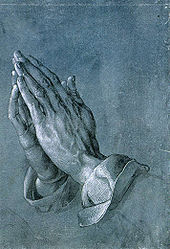
Praying Hands - Albrecht Durer

Ash Wednesday, the first day of Lent, brings with it a reminder from Jesus of the importance of 1) caring for each other, especially those in need, 2) staying in close communication with God, and 3) strengthening our physical, mental, and spiritual lives through actions that help us develop more control over the urges that don’t lead us to God. The traditional names for such activities are almsgiving, prayer, and fasting.

Catholics who grew up before and during the years of Vatican II often think first of fasting or giving up something as the activity of choice for Lent. This practice was generally phrased in terms of “What are you giving up for Lent?” There were (and still are) days in which fasting from normal amounts of food was required of adults between the ages of 21 and 59. However, there were other days in the year which were also set aside for fasting, so that was not unique to Lent. What was unique to Lent was giving up something: candy, television, movies, cigarettes, drinking, etc.

Ash Wednesday’s reading from Matthew 6:1-18 is a reminder that all three practices are important and even interdependent. They are also to be done quietly, without great fanfare, and without even congratulating ourselves on how well we’re managing to do them! So, how can we — citizens of a busy, busy world — find time to pray, identify and organize resources to share with others, and make fasting somehow different than dieting?

A few thoughts come to mind.

1) Almsgiving: The sharing of worldly treasures has been a mark of the Christian community since its earliest years. Christians recognized from at least the time of St. John’s Gospel, and before, that Jesus is present in the community.  To the extent that anyone is suffering from lack of basic necessities, those who do not lack them have failed to meet the needs of Jesus. This is a hard teaching sometimes, especially when times are tough and there is little left over to share. Remember: we are called to share our time, talents, and treasures. If what you have is time, then give of that. If what you have is talent (maybe for telephoning or organizing a bake sale), offer that talent to help provide for those who need food or shelter. If you have enough money (treasure) to support yourself and your family, then share from what you have; maybe eating more simply for a few meals or waiting an extra month before buying that new pair of jeans, and giving the savings to feed those who don’t have enough.

The important thing is to be open to sharing what you have and creatively listening for the opportunities to do so.

2) Prayer: Time for prayer is not easy to find —  if you think you have to set aside an hour a day to pray. On the other hand, if you remember to intersperse prayer into your entire day, then it becomes easier. A quick thank you for the morning as you open your eyes, a blessing over breakfast, a smiled expression of gratitude for a pretty sight on the way to work or the joy of a child exploring her world, a few moments of reflection on how the day is going at lunchtime, a quick prayer for the right words to say in conversation with a friend or co-worker, a blessing at the end of the day, a few moments of reading scripture while supervising a child’s bathing — all are ways to pray in a busy life. God is present in all of these moments and in the unpleasant, difficult moments as well. But God generally doesn’t burst into our lives and shout, “Do This Now!” God is much more subtle, inviting us to notice the presence of the divine in the everyday creation in which we live, and always leaving us free to respond to that presence as we choose.

3) Fasting: Limiting the amount of food eaten, or not eating at all, is the generally understood meaning of fasting. Going hungry on occasion is a good thing to do. It helps develop a greater appreciation of the gift of food. It also helps strengthen the will, so when other things must be declined, the will is strong enough to do so. However, fasting from food is only one way to fast. The practice of “giving up something” was a form of fasting. When we turned off the television on weekdays during Lent during my childhood, we broke its spell and no longer felt we had to watch any programs. We had time to do things together as a family that we didn’t do when the television was on: board games, music, conversation, outdoor play, cooking together, etc.

Fasting today may mean limiting our consumption of: consumer goods, recreational activities, social media including Facebook, television, text messages, tweets, online games, lunches or dinners out, or (insert your own time-consuming activity).  It creates a space for other things – for God to be noticed and heard.

Perhaps, out of fasting in this broader sense will come opportunities for prayer and resources for almsgiving as well. Then the circle of activities that quietly draw us closer to God will have become complete.

Praying Hands by Albrecht Durer – Public domain image

Read More

Posted by on Jan 6, 2012

Archbishop Oscar Romero: A Martyr in Our Own Time – One of Too Many

A Sweet Treat for the Feast of Epiphany – Rosca de Reyes

Roscón de Reyes

The Feast of the Epiphany, also known as Twelfth Night, is traditionally celebrated on January 6  in western Christian Churches. While the Roman Catholic Church has moved the celebration of the Epiphany to the Sunday following the Feast of Mary Mother of God (January 1), this feast continues to be celebrated on January 6 in many homes and communities. In Latin cultures, the Three Kings bring gifts to children on this day and families gather for festive meals.

Rosca de Reyes or Roscón de Reyes (King’s Bread) is a traditional pastry served on the Feast of the Epiphany. It is generally served with a cup of hot chocolate or atole in Mexico. In Spain, people savor this sweet bread for breakfast, while in Latin America it is more commonly served in the afternoon.

The tradition of making ring cakes dates back to the Saturnalia, when the Romans would fashion round cakes made with honey, figs, and dates, and distribute them to all people, including slaves. In the third century, people started to put one dried fava-bean in the dough, and whoever received the piece of bread that contained the bean would be named rey de reyes (king of kings) for a short period of time.

The cakes that are made today are formed to imitate a crown – shaped as a ring and decorated with bright “jewels” (fruits.) In Spain, a fava-bean is still hidden in the dough, but in Mexico a doll representing the baby Jesus in tucked inside the ring. The doll symbolizes that Jesus had to be hidden and protected after he was born. Today in Mexican culture, the lucky person who finds the doll is expected to take the figurine to church on February 2 and host a party that day to celebrate El Dia de la Candelaria (Candlemas).

The following is a recipe for Rosca de Reyes for those who like to bake and would like to try a special treat.

Rosca de reyes
(King’s Bread Ring)

Ingredients:

2 packets of yeast
2 Tablespoons lukewarm water
2/3 cup boiling hot milk
1/3 cup sugar
1 ½ teaspoons salt
3 well beaten eggs
1/3 cup softened shortening
4 cups sifted all-purpose flour
2 cups finely-chopped candied or dried fruits and citron or a little dried lemon peel + a handful for decoration
Chopped nuts. maraschino cherries, and/or orange peel for decoration (optional)

Soften yeast in lukewarm water. Combine hot milk, sugar, salt, and stir to blend. Let cool to lukewarm. Add softened yeast, eggs, shortening, and half of the flour. Beat until well blended. Add remaining flour and candied fruits. Mix until the dough is moderately stiff. Knead lightly on floured board until smooth. Grease baking sheets.

To shape dough:

To make 2 small rings, divide the dough in half. Roll each half into a rope about 20-inches long. Shape into 7-8-inch circles on greased baking sheets, or use ring molds. Put one china, or heat resistant plastic doll into each ring so that they do not show.

To make one large ring, roll the dough into a longer rope and shape into a ring of desired size. Tuck a doll into the dough.

Brush with melted shortening. Let rise in slightly warm place until double in bulk. Bake at 375˚ for 25-30 minutes or until golden brown. (The smaller ring will take less time to cook.) Let cool.

To decorate: Blend powdered sugar and milk (or water) to make a thick icing. Spread icing over ring(s) and decorate with more candied fruits, maraschino cherries or peels.

Image by Tamorlan
Used with permission under Creative Commons Attribution 3.0

Read More

Posted by on Jan 4, 2012

Archbishop Oscar Romero: A Martyr in Our Own Time – One of Too Many

The Feast of the Holy Name of Jesus

Monogram of the name of Jesus

The Feast of the Holy Name of Jesus has been celebrated on various dates in January, however, the current General Roman Calendar has set the celebration on January 3 (since 2002). The feast is celebrated close to the day on which Jesus received his name formally, on the eighth day following his birth when he was circumcised according to Jewish custom. The feast has been celebrated for centuries, popularized originally by Cistercian monks in the 12th century and later by Franciscans, Dominicans, and Jesuits.

In our day, it is not a widely remembered feast. As a child, reverence for Jesus’ name was an important part of our Catholic education. I was taught by Sisters of the Holy Names of Jesus and Mary. We were taught to put the initials, JM (for Jesus and Mary) or JMJ (for Jesus, Mary, and Joseph) at the top of each page we wrote at school. We were reminded to bow our heads slightly when the name of Jesus was spoken. We were not allowed to swear at all and particularly not to use Jesus’ name in swearing. At least some of these practices remain part of the behavior of many of the children taught by the sisters, I suspect. Since the Holy Names Sisters teach all levels of students, from kindergarten through higher education, there are many opportunities for instilling reverence along the way.

The men in our parish were encouraged to become members of the Holy Name Society. As part of membership in this group, they helped and encouraged each other to keep their language clean. They worked together to support the parish and the parish school. It was a way for men to help each other, become friends, and grow in faith. Some amazing things were accomplished by the men who worked together in the Holy Name Society.

I think about this when I hear conversations today in which “OMG” is casually used as an expression of amazement or just excitement, with or without actually saying all the words for which the initials stand. Only rarely are “goodness” or “gosh” substituted for “God” in the expression. Jesus’ name is used freely in ways the Sisters would never have approved.

I find myself wondering if those who speak this way are really aware of what they are doing. Names are powerful and using them creates a connection between the speaker and the one named. Perhaps it’s time to celebrate this feast more publicly, with reminders in church bulletins and special family meals. It certainly wouldn’t hurt to be more mindful of how we use Jesus’ name and how we call on God. At the very least, we could return to the custom of changing what we hear into a prayer, asking a blessing or giving thanks for the many blessings we receive each day.

Then again, maybe many of us already do.

Image is a contemporary example of a traditional monogram.
The letters are the first three letters of Jesus’ name in Greek.
Image in the public domain.


Read More

Posted by on Dec 19, 2011

Archbishop Oscar Romero: A Martyr in Our Own Time – One of Too Many

The Blessing of Presence


There is a Hindu concept that speaks of Non-action within Action. I believe Non-action refers to being rooted in the silent trust and understanding of Who I Am prior to any doing.

Non-Action within Action is being present to the wellness within; the Constant Harmony within the Constant Change. So when I take a step, there is a leaning into the leg that lands on the ground to provide a slight moment of rest as the other leg lifts off the ground.

Action by itself can be egocentric, chaotic, stress-filled, taxing and overwhelming. In the Breema Bodywork I practice there is a Principle of Harmony called

Single Moment, Single Activity.

Practicing this principle allows me to be present to the simple activity of my body in this moment, even if there are multiple tasks being done. Connected to this moment, my busy mind connects to my body to create a body-mind connection where I am more grounded and available to the natural feelings of life, such as acceptance and gratitude. This is, for me, the contemplative spirit within activism. The practice is to nurture and embody a contemplative silence inherently connected to the power of all things, from which we speak and act and reflect.

For those who are concerned about being overly taxed by the commitment of involvement, perhaps we can support each other in the solidarity that comes from sharing silence, and the opening of our hearts to the wisdom that unites us in service to life and love.

Image courtesy of NASA – In the public domain.

Read More

Posted by on Dec 18, 2011

Waiting and Listening for the Coming of the Lord

On this last Sunday of Advent, as excitement for Christmas builds, it’s time to listen carefully for the ways God speaks to us as we go about our daily activities. Christmas is coming, but not here yet. It’s still Advent, with the Advent imperative to wait in quite wonder as our God transforms human existence and all of creation through the Incarnation. We heard the story of the Annunciation as told by St. Luke (1:26-38) in our liturgies today. A song I learned as a teen echoed in my heart through the rest of the day. “Our Lord has come today, let us rejoice now. Our Lord has come today, let us rejoice. The whispered ‘Yes’ of a lowly maid brought life to dying world, so rejoice now, my friend, rejoice now.”

This week, as we go about our work, whether in offices, factories, fields, homes, or other locations, let us keep our ears open to hear the voice of God speaking through our family members, co-workers, friends, children, senior citizens, and strangers we meet  along the way. Each person we meet can be God’s messenger to us, reminding us of who we are as God’s beloved children and calling us to be greater than we ever dreamed possible. In our dealings with other people, may we be patient, kind, thoughtful and understanding, so they too may receive the gift of peace at this time of preparation and be able to wait and listen to hear the Lord coming through all the excitement and hubbub. As we give and receive this gift of peace, our world can be transformed again, as the Lord lives through us, continuing to bring life to the world.

Read More

Posted by on Dec 10, 2011

Archbishop Oscar Romero: A Martyr in Our Own Time – One of Too Many

Blessed Adolph Kolping – Caring for Workers and Families

Blessed Adolph Kolping

“Adolph Kolping gathered skilled workers and factory laborers together. Thus he overcame their isolation and defeatism. A faith society gave them the strength to go out into their everyday lives as Christ’s witnesses before God and the world. To come together, to become strengthened in the assembly, and thus to scatter again is and still remains our duty today. We are not Christians for ourselves alone, but always for others too” (Pope John Paul II, beatification homily).

Adolph Kolping was born the son of a German shepherd in 1813. As a teenager, he was apprenticed to a shoemaker and worked for 10 years at this trade. He had always been a good student, with dreams of continuing his education, and at the age of 23 he began secondary school. At 28, he entered the seminary and was ordained in 1845.

Kolping had expected to live the life of an academic, but during his first assignment he met school teacher Gragor Breuer, founder of an organization for journeymen. Influenced by Breuer, he became involved in ministering to journeymen, young men who worked in the newly industrializing cities of Germany.  He served as the second president of the Catholic Association of Journeymen with the intent of providing social and religious support to these men. Through the remaining years of his life, he worked to coordinate, unite and support associations of journeymen throughout Germany, forming family-like supportive communities.

Today his work continues through the International Kolping Society, with about 5,000 Kolping families in over 60 countries around the world, including the United States. Together, members of Kolping families help each other live as Christians in professions, marriage and families, Church and society, and work to improve and humanize the world in which they live.


Read More

Posted by on Nov 19, 2011

“The Poor You Always Have With You …” – So We Don’t Have to Do Anything About Poverty?

As the fallout from the Great Recession drags on, with high unemployment, a depressed housing market, high numbers of foreclosures, greater demand for food stamps and Medicaid, and the other woes we’ve seen in the United States over the past few years, the debate over what, if anything, we as a society can or should do to alleviate poverty has moved from theoretical discussions in ethics or political science classes to  the front lines of policy-making in our governmental institutions, as well as to our streets and family gatherings. In a recent Doonesbury cartoon (October 30, 2011), reporter Roland Hedley begins his report on poverty in America saying: “Jesus said, ‘The poor you will have always.” He goes on to speak of the American poor as “pampered”  because they are not as poor as people in Third World countries such as Bangladesh. He specifically mentions that many of our poor have dishwashers and cable TV. They are overweight, so he assumes they have plenty to eat, and he notes that medical care is available through the emergency room, so no one starves or bleeds to death here – both statements patently untrue.

If this were just a comic strip character speaking, I might not bother to address the issues raised. However, this character’s statements parallel those of other real-world individuals, including Robert Rector of the Heritage Foundation who noted that, based on federal surveys, most poor Americans have air conditioning, microwaves, TVs, adequate housing, nutritious food and about half even have personal computers. His point is that based on new ways of measuring poverty, “The overwhelming majority of poor people, not all, live in conditions that the average American wouldn’t recognize as poverty.” (The San Jose Mercury News, Oct 4, 2011, pA6). Both statements left me wondering if the speaker were advocating some sort of means test by which landlords would have to remove air conditioning and dishwashers from apartments rented to low income persons?!!!

But then I get serious again. All too often, that quotation from Jesus is used as a means to defuse efforts to draw attention to the reality of poverty and its impact on people all over the world. Poverty does not have to be life threatening to do great harm both to individuals and to nations. There are very real economic reasons why we should not join a race to the bottom in terms of how many people are left to live in dire poverty. However, since the door to consideration of religious implications of poverty gets opened through this commonly misquoted, misapplied and misunderstood quotation from St. John’s Gospel (Jn 12:8), the religious implications have become fair game and I will address them here.

As I am not a theologian and do not speak or read the Koine Greek in which the gospels are written, I asked a theologian friend, Dr. Megan McKenna, to explain the quotation and how it has been understood by the Christian community from its earliest years. Her response was longer than I want to quote here, but I’ll summarize it.

Jesus’ actual statement was, “The poor you always have with you, but me you will not always have.” It was made in response to a complaint by Judas Iscariot that an expensive ointment used by Jesus’ friend Mary to anoint his feet should have been sold rather than wasted on his feet because the proceeds could have been given to the poor. John notes in an aside that Judas was not particularly concerned about the poor, but rather used to help himself to the common purse.

According to Megan, Jesus’ statement was taken by the early church to mean “that whatever you want to do for me, you can do for the poor – and I will take it as done to me… a version of Matt 25: Whatever you do to the least of your brothers and sisters I take it that you did to me, and whatever you ignored or refused to do to the least of my brothers and sisters I take it you ignored me and refused to do it for me.”

She notes: “In the early church there was a saying: ‘See how those Christians love one another [the part they like to quote, the second part of the sentence being] there are no poor among them.’” Christians lived in common and shared what they had because they recognized Christ’s body as being no longer in the tomb but rather having become the Christian community. “What makes one a decent human being and the basis of Christianity is justice – and people deserve justice in all the basic necessities of life – food, water, clothing, shelter, education, health care, dignity, a job, freedom from harm and violence, etc. The rights of justice are listed in the first part of Pacem in Terris – and poverty is an insult to the God of Life who proclaimed that he had come that all might have life, ever more abundantly (here and now).”

Megan’s final point is that “love your neighbor as yourself” is not just a Christian concept. It comes from Jewish theology. “In the Old Testament if you were wealthy and didn’t share, you were considered violent and not a practicing or good Jew. Their understanding is that you are only worth what you give away and share with the poor, no matter what you actually have.”

I find it intriguing that those who are seemingly so concerned about the United States being a Christian nation, who would happily re-criminalize abortion and possibly outlaw birth control, who will spend hours debating and passing legislation re-affirming that the motto of the United States, printed on our money, is “In God We Trust,” would so cavalierly, almost in their next breath, speak of cutting unemployment, food stamps, and health care benefits for the millions of children, their unemployed or underemployed parents, senior citizens, and disabled Americans in order to balance the budget, rather than considering ways to increase revenues.

We as a nation have to decide which way we’ll go. We’ve got to come to an agreement on our social compact and how to fund the infrastructure and human capital development that will be necessary to keep this country and its ideals of freedom and justice for all in a position to lead by example as other peoples in the world reach for the prosperity and freedoms we enjoy. We’re all in this together. We’ve got to make hard choices and sacrifices. But the folks with the fewest resources, even if they have more than those in Third World countries, cannot bear the brunt of the sacrifice or we will all ultimately pay the price. And while that  may have nothing to do with religious beliefs or imperatives, for people of faith, Followers of the Way, Christians, those imperatives speak loudly and clearly and are ignored at our peril!

Read More

Posted by on Nov 6, 2011

Wise or Foolish – Time Moves On and Our Response is Required

The readings for this Sunday, the 32nd in Ordinary Time, Cycle A, speak of Wisdom, the end of time and return of the Lord, and the parable of the Wise and Foolish Virgins. Wisdom is seen as ever wandering in search of those who will love her and seek her guidance. Paul’s letter to the Thessalonians reassures the Christians of Thessalonica that even those who have died will be reunited with Jesus when He returns in glory. There was a sense of urgency among early Christians because they believed that the final coming of Jesus would occur very soon: even within their lifetimes. (Most of us don’t have that sense of urgency any more. It’s been too many years and we forget that for each of us that final coming could occur at any instant.) The wise and foolish virgins were all waiting together for a marriage contract to be completed between two families, so the ceremony and celebration could begin. Those in one group were ready, with plenty of oil to keep their lamps burning into the night and those in the other were not. The story is seen as a warning to be ready for the coming of the Lord at any time.

Father Ron Shirley’s homily offers a perspective on these themes for our times. With his permission, I share it with you.

Ya Buts

This gospel reminds me of two special stories.

The first story:
There is a town that has four separate neighborhoods. The first neighborhood is called, “Yabuts.” The people who live there think they know what needs to be done. As a matter of fact, they talk about it quite convincingly – up to a point. When told they have an opportunity for something, the conversation goes something like this: “Ya, but…” The “Yabuts” have the answer. It just happens to be the wrong answer.

The next neighborhood is known as the “Gunnados.” Now they are some of the best-intentioned folks you could ever meet. They really understand what needs to be done, and they would have done it, if they had only followed through. They study everything that is required very carefully, and just as an opportunity drifts past them, they realize what they were “gunnado.” If only they had done what they were “gunnado.”

Another neighborhood is known as the “Wishawoodas.” These people have an excellent perspective on life – hindsight. They say, “I ‘wishawooda’ this, or ‘wishawooda’ that…” They know everything that should be done, only it’s after the fact.

The last neighborhood is known as the “Gladidids.” They are a truly special group of people. The “Wishawoodas” drive by the “Gladidids” homes and admire them. The “Gunnados” want to join them, but just cannot quite get around to it. The “Yabuts” could have been “Gladidids,” but destiny just did not smile on them. The “Gladidids” are pleased that they are disciplined enough to do what they know they should do instead of always doing what they wanted to do.

These are the four neighborhoods. In which neighborhood do you live? In which one would you rather live? 1) Yabuts 2) Gunnados 3) Wishawoodas 4) Gladidids.

The second story:
There is an ancient story about three demons who were arguing over the best way to destroy the Christian mission in the world. The first demon says, “Let’s tell all the Christians there is no heaven. Take away the reward incentive and the mission will collapse.” The second demon says, “Let’s tell all the Christians there is no hell. Take away the fear of punishment and the mission will collapse.” The third demon says, “There is one better way. Let’s tell all the Christians that there is no hurry” and all three immediately say, “That’s it! All we have to do is tell them there’s no hurry and the whole Christian enterprise will collapse.”

Some things can’t be put off to the last minute- the foolish bridesmaids needed to be reminded of this. We are reminded – happy is the person who takes to heart this message and does something about it today.


Read More

Posted by on Sep 5, 2011

Archbishop Oscar Romero: A Martyr in Our Own Time – One of Too Many

Laboring in Love – Blessed Mother Teresa of Calcutta

Blessed Mother Teresa, photo by Túrelio

Blessed Mother Teresa of Calcutta (feast day September 5)  worked for decades in India, first as a teacher in schools run by the Sisters of Loreto and later caring for the homeless and dying on the streets of Calcutta. Though controversies exist regarding her work and her legacy, men and women around the world now share in her mission of care for the poor as Missionaries of Charity, not just the dying but also assisting those living in poverty.

Today, as we celebrate Labor Day in the United States, it is worthwhile to remember Mother Teresa’s perspective on the work we do.

“To show great love for God and our neighbor we need not do great things. It is how much love we put in the doing that makes our offering something beautiful for God.”

May we remember her words as we go about our daily lives; that we may touch those around us with love and God’s presence.


Read More

Posted by on Sep 2, 2011

Archbishop Oscar Romero: A Martyr in Our Own Time – One of Too Many

Joseph of Arimethea, Nicodemus and the Corporal Acts of Mercy

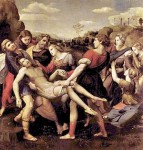
The Deposition - by Raphael, 1507

The joint feast of Joseph of Arimathea and Nicodemus is celebrated on August 31. Both men are named in the Gospels as quiet followers of Jesus who took a public stand on His behalf at the time of His death, requesting the body of Jesus and preparing Him for burial.

Joseph of Arimathea was a rich man, possibly a member of the Sanhedrin, and a secret follower of Jesus. He went to Pilate when Jesus was crucified and requested the body for burial. Roman law allowed members of an executed person’s family to claim the body and bury it in a family tomb. Decisions on claiming a non-family member’s body were on a case-by-case basis, but were not generally granted. Joseph, receiving Pilate’s permission, took Jesus’ body to be buried in a tomb that had been carved out of stone to serve as his own tomb.

Nicodemus was a member of the Sanhedrin who had come to Jesus secretly late one night to talk. (Jn 3:1-21) He was a supporter of Jesus. Once Jesus had died, Nicodemus brought the traditional spices, around 100 pounds of myrrh and aloe, as well as the burial cloths in which to wrap Him. Together with Joseph of Arimathea, Nicodemus prepared Jesus’ body for burial and laid him in that soon-to-be-famous tomb in the garden. They sealed the tomb with a great stone and returned home quickly, because the Sabbath was beginning.

These two men are the patron saints of undertakers and those who care for and prepare the dead for burial. They are also models for all of us of the practice of the Corporal Acts of Mercy.

The Corporal Acts of Mercy are:

  1. To feed the hungry
  2. To give drink to the thirsty
  3. To shelter the homeless
  4. To clothe the naked
  5. To visit and ransom the captive (prisoners)
  6. To visit the sick
  7. To bury the dead

These very practical activities have been seen since the earliest days of the Christian community as the tasks of Jesus’ followers. Jesus Himself told his followers that to the extent they perform these services for any of God’s children, they perform them for Him. (Mt 25:31-46) Burying the dead was not part of the original list Jesus gave in his discourse on the Last Judgement. This final Work of Mercy comes from the Book of Tobit, in which a just man, Tobit, defies the Assyrian conquerors to provide proper burial for fallen Israelites, despite being punished for doing so.

This call to service of people’s physical (corporeal) needs is fundamental to our calling as baptized Christians. The world has been transformed by Christians who have taken this charge seriously. Now it’s our turn to live out that calling.


Read More

Posted by on Nov 11, 2008

Archbishop Oscar Romero: A Martyr in Our Own Time – One of Too Many

Martinmas and Veterans Day

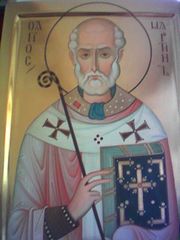
St. Martin as a bishop: modern icon in the chapel of the Eastern Orthodox Monastery of the Theotokos and St Martin, Cantauque, Provence.

St. Martin as a bishop: modern icon in the chapel of the Eastern Orthodox Monastery of the Theotokos and St Martin, Cantauque, Provence.

The feast of St. Martin of Tours, sometimes known as Martinmas, falls on November 11. In the United States, we celebrate November 11 as Veterans Day – a day we honor those who have served in the military of the country. It is a national holiday, though many businesses are open and retailers offer sales in the hope of luring people who are enjoing a day off!

As a child, I remember hearing people from my grandparents’ generation speak of the day as Armistice Day. This was the day, in 1918, on which World War I stopped. The Armistice was declared and hostilities were set to end at the 11th hour of the 11th day of the 11th month – and so they did. That was a war called “The War to End All Wars,” but unfortunately, it didn’t. So, when World War II followed all too soon afterwards, the name of the day was changed to Veterans Day, in honor of all veterans.

It seems appropriate that the feast of St. Martin of Tours coincides with this day of honoring those who have served their countries militarily, as he too served in the army. His life and contributions to the Christian community are discussed in greater detail in an earlier post, and they were impressive. Nevertheless, he is most commonly known for the legend told about him, in which he is approached by a begger and asked for help. Martin is said to have cut his military cape in half and given half of it to the beggar. Later, in a dream, he saw Christ in the form of the beggar, wearing the cape.

Martin was not a Christian at the time he served in the Roman cavalry, but had entered the Catechumenate before entering the military. Before he left the army, he had been baptized. As his faith grew and deepened, he became convinced that as a Christian, he could not kill, even as a member of the military. He accepted arrest and imprisonment rather than fight. He volunteered to go to the front of the troops, unarmed, but a peaceful solution was reached before the battle, so he did not have to prove his courage and commitment to non-violence in that way.

It seems to me that Martin’s insight that killing is not the calling of Christians is one that has been shared by many men and women who have served or refused to serve in military forces through the centuries. Certainly, there have been times when Christians have turned their backs on this belief, even claiming that killing was done on behalf of God. For those times we must beg God’s forgiveness and that of those harmed. However, the veterans I have known generally will say that war is never the best answer to human disputes. Terrible things happen in war. It does not really resolve the problem between nations. Sometimes it seems to be the only way to stop a terrible evil, but it’s never the best option. (Stopping the Holocaust is often given as an example of a good reason to go to war, but it must be acknowledged that even World War II was fought not to stop the Holocaust – of which there was very little awareness outside of Europe – but rather to stop the military aggression of certain nations.) Martin of Tours would agree that war is never to be the first response of nations or their people to conflicts with others.

But what, you ask, is Martinmas? Martinmas is the name of the celebration of Martin’s feast in Europe. I first experienced the celebration of Martinmas when my sons were little and attending Waldorf school. (Waldorf schools celebrate many European Christian holidays.) It is a harvest festival. It is a festival that marks the end of Autumn weather and the beginning of Winter weather in many nations. The thing that was most fun about the feast was the custom of making lanterns and going out after dark to walk with the lanterns.

For a week or more before the feast, the children would make lanterns of paper. Some were simply construction paper colored by the children and rolled into a cylinder with a bottom and a wire handle. Others were more elaborate. Sometimes a balloon was inflated as a base and tissue paper layers glued over the balloon to form the lantern. Once a wooden frame was built in the form of a star. Then layers of tissue paper were applied to form the walls. Leaves and glitter were included on that lantern. That one hangs in our living room to this day, a beautiful reminder of a school festival and a saint’s feast day.

(In some schools, glass jars are decorated for lanterns. They are also beautiful, but tripping in the dark can result in dangerously broken glass. Plastic peanut butter jars might be a reasonable solution to that problem!)

Once completed, the lanterns are hung by wire from a stick, a candle placed in the bottom, and children and parents sally forth in a procession around the school or neighborhood. In some countries, children visit neighbors and receive candy or other treats – much like Halloween in the US.

Martinmas Lantern Walk - From Today in Faerie School

Martinmas Lantern Walk – From Today in Faerie School

If you decide to celebrate Martinmas with a lantern walk, be very careful with lighted candles. There are now battery-operated “candles” that you might consider using, especially for very young children. We never had any serious accidents, but I’m sure Martin wouldn’t mind opting for safety on his feast.

After you go out for a little lantern walk, follow up with a warm dinner and/or dessert, lots of laughter and fellowship and a happy night’s sleep.

Happy Martinmas! Happy Veterans Day! And may the Lord help us all to find better ways to resolve our differences.

Read More

Posted by on Apr 24, 2008

Archbishop Oscar Romero: A Martyr in Our Own Time – One of Too Many

St. Mark the Evangelist – Following the Lord’s Call Doesn’t Always Happen the Way Others Expect

stmarkcoptic.jpg

St. Mark was a young man in the earliest days of the church and by the end of his life had played an important role in spreading the Good News of Jesus in Asia and North Africa. He even touches us as well, through the Gospel which bears his name.

We first hear of Mark in the Acts of the Apostles on the day Peter was released miraculously from prison. Peter returned in the night to the home of Mark’s mother, a gathering place of the community in Jerusalem (Acts 12:12).

Mark may have been the young man in the Garden of Gethsemane who ran away naked when Jesus was arrested, but the young man is not named, so we don’t know for sure (Mark 14:50-52).

Later we hear of Mark traveling with Paul and Barnabas on their first missionary journey. Early in that journey, Mark left them and returned to Jerusalem (Acts 13:13). No explanation is given for his departure from the mission. Paul was very unhappy about it and later refused to take Mark along on his second journey. As a result, Barnabas did not travel with Paul on the second trip, going instead with Mark to Cyprus (Acts 15:37-39).

Mark spent many years with Peter. He is mentioned in various contexts in later chapters of Acts and in the first letter of Peter, always in terms of his faithfulness in proclaiming the Good News of Jesus.

The thing that really strikes me about Mark, though, is that he didn’t follow the path that had originally been set for him – that first journey with Paul and Barnabas. Something was not right. He left, despite the knowledge that the older adults in the community might not understand and be angry with him, thinking him a failure or a quitter. He returned home to Jerusalem.

If he had not followed that sense (or quiet voice) that told him that going with Paul and Barnabas might be the wrong thing for him to do, it’s entirely possible that Mark would not have been the one to accompany Peter in his work and journeys. The Gospel According to Mark might never have been written. It is generally understood to be the one that tells the story of Jesus based more on the memories of St. Peter. It was most probably the first of the Gospels written, maybe even before 70 A.D. Our understanding of how the early Christians had experienced the life, death and resurrection of Jesus would be different.

As an older adult now, seeing young people struggling to find their way in faith, to find the Lord’s path for them (regardless of how they phrase it), I find great comfort in the story of Mark. It’s OK to change course on one’s life journey, to try one path, find it’s not quite the right one, and move to another one. It’s OK not to follow the career for which one studied – or the one chosen by someone else. It’s OK to ask embarassing questions of leaders in our community. It’s OK to insist on justice and compassion. It’s not only OK, it’s essential to listen to the quiet voice and follow the Lord as He calls each one of us. We are all richer for it.

Read More