I Thank You That I Am Not Like The Rest Of Humanity
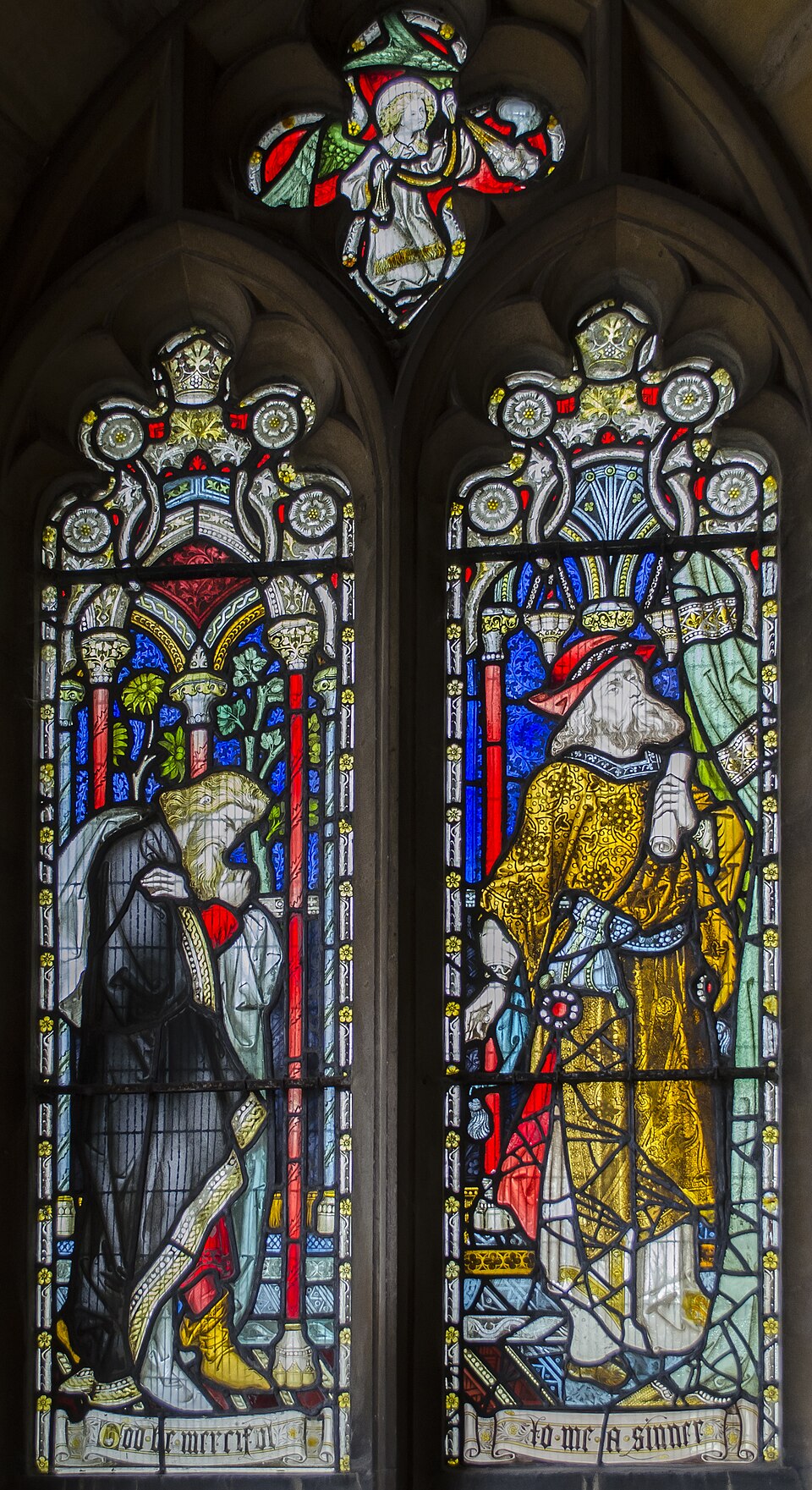 “I thank you that I am not like the rest of humanity…” These words in the parable of the Pharisee and the tax collector are striking. What came next? “I am a great sinner?” “I am a person who is always looking for answers?” “I am able to foretell the future with absolute accuracy?” “I always try to help everyone I meet?”
I think at one time or another, many of us have probably said something similar. “I grew up in a good family.” “I go to church every Sunday.” “I never miss a Holy Day of Obligation.” “I try to help others when I can.” “I contribute to good causes.” “I’m a good worker.” “I support my family.”
Many of us, including myself, have said things like, “I know how to make my own clothes,” or “We learned how to make soap when we were kids,” or “Buying in bulk really makes money go farther.” We set ourselves up as somehow superior in comparison to others we meet along the journey of life, even those in our own neighborhoods or country. Unless and until we experience the reality of having less income than needed to cover basic expenses, we don’t comprehend that middle class solutions don’t necessarily work when income doesn’t cover the basics. Having 12 cans of tomatoes bought in bulk doesn’t particularly help when there’s nothing else to cook along with a can of tomatoes. Knowing how to make noodles doesn’t help when there’s no way to get an egg and flour to start with. The help received in those situations, often from others who also lack the luxury of having any surplus, is truly treasured.
The Pharisee went on to explain his thinking, noting that he is not “greedy, dishonest, adulterous” or even like the tax collector he sees nearby. The Pharisee notes that he fasts twice a week and pays tithes on his entire income, not just on parts of it. He’s pretty proud of himself.
St. Luke tells us that the Pharisee “spoke this prayer to himself.” It’s an interesting phrase. Was he simply speaking quietly rather than speaking aloud or so others around would hear, or was he literally speaking to himself rather than to God?
Jesus went on to tell of the tax collector, one of the most despised members of the community. Tax collectors had to collect a certain minimum amount of tax to submit to the government in Rome. Beyond that basic minimum, they were allowed to keep whatever extra they could get out of people, their own neighbors in the community. People thought of them as the scum of the earth. Traitors to all in the region.
The tax collector stood apart from others. He knew he was not welcome. He didn’t presume to claim innocence or even assume he would be pardoned, He looked down humbly at the ground in front of him, “beat his breast and prayed, “O God, be merciful to me a sinner.”
A simple prayer and totally heartfelt. Jesus praised this prayer. “I tell you, the latter went home justified.” The Pharisee did not. Why not? “Whoever exalts himself will be humbled, and the one who humbles himself will be exalted.” (Lk 18):9-14
Humility is not a loud declaration of unworthiness proclaimed with the hope others will reassure the speaker that they are indeed worthy of praise and respect. Humility is the quiet recognition that in some actions, the individual has truly done wrong and is sorry for having done so. To be humbled is to have that reality made clear through the words and actions of others. Those who have admitted their misdeeds and asked forgiveness, can be exalted through the forgiveness they receive.
A wise man named Sirach lived around 200 years before the coming of Jesus. He wrote down and shared his reflections on community, faith, families, friendships, education, wealth and poverty, worship, and many other topics of importance to both ancient and modern communities. Sirach wrote in Hebrew and his words were translated into Greek by his grandson sometime after 132 BCE.
Sirach stated clearly and firmly, “The Lord is a God of justice, who knows no favorites.” This is important. All people matter to the Lord – rich and poor alike. Yet Sirach notes, “Though not unduly partial toward the weak, yet he hears the cry of the oppressed.” Those who have no social status or protection are heard by the Lord. Widows, orphans, those whose needs and rights are discounted by folks on the margins – the calls for help from all of them are heard. Their cries pierce the clouds of heaven, like an arrow that flies straight to its goal. They do not rest until the Most High hears and responds, affirming what is right and just for the poor and lowly. (Sir 35:12-14, 16-18)
The tax collector would find this both disconcerting and strangely comforting, I suspect. Given the reality that he regularly was expected to cheat his neighbors in order to support himself and probably lived a more lavish lifestyle himself, it would be disconcerting. He knew the Lord would hear the cries of those who were cheated. Yet, he hoped in the mercy of the Lord for himself as well. Would it be possible to serve as a tax collector and still be an honest person? Or what would next steps be for him? Both questions remain unanswered in the Gospel, but we might want to consider them for ourselves.
The reality of the Lord’s attention to the cries of the poor, however, is not in doubt in both Hebrew and Christian Scriptures. The Psalmist sings of it regularly. Psalm 34 is an example of this. “I will bless the Lord at all times; his praise ever in my mouth.” “When the just cry out, the Lord hears them, and from all their distress he rescues them.” “The Lord redeems the lives of his servants; no one incurs guilt who takes refuge in him.” The cries of the poor and the oppressed always reach the Lord. (Ps 34:2-3, 17-18, 19, 23)
Does this mean everything turns out fine if we just have faith – money and respect will come, healing of illness, jobs and happy family life? Wouldn’t that be lovely? But would we really appreciate these gifts? We might well get to thinking that it all happened because we worked hard and did it all ourselves, followed by, “If we/I can do it, so can they …” Easy then to say, “I thank you that I am not like the rest…”
The life of St. Paul shows us differently. A tent maker, citizen of Rome, born in Tarsus, became a scholar of the Law, a Pharisee. He approved of the condemnation of some of the earliest followers of Jesus, including the first martyr, Stephen. By God’s grace, he met the risen Jesus as he was traveling to Damascus to arrest more of those heretics, the Christians. Called by Jesus personally, he became the Apostle to the Gentiles, traveling many miles by foot for many years, sharing the Good News of the coming of the Christ and of salvation for all peoples – Jews and Gentiles alike.
Eventually, he was arrested and exercised his right as a Roman citizen to be tried in Rome. In his second letter to Timothy, a young man he met in his travels who shared in his ministry, he speaks of the approach of the end of his life. His trial did not go well. He knows he will be condemned. But he speaks words of hope and conviction. “I have competed well; I have finished the race; I have kept the faith.” No one spoke on his behalf during his trial. Some friends deserted him. “But the Lord stood by me and gave me strength, so that through me the proclamation might be completed and all the Gentiles might hear it.”
Paul rejoiced that he had been given the opportunity to speak and witness to the risen Lord. He proclaimed confidently, “The Lord will rescue me from every evil threat and will bring me safe to his heavenly kingdom.” He concludes in words we share, “To him be glory forever and ever.” (2 Tim 4:6-8, 16-18)
“I thank you that I am not like the rest of humanity…” or “Have mercy on me a sinner.”
Which will be our approach this week and through the days and weeks to follow? How will we live as children of a just God, who hears the cry of the poor? How will we “see” the needs of those around us? How will we respond?
May we remember that all we have is a gift. We haven’t gotten where we are by ourselves. Our families, our friends, other people we have never met and will never meet. All have given of themselves to make the society in which we live, with the advantages we enjoy.
Now it’s our turn to pass it on. Our turn to reach out with a smile, a helping hand, a kind word, a listening ear, a decision to forgive, a choice not to judge.
May we bless the Lord at all times, remembering that we are not above all others in holiness, nor are we loved more than others by the Lord. We are all loved and together we share this love with all we meet, sharing together on the Lord’s team to care for the poor and the oppressed whose cries are heard by the Lord.
Readings for the Thirtieth Sunday in Ordinary Time – Cycle C
Read More