Pages Menu
RssFacebook
Categories Menu

Posted by on Nov 1, 2026

Blessed are they who… Does this include me and you?
Blessed are they who… Does this include me and you?

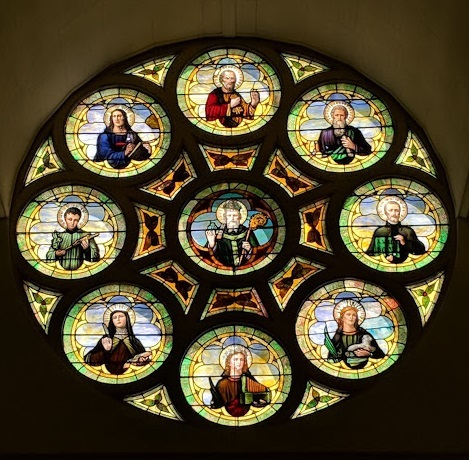
The Solemnity of All Saints is celebrated on November 1, displacing the regular Sunday readings if the date falls on Sunday.

The last day of October is All Hallows Eve, hallows being an older way of referring to the holy ones, the saints. The day after the Feast of All Saints, we celebrate the Feast of All Souls, those who are transitioning from this life to the next.

In all the excitement of celebrating All Hallows Eve, aka Halloween, we often focus more on the transition and scary things about it than on the kind of lives that lead to union with God. Ghosts, witches, goblins, etc. fill the streets in some countries, as children go from house to house requesting treats. Adults happily share treats with them, admiring their costumes and enjoying their delight.

In many cultures, the feast of All Souls is also celebrated with music, dancing, special foods, and other traditions. We easily remember our loved ones who have left this life, but are still very near us in memory. Skulls, skeletons, white painted faces and other activities and traditions make this day fun and exiting too.

Nevertheless, the Solemnity of All Saints comes first. The ideal of sainthood seems far harder to imagine or expect that we might be able to attain. I remember how surprised I was at age 13 to hear our Bishop explain that we are all called to be saints. Granted, some folks have already become saints through their lives and been recognized after their deaths for the holiness of their lives. But all of us are called. And many of those who eventually became known for holiness lived very ordinary lives, sometimes even very scandalous lives before they turned their lives around.

So what is it we celebrate and to what are we called on this Solemnity of All Saints?

We tend to focus on dramatic things, such as the reading from the Book of Revelation about the end of times when a seemingly limited number of people are chosen and sealed as the ones who would stand before God at the end of time. These were those who had “survived the time of great distress” and washed their robes in the Blood of the Lamb. Only a few will make it! There will be great conflicts! Everything will be hard and ultimately, God will prevail! How can we hurry time along so this will happen soon? (Rev 7:2-4, 9-14)

The book was written as an allegory for the challenges facing the Christian community during times of persecution under the Roman empire. We totally misunderstand the images and use of numbers in the readings when we assume only a few will be saved, because we are of a different time and culture . We tend to read ancient words and interpret them literally because we don’t understand their actual meaning.

Yet the book does remind us of something very important. In the end, those who are faithful to the Lord’s call in their lives will ultimately rejoice and live with Him.

But how can that happen?

Jesus told us clearly what kinds of actions and orientation in respect to others and to God are to be ours.

St. Matthew tells us Jesus went up the mountain and sat down. Then he began teaching. This description is a parallel to the way Moses went up the mountain and received the Law from the Lord God there. But with Jesus, he himself gave us the Law we are to follow.

“Blessed are the poor in spirit, for theirs is the Kingdom of heaven.” Self-serving pride is not the key to greatness or acceptable behavior? Oh dear, that’s not what we hear most of the time!

He continues, Blessed are those who mourn, who are meek, who hunger and thirst for righteousness, who are merciful, who are clean of heart, who are peacemakers. (Mt 5:1-12a)

These kinds of behavior are not the ones praised in most societies. They don’t get people ahead of the crowd or make them monetarily rich. They don’t lead to power or influence over thousands of people. They don’t conquer other lands or make others surrender in defeat. How can he expect people to live like that? And if they do, won’t that be a threat to the way we who are powerful or respectable live? Will we have to share our money? Will we have to make sure others have access to food, clothing, housing, education, healthcare? How can we possibly do that, especially for folks from other lands or folks who have had less social and economic help, without losing our own power and position?

And yet, what if we really tried living that way? What if we took Jesus’ words seriously?

On the Solemnity of All Saints, we honor those who did take his words seriously. We recognize them as the holy ones among us and as models for our own lives.

Our Bishop was correct. We are all called to sainthood. Jesus himself told us what is expected and valued by God. We all go through periods in our lives of learning our limitations and becoming less self-centered or proud. If we are open to learning, we grow in wisdom, age, and grace so we will one day become part of the Communion of Saints who now live in union with the Father. Today we are still part of the Communion of Saints living and growing in holiness.

May we always remember how much God loves each human being, including those who are different from ourselves, our families, our friends. May we one day find ourselves called “Blessed” by the Lord.

Peace be with you.

Readings for the Solemnity of All Saints – Cycle A

(Note: the readings are the same for Cycle B and Cycle C as well.)


Read More

Posted by on Feb 16, 2025

Dreams and Their Consequences

Dreams and Their Consequences

In the early years of television, a show called “Truth or Consequences” was quite popular. Contestants were given a trivia question to answer and if they didn’t get the correct answer in a matter of moments, they had to perform some kind of crazy or embarrassing activity or action. The program continued for several decades and its producers pioneered some of the film and live-broadcast techniques that are basic to video and television productions today.

The show came to mind as I was reflecting on the readings this week. The prophet Jeremiah, writing in the years before the Babylonian conquest of Jerusalem in 587 BCE and the years that followed, begins a prophetic oracle with these words, “Cursed is the one who trusts in human beings.” He contrasts this with a contrasting statement, “Blessed is the one who trusts in the Lord.” (Jer 17:5-8)

Each of these statements is followed by descriptions of the behaviors that characterize each type of trust and its ultimate consequences. The words used – cursed/blessed – are easy to misunderstand. Who curses? Who blesses? What does the word mean fundamentally?

For the Hebrew people, the messages proclaimed by the prophets are announced with the words, “Thus says the Lord.” It is the Lord, the Most High of Israel, who is speaking this message to the people through the prophet. We hear the word “cursed” and think of an angry, violent, vengeful, jealous person who doesn’t hesitate to punish and hurt the ones who don’t obey. Similarly, when we hear the word “blessed,” we typically think of a person who loves and rewards conditionally. As long as the person over whom the authority holds power obeys, all will be well and they will prosper.

But is this what the prophecies really mean? Is the Lord, the Holy One of Israel, really an angry, jealous, vengeful deity? Or are we maybe misunderstanding what is meant by the words.

Imagine a child with a new scooter. This child is excited to go out and try it on the hill behind the house. The hill is high and pretty steep at one end, the edge of a higher plateau. There are some shorter parts of the hill. One section is about half as high as the highest one and not as steep. The final section is much lower. A gentle slope that started out steeper than the bottom – it smoothed out to a level sidewalk up to the back door.

The parents will assess the age and strength of the child when deciding to allow the child to go try out the scooter. The high plateau end is going to be too high for the child, even for an older child. Heavens, it’s too high even for an experienced adult to slide down safely! The admonition not to go there will be much stronger about that steep hill. “Don’t even think about it. You’ll break your neck!”

The intermediate size hill may be safe for an older child. The parents will say, “Be careful. Watch what you’re doing. Don’t get going too fast.”

A younger child will be able to enjoy the scooter on the lower hill. The instructions may well sound like those given to the older child on the intermediate hill. But the parents will be watching much more closely and maybe running down the hill alongside the child on the scooter, to help keep both child and scooter safe.

Perhaps the words of the Lord given by the prophet are more in the style of the words of these parents of the child with a new scooter.

“Cursed are those who …” might mean the same thing as “Things could go very badly in the end for those who …”

The images Jeremiah uses are those that the people of his time will understand – “A barren bush in the desert, … a lava waste, a salt and empty earth.” On the other hand, for those who listen to the advice of the Lord, he speaks of “a tree planted beside the waters that stretches its root to the stream … in the year of drought … still bears fruit.” The results for this person will be positive in the long run.

Jesus used a similar style in speaking with a large crowd of people who gathered to hear his words. “Blessed are you …” describes people who do not hurt others in order to live their lives. For those whose behavior was not kind and loving, his words were “Woe to you who …” (Lk 6:17, 20-26)

Was Jesus condemning those whose behavior seemed to indicate divine blessing? People who were financially rich, never hungry, welcomed as an honored, well-loved guest, or praised by all who knew them – is he condemning them? Or was he offering a warning that those in power can so easily find the tables turned and themselves disgraced, imprisoned or out of work?

And those who were in need? Was it because of something they had done? Were they lazy or unwilling to try to help themselves? What about that old saying, “God helps those who help themselves?” But Jesus says, those who help others are blessed. Those who don’t worry about having approval from the rest of the world are the ones who are pleasing to God.

Consequences don’t have to be unpleasant. They don’t have to be embarrassing. They come along as a result of decisions we make and actions we take. Those who have great wealth don’t always feel secure. They can lose it very quickly. Those who put all their money into homes or possessions can lose everything in a fire, flood, or tornado. But those who put their energy and resources into supporting and helping other people will find help and love from those they have helped when they themselves are in need. “Asbestos checks” don’t necessarily help those who die with great riches but little history of having cared for or shared with others. But the help and love we share with others grows and flows out into the world, growing ever broader and stronger.

Truth or consequences. Do we believe the truth spoken by Jeremiah and Jesus? Which consequences do we want to see in our lives? Do we trust in money, fame, lands, power to save us from loss and suffering? Or do we trust in mutual support, help for those in need of an extra hand, comfort offered to those who have experienced great losses, and decide to continue to do so despite the opposition of those who find their power threatened by this freedom?

Which will lead to everlasting blessing? Which joins us to the life of Christ?

In the days to come, may we trust that our Lord is good and loving, caring for all of us, and hoping we will join in helping and supporting each other, no matter where we have come from or where we live now. We are the Lord’s hands and voice here and now. May we speak the truth and share in the blessings promised.

Readings for the Sixth Sunday in Ordinary Time – Cycle C


Read More

Posted by on Jan 29, 2023

He Went up the Mountain

He Went up the Mountain

The Beatitudes are front and center in the liturgy today.  Jesus goes up the mountain – just as Moses went up the mountain to receive the original Law, a short part of which are the 10 Commandments. Matthew’s positioning of this teaching as taking place on the mountain makes it clear that this is the new law which Jesus is bringing to all right from the beginning. (Mt 5:1-12a) It’s not given to him by God, as the Law was given to Moses. He is the one teaching them.

Yet what Jesus is teaching is not entirely new. The prophets long before the time of Jesus called the ordinary people, the humble of the earth, to follow God’s law, seeking justice and humility, speaking the truth, living in peace, and taking refuge in the name, the power, of the Lord. Jesus too speaks of the humble, ordinary folks of the earth. It’s not the rich and powerful who will make up the kingdom of heaven or make it a reality on Earth. It’s those who are not ambitious for power and fame but who are hungry for righteousness, for doing what is right and good rather than what might be more profitable. It’s those who are merciful and look at the world with pure hearts, those who work for peace and who mourn the losses caused by greed or ambition.

This is the new law Jesus brings to us, laid out right near the beginning of his public life, shortly after the call of his first disciples. Yet it’s not a law that will be easy to accept or to live by. He speaks clearly of persecution, insults, and evil worked against those who will follow this law. Still, the reward for faithfulness is the kingdom of heaven, a kingdom in which their hunger for justice will be satisfied, they will experience mercy and be comforted. They will be known as children of God. Not a bad outcome, all in all.

Easy to live this way? No. Not at all. Does it make sense in everyday life? No, not really. Yet it’s the foolish who live as he teaches who will show the way to life. It’s only through the grace, the help of God, that we can live this new way.

We have been called and have received an amazing gift, to live in the Lord and by the wisdom he brought to that mountainside. The kingdom begins as we live as he has called us to live, following the instructions he gave so long ago.

The Beatitudes are not the entire teaching from Jesus on that day on the mountain. As was the case with the original Law given on Mt. Sinai, there is much more that Jesus taught his disciples that day. We’ll be hearing more of this right into the beginning of Lent on Ash Wednesday. Here we go on the journey. Much to see and learn as we travel along the way with Jesus.

Readings for the Fourth Sunday in Ordinary Time – Cycle A

Read More