Pages Menu
RssFacebook
Categories Menu

Posted by on Jan 17, 2026

Dream Big – God’s Vision for Us

Dream Big – God’s Vision for Us

God’s vision for us as humans is amazingly grand – God dreams big. No half measures for God. God “is in it for the long run” as the saying goes.

It’s critically important for us to remember this basic reality as things in our world seem to careen wildly out of control and towards disaster. God dreams of better things, better outcomes for all of us than the division, anger, hatred, and discord we hear in the news and in our encounters with others.

Throughout the Scriptures, the prophets speak of the glory of the Lord that will break through into the world and draw all peoples to unity. Often the texts speak specifically about the Hebrew people. This is totally understandable in light of the fact that the prophets are speaking to their fellow descendants of Abraham, a people who were formed through the experience of being wanderers out of the great civilizations of Mesopotamia into Palestine, then into Egypt and back. They experienced many times of peace and times of conflict. Many of the transitions were not marked by compromise and mutual agreement with other powerful nations but rather by armed conflict and conquest.

Some of the most powerful words came from prophets speaking in times of conflict or of defeat. These are words of comfort and a promise of better times to come. Reminders of God’s dream and patience are commonly part of these prophecies.

Isaiah says: “Now the Lord has spoken who formed me as his servant from the womb, that Jacob may be brought back to him and Israel gathered to him … my God is now my strength!”

Yet the restoration of Israel following times of exile was never the ultimate goal of the Lord.
“It is too little … to restore the survivors of Israel; I will make you a light to the nations, that my salvation may reach to the ends of the earth.” (Is 49:3, 5-6)

Not enough to restore earthly kingdoms and power to any particular people, not even to those chosen long ago. God’s vision is for salvation to reach all peoples.

In a world that is all too often filled with violence as individuals and groups strive to impose their beliefs and their ways on the rest, this kind of vision can be dangerous. Crusaders, missionaries, zealots of many kinds have ridden forth to force others to conform to their own beliefs for far too many years. They follow the paths of conquerors and invading peoples recorded over the past 5,000 years! All were seeking some “good” and justified their violence in view of that.

Yet that is not God’s vision or dream for humanity.

God speaks to individuals, offering love, unconditional love. This is the key to God’s big dream. Love – selfless, offered without expectation of repayment, and to all.

It sounds crazy. Totally impossible, highly risky, sure to lead to disaster, and not at all likely to turn out well for its proponents and those who work to bring it into focus.

Yet God is patient and consistent. Centuries don’t really matter when one exists outside of time itself!

Perhaps more importantly, God is willing to start small – with individual people. Abraham, Moses, Samuel, Isaiah, Micah, John the Baptist. The fields were prepared for many centuries before God became one of us, coming as a carpenter from a small town in a conquered country.

John the Baptist came preaching repentance, like so many prophets before him. The time for the coming of the anointed one of the Lord is coming close. “Prepare the way of the Lord.” Yet similar words had been spoken by prophets through the ages. Who could have imagined the time had actually come!

One day, after his baptism in the Jordan, Jesus was walking towards the people again gathered there. John had a group of followers, disciples, who believed his message and gathered to help prepare the way, whenever it might come. John looked up and saw his cousin, Jesus.  He exclaimed to his disciples, “Behold, the Lamb of God, who takes away the sin of the world.” This man, this man you see with your own eyes. This man is the one for whom we have been waiting.

In the Gospel according to St. John, the Baptist goes on to explain. “I did not know him, but the reason why I came baptizing with water was that he might be known to Israel.” In other words, “My job is done!”

A reasonable question would be, how did John know? John’s testimony continued. “I saw the Spirit come down like a dove from heaven and remain with him.” Blessedly, the Lord had told John what to look for ahead of time. “On whomever you see the Spirit come down and remain, he is the one who will baptize with the Holy Spirit.” John declared, “He is the Son of God,” the one who is to come. (Jn 1:29-34)

Once again, God’s dream doesn’t come to pass through great force or massed armies. God’s dream continues to unfold through the Spirit, the Holy Breath of God, coming and remaining with one who is truly human and seeks to do the will of the Lord.

Years later, after Jesus had lived his life and mission, died, and risen from death, the men and women who heard the story of his life and believed his word shared what they had received from the first witnesses.  Bit by bit, the word spread and communities of faith sprang up around the empire.

In Greece, the apostle Paul founded many such communities, including one in Corinth, a major cosmopolitan seaport. As might be expected, as the community grew, Paul kept in touch. In his first letter to the Corinthians, his greeting illustrates the development in his world of God’s dream. He addresses the “church of God that is in Corinth,” to all who shared in the grace poured out through Jesus there and throughout the world. “Grace to you and peace from God our Father and the Lord Jesus Christ.” (1 Cor 1:1-3)

Grace and peace. These are the dream of God for all of us.

How will it come about? Only through decisions made on a daily basis to care for others. The rich certainly need our prayers and have special challenges. However, those to whom Jesus points us through his words and the example of his ministry are those who don’t have all they need. The hungry, the thirsty, those in prison, those who seek refuge in other lands, those who need work, the unhoused, the sick – all these are part of the dream of God. As the community of people around the world reach out and help, that dream comes closer to fulfillment.

It’s not enough to expect only local communities to be able to assure that all people there have what they need. Some things require people to work together on a larger scale. In our world today, it’s even more important for us to reach across boundaries of community, state, nation, and region to help each other. When some have more resources than they can ever possibly expect to need and others must pick up pennies off the street to get enough money to buy a sandwich, the dream of God is not fulfilled. When nations have funds to build and use massive military weapons but will not spend a fraction of that amount to help children in less wealthy countries get health care and schooling, that dream of God in not fulfilled. When those who can pay large sums of money for permission to live in another country, but that same country turns away or mistreats those whose farm lands and orchards have been mined by drug gangs who have driven them out, that dream is not fulfilled.

So, this week, as we ponder the words of Isaiah, the witness of John the Baptist, and the cry of the Psalmist who prays, “Here I am Lord, I come to do your will,” I pray that we have the courage to continue to work for justice. The strength to keep showing up. The hope to believe God’s promises.

Peace be with you.

Readings for the Second Sunday in Ordinary Time – Cycle A


Read More

Posted by on Oct 26, 2025

I Thank You That I Am Not Like The Rest Of Humanity

I Thank You That I Am Not Like The Rest Of Humanity

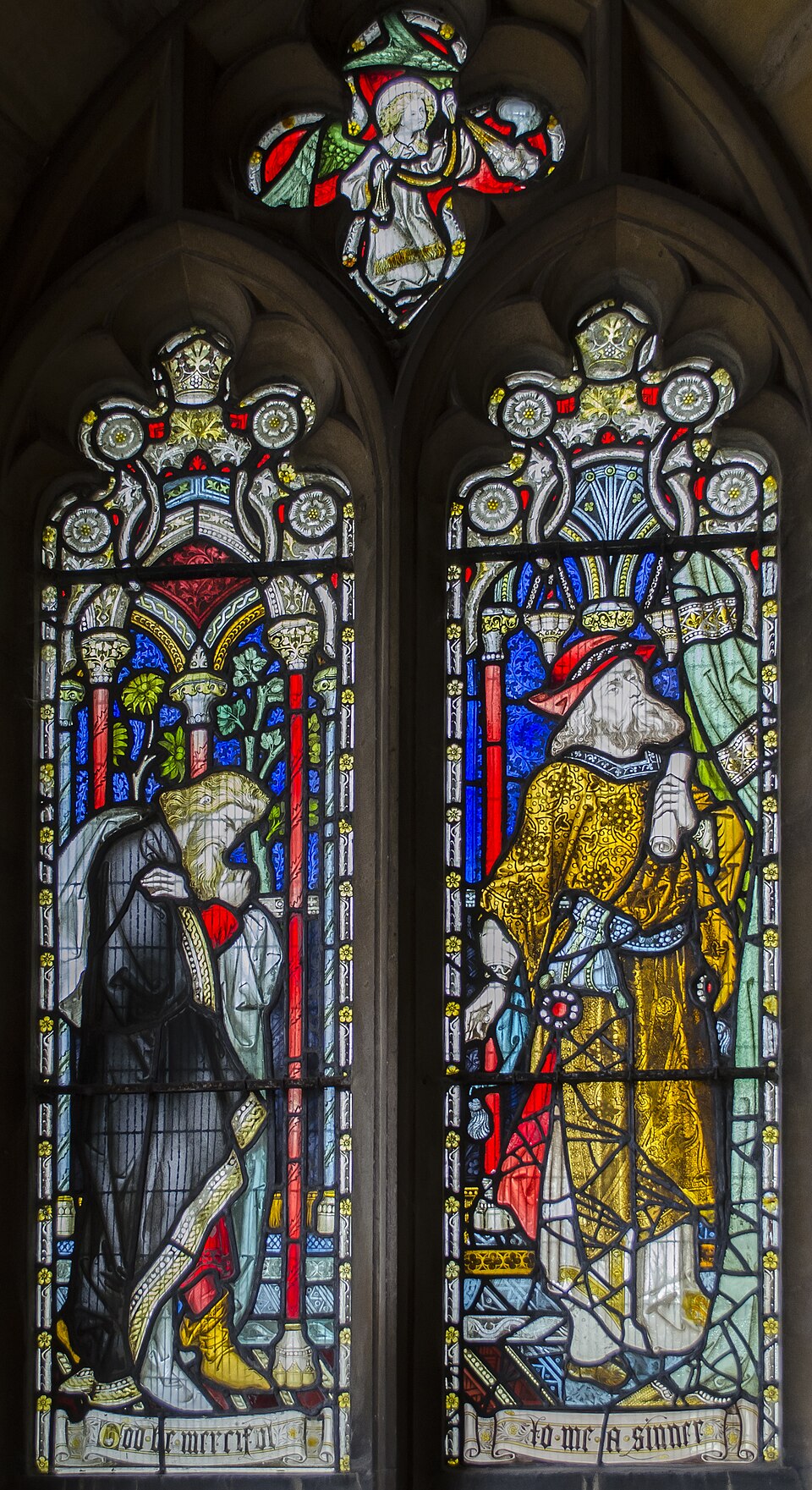
“I thank you that I am not like the rest of humanity…” These words in the parable of the Pharisee and the tax collector are striking. What came next? “I am a great sinner?” “I am a person who is always looking for answers?” “I am able to foretell the future with absolute accuracy?” “I always try to help everyone I meet?”

I think at one time or another, many of us have probably said something similar. “I grew up in a good family.” “I go to church every Sunday.” “I never miss a Holy Day of Obligation.” “I try to help others when I can.” “I contribute to good causes.” “I’m a good worker.” “I support my family.”

Many of us, including myself, have said things like, “I know how to make my own clothes,” or “We learned how to make soap when we were kids,” or “Buying in bulk really makes money go farther.” We set ourselves up as somehow superior in comparison to others we meet along the journey of life, even those in our own neighborhoods or country. Unless and until we experience the reality of having less income than needed to cover basic expenses, we don’t comprehend that middle class solutions don’t necessarily work when income doesn’t cover the basics. Having 12 cans of tomatoes bought in bulk doesn’t particularly help when there’s nothing else to cook along with a can of tomatoes. Knowing how to make noodles doesn’t help when there’s no way to get an egg and flour to start with. The help received in those situations, often from others who also lack the luxury of having any surplus, is truly treasured.

The Pharisee went on to explain his thinking, noting that he is not “greedy, dishonest, adulterous” or even like the tax collector he sees nearby. The Pharisee notes that he fasts twice a week and pays tithes on his entire income, not just on parts of it. He’s pretty proud of himself.

St. Luke tells us that the Pharisee “spoke this prayer to himself.” It’s an interesting phrase. Was he simply speaking quietly rather than speaking aloud or so others around would hear, or was he literally speaking to himself rather than to God?

Jesus went on to tell of the tax collector, one of the most despised members of the community. Tax collectors had to collect a certain minimum amount of tax to submit to the government in Rome. Beyond that basic minimum, they were allowed to keep whatever extra they could get out of people, their own neighbors in the community. People thought of them as the scum of the earth. Traitors to all in the region.

The tax collector stood apart from others. He knew he was not welcome. He didn’t presume to claim innocence or even assume he would be pardoned, He looked down humbly at the ground in front of him, “beat his breast and prayed, “O God, be merciful to me a sinner.”

A simple prayer and totally heartfelt. Jesus praised this prayer. “I tell you, the latter went home justified.” The Pharisee did not. Why not? “Whoever exalts himself will be humbled, and the one who humbles himself will be exalted.” (Lk 18):9-14

Humility is not a loud declaration of unworthiness proclaimed with the hope others will reassure the speaker that they are indeed worthy of praise and respect. Humility is the quiet recognition that in some actions, the individual has truly done wrong and is sorry for having done so. To be humbled is to have that reality made clear through the words and actions of others. Those who have admitted their misdeeds and asked forgiveness, can be exalted through the forgiveness they receive.

A wise man named Sirach lived around 200 years before the coming of Jesus. He wrote down and shared his reflections on community, faith, families, friendships, education, wealth and poverty, worship, and many other topics of importance to both ancient and modern communities. Sirach wrote in Hebrew and his words were translated into Greek by his grandson sometime after 132 BCE.

Sirach stated clearly and firmly, “The Lord is a God of justice, who knows no favorites.” This is important. All people matter to the Lord – rich and poor alike. Yet Sirach notes, “Though not unduly partial toward the weak, yet he hears the cry of the oppressed.” Those who have no social status or protection are heard by the Lord. Widows, orphans, those whose needs and rights are discounted by folks on the margins – the calls for help from all of them are heard. Their cries pierce the clouds of heaven, like an arrow that flies straight to its goal. They do not rest until the Most High hears and responds, affirming what is right and just for the poor and lowly. (Sir 35:12-14, 16-18)

The tax collector would find this both disconcerting and strangely comforting, I suspect. Given the reality that he regularly was expected to cheat his neighbors in order to support himself and probably lived a more lavish lifestyle himself, it would be disconcerting. He knew the Lord would hear the cries of those who were cheated. Yet, he hoped in the mercy of the Lord for himself as well. Would it be possible to serve as a tax collector and still be an honest person? Or what would next steps be for him? Both questions remain unanswered in the Gospel, but we might want to consider them for ourselves.

The reality of the Lord’s attention to the cries of the poor, however, is not in doubt in both Hebrew and Christian Scriptures. The Psalmist sings of it regularly. Psalm 34 is an example of this. “I will bless the Lord at all times; his praise ever in my mouth.” “When the just cry out, the Lord hears them, and from all their distress he rescues them.” “The Lord redeems the lives of his servants; no one incurs guilt who takes refuge in him.” The cries of the poor and the oppressed always reach the Lord. (Ps 34:2-3, 17-18, 19, 23)

Does this mean everything turns out fine if we just have faith – money and respect will come, healing of illness, jobs and happy family life? Wouldn’t that be lovely? But would we really appreciate these gifts? We might well get to thinking that it all happened because we worked hard and did it all ourselves, followed by, “If we/I can do it, so can they …” Easy then to say, “I thank you that I am not like the rest…”

The life of St. Paul shows us differently. A tent maker, citizen of Rome, born in Tarsus, became a scholar of the Law, a Pharisee. He approved of the condemnation of some of the earliest followers of Jesus, including the first martyr, Stephen. By God’s grace, he met the risen Jesus as he was traveling to Damascus to arrest more of those heretics, the Christians. Called by Jesus personally, he became the Apostle to the Gentiles, traveling many miles by foot for many years, sharing the Good News of the coming of the Christ and of salvation for all peoples – Jews and Gentiles alike.

Eventually, he was arrested and exercised his right as a Roman citizen to be tried in Rome. In his second letter to Timothy, a young man he met in his travels who shared in his ministry, he speaks of the approach of the end of his life. His trial did not go well. He knows he will be condemned. But he speaks words of hope and conviction. “I have competed well; I have finished the race; I have kept the faith.” No one spoke on his behalf during his trial. Some friends deserted him. “But the Lord stood by me and gave me strength, so that through me the proclamation might be completed and all the Gentiles might hear it.”

Paul rejoiced that he had been given the opportunity to speak and witness to the risen Lord. He proclaimed confidently, “The Lord will rescue me from every evil threat and will bring me safe to his heavenly kingdom.” He concludes in words we share, “To him be glory forever and ever.” (2 Tim 4:6-8, 16-18)

“I thank you that I am not like the rest of humanity…” or “Have mercy on me a sinner.”

Which will be our approach this week and through the days and weeks to follow? How will we live as children of a just God, who hears the cry of the poor? How will we “see” the needs of those around us? How will we respond?

May we remember that all we have is a gift. We haven’t gotten where we are by ourselves. Our families, our friends, other people we have never met and will never meet. All have given of themselves to make the society in which we live, with the advantages we enjoy.

Now it’s our turn to pass it on. Our turn to reach out with a smile, a helping hand, a kind word, a listening ear, a decision to forgive, a choice not to judge.

May we bless the Lord at all times, remembering that we are not above all others in holiness, nor are we loved more than others by the Lord. We are all loved and together we share this love with all we meet, sharing together on the Lord’s team to care for the poor and the oppressed whose cries are heard by the Lord.

Readings for the Thirtieth Sunday in Ordinary Time – Cycle C


Read More

Posted by on Oct 18, 2025

Keep Trying – Advice for life and prayer

Keep Trying – Advice for life and prayer

“If at first you don’t succeed, try, try again.”  We hear this saying so often as we grow up that we often stop paying attention to it. A roll of the eyes, a shake of the head, a shrug of shoulders – so many ways to tell the one who has spoken these words to us that we don’t really want to try any more. But “keep trying” is generally not bad advice. So many things we need to do or want to do require persistence. Babies have to keep trying to learn to sit up, to crawl, to stand, to walk. We have to practice to learn to speak. Just about everything about being a human being requires some sort of practice. Only a smile or a happy laugh seem to come naturally. They are among the most welcome things any of us ever give or receive.

Trying in an Ancient Conflict

In the years between the Exodus of the Israelites from Egypt and their entry into Palestine, there were forty years of traveling around the Sinai Peninsula and lands east of the Jordan River. There were already people living there and sometimes conflicts arose.

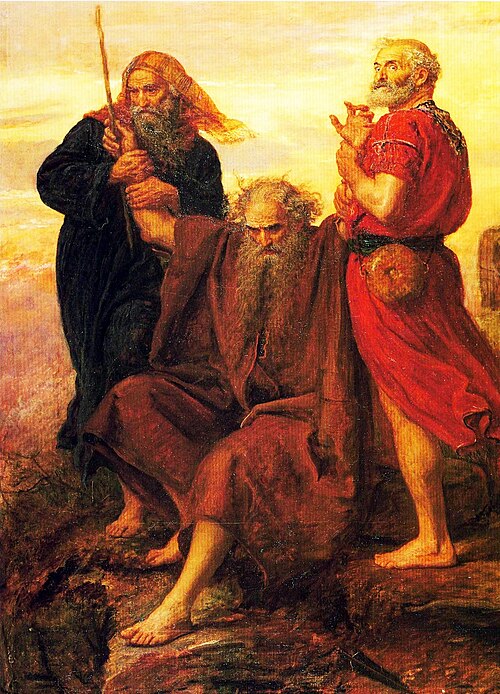
At one point, Amalek led an army against the Israelites. Moses recognized that Joshua was a natural leader in defense of the people against other warring groups, so he had Joshua choose the men who would join in battle against Amalek. Moses went to a hilltop nearby to pray for God’s help and support in the battle. He raised his arms over his head in prayer.

While Moses’ arms were raised, the battle went well for Israel. But he couldn’t keep his arms up in the air unsupported for very long. Whenever he lowered them to rest, the battle shifted and Amalek’s forces gained ground.

Fortunately, two other men were there with Moses. They found a rock on which he could sit and then each stood beside him, helping him hold his arms up in prayer. They did this for  hours, all day long, until at last the battle was won by Joshua and the Israelites. (Ex 17:8-13)

Moses had to keep trying, and his friends helped make that possible. It was a community activity.

A Widow Keeps Trying

Sometimes we wonder if our prayers are heard. In hard times, we may wonder if God cares or if we should keep trying. Jesus gave us a story to help us understand.

Widows in Jesus’ day were among the most vulnerable people. They had no real rights. Women’s identities were based on the men in their family. First their father, then their husband, and eventually, their sons. Once a woman was married, her father was no longer responsible for her. If her husband died and she had no adult sons, she was on her own. But there were no real jobs or careers for women, so poverty and insecurity were their lot.

So, here was Jesus’ story. A widow had a claim for justice and went to the local court to claim her rights. The judge at the court was not an honest man. He ruled against her and in favor of her opponent. She brought the case again, and again he ruled against her. This happened repeatedly. Finally, the judge had had enough. He decided the only way he was going to get this settled was to rule in her favor, lest she eventually find a way to hurt him.

Jesus pointed out that because she kept trying, she eventually prevailed in the case, even against an unjust judge. How much more likely, therefore, was it that God would hear the prayers of his people. God, the just one, would come to help those who call on him. (Lk 18:1-8)

Does this mean that whatever we ask for will be granted? Well … if it’s something that is good for us or for the community, then yes. If not, then something else may be God’s gift of a response to the prayer.

The important thing is to keep praying, to continue to trust that the Father cares and is looking out for us. Keep trying. Keep hoping. Keep loving.

A Worthy Goal

Jesus’ teachings about the importance of prayer and persistence were rooted in Hebrew tradition and Scripture. We Christians sometimes think of Scripture primarily in terms of the writings of the followers of Jesus. But for Jesus and his followers, Scripture was the tradition of the Hebrew people – the stories of how everything came to be as it is now, as well as the history of their nation. The Law, the teachings of the prophets, the wisdom learned through the ages – all were/are part of Scripture.

St. Paul reminded Timothy of the wisdom learned from the Scriptures. This wisdom is the basis for teaching, guiding, even reproving (scolding) those whose actions are not in line with the Father’s hopes and dreams for us.

Paul notes, “Remain faithful to what you have learned and believed, because you know from whom you learned it.”  Point 1 – The validity of sources of teaching and information from humans matters!

He adds, “… from infancy you have known the sacred Scriptures, which are capable of giving you wisdom for salvation…” Point 2 – Scripture becomes a source of wisdom for us from infancy.

Scripture, inspired by God over the centuries, provides the background truths that we now bring to our own ministry of teaching and witnessing to the Good News through our good works and care of others. (2 Tim 3:14-4:2)

What then are we to do with what we have heard and learned from our teachers (such as Paul) and Scripture? We are to “be persistent whether it is convenient or inconvenient” in sharing it with those we meet and with whom we interact.

Keep Trying – Convenient or Inconvenient

Today we too are called to be persistent in our prayer, in our actions, in sharing and living out what we have come to believe. God who is love calls each of us to love and care for all the rest of the people with whom we live. This isn’t just caring for our immediate family, our extended family, or those who share our ethnic, cultural, or national identity.

When our leaders fail to care for or target the vulnerable, we are called to speak out.

When access to housing, education, nutrition, healthcare, safety is restricted to only certain groups of people in our communities, we are called to speak out.

When those with lower incomes are treated with less care or consideration in public places or in businesses or schools, we are called to speak out.

When those whose names sound strange or foreign to us and so we treat them with scorn or dismiss them as illegals, therefore criminals and not worthy of common courtesy or legal human rights, we are called to speak out.

The Psalmist cries out to us in the voice of the poor and the oppressed, “I lift up my eyes toward the mountains; whence shall help come to me? My help is from the Lord, who made heaven and earth.” (Ps 121:1-2, 3-4, 5-6, 7-8)

This week, may we be ones who speak and act on behalf of the poor and the oppressed. May we be among those who count on the help of the Lord and share the gifts we have been given for the good of all.

Keep trying – in life, in faith, and with confidence that the Lord hears the cry of the poor and comes to their aid.

Readings for the Twenty-Ninth Sunday in Ordinary Time

And more thoughts from several years ago.

Read More

Posted by on Oct 4, 2025

Guard This Rich Trust

Guard This Rich Trust

What do we treasure in life? Is it something physical – a book, a ring, a coin, a photo? Is it something less tangible – a song, a view, the sound of the waves, the touch of a hand, a smile? How about something even less tangible – a dream, a vision, a hope for the future, a shared set of values, a divine promise? How do we guard the rich trust of the hopes, memories, and dreams we have received.

I suspect most of us treasure many things in life. Our treasure chest is filled with both physical items that remind us of past people and joys as well as the intangible gifts and memories accumulated over the years of our lives, however many those may be. We all have treasures of one sort or another. Treasures we guard and protect, some of which we hope will go with us into eternity.

Some treasures are more difficult to hold onto than others. Probably the most difficult treasures to retain are the ones that are intangible, things like protection of the common good or the rights of all people rather than just the rights of the powerful. How can a people or a nation commit to protecting the rights of all and still be able to command the loyalty of the wealthy and powerful? When those in power refuse to protect the vulnerable, how are the rest of the people to respond?

These kinds of questions are not new to our day. These same kinds of issues are seen again and again in histories of civilizations and in the scriptures of religious communities, including our Judeo-Christian tradition. Are they out of date? Is it foolish to keep hoping? Do God’s promises mean nothing?

Habakkuk – Faith in Troubled Times

Social and political unrest were rampant in the time before the conquest of Israel and Judah by neighboring kingdoms. Habakkuk spoke to the Lord in the days after the northern kingdom had fallen to the Assyrians and before the southern fell to the Babylonians. “How long, O Lord? I cry for help but you do not listen!” Everything is going to pieces – as the contemporary saying goes – to Hell in a handbasket! Destruction, violence, strife, clamorous discord – all are raging in the kingdom.

The Lord answered Habakkuk with words of reassurance, but no promises on the timing of their fulfillment. “The vision still has its time, presses on to fulfillment, and will not disappoint.” It may not happen as soon as you would like, but “it will not be late.” There’s a time when it will flower. Meanwhile the just ones will live because of their faith. Those who wait faithfully will one day be vindicated. (Hb 1:2-3; 2:2-4)

So how long do we have to wait? Why can’t we just receive a huge dollop of faith that lets us go out and convert the world – to create a world of justice and hope for all?

The Mustard Seed – Faith in Bloom

When his apostles asked Jesus to increase their faith, he reminded them of a mustard seed – a potent, spicy seed that is quite small. Yet a mustard seed grows into something much larger. A mustard seed also brings a spicy flavor much larger than its size would suggest to foods into which it is cooked. Jesus told his friends they only needed faith the size of a mustard seed to produce major results.

Faith is powerful. It can move mountains of obstacles to the hopes and dreams of the Lord. It takes the faith and strength of workers who might be about the size of a mustard seed in their faith in order to move those mountains. But mustard seeds are powerful and mountains can be moved.

Faith – Guard this Rich Trust

Jesus encouraged his disciples to remember that just as a servant is expected to keep serving even after a day of work, without the master’s praise or thanks or notice, so the servants of the Most High are to keep working for justice and the coming of God’s kingdom. We keep working, not for praise but because of the promise towards which we aim. (Lk 17:5-10)

In our lives and ministries, we are called like Timothy “to stir into flame the gift of God that you have through the imposition of my hands.” When we receive the Holy Spirit, we receive gifts of “power and love and self-control.” We go out and share what we have seen and learned of the Lord and his promise. We are not broken by threats from those in power or by hardship. Paul wrote to Timothy while he himself was a prisoner, soon to be condemned for his work spreading the Good News of the Resurrection.

Paul’s words are ones that call to us too!  “Take as your norm the sound words that you heard from me, in the faith and love that are in Christ Jesus. Guard this rich trust with the help of the Holy Spirit that dwells within us.” (2 Tim 1:6-8, 13-14)

Guard this rich trust. Hold on to hope. Hold on to love. Hold on to kindness. Hold on to the dream of equality and opportunity in our communities. Hold on to the wonder of many ways of being and living as humans in this big world – the tremendous richness and diversity of human culture and experience.

This week look around you.  See the wonder of creation, the wonder of children, the wonder of older people, the wonder of seasonal change, the wonder of new learning, the wonder of family life at its best, the wonder of nations hoping to work together for the common good of all peoples in the world.

Some of these visions are blurry just now. Some seem in danger of being wiped out.

Hang on. Guard this rich trust – the promise and gift of the Lord. A vision that still has its time and will not disappoint is worth patient trust and confidence.

Readings for the Twenty-seventh Sunday in Ordinary Time – Cycle C

And another story about a mustard seed!

Read More

Posted by on Sep 21, 2025

Treasuring Imperfections and Creating Something Wonderful

Treasuring Imperfections and Creating Something Wonderful

Jar of apricot jam with biscuitsFruit harvest time brings an abundance of sweet flavors. Peaches, cherries, plums, pears, apricots – so many varieties, each with its own cycle of life from spring through fall. Each variety has its expected season, with a few short weeks being the prime time for the best of the crop. Even within that time, some of the fruit ripens earlier than the rest. The key to success in home canning lies in treasuring these imperfections and creating something wonderful with them.

When a box of fruit is ripening, it’s not unusual for there to be several cups of fruit that is past its prime when the majority of it is ready to put into jars and process. That overripe fruit is great for making jam. It is typically soft and very sweet. There’s a recipe for each variety and several types of additions to make the final product – pectin, sugar, spices, lemon juice and so forth. Once the jam is cooked, it’s fun to spread a little bit from what is left in the pan after the jars are filled and spread it on crackers. Jokingly, this is called “Quality control testing” as the sweet flavor is enjoyed for the first time in the season.

The prophet Amos spoke boldly about the offenses of those “who trample upon the needy and destroy the poor of the land.” He told all who would listen, “The Lord has sworn by the pride of Jacob: Never will I forget a thing they have done!”  (Amos 8:4-7)

Among humans we also see a variety of responses to the Lord’s call to love each other. Almost like fruit that ripens over a period of time, humans need time to grow and mature. Along the way, we see folks who look out only for themselves and don’t hesitate to take advantage of others.

It’s not all right to trample or essentially throw away those who are not strong or “perfect” like a ripe piece of fruit. Those are the ones specially loved, treasured, protected by the Lord. The kingdom of God is filled with those who recognize their need and their gifts, then reach out and help others whom they meet along the way. 

St. Paul reminded Timothy to pray for everyone, and especially for those in positions of authority. Quiet, tranquil living conditions make it much easier to live with dignity and devotion to God. To the extent that all seek to respect and work with each other, the community will grow and come to know the truth of God’s presence and activity in the world through Jesus. (1 Tim 2:1-8)

Jesus himself once told a story about a steward who was responsible for managing the business affairs of a wealthy man. This steward was not above taking an extra share of everything for himself and eventually, the master realized what was going on. He called the steward and demanded a report of what had been happening. He informed the steward that he was no longer going to be employed as steward, but he didn’t fire him on the spot. He gave the steward time to put the report together.

Interestingly, the steward didn’t despair. He developed a plan – something he could do to ensure his survival once he lost his position. He called those who owed his master money and had them modify the loan documents to reduce the amount they owed the master. In this way, the steward assured there would be people willing to help him survive once he became unemployed.

Of course, this is a totally dishonest thing to do. It’s somewhat like the piece of fruit that is overripe and not fit to be served on its own. Something has to be done and, in the case of the steward, that something was rather like making it into jam or a sweet dessert. The master was impressed by the steward’s creative solution to his dire situation. He didn’t give the guy his job back, but he recognized the creativity.

Jesus did not recommend to his followers that they follow the example of essentially stealing from the employer, but he noted the common sense of the dishonest employee in making connections that would make possible his survival. 

Jesus then took the story a bit farther. He advised his followers to take the resources they have at hand and use them to make friends too. What kind of friends? Friends who are not able to fend for themselves, the ones the Lord historically always called on the Jewish people to protect and help. The wealth that matters is that which comes from God, and it is the wealth that is to be shared. This wealth typically looks different than the money we earn and use for living expenses. This wealth is the goodwill and support given to others. As we give this and practical help for meeting the needs of daily life, we receive more of the “true wealth” of the love of God. (Lk 16:1-13 )

This week, as we move through our daily activities and deal with the conflicts and challenges of our community and world today, may we keep our eyes open for the opportunities to treasure imperfections and create something wonderful in our world. May we reach out in love and respect to those we meet. May we be patient with those who are less able than we to make a way through life. May we keep our words gentle yet strong as we talk with those whose positions are different than our own. May we keep our ears open to hear the concerns underlying the  words and actions of others, allowing the possibility that something wonderful might be able to develop and grow through the imperfections we all bring in our lives.

The Lord is known for treasuring us with all our imperfections and working to create something wonderful through our lives. Here’s to the sweet jams and jellies of lives transformed through love!

Readings for the Twenty-fifth Sunday in Ordinary Time – Cycle C


Read More

Posted by on Aug 31, 2025

Conduct Your Affairs With Humility

Conduct Your Affairs With Humility

“You can catch more flies with honey than with vinegar.” This old saying is as true today as it has ever been. Yet again and again, we see powerful men and women behaving as if only their words or whims matter. All will/must obey quickly or lose position or favor. “I alone will decide …” “I alone can solve this problem.” “I alone, I alone, I alone…”

Is this really the way it works in life and in relationships of people or nations? History and experience say not really. Those who attempt to rule by force or intimidation eventually fail.

On the other hand, does simply saying “yes” to the demands of the powerful bring them to change their ways and seek the good of the community over their personal gain? No, not at all. In fact, they count on people quietly complying with their demands, whether out of fear of losing their own power or position or of having harm done to them and their families.

The powerful wield a wide array of resources and typically don’t hesitate to employ them against those who question their perspective or their actions. Don’t like the quiet opposition of a former government official? Just drop their access to security services funded by the government. Make them pay for their own security to protect from the risk of an unbalanced supporter of the one in power coming with weapons to kill them. We’ve seen this play out frequently in the past few weeks in our own country. It’s no longer the preferred response only of dictators in foreign countries.

How then are we to understand the admonition of Sirach, collector of bits of wisdom, in the book of Proverbs? “Conduct your affairs with humility.” What is humility? How does it show up in real life?

Humility is an attitude of recognition that one does not know everything, nor does one always see the best solution to a difficulty. It’s not a false declaration putting down or seeking to minimize one’s own gifts. We each have gifts we are to use for the benefit of others. But we also must admit that we need to work with and learn from others too.

So, Sirach continues, “… you will be loved more than the giver of gifts.” The greater the gifts received, the more important to be aware of the possibility of learning from others. One never knows when a gem of insight or wisdom will fall from the lips of a child, or a person with less education, or a person who has fulfilled a very humble role in life. “The mind of a sage appreciates proverbs, and an attentive ear is the joy of the wise.” Sir 3:17-18, 20, 28-29)

Honest people, people willing to listen to the experience of others and change their opinions and positions in disagreements will learn and grow. The experience of the lowly can be expressed in many ways and bring about changes in the way services are delivered and evaluated. Those willing to listen to the words of those with “boots on the ground” may find that academic theories or the ideas of those whose only experience is what they read in a book or heard on the radio or television have less to offer. Boots on the ground lead to eyes that can see more clearly the actual lay of the land – what will work, what will help, what is the best approach to resolve today’s issues.

Jesus too cautioned his followers about seeking the place of honor at all times. It’s far better to be in a position of being called to a place of higher honor than told to move down to a place of lesser honor.

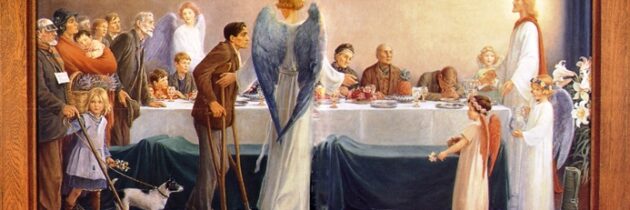
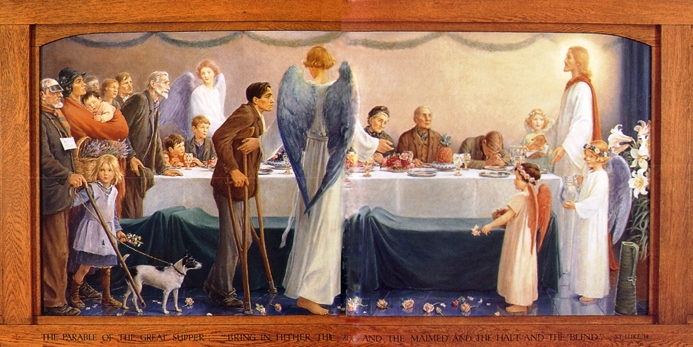
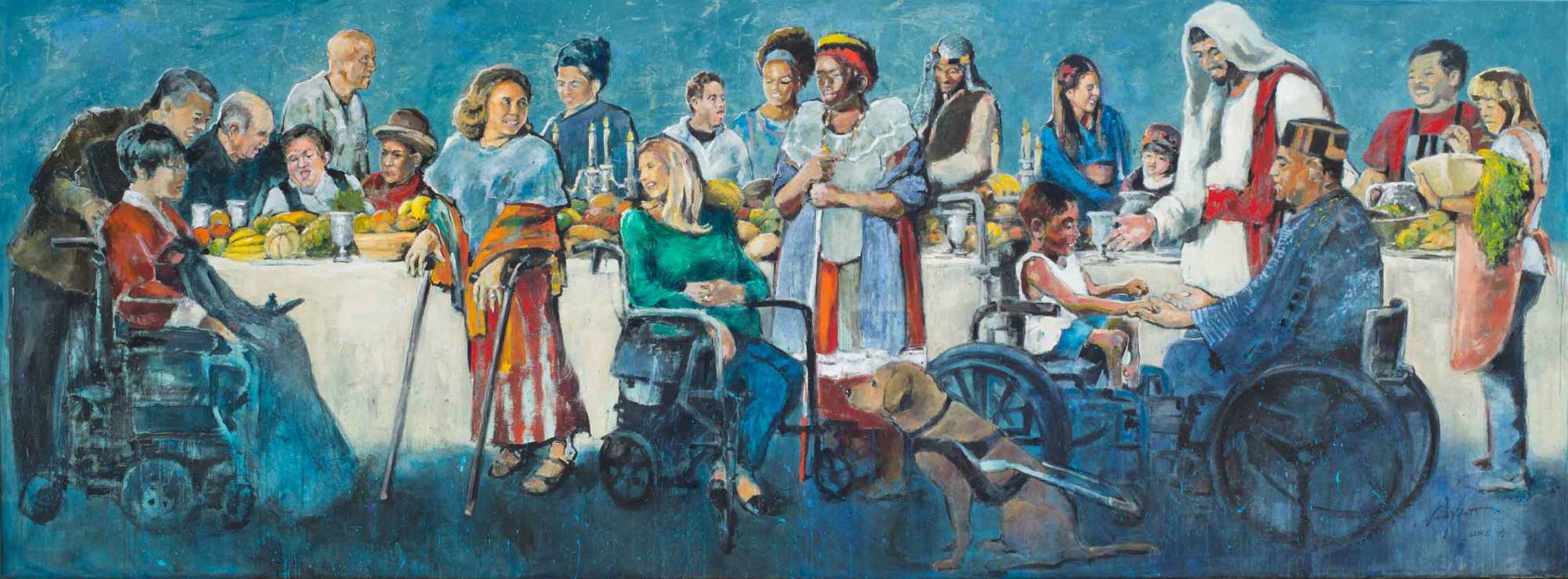
But Jesus went a step farther. Typically, when we plan a gathering or a meeting, we make a list of guests based on priority of importance in our lives. We want to be sure the folks who can help our careers are invited, those whose respect we crave. We invite those whom we hope will return a favor sometime, or those we want to influence. However, Jesus says we are not to worry about inviting only those who might invite us in turn or bring some benefit to us. Instead, we are to “invite the poor, the crippled, the lame, the blind…” When we invite God’s “Little ones,” we invite God himself to our table.  When we stand up for those with little or no power, we are standing up for God himself. And Jesus promises, “blessed indeed will you be because of their inability to repay you. For you will be repaid at the resurrection of the righteous.” (Lk 14:1, 7-14)

The resurrection of the righteous. Are we to expect blazing fire and gloom? How about trumpet blasts and storms? Voices so frightening we beg not to hear them ever again?

According to the author of Hebrews, this is not what we await or are to expect. Having approached the city of the living God, the heavenly Jerusalem, we may expect to see angels gathered in joy and those counted as firstborn of the Lord because of the way they live the law of love. God, the father and creator of all will be present, judging with love and understanding, as will Jesus who opened the new covenant to us all through the gift of his death and resurrection. (Heb 12:18-19, 22-24a)

The resurrection of the righteous will be seen in love and joy, as the family of God gathers from all lands – the everyday, ordinary people who live lives of humility and joyful service.

And we today? What are we to do?  How do we live lives of humility, justice and peace? How do we speak and act as witness to the presence of God in our lives? How will we speak to the powerful our words of witness to the requirement of love of neighbor as ourselves? How will our humble care for newcomers, asylum seekers, those who have lived among us for decades as immigrants help protect the human rights of all. How will we reach our representatives and convey our support for those who have no power? How do we share the experience of love and the insights of the powerless who speak to us through their pain and fear as their rights are denied and their very lives are endangered?

We are called to conduct our affairs with humility this week. The kingdom comes into the world one day at a time, one action at a time.

Together let us join as witnesses of the coming of the Lord into our world. Let us speak on behalf of those facing hatred or danger. Let us share what we have with those who have little. Let us contact our representatives with our concerns about the changes occurring nationally that endanger the health and safety of our neighbors, whether in the field of immigration, healthcare, communications, food security, access to education, or so many other topics.

Let us go out into our week filled with courage, strength, and the humility to know we can’t do everything alone, but together, we can help usher in the Kingdom of peace and justice, the Kingdom of God.

Readings for the Twenty-second Sunday in Ordinary Time – Cycle C


Read More

Posted by on Aug 24, 2025

Coming From the Ends of the Earth

Coming From the Ends of the Earth

Again and again through the history of the world, groups of people have had to leave their homes and travel to other regions in search of a safe place, with resources available for them to use, so they can live and raise their families. We still see in our world today many of the different ways that people have found to gain the resources for their survival and even the thriving of their cultures.

Some peoples have been what anthropologists call hunter/gatherers. These folks may live in a specific region, but their livelihoods depend on having enough animals to hunt or fish and plants that can be harvested and preserved for use throughout most of the year.

Other folks follow their herds of animals from one grazing area to another. Many types of animals make up these herds – sheep, goats, cattle, llamas, alpacas, reindeer, etc. Horses, donkeys, dogs, and camels are among the other kinds of animals used to travel with and manage the herds or serve as pack animals. These animals also offer an advantage when times get hard and the community must move into the lands of other peoples, whether as traders or as invaders.

We’re more familiar with peoples who have both cities and rural lands, with a form of government that places some persons in charge or provides for the people to select representatives to manage the access to resources for living as communities.

The Hebrew people, originally herders but later a settled people with cities and rural areas, found themselves on more than one occasion either as the invaders conquering a new land for themselves or being conquered and displaced from the land. After the conquest by the armies of Babylon and its allies, they spent many years outside their former land. Eventually, however, the armies of Persia conquered Babylon and the people of Israel were allowed to return to Judea. Isaiah the prophet describes their return and the promises of the Lord as they rebuild the city of Jerusalem, the temple, and their way of life.

Near the end of the book of Isaiah, the Lord promises: “I come to gather nations of every language; they shall come and see my glory. … They shall proclaim my glory among the nations. They shall bring all your brothers and sisters from all the nations as an offering to the Lord.” (Is 66:18-21)

The words originally were understood to refer to Jewish/Hebrew exiles who lived throughout the Middle East and North Africa and also to good people from the nations among whom they lived. They would return to offer sacrifice in Jerusalem. The Lord notes that although not all are of the tribe of Levi, some of these who come will also be chosen to serve as priests and teachers. It is not necessary to be of the correct ancestry to serve the Lord.

Jesus also stressed the importance of following the way of the Lord in his teaching. “Strive to enter through the narrow gate, for many, I tell you, will attempt to enter but will not be strong enough.”

Not strong enough?  Yes – not living in the way shown by “Abraham, Isaac, and Jacob and all the prophets in the kingdom of God.” Yet others, he tells us, “from the north and the south will recline at table in the kingdom of God.” Not the powerful or comfortable as would be expected in most societies. “Some are last who will be first, and some are first who will be last.”

Jesus makes clear that our choices matter. The narrow gate does not necessarily refer only to a physical gate into the city of Jerusalem. It is also a way of living: choosing to live according to the Law of love, the Law given by the Lord to guide his people in his ways. Anyone who lives in this way, will be welcomed to the kingdom of God. (Lk 13:22-30)

As might be expected, this kind of life is not easy. There will be successes and failures. When we fail to live by the law of love, to enter through the narrow gate, consequences will not be pleasant. It might seem the easy way at first, but in the long run, things can turn out very differently than first expected. What seemed a great way to live may prove to be a great way to fail to love.

The author of the letter to the Hebrews speaks of the consequences as “discipline” in the sense of the punishment a parent might impose on a wayward child to teach the child the proper way to act. The easy way, the way we are most likely to find attractive, is so often not the narrow way, the way of sacrifice that puts the well-being of others at the forefront of our considerations.

Our author reminds all that such training “brings the peaceful fruit of righteousness to those who are trained by it.” He encourages all: “… strengthen your drooping hands and your weak knees. Make straight paths for your feet, that what is lame may not be disjointed but healed.” In the long run, doing the right thing will bring its own rewards – the rewards of on-going life in the kingdom of the Lord. (Heb 12:5-7, 11-13)

Fine and good. But what does it mean for us today? Most of us live in settled communities. We have our national origin stories and mythic histories of how things came to be. We speak of rugged individuals who settled the lands known as the United States of America. We  ignore the fact too often that these lands were settled long before Europeans, many of them refugees, came here seeking a new start, a way to build a community that is rather like those they left, but with the freedom to worship or govern themselves in a different way. We also ignore the contributions of people from all over the world who came to work and build the communities and institutions we take for granted now.

How do we ourselves fit into the kingdom of God? Would our communities be recognized as followers of the Way of Jesus by the early Church? What is it about us that sets us apart from the larger society? What does it mean today to go through the narrow gate? Who are those coming from the north and south, the east and west, to eat at the table of the Lord? Will we be invited to join them for dinner?

These are important questions to ask ourselves. In what ways do we help and support those with fewer resources who struggle to support themselves and their families? How do we welcome and help those who have had to flee their lands to save their lives and those of their families? How do we help children who struggle in school or who are hungry or un-housed? Do we quietly accept policies that take away help from those in need? Do we act as if all would be well if only everyone did X, Y,or Z?

When I was growing up, we lived in a working-class neighborhood. My parents grew up during the Depression and World War II. They had been to college and we had many skills that our neighbors didn’t have, including our practice of making soap and noodles – not on the same day or using the same equipment, of course! But we felt, or at least I felt, rather smug that we knew how to support ourselves better than some of our neighbors did, because our great-great-grandparents had been pioneers and passed on the skills they used in the late 1800s through the generations to us.

It was only later, as an adult, that I discovered to my shock that due to the cost of flour and eggs, it could be less expensive, more affordable, simply to buy a package of noodles to feed a family for a day than to buy the ingredients in packaging quantities that would be far more than needed for that day. If money is not an issue, it’s fine to buy enough to last for a month. But if money, or lack thereof, is an issue, then our middle-class solution would not work! Flour isn’t usually sold in one or two cup packages and it’s hard to buy just one or two eggs at the grocery store! It’s easier and more affordable simply to buy a bag of noodles.

What then do we do? How do we find the narrow gate?

Maybe we find the narrow gate by opening our eyes to those who have come and are coming from the ends of the earth. What can we learn from those who leave all behind and travel to a new land, with a new language, and new ways? How can we be a welcoming people rather than a people or even just a person who is afraid that sharing what we have will mean we don’t have enough for ourselves?

“Limited Good” or “Enough for All?”

We easily fall back on a notion common around the world that anthropologist George Foster called “limited good.” Limited good is the notion that there is only just so much of what is needed for a good life available in the world. To the extent that my family and I get a larger share of that good, you and your family will get less.

The challenge and limitation of this perspective is that it can be a source of conflict, unless a social method has been developed for sharing the wealth. In many societies, those who have much are expected to share what they have in ritual ways, including giving most of it away in specific ceremonial gatherings. Those who give away the most get the highest honor!

Suppose we could shift the idea a bit and instead of thinking about Good as a limited property or thing, we could conceive of it as being unlimited if we just work together to help each other along the way? In this scenario, I help you when I have something you need and you help me when the tables are turned.

Rather than cutting taxes for the wealthy and taking benefits away from the poor, all could benefit from providing the basic support to allow people to grow up and contribute to the good of all by using the talents they bring to the table. An approach such as this has proven to improve the well-being of most of the people of the country when actually put into practice in each community. To the extent it hasn’t worked, it’s often because the funds have not been redistributed effectively or justly to help those most in need of them.

The problem with this approach, of course, is that it’s hard to remember that having more is not necessarily the goal of life. Social respect and praise go to those who amass fortunes and live large. Having resources and sharing them freely is not valued and often not respected. It is the narrow way, the way of love, the way of the Kingdom of God.

As we go through this coming week, may we be aware of the times we have forgotten to seek and follow the narrow way. May we work to share what we have been given and work to help those with less opportunity to get the resources they need to thrive. May we help newcomers and the vulnerable among us. And most importantly, may we remember that the Lord is present in the young, the old, the poor, the un-housed, the sick, those in prison, and those who are refugees. If we want to meet him, look around. He’s right here among us.

Readings for the Twenty-first Sunday in Ordinary Time – Cycle C


Read More

Posted by on Aug 17, 2025

Division

Division

My initial response to today’s Gospel reading is to resist it.  I find it very difficult to think of Jesus as a divisive person.  It is much easier for me to regard him as a healer of human relationships.  I have seen too many fragmented families and felt their pain.  When fathers and sons cannot even be civil to one another, it is very sad.  And when mothers and daughters stop speaking to each other, it is heartbreaking.  How can we believe that Jesus is the source of such division?

In most cases, it is clear that he is not.  Something else is ripping the family apart.  My sense is that, if given the chance, Jesus would heal the alienation in such a home.  And I am sure that he is not pleased with the division of the people involved.  A little three-year-old girl, who could not yet pronounce her “r” sounds, said to a friend, “My mommy and daddy ah sepawated.”  Do you think our Lord caused that?  Do you think he is pleased with that?  Not a chance in the world.  I have no doubt that he weeps with that child.

Still the words of today’s Reading cannot be denied.  Jesus clearly said: “Do you think I have come to establish peace on earth?  I assure you the contrary is true.  I have come for division.” (Lk 12:49-53)

What then, is the meaning of these strange words about division?

It is obvious that Jesus did not get along with everybody.  He did not walk around with a smile plastered on his face, spreading the good will everywhere.  Otherwise, how did he manage to get himself crucified?  Why did he tell his disciples that the world would hate them, just as it had hated him?

He was often in conflict.  And almost always, the dividing line was the sacredness of human person.  The people of his own home town wanted to kill him.  What was the source of that conflict?  It was his insistence that God cared for Gentiles just as he did for Jews.  He often clashed with the Pharisees about healing on the Sabbath.  The issue that drove them apart was his conviction that helping people was more important than keeping the law.  He came to the rescue of a woman who had been caught in adultery.  The guardians of public morality were ready to stone her to death.  Again, the issue was keeping the law or helping people.  And he always came down on the side of helping people.

Jesus resisted abuse of others with all the intensity of his soul.  He even died for it.  Robert Louis Stevenson put it like this: “It is our cheek that we are to turn.  But when another’s face is struck, perhaps a bit of the lion would become us best.”

You and I have no right to stand by and watch the strong trample on the weak.  We are to take a stand, even if the abuser is a member of our own family.  People have done that.  And it has driven a wedge between them and the ones they love.  A young man was making a determined effort to live out his Christian faith.  His father was a member of the Ku Klux Klan.  The son confronted him and said: “What you are doing is wrong.  And I must resist it.”  His father ordered him out of the house and never spoke to him again.

Something like that is what Jesus had in mind, when he said, “I have come for division.”  The sacredness of the human person is the only issue I can conceive of where it is wrong to compromise.

In closing, it is easy to talk of “Jesus meek and mild,” and to portray the infant in the crib as lovable, and the Crucified One as forgiving.  It is easy to criticize and oppose evildoers on the other side of the world, people like Hitler and Saddam Hussein.  It is by no means so easy to take a stand on moral issues right at home which divide our society.  But we cannot avoid the cutting edge of the gospel or the commitment that goes along with our baptism.  We cannot accept, nor should we live by, a cushioned Christianity, a velvet cross, a vertical expression of faith concerned only with “God and myself.”  Nor can we exclude those neighbors we don’t like.  Christian life and witness is difficult.  In fact, it would be impossible without the example of Jesus, and the grace of God.

Lord, give us the courage to follow you – even though it causes us to struggle – even though it causes us to be persecuted – even though, sometimes, it sets us in opposition to our families and friends and society – let us never forget that there is actually one thing worse than evil itself, and that is indifference to evil.  Amen.

Fr. Ron Shirley
August 17, 2025

Readings for the Twentieth Sunday in Ordinary Time – Cycle C


Read More

Posted by on Jul 6, 2025

Two by Two and Away We Go

Two by Two and Away We Go

There’s an old song that includes a phrase I couldn’t find on the internet, but which I remember clearly. The phrase is from a little ditty and it goes, “Hey Dearie Dee and away we go, heigh ho, heigh ho, heigh ho.” It’s similar to songs from “Pinocchio” and “Snow White,” but the song I learned as a child had a different tune to go with these words.

This little song came to mind as I was thinking about the Gospel reading. Jesus sent seventy-two of his disciples out, two by two, to tell of the coming of the Kingdom, as well as to heal the sick. The disciples went out without any provisions, trusting in the goodwill of the people of the communities they would visit for meals and places to sleep. They came back amazed at the fact that they were able to heal the sick and even to “cast out demons.” Jesus was not surprised at this, encouraging them to continue to trust they would be protected from dangerous creatures such as scorpions and snakes.

Interestingly, the phrase regarding snakes in the Gospel is in quotation marks – the power to “tread upon serpents.” In the Book of Genesis, it’s the serpent in the Garden who tricks Eve into disobeying God by eating the fruit of the Tree of the Knowledge of Good and Evil. In this, Jesus is saying that spirits which oppose the Kingdom can be defeated as well. However, and more importantly, he reminds them and us, “do not rejoice because the spirits are subject to you, but rejoice because your names are written in heaven.” (Lk 10:1-12, 17-20) 

In some ways, the buddy system we see in youth organizations such as Scouting is similar – designed to protect participants, aid in learning new skills, and offer built-in companionship for activities. When things are going well, a buddy shares the joy. When things are hard, a buddy is there to share the difficulties and offer encouragement to keep going. Buddies also help each other figure out why things aren’t going as expected and what alternatives might work better.

Jesus and the early Christians used the buddy system too. Jesus traveled with a group of disciples. Paul and the other apostles traveled with companions on their journeys. The people they met formed communities, sharing what they had and working out differences of opinion. Early Christians tussled over the importance or need for circumcision. They tried to understand the meaning of the crucifixion. They suffered violent opposition from the authorities or influential people in the cities and towns they visited.

Yet through it all, they worked together to understand and share a completely new insight. Through the cross of Jesus and through baptism into this mystery, something new emerges. People become more than they were before the experience. They are a new creation, a new people, not divided by historical family ties into Jews and Gentiles, but one that is the new people of God.

Paul speaks of bearing the marks of Jesus on his body. Many times he suffered physically for his testimony to unwilling audiences, including at least one occasion when he was stoned and left for dead. Yet each time he continued forward, shaking the dust of the unwelcoming community from his feet and traveling on to the next town. (Gal 6:14-18)

Through the witness of the first Christians, a new community was born. This new community was a direct descendant of those who returned from exile in Babylon and rebuilt the city of Jerusalem and the temple of God on the holy mountain where it had been historically. The city is still in the same place today and the holy mountain continues to be a holy place for Jews, Christians, and Muslims.

Isaiah presents the Lord speaking of Jerusalem as a mother who nurses her child, calling on all to rejoice at her restoration. “Be glad because of her, all you who love her; exult, exult with her, all you who were mourning over her! … As nurslings, you shall be carried in her arms, and fondled in her lap … in Jerusalem you shall find your comfort.” Jerusalem will prosper again, says the Lord, and the people will rejoice and flourish as the power of the LORD becomes clear to those who serve him. (Is 66:10-14c)

Once again, we are not hearing about a solitary person. An entire people are included in this call to rejoice. The city was rebuilt and, like many cities through the course of history, it was conquered multiple times afterwards. Foreign rulers came and went. The city was destroyed more than once. But it’s always been rebuilt. And those who rebuild it rejoice in its rebirth.

Through the life and ministry of Jesus and the apostles, as well as all their successors through the ages, we too rejoice in the Lord’s presence and working in the world.

We too are called to go out into our own worlds of home, families, friends, work, community, and the wider world to share the Good News of God’s love and the coming of the Kingdom of God. Two by two symbolically, we encourage each other. Sometimes the interaction will be more solitary, but always we know we are part of a larger community and we share our experiences with each other. The message is not always welcome. It can be difficult to explain why we behave as we do, why we refrain from certain activities because they would harm or demean others, why we share what we have even if we don’t have as much as others might have. But with the support of our families and communities, we move forward in faith.

As we move through this next week, with all the potential changes and uncertainty it will bring, may we remember that we are not alone. We are a community, a group of people who have met the Lord as we reach out in service to those most vulnerable among us. We have met the Lord in our worship, in our sacraments, in our own quiet prayer times. We have met the Lord in the beauty of creation, the wonder of a sunrise or sunset, the roar of the sea, the power of a wind or thunderstorm. We have met the Lord in the help we ourselves have received in the hard times – brought for us by our buddies in the journey.

May our eyes and ears be open to see and hear – “Two by two and away we go, heigh ho, heigh ho, heigh ho!”

Readings for the Fourteenth Sunday in Ordinary Time – Cycle C


Read More

Posted by on Apr 13, 2025

My God, Why Have You Abandoned Me?

My God, Why Have You Abandoned Me?

A haunting Psalm from thousands of years ago is running through my head as we enter into Holy Week, 2025.

Psalm 22 begins with a cry of anguish: “My God, my God, why have you abandoned me, far from my prayer, from the words of my cry?” Jesus prayed this psalm as he was dying on the cross. It sounds like a cry of despair, a hopeless acknowledgement of a dream demolished and a promise betrayed by an impotent or uncaring divinity. But was it really so?

The one who first sang this prayer spoke of being mocked and abused. “All who see me scoff at me.. He relied on the Lord; let him deliver him… They have pierced my hands and my feet … they divide my garments among them…”

Yet the prayer continues: “O Lord, be not far from me; O my help, hasten to aid me.” The one who is suffering does not lose hope. “I will proclaim your name to my brethren; in the midst of the assembly I will praise you: ‘You who fear the Lord, praise him; all you descendants of Jocob, give glory…’” (Ps 22:8-9, 17-18, 19-20, 23-24).

Jesus prayed this psalm as he was dying on the cross – abandoned by many of his friends, mocked, stripped of his clothing, tortured, humiliated. We remember and mourn. Yet, knowing the “end of the story,” the Resurrection, we sometimes forget that as a human being, a carpenter from Nazareth, he didn’t know it would all end in triumph for him. He was dying. It was the end for him. His life as a regular guy, even as a teacher and prophet and miracle-worker, was ending. Still, he prayed a psalm of hope.

The other readings for Palm Sunday of the Lord’s Passion tell of his triumphal entry into Jerusalem a few days earlier, hailed as a prophet, the king coming in the name of the Lord, bringing peace in heaven and glory on high. In just a few short days, it all ended in pain and death – his friends and followers scattered and mourning. (Lk 19:28-40)

We hear St. Luke tell of the Last Supper and institution of the Eucharist. We hear of the time of prayer in the garden on the Mount of Olives, the arrest of Jesus, his trial, and his crucifixion and death. We even hear of the gift of a tomb from Joseph of Arimathea, a member of the council that had condemned him. (Lk 22:14—23:56)

We are reminded of the prophecy of Isaiah about the one who would come in the Lord’s name and endure opposition, beatings, the mocking words and actions of opponents, but who would continue in faithful proclamation of the Lord’s words to rouse the weary and give hope to the oppressed. (Is 50:4-7)

We hear the ancient hymn quoted by St. Paul in his letter to the Philippians, reminding all that Christ Jesus emptied himself to become totally one of us, following the will of the Father. Through this obedience, God exalted him and gave him “the name which is above every name, that at the name of Jesus every knee should bend … and every tongue confess that Jesus Christ is Lord…” (Phil 2:6-11)

Still, I continue to hear the haunting refrain. “My God, my God, why have you abandoned me?”

I see the images in my mind of the men who were swept up recently by the immigration service and shipped, against the orders of the court, to a prison in El Salvador. There they are being treated as less than human, worse than we allow animals to be treated here. If they are crying, “My God, my God, why have you abandoned me?” it is with reason. Why have they been abandoned. Why are they being treated this way? Why have they not been returned to this country – to be allowed their right to legal counsel and judgement? Why are those with permission to be in the United States not returned already? They are all human beings, regardless of their legal status. Made in the image and likeness of God. Jesus is there with them in their suffering, because that’s where he goes, whenever people are suffering. He is suffering with them.

I hear the cries of those losing visas and being deported because they spoke out about wars being waged in other countries; wars that are disproportionate to the initial actions that triggered them.

I know the fears of people whose access to basic human services, including health care, food, shelter, and education are being threatened or denied because of indiscriminate cuts in funding.

“My God, my God, why have you abandoned me?”

And what to do?

Writing letters, calling representatives, speaking among ourselves and sharing information are all important responses. Remember, we are the People of God, the ones called to reach out and help those who are in need or being harmed by the unjust actions of others.

It can seem overwhelming. What can one person do? How can I change national policy?

But there are things one person can do, and many of them involve finding and working with others who are trying to help.

  • Check your local faith community. What is being done to help migrants, refugees, and asylum seekers? What are organizations such as Catholic Charities doing? How can you help/join these groups in their mission? Do they have the “red cards” that contain information about the rights of everyone present in this country – in both English and Spanish? If so, get some and share them where you go. Are there non-institutional groups of folks who are helping “new neighbors?” Find or start one, then offer concrete help.
  • Remember, always keep the identities of those with whom you are working protected. Many who have followed all the rules for seeking asylum are finding that’s not enough. You don’t want to be the one whose actions call attention to them and cause them to be harmed.
  • Raise money to pay lawyers. Getting asylum and work permits involves filling out legal documents and getting favorable judgements in immigration court. Those who come fleeing persecution, wars, or gangs that are threatening their lives don’t always have a lot of education or money with which to hire lawyers. Many don’t speak English.
  • Share food. If you have garden space, grow vegetables and share them with those who don’t know where their next meal will come from. If there are local groups who collect and share food, get involved and help out. Most of them will even help you harvest fruit from trees in your yard that otherwise would go to waste.
  • Be a friend to those you meet. Offer a smile, a friendly face, a hand when needed. Help them find places to live, school for their children, clothing, and healthcare.

Voices of the suffering are still calling to us this Holy Week. The Lord is calling us to respond to their cries, “My God, my God, why have you abandoned me?” The Lord responds, “I haven’t abandoned you. I am reaching out to you through my sister (insert your name here) and my brother (your turn here, Guys!)”

May we be faithful friends of Jesus this week and through the weeks to come. Walking with our sisters and brothers, through these difficult days. Helping in the way best suited to the gifts we have.

Let us pray for those in need, those in danger, and those who feel content and secure in their opinions of the righteousness of the detentions. May we come to see, respect, and share in the Lord’s work of serving and comforting all in need.

Holy Week blessings be with you.

Readings for Palm Sunday of the Lord’s Passion – Cycle C


Read More

Posted by on Mar 23, 2025

May I Ask Who’s Calling?

May I Ask Who’s Calling?

Long ago, in the olden days when I was a girl, and the dinosaurs were really, really big, if the telephone would ring, there was no way to know who was calling. Call-waiting didn’t exist. No caller ID was available. Only one telephone per household was the general rule. Some households didn’t have phones at all.

In those days, if a caller asked to speak with a particular person in the household or business, the correct and expected response was, “May I ask who’s calling?” or “Who may I say is calling?” The caller would normally respond with a name and the person who answered would respond, “I will tell him/her (them).”

I thought of this when reflecting on the reading from the book of Exodus. As you will recall, Moses had grown up in Egypt, under the protection of one of Pharaoh’s family, though he was an Israelite boy who should have been killed shortly after his birth. As a young man, he had killed a man who was abusing an Israelite slave and had to flee the country. He ended up in the land of Midian, married to the daughter of a priest of the land, and became a simple shepherd.

One day, as he was tending the sheep, he saw an amazing sight. A bush was burning. Bushes burn in dry lands, usually pretty quickly, with potentially disastrous results. This bush, however, was not a danger to the surrounding landscape. The bush was not burning up. It was not being consumed by the flames. It was just sitting there burning.

Moses went closer and a voice came from the bush, calling his name, “Moses! Moses!” Moses responded, “Here I am.” As he prepared to come closer to the bush, the voice told him to wait, to remove his sandals first. This ground was holy, because the God of the fathers of Moses’ people was present there. “The God of Abraham, the God of Isaac, the God of Jacob.”

Moses hid his face, knowing that to see God would be dangerous. But the Lord told him why he had come. “I have witnessed the affliction of my people in Egypt and have heard their cry of complaint… Therefore, I have come down to rescue them…”

Wait! What? Rescue the Hebrew people from Egypt? OK. How? On whose orders?

So, Moses wondered, “when I go to the Israelites and say to them, ‘The God of your fathers has sent me to you,” what do I tell them your name is? (Name in this context refers to power and authority as well as what a person is called.) This is a pretty bold thing to say to God, but the bush was burning and a voice coming from it, so it’s all pretty unusual anyway. “God replied, “I am who am.” But you can simply tell them, “I AM sent me to you.” (Ex 3:1-8a, 13-15)

“Who may I say is calling?”

“I Am … The Lord, the God of your fathers.” He “has sent me to you.”

We remember the story yet today and tell it each year. Our Jewish sisters and brothers also remember it and celebrate the Exodus and all that led to it at Passover. Muslims too revere Moses and remember his encounter with the Lord and all that resulted.

As the Hebrew people went out into the desert on their way to the Promised Land, many surprises awaited them. It was a hard time, with shortage of food and water at times and a longing to return to stability and order, even if that meant hard, forced labor in Egypt. They grumbled. They complained. They despaired and created a Golden Calf to worship. They doubted God’s promises. It took forty years in the desert before their children and grandchildren were allowed to enter the land from which their ancestors had come during the time of the great famine in the days of Jacob and Joseph. The Lord was with them, but earlier, they were not ready as a people to enter the new land and way of living.

St. Paul, in his first letter to the people of Corinth, spoke of those years in the desert. Although all had traveled with the cloud to guide them, crossed through the sea together, eaten the same food from heaven, and received water to drink from the stone, they still grumbled and disobeyed. Their journey and its delays and the consequences of their disbelief and disobedience are an example to us of how NOT to behave. We have seen the coming of the savior. The end times are upon us. The kingdom is here and coming ever more fully into being. Like the Hebrews, when we hear the Lord calling, we must answer. Who’s calling? The Lord, the God of Abraham, the God of Isaac, the God of Jacob. We are children of Abraham too. We are also to listen to his call and respond. (1 Cor 10:1-6, 10-12)

Sometimes we think that Israel, including the northern area known as Galilee, was a peaceful place in the time of Jesus. After all, the Romans had conquered the area. There were no more wars with neighboring countries. Sure, there were soldiers everywhere who could make unreasonable demands and act like bullies, but there was no war going on…

In reality, rebellions occurred. A group of people in Galilee had rebelled and been killed by Pilate, the Roman official who governed the area. When people told Jesus about this, he responded that it is important to realize that suffering such as that experienced by those killed on Pilate’s orders was not because they were great sinners. Everyone sins. The critical thing is to repent, to recognize that we as humans are not perfect. We all mess up. We all make wrong choices. We all sin.

Jesus told a story about a fig tree. This tree had grown in an orchard and been expected to bear fruit when it reached maturity. But the tree produced no fruit. The owner of the orchard noticed that the tree was old enough, but there were no figs. After three years of fruitless harvest times, the owner told the gardener to cut it down, presumably so another tree could be planted and grow in its place to produce fruit.

But the gardener cared about the tree and begged for a second chance for it. “Sir, leave it for this year also, and I shall cultivate the ground around it and fertilize it; it may bear fruit in the future.” However, this would not go on forever. If the tree remained barren in the coming year, “you can cut it down.” Lk 13:1-9)

In the Gospel of Luke, the story ends there. We don’t hear what happened to the tree. Jesus didn’t tell us, but rather, left us to ponder what that might mean for us, especially in light of his reminders that bad things happen to everyone, whether as consequences of their actions or not. The important thing is to try each time we fail to change our behavior and do better the next time around.

“Who may I say is calling?”

Is ours a strong, demanding, vengeful god who delights in punishing sinners? The Psalmist provides the answer in Psalm 103. “Merciful and gracious is the Lord, slow to anger and abounding in kindness.” “He pardons all your iniquities, heals all your ills.” “The Lord secures justice and the rights of all the oppressed.” (Ps 103: 1-2, 3-4, 6-7, 8, 11)

Who is calling you today? Who is calling me?

This same God, the merciful, the kind, the protector of the “little ones” who need extra care, the one who sends help in time of trial, this God is the one who came to Moses in the burning bush. This God is the one who heard the cries of the poor and sent a messenger to rescue them. This God is the one who gives the fig tree and the sinner another chance. This God is the one who expects those who have blessings of security, power, education, health, and the respect of the peoples of the world to behave with kindness and compassion, sharing the gifts we have received. This God does not condemn those whose ways of living, whose customs, whose sense of themselves are different from those of the dominant culture or the culture of ancient peoples who first met him.

As a people, we must today ask ourselves, if the Lord calls and asks for you or for me, will we respond quickly and faithfully. Will we speak out against abuses of the poor, the immigrant, those whose lands have been invaded by neighbors who wish to control them? Will we work for justice? Will we remember those who work hard but still cannot afford health care or education without help from the larger community? Will we demand that those who wield power in our governments follow the laws that have governed us for two hundred fifty years?

God does not come from the heavens with avenging angels on thunderous clouds. But when peoples and individuals do not remember the source of the gifts received, the freedoms offered, and the importance of sharing them freely, the consequences will fall heavily on all.

I pray that as we enter the third week of Lent, we listen deeply and carefully to the warnings of our ancestors. When the answer to the question, “Who may I say is calling?” is, “The Lord our God,” may we be open to receive his presence and become channels of his love to everyone we meet and with whom we share this beautiful world.

Readings for the Third Sunday of Lent – Cycle C


Read More

Posted by on Feb 23, 2025

The Weight of a Snowflake

The Weight of a Snowflake

Each year a conference takes place in Southern California, for the Archdiocese of Los Angeles which is attended by people from all over the country and the world. Formally known as the Los Angeles Religious Education Congress, most folks simply call it LA Congress. This program first started in 1956 in Los Angeles, but quickly grew large enough that it was moved to Anaheim. This year was no exception. Blessedly, the organizers have taken advantage of today’s technology and live streaming has brought the arena sessions to those of us who can’t be there in person.

One of my favorite speakers each year is the Rev. Terry Hershey. Terry writes a regular column, “Sabbath Moment.” His great insight and mission is to share the importance of taking time for reflection and stillness in our busy lives. This year he shared a story near the end of his presentation that expressed a vision of hope for these very difficult times in which we live today.

It seems there was a small bird, a coalmouse or coal tit, that was talking with a dove. Somehow the subject of the weight of a snowflake came up. The dove said that snowflakes were so light that they really make no difference at all in the world. The coalmouse boldly told the dove that in fact the weight of a snowflake matters. One afternoon, the coalmouse had nothing better to do, so he sat on the branch of a tree and began to count the snowflakes that were falling. Finally, the total reached 3,741,952 snowflakes that had fallen on the branch where the coalmouse was sitting. And then, one more snowflake fell on the branch – number 3,741,953. When that snowflake landed on the branch, the branch broke. That last snowflake was too much for the branch. It was too heavy.

There are times when everything going on in the world around seems too much to bear. Everything seems to be crashing. People are losing their livelihoods. Institutions are being broken down. No one knows when it will end. Where will it all end? Has anything like this ever happened before?

In point of fact, turmoil, upheaval, pain, suffering, fear, dismay – so much can and has happened so quickly and more than once in the history of the world. Like one snowflake on the branch of a tree, all can come crashing down.

Long, long ago, when Saul was king of Israel and Samuel was the Lord’s prophet, Saul ceased to follow the will of the Lord. He began to look out for himself and his cronies first, rather than caring for the people he had been selected to lead and care for. David had been anointed by Samuel to be the next king of Israel. Saul was not happy about this and took an army of 3,000 men out to find and kill David.

One night, while Saul and his men were sleeping, David and a few of his men entered the camp. They found Saul and some of his men in a tent. David’s friend offered to use Saul’s spear to kill the sleeping king, but David refused the offer. “Do not harm him, for who can lay hands on the Lord’s anointed and remain unpunished?”  David and his men left the camp, taking Saul’s spear and water jug with them. From a far hill, David called out to Saul and his army, “Here is the king’s spear. … Today the Lord delivered you into my grasp, I would not harm the Lord’s anointed.” (1 Sam 26:2, 7-9, 12-13, 22-23)

Eventually David became king, but it took many years before peace returned to the land.

Jesus lived in a time when his nation had been conquered and people were very aware of who their enemies were. In his teaching, he clearly stated a series of rules for living that were contrary to what humans typically do. “Love your enemies, do good to those who hate you, bless those who curse you, pray for those who mistreat you. … Do to others as you would have them do to you. … Love your enemies and do good to them.”

These words of Jesus are not what we hear every day. But they are the fundamental ground rules for our lives as followers of Jesus. He promises, “Forgive and you will be forgiven. … the measure with which you measure will in return be measured out to you.” (Lk 6:27-38)

These words speak deeply to anyone who will hear. They offer hope for a future in which we together offer love and help to those who are in need, to those who seek a safe place to live, to those whose bodies don’t reflect their sense of who they are in the depths of their being, to those who simply need a place to call home and a family to love them.

St. Paul spoke of the first Adam and the last Adam. The first “became a living being, the last Adam a life-giving spirit.” Jesus is the last Adam in this teaching. He brought the earthly and heavenly realms together, so that “as we have borne the image of the earthly one, we shall also bear the image of the heavenly one.” (1 Cor 15:45-49)

Terry told another story right after the story of the coalmouse. This story was of a boy on an ocean beach. A bunch of sea stars (aka, starfish) had been washed up onto the beach. The boy was picking them up, one at a time, and tossing them back into the water, so they wouldn’t die on the beach. An old man asked the boy what he was doing and explained to the boy that there were lots of starfish in the ocean. It wouldn’t make a huge difference overall if these on the beach didn’t make it back into the water. The boy picked up another sea star and tossed it into the water, saying, “It made a difference for that one.”

Today we are called to live in hope in the face of upheaval and injustice. We are to act with love and respect both for those whom we seek to help and those who are responsible for causing great harm to others. The weight of one snowflake can cause a branch to break. One action can lead to healing the heart of another person. One action can stop a chain of harm from continuing. One starfish thrown back into the ocean makes a difference.  One snowflake of mercy and compassion, when joined with others, can lead to healing of a nation and a world.

What starfish will we be called to help this week? When will the snowflake of our refusal to go along with orders to harm others begin to bear fruit in changing those orders? How will our light shine into the darkness and give hope?

We live in hope.

Readings for the Seventh Sunday in Ordinary Time – Cycle C


Read More

Posted by on Jan 26, 2025

Fulfilled in Your Hearing

Fulfilled in Your Hearing

The gift of hearing is one most of us don’t truly appreciate. We are born able to hear and part of our growing and maturing is to begin to make sense of the sounds we hear. We copy the sounds of our world without really understanding their meaning. Often the tones and rhythms are repeated accurately long before the actual words are spoken and used in communication. Waiting in line in the grocery store, for example, one day a little child in a stroller looked up at me and in absolutely perfect rhythm and tones the asked, “ow ah oo.” I responded, “I’m fine, thank you. How are you?” The child beamed. His friendly question had been understood. His mother looked at me like I had two heads. She hadn’t realized he was speaking in tones. I recognized that he was asking a question only because my mother had once pointed out to me the way children first communicate with tones and sounds rather than words.

As we get older, hearing can begin to fail. We don’t hear what others say to us and wonder why their feelings get hurt when we continue to walk away rather than turn and respond to their words. We don’t notice the lack of sound and get used to the peace and quiet. When our families or friends point out that we are losing our hearing, it can be an upsetting thing to hear. “What do you mean, I can’t hear? I hear just fine!” But really, communication begins to fail. And eventually, if not treated, the nerve pathways for hearing get reprogrammed to do other things. There is convincing evidence that hearing loss can contribute to the development of dementia.

What does all of this have to do with the readings for the Third Sunday of Ordinary Time? Hearing, understanding and remembering are all activities that can be lost or forgotten. Sometimes, we need to be reminded to open our ears and minds and hear what is being communicated.

A People Reminded of their Calling

At the end of the exile of the Jewish people in Babylon, King Cyrus of Persia sent them back to Jerusalem, to the land from which they had been taken. He sent Nehemiah, one of his trusted officials, along to help them rebuild their city, the temple, and their community. Ezra was a priest who worked with Nehemiah in the enterprise.

During the time in exile, most of the people had lost their connection to the ancient covenant with God that was established at the time of the Exodus. The people at the time of the Exodus had traveled through the Sinai peninsula and surrounding lands for forty years before entering the land to the west of the Jordan River where they settled, the land that came to be known as Israel. As part of the renewal of their community, Ezra gathered together all those returning from Babylon to re-introduce the Law.

Standing on a platform higher than the gathered people, he opened the scroll of the Law and began to read at dawn to all the people, including the children old enough to understand. As he began, he offered a prayer of blessing, a kind of thanksgiving prayer, to the Lord. In response all the people raised their hands in a great acclamation – “Amen, Amen!” They bowed down, prostrate on the ground in honor of the scroll and the law they would hear.

Ezra read from the scroll, the book of the law of God, and explained what was meant by its words.  Many no longer understood their own ancient language, the language in which the scroll was written. As he read, the people began to cry, but Ezra, Nehemiah, and the Levites who were teaching the people all explained that the words were ones of encouragement and hope. It was a time to celebrate. “Go, eat rich foods and drink sweet drinks, and allot portions to those had nothing prepared; for today is holy to the Lord.” Furthermore, they proclaimed, “…rejoicing in the Lord must be your strength.” (Neh 8:2-4a, 5-6, 8-10)

Hearing for the first time the words of the covenant with the Lord was a time for rejoicing. A new beginning. A reminder of the ancient words calling them to a life of faith, of caring for each other, of welcoming strangers (foreigners) who would come to live among them, of justice and peace.

In addition to the Law, the people of Israel had the traditional teachings of the prophets who had guided the nation for centuries. Again and again, the prophets reminded the people and their leaders of the Lord’s demand that they care for widows and orphans, welcome peoples of other nations who came to live among them, not cheat others in business dealings, forgive debts, free captives who were being held unjustly, and share their belongings freely. The prophets also spoke of the One who would come and re-establish the relationship between God and the people, ruling the nation with justice.

Through the centuries, sometimes Israel was a free nation. Sometimes it was a conquered colony of another people. Their land was part of an extensive set of trade routes from China and India to Egypt and lands farther west. Whoever was the strongest warrior always felt a need to control their land. Through it all, the people held on to their faith in the Lord and trust that, one day, their God would send a person, a savior, to lead all to freedom.

A Prophecy Recognized and Received

St. Luke begins his narration of the life of Jesus with a formal note to a person named Theophilus – Lover of God. He assures Theophilus that the information he will be recording has been verified by many and he can be assured that what he will be reading is true. With this introduction, we skip over to the time after Jesus’ baptism when he has begun to preach and teach in Galilee.

One day, Jesus returned to his hometown, Nazareth. As was normal for him, he went to the synagogue on the Sabbath. There he was welcomed and invited to read from the Scriptures. This was not unusual, particularly since he was already developing a reputation for preaching and teaching. He opened the scroll to a passage from the prophet Isaiah. Isaiah was one of the major prophets and spoke in many different times of the one who was to come, the Messiah, the Anointed One, the Son of Man.

The passage Jesus selected was memorable, powerful, and not generally expected to refer to anyone who had grown up in their town. “The Spirit of the Lord is upon me, because he has anointed me to bring glad tidings to the poor … liberty to captives … recovery of sight to the blind … to let the oppressed go free … to proclaim a year acceptable to the Lord.”

It’s a marvelous passage, filled with hope and joy in the great promise of salvation. People would have heard it regularly. But not what followed. Jesus sat down after reading the passage and returning the scroll to the attendant. As all watched him, waiting to hear what he might say about the prophecy, he said quite simply and unexpectedly, “Today this Scripture passage is fulfilled in your hearing.” (Lk 1:1-4; 4:14-21)

Wait, what? What did he say? Is he saying he is the one who is to come? Who does he think he is?

We don’t actually hear these words in the section of the Gospel we read today, but that was the reaction of those who heard his words.

What do we hear today? Do we hear clearly what he is saying? Sight to the blind? Liberty to captives? Help for the poor? Freedom from oppression (whether from outside or inside the culture)? When does this happen? He said it is “fulfilled in your hearing.” That means it has already begun. It is a reality. It is for all of us, here and now too. We too have been anointed for this mission.

All of us? Those born here? Those who have come here from other places? Those who might not have legal documentation? Those who need special help? Those who are older or who have limited incomes? Those who have lost their jobs or can’t find work that pays enough for them to have a simple home? Help and healing and support for all people?

Who is Called to Respond?

Many times, people in communities begin to compare themselves to each other. Hierarchies of respect and privilege begin to appear. It was no different in the city of Corinth in the years after the resurrection. St. Paul took the news of Jesus’ coming and the coming of the kingdom to the people of Corinth. A community of people grew up, sharing in a life of faith together. But over time they began to argue about which of them had gifts that were more important to the community and therefore more worthy of respect and privilege. This development harmed the community and the witness of their lives to those who had not yet come to believe in Jesus and the Resurrection.

St. Paul famously explained the importance of each person in the community by comparing the gifts of the Holy Spirit and those who received each of them to the parts of the body. Some are more acceptable and presentable than others, but all are important. He reminds us all that we give greatest honor and protection to the parts of our bodies that we consider least presentable publicly. So therefore, we need to remember that all gifts are important and some that we think are among the least notable may actually be the most important. (1 Cor 12:12-30)

We all have important gifts from the Spirit to nurture and share. Some are called to speak. Some are called to help others heal. Some are good at administration. Others are great at coming up with bright ideas that need someone else to make them actually work. Each of us has gifts to share.

How do we hear these words? How do the words of Jesus continue to be fulfilled in our midst?

These questions are particularly important at this point in time in our land and our world. How do we love, respect, and support those with whom we live? How do we protect those who have come here from other lands in search of protection from gangs who have taken their land? How do we welcome those whose gender identity would lead to their murder in their own lands? How do we share the riches of our land with those around the world who don’t have the same resources or opportunities? How do we work for international peace? How do we help our own children to be able to learn by making sure they can have enough to eat each day and get healthcare when they need it?

We have come through many years of increasing anger and distrust that has damaged our ability to talk with each other and find solutions to the challenges we all face. How do we begin to break down those barriers when those in power prefer to keep us divided? If we don’t find a way, we will all pay a steep price.

How do we begin again to hear? What kind of hearing aids do we need? Can we begin to hear communication that is not in easily understood words? “Ow ah oo?”

“Today this Scripture passage is fulfilled in your hearing.”

May we open our ears and hearts to hear and respond.

Readings for the Third Sunday in Ordinary Time – Cycle C


Read More

Posted by on Dec 1, 2024

A Time for Hope and Preparation

A Time for Hope and Preparation

A new year begins again. This one doesn’t follow our typical calendar of 356 days. This one is set to begin on the fourth Sunday before Christmas. The season celebrated during this brief time is known as Advent – a word meaning “arrival.”

The First Sunday of Advent looks forward with hope to the coming of Christ. This year, we also enter into the final weeks of preparation for the Jubilee year which will begin with the opening of a special door of St. Peter’s Basilica, the Holy Door, in Rome on December 24. This door is sealed at all times outside of Jubilees.

The them of this Jubilee is “Pilgrims of Hope.” The readings for this day support the theme of hope on the way.

The Prophet Jeremiah lived in the times just before and during the Babylonian conquest of Jerusalem and the destruction of the Temple. He attributed the military defeat by the armies of Babylon to unfaithfulness to the Covenant, particularly on the part of the ruling royal family. He predicted the conquest and lived to see it happen. Yet he never stopped sharing the messages of hope he received from the Lord. He spoke the warnings and the frightening messages, but he also spoke the hopeful ones.

“The days are coming…” “I will fulfill the promise I made to the house of Israel and Judah…” “I will raise up for David a just shoot…”  “Judah shall be safe…” Jerusalem will be called “The Lord our justice.”

Terrible things may happen. Nations will be conquered. Peoples will be displaced. But the Lord is still present. The Lord will take care of the people of the Covenant. A new leader will come, raised up by the Lord and doing “what is right and just in the land.” It is a time for hope in the Lord’s word. (Jer 33:14-16)

As a child and man of the Covenant, Jesus was immersed in these traditions of national independence and prosperity, transitions in which the nation moved away from the Covenant’s guidance, and resulting ultimate conquest by another nation.  Each time the cycle played out, eventually the Lord was seen to intervene and bring the nation back to prosperity and safety.

As his life neared its end, Jesus spoke of what would happen at some time after his death. He was not naïve about the risks he was taking by being in Jerusalem and preaching the message he had come to deliver. He knew it would not likely end well for him. He spoke prophetically about what would happen at the end of time, when the Son of Man returned to Earth in triumph. The description of the “signs in the sun, the moon, and stars, and on earth” sound like things many of us have seen in our lifetimes, but the sense of the words is that they will happen on a much larger scale. “People will die of fright in anticipation of what is coming upon the world…”

Yet Jesus does not tell his followers to be afraid when fearsome things begin to happen. They/We must not allow ourselves to be pulled into fear or anxiety or indifference to what is happening in the world around us. Jesus says, “Stand erect and raise your heads because your redemption is at hand.” The changes coming will be challenging. There will be hard things that must be faced and addressed. But “Be vigilant at all times and pray that you have the strength to escape the tribulations… and to stand before the Son of Man.” (Lk 3:12-42)

As the followers of Jesus went out into the world to share the word of what they had seen and experienced, communities grew in many cities. St. Paul and others wrote to the people in these cities, encouraging them in their faith, continuing to teach them and deal with the problems that arise in human communities. He wrote to the Thessalonians to encourage them to strengthen their hearts in preparation for meeting God. He and other early Christians expected Jesus’ return to be very soon after the Resurrection. That proved not to be the case, but the advice remains firm for us today as well. We are all to behave in ways pleasing to God and follow the instructions we have received, with the help of the Lord Jesus. (1 Thes 3:12-4:2)

As we move through these next few weeks toward Christmas and toward the official beginning of the Jubilee Year, we are called to continue our faithful following of the Lord’s teaching on justice and loving service.

This is a time of transition in the United States. Transitions are happening in other nations as well. The requirement to live in love, service, and justice for all does not end. It is not based on who wins elections. It is not negotiable.

We must continue to help those in need. We must continue to support those who come to our nation from afar, seeking opportunities and safety from violence and persecution. We must offer a smile and friendship to those among us whose bodies don’t necessarily outwardly meet our expectations of who they are. We must protect children and families, giving help and support so they can have the chance to get through hard times and back on their feet. We must care for the sick and those who are unable to care for themselves any longer. We must reach out to support others around the world who are living in difficult conditions and need a helping hand. We are called to live the Beatitudes and be Pilgrims of Hope on the journey through life.

We are all in this life together. We have different gifts, different opportunities, different wounds and challenges, but we are all in this together. We must help each other, not get in the way of and push aside those who are different than we are.

Pilgrims of Hope. Are we ready for Christmas? Probably not yet. Are we ready for the Jubilee? Maybe not yet. Are we excitedly preparing? I sure hope so. It’s a special blessing to live in this time. Jubilees don’t happen often. Let’s take advantage of this one to live and work in hope.

Readings for the First Sunday of Advent – Cycle C


Read More

Posted by on Nov 16, 2024

Missed the Rapture Again?

Missed the Rapture Again?

We have a joke in the family that gets repeated once in a while. Living in a tourist destination community, we are used to seeing busy highways and local roads at certain times on weekends and during holidays. But every so often, when we would usually expect the highways to be full, they aren’t. On those days, returning home, one or another of us will note, “Well, we missed the Rapture again!”

Our liturgical year is drawing to a close. We have celebrated Advent, Christmas, Lent, Easter, and all the days in-between. We have heard God’s word proclaimed in Scripture, through worship, and in our daily lives for another year. We hope that we have grown a bit in wisdom and grace as we have in age.

Now, here we are again, at the last two weeks of the year. The readings speak of final days and describe cosmic disasters that bring an end to all and usher in the final coming of the Son of Man.

If we look at these readings literally, and look at the state of the world today, it can be terribly distressing. Is the world really coming to an end? Are we among those left behind to suffer for our evil behavior? Is there any hope? Did we miss the Rapture?

Objectively speaking, things are something of a mess out there in the world. For that matter, sometimes at home they’re a mess too. We’ve come through a world-wide pandemic, with economic and social upheavals as a result of it. We see wars raging in Africa, Europe, and the Middle East. War has been threatened in Asia as well. One long one in Afghanistan ended, but there are other areas of conflict that have not risen beyond the level of “trade wars” yet. Families are under stress. Inflation has been high, because of many pandemic and trade war-related issues. Unemployment has come down dramatically, but it was high for a while when businesses had to close or cut back due to the pandemic and associated supply-chain problems. Food costs have risen. Housing is in short supply. And so on and on.

On the physical front, we are having to deal with droughts, wildfires, floods, earthquakes, and all the natural “disasters” that occur when humans and the forces of nature meet in dramatic ways. How many hurricanes or cyclones or typhoons should any area have to endure? Why so many tornados? Will the rains come so the fires stop? Why so much rain at a time? Can’t we have just a bit and when we need it rather than all at once?

People are divided over how best to deal with the economy, with the wars that are raging, changes in what we expect of our environment, emerging understandings of gender, the role of women and others who have traditionally been kept at lower status than the leadership of our communities and of industry, to mention just a few issues. Elections around the world are reflecting the divisions among us over how to move forward. Lots of fear and angst are expressed in these votes.

When the victors emerge, again, there is dismay among one group and rejoicing by others. Yet we are all still in this together. None of us got out in a Rapture of any sort. None were swept up to Heaven for protection while God deals with the messiness of the lives of the rest of us. We all missed the Rapture!

The readings from Daniel speak of the distress that can arise in life. The book of Daniel was written during a period of conquest and persecution under King Antiochus IV, a Selucid King ruling from 167-164 BCE. They offer hope that an end will come to the trials of the age and that peace will come. There is a mention of the dead rising again to life and of others remaining dead. (These conversations continued into the time of Jesus and his followers. We even hear them today!)

Nevertheless, the reading ends on a note of promise. “The wise shall shine brightly like the splendor of the firmament, and those who lead the many to justice shall be like the stars forever.” (Dn 12:1-3)

Things can get very bad, very frightening, very distressing, but hope is not lost. Wisdom will continue to shine forth and people will emerge who will continue to work for justice and peace.

So, who is this Son of Man person? “Son of Man” as used in the readings today is the title given to an apocalyptic figure who comes to the rescue. The individual is human, but gifted with special powers to accomplish God’s work and then be raised to Heaven. Daniel speaks of the Son of Man as the one who will come to make all right again. In the midst of great turmoil and destruction, the Son of Man will come with power and glory. Those found worthy and faithful will be rescued before all ends.

Jesus tells his followers that no one knows when the end of the world will come, when the present age will end, but a time will come when all is concluded. Worlds end. Do they always end physically? No. But we are to be alert to see the signs of change, of transition, in our day. (Mk 13:24-32)

Where do we see these signs? That is the big question. Where do we see the love of God shining into our lives and our world. When God comes, it will not be as a punishing, vindictive bully who is out to get revenge on all who have done him wrong! God is Love. Love doesn’t behave that way.

So where do we see the signs of the coming of the Son of Man? Where do we see the Lord in our lives?

We see the Lord in those who reach out to others, including those with whom they disagree. We see the Lord in those who work to protect others who are being persecuted because of who they are and how God made them. We see the Lord in those who seek to assure that children and their families can get enough to eat and still have a place to live. We see the Lord in those who care for the sick. We see the Lord in those who work to protect prisoners from abuse. We see the Lord in those who step up to serve in leadership roles that allow them to enact laws protecting rather than exploiting the weak and powerless.

We see the Lord in the work of those who are willing to give of their time, talent, treasure, and lives to serve others and make a better world for all. Jesus gave us a set of guidelines in the Beatitudes. He told us where to find him in the story of the Last Judgement. He willingly faced torture and death, put his very life on the line, in the process of reconciling humanity with our Father, the creator of all.

We missed the Rapture, all of us. Now it’s time to learn from the fig tree, to see the signs around us, and to roll up our sleeves and get to work. It’s time to continue to work and build a world of love and support for our sisters and brothers, wherever they are from, and whoever they are. We’re in this together. The Kingdom is coming to birth among us. Let’s get going!

Readings for the Thirty-third Sunday in Ordinary Time – Cycle B


Read More