Pages Menu
RssFacebook
Categories Menu

Posted by on Nov 13, 2024

Widows, Children, and the Kingdom

Widows, Children, and the Kingdom

The doorbell rang at about 11:30 one morning and when I answered, I was met by a middle-aged man who greeted me in friendly terms and introduced himself as a Jehovah’s Witness, visiting folks in my neighborhood. Would I like to spend a few minutes and talk about the Bible? First question after asking about whether I believe in God, “Do you ever think about or read the Bible?”

Now, for those who know me, that question has a pretty obvious answer. However, this man was a stranger. When I explained that I regularly write about the Bible readings for the Sunday liturgy, his response was, “Oh, then you read the Bible?”

We talked a little bit and he asked about prayer and what might be an important prayer. I suggested, and he agreed, that “The Lord’s Prayer” is fundamental. He began to recite, “Our Father, who art in Heaven, hallowed be thy name. Thy kingdom come….” At that point he stopped. “What do you know about the kingdom?”

I was surprised by his reaction when I said that the Kingdom is here and now. We live in and help bring the Kingdom into the present reality of the world in which we live. Our actions and reactions to what we experience are all part of this process.

He seemed rather dismayed and was ready to educate me further about the Kingdom as it will one day be manifest in concrete form. However, for better or worse, I had been working when he came calling and I needed to complete a couple of things before afternoon, so I excused myself from further conversation. He left, voicing the thought that “We should meet again one day soon and talk further about this.”

In the light of recent events and the political power of some of the fundamentalist streams of the Christian tradition that played a role in the election, I had been pondering the stories of the widow whose was willing to trust God and feed a stranger and the widow who gave all she had to the Temple treasury. What do these stories tell us about God and about the Kingdom of God? The encounter with this unexpected visitor helped focus my thoughts.

When King Ahab ruled in northern Israel, he married a non-Israelite woman named Jezebel. She worshiped the god of her people and led Ahab to do the same. The prophet, Elijah, spoke up and called upon Ahab to return to exclusive worship of the Lord. As a result of Ahab’s refusal to do so, a drought came upon the land and there was much suffering. Eiljah was forced to flee the land, as Jezebel was determined to get rid of him permanently! He went north to a small town called Zarephath in Phoenicia. (The town still exists and is now called Surafend.)

When Elijah arrived at the gate of the town, he found a widow who was collecting sticks outside the town walls. He asked her for a small cup of water to drink and she headed back into town to get it for him. He asked her also to bring him a small bit of bread to eat with the water. At that, she stopped and explained her situation.

Widows in the ancient world had no one who protected them or would help them survive. These were patrilineal families. When a woman married, her family no longer took any responsibility for her welfare. Her husband’s family had total responsibility. If the husband died, his family no longer felt any need to care for her, particularly if there were any challenges in the relationship. She would no longer be providing heirs for the family. She was disposable.

In this case, the widow had a son, but he was a child. There were no guarantees he would grow up. She was on her own and there was a drought. They were down to their last handful of flour and just a touch of oil. Enough for one more tiny meal. Then they would die of starvation. No social safety net. No food for the poor. No meals at school. No food stamps. They were going to die.

Elijah reassured her and made her a promise. “Do not be afraid. Go and do as you propose. But first make me a little cake and bring it to me. Then you can prepare something for yourself and your son. For the Lord, the God of Israel, says, ‘The jar of flour shall not go empty, nor the jug of oil run dry, until the day when the Lord sends rain upon the earth.’”

This was a big chance she was taking. Bring food to a stranger first, then feed her son and herself? And he was not one of her people. He was a foreigner, from another land with which relations had been filled with conflict in the past. But she took a chance on him and the promise of his God.

Elijah lived with her and her son until the time the rains came again, over three years later. The jar never ran out of flour and the jug of oil continued to have enough to make their meals until the rains came again and food became available.

The widow of Zarephath took pity on a stranger, a foreigner. And because of her willingness to help him, she and her son survived. (1 Kgs 17:10-16)

Many years later, Jesus and his followers arrived in Jerusalem from the Galilee. They sat in the Temple, watching the people coming and going. Then as now, people offered monetary sacrifices to God in thanksgiving for gifts received and in hopes of receiving God’s favor in a practical way – with success or healing or other tangible signs of fortune and blessing. They dropped coins into the treasury as one form of sacrifice.

Many people offered these gifts. Some offered quite large sums. Quite likely it was not terribly quiet. Imagine pouring a bag of coins into a bucket, jar, or bowl. Coins are not quiet as they fall.

Jesus had been speaking to his disciples about the importance of not looking at obvious signs of wealth or influence as indicators of holiness, honesty, or trustworthiness. These images of success were not signs that the example of those who were wealthy or influential should be the model of behavior to be followed. “Beware of the scribes, who like to go around in long robes and accept greetings in the marketplaces… and places of honor at banquets.” Why? “They devour the houses of widows and, as a pretext recite lengthy prayers.”

These were folks who cheated the poor and the vulnerable out of their money by offering to pray for them! Sadly, we still see this phenomenon today. Promises are made that if you just give me money, I will be your advocate and make sure to fix everything for you, so all will go in your favor and you will not suffer anymore. I can and will fix things. And people give them money and hope in their promise!

Jesus did not buy this as acceptable. He instead praised a widow who dropped a couple of small coins into the treasury. Their total value was just a few cents, a couple of pennies. Not much worth to anybody. But unlike the gifts of the wealthier folks who were pouring bags of coins into the box, she gave all she had. This was the last money she had. How would she survive? (Mk 12:38-44)

The widow’s gift of everything is challenging. How do we deal with this kind of generosity and faith in God’s care? How do we understand the decision of the widow of Zarephath?

Each of these women is presented as a worthy example of trust in God. One is not a member of the Chosen People. She is a Gentile, a foreigner to Israel. Yet she was saved by trust in God’s promise, delivered by a stranger, a refugee.

The Kingdom of God is here among us today. We see it in the same concrete ways it has appeared in past ages. Christ has entered into the heavenly sanctuary, opening it for the outpouring of divine love, the very life of God. Salvation is here through the self-offering of Jesus himself. (Heb 9:24-28)

The Kingdom of God is growing here and now when the hungry are fed, strangers are welcomed and helped, people are accepted and loved regardless of their gender, women are respected and their choices supported, those without housing are helped to find shelter, those who are imprisoned are visited and given opportunities to begin again and make better choices, those needing work find opportunities opening to them, and so many, many more signs of the presence of a loving community who know themselves to be loved and pass along that love are shining forth. We live the Kingdom through our daily decisions and actions. We don’t have to wait for God’s presence in some distant heaven. God is here now! The Kingdom of Love is here now. We are Christ’s hands and feet, his eyes and heart, opening to love those we meet and share the love with them here and now, through very practical actions and decisions.

As we approach the end of our liturgical year, may we remember these stories. May we trust that when we live the Beatitudes, caring for those less fortunate, those who need help and seek a safe refuge, we will help build the Lord’s kingdom in a land that welcomes all, just as our Father in Heaven loves and welcomes all of us.

Readings for the Thirty-second Sunday in Ordinary Time – Cycle B


Read More
Posted by on Oct 20, 2024

Growing to Greatness in the Kingdom

Growing to Greatness in the Kingdom

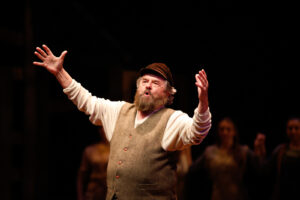
Tevya, in the musical, Fiddler on the Roof, is an ordinary man who must work hard to support his family. He dreams of being rich and all the privileges and comforts that being rich would bring. His musing turns into a song that sums it up.  “If I were a rich man … all day long I’d biddy biddy bum, if I were a wealthy man … I wouldn’t have to work hard … I’d build a big tall house with rooms by the dozens right in the middle of the town…” He has many big dreams of all he could do and all the honors that would be his, “If I were a wealthy man!”

For better or for worse, Tevya is not alone in his dreams of a life of ease and honor. Most of us wish at one point or another that we had just a bit more, so we could do something that we hope and believe will be fun or make our lives easier.

Two of Jesus’ disciples, Zebedee’s sons James and John, also had high hopes and dreams. They came to Jesus and said, quite reasonably they thought, “We want you to do for us whatever we ask of you.” Whatever – not exactly a clear, specific request to which one might easily respond with a yes or no answer.

As it turned out, their request was not something small or insignificant. “Grant that in your glory we may sit one at your right and the other at your left.” In any sort of organization, business, family, community, those who sit at the right and left hands of the boss or leader have extraordinary power, privilege, and access.

Jesus didn’t laugh at them or tell them to “go jump in the lake” or anything that would belittle their request. Instead, he asked if they would be willing to go through the suffering that he would have to experience himself. “Can you drink the cup that I drink or be baptized with the baptism with which I am baptized?” (Note, baptism in this sense had nothing to do with being washed symbolically, plunged, into water and coming out a new person. This was being plunged into suffering, dishonor, and death.) They responded that they were willing and Jesus assured them that they would indeed share that suffering themselves. However, the honor of sitting in the place of honor in the kingdom was not his to give.

The other disciples were outraged when they heard what James and John were requesting. Jesus had to explain to all of them that the kingdom of God is not like the hierarchies of power and respect we see in society around us. It’s not the powerful who are the great ones. It’s the ones who serve others, who give themselves to bring justice for the poor and those who have no power. (Mk 10:35-45)

This is not an easy thing to do. It’s especially hard for those of us who have had lots of opportunities and privileges as they have grown up. For those whose lives and careers have focused on working hard and getting ahead socially, who have sacrificed so their children would have more opportunities to advance and live easier lives – this does not make sense at all. “I worked hard and got where I am without any hand-outs. Why should someone else get help? Why should I have to pay taxes so someone else can get by without working like I did?”

We hear this kind of thing all the time, especially during political campaign seasons. It’s hard to think of giving up what we have in order to share with those who have not had the same opportunities or social capital.

But that’s not how we are called to move forward and upward in the kingdom. “Whoever wishes to be first among you will be the slave of all.”

Those who challenge the powerful nearly always pay a high price, whether in terms of money, security, power, or reputation. The powerful do not like opposition. Think of those whom we have seen in even the past ten years or so – people brave enough to vote against the dictates of their political parties or who have stood up to aggressors who have tried to take the lands or property of those with less power. Many have been insulted. Some were voted out of office. All have experienced suffering because of their unwillingness to go along with something that is wrong or to bring suffering to those without power.

Those who choose to work for the common good and help the powerless gain access to the resources they need to move into a more secure life, these typically have to accept that they will never be rich. They will spend what they have to help their students, for example. They will share what they have with refugees. They will gather food that would be wasted and share it with the elderly or the poor.

The reward for many who oppose the powerful who are focused on themselves and their wealthy friends is persecution, ridicule, and sometimes loss of life. This is nothing new. The Prophet Isaiah describes one such person who suffers because of his faithfulness to the Lord’s call. The Servant is crushed in infirmity. Yet, in giving his life to counter the effects of wrongdoing (sin), the will of the Lord will be accomplished and the servant’s descendants will have more options. Many will be helped and saved because of the faithful service of one individual. (Is 53:10-11)

Through faithful service, each person grows gradually, step by step to greatness in the kingdom. Greatness does not come through money or influence. It comes through sharing the gifts we have. It comes from helping when it’s hard and forgiving when we have been hurt. In service we discover the presence of the Lord in the faith of those we meet along the way. Those who have little in the way of riches or power may have great wealth in their lives of faith and sharing.

Jesus himself went through all that we experience, from childhood, through adolescence, young adulthood, and moving into his role as an adult in his community. He had parents and relatives, the life of a skilled carpenter in his village, and a life of faith. He also became a traveling teacher and healer – a prophetic voice calling those he met to closer friendship with God. He experienced all aspects of human life, except sinning himself. When the time came, he gave his life in witness to the truth he had proclaimed. As the author of the Letter to the Hebrews reminds us, “we have a great high priest who has passed through the heavens, Jesus, the Son of God.” From him, we will find mercy and grace to help us in growing into the kingdom ourselves. (Heb 4:14-16)

One step at a time. One encounter at a time. One sacrifice at a time. One smile at a time. One gift of respect at a time. One sharing in our own riches and privilege at a time. One reaching out and walking hand-in-hand with a sister or brother human being.

We grow into the kingdom of God, the kingdom of Love.

Readings for the Twenty-ninth Sunday in Ordinary Time – Cycle B


Read More
Posted by on Sep 29, 2024

The Company of Prophets – Open to All

The Company of Prophets – Open to All

“You’re right, but you’re too young to know this.”

These words were actually spoken to a young woman by a graduate school advisor when she presented the results of her doctoral research. The faculty member advised her to go back to the data that had been collected previously and see whether there were statistics that would back up what she was presenting in her case studies, so they could be cited to back up her claims.

As it turned out, her sample fell right into the range of responses seen in the entire set of data collected over the multi-year period in which the program had been serving the community. When presented with the evidence, the advisor signed the paperwork for the young woman’s degree.

What is a Prophet?

We tend to think of prophets as being somewhat like fortune tellers. Those who can see what is coming and advise their clients accordingly have a long history of popularity. Will I meet Mr. Right? Will my children be healthy? Who will win the competition? What do you see in your crystal ball?

But a prophet, in religious terms, is not a fortune teller. A prophet is one who praises God, proclaims God’s love for all, and speaks this truth to power. A person who sees through the trappings of power and influence, whose heart is on fire for justice and who is willing to take risks to make the world a better place for all – this is a prophet.

Most prophets do not seek that role. They would be very happy to go about life unnoticed and living in peace with their families and friends. But something gets awakened inside their hearts and builds until they cannot resist it anymore. They must speak. When they do, the opposition begins.

Not all prophets realize the significance of what they are doing in the beginning. A question is asked and they answer truthfully, giving their opinion or an explanation of the reasons for the choice they have made. The opposition they face is not always obvious to them. They assume the questions that follow are a sign of the honest interest of the questioner. Sometimes that’s all it is. Other times, it leads to much more serious opposition.

The Call to Prophesy

In Hebrew and Christian scriptures, the prophet is called by God to speak on behalf of the poor and those of low status in their society. They call out a reminder to the people, “The word of the Lord came to me…” “Thus says the Lord…”

Prophecy is not limited to those who are educated or who have leadership roles, though sometimes prophets will move into leadership. For example, Moses is remembered as the one who led Israel out of Egypt at the time of the Exodus. He spoke the Lord’s words and brought the Law as dictated by the Lord to the community. He combined the roles of leadership and prophet. Moses had been raised by one of Pharaoh’s daughters, according to tradition, so he most likely had an education. However, when he was called by the Lord, he was a shepherd in another land, to which he had fled after killing an Egyptian overseer who was abusing a slave.

A large group of elders helped Moses and Aaron lead the people as they traveled through the Sinai Peninsula. A younger man named Joshua was his assistant. One day, “the Lord came down in the cloud and spoke to Moses.” This had happened before, but that day something different happened. The Lord shared the spirit that he had poured into Moses with the seventy elders of the people. In a sign of what had happened, all of them began to prophesy, to praise God and share the Lord’s message.

Two elders had remained in camp rather than go out into the desert with Moses. (Somebody’s got to stay home and make sure everything is in order!) They too began to prophesy. A young man hurried out to let Moses know what was going on. Joshua, advised Moses to make them stop what they were doing. However, Moses refused. Instead, he declared, “Would that all the people of the Lord were prophets! … that the Lord might bestow his spirit on them all!” (Num 11:25-29)

Would that all the people of the Lord were prophets!

Can you imagine what kind of world that would be, if all were prophets? Certainly more inclusive. Since the Lord excludes no one from love, all would be welcomed and their contributions and insights valued.

Jesus himself made that point. One day, John came to him to report that someone else was driving out demons in his name. John wanted Jesus to put a stop to that encroachment on his power. But Jesus was not upset. “Do not prevent him.” Why? Because “whoever is not against us is for us.” Anyone who is working for justice, acting lovingly, sharing something as simple as a glass of water because the recipient belongs to Christ, will be rewarded.

Jesus went on to speak about how we are to support the little ones who trust and believe in him. He spoke in terms that have been misunderstood through the ages. He was speaking hyperbolically – using exaggerated terms and examples to make a point. The words he spoke were not literal instructions for how to treat other people or even oneself. For example, he spoke of cutting off a hand or a foot if it causes someone to turn away from God. He also spoke of a terrible punishment that came to be used literally to punish those whose behavior, especially in the sexual realm, was not socially acceptable. These words were not meant to be used the way they were interpreted in later years. (Mk 9:38-43, 45, 47-48)

The point Jesus was making when he spoke these words to John was that we must not act in ways that keep others from coming to know the Lord. We must not put up barriers that exclude any of God’s children. We must not demand that others be just like ourselves or part of some inner circle of the wise or the saved. Anything that keeps us from being loving and accepting of God’s little ones is a detriment. We need to turn away from our spiritual blindness and see truly the Lord of love. We must welcome and support the little ones, who are not always going to be part of our communities.

Prophesy Continues in the Community

St. James wrote to Christians in general, throughout the known world. He spoke prophetically, teaching those who received his words how to live as followers of Jesus. He spoke with authority as leader of the community in Jerusalem and played important roles in the early leadership of the Church.

Christians in the early years, for the most part, were not from among the wealthy. Those who had wealth, gave it to the community. But most folks were the everyday, ordinary people who worked for a living and cared for their families and those in need.

James cried out in his letter a warning against those in society who were holding onto wealth at the expense of others. “Weep and wail over your impending miseries. Your wealth has rotted away … your gold and silver have corroded, and that corrosion will be a testimony against you…” He spoke of those who withheld wages from workers, reminding them that “the cries of the harvesters have reached the ears of the Lord of hosts.” In their lives, they have lived in luxury and eventually even killed “the righteous one,” who offered no resistance to them as he accepted death. (Jas 5:1-6)

The words of James ring true through the centuries and into our times today. The poor still work hard but most cannot escape the limits under which they toil. Few receive the help and the opportunities that allow them to move into more comfortable situations and status in our world. All too often, they are told, and they come to believe it, that there really is no way to change their fate.

But prophetic words and actions continue to be heard even today. Some are from people who are famous. Martin Luther King, Jr. who became a leader in the Civil Rights struggle. The Carters, Roslyn and Jimmy, who have spent so many years working with Habitat for Humanity. Dorothy Day, founder of the Catholic Worker movement.

Others are less known. The men and women who work to provide meals for the elderly or families through programs such as Second Harvest. Children in organizations such as Scouting, Campfire, or 4-H, who include community service as part of their activities. Members of church communities who offer safe parking and host the un-housed in their facilities when the weather is too cold for sleeping outside at night. Those who work for affordable housing.

Prophets are among us yet. They speak out and remind us that our God cares for everyone. No one is excluded. Our social class, our citizenship, our race or ethnicity, our gender orientation, our political beliefs, our preferred social and recreational activities – none of these matters when it comes to God’s love for us. God made us all, just as we are, in all our rich diversity.

And we who have been blessed with the riches of modern life – enough food, shelter, education, healthcare, and so many other things – are called to share what we have with those who have not.

No one is too young to observe injustice or to remind us to act justly. May we keep our ears open to hear and encourage their passion for justice, never discounting their words because they are young. Sometimes the young see more clearly than those with eyes which have become used to seeing things as they are, rather than envisioning what they can become.

The company of prophets is open to all. As we go through this week, let us keep our eyes and ears open. Let us open our hearts to hear the Lord’s voice. Let us speak words of comfort to the afflicted. Let us speak words of challenge to oppression in its many forms. Let us live in the joy of the love of the Lord for all, sharing freely the gifts we have received.

Readings for the Twenty-sixth Sunday in Ordinary Time – Cycle B


Read More

Posted by on Sep 22, 2024

Whoever Receives One Child in My Name

Whoever Receives One Child in My Name

In times of economic and social stress, a common practice is to blame those who are different, not from one’s own family or community, for the difficulties all are facing. The sense is that if these others hadn’t come into our part of the world, all would be well. After all, they may not look like me or eat the same foods. They may wear different clothes or style their hair differently. Their music may be different. They may worship differently. Could it be that they are inherently bad or evil or responsible for the problems we are facing now? The question arises in many ways, both overt and subtle.

All too easily, this kind of thinking leads to a conclusion that is unwarranted: “Of course! All was well before they came, so they must be the reason things have changed for me and my family.” “We need to send them back to where they came from!”

But was everything really all right before others came into our lives? Not usually. There have always been challenges in our communities and nations. Peoples have moved from region to region through all of recorded history – most likely even earlier. Otherwise, how would humans have come to live all over the world?

For better or worse, movements of peoples often lead to strife, including wars and massacres. We humans are not very good at trusting that most folks really aren’t that different from each other. Our concerns are very similar. It’s our customs and ways of meeting those concerns that differ. Since there are so very many people and environments, it’s not unreasonable that many different ways of addressing the challenges we find in our local areas have been developed. When we get to know each other, we find many commonalities. In fact, much of what we take for granted today came from the meeting of peoples from different lands with different traditions.

How do we deal with conflicts when they arise? Whose paths do we follow when we face challenges as communities and nations? Do we look at what the bullies, strongmen, and dictators – those who live in fear and rule by fear – propose as the reasons for economic and social challenges? Do we need to be afraid? Do we need to close out social interaction? Do we need to build “forts” around our communities? Would higher walls fix anything? Should we just toss out everyone and their families who have come to this community from somewhere else? What if they were born here but look different than my family and I do?

Or do we welcome the newcomers and learn from the gifts and insights they bring? Where do we draw the line? What do we do?

St. James asks us to reflect, “Where do the wars and where do the conflicts among you come from? Is it not from your passions that make war within your members?”

When we listen to those fears and passions that can be so easily stirred up by powerful people whose interests are best served by keeping the less powerful up in arms against other less powerful neighbors, we do not receive the blessings we seek. As St. James notes, “Where jealousy and selfish ambition exist, there is disorder and every foul practice, But the wisdom from above is first of all pure, then peaceable, gentle … full of mercy and good fruits.” (Jas 3:16-4:3)

Those who call others to live together in peace are often opposed by the powerful, as noted by the writer of Wisdom. “Let us beset the just one, because he is obnoxious to us… reproaches us for transgressions of the law… Let us put the just one to the test that we may have proof of his gentleness.” Such testing can even lead to the death of the one who works for justice. (Wis 2:12, 17-20)

Notice what happened to leaders of the Civil Rights movement in the United States. Many were beaten, imprisoned, and even killed. But through their patient endurance, things began to change.

Today, children who look different, with ancestors from around the world, can attend class together and be friends. They can work together to find solutions to the challenges they face in daily life. They can go to parties together. They can go fishing or camping together. They can date. They can marry and raise children.

Jesus’ disciples fell into the common human pattern of trying to compete for high position. He had been telling them that he would be killed and would rise from the dead, but what they focused on was something totally different. Who would be the most powerful among themselves?

Teaching them with a clear example, he brought a small child into the group of them. “If anyone wishes to be first, he shall be the last of all and the servant of all.” Then he went further, “Whoever receives one child such as this in my name receives me.” (Mk 9:30-37)

How we treat our children, what we teach them is critical. Do we teach them to welcome people who have had different experiences and come from other communities? Or do we teach them to fear those who are different? What does that do to our communities, to our nation? What does it do to our world?

The song, “You’ve Got to Be Taught,” from Rogers and Hammerstein’s musical, South Pacific, is a beautiful reminder of the dangers of prejudice based on skin color or national origin. As the song points out, this all begins before children are consciously able to distinguish among people by these accidents of birth – “before you are six, or seven, or eight!” You must learn “to hate all the people your relatives hate. You’ve got to be carefully taught.”

As we look around us today and see the controversies over immigration, access to jobs and health care, support for families who are food-insecure or who have no housing, it’s critical to remember that people don’t deliberately decide that what they want is to leave their homes so they can suffer homelessness and poverty in another land. They don’t leave with the idea of taking jobs from the people in other lands or diminishing those communities to which they are traveling. They leave because they have to go from where they are or be killed. Those who were born here and yet lack the basic necessities also need help and support. They didn’t choose their parents any more than those born into wealth and opportunity did.

When basic needs are met, then people are able to grow and learn. They are able to develop the skills needed to earn a living and provide for their families.

When adults treat others who are from different backgrounds with respect and care, children learn that all are valued and all have dignity.

What do we learn from the children whom Jesus gave us as models? They play with each other. They learn from their families and teachers. They grow to be adults. They are open to receive love and to share it with their peers. As long as we don’t teach them to be afraid of others by the way we act, they will continue to act with wisdom in dealing with those they meet on this journey of life. And how do we teach them to be kind and open to the gifts of others? By the way we model this through our lives as they watch and learn how to behave in their society.

May we as a people remember this lesson – to be like children, open and loving, not focused on who gets the most or who is best. We teach our children to share. We teach them to make friends. We are stronger when we model and teach living love and acceptance than when we teach fear and hate. May we accept each day with the joy and hope of a child who is unafraid of others and who can trust that they too will have their needs met and dreams supported. May we welcome others, including the children in our midst, as we would ourselves hope to be welcomed.

“You’ve got to be taught” – whether to be afraid or to welcome “the stranger” in our midst. Through meeting and accepting “the stranger,” we meet and welcome the Lord who lives in each of us and promises, “Whoever receives one child in my name receives me; and whoever receives me, receives not me but the One who sent me.”

May this be our quest as we go through this week. May we see the face of the Lord in all we meet. Then may we see his loving smile in the response of those we meet.

Readings for the Twenty-fifth Sunday in Ordinary Time – Cycle B


Read More

Posted by on Sep 15, 2024

Faith Without Works? No Way!

Faith Without Works? No Way!

It happens sometimes that out of the blue, an insight comes to us. Something we might never have considered, suddenly is seen as the clear explanation of a phenomenon we have noticed. Sometimes it’s a relatively minor thing. “Gee, when I go to bed a bit earlier, I’m not so tired in the morning!” “Wow, Mom doesn’t get mad if I clean out the dishwasher before she has to tell me to do it.”

Once in while in our lives, the insight is more fundamental. “When I am kind to someone rather than angry and vengeful, we can sometimes find common ground and not become enemies.” “If I forgive or overlook a slight, I may discover that another person is really afraid of being hurt by me. Then we can begin to talk and find common interests.”

And then there are the transformational encounters, those that set us on a path we might never have chosen for ourselves and that lead to a totally different life than we ever imagined. That life may be filled with joy. It may also lead to difficulties and sorrow. These encounters are never without consequence. They are life-changing.

Speaking the insight that is received

The prophets, for example, are ordinary people who have heard the Lord’s voice in an unmistakable way calling them to speak out in the face of injustice. They don’t seek this role. They typically try to get out of it. They argue with the Lord about their fitness for the role. But the Lord is persistent and the fire of that voice burns within the prophet until speech bursts forth.

Prophets can be men or women. Some are young and some are old. We know the names of some. Others remain anonymous, with their words being attributed to other more famous folks.

The prophet Isaiah spoke in the years before the Babylonian exile, calling the people and their leaders again and again to faithfulness to the Covenant. Unfortunately, the response was inadequate and Israel was conquered, its leaders and many of the people taken into exile in Babylon. Through the years, disciples and others wrote words of encouragement and prophecy that have also been gathered into the collection we know as the Book of Isaiah.

The readings known as the Servant Songs are from this later add-on to the prophecies of Isaiah. The prophet here tells of his call and its result.

“The Lord God opens my ear that I may hear; and I have not rebelled, have not turned back.” Physical and verbal abuse were heaped upon the servant by those angered by his words. (It’s safe to use the masculine here, because he speaks of giving his “cheeks to those who plucked my beard!”) Yet the servant remains faithful to God, trusting in the Lord’s help, knowing that he will not be proven wrong in his calls for fidelity to the Covenant. “See, the Lord God is my help; who will prove me wrong?” (Is 50:5-9a)

Who do you say that I am?

Jesus too came with signs and wonders, as well as teachings that were disturbing to those with power and influence in his time. He had heard the voice of his Father and knew that he must speak. The healings were signs of God’s compassion and focus on caring for the needs of the poor and the ill.

Yet who would have expected a carpenter from Nazareth to speak such words and perform such signs? People from his area of Israel were not seen as educated or as exemplars of the faith. He was not one of the priestly class. He was not a teacher of the Law. Yet here he was, speaking as one with authority and calling the people to faithfulness to the Lord.

No one expected that Jesus would go off to the Jordan River to be baptized by John and come back over a month later with a whole new sense of who he was. Most folks remained unchanged outwardly by their experience at the Jordan.

Jesus was touched in a special way in his baptism. He heard the Father’s voice calling him, awakening him to his calling. He took time to let it sink in, spending time alone in the desert praying and testing what he had experienced. He resisted the temptations to use the call for his own benefit and fame. He returned to his home territory and began teaching those who would listen and healing those whose ailments seemed incurable. This arrival of a new prophet was noteworthy and attracted a lot of attention.

One day, he asked his close friends, “Who do people say that I am?” Most folks thought he was a prophet, maybe John the Baptist or Elijah returned from the dead and heralding the coming soon of the Messiah. Then he asked them a more fundamental question: “Who do you say that I am?” This is really a critical question. It’s one we each have to ask ourselves at some point in our lives.

Peter’s answer to this question, “You are the Christ,” was a momentous statement. “The Christ” was the title of the long-awaited one who would restore everything to the way it is supposed to be. At that time, the Christ, the Anointed One, the Messiah, was expected to be the one who would restore Israel to a position of power in the world. It was a dramatic and dangerous thing to say. People had been tortured to death for claiming less. The Roman authorities did not hesitate to deal severely with folks making such claims. Jesus knew this and warned his disciples not to speak of it to anyone. Notice, however, that Jesus did not deny the claim.

Jesus knew that being the chosen one was a dangerous role. He knew in the depths of his being that he must take the word of the Lord to Jerusalem and the authorities there. He knew what typically happened to prophets who brought the Lord’s commands to them. He knew he would be risking his life. In fact, he was pretty sure it would lead to his death.

The Gospel of Mark was written within about 40 years of Jesus’ death and resurrection. In the stories leading up to his final days, we see statements that are based on the insights of the Christian community after the resurrection. Jesus’ statement that he would be killed and rise after three days may be one of those later insights. Regardless of such details, Peter was deeply upset by the idea that his friend would be killed. He tried to get Jesus to back off and not risk going to Jerusalem at all. But Jesus refused the advice. “Get behind me Satan. You are thinking not as God does, but as human beings do.”

Jesus set Peter and those who came later straight. “Whoever wishes to come after me must deny himself, take up his cross, and follow me.” It’s not going to be an easy path. There will be opposition to all that discipleship entails. Folks in power will not take kindly to being told their honor and privileges are not signs of their personal superiority. Those who have security and comfortable lifestyles will not want to give up some of what they have so that others who have not been so fortunate can have the basics of survival and dignity. (Mk 8:27-35)

Demonstrating Faith from Works

How exactly are followers of Jesus to live in faith? Is it enough to believe intellectually? Is it OK to say that if people just worked harder they would be able to support themselves and their families? If I offer wishes for peace and a safe life to a person who has no way to experience it or make it happen, have I done what Jesus calls me to do? What risks am I willing to take?

St. James faced some of these issues as they arose in the early community. He asks point blank, “What good its it, my brothers and sisters, if someone says he has faith but does not have works?” It’s not enough to offer only good wishes. Those who have enough must share with those who do not.

People do not all have the same opportunities. Faith demands a response, a practical response, in which the needs of all are considered. If I claim to have a right to have a roof over my head, food on my table, healthcare for myself and my family, education, safety, and so forth, then I must recognize that others have the same right. We are all children of God. Yet not all have the same opportunities or social capital. So we must share what we have. And when our communities, our cities, our nations get very large, we must set up systems that assure that all have access to these benefits. St. James turns the statement around for the people of his day and for us, “Demonstrate your faith to me without works, and I will demonstrate my faith to you from my works.” (Jas 2:14-18) Only our works truly show forth our faith.

These issues of listening to the voice of the Lord and working for social and economic justice have led to struggles for centuries. The Lord has not stopped calling prophets to speak. Many of the great saints have led by their example of service to the poor. Groups of men and women have joined them in the endeavor and continue to do so even today.

In our own times, people continue to hear this call. We debate it on the local, national, and international stages. Some folks get very rich. Others remain very poor. Some take advantage of the misfortune of others. Some step up to try to help. Some stand outside and call for justice. Others work from within, to set up programs and policies to make things more equitable.

As we move through the next weeks and months, facing tremendous national and international challenges, may we be attentive to the call from Jesus, “Whoever wishes to save his life will lose it, but whoever loses his life for my sake and that of the gospel will save it.” Losing one’s life does not always entail physical death. Sometimes it’s a question of sharing what we have.

The Bottom Line?

Faith without good works? No way! They dance together and shine wonderfully, bringing the Kingdom to birth in our times.

Readings for the Twenty-fourth Sunday in Ordinary Time – Cycle B


Read More

Posted by on Sep 8, 2024

Ephphatha – Be Opened

Ephphatha – Be Opened

Two little boys, brothers, went to the local park nearly every day with their Nanny. One spoke Spanish easily with her, since his parents had spoken Spanish with him from the time he was an infant. The other refused to speak Spanish, though he had also heard it regularly as a child. Their Nanny, who was from Mexico, understood enough English that she was able to communicate with both of them.

Why did the second child refuse to speak Spanish? He explained later that he had noticed that children who spoke Spanish at the playground were treated with less respect and friendship than those who spoke English. Although his complexion was darker than his brother’s, by refusing to speak Spanish publicly, he avoided awaking the prejudice of others in the park.

Both boys learned Spanish in elementary school and high school. Both speak Spanish well today. The second one even did research in archives in Spain for his Senior thesis in history from a prestigious American university. But they have both felt the sting of the prejudice that assumes their Latin heritage makes their hard work and successes suspect.

Trusting in Unsettled Times

Throughout history, as peoples have moved from one location to another, those who are not members of the local community and are newly arrived have been seen as threats. This is not without reason in many historical instances, as newcomers so often have invaded and taken over lands that have belonged to others. Even when the newcomers are simply seeking refuge from famine or war or illness in their homelands, they are often seen as a threat. We see it all too clearly in our country today. We have seen it before. It is never a positive trait or characteristic of a people who say they trust in the Lord. It is, instead, a sign of lack of trust, courage, and faith in the power of God to provide for all.

In ancient Israel, this same phenomenon was seen. When times were changing, other nations invading, threats of loss or exile at hand, people were quite reasonably distressed. The Hebrew word we translate as frightened meant to be thinking fast, as in panicked. For Greek translators, the word had the connotation of being downcast or disheartened. Either way, Isaiah tells us the Lord says, “Be strong, fear not!” God is coming to save the people. The eyes of the blind will be opened. Deaf ears will hear. Mute tongues will speak. Rivers and streams will flow in deserts and dry grasslands, bringing abundance of water to the thirsty. All will be well. (Is 35:4-7a

The psalmist sings of the works of the Lord, bringing justice for the oppressed, food for the hungry, sight to the blind, protection for strangers. The works of the Lord are seen in the way those who are in need are helped. (Ps 146)

Judging By Appearance

Economic inequality is another issue with ancient roots. We see it today as people loudly proclaim their beliefs/fears that newcomers will take away their jobs and hurt them personally. Yet the reality is that without the energy and willingness to work of new arrivals, many services would not be available in our communities. Our immigrant ancestors came with the same determination to give all they had to make a life here and give back to the country that had given them refuge.

St. James chided early Christian communities in which those with wealth were more enthusiastically welcomed than those who were poor. When this happens, “have you not made distinctions among yourselves and become judges with evil designs?” He tells his community and, through the centuries, he also reminds us, God has chosen “those who are poor in the world to be rich in faith and heirs of the kingdom…” (Jas 2:1-5)

Those who minister in immigrant and low-income communities will testify that this is true yet today. There is a tremendous depth of faith, hope, and determination to contribute to the new land in which they are living and working. And such statements of hope are typically concluded with the phrase, “Si Dios quiere.” If God so wills it.

Be Opened

Jesus was presented with a man who was deaf and had a speech impediment. The people who brought him to Jesus cared about him and asked Jesus to heal their friend.

Jesus led the man away from the crowd. Then he touched the man’s ears. He spit on his finger and touched the man’s tongue. (Spittle was believed to have healing properties in Jesus’ time.) He looked up to heaven, groaned (a prayer?) and said, “Ephphatha.” This Aramaic word was used in telling of this event in the Gospel of Mark, which was written in Greek. It means, “be opened.”

Immediately the man’s ears were opened so he could hear and his speech impediment was taken away. His ears and tongue were opened and freed.

Jesus told the man and his friends not to tell anyone, but who could keep such an amazing gift quiet? People who heard about it were astonished and spoke of the wonder they had witnessed: “He makes the deaf hear and the mute speak.” (Mk 7:31-37)

When we are baptized, a part of the ritual includes the blessing of the ears and mouth of the newly baptized. The prayer and hope in this ritual is that the new Christian will hear the Gospel and share it with others, just as the man healed so many centuries ago did.

Ephphatha – Do we hear today?

As we move through the days and weeks to come, how will we hear the Lord’s voice in our world, in the people we meet and those we serve? Will we see the Lord ‘s love for those who are maybe a bit different? Will we see the Lord in those whose speech is accented or who don’t speak English easily or at all? Will we support access to health care for those who can’t afford to pay full price? Will we help those who earn minimum wage to be able to feed their families and provide a home for their children?

How will we welcome the immigrant, the stranger, the old, the young, the deaf, and the mute?

Will we hear the Lord’s word? He speaks to us today. “Ephphatha – Be Opened. Hear my voice and see me present in those you meet each day.”

Readings for the Twenty-third Sunday in Ordinary Time – Cycle B


Read More

Posted by on Feb 19, 2023

Be Holy

Be Holy

Be Holy.

Two simple words, but what a challenge to obey them! The Lord instructed Moses to speak to the community of Israelites and tell them, “Be holy, for I, the Lord, your God, am holy.”

What does it mean to be holy? The book of Leviticus is the third book of the Hebrew scriptures. In this book, the many rules and regulations for how the people are to live are laid out. In this particular chapter (19:1-2, 17-18), there is a listing of things (in verses 3 -16) that many of us would recognize as part of the Ten Commandments. We don’t hear that whole list in the selection for our reading today, however, only the command to love our fellow humans as we love ourselves. Hatred, anger, revenge, grudges – all are prohibited because they are not the way of love.

Jesus in the Sermon on the Mount also refers to the law as set forth in the books of Exodus and Leviticus when presenting the instructions for his followers. (Mt 5:38-48) He mentions the injunction that allows taking “an eye for an eye and a tooth for a tooth” from those who harm others. We hear that and are appalled at the thought of such punishment. Nevertheless, this statement from the ancient Law was actually a huge step forward in its time. It limited revenge for injuries inflicted on others to no more than what the one who was guilty had done to another. No more killing an entire village because one member had injured someone from another village or insulted someone more powerful!

Jesus takes it a step further. “Offer no resistance to the one who is evil,” and gives concrete examples from life as experienced in his community and by those to whom he spoke. For example, Roman soldiers were allowed to require people to help transport things for a mile, whether it was convenient for them or not. Jesus says, give them two miles rather than one mile. Some have suggested that in this, he was actually giving people a way to protest the law that required one mile. It put the soldiers into a difficult position, because they were left to explain why the person had carried the burden for two miles! Had they broken the rule themselves and forced the extra service? Whether that was it or not, the idea of giving extra service to the soldiers of a hated conquering nation was quite unheard of.

Then there’s that little bit about loving enemies… What a crazy idea. But Jesus insists. Anyone can love people who are friendly and treat them well. It’s much harder to behave lovingly to those who treat us badly. Still, Jesus points out, God doesn’t treat those who do evil badly. God treats all with the same gifts of sunshine and rain – the things they need to live.

If we love only those who love us, we are like everyone else. But to go that extra step (or mile) and be good and kind and loving to those who hurt us – well that is beyond the norm. That enters into the realm of the divine, the realm to which we are called. The realm of the Holy One.

St. Paul reminds the people of Corinth and the people of the world today that we are the new temple of God, because the Spirit of God lives within us and within our community. (1Cor 3:16-23) As part of that temple, we ourselves are holy too. But how to be holy? It’s not through the ordinary wisdom for getting ahead in life. In the eyes of God, that is foolishness. We are called to embrace God’s foolishness – that of caring for others, loving enemies, helping those in need. Every member of the community has a responsibility to every other member. Each person belongs to us as family, we belong to Christ as family, and Christ to God. Here we find ourselves again, called to be holy, because God is holy and we belong to God.

So as we pass our days this week and enter into the holy season of Lent on Wednesday, let’s remember to look for the ways in which we get to practice the holiness of God by being loving and forgiving, patient and kind to all those we meet each day.

Readings for the Seventh Sunday in Ordinary Time – Cycle A

Read More

Posted by on Feb 5, 2023

Light and Salt – Justice for the Poor

Light and Salt – Justice for the Poor

Salt of the earth, light for the world – the essential calling of the disciple is to live a life that shines with the goodness of the Lord, a light that shines in the darkness, so those who see it understand the glory of the Father in heaven. (Mt 5:13-16) Jesus is very clear on this point. It’s useless to live in a way that hides the light of love from others or that does not season interactions with love and care for others, because then God’s glory can’t shine forth into the world of human social life.

This insight of Jesus was not unique to him. We often think that Jesus thought up most of what he taught, but actually, there is a long tradition in Judeo-Christian thinking that focuses on the interaction between those who have the necessities of life and the power that goes with it and those who do not.

The prophet Isaiah spoke very clearly of this (58:7-10), in words that many of us first heard spoken by Jesus about the final judgement in which the “sheep” would be separated from the “goats.” “Share your bread with the hungry, shelter the oppressed and the homeless, clothe the naked when you see them…” These words of Isaiah were spoken to a people returning from exile in Babylon. To the extent that they created a new society in which justice and care for the poor and oppressed were foundational, the light of that society and its people would break forth like the dawn into the world. The Lord would be present among them and be a source of protection and healing for them. “Light shall rise for you in the darkness…”

This kind of life is not to be a source of pride for Jesus’ followers. It’s certainly not a message that is easily accepted in a world in which those with power don’t easily share resources with those who have nothing to give them in return. But as St. Paul points out (1 Cor 2L1-5), the persuasiveness of the message of the Gospel is the result of the demonstration of Spirit and power that flow from the positive change that the foolishness of the message and lifestyle produces. Doing hurtful things leads to anger and revenge – an intensification of the evil that provokes them. Doing good things for others leads to more goodness being shared.

How does this play out for us today? We have a lot of social safety nets that are intended to help protect and support those who for one reason or another are unable to earn the money needed for food, clothing, shelter, healthcare, and education for themselves and their families. These programs provide essential support to a lot of people that we might not ordinarily realize are struggling.

As an insurance professional specializing in health insurance, I hear a lot of stories from people struggling to keep food on the table and a roof overhead for themselves and their children. I often work with middle-class people who suddenly find their income crashing and discover that what they always took for granted is not guaranteed for all in this country. I explain how the social safety net works, based on my own experience with it, and encourage them that it’s not the end of the world if they need to move to Medicaid (known as Medi-Cal in California) for a period of time. I encourage them to look at the supplemental nutrition programs for their families (aka, food stamps) and to take advantage of the help, so that they have a chance of getting back on their feet. Sometimes I work with people who will never be able to support themselves, due to illness or injury, including mental illness or addiction. It is a great joy to me to be able to offer help to those who are despairing of ever living a “normal life” again. On more than one occasion, I have had people react with tears of joy to know that their prayers have been answered and help is available. Not a common experience in the insurance field.

And yet, there are still folks who have even less and don’t qualify for this governmental help. We think of refugees and asylum seekers in this category. It’s not easy for them to get along and figure out how the very different legal and socio-economic systems here work. Lots of people are involved in helping and offering a welcoming hand to these new arrivals.

Once they have been here for a while, there are still obstacles. I worked with a young person the other day who is a DACA recipient. They can’t get a policy through the Affordable Care Act marketplace because we as a nation have not yet come to terms with the fact that these young people are ours just as surely as if they had been born here. We have raised them and educated them and shared our dreams, visions, and expectations with them. They have jobs and businesses and are giving back to the country which raised them. And yet some of us still want to throw them out because their parents brought them here so they could be safe from the violence or oppression in their native communities. Fortunately, my young client was able to afford insurance outside of the subsidized plans. Not all are so fortunate.

How do we react to the discrepancies in income and opportunity in our country. Do we work to make sure the hungry have enough healthful food to live a decent life? Do we complain that a homeless person has been given a cell phone so they can get medical care and other essential services? Have you tried to find a pay-phone in a telephone booth lately? Without a cell phone, it’s next to impossible to access basic services if one does not have a home.

As you may have guessed by now, these are questions and issues about which I am rather passionate! I see too many folks on a daily basis who are struggling and I know the great blessing that having folks who are willing to share their bread with the hungry, to clothe the naked, and find homes for the homeless can be.

If you ever wonder about the wisdom of the Gospels and of efforts to help those who struggle, I encourage you to volunteer with others from your Church community or other social service programs. Get to know some of the folks who serve and some who are served. There’s a tremendous richness in the encounter and a deep, deep faith among those who have nothing but faith to hold onto.

“Light shall rise for you in the darkness, and the gloom shall become for you like midday,” says Isaiah. “Your light must shine before others, that they may see your good deeds and glorify your heavenly Father,” says Jesus.

Here we go on the journey together.

Readings for the Fifth Sunday in Ordinary Time – Cycle A

Sunday Mass at Resurrection Catholic Community, Aptos, CA

Read More

Posted by on Aug 14, 2022

Setting the Earth on Fire

Setting the Earth on Fire

It’s summer in the Northern Hemisphere – a time of increased risk of wildfires and the destruction they can bring. Two years ago, we experienced the power of fire firsthand, as the CZU complex fire swept through the forests outside Santa Cruz, destroying the homes of friends and the businesses of many, as well as delaying the start of school. Beginning with a huge dry-lightning storm on Aug 16, 2020, the fires burned out of control for over a month, before they were contained. Shortly before Christmas, Cal Fire believed the fires were completely out, but actually, they continued to burn deep underground in the redwood forests into 2021. September 9, 2020, the skies turned red-orange in the daytime here on the coast and the day remained dark, as ash fell from the skies. We rejoiced the next day when the fog came in and our skies around Monterey Bay were washed clean. The fog continued to wash the air for the next few days and the darkness did not return here, but other areas were not so fortunate. The smoky tinge in the skies continued for weeks, even here.

Blessedly, we have not had such devastating fires here on the Central Coast since then, but fires are blazing in other areas throughout the Western states, Canada, Europe, North Africa, the Middle East, and Siberia as I write today. Skies are fiery red-orange. And fire season is far from over.

I am thinking of that experience, looking at the clear sky which nevertheless carries a slight hint of the reddish color that comes from the smoke of fires burning in other areas and reading Jesus’ words, “I have come to set the earth on fire.” (Lk 12:49)

Really? Are you sure that’s a good idea, Lord? People can get hurt! Fire is not a force to mess with …

Jesus speaks these words about setting the earth on fire to his disciples. A large crowd has gathered and in the past two weeks we’ve been hearing Jesus as he teaches the crowds about the importance of holding lightly to things, trusting God to provide for their needs. He has spoken very clearly to his closer followers, those who were his disciples, about the importance of servants being prepared for the return of their master. When Peter asks Jesus whether these teachings apply to all or just to his closest followers, Jesus assures him that it applies to all, but most especially to those entrusted with more responsibility – the servant placed in charge of the master’s household.

It is at this very point that Jesus makes his astounding statement – “I have come to light a fire on the earth … Do you think I have come to establish peace on the earth? I assure you, the contrary is true; I have come for division.”

The proclamation of the Kingdom of God is not something that is gentle and unchallenging. The message Jesus brings is not all sweetness and light. It’s not for the faint of heart or those unwilling to risk drawing negative attention to themselves.

Jesus knows that he himself runs a great risk of falling afoul of the authorities and of being punished. He is afraid of what is ahead for him: “I have a baptism to receive. What anguish I feel till it is over!” He is not unaware of the fate of prophets.

Yet he persists. He speaks the words of the Father. He calls the world to justice, to care for the weak and powerless, to feed the hungry, clothe the naked, house the homeless, share of the abundance of the world among all the peoples, regardless of their “worthiness” to share in it. He even takes his message to the seat of power in his land: Jerusalem and the leaders there.

Setting the earth on fire … so new life will spring forth for all.

The prophet Jeremiah ran into trouble too when he spoke the Lord’s words. Jerusalem was facing destruction at the hands of the Babylonians. The Lord instructed him to tell the soldiers and the king to surrender rather than try to fight off the empire. Those who were determined to fight spoke against him to the king: “Jeremiah ought to be put to death; he is demoralizing the soldiers …” (Jer 38: 4-6,8-10) When King Zedekiah threw up his hands and let them have their way, Jeremiah was lowered into a mostly dried up cistern – a well – and left there in the mud to die. He was rescued when one of the king’s trusted advisors reported what had happened to Jeremiah. The king then sent the man with three others to rescue Jeremiah from the cistern.

Zedekiah did not ultimately take Jeremiah’s advice. He and his troops were badly defeated. His family was killed and he was taken away as a prisoner. Most of the people were also killed or taken away as captives. The few who remained did not unite and work together. They fought each other for power. It was a time of tremendous upheaval. Jeremiah continued to speak the Lord’s words, arguing for peace and cooperation among those who remained, but he was mostly ignored. It was a long time before the Jewish people returned to their homeland from exile in Babylon. But that’s all part of the longer story.

Jeremiah spoke the words he received from the Lord. The words were not received positively. Fire was ignited upon the earth, but not because Jeremiah remained silent. Human voices and actions are needed by the Lord. And humans choose how to respond. All too often they respond with violence and conflict.

The author of the letter to the Hebrews speaks of a “great cloud of witnesses” who have gone before all of us on the journey of faith.  (Heb 12:1-4) This reading follows a long presentation of the history of the Lord’s calling of His people, beginning with the sacrifices of Abel and Cain at the beginning of the human story and continuing with the calling of Abraham and those who followed. Those who came before Jesus did not have his example or the certainty of the resurrection to carry them on their journey of faith. We are blessed to have the model of Jesus and his endurance of the cross and its shame as we face misunderstanding and opposition to the message we carry and the way of life we have chosen. We keep our eyes on Jesus as we live, trusting in the ways of God.

With the Psalmist and all those who have come before us, including Jesus, we pray, “Lord, come to my aid!” (Ps 40) We wait for the Lord, who pulls us out of the cisterns in which we find ourselves, puts a new song of praise into our mouths, and thinks of us, though we are poor and afflicted.  We are blessed by a God who comes to our defense.

Even in the face of the fires kindled by the message of the Lord.

Does this mean we are to fight each other and that divisions among us are OK? Absolutely not! We are called together to work on behalf of those who are denied the basics needed for human dignity – food, clothing, shelter, heath care, education, justice …

As followers of Jesus’ Way, members of the Kingdom of God, the lives we lead, the message we bear, the friends we make along the way, will seldom be “typical” of those of the rich and powerful in our world communities. We will discover that “hard work” and “pulling yourself up by your bootstraps” are not sufficient or possible for those without basic resources. It’s impossible to use bootstraps to advance upward when one does not even have flip flops!

As Christians, we are called to join our Lord in setting the earth on fire. Make good trouble. Speak out for those whose rights are being trampled. Share resources. Fight for health care for all. Defend women’s rights. And those of our non-binary sisters and brothers. And those who flee violence. And, And, And … so many others! The forgotten ones of our world.

Pray for me and I will pray for you. May we see the Lord in those around us. May our eyes be opened to the ways we put people in boxes or cisterns because we don’t want to hear what they have to tell us of the Lord’s vision for them and for us. May our ears be opened to the cries of God’s little ones who cannot provide for themselves. May our hearts be touched with tenderness when we meet the Lord on the street, or in a jail, or securely hiding behind the gifts of security they have received.

May we have the courage to embrace the fire of Jesus’ message, so new life can spring forth in our dry hearts.

Readings for the Twentieth Sunday in Ordinary Time, Cycle C

Read More

Posted by on Jul 10, 2022

Something Very Near to You

Something Very Near to You

Reading these words, “something very near to you,” I find myself wondering, what is very near to me? What do I treasure most? What is a fundamental part of me that might not even be consciously mine? Do I even know what is very near to me?

As Moses and the Israelites approach the promised land after forty years of travels through the Sinai Peninsula and lands to the east of the Jordan River, he realizes that the time has come to pass the leadership of the community into younger hands. He is now old and the end of his days is at hand.

In this first reading for the Fifteenth Sunday in Ordinary Time, Moses gives some final instructions and his final plea/dream to the people. “If only you would heed the voice of the Lord … and keep his commandments…” (Dt 30:10-14) He calls on them to return once again to the Lord, “with all your heart and all your soul.”

Early in their travels, Moses had gone up to the mountaintop and received the tablets containing the Law from the Lord God. He brought the Law down to the people and it became the foundation of their way of life and traditions. Sometimes they followed it well. Other times not. Always it was the basis of their agreement, their Covenant, with God.

As it becomes obvious that Moses will not be leading them when they enter the new land, they must have wondered, who will now bring the Law to us? Who will be the intermediary with God? Where will our leader need to go to find God and bring instructions to us?

Moses corrects the notion that the Law by which they live is something mysterious and remote that needs to be found in the sky or across the sea, or in some other far-off land. No one needs to travel far to retrieve and bring it back to the people so they will know how to live. He tells them, “No, it is something very near to you, already in your mouths and in your hearts; you have only to carry it out.”

What is written in the Law?

St. Luke brings us a picture of what it means to live according to the Law. (Lk 10:25-37) A student of the Law, a person who had spent many years studying Jewish laws and tradition, asked Jesus a question. “Teacher, what must I do to inherit eternal life?” Jesus went right back to basics. “What is written in the law?” The man responded with a condensed statement of Mosaic law. “You shall love the Lord, your God, with all your heart, with all your being, and with all your strength, and with all your mind, and your neighbor as yourself.”

This answer was absolutely correct. No need to add anything more. No need to travel to the sky or across the sea. Love God and love your neighbor as yourself. Jesus assured the man that nothing more would be needed.

Then came the follow-up question, “Who is my neighbor?” This is one we all need to contemplate. Is my neighbor the person living next door, on my block, on the other side of the block, my village, my region of the country, my country? How far out do I need to go before those I meet cease to be my neighbor and I no longer need to love them?

Today we often hear, “There’s an app for that!” We might equally well say, “With Jesus, there’s a parable for that!”

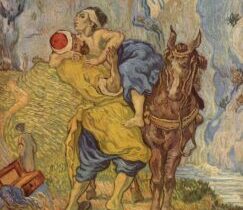
Jesus told a story. There was a man who was traveling from Jerusalem down to Jericho. This was a mountainous area, with lots of bandits along the way. He was attacked, beaten, robbed, and left half-dead beside the road.

Two men passed by the wounded traveler, but moved to the opposite side of the road as they walked by him. Neither stopped. One was a priest, the other a Levite.

(Time out of the story for a bit of explanation. Priests were descendants of Aaron, brother of Moses, who offered sacrifice in the temple. They were subject to strict rules of purity and behavior because they entered the most holy places. Levites were members of the tribe of Levi, descendants of the third son of Jacob and Leah. Levites assisted with services and worship at the temple, but were not priests. They filled roles that we would call musicians, song-leaders, acolytes, lectors, greeters, administrators, guards/guides, artists, designers, and so forth. They were held to higher standards of purity in obedience to the Law, but not as high as those for priests.)

So a priest and a Levite passed the man. The story doesn’t say whether they were on the way to Jerusalem or on the way back, but it really didn’t matter to Jesus. The point was that they were people who had higher than average position and responsibility in society and in worship, and they did not stop to help.

Another traveler came along the road. This person was from Samaria. Samaritans were hated by Jews. They were descended from some of the people who had been left behind during the Babylonian exile. Their land had been conquered earlier and the survivors had adapted their religious beliefs and practices to include some of what came from the conquerors. They worshiped on mountaintops rather than in Jerusalem. Folks traveling between Judea in the south and Galilee in the north tried to go around Samaria or spend as little time as possible there. These were not folks one would expect to find as heroes in a story told by a good Jew.

Yet this is exactly the person Jesus presents as the hero of the story. The Samaritan sees the injured man and takes pity on him. He gives first aid, loads him on his own donkey, and takes him to an inn. He cares for him there overnight, then leaves money for the innkeeper to continue caring for him, with a promise to reimburse any additional costs as he (the Samaritan) returns along the way.

Jesus asks a simple question, “Which one of these three … was neighbor to the robbers’ victim?” The answer is clear – the Samaritan who was merciful. Jesus agrees and adds, “Go and do likewise.”

The command of the Law was closer to the heart of the Samaritan in this case than to the other two travelers. Care for the one in need of help, whoever that is, trumps ritual purity and practice or other societal norms.

Would it be closer for you or me? Hmmm.

How can all of this be possible?

A hymn from the early church, shared by St. Paul in his letter to the Colossians, gives a hint of how this can be possible. (Col 1:15-20) “Christ Jesus is the image of the invisible God, the firstborn of all creation.” All things were created through him and for him, even the great principalities and powers of the spirit world. Everything is held together because of him. He’s the head of the church, his body. The fullness (God) dwelt in him, the human man, and reconciled all things through him. Peace between God and creation was achieved through Jesus’ sacrifice on the cross.

We are the body of Christ. We, the human members of the community. Jesus lives in us and we in and through him. Because of this, we have a real chance of living the law of love that he taught. The law that Moses says is “something very near to you” and Jesus presents as the foundation of loving a neighbor as ourselves.

Is living the law of love always easy? No. Is it always the popular thing to do? No. Is it always totally clear how to live? Not always, but there are hints if we keep our eyes and hearts open. Do our cultures and societies make this very easy? Not really. It’s much easier to love those who are like ourselves and with whom we share experiences, language, and culture. Do we have to love other folks anyway, even if we don’t like what we see? Yes. Can it just be an intellectual, “My heart goes out to you?” No. It must be practical.

“Go and do likewise.” “It is something very near to you … you have only to carry it out.”

Lord, help me to listen to your voice speaking through my heart. Help us to come together in loving service.

Read More

Posted by on Jul 3, 2022

Up from the Ruins – The Kingdom of God is Here

Up from the Ruins – The Kingdom of God is Here

During the past few weeks, the divisions among peoples and nations have once again come starkly into focus in the United States and around the world. Recent decisions by the Supreme Court have upset precedents that had long seemed established. Revelations regarding the events on January 6, 2021 make clear the potential fragility of the American system of self-governance. War continues to rage in Ukraine. Other conflicts smolder around the world. Political parties bicker over what needs to be done and how to do it. Fires, earthquakes, drought, and famine plague many around the world. And COVID-19 continues to cause illness and death.

We might be tempted to feel sorry for ourselves – a “woe is me” type of moment, perhaps. Weren’t things always better in the past? But no, they weren’t. Things have always been hard at times. Not exclusively hard all the time, mind you. Things have also been wonderful, maybe mostly wonderful. Yet the wonderful times have always also been punctuated by harder times that make people grateful for the boring, everyday-ness of most of life.

Through it all, God is present, working from within the hard times through ordinary people, to bring about the happier times and restore peace among peoples and families. The Kingdom of God is here, rising from the ruins of broken relationships and societies.

On this Fourteenth Sunday in Ordinary Time, the prophet Isaiah (66:10-14c) speaks the Lord’s words to the people of Israel at the end of their period of exile in Babylon. They are returning to their own land, to cities that have been destroyed and a temple that is in ruins. Ancient warfare left cities leveled, just as we are seeing today in Ukraine. It took a bit longer, perhaps, but the cities were destroyed and the land laid waste. The conquerors wanted nothing to be left to those whom they defeated.

So now the people return to their devastated homeland and what does the Lord say? “Rejoice with Jerusalem and be glad because of her… I will spread prosperity over Jerusalem like a river … as a mother comforts her child, so I will comfort you…” God is present with the people. Their city will rise again. God will comfort them like a mother nursing her child. Intimately. Tenderly. With love and dedication. Up close and personal. Sweet and filling!

Isaiah’s words are for us too. Our world has been turned upside down in some ways. Yet the Kingdom of God is here because God is here with us in the midst of the challenging times. “The Lord’s power shall be known to his servants.”

In a different, happier time for Israel, the psalmist rejoiced at God’s deeds (Ps 66) – “Shout joyfully to God, all the earth.” God has acted with power to protect the children of Adam. The sea was changed to dry land, a passage opened through the river (Jordan). The Lord is present with his people. “Blessed be God who refused me not my prayer or his kindness!”

The theme is continued in Paul’s letter to the Galatians (6:14-18). The reading for this week is from the end of the letter. He has presented his argument about the reasons for not requiring Gentiles to become Jews before becoming followers of Jesus and members of the Christian community. He states his position clearly. Neither circumcision nor uncircumcision means anything in terms of salvation. The only thing that matters is to become a new creation, based on the cross of the Lord and our sharing in the redemption it brought. Paul notes that he has himself suffered physically because of his faithfulness in proclaiming Jesus’ death and resurrection. He ends his letter with a wish of blessing for the members of this community. It is a blessing familiar to us even today. “The grace of our Lord Jesus Christ be with your spirit, brothers and sisters.”

Jesus, too, shares this message. “The Kingdom of God is at hand.” St. Luke (10:1-12, 17-20) tells us that Jesus selected seventy-two of his disciples and sent them ahead of him to the towns he was planning to visit. They went in groups of two. He gave them very specific instructions about what to take with them, what to say, where to stay, what to eat, and what to do if people in a town didn’t welcome them. They were to cure the sick and share the message of the coming of the kingdom of God wherever they went.

Jesus wasn’t living in a free and independent country. He was living in a conquered land, with overlords who took whatever they could get from the land and the people. Large numbers of people grew cash crops, for use by the empire, and had little left for themselves and their families. Soldiers could force people to carry their gear. Tax collectors were allowed to take as much as they could get, even above and beyond what was due. Anyone who opposed the Romans would be killed. It was not a great time in Israel. Yet he had arrived – the kingdom of God was at hand! His disciples were charged with sharing that news.

It’s interesting to note that Moses also selected seventy-two elders to help with administration of the camp and keeping order as the people moved through the desert in the years before they entered the Promised Land. Perhaps that’s part of the reason Jesus selected seventy-two disciples to alert people to the coming of God’s kingdom. This time of his coming was one long awaited.

The disciples returned with great rejoicing. Their mission had been well received and “even the demons” had obeyed them because of the power of Jesus’ name. Jesus notes their success and cautions that even more important than this power they have experienced is the fact that their own names are known by God in the heavenly kingdom.

In the midst of the troubles and hardships experienced by the Chosen People at the time of Jesus, the ruins of the former glory of their nation, the Kingdom of God has arrived.

Do we believe that God’s kingdom is present here and now as well? When things go differently than we would have chosen, can we trust that God will stand beside us in the ruins of our hopes and dreams and lift us up to the joy of the new Jerusalem and the kingdom? Will we let the Lord cradle us as a mother cradles her infant, and will we nurse as a well-loved child, secure and trusting the one who provides all we need? Will we have the courage to go forth and proclaim the love of the Lord and the Kingdom of God in our own world through our patient work to care for the most vulnerable among us? Will our commitment truly be to support children, families, women, immigrants, refugees, non-binary folks, the elderly, those with special needs? This is where God is present. In the “ruins” of social systems that favor the few and are willing to discard the rest, we find the Lord present and working.

The Kingdom of God is here, opened for us by the coming of Jesus.

Read More

Posted by on Jun 26, 2022

“All er Nothin”

“All er Nothin”

When I was a little girl, getting ready for first grade, my mother was quite worried. I loved to sing. This would not typically be an issue, but two of my favorite songs were from the musical Oklahoma. The songs in question were not something lovely like “Oh what a beautiful morning,” or something rousing like “Oklahoma.” No, my favorites were the ones sung by Ado Annie, the young woman with a less than stellar reputation for faithfulness or prudence in relationships. These songs, especially in the Broadway play version we had on our record, were quite risqué. Mom was afraid I would sing them to “Sister” and scandalize her (whoever she turned out to be). As soon as the movie version, with more family-friendly lyrics, was available, she bought it for us and that was the record I was allowed to enjoy.

Of Ado Annie’s two songs, “I Cain’t Say No” and “All Er Nothin,” the one that comes to mind and is running through my head after looking at the readings for the Thirteen Sunday in Ordinary Time, is “All Er Nothin.” Annie’s boyfriend, Will, has just returned from the big city, Kansas City, with tales of what “modren livin” is going to be – indoor plumbing, gas buggies goin by theirselves, buildings twenty stories high, etc. Will has heard rumors that Annie hasn’t exactly been the most faithful girlfriend while he was away. He confronts her in the song “All Er Nothin,” declaring “With me it’s all er nothin. Is it all er nothin with you?” She asks for clarification, and the song continues with examples and conditions. If you haven’t heard it, it’s worth checking out. (The same goes for “I Cain’t Say No”!)

In the first reading, Elijah the prophet receives instruction from God to anoint Elisha to be his successor as prophet. (1 Kings 19:16b, 19-21) Elijah has been in trouble with the rulers of the land off and on for a long time. He has just met God on the mountaintop, recognizing his presence in a gentle breeze. Now he has been sent to find the man who will succeed him as prophet in Israel.

When Elijah found Elisha, the latter was plowing the land. He had twelve yoke of oxen, the large team of a prosperous family. Elijah didn’t spend any time explaining why he had come or what his plans were. He simply approached Elisha and threw his cloak over him. In this way, he signaled that the cloak of prophet of the Lord was now his too.

Elijah didn’t stick around to explain what his action meant. Elisha understood immediately what had just happened. He ran after Elijah and requested permission to return to his family and tell them goodbye. Elijah didn’t refuse the request. He simply told Elisha to go back, adding, “Have I done anything to you?” At this Elisha makes his decision. He kills the oxen, burns his plowing equipment to cook the oxen, and gives the meat to the people to eat. Then he follows Elijah as an apprentice, learning to be the Lord’s prophet. All or nothing …

The psalmist sings in praise of the Lord, who is a refuge, gives counsel, is faithful, leads on the path of life and is his inheritance. With the Lord, nothing is lacking. (Ps 16)

St Paul writes to the Galatians (5:1, 13-18) with a similar theme. A huge controversy was raging over whether non-Jews (aka Gentiles) had to become Jews and be subject to the Law of Moses in order to become Followers of the Way (aka Christians). Paul said no and so did the leadership in Jerusalem when they were consulted. The reasoning backing up this decision included the understanding that the Law had been fulfilled in the coming of Jesus. The new Law of freedom to love took the place of the old laws that dictated what, where and when people were allowed to engage in particular activities. There were food prohibitions, rules about when and how work could be done, with whom one might speak, and many more. The new freedom to act in love superseded these old rules. If someone needed to be helped on the Sabbath, for example, then the new law required Jesus’ follower to help. No foods except blood, meat from strangled animals, and foods sacrificed to idols were prohibited. Women and men were equally children of God.

This new freedom did not mean license to do whatever one wished – that would be a question of acting according to the flesh. No, to act according to the Spirit required doing what would be best for the other person, what one would wish for oneself. Service in this new freedom is based on love.  Only in love can one live in the Spirit. It’s again a question of “All er nothin!”

Finally, we see Jesus as he sets out for Jerusalem for the final time. Luke (9:51-62) describes Jesus’ single-minded focus on this journey. If those in the Samaritan village didn’t welcome them, OK, move on to another village. No time to stop and try to change their minds or punish them either! If someone offers to follow Jesus, OK, but know that we’re not going to be settling down anywhere along the way. “The Son of Man has nowhere to rest his head.” (Son of Man was a term used in reference to the coming Messiah in Jewish tradition. Jesus used it to refer to himself.) Someone else wanted to go home and bury his father, but Jesus had no time to wait. “Let the dead bury their dead.” In other words, Let those who are not with me take care of each other. “No one who sets a hand to the plow and looks to what was left behind is fit for the kingdom of God.” It’s all or nothing!

These are strong words and images. How do we understand them today? Are we to take them literally? How do we act in loving freedom to address the pressing issues of our day? Wars are raging, between nations, between gangs, between religious groups… Refugees are camped at the borders. Some are allowed to enter. Others with equally horrendous stories of probable personal danger are turned away. Issues of protection of the vulnerable among us divide our communities. Who is to be protected and how far will we go to help? It’s all well and good to speak in generalities. Who will pay the ultimate price of decisions that are being made far away by folks who don’t know us or our situations?

It’s not an easy time. We are called to the Law of Love, to the Freedom of the Spirit. Let us pray today and in the days to come for the courage to respond wholeheartedly, in prayer and in compassion, to the needs of our sisters and brothers. Not relying on logic and rules, but on the requirements of loving support and accompaniment.

Read More

Posted by on Jun 19, 2022

We remember, We Celebrate, We Believe

We remember, We Celebrate, We Believe

The second Sunday after Pentecost we celebrate the Solemnity of the Most Holy Body and Blood of Christ. On this day we remember Jesus’ words and actions at the Last Supper, when he took the bread, blessed it, broke it, and gave it to his disciples. He told them to take it and eat it. It was his body, given for them. They were to do the same in remembrance of him. He also took the cup of wine that would normally close the meal with a toast to God. He told his friends it was the cup of the new covenant in his blood. Again, “Do this … in remembrance of me.”

How, you ask, do we know this? It’s there in the Gospels, but they were mostly written later. Today, however, we hear one of the earliest voices telling of this event. St. Paul, in his first letter to the Corinthians, tells us of Jesus’ words and actions on this last night of his life. (1 Cor 11:23-26) Paul doesn’t say he was an eyewitness. He wasn’t and never makes that claim. But he tells us that he is passing on to us what he had been told by the eyewitnesses. This is what Jesus did and said.

It’s important to understand what it means to remember in Jewish tradition. Remembering means to enter again into the reality of what happened. When we remember, we are present at the event. When we share in the bread and wine at Mass, we are present with the disciples in that upper room when Jesus spoke those words and shared that bread and wine. A traditional Jewish saying goes like this, “Our ancestors crossed the Red Sea and our feet are wet.” Jesus gave that bread and wine to his friends, and we receive his body and blood just as they did. We are now part of the New Covenant with God.

OK, so why the emphasis on eating and drinking a sacrificial victim? And how can bread and wine take the place of a real animal sacrifice?

Humans have a long history of offering something of value as a sacrifice to their deities. It may be to ask for a favorable outcome in daily activities. It may be to ask the deity to have mercy and take away something that is causing hardship to the community. It may be to give thanks for blessings received. There are many reasons for offering a sacrifice.

In pastoralist communities, especially before money began to be used commonly, a gift of a young animal as sacrifice was not uncommon. The animal might be killed and the entire body burned in sacrifice. Sometimes, choice parts of the animal were burned and the rest was shared and eaten by the priests or together with the community. Blood of the animal might be poured on the altar and burned as part of the sacrifice too.

For the Hebrew people, the blood of a lamb held a powerful meaning. It was the blood of the lambs sacrificed for the meal shared by the people on the first Passover that marked their doors and protected their children from the Angel of Death who moved through Egypt, killing the firstborn children of people and animals. This truly was blood that marked a covenant of protection between God and his people.

We see a different tradition of sacrifice in the first reading, from the book of Genesis (14:18-20). Abram, not yet known as Abraham, had entered the land promised to him by God, along with his brother, Lot, and their extended family. They had been there many years already, including a time in Egypt. Abram was living in the western part of the land and Lot had moved with his family to the eastern side.

There were many kings in the area and a great battle broke out among them. Lot was captured by those in the east. Abram gathered a large group of men from his side and set out to rescue Lot. His actions were successful. It was quite a battle and a major victory for Abram and his allies. The victorious kings gathered to celebrate with Abram and praise his success. One of the men who came was Melchizedek. He was known as king of Salem and was a priest. Melchizedek brought bread and wine to offer in sacrifice to God. He offered the sacrifice and blessed Abram, describing him as “blessed by God most High, the creator of heaven and earth.” As was customary, Abram gave a tenth of what he had in thanks to the priest.

Melchizedek is remembered in Jewish history and celebrated in Psalm 110. “You are a priest forever, according to the order of Melchizedek.” Jesus is also described as a priest forever, the new high priest who needed only to offer sacrifice once to redeem all the people – to restore harmony between the Most High and humanity.

We again see bread blessed, broken, and shared in today’s Gospel. St. Luke (9:11b-17) tells of the day a large crowd of people went out into the countryside to hear Jesus and bring their sick to be healed. At the end of the day, it was time to eat. Jesus’ disciples asked him to send the people to the local villages to get something to eat. But Jesus responded, “Give them some food yourselves.” This was not at all feasible to the minds of the disciples. There were around 5,000 men in the crowd! (That didn’t necessarily include any women and children.) They had among themselves only five loaves and two fish. Nowhere nearly enough to feed all of those people.

But Jesus was undeterred. “Have them sit down in groups of about fifty.” (Fifty people would be about like having a good family party.) He took the little bit of food he and the disciples had, offered a blessing, broke the loaves and fish, and gave them to the disciples to feed the crowd.

Who knows whether people laughed or stayed solemnly quiet at this bold action of faith. But food was in plenty for all. In fact, there was more than enough. After all had eaten their fill, the scraps were picked up and filled twelve baskets! Did people share what they had brought with them? Not at all unlikely. Does that make it less of a miracle? Not really. We humans don’t always share very freely.

One commentator on the Gospels, Stephen Wilbricht, CSC, in a series of explanations for Lectors and readers of the Gospels, has noted that this story is placed between the account of the time Jesus sent the disciples out in pairs to preach the good news and the first time that Peter professed his faith in Jesus as the Messiah. The preaching is followed by service (the feeding of the hungry). Out of that service, came the realization that the time of salvation was at hand. The Messiah had come at last.

The fact that there were twelve baskets of food left is also important. Twelve tribes of Israel. Twelve disciples. Twelve baskets of food. This is enough for all and represents all.

We remember. We celebrate. We believe.

Today we remember what Jesus has done for us. We celebrate and participate in it. We believe what we have heard. We also believe what we have seen and experienced. We have seen communities of peoples of all nations coming together as one family of God. We have seen resources shared. We see work for social justice. We hope for peace and security for all to return to our world.

This day we begin a three-year celebration of Renewal of our understanding and celebration of this mystery of Jesus’ gift of his Body and Blood. We celebrate this gift in our Eucharist. It is the “source and summit” of our lives as Christians, as taught by the bishops in Lumen Gentium – the Dogmatic Constitution on the Church – at Vatican II.

Marty Haugen wrote a song and Mass setting many years ago that sums it all up nicely. The refrain goes like this:

“We remember how you loved us to your death, and still we celebrate for you are here; and we believe that we will see you when you come in your glory, Lord. We remember, we celebrate, we believe.”

Let us remember today and in the days to come. Let us celebrate this great gift. And Lord, help us to believe always this great good news of God’s presence and loving entrance into our lives.

Read More

Posted by on Jan 30, 2022

Called to Action by Love

Called to Action by Love

One theory regarding the universe is that God created everything, set it in motion, and then sat back to watch how history would unfold. In this scenario, God is simply a character like a watchmaker who has a master vision of how all the gears will work together and accomplish the desired outcome – keeping time in a regular rhythm.

God, as we know God, is not a glorified watchmaker. Though there is much we do not know about God and much we only surmise, we do know from the Gospels and from the letters of St. John that God is love. St. Paul goes so far as to say that the most important thing for any of us is love. Underlying all the wonderful gifts God gives to the community are faith, hope, and love. These three gifts from God are all that remain when everything else is taken away. Of these three gifts, “the greatest of these is love.” (1 Cor 13:13)

Since love is so fundamental, it’s important to understand what is meant by the word love. Greek, the language in which the Christian scriptures are written, distinguishes among different forms of love. One is the sensual, bodily love that we see so often on television and in movies – romantic love or passionate love for something or someone. It is known as eros. Another is the affectionate caring between equals, including friends and family. This form of love is called philia. A third is agape, the word used by St. Paul in his first letter to the community in Corinth. The love God has for us is called agape. Agape is also the love of parents for children, or spouses for each other. It assumes a willing of good for the other.

In the readings for the Fourth Sunday in Ordinary Time, we see examples of love as a call to action. The story of Jeremiah the prophet begins with his call by God to become a prophet. Jeremiah was a young man, probably in his early 20s, when he heard the Lord’s call to become a prophet. (Jer 1:4-5,17-19) Called even before his birth, the Lord chose him to call the people of Israel to faithfulness to the covenant, away from worship of foreign gods. He lived and worked through the rule of three kings and the conquest of Jerusalem by Babylonian forces. He remained in Jerusalem when it was destroyed, still calling the people to worship only the Lord.

Like other prophets, Jeremiah faced much opposition. In fact, he objected to becoming a prophet when he was first called by the Lord because he knew prophets were never well-received. However, the Lord didn’t back down. After telling him about the coming defeat of Israel by Assyria, the Lord promised he would never abandon Jeremiah.

At times it certainly seemed as if the Lord might have abandoned him, but always the Lord supported him in his faithful and courageous witness as he continued to speak out. Though the text doesn’t spell out this thought, it seems that God’s love and care for His people is seen through the call of Jeremiah to remind them of their mutual relationship. God, through Jeremiah, calls them back again and again. Jeremiah’s actions reflect that love for God and for his own nation during times of war and catastrophic defeat.

Jesus too faced opposition as he began his ministry (Lk 4:21-30). Having been awakened to his calling at the Jordan River, he began to preach of God’s love and to heal the sick. In his own village, he read the words of Isaiah regarding the coming of the kingdom of God. When he shared with those who had known him from childhood that he was the one of whom Isaiah spoke, some expressed doubt that it could be true. “Haven’t we known him all his life? Isn’t he the son of Joseph the carpenter?” Jesus did not back down. Instead, he reminded them that prophets are often not appreciated by their own people. In fact, even foreigners sometimes benefited from the help of prophets while the Jewish people were left unaided. Faith is a necessary foundation before help and healing can be received.

Jesus did not back down when challenged. He continued to move forward in his ministry, healing those open to receive it and teaching those open to hear and accept God’s love for them. His response to God’s call was one of loving service to those he met as he traveled through Galilee, Samaria, Judea, and even outside Israel to Tyre and Sidon to the north.

St. Paul makes clear to the people of Corinth that although spiritual gifts are wonderful and can build up the community, the most important things are those that underlie gifts such as tongues, prophecy, and healing. (1 Cor 12:31-13:13) Without love to ground them, all the other gifts are worthless. Love, agape, gives meaning to all. Paul uses verbs in Greek to express what love is and is not. For us, love is the noun and adjectives describe its varied expressions. Nevertheless, it’s useful to think of each as part of an action founded in love. Love is not something that just sits around observing the world. Love must be active. God is love and that love overflows into all of creation. God is active love. As the Body of Christ, we are also called to active love. As we live in this love day by day, we will see ever more clearly God’s presence and God’s presence will be ever more visible in us.

Where will I bring love today? Into what hidden corner will I help God’s love to shine? Will a child smile because I reached out? Will an immigrant find legal help? Will someone hungry get a good meal? Will someone who needs a friendly ear find mine ready to listen? Will a widow receive a note letting her know she is not alone and forgotten? Will someone hear a word of encouragement from me?

Love is a not a static object that can be put on a shelf and admired. Love is active and we are called to action. Together we will move mountains and with God’s help, we’ll remake the earth, beginning with our own little corner of it!

Read More

Posted by on Jan 23, 2022

Anointed to Bring Glad Tidings to the Poor!

Anointed to Bring Glad Tidings to the Poor!

Glad tidings, new beginnings, a year acceptable to the Lord… The readings for the Third Sunday in Ordinary Time are rich in hope and new beginnings. They are also practical in their orientation – not the dreams of what could never be. These are focused on how to be part of bringing a new order into being.

The land of Judah had been conquered and its cities and temple destroyed. The people had been taken into exile in a great land to the east, Babylon. All seemed lost forever. How could they ever return and become a nation again? Yet by the time today’s first reading opens, a new ruler, Cyrus the Great, King of Persia, has conquered Babylon and ordered that the people of Judah be allowed to return to their ancestral lands. Furthermore, the peoples among whom they were living were to give them precious metals, jewels, and other valuable objects to help them on their journey – to pay their way and establish new homes. The items taken from the temple were to be returned to their priests, so the ancient form of temple sacrifice and worship might be restored.

As the first of the people reach Jerusalem, Ezra, the priest who accompanies them, and Nehemiah, the administrator who has come with them to help them rebuild a city, the temple, and a government, call all the people together. Ezra stands on a high platform, so all can see and hear him. All adults and children old enough to understand are present. Ezra reads the Law to them – the Torah.

The Torah is more than just the Ten Commandments. The Torah contains all the rules and expectations for life in Jewish families and communities. The story of creation and the history of their community through the Exodus to the end of their time in the desert before crossing the Jordan River into Palestine, all are included in the Torah. It is a foundational collection and sets up the standards by which this new community, just returned to the homeland of their ancestors, will live and govern themselves. The reading of the Law begins at dawn and continues to midday. It is overwhelming to hear the entire story. Many people cry in response.

Nehemiah and Ezra encourage the people to rejoice. It’s a time of new beginnings. A time of recommitment to an ancient way of life. A time to celebrate a day holy to the Lord, the One who accompanies them always and will be their strength as they rebuild their community. (Neh 8:2-4a, 5-6,8-10)

St. Luke also writes of beginnings in the Gospel reading today. (Lk 1:1-4, 4:14-21) This reading is a bit confusing because it includes two different sections of the Gospel, the formal introduction to the work and an early event in Jesus’ public ministry. Luke writes to Theophilus and addresses him as “most excellent.” He writes in the form and style of Greek used by the educated and upper classes. He wants Theophilus to know what has happened and that the events narrated are based on eye-witness reports.

We have already heard the stories told in the first three chapters of this Gospel – the announcement of the birth of John, the annunciation, Mary’s visit to Elizabeth, the births of John and Jesus, and all the things that accompanied these events. Jesus’ baptism and the time he spent in prayer in the desert are also skipped over in today’s readings, though we hear of them on other Sundays.

Today we hear that “Jesus returned to Galilee in the power of the Spirit” and began teaching. News about him spread like wildfire through the region. When he returned to his hometown, Nazareth, everyone was excited to see and hear him. All gathered at the Synagogue that Sabbath to see and hear him. It was common for visitors to be invited to do one of the readings and share thoughts about it (as in, give a little homily). Jesus was invited to do just this.

The reading Jesus chose was from the writings of the prophet Isaiah. It immediately follows the description of the one the Lord declares will be his servant, one of the Servant of the Lord oracles. Jesus read the scripture: “The Spirit of the Lord is upon me, because he has anointed me…” Anointed for what? To bring glad tidings to the poor, liberty to captives, sight to the blind, freedom for the oppressed. The Servant of the Lord proclaims through words and actions a year acceptable to the Lord – a year of forgiveness and new beginnings.

Jesus was only one individual person and his message not always happily received. In order for the poor to be helped, captives to be freed, and all the other promises of the year of the Lord, it would take more help and more time. His teachings attracted followers, some of whom he selected to take his teachings out to the world after his time on Earth ended. The Good News spread farther than just the people who walked with him through Galilee, Samaria, and Judea.

St. Paul took the Gospel to Corinth, a Greek seaport, and a community of followers of The Way grew there. It was not a community of people who always got along well with each other. As a result, some of the more important writings about living in community came from letters Paul sent to the folks in Corinth when the battles among them became too disruptive.

The image of the body as a metaphor for the Christian community comes from St. Paul. (1 Cor 12:12-30) He reminds us that our bodies have many parts and all are necessary. Then he goes a step further and speaks of the Body of Christ. We are all part of Jesus’ body here and now. Each of us has a role to play. Some are more highly respected, perhaps, but all are equally essential. In fact, we take extra care of the less respectable parts of our bodies, and we should do the same with those less respected members of Christ’s body. And just as no part of our body chooses which part it is to be, so too we don’t decide which gifts we will receive. The Spirit gives the gifts and each of us is called to use the one(s) received.

How does this tie in? Jesus, the Servant of the Lord, came to proclaim a year of the Lord’s favor. This year is not a calendar year. It’s the beginning of a new way of being, a new age in human history and the relationship between God and humans. Each part of Jesus’ body has a role in this. No part is unnecessary.

The relationship between God and humans, celebrated in the Torah, announced to the people upon their return from exile in Babylon, and brought to its fullness in Jesus, the anointed one of God, is our relationship too. We are the sisters and brothers of Jesus, children of God. We too are anointed to bring glad tidings to the poor, release to prisoners, sight to the blind, freedom to the oppressed, and a year acceptable, treasured, valued by the Lord.

How do we live out this call? Do we hear this call in the small details of our lives? Is there a smile for others waiting in line at the grocery store? Do we patiently answer a young child’s “why” yet one more time? Do we share what we have with others? Can we wait a bit for something we want but don’t really need if that will allow giving help to another? Can we still our tongues and patiently work with folks who might not see the same solutions to problems that we see? Are we willing to be bearers of glad tidings?

Let’s help each other along the way. We are the Body of Christ, anointed to bring good news to our world.

Read More