Pages Menu
RssFacebook
Categories Menu

Posted by on Sep 14, 2025

He Humbled Himself – God Greatly Exalted Him
He Humbled Himself – God Greatly Exalted Him

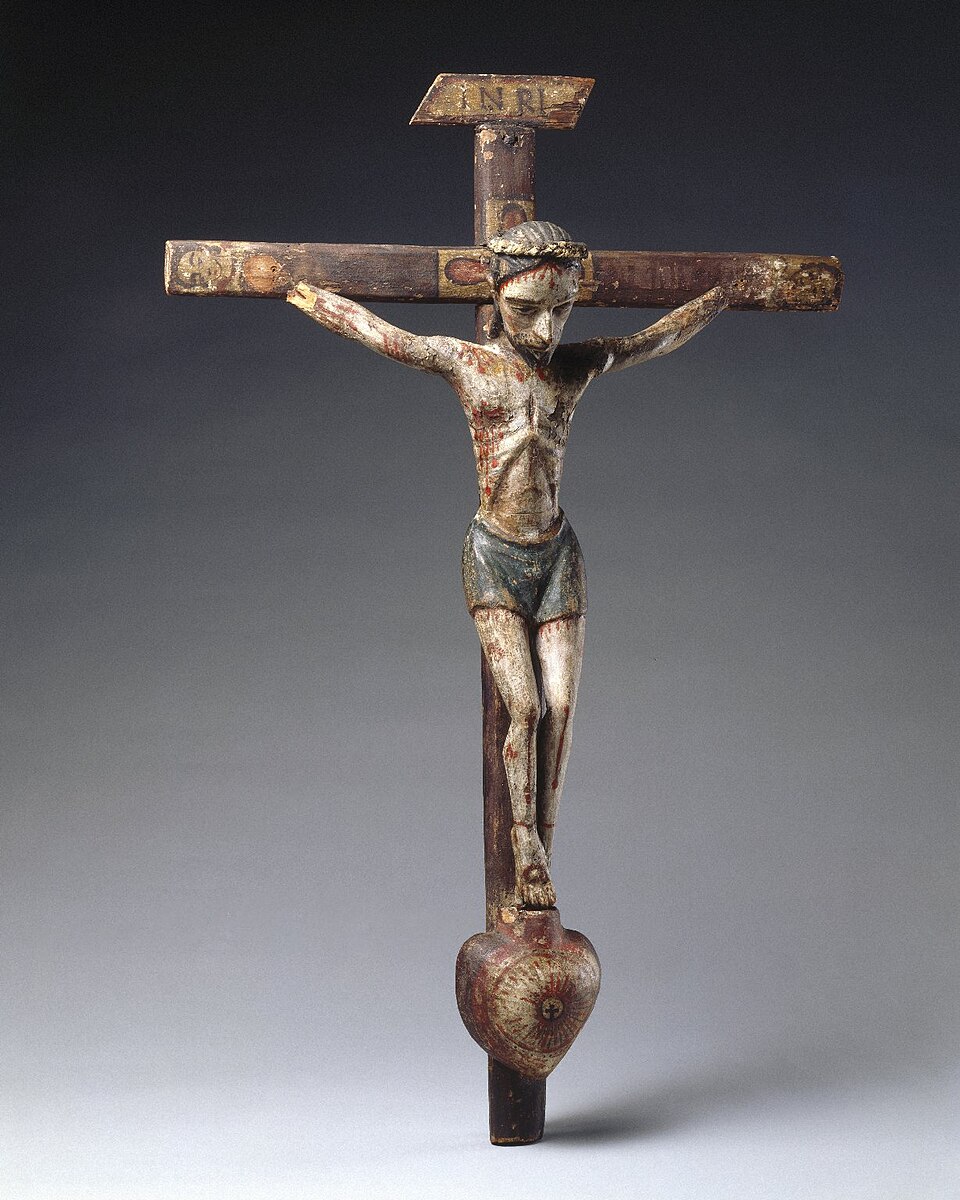
Wooden crucifix by José Rafael Aragón (ca. 1795-1862)One afternoon, when I was in high school, my teacher handed out a surprise test. We were told to read the instructions and complete it, then turn it in and we could leave. This was not the regular thing, but not unheard of to be allowed to leave the room once an exam had been completed. Little did any of us expect to be humbled by the experience.

We all started reading and completing the exam. The first line of the instructions said to read through all the questions before beginning. Sure, sure. What a waste of time, right?

Most of us just started working on the questions, beginning with number one and working our way down the page. At one point, we were instructed to say a word out loud, and one by one, we did.

Eventually, I got to the end of the test, on the back of the page, and was embarrassed to read the final entry. “Now that you have read the entire test first, put your name on the first page and go home.”

I don’t remember if any of my classmates had actually followed the instructions, read the entire two pages, put their name on the page and left early. A couple of people had left before I got to that last entry, and I was a bit surprised. But it never occurred to me that the first instruction might actually be important to follow exactly!

It’s a silly example, but all too often, we don’t pay attention to the details of what we are asked to do. We jump in, assuming we’re smart enough or talented enough to do whatever has been asked, but we don’t stop to think that maybe there’s a better way to accomplish the same goal. We are proud of our abilities and forget our limitations. Humility does not come naturally to us.

On September 14, we celebrate The Exaltation of the Holy Cross. This is an ancient feast and important enough to take the place of the regular Sunday liturgical readings. This year, we won’t be hearing the readings for the Twenty-fourth Sunday in Ordinary Time! Instead, we will hear of a love so deep that this humble love shines forth in glory as the Lord enters into creation and transforms all.

Wisdom from an Ancient Hymn

St. Paul quotes a hymn in his letter to the Philippians that was sung in the early Church, celebrating the coming of Jesus, the Christ, into our world. “Christ Jesus, though he was in the form of God, did not regard equality with God something to be grasped.”

These words were composed very early in the lives of the Christian community. Hundreds of years of reflection on the wonder of the Incarnation have followed the initial dawning of understanding of this amazing reality. God has come to be a human named Jesus, subject to all the limitations of human life. He did not hold onto the powers and privileges of being God. Instead, he accepted humbly all the limitations of human existence, including condemnation as a criminal to death on a cross.

St. Paul reminds his readers, including those of us hearing his words today, of the response of God to this self-humbling of Jesus. “God greatly exalted him and bestowed on him the name which is above every name…” (Remember, the word name means more than just what one is called – it refers to power.)

In Jesus, the Word of God, humbled himself. He, as a member of the Trinity, did not have to become one of us. But because he did it wholeheartedly and faithfully to his last breath, Jesus has been raised up and is recognized as Lord. In the process, our understanding of God is enhanced! “Jesus Christ is Lord, to the glory of God the Father.” (Phil 2:6-11)

Serpents in the Desert

The image of something raised up on a pole or cross is found early in the Hebrew Scriptures too. While the Israelites were traveling in the desert after the Exodus, there was a need for food to feed such a large group. The Lord sent manna each morning for them to collect for breakfast and birds in the evening for them to have for dinner. But after a few years, it began to be a bit boring to eat the same old thing every day. After all, how many ways can you prepare the manna to eat?

They complained to Moses about being in the desert and what God was providing for them. “We are disgusted with the wretched food!”

Hummm. Not necessarily a good idea to insult the one providing your meals, but what bad thing could happen?

Fortunately for the people, God is not vengeful. Things could have gotten really bad. Instead, they only got a little bad – unless you happened to be one of the folks bitten by the cobra-like serpents they ran into as they traveled! Some of those who were bitten died and the people came racing to Moses, apologizing for having complained about him and the Lord’s care for them.

The Lord had Moses make a bronze model of the serpent and hang it on a pole, so that any who had been bitten could be healed by looking at it. This Moses did and those who were bitten were healed.

The serpent on the pole was both a reminder of the wrongdoing of the people and a source for healing. The source of punishment was transformed into a source for reconciliation with a God who could also be humble and forgiving with his people. (Num 21:4b-9)

A visitor in the night

Early in his public life, a Pharisee named Nicodemus visited Jesus one night. Nicodemus had some questions for him, specifically about how and by what authority he was preaching and healing. As their conversation continued, Jesus spoke of the perspective of one who has “come down from heaven, the Son of Man.” (This is John’s Gospel, in which Jesus is more aware of his unique connection to the Father and it shows in his conversations.) He reminded Nicodemus of the time Moses “lifted up the serpent in the desert” and commented that the Son of Man would also have to be lifted up in order for all who believe in him to have eternal life.

Jesus’ next words are ones of amazing promise. “God so loved the world that he gave his only son … so that those who believe in him … might have eternal life.” God didn’t send Jesus to condemn humanity. God came himself in Jesus to bring life to all. God is humble enough to do what is needed to reach each of us, because God loves us so deeply. (Jn 3:13-17)

And so?

We humans will continue to bumble our way through life – often failing to recognize in our pride the simpler reality of mutual help and the need we all have for love and forgiveness along the way. But God doesn’t forget and keeps coming around, hoping we will remember the next time and ask for help when we need it and also humbly offer help and forgiveness to others when we can.

God so loved the world that he humbled himself to save us, to re-establish the original bond formed in creation. Now we are called each day to live that reconciliation and the connection we have with God, each other, and all of creation.

Readings for the Feast of the Exaltation of the Holy Cross – Cycle C


Read More

Posted by on Jun 29, 2025

Peter and Paul – Unlikely Heroes

Peter and Paul – Unlikely Heroes

Peter and Paul – One a Galilean fisherman, the other a Pharisee, scholar of the Law, immigrant from the city of Tarsus in the province of Cilicia in Asia Minor, and Roman citizen. The first’s original name was Simon and the other’s was Saul.

The chances they would ever meet, let alone become co-workers, sharing the news of the coming of the Christ to all they met and serving as leaders in the community of disciples of Jesus were miniscule. Both would eventually meet their death in Rome in 64 CE – capital city of the Empire. According to tradition, Peter was crucified, upside down per his request. Paul, as a Roman citizen, was beheaded – crucifixion was reserved for non-citizens!

A simple fisherman

Simon/Peter first met Jesus in the fishing town of Capernaum. Jesus saw him, mending and drying nets with his brothers after a long fruitless night of fishing. They had not caught anything. St Luke tells us that Jesus got into the boat to teach the people gathered on the shore. After a while he told Simon and the others to take the boat out again and toss out their nets for a catch. What nonsense! Fish didn’t bite or get caught during the day.

But something about Jesus was different, compelling even, and so they set out again. Imagine their amazement when the nets filled to overflowing with fish! They had to call the other boat with whom they usually worked to come help. Both boats were filled to the brim and more. Simon dropped to his knees and begged Jesus to leave him, a sinner not worthy of such a miracle. Jesus’ response was totally unexpected. “Do not be afraid, from now on you will be catching men.” They took their boat to the shore, left everything – boat, nets, fish, even families – to follow this man. And, oh, the wonders they would see.

Through the next three years they witnessed healings of all kinds, children and adults raised to life again, storms on the Sea of Galilee calmed at a word, thousands of people fed with just a few fish and loaves of bread, a triumphal entry into Jerusalem, and so much more. All the while, Jesus was teaching them about the Father and the Kingdom of God.

So many people came to hear Jesus and follow, but Simon held a special place among the twelve who were his closest friends. More than just followers, disciples, they were his friends. Clueless friends sometimes, but Jesus was patient with them and kept teaching about the Kingdom.

They traveled through the Galilee, Samaria, and Judea. Many times Jesus had to correct their expectations of who the Messiah would be and what their role would be. After the times he had fed thousands of people who had come to listen to him with just a few fish and loaves of bread, he asked his disciples one day, “Who do people say that I am?” They replied that folks thought he might be Elijah the prophet returned to earth, or John the Baptist raised from the dead, or Jeremiah or some other prophet. Then Jesus asked a more personal question. “Who do you say that I am.” Simon replied, “You are the Christ, the Son of the Living God.” Pretty daring words, but Jesus didn’t deny it. He acknowledged what Simon had said, adding, “… You are Peter (Rock) and on this rock I will build my church.” (Mt 16:13-19)

No one understood what Jesus meant at the time. Peter continued to learn without clearly seeing what was coming, even denying he knew Jesus in the garden of the high priest during the trial. He didn’t believe when Mary of Magdala brought word of the resurrection and he and the others hid in fear of the authorities before the coming of the Holy Spirit at Pentecost. Yet Peter became and remained the leader of the community. He and the other apostles, none of them trained in theology or leadership, learned how to lead a community and proclaim boldly what they had seen and heard. They preached, they healed the sick and lame, they witnessed to the religious leaders about what they had seen and come to believe, and rejoiced when as a result they were publicly whipped and otherwise shamed.

When Herod was persecuting the community, Peter was arrested. Herod planned to have a trial and execute him after the festival of Unleavened Bread. Sixteen soldiers were set to guard him, lest he escape. The community prayed fervently for his release, and God answered. The night before his trial, while sleeping chained to two soldiers – one on each side of him – an angel came and woke Peter. The chains that held him bound to the guards dropped away. The angel was quite practical, telling him to get his belt and pouch and to put on his cloak, then follow. He was led out of the prison, past the other guards and out the door and the iron gate, which rose silently and automatically as they approached. He found himself free on the streets of Jerusalem. He went to the house of John Mark, where all were amazed to see him, assumed he must be a ghost, and then gave thanks for his release. Afterwards, he wisely left the area to work in another community. (Acts 12:1-11)

A Pharisee and Student of the Law

Paul/Saul, on the other hand, was a tent-maker by trade. He never met Jesus before Jesus’ arrest, condemnation, death, and resurrection. In fact, he was so absolutely positive these people were liars and heretics – probably low-life scum out to take advantage of others and lead them astray – that he actively set about to arrest and convict them of crimes punishable by death.

When Stephen was arrested and charged with heresy, Saul was among those outraged by his words testifying to his faith. He watched over with approval the robes of those who stoned Stephen to death – the first to die as a martyr, a witness to the coming of the Kingdom.

Following Stephen’s death, Saul led a group from Jerusalem to Damascus to arrest the Christians there. On the road, he met Jesus and his life was turned upside down! Left blind by the vision of Jesus with whom he spoke, he went on to Damascus and there was visited by Ananias, who taught him of Jesus’ life and teaching. Saul, now known as Paul, became such a persuasive preacher that the community had to lower him in a basket outside the city walls in order for him to avoid death at the hands of Jewish authorities there!

Folks in Jerusalem were not ready to trust or welcome him. The leaders eventually accepted him, but his preaching was so compelling it attracted too much attention from the authorities. It was decided that it would be better for all if he just went home to Tarsus and went back to making tents.

Several years later, he was called back to Antioch and sent on the first of his missionary journeys to another part of western Asia Minor to preach the Gospel. He found a more willing audience among non-Jews, though he always began with the Jewish communities in his preaching.

His ministry to the Gentiles, combined with Peter’s experience in the house of Cornelius when the Spirit came upon the Romans there before they were baptized, led to the decision at the Council of Jerusalem, called to determine whether folks had to become Jews in order to be Christians. The decision, based on the experiences of Peter and Paul, was that it was not necessary and the Church set out on a new and broader path.

Eventually, both Peter and Paul ended up in Rome. Peter went there freely to work with new Christians in the city. Paul appealed to Rome for trial after having been arrested in Jerusalem. It was his right as a Roman citizen to be tried in Rome. Both died there.

Paul wrote of his life and hope for the future to his close friend and disciple, Timothy, as his death approached. His words have been an inspiration for centuries. (2 Tim 4:6-8, 17-18)

A new leader was chosen for the people of Rome after Peter’s death. To this day, the Bishop of Rome, as successor to Peter, is the leader of the Roman branch of the Catholic church community.

Heroes who changed the world

Two very unlikely heroes. One with little formal education. One with quite a lot of it. One from a conquered country. One a citizen of the conquering nation because he was born in a city of the empire. In art, one is portrayed carrying a set of keys and the other with a book and a sword. Peter and Paul.

Together, they became essential leaders of a community whose beliefs transformed the world in which they lived. Western civilization developed in a different way than it would have before they accepted the call they received to go out to the ends of the earth and teach everyone about the man they had met who turned out to be the Son of God, the Chosen One come to show humans how to live as children of God, heirs to a greater Kingdom.

None of us is likely to become as famous as they became. But each of us is also called to be part of that Kingdom they brought from a seemingly insignificant land out into the broader world. Each of us will influence others as well, for better or worse, in hearing about and choosing to become part of the Kingdom or not.

In that Kingdom they helped introduce to the rest of the world, the poor are helped to find food and shelter, welcome from the community and a chance to build a new life. Those who are sick receive care. Those who are from less honored communities are respected. Those whose lives are threatened by the strong are given refuge.

We are the ones called today. We follow Peter and Paul, and so many, many others after them as we live our lives in service to the Lord through our own families and communities, and even to the ends of the earth.

As the psalmist proclaims in song, “Taste and see how good the Lord is: blessed the one who takes refuge in him.” (Ps 34:2-3, 4-5, 6-7, 8-9)

Peter and Paul – unlikely heroes, who model a life of faith and witness for us all.

Readings for the Solemnity of Saints Peter and Paul, Apostles – Cycle C


Read More

Posted by on May 4, 2025

Recognize the Lord and Tell Others

Recognize the Lord and Tell Others

Class reunions are interesting experiences. We come together after many years of living away from the close communities of our childhood school days and find that people have changed in some ways and are fundamentally the same in other ways. I find it’s easier to recognize the women than the men. Men change in appearance more after age 18 than women do, in my experience.

It happened again recently when I chanced to be in the town where I grew up on a night when a group of my high school classmates were gathering at a local “pub” owned by another classmate. I got there a touch late, so sat at a side table where a few others were already sitting. I didn’t recognize the men, but I always find people interesting, so that was fine. As it turned out, the two men were guys with whom I had attended eight years of grammar school! I had last seen one of them at eighth grade graduation. I may have seen the other in high school, but I didn’t recognize him when I saw him that night. We had a good visit and I look forward to getting to know them both now as adults.

The apostles had a somewhat similar experience after the Resurrection. It had been a much shorter time than the 50+ years since we had all graduated, but they also didn’t recognize Jesus when they saw him.

Peter and the other apostles had returned to Galilee after the Resurrection. They didn’t know what they were going to do next in their lives, so they went fishing!

Today we typically go fishing during the day, maybe early morning or evening. But in those days, and probably still in some places, fishing as a way of earning a living was done at night. The first time Peter met Jesus, they had spent the night and not caught anything. They were returning, getting ready to go mend and fold the nets, then return home to rest. Jesus told them to try again. Despite their misgivings, the apostles tried again and this time the nets were filled to overflowing. When Jesus invited them to leave it all behind and follow him that first time, they did.

Now all had ended in what seemed like a disaster, but the women had come with word that he was risen and would meet them in Galilee. So, here they were, fishing again and catching nothing…

A man was watching them from the shore. He called out in a friendly way, asking if they had caught anything. They called back that they hadn’t. He responded with the suggestion to throw the net over the right side of the boat and they would find something. They did and the net was filled to overflowing. John, identified as the disciple whom Jesus loved, immediately realized who the fellow on the shore had to be and told Peter, “It is the Lord.” At that, Peter jumped overboard and swam to shore. The others came in with the boat.

They didn’t recognize him when they saw him. He looked different. But he welcomed them, had bread to share with them and some fish. He cooked some of the fish they had caught as well. They shared the meal. And though he didn’t look like the man they had known, they knew who he was because he broke the bread and fish and shared the food with them. Also, he had given them that huge catch of fish once again. The reason they didn’t ask who he was? John tells us it was because he had broken the bread and given it to them to share, just has he had done the night before he died.

The time by the lake didn’t end with just the meal, the breaking of the bread. Jesus spoke directly to Peter. Remember, Peter had denied knowing Jesus three times during the night before Jesus died. Three times, then, Jesus asked him, “Do you love me?” Three times, Peter responded that he did love Jesus. Jesus instructed Peter in response, “Feed my lambs.” “Tend my sheep.” “Feed my sheep.”  He told Peter that he, Peter, would indeed follow in his master’s footsteps, even to his death. And then he once again called Peter, “Follow me.” (Jn 21:1-19)

They all returned to Jerusalem and met Jesus in different locations over a period of forty days. Then he was taken from their sight and they were told to go to Jerusalem and pray. Pentecost came, the Holy Spirit filled them with courage, and they began to tell the world about what they had seen and heard. The community of believers began to grow.

The authorities at the temple were not amused. In fact, they were quite angry with the apostles. They ordered them to stop preaching and teaching, but Peter and the others refused, “We must obey God rather than men.” The authorities were very angry but were persuaded not to over-react. They ordered them to be flogged and sent them on their way, in hopes that would teach them a lesson and they would just go home again. (Acts 5:27-32, 40b-41)

Of course, it did not stop them from sharing the wondrous news of the Resurrection. The community continued to grow and the word spread into all of the world. We today are among those who believe based on the testimony of those first men and women who saw the Lord after he rose and who shared their witness down through the generations.

The reading from the Book of Revelation that accompanies these accounts of the earliest days of the community of faith describes an important reality as well. What happens when believers are isolated from their community, not allowed to celebrate the breaking of the bread or prayer with their sisters and brothers in faith?

The author, John, tells of his mystical experience of witnessing countless numbers of other people and creatures who gathered together in praise of “the Lamb that was slain.” (Rev 5:11-14) John was in isolation on the island of Patmos, separated from his community. As he learned, it’s not necessary always to be physically with others in worship when in reality, our community extends beyond our day-to-day world. People from all ages and all parts of creation join us in our life of faith and praise of the Lord. We are not alone.

So, what does all this imply for us today?

We have lots of pictures and images of Jesus. None of them was drawn of him before his death and resurrection. We don’t know what he looked like, nor is it important that we do. As the early disciples discovered, he didn’t always look the same after he rose anyway.

Where will we find him today? What did he tell us? It wasn’t to look among powerful political leaders or wealthy people who had everything they could ever hope to need materially. It wasn’t to assume he would only be seen as a man. He spoke of those who are hungry, those who are thirsty, those who are un-housed, those who are in prison, those who are sick, the children, the helpless, the migrant, the refugee, the farmworkers, those who wait outside lumber yards and hardware stores, hoping for work and money to feed their families. These are where we find the Lord. “Whatever you did for one of these least brothers (and sisters) of mine, you did for me,” he tells us. (Mt 25:40)

As we go through our daily lives, as we hear the news and reflect on the things happening in our country and our world, we are called to pay attention and see where the Lord is present among the little ones. This is where we must be active too. How do we help? When disaster strikes in a life, who will share resources? Where will funds come to rebuild entire communities after a tornado or flood? How do we as members of a nation provide for the common good?

We each do our part in our corner of the world, but some needs are too great to be solved locally. How do we act as a larger community of believers to protect not just the unborn, but also those who have been born and are struggling to grow, to support their families, to age gracefully, and to pass into the next life in a dignified, well-supported community of loving caregivers? At all stages of our lives, we meet the Lord. In all those whom we meet along the way, we have the opportunity to meet and serve the Lord.

This week, may we keep our eyes open to see his presence in those around us. May we reach out in love and friendship to those in our communities who need a bit of extra help. May we encourage our leaders and representatives to provide for the common good, rather than to open more doors for only the well-to-do.

Working through the community of believers, the Lord reaches out. May we together be faithful sisters and brothers who recognize his presence, tell others about our experience of his love, and want to get to know him better through his brothers and sisters whom we meet each day.

Readings for the Third Sunday of Easter – Cycle C


Read More

Posted by on Feb 2, 2025

A Refiner’s Fire – Purify and Prepare

A Refiner’s Fire – Purify and Prepare

Aluminum foil is one of those products that has come to be so commonly used that no one thinks much about where it comes from and how it’s made. But that wasn’t always the way it was.

Here’s a bit of background. Aluminum is the twelfth most common element in the universe. It reacts well with oxygen, and when they combine on the surface, aluminum shines like polished silver. It is soft, easy to shape, and non-magnetic. Many cooking pots used today are made of aluminum, which heats easily. (This poses a challenge for those seeking to use induction stoves! They won’t heat, because induction is based on magnetic force.)

Aluminum is found in the crust of the earth, mixed into a kind of rock known as bauxite. This mineral is lighter than iron or steel, so has historically been extensively used in aviation – for building airplanes. It has to be separated from the rock in order to be used. It must be refined.

When I grew up, most of the men in my area of town worked either for the railroad or for Kaiser Aluminum, refining aluminum from bauxite. The pot lines were located just outside the town immediately to the north of our community. Once the ore was liquid, it was trucked to another plant east of town. There it was poured and shaped into huge rolls of solid aluminum. Those rolls were then shipped to plants elsewhere, rolled increasingly thinner, and formed into the metal we use today for airplanes, cars, cooking pots, and aluminum foil!

The pot lines were extraordinarily hot places. There were sixteen buildings with potlines. If a bit of metal fell on the ground, everyone knew not to touch it. It would be burning hot. When the lines were open so families and friends of the workers could visit and see, we were all told never to touch anything shiny or metal on the ground. The potlines were heated and the metal was liquid. It was stiflingly hot inside the buildings. Over 100 million pounds of aluminum were produced there in the first year alone.

The plant has since closed, as has the railroad yard. A lot of clean-up work has been required to rid the area of toxins produced by both. Some toxins are still in the soil and protective layers have been added to keep them where they are rather than letting them get out into the waterways again. And life has gone on …

Reading from the book of the Prophet Malachi today, I was reminded of these potlines and the refiners’ fires, the fuller’s lye. (Fuller’s lye is also known as potash – potassium hydroxide. It’s very caustic. Sodium hydroxide is another very common form of lye, known as soda lye. Don’t even think of drinking it! Both are used to make soaps.) Processing of the bauxite includes use of lye to break apart its components and separate out the aluminum ore.

Malachi speaks of the messenger of the Lord who will come ahead of the messenger of the covenant. The first messenger is to prepare the way of the Lord, so the messenger of the covenant can enter. This one will come with power – like the refiner’s fire – and will patiently refine and purify the Levites, the priestly class. Why purify them? So they can offer sacrifices on behalf of the people that will be pleasing to the Lord. (Mal 3:1-4)

The words of Malachi were recorded around 500 years before the birth of Jesus. Yet they are part of a transition in the long story of reconciliation between God and humanity. The purification of which the prophet speaks will result in a renewal of the Lord’s joy in the offerings and love of the community.

And then, the long wait continued.

Jesus’ birth marked another transition in this history, as he began his life as a child of the Covenant. The Feast of the Presentation celebrates an event required by the Covenant in the life of Jewish baby boys. When the first boy was born to a family, tradition said the child belonged to God. The parents of the family offered a sacrifice of thanksgiving for the birth of the child and in return, received the right from God to keep him as their own. They didn’t have to give him to the Temple to be raised there, apart from his family.

Joseph and Mary took Jesus to the temple to offer this sacrifice on his behalf. This was not the time of his circumcision. That was a different custom and timeframe. They expected to offer the sacrifice and leave, as any other couple would expect. Additionally, it was forty days after his birth, so a sacrifice was to be offered to allow Mary to re-enter the life of the community, to “purify” her after her pregnancy. Accordingly, this day we remember as the Feast of the Purification of Mary was a doubly important day in their lives.

Joseph and Mary got a surprise that day in the Temple. An old man, Simeon, met them at the Temple. He had been promised by the Lord that he would not die before seeing the Christ of the Lord – the anointed one who was to come. When he saw Joseph and Mary, he knew this child was the one he was sent to meet. He took Jesus in his arms and gave thanks. “Now, Master, you may let your servant go in peace … for my eyes have seen your salvation.” More than just the salvation of Israel, Simeon proclaimed that this child would be “a light for revelation to the Gentiles and glory for your people, Israel.”

Wow. Not just Israel, but all the peoples of the world!

Simeon was not a fool, however. He spoke directly to Mary of the trials that would come to her personally because of the identity of her child. Her child’s life would be a source of contradiction and of conflict among peoples – those who believed in his origin and mission and those who did not. She would suffer personally as she watched this come to pass – as would any mother watching her own child go through all Jesus would.

Another woman was also in the Temple that day. Anna was a prophetess. She heard the Lord’s word and had spent most of her life serving and praying in the Temple after the death of her husband. She too recognized Jesus and gave thanks for his birth. She thanked God and told all those she met afterwards about the coming of this child at last.

Following that amazing day, St. Luke tells us that Jesus and his family returned to Nazareth. Jesus grew up there as an ordinary child in an ordinary family, becoming strong and wise. The Lord God was pleased with him and his growth. (Lk 2:22-40)

Now, you may ask, where does aluminum fit into all of this?

As an adult, Jesus’ life followed a pretty normal path until his cousin John began baptizing people in the Jordan River and speaking of the coming of the Messiah. Following Jesus’ own baptism, when the Holy Spirit came upon him and he began to understand his role in the coming of the Kingdom of God, he traveled a path that eventually led to his self-sacrifice at Calvary.

The author of the letter to the Hebrews explains that in order for God to reach out in reconciliation with all of humanity and take away the power of death, it was necessary to become one of us and experience and conquer death. Rather than sacrifice animals, as the traditional priests in the temple did, Jesus gave himself as an offering. In doing this, God himself came to experience human suffering in a very personal way. Jesus, as human and divine, is able to help those who are suffering too. He understands and is present with them. He can’t necessarily prevent them from suffering. But they will not be alone. He will be with them through the entire process of purification and refining of faith and faithfulness to the Kingdom’s call. (Heb 2:14-18)

This promise has sustained millions of people through the centuries as they have had to stand on their own two feet and say Yes or No to what is happening in their families and communities.

There continue to be times when people are called to pass through a time of refining, of becoming again faithful to their call, of speaking and acting on behalf of the Kingdom. It happens in families. It can happen in communities. It can happen in nations.

As we enter into this very difficult time in our nation’s history, with so many unknowns, so many precedents being discarded, so many vulnerable people being hurt, may we too remember and pray for the courage to speak and work for the Kingdom of love in practical ways. It’s not a theoretical, sometime-after-I-die kind of thing. It’s right here and now.

How do we support the migrants? How do we speak for children who will be left hungry without community support through the government? How do we protect travelers? How do we keep roads and bridges safe? How do we prevent wealthy thieves from stealing the funds we have all put together to support our institutions and families?

This is a time we have not seen before in our lifetimes. Pray with me that we will have the courage to speak up, to reach out, to help those who we may not even know are at risk, so that all may continue to live and work and thrive in this place that has been so rich in resources and community.

It’s not a time to give up. It’s not a time to panic. It is a time to speak and act concretely. Reach out. Offer your time and help to groups that are trying to protect the poor, the migrants, the visitors, the disabled, the minorities, the elderly, the children. Work together. We must not stop caring. We must not stop hoping. We must carry on in faith.

Aluminum gets very hot as it is separated from bauxite. But it shines when the process is over. May our lives, our traditions, our nation, our way of being be purified and sustained through this time of upheaval and danger.

Our traditions and beliefs do not point to the elevation of one race or one set of beliefs. Our outreach is to all peoples and we find God in all cultures. All are our sisters and brothers. All are to be protected and loved.

At this Feast of the Presentation of the Lord, may we remember our call to recognize and shine forth the Light for Revelation whom Simeon first recognized so long ago in the Temple: the Love and blessing of the Lord God for all, living now within each of us.

Readings for the Feast of the Presentation of the Lord – Cycle C


Read More

Posted by on Mar 27, 2022

Seeing with God’s Eyes

Seeing with God’s Eyes

I’m always intrigued by those puzzles in which there are two pictures that at first glance look the same, but have a caption reading, “Can you spot the differences between these two pictures?” There are small things that differ between the two pictures. One might have a yellow flower and the other a red one. One is missing a beach ball or has a baseball in the same place. I suspect those who develop these puzzles have a good laugh as they do their work. “How long will it take before the kids notice this difference?” Such puzzles help children develop an awareness of detail and subtle differences. They’re good for reminding adults that things are not always what they seem at first glance to be.

We have reached the Fourth Sunday in Lent, a Sunday known as Laetare Sunday. Laetare is the first word in Latin of the opening antiphon of the Mass, Laetare Jerusalem, Rejoice, O Jerusalem. This Sunday the celebrants will wear rose-colored vestments. (Teasingly, some folks refer to the color as pink, knowing that in our time and culture, pink is a color more commonly associated with women’s styles and fashion than with men’s vestments. The men smile and correct them, “It’s rose.” Another example of different ways of perceiving the same thing….)

Once again, we have two different sets of readings. Cycle A readings are used in communities which are celebrating the Scrutinies with their RCIA candidates. Cycle C readings are used in other communities.

Sometimes the readings have very different themes, but this day there are some common threads.

Cycle C readings begin with a section from the book of Joshua (5:9a, 10-12). It takes place after the people have crossed the Jordan River and entered the Promised Land. For forty years, they have been in the desert and eaten manna each day. Now they are in the “Land of Milk and Honey,” a land of great abundance. They celebrate Passover there and eat the unleavened bread and parched grain of that meal. The very next day, the manna does not again fall. The “yield of the land of Canaan” is now theirs to enjoy.

Psalm 34 rejoices: “Taste and see the goodness of the Lord.” The lowly will hear and be glad. “I sought the Lord and he answered me.” The Lord delivered the poor one from distress. So many examples of the goodness of the Lord, a goodness physically tasted by the Israelites in the text from Joshua.

St. Paul explains to the Corinthians (2 Cor 5:17-21) that old things have passed away and new things have come into being for those who belong to Christ, those who are members of the Christian community. All are part of Christ’s body and share in the mission of reconciliation between God and humanity. This is not just the calling of the apostles. It is the calling of all Christians. Those outside the community may not perceive this difference, but those who have answered the call will shine forth the righteousness of God in their lives of faith as Christ’s ambassadors to the world.

The Gospel story in Cycle C is from Luke (15:1-3, 11-32). It’s known as the story of the Prodigal Son. A man has two sons. One begs for his share of the inheritance in advance. The other stays home with his father and works on the family land. The first goes off to another land and spends all his money frivolously. Eventually a famine comes. He has fallen to the point of needing to care for pigs, unclean animals, to earn any money at all. He in such a sorry position that he doesn’t even get offered the food fed to the pigs. Coming to his senses, he realizes his error in leaving home. He decides to return and beg his father for a job as a field hand.

As he approaches, his father sees him coming and runs out to meet him. A party and great celebration follow. The brother who remained at home is terribly upset and won’t come into the house to the party. His father begs him to come and celebrate, “because this son of mine was dead, and has come to life again.”

The father in this story sees things as God does. We too are called in this parable to see through God’s eyes.

The Cycle A readings start out with the selection of David to be the successor of Saul as King of Israel. The Prophet Samuel (Sam 16:1b, 6-7, 10-13a) is called to go to Bethlehem, to the home of a man named Jesse. Jesse has many sons, all of whom appear at first glance to be perfect for becoming king. Yet as each appears, the Lord tells Samuel that this is not the one. Finally, after all the sons at home have been examined, Samuel asks, “Are these all the sons you have?” As it turns out, there is one more, a boy who is out taking care of the sheep. No one even thought of him as a possible option.

Samuel calls for the boy to be summoned. When David appears, the Lord says, “There – anoint him, for this is the one!” When Samuel anointed David, “the spirit of the Lord rushed upon David.” David grew up to become the second king of Israel.

The Lord’s eyes perceived something in David that was not obvious to the rest of his family.

Psalm 23 follows in this set of readings. In this psalm, the composer declares, “The Lord is my shepherd; I shall not want.” We are very used to seeing this as a beautiful and comforting sentiment. Traditional pictures show a well-groomed, rather effeminate man, or a healthy young boy, tending a flock of sheep on a beautiful afternoon. But this was not the lived reality of the world of the shepherd. There were wet, rainy days. There were muddy fields and cold nights. There was very low social status as the people moved from being traveling shepherds to having farms, cities, armies, and kingdoms to defend.

There were still a good number of shepherds in the time of David and Jesus, just as today there continue to be shepherds. Shepherds and other pastoralists (such as cowboys) still follow their animals from pasture to pasture. Many farmers also keep sheep and cattle as part of their operations. These animals provide many resources that are useful for the humans who tend them and sell or exchange those products as part of a way of earning their living.

To think of the Lord God as a shepherd brings a multitude of images. The notion of a God who would get his hands dirty, entering into the earthiness of our lives as humans, is striking. The notion that God is like a shepherd who knows what is best for the sheep and will protect them is comforting.

A lot depends on whose eyes are looking and from what perspective. What is different in one picture/scenario than in the other?

In his letter to the people of Ephesus, St. Paul speaks of light and darkness. Those who are not yet followers of Jesus are still living in darkness. Christians are children of light, from which goodness, truth, and righteousness flow. He advises them to bring anything that is not good to the light so it can be healed. The deeds of darkness are shameful and bring harm. Those that are brought into the light become visible and bring honor. In a culture in which honor and shame are shared across an entire family, this is tremendously important. The picture of a life is quite different when lived with honor in the light of Christ.

The Gospel for today is from St. John (9:1-41), the healing of the man blind from birth. In Jesus’ time, there were no social services for children born with disabilities. To give birth to a child born blind was a great tragedy. There were very few occupations, if any, that welcomed the blind and allowed them to learn a skill and support themselves as adults. Most disabled people found they must become beggars to survive. People passing by might help. More often, they simply pretended not to see or hear the beggar. Most likely, they simply tuned out the voices of the beggars as they themselves went about their day. (We sometimes do the same as we pass the unhoused on our streets, if truth be told.)

Jesus and his friends passed a blind man who was begging. The disciples wondered whose fault it was that the man had been born blind. In their culture, it was assumed that blindness was punishment for sin – whether the sin of the person who had been born blind or the sin of the parents. Jesus replied that no one had sinned and thereby caused this tragedy for the man in question. God’s works would become visible through the blind man and his misfortune.

Jesus spat on the soil, making a mud paste which he smeared on the man’s eyes. Spittle was believed to have healing characteristics in those days. Then he instructed the man to go wash off the mud at the Pool of Siloam. The man didn’t ask to be healed. He could have laughed and remained at his post. But instead, he went to the pool and washed. He played a role in the healing himself by following Jesus’ instructions. When he washed, his blindness was healed and he could see.

He came back from the pool a transformed man. He had been a beggar, dependent on the goodwill of strangers. Now he testified to what had happened. “The man called Jesus made clay and anointed my eyes and told me, ‘Go to Siloam and wash.’ So I went there and washed and was able to see.”

He did not know where to find Jesus or even what Jesus looked like. He had been healed at the Siloam while Jesus had continued on his way.

St. John tells of the witness of the newly healed man and his courage in speaking the truth of his experience to the religious authorities and teachers in Jerusalem. The authorities did not believe him. His parents testified that he had indeed been born blind. He didn’t back down from his story of the healing received. He argued with those who claimed that Jesus was a sinner, therefore not possibly able to heal. He reminded them that God listens to those who are devout and do his will. He did not back down in his testimony and was eventually tossed out.

Jesus went to find him when he heard of the actions of the authorities. He asked the man whether he believed in the Son of Man. Upon learning that this was Jesus speaking with him, the man professed his faith.

Themes of seeing and blindness run throughout this story. They don’t follow standard patterns. The blind see and the seeing are blind. God’s eyes see differently than do the eyes of those who think they know what is possible, right, and good. God looks at the big picture and sees differences that we might not notice.

Today I ask myself, what is it that I am not seeing? Where are the blind-spots in my life? Do I really want to see? If I see, what will change? Do I want change? Where does God fit into all of this? What does God see that I don’t? Two pictures – Many things basically the same – A few things different.

Open my eyes, Lord. Help me to see your face… Help me to see.

Mass at Resurrection Catholic Community, Aptos, CA – You Tube

Open My Eyes – Jesse Manibusan


Read More