Pages Menu
RssFacebook
Categories Menu

Posted by on Dec 1, 2024

A Time for Hope and Preparation
A Time for Hope and Preparation

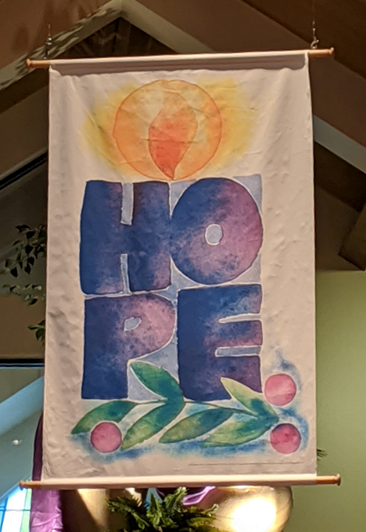
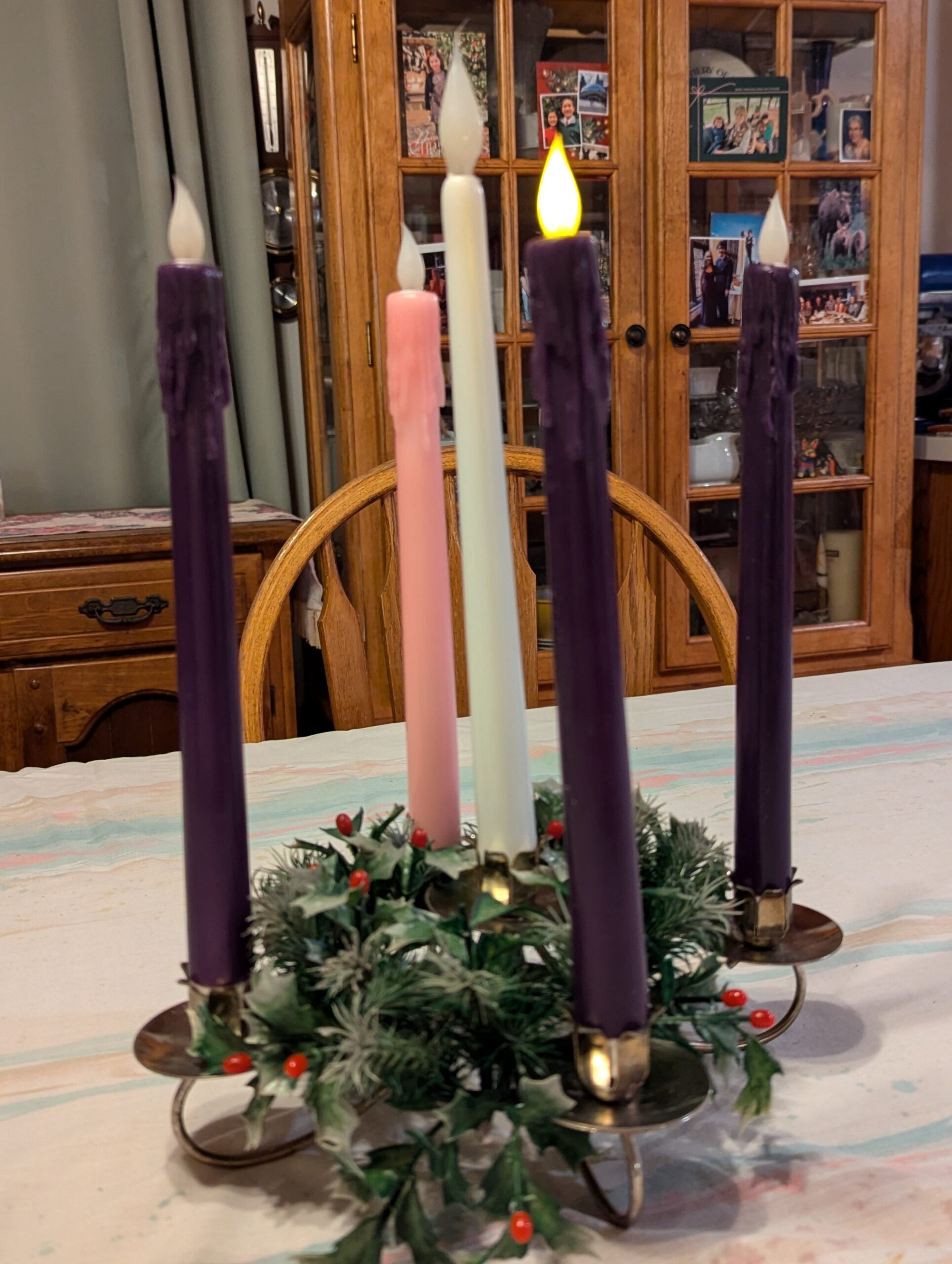
A new year begins again. This one doesn’t follow our typical calendar of 356 days. This one is set to begin on the fourth Sunday before Christmas. The season celebrated during this brief time is known as Advent – a word meaning “arrival.”

The First Sunday of Advent looks forward with hope to the coming of Christ. This year, we also enter into the final weeks of preparation for the Jubilee year which will begin with the opening of a special door of St. Peter’s Basilica, the Holy Door, in Rome on December 24. This door is sealed at all times outside of Jubilees.

The them of this Jubilee is “Pilgrims of Hope.” The readings for this day support the theme of hope on the way.

The Prophet Jeremiah lived in the times just before and during the Babylonian conquest of Jerusalem and the destruction of the Temple. He attributed the military defeat by the armies of Babylon to unfaithfulness to the Covenant, particularly on the part of the ruling royal family. He predicted the conquest and lived to see it happen. Yet he never stopped sharing the messages of hope he received from the Lord. He spoke the warnings and the frightening messages, but he also spoke the hopeful ones.

“The days are coming…” “I will fulfill the promise I made to the house of Israel and Judah…” “I will raise up for David a just shoot…”  “Judah shall be safe…” Jerusalem will be called “The Lord our justice.”

Terrible things may happen. Nations will be conquered. Peoples will be displaced. But the Lord is still present. The Lord will take care of the people of the Covenant. A new leader will come, raised up by the Lord and doing “what is right and just in the land.” It is a time for hope in the Lord’s word. (Jer 33:14-16)

As a child and man of the Covenant, Jesus was immersed in these traditions of national independence and prosperity, transitions in which the nation moved away from the Covenant’s guidance, and resulting ultimate conquest by another nation.  Each time the cycle played out, eventually the Lord was seen to intervene and bring the nation back to prosperity and safety.

As his life neared its end, Jesus spoke of what would happen at some time after his death. He was not naïve about the risks he was taking by being in Jerusalem and preaching the message he had come to deliver. He knew it would not likely end well for him. He spoke prophetically about what would happen at the end of time, when the Son of Man returned to Earth in triumph. The description of the “signs in the sun, the moon, and stars, and on earth” sound like things many of us have seen in our lifetimes, but the sense of the words is that they will happen on a much larger scale. “People will die of fright in anticipation of what is coming upon the world…”

Yet Jesus does not tell his followers to be afraid when fearsome things begin to happen. They/We must not allow ourselves to be pulled into fear or anxiety or indifference to what is happening in the world around us. Jesus says, “Stand erect and raise your heads because your redemption is at hand.” The changes coming will be challenging. There will be hard things that must be faced and addressed. But “Be vigilant at all times and pray that you have the strength to escape the tribulations… and to stand before the Son of Man.” (Lk 3:12-42)

As the followers of Jesus went out into the world to share the word of what they had seen and experienced, communities grew in many cities. St. Paul and others wrote to the people in these cities, encouraging them in their faith, continuing to teach them and deal with the problems that arise in human communities. He wrote to the Thessalonians to encourage them to strengthen their hearts in preparation for meeting God. He and other early Christians expected Jesus’ return to be very soon after the Resurrection. That proved not to be the case, but the advice remains firm for us today as well. We are all to behave in ways pleasing to God and follow the instructions we have received, with the help of the Lord Jesus. (1 Thes 3:12-4:2)

As we move through these next few weeks toward Christmas and toward the official beginning of the Jubilee Year, we are called to continue our faithful following of the Lord’s teaching on justice and loving service.

This is a time of transition in the United States. Transitions are happening in other nations as well. The requirement to live in love, service, and justice for all does not end. It is not based on who wins elections. It is not negotiable.

We must continue to help those in need. We must continue to support those who come to our nation from afar, seeking opportunities and safety from violence and persecution. We must offer a smile and friendship to those among us whose bodies don’t necessarily outwardly meet our expectations of who they are. We must protect children and families, giving help and support so they can have the chance to get through hard times and back on their feet. We must care for the sick and those who are unable to care for themselves any longer. We must reach out to support others around the world who are living in difficult conditions and need a helping hand. We are called to live the Beatitudes and be Pilgrims of Hope on the journey through life.

We are all in this life together. We have different gifts, different opportunities, different wounds and challenges, but we are all in this together. We must help each other, not get in the way of and push aside those who are different than we are.

Pilgrims of Hope. Are we ready for Christmas? Probably not yet. Are we ready for the Jubilee? Maybe not yet. Are we excitedly preparing? I sure hope so. It’s a special blessing to live in this time. Jubilees don’t happen often. Let’s take advantage of this one to live and work in hope.

Readings for the First Sunday of Advent – Cycle C


Read More

Posted by on Nov 28, 2021

A Time for Hope and Expectation – The Lord is Coming

A Time for Hope and Expectation – The Lord is Coming

One of the wonderful things about being a mother and grandmother is the chance to read stories to children. So many wonderful stories I have read to children at bedtime and in the car as we were traveling – stories that I would never have even known existed had I remained always in the adult world. Just last night I sat up and re-read the final chapters of The Lightning Thief, by Rick Riordan. It is a story I read with my daughter when it was new. Now my grandson has just finished reading it and I re-read it so I could talk with him about it as he enjoyed it for the first time. (Besides that, it’s a really good story with a lot of unexpected twists and turns that I had long ago forgotten.)

The Lightning Thief is the first of several series of stories that take as their inspiration Greek, Roman, Norse, and Egyptian mythologies – the stories of the gods and their interactions among themselves and with humans. This particular story is about a boy who discovers he is a demi-god whose father is Poseidon, god of the seas. A favorite tool of one of the gods has been stolen and a war is about to break out among them if the tool is not found and returned. Among the gods, it is widely believed that our hero has stolen the tool. The story goes from there as he discovers who he is, what has been stolen, who is believed to have it, where it actually is, and whether it can be recovered in time to prevent the war. A marvelously impossible and improbable quest for a group of children in middle school to engage upon, it is an engrossing story for the reader to share.

This story came to mind this morning as I was thinking about the readings for the First Sunday of Advent. It’s a brand new year for us as Church and once again we hear apocalyptic writings of things that are to come at the end of time. We’ve had a lot of these readings lately. One year ends with them and the new year begins with them.

Why do we have this kind of writing anyway? Why not just state clearly that at some future date the universe will end. At some date each of us will end our lives here. At some point we will meet the Lord. Earthquakes happen. Climate fluctuates over time. Storms come and go, both literally and figuratively. And so forth…

We have these kinds of stories because our understanding of the world is incomplete. Humans have existed for thousands of years, but much of what we know of how the geology, chemistry, physics, psychology, and inter-personal relations behind our daily experience operate has only been uncovered in the last few hundred years. There is still much we don’t know or understand.

As an anthropologist, I turn to a concept that I find helps explain our human use of stories to make sense of what we don’t understand or can’t find words to express. Anthropologists speak of “explanatory systems” that take a physical or social reality and place it within a larger context.

Humans wonder “why” things happen the way they do. Why do we have earthquakes? Why do we have storms? Why is the weather good some days and terrible other days? Why do people care for each other? Why do we have enemies? Why do some people die young? Why do old people spend so much time telling the same stories over and over? In the words of a song originally written by Woody Guthrie and adapted for children by Anne Murray, Why Oh Why, we ask again and again “Why does… Why can’t… Why won’t…” Eventually, the question becomes, “Why won’t you answer my question?” and the response is, “Because I don’t know the answer, Good night, good night.”

We don’t know the answers, so we humans tell stories and sing songs.

In our Judeo-Christian tradition, there is only one God. There are no demi-gods as there are in so many other traditions. Our God speaks through humans. Our God speaks directly to humans. God acts in human history. God loves humans and all of creation so much that God enters into creation as a human being. As a human being, God experiences a complete human life, including the joys and sorrows of life and death with family and friends, unexpected happy surprises, hope, love, suffering, fear, and death.

Yet there are things that happen in our lives and history that are hard to explain. For our ancestors in faith, the answer was clear. God intervened. In times of war, God acted to protect the armies of God’s people. When the people were not faithful to their agreement (the Covenant), God punished them by allowing their enemies to conquer and send them into exile. Yet always, God was there, ready to forgive and bring them back to a good relationship between humans and their God.

The apocalyptic literature read today tells symbolically of this relationship. Jeremiah (33:14-16) recalls the promise God made to King David that a savior would rise from his descendants and do what was right in the land. The country would be secure and the capital city, Jerusalem, site of the temple in which God dwelt in a special way among the people, would become known as “The Lord is our justice.” The people are in exile in Babylon, but the promise is made yet again. There is a reason for hope and expectation of a better future.

Our Gospel story is told by St. Luke, a man who was not part of Jesus’ original circle of friends. Yet Luke (21:25-28, 34-36) has heard and tells the story of Jesus’ description of the coming end of time, when the Son of Man will come on the clouds of heaven. We heard this story from St. Mark two weeks ago. Luke encourages his readers to be awake, vigilant at all times, prayerful for the strength to remain faithful when things are going badly around us. Nations and peoples, and even the physical world itself, will be in disarray, but we can be assured that redemption is at hand. It’s a time for hope and expectation of the coming of the Son of Man – the one who saves us.

The early Christian community expected the second coming of Jesus very soon after the Resurrection. After all, the final reconciliation between humans and God had been achieved through Jesus’ death and resurrection. St. Paul (1 Thes 3:12-4:2) also expected the second coming to be imminent, but in the meanwhile, it was important to live a life of loving care as a community. He reminds the people of Thessalonica to behave themselves! He asks the Lord to increase the love they have for each other and strengthen their hearts, so they will be holy and ready when God comes with all his holy ones.

We too live in difficult times. Our world is filled with strife. We argue over immigration, vaccinations, mask mandates, borders, national sovereignty, taxation, the role of government, and on and on. How do we as a Christian community live in love for and with each other? How do we deal with our brothers and sisters with whom we find ourselves in serious disagreement? How do we find ways to address problems that threaten us all, when we can’t even agree on what has caused them?

I don’t have any easy answers. I’m not sure there are any easy answers. But I know in the depths of my heart that we must continue to respect and love each other. We must care for each other and work to find common ground. We are called as members of Christ’s Body to be one with all the rest of our sisters and brothers, working together to bring the peace of Christ to this world.

Happy New Year. May the Lord’s Peace dwell deep within each of us and shine forth in our lives today and through the year we are just beginning.

Readings for the First Sunday of Advent – Cycle C

Read More