Fulfilled in Your Hearing
 The gift of hearing is one most of us don’t truly appreciate. We are born able to hear and part of our growing and maturing is to begin to make sense of the sounds we hear. We copy the sounds of our world without really understanding their meaning. Often the tones and rhythms are repeated accurately long before the actual words are spoken and used in communication. Waiting in line in the grocery store, for example, one day a little child in a stroller looked up at me and in absolutely perfect rhythm and tones the asked, “ow ah oo.” I responded, “I’m fine, thank you. How are you?” The child beamed. His friendly question had been understood. His mother looked at me like I had two heads. She hadn’t realized he was speaking in tones. I recognized that he was asking a question only because my mother had once pointed out to me the way children first communicate with tones and sounds rather than words.
As we get older, hearing can begin to fail. We don’t hear what others say to us and wonder why their feelings get hurt when we continue to walk away rather than turn and respond to their words. We don’t notice the lack of sound and get used to the peace and quiet. When our families or friends point out that we are losing our hearing, it can be an upsetting thing to hear. “What do you mean, I can’t hear? I hear just fine!” But really, communication begins to fail. And eventually, if not treated, the nerve pathways for hearing get reprogrammed to do other things. There is convincing evidence that hearing loss can contribute to the development of dementia.
What does all of this have to do with the readings for the Third Sunday of Ordinary Time? Hearing, understanding and remembering are all activities that can be lost or forgotten. Sometimes, we need to be reminded to open our ears and minds and hear what is being communicated.
A People Reminded of their Calling
At the end of the exile of the Jewish people in Babylon, King Cyrus of Persia sent them back to Jerusalem, to the land from which they had been taken. He sent Nehemiah, one of his trusted officials, along to help them rebuild their city, the temple, and their community. Ezra was a priest who worked with Nehemiah in the enterprise.
During the time in exile, most of the people had lost their connection to the ancient covenant with God that was established at the time of the Exodus. The people at the time of the Exodus had traveled through the Sinai peninsula and surrounding lands for forty years before entering the land to the west of the Jordan River where they settled, the land that came to be known as Israel. As part of the renewal of their community, Ezra gathered together all those returning from Babylon to re-introduce the Law.
Standing on a platform higher than the gathered people, he opened the scroll of the Law and began to read at dawn to all the people, including the children old enough to understand. As he began, he offered a prayer of blessing, a kind of thanksgiving prayer, to the Lord. In response all the people raised their hands in a great acclamation – “Amen, Amen!” They bowed down, prostrate on the ground in honor of the scroll and the law they would hear.
Ezra read from the scroll, the book of the law of God, and explained what was meant by its words. Many no longer understood their own ancient language, the language in which the scroll was written. As he read, the people began to cry, but Ezra, Nehemiah, and the Levites who were teaching the people all explained that the words were ones of encouragement and hope. It was a time to celebrate. “Go, eat rich foods and drink sweet drinks, and allot portions to those had nothing prepared; for today is holy to the Lord.” Furthermore, they proclaimed, “…rejoicing in the Lord must be your strength.” (Neh 8:2-4a, 5-6, 8-10)
Hearing for the first time the words of the covenant with the Lord was a time for rejoicing. A new beginning. A reminder of the ancient words calling them to a life of faith, of caring for each other, of welcoming strangers (foreigners) who would come to live among them, of justice and peace.
In addition to the Law, the people of Israel had the traditional teachings of the prophets who had guided the nation for centuries. Again and again, the prophets reminded the people and their leaders of the Lord’s demand that they care for widows and orphans, welcome peoples of other nations who came to live among them, not cheat others in business dealings, forgive debts, free captives who were being held unjustly, and share their belongings freely. The prophets also spoke of the One who would come and re-establish the relationship between God and the people, ruling the nation with justice.
Through the centuries, sometimes Israel was a free nation. Sometimes it was a conquered colony of another people. Their land was part of an extensive set of trade routes from China and India to Egypt and lands farther west. Whoever was the strongest warrior always felt a need to control their land. Through it all, the people held on to their faith in the Lord and trust that, one day, their God would send a person, a savior, to lead all to freedom.
A Prophecy Recognized and Received
St. Luke begins his narration of the life of Jesus with a formal note to a person named Theophilus – Lover of God. He assures Theophilus that the information he will be recording has been verified by many and he can be assured that what he will be reading is true. With this introduction, we skip over to the time after Jesus’ baptism when he has begun to preach and teach in Galilee.
One day, Jesus returned to his hometown, Nazareth. As was normal for him, he went to the synagogue on the Sabbath. There he was welcomed and invited to read from the Scriptures. This was not unusual, particularly since he was already developing a reputation for preaching and teaching. He opened the scroll to a passage from the prophet Isaiah. Isaiah was one of the major prophets and spoke in many different times of the one who was to come, the Messiah, the Anointed One, the Son of Man.
The passage Jesus selected was memorable, powerful, and not generally expected to refer to anyone who had grown up in their town. “The Spirit of the Lord is upon me, because he has anointed me to bring glad tidings to the poor … liberty to captives … recovery of sight to the blind … to let the oppressed go free … to proclaim a year acceptable to the Lord.”
It’s a marvelous passage, filled with hope and joy in the great promise of salvation. People would have heard it regularly. But not what followed. Jesus sat down after reading the passage and returning the scroll to the attendant. As all watched him, waiting to hear what he might say about the prophecy, he said quite simply and unexpectedly, “Today this Scripture passage is fulfilled in your hearing.” (Lk 1:1-4; 4:14-21)
Wait, what? What did he say? Is he saying he is the one who is to come? Who does he think he is?
We don’t actually hear these words in the section of the Gospel we read today, but that was the reaction of those who heard his words.
What do we hear today? Do we hear clearly what he is saying? Sight to the blind? Liberty to captives? Help for the poor? Freedom from oppression (whether from outside or inside the culture)? When does this happen? He said it is “fulfilled in your hearing.” That means it has already begun. It is a reality. It is for all of us, here and now too. We too have been anointed for this mission.
All of us? Those born here? Those who have come here from other places? Those who might not have legal documentation? Those who need special help? Those who are older or who have limited incomes? Those who have lost their jobs or can’t find work that pays enough for them to have a simple home? Help and healing and support for all people?
Who is Called to Respond?
Many times, people in communities begin to compare themselves to each other. Hierarchies of respect and privilege begin to appear. It was no different in the city of Corinth in the years after the resurrection. St. Paul took the news of Jesus’ coming and the coming of the kingdom to the people of Corinth. A community of people grew up, sharing in a life of faith together. But over time they began to argue about which of them had gifts that were more important to the community and therefore more worthy of respect and privilege. This development harmed the community and the witness of their lives to those who had not yet come to believe in Jesus and the Resurrection.
St. Paul famously explained the importance of each person in the community by comparing the gifts of the Holy Spirit and those who received each of them to the parts of the body. Some are more acceptable and presentable than others, but all are important. He reminds us all that we give greatest honor and protection to the parts of our bodies that we consider least presentable publicly. So therefore, we need to remember that all gifts are important and some that we think are among the least notable may actually be the most important. (1 Cor 12:12-30)
We all have important gifts from the Spirit to nurture and share. Some are called to speak. Some are called to help others heal. Some are good at administration. Others are great at coming up with bright ideas that need someone else to make them actually work. Each of us has gifts to share.
How do we hear these words? How do the words of Jesus continue to be fulfilled in our midst?
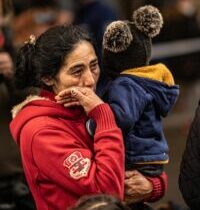
These questions are particularly important at this point in time in our land and our world. How do we love, respect, and support those with whom we live? How do we protect those who have come here from other lands in search of protection from gangs who have taken their land? How do we welcome those whose gender identity would lead to their murder in their own lands? How do we share the riches of our land with those around the world who don’t have the same resources or opportunities? How do we work for international peace? How do we help our own children to be able to learn by making sure they can have enough to eat each day and get healthcare when they need it?
We have come through many years of increasing anger and distrust that has damaged our ability to talk with each other and find solutions to the challenges we all face. How do we begin to break down those barriers when those in power prefer to keep us divided? If we don’t find a way, we will all pay a steep price.
How do we begin again to hear? What kind of hearing aids do we need? Can we begin to hear communication that is not in easily understood words? “Ow ah oo?”
“Today this Scripture passage is fulfilled in your hearing.”
May we open our ears and hearts to hear and respond.
Readings for the Third Sunday in Ordinary Time – Cycle C
Read More