Thoughtful Reflections on Religious Experience

Archive for April, 2008

A Theologian’s Reflections on Mark’s Gospel by KathyPozos on Friday 25 April 2008 4:50 pm PDT

on-your-mark.jpg

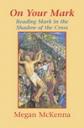
Theologian and storyteller Megan McKenna’s book, On Your Mark: Reading Mark in the Shadow of the Cross, is a powerful example of the contribution of theology and biblical research to our understanding of the Good News. When the gospels were written, nearly 2000 years ago, they were written for a specific audience, with certain shared beliefs and experiences. Each was written for a different audience, but each audience had much in common. They were written as teaching materials, to help new believers come to know about Jesus, become His faithful followers, and live according to His Way.

We live in a dramatically different world. Many things the ancients took for granted or understood to be significant, we don’t even notice in passing when reading Scripture.

In the past century, thanks to the work of theologians, biblical scholars, anthropologists, archeologists, linguists and many other professional researchers, we have gained a tremendous amount of knowledge about the world in which Christianity began and of the beliefs and life of the early Christian community. The Holy Spirit has worked through these people to bring the Word to us as excitingly fresh teaching. 

Megan McKenna’s presentation of Mark’s Gospel lays out the requirements of Christian discipleship through exploration of the meaning of the texts. She shows what their meaning might have been for the disciples and the early community – how they served as a roadmap for discipleship. Because she is also master storyteller, Megan presents other stories  as well that serve to reinforce the Gospel. And always, for Megan, the bottom line is, what this means for us today.

Take a look at her work. You won’t regret it!

stmarkcoptic.jpg

St. Mark was a young man in the earliest days of the church and by the end of his life had played an important role in spreading the Good News of Jesus in Asia and North Africa. He even touches us as well, through the Gospel which bears his name.

We first hear of Mark in the Acts of the Apostles on the day Peter was released miraculously from prison. Peter returned in the night to the home of Mark’s mother, a gathering place of the community in Jerusalem (Acts 12:12).

Mark may have been the young man in the Garden of Gethsemane who ran away naked when Jesus was arrested, but the young man is not named, so we don’t know for sure (Mark 14:50-52).

Later we hear of Mark traveling with Paul and Barnabas on their first missionary journey. Early in that journey, Mark left them and returned to Jerusalem (Acts 13:13). No explanation is given for his departure from the mission. Paul was very unhappy about it and later refused to take Mark along on his second journey. As a result, Barnabas did not travel with Paul on the second trip, going instead with Mark to Cyprus (Acts 15:37-39).

Mark spent many years with Peter. He is mentioned in various contexts in later chapters of Acts and in the first letter of Peter, always in terms of his faithfulness in proclaiming the Good News of Jesus.

The thing that really strikes me about Mark, though, is that he didn’t follow the path that had originally been set for him – that first journey with Paul and Barnabas. Something was not right. He left, despite the knowledge that the older adults in the community might not understand and be angry with him, thinking him a failure or a quitter. He returned home to Jerusalem.

If he had not followed that sense (or quiet voice) that told him that going with Paul and Barnabas might be the wrong thing for him to do, it’s entirely possible that Mark would not have been the one to accompany Peter in his work and journeys. The Gospel According to Mark might never have been written. It is generally understood to be the one that tells the story of Jesus based more on the memories of St. Peter. It was most probably the first of the Gospels written, maybe even before 70 A.D. Our understanding of how the early Christians had experienced the life, death and resurrection of Jesus would be different.

As an older adult now, seeing young people struggling to find their way in faith, to find the Lord’s path for them (regardless of how they phrase it), I find great comfort in the story of Mark. It’s OK to change course on one’s life journey, to try one path, find it’s not quite the right one, and move to another one. It’s OK not to follow the career for which one studied – or the one chosen by someone else. It’s OK to ask embarassing questions of leaders in our community. It’s OK to insist on justice and compassion. It’s not only OK, it’s essential to listen to the quiet voice and follow the Lord as He calls each one of us. We are all richer for it.

St. Anselm of Canterbury – Faith Seeking Understanding by RandyPozos on Wednesday 23 April 2008 12:27 pm PDT

st-anselm.jpg

Fides Quaerens Intellectum – Faith Seeking Understanding – is the theme of the philosophy and theology of St. Anselm (1033 – 1109). His feast day is April 21.  St. Anselm is regarded as the greatest philosopher of the 11th century and set the tone for the scholastic thinking of the early Middle Ages. Anselm represents a new beginning of a new civilization that ends the Dark Ages. His thinking is very much in line with the Neo-Platonism of St. Augustine.

St. Anselm’s writing on the nature of God and his proof for the existence of God emphasize the role of reason in understanding and shaping faith. His proof for the existence of God is meant to show that we can come to a knowledge that God exists from our own reason. Belief in God and His revelation is a gift of faith. However, faith is a reasonable course to take and of itself enlightens and encourages understanding.

It is often fashionable to dismiss the Middle Ages as a pre-rational time before the Renaissance and the Enlightenment. Unfortunately, this overlooks the importance of reason and the intertwining of faith and reason since the origins of Christianity. Although many of its concepts and their cultural context are foreign to us, the content and style of Anselm’s reasoning demonstrates a critical, analytical, and logical approach to dealing with questions of faith and living the Christian life.

Anselm’s notion of atonement, the redemption of the human race brought about by the death of Christ, is based on a concept of justice that seems – well – Medieval, and that is what it is. While it might strike some of us as portraying a vindictive God, St. Anselm presents it as arising out of the will of the Father and the Son to restore the human race. While we as post-moderns might see echoes of European tribal notions of compensation for injury or damage, St. Anselm is following the lead of many preceding philosophers and theologians to place the witness of scripture in a rational context.

Most of St. Anselm’s life was spent as a scholar and abbot. As Archbishop of Canterbury, St. Anselm had the unenviable position of being subject to two kings who attempted to exercise control over the church and plunder its treasury. St. Anselm spent years in exile.

Western critical thought and reasoning owes a debt to St. Anselm. As much as we might be inclined to relegate faith to the psychology of religious experience, St. Anselm reminds us that while the heart might claim our allegiance, our mind and reason challenge us to understand and live the faith of our hearts with the best of our minds enlightened by grace.

religion-and-politics.jpg

Those who would dismiss theology as a parlor game need only look at the alliance of evangelicals with the political right in the United States. Before the emphasis on “family values,” evangelicals had a rich tradition of struggling for social justice and equality as sign of announcing the Kingdom.

There has been another Great Awakening – a cyclical occurrence in United States history. Evangelicals are disenchanted with the policies of the political right on global warming, military adventures, and the neglect of those in need. There is a growing feeling among evangelicals that they have been used by the large financial and industrial interests to further an agenda which is far from pro-life in the broader sense of the health, well being, and development of people and the environment.

Frank Schaeffer, a scion of one the founders of the Religious Right, issues a writ of divorce with his post at http://vox-nova.com entitled Pro Life, Pro Obama. Check it out.

Memory, Identity, and Resurrection by RandyPozos on Thursday 10 April 2008 1:03 pm PDT

sky-computer-generated.jpg

This Easter Season, I have been puzzling over why the people who lived with Jesus and shared the intimacies and hardships of his travels didn’t recognize him when they encountered the Risen Christ.

I have been reading Oliver Sacks’, Musicophilia: Tales of Music and the Brain, and came across the notion of emotional memory. Sacks relates the very tragic case of a brilliant music scholar and choral director who suffers an almost total amnesia as the result of encephalitis. He had no episodic memory, which meant that everything kept popping into existence all of the time. However, his ability to sight read and play music from memory was quite intact. He also “recognized” his wife and clung to her. Apparently, according to Sacks, our physical and emotional memory is somehow distinct from our memory of events past and present. It is something much deeper. He also states that our development of episodic memory comes to the fore after the age of two. In those first two pivotal years we develop deep emotional bonds. Learning music, riding a bike, and other types of motor learning have their own place outside of episodic memory. The bonds of deep love even transcend the loss of memory of specific events.

The scene in the garden with the Risen Christ and Mary of Magdala has always resonated deeply within me. Mary is still in a serious state of shock on top of her tremendous grief. Her disorientation seems almost complete when she hears her name in the music of a voice that transcends the memory of events.

So many oceans of ink and uncounted forests have been lost to the question of how we can find the Jesus of history. The disciples left us stories and experiences that are far beyond episodic memory. Their invitation is catechetical – an invitation into the mystery of a love and relationship so intense it is beyond time and memory.

Theologika.net Welcomes Terry Hershey by RandyPozos on Wednesday 9 April 2008 10:58 pm PDT

terry-hershey.jpg

A sign of a person’s true enlightenment is how he or she handles the gods of the internet. Kathy and I had a wonderful telephone visit with Terry Hershey and his webmaster, Todd Roseman. We gave Terry and Todd a tour of Theologika.net and began the process of setting up the TerryHershey directory, where you can find many of his recommended books, materials, and web content. Generally, setting up a directory – which you can do by registering at www.theologika.net/search  – only takes a few minutes.

As fate would have it, we ran into a snag. My many years of experience in business, working with VIPs, began to haunt me. The pressure started to build. Not to worry, though. As advertised, Terry Hershey, a minister with degrees in philosophy and theology, landscape architect, speaker and writer, was delightfully calm and soothing. Just the sort of balance he talks and writes about. Terry is very upfront about the challenges of his life, which makes it easier to see our own lives in a calm and honest manner that helps us stretch and grow.

Kathy and I are sure that you will enjoy Terry’s newsletters and other great items on his website. You can find them easily by typing “Terry Hershey” into Theologika.net’s discovery engine at www.Theologika.net/search. Click on the items and you will be transported to the very peaceful and inspiring dimension known as www.TerryHershey.com.

Enjoy!

The Encounter at Emmaus by RandyPozos on Sunday 6 April 2008 6:27 pm PDT

emmaus.jpg

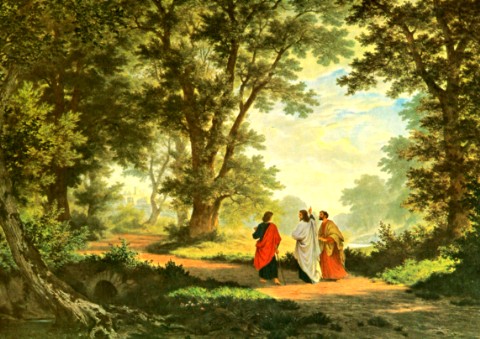
I have been struck by the stories this Resurrection Season because for the first time, they strike me not as eye witness accounts of the Risen Christ, but as the challenge of faith for the disciples and us. The disciples on the way to Emmaus are leaving Jerusalem – returning home, perhaps, – grief stricken, but more importantly, disillusioned. The teacher has failed. The forces of evil have destroyed a very good and wonderful young man.

One way to see this story is to take it as another proof of the Risen Christ as encountered by his disciples. The story does convey this message. However, the story also tells us that we find the Risen Christ when He opens our minds to see the scriptures and when our hearts are opened at the Breaking of the Bread. Look for Him in the scriptures and invite Him in to dinner and your hospitality will be more than repaid.

There is just a glimpse – a flash of recognition and he disappears from our midst. The presence of the Risen Christ is a momentary and ongoing discovery. It is the result of searching, wandering, questing in grief and disillusionment and being open to the challenge of the Stranger.

All of us have moments, years, decades, in which everything we knew and had hoped for is swept away. The disciples had no clue of what was to become of their beloved teacher, but his torture and death threw them into utter grief and confusion. Yet their confusion only increased when they heard that other disciples had found the empty tomb and seen the angels. They were re-grouping, leaving town, trying to get some distance. A Stranger notices their grief and inquires. They listen and reflect on the scriptures and Break Bread.

This is the Christian life – the quest and the encounter in the village of Emmaus – continuing through all generations.

Categories

  • Angels (3)
  • atonement (16)
  • Bio-Ethics (3)
  • Christian Unity/Ecumenism (3)
  • Communion of Saints (8)
  • Conversion (32)
  • Doctor of the Church (22)
  • Edith Stein (2)
  • Eucharist (7)
  • Ever Ancient / New (58)
  • everyday revelation (94)
  • Faith and Public Policy (6)
  • Faith and Reason (63)
  • Faith in Action (120)
  • Fathers of the Church (10)
  • Feasts – liturgical (67)
  • Festive recipes (4)
  • Forgiveness (16)
  • God in All Things (48)
  • Gratitude (19)
  • Holocaust (3)
  • Incarnation (26)
  • It's to laugh (2)
  • Jewish / Christian Relations (3)
  • Korean Martyrs (1)
  • Liturgical year (59)
  • love (39)
  • Marriage (7)
  • Ministry (4)
  • Miracles (14)
  • Missions (10)
  • Mother Teresa (4)
  • Mystics (13)
  • Pagan/Christian Relations (3)
  • Pope John Paul II (3)
  • Pope John XXIII (2)
  • Pope Paul VI (1)
  • Prayer (2)
  • problem of evil (11)
  • Sacraments (9)
  • Saints (123)
  • Salvation (29)
  • Second Vatican Council (5)
  • Site logistics (4)
  • Social Justice (39)
  • spiritual growth (71)
  • spirituality (62)
  • St. Augustine (1)
  • St. Faustina Kowalska (1)
  • St. Francis of Assisi (2)
  • St. Ignatius Loyola (3)
  • St. Jerome (1)
  • St. John Chrysostom (1)
  • St. Joseph of Cupertino (1)
  • St. Matthew (1)
  • St. Robert Bellarmine (3)
  • St. Therese of Lisieux (3)
  • St. Vincent De Paul (1)
  • St.Thomas of Villanova (1)
  • Theodicy (3)
  • Thomas Merton (1)
  • Uncategorized (10)
  • Virgin Mary (11)
  • Vocation (3)
  • Yom Kippur (1)
  • Youth Ministry (3)
  • Monthly Archives

  • March 2010
  • February 2010
  • January 2010
  • December 2009
  • November 2009
  • October 2009
  • September 2009
  • August 2009
  • July 2009
  • June 2009
  • May 2009
  • April 2009
  • March 2009
  • February 2009
  • January 2009
  • December 2008
  • November 2008
  • October 2008
  • September 2008
  • August 2008
  • July 2008
  • June 2008
  • May 2008
  • April 2008
  • March 2008
  • February 2008
  • January 2008
  • December 2007
  • November 2007
  • October 2007
  • September 2007
  • August 2007
  • July 2007
  • Recent Posts

    Recent Comments

    RSS Subscription

    Subscribe by Email

    Enter your Email


    Preview | Powered by FeedBlitz

    Visitors

    Locations of visitors to this page

    Creative Commons LICENSE

    This work is licensed under a Creative Commons License.