Thoughtful Reflections on Religious Experience

Archive for June, 2008

The Feast of Sts. Peter and Paul - June 29 by KathyPozos on Monday 30 June 2008 3:03 pm PDT

It’s the time of year when we remember and celebrate the witness of two men who played foundational roles in the community of believers that has grown to include well over 1 billion people - St. Peter and St. Paul.

Peter was a fisherman from Galilee. He was known as Simon. He was brash and decisive and protective of his friends. He didn’t hesitate to argue if he thought a request was unreasonable (but we’ve been fishing all night and haven’t caught anything!) or a plan was unwise (they want to kill you in Jerusalem!). Yet when Jesus came into his life, he was open enough to the Spirit that he left everything and followed when he was called. Jesus named him Peter, calling him the Rock on which the community would be built. (Jn 1:42)

Peter became the leader of Jesus’ followers, at least in part because he spoke his mind and looked out for the safety of them all. He was the one who answered Jesus’ question, “Who do you say that I am?” with the profession of faith, “You are the Messiah, the Son of the living God.” (Mt 16:15-16)

Peter was not perfect. He expressed his doubts about Jesus’ plans to go to Jerusalem, trying to dissuade him from that plan, and was rebuked as “Satan” for his efforts. He walked on water towards the Lord, and sank into the waves when he stopped to think about what he was doing. He promised undying support for Jesus at the Last Supper, and denied him 3 times before the sun came up.

No, Peter was not perfect. But he was a perfect leader for the new community because he knew he was imperfect and still loved, chosen, and trusted to do his best. It was a big job for a big person. Figuring out who this Jesus was and is, how to live as a community who follow His ways, how it all fit into the faith in which he was born and raised, what to do about all those non-Jews who also received the Spirit and wanted to be part of the community. A big job.

Paul was from Tarsus, a Roman city. So he was a Roman citizen. He had been trained as a tent maker, but he had also been educated. He was a Pharisee, the son of a Pharisee, and a student of the great teacher Gamaliel. He was not a follower of Jesus before the Crucifixion and Resurrection. In fact, he was one of those who saw the new Way of living as a huge threat to the larger Jewish community and to their faith. The Romans were not gentle with those who opposed them or to those who upset the day-to-day routine of life in the provinces. And certainly, the Jews had seen time after time through history what happened to the whole people if groups of them stopped worshipping according to the traditional ways of their people. War, exile, persecution by conquerors. It was not something to risk.

The first time we hear of Paul is at the trial and stoning of St. Stephen, the first martyr. He was called Saul at the time and he consented to Stephen’s death. Saul was an enthusiatic participant in the persecution of Jesus’ followers that followed. He saw that the new teachings were doctrinally quite different from those of traditional Jewish Law and worship at the temple. He was determined to crush the new movement. (Acts 8:3)

When the persecution began in Jerusalem, followers of the Way (as Christians called themselves at that time) had scattered throughout the surrounding area. So Saul got letters from the authorities and traveled north to Damascus, to arrest them there too and bring them back to Jerusalem for trial. It was on the road to Damascus that he met the Lord. A bright light flashed around him. He fell down. A voice called to him, “Saul, Saul, why are you persecuting me?” He asked who was speaking and was told, “I am Jesus, whom you are persecuting. …” Acts 9:1-30 tells the story of his conversion, his first preaching, the reactions of his fellow Christians and of his fellow Jews, and his return to Tarsus (where he would be safe from those who wanted to kill him). And then in Acts 9:31 we read, “The church throughout all Judea, Galilee and Samaria was at peace.”

Peace. A lovely thought. But peace is a state that seems never to last very long - perhaps because growth so often brings unexpected changes, stresses, and strains in its wake. Perhaps because some growth can’t happen except in times of difficulty, when new ideas and new solutions must be discovered. Perhaps because God is too unlimited, too expansive, too inclusive, TOO BIG to be kept in any of our human boxes.

And so the Fisherman baptized a Gentile, Cornelius, and his family. And the community adjusted its thinking about who could be called to the new Way. (Acts 10:1-49, 11:1-18)

Those who had been scattered from Jerusalem shared their faith in new communities in Phoenicia, Cyprus and Antioch. They spoke not just to Jews, but also to Greeks and many believed. The community in Jerusalem sent Barnabas to meet them. Barnabas was so impressed that he went down to Tarsus, collected Saul, and went back to Antioch for a year, teaching the growing community there - where followers of Jesus were first called Christians.

Saul and Barnabas were sent forth from the community at Antioch, to proclaim the word of God in Cyprus. It was the first of Saul’s many missionary trips. (From this point on, he is called Paul in the Acts of the Apostles.)

And things would never again be the same. The Fisherman and the Pharisee didn’t always see eye to eye. They argued. They tussled. They sent letters and messengers back and forth to each other. They had meetings. And through it all, they (and the community) worked things out. And the Christian community became more and more a separate community and faith from the Jewish one into which they had been born.

It was not a time of perpetual peace and smiles. But at the end of their lives, both Peter and Paul, in Rome, died as witnesses to their faith in the Lord - Peter upside down on a cross and Paul, the Roman citizen, by the sword. And the tensions and struggles within the growing community, as well as the growth in understanding of the Good News, and of who Jesus was/is, and of how we are to relate to the Father, and of many, many other things, continued.

In future posts, I’ll talk about some of those “other things” that came along, and use some of the tools of anthropology to look at them. For now, it’s enough to say that Peter and Paul can be seen as representing two essential roles within our community of faith. Their passion and courage in hearing the Lord’s call and stepping out faithfully to spread the Good News is a gift to us all.


Memorable Quote - Kevin Burke, S.J. on Theology by KathyPozos on Wednesday 25 June 2008 3:04 pm PDT


Fr. Kevin Burke, S.J. of the Jesuit School of Theology at Berkeley offered this image as a member of a panel on Jon Sobrino’s work at the meeting of the Catholic Theological Society of America.

“Theology is like a wild animal, like a wolf or an eagle or a great white shark. It’s dangerous, and given the propensity of human beings to domesticate and dominate what frightens them, it’s also endangered.”

Not a bad insight.

Saint of the Day: St. John the Baptist - June 24 by RandyPozos on Tuesday 24 June 2008 10:56 am PDT


St. John the Baptist is the last of the prophets and the first of those to approach the Kingdom. He occupies a place of transition. Christ acknowledges him in a strange way in Luke 7:24-28:

When the messengers of John had left, Jesus began to speak to the crowds about John. “What did you go out to the desert to see - a reed swayed by the wind?
Then what did you go out to see? Someone dressed in fine garments? Those who dress luxuriously and live sumptuously are found in royal palaces.
Then what did you go out to see? A prophet? Yes, I tell you, and more than a prophet.
This is the one about whom scripture says: ‘Behold, I am sending my messenger ahead of you, he will prepare your way before you.’
I tell you, among those born of women, no one is greater than John; yet the least in the kingdom of God is greater than he.”

Somehow the least in the Kingdom of God is greater than John. The least are greater than this courageous prophet who spoke truth to power and was beheaded for his efforts. Aren’t those of the Kingdom not born of women? Isn’t John’s courage and faithfulness a model for all Christians? Christians are born again of water and the Holy Spirit. John announces the coming of the Lord and for all of the wonder and importance of this role, it is not as privileged as the least in the Kingdom of God.

The feast of St. John the Baptist is a time to reflect on the privilege and grace of our invitation to the Kindgom. In the earlier verses of this chapter, Jesus tells the the messengers of St. John to report to him what the signs of the Kingdom are: the blind see, the lame walk, the sick are cured.

Maybe it’s time to see where we are in the Kingdom.

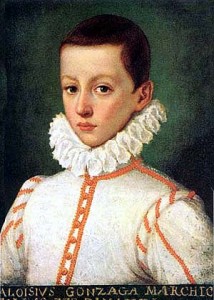
St. Aloysius Gonzaga - June 21 by RandyPozos on Saturday 21 June 2008 12:15 pm PDT

St. Aloysius Gonzaga (1568-1591) is often portrayed as a weak dreamy sort of figure. Worse, he has been presented to young people as a patron and role model who rejected all of the fun, adventure, and rebellion of youth. The real story is far more compelling.

How St. Luigi Gonzaga became St. Aloysius in English is not clear. The Latin for Luigi would be Ludovicus. Alois would be the German equivalent.

The “spin” of 17th and 18th century writers on his life was more a pietist anti-intellectual critique of the secularist Enlightenment. To be impolitic, he comes across as some sort of bloodless, lily toting wimp with upward cast eyes. Although it is not uncommon for saints to be “martyred” posthumously and their lives used to advance a contemporary cause, the Renaissance Luigi Gonzaga, Marquis of Castiglione is more relevant to us as post-modern Christians.

The overall sketch of his life is a simple as it is dramatic. Luigi was the oldest son of Ferrante, the Marquis of Castiglione, and named for the founder of the Gonzaga family Luigi, Lord of Mantua (1328). He was a pious youth, despised the things of this world, joined the Jesuits, and died of the plague after contracting it from nursing its abandoned victims in the streets of Rome when he was barely 23.

The context of his life and his status as an imperial prince give us a fuller understanding of who he was. According to John Coulson, the editor of The Saints: A Concise Biographical Dictionary:

It is impossible to estimate Aloysius’ (Luigi’s) career without some idea of his appalling heredity and environment. The Gonzaga tyrants rank with the Visconti, the Sforza, and the D’Este. They entered history about 1100; the first Gonzaga, lord of Mantua, was Luigi (1328), whose third marriage took place on the same day as his son’s and grandson’s: the three brides entered Mantua together in triumph. Already their cliff-like fortress was looming over the city. These despots displayed an amazing mixture of qualities. The Gonzaga clan survived one assassination after another and became allied to most of the reigning houses; but Luigi Gonzaga (141), grimly surnamed ‘The Turk,’ kept up three printing-presses and had for clients men like Platina, or Mantegna, who painted the scenery–now at Hampton Court–for the plays to which the Gonzaga were devoted. The French Parliament petitioned against the introduction of these plays into France–they were a ‘high school of adultery’–and no one would now dare paint the pictures with which some of the Gonzaga palaces were adorned. Yet these princes could care for agriculture, irrigation, checks on usury; and their insane debaucheries alternated with explosions of a genuine underlying faith. Their subjects, bled white by taxation, thrilled by their exotic pageantries, worshipped them till they broke into bloody but useless revolution.

The life of a Renaissance prince was far from any story book. St. Aloysius’ primary schooling was at the Medici Court in Florence. While he received the best academic training of the day, there was a bigger focus on swordsmanship, riding, and intrigue. He also spent significant time at the Spanish Court of King Philip II. His mother was a Valois and a relative of the Queen and his father had turned down a position of Master of the Horse in the English Court of Henry VIII in favor of Spain. At the time, the Spanish Empire was at its height of power and global dominance. Philip II also became king of Portugal as Philip I and ruled the Portuguese Empire as well.

As the oldest son, Luigi was trained to fulfill the duties of a prince and to prepare to succeed his father in the wealth, power, and literal back stabbing of the Gonzagas. As a child, though, he was appalled at what he saw and experienced, including the murder of close relatives. Fortunately, he came under the influence of St. Robert Bellarmine, who gave him his First Communion as a teenager. His rebellion was to reject it all and to enter the Church. His mother was not opposed to the idea, since it was not uncommon for powerful families to place prominent younger sons in key church positions that controlled considerable wealth and property. Luigi’s desire to join the Society of Jesus (Jesuits) was another matter. It would mean that he would forgo any type of service that could make him a powerful or wealthy cleric. Ironically, it was a wealthy and powerful churchman - Luigi’s cousin Cardinal Scipione Gonzaga - who prevailed on Ferrante to permit his son to join the Jesuits.

However, even as a Jesuit scholastic (student for the priesthood), he was still a celebrity who received celebrity treatment by those outside the order. Luigi probably over-compensated for this and his spiritual director and personal mentor, St. Robert Bellarmine, told him to ease up on prayer and penance and live a more moderate life. If we look between the lines, fitting a Renaissance prince into a religious house was not the easiest task for Luigi or his fellow religious. In fact, St. Ignatius’ famous letter on obedience was motivated in part to try to redirect the religious enthusiasm of these men to the ultimate in penance - to do what you are told whether you like it or not.

One can only imagine what it was to see a Gonzaga nursing victims of the plague on the streets of Rome.

There is a wonderful statue of St. Luigi outside St. Aloysius parish on the grounds of Gonzaga University in Spokane, Washington which shows a vital, caring, young man tending to a plague victim.

For some time when Gonzaga University was at the height of its fame as a basketball champion, there was a slogan which the University ran on national TV - Gonzaga: a Way of Life. The possibility of taking a brand like “Gonzaga” and making it stand for an impassioned life of faith inspired service is due to a young man caught up in grace. Isn’t that what we want for all young men and women?

Your Own Directory at Theologika.net by RandyPozos on Friday 20 June 2008 2:12 pm PDT

Did you know you can have your own personalized Theologika.net directory to store and record your online resources for theology and religious studies? How about sharing your recommendations with friends, colleagues, and students? Would you like to see what others are putting in their own directories?

You can do all these things by opening your own password protected directory at www.Theologika.net. It’s easy and it’s free.

All you have to do is to go to http://www.Theologika.net/search and click on the “Register” button in the upper right hand corner.

Fill out the simple form for your user name and password. (Your user name will be your directory name.) User names must not have any spaces in them. Also, most symbols don’t work in user names.

In a minute or so after you submit your registration, check your email for your registration link. Be sure to check your junk mail filter if you don’t find the message and link from Theologika in your in box.

Click on the link and you are ready to start tagging (adding items to your directory).

To share information with friends or colleagues, use the “Watchlist” feature.

Log into the site. There’ll be a heading, “My Watchlist Settings” in the left column. Click there and a screen will open that allows you to add the username of the other person to your watchlist. You will then be able to see all the items in that person’s directory. Have the other person do the same and you can share information.

Tagging basics:

To make it easy to tag items online for your directory, add your directory site to your list of favorites. If you’re using Firefox as your browser you can add simple shortcuts to your tool bar - the FAQs at the bottom of the search page explain how to do it. With Internet Explorer or Safari, follow the instructions in the FAQs to add a link to your Favorites list for your directory and for tagging (adding entries to your directory).

When you begin tagging, be sure the pop-up blocker on your browser is turned off. Another window will open so that you can “cut and paste” information from the site you want to tag into your directory listings. In order to tag an item, it must have a unique URL. Your personal directory listings will not appear within the main Theologika.net database unless you have been designated as a Trustee. (Trustees are persons with special education or experience that qualify them as experts in their particular field. If you believe you would qualify as a Trustee, please contact us.) 

Check the FAQs for more great information about how to tag items for your directory. Take a look at our blog post on searching and tagging for more help if you need it.

Exploring the rest of the site:

Theologika.net also includes a section of recommendations from trusted authorities. You can visit it from the home page of the website.

Whenever you want to get back to the main page of the website, just click on the word cloud at the top of the page. It’ll take you right back.

If you have any problems using our search/discovery engine, getting your directory established, or using the tagging function, drop us an email and we’ll contact you to help resolve them.

If you find something on the web that’s really great, and we don’t have it yet in Theologika.net, please drop us a note as well. We’ll take a look at it and see if it fits.

If you’d like information about something that we don’t have yet in the search/discovery engine, let us know. We’ll look for it or find someone who knows about the topic to get the information into the database.

We hope Theologika.net will be helpful in your work and spiritual journey. Looking forward to hearing from you.

Randy and Kathy

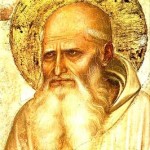
Saint of the Day - St. Romuald, Abbot - June 19 by KathyPozos on Thursday 19 June 2008 3:49 pm PDT

St. Romuald the Abbot was born around 950 into a powerful, wealthy family. He entered a Benedictine monastery at the age of 20. He had lived the life of a powerful, wealthy young man until the day he had to serve as his father’s “second” in a duel with a relative over a piece of land. His father killed the opponent, but Romuald was so horrified by the experience that he turned away from the life he had been living.

Once in the monastery, he found that he was attracted by the life of a hermit, more than to the communal life of the monastery as he was experiencing it at Sant’ Apollinare in Classe. He spent most of his life moving back and forth between monastic life and the life of the hermit, traveling from monastery to monastery and leading reforms. He eventually founded a new community who combined those two forms of religious life, the Camaldolese order.

St. Romuald developed a “Brief Rule” of how to live in openness to God.

Sit in your cell as in paradise. Put the whole world behind you and forget it. Watch your thoughts like a good fisherman watching for fish.

The path you must follow is in the Psalms: never leave it. If you have just come to the monastery, and in spite of your good will you cannot accomplish what you want, then take every opportunity to sing the Psalms in your heart and to understand them in your mind.

And if your mind wanders as you read, do not give up: hurry back and apply your mind to the words once more.

Realize above all that you are in God’s presence, and stand there with the attitude of one who stands before the emperor.

Empty yourself completely and sit waiting, content with the grace of God, like the chick who tastes nothing and eats nothing but what his mother gives him.

St. Romuald’s rule may seem like it has no relationship whatsoever to the lives of most of us - those called to life as men and women, married and single, in the contemporary world - earning our living, raising our families, trying to do our little bit to make the world a better place for everyone. Yet there are elements of his rule that are applicable to all of our lives. We’re called both to a relationship with God and to engagement with the world.

A challenge many of us face is finding a place where we won’t be observed or disturbed by anyone. I remember the amusement of a group of my parents’ friends who discovered a Bible in the bathroom of mutual friends. It was the only place in that home where a parent could have a few minutes of privacy to read the word of God. I remember the religious magazines and books kept for reading in the same room in the homes of my grandparents and other relatives. These people knew that time for the Lord is precious and is to be snatched wherever possible.

Today, we have so many means of communication and response is expected so quickly, that even walking by the beach without having a telephone along can be seen as selfish and/or anti-social. We forget that paradise begins here when we open to the Lord. Our alone place may have to be the bathroom. It may be standing at the kitchen sink washing dishes. It may be driving home from work. The essential thing is to find a few quiet moments somewhere each day.

St. Romuald recommends praying with the Psalms. That’s really good advice and easier than it might seem. Many of the songs we use in liturgy are taken directly from the Psalms. Let the songs from Church run through your head during the day. There are songs/Psalms for all occasions. Then as now, they help turn our focus to the Lord.

“Realize above all that you are in God’s presence…” There’s not much to add to that. The trick is to remember and be open to see and experience that reality. Then all we need will be provided, just as the chick who receives food from its mother. We still have to work. But the work we do takes on a bigger, broader meaning when it is tied to God’s presence in the world and to our call to make that presence visible through our lives.

May peace and joy be yours.

Saint of the Day: St Anthony of Padua - June 13 by RandyPozos on Friday 13 June 2008 10:21 am PDT

Doctor Evangelicus

FRIAR MINOR
MINISTER PROVINCIAL OF ROMAGNA
CANON REGULAR OF ST. AUGUSTINE
DOCTOR OF THE CHURCH
PATRON OF PREACHERS

St. Anthony has always been a special family patron. I suppose my paternal grandfather, Doroteo Pozos, is to blame. My father was born on August 26 and, according to custom, was supposed to have been named Seferino after the Saint of the Day, Pope St. Zephyrinus (pontificate 198 -217). My grandfather didn’t like the name and instead named his only son Antonio. This started a chain of Antonian events. My oldest brother was name Anthony, and my sister Antoinette. To drive the point home, Providence sent my brother Arnold to us on June 13. Kathy and I did not help things either by naming our second son Antonio.

So who was St. Anthony / San Antonio? Actually St. Anthony (ca. 1195 - 1231) was Portuguese and is sometimes referred to as St. Anthony of Lisbon, where he was born and baptized Fernando Martin de Bulhoes. His parents were wealthy and powerful nobles. How his life took him from Lisbon as a member of the Canons Regular of St. Augustine to become the Franciscan St. Anthony of Padua in northern Italy is a story with many twists and turns.

When he was 15, the young Fernando entered St. Vincent, the monastery of the Canons Regular of St. Augustine. This group served as pastors and were not monks. After a couple of years Fernando asked to be transferred to the group’s Abbey of the Holy Cross in Coimbra, which was the capital of Portugal at the time. Apparently, he had not been happy with the visits and interruptions of family and friends in Lisbon and felt that his studies and his vocation were suffering as a result.

After he completed his studies and was ordained in Coimbra, Fr. Fernando was placed in charge of hospitality for the abbey, which meant that he was responsible for taking care of guests. A group of Franciscans, who were a new an dynamic movement at the time, were his guests as they traveled to Islamic Spain and Morocco as missionaries. They moved him deeply and when their martyred remains returned to Coimbra, Fr. Fernando managed to get the permission of his superiors to join the Franciscans. He received the Franciscan habit, took the name Antonio, and was intent on going to Morocco to die for the faith.

When St. Anthony landed in Morocco, along with another Franciscan, he was so ill that he had to return to Portugal. On his premature return trip, his ship was blown off course by a huge storm which swept him all the way to Sicily. He made his way to Assisi and was in very poor health. He ended up in a small hospice in the countryside, where he lived as a hermit and helped out in the kitchen.

St. Anthony’s marvelous gifts as a preacher and scriptural theologian were discovered when he was asked to preach at an ordination. Although it is unlikely that St. Anthony ever met St. Francis, the Poverello appointed St. Anthony to teach theology to his brothers. This was an unusual endorsement, since St. Francis had many reservations about the ego of scholars and theologians. He did not want to foster this type of unfortunate self-centeredness in his own group.

St. Anthony not only spent time as a teacher but also traveled extensively, preaching in the countryside and serving in administrative offices of the order. He took on various groups which had deviated from orthodoxy. Although St. Anthony is called the “Hammer of the Heretics,” he has a more pastoral legacy which underscores his genuine concern for people. There are many stories of miracles which seem to strain our post-modern credulity. Although many may be legends or devotional fabrications, St. Anthony was known to have transformed many lives and had a definite impact on a long line of Franciscan scholars and saints who would come after him.

He was to set an ideal for Franciscan intellectuals, who were great preachers, mystics, ascetics, and competent administrators. St. Bonaventure is one of the more famous examples of this cluster of gifts, as is Blessed Junipero Serra the Apostle of California.

Most often, St. Anthony is depicted holding the Christ Child. Except for the Blessed Mother and St. Joseph, no other saint is presented this way. Apparently, this depiction began in the 17th century, based on a legend from the saint’s life. Symbolically though, this image presents much of Franciscan spirituality in terms of encountering, modeling and presenting Christ - poor, vulnerable, and welcoming.

St. Anthony died near Padua at the age of 36. This was not an unusual lifespan for the 13th century and yet it is amazing what he gave to us in such a brief span of years.

Saint of the Day - St. Ephrem the Syrian, June 9 by KathyPozos on Monday 9 June 2008 2:03 pm PDT

The Feast of St. Ephrem the Syrian is celebrated June 9 in the Roman Catholic and Anglican churches. It is celebrated January 28 in the Eastern Orthodox Church and the 7th Saturday before Easter in the Syriac Orthodox Church. Whatever the day on which the feast is celebrated, he was a remarkable man!

Ephrem was born around 306 in the city of Nibisis, an area currently part of Turkey. His family was part of a thriving Christian community. The persecution of Diocletian had just ended when he was born. The Edict of Milan, proclaimed in 313, provided for religious tolerance in the Roman Empire. However, controversies raged among various groups of believers as the community struggled to understand the mystery of Jesus’ relationship with the Father and the Holy Spirit. Some issues were resolved at the First Council of Nicea in 325. Ephrem probably did not attend that council, but his bishop, Jacob of Nibisis, did attend and was one of those who signed the Council documents. 

Ephrem was not one of those people who were “perfect little angels” from childhood. He was not even particularly religious as a child and teen. He described some of his mis-adventures in the story of his conversion.  Following his conversion, he lived as part of a community of people who shared their lives and faith. They were not “monks” in the later sense of the word, but monasticism grew from these types of communities. He became a deacon and teacher within the community.

He wrote hundreds of hymns, prayers, poems, and homilies. Some of the homilies were in poetry and others in prose. The hymns were designed to teach Christian beliefs and to discount the teachings of heretical groups. Many were arranged for choirs of women to sing, accompanied by the lyre. (One of the symbols often seen in pictures of Ephrem is the lyre.) Over 400 of his hymns have survived to the present, with some still in use in the Eastern Church.

Ephrem was also a prolific writer of homilies and Biblical commentaries and reflections. His writings led Pope Benedict XV to name him Doctor of the Church in 1920. His supportive approach to the role of women in the church, his sense of the presence of God in all of creation and of the interconnectedness of all things, the image of “healing” found in many of his reflections and his Eastern sensibility apparent in his poetry and hymns all make his writings relevant to the Christian community today, as we struggle to help bring the Kingdom to life in our multi-cultural, multi-ethnic 21st Century world.


Saint of the Day - St. Boniface, June 5 by KathyPozos on Thursday 5 June 2008 5:17 pm PDT


I must confess that I never knew much about St. Boniface until I began to do a little research about him today. My maternal Grandmother’s home parish was St. Boniface in Uniontown, Washington. So his name was familiar to me, but not any details of his life.

Uniontown was, and still is, a very small town in the middle of fertile farmlands. People spoke mostly German there when Grammy was a girl in the years leading up to World War I. Sermons at Mass were always in German, a language she did not speak well because her parents did not speak the same versions of German. They spoke English at home. (She could never understand why we complained about bad homilies when we were kids. After all, at least they were in English so we could understand them!) Uniontown was settled largely by Catholic German immigrants. They chose the patron of their former homeland as patron of their local community.

St. Boniface is known as the Apostle of Germany and is its patron saint. He was born in England around 672 and named Winfrid. He studied at Benedictine monasteries near Exeter and Nursling in the diocese of Winchester. He was noted for being a fine student and scholar, compiling a Latin Grammar during his time there.

In 716 he set off to Frisia to convert the residents of that area. However, there was a war raging in Frisia at the time and people were otherwise occupied. So he returned home without success. In 718 he traveled to Rome and in 719 Pope Gregory II gave him the name Boniface and commissioned him to return to Germany to evangelize and reorganize the church there. He also learned from people who had been working already among the German tribes how best to reach them. He spent most of the rest of his life working in Germany.

The felling of Thor’s Oak at Frizlar in northern Hesse is one of the stories told of his work. In the presence of leaders of the local people, he called on Thor to strike him dead if he destroyed an oak tree sacred to Thor. Then he began to chop down the tree.  A great wind blew the tree down. Thor did not strike down Boniface, so the people became Christians. Boniface used some of the wood from the tree to build a chapel at the site.

Boniface chopped down other oak trees dedicated to Thor as well, in challenges to the ancient pre-Christian religion. It is said that at Geismar, there was a fir tree growing out of the roots of the oak tree that fell. Boniface told the people, “This humble tree’s wood is used to build your homes: let Christ be at the centre of your households. Its leaves remain evergreen in the darkest days: let Christ be your constant light. Its boughs reach out to embrace and its top points to heaven: let Christ be your Comfort and Guide”. The German tradition of using evergreen trees in the celebration of Christmas may have come from this event. (Think of him next time you see a Christmas tree!)

The years in which Boniface lived and worked were far from peaceful. Battles raged between the Franks, the non-Christian Saxons, and the northern Germanic tribes. Struggles for power over the church by civil authorities and for independence from civil authority by church leaders were common. The conversion of the Germanic tribes was part of the process that eventually led to their incorporation into Charlemagne’s empire. In 754, while again working to convert the Frisians, Boniface was killed by a group of brigands.

It seems fitting that Boniface was chosen as patron of the church at Uniontown. Many Catholic Germans who came to the United States during the 19th century did so as religious refugees. It wasn’t something they spoke about much. My grandparents weren’t sure why their parents or grandparents had come here, except they knew the men came so they would not have to serve in the Kaiser’s army. But from an old German Dominican nun, my mother learned that many came because their only choice at home was to convert to the Protestant religion of their new ruler, the Kaiser, or to worship secretly in defiance of the curfews. The young men came because they would have to leave the Catholic church when they were drafted into the Kaiser’s army. They chose to leave instead, bringing their faith with them to little towns like Uniontown all over the United States. Once here, they chose St. Boniface to continue to be their patron.


Categories

  • Angels (3)
  • atonement (13)
  • Christian Unity/Ecumenism (3)
  • Communion of Saints (7)
  • Conversion (25)
  • Doctor of the Church (19)
  • Edith Stein (2)
  • Eucharist (6)
  • Ever Ancient / New (46)
  • everyday revelation (69)
  • Faith and Reason (51)
  • Faith in Action (98)
  • Fathers of the Church (8)
  • Feasts - liturgical (54)
  • Festive recipes (3)
  • Forgiveness (12)
  • God in All Things (36)
  • Gratitude (16)
  • Holocaust (3)
  • Incarnation (21)
  • It's to laugh (1)
  • Jewish / Christian Relations (3)
  • Korean Martyrs (1)
  • Liturgical year (42)
  • love (35)
  • Marriage (5)
  • Ministry (1)
  • Miracles (13)
  • Missions (10)
  • Mother Teresa (3)
  • Mystics (11)
  • Pagan/Christian Relations (1)
  • Pope John Paul II (3)
  • Pope John XXIII (2)
  • Pope Paul VI (1)
  • problem of evil (9)
  • Sacraments (9)
  • Saints (107)
  • Salvation (24)
  • Second Vatican Council (5)
  • Site logistics (4)
  • Social Justice (31)
  • spiritual growth (67)
  • spirituality (53)
  • St. Augustine (1)
  • St. Faustina Kowalska (1)
  • St. Francis of Assisi (2)
  • St. Ignatius Loyola (2)
  • St. Jerome (1)
  • St. John Chrysostom (1)
  • St. Joseph of Cupertino (1)
  • St. Matthew (1)
  • St. Robert Bellarmine (3)
  • St. Therese of Lisieux (3)
  • St. Vincent De Paul (1)
  • St.Thomas of Villanova (1)
  • Theodicy (2)
  • Thomas Merton (1)
  • Uncategorized (10)
  • Virgin Mary (6)
  • Vocation (2)
  • Yom Kippur (1)
  • Youth Ministry (1)
  • Monthly Archives

  • January 2009
  • December 2008
  • November 2008
  • October 2008
  • September 2008
  • August 2008
  • July 2008
  • June 2008
  • May 2008
  • April 2008
  • March 2008
  • February 2008
  • January 2008
  • December 2007
  • November 2007
  • October 2007
  • September 2007
  • August 2007
  • July 2007
  • Recent Posts

    Recent Comments

    RSS Subscription

    Subscribe by Email

    Enter your Email


    Preview | Powered by FeedBlitz

    Visitors

    Locations of visitors to this page

    Creative Commons LICENSE

    This work is licensed under a Creative Commons License.