Ears and Mouths Opened – What Do We Hear, Say and Do?
 Our readings for the Twenty-third Sunday of Ordinary Time begin with an oracle. It was very common in the ancient world for prophets, priests, or priestesses to speak the words of the gods as oracles. Both the person through whom the message is delivered and the message itself were known as oracles. Oracles as messages were often difficult to understand or required some time and effort to unravel.
The book of Isaiah is believed to include the prophecies of three persons over an extended period in the history of Israel. This reading is from the first section, as the Assyrians are invading Israel from the north and have neared Jerusalem (Is 35:4-7a). The assault on Jerusalem failed, fulfilling the prophecy that God would step in and protect the people in the end. How or when the miraculous healings might be seen is not addressed.
This oracle is pronounced while it is still uncertain that anything will stop the enemy’s advance and the total conquest of the nation. Yet the prophet speaks the words of the Lord boldly. “Here is your God … he comes to save you.” Still, the signs of the coming of the Lord are not what might have been expected. The blind see, the deaf hear, the lame leap like a stag, the mute speak. These promises can be seen as purely metaphorical. Or they can be applied to the actions of Jesus over 700 years later. The writers of the Gospels and the people who witnessed these things happening in real life took them as confirmation of the authority of Jesus to speak in the name of the Lord.
St. Mark tells us today that Jesus traveled to the north, outside the area where Jews typically lived, to an area in Gentile lands where there were ten cities, the Decapolis. (Mk 7:31-37) People there had heard of Jesus and brought a man who was both deaf and mute (unable to speak), requesting that Jesus lay his hands on the man and heal him. Jesus often touched people as part of healing them. However, it was forbidden for good Jew to touch a Gentile (non-Jew). Doing so resulted in ritual impurity that required offering special sacrifices and purification rituals before one could again worship with others or be in community with them.
Jesus took the man aside and, disregarding the prohibition, he touched him. He put his fingers into the man’s ears, then spit on his own fingers and touched the man’s tongue. We would react with “Eww” at the thought of doing this, but saliva was commonly used in healing in that time and place. Jesus used saliva in other healings as well. After touching the ears and tongue of the man, Jesus looked up to heaven, groaned, and ordered, “Be opened.” The man’s ears were opened and he could hear. He also became able to speak clearly.
Jesus, as he usually did, ordered those who witnessed his actions not to tell anyone. But as usual, they proclaimed it to any who would listen. Familiar with the oracle of Isaiah, they noted that Jesus “makes the deaf hear and the mute speak.” These things were known to be signs of God’s coming to rescue God’s people.
Jesus accepted people of all types who came to him for help or to learn from him. The same behavior is expected of those who are his disciples. St. James chides the people to whom he was writing for favoring those who appeared to be rich over those who obviously were poor. (Jas 2:1-5) This kind of response to those who joined the assembly for worship and community sharing was absolutely unacceptable for the followers of Jesus. He reminds them that God chose the poor to be the ones rich in faith and heirs of the kingdom, the opposite of the values of their society and most others. He knew that those who depend totally on divine providence and the goodwill of others often have a deeper experience of God’s care than do those who might think their good fortune is the result of their own actions and worth.
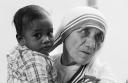
This reading is especially noteworthy this year, since it falls on September 5, the Feast of St. Teresa of Calcutta. Mother Teresa was known for her dedication to caring for the poorest of the poor. When a man remarked that he would not do the work she was doing for all the money in the world, she informed him that she would not do it for that reason either. She did it because that was where and how she met and served Christ.
I won’t go into the story of Mother Teresa and her life here, but it’s worth considering in the light of today’s readings. If you’d like to know more about our family’s story of Mother Teresa’s work, take a look at https://blog.theologika.net/mother-teresa-love-is-left-alone/. Suffice it to say that Mother trusted deeply that when others knew of the needs of the people she served, they would find a way to help. She would simply inform them of the need, then sit quietly, with her hands in her lap, and wait for them to figure out how to meet it.
Our challenge today is similar to those faced in the time of Jesus and the early church, as well as those Mother Teresa faced. How do we respond to the needs of others? Do we see the faith of those left behind in our economy, our communities, and our world? Do we see Christ among them? Do we reach out in love? If we ourselves don’t have a lot resources to spare, we’re not off the hook. Who do we know and how can we work together to help?
We pray with the man Jesus healed today: Open our ears, Lord, so we can hear your voice. Then open our mouths too, so we can speak of the needs of our sisters and brothers here and around the world. Help us to respond to your love by sharing it in concrete ways with those we meet each day – rich or poor, native born or immigrant, man or woman.
Read More