Pages Menu
RssFacebook
Categories Menu

Posted by on May 30, 2009

Saint of the Day – St. Joseph Marello – May 30

Saint of the Day – St. Joseph Marello – May 30

st-joseph-marello1

St. Joseph Marello was born in Turin on December 26, 1844. While he was still a young child, his mother died and his father moved the family back to San Martino Alfieri where they would be closer to their grandparents and other family members as they grew up.

Joseph was known to be a devout child and was well respected in his community. He entered the seminary for the first time in 1856 and remained until 1862, when he experienced a need to step out and experience life in the broader world. He went to Turin to study and remained there until early 1864, when he decided that his vocation was indeed to the priesthood. So at the age of 18, he returned to the seminary, expecting to spend his life as a parish priest.

In 1868 he was ordained and much to his surprise was assigned to serve as secretary to his bishop. In this role, he attended the First Vatican Council. As the bishop’s secretary, he was in a better position than many to be aware of the great need for outreach to young people and to serve the poor. He also gained much experience as a counselor and advisor to other priests.

Joseph Marello was very drawn to a life of quiet prayer and contemplation, considering entering the Trappists at one point. However, his bishop convinced him to remain in more active work within the church, so he continued his secretarial work.

One interesting characteristic of Joseph Marello was his appreciation of the power of personal communication through written letters. Predictable, reliable, timely mail service was a new thing in his day and he began at an early age to write to his friends. He encouraged them to do the same, so that they would not be isolated or grow apart. I suspect that today he would have his own blog and be an avid user of the Internet, Facebook, MySpace, and other social networking sites!

The Oblates of St. Joseph began in 1978, with a small group of 4 men who joined Joseph Marello to live together and serve the poor and orphaned at the Michelerio Orphanage in Asti, Italy.

Oblates, according to Webster’s Dictionary, are lay people who attach themselves to a monastery and give all they have over to the monastery. The original group of Oblates were all laymen. Eventually some priests began to join the group and the order expanded to welcome them. Today Oblates include priests, brothers and lay men and women who continue to live in their own homes and communities.

Joseph Marello and his companions chose St. Joseph as their patron and mentor, wishing to follow his example of quiet service to Jesus and his followers. His vision, as conveyed to his fellows, was that they should, “Be Carthusians indoors and Apostles outdoors.” In other words, they were to live intense spiritual lives which would spill over into active lives of service in the community outside their homes.

Eventually, Joseph Marello was called to serve as a bishop in the Church. He was sorry to leave the home he had shared with his companions, but entered fully into his new role as Bishop of Acqui. He served as bishop for 6 years, visiting parishes in his large diocese, writing letters and caring for his people. On May 30, 1895, while on a visit to Savona to celebrate the life and work of St. Philip Neri, he died.

The Oblates of St. Joseph have continued and now serve in 10 countries around the world. They continue to work with the poor, with young people and with the elderly and immigrants. Devotion to St. Joseph and loyalty to the Pope and Church teachings are hallmarks of the order.

Read More

Posted by on May 21, 2009

Saint of the Day – St. Joseph Marello – May 30

The Feast of the Ascension

Ascension

Ascension

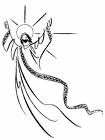
The Feast of the Ascension traditionally occurs 40 days after Easter. Since it falls on a Thursday, it’s often called Ascension Thursday.

Recently, with the transition of our work lives from an older, more flexible agrarian routine to modern industrialization’s insistance on time clocks, 24/7 availability of services, and the challenges of two income households, child care, school schedules and after school activities, taking time as a community of faith to stop and celebrate this feast has become a luxury available only to the fortunate few. Recognizing this reality in the lives of the faithful, bishops in many dioceses have allowed celebration of the feast to be moved to the Sunday before Pentecost. To the extent that this allows more people to be consciously aware of and celebrate the feast, I see this as a good step. Nevertheless, it is important to note that the feast actually falls today.

The feast of the Ascension marks the day on which Jesus was taken up to heaven (Lk 24:50-53). After the Resurrection, Jesus appeared on many occasions to his followers. He continued to teach them and explain all that had happened through His passion and why it had to happen as it did. At the end of both the Gospels of Mark and of Luke, as well as the beginning of the Acts of the Apostles, we are told that Jesus instructed His followers to go out as witnesses of all they had seen and heard, calling all peoples to turn from sin and accept baptism and the forgiving love of God. Then Jesus told His followers just before He was taken from their sight, to go back to Jerusalem and pray, waiting to receive the “promise of the Father” (Acts 1:4), the Holy Spirit who would give them power from on high to become His witnesses.

These events happened nine days before the Jewish feast of Pentecost. The apostles, Mary and other followers of Jesus did indeed return to Jerusalem. They gathered in the upper room where they had been staying after the Resurrection and devoted themselves to prayer. (They also took care of some administrative details – including selecting another person to take the place of Judas Iscariot. But that’s another part of the story not critical to today’s feast!)

On the feast of Pentecost, the Holy Spirit was poured out on them and the Church was born as Peter and the others fearlessly stepped out and witnessed to the world regarding all they had seen and experienced. The time of the Holy Spirit had begun.

A particularly important thing to remember regarding the Ascension, is that it is the beginning of a period of prayer for the outpouring of the Holy Spirit – a period of prayer mandated by Jesus Himself.

Since those early times in the church, we have developed a tradition of novenas, nine days of prayer with a particular focus or request. Typically the novena is addressed to a specific saint, requesting the saint’s intercession with God – much like asking a big brother or sister for help with a problem.

In the case of this first novena, the focus was much more direct. The novena from the Ascension to Pentecost is addressed directly to the Holy Spirit. With the early followers of Jesus, we too can pray for the outpouring of the Holy Spirit into our lives and world.

Imagine what could happen if we truly believe that we are to go out and be His witnesses — speaking His words of challenge and comfort, feeding the hungry, clothing the naked, housing the homeless, caring for the sick, acting as if a better world could really exist and all could really love and care for each other! This can only happen if we are filled with the Holy Spirit, clothed in power from on high. It is a daunting calling, but one that is implicit in our baptism and confirmation. We sing the ancient hymn, “Come Holy Ghost, Creator blest, and in our hearts take up thy rest…” It’s a beautiful prayer and truly dangerous if we take it to heart, meaing and believing what we are asking.

A younger hymn, from Zimbabwe, is also particularly appropriate for our novena to the Holy Spirit in these coming nine days. “If you believe and I believe and we together pray, the Holy Spirit must come down and set God’s people free. And set God’s people free, and set God’s people free; The Holy Spirit must come down and set God’s people free.” Free to be His witnesses — His hands, feet, voice and heart in our world.

Let’s again join together in these coming days to ask the Holy Spirit for a new outpouring of power into our lives and times. Pray with me with hope and confidence, trusting that with God’s help everything is possible, because “If you believe and I believe and we together pray, the Holy Spirit must (will) come down and set God’s people free.”

Read More

Posted by on May 18, 2009

We Are the Only Christians: Choice, Democracy, and Obama at Notre Dame

America Magazine, published by the Jesuits, has an interesting editorial on the controversy about pro-choice President Obama speaking at Notre Dame University’s commencement yesterday and receiving an honorary degree.

Another Catholic publication ( in the hands of lay people – no less) Commonweal has a more focused pro-Obama position in a post on its blog dotCommonweal.com by Paul Moses.

The issue according to these statements is the relationship of the Church as an organization, the faithful as a social movement, and the Government.

America’s editorial quotes St. Augustine in his criticism of the Donatists in his native North Africa and their refusal to have anything to do with the Imperial government. Donatism had other positions as well such as their rejection of Christians who had defected under persecution. “They believed that the church should be a community of saints not sinners.”

Even in the 4th century and earlier the politics of church and state caused a lot of controversy. Today at Notre Dame, President Obama like all of his predecessors holds some positions that do not agree with official Church teaching. George W. Bush invaded Iraq contrary to Pope John Paul II’s opposition to the policy of pre-emptive war.

The American bishops have championed a “seamless garment” pro-life agenda that opposes abortion and capital punishment. The bishops also advocate one primary solution which is legislation to once again make abortion illegal. The split in the Catholic community is over tactics. Many do not feel that re-criminalizing abortion will actually solve anything since it will only drive the practice underground.

In the 20th century there has been an attempt by Christians – in particular Catholics in the pews – to accommodate to a secular ethic of government. (Divorce, homosexuality, and birth control are now sanctioned by secular government even though these practices are contrary to traditional Christian teaching.) The broader issue is how does one advance a Christian agenda for social relations while supporting the secular ethic of not forcing one’s belief on another. In the abortion issue there is also the question over the best tactics for discouraging this and other activities that are not pro-life.

President Obama’s talk yesterday at Notre Dame proposes a pragmatic solution of providing incentives and support services for mothers to choose to deliver their unborn children. This seems to be the most effective approach to build a national policy of compassion and support for families and children. If our goal is to significantly reduce abortions this is probably a better tactic to implement such a Christian and humanitarian vision.

Read More

Posted by on May 15, 2009

Do Not of Mary a Stone Make

It is only fitting that during May, Mary’s month, friend Bill Reichmuth during lunch today recalled Martin Luther’s admonition not to turn Mary into a rigid statue. Luther reflected on Mary’s youth and courage in dealing with all of the challenges and difficulties involved in her yes to God.

Ave mundi spes Maria – English

Hail, hope of the world, Mary, hail, meek one, hail, loving one, hail, full of grace
Hail O singular virgin, who wast chosen to not suffer flames through brambles
Hail, beautiful rose, hail, staff of Jesse:
Whose fruit loosened the chains of our weeping
Hail whose womb bore a son against the law of death
Hail, O one lacking comparison, still tearfully renewing joy for the world
Hail, lamp of virgins, through whom the heavenly light shone on these whom shadow holds.
Hail, O virgin from whom a thing of heaven wished to be born, and from whose milk feed.
Hail, gem of the lamps of heaven
Hail, sanctuary of the Holy Ghost
O, how wonderful, and how praiseworthy is this virginity!
In whom, made through the spirit, the paraclete, shone fruitfulness.
O how holy, how serene, how kind, how pleasant the virgin is believed to be!
Through whom slavery is finished, a place of heaven is opened, and liberty is returned.
O, lily of chastity, pray to thy son, who is the salvation of the humble:
Lest we through our fault, in the tearful judgment suffer punishment.
But may she, by her holy prayer, purifying from the dregs of sin, place us in a home of light
Amen let every man say.

Benedictine Monks of santo Domingo de Salo Ave Mundi Spes Maria

Read More