Pages Menu
RssFacebook
Categories Menu

Posted by on Sep 28, 2025

Whom Do I Choose to See?

Whom Do I Choose to See?

Man sleeping on the streetWhen we leave our homes and go out into the wider world, we encounter a lot of other people, unless we live as hermits alone on a mountain somewhere. People are all over the place – in some locations more densely than others. In response to this density, we often learn to be selective regarding whom we choose to see. Whom do I choose to see?

The ability to feel comfortable and safe varies from person to person and situation to situation. Our sensitivity to the emotional “vibes” of others around us can also vary, but most of us have at least some ability to sense when another person is happy, sad, tense, etc. We call that quality empathy and value it as a positive feature.

Those living in cities have more frequent contact with other people than those living out in the countryside or in small towns. Nevertheless, our ability to befriend and enter into deep relationships with those around us is not unlimited, so we develop smaller circles of friends and family. Those outside these select circles remain basically unseen and unheard. We go about our lives, blithely unaware of the struggles and joys of those whose opportunities and struggles differ from our own. This is true both of those with more wealth and those with less.

Lest we think this reality is something new and unique to the times in which we live, we have the witness of ancient prophets to enlighten us.

The prophet Amos, in the years before Assyria conquered the northern kingdom of Israel, warned those with wealth and power in no uncertain terms that their focus on their own comfort and enjoyment of the good things of life was not acceptable to the Lord. It was totally contrary to the Lord’s demands through the centuries that the needs of the poor and vulnerable members of their communities must be seen and addressed. Their lack of willingness to see the needs of others or even to choose to see those others was fundamentally unacceptable. “Woe to the complacent in Zion! … they shall be the first to go into exile…”

As Amos warned, the enemies to the north eventually invaded and destroyed the homes and comfort of those who had looked only to their own wealth and pleasure. More than just the loss of wealth and privilege, these people were taken into exile far from home and forced into labor for the conquerors. They lost everything. What a hard way to learn about the importance of seeing the hardship of the lives of the poor and doing something to help! The words of Amos warning of the Lord’s displeasure with them must have rung woefully in their ears as they were taken away in chains. (Amos 6:1a, 4-7)

The Lord Sees

Jesus too warned of the dangers of an exclusive focus on the enjoyment of one’s own wealth in life. The wealthy man in his story didn’t notice the presence of a poor, ragged, beggar outside his door. The beggar, named Lazarus in the story, was just part of the scenery. How he got there, where he had come from, who he was, what he might have become in other situations – none of these questions entered the mind of the rich man. He didn’t even see Lazarus. Lazarus was as much a part of the scene as the building across the street, the trees down the road, or a shepherd out in the field nearby. He was not noticed. His plight did not matter. If he did notice, the rich man would have assumed it was the fault of Lazarus or his parents that he was now a beggar on the streets.

But the Lord did see Lazarus. He also saw the rich man. And the Lord noticed. The Lord chose to see. The Lord can’t help but see.

When the rich man died, according to the story, he was surprised to see Lazarus being comforted by Abraham, father of the rich man’s own people. Lazarus was experiencing love, acceptance, consolation, all good things. And the rich man was in torment. He wished for something as simple as a drop of water to quench his thirst, but none was forthcoming. So, he asked Abraham for help. “Send Lazarus to dip the tip of his finger in water to cool my tongue…” He saw Lazarus, but only still as someone who could do something for him personally.

For better or worse, it was impossible for Lazarus to help the rich man. Not that Lazarus would have refused to do so. Quite likely, Lazarus would have given comfort and a drop or more of water to the rich man. As a general rule, folks who have little give much more help to each other than they receive from those with much. But the boundaries that had been set by the rich man in his life were now the reality in which he had to remain.

The rich man still had one hope – maybe Lazarus could help his wealthy brothers to avoid the same suffering after their deaths by returning to warn them of the consequences of not seeing the suffering of others among the living. But Abraham sadly noted that the prophets had spoken of this very issue for centuries, only to be ignored by those with wealth and power. They would not change, they would not be persuaded “even if someone should rise from the dead.” (Lk 16:19-31)

Whom do I choose to see? How am I as a follower of Jesus to walk among the people in the world around me?

Timothy – Pursuing Righteousness

St. Paul reminded his friend and disciple Timothy what it means to follow Jesus. Paul addressed Timothy as a “man of God,” a term used in Hebrew scriptures to refer to Moses and the other prophets. Timothy (and the rest of us) are to “pursue righteousness, devotion, faith, love, patience, and gentleness.” These are all qualities that are a necessary part of life in the Lord’s kingdom. They are to be the signs and trademarks of our relationship with those we meet in our daily lives. They are prophetic signs for our world. (1 Tim 6:11-16)

Whom do I choose to see? The original question remains.

Do I open my eyes to see the person sitting on the sidewalk asking for a handout? Do I smile at the person stocking the shelves at the grocery store? Do I notice and respect the privacy of the child who is very shy and hides behind a parent? Do I smile at the parent, expressing with my smile my understanding and acceptance of them and their child?

The Vision of Peace and Justice

We live in a world filled with strife. Wealth and power, as so often happens, is increasingly concentrated in the hands of a few individuals and families. They are used by people seduced by power to force their will on others. They are a weapon that allows prosecution and persecution of those who oppose them. When wealth and power get concentrated, the needs of those who have limited access to either get trampled. Wars begin as one nation tries to subjugate another. Those seeking more wealth and power take advantage of the conflicts to line their pockets. And basic human rights and needs are trampled as being of little or no importance!

Again the words of Amos ring out. “Woe to the complacent…”

The Lord’s demand that the needs of all people be addressed has not gone away. Saving money on a regional or national level by taking away access to food, education, shelter, healthcare, pathways to asylum and legal status, and the basic freedoms of speech, assembly, religion, voting, and so forth does not turn a people into a nation blessed by the Lord. No ethnic, racial, or national group has an exclusive call on the Lord’s favor. No level of financial success is needed before the Lord cares. Only those who are open to all and provide hope and the help needed for all people to live with dignity and safety meet the call of the Lord.

Whom do I choose to see? It’s a personal challenge. Each of us will meet the Lord, “live and in person,” when the end of our days comes.  Whom will we find already there, embraced by Abraham, embraced by the Lord when that moment comes? Will we be among those who, unburdened by the weight of wealth to which we have clung, can race joyfully into those loving arms? Will we find welcome from those among the vulnerable poor whom we have chosen to see and reach out to help? Who will be there to welcome us?

May this week bring peace, joy, and an increasing openness and courage to see as the Lord sees and then act on behalf of his dearly loved sisters and brothers here and now.

Readings for the Twenty-sixth Sunday in Ordinary Time – Cycle C

See more thoughts on this topic?

Read More

Posted by on Sep 21, 2025

Treasuring Imperfections and Creating Something Wonderful

Treasuring Imperfections and Creating Something Wonderful

Jar of apricot jam with biscuitsFruit harvest time brings an abundance of sweet flavors. Peaches, cherries, plums, pears, apricots – so many varieties, each with its own cycle of life from spring through fall. Each variety has its expected season, with a few short weeks being the prime time for the best of the crop. Even within that time, some of the fruit ripens earlier than the rest. The key to success in home canning lies in treasuring these imperfections and creating something wonderful with them.

When a box of fruit is ripening, it’s not unusual for there to be several cups of fruit that is past its prime when the majority of it is ready to put into jars and process. That overripe fruit is great for making jam. It is typically soft and very sweet. There’s a recipe for each variety and several types of additions to make the final product – pectin, sugar, spices, lemon juice and so forth. Once the jam is cooked, it’s fun to spread a little bit from what is left in the pan after the jars are filled and spread it on crackers. Jokingly, this is called “Quality control testing” as the sweet flavor is enjoyed for the first time in the season.

The prophet Amos spoke boldly about the offenses of those “who trample upon the needy and destroy the poor of the land.” He told all who would listen, “The Lord has sworn by the pride of Jacob: Never will I forget a thing they have done!”  (Amos 8:4-7)

Among humans we also see a variety of responses to the Lord’s call to love each other. Almost like fruit that ripens over a period of time, humans need time to grow and mature. Along the way, we see folks who look out only for themselves and don’t hesitate to take advantage of others.

It’s not all right to trample or essentially throw away those who are not strong or “perfect” like a ripe piece of fruit. Those are the ones specially loved, treasured, protected by the Lord. The kingdom of God is filled with those who recognize their need and their gifts, then reach out and help others whom they meet along the way. 

St. Paul reminded Timothy to pray for everyone, and especially for those in positions of authority. Quiet, tranquil living conditions make it much easier to live with dignity and devotion to God. To the extent that all seek to respect and work with each other, the community will grow and come to know the truth of God’s presence and activity in the world through Jesus. (1 Tim 2:1-8)

Jesus himself once told a story about a steward who was responsible for managing the business affairs of a wealthy man. This steward was not above taking an extra share of everything for himself and eventually, the master realized what was going on. He called the steward and demanded a report of what had been happening. He informed the steward that he was no longer going to be employed as steward, but he didn’t fire him on the spot. He gave the steward time to put the report together.

Interestingly, the steward didn’t despair. He developed a plan – something he could do to ensure his survival once he lost his position. He called those who owed his master money and had them modify the loan documents to reduce the amount they owed the master. In this way, the steward assured there would be people willing to help him survive once he became unemployed.

Of course, this is a totally dishonest thing to do. It’s somewhat like the piece of fruit that is overripe and not fit to be served on its own. Something has to be done and, in the case of the steward, that something was rather like making it into jam or a sweet dessert. The master was impressed by the steward’s creative solution to his dire situation. He didn’t give the guy his job back, but he recognized the creativity.

Jesus did not recommend to his followers that they follow the example of essentially stealing from the employer, but he noted the common sense of the dishonest employee in making connections that would make possible his survival. 

Jesus then took the story a bit farther. He advised his followers to take the resources they have at hand and use them to make friends too. What kind of friends? Friends who are not able to fend for themselves, the ones the Lord historically always called on the Jewish people to protect and help. The wealth that matters is that which comes from God, and it is the wealth that is to be shared. This wealth typically looks different than the money we earn and use for living expenses. This wealth is the goodwill and support given to others. As we give this and practical help for meeting the needs of daily life, we receive more of the “true wealth” of the love of God. (Lk 16:1-13 )

This week, as we move through our daily activities and deal with the conflicts and challenges of our community and world today, may we keep our eyes open for the opportunities to treasure imperfections and create something wonderful in our world. May we reach out in love and respect to those we meet. May we be patient with those who are less able than we to make a way through life. May we keep our words gentle yet strong as we talk with those whose positions are different than our own. May we keep our ears open to hear the concerns underlying the  words and actions of others, allowing the possibility that something wonderful might be able to develop and grow through the imperfections we all bring in our lives.

The Lord is known for treasuring us with all our imperfections and working to create something wonderful through our lives. Here’s to the sweet jams and jellies of lives transformed through love!

Readings for the Twenty-fifth Sunday in Ordinary Time – Cycle C


Read More

Posted by on Sep 14, 2025

He Humbled Himself – God Greatly Exalted Him

He Humbled Himself – God Greatly Exalted Him

Wooden crucifix by José Rafael Aragón (ca. 1795-1862)One afternoon, when I was in high school, my teacher handed out a surprise test. We were told to read the instructions and complete it, then turn it in and we could leave. This was not the regular thing, but not unheard of to be allowed to leave the room once an exam had been completed. Little did any of us expect to be humbled by the experience.

We all started reading and completing the exam. The first line of the instructions said to read through all the questions before beginning. Sure, sure. What a waste of time, right?

Most of us just started working on the questions, beginning with number one and working our way down the page. At one point, we were instructed to say a word out loud, and one by one, we did.

Eventually, I got to the end of the test, on the back of the page, and was embarrassed to read the final entry. “Now that you have read the entire test first, put your name on the first page and go home.”

I don’t remember if any of my classmates had actually followed the instructions, read the entire two pages, put their name on the page and left early. A couple of people had left before I got to that last entry, and I was a bit surprised. But it never occurred to me that the first instruction might actually be important to follow exactly!

It’s a silly example, but all too often, we don’t pay attention to the details of what we are asked to do. We jump in, assuming we’re smart enough or talented enough to do whatever has been asked, but we don’t stop to think that maybe there’s a better way to accomplish the same goal. We are proud of our abilities and forget our limitations. Humility does not come naturally to us.

On September 14, we celebrate The Exaltation of the Holy Cross. This is an ancient feast and important enough to take the place of the regular Sunday liturgical readings. This year, we won’t be hearing the readings for the Twenty-fourth Sunday in Ordinary Time! Instead, we will hear of a love so deep that this humble love shines forth in glory as the Lord enters into creation and transforms all.

Wisdom from an Ancient Hymn

St. Paul quotes a hymn in his letter to the Philippians that was sung in the early Church, celebrating the coming of Jesus, the Christ, into our world. “Christ Jesus, though he was in the form of God, did not regard equality with God something to be grasped.”

These words were composed very early in the lives of the Christian community. Hundreds of years of reflection on the wonder of the Incarnation have followed the initial dawning of understanding of this amazing reality. God has come to be a human named Jesus, subject to all the limitations of human life. He did not hold onto the powers and privileges of being God. Instead, he accepted humbly all the limitations of human existence, including condemnation as a criminal to death on a cross.

St. Paul reminds his readers, including those of us hearing his words today, of the response of God to this self-humbling of Jesus. “God greatly exalted him and bestowed on him the name which is above every name…” (Remember, the word name means more than just what one is called – it refers to power.)

In Jesus, the Word of God, humbled himself. He, as a member of the Trinity, did not have to become one of us. But because he did it wholeheartedly and faithfully to his last breath, Jesus has been raised up and is recognized as Lord. In the process, our understanding of God is enhanced! “Jesus Christ is Lord, to the glory of God the Father.” (Phil 2:6-11)

Serpents in the Desert

The image of something raised up on a pole or cross is found early in the Hebrew Scriptures too. While the Israelites were traveling in the desert after the Exodus, there was a need for food to feed such a large group. The Lord sent manna each morning for them to collect for breakfast and birds in the evening for them to have for dinner. But after a few years, it began to be a bit boring to eat the same old thing every day. After all, how many ways can you prepare the manna to eat?

They complained to Moses about being in the desert and what God was providing for them. “We are disgusted with the wretched food!”

Hummm. Not necessarily a good idea to insult the one providing your meals, but what bad thing could happen?

Fortunately for the people, God is not vengeful. Things could have gotten really bad. Instead, they only got a little bad – unless you happened to be one of the folks bitten by the cobra-like serpents they ran into as they traveled! Some of those who were bitten died and the people came racing to Moses, apologizing for having complained about him and the Lord’s care for them.

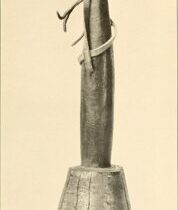
The Lord had Moses make a bronze model of the serpent and hang it on a pole, so that any who had been bitten could be healed by looking at it. This Moses did and those who were bitten were healed.

The serpent on the pole was both a reminder of the wrongdoing of the people and a source for healing. The source of punishment was transformed into a source for reconciliation with a God who could also be humble and forgiving with his people. (Num 21:4b-9)

A visitor in the night

Early in his public life, a Pharisee named Nicodemus visited Jesus one night. Nicodemus had some questions for him, specifically about how and by what authority he was preaching and healing. As their conversation continued, Jesus spoke of the perspective of one who has “come down from heaven, the Son of Man.” (This is John’s Gospel, in which Jesus is more aware of his unique connection to the Father and it shows in his conversations.) He reminded Nicodemus of the time Moses “lifted up the serpent in the desert” and commented that the Son of Man would also have to be lifted up in order for all who believe in him to have eternal life.

Jesus’ next words are ones of amazing promise. “God so loved the world that he gave his only son … so that those who believe in him … might have eternal life.” God didn’t send Jesus to condemn humanity. God came himself in Jesus to bring life to all. God is humble enough to do what is needed to reach each of us, because God loves us so deeply. (Jn 3:13-17)

And so?

We humans will continue to bumble our way through life – often failing to recognize in our pride the simpler reality of mutual help and the need we all have for love and forgiveness along the way. But God doesn’t forget and keeps coming around, hoping we will remember the next time and ask for help when we need it and also humbly offer help and forgiveness to others when we can.

God so loved the world that he humbled himself to save us, to re-establish the original bond formed in creation. Now we are called each day to live that reconciliation and the connection we have with God, each other, and all of creation.

Readings for the Feast of the Exaltation of the Holy Cross – Cycle C


Read More

Posted by on Sep 7, 2025

Finding the Way – Got a Map?

Finding the Way – Got a Map?

Assorted Map piecesSpatial orientation and keeping track of landmarks, finding the way, while moving from one place to another do not always come naturally, especially when an individual has always been with someone else who has led the way for them. I discovered this to my surprise one day when I went with three guys from my high school class to take part in a program for students from all over town at one of the local colleges. None of us had ever visited that particular campus, so no one knew where we were going.

We managed to find our way to the classroom where the event was to occur and had a good time with the other students. Then it was time to go back to our own campus and return home from there. When we left the building, I assumed all of the others would know the way back to the car in which we had come, but as it turned out, none of the guys remembered which way to go! I was amazed. My father had made sure all of us learned at an early age to pay attention to landmarks and which way we had turned when hiking in the countryside or walking in town. But apparently, the guys had not been so lucky.  I led the way back to the car and we made it home safely. (They were all taken aback that a girl could find the way home, by the way. It was a different time!)

The question of finding the way, however, is not always something as simple as finding one’s way across a small college campus in a city. It’s not even merely a physical feat of geolocation – where am I physically? Finding the way may be a factor in achieving a personal goal – I will learn how to knit this scarf! It might also be something life-changing – what am I called to do with my life? What is my vocation to be? How will I know what God is calling me to do? Got a map?

In each of the readings this Twenty-third Sunday in Ordinary Time, the question of searching for and finding the way or of reaching a goal is part of the story.

Jesus spoke to great crowds of people who followed him through the countryside from village to village and city to city. His words sound harsh to us today. “If anyone comes to me without hating his father and mother, and even his own life, he cannot be my disciple.” How can hating anyone be a goal for the follower of Jesus. Aren’t we supposed to love everyone?

This is a situation in which words in one language do not necessarily mean the same thing as in another. In some languages, there are no words to express concepts found and expressed in another. This is the case with the use of the word “hate” here. There was not a word in Jesus’ language to express preference corresponding to the word “like.” Our usage of “like” as in “prefer” was not a possibility in his language. To say that something is not to be preferred, the word translated as hate in English was used.

So, Jesus is telling his followers that if family traditions or claims on their allegiance from their family would stop them from following the way of living to which he calls his followers, their choice would need to be to prefer Jesus’ way and leave behind the claims of others – to “hate” those claims.

He gives examples of situations in which people make choices in their lives. Do I have the resources to build a tower (add on a room to my house)? Should I settle with an adversary or press my claim legally or on a battlefield? What am I willing to give up to follow this new way of love that Jesus teaches? (Lk 14:25-33)

Where is the map? How will I find the way?

Paul wrote to his friend Philemon from jail near the end of his life. One of Philemon’s slaves had come to stay with Paul and become a Christian. Paul was not required to return Onesimus to Philemon. In fact, Jewish law prohibited the return of a slave to a master. (Deut 23:16) Nevertheless, Paul sent Onesimus back to Philemon with a letter and request – receive him back into your home as a beloved brother in Christ rather than as a slave. “If you regard me as a partner, welcome him as you would me.” (Phil 9-10, 12-17)

This is definitely not the normal map! There’s a new one coming into focus.

How do we find the new map? How will we know where to go, which way to turn as we journey through life?

The author of the book of Wisdom rightly asks, “Who can know God’s counsel, or who can conceive what the Lord intends?” Humans can’t really know. Our bodies are weak, our dreams are limited, our plans are uncertain. Knowledge of how things work and what is right or good in earthly terms is not easy to achieve. We try again and again to understand the physical world and still seem only to glimpse a small part of the bigger picture.

How can humans, with such limited ability to see and understand reality, ever hope to understand the ways of the Lord and the heavenly realm? The answer is clearly stated: “…who ever knew your counsel, except you had given wisdom and sent your holy spirit from on high? And thus were the paths of those on earth made straight.” (Wis 9:13-18b)

Here is the map. The Holy Spirit instructs those who seek wisdom and understanding of the Lord’s ways. The Spirit is our hope, our refuge, our guide.

We too must rely on the Holy Spirit to guide us through each day, keeping our eyes open to see the landmarks as we move along the twists and turns of daily life. Who will we meet on the way to work? What will a fellow student need to hear as reassurance or friendship from us? Is there someone at the grocery store who could use a smile or a bit of patience from the rest of the people in line? What child walking along the sidewalk with parents will be delighted to discover that you too have pockets in your coat?

Most of us don’t have the power to reach out and fix the injustices of national or international policy around us today. But we do have the power to work for justice in our own communities. We can make a difference for the people among whom we live and work. We can help protect our neighbors and co-workers who may be in danger from those who have been led to fear them.  We can share our resources and knowledge of the ways our laws and traditions work with those who have relatively newly arrived. We can be kind to all we meet.

The law of the Lord is love. This week may we use Love as our primary map as we find our way through our daily activities on the way to the blossoming of the kingdom of Love, the kingdom of God.

Readings for the Twenty-third Sunday in Ordinary Time – Cycle C


Read More

Posted by on Aug 31, 2025

Conduct Your Affairs With Humility

Conduct Your Affairs With Humility

“You can catch more flies with honey than with vinegar.” This old saying is as true today as it has ever been. Yet again and again, we see powerful men and women behaving as if only their words or whims matter. All will/must obey quickly or lose position or favor. “I alone will decide …” “I alone can solve this problem.” “I alone, I alone, I alone…”

Is this really the way it works in life and in relationships of people or nations? History and experience say not really. Those who attempt to rule by force or intimidation eventually fail.

On the other hand, does simply saying “yes” to the demands of the powerful bring them to change their ways and seek the good of the community over their personal gain? No, not at all. In fact, they count on people quietly complying with their demands, whether out of fear of losing their own power or position or of having harm done to them and their families.

The powerful wield a wide array of resources and typically don’t hesitate to employ them against those who question their perspective or their actions. Don’t like the quiet opposition of a former government official? Just drop their access to security services funded by the government. Make them pay for their own security to protect from the risk of an unbalanced supporter of the one in power coming with weapons to kill them. We’ve seen this play out frequently in the past few weeks in our own country. It’s no longer the preferred response only of dictators in foreign countries.

How then are we to understand the admonition of Sirach, collector of bits of wisdom, in the book of Proverbs? “Conduct your affairs with humility.” What is humility? How does it show up in real life?

Humility is an attitude of recognition that one does not know everything, nor does one always see the best solution to a difficulty. It’s not a false declaration putting down or seeking to minimize one’s own gifts. We each have gifts we are to use for the benefit of others. But we also must admit that we need to work with and learn from others too.

So, Sirach continues, “… you will be loved more than the giver of gifts.” The greater the gifts received, the more important to be aware of the possibility of learning from others. One never knows when a gem of insight or wisdom will fall from the lips of a child, or a person with less education, or a person who has fulfilled a very humble role in life. “The mind of a sage appreciates proverbs, and an attentive ear is the joy of the wise.” Sir 3:17-18, 20, 28-29)

Honest people, people willing to listen to the experience of others and change their opinions and positions in disagreements will learn and grow. The experience of the lowly can be expressed in many ways and bring about changes in the way services are delivered and evaluated. Those willing to listen to the words of those with “boots on the ground” may find that academic theories or the ideas of those whose only experience is what they read in a book or heard on the radio or television have less to offer. Boots on the ground lead to eyes that can see more clearly the actual lay of the land – what will work, what will help, what is the best approach to resolve today’s issues.

Jesus too cautioned his followers about seeking the place of honor at all times. It’s far better to be in a position of being called to a place of higher honor than told to move down to a place of lesser honor.

But Jesus went a step farther. Typically, when we plan a gathering or a meeting, we make a list of guests based on priority of importance in our lives. We want to be sure the folks who can help our careers are invited, those whose respect we crave. We invite those whom we hope will return a favor sometime, or those we want to influence. However, Jesus says we are not to worry about inviting only those who might invite us in turn or bring some benefit to us. Instead, we are to “invite the poor, the crippled, the lame, the blind…” When we invite God’s “Little ones,” we invite God himself to our table.  When we stand up for those with little or no power, we are standing up for God himself. And Jesus promises, “blessed indeed will you be because of their inability to repay you. For you will be repaid at the resurrection of the righteous.” (Lk 14:1, 7-14)

The resurrection of the righteous. Are we to expect blazing fire and gloom? How about trumpet blasts and storms? Voices so frightening we beg not to hear them ever again?

According to the author of Hebrews, this is not what we await or are to expect. Having approached the city of the living God, the heavenly Jerusalem, we may expect to see angels gathered in joy and those counted as firstborn of the Lord because of the way they live the law of love. God, the father and creator of all will be present, judging with love and understanding, as will Jesus who opened the new covenant to us all through the gift of his death and resurrection. (Heb 12:18-19, 22-24a)

The resurrection of the righteous will be seen in love and joy, as the family of God gathers from all lands – the everyday, ordinary people who live lives of humility and joyful service.

And we today? What are we to do?  How do we live lives of humility, justice and peace? How do we speak and act as witness to the presence of God in our lives? How will we speak to the powerful our words of witness to the requirement of love of neighbor as ourselves? How will our humble care for newcomers, asylum seekers, those who have lived among us for decades as immigrants help protect the human rights of all. How will we reach our representatives and convey our support for those who have no power? How do we share the experience of love and the insights of the powerless who speak to us through their pain and fear as their rights are denied and their very lives are endangered?

We are called to conduct our affairs with humility this week. The kingdom comes into the world one day at a time, one action at a time.

Together let us join as witnesses of the coming of the Lord into our world. Let us speak on behalf of those facing hatred or danger. Let us share what we have with those who have little. Let us contact our representatives with our concerns about the changes occurring nationally that endanger the health and safety of our neighbors, whether in the field of immigration, healthcare, communications, food security, access to education, or so many other topics.

Let us go out into our week filled with courage, strength, and the humility to know we can’t do everything alone, but together, we can help usher in the Kingdom of peace and justice, the Kingdom of God.

Readings for the Twenty-second Sunday in Ordinary Time – Cycle C


Read More

Posted by on Aug 24, 2025

Coming From the Ends of the Earth

Coming From the Ends of the Earth

Again and again through the history of the world, groups of people have had to leave their homes and travel to other regions in search of a safe place, with resources available for them to use, so they can live and raise their families. We still see in our world today many of the different ways that people have found to gain the resources for their survival and even the thriving of their cultures.

Some peoples have been what anthropologists call hunter/gatherers. These folks may live in a specific region, but their livelihoods depend on having enough animals to hunt or fish and plants that can be harvested and preserved for use throughout most of the year.

Other folks follow their herds of animals from one grazing area to another. Many types of animals make up these herds – sheep, goats, cattle, llamas, alpacas, reindeer, etc. Horses, donkeys, dogs, and camels are among the other kinds of animals used to travel with and manage the herds or serve as pack animals. These animals also offer an advantage when times get hard and the community must move into the lands of other peoples, whether as traders or as invaders.

We’re more familiar with peoples who have both cities and rural lands, with a form of government that places some persons in charge or provides for the people to select representatives to manage the access to resources for living as communities.

The Hebrew people, originally herders but later a settled people with cities and rural areas, found themselves on more than one occasion either as the invaders conquering a new land for themselves or being conquered and displaced from the land. After the conquest by the armies of Babylon and its allies, they spent many years outside their former land. Eventually, however, the armies of Persia conquered Babylon and the people of Israel were allowed to return to Judea. Isaiah the prophet describes their return and the promises of the Lord as they rebuild the city of Jerusalem, the temple, and their way of life.

Near the end of the book of Isaiah, the Lord promises: “I come to gather nations of every language; they shall come and see my glory. … They shall proclaim my glory among the nations. They shall bring all your brothers and sisters from all the nations as an offering to the Lord.” (Is 66:18-21)

The words originally were understood to refer to Jewish/Hebrew exiles who lived throughout the Middle East and North Africa and also to good people from the nations among whom they lived. They would return to offer sacrifice in Jerusalem. The Lord notes that although not all are of the tribe of Levi, some of these who come will also be chosen to serve as priests and teachers. It is not necessary to be of the correct ancestry to serve the Lord.

Jesus also stressed the importance of following the way of the Lord in his teaching. “Strive to enter through the narrow gate, for many, I tell you, will attempt to enter but will not be strong enough.”

Not strong enough?  Yes – not living in the way shown by “Abraham, Isaac, and Jacob and all the prophets in the kingdom of God.” Yet others, he tells us, “from the north and the south will recline at table in the kingdom of God.” Not the powerful or comfortable as would be expected in most societies. “Some are last who will be first, and some are first who will be last.”

Jesus makes clear that our choices matter. The narrow gate does not necessarily refer only to a physical gate into the city of Jerusalem. It is also a way of living: choosing to live according to the Law of love, the Law given by the Lord to guide his people in his ways. Anyone who lives in this way, will be welcomed to the kingdom of God. (Lk 13:22-30)

As might be expected, this kind of life is not easy. There will be successes and failures. When we fail to live by the law of love, to enter through the narrow gate, consequences will not be pleasant. It might seem the easy way at first, but in the long run, things can turn out very differently than first expected. What seemed a great way to live may prove to be a great way to fail to love.

The author of the letter to the Hebrews speaks of the consequences as “discipline” in the sense of the punishment a parent might impose on a wayward child to teach the child the proper way to act. The easy way, the way we are most likely to find attractive, is so often not the narrow way, the way of sacrifice that puts the well-being of others at the forefront of our considerations.

Our author reminds all that such training “brings the peaceful fruit of righteousness to those who are trained by it.” He encourages all: “… strengthen your drooping hands and your weak knees. Make straight paths for your feet, that what is lame may not be disjointed but healed.” In the long run, doing the right thing will bring its own rewards – the rewards of on-going life in the kingdom of the Lord. (Heb 12:5-7, 11-13)

Fine and good. But what does it mean for us today? Most of us live in settled communities. We have our national origin stories and mythic histories of how things came to be. We speak of rugged individuals who settled the lands known as the United States of America. We  ignore the fact too often that these lands were settled long before Europeans, many of them refugees, came here seeking a new start, a way to build a community that is rather like those they left, but with the freedom to worship or govern themselves in a different way. We also ignore the contributions of people from all over the world who came to work and build the communities and institutions we take for granted now.

How do we ourselves fit into the kingdom of God? Would our communities be recognized as followers of the Way of Jesus by the early Church? What is it about us that sets us apart from the larger society? What does it mean today to go through the narrow gate? Who are those coming from the north and south, the east and west, to eat at the table of the Lord? Will we be invited to join them for dinner?

These are important questions to ask ourselves. In what ways do we help and support those with fewer resources who struggle to support themselves and their families? How do we welcome and help those who have had to flee their lands to save their lives and those of their families? How do we help children who struggle in school or who are hungry or un-housed? Do we quietly accept policies that take away help from those in need? Do we act as if all would be well if only everyone did X, Y,or Z?

When I was growing up, we lived in a working-class neighborhood. My parents grew up during the Depression and World War II. They had been to college and we had many skills that our neighbors didn’t have, including our practice of making soap and noodles – not on the same day or using the same equipment, of course! But we felt, or at least I felt, rather smug that we knew how to support ourselves better than some of our neighbors did, because our great-great-grandparents had been pioneers and passed on the skills they used in the late 1800s through the generations to us.

It was only later, as an adult, that I discovered to my shock that due to the cost of flour and eggs, it could be less expensive, more affordable, simply to buy a package of noodles to feed a family for a day than to buy the ingredients in packaging quantities that would be far more than needed for that day. If money is not an issue, it’s fine to buy enough to last for a month. But if money, or lack thereof, is an issue, then our middle-class solution would not work! Flour isn’t usually sold in one or two cup packages and it’s hard to buy just one or two eggs at the grocery store! It’s easier and more affordable simply to buy a bag of noodles.

What then do we do? How do we find the narrow gate?

Maybe we find the narrow gate by opening our eyes to those who have come and are coming from the ends of the earth. What can we learn from those who leave all behind and travel to a new land, with a new language, and new ways? How can we be a welcoming people rather than a people or even just a person who is afraid that sharing what we have will mean we don’t have enough for ourselves?

“Limited Good” or “Enough for All?”

We easily fall back on a notion common around the world that anthropologist George Foster called “limited good.” Limited good is the notion that there is only just so much of what is needed for a good life available in the world. To the extent that my family and I get a larger share of that good, you and your family will get less.

The challenge and limitation of this perspective is that it can be a source of conflict, unless a social method has been developed for sharing the wealth. In many societies, those who have much are expected to share what they have in ritual ways, including giving most of it away in specific ceremonial gatherings. Those who give away the most get the highest honor!

Suppose we could shift the idea a bit and instead of thinking about Good as a limited property or thing, we could conceive of it as being unlimited if we just work together to help each other along the way? In this scenario, I help you when I have something you need and you help me when the tables are turned.

Rather than cutting taxes for the wealthy and taking benefits away from the poor, all could benefit from providing the basic support to allow people to grow up and contribute to the good of all by using the talents they bring to the table. An approach such as this has proven to improve the well-being of most of the people of the country when actually put into practice in each community. To the extent it hasn’t worked, it’s often because the funds have not been redistributed effectively or justly to help those most in need of them.

The problem with this approach, of course, is that it’s hard to remember that having more is not necessarily the goal of life. Social respect and praise go to those who amass fortunes and live large. Having resources and sharing them freely is not valued and often not respected. It is the narrow way, the way of love, the way of the Kingdom of God.

As we go through this coming week, may we be aware of the times we have forgotten to seek and follow the narrow way. May we work to share what we have been given and work to help those with less opportunity to get the resources they need to thrive. May we help newcomers and the vulnerable among us. And most importantly, may we remember that the Lord is present in the young, the old, the poor, the un-housed, the sick, those in prison, and those who are refugees. If we want to meet him, look around. He’s right here among us.

Readings for the Twenty-first Sunday in Ordinary Time – Cycle C


Read More

Posted by on Aug 17, 2025

One More Time With Feeling

One More Time With Feeling

Activities that require a certain amount of skill to complete successfully typically also require much practice before they are successfully mastered. I’m thinking of things like learning to catch a baseball, or ride a bicycle or a horse, or skate across a frozen pond in the winter. Sometimes the attempt is successful and all are happy and excited. Sometimes the attempt is not. Then several outcomes are possible. One is that the person trying to learn a new skill simply gives up and doesn’t try again. There are times when that might be a good option, especially if the activity in question is very dangerous and could end with a serious injury or death. But most skills or activities don’t fall into that category.

Another possible outcome is for the individual to get back up right away and try again. One expression in such cases is to “get back on the horse.” We like to see this determination when the skill is one that will help the individual or community in the future. It’s how most of what we learn as we grow up happens.

But then there is the in-between situation. The skill is hard or is an activity that doesn’t come naturally to the individual. Others are watching and may laugh at one’s failure. The individual has seriously tried to master the skill (arithmetic anyone?), but it doesn’t come easily. It’s a skill one can go through life without ever mastering. So many reasons not to keep trying.

This is where “One more time with feeling” comes into the picture. If those around us, or those teaching us, or simply those who care about us can encourage another attempt, or as many as it takes, we are more likely to succeed eventually.

I suspect God looks at us often, and with a resigned shake of the head, thinks, “Well, one more time with feeling …” and sends someone once again to remind us all of what our calling is. How many times do we need to be reminded to care for the poor, the little ones, those who have to leave their homes to find safety or a way to support their children? How many times will a messenger need to be sent to remind the leaders of the community of the importance of working for the common good rather than personal power and wealth?

In the time of Jeremiah, before the conquest of Jerusalem and exile of the community in Babylon, the authorities were angry that he, Jeremiah, refused to remain silent as they looked to their own interests rather than those of the community and their common relationship with the Lord. They were so angry that they convinced the King to let them get rid of this troublemaker. He was thrown into a cistern, a place like a well where water was stored in time of rain and used in drier times. Fortunately, there was only mud in the bottom, but that was small consolation to Jeremiah as he prepared to spend the last days of his life being deprived of food and water, sitting or standing in the mud!

Fortunately for Jeremiah, a man who was not from Israel but was an official of the court interceded for him with the king. The man’s name was Ebed-melech and he was from Cush. We don’t know today where Cush was, whether in Africa or Mesopotamia. It doesn’t really matter. He had the courage to speak to the king and ask permission to rescue Jeremiah from the cistern. (Jer 38:4-6, 8-10)

Jeremiah didn’t stop speaking the Lord’s word after his rescue. He continued to warn all who would listen that the Lord was not happy with the way they were acting. Eventually the Babylonians did come. Jerusalem fell. The temple was destroyed. The leaders who survived and much of the population were taken to exile in Babylon.

“One more time with feeling … and they didn’t listen again! Drat! … Well, maybe next time,” says the Lord.

When Jesus first began teaching, not a lot of people knew about him and the amount of controversy surrounding his words and message was relatively limited. However, as he continued teaching during the three years between his baptism in the Jordan and his crucifixion, the controversy grew much louder and stronger. This was especially true as he began teaching that so many things considered to be wise or expected and acceptable in social interactions were actually foolish in God’s eyes. For example, he told of the farmer who had a hugely successful harvest, tore down his barns and built bigger ones so he would have food for years to come. Unfortunately, it was all a waste, because he died that night!

Another time he told of the servant whose master was away and had left him in charge of the household and business/farm. The servant who did what he was expected to do would be rewarded. The one who abused those below him in authority or disobeyed the master’s orders knowingly would be seriously punished. And then the surprise – the one who didn’t know what the master wanted and as a result did the wrong thing, would receive a lesser punishment.

With all of these surprising, unexpected teachings, his followers could be excused for wondering how a person sent by God could cause such conflict among those who heard his words!

Jesus didn’t sidestep the question. “I have come to set the earth on fire… Do you think I have come to establish peace on the earth? No, I tell you but rather division.” (Lk 12:49-53)

Wait, what? Isn’t he supposed to be the Prince of Peace?

But Jesus wasn’t here to tell us all that the way things were being done as a general rule was the way God had intended them to be from all eternity. He came as the Father’s “One more time with feeling” outreach to all of us. Would we get the message this time? Would we have the courage and compassion to listen and act? Would we set the world on fire with love? Would we share the good news of love through our actions rather than just our words?

Jesus was no gullible fool. He knew he faced great opposition and would pay a high price for his integrity in proclaiming the will of the Father. He didn’t want to have to do it. But he was resolved to carry on with the mission. One more time with feeling – Who would respond and join him on the journey?

As it turned out, after the Resurrection, those who had been his friends continued to be his friends. When the Spirit came upon them, they moved forth bravely, carrying the message to those they met in their daily lives – God wants us to love and take care of each other. The poor must be helped. Those from other lands must be welcomed and helped to make a home among us. All people are loved by God, not just one nation or group. People need the basics of food, shelter, clothing, schooling, health care.

In the early years, it was not easy. Followers of Jesus and The Way were tossed out of their worship communities. They were arrested and punished. Some were killed. Many left their homes and traveled to other areas where they could be safer.

This history has continued through the ages, even to the present days. In our own lifetimes, men and women have paid the ultimate price for their lives of witness and service to the Gospel. Those who give their lives are known as martyrs – a word that means witnesses.

The author of the Letter to the Hebrews reminded his readers of this. He spoke of a great “cloud of witnesses” who surround us all. Those who have gone before us. Those who speak out today and encourage the rest of us to act with courage. Jesus is our leader and our model, giving his own life as witness. We have not yet been called to give everything including our lives in witness. Still, God is counting on us to be the ones today who speak out – One more time with feeling. (Heb 12:1-4)

Feed the poor, especially the children and their families. Teach the children. Make sure homes are available for everyone. Help people get healthcare. Welcome immigrants and those who seek asylum. Respect the legal rights and human dignity of all people.

These are the works of the Lord. These are the things he hopes we will eventually understand and put in place, so the kingdom of love and peace can come into being in our world.

May we listen with open hearts and ears to the Lord’s voice this week and keep trying.

“OK, you fell down this time, but get up and try again. One more time with feeling now!”

Readings for the Twentieth Sunday of Ordinary Time – Cycle C


Read More

Posted by on Jul 27, 2025

Be Bold and Persistent

Be Bold and Persistent

“Ama, you sit here and I’m going to sit in this chair. Now you can read to me.” Thus says the two-and-a-half-year-old grandchild as she brings a story to be read to her. She has no hesitation about telling an older person what to do and when or how to do it. She is still so very innocent that she boldly expresses what she would like to have happen and trusts the rest of the family will comply. Of course, it doesn’t always work out that things go her way, but she’s confident that most of the time it will, especially on visits with grandparents.

As we get older, we learn the world doesn’t revolve around us. We learn that people in power don’t always listen to those with lower status or power. We learn to be cautious in our expectations and not to aim too high.

Yet is this the way to approach our relationship with God? Maybe not.

Abraham’s visitors went on their way after having a fine meal at the camp of Abraham and Sarah at the terebinth of Mamre. But one stayed behind to speak further with Abraham. It seems he, the Lord, was going to the cities of Sodom and Gomorrah to see if the people there were indeed as wicked as he had heard they were. If that turned out to be the case, he planned to destroy the cities and all within them.

Now Abraham found this quite disturbing. He had family members living in Sodom and didn’t want to see any harm come to them. So, he began to appeal to the softer side of the Lord. What if there are fifty good people in the city. Would you kill the innocent with the guilty? Well, when put that way, the Lord agreed it would not be fair to the fifty, so he agreed to spare the city if fifty good people were found.

So far, so good. But Abraham didn’t stop there. He boldly asked, What about if there are only forty-five? The Lord agreed that forty-five would be enough to hold off destroying the city. The bargaining continued until they finally agreed that if there were as many (or as few) as ten good people, the Lord would not destroy the city.

Abraham was polite, respectful, and yet bold in his advocacy for the people of Sodom and Gomorrah. The Lord responded with kind respect as well, willing to listen to a plea for mercy. A very different response than can be expected from most rulers. Abraham was bold and persistent. He started with a large number and continued bargaining, requesting mercy for a population with fewer and fewer examples of good behavior and good will. When he stopped, it was probably because he assumed at least his own extended family would make up enough good people to save the cities. (Gen 18:20-32)

The question of how to be an advocate with the Lord has continued through the centuries.

Jesus was asked one day by his disciples to teach them how to pray. He responded with what we often call “The Lord’s Prayer,” a.k.a. “The Our Father.” We begin, speaking to God as a loving father, with the hope that his power and authority will be recognized and respected by all. We hope for the coming of the Kingdom and that the Lord’s will should be done everywhere. Then come the practical things – daily bread, forgiveness for our offenses, protection from temptation, and deliverance from evil. One hitch is that forgiveness is requested to the degree that we ourselves forgive others. That’s not always easy. But all in all, it’s a strong prayer that rests on the loving, intimate family relationship of parent and child. “Daddy, you sit here while you read me a story.”

Jesus didn’t stop with just how to pray. He went on to encourage great confidence in prayer. “Ask and you shall receive, seek and you shall find, knock and the door will be opened.” Keep knocking even if you get a negative result the first time. The neighbor who won’t get up and wake his whole family to get you an extra loaf of bread for a guest the first time you ask will do so if you keep asking again and again in the night. Be persistent. Be bold. (Lk 11:1-13)

Now, do we always get what we ask for in prayer? No. So what about that promise of ask and you shall receive? Maybe it’s a question of what is requested and for whom?

Abraham asked on behalf of the innocent people in Sodom and Gomorrah. For the innocent ones, the Lord was willing to change plans.

When we ask for things that only benefit ourselves, there’s no guarantee the request will be granted. But if we ask on behalf of another person, and what we ask is genuinely what will be best for that person, our request is more likely to be granted. Sometimes, when we ask, it begins the process of consideration of what would be a good thing to see happen. Might we do something ourselves that would help? We are the Body of Christ now in our time. How can we do the Lord’s work and bring about needed change or help for those in need?

Sometimes it takes a long time for change to happen. Sometimes suffering continues far too long, because the forces causing the pain are strong and don’t easily surrender. It’s then that persistence is essential. It may take many years, but with enough people working for reform or change, the new way comes into being. Doors open. Opportunities appear. And lives are changed.

As we move through the days and weeks to come, may we remember to pray constantly, seeking ways to bring the Kingdom and the freedom of loving response to the challenges of our time into our everyday lives. How do we help the poor? How do we support immigrants? How do we keep healthcare accessible for those whose employers don’t offer it? How do we provide books and opportunities for children in school to learn? How do we feed children so they can learn when they get to school?

So many, many challenges face us all at this time. Yet the Lord assures us, “Ask and you will receive.”

So, let us ask boldly and act with courage to open the doors of our hearts, minds, and homes to live in the Kingdom of God, the Kingdom of Love for all, regardless of social or legal status. All are God’s children. All are our sisters and brothers. All…

Be bold and be persistent.

Readings for the Seventeenth Sunday in Ordinary Time – Cycle C


Read More

Posted by on Jul 18, 2025

The Day the Lord Came to Dinner

The Day the Lord Came to Dinner

Imagine for a moment that you got a letter, special delivery, saying the King of England was coming to dine at your home tomorrow evening. Once you got over the shock, how would you prepare? You’re an ordinary person, with no servants or staff to make things happen. Your home is well lived-in, not always perfectly tidy, but comfortable.

What are the most important things or rooms to have clean? What will you serve for dinner? Which dishes should you use? Why would the King ever think to come to your house? So very, very much to do in such a short time… How can it be possible to get everything ready on time?

In a great whirl of activity, the house is cleaned, the meal prepared, best clothes are worn, and at the appointed time, the King arrives. It proves to be a memorable dinner, because, surprise, he can be just a regular guy when he’s not acting as King!

Now most of us will never have this challenge land on our doorstep. Kings  don’t often drop in for dinner and I would guess most of us have never received a letter from the King of any country. Still … there are times when hospitality is the most important thing we can offer.

One very ordinary day, Abraham and his wife Sarah were camping by the terebinth of Mamre. A terebinth is a shrub from the cashew family that grows to be the size of a tree and also produces turpentine. They traveled with their sheep from one part of the land to another. But this particular day was noteworthy.

It was around the middle of the day and getting hot. Abraham came out of the tent, perhaps to cool off in the shade of the tree. He noticed three men approaching as he left the entrance of the tent. Visitors were not common in those days and places, so he ran out to greet them and invite them to stop for a meal and a rest in their journey. He was delighted when they agreed to do so. It would be a chance to catch up on the news from far away.

He quickly went into the tent and asked Sarah to make rolls for the meal, using plenty of fine flour. He chose a choice steer and ordered a servant to prepare it to be eaten. Then he took curds and milk, along with the meat of the steer and the rolls and served the three visitors a fine meal. He stood beside them as they ate, ready to provide for anything more they might request.

After they finished eating, they asked Abraham where his wife might be. He responded that she was in the tent. A modest woman would not go out to meet strangers in those days. One of the visitors told Abraham that in a year when he, the visitor, returned, Sarah would have a son.

Now Abraham and Sarah were both old and they had never had children, so this sounded pretty far-fetched. In fact, Sarah laughed out loud at the preposterous thought! But as it turned out, she did have a son the next year and his name meant, “I laughed.” (Gen 18:1-10a)

It wasn’t the King of England who visited Abraham and Sarah. It was the Lord who came without warning and happily accepted the hospitality of a man and his wife. The blessing of their gift of hospitality by the Lord opened the door for all the blessings that would follow through the centuries, from the time of Abraham to the present.

Jesus too stopped in for dinner unannounced on occasion. One day he visited the home of his friends Martha, Mary, and Lazarus. His visit was unexpected and there was much hustle and bustle in the house and kitchen to get dinner ready. The men were not expected to help fix dinner. Their role was to visit with and entertain the guests. The women were to get the food ready and serve it.

But this day, Mary couldn’t resist the urge to sit with those around Jesus and listen to him talk. He was always such an interesting person. Martha, on the other hand, was very aware that an important part of the team was missing from the kitchen. What was Mary thinking! She needed to be in the kitchen helping. No excuses.

When Martha went to Jesus to demand that he send Mary to help in the kitchen where she belonged, she got a surprise. Jesus responded, “Martha, Martha, you are anxious and worried about many things. There is need of only one thing. Mary has chosen the better part and it will not be taken from her.” (Lk 10:38-42)

Wow. That would be hard to hear, I imagine. How can it be that not doing what is needed to provide for a guest is better? Yet there’s an important lesson for all of us here. Sometimes we can’t and don’t need to make sure everything is organized and ready on time or in the usual way. Sometimes we simply need to stop and listen and learn what is really important for that moment. The gift of the present moment can’t be replaced. Somehow, folks will find food to eat. They may need to work together in unfamiliar ways, but generally no one starves for want of getting into the kitchen and preparing the food that’s there! In the meanwhile, there are treasures of wisdom that will be missed if the focus is too strictly on what is expected of each person at any given time.

The Lord came to dinner that day. They didn’t know he was the Lord. He was their friend, Jesus of Nazareth, who happened to be a traveling preacher and healer. Maybe even a prophet. His words to Martha that day were really a reminder that there’s a time to take off the apron of management of the kitchen and hosting the meal and instead sit to be present with the guests, honoring the gift of their presence.

Years later, in his teaching, St. Paul explained to the Colossians that all the hardships and suffering he had experienced through his many years of travel and teaching were worthwhile. They made it possible for him to share the great wonder of the incarnation. Christ is present now in each person in the community, following the death and resurrection of Jesus. Each person may bring the presence of the Lord into every encounter with another. As we live as a community, or as a family, or as individuals with friends, we bring the presence of the Lord to our encounters. When we gather at the table at home, the Lord is present with us. When we gather at the table of Eucharist, the Lord is present with us. (Col 1:24-28)

We don’t need to receive a letter announcing the coming of a special guest. Each person we encounter, each person with whom we share our lives, brings the possibility of meeting the Lord in a new way. The big challenge we face is to remember to stop and listen, to hear the deeper message of love. Not always easy. Often we miss the boat. But always an important goal.

This week, may we remember to take time to welcome each person who joins us at table. Even the family with whom we eat every day! There’s always something that can be learned or shared if we take time to listen and ask questions. And when we meet others outside the family, may we be open to hear the Lord’s voice from them as well.

Peace and joy be yours as the Lord joins you for dinner.

Readings for the Sixteenth Sunday in Ordinary Time – Cycle C


Read More

Posted by on Jul 13, 2025

Hidden in your Hearts

Hidden in your Hearts

Children’s songs are passed down from generation to generation, sometimes with slightly different words, but with essentially the same tune and ideas. One such song is “Goin’ on a Lion Hunt.” I learned it as a Brownie Scout and we sang it through the years around campfires or in troop gatherings. It was always fun to act out the words as in the song we came up to a tree and had to “go around it” or a creek or a field and had to “go through it.” Of course, when we finally found the lion, we were far from prepared for the sight and had to repeat all of the motions in reverse as fast as we could until we arrived safely at home!

Quest stories are a feature of most cultures. A person is presented with a challenge and must go forth, away from all that is familiar, in search of the answer to the question, or a treatment for an illness or enchantment, or their true calling in life. Sometimes the quest includes other persons of about the same age. Sometimes, the hero must go alone, seeking advice from those met along the way, including spirits and animal friends. Trials abound, traps for the unwary, surprise sources of inspiration, and eventually, the goal of attaining the wisdom or prize of the quest.

Many of my favorite stories have been those of quests, especially those that include young people and some historical or mythological characters as well. It’s fun to learn about other cultures or historical events through the eyes of observers who are witnesses or participants in them.

Sometimes we think a quest must also be necessary to figure out God’s will for us. What are we to do? What does God want of us? Where will we find the answers? Surely something important enough to please a divine being must be big and elusive!

Yet shortly before his death, Moses spoke to the Israelites, descendants of those who had been enslaved in Egypt and freed through Passover. “If only you would heed the voice of the Lord, your God, and keep his commandments and statutes that are written in this book of the law…” It sounds like these commandments must be something difficult to find. But no, the command “is not too mysterious and remote for you.” It’s not up in the sky or across the river. It’s not like going Lion hunting – through many dangers and challenges.

“It is something very near to you, already in your mouths and in your hearts; you have only to carry it out.” (Deut 30:10-14)

Already in our hearts? How can that be? What are the commands that can be in our hearts?

The Law states very clearly what is expected. “You shall love the Lord, your God, with all your heart, with all your being, with all your strength, and with all your mind, and your neighbor as yourself.”

OK, but what does that mean in terms of actions? A scholar of the law asked Jesus that exact question one day. “Who is my neighbor?”

Jesus didn’t send him on a quest to find the answer to the question, though in a novel he might have done so. Instead, he told the man a story.

“A man fell victim to robbers…” The poor man was stripped of his clothing, beaten, and left half dead by the side of the road. We’ve heard the story many times. A priest saw him and moved to walk on the other side of the road. A Levite, a person who could assist with sacrifices in the Temple, also crossed the road to avoid contact with the injured man. Only a man from a stigmatized group, a Samaritan, stopped to help the injured man.

The Samaritan was “moved by compassion” and stopped to offer first aid and care. He took the man to an inn, carrying him on his own animal. He had to continue on his journey the next day, but he paid the innkeeper to continue to care for the wounded man, promising to pay any additional cost of the care when he returned.

Jesus asked the scholar, “Which of these three, in your opinion, was neighbor to the robbers’ victim?” When the scholar answered, “The one who treated him with mercy,” Jesus confirmed his observation. “Go and do likewise,” he said. (Lk 10:25-37)

Compassion, mercy, kindness, forgiveness, gentleness. All are signs of obedience to the commands of the Law. They are shared among all people.

Jesus, “the image of the invisible God, the firstborn of all creation” through whom all was created, who holds all things together, tells the young man, “Go and do likewise.”

Each of us is included in that command. “Go and do likewise.”

We are born into a family, a culture, a nation, and we learn the ways of those who raise us. Some of those ways may not exactly be loving or welcoming of differences among peoples. Some may be hostile to ways of being that are not acceptable to “our people.” Some are fearful of outside influences and seek to remain “pure” in beliefs and actions. Some are afraid of change.

In a way, we each have a quest on which we embark as we grow up. We learn the ways and expectations of our families and peers with our mothers’ milk, and we take them as absolute truth when we are very small. As we grow, we learn of other peoples and other ways. We seek to find the right way to live as human beings.

In our quest, Moses told the people, we are not to think it necessary to go up to the sky to find the Lord’s command, nor are we to think we must cross the sea to find it. It is already near to us, “already in your mouths and in your hearts.”

Jesus too tells us that the place to look is within our hearts – to look for mercy and kindness and compassion that reaches out to those in need, those who are not from our own group, those who may be from other countries or ways of living. We each have gifts from the Father that are to be used for others. Part of our quest is to identify those gifts. One way to do it is by serving others. Opportunities open up, walls fall down as we approach, a smile opens the door to a heart.

Jesus is “the head of the body, the church … in him all the fullness was pleased to dwell, and through him to reconcile all things…” (Col 1:15-20)

Following his instructions, may we too go out this week and serve our fellow travelers on the way with gentle, compassionate, acceptance and understanding. We’ll meet some amazing people and have some wonderful adventures along the way.

Readings for the Fifteenth Sunday in Ordinary Time – Cycle C


Read More