Pages Menu
RssFacebook
Categories Menu

Posted by on Feb 2, 2009

February 2 – A Day to Celebrate Three Feasts and a Blessing

February 2 – A Day to Celebrate Three Feasts and a Blessing

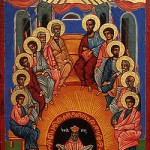
The Meeting of the Lord - Orthodox Icon from Belarus (1731)

The Meeting of the Lord - Orthodox Icon from Belarus (1731)


February 2, a day falling 40 days after Christmas in the western Christian calendar, is a day when we celebrate 3 feasts and a blessing – The Presentation of Jesus at the Temple, The Purification of the Virgin, The Meeting of the Lord and Candlemas.

There’s a sort of game going around Facebook these days in which people are asked to give 25 random bits of information about themselves to their friends and ask 25 others to do the same. It’s been fun to see what people have to say about themselves and who they ask for information.

In the spirit of the game, I’d like to give 25 bits of information about today’s feasts and blessing.

1. The Presentation of Jesus has been celebrated since at least the 4th Century AD.

2. First-born sons belong to God in Jewish tradition – originally to serve as leaders of worship/sacrifice. Fathers of the boys were required to offer a sacrifice to “redeem” them from the obligation to serve at the temple rather than remain with their families. This tradition continues in modified form today.

3. Today’s feasts are not the same as the Feast of the Naming of Jesus or the Circumcision – celebrated 8 days after Christmas.

4. When Joseph and Mary offered the sacrifice to “redeem” Jesus, they were allowed to choose between offering a lamb and a dove or simply two doves or two pigeons. They offered the birds, the gift of those who were not wealthy.

5. Childbirth rendered a woman ritually “unclean.” A purification ceremony was required to restore her freedom to interact socially with family, friends and community, including her worship community.

6. Periods of time for this unclean status varied by sex of the child born. A woman was unclean for 80 days following the birth of a girl. For a boy she was only unclean for 40 days. In both cases, a ritual was required to purify her.

7. Mary went to the temple in Jerusalem for her purification ceremony.

8. Simeon was an old man who had been promised by God that he would see the Messiah before he died. He recognized Jesus as the fulfillment of that promise when Jesus was presented for the sacrifice of his redemption at the temple and Mary for her purification.

9. Simeon told Joseph and Mary that their son was “destined for the fall and rise of many in Israel.” (Luke 2:34)

10. Simeon told Mary that she would be pierced with a sword. Our understanding is that this was the sword of sorrow as she watched her son’s life and mission unfold.

11. Anna was an old woman who spent her days and nights at the temple. She too recognized Jesus and his family, blessed God for the gift of seeing him and told all she met about him.

12. The Feast of the Purification has been celebrated since at least the 7th century.

13. The Feast is known as The Meeting of the Lord in some Eastern Christian churches.

14. Candlemas is a celebration of the blessing of candles (traditionally beeswax ones) for use in homes and churches in the coming year.

15. First evidence of the celebration of Candlemas dates from the 4th century in Rome, but it spread to the rest of Europe more slowly. It had reached England by the 10th or 11th century.

16. Candlemas is probably a feast whose focus was changed to a Christian one from older non-Christian ones that included fire, candles, ash and purification in a variety of European cultures.

17. Before the Second Vatican Council, the Christmas/Epiphany season lasted until Candlemas. It was considered bad luck to have Christmas decorations (including holly, ivy and bay leaves) still in the house on Candlemas.

18. Some cultures had celebrations in which young women carried candles in a procession at this time of year or in which young men and women had to jump over fires for purification before they could be married.

19. These are the last feast days whose date is set based on the date of Christmas.

20. Many traditions link Candlemas to the actions of animals as predictors of future weather – including bears, wolves and groundhogs!

21. Candlemas was one of the days certain taxes had to be paid in Scotland until 1991.

22. The French celebration of Candlemas includes eating crepes for dinner after 8 pm.

23. Mexican tradition includes tamales on the menu for Candlemas.

24. Some believe Candlemas was a “Christianization” of the feast of  Brigid the Goddess – an oracle and predictor of the success of the growing season – but little historical evidence exists for this claim. The feast of St. Brigid, an Irish abbess, is February 1. 

25. These feasts are celebrated in both Eastern and Western Christianity, but on different dates. In all traditions, however, they are celebrated 40 days after Christmas.

Whew!  So … there you have it. More than you probably ever wanted to know about Christian celebrations for February 2!

I think we’ll put the last of the Christmas decorations away, light some candles, and have tamales for dinner!

Read More

Posted by on Jan 31, 2009

February 2 – A Day to Celebrate Three Feasts and a Blessing

January Reverie


pussy_willow_branch

Pussy willows blossoming,

Monarchs dancing in the sky,

Sour grass and wild radish blossoms

Punctuating fields of wildly growing grass,

January on California’s Central Coast.

Praise and Thanks to Thee,

Great Lord of all Creation!

Read More

Posted by on Jan 20, 2009

February 2 – A Day to Celebrate Three Feasts and a Blessing

Prayers and Best Wishes for President Barack Obama

President Barack Obama - January 20, 2009

President Barack Obama - January 20, 2009

Today we witnessed the inauguration of President Barack Hussein Obama, 44th president of the United States of America. It has been a day of great emotion. I keep finding myself with tears streaming down my face at the wonder and beauty of it all. Born in the last months of Harry Truman’s presidency, I remember the struggles of the 60s for basic human rights for all Americans. (I was too young to be aware of them in the 50s, but I know the struggle didn’t begin when I became old enough to notice it.) I remember the assasinations. I remember the triumphs as well and the courage of men, women and children who kept pushing and moving all of us forward into a new social reality.

As the inauguration ceremony began and ended with prayer, the Litany of the Saints began to sing through my mind and heart. It has continued all through this day.

“Holy Mother of God, pray for us.  St. Michael, pray for us. … St. Stephen, pray for us … St. Augustine … St. Athanasius … St. Martin … St. Catherine … St. Teresa … ” And names of those not canonized but who struggled, suffered and sometimes died to make today possible joined the litany. Martin, Medgar, Malcolm, Ralph, Coretta, Dorothy, and so many, many more, … pray for us. Family members who worked for a better world and did their best to be a light for all of us, … pray for us. “All holy men and women, pray for us.” 

Today is only the beginning. There are tremendous challenges ahead for the United States and for the world. Things may well get worse before they get better.  The economic and social problems we face will be overwhelming unless we remember to pray and trust God to help us resolve them. We’ll have to work together. We’ll all have to give  some things in order to receive others. But we are all children of God, all loved equally by a God who is absolutely crazy about us. And a great cloud of witnesses is hovering around us, praying for us and believing that the kingdom has begun, redemption is here, and with God’s help we can begin to live it here and now.

Congratulations, President Obama. We’ll be praying for you and your family. We thank you for your courage. We thank you for the hope you bring to so many. We look forward to bringing hopes and dreams of a better future into reality.

And so the prayer continues cycling through my heart again and again: “Holy Mother of God, pray for us … St. Michael, pray for us …. St. Joseph … St. Peter and St. Paul … St. Mary Magdalene …  St. Martin de Porres … St. Peter Claver … All holy men and women, pray for us.”

Read More

Posted by on Jan 19, 2009

February 2 – A Day to Celebrate Three Feasts and a Blessing

From King to Obama – A Dream Being Realized

Rev. Martin Luther King, Jr.

Rev. Martin Luther King, Jr.


This post was written January 15 by Rafael Pozos for www.21stcenturycatholic.net. It is reprinted here with permission on the national holiday in honor of Dr. King’s birthday.

Today would have been the 80th birthday of one of the greatest Americans and also one of its own great popular theologians, the late Rev. Dr. Martin Luther King Jr. This day caused me to reflect on this great American prophet and the impact he had on all of our society – including American Roman Catholics. It’s true he was a Baptist Minister, and a consummate rhetorician – all very valuable when one is a reform Christian clergyman – but what he had to say, and said very consistently are things that very much agree with current Roman Catholic social teaching and they both draw from the common ancient Christian tradition they share.

In terms of the place of the speech in American history, it came during the famous march on Washington DC in the summer of 1963 – only months prior to the Kennedy assassination and right around the same time as the Second Vatican Council was called. Prior to that, King had successfully lead the effort to desegregate the busses in Montgomery Alabama, was one of the founding members of Southern Christian Leadership Conference and wrote a book about the Montgomery experience entitled Stride Twoard Freedom:the Montgomery Story among other things. Just prior to the march on Washington, he had been incarcerated in Birmingham, Alabama, where he had been leading a peaceful protest which had been met by attack dogs and fire hoses – all in plain view of the media – including the newly emerging television and what would become later the 24 hour news cycle.

Just as powerful as the images from Birmingham were in terms of starting to get the American public on the side of civil rights, was the setting for this key speech. It took place on the steps of the Lincoln memorial, a massive temple style monument to President Abraham Lincoln, who issued the Emancipation Proclamation, which was the first federal step to attempt to free the slaves in the US. In front of the statue of Lincoln, resplendent with his writing in the inner sanctum of the monument was where King gave the speech – which is really in a lot of ways more sermon than speech.

In this sermon, he exhorts us, using references from Amos and Isaiah to make his point. Starting with a reference to the Emancipation Proclamation, he mentions that despite it, black people still were not free 100 years later. Comparing the promise of liberty as articulated in our Constitution to a bad check, with insufficient funds, he then fundamentally rejects it in very eloquent and prophetic language which he closes with a reference from the book of Amos “….we will not be satisfied until ‘justice rolls down like waters, and righteousness like a mighty stream’(Amos 5:24)”

While King was quoting this in English, the Hebrew of this passage from Amos is far more powerful “Let judgment roll like water, and uprightness like a wadi” the context of this passage is the doom of Israel. A wadi is a flood valley which is dry most of the year. However when it rains, massive flash floods occur in the valley and take out everything in sight – often with no warning. A professor of mine, Fr. John Endres SJ, who studied in Israel said that he would hear of cases where somebody had been hiking in a wadi and the flood came on so fast and so massive that they couldn’t get away and drowned, with the body being found days later washed up somewhere. While King may not have seen this passage in Hebrew nor totally known how destructive a wadi flood can be, he would have  known that this passage came during a doom sequence for Israel… an ominous oracle for those who would oppose the civil rights movement.

After this, he transitions to the great dream he has, which nearly every American student is exposed to at least once in school. Deeply rooted in not just Christian tradition but also in our Declaration of Independence, which he calls our “creed”, it is a dream of equality and equal opportunity for all. This is such a radical shift that he quotes Isaiah 40:4-5 in making his point. “ I have a dream that one day every valley shall be exalted, every hill and mountain shall be made low, the rough places will be made plain, and the crooked places will be made straight; and the glory of the Lord shall be revealed and all flesh shall see it together.” He said, and followed it up by quoting lyrics of our first national anthem, saying “let freedom ring” In a series of exhortations starting with “let freedom ring”, he goes all over the country from north to west.

Even more powerfully, he continues to call for freedom in former slave territory in the southeastern United States. “But not only that: Let freedom ring from Stone Mountain of Georgia” he starts. Stone Mountain is significant because it was the main rallying point for the Ku Klux Klan, a white supremacy terror organization that is still active today which also conducts terror operations against Catholics. This on top of calling for freedom in Tennessee and Mississippi, one of the worst states for segregation further reinforces his point.  He then closes the sermon by looking forward to the day when everybody can join together and sing free at last. A bold and prophetic statement of faith in America and in God’s preference for the poor and disadvantaged – all things that most believers of all confessions of Christianity can get behind.

Sadly, King was gunned down by James Earl Ray in 1968 – a very bad year for the United States. Before the assassination, he said in a speech organizing sanitation workers in Memphis, TN:

Well I don’t know what will happen now. We’ve got some difficult days ahead. But it doesn’t matter to me now. Because I’ve been to the mountaintop. And I don’t mind. Like anybody, I would like to live a long life. Longevity has its place. But I’m not concerned about that now. I just want to do God’s will. And’ He’s allowed me to go up to the mountain. And I’ve looked over. And I’ve seen the promised land. I may not get there with you. But I want you to know tonight that we, as a people will get to the promised land. And I’m happy tonight. I’m not worried about anything. I’m not any fearing man. Mine eyes have seen the glory of the coming of the Lord.

It ended up being prophetic because the next day, he was dead. He was one of many martyrs for equality and for Christianity in general. He had a vision, a dream, and he paid the ultimate price for it just as our Catholic Latin American martyrs including Archbishop Oscar Romero and Fr. Ignacio Ellacuria, S.J. did for similar ideals.

Last November, part of Dr. King’s dream came true when for some the unthinkable happened. Barack Hussein Obama, a black Christian whose name sounds Muslim, was elected President of the United States. On Tuesday, the day after the United States observes the federal holiday commemorating his birth, he will be sworn in as the 44th President of the United States. Only in a country inspired by Dr King’s dream could something like this happen. In his policies, Obama will continue to advance King’s ideals. All of which we as American Catholic Christians we can agree on and support so we can all sing in the end “Free at last!”

http://www.youtube.com/watch?v=PbUtL_0vAJk – You Tube’s recording of the full version of Dr. King’s “I have a dream” speech.

Read More

Posted by on Jan 15, 2009

February 2 – A Day to Celebrate Three Feasts and a Blessing

“God speaks in everything … God speaks very, very, very slowly …” Nana

Megan McKenna's Nana

Megan McKenna's Nana

Megan McKenna is a theologian and storyteller who travels the world spreading the good news about God’s love and challenge to us to live out that love. Often her stories are from other cultures or religious traditions and help clarify the lessons of our own Christian faith tradition.

In Playing Poker with Nana, Megan reaches into her own life to share with us the wisdom of her grandmother, her Nana. I received a copy of the book from Megan as an Epiphany gift, and I am savoring it. Part of me wants to race from chapter to chapter (each 2-3 pages long) and devour it in a sitting. The older, and I hope wiser, part of me advises reading it one chapter, one story at a time and pondering the advice and insights her Nana shared with Megan. So most days I read just one at bedtime and let it simmer in my heart and the back of my mind through the next day.

Yesterday I read Chapter 10, “History.” Megan had quoted Martin Buber to her Nana one day in conversation. “God is always speaking, but never repeats himself, like sunrises and sunsets.” Her Nana reflected on the quote and then responded with her own thought, “It’s true. God speaks in everything, people, relationships, even all that dies, but sometimes, I’ve learned, God speaks very, very, very slowly …”

Before she finishes speaking, Nana has explained in beautiful depth her thoughts on the matter, on the very slow way God has of speaking to us most of the time.

The chapter is only three paragraphs long, but it stuck with me all day today. At Mass, the Psalm response was, “If today you hear His voice, harden not your hearts.” It really struck me that Nana’s words went right along with the admonition of the psalmist. Sometimes we hear God’s voice in bursts of insight or in the wonder of a particularly beautiful sunrise or sunset. But more often we hear God’s voice in the quiet reflective times, when we seek to understand what has been happening in our lives and those of people around us. Nana advises Megan and all of us that sometimes we just have to stake our lives on the hope that, hard as life is, it’s already been redeemed, so we just have to “believe and hang in there.”

As I was walking home past a calm, nearly waveless ocean on a beautiful sunny day, I found words for what I was feeling in my heart and trying to formulate in my mind. Often we as Americans have a sense that only the “hard-nosed” businessperson can be a success. Only the practical, matter-of-fact person will accomplish his or her goals. Only those who set goals and focus single-mindedly on reaching them will find security. Being “soft-hearted” is not a quality that we value very much. It tends to get lumped in with being “simple-minded” or a “bleeding heart liberal” in the minds of many. Yet that is exactly what it seems God is calling us to be. The opposite of a hard heart is a soft one. One that knows that God speaks very, very, very slowly and we might not see the whole picture just now, or be hearing the whole story.

Thank you, Megan, for sharing your Nana’s wisdom with us. May her words help us to keep hanging on, listening for God’s voice, with soft hearts ready to love and be loved.

(Playing Poker with Nana is distributed in the US by Dufour Editions. I highly recommend it.)

Read More

Posted by on Jan 13, 2009

February 2 – A Day to Celebrate Three Feasts and a Blessing

Saint of the Day – St. Hilary of Poitiers – January 13

St. Hilary of Poitiers

St. Hilary of Poitiers

St. Hilary of Poitiers was born to a non-Christian family in the early years of the 4th century. He was from a noble family and received an excellent education. On his own, he began a search to understand the fundamental questions of existence, including the source of the created world and his place within it. He found answers to his some of his questions in the story of Moses and the burning bush, with God’s self identification as “I am Who I Am.” Answers to the questions about God’s plan and purpose for people were found in the Gospels, particularly the Prologue of the Gospel of John.

Through his studies of Scripture, he became a Christian. By this time he was also married and had a daughter. He was elected bishop of Poitiers around 350 AD. This was a time in which the Arians were quite influential, having even converted the emperor, Constantius. Hilary refused to join in the condemnation of Athanasius and was sent into exile in the East. While in exile, he continued to speak out against Arianism and wrote many scholarly works in defense of traditional Christian understandings of the Trinity and other points of Christian faith.

Eventually, Hilary was allowed to return to Poitiers. He’d been causing too much trouble with his teaching and preaching in the East! When he returned home, he continued to teach and preach. He also began writing hymns. Although hymns had been a part of Christian life since its earliest years, his are the first we have with a known author.

Hilary died in Poitiers in 367 or 368. He was named Doctor of the Church in 1851 by Pope Pius IX.    

A quote from his work on the Trinity:

“For one to attempt to speak of God in terms more precise than he himself has used: — to undertake such a thing is to embark upon the boundless, to dare the incomprehensible. He fixed the names of His nature: Father, Son, and Holy Spirit. Whatever is sought over and above this is beyond the meaning of words, beyond the limits of perception, beyond the embrace of understanding.”

Read More

Posted by on Jan 7, 2009

February 2 – A Day to Celebrate Three Feasts and a Blessing

Merry Christmas to our Orthodox Sisters and Brothers – January 7

Celebrating Orthodox Christmas - Photo by Muhammed Muheisen, AP

Celebrating Orthodox Christmas - Photo by Muhammed Muheisen, AP

January 7 is the Feast of Christmas in much of the Orthodox world. We don’t hear much about it in our Western cultures, in part because it is not the big commercial event that it has become in North America and Europe. Nevertheless, it is a time for celebration and remembering that we share the roots of our faith with these ancient communities as well.

For more information about Orthodox history and beliefs, as well as why our calendars don’t match, there’s a good explanation on the BBC’s website. The quick answer is that most Orthodox communities still follow the Julian calendar for certain feasts. That calendar is 13 days behind the Gregorian calendar, so Christmas falls on January 7. 

Western Christians who’d like to celebrate in solidarity with Orthodox Christians might want to try a dish typical of Christmas celebrations in the Eastern Church. Some interesting ones can be found at: http://www.prosphora.org/page17.html.

So, as the festival arrives, we wish you a Blessed Christmas, with time for family and friends to gather and enjoy the gift of love. We also pray for peace – in our entire world, and especially in those areas torn by war. May the coming of the Prince of Peace bring hope and courage to all of us, to work together and make it real in our day.

Read More

Posted by on Jan 6, 2009

February 2 – A Day to Celebrate Three Feasts and a Blessing

Epiphany

Hieronymus Bosch - The Adoration of the Magi

Hieronymus Bosch - The Adoration of the Magi

The Feast of Epiphany is traditionally celebrated January 6 in the Western Church. Recently, we have begun to celebrate it as a community on the first Sunday of January after the Feast of Mary, Mother of God (January 1st).

Epiphany, from the Greek “to manifest” or “to show forth,” is a celebration of God’s presence bursting forth and becoming visible in human lives. For Western Christians, the focus has been on the visit of the Magi, the wise ones, who followed a star from the East to find the newborn king. In this story, we see God’s presence being revealed to non-Jews, to Gentiles. For Eastern Christians, the focus is on the Baptism of Jesus, when Jesus became identified as the Son of God. The feast is sometimes known as Theophany in the East. (In the Western Church, we too celebrate the feast of the Baptism of Jesus, but on the Sunday after we celebrate Epiphany.)

In many Christian countries, especially those bordering the Mediterranean and in former colonies of those countries, gifts are exchanged at the Feast of Epiphany. This is because the Magi brought gifts to the child Jesus – gold, incense (frankincense) and myrrh. The gifts named in Matthew’s gospel can be seen as symbolic of the roles Jesus would play in salvation history – as king, deity, and human victim/sacrifice – as a result of the incarnation. Songs such as “The First Nowell” and “We Three Kings” remind us of the story and tell it again to our children.

During this season of Epiphany, may our eyes be open to see God’s presence in the people around us – the children, the babies, the old ones, the ones on the street, the ones at our work or in our homes. God is forever peeking around corners, knocking on doors in our hearts, smiling out of flowers, singing through the voices of birds and trying in every way possible to shine forth into our lives. May we be gifted to see and to smile in return.

Read More

Posted by on Dec 31, 2008

February 2 – A Day to Celebrate Three Feasts and a Blessing

And a New Year Begins …

Sunrise at Los Arenales - by Steve Locke

Sunrise at Los Arenales - by Steve Locke


“It has been the interruptions to everyday life which have most revealed the divine mystery of which I am a part, all these interruptions presented themselves as opportunities to go beyond the normal patterns of daily life and find deeper connections than the previous safety of my physical, emotional and spiritual well being.”  Henri Nouwen

I lay in bed this morning in a reflective mood. It was time to get up, but it’s New Year’s Eve and I’m resolved to take it as more of a holiday than as a regular work day. So I lay there remembering 2008 and wondering what profound insights might be drawn from having experienced it! And where and how in Heaven’s name did it go so quickly?

I’m not sure I have any profound insights to offer. I’ll leave those for others. But it seems to me that 2008 will be remembered as a time both of great changes and of much that remains the same.

I’m sure you’re all bored to death of lists of wars, disasters, financial upheavals, political scandals and the like. We’re all aware of the historic election of Barack Obama to the presidency of the United States. We have high hopes that with the new year, solutions will be found to begin to refocus world economies and reverse the economic declines we’ve experienced. And thus we see the beginning of hope again – a hope that seems to come with the dawing of each new year – things will be better this year!

In our personal lives, people will be born, people will die. Some will get married, some marriages will fail and the spouses will be left to grieve and grow through it. Some will have steady work, others will find their jobs transitory at best. Children will continue to grow up. We’ll each move a year closer to being the older generation – hopefully growing wiser along the way.

And in the midst of it, we’ll have the surprises. A deck will need to be repaired unexpectedly, and friends will step in to help fix it. An appliance will reach the end of its useful life (as in it’ll just plain quit working!) and someone else will have one for which they need to find a home. An unexpected bill will arrive in the mail and funds will show up from somewhere else that make it possible to make ends meet anyway.

I think of this as God’s “just in time financing” and find myself counting on it often – something to do with “Give us this day our daily bread.”

I can’t promise the new year will be easy. I know it will be challenging. We’re in a major world-wide recession, after all. But I know that with God’s help we’ll get through it. We can’t solve it by having another world war – that’s not an option. We can solve it by looking out for each other, offering a caring hand, recognizing that we’re all in this together (even across national boundaries) and trusting God to soften our hearts and open our eyes to help each other through our days. In the end, hope is the gift we receive and can offer to each other. God is with us. God has become one of us. God lives and works through each of us.

May the blessings of the Christmas season be with you through the coming year and may you see God’s loving hand reaching out and touching you through all the ups and downs, all the interruptions and surprises of this New Year. 


Read More

Posted by on Dec 16, 2008

February 2 – A Day to Celebrate Three Feasts and a Blessing

One Pink Glove and One Green One


colored-gloves

Wintery weather has finally come to California’s Central Coast. Sunday we had rain and hail. Yesterday I got out my winter coat and used it for the first time this season. There was thunder in the night. (I didn’t see the lightning – my eyes were closed – but assume it was thunder because the house didn’t shake as the rumbling continued!) This morning the weather report said possible snow in the mountains as low as 1,000 feet.

Now I know this is no big deal for a lot of folks in this world, but here, we count this as winter.

Yesterday, when I was out walking beside the ocean, I reached into my coat pocket to get my gloves and didn’t find any. This was strange because I generally keep a pair of gloves and a scarf in every coat and jacket I own. Beside the ocean, one never knows when the fog will blow in and it can get chilly! But the gloves weren’t there. I decided I must have taken them out when I washed the coat and forgotten to put them back.

So, this morning, as I got the coat, I put another pair of gloves into the pockets – green ones. I got into the car and decided it was indeed cold enough to put on a pair of gloves. I reached into the left pocket and pulled out a glove – a pink one! Laughing at myself, I put it on and reached into the other pocket and found a green one. Now both my daughter and I were laughing. So I put on the green one as well and we headed down the street to school – one hand pink and one hand green, laughing and joking all the way.

It came to me as we went that life is full of these kinds of surprises from our God. Cold rain, thunder, snow – followed by a beautiful sunny day. The joy of a wedding, followed by the sadness of a family death and funeral. The hopeful waiting for the birth of a child. The friendly word on a difficult day. The kindness of strangers who sympathize and offer help when money is tight.  The friends who simply smile at our foibles and love us anyway when we’re being difficult.

We are truly blessed to have a loving God who is always there for us and who delights in surprises – like finding a pink glove in a pocket where only a green one was expected.

Read More