Pages Menu
RssFacebook
Categories Menu

Posted by on Jan 12, 2025

You are my Beloved Child

You are my Beloved Child

“You are my beloved child, with you I am well pleased.” These are words I suspect every person wishes to hear from a parent. We especially hope to hear them when things are tough and we are afraid we will never be able to live up to expectations – of our parents, society, teachers, family, or more devastatingly, of ourselves! “You are my beloved child. I am well pleased with you. You are trying so hard to do what is right. I love you always.”

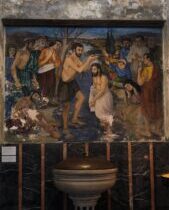
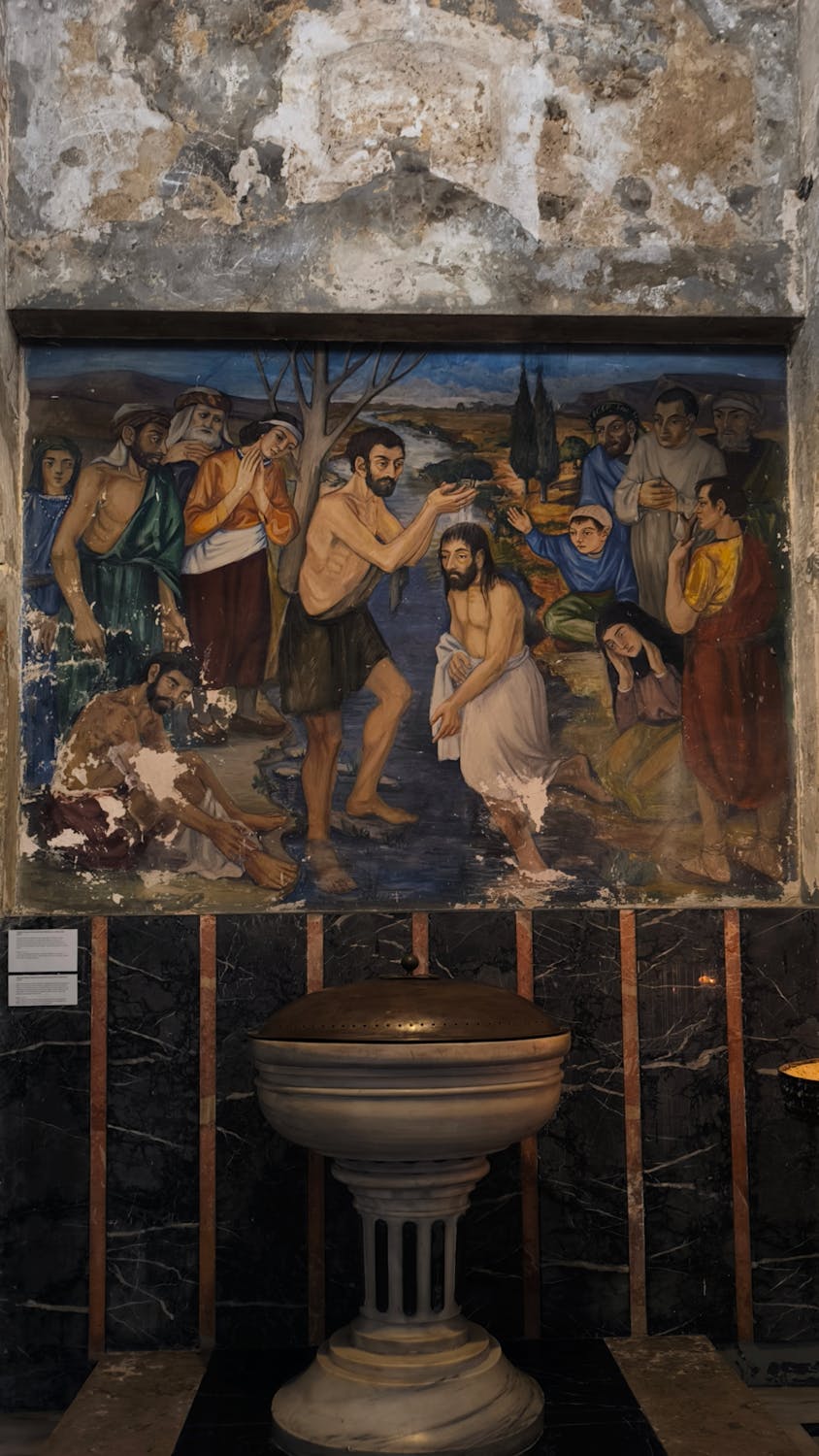
Christmas Season comes to a close with The Baptism of the Lord. We celebrate this event in the life of Jesus on the Sunday after the Epiphany. Between the time of the stories told about his birth and the first few months of his life – with the exception of the story of the family visit to Jerusalem when he was 12 – and the revelation he experienced at his baptism in the Jordan River at about age 30, we know very little about his life. We know that he was a carpenter from Nazareth, son of a carpenter and therefore experienced in the trade from a young age. There was not anything particularly noteworthy about his life. Those who knew him were astounded and many were dismayed at the change in him that followed that baptism. “Who is he to be passing himself off as a healer and teacher? We have known him from childhood. He’s not anybody special – just a carpenter and son of a carpenter!”

And yet, as he was praying after coming up out of the water, he experienced something very special. The heavens opened and the Holy Spirit of God came upon him “in bodily form like a dove.” He heard a voice from heaven that said, “You are my beloved Son; with you I am well pleased.” (Lk 3:15-16, 21-22)

When we experience the direct touch of the Lord God, it is life-changing. Hearing directly or sensing directly the great love that created and keeps all in existence speaking directly to us or embracing us is not quickly forgotten or written off. We know only one thing matters, to accept and return that love.

For Jesus, that happened at his baptism. His response was wise, he went off to the desert to ponder the experience and pray. When he returned, it was as a man with a mission. To share the good news of God’s love and desire to heal a wounded world – to announce the coming of God’s kingdom.

Folks around him didn’t know what to make of him. He kept on speaking anyway. Some folks came to hear what he had to say. They didn’t always understand what he meant when he spoke of God’s unrestricted love for those whose lives were difficult or didn’t meet acceptable standards – folks like tax collectors or prostitutes. Some folks came out of curiosity. What will he do this time? Others came seeking healing for themselves or friends. People blind from birth became able to see. Those paralyzed could pick up their beds and walk home. Lepers found their skin healed at a word or touch. A child who was on his way to burial was returned alive to his widowed mother. Thousands of people were able to eat one day when he gave thanks for a few fish and loaves of bread offered by a child, then began to share them out to the crowd.

We will spend the next weeks and months hearing the stories of what resulted from that day at the River Jordan and the revelation received by Jesus.

This carpenter from Nazareth turned out to be the one long anticipated by the prophets – the one about whom Isaiah spoke when he proclaimed that the glory of the Lord would be revealed. “Prepare the way of the Lord! Make straight in the wasteland a highway for our God! … The glory of the Lord shall be revealed, and all people shall see it together…” (Is 42:1-4, 6-7)  The Lord’s servant will come, the one who has received the Lord’s spirit, and bring forth justice to the nations, not shouting or crying out, but tending to the bruised reed, the smoldering wick, and healing all with a forgiving justice. (Is  40:1-5, 9-11)

Those who came to know and follow Jesus closely through the next three years of his life found their expectations and their understandings of the relationship between the Lord God and people to be much too narrow. They had to figure out who he was, the source of the authority with which he spoke, how to understand the counter-cultural things he sometimes said or did, his insistence on going into danger despite knowing full-well it could end badly for him. When he was condemned and executed, most of them took off and hid. But he came back, first revealing his resurrection to women, then to the others!

As his friends received the outpouring of the Holy Spirit, they continued to reflect on what they had experienced. They learned, when the Spirit came to the Roman authority Cornelius and his household before they were baptized, that God’s grace and salvation were not restricted to any one chosen people but were for all humans! (Acts 10:34-38) They learned the importance of living justly and devoutly in their everyday lives, trusting that God’s mercy, which had opened them to receive the outpouring of the spirit, would guide them through life and lead them to eternal life. (Ti 2:11-14; 3:4-7)

We are still learning these lessons today. Our world is experiencing raging wars, repression of peoples, threats of trade wars between countries, deportation of millions of people who have already fled for their lives from their own home nations, fires and other natural disasters, and divisions among the peoples of nations. It’s a crazy, scary, unnerving, and anxious time.

Yet we remember the words Jesus heard on that day so long ago. “You are my beloved son, in whom I am well pleased.” It was not a time of peace and ease in which he was living. The world has never really gotten to a point at which all people are living in peace, with access to all the basics needed for living. We too often think that if we take from others, things will be better for us. But that has never worked. It only breeds more conflict.

As we move from Christmas to our time of reflection on the life of Jesus in Ordinary (Counted) Time, may we remember the coming of the Holy Spirit to Jesus at his baptism. May we know deeply that the same Holy Spirit came to us at our baptisms and in the sacrament of Confirmation. He comes to us in Reconciliation, Anointing of the Sick, the sacraments of vocation, and our everyday experiences of living together through the challenges of life.

“You are my beloved child” – God speaks these words to each of us. Believe them. Live them. God doesn’t joke or lie about such things. They’re for real.

“You are my beloved child.”

Readings for The Baptism of the Lord – Cycle C


Read More

Posted by on Jan 4, 2025

The Glory of the Lord Shining Forth

The Glory of the Lord Shining Forth

A child is born and, in most cases, happy parents and grandparents joyfully share the news with family, friends, neighbors, and co-workers. Once in a while, the coming of a child is not an expected or desired event, but in general, that is rare. Family help and support of the parents and newborn child is more common and helps create a bond that will last a lifetime, a bond of trust and security, the certainty of being loved and lovable.

When the child is born to an influential family, the news spreads more quickly and farther. Think of the cases of the children of the heir to a throne for example. The world waits and watches for the birth and the first glimpse of the child, presented by proud royal parents. For better or for worse, such children grow up in a spotlight, even when their parents strive mightily to shield them from sight. Their presence and the promise they embody awaken interest and attention far and wide.

At the Feast of the Epiphany of the Lord, we celebrate the coming of a royal child whose coming was not widely recognized, though anticipated for centuries.

We hear from St. Matthew of the coming of Magi, wise ones from the east who studied the skies for messages about world affairs. They had observed signs in the stars that indicated a royal child had been born in Israel, so they had set out with gifts for him and his family.

Israel had been conquered by Rome, but there was still a king ruling in the land. Accordingly, the Magi went to the palace in the capital city first, thinking that would be the place to find a royal infant. However, no child had been born there, nor was one expected. Their visit raised quite a stir. Messages written in the stars and read by sages from other nations were not to be ignored. There must be a child somewhere near who would be a threat to the royal family’s succession!

The coming of a king to restore the kingdom of Israel had long been foretold by prophets. Isaiah wrote of the triumph of Jerusalem as “the glory of the Lord” shone upon the city. Exiles who had returned from Babylon were rebuilding the city and the Temple following their time in captivity. Isaiah proclaimed that despite darkness covering the earth and its peoples, the Lord’s glory shining on the people of Israel would lead the other nations out of darkness. Their peoples would stream to Jerusalem, bearing riches of the sea and the wealth of nations, including gifts of gold and frankincense, and praising the Lord. (Is 60:1-6)

Now here were Magi bearing gifts and coming to the city of Jerusalem in search of a newborn king. Where would such a king be born? The prophecies all pointed to the city of David, the shepherd who had been anointed second king of Israel. The Lord had promised David that the Messiah would come from among his descendants. David’s hometown was Bethlehem, in the Kingdom of Judea. The Messiah was expected to be a person who would restore the nation and physically rule the country in all its glory as a power in the world, a ruler “who is to shepherd my people Israel.”

Herod relayed this information to the Magi, asking carefully about the timing of the appearance of the star and instructing them to find the child and report back to him, so he might “go and do him homage.” Then he sent them on their way to Bethlehem.

Arriving in Bethlehem, the star stopped moving and the Magi found Jesus and his parents. They bowed down in his honor and then presented the gifts they had brought – gold, frankincense, and myrrh.

Wisely distrusting the word of Herod, the Magi returned home by another route, skipping the stop in Jerusalem. They took with them the news of the coming of this child, bearing witness to the larger world of this gift from the Lord. (Mt 2:1-12)

Epiphany is a word meaning manifestation. A breaking forth of something newly understood. We speak of unexpected insights as epiphanies, for example.

Historically, royal families were not particularly worried about the well-being of their subjects who were poor or suffering from disabilities or illness. Those who worked at low status occupations were not high on their list for attention or honor.

Yet this new king, the one foretold by the prophets, would be different. In Psalm 72, expectations of the king to come are laid out for us. “He shall govern your people with justice… Justice shall flower in his days… He will rule from sea to sea, and from the River to the ends of the earth… All kings shall pay him homage, all nations shall serve him…”

What makes this king so great? What is so different about him? The Lord has endowed him with the Lord’s own judgement. As a result, “He shall rescue the poor when he cries out, and the afflicted when he has no one to help him. He shall have pity for the lowly and the poor; the lives of the poor he shall save.” (Ps 72:1-2, 7-8, 10-11, 12-13).

This is the one who is to come. Not a mighty conqueror of the sort Herod feared. This is one who is even more powerful. He does not need to step on the poor or the afflicted to maintain power. His power includes care for those in need, for all those in need. No distinction between citizens and non-citizens for this king!

At Epiphany, we celebrate the coming and the shining forth of the one long foretold. This one, revealed by the Spirit to the apostles, to Paul, and to the prophets, has broken down the barriers that divided humanity into those who had been chosen for salvation and those who were excluded (the Gentiles). All are welcomed as coheirs of Christ’s promises, part of the same body, children of the same Father. (Eph 3:2-3a, 5-6)

A child was born. His family rejoiced. Not all welcomed him, but with God’s help (and the wisdom of the Magi to protect the secret of his whereabouts) he grew up and became the one who reconciled humanity with the Father and brought all of us into one family, his family.

In the days and weeks to come, may we remember that strength is not just a question of who is in political or economic power. Strength comes from how we treat each other. How we help and support those who are struggling to have enough to survive. How we welcome those who have been forced to flee their countries to protect their children – remember that Jesus’ parents had to do the same for him when Herod would have killed him!

We have great responsibilities in this world today. May we use our gifts wisely and share them generously. May the Glory of the Lord shine forth through our love of those we meet each day.

Happy Feast of the Epiphany, the shining forth and manifestation of the Lord!

Readings for The Epiphany of the Lord – Cycle C


Read More

Posted by on Dec 29, 2024

Growing in Wisdom, Age, and Grace

Growing in Wisdom, Age, and Grace

When I was a girl, I loved going to visit my maternal grandparents. They lived in a big home, with a wonderful yard and friendly neighbors, one of whom was a girl about my age. It was approximately three hours from our home to theirs, so we always stayed for at least one day, usually over a weekend, from Friday night to Sunday afternoon. My mother was the oldest child, so when I was born, there were still children at home when we went there to visit. It was always fun to be with them. I clearly remember the meals in which after everyone had had their fill, my teenage uncle would finish the rest of the potatoes and gravy – “to fill up his hollow leg,” we were told.

I’ve been thinking about this a lot over the past few weeks as I have spent time with one very young grandchild and a couple who are older. I am now a grandmother (and have been for quite some time now). But this time, when a creeping baby and a toddler grace my days again, I am remembering how my own Grammy and Grandad welcomed us, helped us feel at home, and always had a place and time for us. I’m sure we were no more aware of all they did for us than our grandchildren are of what we do today. Somehow, food was ready, clothes were there to keep us warm or cool, and a lap full of books, stories, and love was always ready to receive us or comfort us when we fell or were afraid. I suspect they smiled and laughed as they observed our innocence and eager readiness to try new things or explore whatever we could get our hands on.

This weekend we celebrate the Feast of the Holy Family. Joseph, Mary, and Jesus were ordinary folks from a small, conquered country in the Roman Empire, not far from the Sea of Galilee. Joseph was a carpenter and passed the trade on to his son. Mary became a mother at a young age, as was customary, and spent her days caring for her family and their home. They were part of an extended family; everyone was in those days. All knew their place and what was expected of them.  Aunts, Uncles, Cousins, Grandparents shared the love of the family.

We don’t know much about the lives of the Holy Family. They weren’t famous or powerful, after all. We have a few stories about Jesus’ birth and the sojourn of the family in Egypt, a land visited to protect the newborn Jesus from the jealously of the local king, Herod. We also have St. Luke’s story of the time the family visited Jerusalem when Jesus was 12 years old. It was an annual pilgrimage and lots of people went there together, traveling in caravans. Jesus was not yet old enough to be considered a man.  He was only 12 and should have remained with his family and the other boys. But he didn’t. He stayed in Jerusalem, visiting the temple on his own and speaking with the teachers there.

Mary and Joseph were terribly frightened when they realized at the end of a day’s journey that their son had not actually been with the other parent all day. They returned immediately to Jerusalem, but it still took three days for them to find Jesus. They were quite upset with him. “Son, why have you done this to us? Your father and I have been looking for you with great anxiety.” Jesus, with the innocence and confidence of a child who is approaching adulthood responded, “Why were you looking for me? Did you not know that I must be in my Father’s house?”

Jesus’ response made no sense to his parents. His father’s house was in Nazareth, after all, not the Temple in Jerusalem. Obediently, he returned to Nazareth with them and continued to learn and grow with them there. It wasn’t until he was much older that his life became dramatically different and he truly began to understand his calling. St. Luke tells us that as he grew up, “Jesus advanced in wisdom and age and favor before God and man.” Lk 2:41-52

We too are called to grow in wisdom, age, and favor (or grace) before God and the other humans with whom we share this world. We are not alone. We are part of our personal families and part of the great family of humanity. We learn as we go along how to treat each other, what our roles will be in the world, how others will expect us to behave. Each culture has its own expectations for how men and women will behave and what their interpersonal interactions will be like. As followers of Jesus, we have the great gift of knowing that we are loved by our God who is the Father who loves us dearly, allows us to learn much on our own, and is always ready to have us run back to him for a hug and a new start when we realize we didn’t make the right choices.

St. Paul reminded the Colossians to put on “heartfelt compassion, kindness, humility, gentleness, and patience” and to love and forgive others freely. Love and the peace of Christ are to control our behavior and expectations. Col 3:12-27  St. John reminds us that as we love each other, as God commanded we do, we remain in God and God in us, because he gave us his Spirit. 1 Jn 3:1-2, 21-24  Sirach, speaking from an ancient wisdom tradition, reminds us to care for each other, honor those who are older than we, share with those who have fewer riches, and be kind to those whose abilities to care for themselves are failing with the years. Sir 3:2-6, 12-14

Most of us do not share the experience of Hannah and her husband, who were unable to have children for most of their lives together. Hannah begged the Lord for a child and was given a son in her older years. She dedicated this son, Samuel, to the Lord when he was three and he grew up to be one of the last prophet/judges who led Israel before the anointing of Saul as first king of Israel. 1 Sm 1:20-22, 24-28

Those of us who have been blessed with children ordinarily watch them grow in wisdom, age, and favor with the Lord and with other people. We marvel at the adults they become and smile as we watch them teaching their little ones the same things we taught them. As their children, our grandchildren, play with some of the same toys, we smile, knowing the gifts we received from our parents, grandparents, and even great-grandparents (I knew mine), are tumbling along like a mountain creek, bringing new life and possibilities to those they will meet as they travel through life.

May we all grow in wisdom, age, and favor with the Lord today, as we close out this tumultuous calendar year and enter a new one. May we have courage to love and to speak out for those in need or for those with less influence or power. May we ponder the tidbits of wisdom that spring from the mouths of the children and young people in our lives. May we humbly share what we have learned and the hope that through all things, God is with us. Emanuel has come. Peace and joy and hope will mark our passage through life as we patiently accept each day and pour love into it.

Peace be with you.

Read More

Posted by on Dec 22, 2024

Never Too Small to Matter

Never Too Small to Matter

There is a phenomenon known as the Butterfly Effect which shows that tiny changes in air patterns can produce unexpected results far away. The example given was of the motion of a butterfly’s wings in Brazil that could lead to a tornado in Texas. While that example is most likely not something that has actually happened, the image is based on computer simulations of weather patterns beginning over 60 years ago. Tiny changes in the numbers being used caused major shifts in the predicted outcomes of the simulations.

Sometimes when our lives take different paths than expected, or changes happen that could never have been anticipated, we are tempted to think, “What could I ever do to make a difference?” When we are not in positions of power or influence, we wonder whether anyone in power cares about what we think. We question the value of a letter to the editor or our elected officials. Yet those in such leadership positions will tell you that these letters and phone calls are very important to them. One member of a city plan commission and city councilman I knew well, my father, read every personal letter he received. He threw away the petitions with loads of signatures because he knew how easy it is to sign a petition just to get past the person outside the door of the grocery store!

Love is one of those things that doesn’t have to be great or dramatic in the beginning to have outsized results over time. It doesn’t have to start in a palace or a government building. It doesn’t need money or fame to appear. It can be shared by small children and old ones who are nearing the end of their sojourn on earth. It can be as simple as a personal letter.

The prophet Micah spoke of Bethlehem as small and seemingly insignificant. “You, Bethlehem-Ephrathah, too small to be among the clans of Judah, from you shall come forth one who is to be ruler in Israel …” From a small village, the one will come who will stand firm and shepherd the flock “by the strength of the Lord, in the majestic name of the Lord, his God.” The greatness of this one would be peace, reaching to the ends of the earth. Not going to be a warrior or one who conquers many peoples, rather, this one will personify peace and welcome all. Mi 5:1-4a

Over seven hundred years later, two women conceived sons. The women were cousins. One was older and married to one of the priests who served at the temple in Jerusalem. She had never previously been able to have a child. The younger, from Nazareth in Galilee, was engaged, but not yet married. Both pregnancies were unexpected and announced by the angel Gabriel, God’s messenger. Though neither of the women lived in Bethlehem, both were descendants of the great King David who was originally from Bethlehem. Bethlehem, located not too far from Jerusalem, had been a small town when David grew up there and was still a small town.

When Gabriel told Mary that her older cousin was six months pregnant, it was a surprise to Mary. She immediately left Nazareth to go up to her cousin’s home and help. It was not an easy or particularly safe journey for a young woman traveling on her own, but she got there. As she approached, Elizabeth saw her coming and went out to meet her. St. Luke tells us that the baby in Elizabeth’s womb leaped in her womb. Elizabeth was filled with the Holy Spirit and welcomed Mary, “Blessed are you among women, and blessed is the fruit of your womb.” We still offer these words of greeting and praise to Mary, over two thousand years later. Elizabeth summed it all up with a simple statement. “Blessed are you who believed that what was spoken to you by the Lord would be fulfilled.” Lk 1:39-45

One person who said “Yes” to the Lord was the key that made possible the coming of the one who would be peace. As it turned out, a simple young woman’s consent was not too small to matter.

Her son also seemed like one who would be too insignificant to make much of a difference in the world. A carpenter from a small town in Galilee, who heard the Lord’s voice when he was baptized in the Jordan River by his cousin John, discovered his call to announce the coming of the Kingdom of God. He began preaching and teaching, healing the sick, and making clear that offerings of animals in sacrifice were not the key to salvation. The coming of the kingdom of God required a new kind of obedience, one that put love of neighbor on a par with love of oneself. It was not a question of worldly power. It was a question of the power of love to transform people and societies. He was executed for his faithful witness to this truth he came to proclaim. With his resurrection, his teaching was vindicated and one man, son of the living God, brought reconciliation to all. Heb 10:5-10

As we move through life, we too are called to be the ones whose loving words and actions, small and seemingly unimportant as they are, open doors, heal hearts, and share the good news of God’s loving presence in our world and our lives with all we meet.

Just a few more days to the birthday celebration for that second little boy, the one who was born in Bethlehem after all. May peace be with you, with all of us, as we stop and remember that nothing and no one is too small or unimportant to matter. Let the Jubilee begin!

Readings for the Fourth Sunday of Advent – Cycle C


Read More

Posted by on Dec 15, 2024

Rejoicing – Not Just for Easy Times

Rejoicing – Not Just for Easy Times

My father used to say, when one of us fell down or bumped into something as we learned to walk or ride a bike or roller skate, “Into each life some rain must fall.” He meant it in a supportive, loving way. We would fall, but we would also get up. We would try again and again, until we reached our goal. Sometimes the goal was as seemingly simple as walking across the room alone.  Sometimes it was something an older person’s perspective would perceive as more difficult, such as finishing a school assignment, or learning to clean up after ourselves, or dealing with a difficult teacher or classmate. In each case, the challenge was not something trivial to the one who was struggling to learn, but it was encouraging to know we were not alone in the struggle. “Into each life…” Not just mine or yours.

As we approach the Jubilee year focused on living as Pilgrims of Hope, we find ourselves living in a world filled with conflicts, fear, and uncertainty. Bombs are falling and bullets are flying in Europe, the Middle East, Africa, and Latin America. Nations struggle over territory, gangs fight for control of the manufacture and distribution of dangerous drugs, strongmen govern nations, and religious groups seek to impose their beliefs on neighboring peoples. Our own nation is not immune to these conflicts.

This is not anything new. It’s been going on for thousands of years. As humans we haven’t yet figured out how to respect and care for each other and the lands on which we live. We all too easily believe that our ways are the only correct ways and our explanatory systems are the only correct ones. So, thinking we are acting in the best interest of others, we seek to make others “see the light” and do it our way. Needless to say, this is not always welcomed.

Yet we are called to hope, to peace, to joy, and to love as we go about our lives.

The prophet Zephaniah wrote of the coming destruction of Jerusalem and surrounding lands about 50 years before the land of Judah was conquered by Babylon. He spoke of moral decline and warned of punishment, for his nation and the world. However, he also proclaimed a day of joyful triumph to come after the great time of trials. The rain might come, but the sun would shine again, as my father reminded us when he picked up and comforted a child.

In the ode to joy near the end of the book, Zephaniah cries out, “Shout for joy, O daughter Zion! … Be glad and exult with all your heart … The Lord your God is in your midst … he will rejoice over you … renew you in his love, he will sing joyfully because of you…” Zep 3:14-18a

God is present in all things and at all times, the source of strength, courage, and salvation. So, there is reason for us to be joyful. “Shout with exultation, O city of Zion, for great in your midst is the Holy One of Israel,” cries Isaiah. (Is 12:2-3, 4, 5-6 )

John the Baptist was questioned by those who came out to receive baptism from him at the Jordan River. “What should we do?” Speaking in the same terms we hear from prophets throughout the Hebrew scriptures, John was very specific. Share what you have with those who don’t have the basics. Don’t cheat or steal from other people or falsely accuse anyone. Be content with what you have.

Such words led the people to question whether this might be the Christ, the anointed one who was to come, but John was not tempted to claim that role. He pointed to the “one mightier than I” who was coming. This one, whose identity he did not yet know, would “baptize with the Holy Spirit and fire.” Good news for all who would hear it. Lk 3:10-18

In the letter to the Philippians, St. Paul instructed us all, “Rejoice in the Lord always. I shall say it again: rejoice!”

Life as a follower of Jesus was not easy in those days. It was not the faith of large numbers of people or of nations. There was a lot of opposition. It’s still not easy to follow faithfully, though it’s somewhat more acceptable and generally not illegal. Yet Jesus’ followers are to rejoice and be kind to all, because “the Lord is near.”  We can ask God for what is needed, giving thanks as we do, because God’s peace surrounds and guards our minds and hearts. Our Father is there to pick us up, dust us off, and send us forward to try again, with the assurance of his presence. Phil 4:4-7

“Into each life some rain must fall,” but also, into each life much joy can and will be present, because we are loved and supported – cherished by the One who made us and who entered into our human lives to learn and grow as we each must. The Holy One of Israel is in our midst even today.

As we move through this third week of Advent, may we be joyful and hopeful in our activities and interactions with others, even when ordinary happiness might seem elusive. Storms come. Winds blow. Nations rise and fall. Yet the Lord is present among us, loving us, encouraging us, giving us strength to keep getting up when we fall and move forward on the journey of love. There is still much to be done as the Kingdom grows and spreads joy through our world, using our smiles and open, welcoming hearts along the way.

Readings for the Third Sunday of Advent – Cycle C


Read More

Posted by on Dec 1, 2024

A Time for Hope and Preparation

A Time for Hope and Preparation

A new year begins again. This one doesn’t follow our typical calendar of 356 days. This one is set to begin on the fourth Sunday before Christmas. The season celebrated during this brief time is known as Advent – a word meaning “arrival.”

The First Sunday of Advent looks forward with hope to the coming of Christ. This year, we also enter into the final weeks of preparation for the Jubilee year which will begin with the opening of a special door of St. Peter’s Basilica, the Holy Door, in Rome on December 24. This door is sealed at all times outside of Jubilees.

The them of this Jubilee is “Pilgrims of Hope.” The readings for this day support the theme of hope on the way.

The Prophet Jeremiah lived in the times just before and during the Babylonian conquest of Jerusalem and the destruction of the Temple. He attributed the military defeat by the armies of Babylon to unfaithfulness to the Covenant, particularly on the part of the ruling royal family. He predicted the conquest and lived to see it happen. Yet he never stopped sharing the messages of hope he received from the Lord. He spoke the warnings and the frightening messages, but he also spoke the hopeful ones.

“The days are coming…” “I will fulfill the promise I made to the house of Israel and Judah…” “I will raise up for David a just shoot…”  “Judah shall be safe…” Jerusalem will be called “The Lord our justice.”

Terrible things may happen. Nations will be conquered. Peoples will be displaced. But the Lord is still present. The Lord will take care of the people of the Covenant. A new leader will come, raised up by the Lord and doing “what is right and just in the land.” It is a time for hope in the Lord’s word. (Jer 33:14-16)

As a child and man of the Covenant, Jesus was immersed in these traditions of national independence and prosperity, transitions in which the nation moved away from the Covenant’s guidance, and resulting ultimate conquest by another nation.  Each time the cycle played out, eventually the Lord was seen to intervene and bring the nation back to prosperity and safety.

As his life neared its end, Jesus spoke of what would happen at some time after his death. He was not naïve about the risks he was taking by being in Jerusalem and preaching the message he had come to deliver. He knew it would not likely end well for him. He spoke prophetically about what would happen at the end of time, when the Son of Man returned to Earth in triumph. The description of the “signs in the sun, the moon, and stars, and on earth” sound like things many of us have seen in our lifetimes, but the sense of the words is that they will happen on a much larger scale. “People will die of fright in anticipation of what is coming upon the world…”

Yet Jesus does not tell his followers to be afraid when fearsome things begin to happen. They/We must not allow ourselves to be pulled into fear or anxiety or indifference to what is happening in the world around us. Jesus says, “Stand erect and raise your heads because your redemption is at hand.” The changes coming will be challenging. There will be hard things that must be faced and addressed. But “Be vigilant at all times and pray that you have the strength to escape the tribulations… and to stand before the Son of Man.” (Lk 3:12-42)

As the followers of Jesus went out into the world to share the word of what they had seen and experienced, communities grew in many cities. St. Paul and others wrote to the people in these cities, encouraging them in their faith, continuing to teach them and deal with the problems that arise in human communities. He wrote to the Thessalonians to encourage them to strengthen their hearts in preparation for meeting God. He and other early Christians expected Jesus’ return to be very soon after the Resurrection. That proved not to be the case, but the advice remains firm for us today as well. We are all to behave in ways pleasing to God and follow the instructions we have received, with the help of the Lord Jesus. (1 Thes 3:12-4:2)

As we move through these next few weeks toward Christmas and toward the official beginning of the Jubilee Year, we are called to continue our faithful following of the Lord’s teaching on justice and loving service.

This is a time of transition in the United States. Transitions are happening in other nations as well. The requirement to live in love, service, and justice for all does not end. It is not based on who wins elections. It is not negotiable.

We must continue to help those in need. We must continue to support those who come to our nation from afar, seeking opportunities and safety from violence and persecution. We must offer a smile and friendship to those among us whose bodies don’t necessarily outwardly meet our expectations of who they are. We must protect children and families, giving help and support so they can have the chance to get through hard times and back on their feet. We must care for the sick and those who are unable to care for themselves any longer. We must reach out to support others around the world who are living in difficult conditions and need a helping hand. We are called to live the Beatitudes and be Pilgrims of Hope on the journey through life.

We are all in this life together. We have different gifts, different opportunities, different wounds and challenges, but we are all in this together. We must help each other, not get in the way of and push aside those who are different than we are.

Pilgrims of Hope. Are we ready for Christmas? Probably not yet. Are we ready for the Jubilee? Maybe not yet. Are we excitedly preparing? I sure hope so. It’s a special blessing to live in this time. Jubilees don’t happen often. Let’s take advantage of this one to live and work in hope.

Readings for the First Sunday of Advent – Cycle C


Read More

Posted by on Nov 24, 2024

¿Qué esperamos de un rey?

¿Qué esperamos de un rey?

Desde mucho antes del nacimiento de Jesús y el comienzo de lo que ahora se llama Anno Domini (A.D.) o E.C. (la Era Común), hombres fuertes y a veces mujeres poderosas han gobernado sobre pueblos y tierras. Por lo general, estas personas obtuvieron poder a través de la violencia y luego se enriquecieron con el comercio, los bienes y los impuestos que fluían a través de sus tierras y hacia sus tesoros.

Recientemente, he estado leyendo The Silk Roads: A New History of the World (Las Rutas de la Seda: Una Nueva Historia del Mundo), por Peter Frankopan. Publicado hace casi una década, el autor se remonta a más de 4.000 años, a los reinos del Creciente Fértil y al Código de Hammurabi, rey de Babilonia. Lejos de ser Europa el centro de poder e influencia en el mundo, las tierras desde Mesopotamia hasta China y Mongolia eran ricas y poderosas. El comercio, el aprendizaje, la tecnología, la ciencia, todo prosperaba a lo largo de las Rutas de la Seda entre Asia y Europa. Los hombres fuertes lideraron a los guerreros en la conquista de las tierras vecinas una y otra vez, hasta bien entrado el presente, ya que las nuevas tierras se han convertido en las grandes potencias. Todavía no he terminado de leerlo, pero espero seguir disfrutándolo.

Todo esto nos viene a la mente al llegar al último domingo del año cristiano, la celebración de Cristo Rey del Universo.

¿Qué esperamos de un rey? Históricamente, los reyes eran los suficientemente fuertes como para conquistar y mantener tierras. Cuando sus hijos heredaron el trono, se esperaba que ellos también fueran guerreros, que defendieran sus tierras y tomaran tierras de otros siempre que fuera posible. Eran hombres a los que había que temer. Sus caprichos eran ley y su cólera mortal. Los matrimonios de los gobernantes se concertaban para crear alianzas entre los reinos. Cuando por alguna razón el matrimonio no funcionaba, o ningún heredero varón sobrevivía para hacerse cargo del reinado, el reino se tambaleaba y muchas vidas se perdían.

Hoy esperamos a alguien que lidere y gobierne con justicia. Muchas monarquías comparten el poder de gobierno con representantes elegidos por el pueblo al que gobiernan. La monarquía británica es un ejemplo de ello. El rey ya no tiene un poder ilimitado sobre la vida y la muerte de sus súbditos, pero siguen siendo llamados súbditos.

Los líderes autocráticos, a menudo elegidos por los ciudadanos de su nación, se parecen más a los reyes de la antigüedad. Su favor trae poder y riquezas a aquellos que les sirven y obedecen sus deseos. Quienes se oponen a ellos se encuentran en el exilio o en prisión, a menudo de por vida.

Entonces, si esto es lo que es un rey, ¿por qué celebraríamos a Cristo como Rey?

Cuando Jesús fue arrestado y llevado a juicio en el Sanedrín, se le preguntó si afirmaba ser el Hijo de Dios y el Mesías. Cuando se le preguntó directamente: “¿Eres tú el Mesías, el Hijo del Bienaventurado?” Jesús respondió: “Yo soy; y veréis al Hijo del Hombre sentado a la diestra del Poder y viniendo con las nubes del cielo”. (Mc 15, 61-62). Por esta declaración, fue condenado por blasfemia.

Las palabras de Jesús se hicieron eco del relato del profeta Daniel al describir las visiones que había visto durante la noche. “Vi venir a uno semejante a un Hijo del Hombre, sobre las nubes del cielo…” Este Hijo del Hombre fue presentado al Anciano y se le dio “dominio, gloria y realeza” sobre todos los pueblos del mundo, una realeza interminable e ilimitada. (Dn 7:13-14)

A pesar de haber sido condenado por blasfemia, Jesús no debía ser ejecutado por su propio pueblo. Las autoridades romanas tenían que autorizar cualquier ejecución. Sin embargo, la blasfemia no era un delito que acarreara la pena de muerte, y mucho menos la crucifixión.

Cuando las autoridades llevaron a Jesús ante el procurador, Poncio Pilato, el delito del que se le acusaba era traición, es decir, la pretensión de ser rey. Pilato interrogó a Jesús antes de emitir un juicio. —¿Eres tú el rey de los judíos? Jesús respondió preguntando si Pilato quería saberlo por sí mismo o solo establecer un punto legal. La respuesta bastante exasperada de Pilato fue que eran los sumos sacerdotes quienes lo habían entregado. —¿Qué has hecho?

Jesús no negó ser un rey, pero señaló que el reino en cuestión no era terrenal. Ninguno de sus seguidores luchaba para protegerlo o rescatarlo. —¿Entonces eres rey? —dijo Pilato—. “Tú dices que soy un rey”, respondió Jesús, una forma formal de decir “Sí”. Luego explicó que vino al mundo “para dar testimonio de la verdad”. (Juan 18:33b-37)

Jesús fue condenado. El letrero sobre su cabeza decía: “Jesús el Nazareno, el Rey de los judíos”.

Un rey cuyo reino no son las tierras y el poder, sino la verdad y la justicia. No es la justicia que castiga a los que intentan arrebatarle tierras o poder. Justicia que asegura a los pobres comida y refugio y la oportunidad de vivir su dignidad humana. Justicia que protege a los niños y a los refugiados. Justicia que abre los corazones para amar y aceptar a los que son diferentes a ellos. Justicia que acoge a todos y cuida de la tierra y de toda la creación. Justicia que dice la verdad al poder, como Jesús lo hizo a Pilato. Justicia que es un testimonio de la verdad del amor de Dios por todos.

Este es el Rey del Universo a quien celebramos. Aquel a quien las visiones del Apocalipsis aclaman. “Jesucristo es el testigo fiel, el primogénito de los muertos y el gobernante de los reyes de la tierra”. Él es el que “nos ama y nos ha liberado de nuestros pecados… nos convirtió en un reino, sacerdotes para su Dios y Padre”. (Ap 1:5-8) Él es quien nos llama a vivir las Bienaventuranzas. Aquel que sanó a los enfermos, alimentó a los hambrientos, consoló a los afligidos y se dio a sí mismo en testimonio de la verdad.

Muy lejos de lo que solemos esperar de un rey. Sin embargo, él es el Rey que nos eligió y cuyo ejemplo estamos llamados a seguir. Gracias a Dios.

Lecturas para la Solemnidad de Nuestro Señor Jesucristo, Rey del Universo – Ciclo B

En Inglés

Read More

Posted by on Nov 24, 2024

¿Qué esperamos de un rey?

What Do We Expect in a King?

Since long before the birth of Jesus and the beginning of what is now called Anno Domini (A.D.) or C.E. (the Common Era), strongmen and sometimes powerful women have ruled over peoples and lands. Typically, these people gained power through violence and then became rich from the trade goods and taxes that flowed through their lands and into their treasuries.

Recently, I have been reading The Silk Roads: A New History of the World, by Peter Frankopan. Published nearly a decade ago, the author reaches back over 4,000 years, to the kingdoms of the Fertile Crescent and the Code of Hammurabi, King of Babylon. Far from Europe being the center of power and influence in the world, the lands from Mesopotamia to China and Mongolia were rich and powerful. Trade, learning, technology, science – all were thriving along the Silk Roads between Asia and Europe. Strongmen led warriors in conquest of neighboring lands again and again, well into the present as newer lands have become the great powers. I haven’t yet finished reading it, but I look forward to continuing to enjoy it.

This all comes to mind as we arrive at the last Sunday of the Christian year, the celebration of Christ the King of the Universe.

What do we expect in a king? Historically, kings were the ones strong enough to conquer and hold lands. When their sons inherited the throne, they too were expected to be warriors, to defend their lands and take lands from others as well whenever possible. They were men to be feared. Their whims were law and their anger deadly. Marriages of rulers were arranged to create alliances between kingdoms. When for any reason the marriage did not work out, or no male heir survived to take over kingship, the kingdom was shaken and many lives were forfeit.

Today we expect someone who will lead and govern justly. Many monarchies share governing power with elected representatives of the people they govern. The British monarchy is an example of this. The king no longer has unbridled power over life and death for his subjects, but they are still called subjects.

Autocratic leaders, often elected by citizens of their nation, are more like the kings of old. Their favor brings power and riches to those who serve them and obey their wishes. Those who oppose them, find themselves in exile or in prison, often for life.

So, if this is what a king is, why would we celebrate Christ as King?

When Jesus was arrested and taken to trial in the Sanhedrin, he was questioned about whether he claimed to be the Son of God and the Messiah. When asked directly, “Are you the Messiah, the Son of the Blessed One?” Jesus answered, “I am; and you will see the Son of Man seated at the right hand of the Power and coming with the clouds of heaven.” (Mk 15:61-62). For this statement, he stood condemned for blasphemy.

Jesus’ words echoed the account of the prophet Daniel as he described the visions he had seen through the night. “I saw one like a Son of man coming, on the clouds of heaven…” This Son of man was presented to the Ancient One and given “dominion, glory, and kingship” over all peoples in the world, an unending, unlimited kingship. (Dn 7:13-14)

Despite having been convicted of blasphemy, Jesus was not to be executed by his own people. Roman authorities had to authorize any execution. However, blasphemy was not a crime that would incur the death penalty, let alone crucifixion.

When the authorities took Jesus to the Procurator, Pontius Pilate, the crime of which he was accused was treason – the claim to be a king. Pilate interrogated Jesus before passing judgement. “Are you the king of the Jews?” Jesus responded by asking whether Pilate wanted to know for himself or only to establish a legal point. Pilate’s rather exasperated response was that it was the chief priests who had handed him over. “What have you done?”

Jesus did not deny being a king, but he pointed out that the kingdom in question was not an earthly one. None of his followers were fighting to protect or rescue him. “Then you are a king?” said Pilate. “You say I am a king,” responded Jesus, a formal way of saying “Yes.” He then explained that he came into the world “to testify to the truth.” (Jn 18:33b-37)

Jesus was condemned. The sign above his head read: “Jesus the Nazorean, The King of the Jews.”

A king whose kingdom is not lands and power but truth and justice. Not justice that punishes those who try to take lands or power from him. Justice that assures the poor have food and shelter and a chance to live their human dignity. Justice that protects children and refugees. Justice that opens hearts to love and accept those who are different than themselves. Justice that welcomes all and cares for the earth and all of creation. Justice that speaks truth to power, as Jesus did to Pilate. Justice that is a testimony to the truth of God’s love for all.

This is the King of the Universe whom we celebrate. The one whom the visions of Revelation acclaim. “Jesus Christ is the faithful witness, the firstborn of the dead and ruler of the kings of the earth.” He is the one “who loves us and has freed us of our sins … made us into a kingdom, priests for his God and Father.” (Rv 1:5-8) He is the one who calls us to live the Beatitudes. The One who himself healed the sick, fed the hungry, comforted the mourning, and gave himself in witness to the truth.

A far cry from what we usually expect in a king. Yet he is the King who chose us and whose example we are called to follow. Thanks be to God.

Readings for the Solemnity of Our Lord Jesus Christ, King of the Universe – Cycle B

En Español


Read More

Posted by on Nov 16, 2024

Missed the Rapture Again?

Missed the Rapture Again?

We have a joke in the family that gets repeated once in a while. Living in a tourist destination community, we are used to seeing busy highways and local roads at certain times on weekends and during holidays. But every so often, when we would usually expect the highways to be full, they aren’t. On those days, returning home, one or another of us will note, “Well, we missed the Rapture again!”

Our liturgical year is drawing to a close. We have celebrated Advent, Christmas, Lent, Easter, and all the days in-between. We have heard God’s word proclaimed in Scripture, through worship, and in our daily lives for another year. We hope that we have grown a bit in wisdom and grace as we have in age.

Now, here we are again, at the last two weeks of the year. The readings speak of final days and describe cosmic disasters that bring an end to all and usher in the final coming of the Son of Man.

If we look at these readings literally, and look at the state of the world today, it can be terribly distressing. Is the world really coming to an end? Are we among those left behind to suffer for our evil behavior? Is there any hope? Did we miss the Rapture?

Objectively speaking, things are something of a mess out there in the world. For that matter, sometimes at home they’re a mess too. We’ve come through a world-wide pandemic, with economic and social upheavals as a result of it. We see wars raging in Africa, Europe, and the Middle East. War has been threatened in Asia as well. One long one in Afghanistan ended, but there are other areas of conflict that have not risen beyond the level of “trade wars” yet. Families are under stress. Inflation has been high, because of many pandemic and trade war-related issues. Unemployment has come down dramatically, but it was high for a while when businesses had to close or cut back due to the pandemic and associated supply-chain problems. Food costs have risen. Housing is in short supply. And so on and on.

On the physical front, we are having to deal with droughts, wildfires, floods, earthquakes, and all the natural “disasters” that occur when humans and the forces of nature meet in dramatic ways. How many hurricanes or cyclones or typhoons should any area have to endure? Why so many tornados? Will the rains come so the fires stop? Why so much rain at a time? Can’t we have just a bit and when we need it rather than all at once?

People are divided over how best to deal with the economy, with the wars that are raging, changes in what we expect of our environment, emerging understandings of gender, the role of women and others who have traditionally been kept at lower status than the leadership of our communities and of industry, to mention just a few issues. Elections around the world are reflecting the divisions among us over how to move forward. Lots of fear and angst are expressed in these votes.

When the victors emerge, again, there is dismay among one group and rejoicing by others. Yet we are all still in this together. None of us got out in a Rapture of any sort. None were swept up to Heaven for protection while God deals with the messiness of the lives of the rest of us. We all missed the Rapture!

The readings from Daniel speak of the distress that can arise in life. The book of Daniel was written during a period of conquest and persecution under King Antiochus IV, a Selucid King ruling from 167-164 BCE. They offer hope that an end will come to the trials of the age and that peace will come. There is a mention of the dead rising again to life and of others remaining dead. (These conversations continued into the time of Jesus and his followers. We even hear them today!)

Nevertheless, the reading ends on a note of promise. “The wise shall shine brightly like the splendor of the firmament, and those who lead the many to justice shall be like the stars forever.” (Dn 12:1-3)

Things can get very bad, very frightening, very distressing, but hope is not lost. Wisdom will continue to shine forth and people will emerge who will continue to work for justice and peace.

So, who is this Son of Man person? “Son of Man” as used in the readings today is the title given to an apocalyptic figure who comes to the rescue. The individual is human, but gifted with special powers to accomplish God’s work and then be raised to Heaven. Daniel speaks of the Son of Man as the one who will come to make all right again. In the midst of great turmoil and destruction, the Son of Man will come with power and glory. Those found worthy and faithful will be rescued before all ends.

Jesus tells his followers that no one knows when the end of the world will come, when the present age will end, but a time will come when all is concluded. Worlds end. Do they always end physically? No. But we are to be alert to see the signs of change, of transition, in our day. (Mk 13:24-32)

Where do we see these signs? That is the big question. Where do we see the love of God shining into our lives and our world. When God comes, it will not be as a punishing, vindictive bully who is out to get revenge on all who have done him wrong! God is Love. Love doesn’t behave that way.

So where do we see the signs of the coming of the Son of Man? Where do we see the Lord in our lives?

We see the Lord in those who reach out to others, including those with whom they disagree. We see the Lord in those who work to protect others who are being persecuted because of who they are and how God made them. We see the Lord in those who seek to assure that children and their families can get enough to eat and still have a place to live. We see the Lord in those who care for the sick. We see the Lord in those who work to protect prisoners from abuse. We see the Lord in those who step up to serve in leadership roles that allow them to enact laws protecting rather than exploiting the weak and powerless.

We see the Lord in the work of those who are willing to give of their time, talent, treasure, and lives to serve others and make a better world for all. Jesus gave us a set of guidelines in the Beatitudes. He told us where to find him in the story of the Last Judgement. He willingly faced torture and death, put his very life on the line, in the process of reconciling humanity with our Father, the creator of all.

We missed the Rapture, all of us. Now it’s time to learn from the fig tree, to see the signs around us, and to roll up our sleeves and get to work. It’s time to continue to work and build a world of love and support for our sisters and brothers, wherever they are from, and whoever they are. We’re in this together. The Kingdom is coming to birth among us. Let’s get going!

Readings for the Thirty-third Sunday in Ordinary Time – Cycle B


Read More

Posted by on Nov 13, 2024

Widows, Children, and the Kingdom

Widows, Children, and the Kingdom

The doorbell rang at about 11:30 one morning and when I answered, I was met by a middle-aged man who greeted me in friendly terms and introduced himself as a Jehovah’s Witness, visiting folks in my neighborhood. Would I like to spend a few minutes and talk about the Bible? First question after asking about whether I believe in God, “Do you ever think about or read the Bible?”

Now, for those who know me, that question has a pretty obvious answer. However, this man was a stranger. When I explained that I regularly write about the Bible readings for the Sunday liturgy, his response was, “Oh, then you read the Bible?”

We talked a little bit and he asked about prayer and what might be an important prayer. I suggested, and he agreed, that “The Lord’s Prayer” is fundamental. He began to recite, “Our Father, who art in Heaven, hallowed be thy name. Thy kingdom come….” At that point he stopped. “What do you know about the kingdom?”

I was surprised by his reaction when I said that the Kingdom is here and now. We live in and help bring the Kingdom into the present reality of the world in which we live. Our actions and reactions to what we experience are all part of this process.

He seemed rather dismayed and was ready to educate me further about the Kingdom as it will one day be manifest in concrete form. However, for better or worse, I had been working when he came calling and I needed to complete a couple of things before afternoon, so I excused myself from further conversation. He left, voicing the thought that “We should meet again one day soon and talk further about this.”

In the light of recent events and the political power of some of the fundamentalist streams of the Christian tradition that played a role in the election, I had been pondering the stories of the widow whose was willing to trust God and feed a stranger and the widow who gave all she had to the Temple treasury. What do these stories tell us about God and about the Kingdom of God? The encounter with this unexpected visitor helped focus my thoughts.

When King Ahab ruled in northern Israel, he married a non-Israelite woman named Jezebel. She worshiped the god of her people and led Ahab to do the same. The prophet, Elijah, spoke up and called upon Ahab to return to exclusive worship of the Lord. As a result of Ahab’s refusal to do so, a drought came upon the land and there was much suffering. Eiljah was forced to flee the land, as Jezebel was determined to get rid of him permanently! He went north to a small town called Zarephath in Phoenicia. (The town still exists and is now called Surafend.)

When Elijah arrived at the gate of the town, he found a widow who was collecting sticks outside the town walls. He asked her for a small cup of water to drink and she headed back into town to get it for him. He asked her also to bring him a small bit of bread to eat with the water. At that, she stopped and explained her situation.

Widows in the ancient world had no one who protected them or would help them survive. These were patrilineal families. When a woman married, her family no longer took any responsibility for her welfare. Her husband’s family had total responsibility. If the husband died, his family no longer felt any need to care for her, particularly if there were any challenges in the relationship. She would no longer be providing heirs for the family. She was disposable.

In this case, the widow had a son, but he was a child. There were no guarantees he would grow up. She was on her own and there was a drought. They were down to their last handful of flour and just a touch of oil. Enough for one more tiny meal. Then they would die of starvation. No social safety net. No food for the poor. No meals at school. No food stamps. They were going to die.

Elijah reassured her and made her a promise. “Do not be afraid. Go and do as you propose. But first make me a little cake and bring it to me. Then you can prepare something for yourself and your son. For the Lord, the God of Israel, says, ‘The jar of flour shall not go empty, nor the jug of oil run dry, until the day when the Lord sends rain upon the earth.’”

This was a big chance she was taking. Bring food to a stranger first, then feed her son and herself? And he was not one of her people. He was a foreigner, from another land with which relations had been filled with conflict in the past. But she took a chance on him and the promise of his God.

Elijah lived with her and her son until the time the rains came again, over three years later. The jar never ran out of flour and the jug of oil continued to have enough to make their meals until the rains came again and food became available.

The widow of Zarephath took pity on a stranger, a foreigner. And because of her willingness to help him, she and her son survived. (1 Kgs 17:10-16)

Many years later, Jesus and his followers arrived in Jerusalem from the Galilee. They sat in the Temple, watching the people coming and going. Then as now, people offered monetary sacrifices to God in thanksgiving for gifts received and in hopes of receiving God’s favor in a practical way – with success or healing or other tangible signs of fortune and blessing. They dropped coins into the treasury as one form of sacrifice.

Many people offered these gifts. Some offered quite large sums. Quite likely it was not terribly quiet. Imagine pouring a bag of coins into a bucket, jar, or bowl. Coins are not quiet as they fall.

Jesus had been speaking to his disciples about the importance of not looking at obvious signs of wealth or influence as indicators of holiness, honesty, or trustworthiness. These images of success were not signs that the example of those who were wealthy or influential should be the model of behavior to be followed. “Beware of the scribes, who like to go around in long robes and accept greetings in the marketplaces… and places of honor at banquets.” Why? “They devour the houses of widows and, as a pretext recite lengthy prayers.”

These were folks who cheated the poor and the vulnerable out of their money by offering to pray for them! Sadly, we still see this phenomenon today. Promises are made that if you just give me money, I will be your advocate and make sure to fix everything for you, so all will go in your favor and you will not suffer anymore. I can and will fix things. And people give them money and hope in their promise!

Jesus did not buy this as acceptable. He instead praised a widow who dropped a couple of small coins into the treasury. Their total value was just a few cents, a couple of pennies. Not much worth to anybody. But unlike the gifts of the wealthier folks who were pouring bags of coins into the box, she gave all she had. This was the last money she had. How would she survive? (Mk 12:38-44)

The widow’s gift of everything is challenging. How do we deal with this kind of generosity and faith in God’s care? How do we understand the decision of the widow of Zarephath?

Each of these women is presented as a worthy example of trust in God. One is not a member of the Chosen People. She is a Gentile, a foreigner to Israel. Yet she was saved by trust in God’s promise, delivered by a stranger, a refugee.

The Kingdom of God is here among us today. We see it in the same concrete ways it has appeared in past ages. Christ has entered into the heavenly sanctuary, opening it for the outpouring of divine love, the very life of God. Salvation is here through the self-offering of Jesus himself. (Heb 9:24-28)

The Kingdom of God is growing here and now when the hungry are fed, strangers are welcomed and helped, people are accepted and loved regardless of their gender, women are respected and their choices supported, those without housing are helped to find shelter, those who are imprisoned are visited and given opportunities to begin again and make better choices, those needing work find opportunities opening to them, and so many, many more signs of the presence of a loving community who know themselves to be loved and pass along that love are shining forth. We live the Kingdom through our daily decisions and actions. We don’t have to wait for God’s presence in some distant heaven. God is here now! The Kingdom of Love is here now. We are Christ’s hands and feet, his eyes and heart, opening to love those we meet and share the love with them here and now, through very practical actions and decisions.

As we approach the end of our liturgical year, may we remember these stories. May we trust that when we live the Beatitudes, caring for those less fortunate, those who need help and seek a safe refuge, we will help build the Lord’s kingdom in a land that welcomes all, just as our Father in Heaven loves and welcomes all of us.

Readings for the Thirty-second Sunday in Ordinary Time – Cycle B


Read More