Pages Menu
RssFacebook
Categories Menu

Posted by on Jan 6, 2010

The Magi, the Epiphany, and the Stars of the New Age

The Magi, the Epiphany, and the Stars of the New Age

There is often a lot of hand wringing and concern about the revival of pre-Christian earth based religions or neo-paganism. Whether it is the five pointed star -the pentagram- demons and vampires, or dancing and drumming at the equinoxes and solstices, all the signs seem to herald something worse than the age of atheism – the return of polytheism. We have now gone full circle from the one God back to many gods and goddesses.

New Age spiritualism allows people to celebrate the reality that is deeper than the merely physical without any of the doctrine or historical messiness of Christianity or any “organized” religion. It allows people to access the transnatural directly or in small groups led by a shaman. There is no need for big buildings, big groups, or any separation from the sacredness of nature.

The Magi or Wisemen were actually following the stars that announced the birth of a new King of Israel. The arrival of the Magi is called the Shining Forth – the Epiphany – the appearance of God to all of the world beyond Bethlehem of Judea.

What was wondrous to good people willing to see the obvious signs was hidden from the evil King Herod.

Although the resurgence of paganism is characteristic of something called the New Age perhaps it represents a search for the Divine in Creation, for the feminine, a faith that the Gaia may rally to overcome the forces threatening to destroy the biosphere and save us from ourselves.

The Magi today are poets, scientists, and dreamers led by Grace to see and understand the portents of the night sky as they search for Day. Caught up in our temples, traditions, and tedium have we missed the Star calling us forth?

Read More

Posted by on Dec 1, 2009

The Magi, the Epiphany, and the Stars of the New Age

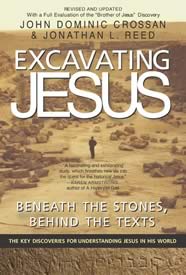
Excavating Jesus: The Real Christ?

excavatingjesus

John Dominic Crossan, the co-founder of the Jesus Seminar, is well known for his iconoclastic views on the historical Jesus. Excavating Jesus, written with archaeologist Jonathan Reed, is stimulating and challenging. Crossan’s argument that Jesus was a Galilean peasant who engendered a Kingdom movement after the murder of John the Baptist is compelling to me as an anthropologist, but it doesn’t seem to be the whole story.

The blending of archaeology and exegesis is intriguing. The use of ancient historical sources, such as Josephus and Pliny, and literature not included in the Bible, such as the Dead Sea Scrolls and the Gnostic Gospels, weaves a colorful and variegated tapestry. Is this the actual Jesus of history?

I’m not entirely convinced. To me it seems implausible that such a movement could arise from so unremarkable a prophet. The number of Jews killed by Rome for posing as popular leaders is very large. Why would one be singled out for such an inflation into the Word made flesh? If the Gospel stories are to be taken as parables or mythic metaphors about a deeper meaning, who created this literature and for what reason? If Christianity were created in this way, it would be a social and cultural process without parallel. Zoroaster (the Persian priest who founded Zoroastrianism), Sidartha Gauthama, (the founder of Bhuddism), and the Prophet Mohammed (the founder of Islam), are remarkable historical figures – but none of them according to their followers claimed to be God.

If somehow the peasant founder or spokesman for a resistance or “terrorist” movement is magnified by his followers, why would devout Jews be so blasphemous as to make him into the messiah and a god? Somewhere there is a missing link between this peasant of history and the Christ of history.

It is very curious how Crossan holds the Gospel accounts up to the measure of Josephus’s history. Crossan then compares the claims of other contemporary religions as part of a general magical mentality. Somehow, Josephus could write from an historical perspective of relating true events but the Gospel accounts of the life of Jesus are to be seen as parable and allegory? That isn’t to say that various oral and written sources weren’t involved in the development of the Gospel accounts. In fact Crossan goes to some effort to stress that the early Christian community took them to be true and those involved in their composition believed in their veracity.

All in all, there is still a core of speculation in this fascinating book. It is an attempt to put many puzzle pieces together. It seems, though, that the Jesus he finds would not be capable of inspiring a Jesus movement that would grow into Christianity. In many respects, Crossan’s Jesus of history could inspire a movement, but it does not seem plausible that it would endure, let alone become a world religion.

Read More

Posted by on Aug 18, 2009

The Magi, the Epiphany, and the Stars of the New Age

Aurelius Augustinus – You Done Us Wrong?

Redwoods

While camping recently with my wife and daughter in the redwoods near Santa Cruz, I spent some time with an enlightening and very readable book.

Christopher Hall in Learning Theology With the Church Fathers does a good job of summarizing St. Augustine’s notion of the fallen nature of humanity. St. Augustine is convinced that something went terribly wrong when Adam ate the forbidden fruit so that we are not capable of really loving and knowing the good until we are redeemed in Baptism. Of course this led not only to the notion of infant baptism but also to the notion that unbaptized infants would suffer the wrath of God in eternal punishment. It is logically consistent but it seems to be extreme and never became as much of a prominent idea in the Orthodox East as it did in the Catholic and Protestant West.

This doesn’t square with the Black civil rights assertion of human dignity: “God don’t make no trash!” In fact, it seems at odds with the fundamental goodness of creation which St. Augustine upheld in the face the Gnostic conception that creation was a mistake by a lesser god and matter is evil.

Today we might explain these things as laziness, psychological conflicts, compulsions, addictions, or unhealthy repression.

In St. Augustine’s defense, we should remember that he is also considered one of the founders of psychology. His concepts of memory, will, and understanding as the core of individual identity still hold up in the face of contemporary neuroscience. It seems that the key problem he wrestled with from his own experience and that of people he observed was our ability to know what is good and not to be drawn to it in a way that compels our will. In other words, we know the right thing to do and we do the opposite.

For Augustine, the arena of sexual behavior was particularly problematic. Unfortunately, for example, he didn’t have our understanding of human sexual anatomy and physiology and he felt that what we would call involuntary responses were a sign of lack of control and the conquest of the will. His promiscuous sexual behavior prior to his conversion appears to us post-moderns as bordering on addiction. Today, in contrast, we might view orgasm as something healthy and transformative. In fact, we have made it something holy at the core of the sacrament of matrimony. However, the momentary obliteration of memory, understanding, and will made it highly suspect for an upper class Roman like St. Augustine living during the decline and fall of the empire.

Relaxing in the redwoods enjoying creation seems an awful lot like a certain lost garden. Does God really need to be appeased or does he just continue to reach out to us in love – the beautiful love of creation? Are we only saved in Christ if we are baptized? Is salvation questionable outside the community of the baptized faithful? The traditional and orthodox answers are yes. Is everything else outside the assembly’s official teaching false? The official answer is yes.

What about the Spirit hovering over the abyss? About the eruption of God in space-time? Is our teaching about faith or about certainty? The church fathers sought revelation in the written books and the book of nature. Does not all creation shout the glory of God? Did not Jesus put all things right? Would a God of love do it for just a few?

Would a father or mother provide for only some of their children and leave the rest in eternal darkness? “Evil as you are would any of you give your son a scorpion when he asked for bread…” Would a father or mother require death by hideous torture of a beloved son?

In terms of making some sense of the death of Jesus in a culture in which thousands of animals were sacrificed each day as part of official worship, the notion of Christ as the final and only suitable victim is comprehensible. His final and complete sacrifice also explain the loss of the Temple and the genocide of a people lost in hopeless insurrection. How else could the death of God’s son make any sense? Yet once we begin this paternal projection and anthropomorphism of the One God, our words and images fall on hard ground.

Per usual, I have begun at the end, since Learning Theology With the Church Fathers actually begins with wonderful treatments of what we used to call De Deo Uno (the one God) and De Deo Trino (the triune God). Hall takes the wise course of not trying to explain the indescribable but begins by the efforts of the early Hellenistic church trying somehow to grasp the reality behind the hymns of praise to the Father, Son, and Holy Spirit as the one God and to Jesus as the Eternal Word.

How can this be? Yes, that is the question, whether one is caught up in the majesty of the redwoods or the radiant light from light, begotten not made causing them to break forth into the Song beyond all hearing that is Music, Word, and Divine Rhythm.

St. Augustine’s famous Chapter 10 of The Confessions says it much better than I could.

Late have I loved you,
O Beauty ever ancient, ever new,
late have I loved you!

You were within me, but I was outside,
and it was there that I searched for you.
In my unloveliness I plunged into the lovely things which you created.

You were with me, but I was not with you.
Created things kept me from you;
yet if they had not been in you they would not have been at all.

You called, you shouted, and you broke through my deafness.
You flashed, you shone, and you dispelled my blindness.
You breathed your fragrance on me;
I drew in breath and now I pant for you.

I have tasted you, now I hunger and thirst for more.
You touched me, and I burned for your peace.

Read More

Posted by on Jun 2, 2009

The Magi, the Epiphany, and the Stars of the New Age

Late Term Abortion: A Mother’s Story

parents

Robin Young of National Public Radio’s “Here and Now” interviewed one of the patients of murdered late-term abortion provider, Dr. George Tiller.

“We speak with a former patient of late-term abortion provider Dr. George Tiller, the Wichita, Kansas doctor who was murdered on Sunday. She explains why the procedure was so necessary for her.”

Abortions past the 20 week “age of viability” are difficult to justify by pro-choice advocates. How could the loss of one of the three physicians who performs these procedures, which are less than 1% of abortions, represent any moral or clinical loss? The implications for the physical and mental health of families becomes evident in this interview. The values presented in this story are about the desire and wonder of having children, the anguish of carrying a doomed child, the inability of doctors to present the couple with any real alternatives.

An earlier ban on late term or “partial birth” abortions provides an exception for the health of the mother. Aren’t these just cavalier acts of barbarism by selfish women?

What would you do with a child that you wanted very much but who would not survive birth? What would be the most loving and caring thing to do? This is a very compelling story that should give us pause when we want to throw the first stone.

My Late-Term Abortion
President Bush’s attempt to ban partial-birth abortions threatens all late-term procedures. But in my case, everyone said it was the right thing to do — even my Catholic father and Republican father-in-law.
This article provides another instructive example from 2004 published in the Boston Globe.

In this second case, the situation seems to be less clear cut since the birth of this child would have meant a short and very unacceptable quality of life for the child as judged by the parents.

In both cases there were voices which opposed the choices made by the parents. Reviewing both cases is useful in terms of gaining a more nuanced perspective on the ethical and moral issues involved and the struggles of these couples.

Read More

Posted by on May 18, 2009

We Are the Only Christians: Choice, Democracy, and Obama at Notre Dame

America Magazine, published by the Jesuits, has an interesting editorial on the controversy about pro-choice President Obama speaking at Notre Dame University’s commencement yesterday and receiving an honorary degree.

Another Catholic publication ( in the hands of lay people – no less) Commonweal has a more focused pro-Obama position in a post on its blog dotCommonweal.com by Paul Moses.

The issue according to these statements is the relationship of the Church as an organization, the faithful as a social movement, and the Government.

America’s editorial quotes St. Augustine in his criticism of the Donatists in his native North Africa and their refusal to have anything to do with the Imperial government. Donatism had other positions as well such as their rejection of Christians who had defected under persecution. “They believed that the church should be a community of saints not sinners.”

Even in the 4th century and earlier the politics of church and state caused a lot of controversy. Today at Notre Dame, President Obama like all of his predecessors holds some positions that do not agree with official Church teaching. George W. Bush invaded Iraq contrary to Pope John Paul II’s opposition to the policy of pre-emptive war.

The American bishops have championed a “seamless garment” pro-life agenda that opposes abortion and capital punishment. The bishops also advocate one primary solution which is legislation to once again make abortion illegal. The split in the Catholic community is over tactics. Many do not feel that re-criminalizing abortion will actually solve anything since it will only drive the practice underground.

In the 20th century there has been an attempt by Christians – in particular Catholics in the pews – to accommodate to a secular ethic of government. (Divorce, homosexuality, and birth control are now sanctioned by secular government even though these practices are contrary to traditional Christian teaching.) The broader issue is how does one advance a Christian agenda for social relations while supporting the secular ethic of not forcing one’s belief on another. In the abortion issue there is also the question over the best tactics for discouraging this and other activities that are not pro-life.

President Obama’s talk yesterday at Notre Dame proposes a pragmatic solution of providing incentives and support services for mothers to choose to deliver their unborn children. This seems to be the most effective approach to build a national policy of compassion and support for families and children. If our goal is to significantly reduce abortions this is probably a better tactic to implement such a Christian and humanitarian vision.

Read More

Posted by on May 15, 2009

Do Not of Mary a Stone Make

It is only fitting that during May, Mary’s month, friend Bill Reichmuth during lunch today recalled Martin Luther’s admonition not to turn Mary into a rigid statue. Luther reflected on Mary’s youth and courage in dealing with all of the challenges and difficulties involved in her yes to God.

Ave mundi spes Maria – English

Hail, hope of the world, Mary, hail, meek one, hail, loving one, hail, full of grace
Hail O singular virgin, who wast chosen to not suffer flames through brambles
Hail, beautiful rose, hail, staff of Jesse:
Whose fruit loosened the chains of our weeping
Hail whose womb bore a son against the law of death
Hail, O one lacking comparison, still tearfully renewing joy for the world
Hail, lamp of virgins, through whom the heavenly light shone on these whom shadow holds.
Hail, O virgin from whom a thing of heaven wished to be born, and from whose milk feed.
Hail, gem of the lamps of heaven
Hail, sanctuary of the Holy Ghost
O, how wonderful, and how praiseworthy is this virginity!
In whom, made through the spirit, the paraclete, shone fruitfulness.
O how holy, how serene, how kind, how pleasant the virgin is believed to be!
Through whom slavery is finished, a place of heaven is opened, and liberty is returned.
O, lily of chastity, pray to thy son, who is the salvation of the humble:
Lest we through our fault, in the tearful judgment suffer punishment.
But may she, by her holy prayer, purifying from the dregs of sin, place us in a home of light
Amen let every man say.

Benedictine Monks of santo Domingo de Salo Ave Mundi Spes Maria

Read More

Posted by on Apr 29, 2009

The Magi, the Epiphany, and the Stars of the New Age

Emmaus: Pre and Post Christian

The supper at Emmaus' (1958) by Ceri Richards (1903-1970)

The supper at Emmaus' (1958) by Ceri Richards (1903-1970)

My favorite story is the Disciples on the Road to Emmaus (Luke 24: 13-35). Michael Traynor of the Lesscoolthanyou Channel captures the experience of the disciple before the Breaking of the Bread in a way that evokes a very current state of affairs.

Read More

Posted by on Apr 14, 2009

The Magi, the Epiphany, and the Stars of the New Age

Easter Monday 2009: The Post Modern Blues

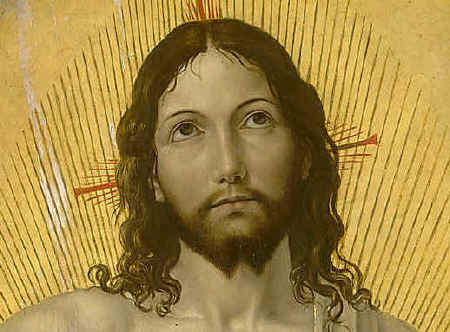
Borgognone 1510

Borgognone 1510

Easter time in the 21st century is a curious season. We are living in a time in which the rationality of the Enlightenment has been obliterated by the irrational violence and deconstruction of the Modern Era which ended with the creation of the atom bomb. In the 20th century we saw the the rise of the irrational as a counter to the idea of reason as the engine of human progress. Advances in science and engineering led to death on a massive scale whether in its industrial production form in the genocide of Jews and other peoples or its explosion from the sky in carpet bombing of Dresden or the incineration of Hiroshima and Nagasaki. The darkness within the brilliance of the human heart and mind was also manifest in the Vietnam War epic movie “Apocalypse Now” based on the theme that facing the horror of one’s evil can only lead to self destruction.

So here we are on the cusp of the third millennium. Human progress seems more of an illusion. In fact, our Post-Modern sensibility is all about the inability of reason and science to get at ultimate truth. Everything is examined and found wanting. Physics has become the study of relativity, uncertainty, and mathematical models. Religion and philosophy are the products of language we create. The scriptures of Christianity are cultural creations which tell us more of the people who wrote them. They are robbed of their revelation.

Human romance and love are reduced to methods for the socio-biological dispersion of one’s genetic load. Religious experience is suspect because there is no way to know whether one is just engaging in psychological projection to create a hideout from the ultimate reality of the purposelessness of human existence. We are here by virtue of  a cosmic accident with a very low probability.

In our world, there is the torture and death of Good Friday but there is no need for a Resurrection or any life beyond our current suffering because it is not possible since we can never know the nature anything beyond nature with any certainty. So here is the greatest event of all human history and our greatest personal hope – the Resurrection and it is a non-event on a beautiful spring day that is to be borne with a grim courage in a time when miracles cannot happen.

The news is too good. Maybe that is why we are stuck on the Friday of Crucifixion. The pain we know is better than risking its loss in the certain joy of Resurrection. As people of the Resurrection we would have to leave too much behind – hurt, anger, fear, and death.

Read More

Posted by on Apr 12, 2009

The Magi, the Epiphany, and the Stars of the New Age

Resurrection Sunday – 2009: Jesus Did Not Die for Me

Resurrection of Christ - Mikhail Nesterov (late 1890s)

Resurrection of Christ - Mikhail Nesterov (late 1890s)

Jesús No Murio Por Mi

Jesus Did Not Die for Me

Holy Weekend
The time of customary rituals
Of words spoken a thousand times
A season of the silence of death
Fasting, resolutions, and processions
A time of self-contained euphoria
As it seems sin sees the ending
We already know
and will flood all with life
A shallow season of hypocrisy
“Happy Easter”

A season of churches in a thousand different ways
yet a thousand ways the same
Cannot say other than what they have always said
“Jesus died for our salvation”
But “You know what?”
Jesus didn’t die for me
Jesus died because of cowardice,
greed, arrogance, love of power
by those who did not understand his message
by those afraid of the new
by those who had made a god to their own stature
by those who did not accept his offer of life to the full
not for just a few but for all men and women.
That death did not save anybody
Not even those who believed that they are saved by Jesus.

What saved me and you
And continues to save
Is that Jesus who became a person
Who identified with the people
Who was a baby and cried,
Who was a boy and played
Who grew and worked
Who was called to a mission and took it on
Who paused before the pain of men and women
Who in solidarity of gestures, words, and actions
Who did not silence what had to be said
And who though fearful, moved ahead
out of love, sheer love.

It was not his death, so cruel and unjust.
It was his life!
If death can be salvation
Whan can resurrection mean?
What sense does it make to celebrate Easter?
Death does not save
Even if it scandalizes theology
Life saves.
That is why resurrection is the great cry,
The lead story, the great news of our time
For this the stone rolls aways, the tomb opens
And foot steps are heard in the garden

God raises up Jesus
To condemn death forever
To announce that Life has won out
and that faith in the this Jesus who lives
who conquers the mercenaries of terror
is the faith that saves and
is the faith that makes us free.
What Peter said with such clarity
“This same Jesus whom you crucified
God has made Messiah and Lord”.

Jesus did not die for me.
They killed Jesus!
Jesus died because they tortured him in a blind rage
Because they wanted to shut him up and make him disappear
And because the powerful have always killed Him.

Yes, Jesus was born for me.
He also lived for me,
He taught, healed, pardoned, loved and rose again for me
for you and and for everyone.

Jesus did not die for me
nor for you nor anyone else
Perhaps, some day
We will stop honoring his death
In order to begin celebrating His LIFE.

Gerardo Oberman

translated by Randolfo R. Pozos 2009

Read More

Posted by on Apr 5, 2009

The Magi, the Epiphany, and the Stars of the New Age

Celibacy – An Unhealty Practice?

photo by Rachel J Allen

photo by Rachel J Allen

The following is a substantial excerpt from Franciscan Richard Rohr’s article in the July August 2002 issue of Sojourners Magazine “Beyond Crime and Punishment” dealing with the clerical sex abuse scandal. Fr. Rohr is the founder of the Center for Action and Contemplation and is a contributing editor at Sojourners

“The Myth of Male Celibacy”

THE REVELATIONS OF the last year seem to be the beginning of the end of what some call “the myth of celibacy.” It’s not that male celibacy was always false or deceitful, but it was in great part an artificial construct. Men, with the best of original intentions, found out that they were not the mystics that celibacy demanded. That is exactly the point. Celibacy, at least in the male, is a most rare gift. To succeed, it demands conscious communion with God at a rather mature level, it demands many transitions and new justifications at each stage of life, and it demands a specific creative call besides. Many who have ostensibly “succeeded” at it have often, by the second half of life, actually not succeeded—in the sense of becoming a God lover, a human lover, and a happy man besides.

Practically, however, the demand for celibacy as a prerequisite for ministry is a setup for so many false takers. Not bad men, just men who are still on a journey: young men who need identity; insecure or ambitious men who need status; passionate men who need containment for their passions; men who are pleasing their pious mothers or earning their Catholic father’s approval; men who think “the sacred” will prevent their feared homosexuality, their wild heterosexual hormones, or their pedophilia; men with arrested human development who seek to overcompensate by identification with a strong group; men who do not know how to relate to other people and to women in particular.

None of these are bad men; they are just on a many-staged journey, and we have provided them an attractive way-station that often seems to work—for a while. But then they go on to the next stage and find themselves trapped, searching, conflicted, split, acting out, or repressing in, and often at variance with their now public and professed image.

The process lends itself to a Jekyll-and-Hyde syndrome, even among men who are very honest and humble in other areas. The price is far too high once you have committed your life publicly and sacredly. I know how hard it continues to be for me, my closest priest friends, and many that I have counseled and confessed. Many of us stay in not because we believe the official ideology of celibacy anymore, but because we believe in our work, we love the people, and we also know God’s mercy. But that loss of belief in the very ideology is at the heart of the whole problem now. We cannot prop up with law and social pressure what the Spirit does not appear to be sustaining. The substructure has collapsed. “Unless the Lord builds the house, they labor in vain who build it” (Psalm 127:1).

Add to that a rather large superstructure of ascribed status and security, and we have a system that is set up for collapse. Studies of male initiation say it is dangerous to give ascribed status to a man who has not journeyed into powerlessness. He will likely not know how to handle power, and may even abuse it, as we have now seen.

In general, I think healthy male celibacy is rare, and it probably is most healthy as an “initiation” stage to attain boundaries, discipline, integrity, depth, and surrender to God. In the long run, most men, as the Buddha statues illustrate, need to have one hand touching the earth, the concrete, the physical, the material, the sexual. If they do not, the other hand usually points nowhere.

WE SHOULD MOVE ahead reaffirming our approach to grace, healing, mercy, solidarity with sinners, patience, and transformation—while also cooperating with the social system whenever there are true victims’ rights to be redressed. We should do this generously, magnanimously, and repentantly.

We Catholics should also see celibacy as primarily an intense initiation course of limited (one to 10) years, much like the monks in many Asian countries. Celibacy has much to teach the young male about himself, about real passion, prayer, loving others, and his True Self in God. We dare not lose this wonderful discipline and container. (Who knows, maybe both Jesus and Paul were still in that early period of life?!) It could be a part of most Catholic seminarians’ training, and during that time much personal growth could take place. Some would likely choose it as a permanent state. Most would not.

How differently the entire process of priestly formation would be configured. What a gift to the religious orders (where celibacy is essential). Our precise charism would become clear, although we would surely become much smaller. What an opening to the many fine men who are attracted to a marriage partner. And what focused intensity this could give to spiritual formation during that celibacy period, instead of all of the hoop games, telling the directors what they want to hear, mental reservations, non self-knowledge, acting out, and “submarine” behavior that make many seminaries a haven for unhealth. Seminaries would not drive away sincere spiritual seekers, but would attract them. Not men looking for roles, titles, and uniforms to disguise identity, but men looking for holiness and God through which to express identity.

Male sexuality does not go away. It is not easily sublimated or integrated. It is either expressed healthily or it goes underground in a thousand different ways. Sex is and probably always will be a central issue for most males, and it can never develop honestly inside of a “hothouse” of prearranged final conclusions.

We should not be looking for a system where mistakes can never happen, but just a system that can distinguish health from unhealth and holiness from hiding. Like no other institution, the church should be the most prepared to deal with mistakes. That is our business. The steps to maturity are necessarily immature. Let’s start by mentoring the good and the true, and also surrendering to that mystery of grace, forgiveness, and transformation that is our birthright as Christians. Many priests and seminarians have always done this, and I hope this gives them the courage to know why and how they are both “sons and heirs” of a true wisdom tradition. Such disciplined sons, and only such sons, have earned the authority of “fathers.”

Richard Rohr, OFM, is founder of the Center for Action and Contemplation in Albuquerque, New Mexico.

Read More