Pages Menu
RssFacebook
Categories Menu

Posted by on Jan 29, 2016

Entering into the Mystery

Entering into the Mystery

people-walking-on-streetAs the Church’s New Year began in Advent, in communities around the world, men and women took a huge step into  a special journey: a journey that will take them deeply into the mystery of God’s relationship with humans. These people stepped forward with their sponsors and were introduced to the people of the communities they will join. Welcomed with blessings and prayer, they entered a time of study and reflection through which they will become increasingly aware of God’s call to journey on The Way.

The Way?

Christian life in earliest times was known as The Way: the way to the Kingdom of God, begun here and now with the life, death and resurrection of Jesus and unfolding through time to its ultimate fulfillment when Jesus returns and all are reunited in the mystery of God’s life. This way of living differs from the ways of others who have not chosen to follow it. It requires loving and forgiving enemies, caring for the most vulnerable in the world, acting with justice and mercy, being stewards/caretakers of the environment, and trusting that God will bring good out of all that happens, even if what happens is not what God would have wanted to see.

That doesn’t sound easy. It might even be dangerous!

Following the Way has never been a safe or easy option. Jesus, who called Himself the way, the truth, and the life (Jn 14:6), was tortured to death, hanging naked on a cross, reviled and mocked by passers-by and abandoned by most of his friends and followers. Many of those who have followed Him have witnessed with their lives to His resurrection over the past 2000 years. The martyrs (witnesses) we remember from those early centuries are still being joined by Christians around the world today who choose death rather than renounce their Lord.

Whether called to witness with our blood or not, each of us will face times when we must speak out, saying unpopular things to people we know and whose respect we treasure. Our choice of lifestyle, leisure activities, business/work behavior, sexual ethics, and treatment of the poor and ill will all be shaped by our faith. Not all of those choices will be understood or endorsed by our peers.

Then why do it?

Despite the counter-cultural nature of a life of faith, the call to enter into the mystery is profound. The joy, peace, mercy, love, and comfort of a hug from God surpass anything of human origin. Some doors open while others shut. Funds materialize just in time to keep a project going, or they don’t come at all and something else must be done to move forward in service. Prejudices get overturned as we meet and get to know folks from other social or ethnic groups in communities of worship and service. We are continually challenged and helped to grow in wisdom and grace as we grow in age.

A life of faith is not for the faint of heart. It’s a great adventure into realms not often noticed through everyday eyes. As poet Elizabeth Barrett Browning said, “All of Earth is crammed with heaven, and every common bush aflame with God; but only those who see take off their shoes.”  The glory of God shines forth in all of creaton. Those called to enter into this mystery are truly blessed. We journey forward together — those just beginning and those who’ve travelled long. Difficulties, doubts, second thoughts, and times of desolation will arise, but the promise and faithfulness of God, the overwhelming power of love and mercy, will accompany us and welcome us to an even richer life when we reach our journey’s end.

Away we go together — on The Way!

Read More

Posted by on Jun 18, 2015

Entering into the Mystery

Treat Them with Tenderness – Pope Francis

father_piggy_backPope Francis celebrated Mass for the Third Worldwide Retreat for Priests on June 12, 2015, the Feast of the Sacred Heart. In his homily for the priests he spoke of God’s tenderness — a tenderness like that of a father or a mother teaching a child to walk. A tenderness that binds his people in freedom, attracting them “with bonds of love, with ties of love.” He explained that God then tells us and his people, “For you I am like one who lifts a child to my cheek and kisses her as I bend down to feed her. Considering this tenderness of God how would it be possible for him to abandon us to the enemy?” When we find ourselves in difficulty or insecurity, the Lord tells us, “If I do all of this for you, how can you even think that I would leave you on your own, that I would abandon you?”

Referring to the Coptic martyrs of Libya, Pope Francis noted that they died with the name of Jesus on their lips, entrusting themselves to the love of God. God promises,“How can I treat you as an enemy? My heart rises within me and arouses all my tenderness.” It is not a day of wrath that awaits you but a day of pardon for sins and the tenderness of a Father, the Holy One in our midst. This love and tenderness is the gift of the Father to all of his children, for each one of us.

A lot of the time we are afraid of the tenderness of God and we refuse to let ourselves experience it. In these moments “we are hard, severe, punishers” of our neighbors (and even of ourselves). Although he was speaking to priests, the message is something that we should all hear, as it applies to us as well. He also explained that that we should not be like the shepherd who cared for only one sheep and left the other ninety nine sheep to wander about, lost.

The Pope explained, “the heart of Christ is the tenderness of God. This is the way that pastors (and the people of God) should shepherd each other – with the tenderness of God and they should leave the whip in the sacristy (or in the cabinet) and be tender shepherds even with those who are the most troublesome.”

Finishing his homily, Pope Francis said “We do not believe in an ethereal God. We believe in a God who became flesh, who has a heart, and this heart today tells us, ‘Come to me if you are tired, worn out, and I will refresh you, but treat my little ones with tenderness, with the same tenderness with which I care for you.’ This is what the heart of Christ is telling us today and this is what I am praying for you today at this Mass and for myself.”

(Pope Francis’ homily was written for a priests’ retreat, but the ideas he expressed are important for all of us, the People of God. Accordingly, I have included mention of the rest of us in parentheses.)


Read More

Posted by on Jun 18, 2015

Entering into the Mystery

Trátenlos con ternura – Papa Francisco

dad_with_daughterPapa Francisco celebró la Misa para el Tercer Retiro Mundial de Sacerdotes el 12 de Junio de 2015, la Fiesta del Sagrado Corazón. En su homilía a los sacerdotes les habló de la ternura de Dios: una ternura como la de un padre o una madre que enseña a su criatura a caminar. Una ternura que ata en la libertad a su pueblo, atrayéndolo «con lazos de amor, con ataduras de amor». Explicó que luego Dios nos dice a nosotros y a su pueblo, «Yo era para ti como los que alzan a una criatura a las mejillas y lo besaba, y me inclinaba y le daba de comer». Pensando en esa ternura de Dios, ¿cómo podría ser que nos abandonara al enemigo? Cuando nos encontramos en momentos de dificultad o de inseguridad, el Señor nos dice: «pero si hice todo esto por vos, ¿cómo pensás que te voy a dejar solo, que te voy a abandonar?»

Dando el ejemplo de los mártires coptos de Libia, Papa Francisco notó que se murieron con el nombre de Jesús en los labios, confiándose en el amor de Dios. «¿Cómo te voy a tratar como un enemigo? Mi corazón se subleva dentro de mí y se enciende toda mi ternura». No es un día de ira que les espera sino un día de perdón de pecados y de la ternura de un Padre, el Santo en medio de nosotros. Ese amor y ternura son el don del Padre para todos sus hijos, para cada uno de nosotros.

Muchas veces le tenemos miedo a la ternura de Dios y no nos dejamos experimentarla. En tales momentos «somos duros, severos, castigadores» con nuestros prójimos (y hasta con nosotros mismos). Hablando a los sacerdotes, pero con palabras que los demás debemos escuchar también, explicó que no debemos ser como un pastor que cuidaba a solamente una oveja y dejaba andar perdidos a las noventa y nueve otras ovejas. Dice, «El corazón de Cristo es la ternura de Dios». Así que los pastores (y el pueblo de Dios) han de ser pastores (y pueblo) «con ternura de Dios, que dejen el látigo colgado en la sacristía (o el gabinete) y sean pastores (y pueblo) con ternura, incluso con los que le traen más problemas.»

Concluyendo su homilía, Papa Francisco dice, «Nosotros no creemos en un Dios etéreo, creemos en un Dios que se hizo carne, que tiene un corazón, y ese corazón hoy nos habla así: “vengan a mí si están cansados, agobiados, y los voy a aliviar, pero a los míos, a mis pequeños trátenlos con ternura, con la misma ternura con que los trato yo”. Eso nos dice el corazón de Cristo hoy y es lo que en esta misa pido para ustedes y también para mí».

(La  homilía del Papa Francisco fue escrita para una misa celebrada con un grupo de sacerdotes, pero las ideas son importantes para todos nosotros, el pueblo de Dios. Así que he incluido mención de los demás de nosotros entre paréntesis.)


Read More

Posted by on Jun 13, 2015

Entering into the Mystery

The Sacred Heart of Jesus: Source of Limitless Love

Sacred Heart by David Clayton Devotion to the Sacred Heart of Jesus originated as a meditation on the love that Jesus has for humanity.  In the 1500s, Jesuits and Franciscans promoted devotion to the wounded heart of Jesus. However, they did not stress the physical bleeding heart of Jesus crowned with thorns that has come down to us. This common  image does not necessarily help people feel closer to Jesus today. Presenting Jesus with a heart with flames of love and a face full of love and light emphasizes his limitless divine love in a very human way.

A Physical Organ or A Symbol of Love?

Sacred Heart - Pompeo BatoniThe devotion to the Sacred Heart has not always  included a focus on the suffering of Jesus and his actual physical heart. During the first ten centuries of Christianity, devotion to the humanity of Christ did not include honoring the wounded Heart of Jesus. From the 1200s to the 1500s devotion to the Sacred Wounds increased. However, it was private, individual, and of a mystical nature. The thorn crowned heart shows the change from honoring Jesus’ love for humanity to humans making reparation for sin. In the 1670s, the apparitions of the Sacred Heart of Jesus to  Saint Margaret Mary Alacoque,  moved the devotion into the public life of the Church and it became centered on sorrow for sin. Popular piety continued this emphasis and eventually promoted worship of the physical heart of Jesus to such a point that Pope Pius XII had to correct this. The pope explained that the Sacred Heart belongs to the “Divine Person of the Eternal Word” and is a symbolic image of his love and our redemption. (See Haurietis aquas). Eastern Catholicism promotes some devotion to the Sacred Heart of Jesus. However,  the devotion is controversial because of the mixing of the theologies of divine love and human reparation for sin within it. Eastern Catholics do not share the Western preoccupation with the physical heart of Jesus.

Devotion to Love

SacredHeart Fanelli 1994Devotion to the Sacred Heart of Jesus is a devotion to His love. It is a response to the extravagance of Jesus.  His suffering and human sin are important for our consideration in other ways. However, this focus is not suitable for a devotion which focuses on love. This is particularly true today when addressing young people in first world cultures in which few symbols are shared. A heart in flames is a direct and simple symbol.

It is interesting that one of the main resources of devotion to the Sacred Heart, the Litany of the Sacred Heart of Jesus (1899), is anything but human, warm, or loving. The Litany is formal, monarchical and transcendent. There is little sense of the human heart of Jesus reaching out to humanity to give consolation, peace or special graces. The prayer is true to its historical context, a time in the Church of formality and a sense of distance from the divine.

Despite the turn towards human individual experience and emotion in the 20th and 21st centuries, many Catholics do not feel personally close to God or have a warm experience of God’s love for them. Many still relate to God as a judge and an enforcer of rules.  Contemplating Jesus in the Gospels gives us a richer mystical image of the truly divine and truly human Jesus Christ full of warm friendliness, compassion, and humility with a heart full of love.

Sacred Heart of Jesus, by David Clayton – used with permission
Sacred Heart, by Pompeo Batoni –  public domain
Sacred Heart of Jesus, by Joseph Fanelli – used with permission

Read More

Posted by on Mar 24, 2015

Entering into the Mystery

The Alpha Course — Presenting and Encountering Christ

Alpha Course logoA fundamental theme of Pope Francis’ papacy has been the Church’s call to missionary activity. This activity is not simply the call of a few who will travel to distant lands. It is the call of every Christian: the call to participate in evangelization. Yet in our communities,workplaces, and homes, we often feel uncomfortable in this role, whether because the Christian message and lifestyle are counter-cultural or because we don’t really know or understand what we believe, why we believe it, or why we do what we do.

The Alpha Course is a relatively new program that is focused on reaching out to those who have never really heard the Gospel or experienced life as Christians. One of the side-effects of the program, however, is to re-vitalize parish life as new people are touched by the love of the Risen Christ and enter the community of faith. Long-time members of Christian communities, including Roman Catholics, also experience a revitalization of their faith as they see it anew through the eyes of the newcomers.

Fr. Riccardo, pastor of Our Lady of Good Counsel Parish in Plymouth, Michigan and a regular contributor on Eternal Word Television Network (EWTN), talks about the fact that we as Catholics tend to focus on sacramentalizing: introducing our parishioners to the sacraments and helping them grow in their sacramental life.  According to Fr. Riccardo, if we teach the people about the faith and the sacraments without introducing them to the person of Christ, it is like throwing seeds on concrete. Nothing will grow. Fr. Riccardo gives a comprehensive presentation of the Alpha Course, a program for evangelization, in a series of YouTube podcasts.

The Alpha Course has a simple method. People gather for a meal and a discussion, not just in a church setting but wherever people gather. The attendees are primarily people who are currently outside the Church. Over a ten week period the participants come to an experience of the Risen Christ as their loving friend and savior.

The Alpha Course began in a Church of England parish in London and is now widely used by many denominations. It is opening doors to ecumenical cooperation and discussion about the centrality of Christ in our faith. Over 1 million Catholics in Canada have been through the course. Fr. Rainero Cantalamessa, preacher to the papal household, Cardinal Rino Fisichella, President of the Pontifical Council for Promoting the New Evangelization, and other Catholic leaders have praised the Alpha Course.

Rev. Mr. Steve Mitchell, a deacon of the Archdiocese of Detroit, is the national director for Alpha USA. According to Deacon Mitchell’s statement on the AlphaUSA.org website “Alpha provides a safe, non-threatening environment where no question is too dumb and no perception is criticized. Barriers are broken down as we share a meal together and build relationships without regard to what someone believes.”

Alpha’s video includes examples from Catholic parishes around the world.

Read More

Posted by on Mar 16, 2015

Entering into the Mystery

Metanoia — Transformation and Change


What does “Metanoia” Mean?

 “Be transformed by the renewal of your mind, so that you may judge what is God’s will, what is good, acceptable and perfect.” (Rom 12:2)

Many of us have a desire for closeness to God and the realization of all that we can be. Those goals inevitably call us to change. But, change is hard. And often we feel that we cannot make it happen. In fact, we cannot and do not make it happen. As Christians we realize that God makes it happen. We can let  desire in. We can say “yes” to change even if it feels like an unknown path. We can push back fear and see the new possibilities as freedom from the past or as an adventure.  But even these are with God’s support. Left on our own, we humans fall into fear, laziness, and even anger that there is work involved in finding true happiness.

Why is growth toward happiness so much work? Is there a point to work? Why doesn’t God just give us feelings of happiness or all the material goods that would meet normal needs?

Created for Transcendence

In his love, God has created us to transcend our natural selves. He has built into his creation a sense of beauty and  love that goes far beyond the need to survive. As humans evolved from an un-self-reflective consciousness  to an ability to be self-reflective, they developed the ability to choose consciously and to know if an act is harmful to self or others.  This is a good and basic moral accomplishment, but the bigger task for humans has been to distinguish accomplishments from our fundamental orientation. Many of us work very hard at doing important and helpful things. We build our legacy goal by goal.

In the middle of all of this striving we inevitably hit such things as disappointment, tragedy, loneliness, thoughtlessness, health problems, and set-backs. We ask ourselves if all the effort is worth it. Do I matter? Does my life matter?

I can react with anger or ego and wrap myself up in accomplishments, money, or an attractive body. I often yell at God about why I have to work so hard to get things done. I always get back the same reply, “Because I love you.”  God loves me enough to invite me to work with my fear and my feelings of inadequacy and to let him help me through all the moments of planning and work. No one is going to hand me good relationships. But, my prayerful reflection on my relationships can improve them. I can let God calm me down. I can hear an inner voice suggesting a better way to talk or listen.

All of this hope and growth can happen if my fundamental orientation is to God. The desire to depend on God happens because I surrender to God and to God’s ways. The Bible speaks of the turn in fundamental orientation as “metanoia.”

Repentence or more?

The term “metanoia” appears 58 times in the New Testament.  It is usually translated as “repentance.” But, the translation as “repentance” is controversial. It can be traced back to a choice that had to be made when the text was translated for early Latin Christianity. There was no equivalent in Latin to the earlier Classical Greek meaning. Classical Greek understood it as a change of mind. Even if one narrows the word to repentance, it never in Greek usage had a sense of sorrow or regret. “Meta” means beyond or after and “noia” means mind.  Why is this search for precision important?

It is important because “metanoia,” even if translated  as repentance, is in the broader context of Jesus’ intention to announce the coming of the kingdom of God. There is a process in the Gospels by which people come to the Kingdom and salvation. It is a process of evangelism, encounter with God, enlightenment, conversion, repentance, decision, and a new self-identity which includes a change of belief and social structure.  Sorrow for sins is important and good, but the encounter with God and commitment to him is the only enduring basis for belief, change and perseverance. We see examples of this in the story of St. Peter’s responses to Jesus after the Resurrection (Jn 21:15-21) or the call of the disciples (Jn. 1:35-39).

Christ and Zacchaeus - Niels_Larsen_Stevns-_ZakæusA lasting “metanoia” or change happens because of an experience of God.

No one can define the nature of that experience. It is different for each person. It can be a sense of closeness such as that experienced by Mary, Martha and Lazarus (Lk. 10:38-42, Jn. 11:1-44) or an answer to prayer or the knowledge that one has been saved from a threat or entanglement as in the experience of Zacchaeus the tax collector (Lk. 19:1-10).  Some people have visions, others experience healings. For some a particular passage in Scripture sets their hearts on fire or they experience a feeling of consolation after receiving communion.

Metanoia: A gift for the entire community

Some Christian groups make a distinction between the metanoia and pursuant faith commitment of someone raised in the faith and the startling experience St. Paul had on the road to Damascus. There is no difference. People raised in a faith tradition can grow from learned traditions and rules to an experience of God. It can be quite eye-opening. Many are not counting on knowing Christ. The practice of prayer can provide strength and guidance, but experience of God is the possible and expected point of prayer. This is not just for the canonized saints. God can re-frame our accustomed ways. This is metanoia. It is a turning or conversion which takes our consent, but it is a gift.

Give God some time to meet you in prayer. Read the Gospels and put yourself in the stories. Consider giving your life to God and let him lead you to your experience of him, to your metanoia.


Read More

Posted by on Feb 26, 2015

Entering into the Mystery

Pope Francis’ Lenten Message – 2015

Cropped -Pope Francis - Canonization_2014-_The_Canonization_of_Saint_John_XXIII_and_Saint_John_Paul_II_(14036966125) - Jeffrey Bruno - Creative CommonsPope Francis, in his 2015 Lenten message, reminds us that Lent is a time of renewal, a “time of grace.” He reminds us that God loved us first and is never indifferent to what happens to us. However, we too easily become indifferent to what is happening in the world when we are not directly affected.

Speaking of the “globalization of indifference,” the Holy Father calls us to an interior renewal that keeps us from becoming indifferent or withdrawn into ourselves. He asks us to reflect on three biblical texts:

1. “If one member suffers, all suffer together” (1Cor 12:26) — The Church

2. “Where is your brother?” (Gen 4:9) — Parishes and  Communities

3. “Make your hearts firm!” (James 5:8) — Individual Christians

 Read the entire message …

Read More

Posted by on Jan 21, 2015

Martin Luther King, Jr. — A Gift of One’s Self

Martin Luther King, Jr. — A Gift of One’s Self


January 19, 2105 is the Martin Luther King holiday in the United States. The first reading of the day in the lectionary is Hebrews 5: 1-10. Christ’s adherence to the will of the Father has led Him on a path of suffering, death and glorification. Dr, King took this path of God’s will to which we are all called.

“In the days when he was in the Flesh, he offered prayers and supplications with loud cries and tears to the one who was able to save him from death, and he was heard because of his reverence. Son though he was, he learned obedience from what he suffered; and when he was made perfect, he became the source of eternal salvation for all who obey him.” – Hebrews 5: 5-10

The Feast of Martin Luther King, Jr is not a feast of the Roman calendar, but it is a national holiday to celebrate a civil rights leader and a Baptist minister who advocated non-violence. Today is a tribute to all who work for human and civil rights for African-Americans and all people. Many of us are of an age to remember the Reverend King. The three television networks brought us live coverage in black and white of the marches, the sit-ins, and the fire hoses and police dogs that were part of the black struggle against white oppression. There was the famous “I have a dream speech” at the Lincoln Memorial. The haunting last speech before Dr. King was gunned down, “I Have Been to the Mountain Top” in which he saw the promised land of freedom, “I may not get there with you but I have seen it.”

Like all of us, Dr. King was an imperfect human being. Like all of us he was a sinner, but his redemption, like ours, is based in obedience to Christ, the source of eternal salvation for all. We know that precisely because Jesus is the Son of God, His will is perfectly aligned with that of the Father. Since Jesus was truly divine and truly human, his obedience came at a human cost. “In the days when he was in the Flesh, he offered prayers and supplications with loud cries and tears to the one who was able to save him from death, AND HE WAS HEARD because of His Reverence.

In his work of announcing the kingdom, healing the sick, feeding the multitudes, Jesus did not shy away from doing the will of his Father. But he knew where his call was leading. It became more and more obvious that if he stayed true to the person he was — the Divine Word become human — that His hands that had been raised in blessing and healing would be nailed to the cross. With loud cries and tears he asks the Father to take this cup away, but he is true to his calling and the will of the Father. “Let not my will be done but yours.” It is through this obedience that Jesus goes to his excruciating death on the cross and to the glory of the resurrection. He WAS HEARD because of His Reverence.

For Dr. King, Mahatma Gandhi, all Christian saints and martyrs, and ourselves, this call to obedience is not only a question of observing certain commandments but a deeper call to be the person God created us to be, to be at one with God, to hear at one with God, to accept God’s truth about our mission in life to advance the kingdom of heaven.

There were many black leaders in the civil rights movement of the 1960s. Dr. King didn’t need to have such a high profile in the movement. Yet it was something that Dr. King was drawn into despite all of the obvious risks to himself and his family. He was born and raised in Atlanta in a strictly segregated society. Dr. King knew what happened to black people who broke the rules. He certainly could have taken an easier type of ministry, but he heard the Word of God, the Will of the Father for his life and his death.

Most of us think that we are not called to such types of work. We are certain that God’s will for us involves something less “glamorous,” nothing so heroic as what Jesus and the saints like Mother Teresa and Dr. King did. But I wonder. All of us have that little voice within us to do something special, something only we can do, but we know that it will cost us. Dr. King used his gift of oratory, of speaking and preaching, to give voice to the prayers and aspirations of the millions enslaved and oppressed using the language, song, and rhythm that the Spirit had given them in their bondage and oppression.

Many of us see fewer years ahead of us than the ones that have fled so swiftly. The babies we held are now grown adults with their own babies. What are we called to do to announce the Kingdom of Heaven and to make it a reality? What can we do to end poverty, hunger, oppression, and violence? How do we draw closer to God and each other in prayer? How do we move toward reconciliation and forgiveness?

We can only do it if we take the time to be quiet and to listen — to pay attention to that little voice that comes to us or the massive cry that comes to us in outrage at the atrocities of the world visited upon the young, the poor, the defenseless. There is a price to be paid, and eternal life to be gained.


Read More

Posted by on Jan 20, 2015

Why Do Children Suffer? Pope Francis Speaks to Filipino Youth

Why Do Children Suffer? Pope Francis Speaks to Filipino Youth


The video and the text are largely in Spanish, though a simultaneous translation into English is included. This is a summary of a small part of the Pope’s extemporaneous speech.

During a presentation to young people in the Philippines, the Holy Father set aside his prepared text to answer a question that had been raised by a 12 year old girl who had been rescued from the street. Tearfully weeping, Glyzelle Palomar, recounted the miseries of her life in a few words and asked, “Many children are abandoned by their own parents, many are victims of many terrible things such as drugs and prostitution. Why does God permit these things even though the children are not at fault.Why do so few people come forward to help?” In this video we can view the scene and the Pope’s compassionate embrace of the child.

What response is possible to the perennial problem of evil? Pope Francis did not try to evade the question with platitudes. He took the question head-on, educating about 30,000 of the faithful and challenging them. First, he noted the shortage of women among those making presentations and he emphasized the importance of the point of view of women. The Pope said that women pose questions which men could never stop trying to understand, that is, never grasp.

We can understand something, added the Holy Father, “when the heart reaches the place in which it can ask the questions and cry. Only through tears do we arrive at a true compassion which can transform the world.” Pope Francis described a common, worldly type of compassion as one in which we just take a coin out of our pocket. He added that if Christ had shown this type of compassion, he would simply have spent a little time with a few people and gone back to the Father. Jesus could comprehend our lives, the Pope said, when He was able to cry and did cry.

He notes, “In today’s world, there is a lack of crying. Although the marginalized, the poor, and the outcasts cry, those of us who do not lack anything essential do not cry. Only those eyes that have been cleansed by tears are able to so see things as they are.”

The Pope challenged the faithful. “Let us not forget (this young woman’s) testimony. She asked the great question ‘why do children suffer?’ crying. And the great answer all of us can give is to learn how to cry.”


Read More

Posted by on Jan 20, 2015

¿Por qué Sufren los Niños? Papa Francisco a Los Jóvenes en Filipinas

¿Por qué Sufren los Niños? Papa Francisco a Los Jóvenes en Filipinas


El Santo Papa dejó su texto preparado para contestar la pregunta que le había puesto una niña rescatada de la calle.  Con lágrimas, gemiendo, Glyzelle Palomar contó en pocas palabras las miserias que había padecido y preguntó, “Hay muchos niños abandonados por sus propios padres, muchas víctimas de muchas cosas terribles como las drogas o la prostitución. ¿Por qué Dios permite estas cosas, aunque no es culpa de los niños? ¿Y por qué tan poca gente nos viene a ayudar?” En este video podemos ver el escenario y la compasión del abrazo del Santo Padre.

¿Qué respuesta es possible al perenne problema de la maldad? El Papa Francisco no trataba de evadir la cuestión con palabras blandas y dulces. Enfrentó la cuestión enseñándoles a unos 30 mil de los fieles y desafíandoles. Primero notó la escasez de mujeres en las presentaciones y la importancia del punto de vista feminino. Dijo el Pontífice que la mujer se puede hacer preguntas que los hombres “no terminamos de entender.”

Podemos entender algo añadió El Santo Papa “cuando el corazón alcanza a hacerse la pregunta y a llorar.” Solamente por lágrimas llegamos a la verdadera compasión que se puede transformar al mundo. El Papa Francisco describió una compasión mundana por lo cual solamente sacamos una moneda del bolsillo. Añadió que si hubiera Cristo demonstraba esa compasión, hubiera pasado unos momentos con algunas personas, y se hubiera vuelto al Padre. Jesucristo entendió nuestros dramas, dijo El Papa, cuando fue capaz de llorar y lloró.

Declaró, “Al mundo de hoy le falta llorar, lloran los marginados, lloran los que son dejados de lado, lloran los despreciados, pero aquellos que llevamos una vida más o menos sin necesidades no sabemos llorar. Solo ciertas realidades de la vida se ven con los ojos limpiados por las lágrimas.”

El Papa desafió a los fieles “No olvidemos este testimonio. La gran pregunta ‘por qué sufren los niños’ la hizo llorando. Y la gran respuesta que podemos hacer todos nosotros es aprender a llorar.”


Read More

Posted by on Jan 16, 2015

The Magi and the Gift of Holy Discontent

The Magi and the Gift of Holy Discontent


http://youtu.be/m8jHx7W-iI4
Fr. Geoffrey Plant of Sydney, Australia has prepared a multimedia homily for the feast of the Epiphany. In his homily, Fr. Plant presents the main points of the feast.

The term “epiphany” comes from the Greek meaning to “shine forth”. We tend to assume that there were three kings because there were three gifts named: gold, frankincense, and myrrh.  Fr. Plant notes that they were not called kings but “magi” in Greek, with stands for wise men or sages.

The gifts are symbolic of the nature and meaning of Jesus. Gold is a symbol of royalty, frankincense is a sign of the divine, and myrrh is for burial, indicating that Jesus will triumph through suffering and death.

Fr. Plant suggests the wise men also brought the gift of Holy Discontent. Examples of holy discontent may be seen in the character of Popeye. An example of unholy indifference is seen in the the character of Bilbo Baggins in The Hobbit. Fr. Plant sees the magi as showing a holy discontent: a willingness to search, to be changed, and not to feel comfortable again. He compares them to Herod’s wise men who despite being so close to Bethlehem fail to see the signs in the heavens though others have seen them from afar.  Quoting W. H. Auden, Fr. Plant compares the hardness of heart of Herod’s wise men to our own post-modern era:

We would rather be ruined than changed

We would rather die in our dread

Than climb the cross of the moment

And let our illusions die

W.H. Auden, The Age of Anxiety

This gift of Holy Discontent — the gift of prophecy and activism — is what the wise men bring to the Christ child and to us according to Fr. Plant. It is the divine call to the kingdom through suffering, death, and resurrection.


Read More

Posted by on May 26, 2014

Memorial Day 2014 — A Reflection

Memorial Day 2014 — A Reflection

Remembering and Honoring Those Who Died in War

Becoming Peacemakers Today


Many of you have directly faced the horrors of war.

Many of you have made great personal sacrifices that haunt your dreams.

Many of us have lost sons, daughters, and friends in war.


Today is the day we gather to remember them

And to ask ourselves if there is any way to end wars,

To end the waste of wonderful men, women, and children,

the destruction of cities and entire countries,

the destruction of Faith, Hope and Love.


Is there any way to keep mad men from coming to power?

Will there be a day when defense won’t be necessary?

The Lord Jesus offers us a way out of war – The Kingdom of Heaven.


We are sent to proclaim it,

To announce the New Law of Christ.


It is a path for the poor in spirit,

for the merciful, for peacemakers.

It is a path of persecution for all of us

Who are called to be its prophets.


Called to non-violence,

Called to speak truth to power,

Called to end hunger and want.


The words sound great,

but we are discouraged.

They crucified the Master

and we had such hopes that he was the Messiah,

Said the disciples on the way to Emmaus,


Many looked at the Mountain of Despair of racial injustice and despaired.

Dr. King picked up the stone of hope from that Mountain

and moved the world.

We prayed to St. Michael,

Worked for peace, and the Soviet Union fell.


A Day to Remember.

A Day of Peace.

Do this to remember me.

Bless the Peacemakers.

Now, let us draw near

To the altar of Sacrifice,

To the blessing of the bread and wine

In which Christ becomes truly present.


With Him,

Let us be consumed in the Love of the Father

and the Fire of the Spirit

To become the Peace of God’s Anointed

in our homes,

at work,

among the nations,

Let us be peacemakers.

As we are the Peace of Christ.


Read More

Posted by on Dec 22, 2013

O Rex Gentium – King of All the Nations

December 22 — O Rex Gentium

“O King of all the nations, the only joy of every human heart; O Keystone of the mighty arch of man, come and save the creature you fashioned from the dust.”

Dust thou art — to the Stars you are called
Leave the dark of agony
The cold of loneliness
Go out to welcome your King

King of All Hearts
King of the World
Line the runways
Announce His coming on the loud speakers

You have only your chains to shed
Your shackles to break
By your word of forgiveness
By exchanging your heart for His

Death has no more claim
Open the gates to the Stars of Grace
Welcome in the joy and peace
Of mercy given, mercy received.


Read More

Posted by on Dec 20, 2013

O Clavis David – Key of David – Key to the Gate of Heaven

December 20 – O Clavis David

“O Key of David, O royal Power of Israel controlling at your will the gate of Heaven: Come, break down the prison walls of death for those who dwell in darkness and the shadow of death; and lead your captive people into freedom.”

And lead us into Freedom
The promised land
Out of our darkness
Fear, anxiety, and certainty

Break down the prisons
of our making
Those with wall to wall carpets
Harboring unforgiven hurt

With swimming pools
and security cameras
with sweeping vistas
Fending off death with denial

O Sol Invictus, Unconquered Sun
Fade the street lamps
of our night
With your dawn O Risen Son.


Read More

Posted by on Aug 8, 2013

Entering into the Mystery

St. Dominic’s Insight and Evangelization Today

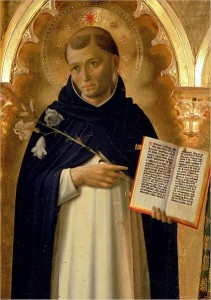
St. Dominic

Insights from Conversing with an Innkeeper

Dominic Guzmán (1170-1221), a Spanish priest traveling with his bishop in southern France, spent an entire night talking with an innkeeper who was a believer in Catharism, a dualistic religious cult that originated in the East. He discovered that the man had not really rejected Catholic teachings but rather was ignorant of them. This discovery led to the founding of the Order of Preachers (the Dominicans), a group dedicated to learning theology and other disciplines and communicating the beliefs of the Church to all they met, while living as beggars and travelers on the highways and byways of Europe. Many great theologians and prophets, both men and women, have served the church through the centuries as followers of Dominic and his early companions.

Moving into a Changing World

Dominic’s insight that the Gospel must be taught both with words and through the lives of the ones proclaiming it in the contemporary world with all of its challenges holds as true today as it did some eight hundred years ago. In many ways, we as a community of faith had, until recently, settled into an almost self-satisfied attitude that all of the answers to the questions of faith and  moral behavior had been resolved by theologians of the Middle Ages and/or at the Council of Trent. As Tevye (of “Fiddler on the Roof”)  might have expressed it, “Everyone knows who he is and what God expects him to be!”

Yet such an attitude of self-confident satisfaction with who we are and what we believed did not serve us well. The world’s people continued to discover new truths in science and new understandings of human behaviors and cultures. Industrialization brought changes in family life and opportunities. Education of both boys and girls has become a given in Western societies and increasingly this is also the case in non-industrial societies around the world as well. More strikingly, perhaps, we did not as intelligent inhabitants of this planet learn how to live together in peace, with the common good as our highest concern. Instead, we set about conquering each other, with the nations having the strongest military plundering the regions they had conquered. Somehow the old teachings no longer answered the new questions about God, life, and the reality of evil in the world.

Evangelization Today

Pope Francis and his recent predecessors have called the Church to a new focus on evangelization. The teachings of the Church, including new insights from theology, philosophy, anthropology, psychology and other disciplines, must be presented to the world and lived out joyfully by Christian believers. Pope Francis repeatedly stresses the importance of going out into our communities and meeting people where they live and work. We are to work to alleviate poverty and suffering. We are to serve without judging others whose lives and values differ from ours. We are to be true to the traditions of our community, but recognize that those traditions may need to be presented in different words and explained using different images. Some of those traditions may need to be stretched so they express the lived experience of a new generation of believers. This is the age of the Holy Spirit in salvation history and we must recognize that God is so much bigger and more amazingly wonderful than we could ever imagine, that no human formulation could ever totally express the full reality of who God is.

Like the times of Dominic Guzmán, there is a great need in today’s world for people of faith to learn about God, about our Christian beliefs and traditions, and about the newly emerging insights of our living faith community. The days when the catechism lessons of childhood sufficed for an adult life of faith are long since gone, if they ever truly existed. We are all called to continue to learn, to study Scripture, to reflect on God’s active presence in our lives, and to share what we have learned with others. And we do this not just at Church or in catechism classes, but also in our daily activities on the highways and byways of our lives. The People of God are once again called to be proclaimers of the loving presence and activity of our God.

And that innkeeper with whom Dominic spoke all night? He returned to the Catholic faith once he understood what the community really believed.

St. Dominic, Pray for us!

Image: St. Dominic by Fra Angelico, Side panel of the Altarpiece in Perugia

Read More