Pages Menu
RssFacebook
Categories Menu

Posted by on Sep 14, 2011

The Exaltation of the Holy Cross – An Ancient Feast Still Relevant

The Exaltation of the Holy Cross – An Ancient Feast Still Relevant

Feast of the Cross - Russion Icon, 1680

The Feast of the Exaltation of the Holy Cross dates from the fourth century, when according to tradition St. Helena discovered the True Cross on a pilgrimage to Jerusalem. The Church of the Holy Sepulchre was dedicated in 335 AD and the cross was kept inside the church. The dedication of the church was celebrated on September 13 and the cross was carried outside the church for veneration by the faithful on September 14. As part of the celebration, the cross was lifted up so all could see it. This was the reason the feast came to be called the “Exaltation” or “Raising Aloft” of the Holy Cross or the Precious Cross (depending on whether one spoke Latin or Greek). Another,  more recent, translation of the term Exaltatio is “triumph.”

Beyond the physical practice of raising the cross up so that people could see it and venerate it, the triumph of Jesus over death on the cross has been a source of hope for people through the ages. In fact, Jesus told his disciples, “If I am lifted up high I will draw everything to myself.” (Jn 12:32)

In The Dialogue, 26, St. Catherine of Siena describes God’s explanation to her of Jesus’ role as bridge between the divine and the human.

“… Do you know when it [this bridge] was raised up? When my Son was lifted up on the wood of the most holy cross he did not cut off his divinity from the lowly earth of your humanity. So though he was raised so high he was not raised off the earth. In fact, his divinity is kneaded into the clay of your humanity like one bread. …

When my goodness saw that you could be drawn in no other way, I sent him to be lifted onto the wood of the cross. I made of that cross an anvil where this child of humankind could be hammered into an instrument to release humankind from death and restore it to the life of grace. In this way he drew everything to himself: for he proved his unspeakable love, and the human heart is always drawn by love. He could not have shown you greater love than by giving his life for you. …

I said that, having been raised up, he would draw everything to himself. This is true in two ways: First, the human heart is drawn by love, as I said, and with all its powers: memory, understanding, and will. If these three powers are harmoniously united in my name, everything else you do, in fact or in intention, will be drawn to union with me in peace through the movement of my love, because all will be lifted up in the pursuit of crucified love. … For everything you do will be drawn to him when he draws your heart and its powers.”

“His divinity is kneaded into the clay of your humanity” and then all raised up, drawn into the life of the Trinity. What a great gift we have received. We no longer gather in Jerusalem expecting to see Jesus’ cross carried out for our veneration. We celebrate the raising aloft of our lives in union with His gift of life on the cross, drawn by love to that union.

(Image is in the public domain in the United States because its copyright has expired.)

Read More

Posted by on Aug 28, 2011

The Exaltation of the Holy Cross – An Ancient Feast Still Relevant

“I’m on my own now, why should I go to Church?”

Mass aboard the USS Enterprise


A new school year is beginning in the Northern Hemisphere and many students who have always gone to Church with their families now find themselves addressing the question, “Why should I go to Church?”  Some will have been asking it for many years. Others will ask it for the first time in the next few weeks, as other activities and concerns vie for their attention and time.

For those who began questioning their family’s practice early, the answers they received as children may have ranged from “Because” to “That’s what our family does” to “No, God doesn’t need us to go to Church, but we need to go to Church,” to “When you’re grown up, you can decide, but until then, we go to Church on Sunday.” None of these answers satisfies the questioner. If truth be told, they don’t really satisfy the one answering the question either.

So really, why should anyone go to Church? Sometimes Mass is boring. In some parishes liturgy feels rushed; in others it seems to take far too long. Sometimes it seems only to be a matter of completing a ritual in the expectation that then God will have to pay attention to those who perform it. Sermons are sometimes dull and not at all related to questions children and teens face in their daily lives. The same old songs are sung every week.  Young people don’t feel welcomed in the music group – only the “old” people who’ve been singing forever decide what to sing and how to sing it. Pastors sometimes seem more interested in getting everyone to contribute to the collection than to getting everyone involved in parish activities or ministry. The idea of contributing from “Time, Talent, and Treasure” seems to undervalue the Time and Talent of teens and young adults in favor of the Treasure they are perceived to have. In short, there are lots of perfectly justifiable reasons not to go to Mass on Sunday.

As a mother, daughter, aunt, catechist, godmother, grandmother, and friend, I watch family and friends struggle with this issue. I was blessed to grow up during Vatican II and to have had wonderful experiences of liturgy and community as a child, teen, and young adult. It was never an issue for me. I loved it all. Yet many of my siblings, their spouses, and their children have had different experiences and find membership in a worshipping community less essential as part of their daily lives. So I ask myself as well, “Why should anyone go to Church?”

The answers I find range from selfishly pragmatic to possibly theologically justifiable. They are certainly not the only reasons. They are simply reasons I can suggest from my own experience and studies.

1.  Church communities are made up of good people who will generally try to help when problems arise in people’s lives. It’s a good idea to get involved with good people and form mutually supportive relationships before you need them. Things may be going well now, but that won’t last forever. When everything starts crashing down around you, it’s good to have someone who’ll try to help you hold the umbrella to deflect the debris, pick up the pieces to start over again, or simply be with you to hold your hand in support and love when nothing else can be done.

2.  Members of church communities may become lifelong friends who share a culture of belief and values. This doesn’t always happen and sometimes those same friends may break apart for a time over nuances of belief, changing values, or practical questions such as where their children will attend school. Nevertheless, with time, love, patience, and forgiveness, members of a community will find that reconciliation occurs and the bonds deepen in subtle ways. The friendship may not be the same as it was originally, but when the chips are down, the bond remains.

3.  God is Trinity – Three in One yet Undivided Unity. Without each of the members of the Trinity, God would be lacking. Together, God is complete. Jesus counted on His Father for support during His life on Earth. He must have listened to the Spirit in His healing ministry – how else to know which of the many people he met would be open to receive healing? The Father was glorified through Jesus’ teaching and life. The Holy Spirit is our advocate, cheerleader, and helper – the way God is with us in this time following the Resurrection.

If God is, in a sense, a community, who are we to turn our backs on community?

4.  Jesus developed and relied on a community of friends during his lifetime. Some were closer confidants than others, but each played an important role in his life. They worshipped together. They ate together. They traveled together. They laughed and cried together. They did all the kinds of things that Christians have done with each other through the ages. They even fought with each other sometimes and were rebuked by Jesus when they got out of line or totally missed the point of what He was trying to teach them. Some betrayed Him. Some denied him. Some ran away when He was arrested. But He never turned any of them away or refused to forgive and be reconciled with them.

It was out of this experience of community that the Church grew – many different people, from many different lands, languages, and traditions, coming together to encourage and support each other as followers of The Way.

5.  The Church is the Mystical Body of Christ. Jesus is not physically present here today in the same way He was before His death and resurrection. St. Paul explained the early understanding of the Christian community, that each person has a specific role to play within the Church, just as each part of a physical body has its own function. If any member of the body is missing, the entire body is weakened. That includes everyone who has been baptized into the community – of all ages, sexes, genders, races, interests, gifts, and talents. If anyone is missing, we are all diminished.

6.   We meet Jesus through each other. This draws from the concept of the Mystical Body. It’s not something about which we generally speak. Many times we don’t recognize this reality. However, when a group of tradesmen comes together to add rooms to the home of a member of their parish who has many children and not enough space for them, Jesus has come. When a death occurs in a family, and the ladies of the parish host a reception following the funeral, Jesus has come to that family. When a friend gives an afternoon to help build a cabinet for a family’s new bathroom, Jesus has come. When a much desired pregnancy ends unexpectedly and a child’s teacher stops to visit the grieving mother after school, Jesus has come. When a family gathers to celebrate a wedding or an anniversary and friends come from miles around to join them, Jesus has come, blessing them all.

7.  Christianity is not an easy path to follow. Christians are called to take unpopular positions. To feed the hungry. To clothe the naked. To care for the poor and strangers in the community. To visit those in prison. To care for the sick. To “speak truth to power.”  Following Jesus will inevitably lead to experiences of the cross. It’s not easy to take a stand contrary to that of people who are powerful. It’s not easy to express an opinion that is contrary to that of one’s family and friends. At home, at work, at school, in public life, times will arise when an individual will have to stand firm, refuse to go along with what everyone else is doing or saying, and experience the pain of being unpopular, ridiculed, censured, isolated, or passed over for a promotion. Some have even had to pay the ultimate price in their witness. We call them martyrs, a word that means witnesses.

8.  In gathering for liturgy (Mass or other celebrations), we share in giving thanks for God’s great gifts and we eat the food that Jesus has given to transform us and give us the strength to continue His work in our world. We meet and get to know each other through our companionship at church. Out of this gathering, all the other benefits already mentioned can and will grow, including the neat side-effect of having a community to support us when we need help too!


Read More

Posted by on Aug 15, 2011

The Assumption of Our Lady, the Human, and Creation


This reflection is based in part on a presentation by Fr. Thomas Berry (1914 – 2009) – Philosopher, Cosmologist.


The Son is the image of the invisible God, the firstborn over all creation.
For in him all things were created: things in heaven and on earth, visible and invisible,
whether thrones or powers or rulers or authorities;
all things have been created through him and for him.
He is before all things, and in him all things hold together.
And he is the head of the body, the church; he is the beginning and the firstborn from among the dead,
so that in everything he might have the supremacy.
For God was pleased to have all his fullness dwell in him,
and through him to reconcile to himself all things,
whether things on earth or things in heaven,
by making peace through his blood, shed on the cross. – Colossians 1:15-20


There is a dimension to all feasts of Our Lady that highlights God’s involvement with the physical –  the material dimension. Mary’s assumption into heaven is a very tangible sign of the new creation in Christ. In his letter to the Colossians, St. Paul is addressing those who do not believe that Jesus was truly human. In this type of Platonist thinking, the feminine is seen as being prototypically associated with the earth and the physical is far inferior to the spiritual, celestial, male principle. The celebration of Mary, Mother of God, in the apostolic churches, acclaims the feminine as the means by which God makes all things new. Mary is the model, the example of what we are supposed to become.

God’s redemption of all creation is the setting for our own restoration of our fallen nature. Caring for creation is today a key obligation for us because of our recently acquired ability to reshape ecological systems on a global basis.

For more on Thomas Berry please go to http://earth-community.org.


Read More

Posted by on Apr 28, 2011

Easter Week Daze

I tried to blog during Holy Week. I would like to say that I was too caught up in ecstasy to touch the keyboard, but I was really silenced. It wasn’t really writer’s block. It was more a sense of something I am learning in my old age – to keep my mouth shut. As an extrovert this is an occurrence of note, since I don’t often know what I am thinking until I am expressing it.

Per usual, after the stress of the event, I can begin talking or writing about my experiences of Lent and Holy Week now that we are in Easter Tide.

Easter Triduum, from Holy Thursday to Easter Vigil, is a montage of one highly charged event ebbing and flowing over many others. The breaking of the bread at the Last Supper; Judas sent off on his errand; Jesus looking for support and finding us asleep. The darkness at noon covers all creation. Nicodemus asks for the body of Jesus. Mary of Magdala weeping as she asked the Gardener, “Where have you laid him?” followed by the overpoweringly personal entreaty of a close Friend, “Mary.” The disillusioned disciples heading back home and being consoled by a stranger Whom they invited in for the evening. The guest only reveals Himself in the moment of the breaking of the bread. After all of the betrayals, the abandonment, with the marks of the crucifixion on His body, His first words to the men who “threw Him under the bus” was “Peace.” In all of previous salvation history, God’s messengers manifest with the same greeting of peace, but now God does it directly, for the first time.

I understand that the traditional teaching is that the sacrifice of Jesus satisfied the Father’s need for atonement, but somehow, it is hard for me to imagine that God, in Jesus, would not take offense at the rejection of his goodness. Yet, Jesus doesn’t take offense even as the disciples and all of us cower in hiding.

The only thing that I can compare this daze to is to singing the last note of Hadyn’s Creation Mass as a member of the Loyola Men’s Chorus. The director had told us that we would know if we had succeeded if there was a deafening silence before the audience responded. The last note hung in the air. The director brought his thumb and forefinger together; the note evaporated high in the nave. The silence was profound and seemed to last forever. The temperature dropped and then there was thunderous applause.

I am still in the coolness of the silence after that last note. It is not a bad place to be. I hope you are too. Peace.

Read More

Posted by on Feb 25, 2011

“Be Perfect, Just as Your Heavenly Father is Perfect.”

“Be perfect, just as your heavenly Father is perfect.” (Mt 5:48)

Every three years, this line from Matthew’s account of the Sermon on the Mount comes around to us. And every three years, it is a reminder of the high standards to which followers of Jesus are called.

The line is from the section in which we are told that Jesus expects us to love our enemies, do good to those who persecute us, turn the other cheek, go the extra mile and give to anyone who asks of us. These will be the behaviors that distinguish us from nonbelievers.

Some have suggested that these are simply ideals, not instructions to be taken seriously. Others have suggested that there were hidden meanings in these instructions – ways to resist evil without actually doing so physically.

Fr. Ken Laverone, OFM suggested in his homily this past Sunday that these are not only to be taken seriously, but that it is within the realm of possibility for each of us to move towards this holiness, this perfection. He pointed to a young child who had been happily dancing in the pew beside her father during the sung Gloria, noting that most likely she learned to dance and be free in loving response from her parents. They had not discouraged or stifled her openness to joy and beauty or insisted that she sit or stand stiffly rather than expressing the happiness she felt in the moment.

This is the way we are to be as well. Our Father is loving, forgiving, patient, accepting of our limitations, always wanting the best for us and for all humans. As we grow in these characteristics, we too become reflections of the perfection of our Father. We’ll not make it to perfection in our lifetimes, but with God’s help, we’ll become sons and daughters of whom God will be proud.

Read More

Posted by on Dec 24, 2010

A Pilgrimage on the Pathway of Peace

In Advent we journey with our sisters and brothers around the world, all children of the same God, to the Kingdom of Peace and Justice. Christ, as Key of Knowledge is our guide along the pathway of peace.

O Key of Knowledge, guide us in our pilgrimage,
we ever seek, yet unfulfilled remain,
open to us the pathway of your peace.

For you, O Lord, my soul in stillness waits,
truly my hope is in you.

My Soul in Stillness Waits by Marty Haugen, 1982

Read More

Posted by on Dec 23, 2010

Advent – The Coming or Arrival of Something Extremely Important

Advent is a liturgical season for Christians. It’s also a term that means arrival or the coming of something extremely important. One of the O antiphons refers to Christ as the Root of Life who draws all to Himself, giving birth again to hope through His dying and rising. May we welcome His advent in our lives.

O Root of Life, implant your seed within us,
and in your advent, draw us all to you,
our hope reborn in dying and in rising.

For you, O Lord, my soul in stillness waits,
truly my hope is in you.

My Soul in Stillness Waits, by Marty Haugen, 1982

Read More

Posted by on Dec 21, 2010

Waiting in Stillness

The final days of Advent are often filled with activity and anxiety. Where will I find the perfect gift for Uncle Joe? Will Aunt Susie be bringing her “famous” casserole (that no one really likes)? How will I be able to smile and seem merry when I’m still grieving the loss of my husband/child/friend?

There are so many cares and worries in each of our lives that it can be hard to set them aside and be at peace as we approach the feast of Christmas. Yet what we are celebrating is the coming of the Prince of Peace into our world – into our personal lives.

The hymn by Marty Haugen, My Soul in Stillness Waits, based on the O Antiphons and Psalm 95 is a special reminder of what really matters in these final few days before Christmas. Today I share the first verse and refrain as a point for meditation and peace.

O Lord of Light, our only hope of glory,
your radiance shines in all who look to you,
come light the hearts of all in dark and shadow.

For you, O Lord, my soul in stillness waits,
truly my hope is in you.

Read More

Posted by on Nov 27, 2010

In the Beginning – A Gift for the New Year from Deep Space Astronomy

Once again we are at a beginning time. The First Sunday of Advent begins the liturgical year. It is New Year’s Day in our Catholic community.

The readings in Advent begin by speaking of things to come – specifically the coming of the Lord of Hosts, the coming of the Son of Man. We are reminded to be ready, to move away from acts of evil and put on the armour of light, to walk in the light of the Lord. It’s a time of anticipation as well as a time to take stock of our lives and change the things that keep us from being ready for the Lord’s coming into our lives.

This year our Gospel readings will be primarily from the Gospel of St. Matthew, Cycle A. The readings we’ll hear will be those from a community that saw Jesus as the Mercy of God and the church as the kingdom of God coming into being here and now, in this life we share on Earth. For those who’d like to know more about the Gospel of St. Matthew, I recommend Megan McKenna’s, Matthew: The Book of Mercy. She has also written a set of commentaries on the Sunday and daily readings from all three Cycles of liturgical readings used in Roman Catholic liturgies —  Tasting the Word of God, Vol. 1 (Sunday) and Vol 2 (Daily).

As we begin this new year, with all the uncertainty, challenges, joys and blessings it will bring, I’d like to share a gift from the Lord with you. These pictures were taken with the Hubble telescope of places in the universe where normally nothing can be seen. May they be a reminder that although we may not be able to see what God has in mind for us, or all the beauty that surrounds us, or all the wonders that flow through God’s creation (including each of us), there are marvelous surprises waiting for us to be ready and able to perceive them.

Hubble Telescope Ultra Deep Field

Happy New Year!

Read More

Posted by on Nov 5, 2010

The Exaltation of the Holy Cross – An Ancient Feast Still Relevant

Celebrating the Saints

Fra Angelico - Christ Glorified in the Court of Heaven

This week we have celebrated the Feast of All Saints and the Feast of All Souls. We’ve also celebrated the feasts of specific saints each day of the week, as we do throughout the year.

We tend to think of saints as people who were solemn, high-minded, never doubting, always choosing the right path, (insert your own superlative praise here) types of people. In fact, they were and are ordinary people just like you and me. We are all called to be saints. In the community of Christians in the early days, people spoke of each other as saints.

What is a saint? A saint is a person who lives a good and holy life. Saints sometimes do the right thing. Sometimes they do the wrong thing. Sometimes they are confident that God is with them and loves them. Other times they feel totally abandoned by God.

Father Ron Shirley spoke about saints this past Sunday. He made the point that none of us is called to be a saint in exactly the same way someone else was called. Each of us has his or her own job to do here during our lives on Earth. In doing the  particular job that God created us to do, with the help of our families, friends and community, we become holy – we become saints.

We pray for each other during our lives. We pray for each other after we have passed through the door of death into the next stage of our lives. The Feast of All Souls is a time for officially remembering and praying for those who have gone ahead of us.

We are a community of saints – people called to holiness and saved through the loving gift of God’s Son. People living today. People who have lived through all of human history. We are children of the Most High. Let us rejoice!

Read More

Posted by on Sep 3, 2010

The Exaltation of the Holy Cross – An Ancient Feast Still Relevant

New Wine / Old Wineskins – A Thought for the Day

John Michael Talbot

Once a day I like to go on Facebook and check out the activities and status of members of my large extended family. I also have a few “friends” who have long-standing work in ministry, music or other fields related to my own work. This morning I found this thoughtful quote from John Michael Talbot. Talbot is a Christian musician and recording artist who also leads a community, The Brothers and Sisters of Charity.

“Luke 5: 33-39 Jesus tells us not to put new wine into old wineskins. Yet, the old wine tastes better. There is no New Covenant, so there is no new church. But there are new movements all through history. The monks and Franciscans were such movements. Are we open to the new spiritual movements in the church today, or do we get stuck in the forms of the movements of the past? Revere the past, but live in the now.”

John Michael Talbot, September 3, 2010 – post on Facebook

May we all have the grace to live in the now with a spirit of gratitude and reverence for those who have come before us and a spirit of hope for those who will come after us.

Read More

Posted by on Aug 24, 2010

The Exaltation of the Holy Cross – An Ancient Feast Still Relevant

Eve – God’s Gift to All

Michelangelo's "Creation of Eve" from the Sistine Chapel

One of my long term interests has been the field of the physical sciences – all branches including biology, chemistry, physics, astronomy, etc. As an anthropologist, I’m always watching for new information about humans as a species (the physical science side) and as beings with meaning systems that help them make sense of the world around them (the social science side).

A few years ago, (OK so it was a lot of years ago – 1988), I read about the discovery in central Africa of the remains of a woman who seems to be ancestral to all current living human beings. The folks who found her remains and were studying them dubbed her “Eve,” or “Mitochondrial Eve.”

“Eve” came to my attention again this week because of this headline on www.msn.com, “Age confirmed for ‘Eve,’ mother of all humans.” The article explains that mitochondrial DNA from a woman living approximately 200,000 years ago is shared in an unbroken line by all living humans today. This report of the study confirming the age estimates of the original researches explains how the age estimate was reached and notes that “Eve” was not the first or only woman living at the time. It’s just that for whatever reason, only her mitochondrial DNA has survived in unbroken succession to contemporary humans. All other lines ended at some point when women of the line had only sons. Mitochodrial DNA is found only in human ova (eggs), so passes only along the female line. (Mitochondria are organelles present in human cells, serving as the powerhouses that produce the energy needed for life.)

For folks who come from a religious tradition in which the first woman was also called “Eve,” (“mother of all the living” Gn 3:20), the choice of name for this ancient woman resonates on many levels.

As school is starting again in the US, the question of how the origins of the human species occurred will almost inevitably be raised again in school districts and perhaps even courts. Bishop James Ussher (1581-1656) calculated that according to the Bible, creation occurred the night preceding October 23, 4004 BC according to the Julian calendar. Some very deeply earnest people believe that his timeline is correct. They are very concerned that their children are being harmed by educational programs that teach otherwise.

The purpose of this post is not to open that whole can of worms.

Our Catholic tradition does not insist that the early accounts of the creation, the great flood, or even the lives of the Patriarchs and other Biblical figures were literally, historically true. We have no problem with the idea that creation could have occurred over a period of billions of years, or that it could still be on-going. So it really doesn’t matter whether all descended from one woman and one man around 6,000 years ago or 200,000 years ago or 1 million years ago.

This is where it gets to be fun to be an anthropologist. The issue is how we explain the world around us. How did we all get here? Why do we do things differently from the way others do them? Are they human too? Why do we do things that hurt others? Why is it so hard to do what we know is right? Is it really right?

Teasing out the strands of meaning that bind together the members of a culture takes a long time. Meaning is embedded within the fabric of social relations. It seems so obvious to a member of a culture that theirs is the only way to understand life and social interaction that folks who don’t share that system of meaning may be seen as less than human. It’s a problem shared  by groups of people (or “peoples”) around the world, and is at the root of a lot of the larger problems we have today as citizens of a global community.

The thing that makes the dating of the life of “Eve” so exciting for me is that it makes so clear the reality that despite the myriad ways we humans have found for explaining the world around us, within us, and between us, we all share a common biological heritage. We are all sisters and brothers. Our explanations of reality are often different. Even within one country, culture or family, we may explain things differently. But underneath all the diversity, we are one family.

As we move forward, we must remember this reality. We are sisters and brothers. Muslims and Christians and Jews, and Hindus and Buddhists and Taoists and those of tribal faiths and those of no faith at all — all are brothers and sisters. May the Lord bless us with a deep awareness of this gift and the faithfulness to live in peace and justice and love on this world we share.

Read More

Posted by on Dec 1, 2009

The Exaltation of the Holy Cross – An Ancient Feast Still Relevant

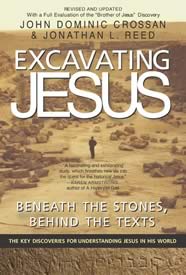
Excavating Jesus: The Real Christ?

excavatingjesus

John Dominic Crossan, the co-founder of the Jesus Seminar, is well known for his iconoclastic views on the historical Jesus. Excavating Jesus, written with archaeologist Jonathan Reed, is stimulating and challenging. Crossan’s argument that Jesus was a Galilean peasant who engendered a Kingdom movement after the murder of John the Baptist is compelling to me as an anthropologist, but it doesn’t seem to be the whole story.

The blending of archaeology and exegesis is intriguing. The use of ancient historical sources, such as Josephus and Pliny, and literature not included in the Bible, such as the Dead Sea Scrolls and the Gnostic Gospels, weaves a colorful and variegated tapestry. Is this the actual Jesus of history?

I’m not entirely convinced. To me it seems implausible that such a movement could arise from so unremarkable a prophet. The number of Jews killed by Rome for posing as popular leaders is very large. Why would one be singled out for such an inflation into the Word made flesh? If the Gospel stories are to be taken as parables or mythic metaphors about a deeper meaning, who created this literature and for what reason? If Christianity were created in this way, it would be a social and cultural process without parallel. Zoroaster (the Persian priest who founded Zoroastrianism), Sidartha Gauthama, (the founder of Bhuddism), and the Prophet Mohammed (the founder of Islam), are remarkable historical figures – but none of them according to their followers claimed to be God.

If somehow the peasant founder or spokesman for a resistance or “terrorist” movement is magnified by his followers, why would devout Jews be so blasphemous as to make him into the messiah and a god? Somewhere there is a missing link between this peasant of history and the Christ of history.

It is very curious how Crossan holds the Gospel accounts up to the measure of Josephus’s history. Crossan then compares the claims of other contemporary religions as part of a general magical mentality. Somehow, Josephus could write from an historical perspective of relating true events but the Gospel accounts of the life of Jesus are to be seen as parable and allegory? That isn’t to say that various oral and written sources weren’t involved in the development of the Gospel accounts. In fact Crossan goes to some effort to stress that the early Christian community took them to be true and those involved in their composition believed in their veracity.

All in all, there is still a core of speculation in this fascinating book. It is an attempt to put many puzzle pieces together. It seems, though, that the Jesus he finds would not be capable of inspiring a Jesus movement that would grow into Christianity. In many respects, Crossan’s Jesus of history could inspire a movement, but it does not seem plausible that it would endure, let alone become a world religion.

Read More

Posted by on Oct 21, 2009

The Exaltation of the Holy Cross – An Ancient Feast Still Relevant

Quote of the Day – Adele Gonzalez

The Spirituality of Community

Words to ponder and celebrate from Adele Gonzalez in The Spirituality of Community.

In the beginning God created a community, simply because God is relational and desired to share a life of intimacy with all creation. God gave us the ability to love, relate, and create freely, in God’s image and likeness. We could say that God is community and that everything was created in Christ and for Christ. . . But Christ has no body now but ours; no feet, no hands, but ours. We have been called, gifted, and sent to be Christ to our struggling world, to walk with each other in this tremendous process of transformation.“

Read More