Pages Menu
RssFacebook
Categories Menu

Posted by on Apr 19, 2013

Forgiveness Requires a Response

Forgiveness Requires a Response

Beach at the Sea of Galilee

Beach at the Sea of Galilee

Easter season is a time when we rejoice in Jesus’ Resurrection. We celebrate God’s great love in becoming human, living a totally human life, and being faithful in obedient love even through torture and a shameful death on the cross. We speak of salvation for all resulting from the life, death, and resurrection of Jesus. Yet sometimes we also beat ourselves up for our sinfulness and responsibility for Jesus’ sacrifice and death. But beating ourselves up is not what Jesus wants for us. Jesus comes bearing forgiveness and that forgiveness requires a response. The evidence is clear in Scripture and we need to remind ourselves of it regularly.

Jesus’ disciples did not expect that he would be raised from the dead. In those first hours and days after the crucifixion, they must have been terribly upset with themselves. If only I had …   If only I hadn’t …  We should have …. We should never have allowed him to … What will I say to my family when I go home? I’ve been such a fool. I should have known it was all too good to be true. They all said I was chasing a dream. On and on their thoughts must have raged. When the first reports came in regarding the resurrection, from the women of all people, their response was natural. The women must be hysterical. Such a thing could not happen.

Nevertheless, throughout that first day of the week, the risen Jesus came to them. They did not recognize him at first. He looked like a gardener. He looked like a fellow traveler on the road and potential dinner companion. Once they recognized him, — when he came into the room despite locked doors it was pretty clear who  he was, — but the feared they were seeing a ghost. Always, however, Jesus reassured them. “Peace,” he said to those hiding behind locked doors.  “Do not be frightened,” he said to the women in the garden who first found the empty tomb. “What little sense you have! How slow you are to believe all that the prophets have announced!” he said to the travelers on the road to Emmaus. Then at supper with the travelers, he took the bread, blessed it, broke it and shared it and they knew it was the Lord. Immediately they walked back to Jerusalem to tell the others.

As the days passed, the disciples left Jerusalem and returned to Galilee as he had told them to do, through Mary Magdalene and the other women. They had been fishermen and so they went fishing. Anything to bring some sense of normality again! Yet early in the morning, after fishing without luck all night, a man in seen on the shore. The man calls out to them to cast their nets on the other side of the boat. They do and the nets are filled. “The disciple Jesus loved” told Peter, “It is the Lord” and Peter threw on some clothes and jumped into the water to swim to the Lord. The others brought in the boat with its marvelous catch. Jesus may not have looked like the man with whom they had lived for the past three years, but this time they knew it was he. He cooked breakfast for them and then spoke directly to Peter, three times asking “Do you love me?” Each time Peter responded that he did and Jesus instructed him with slightly different words each time, “Feed my lambs; tend my sheep; feed my sheep.”

Each time Jesus appears, he reassures his friends and he reassures us as well. All is forgiven. All is OK. We need not dwell on the past. We must move ahead and tell others what we have seen and experienced. We are not to beat ourselves up about what we have done wrong or the times we’ve failed to do the right thing. We must recognize those times as having happened and accept forgiveness for them. Forgiveness is always offered to us. Then we must move forward rejoicing — carrying that peace, love, and forgiveness that comes from our Lord God into our world.  There’s plenty of bad news there already. Our job is to carry the Good News, spreading it far and wide through our actions and our words.

Alleluia! He is Risen!


Read More

Posted by on Apr 1, 2013

Forgiveness Requires a Response

Rejoice — He is Risen!

Easter_Lily_by_Boston_Public_Library

Christians around the world celebrate the resurrection of Jesus this week. We sing “Alleluia, praise the Lord,” with great gusto. We rejoice in God’s power over death and the promise of new life. We call out to all who will hear, “He is risen.”

In the midst of such celebration, I find myself thinking about the experience of the disciples during the  final hours before Jesus’ passion and the first days following his resurrection. As Catholics, we don’t skip over those experiences in the race to celebrate Easter. Begining with Palm Sunday, we spend an entire week remembering those crucial events of salvation history, as well as the promises and prophecies that were fulfilled during that week so long ago.  From the excitement of seeing Jesus greeted with hosannas and hailed as the one who had been so long expected as he entered Jerusalem in a procession, to the devastation of his death as a condemned criminal in a place of public execution, his followers then and now experience a roller-coaster of emotions. By the time we reach Holy Saturday morning, there is a certain emotional numbness that sets in. What more could there be that will happen?

On Holy Saturday morning, I usually feel a bit detached and quiet. There’s so much to be done before Easter Vigil and then Sunday morning’s celebration. Yet there is that numbness that follows Good Friday’s liturgy and the recognition of what happened to Jesus, as well as what continues to happen to so many who follow his lead in serving the poor and announcing God’s command that we love and care for each other and our world.

Anyone who has experienced the death of a loved one knows the numbness that follows. Whether death was the final moment of a long or painful illness, or release from a period of mental/physical decline, or the peaceful final breath of a person who has lived long and well, those who remain experience a certain emotional pain and numbness to other concerns and activities. When death occurs unexpectedly, through violence or accident, the devastation is extraordinarily powerful. We question how God could let something like that happen. We may yell at God or turn away. We may also turn to each other in faith: giving and receiving support.

For the disciples on that Saturday morning, when they couldn’t even hold a proper funeral for Jesus, I suspect “numb” would not begin to describe the way they felt. Their hopes and expectations had been dashed. They feared for their own lives. They didn’t know how they would ever be able to face their families and friends, many of whom had probably warned them against leaving home and jobs to follow an itinerant preacher around the country. Unlike our experience, based as it is on knowledge of the Easter event, there was no hope of redemption in the suffering they were experiencing or that Jesus had endured.

Yet into the midst of this experience, on the first day of the week, the women took spices to the tomb and discovered that death cannot hold the author of life in its snares. The stone had been rolled away; the tomb was empty; angels asked why they sought the living among the dead; Jesus met them in the garden and sent them to tell the others that he was risen and would meet them in Galilee. The news was greeted with disbelief. The women must be mad with grief, maybe a bit hysterical. The men went to see and discovered for themselves that the women had not been mistaken about the tomb: it was definitely empty. Later that day, Jesus came into the locked room where his disciples were gathered: fear and sorrow had by this point been joined by confused concern about the story told by the women and others who claimed to have seen the Lord. He invited them to touch him. He ate with them. He instructed them about the new reality that had burst forth into their world and all of creation. Life does not end with physical death. God is not defeated. We are children of God who will share in new life forever.

The numbness of loss turns to the numb wonder of gain. Could it really be true? Could God really love us that totally? Can all be forgiven? Does life continue unended? Is death really a passage into newer, more abundant life? Are we really the ones who will bring the good news of this reality to our world?

If all of this is true, and with the early Christians we believe it is, then thankful rejoicing is the most appropriate response. So we move from the rejoicing in a promise of earthly power (Palm Sunday processions), through the mandate to serve each other and feast on the Lord’s own Body and Blood (Holy Thursday), into the mystery of death (Good Friday), and out the other side to the assurance of new, more abundant, unlimited life in the Resurrection. For this we shout, Alleluia! Rejoice and be glad! The Lord is risen, He is ruly risen!

Happy Easter – all fifty days of it!


Easter Lily by Boston Public Library – George Cochran Lambdin 1830-1896 (artist); L. Prang & Co. (publisher)


Read More

Posted by on Mar 24, 2013

Forgiveness Requires a Response

Singing Leaves Time and Palm Sunday


Palm Sunday Fronds

Palm Sunday– “Singing Leaves”

Faith is passed from generation to generation through simple gestures, songs, foods, and activities. As children live the activities of daily life in the cycles of the year, they notice more than we realize. Life, especially for the little ones, is heavily focused on the present moment, but they too become aware of the changing seasons in our church life and come to look forward to the next celebration.

I was reminded of this yesterday when a sweet four-year-old boy asked me if it were time for the “singing leaves” yet. It took me a moment to realize that he was referring to Palm Sunday. In our parish, as Catholics do in parishes around the world, we all gather in a courtyard outside the church on Palm Sunday. Each person has a palm frond and members of our parish youth group wave large palm branches, leading the congregation out of the church building to hear the story of Jesus’ triumphal entry into Jerusalem on that Sunday morning so long ago. Then, singing “The King of Glory Comes,” we all process back into the church for the Passion Sunday liturgy. (Palm Sunday and Passion Sunday occur on the same day.) This little boy remembered waving the palms last year and the singing as we re-entered the church. He was quite excited when I responded that this was the Sunday for the singing leaves.

As parents, grandparents, aunts, uncles, cousins, godparents, or simply friends, we share our faith best through the examples of our lives. Do we pause to thank God and ask a blessing before we eat? Do we greet the morning with a prayer? Do we remember to give thanks for our day and ask God’s blessing on our families, friends, and activities before we go to sleep at night? Do we gather regularly as a community of faith to celebrate Eucharist? Is Reconciliation (sacramental or simply interpersonal) a part of our lives? Do we pause in times of joy and times of sorrow to call the Lord into our midst? Do we time our holy day activities to match the liturgical timetable, not jumping to celebrate major feasts before their time but rather savoring the periods of anticipation and preparation for the feasts as well? Do we do these things with the children in our lives?

Children learn by observing and imitating. Only in later childhood and early adolescence do children begin to hunger for the meatier reasons for why we believe and do certain things. For a young child, “because that’s what we do now” can explain quite acceptably the timing of an activity. An older child will want to know that we do it “because that’s what Jesus told his friends to do before he died.” As adults, we too have opportunities to learn and grow more deeply in our faith and understanding of it — through both intellectual and spiritual practices. However, to reach our children, we do well to rely on activities, stories, songs, and celebrations.

As we move into this Holy Week and then on into Easter-tide, let’s remember to celebrate each in its own time. Holy Week is a good time to make and enjoy traditional Lenten dishes including Hot Cross Buns. It’s not time yet for Easter eggs or chocolate bunnies!

Mass on Holy Thursday can be a special time to celebrate caring for each other and the gifts of the Eucharist and the priesthood. Have a special meal, enjoy time together on this day, then join with your community to celebrate Eucharist and enter into the mystery of Jesus’ Passion — His great love for us.

Good Friday brings many opportunities to share faith with children. Little ones don’t need to know in great detail of the tortures inflicted on Jesus. They just need to know that Jesus loves them totally. So as we fast and reflect on the events of the day, let’s remember to be patient and peaceful. If the Solemn celebration for Good Friday is going to be too late or too “heavy” for the little children, then do something peaceful and loving at home with them. As they get older, take them with you to enter more deeply into the mystery.

Holy Saturday is a quiet day of preparation and anticipation. Coloring eggs, baking special breads or desserts, getting the house in order for the Easter celebration — all will become part of the faith tradition for our children. Happy memories or sad ones will remain with them based on the love they see through our bustle of activities and the times we stop for reflection or story-telling.

Easter Vigil brings the story of salvation history and its culmination in the Resurrection alive. Children from 3rd or 4th grade and older can appreciate this celebration, particularly if the passages from Scripture are proclaimed in an engaging fashion.

If we remember to celebrate each of these mysteries of Jesus’ Passion, Death, and  Resurrection during this week each year, our children will learn to treasure them as well. They may not always celebrate them as they move through adolescence and into adulthood. There may be times in their lives when they move away from the community and travel their own road to God, but the foundations will be there, always calling them to the Lord.

May this week, from the Singing Leaves to the Alleluias of Easter Vigil be a time of rich blessing for you and for your families and communities.


Read More

Posted by on Jan 9, 2013

Forgiveness Requires a Response

Epiphany — The Coming of a Shepherd for All God’s People


The Adoration of the Magic by Murillo

The Adoration of the Magic by Murillo

The readings for the Feast of the Epiphany and the week that follows ring out with joy at the coming of the Lord, not just to the Jewish people, but to all the world. “Rise up in splendor, Jerusalem! Your light has come, the glory of the Lord shines upon you.” (Is 60:1) “… the Gentiles are coheirs, members of the same body, and co-partners in the promise in Christ Jesus through the gospel.” (Eph 3:6) “… behold, magi from the east arrived in Jerusalem, saying, ‘Where is the newborn king of the Jews? We saw his star at its rising and have come to do him homage.” (Mt 2:1-2) “All kings shall pay him homage, all nations shall serve him.” (Ps 72:11)

Yet amidst all of this joy and talk of kings and splendor, the reality of God’s kingdom quietly peeks out. Where has the child been born? Not in Jerusalem, the center of political and religious power. Those in Jerusalem — kings and priests alike — have not heard of the birth of a child to inherit the throne. The priests and teachers remember the prophecy of his birth: “And you, Bethlehem, land of Judah, are by no means the least among the rulers of Judah; since from you shall come a ruler, who is to shepherd my people Israel.” (Mt 2:6) Bethlehem, city of David, home of another child who grew up to replace an earthly king to whom he was not related, is once again to produce such a king! The news was not a source of joy to the rulers of the age; an attempt to thwart the prophecy was duly launched, leading to the massacre of all of the boys aged two and under in Bethlehem and the surrounding area. (Mt 2:16) The birth of a child to be the new king brings terrible suffering to many innocent children and their families.

The king of the prophecy will be different: he will be a shepherd for God’s people, Israel. A shepherd takes a different approach to governing and to leadership. The shepherd will govern with justice, protecting the afflicted ones and bringing peace “til the moon be no more” to the land. (Ps 72:7) The kings of the nations will pay homage to this king and all nations will serve him because this king rescues the poor who cry out for help. He takes pity on everyday people and the poor, rescuing them from all who would oppress or take advantage of them. Such a king would indeed be welcomed and his glory would truly shine forth. This king, blessed by God, will bring glory to Jerusalem — the center of the Lord’s presence among His people.

This great feast of Epiphany, the shining forth of the Lord’s splendor from Israel into the world at large, reminds us of our call as the People of God: a call to care for each other so that the splendor of love in all its practical applications will be a witness everywhere to the presence of the Shepherd, leading us in bringing justice and peace to our world.


Read More

Posted by on Dec 8, 2012

Forgiveness Requires a Response

Does Immaculate Conception Mean Virgin Birth?


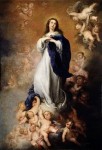
The Immaculate Conception – Murillo

Does Immaculate Conception mean Virgin Birth?

No. These two concepts, Immaculate Conception and Virgin Birth, are frequently confused. Many assume they are one and the same, leading to the notion that Mary’s conception was the result of the same type of divine intervention as that of her son. In fact, the Church has never believed that Mary was conceived without marital relations occurring between her parents. Normal physical relations between a husband and wife are not seen as sinful. They are, in fact, seen as a source of divine grace, a sharing in God’s life of love, a sacramental experience.

What is the Immaculate Conception?

If Immaculate Conception has nothing to do with the notion that our sexual expression is evil, however necessary for the continuation of the species, nor is it some kind of impediment to holiness, then what does the concept mean? To understand the notion, we must start with an ancient story, one of two creation myths found in the Bible: the story of Adam and Eve in the Garden of Eden. This second story of creation begins in the second chapter of the book of Genesis, halfway through the fourth verse. It tells of the creation of a human and then of a garden in Eden in which he would live. The garden was located in the land bordered by four rivers: the Pishon, the Gihon, the Tigris, and the Euphrates. In this garden, there was a tree, the tree of the knowledge of good and evil, from which the man was forbidden to eat the fruit. Knowing the man would be lonesome alone in the garden, God created many animals and birds to accompany him. However, animals and birds were not suitable companions for a human on any long-term scale. So God created another human to be his partner; a human created from the man’s rib to signify equality with him. The man was named Adam (man), a play on words in Hebrew between “man” and “ground.” The new person was called woman because she was formed out of “her man.”

As the story continues, conflict enters. The woman, walking alone in the garden, encounters a serpent who cunningly entices her to taste the forbidden fruit. She gives some to her husband as well, and suddenly they recognize they are naked. They become afraid to see God and hide in the garden from their creator. A separation between God’s overflowing love in creation and the humans created to be part of that creation has occurred. According to the story, the man and woman must leave the garden and now make their way in the great world outside it. The woman was called Eve by her husband “because she became the mother of all the living.”

Enter Original Sin

From this story, told to explain the entry of sin into human experience, the notion of original sin eventually developed. According to this notion, not found in Judaism or Islam, all humans inherit a “fallen nature,” a nature that is not strong enough always to resist sinning (separating from God). We don’t inherit the guilt of Adam and Eve. God’s image is undiminished within us, always calling and helping us to choose life over death. Yet we all fail in the quest to live without sinning through our decisions to act or to fail to act in loving union with God.

How then could God’s Son be born of a human woman without inheriting that fallen nature? It was from this dilemma that the notion of the Immaculate Conception developed. Through the centuries, theologians wrestled with it, especially as the idea of original sin became more and more strongly developed. Originally Mary was seen as like all other humans, a normal woman who played an extraordinary role in salvation history through her total openness to God. By the Middle Ages, however, as we began to focus more on human sinfulness and less on the presence of God within each person, an idea developed that Mary was saved from original sin at the time of her conception to prepare a perfect “new Eve” from whom the long-promised savior would be born. This savior would be the first-born of God’s new creation, of God’s new people.

A Formal Dogma

It wasn’t until the middle of the 19th century that the Immaculate Conception became a formal dogma of the Roman Catholic Church. This feast is celebrated nine months before we celebrate the Nativity of Mary (September 8). The readings for the liturgy celebrating the Immaculate Conception include the story of the encounter between God, the serpent, and Adam and Eve in the Garden of Eden (Gen 3:9-15), Paul’s letter to the Ephesians describing God’s choice to adopt all of us through Jesus (Eph 1:3-6, 11-12), and the story of the visit of the Angel Gabriel  to Mary in which Mary gives her consent to become Jesus’ mother (Lk 1:26-38). Perhaps the confusion between the Immaculate Conception and the Virgin Birth stems from this traditional selection of readings. They are connected only to the extent that God’s grace is needed by all humans to help them make loving choices and help bring the new creation to birth right here, right now!

Read More

Posted by on Aug 15, 2012

Forgiveness Requires a Response

Feast of the Assumption – God’s Gift through a Special Woman

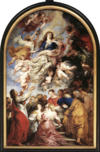
Assumption of the Virgin

The Feast of the Assumption is celebrated on August 15. This feast has ancient roots and is celebrated throughout the Christian community. Some speak of the Assumption of Mary, others of the Dormition (going to sleep), the Commemoration, or the Passing of Mary.

In the Roman Church, today’s readings begin with the vision from the Book of Revelation (11:19a; 12:1-6a, 10ab) of the woman clothed in the sun with the moon beneath her feet and a crown of stars on her head who appears in the sky. She is in labor and threatened by a great dragon. The woman gives birth to a boy who is caught up to Heaven to rule the nations, while the woman finds refuge in a safe place in the desert.

The second reading is from the first Letter of St. Paul to the Corinthians. Paul (15:20-27) speaks of Jesus as “the firstfruits of those who have fallen asleep” and notes that the last enemy of God to be conquered by Christ is death itself.

Finally, Luke’s (1:39-56) account of Mary’s visit to Elizabeth treats us to Mary’s hymn to the great love of God, the Magnificat. “My soul proclaims the greatness of the Lord… He has cast down the mighty from their thrones, and has lifted up the lowly. He has filled the hungry with good things, and the rich he has sent away empty…”

Through Mary, God came “to the help of his servant Israel,” remembering his promise of mercy, “the promise he made to … Abraham and his children forever.” Today we honor her for her faithful response to God’s call and pray that we too (descendants in faith of Abraham) may be faithful in our response. Please join me in praying:

Like the woman in the reading from the Book of Revelation, women around the world today and their children face many dangers. May we, like the angels who protected her and her child from the dragon, act to protect women and children from the dragons that threaten them today, including violence, hunger, lack of education, and poor access to health care.

Through the “yes” of a young woman, Jesus came into our world, becoming the one through whom death would be overcome. May we too answer “yes” when God asks us to participate in the works of the Kingdom.

Like Mary, may we receive the courage to believe that God is really in charge when it seems that the desires of the powerful will once again outweigh the needs of the poor and vulnerable — and act accordingly.

As we evaluate the many possible paths into the future that we as a nation may choose, may we listen carefully to the voice of God within our hearts, rejecting fear-based choices and instead choosing to work for the good of all.

Painting by Peter Paul Rubens, currently in the Cathedral of Our Lady (Antwerp) – Public Domain


Read More

Posted by on Jul 3, 2012

Forgiveness Requires a Response

The Seventh Gift: Awe and Wonder (Fear of the Lord)

Baby Galaxies in the Night Sky

When I stare at the night sky, especially if I am out in the country, I get almost overwhelmed at the immensity of the universe.  I am in awe of the beauty of the stars and then amazed at a God who can create and manage such an enormous and complex reality and yet be with me personally.  One billion galaxies!  Possibly two billion.

Even if a person does not believe in God as the reality defined in traditional religious terms, the beauty of the night sky, the roar of water down a canyon, the amazing chatter of birds and animals can take the breath away — almost bring one to tears.

The gift of AWE AND WONDER helps us to know and to feel that God is the fulfillment of everything we desire.  That there exists  perfect love — perfect knowledge, goodness, power, action, discretion, justice, healing.  With this gift we perceive the mystery that God is.  We realize that there is an aspect of the Sacred, the transcendent, that we cannot know on this side of death, but that we get glimpses of such majesty and glory.  We see that God can know, interact with, and sustain billions of people.   It’s amazing.  You either believe it or you don’t.  If you believe in such a possibility then it is mind blowing.  My particularities matter.  I am fully known.  Nothing is impossible.

In 1974 When Annie Dillard published Pilgrim at Tinker Creek, it made two inaccessible worlds available to an entirely new audience.  The first world was the natural world known in a scientific way.  All of a sudden cells and their biochemistry, ecosystems, the interdependence of species, and the rhythms of nature were explained in lay terms and could be understood and celebrated.  Secondly, this joy and excitement was not just intellectual but also solidly spiritual.  There was no separation of the secular from the sacred.  The world was whole and we felt whole in it.  How nice!  My body and the whole physical realm was God’s love and creativity writ big in the awesome processes of life in mitochondria,  chloroplasts, T cells, blood, genes, the periodic table, and atomic particles.

Dillard took all the lovely words, images and sounds of a poet like Gerard Manley Hopkinsand showed us the genius of God, down to the most minute details.  Hopkins’ dramatic words: grandeur, greatness, ooze, dearest freshness, dappled, brinded, original, spare, and strange now showed the grandeur of God as Dillard explained the incredible scientific reality of ooze and freshness, dappled and brinded.  She also opened up very wide the whole subject of suffering and death and gave the reader a new perspective on the meaning and purposes of both.  As a spiritually anemic graduate student, I soaked up the theology of Dillard’s book and saw for the first time the consistency of God in the natural and supernatural realms.  How could God have a cycle of growth, disintegration and integration in the natural realm and not have one in the spiritual realm?  What was all that talk of planting, pruning, cultivating and harvesting in the Bible all about if God was not also doing it in society and in my soul? And was God a genius in nature and then mindless and distant in the spiritual world?  No, we can and do find God in the wonder of the universe and in the many parallel things we know in our lives.

Elizabeth Barrett Browning speaks of awe when she says, “Earth’s crammed with heaven, And every common bush afire with God; But only he who sees takes off his shoes.”  Having Awe and Wonder is not automatic.  It is a gift.  We can be so over-indulged or over-stimulated that we miss beauty or grandeur.  Last Sunday morning I saw a small fox trot by a glass door of a building where I was in a meeting.  It was very close.  The sun was shining through its translucent tail all colorful and fluffy.  What a pointy nose and whiskers!  Wonderful round dark  eyes.  Such a lovely animal.  So light on its feet.  I couldn’t dismiss it.  It made my day.  God is near.


Red Fox

The fox looked back at us as he or she trotted on.  I wanted to go with it as it ran into the woods.  In Psalm 139 it says that we are wonderfully made.  Yes, we are.  Sometimes squirrely and difficult;  other times sleek and dolphin-like.  But we are all wonderfully made, “The work of his hands.”   And, awe, wonder and gratitude are our best response.  Hopefully we can at times “Take off our shoes” at the thought of all this splendor.  Maybe we can shake off the darkness of this world a little as we drink in “all this juice and all this joy”!


Image of the fox from wpclipart.com – public domain.
Image of Baby Galaxies from NASA – public domain.

Read More

Posted by on Jun 9, 2012

Forgiveness Requires a Response

The Feast of Corpus Christi: Celebrating the Mystery of Divinity Transforming Humanity


Corpus Christi Procession

Known as the solemnity of The Most Holy Body and Blood of Christ and celebrated on the Sunday following Trinity Sunday, the Feast of Corpus Christi has been officially celebrated in the Roman Catholic Church since the mid-thirteenth century. The feast is the result of a series of visions of St. Juliana of Liege, a Belgian canoness regular (a member of an Augustinian order) and a mystic. The visions occurred over a period of more than 20years before she began to understand their meaning. In the vision, she saw a full moon with a dark spot in it. Eventually she came to believe that the dark spot represented the lack of a solemn feast dedicated specifically and exclusively to the Body and Blood of Christ. Working with her confessor and a group of theologians and Dominicans living and working in Liege, she arranged for the feast to be instituted as a local feast of the diocese of Liege in 1246. She and her confessor, Canon John of Lausanne, composed the first music and prayers for the feast. Later, Pope Urban IV commissioned the composition of an office (a ritual of music and prayers)  for the feast by St. Thomas Aquinas.  Aquinas’ hymn, Pange Lingua, composed for this feast, expresses the idea of transubstantiation— the doctrine that the substance of the bread and wine offered in the Mass are transformed into the substance of the body and blood of Christ without changing in outer appearance.

The Church’s belief in the Eucharistic transformation of bread and wine into Jesus’ body and blood dates to the earliest days of the Christian community. Christians have always gathered to celebrate The Lord’s Supper. The disciples on the road to Emmaus described recognizing Jesus in the breaking of the bread. Understanding of the implications of this great gift, however, has developed and deepened over the centuries.

Like many of the mysteries of the life, death and resurrection of Jesus, the mystery of the Eucharist defies easy explanation. That’s part of the nature of mystery: part of the wonder and awe we experience in the face of the great love God has poured out into all of creation and each of us through the life of Jesus and the gifts of their Holy Spirit. As St. Augustine explained it in his Confessions, Christ says to us, “You will not change me into you, but you will be changed into me.”  In the Eucharist, the divine takes over and transforms the profane — the everyday reality we experience. We see and experience no obvious change, yet when we eat the bread and drink the wine that have been transformed into the Body and Blood of Christ, we are ourselves transformed into his mystical Body and Blood. Our bodies don’t absorb his; rather his transforms ours and we are strengthened and pulled into his mission of transforming our world into God’s Kingdom.

Read More

Posted by on May 23, 2012

The Feast of Pentecost, The Holy Spirit and The Seven Gifts: Why it Matters

Today more than ever we dig deep within to center ourselves around calm and inner peace.  We don’t do this to tranquilize ourselves. We do this to be in the best possible position to live fully.  For believers, this includes seeking a real growing relationship with God.  There is a dance going on between our decisions and actions and God’s involvement in our lives, a dance which we call grace.  We have freedom and gifts.  God has insight, power and ingenuity.  If we consent to His involvement in our lives, He can move us into positive places we cannot even imagine.

The person of the Trinity whom we identify as a creative and loving agent of action and change is the Holy Spirit.  This person is believed to be the action of God in the world — both visible and invisible.  One of the names for the Holy Spirit is the Paraclete.  This is an ancient Greek word meaning “one who consoles, uplifts, comforts.”  In the New Testament it also is translated as “helper” and “advocate.”  The Holy Spirit or Paraclete is the divine reality whom we celebrate on Pentecost.  “Pentecost” comes from the word “pente” meaning fifty which refers to 50 days after Easter. At the Last Supper Jesus said he was going to send us the Paraclete.  He let us know that this third person of the Trinity, who expresses the love between the Father and the Son, would be the spirit of Christ operative in the created world — that we would not be alone.

On Pentecost we focus on God as Paraclete in the world of space and time, of the particulars of life.  The Paraclete comforts and uplifts us by working in us and in our lives to give us greater holiness and power for good in the world.  We speak of the work the Paraclete does in us as the Seven Gifts of the Holy Spirit.  We are going to take a look at all seven in a series of posts.  In the Bible there are a number of lists of  spiritual gifts of the Holy Spirit. They can be found in Isaiah 11, Romans, 1 Corinthians, Ephesians, and 1 Peter. These are all indeed gifts of the Paraclete, but many of the “gifts” in these texts are roles and leadership skills that are gifted by God.  The Seven Gifts on which we will focus are basic qualities that all human persons need no matter what they do in life.  We are given these seven gifts at baptism but the Sacrament of Confirmation gives us to grace to live these fully out in the world of decision and action.

Knowledge is the first gift we will consider.  In the everyday world we use knowledge constantly.  It matters that I know how to get my car fixed or that it is important to check the oil periodically.  A dentist needs to know how to work on my teeth.  Knowledge as a gift of the Paraclete who wants to help us grow fully first includes the knowledge of God.  As we mature we will know God more and will also develop in our images, concepts, and feelings about God.  We will come to know ourselves better and better as well.  To the extent that we are open we will come to more and more realistic and energizing knowledge of God and ourselves.  If we fear God we may learn more positive things about God — maybe from talking to others.  If we are depressed we may find out why.  Much of this knowledge is from God.  We think we are learning on our own.  But, in fact, it is the Paraclete who is offering us knowledge all the time.  We have resistances in us and God is working all the time to help us see the truth, often a positive truth.  God presents ideas to us from different angles constantly and we can consent to be open to these prompts.  My eye may fall on a magazine in the doctor’s office and suddenly I can feel myself slightly more inclined to actually do exercise every day.  The ideas in the article, the knowledge, may have made it easier to see how I can move into a new life skill.

Knowledge of others is also a great gift.  I may not know why a neighbor or relative is so hard for me to get along with and then find out that he is in pain all the time.  I may then find out that the medication he is on has terrible side effects from a commercial on television.  Or, I may find out that an adult school near me has a watercolor class that is very reasonable in price.  I may need that for my emotional life.  The Paraclete is gifting us with knowledge internally and from external sources all the time.  We only need to consent to not try to control what the this Consoler sends our way. God sees us totally and knows what we need.  We can practice a daily Examen or a time of reflection on how things are going and ask to see what we need to see.  In that way we can receive the gift of knowledge and become more fully who we were born to be.

Read More

Posted by on May 11, 2012

Forgiveness Requires a Response

Blessed Julian of Norwich Feast Day — “All is Well”


Julian of Norwich - Stained Glass Window from Church


May 13 is the unofficial Feast Day of Julian of Norwich, the English mystic and saint of the Middle Ages.  We cannot be sure of her birth and dates but she lived approximately from 1342-1416.  Her lifespan and location were situated in times of great distress in England.  Three waves of the Black Death had swept over England and Norwich was particularly hard hit as it was a commercial center, especially of the wool-textile trade with the Netherlands, which brought with it the bacteria from the Continent.  Julian was an anchoress at the church of St. Julian.  We have a historical record of people visiting her for advice and prayers.  We do not know why she was not canonized by the Catholic Church.  One reason is likely that she left behind relatively few writings.  Another is likely because her writings contained teachings that would have been considered controversial by some scholars.  Teachings about Christ as mother and that God sees our sins as a way for us to learn about ourselves would have offended or worried many clerics of her day.

In 1373 we read that Julian had 16 visions in which she was saw and heard revelations related to God, creation, evil, sin,  salvation, and the human person. She recorded these revelations at the time and then some 20 years later produced a longer version, called the Long Text, in which she integrated the many thoughts communicated to her by Christ about the meaning of the 16 visions and locutions.

Julian is optimistic in a time of when people questioned the goodness of life and how God regarded them.  She recorded that Christ said to her that “All will be well and all is well.” She explains how all can and will be well. Julian also recounts wonderfully warm images of us and Christ who holds us tenderly and celebrates us as his “crown.”

Another reason to celebrate this great saint is that she is believed to be the first woman to write a book in the English language.  She is also a pioneer, with Chaucer, in creating literature in Middle English.  After many years of Norman control of England, the French and their language were driven out.  The English language had degenerated into a language of the lower classes with a very poor vocabulary.  Julian is responsible for creating many new and very useful words to articulate her scholarly theological presentations and to give colorful descriptions of what she saw in the visions.

Julian’s texts, which she referred to as the “shewings” (Showings in contemporary libraries), are very inspiring and provide satisfying answers to many questions which Christians have.

Image of Stained Glass Window borrowed from Satucket Lectionary entry for the Feast of Julian of Norwich

Read More

Posted by on Apr 18, 2012

Forgiveness Requires a Response

Divine Mercy – Entering the Locked Rooms of our Hearts


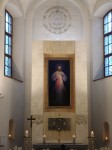
Divine Mercy Sanctuary in Vilnius

Divine Mercy Sunday falls each year on the second Sunday of Easter. On this day we hear the story of Jesus’ appearance on Easter evening to his disciples who were hiding in the locked room where they had celebrated their last meal with him only a few days earlier. They were confused, frightened, bewildered, incredulous, and all the emotions in-between. They knew he had been executed. They knew that for the most part they had deserted him in his time of suffering. Yet the women had come bearing the message that he was risen from the dead. Peter and John had found the tomb empty. And now … here he was before them.

What would he say? “You blankety-blank sorry excuses for friends — I don’t know what I ever saw in you!” “How could you abandon me?” “Go take a long walk off a short pier.” “I’m done with you!”

The rest of us might have said such things. Such feelings would be accepted as only human. But Jesus said nothing of the sort. What did he say? “Peace be with you.” Not just once. He repeated it that night and again the next week, when he came again, with a special mission to reassure Thomas of his resurrection.

The early disciples were ordinary men and women like all of us alive today. Like them, we hide away, locking our fears, hurts, anger, doubts, shame, and uncertainty deep within. We hesitate to let anyone see or touch us in our pain, even our Risen Lord. So he comes to us too and offers peace. The mercy and absolute forgiveness of God are ours through Jesus. As our deacon, Patrick Conway, reminded us all Sunday morning, our best response is to allow Jesus to enter into our lives in their deepest, most hidden and hurting areas with God’s loving mercy and healing power. When we receive Communion, we, like the disciples in that locked room, find our Lord and Savior in the midst of our lives and we too receive the power to forgive and the gift of being forgiven.

As we bask in the gift of Divine Mercy this week, may the mercy, love and peace of the Risen Lord be with each of us. Then may we carry God’s mercy forward with us to all we meet in the year to come.

Painting by Eugene Kazimierowski.
Photograph by Alma Pater.
GNU Free documentation license.

Read More

Posted by on Apr 8, 2012

Forgiveness Requires a Response

“Christ is Risen” “He is Truly Risen”

This ancient greeting and response burst forth from a joyful people, marking a new day, a new creation, a New Covenant — our Easter morning. Following the heartbreak and despair of Good Friday and the empty sadness of the Holy Saturday that followed, Life rises up again, unbroken and undefeated, never again to die.

With Christian people through the ages and around the world, we sing joyfully in praise this ancient hymn.

Christians, to the Paschal Victim
Offer your thankful praises!
A Lamb the sheep redeems;
Christ, who only is sinless,
Reconciles sinners to the Father.
Death and life have contended in that combat stupendous:
The Prince of life, who died, reigns immortal.
Speak, Mary, declaring
What you saw, wayfaring.
“The tomb of Christ, who is living,
The glory of Jesus’ resurrection;
Bright angels attesting,
The shroud and napkin resting.
Yes, Christ my hope is arisen;
To Galilee he goes before you.”
Christ indeed from death is risen, our new life obtaining.
Have mercy, victor King, ever reigning!
Amen. Alleluia.

Victimae paschali laudes from the Liturgy for Easter Sunday
“Easter Lily” by George Cochran Lambdin, in the public domain, created before 1923.

Read More

Posted by on Feb 2, 2012

Forgiveness Requires a Response

Recognizing the Light through our Daily Lives

Three Candles

Stepping carefully as she crossed the intersection, the older woman, wearing a warm coat and knitted hat despite the unseasonably warm weather and carrying a shopping bag of groceries, stopped suddenly, a look of delight on her face. She stepped back and slightly to the side, shifted her purse and bag, and bent to pick up a coin from the street. From my vantage point in the car waiting for the light to change, it appeared to be a quarter — just  twenty-five cents. Yet the delight I saw in her face could not have been greater if it had been a thousand times more valuable. She had found something of value, just laying there on the ground in plain sight, waiting for someone to notice it. She picked it up carefully and placed it into her purse. Then she continued to make her way across the intersection on her way home to her apartment down the street.

As she walked on her way and I went on mine, I reflected on what I had seen. A very ordinary item, found in the course of a very ordinary activity, brought great delight to a seemingly very ordinary person. Yet she was a person who was alert and aware of her surroundings. She noticed what was going on, despite the ordinariness of the day and its activities. She saw more than many saw who crossed that intersection on that afternoon, and when she saw, she acted on what she had seen.

Perhaps this anonymous woman has something to teach us as we celebrate the Feast of the Presentation of the Lord, a feast also known as Candlemas and/or as the Feast of the Purification of the Blessed Virgin Mary. Just as Anna and Simeon recognized Jesus when his parents brought him to the Temple to offer the traditional sacrifice required for a first born son, so we are called to be alert and aware so we will recognize Jesus when he comes into our lives. No one was expecting the Christ to come as the infant son of a normal, non-wealthy, non-royal family from Nazareth. Just a carpenter’s son!  The Christ was to be a military hero who would drive out the Roman conquerors and establish a new kingdom like that of David. Yet, Anna and Simeon recognized him and blessed God for the gift of seeing him before their deaths. Indeed, Anna went around happily telling everyone she met that the Messiah had been born and had been presented at the Temple … and she herself had seen him!

The challenge each of us faces, I believe, is to see the Christ in the people with whom we share our lives, as well as in the people who formally represent the Christian community, and to celebrate that coming  into our lives. The fellow who sits begging on the street downtown, the woman who stops joyfully to pick up a coin in the middle of the crosswalk, the guy who laughingly dances down the street, flirting with all the ladies as he goes to round up some buddies and head off to dinner before the cold night catches up with them, the frightened teen who finds she’s pregnant and is certain her parents will beat her and throw her out on the street if they find out, the doctor who cares for a child without charge when the parents don’t have insurance and can’t pay for the care, the little boy who delightedly strips off all his clothes because he’s learned how to do it and revels in the freedom of being alive and unfettered. Each of these is Christ coming to someone. How do we respond?

Image by Alice Birkin – Public domain


Read More

Posted by on Jan 6, 2012

Forgiveness Requires a Response

A Sweet Treat for the Feast of Epiphany – Rosca de Reyes

Roscón de Reyes

The Feast of the Epiphany, also known as Twelfth Night, is traditionally celebrated on January 6  in western Christian Churches. While the Roman Catholic Church has moved the celebration of the Epiphany to the Sunday following the Feast of Mary Mother of God (January 1), this feast continues to be celebrated on January 6 in many homes and communities. In Latin cultures, the Three Kings bring gifts to children on this day and families gather for festive meals.

Rosca de Reyes or Roscón de Reyes (King’s Bread) is a traditional pastry served on the Feast of the Epiphany. It is generally served with a cup of hot chocolate or atole in Mexico. In Spain, people savor this sweet bread for breakfast, while in Latin America it is more commonly served in the afternoon.

The tradition of making ring cakes dates back to the Saturnalia, when the Romans would fashion round cakes made with honey, figs, and dates, and distribute them to all people, including slaves. In the third century, people started to put one dried fava-bean in the dough, and whoever received the piece of bread that contained the bean would be named rey de reyes (king of kings) for a short period of time.

The cakes that are made today are formed to imitate a crown – shaped as a ring and decorated with bright “jewels” (fruits.) In Spain, a fava-bean is still hidden in the dough, but in Mexico a doll representing the baby Jesus in tucked inside the ring. The doll symbolizes that Jesus had to be hidden and protected after he was born. Today in Mexican culture, the lucky person who finds the doll is expected to take the figurine to church on February 2 and host a party that day to celebrate El Dia de la Candelaria (Candlemas).

The following is a recipe for Rosca de Reyes for those who like to bake and would like to try a special treat.

Rosca de reyes
(King’s Bread Ring)

Ingredients:

2 packets of yeast
2 Tablespoons lukewarm water
2/3 cup boiling hot milk
1/3 cup sugar
1 ½ teaspoons salt
3 well beaten eggs
1/3 cup softened shortening
4 cups sifted all-purpose flour
2 cups finely-chopped candied or dried fruits and citron or a little dried lemon peel + a handful for decoration
Chopped nuts. maraschino cherries, and/or orange peel for decoration (optional)

Soften yeast in lukewarm water. Combine hot milk, sugar, salt, and stir to blend. Let cool to lukewarm. Add softened yeast, eggs, shortening, and half of the flour. Beat until well blended. Add remaining flour and candied fruits. Mix until the dough is moderately stiff. Knead lightly on floured board until smooth. Grease baking sheets.

To shape dough:

To make 2 small rings, divide the dough in half. Roll each half into a rope about 20-inches long. Shape into 7-8-inch circles on greased baking sheets, or use ring molds. Put one china, or heat resistant plastic doll into each ring so that they do not show.

To make one large ring, roll the dough into a longer rope and shape into a ring of desired size. Tuck a doll into the dough.

Brush with melted shortening. Let rise in slightly warm place until double in bulk. Bake at 375˚ for 25-30 minutes or until golden brown. (The smaller ring will take less time to cook.) Let cool.

To decorate: Blend powdered sugar and milk (or water) to make a thick icing. Spread icing over ring(s) and decorate with more candied fruits, maraschino cherries or peels.

Image by Tamorlan
Used with permission under Creative Commons Attribution 3.0

Read More