Pages Menu
RssFacebook
Categories Menu

Posted by on Apr 14, 2009

Easter Monday 2009: The Post Modern Blues

Easter Monday 2009: The Post Modern Blues

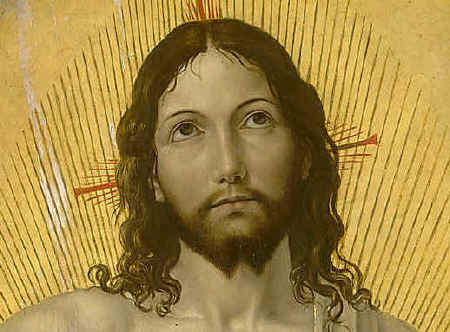
Borgognone 1510

Borgognone 1510

Easter time in the 21st century is a curious season. We are living in a time in which the rationality of the Enlightenment has been obliterated by the irrational violence and deconstruction of the Modern Era which ended with the creation of the atom bomb. In the 20th century we saw the the rise of the irrational as a counter to the idea of reason as the engine of human progress. Advances in science and engineering led to death on a massive scale whether in its industrial production form in the genocide of Jews and other peoples or its explosion from the sky in carpet bombing of Dresden or the incineration of Hiroshima and Nagasaki. The darkness within the brilliance of the human heart and mind was also manifest in the Vietnam War epic movie “Apocalypse Now” based on the theme that facing the horror of one’s evil can only lead to self destruction.

So here we are on the cusp of the third millennium. Human progress seems more of an illusion. In fact, our Post-Modern sensibility is all about the inability of reason and science to get at ultimate truth. Everything is examined and found wanting. Physics has become the study of relativity, uncertainty, and mathematical models. Religion and philosophy are the products of language we create. The scriptures of Christianity are cultural creations which tell us more of the people who wrote them. They are robbed of their revelation.

Human romance and love are reduced to methods for the socio-biological dispersion of one’s genetic load. Religious experience is suspect because there is no way to know whether one is just engaging in psychological projection to create a hideout from the ultimate reality of the purposelessness of human existence. We are here by virtue of  a cosmic accident with a very low probability.

In our world, there is the torture and death of Good Friday but there is no need for a Resurrection or any life beyond our current suffering because it is not possible since we can never know the nature anything beyond nature with any certainty. So here is the greatest event of all human history and our greatest personal hope – the Resurrection and it is a non-event on a beautiful spring day that is to be borne with a grim courage in a time when miracles cannot happen.

The news is too good. Maybe that is why we are stuck on the Friday of Crucifixion. The pain we know is better than risking its loss in the certain joy of Resurrection. As people of the Resurrection we would have to leave too much behind – hurt, anger, fear, and death.

Read More

Posted by on Apr 3, 2009

Easter Monday 2009: The Post Modern Blues

Obama at Notre Dame: Why the Catholic Right is Wrong

notre-dame-indiana-dome1

The Cardinal Newman Society has launched a petition drive objecting to President Barack Obama’s appearance at Notre Dame University’s commencement this year. Here is another approach to the issue.

George B. York III sent this letter to the National Catholic Reporter. It is presented here by permission of the author.

God and Man at Notre Dame

Notre Dame’s President, Fr. Jenkins, has extended
an invitation to President Obama to speak on
campus; the President has accepted. Some object,
asking, How could the President of Notre Dame
compromise with abortion? Closely observing
Jesus’ behavior in the Gospel of Luke, (7:40 and
following), I find Fr.Jenkins’ position consistent
with Jesus’ behavior, and in no way a compromise
with abortion.

In the story of Jesus’ evening in Simon’s
house an outsider, a woman, washes Jesus’ feet
with her tears and dries them with her hair. Simon
thinks, `Doesn’t he know what kind of woman she
is?’ Knowing what Simon is thinking, Jesus
surprises him by simply pointing to ways in which
Simon did not welcome Jesus; in so doing, Jesus
invites Simon to convert from hypocrisy to a
different way of judging and acting toward fellow
humans. While Jesus is uncompromising toward
misdeeds or sin, isn’t he also uncompromising when
it comes to accepting others, friend and foe alike, in
this case, welcoming the woman and challenging
but not rejecting Simon? Are humans defined only
by their real or supposed misdeeds?

About the strategy of some of his brother
bishops to `make war’ on abortion, South Dakota
Catholic Bishop Cupich told them: `…a prophecy of
denunciation quickly wears thin …what we need is a
prophecy of solidarity, with the community we
serve and the nation that we live in’. (quoted in
Commonweal Editorial, 5/12/08).

The way of implementing a prophecy of
solidarity is indicated by American Jesuit
Cardinal Avery Dulles. In commenting on
envisioning unity among Christians; he says, `The
first condition . . . is that the various Christian
communities be ready to speak and listen to one
another. . . . The process of growth through mutual
attestation will probably never reach its final
consummation within historical time, but it can
bring palpable results. . . . The result to be sought is
unity in diversity.’ (First Things, ’07)

Those are not just a Christian condition and
result; they are fully human. Does experience not
validate a claim that the better way between
different, opposed individuals and groups is one
leading to “unity in diversity”? Are exclusion and
isolation anything but impotent and sterile? Aren’t
Simon and the woman drawn within a more human
process? As a result don’t they depart from their
evening with their ability to hear reason and with
their freedom intact? In fact, is it not credible that
both Simon and the woman are invited, if not
actually drawn, closer not only to Jesus but also to
one another? Finally, to return to Bishop Cupich’s
solidarity, doesn’t `E pluribus unum’ mean unity in
diversity — union, not in sameness, but in
difference?

Such solidarity is impossible when one’s
starting point is that expressed in Simon’s initial
attitude: “Doesn’t Jesus know what kind of woman
she is?” Therefore, I have to wonder, Is it truly
Christian or even human to start, as some seem to
start, with a question like: “Doesn’t Fr. Jenkins
knowwhat kind of man Obama is?”

Isn’t the call to every Christian to put on the
mind of Jesus who Christians believe emptied
himself of power and the ways of power and drew
others neither by compromise with sin nor by
isolating rejection or coercion? To the extent a so-
called `prophecy of denunciation’ expresses a spirit
like that of the Pharisees (Simon’s initial attitude),
isn’t it a betrayal of the mind of Jesus? ? Isn’t such
prophecy animated by a spirit aiming at institutional
control, expressing a desire to force conformity in
the name of real or supposed truth? In the case of
NotreDame, doesn’t it express an ill-advised wish to
forceFr. Jenkins to dis-invite a supposedly unclean
Obama?

To the extent your answer is `Yes’, you see
why I say that Fr. Jenkin’s invitation to Obama
could be called a compromise with abortion only if
Jesus’ firm but friendly challenge to Simon could be
called a compromise with hypocrisy.

George B. York, lives in Denver. His
publication, `Michel de Certeau or Union in
Difference’ (2009, ISBN 978 0 85244 684 3),
concerns Faith in the understanding of a celebrated
French Jesuit historian.

Read More

Posted by on Mar 14, 2009

Easter Monday 2009: The Post Modern Blues

A Weekend With the Holy Trinity

shackcoversm

There are all kinds of stories of growing up Catholic but very few that focus on that core of the culture that is the Sign of the Cross. “In the name of the Father and of the Son and of the Holy Spirit. Amen.” This Trinitarian invocation begins and ends almost every event, every ritual, every meal – whether it is a blessing pronounced by the Pope or the gesture we learn from our parents before we can talk.

For all of Catholicism’s lengthy tradition, its mantras and catchphrases, Trinity Sunday is the only Sunday that fails to attempt in words what is incomprehensible. The priest who has a sermon for each Sunday looks into his bag or online list of stock themes, works hard on the presentation, and raises the white flag of surrender as he steps into the pulpit. The standard disclaimer is “We really cannot understand the Trinity. It is a matter of faith.” After confusing those who are awake in the congregation with St. Patrick’s shamrock “three in one” or various other analogies, he repeats the opening disclaimer and makes a hasty retreat to the Nicene Creed, where we sleepwalk our way through beautiful Trinitarian poetry that we ignore out of repetition. “…Light from light, True God from True God, Begotten not made, One in Being with the Father…”

For those of us who graduated from Catholic schools and had a good review of the Trinitarian controversies of the first three centuries and the further travails of this teaching in Church history, the sense of incomprehensibility grows.

William Paul Young’s allegory, The Shack, presents a weekend encounter with the Holy Trinity by a deeply wounded and grieving father. It is a mystical healing encounter that shows us that our concept of God has more to do with us than with the Divine. As a work of fiction it is easier for us to comprehend than the abstractions of theology. The contemporary setting and the issue of why the innocent are slaughtered make this central Mystery more accessible to us than the writings of the mystics who lived in different times and cultures.

I encourage you to read the book. Once you do, that automatic gesture – the Sign of the Cross will be the gift that it is – an entry point to the very life of God.

Read More

Posted by on Jan 31, 2009

Easter Monday 2009: The Post Modern Blues

January Reverie


pussy_willow_branch

Pussy willows blossoming,

Monarchs dancing in the sky,

Sour grass and wild radish blossoms

Punctuating fields of wildly growing grass,

January on California’s Central Coast.

Praise and Thanks to Thee,

Great Lord of all Creation!

Read More

Posted by on Jan 20, 2009

Easter Monday 2009: The Post Modern Blues

Prayers and Best Wishes for President Barack Obama

President Barack Obama - January 20, 2009

President Barack Obama - January 20, 2009

Today we witnessed the inauguration of President Barack Hussein Obama, 44th president of the United States of America. It has been a day of great emotion. I keep finding myself with tears streaming down my face at the wonder and beauty of it all. Born in the last months of Harry Truman’s presidency, I remember the struggles of the 60s for basic human rights for all Americans. (I was too young to be aware of them in the 50s, but I know the struggle didn’t begin when I became old enough to notice it.) I remember the assasinations. I remember the triumphs as well and the courage of men, women and children who kept pushing and moving all of us forward into a new social reality.

As the inauguration ceremony began and ended with prayer, the Litany of the Saints began to sing through my mind and heart. It has continued all through this day.

“Holy Mother of God, pray for us.  St. Michael, pray for us. … St. Stephen, pray for us … St. Augustine … St. Athanasius … St. Martin … St. Catherine … St. Teresa … ” And names of those not canonized but who struggled, suffered and sometimes died to make today possible joined the litany. Martin, Medgar, Malcolm, Ralph, Coretta, Dorothy, and so many, many more, … pray for us. Family members who worked for a better world and did their best to be a light for all of us, … pray for us. “All holy men and women, pray for us.” 

Today is only the beginning. There are tremendous challenges ahead for the United States and for the world. Things may well get worse before they get better.  The economic and social problems we face will be overwhelming unless we remember to pray and trust God to help us resolve them. We’ll have to work together. We’ll all have to give  some things in order to receive others. But we are all children of God, all loved equally by a God who is absolutely crazy about us. And a great cloud of witnesses is hovering around us, praying for us and believing that the kingdom has begun, redemption is here, and with God’s help we can begin to live it here and now.

Congratulations, President Obama. We’ll be praying for you and your family. We thank you for your courage. We thank you for the hope you bring to so many. We look forward to bringing hopes and dreams of a better future into reality.

And so the prayer continues cycling through my heart again and again: “Holy Mother of God, pray for us … St. Michael, pray for us …. St. Joseph … St. Peter and St. Paul … St. Mary Magdalene …  St. Martin de Porres … St. Peter Claver … All holy men and women, pray for us.”

Read More

Posted by on Jan 15, 2009

Easter Monday 2009: The Post Modern Blues

“God speaks in everything … God speaks very, very, very slowly …” Nana

Megan McKenna's Nana

Megan McKenna's Nana

Megan McKenna is a theologian and storyteller who travels the world spreading the good news about God’s love and challenge to us to live out that love. Often her stories are from other cultures or religious traditions and help clarify the lessons of our own Christian faith tradition.

In Playing Poker with Nana, Megan reaches into her own life to share with us the wisdom of her grandmother, her Nana. I received a copy of the book from Megan as an Epiphany gift, and I am savoring it. Part of me wants to race from chapter to chapter (each 2-3 pages long) and devour it in a sitting. The older, and I hope wiser, part of me advises reading it one chapter, one story at a time and pondering the advice and insights her Nana shared with Megan. So most days I read just one at bedtime and let it simmer in my heart and the back of my mind through the next day.

Yesterday I read Chapter 10, “History.” Megan had quoted Martin Buber to her Nana one day in conversation. “God is always speaking, but never repeats himself, like sunrises and sunsets.” Her Nana reflected on the quote and then responded with her own thought, “It’s true. God speaks in everything, people, relationships, even all that dies, but sometimes, I’ve learned, God speaks very, very, very slowly …”

Before she finishes speaking, Nana has explained in beautiful depth her thoughts on the matter, on the very slow way God has of speaking to us most of the time.

The chapter is only three paragraphs long, but it stuck with me all day today. At Mass, the Psalm response was, “If today you hear His voice, harden not your hearts.” It really struck me that Nana’s words went right along with the admonition of the psalmist. Sometimes we hear God’s voice in bursts of insight or in the wonder of a particularly beautiful sunrise or sunset. But more often we hear God’s voice in the quiet reflective times, when we seek to understand what has been happening in our lives and those of people around us. Nana advises Megan and all of us that sometimes we just have to stake our lives on the hope that, hard as life is, it’s already been redeemed, so we just have to “believe and hang in there.”

As I was walking home past a calm, nearly waveless ocean on a beautiful sunny day, I found words for what I was feeling in my heart and trying to formulate in my mind. Often we as Americans have a sense that only the “hard-nosed” businessperson can be a success. Only the practical, matter-of-fact person will accomplish his or her goals. Only those who set goals and focus single-mindedly on reaching them will find security. Being “soft-hearted” is not a quality that we value very much. It tends to get lumped in with being “simple-minded” or a “bleeding heart liberal” in the minds of many. Yet that is exactly what it seems God is calling us to be. The opposite of a hard heart is a soft one. One that knows that God speaks very, very, very slowly and we might not see the whole picture just now, or be hearing the whole story.

Thank you, Megan, for sharing your Nana’s wisdom with us. May her words help us to keep hanging on, listening for God’s voice, with soft hearts ready to love and be loved.

(Playing Poker with Nana is distributed in the US by Dufour Editions. I highly recommend it.)

Read More

Posted by on Dec 31, 2008

Easter Monday 2009: The Post Modern Blues

And a New Year Begins …

Sunrise at Los Arenales - by Steve Locke

Sunrise at Los Arenales - by Steve Locke


“It has been the interruptions to everyday life which have most revealed the divine mystery of which I am a part, all these interruptions presented themselves as opportunities to go beyond the normal patterns of daily life and find deeper connections than the previous safety of my physical, emotional and spiritual well being.”  Henri Nouwen

I lay in bed this morning in a reflective mood. It was time to get up, but it’s New Year’s Eve and I’m resolved to take it as more of a holiday than as a regular work day. So I lay there remembering 2008 and wondering what profound insights might be drawn from having experienced it! And where and how in Heaven’s name did it go so quickly?

I’m not sure I have any profound insights to offer. I’ll leave those for others. But it seems to me that 2008 will be remembered as a time both of great changes and of much that remains the same.

I’m sure you’re all bored to death of lists of wars, disasters, financial upheavals, political scandals and the like. We’re all aware of the historic election of Barack Obama to the presidency of the United States. We have high hopes that with the new year, solutions will be found to begin to refocus world economies and reverse the economic declines we’ve experienced. And thus we see the beginning of hope again – a hope that seems to come with the dawing of each new year – things will be better this year!

In our personal lives, people will be born, people will die. Some will get married, some marriages will fail and the spouses will be left to grieve and grow through it. Some will have steady work, others will find their jobs transitory at best. Children will continue to grow up. We’ll each move a year closer to being the older generation – hopefully growing wiser along the way.

And in the midst of it, we’ll have the surprises. A deck will need to be repaired unexpectedly, and friends will step in to help fix it. An appliance will reach the end of its useful life (as in it’ll just plain quit working!) and someone else will have one for which they need to find a home. An unexpected bill will arrive in the mail and funds will show up from somewhere else that make it possible to make ends meet anyway.

I think of this as God’s “just in time financing” and find myself counting on it often – something to do with “Give us this day our daily bread.”

I can’t promise the new year will be easy. I know it will be challenging. We’re in a major world-wide recession, after all. But I know that with God’s help we’ll get through it. We can’t solve it by having another world war – that’s not an option. We can solve it by looking out for each other, offering a caring hand, recognizing that we’re all in this together (even across national boundaries) and trusting God to soften our hearts and open our eyes to help each other through our days. In the end, hope is the gift we receive and can offer to each other. God is with us. God has become one of us. God lives and works through each of us.

May the blessings of the Christmas season be with you through the coming year and may you see God’s loving hand reaching out and touching you through all the ups and downs, all the interruptions and surprises of this New Year. 


Read More

Posted by on Dec 16, 2008

Easter Monday 2009: The Post Modern Blues

One Pink Glove and One Green One


colored-gloves

Wintery weather has finally come to California’s Central Coast. Sunday we had rain and hail. Yesterday I got out my winter coat and used it for the first time this season. There was thunder in the night. (I didn’t see the lightning – my eyes were closed – but assume it was thunder because the house didn’t shake as the rumbling continued!) This morning the weather report said possible snow in the mountains as low as 1,000 feet.

Now I know this is no big deal for a lot of folks in this world, but here, we count this as winter.

Yesterday, when I was out walking beside the ocean, I reached into my coat pocket to get my gloves and didn’t find any. This was strange because I generally keep a pair of gloves and a scarf in every coat and jacket I own. Beside the ocean, one never knows when the fog will blow in and it can get chilly! But the gloves weren’t there. I decided I must have taken them out when I washed the coat and forgotten to put them back.

So, this morning, as I got the coat, I put another pair of gloves into the pockets – green ones. I got into the car and decided it was indeed cold enough to put on a pair of gloves. I reached into the left pocket and pulled out a glove – a pink one! Laughing at myself, I put it on and reached into the other pocket and found a green one. Now both my daughter and I were laughing. So I put on the green one as well and we headed down the street to school – one hand pink and one hand green, laughing and joking all the way.

It came to me as we went that life is full of these kinds of surprises from our God. Cold rain, thunder, snow – followed by a beautiful sunny day. The joy of a wedding, followed by the sadness of a family death and funeral. The hopeful waiting for the birth of a child. The friendly word on a difficult day. The kindness of strangers who sympathize and offer help when money is tight.  The friends who simply smile at our foibles and love us anyway when we’re being difficult.

We are truly blessed to have a loving God who is always there for us and who delights in surprises – like finding a pink glove in a pocket where only a green one was expected.

Read More

Posted by on Dec 8, 2008

Easter Monday 2009: The Post Modern Blues

Celebrating Sabbath and the Sacred Present – Terry Hershey

Fountain of flowing water - from Terry's website

Fountain of flowing water - from Terry's website

It’s the second week of December. Christmas carols are sounding on the radio, in the grocery stores, elevators, and malls. Television is filled with uplifting Christmas programming. Gala fundraisers are filling evenings and weekends. Church youth groups, Scouts, Campfire Girls, Boys and Girls Clubs, etc. are selling wreaths, candles, centerpieces. Bake sales pop up all over the place to tempt us with holiday goodies. Countdowns to Christmas appear on family bulletin boards. Everywhere people are asking, “Are you ready for Christmas [or other holiday] yet?”

And in the midst of all this activity, school assignments must still be completed. Our daily work moves ever forward with its demands, whether in the office, on an assembly line, in a store, at home or any other of the myriad worksites of our lives. The amount of daylight gets shorter (in the Northern Hemisphere where I live), so it seems the amount of time to accomplish anything is shorter too.

Pressure builds for all of us and can easily spill out into our relationships with others.

So how do we reconcile all of this activity with the quiet season of hope and expectation that is Advent? How do we find the space for a few moments of quite reconnection with life, hope, love, peace, joy? Where do our relationships with family and friends find space to be nourished?

These are challenges we all face.

One of Theologika’s Trusted Authorities is Terry Hershey, a nationally known speaker and writer. Terry lives and works on Vashon Island in Washington state. He has worked as a minister and more recently has shifted his focus to the nurture of personal relationships and gardening. You can find a short description of his life journey at http://www.terryhershey.com/about.htm.

Terry’s website and the focus of his work these days is “Embracing the Sacred Present” and finding Sabbath Moments in life. He has a regular weekly newsletter and column to which you can subscribe online through the website. I highly recommend his work. I look forward to spending a few minutes each week reading his thoughts. There’s always a good story and a reflection that helps me remember to slow down, notice the presence of God in the people and places of my life, and enjoy the love that surrounds me.

Thank you Terry. Happy Birthday. And may you ever be open to life in the sacred present!

Read More

Posted by on Nov 17, 2008

Easter Monday 2009: The Post Modern Blues

Paul Tillich on Grace – Quote of the Day

Autumn leaf color - Image from wikimedia
Autumn leaf color – Image from wikimedia

This reflection comes courtesy of Theologika trustee Terry Hershey, quoting theologian Paul Tillich.

“Grace strikes us when we are in great pain and restlessness.
It strikes us when we walk through the dark valley of a meaningless and empty life.
It strikes us when, year after year, the longed-for perfection does not appear, when the old compulsions reign within us as they have for decades, when despair destroys all joy and courage.
Sometime at that moment a wave of light breaks into our darkness, and it is as though a voice were saying, “You are accepted. You are accepted, accepted by that which is greater than you, and the name of which you do not know.
Do not ask for the name now; perhaps you will find it later.
Do not try to do anything now; perhaps later you will do much.
Do not seek for anything, do not perform anything, do not intend anything.
Simply accept the fact that you are accepted.
If that happens to us, we experience grace.”

Paul Tillich

May grace reach into your life and surpise you today and always. Amen.

Read More

Posted by on Sep 11, 2008

Easter Monday 2009: The Post Modern Blues

Theocracy or Secular Society – Reflections

September 11 used to be just another day in the ninth month of the year. But the acts of terrorism which were committed on this date in 2001 in the United States changed that reality. Now, in most countries of the world, September 11 is a day to remember and mark with speeches, prayers, visits to “sacred sites” and news reports. For some few, it is a day remembered as a great victory against the most powerful representative of secular society in the world. For most, it is seen as a great tragedy, in which lives of innocent people were lost, personal freedoms were threatened, and excuses provided for nations to go to war.

Believing with George Santayana that “Those who do cannot remember the past are condemned to repeat it,” I add that those who do not understand the fundamental concepts underlying social systems are also condemned to repeat history. Accordingly, I offer some reflections as an anthropologist on structures and realities that shape societies and social interaction.

In a Nutshell

For those with only a few moments to spare, here are my thoughts in a nutshell.

We’re dealing with a clash of cultures, specifically in terms of family structures and political systems. The “corporate family” and “theocratic” political system that was the norm for most cultures throughout most of human history has been challenged by an upstart system. In this new system, it’s the “nuclear family,” with its focus on the individual and personal choice, as well as its “secular” political structure, that are the ideal.

Some of the first cracks in the old system began to appear around 2000 years ago, with the teachings of Jesus and His early followers. More followed as Christians began caring for the sick and teaching children (including girls) and insisting that women had rights in marriage. Still more appeared towards the end of the religious wars that followed the Reformation, as religious dissidents began to move to the New World. With the ratification of the Bill of Rights as part of the American Constitution, the secular society as a political system was born.

Today we’re dealing with a side-effect of that event. Secular societies offer the opportunity for people of all faiths to work together to their fullest potential, to make this world a better place for all. Unfortunately, not all human choices are made for the common good, under any social or political system, so we also see people doing things that are very wrong. Sometimes religious people get frightened by that and think we should just go back to religious law – theirs, of course. Splinter groups of them may turn to violence and terror, killing innocent people in an attempt to change a political system. That’s what the events of September 11 and other terrorist activities of the past century have been about – political systems and family structure. Often disguised as defense of religious beliefs – but at base a question of political systems and family structure.

A violent response cannot stop violence of this type. In dealing with the problems that breed discontent and lead to social upheaval (unemployment, hunger, lack of safety, etc.), economic solutions are more often effective. Education, employment opportunities, health care, housing – all contribute to social stability and take the wind out of the sails of the terrorists. That’s the response we should be offering to the world!

Now, for those who have a little more time.

Definitions and More Details

Begining at the begining – a few definitions and clarifications are in order.

Nuclear Family – The nuclear family is one that includes adults – generally but not exclusively a man and a woman – and their children, whether naturally born or adopted. It does not include grandparents, aunts, uncles, cousins, godparents or other friends.

In the nuclear family, the individual tends to be seen as having intrinsic value. Having an individual opinion and making personal choices is valued. Individuals are allowed to decide and act for themselves and it is expected that at a certain age and maturity, the individual will leave the nuclear family and live his or her own life. Many will enter into committed relationships, legally recognized by the society, and start new nuclear families of their own. The family in which they were raised is called the “family of origin” and is distinct from the family created upon reaching adulthood and entering into their own newly formed nuclear families. In American society, the nuclear family is the type of family structure that is the norm.

Corporate Family – A corporate family is like a business. It includes many more people than a nuclear family. It is multi-generational. It has an identity and existence of its own, apart from that of any individual member of the family. The continuation of the family takes precedence over the desires or even the sheer survival of the individual. Issues of honor are seen in terms of the larger family and individual lives may be sacrificed to maintain family honor. Marriage is a matter of alliances between corporate families – not something for two individuals to choose for themselves. One’s sexuality belongs to the family and one’s duty is to provide children for the continuance of the family. Individual opinions and preferences are not of deciding importance. In fact, the mere possibility of having an individual opinion may not enter the mind of a member of a culture in which the corporate family is (or has been) the rule.

Corporate families can take a variety of forms, depending on rules of inheritance and identification. In some, identity and property are passed through the male line (patrilineal) and in others through the female line (matrilineal). Somewhat more rarely, identity and inheritance can come from both lines. (This is more common in nuclear families, however.)

The vast majority of world societies take the corporate family model as the preferred model. It is only relatively recently that the nuclear family has arisen on the social scene of the world – and that in relatively few cultures. Nevertheless, with the spread of Western culture through the media, exposure to the nuclear family and the type of culture that accompanies it is increasing.

Theocracy – A form of political organization in which the legal foundations of the society are the laws of the dominant, governing religion or religious body. Theocracies have a long history in the world. Any culture, ancient or modern, in which religious rules are the ones by which disputes are resolved and individual or group actions judged as a matter of law is a theocracy.

Secular Society – A form of political organization in which the legal foundations of the society are distinct from the laws of religious organizations or groups of believers. The laws of secular societies may be, and generally are, based on certain principles drawn from the religious beliefs of their members, but religious law is distinct and carefully separate from the law governing the wider society. Secular societies have emerged relatively recently in the history of the world.

Freedom – The concept of freedom I will use is that which states that an individual can act or behave according to his or her conscience, to the mutual benefit of both the individual and other persons who will be affected by the action. In cases in which what benefits one does not benefit others, the one may not have the right to act or behave in the manner he or she desires. Sometimes the greater good or the rights of other people take precedence. Freedom does not mean license to behave however I choose and the rest be damned! Freedom entails a great responsibility to act for the common good, trusting that the larger good will also benefit the individual in the long run. In this, the concept of freedom draws much from the corporate family tradition, but it recognizes the rights of the individual to choose, apart from the interests of the corporate family, and to look at his or her own interests and those of the larger community.

So what does all this have to do with us today?

Corporate family structure and theocracy as a basis for political organization have been the dominant forms of organization during much of the history of human culture. Some of the first cracks in the system that we see historically resulted from the teachings of Jesus. When Jesus told the rich young man to sell everything he had, give the money to the poor, and come follow him, (Mt 19:21) that was demanding a major break from the corporate family. When Jesus told another young man to let the dead bury the dead, in response to his request for permission to bury his father before becoming a disciple, (Mt 8:22) that was an even greater break. 

The early church continued the process of separation. In the Acts of the Apostles, ( Acts 2:42-47) we see a community of believers who have sold all, combined their resources, and share all things in common. They have left their ancestral corporate families and joined into a new form of family – family still being needed for mutual support and protection. We know that not all went smoothly. There were disputes between Jews and Greeks, concerns over whether all resources had been contributed or not, complaints about fair distribution of resources, etc. The first persecution of the church in Jerusalem broke up the communal experiment and the Followers of the Way were dispersed, taking the Good News of the freedom of God’s children with them into the Roman Empire.( Acts 4-8)

In each community where the Gospel took root, communities formed. Christian community became a new social unit and each person’s gifts were seen as contributing to build up “the Body of Christ.” (Eph 4: 1-16) Individuals became important because the gifts they received built up the whole community. We’re still not to a nuclear family model yet in this understanding, but birth families were not primary in this scheme of things.

When religions become State sponsored or mandated, when religious law becomes the law of the land and all are required to become members of that religion (or at least live by its rules), some common patterns emerge. We see forced conversions, wars over definitions of points of belief, torture of those who do not believe “correctly,” and State sponsored executions of non-believers or heretics (those with beliefs deemed to be untrue). This pattern held true with the legalization of Christianity and its establishment as the religion of the Roman Empire. 

On large scale, we see destabilization of entire societies resulting from the persecution of non-conforming religious communities. In Spain, for example, both during the time of the Visigoths and the time of the reunification of the kingdoms under Ferdinand and Isabella, there was an attempt to enforce unity in religion, political governance, and military might. In both cases, the society was ultimately destabilized by the creation of persecuted minorities. During the Visigothic period, those minorities welcomed the invading Muslim forces which overthrew the Visigothic kings. (Ironically, Muslim rule itself was undermined in Spain by the 12th century as the result of a turn towards fundamentalism.) During the 15th and 16th centuries, the expulsion of Jews and Muslims from Spain resulted in the loss of large numbers of people with valuable skills and professions – banking, medicine, science – not fields a successful nation can manage without. The Inquisition, which did not originally begin in Spain but was a force there for far too long, was a terrible example of what can happen when religious beliefs become the legal norm.

The religious wars that accompanied and followed the Reformation finally were resolved with a great compromise. The religion of the ruler of a nation would be the religion of all his or her subjects. So, any time the religion of the ruler changed, everyone had to change religions. It sounded good on paper, but if one truly believes that one’s faith is the one, true, unchanging faith, one can’t just change it because a new ruler has come into power! Fortunately, a New World had been discovered, and dissidents could go there and have their own colonies, with their own religious beliefs. And so it happened.

The English colonies in North America did not begin as places with freedom of religion. That developed much later. In a couple of colonies there was tolerance of different beliefs. One colony was set up as a refuge for Catholics. But by the time of the American Revolution, Catholics were not allowed to vote in any colony. In fact, Charles Carroll of Carrollton, a signer of the Declaration of Independence, was not a voting “citizen” of his own colony until the mid-1770s when the laws excluding Catholics were repealed. It was only with the ratification of the Bill of Rights in 1791 that the separation of Church and State in the United States was enshrined as the law of the land. A secular society was born.

So what does all this have to do with September 11 and the acts of terrorism in the United States?  I’d like to say it’s simple, but it’s not. The actions of those who planned and carried out the attacks were those of terrorists, acting out of misguided religious beliefs perhaps, but still terrorists. Their goals were not religious conversion. They were from a group that promotes theocracy as the preferred political structure, specifically Islamic fundamentalist theocracy. (This is not to be mistaken for a mainstream Islamic faith.) The United States, as the largest and most powerful secular society in the world, was a natural target in an essentially political battle.

Terrorism is not an act of religion. It is a political act, whether seen in Northern Ireland, Israel, Palestine, Iraq, Iran, Afghanistan, New York City, Sudan, or in the bombing of abortion clinics or the homes of scientists engaged in animal research studies. It is an act of political violence. So the question becomes, how do we respond to political violence? One school goes back to the old, “an eye for an eye and a tooth for a tooth” (revenge).  Another says, “give them a little bit and maybe they’ll go away happy” (appeasement). Another says, political issues must be resolved with social solutions and tools. Look at the core issues – economics, healthcare, education, jobs, security for families, safety from violence. The Peace Corps initiative of the Kennedy administration is an example of this approach, which has resulted in much positive change in the world.

The response to the events of September 11, the military invasions of two countries claimed to have been responsible in some form for the actions of the terrorists, has not been a success. It will not be easy to undo all the harm that has resulted from those actions. But as we go forward, as Americans, as Christians, as people of good will in an increasingly tiny world, it is critical to be aware of the past, of the differences between societies based on corporate families and those based on nuclear families, of the danger of placing religious law as the law of the land, of the great protection members of all faiths receive from living in a secular society, and of the resulting freedom to work for the betterment of social conditions and life for people throughout the world. Secular societies can be welcoming places for people of all faiths. Together, protected by freedom of religion, we can do great things.

For related information, see:

God’s Crucible: Islam and the Making of Europe, 570-1215, by David Levering Lewis 

The Voice, The Word, The Books: The Sacred Scripture of the Jews, Christians, and Muslims, by F.E. Peters

A Peace to End All Peace: The Fall of the Ottoman Empire and the Creation of the Modern Middle East, by David Fromkin

Secularity and the Gospel: Being Missionaries to our Children, by Ronald Rolheiser, OMI

Three Cups of Tea: One Man’s Mission to Promote Peace … One School at a Time, by Greg Mortensen

Post edited and revised Sept. 26, 2008 by the author.

Read More

Posted by on Jul 31, 2008

Easter Monday 2009: The Post Modern Blues

St. Ignatius Loyola – In the Presence

St. Ignatius of Loyola by Peter Paul Rubens

Take Lord, and receive all my liberty,
my memory, understanding, my entire will and
all that I possess.
You have given all to me.
To You, O Lord, I return it.
All is yours; dispose of it wholly
according to your will.
Give me only your love and your grace,
for this is enough for me.

Every year, July 31 is a special day for me. St. Ignatius continues to play a very pivotal role in my life. What most captivated me as a young man, and still amazes me today, is his vision. His personal, intense love of God and a sense of the Divine Presence that is acutely close, warm, and reassuring all came to me in my journey through the Spiritual Exercises as a Jesuit novice.

I will never forget one of my first meetings with John D. McAnulty, my Master of Novices. He simply began by saying, “Let us place ourselves in the presence of God.” I had not been a stranger to priests or to spiritual direction, but this experience was completely different. The room and the atmosphere changed in an instant. There was a looming presence, an awesome profound silence, and a great peace.

I guess, that is why I tend to chuckle when people refer to the great learning of the Jesuits. It is not what they are about. I also laugh because that is what I thought until that first invitation to enter into the Presence. It was far from intellectual. It was very intense, very real, very soothing. St. Ignatius would say that our prayer can be marked by times of consolation and desolation. What has struck me over the years is that sometimes there are joyful fireworks when entering into the Mystery and sometimes there is a great zen of nothingness – but the Presence remains.

Happy Feast Day Fr. Ignatius.

For more background on the life St. Ignatius and his spirituality see my previous entry.

Read More

Posted by on Jul 11, 2008

Easter Monday 2009: The Post Modern Blues

Saint Benedict – July 11 – Solitude and Community

Benedict of Nursia is called the founder of Western Monasticism. He was born at Nursia around 480 AD to a noble family. According to tradition, his had a twin sister, Scholastica, who became the founder of a similar form of monasticism for women. As the son of a noble family, he was educated well and lived a comfortable life. The world and all its opportunities were open to him. Presumably he sampled some of its treats as a young man.

Around 500 AD, he decided to leave Rome for a quieter life in the country. He took his childhood nurse along as a servant and moved to a smaller town about 40 miles away. According to St. Gregory, who wrote the first biography of Benedict, his intention was to live a life more in tune with the Gospel than that of a typical young noble in Rome. He didn’t plan to become a hermit or to organize groups of men to live in religious communities or to develop a “Rule” for monastic orders. He simply wanted to have time for prayer and work and a life with a friends who shared the goal of living a Gospel centered life.

From a distance of hundreds of years, we see choices like the one he made as signs of holiness. Up close in our own lives, we often see them as somehow irresponsible or “crazy” – a judgement generally shared by the families of those, including Benedict, who made those choices in the past.

It’s easy to forget/overlook the fact that Benedict never set out to start a religious community. The rules he eventually developed and wrote down were ones that developed out of his experiences in living with other men and by himself. They were developed for lay people. Only later did his followers become priests.

So what were these rules about? They were about how to live a holy life in the world, as a person sharing life with other people. They were written not just for those who left family and jobs to live a life of prayer, but for anyone seeking holiness. They assumed that people would work. That a life of prayer without work is not healthy. And both work and prayer need to be undertaken with the support of other people in a community. We need friends and family to keep us going and to challenge us to continue when it would be easy to cut corners or take the easy way out of a tough situation. And – surprise – there must be time for fun and play in life!

For Benedict, balance was important. Work, prayer, play — all within the framework of a community/family. 

There is a saying from Buddhist tradition, “Before Enlightenment, chop wood, carry water. After Enlightenment, chop wood, carry water.”  Benedict’s example and the rule he developed are very much in alignment with this wisdom. Prayer includes deep awareness of the presence of God in all things. So as we work, we pray if we are “present”  in what we are doing and aware of God’s presence in it. When we come together in community to pray, as monks do at regular times in the day and night, or as families do over meals or at bedtime, we pray most deeply when we are again “present” in the moment of prayer. When we have time by ourselves for personal, quiet prayer, and we find ourselves in the presence of God, we are to stay rooted in that experience too. The trick is to stay aware and present to the reality of what we are doing. “Chop wood, carry water.” And when we play, we are to play wholeheartedly as well – like happy children. Not worrying about how we look or who will win or what else we should be doing that would be “holier.”

Benedict’s life was not easy. The lessons he learned came through many twists and turns. He spent time living alone and time living in communities. He started some communities. Lived within others. Was rejected by some. One community even tried to poison him! But through it all he kept his eyes and ears open to God’s presence and call. And the witness of his life drew other people, men and women, who passed on what he learned down through the generations to us. How to find holiness in the balance of a life of work, prayer and play as individuals and as members of families and communities.

Read More

Posted by on Jun 21, 2008

Easter Monday 2009: The Post Modern Blues

St. Aloysius Gonzaga – June 21

St. Aloysius Gonzaga (1568-1591) is often portrayed as a weak dreamy sort of figure. Worse, he has been presented to young people as a patron and role model who rejected all of the fun, adventure, and rebellion of youth. The real story is far more compelling.

How St. Luigi Gonzaga became St. Aloysius in English is not clear. The Latin for Luigi would be Ludovicus. Alois would be the German equivalent.

The “spin” of 17th and 18th century writers on his life was more a pietist anti-intellectual critique of the secularist Enlightenment. To be impolitic, he comes across as some sort of bloodless, lily toting wimp with upward cast eyes. Although it is not uncommon for saints to be “martyred” posthumously and their lives used to advance a contemporary cause, the Renaissance Luigi Gonzaga, Marquis of Castiglione is more relevant to us as post-modern Christians.

The overall sketch of his life is a simple as it is dramatic. Luigi was the oldest son of Ferrante, the Marquis of Castiglione, and named for the founder of the Gonzaga family Luigi, Lord of Mantua (1328). He was a pious youth, despised the things of this world, joined the Jesuits, and died of the plague after contracting it from nursing its abandoned victims in the streets of Rome when he was barely 23.

The context of his life and his status as an imperial prince give us a fuller understanding of who he was. According to John Coulson, the editor of The Saints: A Concise Biographical Dictionary:

It is impossible to estimate Aloysius’ (Luigi’s) career without some idea of his appalling heredity and environment. The Gonzaga tyrants rank with the Visconti, the Sforza, and the D’Este. They entered history about 1100; the first Gonzaga, lord of Mantua, was Luigi (1328), whose third marriage took place on the same day as his son’s and grandson’s: the three brides entered Mantua together in triumph. Already their cliff-like fortress was looming over the city. These despots displayed an amazing mixture of qualities. The Gonzaga clan survived one assassination after another and became allied to most of the reigning houses; but Luigi Gonzaga (141), grimly surnamed ‘The Turk,’ kept up three printing-presses and had for clients men like Platina, or Mantegna, who painted the scenery–now at Hampton Court–for the plays to which the Gonzaga were devoted. The French Parliament petitioned against the introduction of these plays into France–they were a ‘high school of adultery’–and no one would now dare paint the pictures with which some of the Gonzaga palaces were adorned. Yet these princes could care for agriculture, irrigation, checks on usury; and their insane debaucheries alternated with explosions of a genuine underlying faith. Their subjects, bled white by taxation, thrilled by their exotic pageantries, worshipped them till they broke into bloody but useless revolution.

The life of a Renaissance prince was far from any story book. St. Aloysius’ primary schooling was at the Medici Court in Florence. While he received the best academic training of the day, there was a bigger focus on swordsmanship, riding, and intrigue. He also spent significant time at the Spanish Court of King Philip II. His mother was a Valois and a relative of the Queen and his father had turned down a position of Master of the Horse in the English Court of Henry VIII in favor of Spain. At the time, the Spanish Empire was at its height of power and global dominance. Philip II also became king of Portugal as Philip I and ruled the Portuguese Empire as well.

As the oldest son, Luigi was trained to fulfill the duties of a prince and to prepare to succeed his father in the wealth, power, and literal back stabbing of the Gonzagas. As a child, though, he was appalled at what he saw and experienced, including the murder of close relatives. Fortunately, he came under the influence of St. Robert Bellarmine, who gave him his First Communion as a teenager. His rebellion was to reject it all and to enter the Church. His mother was not opposed to the idea, since it was not uncommon for powerful families to place prominent younger sons in key church positions that controlled considerable wealth and property. Luigi’s desire to join the Society of Jesus (Jesuits) was another matter. It would mean that he would forgo any type of service that could make him a powerful or wealthy cleric. Ironically, it was a wealthy and powerful churchman – Luigi’s cousin Cardinal Scipione Gonzaga – who prevailed on Ferrante to permit his son to join the Jesuits.

However, even as a Jesuit scholastic (student for the priesthood), he was still a celebrity who received celebrity treatment by those outside the order. Luigi probably over-compensated for this and his spiritual director and personal mentor, St. Robert Bellarmine, told him to ease up on prayer and penance and live a more moderate life. If we look between the lines, fitting a Renaissance prince into a religious house was not the easiest task for Luigi or his fellow religious. In fact, St. Ignatius’ famous letter on obedience was motivated in part to try to redirect the religious enthusiasm of these men to the ultimate in penance – to do what you are told whether you like it or not.

One can only imagine what it was to see a Gonzaga nursing victims of the plague on the streets of Rome.

There is a wonderful statue of St. Luigi outside St. Aloysius parish on the grounds of Gonzaga University in Spokane, Washington which shows a vital, caring, young man tending to a plague victim.

For some time when Gonzaga University was at the height of its fame as a basketball champion, there was a slogan which the University ran on national TV – Gonzaga: a Way of Life. The possibility of taking a brand like “Gonzaga” and making it stand for an impassioned life of faith inspired service is due to a young man caught up in grace. Isn’t that what we want for all young men and women?

Read More

Posted by on May 28, 2008

Easter Monday 2009: The Post Modern Blues

What Keeps Me From Seeing?


I like to take a walk in late morning each day. It helps clear my mind and stretch my muscles before I plunge into the work and activities of afternoon and evening. Living beside Monterey Bay, I never know what I’ll see on my outing.

Today, when I arrived at the water’s edge (actually at the cliff beside the water!), I got a wonderful surprise. I could see all of Monterey Bay – from the Lighthouse at Point Santa Cruz, around past Santa Cruz, Capitola, Aptos, Moss Landing, to the flatter lands where the Salinas River enters the Bay. Then the Big Sur mountains rise up behind Monterey and go out all the way to the ocean.  The water was calm – very few waves for the surfers. The kelp beds were spreading out to enjoy the sunshine. The sea lions on the rock were chatting among themselves. Sea gulls soared over the water. I could see it all.

In “the olden days,” when I was a girl, I would never have thought that seeing all the way around a bay was anything special. I grew up in Eastern Washington state. We had clouds or sunshine. Sometimes we had fog. But you could always see across the river! And normally, you could see the surrounding mountains too.

Living on the coast, we never know from day to day whether the fog will be in or not. Even on a sunny day, the fog often sits in the middle of the Bay, blocking the view of the other towns and the mountains. But today it is clear. The smoke from the Summit fire is gone from the sky. The clouds we have are high and moving inland. The fog is sitting way off the coast, barely visible from land. And the view is stunning.

It occurs to me that the spiritual life is something like our views of Monterey Bay. Like the Bay, God is always present here – within us, among us, around us. I exist only because God has imagined me, given me breath, breathes through me, loves me continually into being. Yet all too often I don’t notice. I don’t see the beauty all around me. I miss the “love notes” scattered all around me – the flowers, the birds, the native bees in the weeds, the smiles of young mothers and their babies, the laughter of teens and the comfortable togetherness of retired couples out for a walk. I don’t see them for what they are, or worse, I don’t see them at all. I move through my life’s conversation doing all the talking, forgetting to look and listen for the presence of the Divine.

Today I pray that I’ll remember to open my eyes, ears, heart, mind to notice God’s presence. I’ll remember to ask myself, “What keeps me from seeing today?” I’ll remember to be grateful. I invite you to do the same. And maybe while we’re at it, we could also stop gratefully for a moment and ask, “What keeps us as a people from seeing today?”

Read More