Pages Menu
RssFacebook
Categories Menu

Posted by on Apr 24, 2022

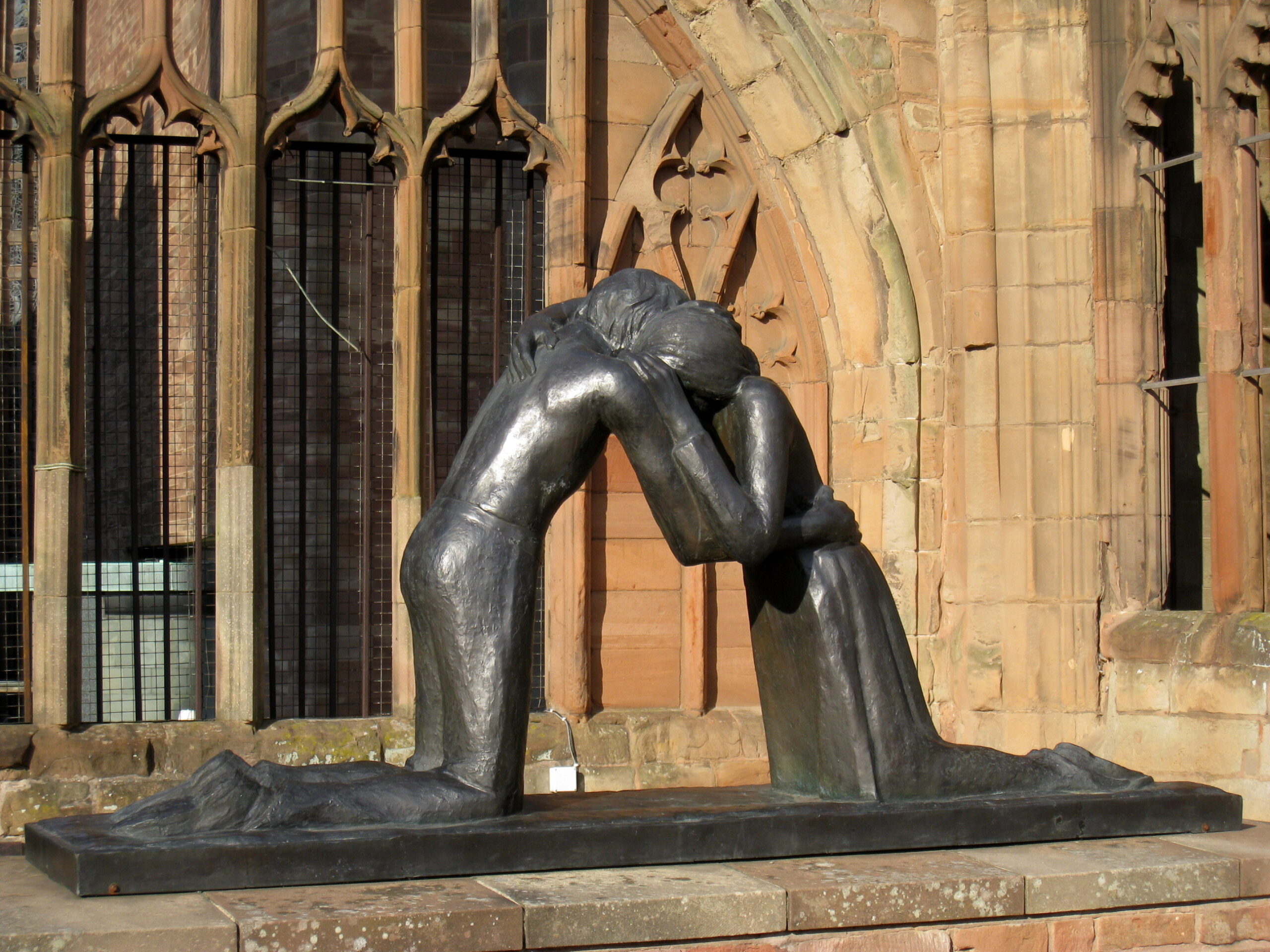
Mercy – A welcoming back into the circle

Mercy – A welcoming back into the circle

Easter is both a day and a season. For fifty days, we bask in and reflect upon the great mystery of the Resurrection. The Sunday after Easter, the Second Sunday of Easter, is also known as Divine Mercy Sunday. We have a chance on this day to notice God’s loving presence in our lives, even when we are not consciously aware of that presence and possibly even actively turning away from it.

Many years ago, I was teaching a group of 5th and 6th graders in our parish religious education program. I had the children for two years at a time, so we got to know each other well. One year I had a girl in the class who was quite bright. She could also be quite impulsive and outspoken. Everyone liked her and she was a natural leader.

I always started class by calling the children into a circle. We recited a verse, sang a prayer, and then prayed for their special intentions before I began to present the topic of that day. One day, she was not feeling ready to begin class when I called them together. We met after school on a Thursday, so they were all tired of school by that time of day. I made class as little like school as possible, to help them enjoy our time of learning together. But she was not ready to stop visiting with her friends and enter into our lesson. Instead, she turned her back to me and commented that she didn’t like what I had just said to her, so she wasn’t going to join us.

There we were. A group of ten to fifteen people in a circle, ready to begin our time together and one person had turned away from us. The other children were astounded at her behavior and clearly wondered what I would do.

What would you do?

Here’s what I did. I spoke to the other children and called their attention to what we were seeing. We were all there together happily, in a circle and ready to begin our activity. One person had turned away. It was a beautiful example of what happens when we choose not to do what the Lord is asking us to do. What happens when we choose to go our own way and refuse to go the Lord’s way. The Lord and the community are still there waiting and inviting us to join the circle. We turn away. As soon as we turn back, we are immediately incorporated back into the group.

When my student realized that she had just given me a perfect example of what we were going to be learning that day, she turned back immediately, filled with apologies to her classmates for giving me a chance to teach them through her example. Of course, all was forgiven and we continued with the lesson. That year we were learning about God, prayer, and sacraments. It was just perfect timing!

The Gospel reading from St. John today speaks of something similar (Jn 20:19-31). It is Easter Sunday evening. The disciples are gathered in the upper room. They don’t really understand what has happened. It’s the first day of the new week, the day after the Sabbath. And here appears Jesus. The first thing he says to them is, “Peace be with you.” To show them he wasn’t a ghost, he showed them his hands and his side, pierced by nails and sword. Again, he spoke to them, “Peace be with you.” Not a word of condemnation or scolding for having run away or denied him. Just Peace.

Then he went even further, breathing on them the power of the Holy Spirit, the Spirit who is love, giving them authority to forgive the sins of other humans. This is pretty amazing stuff. Humans can forgive like God does and on behalf of God?

Thomas wasn’t there that night. He didn’t believe a word of it. No sir, not a word of it. Furthermore, he made clear, he would not believe until he had seen for himself and touched the nail marks and the sword wound in Jesus’ side. A week later, Jesus appeared again and called Thomas to touch his hands and his side, instructing him to believe now. Jesus also spoke words that ring through the centuries to all of us, “Blessed are those who have not seen and have believed.” We are some of those millions and billions of people who have believed without physical evidence of the Lord’s resurrection.

The people of Jerusalem saw the evidence of his resurrection in the community that formed among them, caring for each other and those around them (Acts 5:12-16). They recognized the power of healing that flowed through them and brought the sick out to be seen and healed. Many joined the community because of the love they saw among those who were already followers of the way.

We too see the Lord’s presence in the community around us. We experience it in the actions of other members of our community. We see healing and forgiveness that draw families and communities back together. As the early followers of Jesus were noticed, people who have seen the love within our families and communities have also been drawn to seek the Lord.

On Easter Sunday, the eighth day of creation dawned. A new start for humans and for our relationship with God burst forth. A community came into being that would grow and eventually encircle the globe, a community of love and forgiveness. A community led by “one like a son of man” who is “the first and the last, the one who lives.” The author of the Book of Revelation shares with us this vision he received and the encouragement to continue in faith as a community (Rev1:9-11a, 12-13, 17-19). In obedience, he writes down what he has seen, because it is happening and continues to be happening, not just then, but into our times and into the future. The circle of Divine Love and community is always present. We are free to turn toward the circle or to turn away. Divine mercy waits patiently for each of us to turn back into the circle and rejoin the dance of life.

As we move forward during this season of Easter, how do we welcome those from whom we may have become estranged?  How do we reach out in love and forgiveness? How do we seek reconciliation with those whom we have hurt? How do our communities welcome the stranger or encourage the one who has grown tired and lost hope? How can we be the face of the Lord’s mercy and love? How do we receive it in our own lives?

It’s a new day. Creation is new and our relationship with God is fresh and ready to grow. The Lord is Risen! Mercy is ever-present! Alleluia.

Read More

Posted by on Apr 3, 2022

Doing Something New

Doing Something New

The readings for the Fifth Sunday of Lent in both Cycles C and A all speak of the ways in which God is doing something new. Once again, we have two possible sets of readings. Readings from Cycle A are used for celebrations of Eucharist in which those preparing for the Easter sacraments are present. Those from Cycle C are used for the others.

In the first reading for each cycle, we hear of God stepping in to do something new. In Cycle C,  Isaiah (43:16-21) speaks for the Lord, telling the people that although in the past the waters of the sea were parted so the people could pass through, now something new was going to happen. Forget what happened in the past, pay attention to what I’m doing now, is the essence of the prophecy. “I am doing something new!” There will be a way through the wastelands, rivers will flow in the desert, wild beasts will honor the Lord, and a new people will be formed to announce the praise of the Lord. All will be new again. A fresh start, so to speak.

The Cycle A reading is from the book of Ezekiel (37:12-14). The Lord promises: “I will open your graves and have you rise from them, and bring you back to the land of Israel.” He promises his spirit will settle upon them, so they will recognize their God. They will return and settle on their land once again. Something new is going to happen.

“The Lord has done great things for us; we are filled with joy,” sing the people of God in Psalm 126. We have gone forth from our homes in tears, but we return rejoicing. In Cycle A, the Lord’s mercy is celebrated in Psalm 130. “With the Lord there is mercy and fullness of redemption.” All can and will be forgiven. Call out to the Lord, trust in the Lord, and the Lord in his kindness will redeem Israel.

St. Paul assures both the people of Philippi (3:8-14) (Cycle C) and the people of Rome (8:8-11) (Cycle A) of the love of God and promise of new life for those who have faith in Christ. Sharing in the suffering of Christ, turning away from worldly pleasures and ambitions, the faithful believer will be raised from the dead because the Spirit of the Lord lives within them.

In the Gospels we see different stories, but in each God is doing something new. In Cycle C, we hear from St. John about the time the scribes and Pharisees tried to trap Jesus into breaking either Jewish law or Roman law. They brought a woman accused of adultery to him for judgement (Jn 8:1-11). They told him she had been caught in the act, so was clearly guilty as charged. The Mosaic law imposed the penalty of stoning for this offense. What should be done? The trap was subtle. The Romans did not allow the death penalty to be imposed by local authorities. Only Roman authorities could impose that penalty. If Jesus opted for stoning (in accordance with Mosaic law), he would be breaking Roman law. But would he advocate turning her over to the Romans for punishment? That would be unthinkable. What would he do?

Jesus did something unexpected. He simply bent down and began to write on the ground. The accusers kept insisting on an answer, so finally he spoke. “Let the one among you who is without sin be the first to throw a stone at her.” One by one, the accusers all left. No one condemned her. Jesus then spoke directly to her, “Neither do I condemn you. Go, and from now on do not sin anymore.”

Something new. The possibility of forgiveness for what was seen as a terrible sin. There are several “I wonder” moments in the story. Where was the man who would logically have been present when the woman was seized by the authorities? Was her sin really what we would call adultery, or might she have been the victim of a different crime? If she had been outside her home without a male chaperone, would that culturally have justified an assault on her that could be called or perceived as adultery?

Many possible angles and unknowns in this story. The critical point, however, is that Jesus does not judge as others in his community would have judged the woman. He did not fall into the either/or trap. He did something new and different, something bringing joy to the woman in question and showing the kindness and mercy of God. “Neither do I condemn you.”

We see Jesus doing something new in St. John’s Gospel from Cycle A as well (Jn 11:1-45). Jesus and his friends have gone away from Jerusalem for a while after things got too hot politically. He was in danger of being killed, so he had gotten out of town for a while. Then word came that his good friend Lazarus was dying. The sisters of Lazarus sent word to him, certainly hoping he would come and heal their brother. But Jesus stayed where he was for two more days before traveling to the community near Jerusalem where Lazarus and his sisters lived.

His friends cautioned him that it was dangerous to return to Jerusalem and the nearby towns. But Jesus insisted on returning. Lazarus had died, but Jesus would still heal him. In fact, it would be an even more amazing healing than those performed earlier, so more likely to lead them to belief.

When Jesus meets Martha, Lazarus’ sister, she expresses her belief that Jesus could have saved her brother’s life. She also believes in the resurrection “on the last day.” It is then that Jesus makes an amazing statement. “I am the resurrection and the life; whoever believes in me, even if he dies, will live…” Martha expresses her faith that Jesus is the Christ, the Son of God come into the world.

This was truly a case in which God did something new. The name Lazarus speaks of God coming to the rescue at the last moment. Jesus called Lazarus forth from the tomb four days after Lazarus had died. There was no question about whether or not the man had died. It had been four days. Four days was a legal landmark. The person was not coming back. Possessions could be distributed. All was done and over. But God came to the rescue. Jesus called Lazarus forth from the tomb, ordering, “Untie him and let him go.” And Lazarus lived again.

The Lord has done great things for us too. What is the Lord doing that is new in our lives? What specifically needs healing in my life, in your life? Where will the Lord call us out of a desert into a rich land? Where will we rise from our tombs of anger, frustration, or apathy? When will we receive forgiveness for the wrongs we have done? Will we recognize and accept the kindness of the Lord come to redeem us too?

Lent is nearing its end. New things are coming. Let’s continue in hope and open our eyes to see the beauty of the new life coming.

Read More

Posted by on Mar 13, 2022

Seeing the Glory of God – Deeper than at First Glance

Seeing the Glory of God – Deeper than at First Glance

A couple of years ago, a painting came home from school. It was a watercolor, folded in half, then in half again, and then yet again, until only 1/8 of the picture showed. The young artist was not happy with it and didn’t want even to talk about it. I looked at it and found it puzzling. There were blues and whites, with maybe a bit of yellow.   The colors had clearly run more than the artist had hoped. It looked like salt had been sprinkled on parts of the painting, resulting in irregular starburst-type shapes. There was a bit of red, some very light and some more streaked.

I didn’t understand what the picture was supposed to represent and he wouldn’t tell me. It was totally unclear to me which end was even supposed to be up! I put it on the side table with other things from school. There it lay for at least a week, probably longer, and I was still no closer to recognizing its theme.

I picked it up and turned it around once or twice to see if that made more sense. It still didn’t identify itself.


Finally, one day in early spring, I turned it one more time. And the image jumped out at me. My eyes, in a sense, had been opened to see its subject and its beauty. It was a snowman! I wondered how I could have not seen it all the other times I looked at it. It was so clear when my eyes looked at it from the right perspective.

It now proudly adorns our freezer.

The readings for the Second Sunday of Lent remind me of this experience with the snowman. In the first reading Abram and God have been talking. (Gn 15:5-12, 17-18) God has told Abram that he will have many descendants, even though both he and his wife are old and she has been unable to have children. Then God also promised that Abram’s descendants would possess the land into which they had traveled, following the Lord’s instructions. Abram and his extended family were not a lot of people. He questioned how they would ever possess a land belonging to so many other peoples.

There was a tradition among the peoples of the time to make covenants (legal agreements) in very visual ways. Animals were taken and sacrificed. The bodies were split in two and laid across from each other, making a pathway between them. Then the parties to the covenant would walk through the pathway. In this way they pledged that if they broke the covenant, the same thing might be done to them. It was not something to be taken lightly.

The Lord God told Abram to bring five animals – a heifer, a she-goat, a ram, a turtle dove, and a pigeon – and sacrifice them. He was to place their carcasses in such as way as to create the ritual pathway. As the sun set, Abram entered into a deep trance and saw the Lord, represented by a fire pot and flaming torch, pass through, entering into the pathway between the sacrificed animals. In this way, the Lord pledged himself to a covenant with Abram and his descendants. Abram did not have to pass through the pathway for the covenant to be established. Only the Lord passed through. The land from Egypt to Mesopotamia (current Iraq) was to belong to the descendants of Abram. (Today these lands are still peopled by his descendants – both Arabs and Jews.)

Abram saw the glory of the Lord that night, entering into a sacred covenant.

The psalmist sings today of the deep presence of the Lord. “The Lord is my light and my salvation.” (Ps 27:1, 7-8, 8-9, 13-14) Don’t hide from me, but hear the sound of my call. The Lord is a refuge, so there’s nothing to fear. “I shall see the bounty of the Lord in the land of the living…” All is focused on the presence and light of the Lord. All wait to see that goodness.

St. Paul writes to the community at Philippi (Ph 3:17-4:1) to encourage them to continue living in the way he taught them when he was with them in person. Controversies regarding whether it was necessary for Gentiles to become Jews in order to be Christians had reached them as well. Paul reassures them that all that is necessary is to believe and live in faith as they have first learned from him. As Christians, their citizenship, their loyalty, is in heaven. As such, all hope is in the saving power of Jesus, who will change our earthly bodies into heavenly, glorified ones, bringing all things to himself. At this point in time, all that is needed is to stand firm in faith and live as his followers.

The final reading, from St. Luke, tells of a very special experience of seeing. (Lk 9:28b-36)

Jesus went up on a mountain to pray. He took Peter, James, and John with him. As he prayed, his appearance changed, becoming filled with dazzling brightness. He was speaking with Moses (representing the Law and covenant) and Elijah (representing the prophets) when his friends woke up. They had fallen asleep as he was praying. They saw the glory that enveloped Jesus as he spoke with Moses and Elijah. Peter, ever the practical and impulsive one, offered to put up three tents, one each for Jesus, Moses, and Elijah. As he spoke, a cloud appeared and a voice spoke from the cloud. “This is my chosen Son; listen to him.” Then the vision passed and Jesus was there alone. As they went back down the mountain, they were silent.

What was there to say? Who would ever believe it? Did they even see it? Imagine if you were witness to this kind of transformation of someone you thought you knew! You too might be at a loss for words or uncertain whether anyone would ever believe your words if you spoke of it.

We call this experience of Jesus the Transfiguration. A transfiguration is a complete change of form or appearance from the ordinary to something quite beautiful and extraordinary. In many ways, it’s a question of what is seen. On certain days, or in certain lights, or under certain conditions, we perceive quite ordinary things differently. Somewhat like the painting of the snowman.

How does Jesus’ transfiguration speak to me today? How does it speak to you? What wonderful things are there in life that are just waiting for me to see in all their splendor? Where does the glory of God peek through into my days and my world? How about yours?

May our eyes be opened today to see deeper than first glance – to see the glory of God present in our world.

Readings for the Second Sunday of Lent – Cycle C

Here’s an activity you can do with children to celebrate the Transfiguration.

Read More

Posted by on Mar 6, 2022

Don’t Go Looking for Trouble

Don’t Go Looking for Trouble

One of my favorite hymns is “On Eagle’s Wings,” by Michael Joncas. This hymn is based on Psalm 91, which we sing as part of the liturgy on the First Sunday of Lent. The psalmist speaks of all the benefits of trusting in God. A key promise is, “No evil shall befall you … for to his angels he has given a command … that they guard you in all your ways.” The Lord promises to support those who cling to him in trust when in the midst of distress. The Lord will deliver and glorify the one who trusts.

This theme of trust in the word of the Lord in times of trouble is present in the first reading as well. This is from the book of Deuteronomy (26:4-10). This book begins with a short history of God’s dealings with the Israelites and care for them from the time they left Egypt up to about a month before they entered the Promised land. A series of teachings about the Covenant with God follows. Then comes a section about the Law and how the people are to live. This is the section from which we hear today. The book ends with the final words of Moses before his death just outside the new land to which they had at last arrived.

Moses reminds the people of God’s care and their responsibilities in obeying the Law. Today he speaks of their responsibility to give thanks with a sacrifice of the first fruits of the harvest each year. They are to speak of their history, beginning before their time in Egypt, through the Exodus, and the blessings of this new land in which they now live – “flowing with milk and honey.” Their gifts are to be presented to the Lord and they are to “bow down in his presence.” They have arrived and at last enjoy the blessings of the Lord’s care for them in this land.

Many years later, St. Paul wrote a letter to Christians in Rome. He spoke to the Roman Christians of the role of the Jewish people in salvation history. At one point he reflects on the fact that even though Gentiles have never known and obeyed the Law, they can be saved by believing that Jesus is Lord and that God raised him from the dead. He quotes the book of Deuteronomy in which it is written that the commands of the Lord are not far away or impossible to reach. They are “very near to you, in your mouth and in your heart, to do it.” (Dt 30:14) In this same way, those not bound by the Law are saved by the word that is very near. Believing in the heart and confessing that belief verbally leads to salvation. Everyone who calls on the Lord will be saved.

Given the history of God’s intervention in human history to care for his people and rescue them in times of trial, the experience of Jesus in the desert is not too surprising. St. Luke tells us that Jesus went into the desert when he left the Jordan after his baptismal experience of the presence and love of the Father. He was filled with the Holy Spirit and so went to pray. (When the Spirit comes upon a person, it’s an amazing experience, but it takes time to process what has happened.) For forty days, Jesus prayed and fasted.

Forty days is a period long enough for new habits and skills to be learned. In Judeo-Christian history, it’s a reminder of the 40 years spent by the Israelites in the desert between the Exodus from Egypt and their entrance into the land of Canaan, the Promised Land. It’s also a very long time for humans to go without food, or with very little food. At the end of his forty days fast, Jesus was probably tired and was definitely hungry.

In this weakened state, he had a visitor. The Greek term that we translate as devil means a false accuser or slanderer. This visitor tried to convince Jesus to do something out of the ordinary to appease his hunger – to use his new-found relationship with the Father for his own benefit. Prove that you’re the Son of God. Just turn a few stones into loaves of bread and you won’t have to be hungry anymore. You’re special. God’s own son. Take advantage of it! But Jesus would have none of that. He quoted Scripture to remind the visitor that “One does not live by bread alone.”

Well then. That didn’t work. Time to try something else.  Up to a mountain top. See all the kingdoms of the world. “I shall give to you all this power and glory.” It’s mine. I can give it away. Just worship me and you can have it – power and glory. But Jesus turns that down too. He quotes the Law: “You shall worship the Lord, your God, and him alone shall you serve.”

OK, so this guy wants to quote Scripture all the time. One more thing to try, thinks the visitor. Here’s the great temple of Jerusalem. Way up on the very topmost peak. Now throw yourself down from here. After all, Scripture says, “He will command his angels concerning you, to guard you … With their hands they will support you…” The visitor quotes Psalm 91.

Jesus rejects all these temptations – to use his power and position to meet his own needs, to gain earthly power, or to force God’s hand and provoke a miraculous intervention to save his life. Talk about fame if that happened! But Jesus rejects them all. “You shall not put the Lord, your God, to the test.” (Dt 6:16) Once again we return to the Law as presented in the book of Deuteronomy.

What is the lesson for us? I think it could be summed up with the simple admonition, “Don’t go looking for trouble.” It’s easy to think we have all the answers or that we are special because of our education, our social status, our job, our family, our good looks, or whatever. Sometimes we are also tempted to take advantage of these characteristics with which we may have been gifted. Or we are tempted to think that a spiritual experience makes us better judges of what another person should do. We might also think that God will get us out of any trouble we get into, so what’s to lose?

There are many ways the visitor who tempted Jesus can whisper lies to us as well. Even Jesus had to deal with this visitor. Jesus saw through the visitor’s offers and lies. He relied on his faith and its traditions to guide his thinking about how he was to proceed and what his ministry would be.

As we journey through the season of Lent, we too are called to trust in the Lord. This is a good time to turn to scripture – read a Gospel or the Acts of the Apostles. Study the documents of the Council. Read one of Pope Francis’ books. He’s written some fantastic ones. They’re short and filled with wisdom.

And then, take time for prayer. It doesn’t need to be filled with a lot of words. Take a walk with Jesus. Open your eyes to the beauty of the place in which you live. See the flowers. Listen to the birds. Smell the earth or the water. Notice the gifts of God in your life. See the beauty of the people you meet along the way. Smile.

Troubles will come soon enough. They come to everyone. When they come, God will be there with us. Angels will be there to support us, sent by God. We may not see them, but they will be present, offering strength on which we can draw if we remember to seek and hope for it. Sometimes, we even meet their helpers along the way – our sisters and brothers in faith who reach out to accompany us on our journey.

Don’t go looking for trouble! Just keep your eyes open for God’s presence supporting you when trouble comes around.

Read More

Posted by on Mar 2, 2022

A Clean Heart Create for Me

A Clean Heart Create for Me

The holy season of Lent begins on Ash Wednesday. This is a time of preparation and growth. In just six and a half weeks, we’ll arrive at Easter. In the northern hemisphere, Spring is fast upon us. Here on California’s Central Coast, it is in full swing. Trees and flowers are blooming. Birds are getting ready to fly north. Butterflies bring flashes of color to the landscape. Citrus trees are heavy with ripening fruit. And while we don’t have the cold, cold weather seen in so much of the world during Winter, the longer and somewhat warmer days are awakening itchy fingers, ready to plant the warmer season flowers and vegetables. It is a time for growth and renewal.

The readings for this day speak of renewal, of God’s mercy, of recognition of our failings, and of ways to till the gardens of our hearts, making them fertile soil for receiving the gifts our Father has for each of us.

The prophet Joel (2:12-18) spoke at a time of swarms of locusts and a great drought that caused crop failure and famine in the land. This was seen as a time of loss of divine favor due to the sin of the people of Israel. But through Joel’s words, God calls the people back – to conversion through prayer and fasting. The reading concludes with the observation that the Lord took pity of his people, stirred to concern for his land.

Psalm 51 calls on God to be merciful, to wash away our offenses, cleanse us of our guilt, and put a new spirit within us. “A clean heart create for me, O God, and a steadfast spirit renew within me.” The joy of salvation and a willing spirit come as gifts from God. And we pray, “O Lord, open my lips, and my mouth shall proclaim your praise.” Praise and thanksgiving grow in the soil of a newly renewed heart.

St. Paul, in a second letter to the people of Corinth (2 Cor 5:20-6:2), begs them to be reconciled with God, for the sake of Christ. Christ gave himself so that humans could become the “righteousness of God.” But what is God’s righteousness? God is merciful and gracious. God is slow to anger, rich in kindness, relenting in punishment. These are characteristics of God, revealed by Joel in our first reading. This is the call of the followers, the sisters and brothers of Jesus. To be images of the God who loves and forgives. Again, something that can only grow from within the heart of each person. It doesn’t really come naturally to us.

Finally, Jesus gives us very specific instructions (Mt 6:1-6, 16-18). Summed up briefly: Don’t perform righteous deeds where people can see them! Be discreet in your life of faith. Give of what you have, but do it quietly, secretly. Pray quietly, by yourself. Wash your face, wear your regular clothes. Don’t do anything to draw attention and praise to yourself for your good deeds.

Why not be open and even brazen about doing these good deeds? Shouldn’t we be good examples to others? Because God is hidden and can only really be approached through the heart. God is love. God reaches quietly out to the heart of each and every person. It is only in the garden of the heart, just as it was in the Garden of Eden, that we meet and walk freely with our God. And when we are consistently meeting and walking with our God, there will be a certain something that is attractive about us, something that draws others to walk with God themselves.

“A clean heart create for me, O God, and a steadfast spirit renew within me.”

Pope Francis has some suggestions for us this year. More challenging than giving up chocolate or TV or desserts, perhaps. Perhaps not. Certainly worth considering. What fertilizer does my inner garden need? What weeds need to be removed? What flowers and fruits will grow from my heart this year.

Welcome to Lent – the season of growth and renewal as we prepare for the great mystery of redemption.

Read More

Posted by on Feb 27, 2022

From the Fullness of the Heart

From the Fullness of the Heart

“From the fullness of the heart the mouth speaks” (Lk 6:45) 

On this Eighth Sunday in Ordinary Time, the readings remind us that wisdom is not always evident in human affairs. This is a timely reminder as we deal with the reality of war in Ukraine. In the Diocese of Monterey, CA, Bishop Daniel Garcia has asked us to use a different set of Eucharistic prayers this Sunday than the usual ones. There are four ordinary Eucharistic prayers that are typically used on Sunday. But there are others that are for times of special need or celebration. Any of these can be used equally validly for the Mass. The prayers Bishop Garcia has asked be used are for times of war.

Ordinarily, there are readings that are used for each day’s Mass. We have three different sets of readings that are repeated over a period of three years. However, the Masses for special purposes or times may have their own set or sets of readings. I don’t know which ones will be used in parishes around the diocese or around the world today. However, I know which ones are the “usually scheduled” ones and another set that may be used. Fortunately, they have themes that make sense together. So, here are some thoughts about them.

The first of the regular readings is from the Book of Sirach (27:4-7). Sirach is one of the books of Wisdom literature in the Bible. It is not always included in Protestant Bibles. The book includes a collection of proverbs and observations of human behavior and its consequences. These are drawn from events and practices that would have been familiar to the people hearing them. Sirach notes that it is in times of upheaval and trial that strength is developed (as in the firing of pottery). When grain is shaken through a sieve, the grain becomes usable and the husks are removed. The reading concludes with the observation that until a person speaks, there is no way to know their character, so they should never be praised first!

St. Paul’s first letter to the Corinthians (15:54-58) continues the contrast of the earthly, mortal, corruptible world (described as clothes) with immortality. We have been hearing about various aspects of this for the past few weeks. It is to the realm of immortality that the promises of God pertain. Death is not the end. It is “swallowed up in victory,” a victory received through Jesus, Our Lord. Therefore, he calls upon his sisters and brothers in faith to be firm and steadfast in the work of the Lord. This labor from the heart will not be in vain.

In the final reading of the regular set, St. Luke continues the Sermon on the Plain (6:39-45). Jesus asks a series of questions of his listeners. “Can a blind person guide a blind person?” “Why do you notice the splinter in your brother’s eye, but do not perceive the wooden beam in your own?” He also offers some commonsense observations. “A good tree does not bear rotten fruit…” “People do not pick figs from thorn bushes…”

Jesus concludes this set of observations with the statement, “For from the fullness of the heart the mouth speaks.”

It seems to me that this is the heart of the matter. When we make choices based on the values of the world around us, we may find some success or admiration, but it will come for the wrong reasons. As we all know, beauty fades, styles change, success eventually ends. What is it that will remain? What will our families and friends remember about us as they prepare to lay us to our final rest?

Alternate readings for this day touch on many of the same themes. The story of Cain and Abel in the book of Genesis (4:3-10) describes the result of envy and anger between two brothers. Both offer gifts to the Lord, but when Abel’s gift is burned the smoke goes up. When Cain’s gift is burned, the smoke goes down. Cain is angry that his gift was not received by the Lord. The Lord warns him about the danger of his anger, but he does not listen. He invites his brother to go out into the field with him. They quarrel and Abel is killed. The Lord comes looking for them and asks Cain where his brother is. Cain responds, “I do not know. Am I my brother’s keeper?” Of course, the Lord already knows. He tells Cain that Abel’s blood cries out from the earth and banishes Cain from the land. Cain must travel to other lands and live among the people there.

(Note: this is not historical writing. This story is to help explain conflict among people and nations. Despite being one of only three sons named as children of Adam and Eve, there are peoples in other nations among whom he is to go to live. Not intended as historical fact! A story to teach us something important. An example of wisdom literature.)

St. James (4:1-10) warns the early Christian community of the dangers of envy and struggles for worldly pleasures. These are the source of anger, fights, quarrels, wars. These are not the signs of God’s friends. Indeed, they are signs of those opposed to God’s ways. “God resists the proud but bestows his favor on the lowly.” James calls the community to turn back to God with prayer and humility – to purify their hearts and be humble. Then the Lord will raise them on high.

Finally, St. Matthew, in his account of the Sermon on the Mount (5:20-24), presents Jesus’ teaching against anger. “You have heard the commandment … ‘You shall not commit murder.’ What I say to you is: everyone who grows angry with his brother shall be liable to judgement.”

These are strong words. Those who are angry must reconcile with their opponents, their brothers and sisters, before bringing their gifts to the altar. It’s the reality of what is in our hearts that matters. It is in the heart that the Lord meets us and we meet the Lord.

And so, we return to our beginning verse, “From the fullness of the heart the mouth speaks.”

May we remember this as we enter into Lent later this week. May we remember this as we watch the war in Ukraine and pray for peace. May we remember this as we deal with the ups and downs of our own lives in community, in family, in work and play.

“From the fullness of the heart, the mouth speaks.” May our words and actions be those of peace.

Read More

Posted by on Feb 20, 2022

Bearing the Image of the Heavenly One

Bearing the Image of the Heavenly One

“Just as we have borne the image of the earthly one, we shall also bear the image of the heavenly one.” (1 Cor 15:49)

St. Paul, in his first letter to the community in Corinth, provides a theme for the readings of the Seventh Sunday in Ordinary Time. You will recall that there had been a great controversy in Corinth over the question of resurrection from the dead. Some said only Jesus rose, the rest of his followers would not rise. Others said only those who never died physically would have eternal life. Paul insisted that Jesus was the first human to rise, but he would not be the last. He is simply the “first fruit” of those who would rise. In the passage immediately before today’s reading, he speaks of the different kinds of bodies of various animals and of the transformation of seeds into grown plants. He explains that transformation from one type of body to another is common in nature and so should not be unreasonable to expect. Our earthly bodies, like those of the first human, Adam, will be transformed like those of the last Adam, Jesus, whose body became a spiritual one. This last Adam’s body was heavenly in origin.

Paul’s final statement in the set of parallel comparisons here between earthly physical humans and heavenly spiritual humans is a reminder of the great promise we have received from our Father. “We shall also bear the image of the heavenly one,” the risen Christ.

When and how does this transformation happen? Is there some sort of magic at the moment of death? What about those whose lives have not been exemplary but who have a great epiphany and die believing in the Good News of God’s love for all? Is it fair that they should have an equal share in the Kingdom? Can it really be true that the Kingdom is open to all? When does the Kingdom begin? Where is the Kingdom of God? Is it limited to our universe? Do we go somewhere else? So many, many questions have arisen since the Resurrection and first appearance of Jesus to his followers.

One thing is certain, none of us can earn an entrance into the Kingdom. That is critical to remember. No matter how well we live our lives, no matter whether we are blessed with earthly success and its trappings or are the poorest of the poor, none of us is guaranteed anything except the love of God. Yet the promise remains. “Just as we have borne the image of the earthly one, we shall also bear the image of the heavenly one.”

I suggest that the other readings this day offer a glimpse into this mystery.

Saul was the first king of Israel, anointed by Samuel, the prophet and judge of Israel, at the request of the people. Israel had long been under attack by the Philistines who lived to the west of their land. The Judges, including Samuel, had led the defense of Israel. But surrounding peoples had kings and the Israelites believed they would be stronger with a King. Samuel, following the Lord’s instructions, anointed Saul as their king. Later, Saul fell out of favor with the Lord because he and his men took animals and other valuable things from one of the enemy peoples whom they battled. They had been instructed to destroy everything living, but they kept the valuable things for themselves.

Samuel was then instructed to anoint Saul’s successor. A shepherd boy named David, son of Jesse of Bethlehem, was the one chosen as the Lord’s anointed to succeed Saul. Saul and David had a long history together, but as David became a popular leader in war against the Philistines and other enemies of Israel, Saul became jealous and decided to get rid of his rival. Saul didn’t know David had been anointed as next king already, and he didn’t want to take any chances his own sons would not succeed him.

As our story begins today, Saul has taken a break from the fight with the Philistines and gone after David in the desert of Ziph. (1 Sam 26:2, 7-9, 12-13, 22-23) Saul has 3,000 men with him. David has about 600. David is badly outnumbered and things don’t look good.

Then one night, as Saul and his army slept, David and his men found where they were camping. David and Abishai slipped into the camp, into the very tent in which Saul and his soldiers were sleeping. Saul’s spear was thrust into the ground near his head, ready for use at the slightest danger.

Abishai whispered to David that he could easily kill Saul with one thrust of that spear. But David refused the offer. “Do not harm him, for who can lay hands on the Lord’s anointed and remain unpunished?” Instead, David and Abishai took the spear and a water jug from beside Saul’s head and left the tent. Amazingly, no one in the camp stirred.

David and his men retreated to a hillside far across the plain from where Saul and his men were camped. David called out at dawn to Saul and his men. He spoke to Saul as well in a section of the account that is not included in this reading. Saul invited him to come to the camp and offered not to hurt him, but David kept his distance. Instead, he replied “Here is the king’s spear. Let an attendant come over and get it … Today, though the Lord delivered you into my grasp, I would not harm the Lord’s anointed.” Saul and his men retreated from chasing David. David and his men retreated into other territories and battled against enemies of Israel from the lands in which they were now living and raising families.

Eventually, David became King of Israel and established a dynasty of rulers. But those stories are for another time and place.

David’s refusal to harm his mortal enemy is the image that speaks to me today. This is the kind of behavior that is characteristic of God’s Kingdom as envisioned by Jesus and the early Christian community – a foretaste of the image of the heavenly kingdom and its inhabitants.

The Psalmist sings of the mercy and kindness of the Lord (Ps 103). The Lord’s willingness to forgive, heal ills, save his people from destruction and crown them with kindness and compassion. Again, a different response from the typical earthly human response to bad behavior or disobedience.

Finally we get to the Gospel, where St. Luke shares Jesus’ words with us. (Lk 6:27-38) This is a continuation of his instructions in what is known as the Sermon on the Plain. Jesus has already spoken of what makes people blessed and warned of the dangers of having earthly success and acclaim. Now he gets specific about behavior.

His is a culture in which Honor and Shame are defining characteristics of human interaction and the social standing of individuals and families. Families, large extended families, are the fundamental social unit. Individual members matter little as individuals. Their importance is as members of the larger extended family. What each person says or does contributes to the perception of the family as honorable or not. Bad behavior or failure to respond to insults from others is shameful and reflects badly on the honor of the entire group. People are killed for behaving shamefully. Honor is a REALLY big deal.

Now along comes Jesus with a totally different set of expectations. “Love your enemies, do good to those who hate you … to the person who strikes you on one cheek, offer the other one as well…” These are totally counter-cultural expectations. It would be absolutely shameful not to respond in kind to an insult such as being slapped in the face. Conquering armies and occupying forces might strike a person with impunity, but an honorable person would only put up with that behavior because they are members of a conquered nation and then only from those soldiers and government officials. Whenever possible, efforts would be made to get even or overthrow them.

But Jesus changes the lens through which we are to look. Yes, humans would respond in kind, but God does not. He points out that even those far from the Kingdom forgive those who forgive them, love those who love them. Even sinners and Romans do that, for heaven’s sake! Those who are part of God’s kingdom must love their enemies and do good to them. They must lend without expectation of return. They must be merciful as their Father is merciful. It is in refusing to judge others and in forgiving and sharing generously that we become open to receive forgiveness and acceptance and everything else we truly need. As we learn to do this, the abundance of gifts which we will be able to receive from the Father will be unlimited – “good measure, packed together, shaken down, and overflowing … For the measure with which you measure will in return be measured out to you.”

Wow! Good news? Certainly worth pondering. The world might be a very different place if we all lived this way.

How open am I to trying to live this way? Does it matter if I’m the only one trying? If I live this way, would it be easier for others to live this way too? Can I remember a time when I received forgiveness that was totally unwarranted? How did I feel when that happened? Can I offer that tender gift to others now?

We bear the image of the earthly Adam/Eve, our first parents as humans. Now we are called by the Spirit to grow into the image of the second Adam, our brother Jesus, the Christ, the anointed one of God, the heavenly one. Together we go – onward on the journey of transformation, bearing the image of the heavenly one.

Read More

Posted by on Jan 30, 2022

Called to Action by Love

Called to Action by Love

One theory regarding the universe is that God created everything, set it in motion, and then sat back to watch how history would unfold. In this scenario, God is simply a character like a watchmaker who has a master vision of how all the gears will work together and accomplish the desired outcome – keeping time in a regular rhythm.

God, as we know God, is not a glorified watchmaker. Though there is much we do not know about God and much we only surmise, we do know from the Gospels and from the letters of St. John that God is love. St. Paul goes so far as to say that the most important thing for any of us is love. Underlying all the wonderful gifts God gives to the community are faith, hope, and love. These three gifts from God are all that remain when everything else is taken away. Of these three gifts, “the greatest of these is love.” (1 Cor 13:13)

Since love is so fundamental, it’s important to understand what is meant by the word love. Greek, the language in which the Christian scriptures are written, distinguishes among different forms of love. One is the sensual, bodily love that we see so often on television and in movies – romantic love or passionate love for something or someone. It is known as eros. Another is the affectionate caring between equals, including friends and family. This form of love is called philia. A third is agape, the word used by St. Paul in his first letter to the community in Corinth. The love God has for us is called agape. Agape is also the love of parents for children, or spouses for each other. It assumes a willing of good for the other.

In the readings for the Fourth Sunday in Ordinary Time, we see examples of love as a call to action. The story of Jeremiah the prophet begins with his call by God to become a prophet. Jeremiah was a young man, probably in his early 20s, when he heard the Lord’s call to become a prophet. (Jer 1:4-5,17-19) Called even before his birth, the Lord chose him to call the people of Israel to faithfulness to the covenant, away from worship of foreign gods. He lived and worked through the rule of three kings and the conquest of Jerusalem by Babylonian forces. He remained in Jerusalem when it was destroyed, still calling the people to worship only the Lord.

Like other prophets, Jeremiah faced much opposition. In fact, he objected to becoming a prophet when he was first called by the Lord because he knew prophets were never well-received. However, the Lord didn’t back down. After telling him about the coming defeat of Israel by Assyria, the Lord promised he would never abandon Jeremiah.

At times it certainly seemed as if the Lord might have abandoned him, but always the Lord supported him in his faithful and courageous witness as he continued to speak out. Though the text doesn’t spell out this thought, it seems that God’s love and care for His people is seen through the call of Jeremiah to remind them of their mutual relationship. God, through Jeremiah, calls them back again and again. Jeremiah’s actions reflect that love for God and for his own nation during times of war and catastrophic defeat.

Jesus too faced opposition as he began his ministry (Lk 4:21-30). Having been awakened to his calling at the Jordan River, he began to preach of God’s love and to heal the sick. In his own village, he read the words of Isaiah regarding the coming of the kingdom of God. When he shared with those who had known him from childhood that he was the one of whom Isaiah spoke, some expressed doubt that it could be true. “Haven’t we known him all his life? Isn’t he the son of Joseph the carpenter?” Jesus did not back down. Instead, he reminded them that prophets are often not appreciated by their own people. In fact, even foreigners sometimes benefited from the help of prophets while the Jewish people were left unaided. Faith is a necessary foundation before help and healing can be received.

Jesus did not back down when challenged. He continued to move forward in his ministry, healing those open to receive it and teaching those open to hear and accept God’s love for them. His response to God’s call was one of loving service to those he met as he traveled through Galilee, Samaria, Judea, and even outside Israel to Tyre and Sidon to the north.

St. Paul makes clear to the people of Corinth that although spiritual gifts are wonderful and can build up the community, the most important things are those that underlie gifts such as tongues, prophecy, and healing. (1 Cor 12:31-13:13) Without love to ground them, all the other gifts are worthless. Love, agape, gives meaning to all. Paul uses verbs in Greek to express what love is and is not. For us, love is the noun and adjectives describe its varied expressions. Nevertheless, it’s useful to think of each as part of an action founded in love. Love is not something that just sits around observing the world. Love must be active. God is love and that love overflows into all of creation. God is active love. As the Body of Christ, we are also called to active love. As we live in this love day by day, we will see ever more clearly God’s presence and God’s presence will be ever more visible in us.

Where will I bring love today? Into what hidden corner will I help God’s love to shine? Will a child smile because I reached out? Will an immigrant find legal help? Will someone hungry get a good meal? Will someone who needs a friendly ear find mine ready to listen? Will a widow receive a note letting her know she is not alone and forgotten? Will someone hear a word of encouragement from me?

Love is a not a static object that can be put on a shelf and admired. Love is active and we are called to action. Together we will move mountains and with God’s help, we’ll remake the earth, beginning with our own little corner of it!

Read More

Posted by on Jan 23, 2022

Anointed to Bring Glad Tidings to the Poor!

Anointed to Bring Glad Tidings to the Poor!

Glad tidings, new beginnings, a year acceptable to the Lord… The readings for the Third Sunday in Ordinary Time are rich in hope and new beginnings. They are also practical in their orientation – not the dreams of what could never be. These are focused on how to be part of bringing a new order into being.

The land of Judah had been conquered and its cities and temple destroyed. The people had been taken into exile in a great land to the east, Babylon. All seemed lost forever. How could they ever return and become a nation again? Yet by the time today’s first reading opens, a new ruler, Cyrus the Great, King of Persia, has conquered Babylon and ordered that the people of Judah be allowed to return to their ancestral lands. Furthermore, the peoples among whom they were living were to give them precious metals, jewels, and other valuable objects to help them on their journey – to pay their way and establish new homes. The items taken from the temple were to be returned to their priests, so the ancient form of temple sacrifice and worship might be restored.

As the first of the people reach Jerusalem, Ezra, the priest who accompanies them, and Nehemiah, the administrator who has come with them to help them rebuild a city, the temple, and a government, call all the people together. Ezra stands on a high platform, so all can see and hear him. All adults and children old enough to understand are present. Ezra reads the Law to them – the Torah.

The Torah is more than just the Ten Commandments. The Torah contains all the rules and expectations for life in Jewish families and communities. The story of creation and the history of their community through the Exodus to the end of their time in the desert before crossing the Jordan River into Palestine, all are included in the Torah. It is a foundational collection and sets up the standards by which this new community, just returned to the homeland of their ancestors, will live and govern themselves. The reading of the Law begins at dawn and continues to midday. It is overwhelming to hear the entire story. Many people cry in response.

Nehemiah and Ezra encourage the people to rejoice. It’s a time of new beginnings. A time of recommitment to an ancient way of life. A time to celebrate a day holy to the Lord, the One who accompanies them always and will be their strength as they rebuild their community. (Neh 8:2-4a, 5-6,8-10)

St. Luke also writes of beginnings in the Gospel reading today. (Lk 1:1-4, 4:14-21) This reading is a bit confusing because it includes two different sections of the Gospel, the formal introduction to the work and an early event in Jesus’ public ministry. Luke writes to Theophilus and addresses him as “most excellent.” He writes in the form and style of Greek used by the educated and upper classes. He wants Theophilus to know what has happened and that the events narrated are based on eye-witness reports.

We have already heard the stories told in the first three chapters of this Gospel – the announcement of the birth of John, the annunciation, Mary’s visit to Elizabeth, the births of John and Jesus, and all the things that accompanied these events. Jesus’ baptism and the time he spent in prayer in the desert are also skipped over in today’s readings, though we hear of them on other Sundays.

Today we hear that “Jesus returned to Galilee in the power of the Spirit” and began teaching. News about him spread like wildfire through the region. When he returned to his hometown, Nazareth, everyone was excited to see and hear him. All gathered at the Synagogue that Sabbath to see and hear him. It was common for visitors to be invited to do one of the readings and share thoughts about it (as in, give a little homily). Jesus was invited to do just this.

The reading Jesus chose was from the writings of the prophet Isaiah. It immediately follows the description of the one the Lord declares will be his servant, one of the Servant of the Lord oracles. Jesus read the scripture: “The Spirit of the Lord is upon me, because he has anointed me…” Anointed for what? To bring glad tidings to the poor, liberty to captives, sight to the blind, freedom for the oppressed. The Servant of the Lord proclaims through words and actions a year acceptable to the Lord – a year of forgiveness and new beginnings.

Jesus was only one individual person and his message not always happily received. In order for the poor to be helped, captives to be freed, and all the other promises of the year of the Lord, it would take more help and more time. His teachings attracted followers, some of whom he selected to take his teachings out to the world after his time on Earth ended. The Good News spread farther than just the people who walked with him through Galilee, Samaria, and Judea.

St. Paul took the Gospel to Corinth, a Greek seaport, and a community of followers of The Way grew there. It was not a community of people who always got along well with each other. As a result, some of the more important writings about living in community came from letters Paul sent to the folks in Corinth when the battles among them became too disruptive.

The image of the body as a metaphor for the Christian community comes from St. Paul. (1 Cor 12:12-30) He reminds us that our bodies have many parts and all are necessary. Then he goes a step further and speaks of the Body of Christ. We are all part of Jesus’ body here and now. Each of us has a role to play. Some are more highly respected, perhaps, but all are equally essential. In fact, we take extra care of the less respectable parts of our bodies, and we should do the same with those less respected members of Christ’s body. And just as no part of our body chooses which part it is to be, so too we don’t decide which gifts we will receive. The Spirit gives the gifts and each of us is called to use the one(s) received.

How does this tie in? Jesus, the Servant of the Lord, came to proclaim a year of the Lord’s favor. This year is not a calendar year. It’s the beginning of a new way of being, a new age in human history and the relationship between God and humans. Each part of Jesus’ body has a role in this. No part is unnecessary.

The relationship between God and humans, celebrated in the Torah, announced to the people upon their return from exile in Babylon, and brought to its fullness in Jesus, the anointed one of God, is our relationship too. We are the sisters and brothers of Jesus, children of God. We too are anointed to bring glad tidings to the poor, release to prisoners, sight to the blind, freedom to the oppressed, and a year acceptable, treasured, valued by the Lord.

How do we live out this call? Do we hear this call in the small details of our lives? Is there a smile for others waiting in line at the grocery store? Do we patiently answer a young child’s “why” yet one more time? Do we share what we have with others? Can we wait a bit for something we want but don’t really need if that will allow giving help to another? Can we still our tongues and patiently work with folks who might not see the same solutions to problems that we see? Are we willing to be bearers of glad tidings?

Let’s help each other along the way. We are the Body of Christ, anointed to bring good news to our world.

Read More

Posted by on Jan 16, 2022

Scarcity or Abundance – The Transforming Presence of God

Scarcity or Abundance – The Transforming Presence of God

Exile, triumphant return, wine run out, empty water jars filled,  water changed into wine, brides and bridegrooms, a variety of gifts – many images are presented in the readings for the Second Sunday of Ordinary Time.

The readings begin as the exile of the Jewish people in Babylon is drawing to a close. People are beginning to return to Jerusalem and Isaiah speaks the Lord’s words of joyful triumph: “I will not be silent, for Jerusalem’s sake I will not be quiet, her vindication shines forth like the dawn…” (Is 62:1-5) Jerusalem, the remnant of those exiled to Babylon, will shine again before all the nations. The Lord will bless her with a new name – My Delight. She will be a beautiful crown held by her God. The Lord is as delighted with her as a bridegroom is with his bride. This is all fantastic news to a people who have felt abandoned by God in bitter defeat and exile from their homes and homeland. From the depths of loss to the triumph of the abundant love of God, their return home is filled with reasons for rejoicing. God is again present with the people of Israel and they are home.

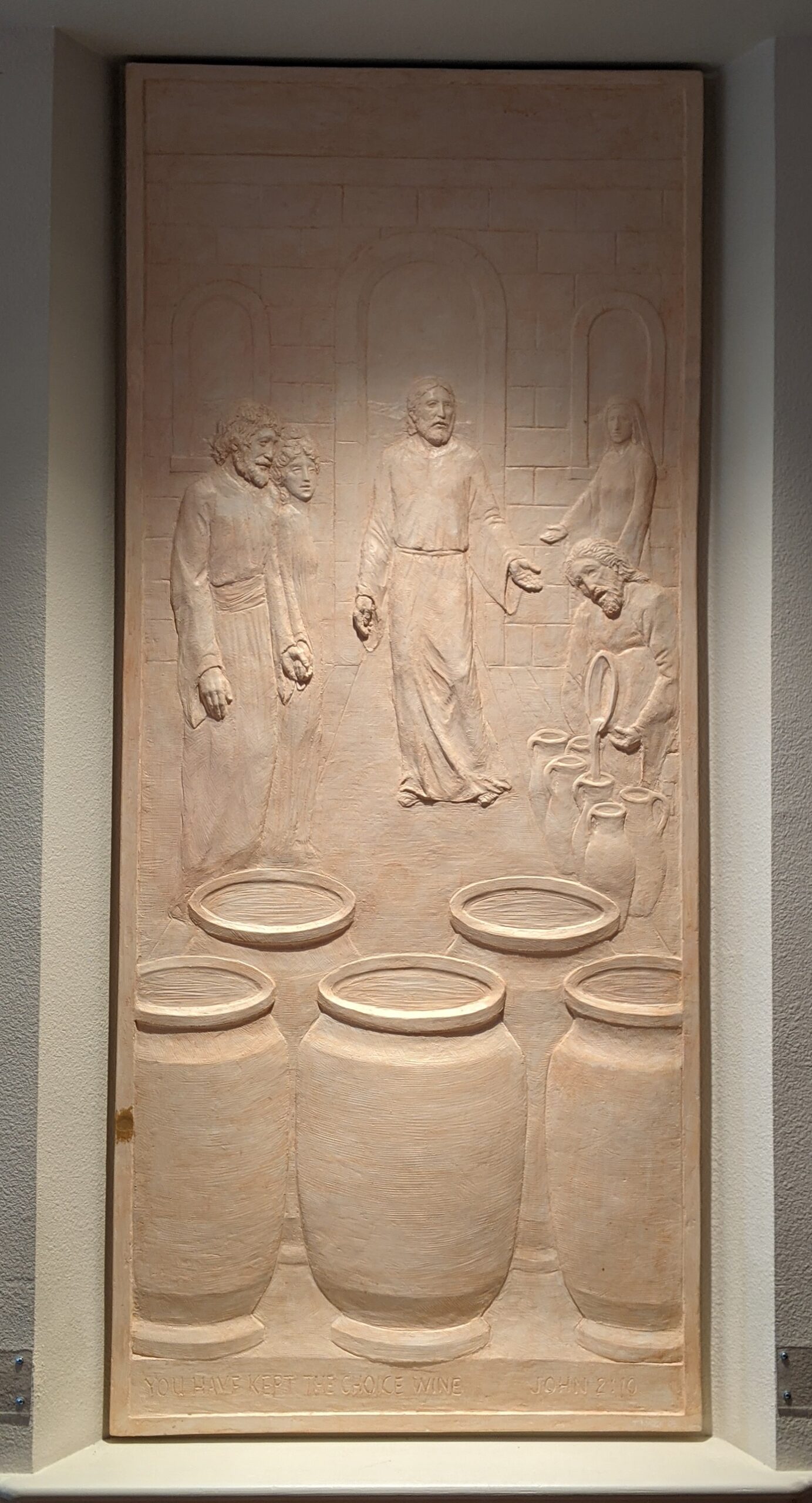
We see another case of scarcity transformed to abundance in the story of Jesus at the wedding in Cana of Galilee, not too far from Nazareth (Jn 2:1-11). Jesus and his friends have been invited to a wedding feast. His mother is there too. It’s a wonderful party and all are having a great time. All, that is, except the hosts. The wine is running out. Someone miscalculated how much people would drink or how many people would be there, or something. It really didn’t matter. Running out of food or drink at a wedding feast is a terrible issue, a shameful thing, even today.

Jesus’ mother notices the problem. She’s probably been involved in planning many weddings and other parties with family and friends through the years. The families of the couple are friends or relatives. What can anyone do to help in such a situation?

In St. John’s telling of the incident, there is something important that she can do. She can tell her son and in so doing, she nudges him to begin his public life. Jesus essentially asks her, “What am I supposed to do about that?” Yet in John’s Gospel, Jesus is presented as one who is in control of what is happening in his life. He is God become human and very much actively in charge of events. He adds, “My hour has not yet come.” It’s not the point in his teaching and ministry to begin doing extraordinary things and showing forth the glory of God, at least he doesn’t think so. But Mary is not deterred. These people need help and they need it right now. “Do whatever he tells you,” she says to the servers.

And so, what to do? Jesus looks around and there are six water jugs in the room. These jugs were used for ritual washing ceremonies when people gathered. Jesus, using what was available, directs that the jars be refilled with water. When this has been accomplished, he instructs the servers to take some to the headwaiter. It was now wine. Not just any everyday, watered down wine, but really good wine. Better than what had been served earlier. The headwaiter even sort of scolds the bridegroom for not serving the best wine first. Folks who have been drinking for a while won’t fully appreciate how good this stuff is!

John ends this story with the comment that in this first of the signs of his coming (as the Messiah), Jesus revealed his glory to his disciples and they “began to believe in him.” He became more than someone John the Baptist thought was important. Maybe he really was someone different and important. Maybe the Promised One had come.

Scarcity had been replaced with an abundance of wine, an abundance of life. God’s presence is revealed.

St. Paul presents another image of abundance (1 Cor 12:4-11). He’s dealing with a community in Corinth that was very diverse and whose members didn’t think of themselves as all being equals. There were many divisions in their society and those divisions didn’t go away when they gathered as a community.

Paul reminds them firmly that there are many kinds of gifts, many kinds of service. All come from God. There is only one Lord. There is no need to argue over which gift or which service is more important. None is more important or more valuable than any other. All are important and all are distributed by God. The Spirit’s presence is seen in each person’s gifts as that person uses the gift for the benefit of all.

A list of different gifts is found here. Wisdom, knowledge, faith, healing, mighty deeds, prophecy, discernment of spirits, tongues, interpretation of tongues. All of these are important, but only if they are used on behalf of the community. No one gets a gift because it is earned or deserved. Gifts are only given as they are needed and they are given to the person who will best be able to use them in service. Yet, there is an abundance of gifts within the community when they are all shared.

The key to each of these stories of scarcity and later abundance is the presence of God. We each have known times that are hard. Times when it seems like nothing will ever get easier. Little or no hope is visible, even on the horizon. Yet when we let the Lord into our hearts in those times, hope begins to blossom like a small flame. As we move forward in trust, serving the Lord and our fellow people with the gifts we’ve been given, however small they may seem, that scarcity falls behind us. We begin to see the abundance of love that fills the world, even when it is masked by “ordinariness” in our days.

Today let’s ask ourselves where the Lord is present, transforming the difficulties and challenges of our ordinary human lives into the beauty of new life, of diadems in the hands of God, of new love between bride and bridegroom, of joyful celebrations of love and new beginnings, and of the growth in wisdom, age, and grace to which we are all called in life.

The Lord has come. Where will we meet him today?

Read More

Posted by on Jan 9, 2022

The Baptism of the Lord – Beginning with Prayer

The Baptism of the Lord – Beginning with Prayer

Baptism of ChristThe Sunday after the Epiphany is celebrated as The Baptism of the Lord. On this day we transition from the first two special seasons of the Church year (Advent and Christmas) to the counted weeks of the year, Ordinary (meaning Counted) Time. Our focus shifts from readings preparing us for the coming of the Lord and those telling of the fulfillment of the prophecies of his coming with his birth, to those that detail just what he did when he came. What he taught and how people responded will be the focus of our readings in Ordinary Time.

Through the years, I have often heard it said that Jesus “submitted” to John’s baptism as a model for all of us. Jesus was without sin, so there was really no need for him to enter into the Jordan River and receive the baptism of repentance that John preached. As we look back on these events, it’s tempting to see them with 20/20 hindsight. We believe that Jesus is sinless, an unblemished human, who gave himself as the perfect model of fidelity to God’s will. Christian writers through the centuries have reflected on the image of Jesus as the perfect and final lamb offered in sacrifice to God, for the “expiation of sin,” an offering in blood to make up for Adam and Eve’s disobedience in the Garden of Eden.

Yet I find myself thinking there might be something else here to notice. Jesus grew up in a family in a small village. His father was a tradesman. His mother was a homemaker. These were both full-time jobs. Both worked to support their life as a family and Jesus would have been part of that working community, doing his share of the chores along with his parents. As a child he learned of his faith and celebrated Bar Mitzvah, becoming a man in his community. He learned a trade and began working as a carpenter, a tradesman like his father. His life was so completely unremarkable that when he came home to Nazareth later to teach the members of his community of faith, they were not able to see past the normality of his life as they had known it and recognize the gift he was bringing to them.

Then when he was about 30, his cousin John came out of the desert and began preaching up and down the Jordan River. John spoke of the coming of the Messiah, the one so long ago promised. He taught about caring for each other and living justly. People went out to see him. John spoke of repentance, a long-time theme among prophets. Return to living as the people of the covenant! Make straight the way of the Lord! Many wondered if he might not be the Promised One himself.

Now, wander in your imagination with me for a moment.  Let’s assume that Jesus was an ordinary man. He didn’t know the full implications of anything he did in the course of his life. He didn’t know he was God become human. He didn’t know that he had never sinned, never deliberately hurt anyone or broken the Law. But I wonder if there might not have been times when he was uncertain whether his actions had been the right ones or not. Might he have thought that there were things he would have done differently if he had been given a chance? A sort of “do-over” that we humans often could use? If this was indeed true, then it makes sense that Jesus, a good and just man who was trying to be the best person he could, always faithful to his God and the covenant, would go to the Jordan to hear John preach and enter the water to be baptized, to be renewed in his life of faith.

We know that Jesus was baptized in the Jordan River and we celebrate that today. When he came out of the river, dripping wet, he stopped to pray, to reflect on what he had experienced there in the water, and maybe to recommit himself to God and his life of faith. St. Luke tells us that as Jesus was praying, “heaven was opened and the Holy Spirit descended upon him in bodily form like a dove.” The coming of God’s Holy Spirit was palpable. It was like a dove gently landing on his shoulder might have felt. It was physically noticeable. It could be felt. Then Jesus heard a voice from heaven, “You are my beloved Son, with you I am well pleased.” The coming of God could be heard too. (Lk 3:15-16, 21-22)

This experience changed the course of Jesus’ life. It was a kind of conversion experience, though he was not a person who had lived a life of great sin or disobedience to God’s commands. He left the Jordan River a different person than when he had come. His consciousness had changed. He still didn’t know that he was the second person of the Trinity. He didn’t know that he was God become human. He didn’t know that his life would change much of the human history that followed. But he knew something had happened. He was praying and he experienced God’s presence and touch in his life in a very special way. His response was to pray some more. He went to the desert to reflect and pray. When he returned, he began to preach, teach, and heal. We’ll hear much more about that as the year goes on. The point today is that his life was forever changed when he entered into a time of reflection and symbolic washing. He emerged as the one who would baptize with the Holy Spirit and fire, foretold by John and the prophets who had come before.

The first and second readings also speak of the role of the Spirit in the life of the Messiah. Isaiah quotes the Lord as saying he has put his spirit upon the chosen one, the one in whom he is pleased. This chosen one will bring justice to the nations, but peacefully, without shouting or crushing anything that is less than perfect and healthy (bruised reeds or smoldering wicks, for example). (Is 42:1-4,6-7) There is an alternate first reading as well, also from Isaiah. In this one, the Lord speaks words of comfort to those in exile, promising they will return to their own land, with the Lord himself leading them. A voice cries out in the desert, “prepare the way of the Lord.” (Is 40:1-5, 9-11)

St. Paul, in his letter to Titus, remarks that when “God our savior appeared…he saved us through the bath of rebirth and renewal by the Holy Spirit.” (Ti 2:11-14; 3:4-7) This bath of rebirth is our baptism with water. It’s not the same as John’s baptism of repentance, but something even better. It brings an entirely new life, a sharing in God’s divine life through the Holy Spirit.

In another optional reading from the Acts of the Apostles (10:34-38), Luke tells us about Peter’s experience with the household of Cornelius, a Roman centurion who was instructed in a dream to send to Peter and have him come to his home. Peter was hesitant, but when he arrived, he discovered that the Holy Spirit had been poured out upon Cornelius and his family. This confirmed for Peter that the Gospel was for all people, not just for Jews. And the rebirth of baptism was opened to all of us.

In each of these readings, we see the importance of prayer and the gift of the Holy Spirit pouring out on the one who prays, opening up new vistas for life. If even Jesus, the Son of God, needed to pray and open himself to God’s gifts, how much more important is it for us to do the same? We won’t all have dramatic experiences of God’s coming into our lives more deeply. For some it will be a much more gradual, silent, gentle deepening of awareness of the Presence. For others it will be more dramatic. (Those dramatic moments and encounters still happen in our day, sometimes during experiences of prayer or meditation.) The important thing is to remember to pray.

So, let’s take this as our plan for Ordinary time this year. Make time for prayer. There are lots of times and ways to pray. Need to wash your hands for 20 seconds for COVID prevention? A “Hail Mary” and a “Glory Be” will take about 20 seconds. The Angelus is traditionally prayed at in the morning, at noon and at 6 pm. Keep a copy of it inside a cupboard door in the kitchen and pray it as you fix dinner. Eventually you’ll remember it and can pray it in the morning and at noon too! The rosary can be prayed any time, even without a set of beads. Our five fingers on each hand make a great decade counter. Having trouble going to sleep at night, pray the rosary and don’t worry if you fall asleep as you pray (a.k.a. “praying with Jesus in the boat”). Mass is celebrated every day except Good Friday and Holy Saturday. Visit a church once in a while for Mass on a weekday if you are able to fit it into your schedule. Liturgy of the Hours was developed a long time ago for people who couldn’t gather with the Christian community on a daily basis to celebrate the Lord’s Supper. It’s available on-line now or in books such as Christian Prayer. Download Liturgy of the Hours to your phone and it’s ready whenever and wherever you are.

As we celebrate The Baptism of the Lord and the beginning of Ordinary Time, let’s dedicate the same attention to prayer as we do during the special seasons of the year. God is here now, just waiting eagerly to hear from us.

Read More

Posted by on Dec 12, 2021

Our God Rejoices and Renews Us in His Love

Our God Rejoices and Renews Us in His Love

Gaudete Sunday is another name for the Third Sunday of Advent. The name comes from the first words in Latin of the Introit, the psalm or hymn at the beginning of the Mass. Today’s Introit begins with words from St. Paul’s letter to the Philippians (4:4-7), “Rejoice in the Lord always.” The passage in this letter is filled with hope and joy. Rejoice! The Lord is near. The Lord cares about us. So don’t be afraid of anything. Ask God with confident thanksgiving for what is needed. And our hearts and minds will be filled with God’s peace. This is truly wonderful news.

We can see a similar theme in the reading from the prophecy of Zephaniah (3:14-18a). Zephaniah was another of the prophets who lived during the time of King Josiah (640 – 609 BC). This was a time when the kingdom of Judah was allied with the Assyrians and had adopted many of the gods and practices of their allies. Zephaniah’s prophecy came during the first 10 years of Josiah’s reign. It’s a short piece, just three chapters. The unfaithfulness of the people of Judah and some of their leaders is set forth. The statement that the unfaithfulness would be punished follows. Yet there is hope after all, because a small remnant of those faithful to the Lord remain. In the end, those faithful ones will survive. Zephaniah cries out, “Shout for joy, O daughter Zion! Sing joyfully, O Israel!” Why? Because the King of Israel (who is the Lord) is present among them. This Lord “will rejoice over you with gladness and renew you in his love.”

What a wonderful image! How hopeful for us all – Our Lord God rejoices over us and sings joyfully because of us.

This theme is repeated in the Responsorial Psalm, which today is actually a passage from the prophet Isaiah. “Cry out with joy and gladness: for among you is the great and Holy One of Israel.”

With such a long history of faithfulness on God’s part and varying periods of being faithful and falling away among the people, the appearance of a new prophet in Israel was always of interest. This is especially true when the nation has been conquered and the people are ruled by foreign powers. Who will come to lead the nation to freedom this time? Will this be the time that a new kingdom begins and Israel again becomes a powerful nation? Who is the chosen of the Lord this time?

When John the Baptist arrived on the scene, people were ready for a change. They hated paying taxes to Rome. The riches of their nation were being taken for the use of others in the empire. Foreign rulers were making sure no dissent could safely be voiced. Those who opposed their rule were executed. Who would come to save the people?

John came speaking of repentance and paving the way of the Lord who is coming. He quoted the ancient prophets who spoke of the Chosen One coming to restore the glory of Israel. “What should we do?” the people ask. How do we prepare for the coming of the Chosen One? How do we make straight the path?

John gives very practical answers. If you have two cloaks, give one to a person who has none. If you have extra food, share it. If your job is to collect taxes, only collect the amount owed. Don’t take extra for yourself (a legal and common practice that made tax collectors particularly unpopular). If you are a soldier, don’t use threats to make people pay you. Don’t accuse anyone falsely. Be content with what you are paid, don’t go around making people pay extra to be left in peace.

These are all things that most of us would say make perfect sense. In fact, much of our social contract is based on these types of behaviors as the rule for all. However, then as now, there are always those whose approach is different – those who want to see how much they can get for themselves. John’s words gave great hope to his listeners. Could this be the promised one? Could he be the Christ?

Again, we might not phrase this question in terms of promised ones or messiahs. We live in different times. Our challenge is to evaluate the latest fads, the celebrity of the day, the newest consumer goods or leisure activities. Is any of these going to prepare us for the coming of the Lord in our midst? Is any of these what will make clear that the Lord is already in our midst?

John told the people that one mightier than he was coming. This one would fill them with the Holy Spirit of God and gather them safely like a farmer bringing the harvest into a barn at harvest time. St. Luke tells us, “Exhorting them in many other ways, he preached good news to the people.” (Lk 3:10-18)

Words of encouragement. The Lord is coming. The Lord rejoices with us. The Lord takes delight in us. Truly good news for all.

Today let us rejoice. The Lord has come and is joyfully among us. Let’s open our eyes and our hearts to see and share this joy.

Read More

Posted by on Nov 14, 2021

The End Draws Near

The End Draws Near

There is a saying, “All good things come to an end.” In our daily lives, we experience this again and again. But sometimes, the end turns out to be a transition to something better. Sometimes, it’s just the end of a cycle and things begin anew.

This is the case with the readings for the Thirty-third Sunday in Ordinary Time, the next to the last Sunday of the Church year. We have traveled through the life of Jesus, from the time shortly before his birth through his Passion, Death, and Resurrection. We have heard the stories he told and met the people he met along his way from Galilee to Jerusalem during the three years of his public ministry. Now the end of the cycle draws near and we hear from both Hebrew and Christian scriptures of what will happen in the final days of salvation history. What will happen at the end of time?

The Book of Daniel tells the story of the Hebrew people during their time of exile in Babylon, but it was not written during that time. It was written much later and is an example of apocalyptic literature – literature that deals with end times. This type of literature often arises during times of persecution and suffering. The story of Daniel, a prophet, was probably written during the time the Jews were being persecuted under the reign of King Antiochus IV, just over 150 years before the birth of Jesus. The prophet hears and proclaims the word of the Lord. “At that time there shall arise Michael, the great prince, guardian of your people.” Michael is an archangel, the one who is God’s defender of the people. Michael protects the good people during a time of great distress. These people escape and will shine brightly, leading the multitudes to justice and eternal life. (Dn 12:1-3) It is noteworthy that by this time in Jewish history, the idea of life after death is seen as a reality for the righteous. It was an idea still being debated during Jesus’ lifetime, but it was accepted by large numbers of people and their leaders.

Stones Thrown to the Ground        by Roman Soldiers

Jesus was familiar with the apocalyptic literature of his people and spoke of the coming end of time during his final days in Jerusalem. The Romans were known to tolerate no dissent and no rebellions among the people they governed. Yet there was a continual undercurrent of discontent among the Jews and an absolute refusal to tolerate worship of the gods of other peoples. The coming of a Messiah to overthrow the foreign conquerors and re-establish a Jewish kingdom was eagerly anticipated. People wondered whether Jesus might be that hero and welcomed him to Jerusalem with all the fanfare they would give to a conquering hero returning home. Jesus knew that military might was not the way the kingdom of God was going to come to the world. He continually reminded his followers that this was not the path he would take. One day, after teaching in the temple, someone commented on the size of the stones that formed the building. Jesus responded that the stones would soon be demolished and not one left upon the other. (Around the time this gospel was written, the temple in Jerusalem was destroyed by the Romans following a rebellion by a group of Jews known as Zealots. The people had  been scattered into exile.)

Later that day, Jesus spoke with his friends and warned them that hard times were coming. They personally would suffer because of their loyalty to him. The entire nation would suffer because many others would come later and try to overthrow the Romans. Many would claim to be the long-awaited Messiah, but they would be false prophets and false messiahs. All would suffer as a result.

It is at this point that our reading today picks up (Mk 13:24-32). Jesus speaks of the last days of the world and his return to gather the faithful to the kingdom. He speaks of himself as the Son of Man, a title from the book of Daniel used to name and describe the Messiah.

No one knows when that last day and the return of the Son of Man will occur. Even the Son does not know. But all are to live their lives prepared for that last day to arrive. We are all to keep our eyes open and notice the signs of the times, just as we notice the changing of the seasons

It’s been a long time since these prophecies were first spoken. Many generations have passed, and likely many more will come and go before the end of the world. But the sacrifice made by our High Priest, Jesus, does not ever need to be offered again, according to the author of Hebrews (10:11-14, 18). The reconciliation between God and all of creation has been accomplished. No matter what happens, a new age has dawned. Salvation has come.

We sing with the psalmist, “You are my inheritance, O Lord! … my heart is glad and my soul rejoices … You will show me the path to life … the delights at your right hand forever.” (Ps 16)

Our liturgical year is drawing to a close. The end of days has not yet come. We face many difficulties, misunderstandings, deliberate lies, political divisions, pandemics, and other trials in our daily lives. But this is really nothing new. It has happened again and again in history. May we cling to the promises of our Lord and live in the way he taught us, being peace-makers and healers of division in our world. Very soon we begin a new year as a community. Let us take the remaining days of this year to celebrate  the protection and love of our God and prepare for the coming of the Lord into our lives today and in the days to come.

Read More

Posted by on Nov 7, 2021

Absolute Trust in the Lord

Absolute Trust in the Lord

“There is only a handful of flour in my jar and a little oil in my jug … when we have eaten it, we shall die.”

The prophet Elijah and a widow star in today’s reading from the book of Kings (1 Kg 17:10-16). Elijah has fled the wrath of Jezebel and Ahab, traveling to the city of Zarephath. Jezebel, as you will recall, has sworn to kill Elijah for his opposition to the decision of Ahab to worship the gods of her people and encourage the people of his kingdom to do the same. One would think Elijah would travel far from any lands connected to Jezebel. But the Lord sent him to the land of Sidon, ruled by Jezebel’s father! (Ever heard the phrase, the Lord’s ways are mysterious?)

Elijah arrives in Zaraphath, hungry, tired, and thirsty. A woman is gathering sticks there. Elijah asks her for a cup of water. When she starts off to get it for him, he asks for something more, a bit of something to eat. It is at this point that her situation becomes clear. She is a widow and has a child. In those days, there was no social safety net. No one was there to help her. Her husband was gone. His family was no longer responsible for her care. Her family had long since given up any responsibility for her. She was on her own. There was no way for her to go out and get a job to support herself. Many women in her situation had no option but to become prostitutes. The lives of these women were short and hard. Their children had no future either. They were left to become beggars, servants, thieves, slaves, or worse!

“Do not be afraid,” says Elijah. These words are so often heard in the scriptures. The Lord will take care of it! He assures her that there will be enough flour and oil for him to have a little cake/bread. The flour and oil will not run out until the rains come again. (This was a time of drought and supplies of food were scarce, making her situation even more precarious.)

We remember this woman because, though she was not a Jew, did not worship or know the Lord, and did not know this man who had come asking for her help, she took a chance and trusted him. She made the bread for him and hosted him in her home through the entire time he lived in Zaraphath, until it became time for him to return to his own land. The jar of flour did not go empty, nor did the jug of oil run out for the entire year they lived together.

Another widow caught the attention of Jesus in the temple in Jerusalem. On this Thirty-second Sunday in Ordinary Time, we hear the story often known as the widow’s mite. (Mk 12:38-44) As the story begins, Jesus was teaching in the temple. He warned those listening to him to beware of the scribes.

Last week we heard the story of the scribe who was praised by Jesus as a man not far from the Kingdom of God. That scribe had heard Jesus teaching when the widow in today’s story gave her gift to the temple. He asked Jesus the question about the greatest commandment and praised Jesus for his answer to the question. But this story came first.

The scribes to whom Jesus was referring here were educated men who served as recorders and lawyers. They knew the law and were careful to observe the letter of the law. Jesus did not criticize their knowledge or their position as specialists. However, he was incensed at the behavior of those who demanded high fees for their services as lawyers and justified the price by their apparent holiness. They recited elaborate prayers and accepted honors from all, then cheated widows and the poor.

Watching the people come and go in the temple, Jesus observed that many well-to-do people came and put large amounts of money into the collection boxes, the treasury. Checks were not used in those days, nor paper money or credit cards, so it was obvious when a large amount of money was being deposited. Then a poor widow came along. She gave two very small coins. These were something like giving two pennies. Not much to offer in comparison with the gifts given by most people. Certainly not enough to warrant attention or praise from bystanders. Yet Jesus noticed and praised her. He noted that those who were giving large gifts were not making any real sacrifice or putting any real trust in God. What they gave was what was left over after all their needs had been met. The woman, on the other hand, gave all that she had. There was nothing held back. She was now totally dependent on God. Her gift was much larger than that of the others, despite being such a small amount in absolute terms. With the psalmist, she could sing, “Praise the Lord, my soul!” The Lord who keeps faith, securing justice for the oppressed and food for the hungry (Ps 146): in this Lord she trusted totally.

Jesus sat in the temple and watched. He taught there. He prayed there. Sacrifices had been offered there on his behalf. That day, he would not likely have thought of himself as a High Priest. He was a carpenter who had received a call from God to tell everyone that the Kingdom of God was at hand. He was to bring good news to poor and rich alike. The Kingdom of God is at hand. Be good to each other. After his death and resurrection, the community reflected on what had just happened and tried to explain it in terms of their religious tradition. (Heb 9:24-28) They knew the High Priest offered sacrifices for himself and all the people. Day after day, year after year, sacrifices were offered in the temple. Yet Jesus had given himself and been raised up by the Father. Jesus had offered the perfect sacrifice to reconcile God and humans, giving himself as the faithful witness to God’s Kingdom and Love. This sacrifice would never need to be repeated. Jesus had promised to return to them. They awaited his coming eagerly.

It’s taken a lot more years than the early followers of Jesus thought it would take before his second coming. We’re not there yet, over 2,000 years later. Yet the stories of these two widows and the reflections of the psalmist and the author of the Letter to the Hebrews still speak to us of the call to absolute trust in God’s love and protection. There are times when we too must simply trust that enough material goods will come along to provide for what is needed, especially when we are asked to take precious time away from “earning a living” to help someone who is unable to fend for themselves. Or when we are asked to share the little bit extra we’ve set aside for something we want but don’t absolutely need. We don’t always get exactly what we might think we need, or when we think we must have it, but we get what is really needed, when it is needed, and not a second before then. I like to think of it as “God’s Just-In-Time Financing.” When the chips are down, something or someone comes through with the particular thing that is most needed.

Today I pray for the grace to continue to trust the Lord and the grace to be generous with my time and treasure, just as the two widows so long ago trusted in the Lord’s protection and care.

Read More

Posted by on Oct 31, 2021

Hear, O Israel! A Call Ever Ancient and Ever New

Hear, O Israel! A Call Ever Ancient and Ever New

The ancient world was home to many peoples and traditions. Like peoples today, questions arose in these cultures about how things came to be the way they are. Why does the sun shine only during the day? Why do the seasons change? Why do people do bad things sometimes? Why do they ever do good things? What will happen if nothing changes?

Cultures throughout the world and throughout history have struggled with these types of questions and have developed their own explanations of how things came to be and what is possible. In the ancient world, most peoples explained the physical world they saw around them and the events in their world with stories of gods – supernatural, immortal beings who were responsible for the creation of the world and the major events that affected the lives of humans. Is there a drought? It’s because the god of rain has been offended. Is there too much rain? Might be the same reason. Are we hoping for a good harvest? Then pray to the god of the harvest and offer a sacrifice of something that god likes.

There were many cultures and all had their own gods, with their own names. Yet as people from these cultures met, traded goods, and sometimes fought with each other, they noticed that many of their gods were the same as in the other culture. They realized some of these might actually be the same god, but with different names. It didn’t bother them. Sometimes they welcomed a new deity into their own religious beliefs, especially if that new one offered something new of value to them. Only when one people was conquered by another and the new one demanded that everyone worship the conquering people’s deities did issues arise. Generally, there was simply a sense that gods were active in particular areas and not in others. This was why Abram was surprised to find God present in all the lands he visited during his lifetime. Abram and his family lived in many different lands, yet God was present in all of them.

The Israelites differed from the people of surrounding countries and even of the land of Canaan in which they lived. They believed in a single deity. This deity was not like humans, with wives and children and battles with rival deities. Theirs was one God. Period. End of conversation.

The first reading for the Thirty-first Sunday in Ordinary Time reminds us of this unique perspective of the Hebrew people and its formulation. Moses has brought the tablets of the Law down from Mt. Sinai to the people. God has offered a contract, an agreement, a holy covenant to them. God will be their God and they will be His people. He is Lord (ruler) of all. He can command and they will obey. In return, He will protect them and give them rich harvests and security in the lands they inhabit. (Dt 6:2-6)

Moses speaks powerful words, words that have echoed through the centuries and are recited as part of both morning and evening prayer by faithful Jews. They are even worn in special garments as a reminder. “Hear, O Israel! The LORD is our God, the LORD alone!” This proclamation is known as the Shema. It is known and recited by Jews around the world and throughout history. What follows this first bold statement is a summation of the covenant responsibilities of the people: Love the Lord with all your heart, soul, and strength. This is the first and fundamental requirement of the Law and the Covenant.

The Psalmist sings with love and joy of this relationship with the LORD (Ps 18:2-4, 47, 51). “I love you, Lord, my strength.” He speaks of the LORD as a rock, a fortress, a shield, a stronghold. He praises the LORD for being a savior and bringing victory to the anointed king of the nation.

As a good Jew, Jesus also knew and recited the Shema.

After he entered the city of Jerusalem, he began going to the temple daily and teaching there. The priests, scribes, and elders of the temple noticed his activities and began to speak with him. His reputation had preceded him and many were likely concerned that he would awaken the hostile interest of the Romans, bringing danger to all. Members of various schools of thought among the Jewish leaders and scholars began to question him in the temple. Jesus answered many questions. Sometimes he asked another question instead of answering them directly, because he knew they were trying to trap him using his own words. Sometimes he told a story as answer to the question.

One day, a scribe heard Jesus talking with a group of Sadducees. He was impressed by Jesus’ answer to their questions and his manner of interacting with them. The scribe, a man who had specialized in study of the Law, asked Jesus a simple question (Mk 12:28b-34). “Which is the first of all the commandments?” Jesus responded by reciting the Shema. “Hear, O Israel! The Lord our God is Lord alone!” Jesus recited the entire verse. Then he added a second commandment, taken from the book of Leviticus 19:18, “You shall love your neighbor as yourself.”

The scribe complimented Jesus on his response. “Excellent, Teacher! You are right…” He noted that loving one’s neighbor was much more important in pleasing God than offering many sacrifices. Jesus saw that this scribe was a man of great insight, not focused on the letter of the law so much as on the implications of what it meant. Jesus complimented him in return, “You are not far from the reign of God.” These words echo the belief that reciting the Shema and making its words the fundamental basis of one’s life is really receiving the kingdom of Heaven (of God).

Jesus spoke as one with authority. The author of Hebrews (Heb 7:23-28) describes him as the one whose priesthood is not based on being a descendant of Jacob’s son Levi but rather on an eternal priesthood stemming from the earlier promise God made to Melchizedek, a promise of eternal priesthood. This new high priest, Jesus, is not a descendant of Levi, but as high priest he brings the ancient Levitical priesthood to a close, offering himself to bring reconciliation between God and humanity. He is the son who has been made perfect forever.

You and I are not expected to be perfect. We will never be perfect. However, we too are called to remember the two great commandments. “Hear, O Israel…” We are children of Abraham through our adoption as sisters and brothers of Jesus. God is One. There is no other. We are to love God with all our being and our neighbors near and far as ourselves. These commands are to be written in our hearts and minds and entire being.

How am I doing with that? Am I expecting God to act like I would act when dealing with the challenges and frustrations I face in daily living? Or am I taking time to remember instead that I am to try to love as God loves in response to those challenges? Do I take time to pray each morning? Do I remember to chat with God during the day? Do I say thank you at the end of the day?

Hear, O Israel … and Kathy too!

Read More