Pages Menu
RssFacebook
Categories Menu

Posted by on Dec 12, 2010

Lived Religion – Relating to Our Lady of Guadalupe

Lived Religion – Relating to Our Lady of Guadalupe

Lived religion is a sociological term for the way people behave on a day to day basis. Santa Clara University sociologist Maria del Socorro Castaneda Liles has written Our Lady of Everyday Life an ethnography of Mexican American women and their relation to Our Lady of Guadalupe. Joe Rodriguez, a columnist for the San Jose Mercury News has summarized this research in the title of his article with the words Mother, Friend, Lawyer. Pesonally, I would not have used the term “lawyer” because it has a more legal, technical connotation than the word advocate. The Spanish term “abogado” is used for both.

These interviews documented something familiar to most of us who share a Mexican heritage. There is more of a casual, friendly, and intimate conversation between devotees and the Virgin, as opposed to a more ritual relationship embodied in formalized prayers or devotional manuals. The interviews also show that women and their sense of themselves is changing.

Younger women felt that Our Lady could relate to their economic struggles as single mothers and to their decisions to control the number of children they have. In Guadalupe, they find the Mother of God as strong, resourceful, and capable.

This theme of empowerment might seem new and contemporary but it is at the heart, literally the heart, of the Guadalupe experience for the conquered indigenous people of Mexico and the “Gran Mestizaje,” the resulting nation of people created by the blending of European, African, and indigenous American groups.

The appearance of Mary, pregnant and dark complected as the advocate and protectress of the lowly, the powerless, is also an act of heavenly recognition of human dignity and worth.

From a purely secular standpoint this is a startling phenomenon. The general pattern in times of such social upheaval and distress is the development of revitalization movements which attempt to go back to earlier better times, to plead with the gods who have abandoned a civilization, or in some cases to engage in “ghost dances” to render themselves invisible.

In many respects, the name Guadalupe is an attempt by the Spanish to claim the apparition as that of one of the black Madonnas from their homeland who was also a patron of Christopher Columbus. Yet, people who know her real name call her “Tepeyac” from the hill on which she appeared.

While it might be tempting to equate her with Tonantzin, the Aztec goddess of the dawn, the woman who appeared to Juan Diego and her subsequent cult had none of the darkness and blood that characterized the Aztec and Meso-American pantheon.

The slide show from the online version of the same article conveys the intimacy of a people and their “Patrona”.

Read More

Posted by on Oct 14, 2010

Quote of the Day – M. Shawn Copeland

“If my sister or brother is not at the table, we are not the flesh of Christ. If my sister’s mark of sexuality must be obscured, if my brother’s mark of race must be disguised, if my sister’s mark of culture must be repressed, then we are not the flesh of Christ. For, it is through and in Christ’s own flesh that the ‘other’ is my sister, is my brother; indeed, the ‘other’ is me…”

From Enfleshing Freedom, by M. Shawn Copeland, 2009

Words to consider as we come together in communities for worship.

Who isn’t here? Why not? What do we need to do to be welcoming communities for all of God’s people?

Read More

Posted by on Dec 31, 2009

Lived Religion – Relating to Our Lady of Guadalupe

New Year’s Greetings and Wishes

New Year's Eve in Rio

New Year's Eve in Rio

It’s New Year’s Eve in Santa Cruz. A year has nearly ended and a new one is fast upon us. On top of that, the first decade of the new century is coming to a close. So much has happened in the past 10 years – for all of us. Some has been good. Some has been bad. Some has been just normal. That’s the way life goes.

Still, as Christians, we live with the belief and hope that God is in it all and brings good out of even the terrible times of our lives. The God who couldn’t bear to sit back in isolation from all of creation and from the human beings He created entered into our lives and history, to bring us all back into union again. It’s not up to us to become perfect and worthy of God. God became one of us and in doing so, made that re-union possible. We just have to let go of anger, jealously, hatred, fear, and all the other negative energies which we so easily hold onto and nurture. God will even help us let go of them.  It’s all a free gift!

So, at this time of a New Year and a New Decade, may the Love and Peace and Joy of God fill each of our hearts, so that no room remains for harboring the negative, life-draining spirits that lurk among us. May we look at each other and at ourselves and see the Face of God looking back at us. May we rejoice in the beauty of creation and of each person. May we trust that when the hard times come, as they certainly will, God will be with us personally, holding our hand and helping us through them. And may we move forward with confidence that we are loved and lovable, just as we are. Of course, there’s room for growth in love, patience, faithfulness, joy, and so forth, but we are each loved NOW, by our God who is absolutely crazy about us and just wants to hold us close in a huge, big hug.

What great good news that is!

Happy New Year.

Read More

Posted by on Dec 1, 2009

Lived Religion – Relating to Our Lady of Guadalupe

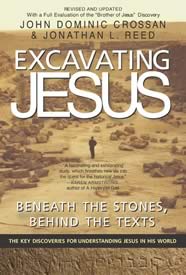
Excavating Jesus: The Real Christ?

excavatingjesus

John Dominic Crossan, the co-founder of the Jesus Seminar, is well known for his iconoclastic views on the historical Jesus. Excavating Jesus, written with archaeologist Jonathan Reed, is stimulating and challenging. Crossan’s argument that Jesus was a Galilean peasant who engendered a Kingdom movement after the murder of John the Baptist is compelling to me as an anthropologist, but it doesn’t seem to be the whole story.

The blending of archaeology and exegesis is intriguing. The use of ancient historical sources, such as Josephus and Pliny, and literature not included in the Bible, such as the Dead Sea Scrolls and the Gnostic Gospels, weaves a colorful and variegated tapestry. Is this the actual Jesus of history?

I’m not entirely convinced. To me it seems implausible that such a movement could arise from so unremarkable a prophet. The number of Jews killed by Rome for posing as popular leaders is very large. Why would one be singled out for such an inflation into the Word made flesh? If the Gospel stories are to be taken as parables or mythic metaphors about a deeper meaning, who created this literature and for what reason? If Christianity were created in this way, it would be a social and cultural process without parallel. Zoroaster (the Persian priest who founded Zoroastrianism), Sidartha Gauthama, (the founder of Bhuddism), and the Prophet Mohammed (the founder of Islam), are remarkable historical figures – but none of them according to their followers claimed to be God.

If somehow the peasant founder or spokesman for a resistance or “terrorist” movement is magnified by his followers, why would devout Jews be so blasphemous as to make him into the messiah and a god? Somewhere there is a missing link between this peasant of history and the Christ of history.

It is very curious how Crossan holds the Gospel accounts up to the measure of Josephus’s history. Crossan then compares the claims of other contemporary religions as part of a general magical mentality. Somehow, Josephus could write from an historical perspective of relating true events but the Gospel accounts of the life of Jesus are to be seen as parable and allegory? That isn’t to say that various oral and written sources weren’t involved in the development of the Gospel accounts. In fact Crossan goes to some effort to stress that the early Christian community took them to be true and those involved in their composition believed in their veracity.

All in all, there is still a core of speculation in this fascinating book. It is an attempt to put many puzzle pieces together. It seems, though, that the Jesus he finds would not be capable of inspiring a Jesus movement that would grow into Christianity. In many respects, Crossan’s Jesus of history could inspire a movement, but it does not seem plausible that it would endure, let alone become a world religion.

Read More

Posted by on Jun 15, 2009

Lived Religion – Relating to Our Lady of Guadalupe

Quote of the Day – Diarmuid O’Murchu on Ancestral Grace

Ancestral Grace

Orbis Books has published a new work by Irish Catholic priest, Diarmuid O’Murchu, entitled Ancestral Grace. It  offers a challenging new perspective on evolution, environmental bioregionalism, Christian tradition and their reconciliation into a comprehensive and optimistic vision of the future of humanity.

I offer this quote from the book and invite you to consider it with open mind and heart.

Being human is the gateway to access divine meaning. Indeed, ancestral grace thrives on the great story of humans being receptive and responsive to divine initiative over several million years. The humanity of Jesus is the key that unlocks the secrets of divinity, not the opposite, as we have believed for much of the Christian era. The mystery of God becomes transparent in the mystery of the human. . . Jesus is the first disciple of ancestral grace.

~ Diarmuid O’Murchu

Read More

Posted by on Apr 29, 2009

Lived Religion – Relating to Our Lady of Guadalupe

Emmaus: Pre and Post Christian

The supper at Emmaus' (1958) by Ceri Richards (1903-1970)

The supper at Emmaus' (1958) by Ceri Richards (1903-1970)

My favorite story is the Disciples on the Road to Emmaus (Luke 24: 13-35). Michael Traynor of the Lesscoolthanyou Channel captures the experience of the disciple before the Breaking of the Bread in a way that evokes a very current state of affairs.

Read More

Posted by on Apr 12, 2009

Lived Religion – Relating to Our Lady of Guadalupe

Resurrection Sunday – 2009: Jesus Did Not Die for Me

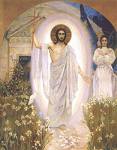
Resurrection of Christ - Mikhail Nesterov (late 1890s)

Resurrection of Christ - Mikhail Nesterov (late 1890s)

Jesús No Murio Por Mi

Jesus Did Not Die for Me

Holy Weekend
The time of customary rituals
Of words spoken a thousand times
A season of the silence of death
Fasting, resolutions, and processions
A time of self-contained euphoria
As it seems sin sees the ending
We already know
and will flood all with life
A shallow season of hypocrisy
“Happy Easter”

A season of churches in a thousand different ways
yet a thousand ways the same
Cannot say other than what they have always said
“Jesus died for our salvation”
But “You know what?”
Jesus didn’t die for me
Jesus died because of cowardice,
greed, arrogance, love of power
by those who did not understand his message
by those afraid of the new
by those who had made a god to their own stature
by those who did not accept his offer of life to the full
not for just a few but for all men and women.
That death did not save anybody
Not even those who believed that they are saved by Jesus.

What saved me and you
And continues to save
Is that Jesus who became a person
Who identified with the people
Who was a baby and cried,
Who was a boy and played
Who grew and worked
Who was called to a mission and took it on
Who paused before the pain of men and women
Who in solidarity of gestures, words, and actions
Who did not silence what had to be said
And who though fearful, moved ahead
out of love, sheer love.

It was not his death, so cruel and unjust.
It was his life!
If death can be salvation
Whan can resurrection mean?
What sense does it make to celebrate Easter?
Death does not save
Even if it scandalizes theology
Life saves.
That is why resurrection is the great cry,
The lead story, the great news of our time
For this the stone rolls aways, the tomb opens
And foot steps are heard in the garden

God raises up Jesus
To condemn death forever
To announce that Life has won out
and that faith in the this Jesus who lives
who conquers the mercenaries of terror
is the faith that saves and
is the faith that makes us free.
What Peter said with such clarity
“This same Jesus whom you crucified
God has made Messiah and Lord”.

Jesus did not die for me.
They killed Jesus!
Jesus died because they tortured him in a blind rage
Because they wanted to shut him up and make him disappear
And because the powerful have always killed Him.

Yes, Jesus was born for me.
He also lived for me,
He taught, healed, pardoned, loved and rose again for me
for you and and for everyone.

Jesus did not die for me
nor for you nor anyone else
Perhaps, some day
We will stop honoring his death
In order to begin celebrating His LIFE.

Gerardo Oberman

translated by Randolfo R. Pozos 2009

Read More

Posted by on Jan 6, 2009

Lived Religion – Relating to Our Lady of Guadalupe

Epiphany

Hieronymus Bosch - The Adoration of the Magi

Hieronymus Bosch - The Adoration of the Magi

The Feast of Epiphany is traditionally celebrated January 6 in the Western Church. Recently, we have begun to celebrate it as a community on the first Sunday of January after the Feast of Mary, Mother of God (January 1st).

Epiphany, from the Greek “to manifest” or “to show forth,” is a celebration of God’s presence bursting forth and becoming visible in human lives. For Western Christians, the focus has been on the visit of the Magi, the wise ones, who followed a star from the East to find the newborn king. In this story, we see God’s presence being revealed to non-Jews, to Gentiles. For Eastern Christians, the focus is on the Baptism of Jesus, when Jesus became identified as the Son of God. The feast is sometimes known as Theophany in the East. (In the Western Church, we too celebrate the feast of the Baptism of Jesus, but on the Sunday after we celebrate Epiphany.)

In many Christian countries, especially those bordering the Mediterranean and in former colonies of those countries, gifts are exchanged at the Feast of Epiphany. This is because the Magi brought gifts to the child Jesus – gold, incense (frankincense) and myrrh. The gifts named in Matthew’s gospel can be seen as symbolic of the roles Jesus would play in salvation history – as king, deity, and human victim/sacrifice – as a result of the incarnation. Songs such as “The First Nowell” and “We Three Kings” remind us of the story and tell it again to our children.

During this season of Epiphany, may our eyes be open to see God’s presence in the people around us – the children, the babies, the old ones, the ones on the street, the ones at our work or in our homes. God is forever peeking around corners, knocking on doors in our hearts, smiling out of flowers, singing through the voices of birds and trying in every way possible to shine forth into our lives. May we be gifted to see and to smile in return.

Read More

Posted by on Dec 24, 2008

Lived Religion – Relating to Our Lady of Guadalupe

The Star: Signs in the Heavens

christmas-eve-goa

Lackey #1:  Your Grace the neo-pagans are at the door.

His Grace:  Very Well. Let them in and call my theologians.

Lackey #1 to Visitors:  Please be seated, the palace theologians will be with you shortly. Would anyone like coffee or mineral water?

Visitor #1:  We appreciate the welcome but we were hoping to speak with his Grace. We have come a long way with a special message for his Lordship.

Lackey #1:  I’m sorry, it won’t be possible. Philosophers, sages, luminaries, and other thinking persons have to be interviewed by the court theologians. I’m afraid it is protocol.

Visitor #2:  We emailed our request for an audience some time ago and explained that we have a message based on Signs in the Heavens.

Lackey #1:  I’m sorry but we only receive messages, electronic or otherwise, from persons who are properly credentialed. It all started after that unfortunate affair with John the Terrorist and his threats against the government.

Visitor #3:  We thought that he was some sort of leader of revivals – a fringe sort of religious figure with some sort of discredited theology of liberation. We didn’t know he was a terrorist.

Lackey #1:  Most people don’t know that and we would prefer to keep it that way – but some of his followers confessed after some aggressive interrogation.

Visitor #1:  We thought that torture was outlawed here in the Commonwealth.

Lackey #1:  It is, but let’s just say that our less squeamish allies can be of great assistance. Besides, most of our citizens are in favor of  “necessary means” according to the polls if it will produce valuable information.

Visitor #2:  You mean they would give up their constitutional rights?

Lackey #1:  Not their own rights, mind you – just those of people opposed to his Grace. Well, here are the members of the Government’s Panel of Divinity. Please rise.

Theologian #1:  Welcome Ladies of the New Age or should I say Priestesses of the Orient?

Visitor #1:  Actually, we are astronomers and astrologers – scientists and visionaries.

Theologian #2:  We are interested in speaking with you. We are specially licensed to deal with the occult and other forms of demon worship.

Visitor #2:  We are not shamans or priestesses of the Crystal.

Visitor #3:  We study the stars and are accredited to the Global Space Research Council.

Theologian #3:  As unbelieving secularists how can you claim to be visionaries?

Visitor #1:  We are as perplexed as anyone else. The patterns of planetary alignments are most unusual. The probability that this is mere chance is very, very low.

Theologian #1:  Wouldn’t you say that it is just random chance in your Godless scheme of things? Besides, how would you know to come here? – and for what?

Visitor #2:  What indeed! The Star Regulus – the King Star –  in conjunction with Jupiter and Saturn in Pisces – the House of Judah – is a very unusual occurrence.

Theologian #2:  Reading the stars. Don’t you mean reading into the stars? Astrology was discredited centuries ago and now you want to revive it in your so called Age of Aquarius? You must be the laughingstock of your fellow scientists!

Visitor #3:  Empirical science is one mode of knowing certain things, including the mechanics of the stars, but it does not tell you what it means.

Theologian #3:  It is very clear from the Writings what it means. God made Creation whole out of nothing – everything in six days.

Visitor #1:  And the fossils?

Theologian #1:  A simple test of faith. God made the fossils to fool unbelievers like you.

Visitor #2:  We came here to honor the birth of a heavenly ruler. Has a child been born here?

Theologian #1:  What Child? That’s absurd. We are a republic founded by God fearing men. How could a child be the Ruler?

Visitor #3:  It has become more common for the sons of your rulers to be elected. But perhaps we are wrong.

Theologian #2:  That seems to be the case. The Child was born a long time ago and rules in Everlasting Glory. Have you not heard the Good News?

Visitor #1:  With all due respect, it hasn’t been such good news.

Theologian #3:  What the hell!

Visitor #2:  Yes, I am afraid that that has been the case.

Theologian #1:  Did you come here to insult us or did your stars send a message with you.

Visitor #3:  We will have to look elsewhere. She is not here.

Theologian #2:  You’re going to look a long time. He came as a man.

Visitor #1:  I thought it is written “He became one of us.”

Theologian #3:  The correct wording is “He became man.”

Theologian #2:  Perhaps you could let us know when you find her. We would be most interested in seeing who she is.

Visitor #2:  Yes, perhaps we should be on our way. We are free to leave aren’t we?

Theologian #1:  It’s a free country isn’t it?

Visitor #3:  Peace Be With You

Lackey #1:  Ladies – this way please.

Read More

Posted by on May 30, 2008

Lived Religion – Relating to Our Lady of Guadalupe

Feast of the Day – The Sacred Heart of Jesus

Sacred Heart of Jesus - Fronhofen Pfarrkirche

The Feast of the Sacred Heart is celebrated 19 days after Pentecost each year. It is always on a Friday.

Devotion to the Sacred Heart began to develop in the Middle Ages, but it was considered a private devotion, not a specific feast day. Saint Margaret Mary Alacoque  (1647-1690), a French nun and mystic, promoted devotion to the Sacred Heart in its current form and over time it was adopted as a formal feast. This devotion also includes Mass and Communion on the first Friday of each month.

A friend of mine was raised Catholic in an Irish family in Rhode Island. One day we were talking and laughing about some of the funny things that had happened when we were girls. She told of the time a non-Catholic friend of hers was visiting her family for the first time. The friend, a young man, commented that he was always shocked when he went into Catholic homes and was immediately confronted with a statue or picture of Jesus, with his heart showing – pierced and bleeding. He said something about how glad he was not to find that image in her parents’ home. He had begun to think that all Catholics were somehow off balance with this insistence on having the image around them. Then they went around the corner into the living room, and there was the picture on the wall, where it couldn’t be missed by anyone!

My friend and I were working together at the time. As we went around the corner into my home office, what was on the wall, but a picture of the Sacred Heart – more modern than the traditional one in her home, but unmistakably still, the Sacred Heart. We just laughed and knew again how much we had in common!

So what is it about the Sacred Heart? First, it’s important to remember that it’s not really about worshipping a physical human heart. The Feast of the Sacred Heart reminds us of the overwhelming love of God for us, as seen in the love of Jesus for us. As the Son of God, second person of the Blessed Trinity, Jesus became one of us, lived as one of us, died as one of us. God’s overflowing love poured through Jesus to us. It still does. Symbolically, Jesus’ pierced heart is a reminder that love is not always easy. It can be costly. Love flows out of the heart of God as the water flowed out of the heart of Jesus when pierced by the centurion’s sword. Nothing can stop that love’s flow but our refusal to accept it.

The Sacred Heart also reminds us that Jesus always forgives. God always forgives. Nothing we can do will keep God from loving us and forgiving us. We can turn away, but God is always there calling us back. Hoping we will once again accept love and mercy. Because God’s mercy is unfailing, all we need do is ask and accept it.

In celebrating the Feast of the Sacred Heart, we are called to love as Jesus loves, forgive as Jesus forgives and be compassionate and merciful as Jesus is compassionate and merciful. A tall order for our human hearts, but one to which, with the help of Our Lord, we are called.

Read More

Posted by on May 20, 2008

Lived Religion – Relating to Our Lady of Guadalupe

Celebrating the Trinity

Trinity by Andrei Rublev (ca 1410-1420)

The first Sunday after Pentecost is celebrated as Trinity Sunday. God is Father, Son, and Holy Spirit, yet one God. The Trinity is a reality over which Christians have puzzled for centuries. Jesus spoke of His Father. He stated that He and the Father were One. He promised to send their Holy Spirit. But what did it all mean?

We speak of the dogma of the Trinity as being a mystery. The use of the word mystery can be problematic. It can imply that if we just focus our attention and uncover the right clues, we can solve the mystery and get to its core. After all, that’s the way it works in detective novels and television shows! But that’s not the kind of mystery we’ve got in the Trinity. The reality of God is so much more than we can ever imagine, let alone comprehend, that the best we can do is look for threads that give us a small sense of the dimensions and reality of the whole.

Fr. Richard Rohr, OFM and the late Fr. John O’Donohue have both gifted us with meditative reflections on the Trinity in recent years. They speak of the Trinity in terms of rhythms and flow and surpise. Richard Rohr speaks of a “family resemblance” between the Trinity and all of creation, from the depths of the atom to the furthest extent of the universe, there is a similarity of pattern. All are in movement, all are in relationship to each other, the power is in the “in between.” Life is in the movement, the flow.

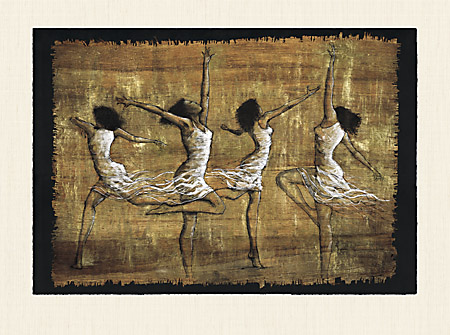
Fr. Rohr notes that the Greek Fathers of the Church described the Trinity as a relationship of perichoresisa mutual interpenetration and indwelling. He explains that perichoresis can be translated as dance. God is the dance and we come to know God only from within the dance of the Trinity. As long as we remain open and allow ourselves to be pulled into the flow of mutuality, to the perfect giving and perfect receiving that is the life of God, we will experience the communion, intimacy and relationship characteristic of God’s life. Anything that stops the flow of loving – anger, resentment, judgement – cannot be part of who God is. To the extent that we harbor those blocks to love, we block the flow of God’s life/love in ourselves.

John O’Donohue, in a workshop for the Religious Education Congress of the Archdiocese of Los Angeles in 2005, also spoke of the Trinity in terms of rhythm and flow, touching on many of the same themes described above. A poet and storyteller, he looks at the mystery of the Trinity through poetic images – the flow of a river, a dream of the divine, dance, music, between-ness. He speaks of God as the “secret music of the heart and the universe… the primal music and dance of all that is.”

We most often experience the world in terms of dualities such as inside/outside, masculine/feminine, divine/human, light/dark and so forth. Yet O’Donohue points out that in reality we actually find ourselves at the threshold between those dualities most of the time. It’s a threshold that must be permeable if we and our relationships are to be healthy, so that the qualities of each side of the duality can pass between, refreshing, supporting and enlivening the other. As he points out, there’s the one side, the other side and the place in between. For O’Dononue, the place in between is where we find the Holy Spirit, holding “all the between-ness together.”

The insights of these two men are well worth hearing and pondering. There’s far more to what each has said than can be described in a short blog post. But the depth of the wisdom they bring resonates with the insights of the mystics from all the ages. As John O’Donohue notes, “Once you get a taste of God, nothing else tastes the same.” And again, “That’s what it’s about – coming fully alive to the dream of the Divine within you.”

May the dream of the Divine resonate within you and lead you ever more deeply into the life of the Trinity.


Read More

Posted by on Mar 30, 2008

Lived Religion – Relating to Our Lady of Guadalupe

Easter Tide: The Age of Faith

christ-carmelite-icon.jpg

It’s all so obvious – right? Jesus is Risen. The women and men closest to Him have all seen Him, touched Him.

Yet they only recognized Him with difficulty. St. Mary of Magdala’s grief was not broken until Jesus called her by name. The Apostles recognize Him with difficulty and Jesus takes the initiative to introduce Himself. There is an air of surprise – an awkwardness that Jesus breaks with the greeting used by Angels and other heavenly visitors, “Peace be with You”. It is easy enough to see this as a blessing, but not as the gesture of reassurance that it is. The Risen Christ is not the historical Jesus that He was. Beyond time and space, the Divine Word – God Eternal – is now and ever was.

We can all now live in the Risen Christ and He in us.

“Without seeing you, We love you;

Without touching you, We embrace;

Without knowing you, We follow;

Without seeing you, We believe.”

– David Haas, “Without Seeing You”, from the album “Glory Day”.

Read More

Posted by on Mar 29, 2008

Lived Religion – Relating to Our Lady of Guadalupe

Seven Stanzas at Easter – John Updike

resurrection-of-jesus-kenya.jpg


Make no mistake: if He rose at all
it was as His body;
if the cells’ dissolution did not reverse, the molecules
reknit, the amino acids rekindle,
the Church will fall.

It was not as the flowers,
each soft Spring recurrent;
it was not as His Spirit in the mouths and fuddled
eyes of the eleven apostles;
it was as His Flesh: ours.

The same hinged thumbs and toes,
the same valved heart
that — pierced — died, withered, paused, and then
regathered out of enduring Might
new strength to enclose.

Let us not mock God with metaphor,
analogy, sidestepping transcendence;
making of the event a parable, a sign painted in the
faded credulity of earlier ages:
let us walk through the door.

The stone is rolled back, not papier-mache,
not a stone in a story,
but the vast rock of materiality that in the slow
grinding of time will eclipse for each of us
the wide light of day.

And if we will have an angel at the tomb,
make it a real angel,
weighty with Max Planck’s quanta, vivid with hair,
opaque in the dawn light, robed in real linen
spun on a definite loom.

Let us not seek to make it less monstrous,
for our own convenience, our own sense of beauty,
lest, awakened in one unthinkable hour, we are
embarrassed by the miracle,
and crushed by remonstrance.

Telephone Poles and Other Poems © 1961 by John Updike. Reprinted by permission of Alfred A. Knopf, a division of Random House Inc.

Read More

Posted by on Mar 26, 2008

Lived Religion – Relating to Our Lady of Guadalupe

St. Mary at Easter Tide

rejoice-monica-stewart.jpg

The Blessed Virgin Mary has many beautiful titles. St. Mary at Easter Tide is my very own. Scripture is very silent about the Mother of Jesus after the Resurrection. We know that she is present in the upper room when the Spirit comes upon the Apostles at Pentecost. At the Annunciation, the Angel Gabriel tells her nothing about her future, except that her Son will be destined for the rise and fall of many in Israel. Mary’s first post-partum visit to the Temple portends a life of sorrow. According to Simeon, a sword will pierce her heart seven times. This most beloved young woman is left to ponder these things in her heart.

There are many good years together, until He leaves to find his cousin John at the Jordan. Then things go from bad to worse. Her friends and neighbors toss Him out of Nazareth. Jesus dies a horrible death; His mission a failure; her maiden’s vision becomes a bitter delusion. In his final words, Jesus entrusts St. John and Mary to each other – a final testament that seals the depth of grief.

There is no record of how Mary hears the news; of how she reacts. Who tells her? Jesus Himself? It seems that this duty falls to us. The noonday prayer echoes a wonderful joy – Regina Coeli laetare alleluia! Queen of Heaven Rejoice alleluia! … Resurexit sicut dixit! He has risen as He said (he would)!

Even though the words echo from my childhood at “Mid-century,” how well I remember and still experience the delightful childish skip in our hearts and step that we shared at Easter Tide. These are not the inspired words of the Gospel in the Hail Mary, nor the briefest of summaries of the Mystery of the Incarnation in the Angelus. For a prayer, Regina Coeli seems strangely out of character. There is no formality, no reserve. In our joy, we proclaim the Good News to the Mother of the Word Incarnate. God has turned our mourning into joy, but how could we ever begin to fathom what his news meant to the woman whose faith gave birth to us all?

Read More

Posted by on Mar 22, 2008

Lived Religion – Relating to Our Lady of Guadalupe

Good Friday: Identifying with Christ or Christ Identifying With Us?

christ-of-maryknoll.jpg

For those who love Christ, remembering His passion and death is always an occasion for sorrow. However, such human acts as compassion are never simple. The pain of the impending loss of a loved one – anticipatory grief – can be worse than the actual loss. In fact, when death finally comes, we often feel guilty about experiencing relief. My friend Jim lost his father when Jim was in eighth grade, after a protracted two year battle with cancer. When we talked about it a couple of years later, Jim confessed that he still felt more relief than grief.

Of course, we couldn’t experience compassion without a close identification with the other. This becomes very complex in the person of the Christ. He did not fight his enemies. He did not curse. He did not condemn. He forgave. He blessed. This human-divine reaction to an injustice that is almost as inconceivable as it is enraging provides no adequate psychological outlet for the post-Freudian soul. How can we proclaim and fight for justice if God Himself did not? Tragically, the consolation in the Gospels and the wider testimony of the New Testament – that no evil, no matter how overwhelming, how senseless, can ever separate us from the love of God in Christ Jesus – escapes us. (Romans 8:38-39) Instead of experiencing this Passover of the Lord – the Blood of the Lamb on the door posts and lintel of our home that spares us from the Angel of Death – we run out into that night of despair by focusing on the ways we have been complicit with that evil.

When we hear that we are saved from a life defined by suffering and pain without meaning and no exit, we can think that we were saved from something we deserved. “Evil as you are … who among you would give his son a scorpion when he asked for bread?” (Loosely taken from Luke 11: 11-13) is a stark reminder to the disciples that Jesus could not conceive of His Father wanting anything less than we ourselves would want for our own children. Just as our children are all too much in our own image and likeness, we are in God’s. The teaching and life of Jesus in this regard is at odds with the vengeful patriarch of the Old Testament who punishes and chastises. (Lest we be tempted to think that Jews hold or held onto to this concept, we should remember that Jesus was not the only Jew who presented a view that had grown beyond it. The are interesting similarities between Jesus and his contemporary, Hillel the Elder.)

Enter God’s protectors:

“Ah hah! Now he has said it on his very own blog! Your own words condemn you. God doesn’t care about sin, you say. There are no consequences, no punishment, no reckoning. You present a God who is merciful, but not just. If Christ did not die for our sins how was the Father appeased? How is he the sacrificial victim?”

The Blogger Offers a Parable:

Once upon a time, there was a wonderful teacher who healed by word and touch and saved people from all kinds of physical, psychological, and social maladies. He made the mistake of speaking truth to power and telling religious and civil leaders that outward observance only made them into whitened sepulchers. They waited for the right time and got a close friend to betray him, and they took him off to Guantanamo, and then transferred him to a third world country, where he was tortured to death by specialists trained at the School of the Americas. Like so many thousands of his time, he was supposed to have become one of the disappeared. Fortunately for us, He didn’t stay dead and he didn’t stay hidden. Strangely though, he left again, said he would return, and in the meantime the were supposed to wait for a Holy Wind to make everything clear.

Yet His disciples wanted an explanation. If He was truly God’s Son, how could this have happened to Him? If he really was the Messiah, how could he have failed? He was just as maddening as those parables he used to tell them. Where are the answers? It was like one of those Eastern religions. “The question is the answer.” And that other junk the Beatles found in India, under the influence of something other than the great American mystic, Jack Daniels.

God finally sent them someone they could understand – sort of. “Like, well, yuh see, dude- God don’t need sacafices, ” The voice of the aging surfer was hoarse with too many years of funny cigarettes, his faced etched with too much salt and sun, his eyes opaque while he waited for the waves to rise. “It’s like, all ’bout love. All God wants is love. The torture and sufferin’ part, that’s what we do to us and each other. Man, like the Teacher Dude, the Guru Guy, like he couldn’t hang out forever. ‘Cause like, you guys were all brain dead on a kind a gnarly bad trip. Like he let it happen. The tube was closin’. Like there was just the wipeout; like really bad at Mavericks. He did it to show y’all that if yah stay in the water and go for it, sooner or later it’s gonna happen if ya stay true to the search for the Big One.  Dude, got some extra change? My old lady’s on me for the rent, like ya know.”

The words of reproach, as the seeker turned away, were familiar. “That sucks man. What a waste. I came to hear some guy explain some @$#%?! blogger’s crappy parable. I could’a been watchin’ the game on my big screen.” So he zipped up his jacket and marched straight home, out of the saving mystery, ignoring the glory of the sky, the dazzle of the water, and the carpet of color and bird song all about him.

Read More