Pages Menu
RssFacebook
Categories Menu

Posted by on Mar 22, 2026

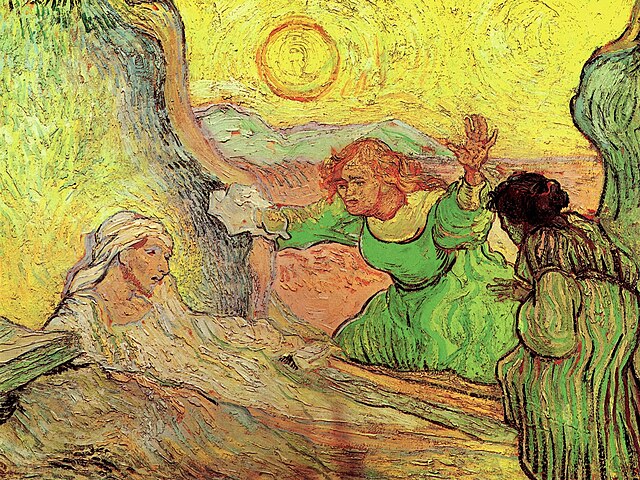
The Raising of Lazarus
The Raising of Lazarus

Jesus had close friends beyond his inner circle of the apostles. Martha, Mary, and Lazarus were friends who lived in Bethany not far from Jerusalem.

We know of an earlier time when Jesus had come to visit, and Mary was intently paying attention to Jesus while Martha was trying to get things ready for dinner and needed her sister’s help. I think that we can all relate to having company over for dinner and having family members duck out, leaving you with the whole project. Most of us can remember times when we were young and a brother or sister ran out to play instead of helping with the dishes.

At the time of Jesus, and even today, women are supposed to take care of the men and to be seen but not heard, as if they were children. This continues to be the pattern in the Middle East and most parts of the world. Even in the United States, women are often told to be submissive to their husbands, referring to St. Paul’s letters to the Ephesians (5:22-24) and to the Colossians (3:18). These passages also tell us that men should willing die for their wives. However, this has never been popular with men. As men, we usually ignore it. St. Paul’s message is that husbands and wives are equal in status. They should be submissive to each other and show mutual respect.

So, here is Mary who wants to be with Jesus, and she is breaking two rules. She is not helping her sister, and she is sitting at the foot of the Master with the men. When Martha complains, Jesus does not tell Mary to be a good “little lady” and return to the kitchen. He tells Martha that Mary is doing the better thing. He is implying that breaking these social norms and living on the teachings of the Master are greater nourishment than the food that is being prepared.

Martha, Mary, and Lazarus were his friends and he loved them deeply. It isn’t particularly obvious how deeply until Lazarus dies. Jesus knows that his friend is sick. He knows that the time is limited. His disciple Thomas, whom we know as the doubting Thomas, is as rational and practical as ever. Giving voice to what everyone is thinking, he says that it is suicidal to leave Galilee and return to Judea. All too recently, they had to flee when their lives were threatened. But if the Master is going to go back to Judea, particularly to Bethany, which is so close to Jerusalem, Thomas shows his loyalty and says that they should all go with him to die.

We see the pictures, the statues, and the stained-glass windows and we forget that Jesus and his friends were real people. Yes, he was their teacher, their Rabbi, but he was not lecturing to students in a class called Salvation 101. They were his followers, but he was willing to die for them and for us. They all said that they would die for him, but they disappeared when he was arrested. They did give their lives later, but not when he was the one arrested.

We worship a God who is not a distant powerful entity. We enjoy a special and deep friendship. We are in Christ and Christ is in us. This incredible friendship is something we celebrate when we enter a complete communion, when we receive the Holy Eucharist.

Lazarus is dying but Jesus does not get on the next plane. He doesn’t get in his truck and drive through the night. He waits for two days and tells his disciples that the glory of God will be revealed so that others might come to believe and to see Jesus for who he is. He says something about being able to walk in the day and to stumble at night. The light of God’s glory will banish the night and show the way to salvation. But what does that mean in practice?

Still, Jesus is upset. He is grieving. If he knows that he will raise Lazarus, why is he upset? He knows his friend is dead and that fact swallows him just as it swallows us and throws us into sadness and tears. He says that this is all for a purpose. That there is a reason. He trusts in His Father and knows that His Father will give him anything that he asks for. But his walk into the danger of Judea is not a happy one.

Martha comes out to meet him and does not criticize him. She utters a deep act of faith. “Lord, if you had been here, he would not have died.” When Jesus says that Lazarus will rise again, Martha agrees, saying that Lazarus will be raised on the last day. But that is not today!

Jesus said to her, “I am the resurrection and the life. The one who believes in me will live, even though they die; and whoever lives by believing in me will never die. Do you believe this?”

“Yes, Lord,” she replied, “I believe that you are the Messiah, the Son of God, who is to come into the world.”

Now we would think that the mood should change. Yet despite Martha’s profession of faith, they stand there in their grief. Mary comes out to join them. She repeats her sister’s lament. “If you had been here my brother would not have died.” Everyone is in tears and Jesus asks Mary

“Where have you laid him?” As he follows her and the mourners, he is overcome with grief and he cries. It is so obvious that people remark, “See how he loved him.”

Jesus’s friend had died. When they get to the tomb, he wants them to roll the stone away, but Martha objects, seeing it as the act of a grieving friend. She warns him that the body has already started to decompose after four days. But on his command, they roll the stone away and Jesus at the top of his voice tells his friend to come out.

And the glory of God is revealed. Jesus is the way the truth and the life. But the glory of God is revealed in the suffering and grief of friends. Tears run down the face of the Master as they approach the tomb. It is not a confident triumphant procession to the tomb.

Jesus suffers with us in our deep losses – losses of our parents, our spouses, or the unbelievable pain of losing a child. As we get old, the news comes more often. A friend, a relative, a co-worker has died. We go to more funerals than weddings and anniversaries.

Jesus does not stand aloof at a safe distance. We are his friends and he weeps for us and with us in a deep communion. We do not walk this road alone. We have our close friend and companion even in the worst of times right there beside us. (Jn 11:1-45)

Jesus said to her, “I am the resurrection and the life. The one who believes in me will live, even though they die;  and whoever lives by believing in me will never die. Do you believe this?”

 “Yes, Lord,” she replied, “I believe that you are the Messiah, the Son of God, who is to come into the world.”

Do we believe?

Readings for the Fifth Sunday of Lent –  Cycle A

Read More


Posted by on Mar 7, 2026

Water – Gentle or Wild?

Water – Gentle or Wild?

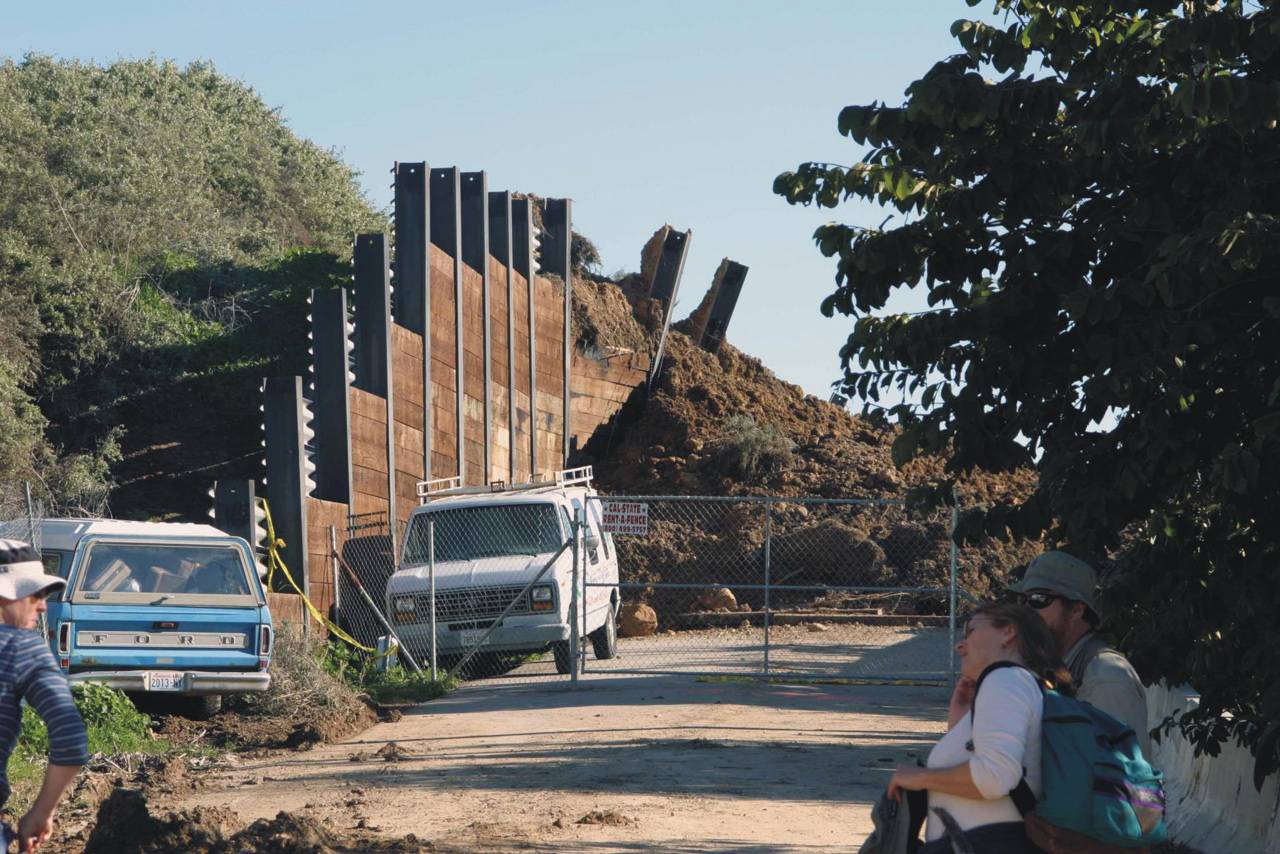
Living beside the ocean for over 35 years, I have seen water’s gentleness and fury. Sometimes the surface of the ocean is flat – barely a wave to be seen. Not many surfers seen either on those days! Other times, the ocean wildly rages – waves crashing against the cliffs and roaring as they hit. Large sections of the mudstone rock of the cliffs fall into the water, as if sliced by a great knife. No surfers those days. It’s just too dangerous.

A few years ago, we had one of those long winter storms. Major areas of the cliffs were washed into the ocean. One in particular was impressive. The slice fell off from a section of cliff that jutted out into the ocean beside a beach. The rocks sat there as if wondering what to do. But by the next day, they too had been washed away. Only the sand remained.

Sand is washed away and beaches become much smaller in the stormy winter months. Then the more gentle waves of spring bring back the sand and the beaches grow larger again.

Most of the time, the ocean waves are not too high and not too low. However, the ocean is never to be trusted. Sneaker waves have caught more than one person who turned their back to the ocean, sometimes with disastrous results, others with rather funny ones. A person I heard speaking at a conference once told of the time he had turned his back on the ocean, gotten caught by a wave, and emerged without his swim trunks. He didn’t make that mistake again!

Swimmers caught in a rip tide are all too frequently found a few days later as their bodies wash up on shore somewhere else along the coast. Coast Guard helicopters fly back and forth over the water. Fire department surf rescue teams go out to try to find them. But the water is simply too cold for them to survive very long and they are gone.

These thoughts come to mind as we ponder the images of water and the Lord’s gift of protection and life in the readings for this Third Sunday of Lent. The water in question in the readings was not found in oceans but rather was hidden behind walls of rock or deep below the surface of the land. Much less easily accessible and more controlled, but even more precious because it could be consumed and used to sustain life there. Ocean water is too salty for drinking and watering crops.

Water in the desert

Water is essential for life as we know it. Wandering in the desert, far from the lives they had known in Egypt, the Hebrew people felt how tenuous life could be. Where would food be found? Where was water? It was so very, very dry. At least in Egypt, though they weren’t free, at least they had food and water! Whose fault could it be that things were in such a difficult state now? They hadn’t asked to be led into the desert. Well, maybe they had asked the Lord to deliver them, but through the desert? That hadn’t been part of the plan. Why not an arrangement to be free again in Egypt as once they had been?

And so, as humans do, they grumbled and complained. “Why did you ever make us leave Egypt? Was it just to have us die here of thirst with our children and our livestock?”

Poor Moses. What could he do about it himself? He hadn’t counted on that either, though he had experienced traveling through dry, desert lands when he left Egypt as a young man.

Wisely, he turned to the Lord he had first met in a burning bush when he was a shepherd. “What shall I do with this people? A little more and they will stone me!”

The Lord, ever faithful and caring, instructed him to go to the front of the people and strike the stone wall there with the same rod he had used at the parting of the Red Sea as they fled Pharoah’s army when leaving Egypt. Water flowed forth from the stone, to the amazement of all.

The event was memorialized through the name given the place at the time – Massah and Meribah.  The names refer to legal accusations and a trial and testing. This was the time and place at which the Israelites argued with and tested the Lord. The answer to their question, “Is the Lord in our midst or not?” was a resounding Yes! (Ex 17:3-7)

Psalm 95 is just one of the songs and references to this event in Hebrew scripture. “Oh, that today you would hear his voice; ‘Harden not your hearts as at Meribah, as in the day of Massah in the desert.’” They had seen his work and still doubted – something all too commonly done to this day among even those who call him Lord. (Ps 95:1-2, 6-7, 8-9)

So at at Meribah and Massah, we see regular water provided in an unconventional way. More commonly, we see things that happen around wells, springs, lakes, or cisterns in more populated regions. One of those occurred as Jesus and his disciples were traveling through Samaria one day.

A new understanding of water from an unexpected visitor

Jews and Samaritans were not on friendly terms, to say the least. There was a solid disdain and even hatred between the two communities. Jews often traveled many extra miles to go around Samaria rather than through it when traveling from Galilee to Jerusalem. But for some reason, Jesus decided to go directly through Samaria.

It was around noon, St. John tells us, and they stopped in Sychar to find food. This town was very near the land Joseph had inherited from his father Jacob. Jacob’s well was there. This was an historic town as a result.

Jesus waited by the well while his disciples went into town to buy food. A woman approached to draw water. The fact that she came at noon rather than in the morning with the other women is important to note. This meant she was not a person of good reputation. Likely, she was shunned by everyone else in town.

Yet Jesus spoke to her. Jews didn’t speak to Samaritans casually or in a friendly manner. Men didn’t speak to women they didn’t know. And a Jew would never think to ask a favor or help from a Samaritan. But Jesus ignored all that and asked, “Give me a drink.”

She was shocked. This was unheard of. “How can you, a Jew, ask me, a Samaritan woman, for a drink?”

Jesus calmly responded that rather than be shocked, she should be asking for “living water” from him. That phrase, living water, referred at face value to running water. So, she was puzzled what he might mean by that. There was no running water anywhere near and he had no bucket with which to collect it!

Jesus explained that the water he came to give to people was different – it would become “a spring of water welling up to eternal life.”  She was a practical woman and responded, “Sir, give me this water, so that I may not be thirsty or have to keep coming here to draw water.”

At this, Jesus asked her to bring her husband. Turns out, she was not currently married, had been married five times and was now living with another man. This was a shock for her to hear. There was no way he could have known that about her. “Sir, I can see that you are a prophet.”

A discussion of where people should worship followed and Jesus told her the time was coming when neither the temple in Jerusalem nor the mountain in Samaria would be the place to worship. “Salvation is from the Jews.” Yet the time had come when all that would change and worship would now occur “in Spirit and truth.” All this would happen because “God is Spirit and those who worship him must worship in Spirit and truth.”

The narration continues for a while, with the return of the disciples and the return of people from the village to meet Jesus, based on the testimony of the woman of Samaria. He stayed there in the town for several days and many came to believe in him. (Jn 4:5-42)

We must choose – Rage or Gentleness?

So, what does this all have to do with water? How does water in its gentle or wilder forms fit into the picture?

As humans, we all too often think that only a strong, forceful response to opposition, oppression, or wrong-doing will bring about a change of heart in the one who acts that way.  We believe that war or other forms of aggression are justified as a way to make others behave the way we see as correct and just. We see the cost in innocent lives as something that can’t be avoided. And yet, when the ocean waves crashing on the shore cause the cliff to collapse, it doesn’t get restored. It simply washes away. There is no possibility of change or “redemption” that keep the destruction from being permanent. The cliff is diminished, and with enough storms, it will eventually be gone completely.

The Lord does not call us to use violence or anger in addressing injustice or oppression. Those only create more anger and a desire for vengeance.  The cycle becomes unending – like a feud between two families that continues generation after generation. There can be no end until someone decides to forgive and find a way to work together.

That is our call as followers of Jesus. We are to be the peacemakers who work to find common ground. We are to work together to find and demonstrate the reality that the Good is not limited. There can be enough of existing resources to go around. No one needs to be left out. It’s just that no one can or should have an excess of those resources either.

It’s absolutely the case that some political systems, some governments, some organizations, are not committed to working towards the common good of their people, to say nothing of all humanity. It’s very easy to want to keep a lavish lifestyle or power over others. All too often that can be phrased in religious language or the language of tradition – “that’s just the way it is!” But violence does not bring about positive change any more than the crashing of the waves against it makes the cliff stronger.

The quiet water of love, reconciliation, respectful communication, good-will in conversation, and solution-seeking is what the Lord offers as a spring that wells up inside us and leads to peace among all humans. Bombs will never change hearts. Drone operators can hit where other weapons cannot reach. Security will never come from violence. Those things only provoke anger and a desire for revenge.

Jesus didn’t come with armies. He came with a promise of living water and its power to change our lives, our traditions, our stories and histories. We haven’t always been good at following his lead. But we are called again and again to remember that Jesus didn’t come with armies to force change. He came and offered himself and his life to reopen our relationship with the Father. The Son through whom God proved his love for us, though we were still sinners who kept trying to do it our own way and failing miserably, proved his love with his life, death, and resurrection. (Rom 5:1-2, 5-8)

We are called to the same on this day as we remember both the water at Meribah and Massah and the living water offered to a Samaritan woman at Jacob’s well.

Readings for the Third Sunday of Lent – Cycle A


Read More

Posted by on Feb 21, 2026

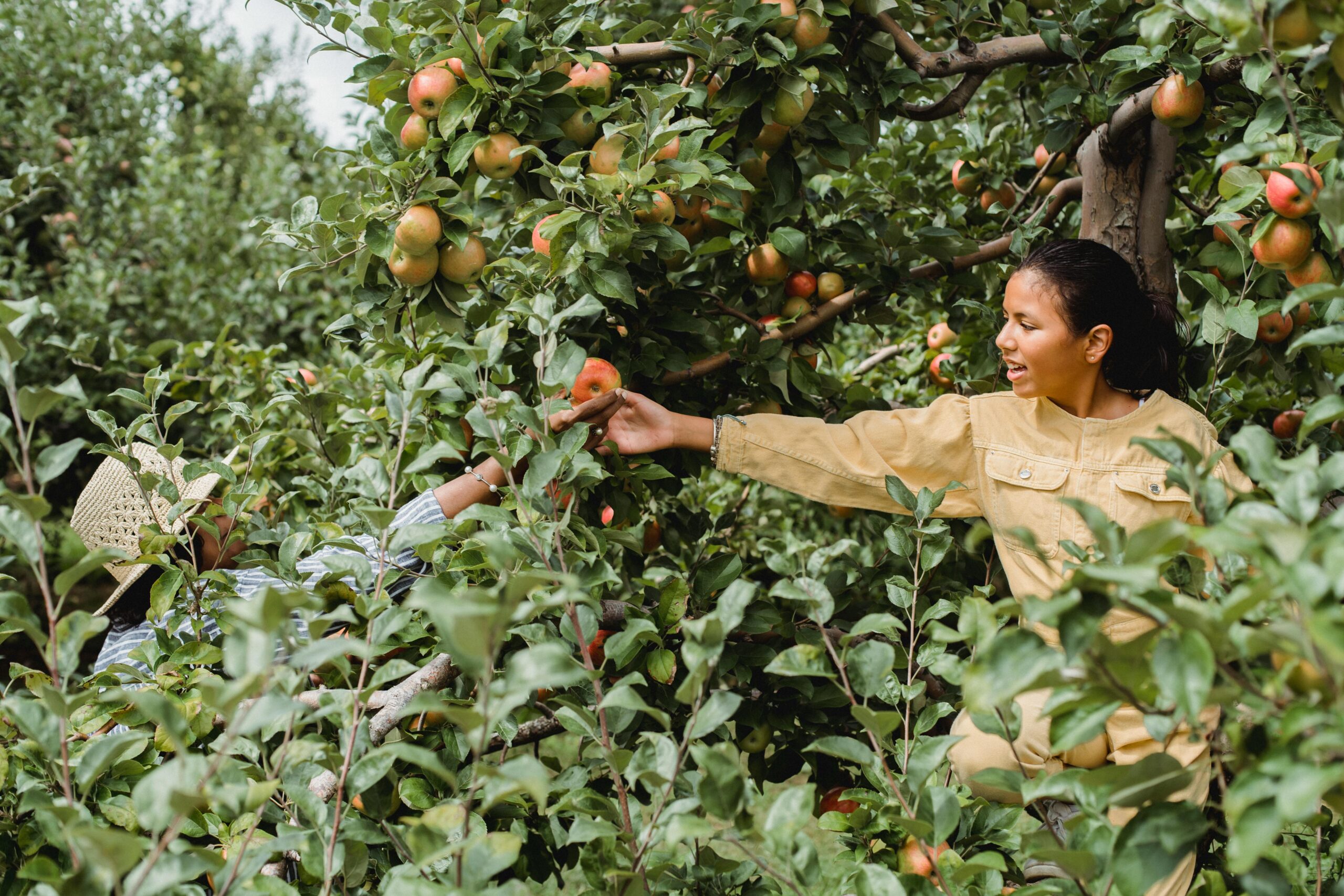
Apples in the Garden – Do We Eat?

Apples in the Garden – Do We Eat?

I sat today beside a fountain in the middle of a college campus. It was a beautiful sunny day after a week of torrential rain. More rain is expected again soon. But this day had been gorgeous. Children were playing with sticks in the pool around the fountain. The water, blown by the wind, was sprinkling those of us standing or sitting nearby. School is in session, so families and students were going through the plaza. A group of musicians entertained all who were present, whether sitting attentively listening or hurrying past on the way to somewhere else.

Usually, Saturday is a busy day, filled with activities at home and left-over ones from the work week that urgently call my attention. But today, I was with a grandchild and mother, savoring some time away and seeing the world through the eyes of an almost three-year-old. What a wonder it is! Water splashes. Sticks are laying around on the ground just waiting to be used to stir the water. People are smiling. All is well in the world, in at least some very fortunate places. And we happened to be in one of them.

We are entering into the season of Lent, a season of waiting and of turning away from the busyness and worries and habits of thinking of ourselves first and only secondarily of the needs of others. “Repent and believe in the Gospel”  “Remember that you are dust and unto dust you shall return.” “Turn from sin and believe the Gospel.” All are words we may have heard on Ash Wednesday as this season began.

We hear in the second story of creation that the Lord God created humans from the clay of the earth, blowing his breath of life into them. He placed them in a beautiful garden in the land between two great rivers. Everything they could ever need was provided there for them. Only the fruit of two trees was to be left untouched – The Tree of the Knowledge of Good and Evil and The Tree of Life.

One day, a cunning tempter suggested that the Lord God might not have been totally truthful about the consequences of eating fruit from the Tree of the Knowledge of Good and Evil. Surely, death would not be the result. Maybe the creator just wanted to keep it all for himself! It would taste really good…

The woman decided to try it for herself and tasted the fruit. It tasted good, so she gave some to her husband to try as well. Immediately, they knew more than they had ever suspected – good and evil. Everything in the garden had been good. Now everything had become more complex. There were things to worry about. Things that were to be feared. They found themselves ashamed of their very bodies! So, they hid when the Lord came to enjoy the evening with them in the Garden.

The Lord was very disappointed, made clothes for them, and escorted them out of the garden into a world that was much more difficult and complicated than they had ever imagined. Now they would make their clothes, grow their food, build their homes. All would be different. There was a barrier now between them and the joy of the Lord in the Garden. (Gen 2:7-9; 3:1-7)

I thought about this story as I sat by the fountain. It would be so easy to fret about the time lost when I should be cleaning the house, returning calls to clients, writing posts to share, preparing dinner, planning next week’s activities, and so much more. But here I was, sitting by the fountain. And … I set aside the worries. Decided I might or might not write a post this week. I simply enjoyed the time in the sunshine, with a child delighting in the world and time to rest.

Jesus had a life-altering experience in his baptism in the Jordan River. He went into the desert afterwards to be by himself and pray for 40 days. He fasted and prayed for understanding of what it all meant. What could it mean to be the Beloved Son of the Lord God? What could he possibly have to share with others that they should be told to listen to him?

Three suggestions came to him. Idea number one: change stones into bread. You can eat and feel better. Imagine what people will think about you when you give them bread from stones! His reaction: No.

Idea number two: how about throwing yourself off the top of the Temple. If you’re really God’s son, he will send angels to rescue you. His reaction: NO.

Idea three: Look at all the kingdoms of the world. Just worship me and they will all be yours! His answer: Absolutely not – Only God is to be worshipped.

Then the Lord sent his angels to minister to Jesus. He found peace. (Mt 4:1-11)

In many ways, we too face these same questions and challenges. We leave our Gardens of Eden as we grow from early childhood into more mature stages of life. We begin to learn how to care for ourselves and our families. We learn the ways of our societies and cultures. We experience joys and sorrows.

But sometimes, we need to step back, sit in a plaza by a fountain, being sprinkled by the water blown by the breeze. We step back from the craziness of daily life. We set aside the worries about the conflicts in the world. We rest in the love of the Lord who made such a beautiful world for us to enjoy for a time before we travel on to live with Him.

Today, as we move into Lent, let’s resolve to take the time to rest in the Lord. Take the time to watch the beauty of the world around us. See the innocent joy of the very young children and rejoice in it.

Forty days. A journey begun anew each year. A time for renewal.

Which apples do we choose? Those of peace or those of stress and worry.

Choose carefully. I will pray for you. Please pray for me too, that we all may grow in joy and peace during this season of Lent.

Readings for the First Sunday of Lent – Cycle A


Read More

Posted by on Apr 6, 2025

“See, I Am Doing Something New”

“See, I Am Doing Something New”

“Unprecedented!” “New and improved!” “Today and today only!” “Once in a lifetime chance…”

We hear these kinds of exclamations and invitations routinely in our lives. Print, digital, audio, even word-of-mouth sources invite us, even seduce us, to look at products and ideas whose promoters typically hope to profit in some way by coaxing us to endorse or purchase them. Part of becoming an adult is to learn that these invitations are generally not all they claim to be. Very few things are totally new or available only once in a lifetime.

Still, when we hear the Lord say, “See, I am doing something new!” we should probably pay  attention!

Isaiah, speaking in the Lord’s name, begins his instruction with a reminder of the defeat of the Egyptian army at the crossing of the Red Sea. Then comes the surprising statement, “Remember not the events of the past…” Why not? Because, “I am doing something new!”

What is this new action? New paths are opening in the desert, rivers are flowing in the desert wastelands for the people and animals who live in or pass through them. This is happening now, pay attention. I am doing it for you, a people I have chosen to be my own.

Rivers in the desert? Pathways opening? A way is being prepared for the people to return home to their ancestral lands. As this happens, new ways of living and being open up. Transformations occur. Those who hear the Lord’s words here are not the same as those who found themselves taken into exile in another land. Something new is happening. It’s time for praise of the One who has cared for them while in exile and now opens new possibilities for them. (Is 43:16-21)

Jesus too brought a new approach in his interactions with those who came to him. St. John tells us about the time some of the religious authorities tried to trap him with an “either or” type of situation. They brought a woman before him, probably quite disheveled and frightened. She and a man had been caught in the act of adultery. Only the woman had been brought to Jesus, though both had broken the Law. Those who dragged her before Jesus for judgement asked him what they should do, since the Law called for her to be stoned to death.

If he said to follow the Law’s instructions, he would be judging her and condemning her for her actions. If he said she should be forgiven, he could be accused of disregarding the Law and thereby breaking it himself. It was a no-win situation.

Jesus responded by doing “something new.” He didn’t respond. He simply bent down and began writing something on the ground. The accusers persisted. Finally, he gave them his response. “Let the one among you who is without sin be the first to throw a stone at her.” Wow! That put everybody on the spot. Who would or could claim to be without any history of breaking the Law, of not always choosing the right way, of sinning?

One by one the accusers walked away. Finally, only Jesus and the woman remained. He asked, “Has no one condemned you?” She responded, “No one, sir.” Jesus didn’t condemn her either, but he instructed her to begin anew and leave behind the life that led her to sin.

“See, I am doing something new…” Not condemnation but instead, second chances. (Jn 8:1-11)

Many years later, St. Paul, writing to the Philippians, reflected on his spiritual journey, “I consider everything as a loss because of the supreme good of knowing Christ Jesus my Lord.” Paul left behind a life of security and honor. He was respected by his peers and entrusted with responsibility to arrest and punish those who were followers of the way of Jesus. And then he met the risen Lord and all changed. Power, prestige, security – all were gone. But in their place, he received the gift of faith in Christ and a righteousness that comes only from God. He lived a life that included a lot of physical pain, rejection, and suffering. But he received them as a way of sharing in the life of Jesus and the hope of resurrection from the dead. All that he had known and lived before was gone, like trash. Now his life was directed to something new – the new way of life and hope opened by Jesus, calling him forward toward God’s calling. (Phil 3:8-14)

Two thousand years later, we too are invited to notice the Lord’s statement. “See, I am doing something new.” This statement applies to each of us in our lives today as well, because it is timeless. Remember, there’s no time in eternity. God’s present has no beginning and no end. Only the Now.

What is it that we are to see now? What is this new thing the Lord is doing? How are paths being opened in the wilderness? Where are new rivers flowing in the desert? Which of us is hearing the Lord’s voice refusing to condemn us? What have we left behind to follow our Lord and share in the promise of the resurrection?

Look around. What do we see? Uncertainty, fear, worry, hopelessness, distrust of strangers? Do we also see people offering support and a helping hand for low income people, the sick, the very young or the old, those with mental or physical illness that makes earning a living impossible, those who come seeking refuge? Are they, are we, setting up programs to provide options and opportunity – working for the common good?

When institutions begin to break down or when they are dismantled before our very eyes, how do we reach out and help those in need? How do we live with hope that leads us ever onward?

One step at a time. One person at a time. The drop of water falling into a pond sends out rings of energy that continue through the entire body of water. Each time one of us refuses to condemn another, offers a smile, a word of encouragement, a helping hand, a listening heart, the energy of love will radiate outward like that drop in the puddle.

These days are not unprecedented, but they are certainly a new experience in the lifetimes of most of us. How we respond in community and outreach in support of those we meet will matter. The Lord is continuing to do “something new.” That Something New is not a return to judgementalism, condemnation of those whose lives are different or frightening, or exclusion of newcomers. The Something New is to continue being welcoming and supportive of others as the Lord is welcoming. It will require us to listen to each other with open hearts and ears, hearing the hopes and fears that so often keep us separated from those whom we don’t know or haven’t yet met. It is making paths through the wilderness of fear and exclusion so that people can travel forward together, returning to a land of shared humanity. It is making rivers of the waters of love and acceptance flow in our communities.

As we enter into these last two weeks of Lent, may our ears be open to hear the Lord’s invitation to enter into this new way he is opening. May we hold on to love and to hope. May we reach out in love and service to those who are hurting or frightened. May we continue to trust in the Lord’s love for each of us. May we know hope and peace and share them in joyful service with all we meet.

Readings for the Fifth Sunday of Lent – Cycle C


Read More

Posted by on Mar 30, 2025

Reconciliation Takes Two

Reconciliation Takes Two

Conflict between people, communities, nations – we are familiar with all of these. We have seen them play out throughout our lives. Sometimes the conflicts are over minor things: who cleaned out the dishwasher last might be the focus of a battle in a family kitchen. Other times they are definitely major issues: who has the right to control access to the resources of an individual or nation, for example.

The way we handle these conflicts, great and small, will largely determine how likely we are to reach a mutually satisfactory resolution. When solutions are imposed top-down from a powerful authority or country, against the will and to the detriment of those on whom they have been imposed, the less powerful will not be happy with the outcome. They will not accept those solutions and they will find ways large and small to resist. On the other hand, when the solution is reached through communication, mutual respect, and a good faith desire to resolve a problem, both sides will be committed to making it work. Both sides will have to sacrifice something and both sides will get something that really works well to address the challenge they have together faced.

As we look at the relationship between God and humans, we might expect a dynamic similar to the first scenario to play out. God makes a demand. Humans try and fail to comply. God punishes. Humans repent. God relents and again blesses the humans. Humans try and fail again. “Lather, rinse, repeat!” Sometimes in reading Scripture and looking at the history of the relationship between God and humans, we get the impression that this is all there is to it. Some might even take that perception and decide they don’t need that kind of vengeful, unforgiving deity and turn away from faith at all.

The understanding of the picture changes dramatically when we realize that the relationship is not equal, but that reconciliation between God and humans is really God’s preferred option. In fact, God is always coming into the conversation with compassion and readiness to work together for the good of all. We may not realize this, however, because we are used to the human way of holding onto past disappointments and hurts and allowing them to color our futures.

Reconciliation does not require two equals in a relationship. It does require at least one who is compassionate and willing to go however far it takes in humility to reach the heart of the other.

When the Hebrew people left Egypt, they traveled around the Sinai Peninsula and the lands east of the Jordan River for forty years. An entire generation passed before they entered the Promised Land, the land west of the Jordan from which Jacob and his sons had traveled to Egypt so many, many years earlier. It’s an amazing story, well worth reading, about how the waters of the Jordan River parted and allowed the people to cross into the new land. The experience reminded the people of the crossing of the Red Sea as their parents and grandparents left Egypt and gained their freedom.

When they arrived in this new land, the people renewed their covenant with the Lord. One of the signs of the Covenant was that men (and boys) were circumcised. They were dedicated to the Lord through this action. It represented a cutting away of impurity and the intent to dedicate the life of this person to the Lord. This practice was set at the beginning of the Lord’s relationship with Abram (whose name came to be Abraham). In Egypt and in the desert, the practice had not been continued, but here as they entered their new land, it was re-established. All men and boys were circumcised as a sign of their acceptance of the covenant.

Once the Covenant had been renewed in this physical way, it was also renewed symbolically and spiritually with the celebration of the Passover. While they were traveling in the desert, celebration of this foundational event was impossible. Now that they were in their new land, it was the first order of business. The Lord had brought them out of Egypt and to a new land. A renewal of the Covenant included remembering the blessings they had received, the freedom they had gained, the new hopes and possibilities for the future. As men and women have remarked for centuries following that time, “Our ancestors crossed the Red Sea and our feet are wet!” This time of reconciliation and rebirth of a people in relationship with the Most High was brought about by the Lord, in response to the pleas of those who were in bondage. (Jos 5:9a, 10-12)

Two parties – one common goal – Reconciliation.

So, does this mean that all was well between God and humans from that day on? Of course not. But did God abandon the relationship? Of course not!

Jesus told a story to his followers about the love of a father. We generally call it the Parable of the Prodigal Son, but really, it’s a story of a father’s tender love.

A father had two sons. One of them, the younger one, wanted to live life to the full, to enjoy a busy social life, travel, see the world, and never have to worry about how to pay for these adventures. So, he asked his father to give him the share of the family wealth that would typically not be his until after his father’s death. This was an extraordinarily bold and genuinely foolish thing to do. Children have been disinherited for less. However, his father loved him and agreed to the splitting of the property. The younger son took off happily to enjoy his life.

The older son stayed on the family farm. He helped with the work of caring for animals and raising the crops to feed them and support the household. He was a model son and his father loved him too.

The younger son, as might be expected, blew through the money quickly. He had to find work. He expected that would be easy, but it wasn’t. Times were hard. Jobs were scarce. Eventually, he ended up taking care of pigs in a foreign country and wishing someone would offer him some of the food that was going to feed the pigs. (Pigs were considered to be “unclean,” ritually impure, and to be avoided in his culture. A huge “Ick!”)

Jesus told his listeners that the young man realized he would be better off as a servant on his father’s farm than where he had ended up on his own and decided to return home. The young man was prepared to beg his father’s forgiveness and ask for a job doing whatever was needed. He had no expectation of ever being welcomed back into the life of the family as more than a servant.

But the father was prodigal in his love. He gave freely of the abundance of that love, watching all the time for the possibility of his son returning. When he saw the boy coming down the road from far away, this father ran down the road to meet his son. He didn’t let the boy get his words of apology and submission out before he embraced him and started pulling him along the road, back to their home.

A great celebration occurred that night, with feasting and sharing joy with family and friends. A new beginning for the lost son, welcomed by his father.

The other son was not so happy. He was angry and resentful. After all, he had worked for years and it seemed no one appreciated his loyal service. He was not able to see any reason for his father to welcome this ungrateful, selfish brother of his.

Jesus tells us the father was saddened by the older son’s reaction. “My son, you are here with me always; everything I have is yours. But now we must celebrate and rejoice, because your brother was dead and has come to life again, he was lost and has been found.” (Lk 15:1-3, 11-32)

The reconciliation between father and son required two people, but one held all the power to welcome and forgive the other in the encounter. The love and forgiveness had to be given freely to repair the relationship, and so they were.

The early followers of Jesus recognized his passion, death, and resurrection as the way God reconciled all of humanity with himself and welcomed us all back into the family home. God became one of us, in Jesus, and lived a fully human life. This wasn’t a case of a charade in which someone pretends to be someone they aren’t. Jesus was as truly human as any other human being. He remains human, even after his resurrection. He is a brother to all of us. And yet, the community came to understand that his coming as the Christ opened the door to reconciliation with our common Father.

St. Paul spoke often of this mystery of reconciliation with the Father through the life and death of Jesus. “Whoever is in Christ is a new creation… All of this is from God, who has reconciled us to himself through Christ and given us the ministry of reconciliation…” The Father is counting on us to pass on this message, the good news of reconciliation. (2 Cor 5:17-21)

We are not the ones who have to take the first step. The first step, the second step, the ultimate step, all have been taken by our loving Father. He became one of us so that he could totally understand what it is to be human and transform us, breaking down the barriers that divide human from divine, offering himself totally so we can share in His life, the life of Love.

In our very divided world and lives today, how do we respond to such an outreach? How do we respond to unconditional love? How do we reach out to share that news of reconciliation through our own lives?

Are we willing and ready to listen to the hopes, the dreams, the fears, the concerns, the pain and the joy of others? How do we deal with divisions in our own families? How do we protect those who will be hurt unjustly by policy changes that overturn the rules by which they have lived? Will we offer a gentle response to those whose words are insulting or hurtful? If someone makes an honest mistake, will we be willing to give them a second chance to correct it? Will we continue to serve the vulnerable and those who seek protection and safety among us? Will we be true to our calling to welcome all and share with those needing help? Will we be willing and ready to continue doing this at the same time that we work towards reconciliation with those who do not support our actions?

Today let us pray that just as the Father has run out to meet us on the road as we return from our forays into the world of self-serving activities and neglect of others, we may accept and forgive and welcome back those who ask us for forgiveness. May we use this season of Lent mindfully, to look at our own lives and see what areas might need forgiveness or more time to grow and heal. And then reach out in loving service to those in our communities, family, and world who need to know they are loved unconditionally.

Readings for the Fourth Sunday of Lent – Cycle C


Read More

Posted by on Mar 23, 2025

May I Ask Who’s Calling?

May I Ask Who’s Calling?

Long ago, in the olden days when I was a girl, and the dinosaurs were really, really big, if the telephone would ring, there was no way to know who was calling. Call-waiting didn’t exist. No caller ID was available. Only one telephone per household was the general rule. Some households didn’t have phones at all.

In those days, if a caller asked to speak with a particular person in the household or business, the correct and expected response was, “May I ask who’s calling?” or “Who may I say is calling?” The caller would normally respond with a name and the person who answered would respond, “I will tell him/her (them).”

I thought of this when reflecting on the reading from the book of Exodus. As you will recall, Moses had grown up in Egypt, under the protection of one of Pharaoh’s family, though he was an Israelite boy who should have been killed shortly after his birth. As a young man, he had killed a man who was abusing an Israelite slave and had to flee the country. He ended up in the land of Midian, married to the daughter of a priest of the land, and became a simple shepherd.

One day, as he was tending the sheep, he saw an amazing sight. A bush was burning. Bushes burn in dry lands, usually pretty quickly, with potentially disastrous results. This bush, however, was not a danger to the surrounding landscape. The bush was not burning up. It was not being consumed by the flames. It was just sitting there burning.

Moses went closer and a voice came from the bush, calling his name, “Moses! Moses!” Moses responded, “Here I am.” As he prepared to come closer to the bush, the voice told him to wait, to remove his sandals first. This ground was holy, because the God of the fathers of Moses’ people was present there. “The God of Abraham, the God of Isaac, the God of Jacob.”

Moses hid his face, knowing that to see God would be dangerous. But the Lord told him why he had come. “I have witnessed the affliction of my people in Egypt and have heard their cry of complaint… Therefore, I have come down to rescue them…”

Wait! What? Rescue the Hebrew people from Egypt? OK. How? On whose orders?

So, Moses wondered, “when I go to the Israelites and say to them, ‘The God of your fathers has sent me to you,” what do I tell them your name is? (Name in this context refers to power and authority as well as what a person is called.) This is a pretty bold thing to say to God, but the bush was burning and a voice coming from it, so it’s all pretty unusual anyway. “God replied, “I am who am.” But you can simply tell them, “I AM sent me to you.” (Ex 3:1-8a, 13-15)

“Who may I say is calling?”

“I Am … The Lord, the God of your fathers.” He “has sent me to you.”

We remember the story yet today and tell it each year. Our Jewish sisters and brothers also remember it and celebrate the Exodus and all that led to it at Passover. Muslims too revere Moses and remember his encounter with the Lord and all that resulted.

As the Hebrew people went out into the desert on their way to the Promised Land, many surprises awaited them. It was a hard time, with shortage of food and water at times and a longing to return to stability and order, even if that meant hard, forced labor in Egypt. They grumbled. They complained. They despaired and created a Golden Calf to worship. They doubted God’s promises. It took forty years in the desert before their children and grandchildren were allowed to enter the land from which their ancestors had come during the time of the great famine in the days of Jacob and Joseph. The Lord was with them, but earlier, they were not ready as a people to enter the new land and way of living.

St. Paul, in his first letter to the people of Corinth, spoke of those years in the desert. Although all had traveled with the cloud to guide them, crossed through the sea together, eaten the same food from heaven, and received water to drink from the stone, they still grumbled and disobeyed. Their journey and its delays and the consequences of their disbelief and disobedience are an example to us of how NOT to behave. We have seen the coming of the savior. The end times are upon us. The kingdom is here and coming ever more fully into being. Like the Hebrews, when we hear the Lord calling, we must answer. Who’s calling? The Lord, the God of Abraham, the God of Isaac, the God of Jacob. We are children of Abraham too. We are also to listen to his call and respond. (1 Cor 10:1-6, 10-12)

Sometimes we think that Israel, including the northern area known as Galilee, was a peaceful place in the time of Jesus. After all, the Romans had conquered the area. There were no more wars with neighboring countries. Sure, there were soldiers everywhere who could make unreasonable demands and act like bullies, but there was no war going on…

In reality, rebellions occurred. A group of people in Galilee had rebelled and been killed by Pilate, the Roman official who governed the area. When people told Jesus about this, he responded that it is important to realize that suffering such as that experienced by those killed on Pilate’s orders was not because they were great sinners. Everyone sins. The critical thing is to repent, to recognize that we as humans are not perfect. We all mess up. We all make wrong choices. We all sin.

Jesus told a story about a fig tree. This tree had grown in an orchard and been expected to bear fruit when it reached maturity. But the tree produced no fruit. The owner of the orchard noticed that the tree was old enough, but there were no figs. After three years of fruitless harvest times, the owner told the gardener to cut it down, presumably so another tree could be planted and grow in its place to produce fruit.

But the gardener cared about the tree and begged for a second chance for it. “Sir, leave it for this year also, and I shall cultivate the ground around it and fertilize it; it may bear fruit in the future.” However, this would not go on forever. If the tree remained barren in the coming year, “you can cut it down.” Lk 13:1-9)

In the Gospel of Luke, the story ends there. We don’t hear what happened to the tree. Jesus didn’t tell us, but rather, left us to ponder what that might mean for us, especially in light of his reminders that bad things happen to everyone, whether as consequences of their actions or not. The important thing is to try each time we fail to change our behavior and do better the next time around.

“Who may I say is calling?”

Is ours a strong, demanding, vengeful god who delights in punishing sinners? The Psalmist provides the answer in Psalm 103. “Merciful and gracious is the Lord, slow to anger and abounding in kindness.” “He pardons all your iniquities, heals all your ills.” “The Lord secures justice and the rights of all the oppressed.” (Ps 103: 1-2, 3-4, 6-7, 8, 11)

Who is calling you today? Who is calling me?

This same God, the merciful, the kind, the protector of the “little ones” who need extra care, the one who sends help in time of trial, this God is the one who came to Moses in the burning bush. This God is the one who heard the cries of the poor and sent a messenger to rescue them. This God is the one who gives the fig tree and the sinner another chance. This God is the one who expects those who have blessings of security, power, education, health, and the respect of the peoples of the world to behave with kindness and compassion, sharing the gifts we have received. This God does not condemn those whose ways of living, whose customs, whose sense of themselves are different from those of the dominant culture or the culture of ancient peoples who first met him.

As a people, we must today ask ourselves, if the Lord calls and asks for you or for me, will we respond quickly and faithfully. Will we speak out against abuses of the poor, the immigrant, those whose lands have been invaded by neighbors who wish to control them? Will we work for justice? Will we remember those who work hard but still cannot afford health care or education without help from the larger community? Will we demand that those who wield power in our governments follow the laws that have governed us for two hundred fifty years?

God does not come from the heavens with avenging angels on thunderous clouds. But when peoples and individuals do not remember the source of the gifts received, the freedoms offered, and the importance of sharing them freely, the consequences will fall heavily on all.

I pray that as we enter the third week of Lent, we listen deeply and carefully to the warnings of our ancestors. When the answer to the question, “Who may I say is calling?” is, “The Lord our God,” may we be open to receive his presence and become channels of his love to everyone we meet and with whom we share this beautiful world.

Readings for the Third Sunday of Lent – Cycle C


Read More

Posted by on Mar 12, 2025

Geological Time Includes the Present

Geological Time Includes the Present

Darkness had long since fallen as we made our way along a winding road beside a lake. We were on our way home from a wonderful wedding celebration and the driver was watching closely for animals, as well as for rocks that might have fallen onto the road from the steep hills along the road. He remarked as he drove that one of his children had told him of a geology professor who had advised his class always to remember that “Geological time includes the present.”

Reflecting on this insight, I realized that God’s time is like geological time in that respect – or maybe it’s vice versa? It includes the present.

As we begin these weeks of Lent, it’s good to remember that God is in this for the long-haul. We tend to think of times and seasons in our lives as having a beginning, a middle, and an end. But really, our lives are a long story, with parts and themes that weave in and out of the narration. The same is true for the history of God and humanity.

Moses and the Israelites traveled through the desert for forty years. Their release from captivity in Egypt had been totally unexpected. Granted, they had begged the Lord for relief from the forced labor and other conditions that had been imposed on them by the rulers of Egypt, but something as dramatic as the Passover and their release into the Sinai Peninsula was totally unexpected.

Who were they now? Where were they going? Who would be in charge? How did the Lord figure into it all? Moses had gone up to the mountain, into the cloud, and spoken with the Lord. His appearance was transformed by that experience. But what did that mean for everyday life?

Moses gathered the people as a group as their time in the desert together was drawing to an end and reminded them of the history of the Lord’s intervention that had led to their freedom. He again spoke to them of the Lord’s instructions for how they were to live. The ancient covenant with Abraham was still in effect. The narrative was ongoing. Their present time was part of God’s time and plan.

As they entered into their new land, planting crops, raising their flocks, they were not to forget the Lord’s care for them. They must remember to give thanks always for his care. So, as the first fruits of the land matured, they must be offered to the Lord as a thanksgiving gift at harvest time. They had received much from the Lord. The story of the Lord’s love and care for them was continuing, in a different setting and with different “props,” but the same Lord was providing for them still and yet.

Now, having set their gifts before the Lord, their God, they were to “bow down in his presence.” The story of their lives continued uninterrupted. (Deut 26:4-10)

Jesus too passed through many phases and seasons of life. His birth was unplanned by his parents. He had lived as a child, grown up revering the Lord, become a good Jewish man, learned a trade, become a regular fellow who was respectable and trusted as an adult. It was a relatively normal life, once he got past the first surprising beginning.

And then something unexpected happened, much like finding a big rock on the road by the lake or having an elk step out onto the road on a dark night. A prophet, who happened to be his cousin, began preaching along the Jordan River. This river stretches from the Sea of Galilee in the north to the Dead Sea in the south. The people had crossed the Jordan River when they first entered their land. It was the eastern border.

Jesus went down to the Jordan along with many other people. He listened to his cousin John speak of the coming of the Anointed One, the one long promised, who would restore the relationship with God and bring a new kingdom into being. Folks expected it to be a kingdom with rulers like those who would be replaced – the hated Roman conquerors.

Many prophets through the years had promised the coming of the Anointed One, the Messiah. Who would he be? When would he come? Would it still be many years in the future or would it be now?

Jesus entered into the water to be baptized and both he and John got a big surprise. The heavens opened, the Spirit of the Lord came upon him like a dove, and a voice said, “This is my beloved Son.”

What a dramatic turn in the life-story of a carpenter from a small town in Galilee! Wisely, Jesus didn’t just head home. Instead, he went out into desert lands to pray, to fast, and to begin to process what that all might have meant.

Forty days, he remained in the desert. He was thirsty and hungry. A voice, a tempter, whispered into his ear, “Command this stone to become bread.” Try it out, see what kind of powers you have now. You’re hungry, maybe you should do something about it…

But Jesus understood that was not the route he was to take. There’s more to life than bread.

Then the tempter offered him power – power over mighty kingdoms. Only one string attached, “I shall give to you all this power and glory … All this will be yours , if you worship me.” Again, Jesus didn’t take the bait, though many a person in history has, even in our days.

Finally, since Jesus kept responding that only God is in charge of such things, the tempter took him to a high point on the temple and suggested that God would protect him if he simply jumped off – angels would catch him. When Jesus again rejected the idea of putting God to the test, the tempter left him “for a time.” Not forever, just for the time-being. (Lk 4:1-13)

Jesus’ life-story took some very unexpected turns. He learned a lot in the process. Yet he remained faithful to the experience of discovering the Father’s love for him and the mission to share that wonderful news.

As the story of God’s presence and care for humanity continued to unfold, many came to hear and believe the good news of that love. They shared the joy and the challenges of sharing the story. The story turned out to be bigger than initially thought. It wasn’t like one rock sliding down a hillside. It was more like a hillside sliding down into the sea, reshaping a coastline.

St. Paul wrote to the people of Rome, reminding them of God’s presence throughout history and the ever-widening ripples of that presence. Not only is the Lord come for the Jews, he has come for all peoples. He is not an earthly ruler. Much more deeply, the Lord, the Word, is very near – in the heart and in the mouth. Words of faith are spoken and works of love are shared. In this we find salvation. “Everyone who calls on the name of the Lord will be saved.” (Rom 10:8-13)

We receive this word today as a promise given, received, and on-going. God’s time and Geological time include the present.

How do we live this in our lives today? Where are we called to love? Whom are we to respect and care for? How do we welcome people from other nations, the poor, the sick, the homeless? How do we respect each other and value the talents of each? Where will our legacy be found?

May we remember the Lord’s loving presence, the faithfulness of the One who loves us, and reach out in love to all the peoples of the world as we enter into and move through this season of Lent. God doesn’t love us just because we are perfect or powerful. We are loved at all times. We simply need to remember to be the stones on the hillside which he needs as he shapes and reshapes the world into a Kingdom of Love.

Readings for the First Sunday of Lent – Cycle C


Read More

Posted by on Mar 24, 2024

Hosanna – Please Save Us

Hosanna – Please Save Us

It’s funny how we can live for many years and hear a word over and over without really knowing what it originally meant. I discovered this yet again as I was looking over the readings for Palm Sunday. Words in scripture have very specific meanings that sometimes differ from our usage of them today. We repeat them day after day, week after week, year after year. And what we may think we are saying is not necessarily what the original words meant to those who first said them.

Hosanna is one of those words. In a Christian context, it has come to mean praise, adoration, joy. As a noun, it refers to these same feelings. Words of praise for a wonderful musical performance can be described as hosannas, for example.

Yet the original definition of the word is different. In Hebrew, hosanna is a word that means “save us, please,” or “help.” It is used in prayer as part of the liturgy for Sukkot, the Feast of Booths or Tabernacles.

On Palm Sunday, we enter into Holy Week, the culmination of our Lenten Journey. We begin our “deep dive” into the mystery of Jesus’ Passion, Death, and Resurrection.

It all started with a ride on a colt – a young donkey or horse. One that had never before been ridden. It was Passover time and Jerusalem was full of people who had come to town to celebrate the great feast. It was rather like the crowds that gather in Rome for Easter in our times. Jesus was also planning to celebrate Passover in Jerusalem. He had arrived with his followers at the home of friends in a nearby town.

As he typically did, he planned to go into the city. But this time he did not plan to slip quietly into town to pray. All four Gospels tell of this day. He sent his disciples into town to find a colt on which he would ride. They put cloaks on the colt and Jesus rode on it. When people saw him coming, or heard that he was coming, they raced out to see the sight.

Now, this was somewhat like the entry of a conquering hero, a military leader, except he wasn’t mounted on a great war horse, he was quietly riding a colt. The prophet Zechariah had said that the king, the savior, would come mounted on a colt. People came out to see him coming. They put cloaks across the road and waved tree branches, palm branches, in his honor, just as had happened in ancient times with the arrival of a king.

And what did the crowds of people cry out? “Hosanna! Blessed is he who comes in the name of the Lord!” In essence they were saying: Help us, you who are coming in the name – the authority and power – of the Lord, our God, true King of Israel! (Mk 11:1-10 or Jn 12:12-16))

That’s pretty powerful stuff.

Most of the folks calling out for Jesus to help them expected that he would be a military hero who could defeat the Romans and restore the Kingdom of Israel. The Messiah, the Anointed One, was expected to do that. But that was not to be. It was not the way the Lord works.

The readings continue the story for us. Jesus entered the city. He continued teaching and interacting with the authorities. But that’s not what we hear in the readings this day. Today we hear of the sufferings of a Servant of the Lord whose words were not welcomed by those in power. This person whose cry we hear holds fast to hope in the Lord. “The Lord God is my help, therefore I am not disgraced; I have set my face like flint, knowing that I shall not be put to shame.” (Is 50:4-7)

We hear the prayer in Psalm 22 of another who suffered greatly for faithfulness to the Lord’s call. “My God, my God, why have you abandoned me?” Jesus himself prayed this prayer as he hung dying on the cross. It sounds hopeless, until you come to its magnificently hopeful and glorious end. “I will proclaim your name to my brethren; in the midst of the assembly I will praise you … Give glory to him; revere him all you descendants of Israel!”

Another hymn reminds the Philippians and all of us that Jesus, the Christ, did not choose to remain aloof from us as God but rather became one of us. He lived a totally human life and suffered a tortured, disgraced death. Yet in entering so deeply into human life and suffering, without returning evil for evil, he transformed it for all of us. (Phil 2:6-11)

Finally, we hear the story of Jesus’ last few days. We learn of the plots against him. We hear of the gift of anointing given him by a woman who visited the home of his friends in Bethany. We shake our heads at the actions of Judas Iscariot, who agreed to hand over his friend to the authorities. And then we hear of that Last Supper in which Jesus gave us the bread and wine of the New Covenant, one that would not require animal sacrifice. (Mk 14:1-15:47)

As we listen to these words and enter once again into the mystery, may we take time to ponder the lessons of these stories.

The people there and we here today pray: Hosanna – Help us, please save us, You who come in the Name of the Lord.

We all need help on our journey. Jesus opened the door to reconciliation with our Father. He also helps us along the way.

Readings for Palm Sunday of the Lord’s Passion


Read More

Posted by on Mar 22, 2024

A New Covenant – Written on Our Hearts

A New Covenant – Written on Our Hearts

The story of the relationship between God and humans is told beginning in the Hebrew Scriptures, with the creation myths of the Hebrew people. We learn of the creation, from two different perspectives, each intended to answer specific questions that had arisen in the course of the years. We hear of the covenant between Abraham and God, in which it became known that God is not a local god, limited to one place and time. We learn of the continuation of that covenant through Isaac and Jacob and their descendants.

Following the time in Egypt, when the people were led out into the desert by  Moses to offer sacrifice to God and move to a new land and life as free people again, Moses took them to the mountain on which he had first encountered God, Mt Sinai. There the covenant, the Law by which the people were to live, was inscribed on stone tablets. The tablets were kept in a special tent that was taken with the people wherever they went.

Eventually, in the time of King Solomon, a temple was built in Jerusalem. The tablets of the Law were carefully placed in the center of the building, the Holy of Holies. This area of the temple was kept apart from ordinary people. Only a select few priests were allowed to enter to offer sacrifice and prayers there.

By the time of the prophet Jeremiah, the Covenant had been broken many times by the people and their leaders. God was always faithful and kept sending prophets to call people back to faithfulness. There were times when enemies prevailed and times when the people were victorious over their enemies.

Jeremiah was a prophet during the time when the Babylonians were the most powerful empire. The northern kingdoms of Israel had long since been conquered. The southern ones, Juda and Benjamin, were semi-independent yet, but trouble was brewing. Jeremiah kept warning the leaders and people that if they did not reform their lives, God would allow them to be conquered. He met with unrelenting opposition and as predicted, the Babylonians came in force, destroyed the temple, and took the leaders and many of the people into exile in Babylon. They remained there for 70 years, until Cyrus of Persia conquered Babylon and returned those who had been taken into exile and their descendants to their homeland. (Jer 31:31-34)

Jeremiah’s words promise a new kind of covenant.

“But this is the covenant that I will make with the house of Israel after those days, says the Lord. I will place my law within them and write it upon their hearts. I will be their God, and they shall be my people… All, from least to greatest, shall know me, says the LORD.”

How can this be? It’s a pretty drastic step on God’s part to assume that people will be able to hold the law of the Lord in their hearts and that all will know him.

I would like to suggest that it’s something that takes many years to learn, but that is planted at the very beginnings of our lives. We come to our parents as helpless infants. We have normal bodily functions, assuming we are healthy, but we can’t eat or drink or anything else unless someone else provides for us. We cry out for attention, help, comfort. But unless someone hears and comes to us, we will simply cry until we are exhausted. We may eventually even give up hope and die.

It is in the giving and receiving of love that we learn God’s law, which Jesus summarized as, “You shall love the Lord, your God, with all your heart, with all your soul, and with all your mind … and … You shall love your neighbor as yourself.” (Mt 22: 37-39)

We can only love if we have first experienced love. When we don’t get the love we need, it takes much longer to learn to love. We have to be healed with loving patience first.

But we are born to love and be loved, not necessarily in that order. What is learned in the depths of our hearts will always be stronger than anything written on a stone, or on a clay tablet, or in a book, or on the internet! What is written on our hearts lasts through time.

As we move towards Holy Week and the end of our Lenten journey, may we be open to receive the healing love of our God each day, and to pass it on to those we meet on our journey. As this happens, we come to experience the fulfillment of Jeremiah’s prophetic words. The covenant will be written on our hearts and all will know the Lord.

Readings for the Fifth Sunday in Lent – Cycle B


Read More

Posted by on Mar 10, 2024

Gifts From God for All to See

Gifts From God for All to See

The readings for Laetare Sunday, the Fourth Sunday of Lent, bring word of God’s love and mercy through the centuries and in our lifetime as well.

The story begins in the generations before the conquest of Jerusalem by the Babylonians. The people and their leaders were repeatedly unfaithful to the covenant with the Lord. They worshiped the gods of neighboring peoples, even daring to do so in the Temple of the Lord in Jerusalem. God sent messengers, prophets, to them, calling them to return to faithfulness to the covenant, but their message was not well received. Many were mocked, imprisoned, or killed for their efforts. Finally, when the Babylonians came and conquered Israel, the Temple was destroyed and most of the people, including their leaders, were taken to work as slaves in Babylon. It seemed like the end of the world. Where was God? Why had God abandoned them?

For seventy years, we are told, the land of Israel rested, retrieving “its lost sabbaths,” according to the prophet Jeremiah. And then a miracle happened. A new king, Cyrus, became the ruler of the next kingdom to the east of Babylon, the kingdom of Persia – the land we now know as Iran. Cyrus conquered Babylon (present day Iraq). He issued a spoken and written proclamation ordering that “the Lord, the God of heaven,” had instructed him to build a house for him in Jerusalem and to allow the Lord’s people to return to their homes in Israel.

And so the people returned, the Temple was rebuilt, and life resumed in Israel. God’s mercy brought them home. (2 Chr 36:14-16, 19-23)

The theme of mercy and light in the darkness continues through the rest of the readings. Nicodemus, a pharisee and teacher of the law visited Jesus at night, wanting to understand more about him and his teachings. He was puzzled when Jesus spoke of being born again of water and Spirit. It was all very confusing, especially when Jesus spoke of the Son of Man who would be lifted up as Moses lifted the serpent in the desert, to bring healing to the people.

Jesus promised Nicodemus and all of us that God loves us so much that he sent his Son to us, to give us eternal life. Again, the message is of mercy. Light has come into the world, attracting those who live the truth and whose actions can be seen as done in God. (Jn 3:14-21)

St. Paul explains to the people of Ephesus that God’s mercy, flowing out of his great love for us moves us beyond the realm of sin and into the world of his own life, risen with Christ. Grace, this share in God’s life, is a gift from God, allowing us to see and live in his presence. We are God’s handiwork, created to do good in our world through Christ. (Eph 2:4-10)

God works in many ways, in many times. We open our eyes and see his mercy and love through the centuries – generation after generation.

May we open our eyes and ears to see and hear God’s presence in our own lives this week. The One who has loved humans through all of history loves each of us too. Truly this good news is a reason for rejoicing. Laetare – Rejoice.

Readings for the Fourth Sunday in Lent – Cycle B


Read More

Posted by on Mar 3, 2024

Three-legged Stool – Law, Temple & God

Three-legged Stool – Law, Temple & God

None of us is a solitary individual, never touched or influenced by any other person. We are born into families and communities with stories and traditions that stretch back centuries and will continue long after we die. We grow up within these families, sharing the history of their joys and sorrows, learning from the mistakes others have made, sometimes being wounded by those whose own painful experiences have not yet healed. The insights and blessings received by those who raise us and grow up with us also become rooted deep within our being. We share an adventure of life in a specific time and place.

Jesus also was born and grew up in a family and culture. He was as helpless as any other baby boy when he entered his parents’ lives. He learned from them and his extended family. As did all boys, he learned a trade and he learned what it is to be a man of faith within his Jewish tradition. He studied the Law. He worshiped at the Temple with his family. And he prayed the Shema daily – “Hear O Israel, the Lord your God, the Lord is One.” (Dt 6:4) The Law formed the basis for interpersonal relationships and for one’s relationship with the Lord.

The Law was given to the Israelites following their time in Egypt and escape into the desert in the Exodus. God gave a series of commandments to Moses by which the people were to be governed – a way of living. We tend to think of the Law as the Ten Commandments only. But those brief statements are simply a summation of a much more extensive set of rules and expectations for behavior within the community. (Ex 20:1-17)

The Temple came along later. The tablets of the Law were carried in a special container and kept in a special tent while they traveled to the Promised Land. Once there, they remained in their tent until King Solomon built the Temple. It was destroyed and rebuilt at least once before the time of Jesus. The final destruction of the Temple happened after his death and resurrection.

This combination of the Law, the Temple, and belief in One God was the bedrock of Jesus’ life. God cared about the people enough to give them rules by which to live together in peace. Prayer and rest were built into each day.

When Jesus  went to Jerusalem shortly after his first miracle at Cana in Galilee, he entered the Temple and was appalled by the ways it had been turned into a marketplace. In the outer areas, there were many animals for sale, so people could buy them to be offered as sacrifices inside the Temple. This was still a time in which animals were killed sacrificially. For a people who were historically shepherds, the animals were a form of wealth. As times changed and more people lived in towns, animals were still sacrificed, but the people had to buy them rather than raise them. Hence the marketplace of animals in the outer areas of the Temple.

Jesus chased the animals and people selling them out of the temple. He upset the tables of those whose profession was to take regular money from people and exchange it for money that could be used to buy the animals for sacrifice. (It was a lucrative trade.)

Needless to say, the authorities were not amused. They asked him what he thought he was doing! By what authority was he acting? “What sign can you show us for doing this?”

Jesus responded, “Destroy this temple and in three days I will raise it up.” St. John tells us that Jesus was speaking of his coming resurrection from the dead. (John’s Gospel presents Jesus as in charge of his life and his fate, knowing what he is doing pretty much from the start.) The authorities heard this statement as a claim that he could destroy and rebuild the physical temple in three days – something that was clearly impossible, the words of an imposter. But many people who heard his preaching and saw the signs he was working in Jerusalem began to believe in his power and authority.

Later, after the resurrection, the disciples remembered Jesus’ words and the sign he had promised they would see. (Jn 2:13-25)

For Jews, signs were important for justifying an action. For Greeks, wisdom and logic were more important. St. Paul reflects on this. God does not act in ways we would consider logical or wise. The signs God uses are not those of success or wealth. Strength is not the basis of God’s wisdom and power. God’s actions in loving and forgiving and giving himself over to experience all of the hardship and pain that can come along with human life seem totally foolish. But they are the source of our hope. This God who is One and is not like the multiple warring, scheming gods of other peoples, is the One who loves each of us. (1 Cor 1:22-25)

We remember the Law, the rules for living together in peace that Jesus passed on to us as well, and our need to pray, to spend time listening and speaking with God. And we remember and rejoice in our One God who became one of us. We too have a three-legged stool on which we can rest and grow closer to each other on our journey home to God our Father.

As we continue to journey through Lent, let us rejoice in the support we have been given and trust that in our times of weakness, our God is there to support us and transform all that happens in our lives into a blessing.

Readings for the Third Sunday of Lent – Cycle B


Read More

Posted by on Feb 25, 2024

Put to the Test by God

Put to the Test by God

The twelve-year-old boy rushed breathlessly into my classroom and came straight up to me with a question that had been on his mind for days. “He didn’t kill him, did he?” he demanded to know. He was the older son in a troubled family and had only consciously heard the first part of the story of God’s test of Abraham’s faith during Mass on the Sunday before our class. I’m sure the entire reading had been proclaimed, but he had not heard it. He had waited until we met on Thursday afternoon, worrying about this terrible command God had given to Abraham – to sacrifice his only son. How could this be? What kind of God would do such a thing? How could a good God require the killing of a child? He had been so shocked by the mere thought of God asking a man to kill his only son that he stopped hearing anything more right at that point. He had not heard the rest of the story at all and was deeply relieved when I assured him that in fact, God had not allowed any harm to come to Abraham’s child.

This story of the testing of Abraham (Gn 22:1-2, 9a, 10-13,15-18) and many others like it are deeply troubling to us.  Why would anyone ever think that our God could or would demand the blood sacrifice of children? Why would Abraham have believed that about God?

One of the great challenges we humans face is to be able to conceive of a reality dramatically different from the one in which we live. How can we imagine a person who never loses his or her temper? How can it be possible always to be forgiven? Wouldn’t the fear of punishment be needed to force people to follow the rules? And how can anyone establish that fear without actually punishing someone severely and publicly for misbehavior?

When we listen to the readings from both the Hebrew and Christian Scriptures, it’s important that we realize we are looking back in time to a very different day and age. Additionally, we are looking from the perspective of a different culture, with different understandings of human behavior and the nature of God.

Abraham lived in a time in which all the people among whom he lived had their own local god or gods whom they believed guided and protected them. These gods were very much like the people who worshiped them: territorial, jealous, protective of those they considered to be their own, impatient, always demanding proof of the good will of others.

The gods of the peoples among whom Abraham and his family lived sometimes required the sacrifice of firstborn sons as proof of loyalty and obedience. They required families to prove their faith by sacrificing a child, typically a son because sons were seen as more valuable. It was rare for families not to have children, so this rule was not hard to enforce.

Abraham would have seen this practice and assumed that the God he first met back home in Mesopotamia would want the same kind of sacrifice from him. Blessedly for Abraham and all of us who follow in worshiping his God, this is not what God requires. Sometimes, we are asked to make tremendous sacrifices. Other times, what we are asked to sacrifice is not life-shaking or life-changing. Nevertheless, when we are asked to make a sacrifice, it is not something easy for us to do. If it were, it wouldn’t really be a sacrifice now, would it?

When Jesus was born, he was truly human and truly God. One hundred percent on both fronts! Not a demi-god – half human and half divine. Fully human. Fully divine. As a human, Jesus did not know everything. He learned like any child what was expected of him as a man. He lived like everyone else, not at all remarkable. Yet when he heard God’s voice at his baptism in the Jordan River, he knew all had changed in that moment. He began to understand how dramatically things had changed. The kingdom had come. His mission was to proclaim it to all who would listen.

Some people welcomed the news. Some were frightened by it. Some thought it too good to be true. Some worried that they would lose their positions of influence. Some probably worried that the Romans who ruled their country would again kill thousands of people for rebelling against the Empire. The notion that a prophet, anointed by God to preach the coming of God’s kingdom, would not be a threat to Roman power was unheard of. Of course they would see it as a threat! How could the threat be minimized?

Jesus needed to testify in Jerusalem to what had happened to him, to the leaders of his community, the priests and teachers at the temple. The kingdom of God was here now. It was essential for them to hear this good news. So he began his journey, teaching and healing as he went along. A group of people accompanied him. Some were with him for a long while and became close companions. Others came for a while and left when his words became frightening or impossible for them to believe.

One day, when he had become very aware of the danger of execution he would be facing in Jerusalem, he went up to a mountain top with three of his closest friends to pray. Mountain tops have often been places where God and humans have met. This day was the same. Jesus and his friends were visited by two historical figures: Moses who received the Law from God and Elijah the prophet who was carried away by a heavenly chariot at the end of his life. Jesus himself began to shine with an unearthly light, his clothes whiter than any bleach could make them. The disciples saw Jesus talking with Moses and Elijah. Then they saw a cloud that came and cast a shadow over the mountain. God often appeared in a cloud and this was no exception. The voice that came from the cloud told them Jesus was his beloved son. They were to listen to him. (Mk 9:2-10)

Interestingly, God spoke similar words to Abraham about his son Isaac, referring to him as “your beloved son.” Abraham’s willingness to give all to God was rewarded with God’s returning of the son to him. An animal was offered in sacrifice instead of the child. (My young student was much relieved to hear that good news!)

When Jesus himself faced the decision whether to complete his mission and bring the good news to the authorities, risking his own death in the process, or to drop the whole thing and go back to being a village carpenter in Galilee, he chose to move forward and take the chance. It was not an easy choice and it cost him his life. But God his Father did not allow it all to end with that suffering and death. God brought Jesus through death to a return to life – a life that will never end, the life of the Trinity.

St. Paul and other early Christians explained that with the resurrection, God forgave all of us for the times we do not obey the divine will. Christ intercedes for us, because he is one of us and has lived a fully human life. He knows what it is to be human. (Rom 8:31b-34)

In a very real way, our God who created humans, was now not so totally envisioned in the human terms that cast him as if he were a jealous, controlling, person. Instead, he came to be known as one who understood and forgave all, because he had come to be one of us through the life of his son the Word of God, Jesus. God knows what it is to be human, so God can and will forgive all who ask for forgiveness. We are put to the test, but so is God. God never fails the test of love. God was even willing to go through with the sacrifice of his Son Jesus, so that all of us would know how much we are loved and could trust deeply in that love.

As we continue our journey through Lent this year, may we remember that God is truly with us on the journey. We are not alone. Our sacrifices, big and small, are noted. Our reaching out in love to those we meet along the way is an essential part of God’s plan for all of us. And God sees each of us as a beloved child.

Readings for the Second Sunday of Lent – Cycle B


Read More

Posted by on Feb 18, 2024

A God Who Waits

A God Who Waits

Pushy people sometimes drive me crazy. Perhaps because sometimes, I am told, I can be a bit pushy myself! But if someone says a decision is needed immediately, or something has to be done immediately, my reaction is to move more slowly. Hold on a second. What’s the big hurry? Is someone bleeding? Can it wait for a more convenient time? I had other things I was planning to do right now! You get the picture.

I tend to be more of an introvert than an extrovert, so I need time to think things through before I’m ready to speak or act. Then, once I have figured out what I think, I’m not always as ready to go through the many questions and negotiations with others about why my analysis is correct…

As I thought about the readings for this First Sunday in Lent, St. Peter’s statement that God patiently waited while Noah was building the ark struck me as interesting. The two stories of Noah and the ark both include a recognition on God’s part that it takes time to build a boat/ship as big as the ark would need to be, to say nothing of the time to get all of those animals collected and safely on board. (Parenthetically, in one story only one pair of animals was required while the other story provided for seven pairs of the preferred animals and fewer of the non-preferred ones.)

So, God waited patiently until the ark was built, animals on board, and family safely accommodated. Then it started to rain. Forty days and forty nights, we’re told. The entire earth was covered with water.

When the rains stopped and the water gradually receded, a new relationship and legal agreement, a covenant, was proposed by God. This agreement was set up to be unending. “This is the sign that I am giving for all ages to come… a covenant between me and you and every living creature with you.” The sign, of course, was a rainbow. Whenever the rains come, a rainbow will remind God that they must stop before the earth can be flooded completely again. (Gn 9:8-15)

St. Peter mentioned God’s patience in waiting for the ark to be built when he was speaking of Christ’s suffering and death. He described Christ after his death going to preach to those who had had been disobedient to God in the past and had already died. They too heard the Good News of God’s love and forgiveness. Peter describes the way Noah’s family of eight were saved through flood waters as a prefiguring of the waters of baptism. Through baptism, we enter into the mercy of God, who is patient and forgiving with us even though we are not perfect. God is willing to wait for us to learn and grow towards perfection. (1 Pt 3:18-22)

Even Jesus spent time learning. Immediately after his baptism, St. Mark tells us, “the Spirit drove Jesus out into the desert.” While he was there, he faced temptation. Angels ministered to him as he spent time among the wild animals there and grew in understanding of his mission. When he returned from the desert, he immediately began telling others whom he met in Galilee, “This is the time of fulfillment. The Kingdom of God is at hand.” Pay attention and hear this good news I’m bringing to you. (Mk 1:12-15)

Jesus spent forty days in the desert, the same amount of time the rains fell in the days of Noah. We too spend forty days in preparation to celebrate the great mystery of the passion, death and resurrection of Jesus.

God is patient. God waits for us. God doesn’t give up on us. God knows some things just take time for creatures whose lives are formed within the dimension of time.

As we enter the first week of Lent, may our eyes and ears be open to perceive the presence of God around us. In what way are we in a desert? In what way will we make room for encounters with the Lord? What do we learn from the rains and storms of winter or the heat of summer, depending on our location on this Earth?

God waits patiently for us. Let’s not be too slow!

Readings for the First Sunday in Lent – Cycle B


Read More

Posted by on Feb 13, 2024

Ash Wednesday meets Valentine’s Day

Ash Wednesday meets Valentine’s Day

Ash Wednesday is the first day of Lent. It marks a transition between our regular daily lives and the time of preparation before we celebrate the greatest mystery of our faith, the Passion, Death, and Resurrection of Jesus. It is a day of fasting for adults and refraining from eating meat. (For those who don’t normally eat meat, perhaps some other staple of daily life?) It tends to be a rather solemn and sober day, in contrast to the celebrations that happen on the previous day and night.

On Ash Wednesday, people go to church and receive ashes on their foreheads. The readings speak of sorrow for sin and making amends and giving alms quietly and without great fanfare. It is a quiet day, an introspective day, a day for stopping and taking a break.

Yet this year, in 2024, Ash Wednesday shares a day with the feast of St. Valentine. Valentine’s day is a day to celebrate love and to let others know that we care about them. Lots of people get married on Valentine’s Day. Lots of people go out for dinner on Valentine’s day. Some people are born on Valentine’s Day. Chocolate candies by the ton are purchased and consumed for Valentine’s Day. For weeks, stores have been full of red hearts and balloons and streamers, reminding us to buy something to celebrate with those we love.

It’s a great contrast. A day of fasting and abstinence, with ashes smeared on our faces versus a day of feasting and sharing special treats with those we love. It may not be easy to see how these two realities can meet in the middle and be woven into a whole garment for our lives.

Somehow, I think this may be what we are really called to do each year, whether Valentine’s Day and Ash Wednesday fall near each other or not.

When we are called to repent for the wrong things we have done, whether deliberately or because we were tired or upset or just plain angry, we are called to return to love and to loving behavior. When we celebrate human love and the love of families and friends, we are also called to remember that sometimes love means we have to say we’re sorry. Sometimes love means we have to forgive and let go of our anger and frustration with the other person.

So this year, as Ash Wednesday begins the Season of Lent and Valentine’s Day reminds us of love between and among people, let’s try to remember that we need a bit of both and celebrate the relationship between them.

As we face our mistakes and the hurts we have done to others, let’s also remember the love that we have shared. As we think of the happy times, let’s remember that we need to include those we sometimes exclude from our celebrations.

I wish you a Happy Valentine’s Day and a Blessed Lent as we go forward on our journey to the Lord who loved us so much that he willingly came and shared the Good News of God’s love for us to the end and beyond.

Readings for Ash Wednesday

Read More

Posted by on Apr 6, 2023

Meals Shared and Rituals Born

Meals Shared and Rituals Born

Holy Thursday – the first of three days that mark the culmination of Jesus’ life and ministry. The Triduum, a three day liturgy. We gather together to remember ancient traditions, as well as the events that gave birth to them and led to their continuation into our times.

Passover was and is a fundamental feature of Jewish faith and history. The children of Jacob/Israel and their families, had found sanctuary in Egypt during a great famine. They and their descendants had grown to be a large group in the many years that followed the famine. Eventually, leadership of Egypt changed enough that they came to be seen as a potential threat and restrictions were applied that led to their enslavement.

Hearing their cries, God called Moses to intercede for them with Pharoah. When Pharoah refused to free them, a series of plagues came upon Egypt. Each was more severe than the previous one. Finally, the Lord sent the Angel of Death to slay the firstborn of all in Egypt, except those who were his own. These he had ordered to sacrifice a lamb, put some of its blood on the doorpost and lintels, and eat a communal meal of the sacrificed lamb. That night, the Angel of Death carried out its work. Pharoah ordered the Israelites to leave the land. (Ex 12:1-8, 11-14)

The Passover meal has been celebrated since that time in recognition of the great power of the Lord God and his care for his people, Israel.

Jesus and his followers were descendants of the people who escaped from Egypt. They came to Jerusalem to celebrate the Passover that year. In three of the Gospels, his last meal was a Passover celebration, but in the Gospel of John, it’s a couple of days before Passover. This is the Gospel that is featured on Holy Thursday, and the focus of this reading is Jesus washing of the feet of his disciples. (Jn 13:1-15)

Washing the feet of guests was a common thing done by hosts of any gathering. People didn’t wear closed shoes like we have today. Their feet got dirty as they walked from place to place. Servants would wash the feet of guests at banquets or other formal gatherings. But the host or the master of the household never washed anyone’s feet.

Jesus got up from the meal, took off his robe, tied a towel around himself, and began to go from one person to the next, washing their feet. Peter objected, but when told he must accept the service or not be one of the group, he accepted Jesus’ service too. When he had finished, Jesus explained to his friends that as his followers, they would be expected to follow his example. They were to become each other’s servants. More than that, they were to be servants to all, including those of lower social status.

John doesn’t tell us about the institution of the Eucharist. His focus is on the service and on the love of God.

St. Paul, however, describes the custom of the early church in his letter to the Corinthians. He tells of taking the bread, blessing it, breaking it, and sharing it as the Body of Christ, in obedience to Jesus’ command at the Last Supper when he did the same thing. Paul tells too of the sharing of the cup, transformed into Jesus’ Blood, shed for all of us, to reunite humanity with the Father. Paul’s writings predate the Gospels. This is the earliest description we have of the communal celebrations of our Thanksgiving banquet, the Eucharist. (1 Cor 11:23-26)

When I was a young girl, we were told that Holy Thursday was the day we celebrated both the beginning of the Mass and the institution of the priesthood. This was because only the priest could say the words of consecration that turned the bread and wine into the Body and Blood of Jesus.

Our understanding of Eucharist has grown and developed greatly since those early days of my life. With the inspiration of the Holy Spirit and the work of many theologians, the Church’s understanding of Eucharist has expanded. We have come to understand that through our baptism, we all share in the priestly ministry. We together offer the sacrifice of the Mass. The priest is the one who speaks the words of the Eucharistic prayer aloud, but those words include statements of our own participation in their offering. We pray with our priest, “We offer you …” The words of consecration are not the high point of the Mass. The final offering, before the Lord’s Prayer, is the high point. “Through Him, with Him and in Him…”

Yes, priesthood can be traced to the Last Supper, but so can diaconate, our ministry of service, and our very own priesthood of the non-ordained, the laity. We are all called to be part of offering Eucharist (Thanksgiving) to God. We offer our praise, our thanksgiving, and our service as a people called out of slavery. With our Jewish sisters and brothers, we can say, “Our ancestors crossed the Red Sea and our feet are wet.” We could add, “Our ancestors sat at table with Jesus, and our feet have been washed.”

As we celebrate our liturgy this day, let us remember that call to service. We transition at the end of our celebration to the quiet of the Garden of Gethsemane and the beginning of Jesus’ passion – his arrest, trial, execution, and burial. On Good Friday we will hear of those events. But for today, we give thanks and rejoice in the gift of Eucharist – our sharing in the very life of Christ.

See you at Eucharist!

Readings for Holy Thursday Mass of the Lord’s Supper

Holy Thursday Liturgy – live-stream from Resurrection Catholic Community in Aptos, CA


Read More