Pages Menu
RssFacebook
Categories Menu

Posted by on Jul 18, 2021

Shepherds – More than those who care for sheep
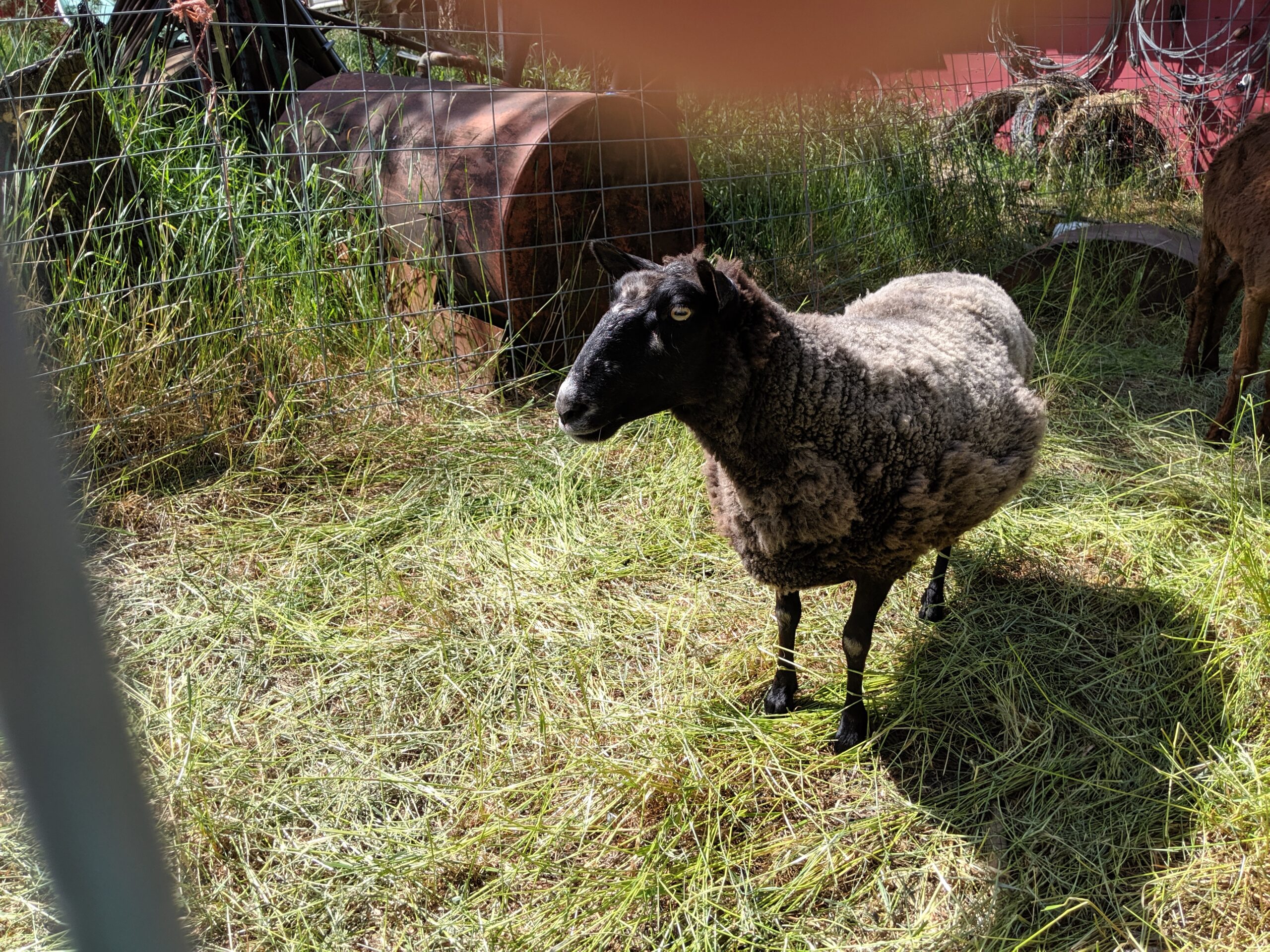
Shepherds – More than those who care for sheep

Popular imagination is based on the historical lived experience of a people. Religious imagery reflects that experience. So today, the Sixteenth Sunday of Ordinary Time, shepherds (and by extension sheep) are showing up in many of the readings. The Hebrew people were descendants of Abram and Sara, a shepherd and his wife from Mesopotamia. They were pastoralists who traveled over a wide area of countryside, seeking the best pastures for their sheep and living from the work of their hands (and feet – with all that walking). God called Abram to a special relationship and promised to be his God through all generations.

When it came time for the Hebrew people to have kings, the second king was David, a shepherd boy chosen by God to be the successor of Saul. In the Hebrew Scriptures, shepherd is a term often applied to the kings of the land. Sometimes the kings were faithful to the Covenant and sometimes they were not. Either way, the prophets spoke of them as shepherds.

Jeremiah (23:1-6) could see that his people and their kingdom were going to fall when faced by the might of Babylon. But the reason for the coming disaster had nothing to do with military might or the skill of generals. Israel had prevailed against all odds in the past. The failure this time would be the result of the failure of the rulers to be true to the Covenant.

Jeremiah speaks of these rulers as shepherds who have misled and scattered the flock of the Lord. They are not caring for the people as they have been called to do. He cries out that the Lord will be faithful, despite the misdeeds of the rulers. He will gather those who are faithful from among the nations to which they have been exiled and appoint new, faithful shepherds to guide and protect his flock.

This prophesy concludes with the messianic promise of a new king from David’s line who will shepherd the people wisely and be known as “The Lord of Justice.”

The Twenty-third Psalm is rightly loved for its promise of the loving care of the Lord who acts as a shepherd for his flock. Not only does the shepherd guide and protect the flock, the shepherd honors those for whom he cares, even in the face of those who would hurt them. Goodness and kindness characterize the care of the shepherd. The sheep, all of us in his care, will dwell in the Lord’s house for years to come.

With the coming of Jesus and the welcoming of Gentiles into the flock of the Lord as well, the divisions between peoples of the world are broken down. (Eph 2:13-18) No longer is anyone to be excluded from the flock of the Lord of Justice. The divisions among the peoples of the world were destroyed by the cross. Through Jesus, we all have access to the Father in one Spirit. The shepherd now has called the sheep from around the world and united us into one flock.

The Gospel this week (Mk 6:30-34) continues last week’s story. Remember that Jesus sent out his followers to heal the sick and call people to repentance, to turn their lives back to God. This week they have returned. Mark calls them apostles now, those who have been sent. Jesus takes time to talk with them about their experience and invites them to take some time to rest, in a deserted place, away from regular life and the crowds of people who kept coming to hear and see him. However, they can’t get away on foot, so they get on the boat and head out onto the Sea of Galilee. Even that doesn’t work. The people see where they are going and walk there themselves, around the shore of the lake. When Jesus and his friends arrive, the crowds are already there.

Did Jesus get angry, get back on the boat and sail away? No. St. Mark tells us, “His heart was moved with pity for them, for they were like sheep without a shepherd.”  He sat down and began to teach them. The shepherd had arrived. The Lord of Justice has come to his people.

Today we are challenged to be good shepherds to those sent to our care. It may be children, spouses, fellow workers, the old or the young, or people we meet on the street. How do we share the love of the Lord of Justice, the shepherd who truly cares for and loves his flock? And then, how do we rest in the green pastures to which that same Lord leads us, so we can be refreshed? Both outreach and times to rest and be renewed are essential.  Summer is a good time for both.

Read More

Posted by on Jul 10, 2021

Kindness and Truth, Justice and Peace – Signs of the Kingdom

Kindness and Truth, Justice and Peace – Signs of the Kingdom

The readings for the Fifteenth Sunday of Ordinary Time (Cycle B this year) begin with an event in the life of Amos the prophet (Am 7:12-15). A priest from the temple in Bethel named Amaziah essentially tells him, “Get lost!”

This might at first glance seem like a clash between the roles of priest and prophet. Anthropologists have noted these clashes in many societies. The priest’s role is to uphold the religious system and offer the necessary sacrifices to the local deity. The prophet’s role is to stand outside the gates and call for changes in the status quo when things get too unbearable for the poor and others outside the favored classes. Once the changes have been made in a society, the priestly class re-establishes a new status quo and all moves forward peacefully again.

To a certain extent this is what we see happening here. But there’s more to it than meets the eye. The Promised Land has divided into two kingdoms. The northern kingdom is known as Israel. The southern is Judah. Bethel is in the northern kingdom which has been quite successful in expanding into lands we now know as Syria and Iraq. The nobles are doing very well personally. The religious leaders are also profiting from the elaborate religious ceremonies, including sacrifices to local gods of the conquered areas. The religious establishment is favoring the ruling class rather than reminding them to care for the poor as well, and that favor is being returned.

Roving bands of prophets move throughout the land, speaking in the style of oracles – using puzzling language and leaving people to figure out what the oracle means. These prophets earn their living as they move from place to place from people who want to know what the future will bring – much like “fortune tellers” today.

Amos is from Judah. He is a shepherd and “dresser of sycamores.” He is not a member of any band of prophets. He is a respectable man who earns a good living from his work. But God called him, instructing him to go to Israel (the northern kingdom) and call the rulers and people there back to the covenant. When Amos obeys, his message is not welcomed and Amaziah tells him to go home!

This might have been the end of the story, but Amos does not back down. He explains his professional background as nothing remotely resembling a prophet and makes it abundantly clear that he has been called by God to deliver the message. The very next sentence he speaks is: “Now hear the word of the Lord.”

The Book of Amos was the first prophetic book in the Hebrew Scriptures. It became something of a template for the prophets and prophetic books that followed, including Isaiah, Jeremiah, and Ezekiel. The primary offense of the Kingdom of Israel? Failure to care for the poor, the widows and orphans, the conquered, and foreigners.

Psalm 85 puts it very clearly: kindness and truth meet, justice and peace kiss. Truth springs from the earth, while justice looks down from heaven. Justice, the right order of things, is based on kindness to each other. Only when the conditions of justice are met can there be peace and salvation.

The letter to the Ephesians (Eph 1:3-14) begins with a reminder of God’s blessings for those called to the community of believers. All things are summed up in Christ, according to God’s plan from before the world was created. We are chosen to be the adopted children of God, through his son, Jesus.

Finally, we see Jesus (Mk 6:7-13) sending out his twelve closest followers two by two to heal the sick and drive out “unclean spirits.” They are not to take anything but a pair of sandals with them on the journey. Their mission is not to the rich. Those who judge the importance of the messenger by appearances only would never give these messengers the time of day! But to those who welcome them and their message of repentance (turning back to God), healing of the sick and deliverance from demons is possible.

Remember, in those days what we know as mental illness was attributed to possession by evil spirits. This is not to say that such spirits don’t exist. They can cause a lot of trouble for any who listen to them. However, healing of the hurts, anger, frustration, and divisions that plague human relationships and can make mental illnesses worse is truly a form of driving out unclean spirits/demons too. When minds and hearts are healed, it can lead to obviously changed lives.

Kindness and truth, justice and peace – all are signs of the kingdom. May they characterize our lives in this coming week and into the years to come.

Read More

Posted by on Jul 7, 2021

God Calls “Ordinary” People

God Calls “Ordinary” People

The readings for the Fourteenth Sunday of Ordinary Time speak to us of the experiences of three “ordinary” people. These three men were seen by their families and communities as just regular folks. No one expected them to be any different than the rest of their group. They would grow up, have a trade or role in the community, marry, have children, grow old, and die – just like everyone else!

But that was not to be. God had different plans for them. Blessedly, these men listened and responded to the call they received.

Ezekiel

Ezekiel (Ez 2:2-5) lived at a time when Israel was conquered by the Babylonians – a people who lived to the east in an area we now know as Iraq. He was a priest in Jerusalem and was captured early in the war. He was taken to Babylonia and no one would have expected anything good to come of that. Yet that misfortune was the start of something special. In Babylonia, the Spirit came to Ezekiel, setting him on his feet and sending him on a mission. The mission? To tell the people of Israel in exile there that God was still their God, despite their refusal while still in Israel to live by the ancient covenant and rules of their faith. He was to speak using very specific language, “Thus says the Lord God!” These words identified him as a prophet – one who spoke the word of God.

A prophet in the Bible is not one who foretells the future. The prophet is the one who speaks the word received from God. Typically, that word proclaimed by the prophet is not one the people want to hear. It calls them back to a life that might seem to be more restricted and controlled. Often the prophet meets great resistance. But for those communities who respond and obey the word proclaimed by the prophet, it can become a life leading to inner peace and to justice in the community and among the nations.

The Psalmist

Does this mean all is well for the prophet or for those who try to follow the Lord’s call? Not at all. The psalmist speaks  in Psalm 123 for those who have had their fill of the mockery and contempt heaped on them by people who have rejected the Lord’s ways. “Have pity on us, O Lord, have pity on us.” Show us your mercy and end this suffering! Enough already!

Saul of Tarsus – Paul

The second ordinary man is Saul of Tarsus. Saul was originally trained as a tent maker, but he had studied the Law and was a teacher in Jerusalem. He sincerely believed the followers of Jesus were unfaithful to their Jewish roots and traditions. They were the kind of folks who got everyone else in trouble – the kind of trouble that led to them being conquered by neighboring nations. Saul set out to arrest Jesus’ followers and root out this dangerous group. But Jesus met him on the road to Damascus and called him personally to go out and tell the world the good news of the Resurrection and the Kingdom of God.

Saul, now known by his Latin name as Paul, set out to do just that. He traveled all over the Middle East and Greece. Eventually he ended up in Rome and died as a martyr there. His letters are some of the first documents we have from the early Church, earlier even than the Gospels.

In today’s reading from his second letter to the people of Corinth (2 Cor 12:7-10), Paul speaks of his weakness. He has received a tremendous gift in the experience of his calling, but he is still an ordinary guy. He battles physical and spiritual weaknesses just like everyone else does. He has asked to be relieved of these weaknesses, but that is not how grace works. The Lord’s gift of life and love works through the weakness of those who witness to him. Paul declares to the people of Corinth and to us, “When I am weak, then I am strong.” The same deal applies to us.

Jesus of Nazareth

Finally, we hear what happened when Jesus went home to Nazareth (Mk 6:1-6). He has had a tremendous experience of being called at his baptism in the Jordan River and the time in the desert. He has seen people healed of physical and psychological ailments at his touch. Yet when he goes home to his family and religious community, no one is willing to believe he should have anything to say to them. He is not a trained, certified religious teacher. He is a carpenter and the son of a carpenter. An “everyday Joe.”

In response, Jesus quotes a traditional saying: “A prophet is not without honor except in his native place and among his own kin and in his own house.” He was unable to work wonders or heal people at home, because they were not open to receive the gift he had to offer.

Prophets in our midst?

We look back on these men and their experience. How easy it would be to say, “I would never do that to a prophet that came to me!” Yet it is all too easy to overlook the gifts of those we love – the ordinary people who come to us with a word or insight that might well help us on our way to holiness.

Let’s pray today that we be open to the prophets in our midst. The ordinary folks who speak God’s word to us.

Photo: Michael and Marjorie Brewer – Two ordinary people of faith

Read More

Posted by on Jun 27, 2021

“God did not make death…”

“God did not make death…”

“God did not make death, nor does he rejoice in the destruction of the living.” The readings for the Thirteenth Sunday of Ordinary Time begin with this surprising statement from the book of Wisdom (Wis 1:13). Furthermore, the world and its creatures are “wholesome” and justice (God’s design of the right order of things) “is undying.” Physical death is merely the result of the envy of the devil, not something that can stop God’s gift of life.

The Lord rescues his faithful ones, brings them up from the netherworld, changes mourning into dancing. We respond by giving thanks, in the words of the psalmist (Psalm 30).

St. Paul asks the community at Corinth and us as well, to share what we have with those in need. We the community respond to the gift of our Lord by sharing what we have received, just as Jesus, the Word of God, entered into our human experience and shared fully in it. As was the case of the Israelites in the desert, those who have much aren’t to have more than their share and those who have only a little ought not to end up with less than their fair share of the manna (or other gifts) needed for life.

Finally, St. Mark tells of two healings. Jairus, an official from the synagogue, asks Jesus to heal his child. Jesus goes immediately with him.

On the way to the child, in the hustle and bustle of the crowd, a woman who has suffered with a hemorrhage for twelve years touches his cloak. She is hoping for healing. Immediately power goes from him and she is healed. Jesus notices this and asks who touched him. The others are amazed. In such a crowd, lots of people were touching and bumping into him. But the woman comes to him, in great fear because she has broken several rules by touching him, and confesses what she has done. Jesus does not scold her. Instead, he tells her that her faith has saved her and that she may go in peace, cured of her affliction.

Jesus then continues to the home of Jairus, where the child now has died before Jesus reaches her. Yet Jesus takes her hand and tells her to get up. The original Greek words distinguish between what Jesus said and what she did. Our English version uses the same word, arise, for both what Jesus told the girl to do and her rising from death. But in the original, Jesus said she should “get up” and the child “arose,” the same term used to describe Jesus’ own Resurrection.

These readings speak of the great hope we share as Christians. It’s particularly relevant for me just now, as I have had to say goodbye to both my mother and father in these past 5 weeks. I find myself remembering another time when both loss and hope were very present in my life.

Birth and Death – Somewhat similar transitions

Almost 40 years ago, when I was pregnant with my second child, my grandfather passed away in December and my father-in-law (who was only one year younger than my grandfather) in January was dying as well. He had cancer and it was a slower, more painful process than my grandfather’s passing. I asked God why death had to be so hard. The response surprised me. I was reminded that birth is not easy, either for the mother or for the child. The child is happy and at peace in the womb. Every need is met, even those unrecognized. Nothing has to be done. It’s warm, peaceful, pleasant. It might be getting a bit tight, but it’s still possible to stretch and move around. Who would want to get squeezed and pushed and forced through a narrow opening into a bright, cold, and unknown world! Yet that is what must happen for life to continue. And, oh what a gift life here on Earth is or can be for us. I don’t think there are very many of us who would willingly return to the womb after tasting the joys of life outside.

Death is not an end, it’s a new birth into a life of even greater beauty and freedom. Our bodies wear out and we move on to new ones. Sometimes it happens after a long life. Sometimes things happen that make it impossible for our bodies to work anymore, and we move on. But, hard as it is for those of us who remain, life continues. We rise to a new way of living. The limitations of our aging or injured bodies are removed and we share in the life of love of our loving parent in the great dance of life.

“God did not make death, nor does he rejoice in the destruction of the living…”

We hold on to this promise.

Read More

Posted by on Jun 20, 2021

Seas and Storms – In all Seasons of Life

Seas and Storms – In all Seasons of Life

The sea and its storms speak to us today, the 12th Sunday of Ordinary Time, of the power and love of God. We who live or have lived by the sea are intimately aware of its power and unpredictability, as well as its seasons.

Before I moved to Santa Cruz, I had no awareness of the subtle moods of the ocean’s seasons. But after over thirty years of living a block from the shore, I can tell from its colors, sounds, smells, and tides what season of the year is upon us. In winter, I can predict the coming of stormy weather several days in advance, even when the skies are sunny and beautiful. The ocean waves begin to roar about three days before a big storm arrives in the winter. (We don’t typically get storms in the summer on California’s Central Coast.)

We speak of stormy times in our lives too. Sometimes all is well and predictable. We know pretty much what to expect when we wake in the morning and as we go through the day. Other times are not.

Job (Jb 38: 1, 8-11) had just experienced many days and weeks of loss. His family, his flocks, his reputation, and his very health had all been stripped away. He called out in anger and frustration to the Lord, demanding an answer – “Why have you done this to me? What is the meaning of this?” (Not an exact quote, but that’s the sense of it.)

God’s response was to remind Job that humans are not the ones who set things up originally. Humans can’t control what happens in nature or their lives. It was foolish even to expect that they might! This was not a really satisfying response from a human perspective. Yet even so, by responding to Job’s cries of anger and frustration, God somehow reassured Job. By the end of the story, Job has recognized God’s place as the one in charge and he has received a new family, livelihood, and place in society.

Storms are both literal and figurative in our lives. The psalmist (Ps 107: 23-31) speaks of literal storms that blow across the waters and the rejoicing of those tossed around during the storm when the Lord answers their prayers and calms the sea. St. Paul (2 Cor 5:14-17) speaks more figuratively of the transformation of life as new life and a new creation have sprung forth from the death and resurrection of Christ. “Old things have passed away; behold, new things have come.”

Jesus and his friends experienced both kinds of storms. The one in today’s reading (Mk 4:35-41) was physical. A storm came suddenly while they were crossing the Sea of Galilee. The boat was filling with water. Drowning was a very real possibility. Then they woke Jesus. He shouted to the stormy seas to be still. In the original Greek, the word used was more akin to our “Shut up!” than to the more polite “Quiet! Be still!” of our translation. Jesus did what only God can do – he calmed the stormy sea.

Today, as then, we turn to him in stormy times. He may not calm or take away the hard things we are experiencing. Sometimes these things are a necessary part of life. But he is with us through them. We hold on to the life raft of his promise and presence until the storms die down and peaceful times return.

See you at Mass, as we give thanks for his presence with us, calming the storm!

Read More

Posted by on Apr 5, 2020

Palm Sunday – Jesus Comes to Jerusalem

Palm Sunday – Jesus Comes to Jerusalem

Palm Sunday has arrived once more. In 2020, as we deal with the challenges of a worldwide pandemic, it seems a good time to look carefully at the story of Jesus’ entrance into Jerusalem as he began the last week of his public ministry.

Here’s a word search puzzle to try, share it with children and friends, and reflect on what it all meant then and now. If you can’t find all the words, check here for the solution, but spend some time searching for them and reflecting first!

Read More

Posted by on Jun 4, 2019

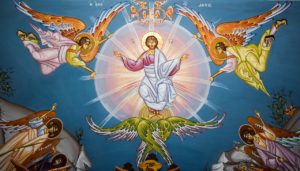
Ascension and Rituals of Farewell

Ascension and Rituals of Farewell

“Parting is such sweet sorrow,” Shakespeare wrote. We have a chance to contemplate what that means as we celebrate Jesus’ leave-taking, also known as The Ascension of the Lord. We certainly can relate at this time of year with so many goodbyes happening. Graduates are saying goodbye to the schools that have educated them as they look forward to new and exciting experiences in high school, college, graduate school, or a career. Parents are saying goodbye to the young people they’ve protected, supported, and guided at home, watching them start their own lives.

Each goodnight prayer and kiss is a promise to your children that your love stays with them through the night, just as God’s love stays with them through life. Goodnight and goodbye rituals are important for the development of spiritual strength and faith.  They teach us that there is a connection between the loved and lover that doesn’t end when one is invisible to the other.

The words goodbye, adieu, and adios all mean “God be with you.” They are words of blessing that commit another person to the care of God. Jesus exemplifies this power of blessing when he greets his disciples in Galilee after the Resurrection. He assures them of his presence as he directs them to “go and make disciples of all nations.” His final words are clear and powerful: “I am with you always, until the end of the age.” Matthew’s Gospel ends with these words.

“I am with you always.” This is what a child knows when parent kisses or signs her with a cross at night or when leaving for school. It’s what is understood by a friend’s hug, a blown kiss, or hands waving. One of our family rituals involves standing on the curb waving until the people leaving have disappeared around the corner, taking our blessings and presence with them.

The final blessing at Mass is the liturgy’s goodbye. The words empower us to go forth and make disciples of nations, to be God’s peace in the world, to serve and love one another. The words acknowledge that between the entrance and dismissal rites, God has been present to us in a wonderful and mysterious way, and we are now being commissioned to do what we gathered to do. Poised at the threshold of the church, we are ready to bring Christ into the world. Everything we have experienced at Mass – our gathering, listening to the Word, and coming to the Table – has prepared us for this moment of departure.

Let’s try to acknowledge the importance of those last moments of Mass by paying attention, listening to the words of the final blessing, and taking them into our hearts. Jesus’ promise to his disciples that he would be with them always is our promise too. Let’s receive that promise with gratitude and pass it on to others, letting each “goodbye” become a promise of our love and presence.

God be with you.

Public domain image – Ascension of Christ

Read More

Posted by on May 1, 2017

A Surprise Gift from the Lord

A Surprise Gift from the Lord

It happened again the other day. I had gone to the grocery store after dinner to get flour, yeast, and a couple of other things so I could start baking early the next morning. It was time to make the Hot Cross Buns for Holy Week and Easter. I make a very large batch of them in a house that is typically on the cool side, so it can be an all-day process to get the yeast growing fast enough to form and bake the rolls before bedtime.

At any rate, as I was coming out of the store, I crossed the parking lot with my cart of groceries and  man approached with a smile. He had just been rebuffed by another woman, but he seemed unfazed by her rebuff. I figured he was going to ask for a handout. It would have been totally consistent with his clothing and general style of approach. It commonly happens in that particular parking lot. I braced myself for his request and prepared to demur.

Rather than ask for money, however, he asked if he could ask me a question. Keeping my distance and continuing towards my car, I told him he could ask, but I didn’t know if I would answer. He again smiled and simply asked if he could give me something. He was carrying five or six long plant leaves similar to palm fronds, but from a different species of plants. When I accepted his offer, he happily began folding and twisting, and turning one of the leaves.

By this point I was nearly to the car. As he busily worked, I opened the trunk and put the bags of groceries inside. (I’d gotten more than I had anticipated — I often remember more things we need once I get to the store.) As I closed the trunk he smiled and said, “Now for the magic.” Holding his creation in one hand, he firmly pressed down on the top of it and twisted it more closely together with the other. Then he took a second leaf and wrapped it quickly beneath the first, tying it by using his teeth to hold it tightly as he worked. When he finished, he stood up straight, bowed slightly, and offered me a  flower. I smiled my delight and thanked him, exclaiming, “It’s beautiful.” He happily returned my smile and headed off across the parking lot, head held high, with hands that I now realized were wrapped in protective swaths of white bandage material, looking for someone else willing to accept a gift of beauty in the night from a stranger.

And I knew that I had once again met the Lord in the most unexpected of places and times.

Read More

Posted by on Mar 26, 2016

A Surprise Gift from the Lord

A Few Minutes to Pray

Winter Sun on the Central Coast 2.1.16Holy Saturday can become one of the busiest days of the year, especially for those preparing for church services or hosting Easter dinner. Finding a moment to stop and pray is not easy. There are rehearsals for those playing a part at Easter Vigil or other Easter services. There are last minute Easter basket details to handle. The floors need sweeping. The furniture is dusty. The windows have splotches that testify to recent rains. Shirts to iron, shoes to shine, etc., etc., etc.

Yet Holy Saturday is really a time that is supposed to be holy: a time to stop, reflect on what we have just experienced with Christ and his early family and friends, and wonder how it all applies to our lives here and now. A time to step out of time and space and enter into (or remain within) the realm of the Sacred, the Holy, the Other.

We Christians are not always conscious of the reality that God and God’s presence/activity exist outside the confines of time and space. We mistakenly think that what we celebrate took place two thousand years ago and we simply remember in historical, or maybe collective, terms the events and the people to whom these things happened. In reality, for God everything is NOW. There is no past, present, or future. When we enter into the mysteries of the life, passion, death, and resurrection of Jesus, the Pascal Mystery, those mysteries are not history. They are happening in our lives as well. Our Jewish sisters and brothers will say, “Our ancesters walked through the Red Sea and our feet are wet.” They understand that the events they remember in story and ritual are truly real today as well. This reality is equally true for us.

Today we remember that day when all seemed lost for Jesus’ mother Mary, for his friends Peter, James, John and the other disciples, for Mary of Magdala and the other women who traveled with Jesus. Jesus had been publicly tortured to death as a traitor to the Empire, a political enemy of the state. His death was that reserved for the worst of criminals, those seen as fomenting revolution. It was meant as a warning to any who would attempt to change the status quo, the way things are/were. His family and friends recognized the warning and were crushed with sadness and fear, on top of the emptiness we all feel when someone we love has died. It was the Sabbath. They couldn’t even go to the tomb to care for his body properly. They simply had to wait and pray, try to make some sense of the past three years of their lives with him, and console each other as best they could.

We know the rest of the story — the events of the next morning changed history. God intervened, raising Jesus up on the third day, the day on which God came to the rescue of the faithful one. As a result, it’s easy for us to forget what this day, the day in-between, is about, easy to get busy rushing around to prepare to celebrate. They didn’t have a clue what was coming.

But we have entered into the mystery. We have celebratedPalm Sunday with cries of Hosanna and waving of palm branches. We rejoiced on Holy Thursday, celebrating the institution of the Eucharist. We have heard the passion narrative, prayed for all the peoples of the world, and venerated the cross on Good Friday. We are still in the midst of the mystery. It is not over yet. This is a time of quiet hope and awe in the face of loss and the unknown. It’s a time to experience our solidarity with those who suffer today because they are disciples of this Jesus, the crucified one. Time for quiet and prayer.

It’s a beautiful day here on California’s Central Coast. I’m going to leave the floors unswept, the furniture undusted, the weeds growing happily in all the flower beds, and go for a walk with my Lord alongside the ocean.

Holy Saturday blessings to all.


Read More

Posted by on Feb 10, 2016

A Surprise Gift from the Lord

Prayer as Lent Begins


Humanitarian Aid
Today God our Father brings us to the beginning of Lent.

We pray that in this time of salvation he will fill us with the Holy Spirit, purify our hearts, and strengthen us in love. Let us humbly ask him:

Lord, give us your Holy Spirit.

May we be filled and satisfied,
— by the word which you give us.

Teach us to be loving not only in great and exceptional moments,
— but above all in the ordinary events of daily life.

May we abstain from what we do not really need,
— and help our brothers and sisters in distress.

May we bear the wounds of your Son in our bodies,
— for through his body he gave us life.

Intercessions, from Morning Prayer for Ash Wednesday,
Liturgy of the Hours

Read More

Posted by on Jan 29, 2016

A Surprise Gift from the Lord

Entering into the Mystery

people-walking-on-streetAs the Church’s New Year began in Advent, in communities around the world, men and women took a huge step into  a special journey: a journey that will take them deeply into the mystery of God’s relationship with humans. These people stepped forward with their sponsors and were introduced to the people of the communities they will join. Welcomed with blessings and prayer, they entered a time of study and reflection through which they will become increasingly aware of God’s call to journey on The Way.

The Way?

Christian life in earliest times was known as The Way: the way to the Kingdom of God, begun here and now with the life, death and resurrection of Jesus and unfolding through time to its ultimate fulfillment when Jesus returns and all are reunited in the mystery of God’s life. This way of living differs from the ways of others who have not chosen to follow it. It requires loving and forgiving enemies, caring for the most vulnerable in the world, acting with justice and mercy, being stewards/caretakers of the environment, and trusting that God will bring good out of all that happens, even if what happens is not what God would have wanted to see.

That doesn’t sound easy. It might even be dangerous!

Following the Way has never been a safe or easy option. Jesus, who called Himself the way, the truth, and the life (Jn 14:6), was tortured to death, hanging naked on a cross, reviled and mocked by passers-by and abandoned by most of his friends and followers. Many of those who have followed Him have witnessed with their lives to His resurrection over the past 2000 years. The martyrs (witnesses) we remember from those early centuries are still being joined by Christians around the world today who choose death rather than renounce their Lord.

Whether called to witness with our blood or not, each of us will face times when we must speak out, saying unpopular things to people we know and whose respect we treasure. Our choice of lifestyle, leisure activities, business/work behavior, sexual ethics, and treatment of the poor and ill will all be shaped by our faith. Not all of those choices will be understood or endorsed by our peers.

Then why do it?

Despite the counter-cultural nature of a life of faith, the call to enter into the mystery is profound. The joy, peace, mercy, love, and comfort of a hug from God surpass anything of human origin. Some doors open while others shut. Funds materialize just in time to keep a project going, or they don’t come at all and something else must be done to move forward in service. Prejudices get overturned as we meet and get to know folks from other social or ethnic groups in communities of worship and service. We are continually challenged and helped to grow in wisdom and grace as we grow in age.

A life of faith is not for the faint of heart. It’s a great adventure into realms not often noticed through everyday eyes. As poet Elizabeth Barrett Browning said, “All of Earth is crammed with heaven, and every common bush aflame with God; but only those who see take off their shoes.”  The glory of God shines forth in all of creaton. Those called to enter into this mystery are truly blessed. We journey forward together — those just beginning and those who’ve travelled long. Difficulties, doubts, second thoughts, and times of desolation will arise, but the promise and faithfulness of God, the overwhelming power of love and mercy, will accompany us and welcome us to an even richer life when we reach our journey’s end.

Away we go together — on The Way!

Read More

Posted by on Dec 31, 2015

A Surprise Gift from the Lord

A Prayer at Christmas time


Almighty God and Father of light,

a child is born for us and a son is given to us.

Your eternal Word leaped down from heaven

in the silent watches of the night,

and now your Church is filled with wonder

at the nearness of her God.

Open our hearts to receive his life

and increase ouf vision with the rising of dawn,

that our lives may be filled with his glory and his peace,

who lives and reigns for ever and ever.

From Liturgy of the Hours, Morning Prayer
Christmas

Read More

Posted by on Dec 6, 2015

A Surprise Gift from the Lord

Advent Chant – Creator of the Stars at Night

supernovae

Conditor Alme Siderum — Creator of the Stars at Night — is a 7th century hymn commonly sung during Evening Prayer (Vespers). Redemption comes not only for humanity but all creation. In this rendition, both the Latin and English words are sung.

Image: Supernovae, NASA, public domain

Read More

Posted by on May 22, 2015

A Surprise Gift from the Lord

Why Mary is Important

Hail Mary - F Fong

When we think or speak of Mary, the Mother of God, it is always important to keep in mind that she is best understood in the context of her relationship with her son, Jesus. Said formally, Mariology is always constructed in the context of Christology. This is so because Christ is the redeemer and the sole source of salvation. Everything in creation came to be through him. Mary, because of her role, participates in the creative and redeeming action of God in a special way.

Mary’s exceptional conception as sinless affords her the choice to live fully for God. She was not programmed to be good, but rather, Mary did not carry the deep fear of interference and resistance against God that exists in all other human beings. The rest of the human race has the grace and possibility to work with and overcome fear and anger, but we must work to limit our desire for control and instead surrender to God’s grace. We often do not choose right away to stop being resentful or angry. We often project onto others the responsibility for our own self-inflicted injuries. Mary had a clear vision of her place in life. She was born totally honest and prepared to grow. She chose to say “yes” over and over to these qualities, even when they brought suffering.

According to the Scriptures, Mary grew in her understanding of her son, herself, and the work of God in the world for salvation. We read more than once in the Gospel of Luke that she “pondered” how their lives were unfolding and what God was doing. She did not have a road map to reassure her of where they were going, but she had given her consent at the Annunciation and she trusted over and over. Her pregnancy was unexpected and controversial. The choices that Jesus made had consequences. His declaration in the synagogue that he was the Messiah brought immediate violence and ejection from the community. We find him and Mary later in the Gospel living in a completely new town, Capernaum, not a hill village like Nazareth but a fishing village.

Icon of the Wedding at Cana - Lucia 398 - CCWhen Jesus began his itinerant preaching and healing ministry we know that Mary, her sister and a group of women accompanied him as well as the crowds. This was not a normal lifestyle for first century Jewish women. Mary had to give up her reputation, village, old friends and the comforts of a house. In all of these ways she was an excellent listener of God as he called her out of the usual, the expected. She had to be quite aware of the danger that Jesus was in. In the Gospels, in village after village, the rage and jealously grew in the scribes and Pharisees. They hated his penetrating honesty, his clear perception of their air of superiority. They despised Jesus’ humility and closeness to the cast-offs of society. Mary must have constantly had to put her worries in the hands of God. She modeled an exceptional surrender to God and acceptance of His will. No one could have gone through this without being in deep prayer and interior connection to God all the time. She stood by Jesus from Cana to Golgotha and we have no reason to believe that she knew that “everything was going to be all right.”

Throughout the centuries Mary has been understood as the second Eve who reversed the willfulness and disobedience of the first Eve. Even when this story is understood metaphorically, Mary still is understood as the first human to be perfectly and happily obedient. She is also appreciated as the mother of the Church because she remained as the center of the early church community and loved them as her own. But it is her maternity of Jesus which stands out as the most important role she has because of its eschatological (future reaching) character. What is meant by this is that she is not just a person who did something unique in the past. Mary was and is “full of grace.” In the spiritual relationship which she has with her son and the whole of creation, Christ’s grace pours through her as the first disciple to all of humanity. Mary mothers us (protects and strengthens us) if we let her. Catholicism understands all of humanity, living and dead, to be in spiritual solidarity, a mystical body. Because of this solidarity or communion, Mary can help us to have a readiness to commitment, trust even in unbearable loss, and unimaginable joy when we are united to her son.

Read More