Pages Menu
RssFacebook
Categories Menu

Posted by on Mar 23, 2017

The Catechumen’s Song

The Catechumen’s Song

The Catechumen’s Song

A still gentle voice
rills upon the waves
Laughs in the gulls and
sparkles in the sand

A longing deep and still
beyond believing
Within hope
a throb of love


Late have I loved thee
beauty ever ancient ever new
Let me die in your arms
and rise up anew

Where are those to take
me to you?
How a path upon the stars
your love does trace

Where is this beauty
in the path?
What turn forsakes
all else?

Sweeping low the
the salt breeze calls
My name, my name
across the dunes

Balanced against all else
the stones of life
For a season in a day
guard the path of ocean sway

Across the waves
our hulls delight
Spinnaker buckle and roil
a tack and yaw

Roll and deep
a crash and rise
At harbor’s sunset
across the bar

Day’s lagoon at tide resets
sways the dock
A fire in the mountain
challenges purple

The path a million lighted wings
sweet sage upon the mountain breath
Dawn’s sparkle bubbles
the font of agate

Upon the forest fence
descends the Dove
Beneath the flood
a rush of three

Strong arms my breath
does save anew a light
From the tomb a laugh
as butterfly does dash

Hold the colors of that flame
anointing soothes
A priest a prophet does proclaim
the Spirit of Love comes upon me

A table a gentle fare
so dearly won
The bread the wine
in faith eyes so much more

Risen, one Body
one host divine
Comes at table
in our hearts to recline

Where tells the mystery sweet
upon my ears to dance
Where finds my mind
my heart

Away from lover’s trance
to delight
In my Love’s laughter
steal away, steal away

No more I dwell alone
my loneliness meets its end
Among the lilies
I lay down my head

At one in peace
one Heart
In the one Lord
one Heart

A chance upon the breeze
swings on gossamer wings
A sweet entrance with
nectar a rainbow’s trance

Who calls in sunset’s
green flood
Whose footsteps
bid your path

Come hear the music
and the dance
Come play, steal away
and dance

Leave all else
lose yourself
Upon the even tide
on the shore He sets His Fire

Read More

Posted by on Oct 7, 2016

Pope Francis’ Pro-Life Agenda – Beyond Clinton and Trump

Pope Francis’ Pro-Life Agenda – Beyond Clinton and Trump

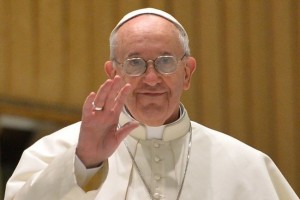
pope-francis-celebrity-backgrounds-28521Like many of you, I received a chain email from a friend about the moral imperative to support pro-life candidates. The email was basically an endorsement of Donald Trump including the statement that no Catholic could in good conscience support Hillary Clinton.

Dear Friend,

There is a good article in the National Catholic Register (a more conservative Catholic publication) about Trump’s pro-life position.

http://www.ncregister.com/daily-news/catholics-grapple-with-a-trump-candidacy

Pope Francis reaffirmed his opposition to abortion in his address before a joint session of Congress while he also re-affirmed immigration, poverty, and gun violence as pro-life issues. These views were also echoed by American archbishops and bishops.

https://cruxnow.com/church/2016/02/08/how-pope-francis-shakes-up-what-it-means-to-be-pro-life/

While the Secretary Clinton’s policy is definitely pro-choice (in favor or legalized abortion), Mr Trump’s policies are opposed to Catholic teaching on immigration, income inequality, torture, refugees, and ending the death penalty.

This brings us to our usual election dilemma in which the Democratic Party is generally aligned with then Church’s teaching on social justice issues and the Republican Party is aligned with Church teaching on birth control, abortion, same sex marriage, and euthanasia.

Pope Francis has come out publicly against building a wall between the US and Mexico which is one of Mr. Trump’s signature initiatives.

http://www.ewtnnews.com/catholic-news/Vatican.php?id=13305

Voting for pro-choice candidate is morally possible according to Pope Benedict.

“When a Catholic does not share a candidate’s stand in favor of abortion and/or euthanasia, but votes for that candidate for other reasons, it is considered remote material cooperation, which can be permitted in the presence of proportionate reasons.”  (emphasis added)

With regard to reducing and eliminating abortion which should be a major priority for Christians we know that re-criminalizing it forces it underground and leads to the deaths of many young poor women. We also know that increasing education and economic subsidies for women makes it easier to choose life for the unborn. Many pro-life politicians also oppose paid maternity leave and longer term welfare for mothers. The Bill Clinton welfare reform in the 90’s gained bi-partisan support since it was aimed at “welfare mothers.” This decrease in aid tends to push women toward abortion.

Most people, according to many national polls are not happy with either candidate. However, if we are going to safeguard the unborn we need to have policies that support women, child welfare, and the family. While abortion is a tremendous evil, making it illegal will not stop it. We need to change the social incentives which push women toward abortion and create a social safety net that supports mothers and families.

By taking the broader approach that Pope Francis is recommending we can build a political consensus to support and grow a pro-life culture in the United States. The Church’s primary social teaching is the respect for human dignity and self-determination. This comes out of the fundamental Gospel challenge of charity for all. As reflective and prayerful Catholics we should focus on the theological virtues of faith,hope, and love in our thoughts, our words, and our deeds in this political season.

Peace and blessings,

Read More

Posted by on Oct 3, 2016

Finding God in All the Wrong People – A Look at the Emerging Church

Finding God in All the Wrong People – A Look at the Emerging Church

Accidental Saints


Seeing the Underside and Seeing God: Nadia Bolz-Weber with Krista Tippett at the Wild Goose Festival from On Being on Vimeo.

Nadia Bolz-Weber is a Lutheran Minister who is described as “not your mother’s minister.” This is a marvelous interview with the woman who is the pastor or “pastorix” as she jokes of the House of  Sinners and Saints in Denver. Raised in the Church of Christ with no drinking, dancing, and no instruments in church Nadia has gone through many years of addiction and stand up comedy. In her Denver church,  she has incorporated the four part a capella singing of her childhood and focuses her preaches on the ongoing death and resurrection of Christians.

Before meeting her husband she had not found a Christianity with a care for the poor and a liturgy. Her getting clean and sober she describes as a “completely rude thing for God to do.” In Lutheranism she discovered a long articulation of belief that she “did not have to get rid of half her brain to accept.” She found an emphasis on God She doesn’t feel responsible for what her congregants believe but she feel responsible for what they hear and experience in the preaching and in the liturgy. they are anti excellence but pro participation. She calls her liturgy “high church and tent revival.”

For a fresh take on traditional Christianity in contemporary language enjoy this interview.


Read More

Posted by on Sep 8, 2016

Happy, Healthy, Holy – Move, Pray, Enjoy!

Happy, Healthy, Holy – Move, Pray, Enjoy!

Your Day of Renewal at Villa Maria del Mar

Saturday – October 15, 2016  9:00 AM to 3:00 PM

On the beach in Santa Cruz – 21918 E Cliff Dr., Santa Cruz, CA

Ocean Peace

Peace Garden

We fulfill our human potential – God’s dream for us – by being healthy, happy, and holy

Movement, reflection, sharing, music, drawing, journaling, photos, Taize prayer

$85 fee includes morning snack, lunch, and all materials. Save $30 bring a friend for $140. Special bonus – ocean views. Scholarships available.

Information, questions: RandyPozos@gmail.com, call / text 831-588-3423  Online registration: https://happyholyhealthy.eventbrite.com

Your Day of Renewal

Part One

  • Opening Exercise: Chair yoga: Breathing, Coming into the Presence, Music, Reading, Movement
  • Visioning Exercise – What is God’s Dream for Me?
  • Reflection and Sharing
  • Journal Exercise – How do I respond to God’s dream for me?
  • Writing, drawing, sculpting

Part Two

  • Nutrition and Exercise: What part of my life gives energy, wholeness, and peace? Are foods merely physical? How does spiritual nourishment feed my physical body and change it.
  • Mind, Body, Spirit Exercise: Breathing, Music, Movement, Prayer, Reconciliation
  • Reflection Period
  • Angelus – guided meditation and movement

Part Three

  • Relaxation Exercise: Paying attention to your body after lunch; rest and awakening
  • Affirmation Exercise: (Guided Meditation) Happiness, Health, Holiness: Self Affirmation and Encouragement
  • Taize prayer and Movement

Closing

  • Sharing insights, observations, blessings
  • Sending Forth: Music, movement, and singing.

Your Hosts: Randy and Kathy Pozos

Drs. Randolfo and Kathleen Pozos are graduates of Gonzaga University and are members of the Jesuit honor society Alpha Sigma Nu. They received their doctoral degrees in anthropology with concentrations in religion, health care, and social inequality from UC Berkeley

In addition to their professional work in healthcare services including wellness programs, Randy and Kathy have integrated wellness, positive psychology, and spirituality into this program. As educators and catechists, they have presented programs in English and Spanish for many years.

Randy and Kathy have been members of Resurrection Catholic Community in Aptos, CA for 28 years. They have three children and two grandchildren. Randy is a deacon candidate for the Diocese of Monterey and has been assigned to Holy Cross Parish in Santa Cruz for his pastoral internship

Read More

Posted by on Sep 1, 2016

Pope Francis’ Pro-Life Agenda – Beyond Clinton and Trump

Pablo Escobar, Jr and The Parable of the Merciful Son

NASA South America 2007

South America – NASA Image – Public Domain


CNN published an unusual story of hope, forgiveness, and mercy “Escobar’s Son Lives with Two Truths”.

“I could easily have turned into Pablo 2.0, but I found out about the violence and the pain,”

What happens when you are the son of one of the world’s most notorious criminals? You say good bye to your father on the phone and get a call a few minutes later from the police from your father’s phone. What do you say when they tell you that they have just killed the man who loved you unconditionally with great tenderness?

How do you reconcile the man who is a great father with the man who set up the Medellin drug cartel in Colombia, killed hundreds including police, lawyers, and judges while smuggling 15 tons of cocaine into the United States everyday?

The usual television script would call for the son to follow in the footsteps of the father in a remake of “The Godfather”. Yet a young man decided not become Pablo Escobar 2.0 and gave up that name to become Sebastian Marroquin (say Marro-keen).

Marroquin chose a path of peace and reconciliation. In the recently released English translation of Pecados de Mi Padre (The Sins of my Father) as Pablo Escobar, My Father. Marroquin presents the loving father and the monstrous criminal. He talks about his own efforts to make amends with the children of the key Colombian leaders killed by his father. His reason, “because absolute silence kills us all.” The meetings have been very difficult for everyone involved but also healing. Some have told Marroquin that he is one of the victims himself and that no apology was needed since he hadn’t committed or ordered the murders.

This is an extraordinary account of repentance offered and mercy given. How many of us would even speak to the son of the man who murdered our father? How many of us could look past our own pain and rage to absolve the murderer’s son and bring him into the ranks of the victims? Generally, human history is replete with examples of revenge after wave of revenge lasting for generations.

Marroquin’s main reason for promoting his book is that he feels that the coming release of season two of “Narcos” by Netflix glamorizes his father and gangsters.

“I am not worried that the image of my father is bad. What worries me is the image of him that says, ‘It’s cool to be a narco trafficker.'”

A new parable for our time?


Read More

Posted by on Aug 30, 2016

Holy Year Pilgrimage – Ave Maria – Carly Paoli

Holy Year Pilgrimage – Ave Maria – Carly Paoli

The Holy Year of Mercy can seem a little abstract. Here is a wonderful video with a beautiful adaptation of the Ave Maria. What struck me was the emphasis on recovering lost dreams and hopes not so much for ourselves but those on the street, those seeking justice, the suffering. This is contrasted with the faith of the pilgrims and the churches and sites of Rome.

This is a moving presentation of the core belief of Christianity that we cannot say that we love God whom we do not see when we ignore our neighbors whom we can see. It is consolation and a challenge that persists in the proclamation of the Gospel from generation to generation. Today it comes in a beautiful  voice, a beautiful song, and the faith of beautiful people.


Read More

Posted by on Aug 17, 2016

Pope Francis’ Pro-Life Agenda – Beyond Clinton and Trump

Mission: Peacemaking and Muslim Christian Relations

Peace Flows Like a River

Water in the Desert

What I’ve discovered … is that when we show up for people in need — when we seek their well-being, flourishing, and justice, whether they ever convert to our religion or not — we might just see the transformation we long for in ourselves and in hard-to-access places around the world. – Jeremy Courtney

Baptist missionary Jeremy Courtney, his wife, and two children found themselves in the middle of the Iraq War.  In today’s attempt by some Moslems and Christians to demonize the other in a continuation of centuries of bloody warfare, Courtney has founded the Preemptive Love Coalition.

Courtney and his movement represent a broadening of the Protestant Evangelical notion of mission to one that is more in keeping with the Vatican II Catholic notion of the Christian missionary. Courtney’s approach is to pursue peace one heart at a time. “Love first and ask questions later.” became the theme of Courtney’s approach as he started helping Iraqi children to obtain life-saving and life-changing heart surgery within Iraq by increasing the capacity and capabilities of the country to care for its own children.

Courtney opens his web page, JeremyCourtney.com, with a compelling quotation from C.S. Lewis in Mere Christianity about how our failure to accept and embrace people we see as opponents corrupts us and our relationship with God because it leads us to a universe of pure hatred.

Suppose one reads a story of filthy atrocities in the paper. Then suppose that something turns up suggesting that the story might not be quite true, or not quite so bad as it was made out. Is one’s first feeling, ‘Thank God, even they aren’t quite so bad as that,’ or is it a feeling of disappointment, and even a determination to cling to the first story for the sheer pleasure of thinking your enemies are as bad as possible? If it is the second then it is, I am afraid, the first step in a process which, if followed to the end, will make us into devils. You see, one is beginning to wish that black was a little blacker. If we give that wish its head, later on we shall wish to see grey as black, and then to see white itself as black. Finally we shall insist on seeing everything — God and our friends and ourselves included — as bad, and not be able to stop doing it: we shall be fixed for ever in a universe of pure hatred.

– C.S. Lewis, Mere Christianity

Although C.S. Lewis wrote in the context of World War II and the Nazi regime, his words are especially relevant in our moral challenge of relating to Islam and to Islamic extremists.

Courtney focuses on the need for authenticity, since many Protestant missionaries pose as aid workers or teachers in countries that are hostile to Christianity. In an OpEd for CNN’s Declassifed – Untold Stories of American Spies – “Three Arguments Against Christian Covert ‘Spycraft'” Courtney decries this practice as dishonest, harmful to religious freedom, and because it “puts a target on the backs of local Christians”.

I charge you in the presence of God and of Christ Jesus, who will judge the living and the dead, and by his appearing and his kingly power: proclaim the word; be persistent whether it is convenient or inconvenient; convince, reprimand, encourage through all patience and teaching.For the time will come when people will not tolerate sound doctrine but, following their own desires and insatiable curiosity will accumulate teachers and will stop listening to the truth and will be diverted to myths.But you, be self-possessed in all circumstances; put up with hardship; perform the work of an evangelist; fulfill your ministry.

2 Timothy 4:1-5

Read More

Posted by on May 6, 2016

Pope Francis’ Pro-Life Agenda – Beyond Clinton and Trump

An Eye for an Eye … A Whole World Blind?

Milkau_Oberer_Teil_der_Stele_mit_dem_Text_von_Hammurapis_Gesetzescode_369-2“An eye for an eye and a tooth for a tooth” was an important advance in human relations at the time of Babylonian ruler Hammurabi around 1754 BCE. In earlier ages, particularly in small tribal societies with large extended families, the norm was that family honor demanded extreme reaction/retaliation for wrongs committed against any member of the family. Of course, some members were more highly valued, so retaliation for wrongs against them was more extreme, but even for those with lower status, some sort of response was necessary. Otherwise the next offense might be more extreme. No family could affort to appear weak. This approach is still all too common among tribal peoples today. Honor killings have not disappeared from the face of the earth.

However, as larger groups of people/families began to live in towns and cities, feuds between families, with ever escalating degrees of violence, wrecked havoc on social order and stability. Something had to be done. The Code of Hammurabi, like the codes of other ancient rulers, served as a guide for dealing with conflict and setting levels of responsibility or punishment for offenses.

Legal Codes Limit Revenge

Under the terms of the Code of Hamurabi, wrongs could not be avenged with actions more extreme than the original offense, though what was considered extreme varied by social class, with offenses against the poor or slaves meriting smaller degrees of punishment. Nevertheless, limiting the scope of acceptable response/retaliation was absolutely necessary for human social progress.

Mount Sinai by El GrecoThe Mosaic Law, which undergirds much of Western Civilization, incorporated many of the features of the Code of Hammurabi. In contrast with the codes of monarchies, such as that of Hammurabi, Hebrew law was seen to come from God and included care of widows, orphans, and outsiders (“strangers”) in its scope. The concept of mercy and inclusion of forgiveness of debt were also part of the Mosaic Law.

All of this comes to mind as headlines scream that government forces have bombed a civilian hospital in rebel-held territory one week and the next week another civilian hospital in government-held territory is bombed by rebel forces. Terrorists kill theater-goers. Bombs explode near airports and in subways. Politicians speak of excluding all members of a world religion or all people from certain countries from entry to their more privileged country. Refugees are turned away from country after country. And women and girls who have been victimized by warring men are shunned by their families or killed for bringing dishonor on their families.

Where will it all end? When will it all end? How can it all end?

Jesus was not joking when He told those who came out to hear Him teach that they were to love their enemies, pray for those who persecuted them, and treat others the way they themselves wanted to be treated. (Mt  5:1-7:29 and Lk 6:27-38) They were to be compassionate as the Father is compassionate. These words were meant for us too. They challenge us today. Are they just for individuals or are they for communities and nations?

Forgive and Forget?

We sometimes hear the phrase, forgive and forget. It is so commonly heard that it’s become a platitude, a phrase that is somehow expected but without anticipation that it can actually happen. I suggest that it would be better to say “forgive but don’t forget.” Don’t forget the pain, the shame, the humiliation, the embarassment. But do forgive it and resolve not to pass it on. Take necessary steps to protect the vulnerable from harm. Be reasonably careful yourself, but forgive. Don’t carry the weight of hatred or of seeking vengence through the days following an injury or injustice. That only hurts the one who carries it. Passing on the pain doesn’t take away pain either. Passing it on just gives pain new energy, draining the energy of the one who harbors and holds on to it.

I don’t know how to solve the world’s problems. I don’t know whether we’ll ever see a time when wars will stop. I know that religious conflicts are among the hardest to end, in part because of their confusion with a desire for power and control that masquerades as a search for orthodoxy or conformity in religious belief and practice.

Nevertheless, I do believe that each of us is called to do what we can to stop the bloodshed, both literally and figuratively. We must forgive. We must find ways to hold ourselves and others accountable for our actions. We must learn how to teach our children to love rather than fear or hate those who differ from us and our ways. We must welcome people from other lands. We must resolve to share the goods of the earth, even if that means we must live more simply ourselves. We must go beyond “an eye for an eye,” because as Gandhi said, “An eye for an eye will only make the whole world blind.” None of us is perfect. No country is entirely innocent on the world stage. But it’s time for all of us to grow up and stop passing on the pain. Time to forgive and remember and resolve, “Never again.”

Read More

Posted by on Apr 4, 2016

Pope Francis’ Pro-Life Agenda – Beyond Clinton and Trump

Visited by an Angel – The Annunciation

The Annunciation - Henry Ossaw TannerGabriel’s visit to a very young woman in the small town of Nazareth was a momentous event, though mostly unnoticed at the time. Gabriel is the archangel tasked to serve as special messenger of God. On this visit, the message was actually a request: will you consent to become my mother? It wasn’t exactly phrased this way, according to the narrative we have from St. Luke, but in essence that was the question. Gabriel told Mary that she would bear a son who would be the Son of the Most High and would sit on the throne of his father David (as in King David), rule over the house of Jacob forever and have an unending kingdom. (Lk 1:26-38)

Now this would be challenging even to a married woman, but this young woman was not married. In her culture, having a child out of wedlock could result in death by stoning. At best, she would be shunned and excluded from polite society. Yet Mary had the courage to ask for more details about how such a thing could happen and to listen with deep faith to the response. Then she answered “yes,” Jesus was conceived, and God’s plan for salvation could go forward.

Christians have celebrated the Annunciation for centuries. Typically, the feast is scheduled for March 25, exactly nine months before the celebration of Christmas. However, in the West, when March 25 falls within Holy Week or the first week of Easter, the feast is moved to Monday following the Second Sunday of Easter (now known as Divine Mercy Sunday).

As adults we celebrate many events such as the Annunciation with prayer – Liturgy of the Hours, Mass, the Angelus, etc. However, for children, these ways of celebrating are not always experienced as much fun. So, with that in mind, I’d like to suggest an alternative way to celebrate: Make Angel cookies!

To make Angel cookies, take any recipe for a cookie that allows rolling out the dough and cutting out a cookie. (Even brownies could be used for making Angel Cookies if time is short.) Use an angel shaped cookie cutter to shape the cookies before baking. Be sure to decorate them with frosting/icing or with some  kind of “sprinkles” of colored sugar to make them festive. Then share them as part of a festive meal. Light a candle, have a special drink, use nicer dishes than normal, have a food that is a treat for your family — any or all of these things will make the day special for the children and family who share them.

As you share this day, keep your ears open for the voice of angels in your life. God’s messenger still comes, though perhaps not as momentously as in the visit to Mary. What is God saying to you and me today?

Peace.

Read More

Posted by on Mar 30, 2016

Pope Francis’ Pro-Life Agenda – Beyond Clinton and Trump

You will always have the poor

Charity and Justice - Public Domain Image

Public Domain Image

A Reflection by Jerry Finney

Gospel Jn 12:1-11

Six days before Passover Jesus came to Bethany,
where Lazarus was, whom Jesus had raised from the dead.
They gave a dinner for him there, and Martha served,
while Lazarus was one of those reclining at table with him.
Mary took a liter of costly perfumed oil
made from genuine aromatic nard
and anointed the feet of Jesus and dried them with her hair;
the house was filled with the fragrance of the oil.

Then Judas the Iscariot, one of his disciples,
and the one who would betray him, said,
“Why was this oil not sold for three hundred days’ wages
and given to the poor?”
He said this not because he cared about the poor
but because he was a thief and held the money bag
and used to steal the contributions.
So Jesus said, “Leave her alone.
Let her keep this for the day of my burial.
You always have the poor with you, but you do not always have me.”

The large crowd of the Jews found out that he was there and came,
not only because of him, but also to see Lazarus,
whom he had raised from the dead.
And the chief priests plotted to kill Lazarus too,
because many of the Jews were turning away
and believing in Jesus because of him.


When I first read our Gospel reading for this morning, I thought it was about two things — Mary’s love and worship of Jesus who had raised her brother from the dead and Judas’ criticism of actions because of his greed and corruption. In preparing this reflection, I found that there is much more.

The scholar Fr. Raymond Brown points out that the anointing of Jesus’ head and feet is symbolic of his being prepared for burial following his crucifixion. It also is symbolic of what was believed by many at that time of what was necessary for resurrection. Rabbi’s would discuss the greatest act of mercy — almsgiving or burying the dead. Those who believed in proper burial thought it an essential condition for sharing in the resurrection. Spending large amounts of money for a proper burial, just like today in our society, happened and happens where people want the best for their loved one.

So there is a hidden discussion of the greatest mercy. Jesus tells Judas that in this case it is better to save the fragrant oil for his burial. Jesus was not negating the value and necessity of almsgiving. Jesus’ other statement to Judas of, “The poor you always have with you,” on its surface, might seem cynical or uncaring. But, that would not fit with the rest of Jesus’ manifest concern for the poor, the oppressed and those at the margins of society. Jesus is quoting from Deuteronomy and is reflecting a reality. Even if everyone started out even in life, sooner or later some will end up with more and others with less, much less. Chance, disaster, ill health, environmental changes, laziness, cheating, bad decisions — all will produce disparities.

Galilee, in Jesus’ day, was an occupied country, and the Hebrews were a religious minority. The mostly illiterate population, that flocked to Jesus’ teaching and healing, were barely surviving on subsistence farming and they were subject to the whims of the landholders and the powerful elite ruling from a distance. The poor and oppressed were the ones to whom Jesus ministered. He told those who had more than they needed to share their excess so as to bring about God’s kingdom.

Deuteronomy, reflecting God’s mercy and wisdom, recognized that disparities were inevitable and, to deal with it, proposed a system of periodic redistribution of resources and forgiveness of debt. It was a system of how people who had been rescued from slavery and given so much were to deal with one another.

It is certainly no less true today that all our resources are gifts. God gave his people the ability both to smooth out those inequities and prevent some of them altogether. That’s what’s behind Jesus’ reminder that we will always have the poor with us. That is why we must share and redistribute resources.

In his encyclical, “Laudato Si,” Pope Francis urges us to, “replace consumption with sacrifice, greed with generosity, wastefulness with a spirit of sharing, an asceticism which entails learning to give, and not simply to give up.” It is a way of loving, of moving gradually away from what “I want” to what “God’s world needs.” It is liberation from fear, greed and compulsion. As Christians we are also called “to accept the world as a sacrament of communion, as a way of sharing with God and our neighbors on a global scale. It is our humble conviction that the divine and the human meet in the slightest detail in the seamless garment of God’s creation…”

Pope Francis said that St. Francis’ actions and words “shows us just how inseparable the bond is between concern for nature, justice for the poor, commitment to society, and interior peace.”

The message — from Deuteronomy, from Jesus, from Pope Francis — is that those who have resources must use them wisely and must help those who have not, not out of generosity but out of responsibility. Jesus and Pope Francis did not say how to do, just to do it. Getting that sharing right is not easy. We each must work at it as best we can and where possible implant God’s values in our economic systems.


Read More

Posted by on Mar 26, 2016

Pope Francis’ Pro-Life Agenda – Beyond Clinton and Trump

A Few Minutes to Pray

Winter Sun on the Central Coast 2.1.16Holy Saturday can become one of the busiest days of the year, especially for those preparing for church services or hosting Easter dinner. Finding a moment to stop and pray is not easy. There are rehearsals for those playing a part at Easter Vigil or other Easter services. There are last minute Easter basket details to handle. The floors need sweeping. The furniture is dusty. The windows have splotches that testify to recent rains. Shirts to iron, shoes to shine, etc., etc., etc.

Yet Holy Saturday is really a time that is supposed to be holy: a time to stop, reflect on what we have just experienced with Christ and his early family and friends, and wonder how it all applies to our lives here and now. A time to step out of time and space and enter into (or remain within) the realm of the Sacred, the Holy, the Other.

We Christians are not always conscious of the reality that God and God’s presence/activity exist outside the confines of time and space. We mistakenly think that what we celebrate took place two thousand years ago and we simply remember in historical, or maybe collective, terms the events and the people to whom these things happened. In reality, for God everything is NOW. There is no past, present, or future. When we enter into the mysteries of the life, passion, death, and resurrection of Jesus, the Pascal Mystery, those mysteries are not history. They are happening in our lives as well. Our Jewish sisters and brothers will say, “Our ancesters walked through the Red Sea and our feet are wet.” They understand that the events they remember in story and ritual are truly real today as well. This reality is equally true for us.

Today we remember that day when all seemed lost for Jesus’ mother Mary, for his friends Peter, James, John and the other disciples, for Mary of Magdala and the other women who traveled with Jesus. Jesus had been publicly tortured to death as a traitor to the Empire, a political enemy of the state. His death was that reserved for the worst of criminals, those seen as fomenting revolution. It was meant as a warning to any who would attempt to change the status quo, the way things are/were. His family and friends recognized the warning and were crushed with sadness and fear, on top of the emptiness we all feel when someone we love has died. It was the Sabbath. They couldn’t even go to the tomb to care for his body properly. They simply had to wait and pray, try to make some sense of the past three years of their lives with him, and console each other as best they could.

We know the rest of the story — the events of the next morning changed history. God intervened, raising Jesus up on the third day, the day on which God came to the rescue of the faithful one. As a result, it’s easy for us to forget what this day, the day in-between, is about, easy to get busy rushing around to prepare to celebrate. They didn’t have a clue what was coming.

But we have entered into the mystery. We have celebratedPalm Sunday with cries of Hosanna and waving of palm branches. We rejoiced on Holy Thursday, celebrating the institution of the Eucharist. We have heard the passion narrative, prayed for all the peoples of the world, and venerated the cross on Good Friday. We are still in the midst of the mystery. It is not over yet. This is a time of quiet hope and awe in the face of loss and the unknown. It’s a time to experience our solidarity with those who suffer today because they are disciples of this Jesus, the crucified one. Time for quiet and prayer.

It’s a beautiful day here on California’s Central Coast. I’m going to leave the floors unswept, the furniture undusted, the weeds growing happily in all the flower beds, and go for a walk with my Lord alongside the ocean.

Holy Saturday blessings to all.


Read More

Posted by on Mar 5, 2016

Pope Francis’ Pro-Life Agenda – Beyond Clinton and Trump

What is Mercy?

The Prodigal Son

The Prodigal Son

On December 8, 2015 Pope Francis called the Church and the World to a Year of Mercy. This virtue is very prominent in the Pope’s preaching and teaching. Many have embraced this call; but, what is mercy?

Mercy is the attitude or action of someone who could justifiably be uninvolved, superior, insensitive or disdainful. It implies that the person extending mercy goes out of her or his way to ignore whatever differences there may be between the self and others. Sincere mercy is expressed by a person who has moved beyond self-preoccupation or fear to equanimity and even magnanimity. Mercy is inclusive. There is no judgment in mercy as to who deserves it or not. Mercy   knows that the one extending mercy also needs it.

In the Hebrew Scriptures, “hesed” and “rachamim” are both translated as mercy. “Hesed” is a holy, giving love. It is a love which reaches out. It is a love that is steadfast and dependable. (Joshua 2:12-14) “Rachamim” comes from “racham” which is a mother’s womb. (1 Kings 3:26) This is a love that is tender, compassionate, and responsive.

Mercy in Jesus’ Life

Jesus spoke of mercy often. His life often called him to go beyond the law, the rules, and social norms. He pulled to himself those who were unacceptable — the dirty, leprous and sinful: outcasts, women, the old. The widow of Nain, Matthew and Zacchaeus (tax collectors), the woman with the constant bleeding, the man born blind, the woman caught in adultery, and the Samaritan woman at the well — all are examples of Jesus’ extending mercy and often incurring the wrath of the respectable authorities. Jesus crossed the gaps of separation between people to demonstrate the joy of unity. The parable of the prodigal Son is a wonderful example of this. Jesus showed us that fear of the other is unnecessary and destructive of authentic humanity. Mercy’s goal is happiness rather than just legal fairness. Doing mercy is helping people flourish. This is much more than just not hindering people. Jesus let us know that we all need each other’s mercy — and God’s most of all.

Jesus also offered mercy to the powerful. He had openness to the Scribes and Pharisees and encouraged dialogue as long as they were civil. But they could not imagine engaging with someone who associated with outcasts, nor that they themselves might need mercy. These authorities saw the perfect following of their laws as a sign of their righteousness and their separation from outcasts as a good thing. (Never mind that the poor did not have the finances to do the symbolic washing, eating, dressing, tithes, rituals, and travel to be perfectly observant,) Jesus was looking at the heart and its intentions. The elite enjoyed power coming from superiority and were looking at appearances

Mercy in the New Testament and Today

In the New Testament one can also find “eleos” translated as mercy. The root of “eleos” is “oil that is poured out.” Thus God’s love is poured out to us. The generosity of God’s care fills the Scriptures. It is one of St. Paul’s themes.  ( Romans 5:5, Titus 3:6 and 1 Timothy 1:14) God’s mercy does not imply that God is weak. It does say that God knows well our circumstances and His love overflows for us.

Many people have experienced God’s mercy for them. In the most trying circumstances there are those who have leaned on God and found much solace and help. It is not easy to hit a wall and trust God. Coming up against those in power when they show no mercy is also a difficult, if not frightening thing.

In recent years those like Bishop Oscar Romero of El Salvador, Mother Teresa of Kolkata, and Dorothy Day in the United States have shown amazing humility and mercy. The examples of their lives speak to us as we deal with the challenges of our times and the call to give and receive mercy.


Read More

Posted by on Feb 10, 2016

Pope Francis’ Pro-Life Agenda – Beyond Clinton and Trump

Prayer as Lent Begins


Humanitarian Aid
Today God our Father brings us to the beginning of Lent.

We pray that in this time of salvation he will fill us with the Holy Spirit, purify our hearts, and strengthen us in love. Let us humbly ask him:

Lord, give us your Holy Spirit.

May we be filled and satisfied,
— by the word which you give us.

Teach us to be loving not only in great and exceptional moments,
— but above all in the ordinary events of daily life.

May we abstain from what we do not really need,
— and help our brothers and sisters in distress.

May we bear the wounds of your Son in our bodies,
— for through his body he gave us life.

Intercessions, from Morning Prayer for Ash Wednesday,
Liturgy of the Hours

Read More

Posted by on Feb 2, 2016

Pope Francis’ Pro-Life Agenda – Beyond Clinton and Trump

Dirty Macaroni for the Feast of St. Blaise

Dirty Macaroni

  Dirty Macaroni

In the city of Dubrovnik, since the days of the Republic, on the Feast of St. Blaise, folks from the countryside traditionally came into the city to celebrate the life of their patron saint with Mass and processions. Families living in town were expected to provide a meal for their visiting relatives. As this could get quite expensive, families opted for a simpler dish, with less expensive ingredients that would be both tasty and filling. “Dirty Macaroni” was the result.

How did it get this name?

The sauce was prepared the day before the feast, with the macaroni left to cook fresh on the feast day itself (February 3). Those who arrived early to eat got a nice serving of both meat sauce and macaroni. Those arriving later got more macaroni and less sauce. Eventually, when the kettle of sauce was pretty much empty, the macaroni got a light coat of sauce and came to look like it was not quite clean anymore. Hence the name, Dirty Macaroni.

Recipe please!


Dirty Macaroni

Ingredients:
(serves about 5 people)

1 lb elbow macaroni
1 lb ground or chopped beef (or other meat)
1 small yellow onion, finely chopped
1 can (14.5 oz) diced tomatoes, including liquid
½ C red wine
2 cloves garlic (or less, to taste)
2-3 cloves
1 bay leaf
Pinch cinnamon
Chopped parsely
Shredded cheese
Salt and Pepper to taste

Saute onion in olive oil or lard until lightly yellowed, then add the meat. After the fluid has evaporated, add the tomatoes, including the tomato juice and let it cook a bit more. Add the red wine and a bit of water and simmer, stirring from time to time. Add parsley, garlic, cloves, bay leaf, cinnamon, salt and pepper and simmer for around 2 hours. Add warm water as needed. Cook until the meat is very soft.

When ready to serve the meal, cook the macaroni, drain, cover with the sauce and let sit for about 10 minutes to allow the sauce to soak into the macaroni.

Serve with a bit of grated cheese and enjoy!


Read More