Pages Menu
RssFacebook
Categories Menu

Posted by on Mar 24, 2015

Coming Soon — An Extraordinary Holy Year of Mercy

Coming Soon — An Extraordinary Holy Year of Mercy

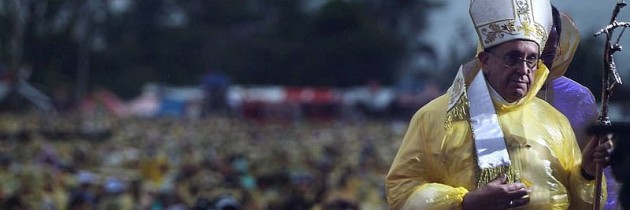
Pope Francis - Canonization_2014-_The_Canonization_of_Saint_John_XXIII_and_Saint_John_Paul_II_(14036966125) - Jeffrey Bruno - Creative CommonsOn March 13, the second anniversary of his papacy, Pope Francis announced a special year of prayer and other special activities to celebrate God’s unlimited mercy. The announcement was made as part of the Pope’s homily while he was presiding over a Lenten penance service. Divine mercy is one of the Pope’s major themes in his preaching and pastoral activity. The year will officially begin on the Feast of the Immaculate Conception (December 8, 2015) and end on the Feast of Christ the King (November 20, 2016). The Holy Year of Mercy also marks the 50th anniversary of the close of the Second Vatican Council. It will be marked by special ceremonies and liturgies. Since this Holy Year is outside the traditional 25 or 50 year interval for regular Holy Years it is called an Extraordinary Holy Year.

The Pope declared:

Dear brothers and sisters, I have often thought about how the Church might make clear its mission of being a witness to mercy. It is a journey that begins with a spiritual conversion. For this reason, I have decided to call an extraordinary Jubilee that is to have the mercy of God at its center. It shall be a Holy Year of Mercy. We want to live this Year in the light of the Lord’s words: “Be merciful, just as your Father is merciful. (cf. Lk 6:36)”

Jubilee years began in 1300 with Pope Boniface VIII and are traditionally held every 25 years. The concept of the Holy Year is modeled on the Old Testament Jubilee Year in which the fields rested, slaves were freed, and debts were forgiven. The Jubilee Year specified in Leviticas was to be held every 50 years.

Traditionally, the Jubilee door of St. Peter’s Basilica is opened at the beginning of Holy Years to symbolize the return of penitents to the faith. Additionally, special plans are being made for the celebration in 2016 of Divine Mercy Sunday, the first Sunday after Easter.

See a video of the announcement here.

Read More

Posted by on Mar 24, 2015

Coming Soon — An Extraordinary Holy Year of Mercy

The Alpha Course — Presenting and Encountering Christ

Alpha Course logoA fundamental theme of Pope Francis’ papacy has been the Church’s call to missionary activity. This activity is not simply the call of a few who will travel to distant lands. It is the call of every Christian: the call to participate in evangelization. Yet in our communities,workplaces, and homes, we often feel uncomfortable in this role, whether because the Christian message and lifestyle are counter-cultural or because we don’t really know or understand what we believe, why we believe it, or why we do what we do.

The Alpha Course is a relatively new program that is focused on reaching out to those who have never really heard the Gospel or experienced life as Christians. One of the side-effects of the program, however, is to re-vitalize parish life as new people are touched by the love of the Risen Christ and enter the community of faith. Long-time members of Christian communities, including Roman Catholics, also experience a revitalization of their faith as they see it anew through the eyes of the newcomers.

Fr. Riccardo, pastor of Our Lady of Good Counsel Parish in Plymouth, Michigan and a regular contributor on Eternal Word Television Network (EWTN), talks about the fact that we as Catholics tend to focus on sacramentalizing: introducing our parishioners to the sacraments and helping them grow in their sacramental life.  According to Fr. Riccardo, if we teach the people about the faith and the sacraments without introducing them to the person of Christ, it is like throwing seeds on concrete. Nothing will grow. Fr. Riccardo gives a comprehensive presentation of the Alpha Course, a program for evangelization, in a series of YouTube podcasts.

The Alpha Course has a simple method. People gather for a meal and a discussion, not just in a church setting but wherever people gather. The attendees are primarily people who are currently outside the Church. Over a ten week period the participants come to an experience of the Risen Christ as their loving friend and savior.

The Alpha Course began in a Church of England parish in London and is now widely used by many denominations. It is opening doors to ecumenical cooperation and discussion about the centrality of Christ in our faith. Over 1 million Catholics in Canada have been through the course. Fr. Rainero Cantalamessa, preacher to the papal household, Cardinal Rino Fisichella, President of the Pontifical Council for Promoting the New Evangelization, and other Catholic leaders have praised the Alpha Course.

Rev. Mr. Steve Mitchell, a deacon of the Archdiocese of Detroit, is the national director for Alpha USA. According to Deacon Mitchell’s statement on the AlphaUSA.org website “Alpha provides a safe, non-threatening environment where no question is too dumb and no perception is criticized. Barriers are broken down as we share a meal together and build relationships without regard to what someone believes.”

Alpha’s video includes examples from Catholic parishes around the world.

Read More

Posted by on Mar 24, 2015

Coming Soon — An Extraordinary Holy Year of Mercy

Growing Into an Adult Morality

Virtues fighting Vices - 14th Century window

Virtues fighting Vices      14th Century window

Fr. Bryan Massingale, in his workshop at the 2015 Los Angeles Religious Education Congress, “Virtues for Adult Christians”, explains that Christian morality is about decisions we make that are motivated by faith in Christ. They are a response to God’s prior gift of love and expressed in our choices and decisions about what we do and the kind of person we are.

Morality, like much of human experience, is different for children than for adults. Childhood is a time of formation and growth. Adulthood is a time of internalization of what has been learned and growth in wisdom. For children, morality is something that comes from the outside, tends to be phrased more negatively (“you may not…”), is based on rules and obedience, and is reinforced by fear or rewards. For adults, morality comes from within the person. It is a positive statement of who I am. Based on ideals and goals, it is virtue-centered. Virtues in this sense are good habits — attitudes and ways of being/acting that are positive responses to divine love. Adult morality is inspirational: becoming the best person I can be, the one God calls me to be.

Both approaches to morality are appropriate and Catholic. Children need rules and boundaries in order to learn and grow safely and securely. But in late adolescence and early adulthood, they need to grow and make what they have learned a positive part of who they are. Humans need to grow up morally as well as physically, because most of what we experience in our adult lives does not fit easily into the system of rules we learned as children. As Fr. Massingale noted, life is sloppy, complex, messy, and fascinating. Rules are for  perfect worlds: neat and precise! We expect more than rules can deliver and we want to be safe, but that’s not what adult life is about. Pope Francis tells us in The Joy of the Gospel (#39) that morality is more than rules and self-denial. It’s a response to the God of love.

Traditional lists of virtues are divided into two groups: Theological Virtues (Faith, Hope, Love) and Cardinal Virtues (Prudence, Temperance, Fortitude, Justice). The Cardinal virtues are sometimes known as “hinge” virtues because others flow from them.

In contrast to the virtues, we also have lists of vices. Interestingly, the vices come in two versions: an excess or a lack of that quality that makes a virtue the good quality that it is. For example the vice that is opposite to Hope may be seen as Despair (too little hope) or as Arrogance (too much misplaced confidence).

Fr. Massingale suggests that for today’s adult Christians, a list of some contemporary virtues should include: Courage, Compassion, Self-Love, Forgiveness, and Wisdom. If these are missing, our lives get all messed up.

His presentation was recorded and is well worth taking the time to enjoy. (The video gets started slowly. Move the cursor on the bar to 21.15 for the beginning!)

Read More

Posted by on Mar 23, 2015

Coming Soon — An Extraordinary Holy Year of Mercy

Finding Our Own Sanctuary in Daily Living

Springtime budsTerry Hershey defines sanctuary as “a place where your soul can catch up with your body.” We all need these places, yet we don’t often give ourselves permission to go there. Nevertheless, a healthy physical and spiritual life requires taking time to rest and simply be at peace.

Terry offers the image of “two dogs” that live within each person. The first dog is the list-maker, the one who gets things done. The second dog is the one who does nothing. This dog just rests and enjoys sanctuary. Which dog do we feed, and when do we feed it? Can we take a chance and feed the second dog?

Sanctuary is not simply an ideal, far-off place that can only be experienced by hermits or others who leave the modern world behind. Sanctuary is a place here and now that can be entered by any one of us. We simply have to decide to do it and recognize what it is for us personally.

Entering Into Sanctuary

1) A portal exists through which we must pass to enter into our sanctuary. There’s something we do, somewhere we go, or a mental image we invoke that opens a different “space” to us.

2) A sanctuary has boundaries. It’s a type of container/space in which we can be ourselves unreservedly.

3) Sanctuary is a place to slow down. As a wise grandfather once said, “Sometimes it’s not the fish we’re after, it’s the fishing.”

4) A place of sanctuary engages all the senses. When we enter into the “holy ground” of sanctuary, we take our shoes off, figuratively if not literally. Like Moses, we need to feel the holy ground, savor it with all our senses, and enjoy our time there.

5) Finally, entering into sanctuary is an intentional action. We need to set a time and enter regularly. We do it for ourselves, not for anyone else. To the extent we fail to enter our sanctuary, we have less to offer to others. We must enter sanctuary in order to be re-charged and ready to carry out our own calling and mission in life.

Terry is an engaging speaker and an inspirational author. His most recent book, Sanctuary: Creating a Space for Grace in Your Life, is available now. For a taste of his wit and engaging style, take a look at this video of his presentation at “Congress”.

Read More

Posted by on Feb 26, 2015

Coming Soon — An Extraordinary Holy Year of Mercy

Pope Francis’ Lenten Message – 2015

Cropped -Pope Francis - Canonization_2014-_The_Canonization_of_Saint_John_XXIII_and_Saint_John_Paul_II_(14036966125) - Jeffrey Bruno - Creative CommonsPope Francis, in his 2015 Lenten message, reminds us that Lent is a time of renewal, a “time of grace.” He reminds us that God loved us first and is never indifferent to what happens to us. However, we too easily become indifferent to what is happening in the world when we are not directly affected.

Speaking of the “globalization of indifference,” the Holy Father calls us to an interior renewal that keeps us from becoming indifferent or withdrawn into ourselves. He asks us to reflect on three biblical texts:

1. “If one member suffers, all suffer together” (1Cor 12:26) — The Church

2. “Where is your brother?” (Gen 4:9) — Parishes and  Communities

3. “Make your hearts firm!” (James 5:8) — Individual Christians

 Read the entire message …

Read More

Posted by on Feb 26, 2015

Coming Soon — An Extraordinary Holy Year of Mercy

Mensaje del Santo Padre para la Cuaresma 2015

El Santo Padre FranFrancisco_(20-03-2013) - small -CC 3.0 attribution license - Brazilcisco, en su mensaje para la Cuaresma en 2015 dice que la Cuaresma es un tiempo de renovación, un «tiempo de gracia». Nos recuerda que Dios nos amó primero y nunca se pone indiferente frente a lo que nos está pasando. Sin embargo, nuestro corazón se cae en la indiferencia fácilmente, especialmente cuando lo que pasa en el mundo no nos afecta directamente.

Describiendo el problema de la globalización de la indiferencia, el Santo Padre nos llama a una renovación interior para que no nos cayéremos en la indiferencia ni nos cerráremos adentro de nosostros mismos. Nos invita a meditar acerca de tres pasajes bíblicas:

1. «Si un miembro sufre, todos sufren con él» (1 Co 12,26) – La Iglesia

2. «¿Dónde está tu hermano?» (Gn 4,9) – Las parroquias y las comunidades

3. «Fortalezcan sus corazones» (St 5,8) – La persona creyente

Para leer el texto completo.

Read More

Posted by on Feb 26, 2015

Coming Soon — An Extraordinary Holy Year of Mercy

A Good Homily Sheds Light

Preaching_of_the_Gospel_Fr_Lee_AcervoOne of the biggest changes that Vatican II made in the liturgy was replacing the sermon with the homily. Sometimes the words are used interchangeably, but they are very different. The sermon in the Tridentine or Pre-Vatican II liturgy was a time for teaching and making announcements. It was a presentation of some element of faith that may have tied in with the theme of the Sunday.  The homily, on the other hand, is  a more conversational approach to this pivotal part of the Mass that bridges the Liturgy of the Word and the Liturgy of the Eucharist. Our response to the scripture and the homily should fill us with praise and thanksgiving for what God is doing in our lives. This leads us to enter into the mystery of praise and thanksgiving that is the Eucharist.

A Renewed focus on preaching

Over the last 30 years there has been a lot of emphasis on preaching. Most recently, Pope Francis has focused on the importance of the homily in his apostolic exhortation The Joy of the Gospel. The Pope has made it clear that good preaching is critically important to the life of the church. He writes, “the homily cannot be a form of entertainment like those presented by the media, yet it does need to give life and meaning to the celebration. It is a distinctive genre, since it is preaching situated within the framework of a liturgical celebration” (n. 138).

The disciples on the way to Emmaus were talking or conversing. They were engaging in homilia, as was the Stranger who accompanied them. The homilist, who can be a priest, a deacon, or an authorized lay person, listens to the needs and concerns of the assembly and discerns God’s message for the assembly. This role is similar to that of the prophets and the Ultimate Prophet, Christ. Although we tend to think of a prophet as someone who foretells the future, prophecy is much more about proclaiming, announcing, and forth-telling. That is why we refer to the scripture passages  and the gospel as something that we proclaim.

The homilist may share something about his or her life if it is relevant to the message, but the homily is not about the homilist.  The homily must follow the conventions of good public speaking, but it is more than public speaking.  For the homily to shed light, the preacher cannot just re-tell the story in the gospel for that Mass.

Pope Francis notes that “the homily has special importance due to its eucharistic context: it surpasses all forms of catechesis as the supreme moment in the dialogue between God and his people, which leads up to sacramental Communion” (EG, n. 137). Given this context, the homily cannot be improvised or done extemporaneously. Preparing a homily takes many hours of prayerful reading of the text, reflection, study, drafting, and practicing.  Being a good preacher is something that comes out of a broader lifestyle of prayer, reflection, and reading the signs of the times. Good homilists are very familiar with the lives of the people in their congregations. They are aware of all of the cultural influences, the centrality of mass media, and economic and social conditions.

Cardinal Agostino Vallini, vicar of Rome, expressed the challenge of preaching a good homily well when he said, “We want our words to set people’s hearts on fire” and want the faithful “to be enlightened and encouraged to live a new life and never be forced to suffer through our homilies.”

Shed light and set hearts on fire — the two-fold challenge of good preaching!

Image of Fr. Lee Acevo preaching – public domain

Read More

Posted by on Feb 24, 2015

Coming Soon — An Extraordinary Holy Year of Mercy

Catholics and Cultures: A new online resource

Plaza-centro Catholics & Cultures is a new program developed by the  Rev. Michael C. McFarland, S.J. Center for Religion, Ethics and Culture of the College of the Holy Cross. Its goal is to encourage comparative study of Catholic life as it is being lived around the world today. In addition to comparative studies of Catholic culture, this site aims to provide resources for teaching about the richness and uniqueness of Catholic life in our world. How do ordinary Catholics live their faith through their daily lives? How is a Catholic life different in Ireland, or Indonesia, or Brazil, or China, or India? What local customs, foods, and activities are enjoyed by Catholics in cultures around the world?

We often think that Catholicism as we experience it in our own community is the way it is everywhere and from all times. Any Catholic who has married another Catholic from a different cultural community, however, will have noticed that sometimes it seems as if the two of them are divided rather than united by the bonds of a common religion. Part of the adventure of such marriages is learning to enjoy the differences and enter into the experience of the divine from another direction or perspective.

As part of Catholics & Culture, a new journal will be produced, the Journal of Global Catholicism. The primary focus of the journal will be “lived Catholicism,” whether examined as comparative studies or specific case studies.

The site already offers wonderful resources. I’m looking forward to checking it out often and hope you will too. We’re a great big community with much to celebrate and share together!

Image by Wesisnay of a Catholic festival sand painting in Tenerife
– GNU Free Documentation License


Read More

Posted by on Feb 24, 2015

Coming Soon — An Extraordinary Holy Year of Mercy

The Vocation and Mission of the Family in the Church and Contemporary World

800px-Petersdom_von_Engelsburg_gesehen - public domainThe Synod of Bishops and Pope Francis have asked members of the Catholic community, from both the Western and Eastern churches, to read the draft document prepared at the Extraordinary Synod on the Family last October in Rome and to respond with comments and insights drawn from their own experience of the Vocation and Mission of the Family in the Church and the Contemporary World.

Generally, members of the hierarchy do not consult ordinary members of the community regarding establishment of policies for dealing with pastoral issues such as how to help people prepare for marriage, how to support married couples in their life commitment, how to care for families that are wounded or broken apart, how to help members who are not heterosexual in their orientation, how and when to welcome children into the lives of a family, and how to pass on our faith within our families.

Nevertheless, all of us have some experience in this regard, since all have lived as members of a family. The bishops are asking us to share our experiences and the wisdom we have gained through the  practical challenges of living in families as people of faith.

The document prepared in October 2014 has been published. Each diocese has been asked to distribute the draft document and a questionnaire regarding the information included in the document. The dioceses are to collect responses, and prepare a summary of the thoughts of those who live with its geographic region.

The time frame is short. Responses are needed by the end of the first week of March so there will be enough time to summarize them and return them to Rome before the bishops assemble again in October 2015.

Please read the document carefully and respond to the questionnaire honestly and prayerfully, based on your own experience. Pope Francis and the bishops really want to know what the thinking of the People of God (the Church) is on these matters, because the Holy Spirit speaks through the everyday experiences of ordinary people.

Links to the document in several European languages are included in the sidebar to the right. For readers in other countries, check with your local diocese for the document in other languages.

Surveys for the Diocese of Monterey, California are available at the diocesan website.

Read More

Posted by on Feb 23, 2015

Coming Soon — An Extraordinary Holy Year of Mercy

Sant’Egidio Communities Bring Friendship and Hope to the Poor

Sant'Egidio in RomeThe Community of Sant’Egidio is an international movement counting over 60,000 individuals on five continents who gather for common prayer, offering friendship and support for and with the poor in the cities where they live. The movement began in Rome in 1968 at the Church of Sant’Egidio and has expanded from there. No one is considered too poor or too marginalized to be a member of the community. All join together in work and prayer to bring the light of hope into the world.

Daily prayer is at the heart of life in a Community of Sant’Egidio. Gathering together in the evening the Word is proclaimed and together members of the community place the cares and concerns of the people of their local, regional, national, and international communities before the Lord. Each day’s prayer also includes a theme, beginning with the celebration of the Resurrection on Sunday and continuing through days dedicated to prayer for the poor, Eastern and Western churches, Sant’Egidio communities around the world, the memory of the cross, meditation on the courageous role of Mary in salvation history, and waiting for the resurrection along with Lazarus who was raised from the tomb.

Icons are present in all communities, reminding all of the unity of Eastern and Western churches and leading members more deeply into the mysteries of God’s presence and action in the world.

A statement from the community’s website clearly expresses the place of prayer: “Nothing is possible without prayer, all is possible with prayer and faith. … Prayer overcomes the helplessness of men. It goes beyond what is believed impossible and allows God to intervene in this world with his infinite power.”

Members of Communities of Sant’Egidio are committed to inter-religious dialog and working for peace. At a general audience with bishops gathered for an  international conference of the Community of Sant’Egidio on February 7, Pope Francis expressed his support, saying, “I am delighted to welcome you. I wish that you revive faith in the Lord and witness, with renewed enthusiasm, the Gospel tension towards the peripheries and towards the last.”

Read More

Posted by on Jan 22, 2015

Coming Soon — An Extraordinary Holy Year of Mercy

James MacMillan — Music and Faith

James MacMillan - Wisconsin Public Radio

James MacMillan

James MacMillan is a Catholic Scottish composer from a working class town in the west of Scotland. He composed the Mass of Blessed John Henry Newman which was performed in Westminster Cathedral in London on the occasion of Pope Benedict XVI’s beatification of the 19th century Cardinal who converted to Catholicism. This was the first visit of a pope to the United Kingdom.

This is an interesting interview about his compositions for parishes and the simplicity underlying MacMillan’s Mass and other religious compositions.

Here is the grand “Tu Es Petrus” (You are Peter, and upon this rock I will build my church.) which is the traditional fanfare for a pope rendered in a very modern tone.

Read More

Posted by on Jan 22, 2015

Coming Soon — An Extraordinary Holy Year of Mercy

Sainthood for Father Junipero Serra

Bl. Junipero Serra Public Domain Image

Bl. Junipero Serra
Public Domain

Pope Francis on January 16 announced his decision to canonize Fr. Junipero Serra, the Franciscan founder of the California missions during his visit to Washington, DC this fall. The ceremony will take place at the National Shrine of the Basilica of the Immaculate Conception. The Pope decided to waive the requirement for two miracles. Blessed Fr. Serra is said to have cured a nun in St. Louis from lupus. However a second miracle has not been attributed to his intervention. Pope Francis said that Blessed Junipero Serra has been considered to have been a holy man for many decades and that he is a good example of evangelization — bringing the gospel — to those who have not heard it.

Blessed Junipero Serra has become a controversial figure since the mission system led to the downfall of the ancient cultures of the native people and their way of life. He and the other missionaries are blamed for the destruction of ancient ways. Others see him as the founder of California and a moderating force in the Spanish expansion into Alta California. For example, when the Viceroy demanded the execution of 12 captured Kumeyaay Indians who had attacked Mission San Diego in 1775 and killed three Spaniards, Blessed Junipero Serra managed to spare their lives. The Los Angeles Times published a well balanced article on January 16,  “Decision to Canonize Father Junipero Serra draws divided reaction.”

Native people today are divided on the subject. Andy Galvan an Ohlone Indian and curator of Mission Dolores in San Francisco focuses on the positive aspects of Spanish colonization and says that Blessed Junipero Serra “was a very good man in a very bad situation.” His cousin, Vincent Medina, who is also an Ohlone Indian and the assistant curator at Mission Dolores, focuses on the negative outcomes. Jesuit Father Thomas Rausch, SJ, PhD, a religious studies professor at Loyola Marymount College in Los Angeles, has characterized the controversy as a debate about “an 18th century Catholic missionary by 21st century standards of cultural diversity, religious pluralism and personal autonomy.”

Read More

Posted by on Jan 21, 2015

Coming Soon — An Extraordinary Holy Year of Mercy

Gift: The Foundation of All Reality

Gift of FlowersFor a Christian, “gift” is a term for the very foundation of all reality. God in him/herself is gift. The Trinity is by definition fundamentally constituted as a Reality of love which is self-donating. Each Person of the Trinity delights in giving of Himself to the Other and receiving Love from the Other. There is the oddest paradox in this for the human observer. The most majestic Reality with endless glory is also the most humble. And, the greatest delight is to be able to please the Other with the gift of the Self. This sense of gift as the center of Sacred Reality turns the human sense of power on its head. Real power is surrender.

The Scriptures are full of texts describing God’s gifts to humanity. Psalm 118: 25 reads, “The Lord is God and has given us light.” In Isaiah 61: 3 we see, “to give them oil of gladness in place of mourning.” In the New Testament we find reference to spiritual gifts given either for the inner growth of individuals or the Church or for their outer growth, i.e. out in the world (Romans 12, I Cor. 12, Ephesians 4, I Peter 4). All agree that these gifts cannot be earned but are freely given by God and that there is great diversity of gifts.

In the area of Christian spirituality there are many texts that speak of God’s gifts to humanity that are not reserved only for certain people but are the true destiny of all lovers of God. In the Living Flame of Love, John of the Cross describes the highest kind of human development as the gift from God in which a person is so transformed into God’s likeness that the person loves God with a love that is far beyond natural human love (Stanza III, para. 79-81). This experience of loving God with God’s love causes amazing joy to the person because the qualities of love within God’s love, which the person has and gives, are more beautiful and splendid than anything which a human could imagine, create, or give. At this point in the spiritual life, the person has a completely developed sense of his or her smallness relative to God and yet knowledge of the respect and admiration that God has for him or her. The person, though, knows that its love is finite but can forge forward in faith trusting that the finite love can and is transformed by God into an intimate and reciprocal relationship.

The entirety of Teresa of Avila’s Interior Castle is about the desire for and reception of gifts from God. Teresa writes of “favors” (mercedes) and “gifts” (regalos). Throughout the book, as she describes the transformation of the soul, Teresa is urging her readers to seek union with God and presents the blessings that will come at every stage even though growth will often be difficult. She makes it clear that God puts desires in us to sustain us. And, that if we are experiencing desire, that is a sign that God intends to give us what we long for. The word “gift” is especially important in the context of Christian spirituality because it emphasizes the priority of God. For Christians, God calls us, desires good things for us, especially intimacy with God, and gives us the strength to stay on the journey to the fulfillment of this gift. We do not make holiness happen.

A belief about human life that has existed from the beginning of the Biblical texts but is growing today is that everything in our lives is a gift. This can be hard to take because it includes what we experience as loss and pain. It also includes people and circumstances that we normally see as unacceptable — annoying people, dirty people, failure, embarrassment, hurt. For those who can embrace the whole of life as a gift, the fact of being alive is good unconditionally. This vision requires us to admit that we do not see the whole picture. We judge things that hurt or seem wrong as objectively bad. Setbacks, challenges and tragedies seem pointless or unacceptable. They certainly do not seem to be gifts. At times we get a glimpse that things have happened for a reason or that a greater good came because something painful preceded it and opened the way to a different choice or path. God’s love for us is often difficult to understand and accept, let alone celebrate. But, Isaiah 55 states, “My ways are not your ways, says the Lord.” It’s a gift to be able to surrender to this.

Every day is a gift. Every day is another opportunity to learn more and more, to give glory to God, and to be happier. When Jesus speaks about giving peace to us in the Gospel of John he is not saying that we will not suffer. He is saying that the gift he wants to give us is to know him and experience his love for us in the middle of our lives. He is calling us to take up our cross, a strange gift perhaps but certainly the way to glory.

Public domain image from Pixabay

Read More

Posted by on Jan 21, 2015

Martin Luther King, Jr. — A Gift of One’s Self

Martin Luther King, Jr. — A Gift of One’s Self


January 19, 2105 is the Martin Luther King holiday in the United States. The first reading of the day in the lectionary is Hebrews 5: 1-10. Christ’s adherence to the will of the Father has led Him on a path of suffering, death and glorification. Dr, King took this path of God’s will to which we are all called.

“In the days when he was in the Flesh, he offered prayers and supplications with loud cries and tears to the one who was able to save him from death, and he was heard because of his reverence. Son though he was, he learned obedience from what he suffered; and when he was made perfect, he became the source of eternal salvation for all who obey him.” – Hebrews 5: 5-10

The Feast of Martin Luther King, Jr is not a feast of the Roman calendar, but it is a national holiday to celebrate a civil rights leader and a Baptist minister who advocated non-violence. Today is a tribute to all who work for human and civil rights for African-Americans and all people. Many of us are of an age to remember the Reverend King. The three television networks brought us live coverage in black and white of the marches, the sit-ins, and the fire hoses and police dogs that were part of the black struggle against white oppression. There was the famous “I have a dream speech” at the Lincoln Memorial. The haunting last speech before Dr. King was gunned down, “I Have Been to the Mountain Top” in which he saw the promised land of freedom, “I may not get there with you but I have seen it.”

Like all of us, Dr. King was an imperfect human being. Like all of us he was a sinner, but his redemption, like ours, is based in obedience to Christ, the source of eternal salvation for all. We know that precisely because Jesus is the Son of God, His will is perfectly aligned with that of the Father. Since Jesus was truly divine and truly human, his obedience came at a human cost. “In the days when he was in the Flesh, he offered prayers and supplications with loud cries and tears to the one who was able to save him from death, AND HE WAS HEARD because of His Reverence.

In his work of announcing the kingdom, healing the sick, feeding the multitudes, Jesus did not shy away from doing the will of his Father. But he knew where his call was leading. It became more and more obvious that if he stayed true to the person he was — the Divine Word become human — that His hands that had been raised in blessing and healing would be nailed to the cross. With loud cries and tears he asks the Father to take this cup away, but he is true to his calling and the will of the Father. “Let not my will be done but yours.” It is through this obedience that Jesus goes to his excruciating death on the cross and to the glory of the resurrection. He WAS HEARD because of His Reverence.

For Dr. King, Mahatma Gandhi, all Christian saints and martyrs, and ourselves, this call to obedience is not only a question of observing certain commandments but a deeper call to be the person God created us to be, to be at one with God, to hear at one with God, to accept God’s truth about our mission in life to advance the kingdom of heaven.

There were many black leaders in the civil rights movement of the 1960s. Dr. King didn’t need to have such a high profile in the movement. Yet it was something that Dr. King was drawn into despite all of the obvious risks to himself and his family. He was born and raised in Atlanta in a strictly segregated society. Dr. King knew what happened to black people who broke the rules. He certainly could have taken an easier type of ministry, but he heard the Word of God, the Will of the Father for his life and his death.

Most of us think that we are not called to such types of work. We are certain that God’s will for us involves something less “glamorous,” nothing so heroic as what Jesus and the saints like Mother Teresa and Dr. King did. But I wonder. All of us have that little voice within us to do something special, something only we can do, but we know that it will cost us. Dr. King used his gift of oratory, of speaking and preaching, to give voice to the prayers and aspirations of the millions enslaved and oppressed using the language, song, and rhythm that the Spirit had given them in their bondage and oppression.

Many of us see fewer years ahead of us than the ones that have fled so swiftly. The babies we held are now grown adults with their own babies. What are we called to do to announce the Kingdom of Heaven and to make it a reality? What can we do to end poverty, hunger, oppression, and violence? How do we draw closer to God and each other in prayer? How do we move toward reconciliation and forgiveness?

We can only do it if we take the time to be quiet and to listen — to pay attention to that little voice that comes to us or the massive cry that comes to us in outrage at the atrocities of the world visited upon the young, the poor, the defenseless. There is a price to be paid, and eternal life to be gained.


Read More

Posted by on Jan 20, 2015

Why Do Children Suffer? Pope Francis Speaks to Filipino Youth

Why Do Children Suffer? Pope Francis Speaks to Filipino Youth


The video and the text are largely in Spanish, though a simultaneous translation into English is included. This is a summary of a small part of the Pope’s extemporaneous speech.

During a presentation to young people in the Philippines, the Holy Father set aside his prepared text to answer a question that had been raised by a 12 year old girl who had been rescued from the street. Tearfully weeping, Glyzelle Palomar, recounted the miseries of her life in a few words and asked, “Many children are abandoned by their own parents, many are victims of many terrible things such as drugs and prostitution. Why does God permit these things even though the children are not at fault.Why do so few people come forward to help?” In this video we can view the scene and the Pope’s compassionate embrace of the child.

What response is possible to the perennial problem of evil? Pope Francis did not try to evade the question with platitudes. He took the question head-on, educating about 30,000 of the faithful and challenging them. First, he noted the shortage of women among those making presentations and he emphasized the importance of the point of view of women. The Pope said that women pose questions which men could never stop trying to understand, that is, never grasp.

We can understand something, added the Holy Father, “when the heart reaches the place in which it can ask the questions and cry. Only through tears do we arrive at a true compassion which can transform the world.” Pope Francis described a common, worldly type of compassion as one in which we just take a coin out of our pocket. He added that if Christ had shown this type of compassion, he would simply have spent a little time with a few people and gone back to the Father. Jesus could comprehend our lives, the Pope said, when He was able to cry and did cry.

He notes, “In today’s world, there is a lack of crying. Although the marginalized, the poor, and the outcasts cry, those of us who do not lack anything essential do not cry. Only those eyes that have been cleansed by tears are able to so see things as they are.”

The Pope challenged the faithful. “Let us not forget (this young woman’s) testimony. She asked the great question ‘why do children suffer?’ crying. And the great answer all of us can give is to learn how to cry.”


Read More