Pages Menu
RssFacebook
Categories Menu

Posted by on Dec 18, 2014

Incarnation: Why Is It Important to Us?

Incarnation: Why Is It Important to Us?

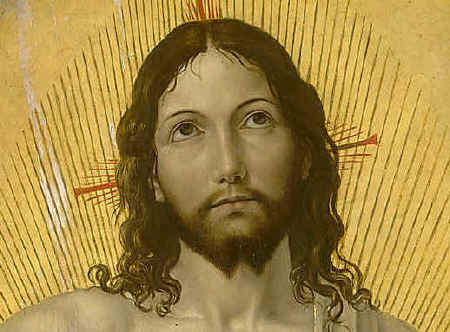
Christ the Savior -Pantocrator
What does the Incarnation mean and why is it important to us?

“Incarnation” literally means “to put into flesh.” In the case of Christ, the term points to the differences among a sacred being who could have been a guest in the created and physical world, one who was united to the physical world, and one who became physical while yet also remaining sacred.   Christ is the latter. He is fully human and fully divine.

Why did God speak his love for us so completely that his talk to the Earth became the enfleshment of the Second Person of the Trinity?

The main reason is that God’s self-communication to us in the natural world (within our minds and consciences) and in divine revelation to the Jewish people (in writings known as the Bible) had not brought humans to justice, compassion and holiness. The historical context of Jesus in first century Palestinian life was the perfect time, place and culture in which the precursors to exceptional human insight and conversion were in place. The fact of sin had by then been explored. The need for salvation was painfully obvious.

Jesus was not a second rate emanation from God. He also was not just a new face or action of a non-Trinitarian God. He is “begotten not made.” He is “one with the Father and the Holy Spirit.” He is the Earthly reality of the pre-existent second person of the eternal Trinity. So, because of these facts, Jesus is a reality that confronted both the Greek and the Jewish worlds of his day: the worlds of multiple and separate deities and the world of one, single sacred reality.

As one of the three persons of the Trinity Jesus shared the divine essence and inter-communication, but in the mystery of the Incarnation his full humanity caused his awareness of this to lie in the background of his consciousness. He learned, planned, acted, and suffered just as we do. He was a fully human person who thought, prayed and regretted as we do. He assumed all the joys and indignities of this life. He was like us “in all things but sin.” He took it all on and therefore redeemed it all. He let evil have the final word in the Earthly sense and then surrendered to the Father who made it good.

What Jesus did was not just good in his regard but rather, because he was fully human and divine, he transformed humanness. He brought humanity into a completely new state and relationship with the Trinity. With God’s grace we are both redeemed and able to know it.

We are called to be like God (Genesis 1). We are called to rejoice in the Incarnation and give profound thanks because we can know and love God and grow in closeness to him.


For more on this topic, read:
“Incarnation” from the Encyclopedia of Theology: The Concise Sacramundi Mundi.

A Christological Catechism: New Testament Answers, by Joseph A. Fitzmyer, SJ
Elizabeth A. Johnson’s  Consider Jesus is also excellent.

Image: Christ the Savior (Pantocrator), 6th century image from St. Catherine’s Monastery, Mt Sinai

Read More

Posted by on Aug 29, 2014

Incarnation: Why Is It Important to Us?

Church: Organizing as a Community

Models of Church

A conversation overheard recently in the locker room of our local gym led me to consider the concept of community more deeply: what living as community implies, how our relationship with God shapes our lives, and how all of these are reflected in the way we structure our community.

Two women were visiting as they changed back into street clothes to leave the gym. One was Jewish and the other was from a small, evangelical Christian community. They seemed to be continuing a conversation they had begun on the exercise machines earlier that afternoon. We’ll call the Jewish woman Miriam and the Christian one Carol. Carol was describing her small church community. She noted that there had been some stress recently as the community dealt with a difference of opinion over what to believe and how to respond to a controversial issue. She expressed her opinion that it shouldn’t really be a serious problem for her church community because the important thing was that each person believe in Jesus and accept Him as Savior. The relationship is between the individual and Jesus.

Miriam did not agree with Carol that a personal relationship with God is all that is needed. She explained that she is Jewish and for Jews the fundamental relationship is between the community as a group and their God. Simply having a personal relationship with God does not suffice. Worship and relationship with God occur in a community and together have concrete implications and results for the community. They are not separate realities.

As an anthropologist, I found the conversation fascinating. I’d have loved to hear more, but they continued on their way and I was left to ponder community and our relationship with God.

A Faith Based in Community

Not too long ago, Carol’s beliefs might not have been all that unusual to hear expressed within Catholic circles as well. While Catholics have not traditionally believed that simply accepting Jesus as personal Lord and Savior will guarantee admission to Heaven, we have at times forgotten how deeply our responsibilities to the community of all human beings is tied to our salvation. We often forget that our faith began in Jewish faith and tradition. We come before God as a community of people, responsible to and for each other.

More recently, with a return to a greater focus on God as Trinity, the idea of each individual standing alone does not explain who we are quite as well. God is one, yet God is Trinity. Self-knowledge, the Word that expresses and embodies that self-knowledge, and the total loving acceptance of the reality as known and expressed, all swirl around in the reality of one God,  a God dancing  in beautiful harmony.

We live in the midst of the Divine Community as members of Christ’s Body. We meet Christ in and through each other. We share together in the Body and Blood of Christ. And we are responsible to care for each other, including the least loveable among us, because Jesus is there … “Whatsoever you do …”

Living in Community

How, then, do we live in community? What organizational models would be best for us as a community? How can our communal life best support our own journey of faith and growth in holiness? How does community bring us closer to God?

Cardinal Avery Dulles, SJ, in Models of the Church,  suggests that our community, the Church, can be better understood in term of six different models. The one that comes to the fore at any given moment will differ, based on the needs of the community in that moment. Each has strengths and each has weaknesses. Together they offer a picture of a vibrant community. Cardinal Dulles’ models reflect the images of church presented in the Documents of the Second Vatican Council, particularly Gaudium et Spes (Joy and Hope) The Pastoral Constitution on the Church in the Modern World and Lumen Gentium (Light of Nations) The Dogmatic Constitution on the Church. The First Vatican Council (1869-1870) emphasized the self-contained nature of the Church as an institution sufficient unto itself – a “perfect society”. Vatican II (1962-1965) focused on the Church in its relationship to the modern world including non-Catholics, and non-Christians.

Church as Institution: In this model, the focus is on the administrative role of Church leaders. The Pope, bishops, priests, and deacons (collectively known as clerics) are responsible to teach what the community has come to believe and understand about God. They help the community to become more holy (sanctified), more in tune with divine life, through the administration of the sacraments. Finally, clerics are responsible to set the standards for faith and morals, to govern or rule the church community. In their role as rulers, clerics have many of the same kinds of responsibilities as the civil authorities who govern our towns and countries.

Church as Community (The Body of Christ): In this model, the Church is a community of believers who worship together and through their faith and worship become both a sign of the union of God with humans and an instrument through which the union occurs.

Church as Sacrament: A sacrament is the visible form of an invisible grace, a grace that brings about the reality towards which the form or symbols/actions point. As Catholics, we recognize and celebrate seven formal Sacraments as part of our lives as Church. However, the Church also teaches that the source and authority for our seven sacraments actually comes from Jesus as the Sacrament of God and the Church as the Sacrament of Christ. The community (the church) is to be a sign of God’s grace in the world as Jesus was. With the help of the grace of God, we are made holy in Christ.

Church as Herald: This model is focused on the Word of God.  We are called to hear God’s word and keep it, putting our faith in Jesus as Lord and Savior and then sharing that faith with our world. This is much more like the model Carol (in our example above) would find familiar. The Word comes to us both to transform our lives and to be passed on to others as Good News.

Church as Servant: In this model, the church’s role is to serve those in need of help directly and work to change social and political institutions that promote injustice. The church is in the world and serves the human community, but its service is one with a spiritual foundation rather than a strictly secular one. We as community serve in imitation of the Lord who washed His disciples’ feet and called those at the lowest rungs of society His sisters and brothers.

Church as School of Discipleship: The final model was developed after the first edition of  Dulles’ work was published. It recognizes that to be followers of Jesus requires the community and its members to continue to learn what it means to be a Christian and members of a Christian community. In this school of discipleship, we are informed, we are formed, and we are transformed; all as part of the process of learning and growing in faith.

For a summary of the characteristics of each model see Fr. Yeo’s presentation on SlideShare.

The Organization Supports the Life and Faith of the Community

Which of these models is correct? None of them! Each offers important insights and helps describe the experience of Christian life in community. Even within one individual parish community, some will experience that life more in terms of one of the models than in terms of the others. Is that bad? I don’t think so. God created a world of wonderfully different people, each with special gifts needed by our world. Those gifts and our experience of them may lead us to favor one or another of the models of Church. But if we are honest, we would be a much poorer and more limited community if we did not embrace the richness that multiple models offer. After all, God is infinitely creative and loving. No human model could ever hope to define conclusively the limits of what God’s communal life  actually is. Yet we live within that divine community, continually loved into existence. So we move through our lives in this great community, with first one model and then another taking the lead. With the grace of God, we’ll all muddle through and reach our final goal: union with God.

For a more detailed summary of Cardinal Dulles’ models and other useful materials visit Young Adult CLC .


Read More

Posted by on May 11, 2012

Incarnation: Why Is It Important to Us?

Blessed Julian of Norwich Feast Day — “All is Well”


Julian of Norwich - Stained Glass Window from Church


May 13 is the unofficial Feast Day of Julian of Norwich, the English mystic and saint of the Middle Ages.  We cannot be sure of her birth and dates but she lived approximately from 1342-1416.  Her lifespan and location were situated in times of great distress in England.  Three waves of the Black Death had swept over England and Norwich was particularly hard hit as it was a commercial center, especially of the wool-textile trade with the Netherlands, which brought with it the bacteria from the Continent.  Julian was an anchoress at the church of St. Julian.  We have a historical record of people visiting her for advice and prayers.  We do not know why she was not canonized by the Catholic Church.  One reason is likely that she left behind relatively few writings.  Another is likely because her writings contained teachings that would have been considered controversial by some scholars.  Teachings about Christ as mother and that God sees our sins as a way for us to learn about ourselves would have offended or worried many clerics of her day.

In 1373 we read that Julian had 16 visions in which she was saw and heard revelations related to God, creation, evil, sin,  salvation, and the human person. She recorded these revelations at the time and then some 20 years later produced a longer version, called the Long Text, in which she integrated the many thoughts communicated to her by Christ about the meaning of the 16 visions and locutions.

Julian is optimistic in a time of when people questioned the goodness of life and how God regarded them.  She recorded that Christ said to her that “All will be well and all is well.” She explains how all can and will be well. Julian also recounts wonderfully warm images of us and Christ who holds us tenderly and celebrates us as his “crown.”

Another reason to celebrate this great saint is that she is believed to be the first woman to write a book in the English language.  She is also a pioneer, with Chaucer, in creating literature in Middle English.  After many years of Norman control of England, the French and their language were driven out.  The English language had degenerated into a language of the lower classes with a very poor vocabulary.  Julian is responsible for creating many new and very useful words to articulate her scholarly theological presentations and to give colorful descriptions of what she saw in the visions.

Julian’s texts, which she referred to as the “shewings” (Showings in contemporary libraries), are very inspiring and provide satisfying answers to many questions which Christians have.

Image of Stained Glass Window borrowed from Satucket Lectionary entry for the Feast of Julian of Norwich

Read More

Posted by on Apr 8, 2012

Incarnation: Why Is It Important to Us?

“Christ is Risen” “He is Truly Risen”

This ancient greeting and response burst forth from a joyful people, marking a new day, a new creation, a New Covenant — our Easter morning. Following the heartbreak and despair of Good Friday and the empty sadness of the Holy Saturday that followed, Life rises up again, unbroken and undefeated, never again to die.

With Christian people through the ages and around the world, we sing joyfully in praise this ancient hymn.

Christians, to the Paschal Victim
Offer your thankful praises!
A Lamb the sheep redeems;
Christ, who only is sinless,
Reconciles sinners to the Father.
Death and life have contended in that combat stupendous:
The Prince of life, who died, reigns immortal.
Speak, Mary, declaring
What you saw, wayfaring.
“The tomb of Christ, who is living,
The glory of Jesus’ resurrection;
Bright angels attesting,
The shroud and napkin resting.
Yes, Christ my hope is arisen;
To Galilee he goes before you.”
Christ indeed from death is risen, our new life obtaining.
Have mercy, victor King, ever reigning!
Amen. Alleluia.

Victimae paschali laudes from the Liturgy for Easter Sunday
“Easter Lily” by George Cochran Lambdin, in the public domain, created before 1923.

Read More

Posted by on Dec 23, 2011

Incarnation: Why Is It Important to Us?

Requiem for Christopher Hitchens the Anti-Theist

Christopher Hitchens went to his reward on December 15, 2011. The question of the eternal fate of such a vitriolic foe of faith and religion has received two responses. Douglas Wilson – Hitchens’ theist debating partner – in Christianity Today said that since we cannot assume that Hitchens called on God, we must assume that he is lost forever.

Eric Reitan, philosopher and author of Is God a Delusion? A Reply to Religion’s Cultured Despisers focuses on Hitchens’ search for truth. Reitan sees Hitchens’ motto “religion poisons everything” as an exaggerated reaction to the truth that there “is much that is poisonous in the religions of the world.” As such, Hitchens’ wasn’t necessarily anti-God as much as he was repulsed by the evil practice of religion. Reitan sees salvation for Hitchens because of his dedication to truth. Reitan cites Simone Weil’s famous statement:

I still think so today, that one can never wrestle enough with God if one does so out of pure regard for the truth. Christ likes us to prefer truth to him because, before being Christ, he is truth. If one turns aside from him to go toward the truth, one will not go far before failing into his arms. – Waiting for God, Simone Weil 1951 page 69

Reitan’s view is much more Christian in the sense of Jesus own concern with truth and sincerity over the sham invocation of doctrine or religious law.

The words of the Fourth Eucharistic Prayer come to mind: “…  remember now all for whom we make this sacrifice: … those who take part in this offering, those gathered here before you, your entire people, and all who seek you with a sincere heart.”

Another passage from Simone Weil comes to mind regarding death:

I always believed that the instant of death is the center and object of life. I used to think that, for those who live as they should, it is the instant when, for an infinitesimal fraction of time, pure truth, naked, certain, and eternal enters the soul. I may say that I never desired any other good for myself. I thought that the life leading to this good is not only defined by a code of morals common to all, but that for each one it consists of a succession of acts and events strictly personal to him, and so essential that he who leaves them on one side never reaches the goal.

Perhaps, those of us who feel comforted in faith and the promise of Heaven should not rely so much on dogma but on a life of truth – a life of authenticity.

Jesus said to them, “Truly I tell you, the tax collectors and the prostitutes are entering the kingdom of God ahead of you. For John came to you to show you the way of righteousness, and you did not believe him, but the tax collectors and the prostitutes did. And even after you saw this, you did not repent and believe him. – Matthew 21:31-32

Image: Orion Nebula Galaxy – Courtesy of NASA In the Public Domain

Read More

Posted by on Sep 14, 2011

Incarnation: Why Is It Important to Us?

The Exaltation of the Holy Cross – An Ancient Feast Still Relevant

Feast of the Cross - Russion Icon, 1680

The Feast of the Exaltation of the Holy Cross dates from the fourth century, when according to tradition St. Helena discovered the True Cross on a pilgrimage to Jerusalem. The Church of the Holy Sepulchre was dedicated in 335 AD and the cross was kept inside the church. The dedication of the church was celebrated on September 13 and the cross was carried outside the church for veneration by the faithful on September 14. As part of the celebration, the cross was lifted up so all could see it. This was the reason the feast came to be called the “Exaltation” or “Raising Aloft” of the Holy Cross or the Precious Cross (depending on whether one spoke Latin or Greek). Another,  more recent, translation of the term Exaltatio is “triumph.”

Beyond the physical practice of raising the cross up so that people could see it and venerate it, the triumph of Jesus over death on the cross has been a source of hope for people through the ages. In fact, Jesus told his disciples, “If I am lifted up high I will draw everything to myself.” (Jn 12:32)

In The Dialogue, 26, St. Catherine of Siena describes God’s explanation to her of Jesus’ role as bridge between the divine and the human.

“… Do you know when it [this bridge] was raised up? When my Son was lifted up on the wood of the most holy cross he did not cut off his divinity from the lowly earth of your humanity. So though he was raised so high he was not raised off the earth. In fact, his divinity is kneaded into the clay of your humanity like one bread. …

When my goodness saw that you could be drawn in no other way, I sent him to be lifted onto the wood of the cross. I made of that cross an anvil where this child of humankind could be hammered into an instrument to release humankind from death and restore it to the life of grace. In this way he drew everything to himself: for he proved his unspeakable love, and the human heart is always drawn by love. He could not have shown you greater love than by giving his life for you. …

I said that, having been raised up, he would draw everything to himself. This is true in two ways: First, the human heart is drawn by love, as I said, and with all its powers: memory, understanding, and will. If these three powers are harmoniously united in my name, everything else you do, in fact or in intention, will be drawn to union with me in peace through the movement of my love, because all will be lifted up in the pursuit of crucified love. … For everything you do will be drawn to him when he draws your heart and its powers.”

“His divinity is kneaded into the clay of your humanity” and then all raised up, drawn into the life of the Trinity. What a great gift we have received. We no longer gather in Jerusalem expecting to see Jesus’ cross carried out for our veneration. We celebrate the raising aloft of our lives in union with His gift of life on the cross, drawn by love to that union.

(Image is in the public domain in the United States because its copyright has expired.)

Read More

Posted by on Jul 28, 2011

Incarnation: Why Is It Important to Us?

Novena to St. Ignatius Loyola – Discernment – Seventh Day – July 29th

Roland Joffe’s 1986 Movie “The Mission” traces and telescopes the Jesuit missionary efforts in Paraguay. In 1995, the Vatican Film List singled out “The Mission” as one of 15 films of special religious significance. In this scene Fr. Gabriel (Jeremy Irons) plays his oboe to make contact with the Guarani after several of his brothers had been killed in similar attempts. The song is the now famous “Gabriel’s Oboe” by Morricone. Right click on this link to open it in another tab for a symphonic and choral arrangement as a background for your own meditation on this day of the novena.

The Invitation of Christ

St. Ignatius is very clear in his distinction between the Call of Christ and that of Satan. Like Gabriel’s Oboe, the call of Christ is peaceful, inviting, encouraging. The snares of Satan are fear, anxiety, and compulsion. These are the primary ways in which we can begin to discern the source of motions and movements within our soul. The banner of Satan has been called the path of least resistance while the banner of Christ is that of consciousness.

The banner of Christ requires openness, humility, and real courage, as we see in the scene from the movie. In fact, the Jesuit missionary experience in Paraguay would follow the path of the cross as the Portuguese killed the missionaries and enslaved the Guarani. This in turn was only the prelude to the suppression of the Society of Jesus in 1767 because of its opposition to the absolute power given to kings and emperors during the Enlightenment. The Society was restored in 1814.

A Growing Sensitivity

Wholeheartedness in the service of God demands a constant effort of discernment, a growing sensitivity to the will of God. Without this, generosity can lead only to ‘the expense of spirit in a waste of shame’…

At all events, Ignatius characterizes Lucifer as a tyrant who drives and compels his subjects (he uses a vocabulary of compulsion and trickery), whereas when describing Christ his vocabulary is one of friendship, persuasion, gentleness…

What I have to see is that my personal option must be made in the light of this universal vision. My choice must integrate me into the great movement of salvation already accomplished in Christ and now being worked out on earth. My choice will be a reproduction in me of the option of Christ who chose the cross, despising its shame. We may note that this idea finds its first development with Origen but is already contained in germ in the phrase of Ignatius of Antioch – ‘Let me be an imitator of the passion of my God’. – William Yeomans (emphasis not in the original)

Mother Teresa

Exercise:

Placing myself in God’s presence, I ask these questions of myself and the Holy Spirit. What is my path of consciousness? What is my path of least resistance?

Concluding Prayer

St. Ignatius, you signed your letters “pobre de bondad,” poor in goodness, and called yourself a pilgrim. Please pray for me to be open to what God is calling me to do to announce and build up the kingdom. Transform my petitions into questions of discernment and pray for us to remember that all of our true needs and desires are already known to God. Pray that I be taken beyond my wants, beyond my fears, from death into life.

In your writings and by your example we are reminded to pray for the Church and the Holy Father, for all who dwell in darkness, and for the millions lacking food, water, and other necessities. We join our prayer with yours for true openness so that we can contemplate the Divine presence in all things and praise, reverence, and serve God Our Lord in action.Pray for us to have the courage to meet and to serve the Lord Jesus in the poor and the suffering.

Praise be to the Father, the Son, and the Holy Spirit
Now and Forever. Amen.

Read More

Posted by on Jul 28, 2011

Incarnation: Why Is It Important to Us?

Novena to St. Ignatius Loyola – The Banner of Christ – Sixth Day – July 28th

“May Christ our Lord give us his grace so that we may be always sensitive to his will and fulfill it entirely.”

This quotation is the closing salutation St. Ignatius used commonly in his letters and represents the state of openness that is the goal of the Exercises.

The Forces of Good and Evil

The Second Week of the Spiritual Exercises prepares us to make the “Election” or the choice to serve Christ the way he has served us in complete humility by the way of the cross. St. Ignatius takes us through the life of Christ from the Incarnation to the Baptism at the River Jordan.

Before we can get to this election we have to deal with the parts of ourselves that still hold on to sinful ways, attitudes, and tendencies. For St. Ignatius, there are two competing kingdoms symbolized by their own flags or standards. By accepting the banner of Christ and His Kingdom, we reject sin and evil within ourselves and move from a position of self-interest to one of complete surrender to the Divine Will.

The Banner of Christ

“The issue at stake at this stage of the Exercises is not the fact of salvation or of Christ’s victory over Lucifer. That has never been in doubt and the whole theology of the First Week presupposes it. The question is how this victory is to be made a reality for mankind here and now, through my choice. There is no doubt in Ignatius’ mind that the banner of Christ is the Vexilla Regis, the banner of the cross, and the Election is going to be a setting out on the way of the cross.” William Yeomans, “The Two Standards”

SacredHeart Fanelli 1994

Exercise:

What comes to my mind and heart when I say this prayer? What part do I play in God’s plan of salvation here and now: day in and day out?

Lord, teach me to be generous.
Teach me to serve you as you deserve;
to give and not count the cost;
to fight and not heed the wounds;
to toil and not seek for rest;
to labor and not ask for reward, except to know
that I am doing your will.

Concluding Prayer

St. Ignatius, you signed your letters “pobre de bondad,” poor in goodness, and called yourself a pilgrim. Please pray for me to be open to what God is calling me to do to announce and build up the kingdom. Transform my petitions into questions of discernment and pray for us to remember that all of our true needs and desires are already known to God. Pray that I be taken beyond my wants, beyond my fears, from death into life.

In your writings and by your example we are reminded to pray for the Church and the Holy Father, for all who dwell in darkness and for the millions lacking food, water, and other necessities. We join our prayer with yours for true openness so that we can contemplate the Divine presence in all things and praise, reverence, and serve God Our Lord in action.Pray for us to have the courage to meet and to serve the Lord Jesus in the poor and the suffering.

Praise be to the Father, the Son, and the Holy Spirit
Now and Forever. Amen.

Read More

Posted by on Jul 26, 2011

Incarnation: Why Is It Important to Us?

Novena to St. Ignatius Loyola – Reconciliation – Fifth Day – July 27 –

Testimony:

Thank God for His mercy and grace. If not for His grace and mercy, I would have been so lost in drugs and alcohol and misery. He sent His son to die for each of us. What I have now is peace that passes all understanding, and His Spirit that lives in me to give me actual joy in life. finally joy and peace that I thought was in pain killers and booze. That wasn’t joy, that was being numb. Not now! Not anymore! Thank God for His grace. – blog comment on “Your Grace Is Enough for Me” by stormyweather

Reflection:

This testimony is a beautiful example of true reconciliation. It involves a transformative healing and could have come right out of the pages of the Gospel – The Good News.

Confession, or the Sacrament of Reconciliation, is high on St. Ignatius’ list of priorities for the First Week of the Exercises. The challenge for most cradle Catholics is focusing on a long Church approved check list of sins, as opposed to focusing on the person of Christ. The things that bother us the most are obvious if we are honest with ourselves. Often we can become neurotically obsessed with our own behavior in terms of small things, without facing major issues like alcoholic parents; sexual, physical, or psychological abuse; refusing to forgive. People in lifestyles or marriages that don’t meet Church standards can feel that somehow God is not interested in them; somehow He died only for the good people.

Most of the detailed lists cover symptoms of some type of break-down in our relationship with God as codified in the Ten Commandments or the Seven Deadly Sins: pride, avarice, lust, envy, gluttony, anger, and sloth. However, this can lead to a denial of our own feelings and cause damage in other areas of our lives. If my anger is always close to the surface, it is not really helpful to keep confessing it and beating myself up over it without looking more deeply at what its cause is. My marriage can be problematic and my sex life unsatisfying. However, if I just keep focusing on the symptoms instead of these deeper issues, I am wasting time and energy and building up to something that will be very bad for everyone concerned.

Sin, guilt, and remorse can be very complicated. Returning veterans from the Middle East have not sinned when they killed people if you believe in the just war theory of morality. That doesn’t mean that they don’t carry a great burden. When they lash out in destructive ways as part of Post-Traumatic Stress Disorder, marriages are lost, children are harmed, suicide can follow. Going down a checklist doesn’t even begin to offer the healing we all need in these and most situations. Let us look at ourselves, our loved ones, and all others with honesty and compassion as we embrace the forgiving Christ. We are worth everything to God. Perhaps the greatest sin when we don’t see ourselves as worth saving. God does not make junk.

people-walking-on-street

Examination of Conscience

Place yourself in God’s presence and know that you are with a trusted friend. Put out of your mind all thoughts of an avenging father figure or some tyrannical authority figure. You are with the God who came to dwell among us and shared all things we endure except sin. Jesus was open and frank with people who came and spoke with him. He expects no less from you. If you are upset or confused, listen for the healing voice of your Friend. Open your heart and listen.

Start with a thank you for being redeemed and saved and for protection. Ask the tough questions. Why did my child die? What do I do with my alcoholic husband? My heart is broken. Can you mend it? I tampered with evidence to get innocent people convicted. I fought for tax laws that would protect me and take food, healthcare, housing, and education from the poor. I did my best to be careful, but I killed women and children in that village. I think the Church is wrong when it says we should get rid of the death penalty.

Be open to finding out the facts. Have I brought these issues to a counselor? How do I start to change things and to make amends. What is the deeper issue here?

Talk with Jesus. Accept His forgiveness. When he says “Go in peace and sin no more,” what will I do to make that a reality? If you are glum or downcast, something is wrong. You have been pardoned. Stretch, breathe, cry for happiness. Break out in song. Jump for joy. This day salvation has come to your house.

Concluding Prayer

St. Ignatius, you signed your letters “pobre de bondad,” poor in goodness, and called yourself a pilgrim. Please pray for me to be open to what God is calling me to do to announce and build up the kingdom. Transform my petitions into questions of discernment and pray for us to remember that all of our true needs and desires are already known to God. Pray that I be taken beyond my wants, beyond my fears, from death into life.

In your writings and by your example we are reminded to pray for the Church and the Holy Father, for all who dwell in darkness and for the millions lacking food, water, and other necessities. We join our prayer with yours for true openness so that we can contemplate the Divine presence in all things and praise, reverence, and serve God Our Lord in action.Pray for us to have the courage to meet and to serve the Lord Jesus in the poor and the suffering.

Praise be to the Father, the Son, and the Holy Spirit
Now and Forever. Amen.

Read More

Posted by on Jul 25, 2011

Incarnation: Why Is It Important to Us?

Novena to St. Ignatius Loyola – Soul of Christ – Day 4 – July 26


Opening Prayer

Anima Christi

Soul of Christ, sanctify me.
Body of Christ, save me.
Blood of Christ, inebriate me.
Water from the side of Christ, wash me.
Passion of Christ, strengthen me.
O Good Jesus, hear me.
Within Thy wounds hide me.

Suffer me not to be separated from thee.
From the malignant enemy defend me.
In the hour of my death call me.
And bid me come unto Thee,
That with all Thy saints,
I may praise thee
Forever and ever.
Amen.

A favorite prayer of St. Ignatius, the Anima Christi has its origins in the 13th century, but the author remains unknown. It may seem a little jarring to juxtapose the exuberant “Worthy Is the Lamb” with the ancient and more subdued Anima Christi. However, they focus on our recognition of the source of our salvation and the compelling power of God’s grace. Across 800 years, the cultural idiom may have changed but not the Holy Spirit.

Foregiveness

Reflection

St. Ignatius focuses the First Week of the Exercises on sin and conversion. The activities concentrate on becoming aware of our sinfulness, our unworthiness, and God’s willing pardon. Sometimes this awareness can be overwhelming in inappropriate ways. The purpose of these actions is to change our hearts. In this regard, St. Ignatius is something of a behaviorist. His approach is to notice particular tendencies or actual sins and to keep a scorecard of our victories and defeats. Clearly, it is not enough to know our failings; it is more important to do something about them.

For those who are newly turned from sinful and self-destructive lifestyles, the First Week is a time of awareness, repentance, and a behavioral change in our awareness of our thoughts and actions. In many ways this mirrors St. Ignatius’ own experience during his conversion and pilgrim years. As a man of his times, he lived in a time of strict and rigid codes of honor, duty, and obligation. Feudal lords could exact terrible consequences from any of their vassals or peasants who breached obligations, whether the breach was real or perceived.

For many people today, Christian conversion is experienced in the intensity of the charismatic experience. The focus is on forgiveness, the terrible price Christ paid for each one of us, and the joy of our salvation. The reformation of our lives is worked out in this broader context.

Regardless of whether we are in the 16th or the 21st centuries, our journey begins with the experience of our salvation and the changing of hearts shown in our actual behavior.

Placing Ourselves in God’s Presence

Inhale slowly and deeply. Exhale slowly and mindfully.
Relax. Be at peace. Be aware that you are in God’s loving presence wherever you are.

Reviewing Our Lives With Gratitude

When did I first become aware of my sinfulness and God’s forgiving love? Who were the people in my life who showed me their changed hearts by their example? When did I first give or receive forgiveness from someone important in my life? When did I first stop looking at a check list of sins and realize that my actions could hurt and offend God?

Reflecting on Our Feelings and Spiritual Movements

What thoughts and feelings come to my mind and heart when I let God and others down? What do I feel when I see and reflect on the suffering and death of Christ? How do I feel when my love is not returned? Why is God’s love so encompassing?

Focusing on What Comes to Us

Let your feelings and images well up within you. What strikes you the most about the course of your life? What feeling or images come to you more clearly and peacefully?

Talking With Jesus Our Friend

Converse with Jesus as He is right now, right here – your friend. Share what comes from your heart – in a look, a few words, a smile. Talk frankly about the things that you are doing wrong in your life. Talk about grudges, bitterness, your regret, your shame. Ask for his healing and make a plan to start changing things, little by little, day by day.

Jesus, your love and your grace are enough for me. Let nothing come between us.

Concluding Prayer

St. Ignatius, you signed your letters “pobre de bondad,” poor in goodness, and called yourself a pilgrim. Please pray for me to be open to what God is calling me to do to announce and build up the kingdom. Transform my petitions into questions of discernment and pray for us to remember that all of our true needs and desires are already known to God. Pray that I be taken beyond my wants, beyond my fears, from death into life.

In your writings and by your example we are reminded to pray for the Church and the Holy Father, for all who dwell in darkness and for the millions lacking food, water, and other necessities. We join our prayer with yours for true openness so that we can contemplate the Divine presence in all things and praise, reverence and serve God Our Lord in action.Pray for us to have the courage to meet and to serve the Lord Jesus in the poor and the suffering.

Praise be to the Father, the Son, and the Holy Spirit
Now and Forever. Amen.

Read More

Posted by on Apr 28, 2011

Easter Week Daze

I tried to blog during Holy Week. I would like to say that I was too caught up in ecstasy to touch the keyboard, but I was really silenced. It wasn’t really writer’s block. It was more a sense of something I am learning in my old age – to keep my mouth shut. As an extrovert this is an occurrence of note, since I don’t often know what I am thinking until I am expressing it.

Per usual, after the stress of the event, I can begin talking or writing about my experiences of Lent and Holy Week now that we are in Easter Tide.

Easter Triduum, from Holy Thursday to Easter Vigil, is a montage of one highly charged event ebbing and flowing over many others. The breaking of the bread at the Last Supper; Judas sent off on his errand; Jesus looking for support and finding us asleep. The darkness at noon covers all creation. Nicodemus asks for the body of Jesus. Mary of Magdala weeping as she asked the Gardener, “Where have you laid him?” followed by the overpoweringly personal entreaty of a close Friend, “Mary.” The disillusioned disciples heading back home and being consoled by a stranger Whom they invited in for the evening. The guest only reveals Himself in the moment of the breaking of the bread. After all of the betrayals, the abandonment, with the marks of the crucifixion on His body, His first words to the men who “threw Him under the bus” was “Peace.” In all of previous salvation history, God’s messengers manifest with the same greeting of peace, but now God does it directly, for the first time.

I understand that the traditional teaching is that the sacrifice of Jesus satisfied the Father’s need for atonement, but somehow, it is hard for me to imagine that God, in Jesus, would not take offense at the rejection of his goodness. Yet, Jesus doesn’t take offense even as the disciples and all of us cower in hiding.

The only thing that I can compare this daze to is to singing the last note of Hadyn’s Creation Mass as a member of the Loyola Men’s Chorus. The director had told us that we would know if we had succeeded if there was a deafening silence before the audience responded. The last note hung in the air. The director brought his thumb and forefinger together; the note evaporated high in the nave. The silence was profound and seemed to last forever. The temperature dropped and then there was thunderous applause.

I am still in the coolness of the silence after that last note. It is not a bad place to be. I hope you are too. Peace.

Read More

Posted by on Apr 11, 2011

Incarnation: Why Is It Important to Us?

St.Thomas: The Post-Modern Realist

Sun Shining Through Clouds

St Thomas the Apostle is often known as Doubting Thomas because he refused initially to believe the reports of the resurrection of the Lord. In today’s gospel reading from St. John (Jn 11:1-45), the raising of Lazarus from the dead, I saw something for the first time about St. Thomas that changed my view of him.

Jesus receives word that his fried Lazarus is seriously ill and prepares to head back to Bethany near Jerusalem. The apostles don’t think this is a good idea because they had just left the area after threats against the Master’s life. Jesus tells his uncomprehending followers that Lazarus is dead, but they are returning to Bethany so that his followers can see Him for who He is. This doesn’t appear to make any sense. It is a pointless suicide mission. Thomas doesn’t doubt. He is quite certain, but he is loyal and will not leave his master. His statement, “Let us go and die with Him,” is not skeptical. It is very certain. It is almost absurd in a 20th century style worthy of an an existentialist play.

In fact, Thomas is the grown up we are supposed to be. Look at the facts. Be reasonable, sensible. You may be willing, out of love, to sacrifice yourself for a great cause or a great love, but you approach it with knowledge, with courage, stoically.

This scene actually creates a set of book ends. The matching scene is the encounter with Jesus after the Resurrection, after Thomas had declared that he wouldn’t believe the reports until he saw Jesus personally. None of the apostles died with Jesus. In fact, at the time of his arrest Jesus told the authorities to take Him but to leave them alone. We all know the story of how they – and all of us – scattered in the night when the Shepherd was struck. Peter follows at some distance only to deny Him three times. John is the only man at the foot of the cross. In His time of need Jesus can count on His mother and a handful of women. All too true – real enough for the followers then and now.

Somehow it is easier to “to go and die with Him.” It sounds noble, altruistic. It is easier to believe in the finality of death than the open endedness that is resurrection. El sentido trágico de la vida – the famous Spanish existentialist manifesto – The meaning of life is tragedy. Yes, I know that is not the more literal translation – the tragic sense of life. The death of Jesus would indeed be the Great Tragedy another one of his great disappointments, another cosmic joke perpetrated on an accidentally occurring Homo sapiens.

As post modern people and followers, we are so overcome with the senseless suffering and death of millions that we claim that we believe. Yet our faith is more of an adolescent, impotent tantrum of defiance, because, in the end the facts are the facts. So, let us go and die with Him.

This is an interesting set up for Palm Sunday and Easter. Of course, this is just what St. John’s Gospel does. Jesus is the Resurrection and the Life. The challenge to us and to Thomas is to believe in a life beyond tragedy, absurdity, meaninglessness.

Yeah, well, heard that, been there… but it can’t work. It’s foolish. We are all dying. Just be brave about it. It is what it is. Resignation to the inevitable makes sense. Resurrection by our Best Friend who cries in grief and loss for us doesn’t make any sense at all. Or does it?

Image by Robert & Mihaela Vicol – Released to the Public Domain

Read More

Posted by on Apr 9, 2010

Incarnation: Why Is It Important to Us?

Great Love or Great Suffering – Two Paths to Non-duality

Richard Rohr, OFM

Recently I’ve been listening to Fr. Richard Rohr’s three CD set, Exploring and Experiencing The Naked Now, a recording of two webcasts in which he talks about his work on non-dual thinking and the insights of the contemplative/mystic tradition of Christianity. Rohr’s work provides a fine background for the last couple of weeks of Lent and moving into Easter.

A central insight of Rohr’s work is that non-dualistic thinking is central to experiencing the mystery of Christ and the Trinity. God is One, yet we know God as Father, Son and Holy Spirit. The contrast boggles the mind when we try to explain, define or otherwise pin down the mystery. Our minds, trained to make logical distinctions and put all we experience into categories of “this/not that,” find it hard to deal with the “yes/and”  of combining such seemingly irreconcilable statements. Nevertheless, Jesus calls us into the mystery and teaches through example, images and stories that seem to contradict each other. In one place, for example, he says that his followers are to turn the other cheek when someone strikes them. In another, he counsels that it’s time to take swords along to the place where he and is friends planned to spend the night. At yet another, he turns over the tables of the money-changers in the temple and drives them out. Then when the chips are down, he heals the ear of the servant of the High Priest in the Garden of Gethsemane and goes to his death without offering resistance. So which is it? Non-violent always or Violent sometimes? Do we simply choose one meaning – the one that suits what we want to do – or are we supposed to try to make some logical sense of the contrasting statements/actions or must we somehow live in the mystery, without needing to explain it logically. And if we do that, won’t we be seen as somehow immature and childish?

Rohr suggests that a return to the contemplative mindset is essential in the long-run. It is the ultimate goal of the spiritual life. Union with God, a return to the non-duality of the Garden of Eden, is the final goal of our lives and quest. We start non-dualistically as infants and small children. We move away from non-dualism around the age of reason and begin to be able to separate from God, make wrong choices, and, dare I say it, to sin. We learn what is right and what is wrong. We learn to make distinctions. Then we think we’ve got it all set for the rest of our lives. But we’re right smack dab in the middle of a dualistic world and mindset. So everything gets phrased in terms of win/lose or “limited good” (a concept from anthropology) — what is good for you will take something from me. We forget, or perhaps haven’t consciously experienced, that God’s love comes to us like water flowing through a pipeline or electricity flowing down a wire. As long as there’s no blockage, it just keeps coming. The critical thing is to keep the pipe open, the transmission line unbroken. But that gets scary. The “what ifs” start raising their ugly heads. And we fight against anyone or anything that seems to threaten the way things are now, even if it’s not ideal. And so we block the flow, partially or totally.

Rohr argues that the only way we can move beyond dualism in our thinking and again enter non-dualistic reality is through the path of great love or the path of great suffering.  In both situations, the normal ways of coping or experiencing reality fall away.  We don’t have the energy to block the flow. We’re too deeply in the joy or sorrow. “Everything’s coming up roses …” as the song says. Or, alternatively, we cry out, “My God, my God, why have you abandoned me?” Where are you when I need you God? In either condition, we are open to experience the wonder of God’s love and compassion without trying to (or even being capable of) splitting it into dualistic compartments or categories. The experiences are too overwhelming, too all encompasing, too intense to allow for separation and dualism. And then we can grow in wisdom. And we experience redemption – a return to union with our God – set free from the normal ties that hold us bound in worry of losing our “secure” duality.

Meanwhile, “back at the farm,” the troubles and tragedies of world events continue through Holy Week.  A small group of people are arrested for plotting to kill a police officer and then kill more officers at his funeral, all in the name of Christ. What madness is this? Bombs explode in crowded places around the world, in the name of God. What madness is that? How can religious people believe that the creator of all of us and of all of the wonders of the universe could want us to be killing each other? And how could we dare to think we do it in his name, by his authorization? How can Christians be terrorists, as Leonard Pitts notes in a recent column? Is our God really so helpless or so impotent that he could condone such action, such dualistic us/them action?

Jesus went to the cross rather than try to force God’s hand to free his nation from the Romans by inciting a rebellion, as some would have liked. He went to the cross rather than deny the truth that God is more interested in the way we treat each other than in the sacrifices we bring to the altar. He went to the cross rather than run away and deny that he had experienced a very special relationship with his Father, one that the Father wants to share with the rest of us too. And redemption came out of that great passionate love and suffering. Easter came to all the world and our separation from God came to a resounding end.

May each of us move forward in this Easter season in joy and trust, building on the faith of our younger years and beginning to enter into the world of contemplation, of not dividing the “real” from the “ideal,” of really believing the Good News, that love is all that really matters, and love will make all the suffering lead to the peace and deep, deep joy of the children of God.

Read More

Posted by on Apr 29, 2009

Incarnation: Why Is It Important to Us?

Emmaus: Pre and Post Christian

The supper at Emmaus' (1958) by Ceri Richards (1903-1970)

The supper at Emmaus' (1958) by Ceri Richards (1903-1970)

My favorite story is the Disciples on the Road to Emmaus (Luke 24: 13-35). Michael Traynor of the Lesscoolthanyou Channel captures the experience of the disciple before the Breaking of the Bread in a way that evokes a very current state of affairs.

Read More

Posted by on Apr 14, 2009

Incarnation: Why Is It Important to Us?

Easter Monday 2009: The Post Modern Blues

Borgognone 1510

Borgognone 1510

Easter time in the 21st century is a curious season. We are living in a time in which the rationality of the Enlightenment has been obliterated by the irrational violence and deconstruction of the Modern Era which ended with the creation of the atom bomb. In the 20th century we saw the the rise of the irrational as a counter to the idea of reason as the engine of human progress. Advances in science and engineering led to death on a massive scale whether in its industrial production form in the genocide of Jews and other peoples or its explosion from the sky in carpet bombing of Dresden or the incineration of Hiroshima and Nagasaki. The darkness within the brilliance of the human heart and mind was also manifest in the Vietnam War epic movie “Apocalypse Now” based on the theme that facing the horror of one’s evil can only lead to self destruction.

So here we are on the cusp of the third millennium. Human progress seems more of an illusion. In fact, our Post-Modern sensibility is all about the inability of reason and science to get at ultimate truth. Everything is examined and found wanting. Physics has become the study of relativity, uncertainty, and mathematical models. Religion and philosophy are the products of language we create. The scriptures of Christianity are cultural creations which tell us more of the people who wrote them. They are robbed of their revelation.

Human romance and love are reduced to methods for the socio-biological dispersion of one’s genetic load. Religious experience is suspect because there is no way to know whether one is just engaging in psychological projection to create a hideout from the ultimate reality of the purposelessness of human existence. We are here by virtue of  a cosmic accident with a very low probability.

In our world, there is the torture and death of Good Friday but there is no need for a Resurrection or any life beyond our current suffering because it is not possible since we can never know the nature anything beyond nature with any certainty. So here is the greatest event of all human history and our greatest personal hope – the Resurrection and it is a non-event on a beautiful spring day that is to be borne with a grim courage in a time when miracles cannot happen.

The news is too good. Maybe that is why we are stuck on the Friday of Crucifixion. The pain we know is better than risking its loss in the certain joy of Resurrection. As people of the Resurrection we would have to leave too much behind – hurt, anger, fear, and death.

Read More