Governing With Justice – Rescuing the Poor and Afflicted
 “O God, with your judgment endow the king, and with your justice the king’s son.”
With these words from Psalm 72 at Epiphany, we are introduced to a new vision of what it means to govern – to govern with justice.
When the king and his son govern with the Lord’s judgment, the result is not what so often happens historically. Historically, many rulers have come to power through violence or trickery. Others grow up as children of rulers, having their every whim granted. They assume this will continue for the rest of their lives and set out to make it so. The result of this common pattern is not peace and justice for the community. It is all too often oppression, poverty, anger, frustration, and sometimes outright rebellion and wars. The opposite result occurs when governing with the Lord’s judgment.
The psalmist sings of justice flowering and profound peace from sea to sea for all time, and, in a reference some might have heard in recent years, “from the River to the ends of the earth.” The term, the river, refers to the land of Abraham’s birth, in Ur of the Chaldees – a land currently known as Iraq. In other words, this justice and peace are to flow through all the world.
Kings will bring gifts and tribute/money and pay him homage. Nations will serve this king. Why? Because he rescues the poor and the afflicted. He takes pity on the poor and saves their lives. Not a common picture of the typical reason kings or rulers receive tribute from others. (Ps 72:1-2, 7-8, 10-11, 12-13)
The promise of Isaiah for Jerusalem seems in many ways to contrast dramatically with the image from Psalm 72. “Rise up in splendor, Jerusalem! Your light has come, the glory of the Lord shines upon you.” This prophecy speaks of darkness covering the earth until the Lord comes, shining over the land with glory – a light to guide the way of nations and kings. Prosperity, reunion of peoples gathering from afar, rich gifts from the powerful – all will be part of the splendor of Jerusalem. This was a great promise made to a people returning from exile, yet it is much more as well.
Notice, the psalm also speaks of kings bringing tribute and peoples of all nations serving the Lord. This isn’t the kind of kingdom or nation state we see in human history. This is something greater. Jerusalem is not just the capital of Israel. It’s not the city or land over which so many have fought through the centuries and continue to fight. This is the place where the Lord’s justice and glory shine forth. Those who approach it from all over the world bring rich gifts to share with all. Yet it is not those rich gifts that make it the wondrous place that it is. What matters is the presence of the Lord, the light shining forth to the world. Those who come to this place proclaim their praise of the Lord, the Lord appearing in glory. (Is 60:1-6)
St. Paul explains that this gathering of peoples is enlarged through the coming of Jesus to include all peoples of the earth – Jews and Gentiles alike. All are now heirs of God’s kingdom and grace. All are “members of the same body, and copartners in the promise” received through the gospel, the good news, of Christ Jesus. The old barriers that divided the world into those chosen and those rejected have been destroyed. All are invited to this relationship with the Lord whose light shines forth through the darkness. (Eph 3:2-3a, 5-6)
Light shining forth – new understandings – Epiphany.
The Lord came into the world as a baby, part of a normal human family. Yet his coming was not a humdrum event. Born during a census that required people to move from the towns in which they were living to the towns of their ancestors, he was greeted by the poor – shepherds who received word from heavenly messengers.
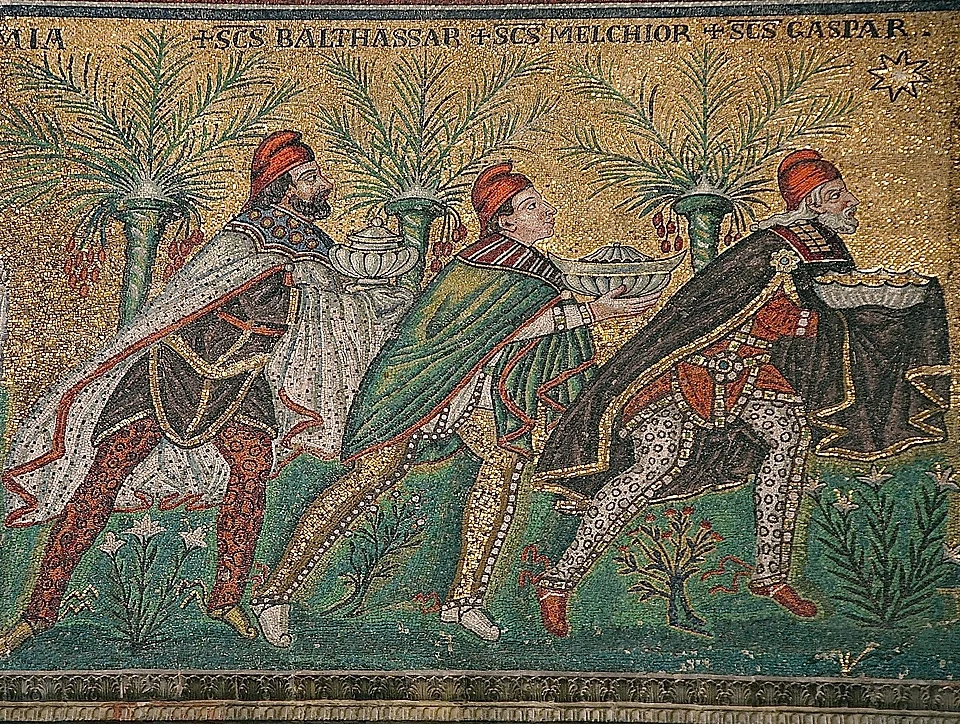
Shepherds were not the only visitors Jesus received. Wise men from eastern lands also came to visit, according to St. Matthew. Constellations in the sky which they had observed indicated a very special king was to be born in the land of Israel. They set out to visit the newborn and bring appropriate gifts. Being practical people, they first checked in at the palace to see the newborn, but that wasn’t where this king was to be found. The ruling king’s advisors checked the predictions for where the great king, the anointed one of the Lord, was to be born and reported that he would likely be found in Bethlehem.
The wise men, magi, found Jesus and his parents in Bethlehem. They offered their gifts and praise – gifts for a king. A greater king than any other. The one foretold in Psalm 72 and Isaiah. The one who would rule with justice and mercy, caring for the poor.
The magi returned home by a different route, to protect this child from Herod, the local king. They were changed by the experience of meeting this child and his family and carried that with them on their journey home. (Mt 2:1-12)
Shortly after the magi left Bethlehem, so did Joseph with Mary and Jesus – in the middle of the night. Into Egypt they traveled to escape the danger posed by Herod. As political refugees, they left everything behind to protect their child. Had they remained, he would have been killed with the other baby boys by Herod’s soldiers.
How are we to respond to these images and promises today? How and where does the light shine forth through our words and actions. Where do we look to find justice and peace? How do we care for the poor and afflicted? Is this only a personal responsibility or is it a communal one – something local and national governments are also called to do?
As we enter into another calendar year, with wars raging, countries competing economically and ideologically, arguments among peoples who have different visions for the future and understandings of who is responsible to help the young, the old, the newcomer, the neighbor, we will be forced to address these questions.
Epiphany, light shining forth, new understandings – justice and wise judgment as gifts from our God – may all these be characteristic of all who are followers of the Lord God. May we keep our eyes and hearts open to find the child sent from on high, bringing light and life to our world. And may we be partners in the great task of serving those least able to protect themselves and prosper. With this heavenly king, may we have pity for the lowly and the afflicted, reaching out to save the lives of the poor.
Readings for The Epiphany of the Lord – Cycle A