The Sun was Overcome
The sun was overcome at 3:00 in the afternoon
And the land convulsed
And the soldiers, the torturers also shook
And blood and water spilled from the divine cup
The sun of our lives went dark
And the darkness flowed everywhere
And even overtaking more than the earth
And invading even the human heart of hope.
The sun darkened for the suffering
And for the prisoners
And for the hungry
And those stumbling with drugs.
The sun of the lost darkened
And the wandering soul in search of love
And the boys and the girls orphaned by war
And the political prisoners, the disappeared.
The light in the darkness paled
And hope fails in a moment
And in a moment the Lord of power and might cries out
And He feels abandoned like the millions.
The very horizons of faith are dimmed
And in a moment, we ask why
And in a moment, we share the blindness of the world
And we are beyond consolation by the torture and death of the Lord.
Our vision becomes dark
And we feel blind
And we do not know why
And in a moment, we feel the darkness at midday.
The sun hides itself; the heavens darken; we see the Virgin Mother
And the women full of faith, full of courage
And St. John
And in our hearts and through hers a light, a flame
Beyond the darkness of the light, our Lady of Sorrows contemplates the mystery
And the sword foretold pierces her heart
And the Angel Gabriel comforts her who said yes
And the celestial choirs are anguished by the sobs of the one without sin.
Our souls are darkened by problems, anguish, and tragedy
And we take refuge in the darkness of midday in bitterness, violence, and rebellion
And we ask why
And the dark clouds ignore us.
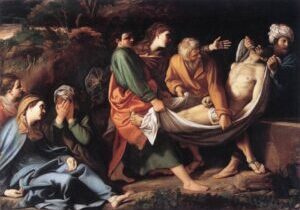
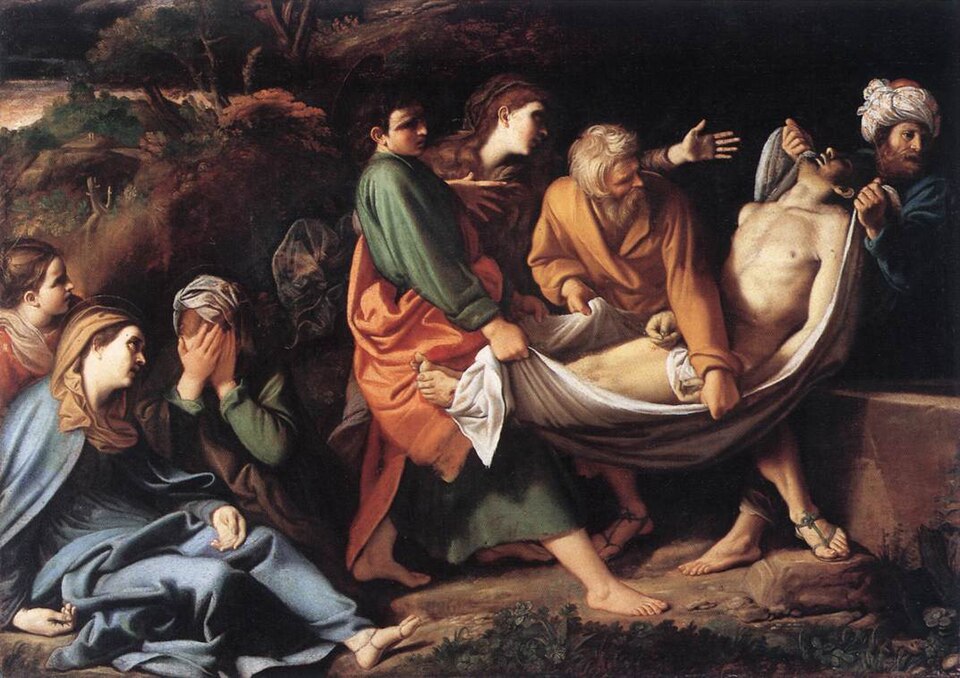
The darkness becomes even deeper when the body is lowered from the cross
And in the lap of Our Mother
And she who hugged the little one celebrated by the heavenly choir
And she hugs him for the last time; the choirs of heaven stricken and mute only rain down tears.
The spirit of today’s disciples, our spirit, darkens
And Joseph of Arimathea gives his tomb to the Poor One
And Nicodemus weighed down with expensive ointments
And anoints the Master’s beautiful body shredded with wounds
The news darkens our hearts
And we see the young smashed by war
And we are shocked by the waves of refugees despised and feared
And we see drug addicts in the street, once babies nursing at the breast.
Rescued by first light, we will never suffer the darkness again
And we wait in hope for the dawn of the open tomb
And the women running with the unbelievable news
And Mary of Magdala asking the gardener finds her love
The darkness dissipates away
And in the light of the Paschal Candle
And in the light of the church awash in points of light
And never again the darkness of night at midday.
Our lives are never darkened again
And the shadow is powerless
And grief is changed into joy
And tears are dry and senseless.
The day awakens
Christ Risen is not obscured
Light from Light
True God from True God
Amen
Se Oscureció el Sol -Translation by Dcn Randolfo Pozos
Notes on translation. Throughout my years of study of classical languages and Spanish, I have been taught and experienced the fact that one of the more difficult things to convey in another language is poetry. Google Translate and other AI tools can do a reasonable job of transliterating, but they have more trouble translating at times. “Se oscurece,” which is the scaffolding for this poem, has diverse meanings and allusions that can be translated many ways. Among others, it can mean to darken, to shadow, to block, to obscure, to hide and to lose from sight. Metaphorically, it came mean to be lost, to be depressed, to not perceive. I have used the impersonal form. It darkens, it is obscured, is neither passive nor active in our use of English while it is very common in Spanish and conveys the middle voice of classical Greek. Using “and” while correct is too literal. Ending with “d” closes off the rhythm as opposed to launching it. I have tried to convey these nuances in the translation, but the results are unsatisfying. – Dcn Randolfo Pozos