Thoughtful Reflections on Religious Experience

Archive for October, 2007

Halloween - The Secularization of the Pagan by RandyPozos on Wednesday 31 October 2007 6:00 am PDT

jack-olantern.jpg

Halloween, that most secular of days, has become a time for adult parties, candies, and Hollywood ghosts and goblins. A safely scary, “ending of daylight savings time,” festival. It is a holiday of candy. The day on which the largest amount of candy is sold in the United States.

Just as we have a secularized Christianity at Christmas - the Happy Holidays which we celebrate without reference to the “Reason for the Season” - Halloween echoes pre-Christian and Neo-Pagan rituals - without a real connection to the earth or that troubling notion of the sacred.

This is not to say that having fun is not a good excuse. However, the focus on the fun excuses any obligation to enter into the mysteries of religion. The witch on her broomstick, the bed sheet with eyes that we call a ghost, the iconic “happy face” on the hollowed out pumpkin, evoke no real connection with the earth and the spiritual powers of nature. There is no shaman, no calling down of the spirits and ecstatic dance, no trances induced by ritual fasting and drumming.

The Celtic New Year’s holiday is not a fall harvest festival in an urban culture in which 2% of the people produce enough food and fiber for the rest. The days are getting shorter in the northern climes.  It is still 3 weeks to that least commercial of holidays - Thanksgiving.

For all of our talk about spirituality, whether traditional or New Age, our cultural manifestation of these ancient festivals shows very little of the spiritual, whether Christian or Pagan. Our focus is not on the transcendent - the totally other. Nor is it on the immanent - the divine fire within. We are becalmed in a world with little dimensionality.  And  we wonder why everything seems flat, gray, and listless!

The Mists of Avalon - Christian and Pagan in Camelot by RandyPozos on Tuesday 30 October 2007 2:26 pm PDT

mists-of-avalon.jpg

Halloween evokes the notion of the pagan that underlies so many feasts of the year. The Celtic New Year festival, Samhain (So-ween), celebrated on November 1, with its focus on the the fading of the boundary between the living and the dead, became a celebration of Christian ancestors - All Hallows (Saints). It seems simple and straightforward.

The complexity of the pagan world of the British Isles transitioning to Christianity comes to life in Marion Zimmer Bradley’s 1979 novel, The Mists of Avalon. Critics either condemn or praise this best selling classic as a feminist retelling of the legend of King Arthur. The story is told from the standpoint of the women in a world in transition. Women are losing the power and influence they had under the pagan cult, moving to a subservient passive-aggressive role in a Christianity dominated by men. The Goddess is being supplanted by the God.

What might have been shocking almost 30 years ago - the presentation of Arthur, Guinevere, and Lancelot and their enemies as morally and sexually ambiguous - seems to be a fairly standard deconstruction by our standards. Like our world today, The Mists of Avalon is painted in shades of gray. All of the characters have great strengths and weaknesses, they all make compromises, and they all see their plans brought to naught by forces beyond their control.

In the first chapters of the book, as voiced by Arthur’s half sister and priestess of Avalon, Morgaine, the tone is decidedly anti-Christian and specifically anti-Catholic. Morgaine’s father, Taliesin, the Merlin of Britain, or chief Druid, presents broad overreaching relativism and tolerance, contrasted with the narrow Christian priests, intent on convincing women that they must be subservient and do good to atone for the fact that sin came into the world through the first woman, Eve. (Note: St. Paul said that sin came into the world by the first man, Adam, but that is grist for another post.) Pagans didn’t have a concept of sin, and Christianity would now make everyone slaves of sin and degrade the very nature of men and women as sinful from conception. It all seems somewhat predictable as a standard anti-colonial, neo-pagan, and feminist polemic that is the standard critique of the moral bankruptcy of Christianity.

Toward the end of the book, the tone has shifted significantly, since the human weakness and moral ambivalence of the devotees of the Goddess have become more than obvious. The cult of the Goddess becomes blended into Christianity; as the cult of the Virgin Mary as guardian of the flame of the feminine and the fertility of the earth.

The psychological and spiritual portraits of the men and the women are compellingly complex. It is far from a man-hating feminist rant or an anti-Christian tract. The book actually celebrates the richness of the masculine and the feminine, quite apart from their stereotypical traits. Men and women, pagan and Christian, are both strong and weak, nurturing and exploitative, bold and yielding.

In the end, the will of God and the Goddess is done. It is a long book but well worth the time.

A God called “Abba” by KathyPozos on Monday 29 October 2007 4:51 pm PDT

father-child.jpg

The first reading at Mass today was from St Paul’s letter to the Romans. In it we are told, “… those who are led by the Spirit of God are sons of God. For you did not receive a spirit of slavery to fall back into fear, but you received a spirit of adoption, through which we cry, ‘Abba, Father!’ The Spirit himself bears witness with our spirit that we are children of God …” (Rom. 8:12-17)

The word, “Abba” is translated as Father in most Bibles and I was surprised and delighted to learn in high school that it is actually the affectionate term used by children for their father - more like Papa, or Daddy, or Dad in our contemporary usage. There was a time when children were expected to call their fathers by the more formal term, “Father.” But in most families that is not the common practice. We certainly never called my Dad by that term. It would seem strangely abstract and distant - not at all the kind of laughing, fun, joyful and yet still respectful and loving, relationship we have with him.

 The immensity of the difference between the formal way I had always felt with the use of “Father” for God and the more homespun and comfortable use of “Abba” in its place was brought home to me very clearly seven or eight years ago. I was working in a shared office with an insurance agent, who happened to have been born and raised in Israel. A couple of his children were in high school and college and were working for him in his business to earn their spending money and funds for their tuition. As they worked with him day by day, they always addressed him as “Abba,” with a great deal of love and respect in their voices. It was a very loving family and in their interaction and mutual respect and love, summed up by the way they used “Abba,”I could appreciate how strikingly odd, daring, comforting and amazing Jesus’ use of “Abba” in reference to the Heavenly Father would have sounded to his followers.

If the Most High is actually “Abba,” as Jesus said he is, we have nothing to fear. Like little children, we can be assured that when we don’t do what we should, when we go the wrong way, when we fail to act lovingly, our Abba will still care about us and be there wanting to hold us, forgive us and set things right again. That, to me, is really Good News.

An I-Thou Moment by KathyPozos on Wednesday 24 October 2007 12:53 pm PDT

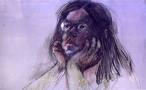
homeless-woman-drawing.jpg

She walked down the street with a somewhat shuffling gait, shoulders hunched with the weight of life’s challenges, and holding a cigarette by her side, from which she took an occasional puff. Her hair hung long, a bit below her shoulder blades. She wore a jumper made of a predominantly orange/pink fabric - stripes with a floral pattern in them - over a pink floral print blouse whose pattern clashed with the jumper fabric. She looked about 50 years old and as if life had not been good to her.

It was a hot day in October, in the 80s, and she was walking towards her town’s downtown stores, perhaps in search of a bit of cool in an air conditioned building. Most people on seeing her would have walked right by, averting their eyes to avoid a request for “spare change.” She looked like a resident of a cheap apartment or a local half-way house.

At the corner, a younger woman was waiting to cross the street. She wore tan shorts and a white tank top over a purple cami. Her hair was also long, but well brushed and pulled into a pony tail for comfort in the heat. She had a canvas shoulder bag and had obviously been shopping for groceries that day.

As the older woman approached the corner, the younger woman smiled at her and greeted her. The older woman’s reaction was subtle but stunning. Her shoulders straightened. She raised her head. The smile that was on her face was not visible from behind, but it was obvious that her whole body was smiling in return. She had been recognized and honored as a person. It made all the difference.

Observing this encounter from the confines of my car, I was reminded of Martin Buber’s insight that there are two ways of interacting with the “other.” We can interact in the realm of I-It or I-Thou. The I-It interaction does not recognize the other as an equal or even as human. The I-Thou recognizes the other individual as another human being, a child of God, worthy of respect and love. This kind of encounter (I-Thou) makes the difference between a satisfying, life-giving interchange and the kind of sterile, unfulfilling, relationship in which people mistreat or even exploit the other.

As Christians, we are called to meet people, the world and the eternal in I-Thou mode. It is in these encounters that the good news of our Lord will be preached wordlessly but most effectively.

Saint Saves Europe for Christianity - St. John Capistrano by RandyPozos on Tuesday 23 October 2007 10:00 am PDT

sanjuancapistrano.jpg

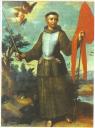
The feast day of St. John Capistrano (1385-1456) is October 23. He was born in Perugia and practiced law in the courts of Naples. He was later appointed governor of Perugia. St. John Capistrano’s life changed unexpectedly when he was captured, as Governor, in a dispute with a neighboring town. When he was released, instead of resuming his former life, he joined the Franciscans in 1416.

Certainly, St. John Capistrano would have been remembered for his preaching in many countries and setting up convents as part of the Franciscan renewal. His travels took him through Italy, Germany, Bohemia, Austria, Hungary, Poland and Russia. At the age of 68, his long life, at a time when people were lucky to make it into their 50’s, seemed like it might be summarized by his accomplishments as a jurist, governor, and evangelist.

However, Providence, in the form of Pope Callistus III, would call on St. John Capistrano to play a major role in shaping European and Christian history. The Pope called on him to preach and lead a crusade against the Turks, who were laying seige to Belgrade. Constantinople had fallen to the Ottoman Turks in 1453 and the Sultan planned to be on his way to Vienna after Belgrade.

Prior wars and skirmishes with the Turks and other groups in the Balkans had depleted the ranks of the nobility who made up the armies. Peasants were conscripted to make up the shortfall. The Hungarians, under Janos Hunyadi, had waged several successful campaigns against the Turks, but they were surprised by the rapid arrival of the Sultan’s forces at Belgrade. It is worth taking the time to read the whole story at TheHistoryNet.

We have seen this scene in movies and on TV many times. A rag tag army is up against a much larger, better, equipped and trained imperial force. Before reinforcements and St. John Capistrano’s Hungarian crusaders arrived, the city garrison was down to 5,000 men. The Turks probably had about 100,000 troops and blockaded the city’s harbor on the Danube. St. John Capistrano probably led a group of about 30,000 peasants, to bring Hungarian forces up to about 60,000 or 70,000.

Now, we all remember the fictional Hollywood scene in which a courageous leader launches a futile sally that leads to a rout of the imperial troops. Well it actually happened. The walls had been breached. The elite Janissary troops had entered the city. Hunyadi had the defenders set the moat on fire and slaughtered the invaders inside the walls. The next day, as the Turks were burying their dead, a small group of peasants - against orders - came out through the walls and started to fight. St. John Capistrano, while trying to get them to retreat inside the walls, found himself surrounded by 2,000 men and advancing on the Turks. He lead the advance with the words, “The Lord who made the beginning will take care of the finish.”

In a sequence of events that seemed highly improbable, other units joined in a cascade that led to a complete rout of the Turks. The Hungarian forces lost about 10,000 men. The Turks lost 50,000 in the battle and another 25,000 were slain by Serbs during the retreat. The Sultan lost most of his officers and almost all of his equipment.

Hunyadi and St. John Capistrano died shortly thereafter. With them died hopes that Christian forces could retake Constantinople. Today 550 years later, the Ottoman empire is gone and the former Christian Byzantium, now modern, secular, Moslem, and known as Turkey, is trying peacefully to join the European Union.

Certainly, St. John Capistrano never sought his place in history. His Franciscan vocation was a renunciation of the life of a jurist and governor. It is also probable that he saw his crusade as highly unlikely to succeed. Courage, holiness, learning, and leadership make a combination that is exceptionally rare. It is the stuff of legends, Hollywood sagas, and saints.

mision-san-juan-capistrano.jpg  Mission Gardens, San Juan Capistrano, California

Saint of the Day - St. Peter of Alcantara by RandyPozos on Monday 22 October 2007 7:58 pm PDT

st-peter-of_alcantara.jpg

St. Peter of Alcantara (1499 -1562) exemplified the spirit of the renewal and reform undertaken by the Catholic Church in the 1500’s. Even among Catholics, there can be an overgeneralized view that there were many abuses in the Church at that time and that reforms were undertaken only as a means of launching a counter offensive, called the Counter Reformation. As is always the case, life and history are more complex.

St. Peter of Alcantara was a contemporary of St. Ignatius Loyola and St. John of the Cross, and he was a confessor to St. Teresa of Avila. His life was modeled on St. Francis of Assisi. A young man, from a well-to-do and socially prominent family, he not only joined the Franciscans, but led a movement of Barefoot (Discalced) Franciscans, with a stricter rule of religious life. He was a gifted preacher, administrator, and leader who was not above washing dishes or chopping wood.

As Spain was expanding in the New World in the Golden Century (El Siglo de Oro), there was a strong movement to renew Christian life. Of course, Spain’s history was very different from the rest of Europe. Spain had been conquered by the Moors in the 700’s and the Reconquest (Reconquista) by the Christian kingdoms had just been completed in 1492. Spain was building on a 700 year Arabic and Jewish legacy that had focused on learning and asceticism. The Caliphate (the Moorish government organization based in Cordoba) united both religion and state under Islam and created a culture of immense wealth and knowledge.

St. Peter of Alcantara and his contemporaries had very little in common with the controversies that had enveloped northern Europe. Understandably, their lives had been shaped by different issues and forces. The 1500’s were a time of Christian resurgence in Iberia and of expansion overseas. The spiritual flowering of Spain occurred against a backdrop of massive change and the imposition of uniformity by the state and the Inquisition.

Yet, St. Peter Alcantara and his contemporaries led a major movement of renewal and reform that was more than conformist. Their movement would provide much of the impetus for the reform of Catholicism that would persist for 400 years.

Now that the Reformation and Counter-Reformation have formally ended, we would do well to take a closer look at St. Peter Alcantara and his contemporaries. Like them, we stand on the brink of a new era. We are leaving 300 years that played down the mystical heritage of western Christianity as a “combination of mist and schism.” St. Peter Alcantara was a mystic and a man of action. He and the other spiritual leaders of Spain’s Golden Century present us with a golden opportunity to have a vision beyond imperialism and reactionism as we face the challenges of our time.

World Mission Sunday by KathyPozos on Sunday 21 October 2007 1:14 pm PDT

mission-children.jpg

Today is World Mission Sunday. We are reminded that the mission of the Church (the People of God) is to share the Good News through all the world. Today I offer a few quotes from people working in “the field.”

“Growing up I met so many Sisters who visited the sick and families, who taught about Jesus. They made a big impression on me, nurturing my desire to become like them … We must be the Lord’s voice to the poor, telling of His great love.”  Sr. Christine Mwaka, Zambia

“We are forming missionaries to bring hope — the hope of our Lord — to our people. … Above all, we want the hope we have found in Jesus, our joy in following the Lord as priests, to uplift the poor and those in need.”  Fr. Anthony Jayakody, rector of Our Lady of Lanka Seminary in Sri Lanka

“My greatest strength comes from receiving our Lord in the Eucharist … My 14-year-old daughter prays that God will give me the wisdom to be an effective catechist. My prayer is that too, and also that the Lord will be with me as I teach about Him, opening the hearts of those who hear.”  Peter Soko, catechist in Zambia

For more information, click here to see the website of The Society for the Propagation of the Faith

Saints of the Day - St. Isaac Jogues & Companions by RandyPozos on Friday 19 October 2007 11:06 pm PDT

north-am-martyrs-shrine.jpg

400px-mosaic_in_the_cathedral_basilica_of_st_louis.JPG

St. Rene Goupil (1642), Jesuit brother: St. Isaac Jogues (1646), Jesuit priest: and St. John Lalande (1646), lay missioner: St. Jean de Brébreuf (1649), Jesuit priest: and four others.

Upstate New York in late September, with its rolling plains of story book farms, was a long way from my hometown of Ventura in southern California, where I first read about the North American Martyrs. It did not disappoint. In fact, the beauty of the place still showed some of its original state, when it could only be traversed by canoe. As I walked in the ravine, the peace was at great odds with the torture and murders that occurred there. Then again it was also the birthplace of Bl. Kateri Tekakwitha.

The French had been allied with the Hurons. The Jesuit missionaries and some of their Huron converts had been captured by the Huron’s enemies, the Mohawk Iroquois. Their suffering and eventual death revealed an amazing courage, but what kind of courage did it take to leave France for such a dangerous mission?

St. Isaac Jogues and his companions did not come to seek their fortune in the New World. They heard a call and came. We are all different because they answered that call.

Saint of the Day - St. Luke by RandyPozos on Thursday 18 October 2007 9:08 pm PDT

stlukeicon.jpg

“In my first account, Theophilus…” (Acts 1:1) St. Luke begins his second volume with an introduction only slightly less formal than the elegant opening lines of his gospel. These introductions to the two volume work of the deeds of Christ and the Holy Spirit reveal a sophisticated Greek far removed from the marketplace and dockside everyday, or Koine, Greek that characterizes so much of the New Testament.

Without St. Luke we wouldn’t really the know the depths of Jesus the storyteller. We wouldn’t know much about His relationships with women. Without the Acts of the Apostles we wouldn’t have any idea about the formation and expansion of the church after the Resurrection. In fact, we wouldn’t have a window on the controversy between St. Peter and St. Paul over whether Christians needed to observe the Mosaic Law. The creation of the Church and her institutions are shown to be the work of the Holy Spirit in the early Christian community and not necessarily the direct creation of Christ during his earthly ministry. (In fact, is interesting to note the Pope Benedict XVI, as the young theologian, Joseph Ratzinger, raised several eyebrows by affirming this view of the centrality of the Holy Spirit in the creation and development of the assembly of the baptized faithful.)

In Luke and Acts, we see the movement of salvation history, beginning in Jerusalem and ending in Rome. The saving message given to Jews now becomes the property of the Gentile world. The result today is a worldwide community of faith, incarnated in countless cultures and languages.

St. Luke, along with St. Paul, gave us a freedom from the Law of Moses to live in the freedom of Christ and to be guided by the Holy Spirit.

Saint of the Day - St. Ignatius of Antioch by RandyPozos on Wednesday 17 October 2007 9:02 pm PDT

saint_ignatius_of_antioch.jpg

October 17 is the feast day of St. Ignatius, Bishop of Antioch, also known as Theophorus. He was a disciple of the Apostle St. John the Evangelist and was thrown to the lions in Rome as a martyr for the faith in 108 A.D.

St. Ignatius’ journey from Antioch in Syria to Rome took 7 years as he traveled in chains and visited Christian communities along the way. He also wrote letters to churches, encouraging them to stay united under the leadership of their bishop.

St. Ignatius of Antioch was an early formative influence in the church on the importance of bishops as leaders and as the definitive teachers of the faith. He accorded a special respect to the church of Rome and its bishop. He was also the first to use the Greek word katholikos (meaning “universal”) in reference to the church.

Ignatius summarized the meaning of his martyrdom in this prayer:

“I am a kernel of wheat for Christ. I must be ground by the teeth of beasts to be found bread (of Christ) wholly pure.”

St. Ignatius of Antioch would become one of the fathers of the Church and his writings would inspire Christians through the ages. One of the people whom he would inspire with his sense of the Church and the giving of one’s life to be found the wholly pure bread of Christ was Iñigo de Loyola who would change his baptismal name to Ignatius in his later years. As St. Ignatius Loyola, he would go forth to offer his life in the service to the Church to be ground into the pure bread of Christ.

Categories

  • Angels (2)
  • atonement (13)
  • Christian Unity/Ecumenism (2)
  • Communion of Saints (6)
  • Conversion (25)
  • Doctor of the Church (14)
  • Edith Stein (2)
  • Eucharist (6)
  • Ever Ancient / New (44)
  • everyday revelation (59)
  • Faith and Reason (44)
  • Faith in Action (79)
  • Fathers of the Church (5)
  • Feasts - liturgical (48)
  • Festive recipes (2)
  • Forgiveness (11)
  • God in All Things (31)
  • Gratitude (14)
  • Holocaust (3)
  • Incarnation (19)
  • It's to laugh (1)
  • Jewish / Christian Relations (3)
  • Korean Martyrs (1)
  • Liturgical year (38)
  • love (32)
  • Marriage (3)
  • Miracles (13)
  • Missions (7)
  • Mother Teresa (2)
  • Mystics (10)
  • Pagan/Christian Relations (1)
  • Pope John Paul II (3)
  • Pope John XXIII (2)
  • Pope Paul VI (1)
  • problem of evil (8)
  • Sacraments (8)
  • Saints (91)
  • Salvation (23)
  • Second Vatican Council (5)
  • Site logistics (4)
  • Social Justice (21)
  • spiritual growth (63)
  • spirituality (50)
  • St. Augustine (1)
  • St. Faustina Kowalska (1)
  • St. Francis of Assisi (1)
  • St. Ignatius Loyola (2)
  • St. Jerome (1)
  • St. John Chrysostom (1)
  • St. Joseph of Cupertino (1)
  • St. Matthew (1)
  • St. Robert Bellarmine (2)
  • St. Therese of Lisieux (2)
  • St. Vincent De Paul (1)
  • St.Thomas of Villanova (1)
  • Theodicy (2)
  • Thomas Merton (1)
  • Uncategorized (10)
  • Virgin Mary (4)
  • Vocation (2)
  • Yom Kippur (1)
  • Monthly Archives

  • August 2008
  • July 2008
  • June 2008
  • May 2008
  • April 2008
  • March 2008
  • February 2008
  • January 2008
  • December 2007
  • November 2007
  • October 2007
  • September 2007
  • August 2007
  • July 2007
  • Recent Posts

    Recent Comments

    RSS Subscription

    Subscribe by Email

    Enter your Email


    Preview | Powered by FeedBlitz

    Visitors

    Locations of visitors to this page

    Creative Commons LICENSE

    This work is licensed under a Creative Commons License.