Pages Menu
RssFacebook
Categories Menu

Posted by on Jan 31, 2008

Saint of the Day: St. John Bosco – January 31

Saint of the Day: St. John Bosco – January 31

st-john-bosco.jpg

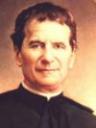
St. Giovanni M. Bosco (1815-1888) is commonly known in English as St. John Bosco or as Don Bosco.  The English honorific title of Don for a professor is well suited to a man who changed the teaching method from one of violence to one of encouragement and respect.

St. John Bosco was born in a cabin and grew up in poverty after the death of his father when Giovanni was still very small. He worked in the fields and as a shepherd and went to school as he could. From an early age, St. John Bosco had dreams about working with boys and bringing them to a better moral and social condition. As a young priest, he acted on this calling and started working with boys who had been imprisoned due to abandonment, neglect, abuse, and delinquency. Conditions in the mid-1800s in Italy were not unlike those chronicled by Dickens during the same period in England.

Although the bishop approved of his work, St. John Bosco met resistance and harassment from the public. He was forced to move his small chapel and school several times. The public saw these boys as a threat and as basically worthless. Finally, St. John Bosco was able to establish a school and workshop to give the boys training in printing and other trades of the early industrial revolution. The boys gravitated to him and his instruction because he showed that he cared about them and their physical well being. After grinding 12 hour days in the factories, the boys came to night classes to get the fundamentals of education and the faith.  The patron of his schools, and later of the order he founded, was St. Francis de Sales – another visionary educator who focused on the love of God.

It is important to remember that Italy was going through immense turmoil at the time and the Church was losing political control of the Papal States in the center of the peninsula.  Anti-clericalism was very strong as Italy made its way to political unification under a secular government. The work of St. John Bosco and his order, the Salesian Society, started a ministry based on social and economic development through technical and vocational education. Those boys and young men who had been considered disposable had their dignity restored and became productive members of society with a moral and religious foundation.

St. John Bosco’s work continues today among the lowest ranks of society all around the world in the schools and workshops of the Salesians of St. John Bosco.

Read More
Posted by on Jan 28, 2008

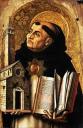
Saint of the Day: St. Thomas Aquinas – January 28

Saint of the Day: St. Thomas Aquinas – January 28

st-thomas-aquinas.jpg

St. Thomas Aquinas, the Angelic Doctor (c. 1225 – 1274), has been and continues to be one of the most influential forces shaping Catholic theology and philosophy. He was born at Roccasecca castle, the home of his father, Count Landulf, in the Kingdom of Naples. His mother was Theodora, Countess of Theate, and was related to the Hohenstafuen dyanasty of Holy Roman emperors. St. Thomas’s uncle, Sinbald, was the abbot of the first Benedictine monastery, Monte Cassino, and the family planned for him to succeed his uncle as abbot.

At the age of 5, St. Thomas was sent to Monte Cassino to begin his studies. At 16 he was sent to the University of Naples, where he came under the influence of the Order of Preachers – the Dominicans -who were innovators in a new style of religious life very different from that of traditional orders such as the Benedictines. St. Thomas upset his family by announcing his intention of joining the Dominicans. This action not only destroyed the family’s ambition to retain the power and prestige of Monte Cassino, but it was almost akin to running off with a band of hippies. Unable to convince him to renounce this foolishness, his family kidnapped him and held him for a year in the family castle of San Giovanni. Finally, Pope Innocent IV intervened and St. Thomas joined the Dominicans at 17.

St. Thomas and the Dominicans of his time introduced an entirely new way of approaching the faith. For 12 centuries, the Church teachers of the faith appealed to the authority of the scriptures and previous teachers such as St. Augustine or other Fathers of the Church. The scholastic movement, embodied by St. Thomas and his teacher St. Albert the Great, began with an open inquiry based on logic and reason. The traditional Faith was accepted as true, but thoughtful and logical reason were presented as to why it might not be true. Ultimately, various statements of belief were upheld, not only on the authority of the Church or tradition, but by reason and logic as well.

The format of the scholastic argument is the back bone of St. Thomas’s two major works, The Summa Theologica and the Summa Contra Gentiles. It is hard for us as post-modern people to imagine what a daring and threatening approach this was for the time. In fact the 1200s were a time of immense change in Europe. Trade and communications with the East had been reopened and with them came a flood of new and ancient knowledge. Trade and commerce increased the power and prestige of market towns at the expense of the countryside. Monastic schools gave way to early universities. The great Cathedrals began to dominate the landscape. The traditional clergy were overshadowed by the two great orders of mendicant friars (the begging brothers) – the Dominicans and the Franciscans.

St. Thomas, and his contemporary members of the scholastic movement, absorbed and transformed Islamic and Greek philosophy, science, technology, and mathematics. In particular, the Thomistic school of scholasticism is known for reviving the philosophy of Aristotle and its logic.

Over the centuries, scholastic philosophy would evolve and change in a variety of ways and St. Thomas – contrary to his own method – became the authority. Instead of being a fresh and bold inquiry, scholasticism degenerated into a catalog of arguments and answers to be memorized and repeated. In the Enlightenment of the 17th and 18th centuries, scholasticism and Thomism were disregarded by secular philosophies reliant only on reason. Thomism was also marginalized in training programs for priests.

In the late 1800s, there was a movement to restore Thomism as a defense against the secular philosophies of the Enlightenment and to renew some intellectual vigor in Catholic circles. It was an attempt to come to grips with the modern world and met heavy resistance. In the early 1900s, Thomism began to assume some prominence and neo-Thomism emerged with a renewed interest in the relationship between faith and reason. It is a long and complicated story, but it reflects the enduring importance of the work of St. Thomas and the changing moods of society and philosophy.

The core question persists. What can we know of God through reason? The second question follows. How reasonable is our faith?

If we want to honor a man who was a mystic, a saint, and an intellectual, it seems that we have to take on the openness of his inquiry and the wonder he beheld in faith.

Read More

Posted by on Jan 26, 2008

Saints of the Day – Sts. Timothy and Titus – January 26

Saints of the Day – Sts. Timothy and Titus – January 26

friendship.jpg

Everybody needs friends – a real support network. St. Paul was no exception and he was very fortunate to have Timothy and Titus, not only as helpers and proteges in his missionary work, but as very close friends.

Their story, as told in the Acts of the Apostles and the Pastoral Epistles, shows their work on behalf of the Gospel. Yet there is so much more between the lines. Timothy went to be with St. Paul when he was under house arrest in Rome. St. Paul was anguished about Timothy’s own arrest. St. Paul made sure that Titus was not circumcised in Jerusalem – that he did not have to conform to that church’s notion that Baptism was not enough to enter the Kingdom of Heaven.

St. Paul could be lonely, discouraged, and moody like anyone else dealing with fatigue, mistrust, and the problems of the Christian communities which he founded. Even though his vocation was startling, miraculous and public, St. Paul wavered. He bargained with God. He was thoroughly human.

Timothy caught a lot of grief for being young and having to somehow soothe the roiling in various communities of the Faith. Titus had the unenviable task of delivering letters from St. Paul which were not exactly “good news” for the recipients. Unlike the postal service, he couldn’t excuse himself and take off. He had to stay and work things out.

The French saying, “The more things change, the more they stay the same,” applies to Christian communities from the very beginning to the present. As much as St. Paul and his friends relied on prayer, their friendship was a sacrament that many of us have experienced. Most of the time it is all too easy to forget that we are more than church members. To survive and reach past our own limitations and those of others, true devoted friends are the sacrament of God’s presence.

Read More

Posted by on Jan 25, 2008

Feast of the Day: Conversion of St. Paul – January 25

Feast of the Day: Conversion of St. Paul – January 25

st-paul-conversion.jpg

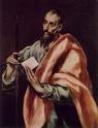
January 25 is the feast of the Conversion of St. Paul (Acts 22). Most of us are familiar with the story. Saul – his original name – was a Pharisee who was persecuting the very first Christians. (At that early stage believers called themselves Followers of the Way. The name Christian would come about later in Antioch)

St. Paul was on his way to Damascus with documents authorizing him to arrest and bring back Christians to Jerusalem for trial by the religious authorities. Scripture makes no reference to a horse, which is usually part of the depiction of the scene in which St. Paul is blinded by a bright light and falls to the ground. He hears a voice utter the now famous words “Saul, why are you persecuting me.” In the exchange, St. Paul asks who it is that is speaking to him – the response, “I am Jesus, the Nazarene..”

According to scripture, we know that Paul was from Tarsus and that he was also a Roman citizen. His letters to the early congregations (churches) are the oldest documents in the New Testament. They reveal a man who is thoroughly Jewish in his mode of thinking and speech. Yet he is Christianity’s link to the larger Hellenistic world.

For those who like to emphasize the important role of St. Peter in the development of the Church, it can come as a shock that he and St. Paul disagreed so strongly about the incorporation of non-Jews, or gentiles. Some of us contemporary Catholics – with a certain sense of ironic humor – see this conflict as the first among many between a Pope and a theologian.

What is most significant about St. Paul’s conversion is his acceptance by the leadership of the early Christian community. Although they had substantial reasons to distrust his sincerity, they forgave an enemy – even one who had been an accomplice in the stoning of St. Stephen, the first martyr. They forgave a man who arrested and imprisoned their family members and friends. The book of the Acts of the Apostles shows that the leadership and the community had their misgivings, but they helped the repentant Saul to demonstrate his conversion, acting as mentors, teachers, and friends. Some helped more than others, and many not at all, yet it was enough.  And as they say… the rest is history.

Read More

Posted by on Jan 24, 2008

Saint of the Day: St. Francis de Sales – January 24

Saint of the Day: St. Francis de Sales – January 24

st-francis-de-sales.jpg

St. Francis de Sales (1567-1622) is an interesting counterpoint to John Calvin (1509-1564) who preceded him. Both men are united by the City of Geneva. Calvin was its spiritual leader and made it a great center of the Reformation and St. Francis de Sales would become bishop of Geneva, although his headquarters were in Annecy, since Geneva no longer permitted Catholicism. Both men were well educated. Their fathers had intended for them to be lawyers and high government officials. Both studied theology and were perplexed by the issue of predestination – that certain people were saved and others were not because it had all been determined by God from eternity.

The notion of predestination overwhelmed St. Francis as a young student at Paris and almost crushed him, because he felt that he had been damned from all eternity for all eternity. He became physically ill and depressed and could barely get out of bed. Calvin dealt with it by assuming that he and members of his Reformed Church had been predestined for salvation.

St. Francis left his bed and in prayer at church, in front of a statue of the Blessed Mother, he affirmed his belief in God as a God of love. Our salvation rests on our faith and reliance on a God of love; on God who is love. This transformative experience would lead not only to a long life spent reforming and re-establishing Catholicism, but more importantly, suffusing that Catholicism with the gentleness of the Love of God.

This focus on divine love renewed a sense of spiritual priorities as seen in the Gospels. Exterior practices and observances, including penance and mortification, were second to a conversion of the mind, heart, and spirit. He led many back to Catholicism not so much by his learned teaching and writing but by the simplicity of his life as a bishop and his comfort in visiting the small towns and the countryside of his diocese at risk of his personal safety.

It might be easy for Catholics to focus on the triumph of St. Francis as a major figure in the Counter-Reformation, but this would miss the point of his life. St. Francis called people to an authentic Christianity based on the history and tradition of the Catholic Church. Yet his focus on the faith and its sacraments was a focus on the Divine Love. It was a protest against the emptiness of a faith based on predestination and severity and it was also a re-affirmation of a joyous faith of love as presented in the Gospels. His life and teaching presented a path of profound reformation and conversion for all Christians and those who seek God with a sincere heart.

St. Francis de Sales’ spirituality became a centerpiece for the religious order of The Visitation that he would found with St. Jane Frances de Chantal and for centuries of Catholics who would follow. St. Francis de Sales also inspired the founding of the Oblates of St. Frances de Sales and the Salesians of St. John Bosco.

His great works include: Introduction to the Devout Life, Treatise on the Love of God, and The Catholic Controversy.

Read More

Posted by on Jan 23, 2008

Leaps of Faith – Church Bulletin Bloopers

Leaps of Faith – Church Bulletin Bloopers

Faith is never supposed to be deadly dull. This is the first of a series of items supposedly taken from Church bulletins. Additional contributions are welcome. Keep the faith lively!

man-eating-hamburger.jpg

Church notice: “The Fasting and Prayer Conference includes meals.”

walking-on-the-water.jpg

Sign outside of church:

Sermon this morning: “Jesus Walks on the Water.” Sermon tonight: “Searching for Jesus.”

Read More

Posted by on Jan 22, 2008

Getting Robbed for Christian Unity – Sam Clear, Pilgrim

Getting Robbed for Christian Unity – Sam Clear, Pilgrim

walk4one.jpg 

Thanks to a comment from Ed, I learned about Sam Clear’s pilgrimage around the world from Australia for Christian Unity.

Sam’s dangerous mishap in Costa Rica appears to be a tale from long ago, except that it’s all too modern. Here is an excerpt.

May 13, 2007

Aussie Pilgrim Mugged in Highway Robbery

At 2pm today Samuel Clear, a 28 year old Australian walking the globe to promote the unity of Christians, was attacked at knife point and robbed by a band of 4 thieves in Costa Rica. Sam was walking and praying with friend, Damian Burgur, and a Costa Rican World Youth Day Group, when they were set upon by the four assailants.

The robbers thrust long-blade knives at the group of 11, threatening them as they lined them up along the railing of the bridge as heavy traffic flowed past. The thieves then stripped the Christian prayer group of everything valuable, including 4 backpacks, cameras, mobile phones, wallets, watches and sunglasses.

Within minutes around 10 police vehicles took chase and opened fire on the robbers as they tried to escape off the end of the bridge and down through a canyon. 3 were successful, but the fourth, was apprehended and is now facing court in Costa Rica. Sam, Damian and the group were shaken and stunned by the surprise attack, but amazingly not injured.

Despite having a knife thrust at his stomach and losing around $2,000 worth of gear, Sam had this to say, after he met the young thief, who had been apprehended.

“He was just 16 years old. He was incredibly ashamed & very quiet as he stood there looking at the floor. We introduced ourselves & I explained why we had been walking.

I gave him a World Youth Day postcard/invitation & Damian popped some rosary beads into his hand. He looked up, smiled & said thankyou, before tentatively extending his hand. We each shook hands & he once again bowed his head & returned to his cell.

Two hours later I saw him entering the court house still holding his postcard and beads – the kid wasn’t the ring leader. “His name is Danny if you’d like to offer a few prayers for him,” said Sam.


The article goes on to tell about Sam, his pilgrimage for Christian Unity, and his dream of a “24 hour a day worldwide prayer session in the name of Christian unity.” You can get the whole story at walk4one.

Read More

Posted by on Jan 22, 2008

Saint of the Day? – Martin Luther King, Jr.

Saint of the Day? – Martin Luther King, Jr.

martin-luther-king-jr.jpg

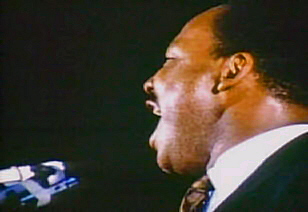
Martin Luther King Jr. (January 15, 1929 – April 4, 1968) achieved a moral stature and Christian witness that continues to inspire people of all faiths across the world. His life and work is commemorated not as a feast of the Roman Calendar but of the United States, on the third Monday of January each year. The human rights leader and Nobel Peace Prize laureate was 35 at the time of his assassination in Memphis, Tennessee.

Most people are familiar with his “I Have A Dream Speech” on the National Mall in Washington, D.C. However his final speech, delivered on April 3, 1968, “I Have Been to the Mountain Top,” not only presaged his death, but summarized his great vision for us all. You can hear by clicking on this link. It is well worth hearing in its entirety, not only because Dr. King was one of the great masters of English rhetoric, but the actual spoken message in its wonderful cadences, rich inflections, and profound rhythms stirs the soul with their inspiration.

Is Dr. King a saint? It is ironic to pose this question in regard to a Baptist minister, whose denomination – among others – has criticized the “worship” of the saints by Catholics. Like Dorothy Day, we can probably assume that Dr. King would dissuade us from giving him the title and remind us to return to the work of serving the least among us.

What is most remarkable about Dr. King’s legacy was the Christian witness of non-violence. Very easily, Dr. King could have kept the oppression of black people in the United States on a political level and built a base of power for himself. He also could have kept it on a “spiritual” level by focusing on the “next” life. Dr. King did neither. As a result, he elevated the whole movement to one of social justice and human rights for the children of God – of the “I” encountering the “thou” of the other person.

Let us develop a kind of dangerous unselfishness. One day a man came to Jesus, and he wanted to raise some questions about some vital matters of life. At points he wanted to trick Jesus, and show him that he knew a little more than Jesus knew and throw him off base….

Now that question could have easily ended up in a philosophical and theological debate. But Jesus immediately pulled that question from mid-air, and placed it on a dangerous curve between Jerusalem and Jericho. And he talked about a certain man, who fell among thieves. You remember that a Levite and a priest passed by on the other side. They didn’t stop to help him. And finally a man of another race came by. He got down from his beast, decided not to be compassionate by proxy. But he got down with him, administered first aid, and helped the man in need. Jesus ended up saying, this was the good man, this was the great man, because he had the capacity to project the “I” into the “thou,” and to be concerned about his brother.

Go and do likewise. (Luke 10:37)

Like anybody, I would like to live a long life. Longevity has its place. But I’m not concerned about that now. I just want to do God’s will. And He’s allowed me to go up to the mountain. And I’ve looked over. And I’ve seen the Promised Land. I may not get there with you. But I want you to know tonight, that we, as a people, will get to the promised land!

And so I’m happy, tonight.

I’m not worried about anything.

I’m not fearing any man!

Mine eyes have seen the glory of the coming of the Lord!!

Read More

Posted by on Jan 21, 2008

Saint of the Day: St. Agnes of Rome – January 21

Saint of the Day: St. Agnes of Rome – January 21

st-agnes-gauld.jpg

St. Agnes (291-304) was a twelve year old Roman girl who was killed on January 21, 304 because she refused to marry the son of the Prefect Sempronius. Agnes was killed because she was a Christian virgin and wished to remain so. She is an early heroine of the church at Rome and is mentioned in the Eucharistic Prayer – the Great Thanksgiving – of the Mass.

There is very little we know about her except that she was a real historical person. Her faith and her strength at such a young age were seen as remarkable by Christian and non-Christian alike. In and of itself, it was considered a miracle. Agnes’s defiance of authority was not only rare, it was also foolhardy, particularly for a woman, let alone a girl, in her time and culture. In a culture which was licentious and in which the slaves and less powerful had no control of their own futures, let alone of their own bodies, Christianity would set a new standard which we take for granted today in a post-Christian world.

St. Agnes was martyred in the last great wave of persecution under the Emperor Diocletian. Within 20 years of her death, Christianity would become legalized in the Empire and the love of Christ for which she died would spread beyond her time and place throughout history. Human rights: dignity, autonomy, opportunity – the right to be whole, free, in love, caught up in the divine – were announced by the faith of a young girl of faith a long time ago.

Read More

Posted by on Jan 20, 2008

“Behold the Lamb of God” — “I did not know him.”

“Behold the Lamb of God” — “I did not know him.”

flower-gift.jpg 

The “Book of Signs” in the Gospel of St. John begins with the story of John the Baptist – the Baptist’s statement of his own role in preparing the way of the Lord and his witness to the role of Jesus. John the Baptist saw Jesus coming and told his disciples, “Behold the Lamb of God …” He also admitted to them, “I did not know him … but the one who sent me to baptize with water told me, ‘On whomever you see the Spirit come down and remain, he is the one who will baptize with the holy Spirit.'” (Jn 1: 29, 33) Based on the Baptist’s testimony, Andrew, brother of Simon Peter, and John, son of Zebedee, followed after Jesus and became his first disciples.

How truly even today we do not recognize the Lord came clearly to me about this time seventeen years ago. My husband and I had two wonderful sons, and we had been hoping to have another child. Everything seemed to point to it being the right time and I had become pregnant as we hoped. Then in mid-January, it all fell apart. The baby in my womb died. We found out the news on a Saturday, but there was no need to do anything immediately, so the decision was made to wait until Monday to arrange for further treatment.

We went ahead and took down our Christmas tree. We had the birthday party for our firstborn, with most of his classmates attending, as we had planned. And on Monday morning, as symptoms of the miscarriage appeared, we went to Kaiser and I had the procedure to complete the process.

It was a very difficult time. We had very much wanted that child. And it was not to be.

The previous year, we had received a free overnight stay at a nice hotel up in the California wine country, to be used at a time of our choice. So we decided to go there a week or so later. That evening, I went for a walk through the courtyard by myself. I was praying. It wasn’t easy to pray during those couple of weeks. I asked the Lord, “Where have you been?” And I received his response in a series of images of faces that came into my mind. The couple who had stayed into the evening after the birthday party, so we wouldn’t have to be alone with our sorrow. The nurse who did the preliminary exam and shared that she too had lost a baby, but now had a healthy child. Another nurse who held my hand and told me it was OK to cry, as the procedure began. The doctor who was so kind and gentle. My parents, who sent flowers. They had never sent flowers before that day, but they did when I needed them. The other relatives who sent cards and plant arrangements. My son’s teacher, herself a young widow, who came after school and spent a couple of hours with me, just being there.

As all of these images and memories came to me, I knew where Jesus had been. He was right there, in his body, the People of God, the Mystical Body of Christ, about whom I had learned as a child. He was with me.

Behold the Lamb of God. Like John the Baptist, I did not recognized him when he came in person through all those wonderfully kind and thoughtful people. But the Lord is kind, and, like the Baptist, I got a second chance to recognize him – in the images of their faces that came to me that night.

Where is the Lamb of God in your life today? Keep your eyes and ears open. He is here, hoping you’ll recognize him in those around you. He’s here, too, hoping you’ll be helping him today to reach those who need his touch today.

Behold the Lamb of God!

Read More