Pages Menu
RssFacebook
Categories Menu

Posted by on Feb 21, 2008

Saint of the Day – St. Peter Damian – February 21

Saint of the Day – St. Peter Damian – February 21

st-peter-damian.jpg

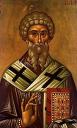
St. Peter Damian is the figure on the right, with Sts. Augustine, Anne and Elizabeth.

St. Peter Damian lived in the 11th century. He was orphaned at a young age and raised by two of his brothers. The first treated him as little more than a slave, but the second treated him kindly, took him into his own home and sent him to school. Peter took this second brother’s name, Damian, as part of his own name.

Peter Damian grew up to become a teacher and, later, became a Benedictine monk. He was always very devout and passionate about prayer, fasting, sacrifices and caring for the poor. He regularly welcomed poor people to eat with him. He spent so much time in prayer and reading Scripture that he developed insomnia. He had to learn to use his time more wisely, so that he could have the time he wanted for prayer and still get enough sleep to maintain his health.

He eventually became abbot of his monastery and founded 5 others. His reputation as a reformer of monastery life, peacemaker and troubleshooter led a series of popes to send him as their representative to settle problems in various monasteries and dioceses, as well as to be a representative of the Church with local government officials. If he saw a churchman or government official who was not living in a way that witnessed to the Gospel, he would intervene with that person and publicly call him back to a more appropriate lifestyle. He wrote passionately against practices which he saw as sinful and did not hesitate to argue with persons in authority.

Peter Damian never sought titles or office within the Church, but he was forced to accept the position of Cardinal-Bishop of Ostia. In this role he led the diocese and worked for reform among priests, bishops and laity. Though he had not wanted to be a bishop, he served faithfully until finally Pope Alexander II allowed him to retire. Even in retirement, he traveled extensively as the Pope’s representative. He died of a fever on his way home from a final journey to Ravenna as papal legate.

Though never officially canonized, Peter Damian is a Doctor of the Church, a title granted to him in part because of his efforts to reform the Church from within and to encourage the practice of prayer and study of Scripture. He was a prolific writer, a man of great influence in his world, and yet also a humble monk in spirit, retreating to the monastery whenever possible to live his preferred life of simplicity and prayer.

In the words of Pope Benedict XVI

“With his pen and his words he addressed all:  he asked his brother hermits for the courage of a radical self-giving to the Lord which would as closely as possible resemble martyrdom; he demanded of the Pope, Bishops and ecclesiastics a high level of evangelical detachment from honours and privileges in carrying out their ecclesial functions; he reminded priests of the highest ideal of their mission that they were to exercise by cultivating purity of morals and true personal poverty.

In an age marked by forms of particularism and uncertainties because it was bereft of a unifying principle, Peter Damien, aware of his own limitations – he liked to define himself as peccator monachus – passed on to his contemporaries the knowledge that only through a constant harmonious tension between the two fundamental poles of life – solitude and communion – can an effective Christian witness develop.”

This tension and these ideals are still the ones with which we wrestle today as we each try to fulfill the vocations to which we are called, in a world filled with controversy, using the gifts we have received for the larger community, and being renewed through prayer and Scripture.

Read More


Posted by on Feb 14, 2008

Valentine’s Day Reflections 2008

Valentine’s Day Reflections 2008

 love.bmp

February 14 is Valentine’s Day, a day focused on love. Marketers have been promoting their products for several weeks now – trying to convince us that their particular product is the best possible way to say “I love you” to that special someone in our lives. And lots of us will buy something to express our love for those special people with whom we share our lives.

I remember one year when I received a waffle iron for Valentine’s Day. The women at the shop where my husband was getting his hair cut were horrified that he would get a small kitchen appliance for me. But he was right – I was thrilled. I love waffles and the old waffle iron I’d gotten 10 years earlier at a garage sale had finally broken – metal fatigue. It was a wonderful gift. We had waffles for dinner that night!

Valentine’s Day is a feast whose origins are found in legends about holy men who lived long ago. We don’t know much about St. Valentine, or even which man he actually was – there were several Valentines who were martyred in ancient days. The name means worthy and was popular in Roman times.

Many of the traditions related to Valentine’s day had their origins in the Middle Ages. It was believed then that birds began to choose their mates in mid-February, so the day seemed appropriate for celebrating romantic love. Fr. James McSweeney, on his website, www.todayismygifttoyou.com has a couple of lovely pieces about St. Valentine and love today.

Another essay I found this morning is by Timothy Chambers, a philosophy teacher at the University of Hartford in Connecticut. He talks about love potions mentioned in old legends and about what is really necessary for love – the stuff that can’t come out of a bottle. Of course, physical attraction is important in human love (and it might conceivably be produced by a “love potion”), but even more important are memories of happy times together, trust and faith in the beloved and the free choice to love in bad times as well as in the good times.

My wish for you today is that you know love. A love deeper than the sea and higher than the sky. The love that fills your being with the unshakeable certainty that nothing can ever come between you and the Lover, between you and your Creator. You are loved and loveable because you were loved into existence and are held in existence by that same love. Just as you are. With all your gifts and faults. You are loved.

Peace be with you. Now and always. Happy Valentine’s Day.

Read More

Posted by on Feb 11, 2008

Feast of the Day: Our Lady of Lourdes – February 11

Feast of the Day: Our Lady of Lourdes – February 11

our-lady-of-lourdes.jpg

“The Lady took the rosary that she held in her hands and she made the sign of the cross. Then I commenced not to be afraid. I took my rosary again; I was able to make the sign of the cross; from that moment I felt perfectly undisturbed in mind. I knelt down and said my rosary, seeing this Lady always before my eyes. The Vision slipped the beads of her rosary between her fingers, but she did not move her lips. When I had said my rosary the Lady made a sign for me to approach, but I did not dare. I stayed in the same place. Then, all of a sudden, she disappeared. I started to remove the other stocking to cross the shallow water near the grotto so as to join my companions. And we went away. As we returned, I asked my companions if they had seen anything. ‘No,’ they replied. ‘And what about you? Did you see anything?’ ‘Oh, no, if you have seen nothing, neither have I.’

“I thought I had been mistaken. But as we went, all the way, they kept asking me what I had seen. I did not want to tell them. Seeing that they kept on asking I decided to tell them, on condition that they would tell nobody. They promised not to tell. They said that I must never go there again, nor would they, thinking that it was someone who would harm us. I said no. As soon as they arrived home they hastened to say that I had seen a Lady dressed in white. That was the first time.” [2]

On realising that she alone had seen the apparition, and not her companions, she asked her sister Toinette not to tell anyone what had happened. Toinette, however, was unable to keep silent, and told their mother, Louise Soubirous. Both girls received a beating, and Bernadette was forbidden by her mother from returning to the Grotto again.[3]

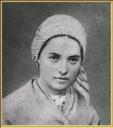
On Thursday February 11, 1858, Bernadette Soubirous, an impoverished, uneducated, 14 year old French peasant, had an experience that would not only change her life but would make would make her home town an international destination for pilgrims. Bernadette was not unlike many of the millions of girls around the world today growing up in stark poverty. Her parents and 5 siblings lived in a one room prison cell that had been abandoned because it was no longer fit for prisoners. Bernadette’s father was a miller and her mother took in laundry.

St. Bernadette would have a total of 18 encounters with the Lady of the grotto. The last one would be July 16. In the process of these visits, a miraculous spring of water would appear. People would be healed. The Lady would refer to herself as the Immaculate Conception. The grotto would be closed by authorities and people forbidden to pray there by the mayor of Lourdes.

Today, Lourdes hosts 15 million pilgrims a year. Paris is the only city in France that has more hotel rooms. The beautiful young woman, who died at the age of 33 from tuberculosis of the bone, refused to return to the grotto seeking a cure, saying only that the water was for others. Today 150 years after the first apparition, St. Bernadette’s body is still marvelously intact and uncorrupted.

St. Bernadette and the events of Lourdes met with intense skepticism and careful investigation by religious, political, and scientific authorities. Subject to medical and scientific review, thousands of healings have been documented which do not have a natural explanation. Yet only a fraction of the sick and infirm are healed physically. The prayerfulness and the experience of a community of faith continues to draw millions every year.

There is a saying associated with Lourdes that is especially appropriate. “To those who believe no explanation is necessary; to those who do not believe no explanation is possible.”

st-bernadette-of-lourdes.jpg St. Bernadette – the young girl

st-bernadette-soubirous.jpg St. Bernadette – at rest

Read More

Posted by on Feb 8, 2008

Saint of the Day: St. Josephine Bahkita – February 8

Saint of the Day: St. Josephine Bahkita – February 8

st-josephine-bakhita.jpg

St. Josephine Bahkita (1869-1947) was born in Olgossa in the province of Darfur, Sudan. She was kidnapped and sold into slavery at the age of 7 and was sold 5 times in the markets of El Obeid and Khartoum. Her suffering and abuse were immense. Her fourth owner, an Ottoman army officer, had her and his other slaves tatooed and scarred to mark them as his property. Once the sons of her owner beat her so severely that she could not move from her straw pallet for a month. Her fifth buyer was the Italian consul ,who treated her more humanely, but nevertheless gave the 16 year old to one of his friends, who made her a nanny to his daughter. St. Josephine and the girl she cared for were sent to the Canossian Daughters of Charity in Venice while the parents returned to Africa.

Upon their return, St. Josephine refused to leave with them. In the ensuing court case, the Canossian Sisters and the Patriarch of Venice intervened on her behalf. The court upheld her freedom and she returned to the Canossian Sisters. She spent the rest of her life happily as the door keeper in the convent in Schio and was in frequent contact with the community. St. Josephine was known for her cheerfulness and holiness. In her later years, her order asked her to write her memoirs and to give talks about her life story. Efforts to declare her a saint began soon after her death in 1947 and she was canonized (declared a saint) in 2000.

As terrible as her story of slavery is, it might be more bearable if we could relegate it to the horrors of 19th century Africa. Unfortunately, turmoil in Darfur and human trafficking are even more prominent today. There might be some solace in St. Josephine’s designation as the patron saint of Sudan, except that genocide in Darfur is directed at Christians and animists by a hostile government in Sudan which is protected from international sanction by its commercial ties with China. The persecution of Christians has spread to other African countries in recent years as well.

St. Josephine is remarkable not only because she was able to survive such a cruel childhood and adolescence, but because she rose from it in a spirit full of happiness. Bitterness, depression, anxiety, even hostility, and self-destruction are the more likely outcomes of such an horrendous youth. Credit also has to go to the Canossian Sisters who could have turned a blind eye to the plight of an African and not opposed a prominent family. St. Josephine could have taken a certain morose refuge with the Sisters, but instead she became an unassuming beacon of holiness.

I don’t think that she would want us to forget about Darfur and the resurgence of slavery in our globalized economy. What will we say when we meet her one day? Make a donation to help out.

Image of St. Josephine Bahkita from the website of the Canossian Daughters of Charity.

Read More

Posted by on Feb 7, 2008

Christ in the Desert and the County Jail

Christ in the Desert and the County Jail

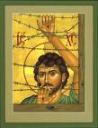
christ-of-maryknoll.jpg

On Shrove Tuesday, while much of the world was at Mardi Gras, I was praying and sharing scripture with a small group of inmates at the county jail. Our scripture was the Temptation of Christ (Luke 4:1-19). One thing that emerged in our prayer and reflection was Christ’s acceptance of the Father’s way of rejecting power and advantage in the announcement of the Kingdom.

Why take the hard way? God could have redeemed us in many different ways. Why such a horrible death? Why did the Spirit drive Jesus into the wilderness after his baptism by John? Why was the Son of God fasting and praying for 40 days?

One of our group restated a common view that the offenses of humanity had become so severe that God demanded the most severe appeasement. I suggested that maybe the answer was in the persistence of evil in our lives. For so many of the men I was praying with, their lives had been damaged by forces beyond their control – poverty, addiction, and mental illness. (Hardened criminals generally don’t come to a prayer meeting in our jail. The faith of those who do come is something, I am sure that Jesus did not find in Israel and does not find in most respectable Christians.)

Christ, who was like us in all things but sin, chose to identify with the powerless and to put his faith in the Father through non-violence. Utter foolishness – according to St. Paul. In our suffering and defeat how could we be one with a God who was not defeated – a God who was not an utter failure? Did the Father exact this humiliation out of a some perverse pleasure unworthy of a human father?

That community of Divine love – Father, Son, Holy Spirit – Creator, Redeemer, Breath of Life come to the heart as love. Love can never be forced. True love can never come through power, glamour, or glitz. As we reflected and prayed it became more obvious to us that God can only come to us in compassion and that is how we come to him. Yet compassion is not compatible with power, wealth, and success – like a camel passing through the eye of the needle.

God with us. God like us. Powerless in love.

Read More

Posted by on Feb 5, 2008

Feast of the Day – Ash Wednesday

Feast of the Day – Ash Wednesday

ash-wednesday.jpg

“…As we live through this Ash Wednesday, may the crosses of ashes that mark our foreheads be a reminder to us and to those we meet that we belong to your Son. May our worship and prayer and penitence this day be sustained throughout these 40 days of Lent. Bring us refreshed and renewed to the celebration of Christ’s resurrection at Easter.” – A Prayer for Ash Wednesday

Ash Wednesday marks the beginning of the Lenten season of preparation and renewal for the Easter Triduum. The season of Lent has an ancient and interesting history. From the earliest centuries there were various periods of preparation for Easter. The tradition of prayer, fasting, and alms giving has evolved over time. Lent used to begin on Sunday like the other liturgical seasons. However, Pope St. Gregory the Great moved it to Wednesday to acurately mark 40 days – not counting Sundays – prior to Easter.

Ashes have a long history and deep significance in the Bible. Sack cloth and ashes are ancient symbol of mourning and repentance. Fasting and almsgiving are also prominent in the Old and New Testaments. Fasting focuses our attention on our need for God and alms giving reminds us that our service to the poor and the marginalized is service to God.

With the renewed focus on the baptism of adult catechumens at the Easter Vigil, Lent has become, once again, a time in which the community recalls, relives, and renews its life in the Paschal Mystery – the Crucifixion, Death, and Resurrection of Christ.

Read More

Posted by on Feb 5, 2008

Saint of the Day: St. Agatha – February 5

Saint of the Day: St. Agatha – February 5

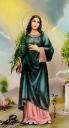
st-agatha.jpg

St. Agatha was a virgin martyr around the year 251 in Catania, Sicily. That is all we really know about her. She was honored widely in many parts of Europe and, centuries later, legends were written about her martyrdom. However, The Catholic Encyclopedia gives little credit to this story, since it appears that it was written much later to depict heroism and miracles without any real historical information.

The legend is almost stylized. She was a beautiful young woman from a noble family who refused the advances of a Roman official. She was tortured and put through many trials but was steadfast in her faith. While it is unfortunate that we know so very little about St. Agatha, it is telling that such a male dominated society as Rome would focus on the importance of young women and their great courage.

Women played a significant role in the development of early Christianity. St. Paul refers to the deaconness Phoebe and to other prominent women leaders. There is good historical evidence that well-to-do Greek and Roman women were among the first believers. Widows, who generally had very little power and wealth, would find a secure place in Christian communities, which saw to their needs.

Perhaps the best legacy of St. Agatha and these brave women, a legacy that we can truly celebrate, is a commitment to and a concern for the women and girls in our midst. Despite the advances made in industrialized societies, the lot and fate of women and girls is one of continued oppression and exploitation throughout the world. While I could recount some of the cultural celebrations observed on St. Agatha’s feast day or mention that she is invoked to protect people from eruptions of Mt. Etna, there is a greater import in the brief historical note that gives us her name and documents her martyrdom. The power and strength of God are manifest in the feminine.

Read More

Posted by on Feb 4, 2008

Mardi Gras / Carnaval – A Non-Moveable Feast?

Mardi Gras / Carnaval – A Non-Moveable Feast?

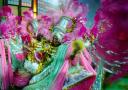
carnival-brazil.jpg

Shrove Tuesday, the day before Ash Wednesday, has often been a raucous holiday throughout the Catholic world. In New Orleans we have “Fat Tuesday” – literally Mardi Gras. In Rio de Janeiro and Venice, the day before the beginning of the Lenten season of preparation for the Easter Triduum is called Carnival, or Carnaval in Portuguese.

The Carnival celebration in Rio de Janeiro has become a major part of the economy, due to the tourist trade and large expenditures for floats, constumes, and neighborhood performance groups. Although the celebration was only introduced in 1845 by European elites imitating the Parisian celebration, Carnival has taken on a life of its own and has incorporated African and Amerindian elements. In 2008, Carnival will attract 700,000 tourists and $510 million dollars. Like New Orleans, the party can start a whole week before the actual day of Carnival.

Of course there are always problems with success. The key one for Mardi Gras is that the date is 50 days before Easter. This means that the actual date of Carnival floats in relation to the date of Easter, following the lunar calendar. Easter is celebrated on the first Sunday after the first full moon of Spring. For Brazil, Carnival marks the end of the southern hemisphere’s summer vacation season. If Carnival comes too early, as it does this year, on February 5, the vacation and tourist trade can dry up. In fact, the date of Carnival can range from February 3 to March 9 – a span of 5 weeks.

The big problem is that when Carnival is over, the party is over. Lent begins with its fasting, penance, and almsgiving. Big parties are not in keeping with the season. The hotel and tourism industry in Brazil are concerned that this will mean a huge economic loss. The “summer” economic season would end 7 weeks early. There is a movement in Brazil to make Carnival the first Sunday of March to avoid these economic dislocations. The Secretary General of the Brazil’s Catholic Conference of Bishops, Dom Dimas Lara Barbosa, is not opposed in principal to moving the date to January so that the festival will not occur during Lent.

January seems a little to close to Christmas and New Years and so there has been some thought of turning Carnival into a purely secular festival. But then again, it wouldn’t be Carnival if it were. On the other hand, many of our Protestant cousins would probably remind us that Carnival seems to have gone beyond any deep religious significance anyway.

Read More

Posted by on Feb 2, 2008

Saint of the Day: St. Blaise, Bishop & Martyr – February 3

Saint of the Day: St. Blaise, Bishop & Martyr – February 3

st-blaise.jpg

Through the intercession of Saint Blaise, bishop and martyr, may God protect you from all ailments of the throat and from all forms of evil. Amen.’  ~Blessing given on the feast of St.Blaise

St. Blaise was martyred for the faith around 316. That is all we actually know about him.  However, his feast has been celebrated from the very early centuries. The Catholic Encylopedia and other scholarly sources reject the Acta or Deeds of the life of St. Blaise as history and regard them as legend. According to this old story, St. Blaise was bishop of Sebastea in Armenia and was tortured and executed under the persecution of Licinius after he had been discovered in the countryside. As he was being led off by his captors, a mother brought him a baby who was choking on a fish bone. St. Blaise prayed for the baby, who was immediately cured.

Consequently, St. Blaise has been associated with the relief of throat ailments, both physical and spiritual. (Spiritual aliments would include things like gossiping, coarse language and lying.) When I was a boy in the 1950s, this day was marked by the blessing of throats with crossed unlighted candles. For those of us who were altar boys, it took a little reminder that after the Last Gospel (the Prologue of St. John’s Gospel), the final blessing and the prayers for the conversion of Russia (they must have been heard after all), we had to return to the communion rail and accompany Father for the blessing of the throats. Like many of the Latin rituals, its beauty and the sweet beeswax smell of the new candles was somewhat marred by the rapid droning of the blessing and a certain assembly line efficiency, as we made several circuits of the communion rail.

As nice as it was, we never focused on his witness as bishop and martyr. There was just enough documentation to verify that St. Blaise was an historical figure and to spare him from the fate of St. Christopher, whose legend was quietly declared a myth. Everything else about St. Blaise is veiled in legend and the mists of time.

Read More

Posted by on Feb 2, 2008

Feast of the Day: The Presentation of Christ in the Temple – February 2

Feast of the Day: The Presentation of Christ in the Temple – February 2

presentation-icon.jpg

St. Joseph & Prophetess Anna; St. Mary, the Christ Child, & the Prophet Simeon

The Feast of the Presentation of Christ in the Temple is February 2 and is known in the West as the Feast of the Purification of the Blessed Virgin Mary. Around 450 in Jerusalem, people began holding lighted candles during the Liturgy on this day and it became known as Candlemas. The feast has always had more prominence in the East. However, it has been celebrated in the West since the 11th Century. It marks the formal end of the Christmas season.

The presentation commemorates the ritual purification of Jewish mothers on the 40th day after birth and the redemption offering for first born sons. (Luke 2:22-40) At the temple, the Holy Family meet Simeon who had prayed for the coming of the Messiah and had been assured by God that he would not see death until he had seen the Savior of Israel.

28 Simeon took him in his arms and praised God, saying:
29 “Sovereign Lord, as you have promised,
you now dismiss your servant in peace.
30 For my eyes have seen your salvation,
31 which you have prepared in the sight of all people,
32 a light for revelation to the Gentiles
and for glory to your people Israel.”

33 The child’s father and mother marveled at what was said about him.

34 Then Simeon blessed them and said to Mary, his mother: “This child is destined to cause the falling and rising of many in Israel, and to be a sign that will be spoken against,
35
so that the thoughts of many hearts will be revealed. And a sword will pierce your own soul too.”

36 There was also a prophetess, Anna, the daughter of Phanuel, of the tribe of Asher. She was very old; she had lived with her husband seven years after her marriage,
37
and then was a widow until she was eighty-four. She never left the temple but worshiped night and day, fasting and praying.
38
Coming up to them at that very moment, she gave thanks to God and spoke about the child to all who were looking forward to the redemption of Jerusalem.
39 When Joseph and Mary had done everything required by the Law of the Lord, they returned to Galilee to their own town of Nazareth.

40 And the child grew and became strong; he was filled with wisdom, and the grace of God was upon him.

There is really not much more to say, except to note the gratitude of Simeon and Anna and the bewilderment of Joseph and Mary. For those of us who have had the joy, bewilderment, and sleep deprivation characteristic of new parents, the experience rings true. So do the words of prophets in our lives – those strange outsiders who many times see our children more clearly than we can.

As glorious as the Canticle of Simeon is, there is a prayer that I learned when I was a new father:

“Lord, please help me to see my children the way other people do.” It is always unsettling – always a revelation.

Read More