Pages Menu
RssFacebook
Categories Menu

Posted by on Jul 25, 2014

Vocation as a “Worthy Dream”

Vocation as a “Worthy Dream”


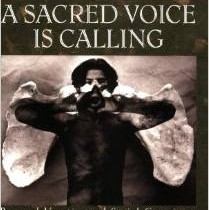
A Sacred Voice is Calling: Personal Vocation and Social Conscience is a remarkable book. John Neafsey argues that vocation is the seeking and finding of a “worthy dream” that makes all other possible options for spending one’s life pale in comparison. Social justice is a key component of vocation for all Christians since it flows from our call at Baptism and Confirmation to proclaim and make present the Kingdom of Heaven, God’s reign of peace and justice. Ordained ministry or a consecrated religious life might be that worthy dream for some. For others, the worthy dream will lead to a very different life path. All are calls to vocation.

Vocation Just for a Few?

Before and to some extent even after Vatican II, the notion of vocation was focused on ordained ministry or consecrated religious life. Vocation directors were and still are official recruiters for dioceses and religious orders. Today, when we hear of the “vocation crisis” or the shortage of “vocations”, the general reference is to the decline in the number of priests, brothers, and nuns.

While the concept of vocation continues to be applied more commonly to that of ordained or consecrated individuals, Neafsey demonstrates that Vatican II is gradually changing our understanding of what a vocation is. The concept of vocation as a sacred calling is developing today based on newly emerging understandings of human development, the Church itself, and our scriptural calling to live out the Good News. In particular, working toward social justice is a key component of any vocation and plays a primary role in deepening our relationship with God.

Vocation as a worthy dream for all

Neafsey’s notion of vocation as a worthy dream is radically different from the more static pre-Vatican II notion of becoming a priest or a consecrated religious. Limiting the concept of vocation to priests and religious is not optimal in a faith community in which all are seen as called and gifted: the community as presented in the Vatican II documents, particularly Gaudium et Spes (On the Church in the Modern World) and Lumen Gentium (On the Church). The worthy dream may indeed take one person on the path of servant leadership as a priest or deacon, but the worthy dream is the result of a perpetual vision quest and may lead another to a different path. This path of the servant leader is also the path of charity and of justice shared by all. It is our participation in the ministry of the Risen Christ.

Our lives in the Trinity are dynamic love encounters of each moment in chronological time (chronos) with God’s designated moment of divine action (kairos). Our calling to live fully in the Trinity is all about the agony and the ecstasy of falling, being, and remaining in love. Certainly, there is a close connection between our special gifts and talents or charisms and the Church as a structured community, since our gifts flow from the Holy Spirit. Working out our vocations is not necessarily free of conflict, doubt, and suffering. Yet we are called in Christ to the messiness of relationships with others in a relational God. We have only to read the letters of St. Paul to see that this is nothing new.

Yes, we need “vocations” as an institution, but in another sense “vocations” don’t exist. Spirit-filled, joyous people, however, do exist. By encouraging, nourishing, and loving each other, we are part of a larger cosmic focus of Divine Love that brings and holds everything in being. Dancing in that love is vocation. As an organization, all we have to do is to be open not to a job applicant but to someone on fire in Divine Love. Then we will be open to the Christ in our midst. Any other talk of vocation is merely a temptation to careerism, clericalism, or conceit.

Just as married love is a vision, a reality, a dream, and an ongoing quest, the same is true of the experience of hearing, hoping, believing, and the joyous union that is “vocation” in the more traditional sense. This notion of being in love with God and being called deeper may sound “non-traditional”. However, we have to look no further than the Scriptures and the tradition of the Church to realize how much the notion of the Church – the assembly of the faithful – as a modern industrial organization with job descriptions is a novel folly. It is certainly understandable due to our experience of government agencies and corporations that we might look at vocations as filling job positions. Unfortunately, we can lose sight of the sacred dimensions of the Church as a charismatic community incarnated into a human world and caught up in the divine spiral toward the Omega Point of fulfillment in Christ.

The gift of a worthy dream will take many shapes and forms. To be of service to others in teaching, healthcare, music, the arts, exploring nanotechnology, or astrobiology can be a worthy dream, taking many twists and turns. The same is true in ministry. We present ourselves to the community and test whether our deepest gladness meets the deepest need. We test the spirits that may be affecting us in discernment, and follow the Spirit in the Mystical Body of Christ that is the Church.


For more of Neafsey’s insights on vocation, read this interview from Programs for the Theological Exploration of Vocation.

Read More

Posted by on Jul 20, 2014

Theology As the Everyday Awareness of God in Our Lives

Theology As the Everyday Awareness of God in Our Lives

Anthony F. Krisak writes in “Theological Reflection: Unfolding the Mystery” that theology “is not an abstract musing ..but it is a challenging and thoughtful reflection on the way God’s hand is involved in the day to day experiences of men and women…Rather, theology is about God-with-Us (Emmanuel).”

The window of theology

Krisak makes it clear that reflecting on this divine encounter leads the observer to face “concrete, historical, and passionate movements and experiences.” Our experience becomes the “window of theology”. This window is useless if we understand mystery to be “unknowable ideas and complicated theories”. According to Krisak, if we understand  mystery as a continual unfolding event in and around us, theology can be that window to observe and interpret our own experience.

Theology as a window goes against the claims that God is unknowable and that we should just accept secondhand understandings of God provided to us by an intellectual elite. Theology as a window of observing and interpreting experience is a fundamental assumption in the primary project of Jesus, the coming of the Kingdom of Heaven. In the Gospels, Jesus tells us to observe the signs of the times and everyday experience — a person who sells everything for a fine pearl, the  rapid growth of the mustard tree from a tiny seed, the one who goes out to harvest a crop. It is faith that allows the sun to shine through the window of theology. “Through theological reflection, our intertwined lives with God become conscious and faithfully deliberate; in other words, we begin to take in more profoundly the sights and sounds and smell of our life with God and each other.”

Without theological reflection, the pressures of everyday living can cause us to lose sight of what we are all about. Krisak particularly warns ministers of this hazard, since his article appears in the Handbook of Spirituality for Ministers. However, it is easy to see how everyday lay people can also fail to pay attention to the action of God in their lives. Unfortunately, many are not even aware that they are called to reflect upon and deepen their experience of God by reflecting on and noticing God’s actions.

This is especially ironic since we live in a culture that focuses very heavily on relationships. We have large psychological, educational, and popular movements to help us find the right partners, to save our marriages, to raise our children properly, to organize our businesses, corporations, and churches. How do we improve our love life with God? How do we even relate to God? When we think about it, we know we do or at least we think we do. We are called to enter the Kingdom of Heaven, to proclaim it, and to bring it about in God’s grace. It is unfolding within us and around us.

What does theological reflection require?

Krisak wisely points out that the backdrop or context for our theological reflection is our shared faith in both the Hebrew and Christian traditions. To engage in fruitful theological reflection according to Krisak, we need to:

(1) understand the tools necessary for “cleaning up the window of theology”,

(2) consider the process of reflection in relationship to human experience, and

(3) take a look at the “major themes of our theological tradition” such as the incarnation and redemption,  among others.

In subsequent posts, I will review these three areas of focus that Krisak recommends for doing theological reflection and understanding the ways in which we are part of something much bigger than ourselves.

Image: “Simultaneous Windows” by Robert Delaunay,
1912, Public Domain


Read More

Posted by on Jun 23, 2014

Preaching and the Liturgy: Notes from Pope Francis

Preaching and the Liturgy: Notes from Pope Francis


The Joy of the Gospel, Pope Francis’ most recent Apostolic Exhortation, contains many wonderful and important topics for Christian living. One of the great advantages of the Pope’s exhortation is that it is easy to read and understand by the average reader. It is written in a clear, friendly, and non-technical manner. The only word that might need some explanation is “exhortation”. In Latin this is a type of speech given at a pep rally. It is a pep talk.

In The Joy of the Gospel, Pope Francis takes thoughts and ideas that can be complex and presents them in a clear way without watering them down. This review is the first in a series. We begin with the homily because it’s role is one of the least understood aspects of Catholic Christian life and liturgy.

The Homily

In sections 135 to 139 of The Joy of the Gospel, the Pope focuses on the homily. Technically, the homily is given by those to whom the Church has given the ministry of preaching — bishops, priests, and deacons. However, many lay people today give reflections on the scripture at prayer, scripture, and communion services in hospitals, jails, and labor camps. Some parishes have lay presiders for authorized communion services if priests are not available for Mass. Consequently, proclaiming the Gospel and preaching can happen, with the approval of the local bishop, in different situations outside the Mass by a wide variety of men and women who have been trained and approved. Sometimes, reflecting on the scriptures also happens in faith sharing groups and individual families.

So what does the Pope encourage us to do about homilies at Mass?

 137. It is worth remembering that “the liturgical proclamation of the word of God, especially in the eucharistic assembly, is not so much a time for meditation and catechesis as a dialogue between God and his people, a dialogue in which the great deeds of salvation are proclaimed and the demands of the covenant are continually restated”.[112] The homily has special importance due to its eucharistic context: it surpasses all forms of catechesis as the supreme moment in the dialogue between God and his people which leads up to sacramental communion.

 Pope Francis underscores the sacred sacramental nature of the homily as a “dialog between God and his people.” The homily is not entertainment, but it needs to give life and meaning to the celebration. In the context of the Mass the homily has to be short, according to Pope Francis, since it’s length can upset the “balance and rhythm” of the Eucharist. Preaching in the context of the liturgy becomes part of the offering to the Father and mediates the grace Christ pours out in the Mass. “This context demands that preaching should guide the assembly, and the preacher, to a life-changing communion with Christ in the Eucharist. This means that the words of the preacher must be measured, so that the Lord, more than his minister, will be the center of attention.”

“A life-changing communion with Christ in the Eucharist” seems like an impossible challenge. While the Pope makes it clear that this “life-changing communion” happens through the grace of God, how do we prepare ourselves to be open to such an experience as preachers and members of the assembly? Pope Francis recommends that preachers take a loving and maternal tone. Mothers are keenly aware of their children’s challenges, their strengths and weaknesses. The Pope assumes the ideal mother-child relationship of trust, happiness, and deep mutual love. Pope Francis characterizes the Lord’s teaching as a dialog. He defines dialog as “much more than the communication of a truth”. Dialog arises from the enjoyment of speaking and enriches people by the sharing of love for each other through conversation. In dialog persons share themselves. Talking with his people is something that the Lord enjoys. The Pope reminds preachers that their words and interaction should be focused on leading them to this same enjoyment of God’s people.

These few points do not even begin to scratch the surface of the Pope’s complete pep talk on preaching. What is remarkable are the themes of joy, enjoyment, and dialog. Very often the popular connotation of “preaching” is a negative, judgmental, and humiliating experience. Many times in the context of the Mass people are looking for a well articulated lesson about morality or Christian doctrine. The Pope and the Church, from the time of the Apostles, are calling us to something deeper, more radical, and very challenging. We are being called to enter the Divine conversation of the life of the Trinity, to hear the Divine Word and to be transformed both as speaker and recipient in the Holy Spirit’s dialog. Pope Francis urges us to take God at His Word.


The Joy of the Gospel – Apostolic Exhortation by Pope Francis,
United States Catholic Conference of Bishops, Washington, DC,
December 2013, also available at the Vatican web site.
Photo by CNS/Paul Haring

Read More

Posted by on May 26, 2014

Memorial Day 2014 — A Reflection

Memorial Day 2014 — A Reflection

Remembering and Honoring Those Who Died in War

Becoming Peacemakers Today


Many of you have directly faced the horrors of war.

Many of you have made great personal sacrifices that haunt your dreams.

Many of us have lost sons, daughters, and friends in war.


Today is the day we gather to remember them

And to ask ourselves if there is any way to end wars,

To end the waste of wonderful men, women, and children,

the destruction of cities and entire countries,

the destruction of Faith, Hope and Love.


Is there any way to keep mad men from coming to power?

Will there be a day when defense won’t be necessary?

The Lord Jesus offers us a way out of war – The Kingdom of Heaven.


We are sent to proclaim it,

To announce the New Law of Christ.


It is a path for the poor in spirit,

for the merciful, for peacemakers.

It is a path of persecution for all of us

Who are called to be its prophets.


Called to non-violence,

Called to speak truth to power,

Called to end hunger and want.


The words sound great,

but we are discouraged.

They crucified the Master

and we had such hopes that he was the Messiah,

Said the disciples on the way to Emmaus,


Many looked at the Mountain of Despair of racial injustice and despaired.

Dr. King picked up the stone of hope from that Mountain

and moved the world.

We prayed to St. Michael,

Worked for peace, and the Soviet Union fell.


A Day to Remember.

A Day of Peace.

Do this to remember me.

Bless the Peacemakers.

Now, let us draw near

To the altar of Sacrifice,

To the blessing of the bread and wine

In which Christ becomes truly present.


With Him,

Let us be consumed in the Love of the Father

and the Fire of the Spirit

To become the Peace of God’s Anointed

in our homes,

at work,

among the nations,

Let us be peacemakers.

As we are the Peace of Christ.


Read More

Posted by on Dec 23, 2013

O Emmanuel – Come and Save Us

December 23 — O Emmanuel

“Our king and our lawgiver, the hope of the nations and their Saviour: Come and save us, O Lord our God.”

Where are you?
Can’t you come any faster?
Do you not see the innocent slaughtered?
Do you not see the hungry starved?

When will you come O God With Us?
Where will your forces land?
Where will you hold the war crimes trials?
When will you take the greedy who took our food and hope?

O God of Justice
When will we get our justice?
Surely you will come as our Warrior
And make them pay.

How can a child give us
Our revenge?
How can a maiden
Shake off our oppressors?

What good is it
To share our lives and our suffering?
Our drive-by crimes of casual slaughter
Our hopes dashed by greed and addiction

O Come God With Us
And soften our hearts
To know you have chosen to be one of us
To know our victory is in compassion

O Child of Grace and Comfort
O Child of Pain and Division
Show us the Star that leads beyond Calvary
and Lead us into peace.

Read More

Posted by on Dec 22, 2013

O Rex Gentium – King of All the Nations

December 22 — O Rex Gentium

“O King of all the nations, the only joy of every human heart; O Keystone of the mighty arch of man, come and save the creature you fashioned from the dust.”

Dust thou art — to the Stars you are called
Leave the dark of agony
The cold of loneliness
Go out to welcome your King

King of All Hearts
King of the World
Line the runways
Announce His coming on the loud speakers

You have only your chains to shed
Your shackles to break
By your word of forgiveness
By exchanging your heart for His

Death has no more claim
Open the gates to the Stars of Grace
Welcome in the joy and peace
Of mercy given, mercy received.


Read More

Posted by on Dec 21, 2013

O Oriens — Splendor of Eternal Light — Dayspring

O Oriens — Splendor of Eternal Light — Dayspring

December 21 — O Oriens

“O Radiant Dawn, splendor of eternal light, sun of justice: come and shine on those who dwell in darkness and in the shadow of death.”


The shortest day gives way
to the Unconquered Son
The darkness of wrong
Gives way to the Sun of Justice

The sun returns
A pale reflection of Eternal Light
On those in the darkness of
Addiction, greed, and fear

Darkness underneath the bright lights and
Colors of the Christmas tree
Shines in blurriness of the winter heart
Seated by the fire in 500 watts of dim.

In the bright Santa Cruz sun
Bouncing on the bright slate blue
Open our hearts to singing sails
Of salt breeze setting all of us captives free.


Read More

Posted by on Dec 20, 2013

O Clavis David – Key of David – Key to the Gate of Heaven

December 20 – O Clavis David

“O Key of David, O royal Power of Israel controlling at your will the gate of Heaven: Come, break down the prison walls of death for those who dwell in darkness and the shadow of death; and lead your captive people into freedom.”

And lead us into Freedom
The promised land
Out of our darkness
Fear, anxiety, and certainty

Break down the prisons
of our making
Those with wall to wall carpets
Harboring unforgiven hurt

With swimming pools
and security cameras
with sweeping vistas
Fending off death with denial

O Sol Invictus, Unconquered Sun
Fade the street lamps
of our night
With your dawn O Risen Son.


Read More

Posted by on Dec 19, 2013

O Radix Jesse – Flower of Jesse’s Stem – Not So Fast My Friend

December 19 – O Radix Jesse

“O Flower of Jesse’s stem, you have been raised up as a sign for all peoples; kings stand silent in your presence; the nations bow down in worship before you. Come, let nothing keep you from coming to our aid.”

Logged clean, the chosen people swept away,
Isaiah announced that even the stumps would be blown away.
Yet from the root God would restore His people,
The chosen ones the Cedars of Lebanon

But that flower of Jesse, David’s line,
Was lifted high on a tree
With the mocking sign, King of the Jews,
Proved true on the third day.

Your Kingdom come, O victorious one.
But maybe you should tarry – be fashionably late.
Things are pretty well handled.
We have no kings anymore.

Have another drink, watch some TV,
It’s all good.
Why should I be saved from my comfort?
Why leave Egypt when I can starve here?

This saving thing and your coming
Mess up my schedule.
Gotta pick up the kids and feed them styrofoam.
A disciple’s cross is too hard a price to pay.
 

Read More

Posted by on Dec 18, 2013

My Soul in Stillness Waits – Truly My Hope is in You

December 18 – O Adonai

“O sacred Lord of ancient Israel, who showed yourself to Moses in the burning bush, who gave him the holy law on Sinai mountain: come, stretch out your mighty hand to set us free.”

Be careful what you pray for.
The Lord Adonai is not tame.
The Fire that burns but does not consume,
That utterly calm voice that strikes our guts,
The One who sends us to the captive and oppressed,
No More Nice God;
Take off your shoes, you are in the shadow of the Holy.
 

Will Stoller-Lee on History Channel’s Upcoming Series, The Bible | Moses and the Burning Bush from Fuller Seminary in Colorado on Vimeo.

 
The following Burning Bush segment from the movie the Prince of Egypt is a beautiful and challenging theme. How will we recognize the coming of God if we have not been at the Burning Bush? We are the people we have been waiting for. We are Moses.

If you get an error message when playing this video, please refresh your browser.
 

Read More