Blessed are they who… Does this include me and you?
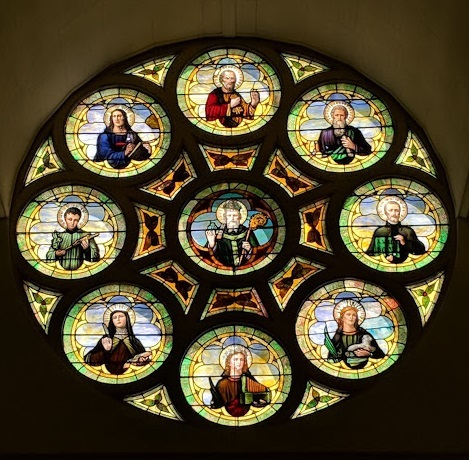 The Solemnity of All Saints is celebrated on November 1, displacing the regular Sunday readings if the date falls on Sunday.
The last day of October is All Hallows Eve, hallows being an older way of referring to the holy ones, the saints. The day after the Feast of All Saints, we celebrate the Feast of All Souls, those who are transitioning from this life to the next.
In all the excitement of celebrating All Hallows Eve, aka Halloween, we often focus more on the transition and scary things about it than on the kind of lives that lead to union with God. Ghosts, witches, goblins, etc. fill the streets in some countries, as children go from house to house requesting treats. Adults happily share treats with them, admiring their costumes and enjoying their delight.
In many cultures, the feast of All Souls is also celebrated with music, dancing, special foods, and other traditions. We easily remember our loved ones who have left this life, but are still very near us in memory. Skulls, skeletons, white painted faces and other activities and traditions make this day fun and exiting too.
Nevertheless, the Solemnity of All Saints comes first. The ideal of sainthood seems far harder to imagine or expect that we might be able to attain. I remember how surprised I was at age 13 to hear our Bishop explain that we are all called to be saints. Granted, some folks have already become saints through their lives and been recognized after their deaths for the holiness of their lives. But all of us are called. And many of those who eventually became known for holiness lived very ordinary lives, sometimes even very scandalous lives before they turned their lives around.
So what is it we celebrate and to what are we called on this Solemnity of All Saints?
We tend to focus on dramatic things, such as the reading from the Book of Revelation about the end of times when a seemingly limited number of people are chosen and sealed as the ones who would stand before God at the end of time. These were those who had “survived the time of great distress” and washed their robes in the Blood of the Lamb. Only a few will make it! There will be great conflicts! Everything will be hard and ultimately, God will prevail! How can we hurry time along so this will happen soon? (Rev 7:2-4, 9-14)
The book was written as an allegory for the challenges facing the Christian community during times of persecution under the Roman empire. We totally misunderstand the images and use of numbers in the readings when we assume only a few will be saved, because we are of a different time and culture . We tend to read ancient words and interpret them literally because we don’t understand their actual meaning.
Yet the book does remind us of something very important. In the end, those who are faithful to the Lord’s call in their lives will ultimately rejoice and live with Him.
But how can that happen?
Jesus told us clearly what kinds of actions and orientation in respect to others and to God are to be ours.
St. Matthew tells us Jesus went up the mountain and sat down. Then he began teaching. This description is a parallel to the way Moses went up the mountain and received the Law from the Lord God there. But with Jesus, he himself gave us the Law we are to follow.
“Blessed are the poor in spirit, for theirs is the Kingdom of heaven.” Self-serving pride is not the key to greatness or acceptable behavior? Oh dear, that’s not what we hear most of the time!
He continues, Blessed are those who mourn, who are meek, who hunger and thirst for righteousness, who are merciful, who are clean of heart, who are peacemakers. (Mt 5:1-12a)
These kinds of behavior are not the ones praised in most societies. They don’t get people ahead of the crowd or make them monetarily rich. They don’t lead to power or influence over thousands of people. They don’t conquer other lands or make others surrender in defeat. How can he expect people to live like that? And if they do, won’t that be a threat to the way we who are powerful or respectable live? Will we have to share our money? Will we have to make sure others have access to food, clothing, housing, education, healthcare? How can we possibly do that, especially for folks from other lands or folks who have had less social and economic help, without losing our own power and position?
And yet, what if we really tried living that way? What if we took Jesus’ words seriously?
On the Solemnity of All Saints, we honor those who did take his words seriously. We recognize them as the holy ones among us and as models for our own lives.
Our Bishop was correct. We are all called to sainthood. Jesus himself told us what is expected and valued by God. We all go through periods in our lives of learning our limitations and becoming less self-centered or proud. If we are open to learning, we grow in wisdom, age, and grace so we will one day become part of the Communion of Saints who now live in union with the Father. Today we are still part of the Communion of Saints living and growing in holiness.
May we always remember how much God loves each human being, including those who are different from ourselves, our families, our friends. May we one day find ourselves called “Blessed” by the Lord.
Peace be with you.
Readings for the Solemnity of All Saints – Cycle A
(Note: the readings are the same for Cycle B and Cycle C as well.)