Pages Menu
RssFacebook
Categories Menu

Posted by on Sep 20, 2007

Saints of the Day – Korean Martyrs

Saints of the Day – Korean Martyrs

Kim Dae Geon (1822 - 1846) Priest & Martyr

If you ever wonder about the power of books, the church in Korea owes its start to them. It is probably unique in this regard. Korea was closed to outside trade and influences at the time. Unfortunately, this is still the case in Communist North Korea, the Democratic People’s Republic of Korea. The Christian books were obtained by Korean scholars from the Korean embassy in China. The first convert Ni-seoung-houn was baptized in 1784 in Beijing, where he had gone to study Catholicism. He returned to Korea and converted many others. Most of these first Christians were later killed in 1791. However in 1794, when a Chinese priest, Fr. James Tsiou, arrived, he found 4,000 Catholics. Subsequent waves of persecution and martyrdom followed in 1836, 1846, and 1867. The martyrdom of French missionaries, in part, led to to a war called the French Campaign Against Korea.

Their stories are compelling. It is especially interesting to see how a sacramental and liturgical church can grow without any ordained clergy. It is even more interesting how they adapted with relative ease to a foreign clergy and developed their own.

Pope John Paul II canonized (designated as saints) the martyrs of 1836, 1846, and 1867 in Seoul on May 6, 1984. The Pope began his homily with Luke 24:26 from the story of the disciples on the way to Emmaus after the death of Christ. “Was it not necessary that the Christ should suffer these things and enter into His glory?” He went on to relate the rest of this story of encouragement and also incorporated a history of the church in Korea. and the testimony of the martyrs.

The faith demonstrated by these Christians, and their statements prior to their deaths, are very reminiscent of the early Church. They should also be a reminder that in many parts of the world today, Christians are still being persecuted. In China, Sudan, and even Latin America, the faith remains something to die for.

Read More

Posted by on Sep 20, 2007

Saints of the Day – Korean Martyrs

Jews and The Passion of Sister Rose

Sister Rose Thering (1920-2006) did her doctoral research on the image of Jews in Catholic textbooks. She received her degree in 1961 from St. Louis University, but her writing would be the catalyst for a significant change. Jews would no longer be labeled the “Christ killers.” The Second Vatican Council would adopt Nostra Aetate (In Our Time), a ground breaking document on non-Christians, including Jews.

Sr. Rose Thering’s research came to the attention of Cardinal Augustin Bea at the beginning of Council in 1962. Cardinal Bea was a major force in ecumenical relations. According to Fr. Eugene Fisher, the issue of anti-semitism came up early in the deliberations of the Council and was one of the last to be resolved. Anti-semitic tracts were submitted to the bishops (the Council fathers) and debunked. Diplomatic pressure came from Arab governments. Finally the issue was addressed in 15 sentences comprising section 4 of Nostra Aetate (In Our Time).

These two sentences strike down any biblical notion of the culpability of the Jewish people:

Even though the Jewish authorities and those who followed their lead pressed for the death of Christ (see Jn 19:6), neither all Jews indiscriminately at that time, nor Jews today, can be charged with the crimes committed during his passion. It is true that the church is the new people of God, yet the Jews should not be spoken of as rejected or accursed as if this followed from holy scripture. Consequently, all must take care, lest in catechizing or in preaching the word of God, they teach anything which is not in accord with the truth of the Gospel message or the spirit of Christ.

It is telling that this passage refers to the Gospel of St. John 19:6, since this Gospel casts Jews in a very negative light ,as do many other parts of the New Testament. This acrimony toward the Jews is part of a larger conflict between the two groups in the emergence of Rabbinic Judaism and Christianity after the destruction of the Temple in 70 A.D. In fact, the tension with the Christian movement regarding observance of Mosaic law and Jewish practice was also intense. Over time, the Hellenistic segment prevailed by sheer force of numbers and their ability to assimilate into the broader Graeco-Roman culture.

The persistence of anti-semitism can be seen in Mel Gibson’s film, The Passion of the Christ. The blockbuster movie followed the basic story line but contained a lot of materials that were the private revelations of a 19th century German nun. Somehow, Jesus, his family, and followers are no longer Jews but Aryans in the hands of alien hostile Jews. This reinforces something worse than a stereotype. It becomes an archetype of the Christian unconscious that structures dreams, perceptions, and ultimately – genocide.

The Jewish feast, Yom Kippur, the Day of Atonement, comes every year as Summer gives way to Fall. As Yom Kippur approaches, Sr. Rose Thering provides an excellent example of going beyond guilt. She opens the door to a new and better day for everyone.

“She was a one-woman wrecking crew,” said Rabbi James Rudin, senior inter-religious adviser for the American Jewish Committee, and a friend of Thering’s for 36 years. “What she helped wreck was 2,000 years of the teaching of contempt which was built into so much of Christian teaching.”

For an in-depth report, see the section in the Anti-Defamation League site on the 40th anniversary of Nostra Aetate (In Our Time) in October 2005.

Sister Rose’s Passion, a short documentary of Sr. Rose’s life and work, was nominated for an Academy Award in 2005. It is well worth seeing.


Read More

Posted by on Sep 7, 2007

To Trust the Incarnation: An Interview with Sara Miles

Editor’s Note: Sara Miles, author of Take This Bread: A Radical Conversion took the time to answer three questions which I felt might be useful to our readers. Very often the organized structures of “religion” are put at odds with those of our personal religious experience or “spirituality.” Many church goers are secure in their routine and not really open to the uncontrollable God. Many spiritual people rejoice in a the delights of a life lived far from the annoying humanity of our neighbors and the concerns of those struggling to get by on the margins. Sara Miles’ spiritual memoir challenges us to go beyond religion and spirituality and to live the Divine Mystery.

Randy Pozos: How would you advise parents and godparents to prepare their children for First Communion?

Sarah Miles: I’m probably not the best person to answer this, as I took my own first communion as an unbaptized adult, at the age of 46. My church, St. Gregory of Nyssa Episcopal Church (www.saintgregorys.org) offers communion to everyone, without exception, believing that Jesus welcomes everyone to his Table — and that his chosen sign was eating with outcasts, sinners, the unclean and the unprepared.

I believe that churches can prepare people to be members of churches; they can catechize children and adults to understand church doctrine and practices. But nobody can be “prepared” for the experience of God, because God is here, right now, making all things new: whether you are ready or not.

Randy Pozos: It seems that in your experience there is a direct, almost tangible, relationship between communion and your food pantry ministry of feeding and being fed by others. How would you encourage others to find and celebrate that transcendent experience of Eucharist in other ministries and occupations?

Sara Miles: Eucharist is a Great Thanksgiving: whenever we pour ourselves out, giving not only to our friends and loved ones but to our enemies and to strangers, we participate in Jesus’ feast, and share a “foretaste of the Kingdom” where all will be united in a heavenly banquet.

The connection between Eucharist and daily life is not mysterious: in fact, the liturgy is a reminder that it is precisely the most ordinary things of our lives (eating, drinking, kissing) that are suffused with God’s presence.

Randy Pozos: As a journalist and author, it seemed that you brought a poetic vision of a reality beyond the common sense experience of bread and wine. How can we engender this sensibility in ourselves and others and be ready for this experience of surprise and wonder?

Sara Miles: There’s a wonderful quote from Rowan Williams, now Archbishop of Canterbury, who says, in an essay on the martyr Etty Hillesum, “A religious life is a material life. Forget for a moment the arguments we might have about the definition of the ‘spiritual’; living religiously is a way of conducting a bodily life.”

To trust the Incarnation is to open yourself to God in the “common sense” experiences of human life. This means inevitably opening yourself to more pain, more suffering– and more joy.

Read More

Posted by on Sep 5, 2007

Saints of the Day – Korean Martyrs

Sara Miles – Food for the Journey

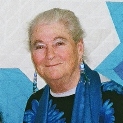
Sara Miles

Sara Miles’ book, Take This Bread: A Radical Conversion, is breathtaking in many ways for the traditional Christian who believes in the Holy Eucharist. Ms. Miles’ story of conversion does not follow the usual pattern of experiencing a call, undergoing instruction, receiving Baptism and being admitted to the Lord’s table. In Ms. Miles’ case, this ancient path is telescoped and reversed.

Ms. Miles experiences a longing and endures a search that begins with a political turned spiritual sojourn in Central America and her love of restaurants and feeding people. Along the way, she meets with her first catechist, a man who would later become one of the Jesuit martyrs of El Salvador, Father Martin-Baro. She finds not only an open door at St. Gregory of Nyssa Episcopal Church in San Francisco, but a communion table that is open to all comers. Her First Communion is a radically transforming experience. It is far from regular bread or even something special, it is, for Sara, the body and blood, soul and divinity of Jesus the Christ.

St. Augustine’s writings total five million words. (That is about 40 books, each with about 300 pages.) Almost none of his writings allude to that most secret of mysteries reserved only to the baptized – the Liturgy of the Eucharist. Those undergoing instruction, the catechumens were dismissed from the assembly after the Liturgy of the Word. In the restored Rite of Christian Initiation in the Catholic Church, this pattern is still followed, but the Mass is far from secret and is often broadcast around the world on television.

Nevertheless, making one’s First Communion is not the usual entry point into the Christian life. For those of us from the Catholic, Orthodox, Episcopal, Lutheran and other churches with a Eucharistic center, the Table of the Lord is closely guarded. The ultimate sanction is be excluded from the community and the heavenly banquet.

Everything about Sara Miles – her atheist family, her support of leftist causes, her lack of a formal degree, her being a lesbian and mother, make her an updated version of the Parable of the Woman Who Loved Much. She is also a woman whom many Christians would like to reject. Then again, we killed the prophets didn’t we?

Miles’ Eucharistic theology is all about feeding the multitudes – literally and spiritually. The food pantry program, into which she dragooned her reluctant fellow parishoners at St. Gregory’s, led to a broader network of food pantries throughout San Francisco. Her faith and her vision made it more than social work. She brought food and companionship to those trapped in the run down housing projects.

Like the rest of us on the path, the way was seldom clear and never easy. Sara Miles is woman of more questions than answers because faith is not about certainty and certainly not about judgment. Her candor is not only refreshing but it is also healing.

Take This Bread is not only well written. It is moving. For all of us who grew up with First Communion as rite of passage and for all who cherish the Eucharist, this book and its author are a bucket of cold water on a hot summer day. In its pristine truth, the Eucharist is all about community and compassion. The transcendent and the sacred is definitely present in Sara Miles’ experience, but it is a love that overflows into feeding each other and finding God not only in the consecrated host but in the host of all the poor and needy in ourselves and in the world.

This is not a book for the faint of heart but those who want to take heart. Do yourself a favor. As St. Augustine was commanded in a vision ,”Tolle, Lege” – Pick this up and read it! Go to www.saramiles.net.

Read More