Pages Menu
RssFacebook
Categories Menu

Posted by on Nov 14, 2021

The End Draws Near

The End Draws Near

There is a saying, “All good things come to an end.” In our daily lives, we experience this again and again. But sometimes, the end turns out to be a transition to something better. Sometimes, it’s just the end of a cycle and things begin anew.

This is the case with the readings for the Thirty-third Sunday in Ordinary Time, the next to the last Sunday of the Church year. We have traveled through the life of Jesus, from the time shortly before his birth through his Passion, Death, and Resurrection. We have heard the stories he told and met the people he met along his way from Galilee to Jerusalem during the three years of his public ministry. Now the end of the cycle draws near and we hear from both Hebrew and Christian scriptures of what will happen in the final days of salvation history. What will happen at the end of time?

The Book of Daniel tells the story of the Hebrew people during their time of exile in Babylon, but it was not written during that time. It was written much later and is an example of apocalyptic literature – literature that deals with end times. This type of literature often arises during times of persecution and suffering. The story of Daniel, a prophet, was probably written during the time the Jews were being persecuted under the reign of King Antiochus IV, just over 150 years before the birth of Jesus. The prophet hears and proclaims the word of the Lord. “At that time there shall arise Michael, the great prince, guardian of your people.” Michael is an archangel, the one who is God’s defender of the people. Michael protects the good people during a time of great distress. These people escape and will shine brightly, leading the multitudes to justice and eternal life. (Dn 12:1-3) It is noteworthy that by this time in Jewish history, the idea of life after death is seen as a reality for the righteous. It was an idea still being debated during Jesus’ lifetime, but it was accepted by large numbers of people and their leaders.

Stones Thrown to the Ground        by Roman Soldiers

Jesus was familiar with the apocalyptic literature of his people and spoke of the coming end of time during his final days in Jerusalem. The Romans were known to tolerate no dissent and no rebellions among the people they governed. Yet there was a continual undercurrent of discontent among the Jews and an absolute refusal to tolerate worship of the gods of other peoples. The coming of a Messiah to overthrow the foreign conquerors and re-establish a Jewish kingdom was eagerly anticipated. People wondered whether Jesus might be that hero and welcomed him to Jerusalem with all the fanfare they would give to a conquering hero returning home. Jesus knew that military might was not the way the kingdom of God was going to come to the world. He continually reminded his followers that this was not the path he would take. One day, after teaching in the temple, someone commented on the size of the stones that formed the building. Jesus responded that the stones would soon be demolished and not one left upon the other. (Around the time this gospel was written, the temple in Jerusalem was destroyed by the Romans following a rebellion by a group of Jews known as Zealots. The people had  been scattered into exile.)

Later that day, Jesus spoke with his friends and warned them that hard times were coming. They personally would suffer because of their loyalty to him. The entire nation would suffer because many others would come later and try to overthrow the Romans. Many would claim to be the long-awaited Messiah, but they would be false prophets and false messiahs. All would suffer as a result.

It is at this point that our reading today picks up (Mk 13:24-32). Jesus speaks of the last days of the world and his return to gather the faithful to the kingdom. He speaks of himself as the Son of Man, a title from the book of Daniel used to name and describe the Messiah.

No one knows when that last day and the return of the Son of Man will occur. Even the Son does not know. But all are to live their lives prepared for that last day to arrive. We are all to keep our eyes open and notice the signs of the times, just as we notice the changing of the seasons

It’s been a long time since these prophecies were first spoken. Many generations have passed, and likely many more will come and go before the end of the world. But the sacrifice made by our High Priest, Jesus, does not ever need to be offered again, according to the author of Hebrews (10:11-14, 18). The reconciliation between God and all of creation has been accomplished. No matter what happens, a new age has dawned. Salvation has come.

We sing with the psalmist, “You are my inheritance, O Lord! … my heart is glad and my soul rejoices … You will show me the path to life … the delights at your right hand forever.” (Ps 16)

Our liturgical year is drawing to a close. The end of days has not yet come. We face many difficulties, misunderstandings, deliberate lies, political divisions, pandemics, and other trials in our daily lives. But this is really nothing new. It has happened again and again in history. May we cling to the promises of our Lord and live in the way he taught us, being peace-makers and healers of division in our world. Very soon we begin a new year as a community. Let us take the remaining days of this year to celebrate  the protection and love of our God and prepare for the coming of the Lord into our lives today and in the days to come.

Read More

Posted by on Oct 31, 2021

Hear, O Israel! A Call Ever Ancient and Ever New

Hear, O Israel! A Call Ever Ancient and Ever New

The ancient world was home to many peoples and traditions. Like peoples today, questions arose in these cultures about how things came to be the way they are. Why does the sun shine only during the day? Why do the seasons change? Why do people do bad things sometimes? Why do they ever do good things? What will happen if nothing changes?

Cultures throughout the world and throughout history have struggled with these types of questions and have developed their own explanations of how things came to be and what is possible. In the ancient world, most peoples explained the physical world they saw around them and the events in their world with stories of gods – supernatural, immortal beings who were responsible for the creation of the world and the major events that affected the lives of humans. Is there a drought? It’s because the god of rain has been offended. Is there too much rain? Might be the same reason. Are we hoping for a good harvest? Then pray to the god of the harvest and offer a sacrifice of something that god likes.

There were many cultures and all had their own gods, with their own names. Yet as people from these cultures met, traded goods, and sometimes fought with each other, they noticed that many of their gods were the same as in the other culture. They realized some of these might actually be the same god, but with different names. It didn’t bother them. Sometimes they welcomed a new deity into their own religious beliefs, especially if that new one offered something new of value to them. Only when one people was conquered by another and the new one demanded that everyone worship the conquering people’s deities did issues arise. Generally, there was simply a sense that gods were active in particular areas and not in others. This was why Abram was surprised to find God present in all the lands he visited during his lifetime. Abram and his family lived in many different lands, yet God was present in all of them.

The Israelites differed from the people of surrounding countries and even of the land of Canaan in which they lived. They believed in a single deity. This deity was not like humans, with wives and children and battles with rival deities. Theirs was one God. Period. End of conversation.

The first reading for the Thirty-first Sunday in Ordinary Time reminds us of this unique perspective of the Hebrew people and its formulation. Moses has brought the tablets of the Law down from Mt. Sinai to the people. God has offered a contract, an agreement, a holy covenant to them. God will be their God and they will be His people. He is Lord (ruler) of all. He can command and they will obey. In return, He will protect them and give them rich harvests and security in the lands they inhabit. (Dt 6:2-6)

Moses speaks powerful words, words that have echoed through the centuries and are recited as part of both morning and evening prayer by faithful Jews. They are even worn in special garments as a reminder. “Hear, O Israel! The LORD is our God, the LORD alone!” This proclamation is known as the Shema. It is known and recited by Jews around the world and throughout history. What follows this first bold statement is a summation of the covenant responsibilities of the people: Love the Lord with all your heart, soul, and strength. This is the first and fundamental requirement of the Law and the Covenant.

The Psalmist sings with love and joy of this relationship with the LORD (Ps 18:2-4, 47, 51). “I love you, Lord, my strength.” He speaks of the LORD as a rock, a fortress, a shield, a stronghold. He praises the LORD for being a savior and bringing victory to the anointed king of the nation.

As a good Jew, Jesus also knew and recited the Shema.

After he entered the city of Jerusalem, he began going to the temple daily and teaching there. The priests, scribes, and elders of the temple noticed his activities and began to speak with him. His reputation had preceded him and many were likely concerned that he would awaken the hostile interest of the Romans, bringing danger to all. Members of various schools of thought among the Jewish leaders and scholars began to question him in the temple. Jesus answered many questions. Sometimes he asked another question instead of answering them directly, because he knew they were trying to trap him using his own words. Sometimes he told a story as answer to the question.

One day, a scribe heard Jesus talking with a group of Sadducees. He was impressed by Jesus’ answer to their questions and his manner of interacting with them. The scribe, a man who had specialized in study of the Law, asked Jesus a simple question (Mk 12:28b-34). “Which is the first of all the commandments?” Jesus responded by reciting the Shema. “Hear, O Israel! The Lord our God is Lord alone!” Jesus recited the entire verse. Then he added a second commandment, taken from the book of Leviticus 19:18, “You shall love your neighbor as yourself.”

The scribe complimented Jesus on his response. “Excellent, Teacher! You are right…” He noted that loving one’s neighbor was much more important in pleasing God than offering many sacrifices. Jesus saw that this scribe was a man of great insight, not focused on the letter of the law so much as on the implications of what it meant. Jesus complimented him in return, “You are not far from the reign of God.” These words echo the belief that reciting the Shema and making its words the fundamental basis of one’s life is really receiving the kingdom of Heaven (of God).

Jesus spoke as one with authority. The author of Hebrews (Heb 7:23-28) describes him as the one whose priesthood is not based on being a descendant of Jacob’s son Levi but rather on an eternal priesthood stemming from the earlier promise God made to Melchizedek, a promise of eternal priesthood. This new high priest, Jesus, is not a descendant of Levi, but as high priest he brings the ancient Levitical priesthood to a close, offering himself to bring reconciliation between God and humanity. He is the son who has been made perfect forever.

You and I are not expected to be perfect. We will never be perfect. However, we too are called to remember the two great commandments. “Hear, O Israel…” We are children of Abraham through our adoption as sisters and brothers of Jesus. God is One. There is no other. We are to love God with all our being and our neighbors near and far as ourselves. These commands are to be written in our hearts and minds and entire being.

How am I doing with that? Am I expecting God to act like I would act when dealing with the challenges and frustrations I face in daily living? Or am I taking time to remember instead that I am to try to love as God loves in response to those challenges? Do I take time to pray each morning? Do I remember to chat with God during the day? Do I say thank you at the end of the day?

Hear, O Israel … and Kathy too!

Read More
Posted by on Oct 10, 2021

Word and Wisdom – The Depths of the Heart

Word and Wisdom – The Depths of the Heart

Suppose God came to you and instructed you to ask for one gift. What gift would you request? You could have anything at all. Lands, power, wealth, recognition, admiration, skill, fame… What would you request?

Solomon, one of the ancient kings of Israel, was confronted with just this dilemma. His response was to request the gift of wisdom and it was granted to him. He has come down in history and tradition as Solomon the Wise.

The author of the book of Wisdom was writing about 100 years before Jesus was born. As is common in Scripture, the author’s words are ascribed to a well-known and respected figure from the past. In the reading today, the Twenty-eighth Sunday in Ordinary Time, the figure in question is Solomon. Solomon is praising Wisdom and begins with the story of how Wisdom came to him (Wis 7:7-11).

Solomon declares, “I prayed, and prudence was given me; I pleaded and the spirit of wisdom came to me.” Solomon could have had greater riches, more lands to govern, heaps and heaps of gold and jewels, but he begged for wisdom. And his request was granted. He was not disappointed, nor did he regret his choice. He tells us, “… the splendor of her never yields to sleep.” Wisdom opens the door to appreciation of countless riches that might otherwise be completely overlooked.

Wisdom is personified as a feminine figure in Jewish tradition and is an attribute of God. Wisdom dwells in the heart of women and men. For Jews of this time, the heart was the center of a person, the very core of one’s being. This is where decisions are made and the place from which actions follow. Wisdom is not based in the head. Reason on its own doesn’t lead to wisdom. Wisdom is born from the heart.

The Psalmist asks, “Teach us to number our days aright, that we may gain wisdom of heart.” (Ps 90:12-13, 14-15, 16-17) This isn’t a request to have everything go well as a sign of the Lord’s favor. The very next statement is, “Return, O Lord! How long? Have pity on your servants!” Clearly, things have not always gone well. Yet hope remains and the psalmist asks the Lord to give what might seem a strange gift, “Make us glad, for the days when you afflicted us, for the years when we saw evil.” How can this be? How does this make sense?

One thing I have noticed in my life is that when all is going well, I don’t learn as much about loving, forgiving, and depending on God as when things have been harder. It’s easy to tell others how to live and what they should do when one has never walked in the same shoes, let alone shoes a couple of sizes smaller and tighter. But once having gone through tough times, it’s much easier to react with compassion to the suffering of others.

God’s work shines through our lives, especially if we keep our eyes open to see it. As the Lord is present and our eyes are open to see, we can notice and rejoice in the gifts received. In times of trouble, we can grow in wisdom if we are open to see.

For the author of the Letter to the Hebrews (Heb 4:12-13), the same divine wisdom is described as the word of God, which is living and has an effect, reflecting the inmost thoughts of the heart. Again, the heart is the seat of our humanity. The word is alive and active and it comes from God. Nothing can hide from the word of God. The reading is short, but very powerful.

So how are we called to live? What is necessary to “inherit eternal life?” The young man in today’s Gospel runs up to Jesus and respectfully asks just this question (Mk 10:17-30). Jesus reminds him of the Law that has come down through the ages from Moses. We refer to this particular part of the law as the Ten Commandments. The young man is a bit puzzled. “Teacher, all of these I have observed from my youth.” Jesus can see his goodness and loves this about him. So he offers him one last challenge, “Go, sell what you have, and give to the poor… then come, follow me.” This the young man could not do. He had many possessions and they held him bound. Jesus watched sadly as the young man walked away.

How tightly do things hold us bound? Jesus speaks of entering the Kingdom of God as being as hard for the rich as it is for a camel to pass through the eye of a needle. This was a reference to a very small gate into the city of Jerusalem. Camels were too tall to enter through the gate without getting on their knees and essentially crawling through. The followers of Jesus rightly noted that such conditions for entry to the Kingdom were pretty much impossible to meet. Jesus agreed that in human terms it would be impossible. This is the reason that God’s help is necessary and wisdom springs from the heart. To the extent that we can hold on to things lightly, letting them go and sharing them whenever the need arises, we can become more like generous children and able to see the Kingdom as it is present around us.

Through the eyes of the heart and wisdom, we approach the Kingdom. How do we, you and I, open our eyes, our hearts, and our hands to allow Wisdom, the Word of God, to fill our being and overflow into our world today?

Read More

Posted by on Oct 3, 2021

In God’s Image and Equal

In God’s Image and Equal

The readings from the Book of Genesis and the Gospel of Mark for the Twenty-seventh Sunday in Ordinary Time are frequently misunderstood or misinterpreted. They deal with the relationship between men and women, as well as the question of marriage and divorce. Little, unimportant topics, to be sure…

Let’s take a look at them in their context and see what they are really saying to us.

The first reading is from the second chapter of Genesis. It’s from the second creation story, which addresses different questions than does the first. In the first creation story, everything comes into being in response to God’s word of command, with humans being formed by God in God’s own image – male and female they were created from the start. They represent the culmination of creation, after which God rests.

The order and manner of creation differs in the second story. In the second story, God made the earth and the heavens, but there was no grass nor were there shrubs, because there had been no rain and there were no humans to till the soil. In this story, God takes the clay mud that is found beside a stream welling up out of the earth. From this mud, God forms a man. The Hebrew words include a bit of a pun. “Man” is adam and “mud” is adama. Into this individual, God breathes some of God’s own breath of life and the adam becomes a living person.

After creating the Adam, God planted a garden in a fertile plain (eden) and placed the Adam there. Plants, trees, and all sorts of wonderful things grew in the garden and the Adam was free to eat of them. The Tree of Life and the Tree of the Knowledge of Good and Evil also grew in the heart of the garden, and of them it was forbidden to eat.

The Lord God realized that the Adam would be lonesome without a companion, so other creatures were created. This is where our reading today picks up (Gen 2:18-24). Many animals were created, and all were given names by the Adam. But none of them was a suitable companion to him. He remained unique and lonely.

So the Lord made him sleep deeply. While he slept, the Lord took a rib from his side and formed it into another person, this one female. It is absolutely significant that the woman was formed from the side of the adam. If she had been formed from his head, it would mean she was superior to him. If from his feet, she would be inferior to him. But from his side, she was his equal.

When Adam awoke, the Lord brought the new being to him. Adam rejoiced because at last, here was a being that would be his equal and partner. He gave her a name too, again a pun. She would be known as Ishsha (woman) because she had been taken from Ishah (her man or her husband). We know her as Eve. Together they would become one unit, one body, and form new families of humans.

Psalm 128 reminds us of the great gift of husbands and wives living together in peace and raising their families. This is a great blessing bestowed on those who walk in the ways of the Lord. The text includes the notion of fear of the Lord. That doesn’t mean fear in the sense of being afraid of the Lord or of being punished for angering the Lord. Fear in this sense is more a question of the awe that comes from something too wonderful to comprehend or take for granted.

During the time of Jesus, there was a controversy in the Jewish community over whether divorce was lawful. Mosaic law allowed a man to divorce his wife, but the grounds for divorce varied, depending on which group of scholars was looking at the question. A member of one of these groups, a Pharisee, asked Jesus his opinion on the topic (Mk 10:2-16). By this time in history, women had very few rights. A man could divorce his wife. A woman had no such option. If she were divorced by her husband, she was returned to her family in disgrace and most likely would never again be married. Her status in society was completely ruined. Who would take a “used woman” for a wife? Without a man, a woman had no social standing and no rights.

Jesus goes back to before Moses for his response. He reminds his listeners that God created humans as men and women and intended them to become one unit, one body. No other human being should come between them.

In saying this, Jesus sort of side-stepped the issue raised by the Pharisee in public. However, his disciples were not satisfied and questioned him later in private. With them, he was much more direct. Divorcing a spouse and marrying another means committing adultery against that spouse. Very importantly here, Jesus places women on an equal footing with the men on this question. He assumes that a woman might also divorce her husband. The caveat is that if she remarries, she too is committing adultery against her former husband!

This is a hard thing. It’s very important today to remember that a wedding ceremony does not necessarily mean a couple are actually married in the deeper sense of becoming a creative, blessing, unit. That’s why the Church is so careful about marriages and the process for entering into a sacramental union. In a true marriage, there is a recognition that God is present in the relationship and the couple minister the presence of God to each other. Shot-gun marriages are not sacramental. Marriage just because a woman is pregnant is often not free enough to qualify. Marriage because a bride-price or dowry has been exchanged already, if one or the other partner is unwilling to enter the union, would not qualify. A marriage in which there is violence or a partner under the influence of drugs or alcohol does not qualify. When these circumstances can be identified, it is ruled that there was no marriage in the first place and the individuals are both free to marry at a later time.

Our understanding of marriage has grown and deepened through the centuries, but many challenges still arise for any couple who commit to living together as a unit, with a bond created by God. Fortunately, we have a much better understanding of human psychology today and a willingness to look deeper at the underpinnings of relationships among men and women of good will.

The Gospel reading continues with a new topic as well – children. People brought their children to Jesus to be blessed. The grown-ups thought that was not OK. Children were to be seen and not heard. They had no real rights and should not be bothering the master. But Jesus thought differently. Jesus welcomed the children and reproached those who tried to keep them away. Children are the model for all who want to enter the Kingdom of God. All must approach God with the openness and joy of a child.

In fact, according to the author of the Letter to the Hebrews (Heb 2:9-11), all who are brought to glory through the leadership of Jesus are children of the Father. Jesus, “lower than the angels” for a brief time, became perfect through suffering, and brought humans with him back to the Father. Jesus calls all of us brothers and sisters.

Created in God’s image and equal, what is our response? How do we react to one another? Whose love do we respect and support? How do we reach out to those whose lives and ways of understanding are different than ours? Are we open to hear of the ways God’s love shines in the lives of non-binary people? Do we respect people of other cultures whose traditions differ from ours? How do we model loving relationships among our peers and with our children and grandchildren?

In October we are reminded to Respect Life. Life in its many stages and forms. Life before and after birth. From womb to tomb. May we accept the challenges of supporting women, children, immigrants, refugees, old people and young people, binary people and non-binary people, and all those in-between.

We are created in God’s image and we are all equal in God’s sight.

Read More

Posted by on Jul 31, 2021

Is It Ever Enough?

Is It Ever Enough?

Who among us has not had the experience of trying to do something special for another person and discovering that what we thought would be gratefully received and appreciated fell short in the eyes of the intended recipient? It might be something as simple as remembering a birthday or as momentous as arranging a trip to a fabulous vacation destination. But somehow, the recipient of our gift does not appreciate what has been given.

In the readings this week, the Eighteenth Sunday of Ordinary Time, we see something of this same sort happening. The Israelites have escaped from slavery in Egypt. They have miraculously crossed the Red Sea, with the entire Egyptian army in pursuit. They have traveled into the Sinai and now, two months after leaving Egypt, they find that food and water are not naturally abundant for a large group of people traveling together in a dry land. One of those DUH! moments. They begin to grumble and complain. At least in Egypt they had enough to eat and drink. They even had bread (an Egyptian invention when ovens were invented and wheat bread developed). Here in the desert, they didn’t know where their next food and water were going to be found.

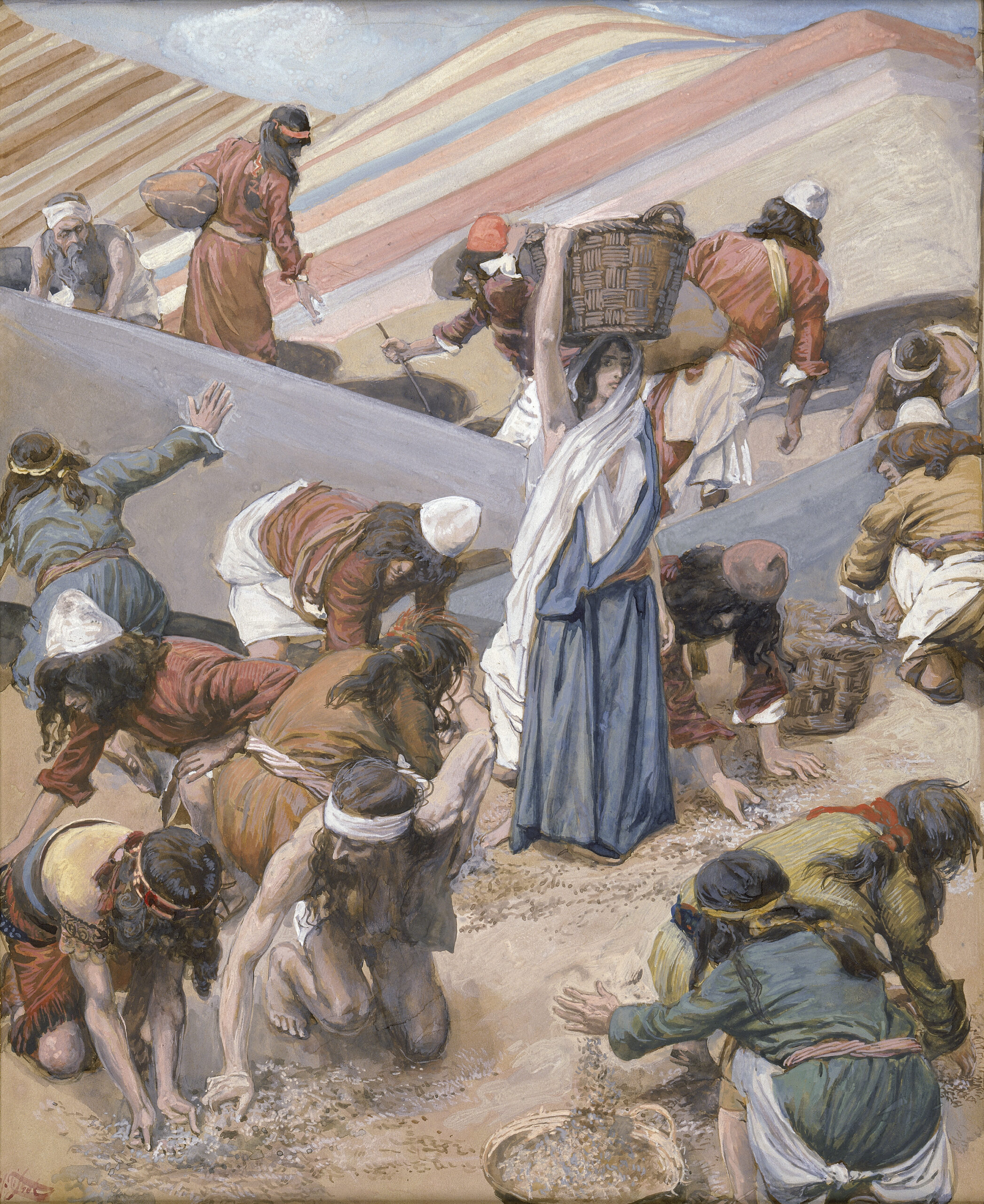
Moses took their complaints to God, who responded by providing manna in the morning and quail in the evening for the people to eat. The manna fell from the sky each morning and the people were instruction to collect just enough for their own family for the day. The same rule applied to the quail which came in the evening for the hunters. Only on the sixth day were they allowed to harvest more than enough for one day, because nothing was to be collected on the seventh day. It was to be a day of rest.

When the manna fell the first day, the people asked, “What is this?” Moses responded, “This is the bread the Lord has given you to eat.” (Ex 16:2-4, 12-15)

This gift of manna in the desert became one of the abiding themes in Jewish culture and history. The psalmist declares, “He commanded the skies above and opened the doors of heaven; he rained manna upon them for food and gave them heavenly bread.” (Ps 78).  The people fed by Jesus out in the countryside came to him when they had returned to the city and demanded a sign before they would be willing to believe that God had sent him to them: “Our ancestors ate manna in the desert…” Jn (6:24-35)

Jesus told those who searched for him in the city that they were to search for food that endures for eternal life, not everyday, ordinary food that spoils. The food that endures comes from the Father, just as the manna in the desert had come from God, not from Moses. The bread of God gives life to the world. Those who eat it will never hunger or thirst.

In this discourse, Jesus tells those with whom he is speaking, “I am the bread of life.” We’re used to hearing folks say, “I am.” “I am happy,” “I am sad,” “I am coming home soon,” etc. “I am” doesn’t mean anything significant in our ordinary speech. But in John’s Gospel, “I am” statements mean something important. This is the name of God. When Jesus says this, he makes clear that he speaks in the power and authority of God. “Whoever comes to me will never hunger” because he himself is the life-giving gift of God.

This new life from Jesus demands a different style of interaction and behavior from those who are his sisters and brothers. (Eph 4:17, 20-24) They no longer live as people who are only looking out for themselves and their own pleasure. They are now part of a community committed to living as members of the Body of Christ – those who eat the Bread from Heaven.

Is this gift from God enough for us? For you? For me? Will we eat of this bread of life? Will we believe and never thirst?

Read More

Posted by on Jul 10, 2021

Kindness and Truth, Justice and Peace – Signs of the Kingdom

Kindness and Truth, Justice and Peace – Signs of the Kingdom

The readings for the Fifteenth Sunday of Ordinary Time (Cycle B this year) begin with an event in the life of Amos the prophet (Am 7:12-15). A priest from the temple in Bethel named Amaziah essentially tells him, “Get lost!”

This might at first glance seem like a clash between the roles of priest and prophet. Anthropologists have noted these clashes in many societies. The priest’s role is to uphold the religious system and offer the necessary sacrifices to the local deity. The prophet’s role is to stand outside the gates and call for changes in the status quo when things get too unbearable for the poor and others outside the favored classes. Once the changes have been made in a society, the priestly class re-establishes a new status quo and all moves forward peacefully again.

To a certain extent this is what we see happening here. But there’s more to it than meets the eye. The Promised Land has divided into two kingdoms. The northern kingdom is known as Israel. The southern is Judah. Bethel is in the northern kingdom which has been quite successful in expanding into lands we now know as Syria and Iraq. The nobles are doing very well personally. The religious leaders are also profiting from the elaborate religious ceremonies, including sacrifices to local gods of the conquered areas. The religious establishment is favoring the ruling class rather than reminding them to care for the poor as well, and that favor is being returned.

Roving bands of prophets move throughout the land, speaking in the style of oracles – using puzzling language and leaving people to figure out what the oracle means. These prophets earn their living as they move from place to place from people who want to know what the future will bring – much like “fortune tellers” today.

Amos is from Judah. He is a shepherd and “dresser of sycamores.” He is not a member of any band of prophets. He is a respectable man who earns a good living from his work. But God called him, instructing him to go to Israel (the northern kingdom) and call the rulers and people there back to the covenant. When Amos obeys, his message is not welcomed and Amaziah tells him to go home!

This might have been the end of the story, but Amos does not back down. He explains his professional background as nothing remotely resembling a prophet and makes it abundantly clear that he has been called by God to deliver the message. The very next sentence he speaks is: “Now hear the word of the Lord.”

The Book of Amos was the first prophetic book in the Hebrew Scriptures. It became something of a template for the prophets and prophetic books that followed, including Isaiah, Jeremiah, and Ezekiel. The primary offense of the Kingdom of Israel? Failure to care for the poor, the widows and orphans, the conquered, and foreigners.

Psalm 85 puts it very clearly: kindness and truth meet, justice and peace kiss. Truth springs from the earth, while justice looks down from heaven. Justice, the right order of things, is based on kindness to each other. Only when the conditions of justice are met can there be peace and salvation.

The letter to the Ephesians (Eph 1:3-14) begins with a reminder of God’s blessings for those called to the community of believers. All things are summed up in Christ, according to God’s plan from before the world was created. We are chosen to be the adopted children of God, through his son, Jesus.

Finally, we see Jesus (Mk 6:7-13) sending out his twelve closest followers two by two to heal the sick and drive out “unclean spirits.” They are not to take anything but a pair of sandals with them on the journey. Their mission is not to the rich. Those who judge the importance of the messenger by appearances only would never give these messengers the time of day! But to those who welcome them and their message of repentance (turning back to God), healing of the sick and deliverance from demons is possible.

Remember, in those days what we know as mental illness was attributed to possession by evil spirits. This is not to say that such spirits don’t exist. They can cause a lot of trouble for any who listen to them. However, healing of the hurts, anger, frustration, and divisions that plague human relationships and can make mental illnesses worse is truly a form of driving out unclean spirits/demons too. When minds and hearts are healed, it can lead to obviously changed lives.

Kindness and truth, justice and peace – all are signs of the kingdom. May they characterize our lives in this coming week and into the years to come.

Read More

Posted by on Jul 7, 2021

God Calls “Ordinary” People

God Calls “Ordinary” People

The readings for the Fourteenth Sunday of Ordinary Time speak to us of the experiences of three “ordinary” people. These three men were seen by their families and communities as just regular folks. No one expected them to be any different than the rest of their group. They would grow up, have a trade or role in the community, marry, have children, grow old, and die – just like everyone else!

But that was not to be. God had different plans for them. Blessedly, these men listened and responded to the call they received.

Ezekiel

Ezekiel (Ez 2:2-5) lived at a time when Israel was conquered by the Babylonians – a people who lived to the east in an area we now know as Iraq. He was a priest in Jerusalem and was captured early in the war. He was taken to Babylonia and no one would have expected anything good to come of that. Yet that misfortune was the start of something special. In Babylonia, the Spirit came to Ezekiel, setting him on his feet and sending him on a mission. The mission? To tell the people of Israel in exile there that God was still their God, despite their refusal while still in Israel to live by the ancient covenant and rules of their faith. He was to speak using very specific language, “Thus says the Lord God!” These words identified him as a prophet – one who spoke the word of God.

A prophet in the Bible is not one who foretells the future. The prophet is the one who speaks the word received from God. Typically, that word proclaimed by the prophet is not one the people want to hear. It calls them back to a life that might seem to be more restricted and controlled. Often the prophet meets great resistance. But for those communities who respond and obey the word proclaimed by the prophet, it can become a life leading to inner peace and to justice in the community and among the nations.

The Psalmist

Does this mean all is well for the prophet or for those who try to follow the Lord’s call? Not at all. The psalmist speaks  in Psalm 123 for those who have had their fill of the mockery and contempt heaped on them by people who have rejected the Lord’s ways. “Have pity on us, O Lord, have pity on us.” Show us your mercy and end this suffering! Enough already!

Saul of Tarsus – Paul

The second ordinary man is Saul of Tarsus. Saul was originally trained as a tent maker, but he had studied the Law and was a teacher in Jerusalem. He sincerely believed the followers of Jesus were unfaithful to their Jewish roots and traditions. They were the kind of folks who got everyone else in trouble – the kind of trouble that led to them being conquered by neighboring nations. Saul set out to arrest Jesus’ followers and root out this dangerous group. But Jesus met him on the road to Damascus and called him personally to go out and tell the world the good news of the Resurrection and the Kingdom of God.

Saul, now known by his Latin name as Paul, set out to do just that. He traveled all over the Middle East and Greece. Eventually he ended up in Rome and died as a martyr there. His letters are some of the first documents we have from the early Church, earlier even than the Gospels.

In today’s reading from his second letter to the people of Corinth (2 Cor 12:7-10), Paul speaks of his weakness. He has received a tremendous gift in the experience of his calling, but he is still an ordinary guy. He battles physical and spiritual weaknesses just like everyone else does. He has asked to be relieved of these weaknesses, but that is not how grace works. The Lord’s gift of life and love works through the weakness of those who witness to him. Paul declares to the people of Corinth and to us, “When I am weak, then I am strong.” The same deal applies to us.

Jesus of Nazareth

Finally, we hear what happened when Jesus went home to Nazareth (Mk 6:1-6). He has had a tremendous experience of being called at his baptism in the Jordan River and the time in the desert. He has seen people healed of physical and psychological ailments at his touch. Yet when he goes home to his family and religious community, no one is willing to believe he should have anything to say to them. He is not a trained, certified religious teacher. He is a carpenter and the son of a carpenter. An “everyday Joe.”

In response, Jesus quotes a traditional saying: “A prophet is not without honor except in his native place and among his own kin and in his own house.” He was unable to work wonders or heal people at home, because they were not open to receive the gift he had to offer.

Prophets in our midst?

We look back on these men and their experience. How easy it would be to say, “I would never do that to a prophet that came to me!” Yet it is all too easy to overlook the gifts of those we love – the ordinary people who come to us with a word or insight that might well help us on our way to holiness.

Let’s pray today that we be open to the prophets in our midst. The ordinary folks who speak God’s word to us.

Photo: Michael and Marjorie Brewer – Two ordinary people of faith

Read More

Posted by on Jun 11, 2018

Entering God’s Presence – Examen First Point

Entering God’s Presence – Examen First Point

Our thankfulness can take many forms, but it is rooted in God’s love for us in the life, death, and resurrection of Jesus and what that means for us. From the earliest times we enter the divine presence in song and dance.

Let them praise His name with dancing and make music to Him with tambourine and harp.
For the LORD takes pleasure in His people; – Psalm 149: 3-4


Responding fully to God’s grace is far from intellectual. It requires a joyful choreography of mind, body, and spirit. What is it like to be fully alive, to be an integrated human being, to praise, reverence, and serve God our Lord? These young dancers give us a glimpse of what this feels and looks like. We see the person fully alive. A little too “young” for you? Remember, just sitting in your chair and moving with music evokes all of those wonderful physical and emotional movement of the dancers in your own body and soul. This is the basis of culture, society, and dance therapy.

Okay. So how about something more traditional?

Entering God’s presence is not a “head trip.” It is a leap into the profoundly unknown and unknowable. Come, enter the dance!

Read More

Posted by on May 14, 2018

Mystagogy: A Journey with the Holy Spirit into Deeper Faith

Mystagogy: A Journey with the Holy Spirit into Deeper Faith

Mystagogy is the fourth and last stage in RCIA (the Rite of Christian Initiation for Adults). The term comes from the Greek for “secret.”  The reason this term is appropriate for Christianity is that the tradition understands much of its focus as being on the supernatural. By definition the supernatural is often not known nor experienced through ordinary reasoning or empirical interaction. During the time of Mystagogy, RCIA neophytes are called to deepen their experience of the Sacraments (or Mysteries) received at Easter and to understand them. The sacraments are a primary encounter of Christians with God and thus events with an ineffable dimension.

This time after the Easter Sacraments therefore includes opportunities for experience, reflection and learning.  The most important goal is that neophytes grow in closeness to God. The second goal is that they know the joy of sharing their faith in the community of the Church. Neophytes are then encouraged to reach out eventually to those not part of the church community.

For new Catholics, the Eucharist, a mystery itself, is the model and the means of why and how one can live the life of a new creation. In the Eucharist, Jesus gives himself to believers in a humble and personal way and models the self-giving and purest kind of love that happened at the Crucifixion. The Eucharist transforms and empowers recipients to live a life that is full of the kind of love we see in Jesus. As they are fed, they can go out and feed others.

This new life is not something one can read about and just do. It is not a skill. It is a relationship. As a living relationship with God, it takes time. This relationship grows through the reception of the sacraments, prayer, and doing service. The period of Mystagogy is the beginning of what St. Paul calls “putting on Christ.”  (Romans 13:14)

After the intense months of RCIA, it can be a shock for new Catholics suddenly not to be a part of a group attending the liturgy and practicing prayer, learning, and reflection. Many people involved in RCIA teams, as well as new Catholics, feel that Mystagogy, which usually lasts a month to six weeks, is not nearly long enough. Some parishes have RCIA programs that run one and one half years to two years. Other parishes encourage RCIA graduates to join Bible studies, prayer groups, adult religious education, parish retreats, and ministries within the parish community.

In the end, Mystagogy and the ensuing Christian life are a matter of trust. God lives in our depths and graces us in unseen ways. We often do not know exactly where we are going in life, but we know that Jesus is with us. During Mystagogy, the New Christian is led by the Holy Spirit deeper into God and the life of faith, both a matter of intellectual knowledge and unfathomable mystery. It is the beginning of a great adventure.

Read More

Posted by on May 9, 2018

Mystagogy: A Journey with the Holy Spirit into Deeper Faith

“It is Time for the Lord to Act”

“It is time for the Lord to act.” These words proclaimed by the deacon to the priest in the Eastern Catholic and Orthodox churches just before the beginning of the Divine Liturgy (known as the Mass in the Roman Catholic church) tell us something important about God’s participation in human life. The word for time used in this statement is “kairos,” meaning the perfect or decisive moment in which conditions are right for something very important to take place — a time when God acts. The beginning of a Eucharistic celebration (Mass or Divine Liturgy) is one such time.

In a very real way, the celebration of the Rite of Initiation of Christian Adults (RCIA), culminating at Easter Vigil with Baptism, Confirmation, and first reception of Communion, is a series of kairos events in the life of believers.

In Roman Catholic tradition, we have baptized infants and children for centuries. Most members of the church have no memory of their baptism. First Communion, around the age of reason, is more commonly remembered. Confirmation, when received in adolescence, is remembered more clearly. Nevertheless, the three Sacraments of Initiation are designed to be received at the same time. In fact, since Vatican II, the Church has asked dioceses around the world to re-unite them, including with the initiation of children. This is the practice in the Eastern churches.

But children are not the only source of new Christians. Adults have always come to the Christian community and asked to be admitted to membership. The process of instructing and welcoming new members has taken many forms over the 2,000 year history of our community. Since Vatican II, returning to the tradition of the early Church, the RCIA has been the way we have welcomed new believers.

This year at Easter Vigil, as we again lit the new fire and blessed the waters of baptism, we welcomed our new sisters and brothers by plunging them into the newly blessed baptismal waters or pouring the water over their heads. We have anointed them with chrism, the oil blessed by the bishop during Holy Week.  Chrism is used to anoint the hands of priests, the heads of bishops, the altar and walls of a church, and the newly baptized. In Confirmation, it is also used to anoint and strengthen the new Christian, bringing the wisdom and strength from the Holy Spirit to witness to the presence and activity of God in all creation. Finally, we complete their initiation by sharing the very Body and Blood of our Lord with them as food for the day-to-day journey of faith.

Such a lot happens in a very short time! It’s far too much to fully comprehend in the moment. It will take a lifetime to ponder and experience the growth and flowering of the seed brought to birth at Easter Vigil – the new life of faith and community of travelers on the way in God’s kingdom.

The newly baptized ideally are continuing their journey in a time of sharing and learning known as mystagogy – a time of awakening in the Spirit and entering ever more deeply into the mystery. Common reactions/experiences of those who have newly received these sacraments include a hunger for scripture, a desire to learn more, a longing for community and sharing, an urge to step away to pray and ponder what they have experienced, excitement, wonder, and joy. Eventually, they may also experience a quieting of the initial excitement, a sense of God not being so close anymore, disillusionment upon discovering the “warts” or “clay feet” of other members of the community. All of this is normal. It’s all part of the journey of faith.

Jesus’ disciples and friends did not fully understand what happened in that Kairos moment of Easter and resurrection. Two thousand years later, we still cannot explain it. God acted in a decisive way, defeating the power of death and separation between God-self and humanity by becoming one of us and experiencing human life fully. Now it is our turn to enter, as members of the Christian community, into the life of the Trinity. It is a journey of a lifetime, lived step by step by the baptized.

Welcome, Sisters and Brothers to this amazing journey. Our thoughts and prayers are with you. We look forward to learning from you of the wonders our God is doing in your life and we promise to share with you the wonders we have seen. The Kairos moment has come into our lives. Christ is Risen! He is truly Risen!

Read More

Posted by on Dec 8, 2017

Mystagogy: A Journey with the Holy Spirit into Deeper Faith

Liturgy – A Flunk Proof Quiz – well almost ;-)

Most of us think of liturgy as something that happens inside the Church building.  Here’s a short quiz. Don’t worry because we will tell you the answers. It’s easier than making rock sculptures at the beach and there are no smashed thumbs. (Really.)

Question 1: Liturgy is the “work of the people.”

  • True
  • False
  • Maybe both
  • Don’t know

Generally, we look at the Greek word “leitourgia” which referred to a public event or ceremony put on by the local population. People would worship various gods, offer sacrifices, or worship the emperor with parades, games, and feasting. ACTUALLY, our worship happens to us as Christians when we allow ourselves to get caught up in the life of the Trinity.

Question 2: The liturgy is the Mass.

  • True
  • False
  • I wonder
  • I think that there is something else

Well… Liturgy usually refers to the official worship of the Church. This includes the Mass and the Sacraments, as well as the Liturgy of the Hours, also known as the breviary or the office.

Question 3: Everything else is private prayer and is not “officially” Liturgy.

  • True
  • False
  • Used to be true
  • The times they are a’changing

This diagram shows how we generally think of the liturgy and other prayers or ways that we connect with God.

Taking a closer look at Vatican II’s teaching on the liturgy in Sacrosanctum Concilium, we find a broader understanding of Liturgy as something more than the Mass and the Sacraments. Liturgy is more than focusing on all of the little red marking in the margins of the book that tell you how to perform the ceremony.  Liturgy is the encounter with God who is the source and summit of our life. This obviously happens in the Mass and the Sacraments. But we also encounter God in our lives and the prayers and devotions we say in church, at home, or in public – like saying the rosary, lighting a candle, or saying grace before meals. We also encounter God in nature and exploring the stars. Since our life in the Trinity is one continuous whole we experience a liturgy of life.

Question 4: Liturgy pervades my life since I am part of the Body of Christ and caught up in the Spirit.


  • All of the time.
  • Some of the time.
  • Not if I am clueless.
  • Only if I let it.

In the same way, the Spirit helps us in our weakness. We do not know what we ought to pray for, but the Spirit himself intercedes for us through wordless groans. And he who searches our hearts knows the mind of the Spirit, because the Spirit intercedes for God’s people in accordance with the will of God. (Romans 8:26-27)


Read More

Posted by on Oct 3, 2016

Finding God in All the Wrong People – A Look at the Emerging Church

Finding God in All the Wrong People – A Look at the Emerging Church

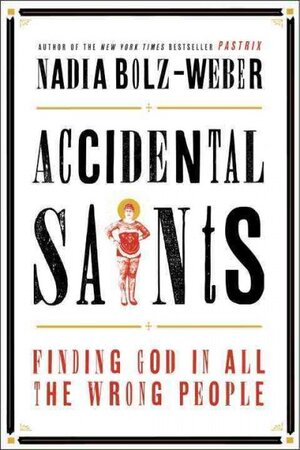
Accidental Saints


Seeing the Underside and Seeing God: Nadia Bolz-Weber with Krista Tippett at the Wild Goose Festival from On Being on Vimeo.

Nadia Bolz-Weber is a Lutheran Minister who is described as “not your mother’s minister.” This is a marvelous interview with the woman who is the pastor or “pastorix” as she jokes of the House of  Sinners and Saints in Denver. Raised in the Church of Christ with no drinking, dancing, and no instruments in church Nadia has gone through many years of addiction and stand up comedy. In her Denver church,  she has incorporated the four part a capella singing of her childhood and focuses her preaches on the ongoing death and resurrection of Christians.

Before meeting her husband she had not found a Christianity with a care for the poor and a liturgy. Her getting clean and sober she describes as a “completely rude thing for God to do.” In Lutheranism she discovered a long articulation of belief that she “did not have to get rid of half her brain to accept.” She found an emphasis on God She doesn’t feel responsible for what her congregants believe but she feel responsible for what they hear and experience in the preaching and in the liturgy. they are anti excellence but pro participation. She calls her liturgy “high church and tent revival.”

For a fresh take on traditional Christianity in contemporary language enjoy this interview.


Read More

Posted by on Apr 4, 2016

Mystagogy: A Journey with the Holy Spirit into Deeper Faith

Visited by an Angel – The Annunciation

The Annunciation - Henry Ossaw TannerGabriel’s visit to a very young woman in the small town of Nazareth was a momentous event, though mostly unnoticed at the time. Gabriel is the archangel tasked to serve as special messenger of God. On this visit, the message was actually a request: will you consent to become my mother? It wasn’t exactly phrased this way, according to the narrative we have from St. Luke, but in essence that was the question. Gabriel told Mary that she would bear a son who would be the Son of the Most High and would sit on the throne of his father David (as in King David), rule over the house of Jacob forever and have an unending kingdom. (Lk 1:26-38)

Now this would be challenging even to a married woman, but this young woman was not married. In her culture, having a child out of wedlock could result in death by stoning. At best, she would be shunned and excluded from polite society. Yet Mary had the courage to ask for more details about how such a thing could happen and to listen with deep faith to the response. Then she answered “yes,” Jesus was conceived, and God’s plan for salvation could go forward.

Christians have celebrated the Annunciation for centuries. Typically, the feast is scheduled for March 25, exactly nine months before the celebration of Christmas. However, in the West, when March 25 falls within Holy Week or the first week of Easter, the feast is moved to Monday following the Second Sunday of Easter (now known as Divine Mercy Sunday).

As adults we celebrate many events such as the Annunciation with prayer – Liturgy of the Hours, Mass, the Angelus, etc. However, for children, these ways of celebrating are not always experienced as much fun. So, with that in mind, I’d like to suggest an alternative way to celebrate: Make Angel cookies!

To make Angel cookies, take any recipe for a cookie that allows rolling out the dough and cutting out a cookie. (Even brownies could be used for making Angel Cookies if time is short.) Use an angel shaped cookie cutter to shape the cookies before baking. Be sure to decorate them with frosting/icing or with some  kind of “sprinkles” of colored sugar to make them festive. Then share them as part of a festive meal. Light a candle, have a special drink, use nicer dishes than normal, have a food that is a treat for your family — any or all of these things will make the day special for the children and family who share them.

As you share this day, keep your ears open for the voice of angels in your life. God’s messenger still comes, though perhaps not as momentously as in the visit to Mary. What is God saying to you and me today?

Peace.

Read More

Posted by on Nov 18, 2015

Mystagogy: A Journey with the Holy Spirit into Deeper Faith

A Prayer for Our Times


Gift of Flowers

God of Love, whose compassion never fails,
we bring you the griefs and perils of people and nations,
the pains of the sick and injured,
the sighing of prisoners and captives,
the sorrows of the bereaved,
the necessities of the homeless,
the helplessness of the weak,
the despair of the weary,
the failing powers of the aged.
Comfort and relieve them, O merciful Lord.
Amen.

St. Anselm of Canterbury

Read More

Posted by on Aug 20, 2015

Mystagogy: A Journey with the Holy Spirit into Deeper Faith

St. Ignatius’ Teachings on Creation and Care for Creation

Vision at River Cardoner - Saenz de Tejada - Jesuit InstituteWe know from the Spiritual Exercises of St. Ignatius and from his autobiography that the physical world was very important to him. In the opening to the Spiritual Exercises, in the “Principle and Foundation,” Ignatius describes his cosmic understanding of all created things as having as their end the “praise, reverence and service of God.” Nothing in creation including the human has been created as an end in itself but rather for union with God. Humans are to seek involvement with created things to help them know and love God. In this context, humans cannot exploit anything for their own ends. The criteria of how anything created can help us praise, reverence and serve God are the standards by which we choose to be in relationship with them. Ignatius taught this understanding of creation and the point of human life as the only way to happiness. So, human desires and actions are within a cosmic context, not a narrower anthropocentric context. That would be at odds today with many world leaders who see the relationship of humans to the physical world as one of survival of the fittest or as one of “trickle-down” benefits of the exploitation of environmental resources to the least powerful groups in society.

Ignatius was also aware of the goodness of created things (cf. Genesis 1). He whole heartedly supported the Dominican religious community in preaching against the heresy of Albigensianism, which denigrated the human body and earthly creation. From the time of his conversion at Loyola to his later years in Rome, Ignatius often spent time in the evening looking at the sky and the stars, which he found very consoling (A Pilgrim’s Journey, Tylenda, Ch.1, Para. 11). An illuminative experience Ignatius had that lasted eight days took place as he sat and contemplated a river (the Cardoner). He was not a strictly urban person. Growing up in his native Basque Country gave him a soul for God’s beauty in nature.

For Ignatius the mis-use of anything was poor discernment, if not sin. After his extreme fasts and the harm they did to his body, Ignatius began to understand that it was surrender to God’s will that mattered, not showing God how fervent one is. (Prin. and Fdn.) Therefore, harming the body was not proper if it was a distraction and led one away from being able to serve God. Ignatius allowed for martyrdom, but it was not something to seek. He was very careful to observe the devotions of novices to make sure that they were not fasting to a point that they harmed their health or fell into vainglory for doing extreme practices.

In the Spiritual Exercises, in the Call of the King and Two Standards contemplations, Ignatius makes it clear that ego, control, power, greed and status are not part of God’s kingdom. Everything comes from God. And, if we stand under Jesus’ banner we will seek to be like him: generous, humble, obedient, truthful, compassionate, and loving. The contemplations on the Incarnation, the Three Classes of Persons and the Three Degrees of Humility all express a profound sense of gratitude for the goods of the earth and the love of God, who is the divine majesty of all, for us.

Ignatius did not write separately of reverence for the environment. It is part of his vision of God as Creator and we as beloved children who are part of creation. His rejection of manipulation and exploitation of any aspect of creation is a rejection of selfishness with the earth and with each other. Ignatius believed that if one practices the daily Examen (or daily General Examination of Conscience) (Sp. Exer. Sect. 43) s/he will see how time, people and resources are used to praise, reverence and serve God. When people practice the Examen or any process of serious and humble reflection they come to see the need not to impede the proper purpose of any created thing. They can also surrender to God’s will for them and move to become the persons they were born to be.

Image: “The vision at River Cardoner (Manresa)” by Carlos Saenz de Tejada, used with permission

Read More