Pages Menu
RssFacebook
Categories Menu

Posted by on Apr 26, 2026

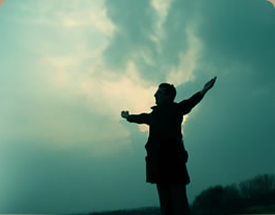
Shoe-d Away or Welcomed In?

Shoe-d Away or Welcomed In?

We always had dogs when I was a girl and there were many individual quirks that distinguished each of them. One did not like my Grandmother. Another disliked my Aunt. We knew what had caused the issue with Grammy, but none of us was ever sure what my Aunt might have done to make the dog believe she was an enemy. Regardless of the reason, he was absolutely convinced.

She lived in another town several hours away, so he didn’t see her often, but he always barked ferociously when he saw her and moved to guard the door of the house to prevent her entry. As a result, she usually simply came in through the front door rather than the back. It was just easier on the dog and the rest of us that way.

One day, she was in town for a gathering at the home of another family member. She had traveled several hours that day to get there and was tired, so she left earlier than the rest of us did. When we stopped to think, we realized she didn’t have a key to the house, so how was she going to get in?

We hurried home and found the lights on inside the house and the dog loose in the backyard. He had been locked in the kennel when we left, so he wouldn’t go over the fence and take an unsanctioned walk for a bit before we returned. (He had no hesitation about going over the fence when it seemed urgent to him. He also knew how to open the latch on the gate, but that’s another story.)

We went into the house and asked my Aunt how she had gotten in past the dog. The key, after all, was kept inside the locked kennel. She laughed and said, “I shoed him out!”

We all heard shoo-d (past tense of shoo) and were confused. What would shooing a barking, angry dog do that would allow her to get past, retrieve the key, and get safely into the house? But that wasn’t the word she used. It was shoed, but not in the sense one would use to describe putting a shoe on a horse. She explained that she simply picked up the tennis shoe that he loved to chase and retrieve in a game of fetch and tossed it to the far corner of the yard. She stepped into the kennel, got the key, and went into the house before he returned and realized what had just happened. We all had a good laugh at that. She had shoe-d the dog.

I find myself remembering this story as I reflect on Jesus’ description of himself as both shepherd of a flock that is protected in a locked, gated sheepfold and as the gate himself. He reminded his listeners that the shepherd enters and leaves the enclosure through a gate, opened by a gatekeeper. The sheepfold has sheep from many flocks, but his sheep recognize his voice and, reassured by his presence, follow him out the gate and into the pasture for the day. Each sheep has a name and is known to the shepherd, who uses the name to call the sheep to come along. Anyone who doesn’t have the key or the gatekeeper’s permission to enter must find another way in. Thieves come in over the fence, not through the gate. The sheep do not voluntarily come to the thieves and follow them.

A bit later, Jesus adds another layer to the image. “Amen, amen, I say to you, I am the gate for the sheep.” “Amen, amen…” We might phrase it as, “Listen up, guys, this is important!” Jesus is not only the shepherd. Jesus tells us he is the gate through which those who follow his call will enter and leave the sheepfold to go out to the pasture for the day, before returning to its safety for the night. (Jn 10:1-10)

As a good shepherd, he comes to bring abundant life to his sheep, unlike the thieves who steal them in order to kill and eat them.

Our challenge is to hear and recognize the call of this Good Shepherd in our lives. We hear so very many voices, many of which sound very rational and reasonable. Nations and peoples are described as enemies who can never be trusted. Former allies are criticized and insulted. Bombs are dropped and children are killed. It seems like the world has gone mad, made to dance like a puppet in the hands of a mad puppeteer.

Which voices are we to trust? Which people are the dangerous Aunt who must not get past us in our role as guard dogs? Are they really dangerous? Do they throw a shoe for us to chase, so we forget we don’t like or trust them? Or do others who want to fool us throw the shoe, so we won’t notice what they are doing? Are they trying to “shoe” us?

As we celebrate Good Shepherd Sunday, let’s keep our eyes and ears open to hear the voice of the Lord, our Shepherd, calling us to be kind and gentle with those we meet, and to be careful not to judge or jump to conclusions about the intentions of other people, especially those whose ways are different than our own. Let’s be hopeful, knowing that we and the rest of our human brothers and sisters are also loved by God and called to relationship with each other and with our divine Father, our brother Jesus, and the Holy Spirit, the Holy Breath of God, our sister Wisdom. Let’s not get distracted by that “shoe,” whatever it is.

In the Kingdom of God today, here and now as well as in the future, will we be shoe-d away or welcomed in as we welcome others to come with us? Which will we choose?

Readings for the Fourth Sunday of Easter – Cycle A


Read More

Posted by on Apr 12, 2026

One Wave at a Time – Love Flows

One Wave at a Time – Love Flows

I stood on a cliff beside Monterey Bay one afternoon and watched the waves coming ashore. It was a relatively calm day, the big storms were a day and a half away yet and the ocean was peaceful. Wave after wave came ashore, washing up over the rocks at the base of the cliff and the seawall built a few years earlier when waves from a very strong storm had washed away much of the cliff and threatened to take the road along its edge too. Now it was all peaceful.

The waves came in, broke gently on the rocks, and retreated back into the Bay. Another set came in gently, broke on the rocks, and retreated once again. The process continued long after I walked on along the path. The waves came in, broke on the rocks, and returned to the deeper water.

Was it the same drop or molecule of water each time? Not any easy way to know the answer to that one. Any particular molecule of water might come in and out innumerable times and I would never be able to see any difference in the picture of the waves coming and going. Yet there is no reason to assume that every drop of water might not eventually have a chance to come in and kiss the rocks at the shore. The ocean has been here for a very long time! And so has the shore, though it changes more frequently.

And there’s the lesson for us who have such short lifespans in comparison to the water and shore. Each time the water comes to the shore, its kiss softens the rock against which it meets with a bump. Some bumps are soft and gentle. Others are fierce and strong, tearing at the very foundation of the cliff. Either kind of wave contributes to the change in shape of the shoreline. Even the very gently touching waves change the shape of the shore by softening and washing away a tiny bit of the rock each time they touch. Just so, each time we act with kindness and gentleness, the rock of pain and suffering born by another person is touched and softened. It’s rarely a dramatic event, but over time, change happens.

On the Second Sunday of Easter, we celebrate Divine Mercy. The merciful love of God might be compared to the ocean. It is, of course, even bigger than the ocean or anything else we can imagine, but stick with me and the image anyway for a moment.

God chose to become one of us in Jesus of Nazareth, to share everything we humans experience, including betrayal at the hand of his friends and a painful death. The wave of divine love washed up on the shore with a kiss of gentle love and healing for those whom Jesus met in his life. Then it washed back out to the great sea, finding strength and perseverance through times spent in prayer. Even in the garden the night before he died, Jesus stepped back to find the strength to continue to move forward, sharing  and witnessing to the love of the Father. He died trusting in the Father’s love as his mission was finished.

But God wasn’t finished yet. Just as the ocean keeps sending waves to wash up on the shore, God didn’t stop. Death could not destroy the one who is Love any more than the shore can stop or hold the waves. Jesus rose from death and returned to continue his mission through his friends.

On the evening of that first Easter, Jesus’ friends were locked away, hiding from the authorities, afraid they might be the next ones to face death for having been his friends. They were also embarrassed about having denied or deserted him when he was arrested.

Without warning, he was there among them. The first words he said were, “Peace be with you.” He didn’t scold them or make them feel bad about having failed. He spoke words of healing and love – “Peace be with you.” And then, St. John tells us, he passed his commission from the Father on to his friends. “As the Father has sent me, so I send you.” And to give them the strength and ability to carry the mission forward, he breathed on them, sharing the Holy Spirit with them and giving them the authority to forgive sin. (Jn 20:19-31)

The unlimited ocean of Divine Love would now continue to touch the shores of human worries, fears, pain, and failure with the joy and peace of forgiveness and healing. More little waves would begin to wash up against the rocks of anger, fear, pain, and loss in their communities, softening the hardness to allow them to float in a love that wants to surround and carry them forward.

The community of believers grew as the word was shared and their lives attracted others who would share in the work of caring for each other and those in need. (Acts 2:42-47) The example of their lives and service would speak louder than words through the centuries. Sometimes people forgot the importance of living in humble service and tried to impose their ways on others. In the long term, that never works well. The example of those who instead trusted the presence of that great ocean of Love as they washed up against the hardened rocks and hearts are long remembered as we see the fruits of their labor within our communities and world.

As we move through these weeks of Easter, may we remain open to being a small part of that ocean of love that fills and sustains our lives and our world. May we be willing to be gentle rather than violent, hopeful rather than despairing, sharing rather than scrabbling greedily for the riches of the world, healing rather than wounding.

Each of us has multiple opportunities to be the face, voice, and hands of the Lord each day. I pray that we hang onto this calling as it seems the world around us grows colder and crazier each day. The ocean sometimes rages, but the raging of the ocean of Divine Love, the Lord, is an even stronger experience of love and healing than what we know in ordinary life. It is not destructive. It builds up stores of hope and joy that are stronger than anger or fear. These moments of encounter with the power of Love, sharing in the experience of Jesus’ friends on the first Easter, give us the strength and courage to become part of the little waves that will change our lives and our world.

Let’s keep our eyes, ears, and heart open to become a part of this marvelous adventure.

Easter peace and joy be yours.

Readings for the Second Sunday of Easter – Divine Mercy Sunday – Cycle A


Read More

Posted by on Mar 22, 2026

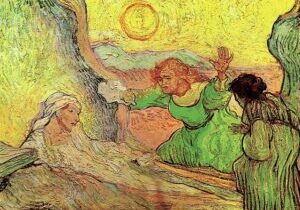
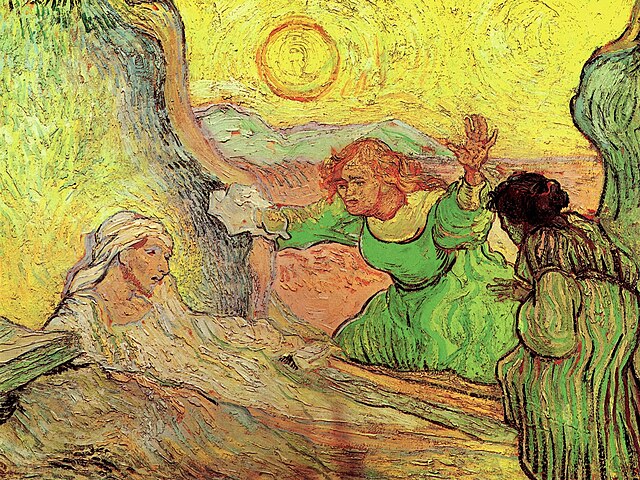
The Raising of Lazarus

The Raising of Lazarus

Jesus had close friends beyond his inner circle of the apostles. Martha, Mary, and Lazarus were friends who lived in Bethany not far from Jerusalem.

We know of an earlier time when Jesus had come to visit, and Mary was intently paying attention to Jesus while Martha was trying to get things ready for dinner and needed her sister’s help. I think that we can all relate to having company over for dinner and having family members duck out, leaving you with the whole project. Most of us can remember times when we were young and a brother or sister ran out to play instead of helping with the dishes.

At the time of Jesus, and even today, women are supposed to take care of the men and to be seen but not heard, as if they were children. This continues to be the pattern in the Middle East and most parts of the world. Even in the United States, women are often told to be submissive to their husbands, referring to St. Paul’s letters to the Ephesians (5:22-24) and to the Colossians (3:18). These passages also tell us that men should willing die for their wives. However, this has never been popular with men. As men, we usually ignore it. St. Paul’s message is that husbands and wives are equal in status. They should be submissive to each other and show mutual respect.

So, here is Mary who wants to be with Jesus, and she is breaking two rules. She is not helping her sister, and she is sitting at the foot of the Master with the men. When Martha complains, Jesus does not tell Mary to be a good “little lady” and return to the kitchen. He tells Martha that Mary is doing the better thing. He is implying that breaking these social norms and living on the teachings of the Master are greater nourishment than the food that is being prepared.

Martha, Mary, and Lazarus were his friends and he loved them deeply. It isn’t particularly obvious how deeply until Lazarus dies. Jesus knows that his friend is sick. He knows that the time is limited. His disciple Thomas, whom we know as the doubting Thomas, is as rational and practical as ever. Giving voice to what everyone is thinking, he says that it is suicidal to leave Galilee and return to Judea. All too recently, they had to flee when their lives were threatened. But if the Master is going to go back to Judea, particularly to Bethany, which is so close to Jerusalem, Thomas shows his loyalty and says that they should all go with him to die.

We see the pictures, the statues, and the stained-glass windows and we forget that Jesus and his friends were real people. Yes, he was their teacher, their Rabbi, but he was not lecturing to students in a class called Salvation 101. They were his followers, but he was willing to die for them and for us. They all said that they would die for him, but they disappeared when he was arrested. They did give their lives later, but not when he was the one arrested.

We worship a God who is not a distant powerful entity. We enjoy a special and deep friendship. We are in Christ and Christ is in us. This incredible friendship is something we celebrate when we enter a complete communion, when we receive the Holy Eucharist.

Lazarus is dying but Jesus does not get on the next plane. He doesn’t get in his truck and drive through the night. He waits for two days and tells his disciples that the glory of God will be revealed so that others might come to believe and to see Jesus for who he is. He says something about being able to walk in the day and to stumble at night. The light of God’s glory will banish the night and show the way to salvation. But what does that mean in practice?

Still, Jesus is upset. He is grieving. If he knows that he will raise Lazarus, why is he upset? He knows his friend is dead and that fact swallows him just as it swallows us and throws us into sadness and tears. He says that this is all for a purpose. That there is a reason. He trusts in His Father and knows that His Father will give him anything that he asks for. But his walk into the danger of Judea is not a happy one.

Martha comes out to meet him and does not criticize him. She utters a deep act of faith. “Lord, if you had been here, he would not have died.” When Jesus says that Lazarus will rise again, Martha agrees, saying that Lazarus will be raised on the last day. But that is not today!

Jesus said to her, “I am the resurrection and the life. The one who believes in me will live, even though they die; and whoever lives by believing in me will never die. Do you believe this?”

“Yes, Lord,” she replied, “I believe that you are the Messiah, the Son of God, who is to come into the world.”

Now we would think that the mood should change. Yet despite Martha’s profession of faith, they stand there in their grief. Mary comes out to join them. She repeats her sister’s lament. “If you had been here my brother would not have died.” Everyone is in tears and Jesus asks Mary

“Where have you laid him?” As he follows her and the mourners, he is overcome with grief and he cries. It is so obvious that people remark, “See how he loved him.”

Jesus’s friend had died. When they get to the tomb, he wants them to roll the stone away, but Martha objects, seeing it as the act of a grieving friend. She warns him that the body has already started to decompose after four days. But on his command, they roll the stone away and Jesus at the top of his voice tells his friend to come out.

And the glory of God is revealed. Jesus is the way the truth and the life. But the glory of God is revealed in the suffering and grief of friends. Tears run down the face of the Master as they approach the tomb. It is not a confident triumphant procession to the tomb.

Jesus suffers with us in our deep losses – losses of our parents, our spouses, or the unbelievable pain of losing a child. As we get old, the news comes more often. A friend, a relative, a co-worker has died. We go to more funerals than weddings and anniversaries.

Jesus does not stand aloof at a safe distance. We are his friends and he weeps for us and with us in a deep communion. We do not walk this road alone. We have our close friend and companion even in the worst of times right there beside us. (Jn 11:1-45)

Jesus said to her, “I am the resurrection and the life. The one who believes in me will live, even though they die;  and whoever lives by believing in me will never die. Do you believe this?”

 “Yes, Lord,” she replied, “I believe that you are the Messiah, the Son of God, who is to come into the world.”

Do we believe?

Readings for the Fifth Sunday of Lent –  Cycle A

Read More

Posted by on Feb 21, 2026

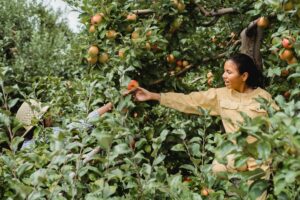
Apples in the Garden – Do We Eat?

Apples in the Garden – Do We Eat?

I sat today beside a fountain in the middle of a college campus. It was a beautiful sunny day after a week of torrential rain. More rain is expected again soon. But this day had been gorgeous. Children were playing with sticks in the pool around the fountain. The water, blown by the wind, was sprinkling those of us standing or sitting nearby. School is in session, so families and students were going through the plaza. A group of musicians entertained all who were present, whether sitting attentively listening or hurrying past on the way to somewhere else.

Usually, Saturday is a busy day, filled with activities at home and left-over ones from the work week that urgently call my attention. But today, I was with a grandchild and mother, savoring some time away and seeing the world through the eyes of an almost three-year-old. What a wonder it is! Water splashes. Sticks are laying around on the ground just waiting to be used to stir the water. People are smiling. All is well in the world, in at least some very fortunate places. And we happened to be in one of them.

We are entering into the season of Lent, a season of waiting and of turning away from the busyness and worries and habits of thinking of ourselves first and only secondarily of the needs of others. “Repent and believe in the Gospel”  “Remember that you are dust and unto dust you shall return.” “Turn from sin and believe the Gospel.” All are words we may have heard on Ash Wednesday as this season began.

We hear in the second story of creation that the Lord God created humans from the clay of the earth, blowing his breath of life into them. He placed them in a beautiful garden in the land between two great rivers. Everything they could ever need was provided there for them. Only the fruit of two trees was to be left untouched – The Tree of the Knowledge of Good and Evil and The Tree of Life.

One day, a cunning tempter suggested that the Lord God might not have been totally truthful about the consequences of eating fruit from the Tree of the Knowledge of Good and Evil. Surely, death would not be the result. Maybe the creator just wanted to keep it all for himself! It would taste really good…

The woman decided to try it for herself and tasted the fruit. It tasted good, so she gave some to her husband to try as well. Immediately, they knew more than they had ever suspected – good and evil. Everything in the garden had been good. Now everything had become more complex. There were things to worry about. Things that were to be feared. They found themselves ashamed of their very bodies! So, they hid when the Lord came to enjoy the evening with them in the Garden.

The Lord was very disappointed, made clothes for them, and escorted them out of the garden into a world that was much more difficult and complicated than they had ever imagined. Now they would make their clothes, grow their food, build their homes. All would be different. There was a barrier now between them and the joy of the Lord in the Garden. (Gen 2:7-9; 3:1-7)

I thought about this story as I sat by the fountain. It would be so easy to fret about the time lost when I should be cleaning the house, returning calls to clients, writing posts to share, preparing dinner, planning next week’s activities, and so much more. But here I was, sitting by the fountain. And … I set aside the worries. Decided I might or might not write a post this week. I simply enjoyed the time in the sunshine, with a child delighting in the world and time to rest.

Jesus had a life-altering experience in his baptism in the Jordan River. He went into the desert afterwards to be by himself and pray for 40 days. He fasted and prayed for understanding of what it all meant. What could it mean to be the Beloved Son of the Lord God? What could he possibly have to share with others that they should be told to listen to him?

Three suggestions came to him. Idea number one: change stones into bread. You can eat and feel better. Imagine what people will think about you when you give them bread from stones! His reaction: No.

Idea number two: how about throwing yourself off the top of the Temple. If you’re really God’s son, he will send angels to rescue you. His reaction: NO.

Idea three: Look at all the kingdoms of the world. Just worship me and they will all be yours! His answer: Absolutely not – Only God is to be worshipped.

Then the Lord sent his angels to minister to Jesus. He found peace. (Mt 4:1-11)

In many ways, we too face these same questions and challenges. We leave our Gardens of Eden as we grow from early childhood into more mature stages of life. We begin to learn how to care for ourselves and our families. We learn the ways of our societies and cultures. We experience joys and sorrows.

But sometimes, we need to step back, sit in a plaza by a fountain, being sprinkled by the water blown by the breeze. We step back from the craziness of daily life. We set aside the worries about the conflicts in the world. We rest in the love of the Lord who made such a beautiful world for us to enjoy for a time before we travel on to live with Him.

Today, as we move into Lent, let’s resolve to take the time to rest in the Lord. Take the time to watch the beauty of the world around us. See the innocent joy of the very young children and rejoice in it.

Forty days. A journey begun anew each year. A time for renewal.

Which apples do we choose? Those of peace or those of stress and worry.

Choose carefully. I will pray for you. Please pray for me too, that we all may grow in joy and peace during this season of Lent.

Readings for the First Sunday of Lent – Cycle A


Read More

Posted by on Feb 8, 2026

Let Your Light Shine – Light the Way

Let Your Light Shine – Light the Way

“You are the light of the world … (Y)our light must shine before others, that they may see your good deeds and glorify your heavenly Father.”

Jesus spoke one day on a mountainside to the crowds of people who came out to hear his words. He gave them a series of principles to guide their actions in ways that would embody holiness in their daily lives. We call these principles the Beatitudes – “Blessed are they who…”

The Beatitudes might be taken as a beautiful image of an impossible goal, to be achieved by only a few very holy people. But Jesus intended them to be taken as a new way of life. Those words were not just beautiful ideals, concrete actions must follow and Jesus was clear that this was expected of those who would be his followers.

“You are the light of the world.” Light on a mountaintop shining from a city – it cannot be ignored. Light hidden under a basket does no good for anyone. Light must shine. The light of lives based on the Beatitudes is the calling of Jesus’ followers. It leads to the glory of the Father becoming visible. (Mt 5:13-16)

It’s an interesting parallel that the first thing created by God in the beginning, according to the book of Genesis, was light. “Let there be light.”  And light came into the darkness. The light of creation and the creator, bursting forth into the creation of all that is in our universe, will shine through the lives of those who live according to the Son’s teachings that day on the mountain. Through our lives, the light shines forth or not. This light of holiness shining through each of us shows a bit of the wonder and awesome reality of the Father, the Father’s glory.

This is a pretty daunting thought. How can any one of us ever hope to live our lives in ways that will truly shine forth the Father’s love? How can we do anything so heroic that people will throng to the community, begging to become one of us? Is any of that humanly possible?

Fortunately, it doesn’t require superhuman qualities or behaviors or actions to live as children of the Father, shining the light of holiness into our world. It comes through the little things we say and do as well as through the big, bold, brave things we may have to do once in a while.

How will we know what we are to do to share the light? Most of the time, I think we don’t actually know just what this means. We go about our daily lives, meeting people, doing our daily tasks, and sometimes wondering what it all means. We don’t often think about the reality that the little things we do, the way we speak to others, the way we are patient when things or people move slowly, the times we smile rather than scowl at someone we meet on the sidewalk, or in the grocery store, or driving another car, the times we find the humor in an unexpected delay and trust that all will work out in the end – these are the times light shines in the darkness. When we offer a word or a hand of help or comfort – the light shines forth. When we spend time helping as volunteers to feed the hungry or help young people get the training needed for new careers – the light shines forth. When we simply help get our families up and out the door in the morning with a smile to carry on their way to a new day – the light shines forth.

We don’t have to look far and wide to find what we are to do and how we are to serve. Each of us has gifts and talents. Those are what we are to use.

What comes easily to you? What is as easy as falling off a log? What do you love doing? Those are your gifts. Find ways to use them.

What is hard? What do you never quite get around to doing? Those may not be your gifts. Find someone for whom they are easy and become a team! When each of you uses your gifts, amazing things can happen. The light shines forth again.

As bread is shared with the hungry, the homeless are sheltered, those without warm coats for the winter receive ones of their own, and the suffering receive help and hope – the light breaks forth. The glory of the Lord shines forth in support. And the impossible becomes possible. A new, richer community is formed. Life is transformed. Opportunities are broadened for all.

As we move through this coming week, may we remember to trust the Lord to be with us. We don’t have to do it all by ourselves. Most often, we simply have to step out in trust that others will show up to help when we step forward in faith. Sometimes, it seems like people will join the effort simply because they recognize our inability to do it all by ourselves. They throw up their hands and join in – not because they are convinced it’s something that has to be done, but because they know we are sincere and they don’t want to see our efforts fail. And amazing things happen as a result. The light shines forth!

May the Lord be with you this week, shining through each of our lives, pointing the way to our amazing Father.

Readings for the Fifth Sunday in Ordinary Time – Cycle A


Read More

Posted by on Sep 7, 2025

Finding the Way – Got a Map?

Finding the Way – Got a Map?

Assorted Map piecesSpatial orientation and keeping track of landmarks, finding the way, while moving from one place to another do not always come naturally, especially when an individual has always been with someone else who has led the way for them. I discovered this to my surprise one day when I went with three guys from my high school class to take part in a program for students from all over town at one of the local colleges. None of us had ever visited that particular campus, so no one knew where we were going.

We managed to find our way to the classroom where the event was to occur and had a good time with the other students. Then it was time to go back to our own campus and return home from there. When we left the building, I assumed all of the others would know the way back to the car in which we had come, but as it turned out, none of the guys remembered which way to go! I was amazed. My father had made sure all of us learned at an early age to pay attention to landmarks and which way we had turned when hiking in the countryside or walking in town. But apparently, the guys had not been so lucky.  I led the way back to the car and we made it home safely. (They were all taken aback that a girl could find the way home, by the way. It was a different time!)

The question of finding the way, however, is not always something as simple as finding one’s way across a small college campus in a city. It’s not even merely a physical feat of geolocation – where am I physically? Finding the way may be a factor in achieving a personal goal – I will learn how to knit this scarf! It might also be something life-changing – what am I called to do with my life? What is my vocation to be? How will I know what God is calling me to do? Got a map?

In each of the readings this Twenty-third Sunday in Ordinary Time, the question of searching for and finding the way or of reaching a goal is part of the story.

Jesus spoke to great crowds of people who followed him through the countryside from village to village and city to city. His words sound harsh to us today. “If anyone comes to me without hating his father and mother, and even his own life, he cannot be my disciple.” How can hating anyone be a goal for the follower of Jesus. Aren’t we supposed to love everyone?

This is a situation in which words in one language do not necessarily mean the same thing as in another. In some languages, there are no words to express concepts found and expressed in another. This is the case with the use of the word “hate” here. There was not a word in Jesus’ language to express preference corresponding to the word “like.” Our usage of “like” as in “prefer” was not a possibility in his language. To say that something is not to be preferred, the word translated as hate in English was used.

So, Jesus is telling his followers that if family traditions or claims on their allegiance from their family would stop them from following the way of living to which he calls his followers, their choice would need to be to prefer Jesus’ way and leave behind the claims of others – to “hate” those claims.

He gives examples of situations in which people make choices in their lives. Do I have the resources to build a tower (add on a room to my house)? Should I settle with an adversary or press my claim legally or on a battlefield? What am I willing to give up to follow this new way of love that Jesus teaches? (Lk 14:25-33)

Where is the map? How will I find the way?

Paul wrote to his friend Philemon from jail near the end of his life. One of Philemon’s slaves had come to stay with Paul and become a Christian. Paul was not required to return Onesimus to Philemon. In fact, Jewish law prohibited the return of a slave to a master. (Deut 23:16) Nevertheless, Paul sent Onesimus back to Philemon with a letter and request – receive him back into your home as a beloved brother in Christ rather than as a slave. “If you regard me as a partner, welcome him as you would me.” (Phil 9-10, 12-17)

This is definitely not the normal map! There’s a new one coming into focus.

How do we find the new map? How will we know where to go, which way to turn as we journey through life?

The author of the book of Wisdom rightly asks, “Who can know God’s counsel, or who can conceive what the Lord intends?” Humans can’t really know. Our bodies are weak, our dreams are limited, our plans are uncertain. Knowledge of how things work and what is right or good in earthly terms is not easy to achieve. We try again and again to understand the physical world and still seem only to glimpse a small part of the bigger picture.

How can humans, with such limited ability to see and understand reality, ever hope to understand the ways of the Lord and the heavenly realm? The answer is clearly stated: “…who ever knew your counsel, except you had given wisdom and sent your holy spirit from on high? And thus were the paths of those on earth made straight.” (Wis 9:13-18b)

Here is the map. The Holy Spirit instructs those who seek wisdom and understanding of the Lord’s ways. The Spirit is our hope, our refuge, our guide.

We too must rely on the Holy Spirit to guide us through each day, keeping our eyes open to see the landmarks as we move along the twists and turns of daily life. Who will we meet on the way to work? What will a fellow student need to hear as reassurance or friendship from us? Is there someone at the grocery store who could use a smile or a bit of patience from the rest of the people in line? What child walking along the sidewalk with parents will be delighted to discover that you too have pockets in your coat?

Most of us don’t have the power to reach out and fix the injustices of national or international policy around us today. But we do have the power to work for justice in our own communities. We can make a difference for the people among whom we live and work. We can help protect our neighbors and co-workers who may be in danger from those who have been led to fear them.  We can share our resources and knowledge of the ways our laws and traditions work with those who have relatively newly arrived. We can be kind to all we meet.

The law of the Lord is love. This week may we use Love as our primary map as we find our way through our daily activities on the way to the blossoming of the kingdom of Love, the kingdom of God.

Readings for the Twenty-third Sunday in Ordinary Time – Cycle C


Read More

Posted by on Aug 24, 2025

The Narrow Door

The Narrow Door

A young man wrote a letter to a priest.  He told the priest he could use the letter any way he wished.  Except for a few minor changes, here’s what the young man wrote:

“I was one of the top swimmers in my category in Canada.  Then one day I let my friends talk me into experimenting with drugs.  I got hooked, and soon my mental, physical, and spiritual health deteriorated badly… I knew I was all screwed up.  I became lonely and terribly frightened.  There was no one I could talk to.  To make matters worse, I was in debt to drug dealers for over $3,000.  I figured my only way out was suicide, so I went home and wrote this note:

Dear Mom and Dad, I am sorry to cause you this pain…please don’t grieve too much.  If I had stayed alive, I would have caused you a lot more grief than by what I just did…I love you and the whole family.            (signed) Christopher

“I began to drink to overcome fear as I prepared to take my life.  Then at the last minute something made me stop; I grabbed the phone and called a crisis center.  I didn’t know it then, but my mother was praying like mad for me.  A few days later I entered a drug rehabilitation program.  Soon I regained my physical and psychological health.  It was then that I started reading the Bible.  The more I read it, the more peace and joy I felt.  This led me to put all my trust in God.

“Meanwhile, there developed in me this growing desire to learn more about Jesus and to get to know him better.  It’s kind of funny.  I must have prayed on my knees at least ten times – asking Jesus to come into my life – before I realized that he was already in my life…

“All this happened about five years ago.  Since then, God has blessed me greatly.  I teach in a Catholic high school and I’m active in my parish community…I’m also still trying to learn how to open myself more and more to the love and mercy of God.

Sincerely yours,
Chris”

That letter illustrates one of the points in today’s gospel: The door to God’s kingdom is, indeed, narrow.  But that didn’t stop Chris from trying to enter.  He struggled and struggled until he did.  I wonder how many people (like you and me), would have had the courage to struggle as Christopher did.

Someone said there are three kinds of Christians: Tug-boat Christians, sail-boat Christians, and raft Christians.  Tug-boat Christians are people who follow Jesus not only in sunny weather but also in stormy weather.  They are people who follow Jesus not only when the wind and the tide serve them but also when the wind and the tide oppose them.  They are people who go to Mass not because they have to but because Jesus said at the Last Supper, “Do this in memory of me.” (Luke 22:19) They are people who help other people not because they feel like it but because Jesus said, “Love one another as I love you.” (John 15:12)

Sail-boat Christians, on the other hand, are people who follow Jesus when the wind and the tide serve them.  But when the wind and the tide oppose them, they tend to go in the direction they are blown.  They are people who go to Mass when family and friends go.  But left to themselves, they often miss.  They are the people who ask, “How far can I go before I sin?”  Rather than, “How much more can I do because I love?”  They are people who tend to follow the crowd more then they follow the Gospel.

Finally, there are the raft Christians.  They are Christians in name only.  They don’t really follow Jesus, even when the wind and the tide serve them.  If they do go in his direction, it’s only because someone pulls or pushes them.  They are people who do Christian things not because they want to but because they have to.  In short, they are Christians in name but not in deed.

The question set before us is this:  Are we a tug-boat Christian, a sail-boat Christian, or a raft Christian?  Are we tug-boat Christians?  Do we follow Jesus in good times and in bad?  Do we go with him not only through the wide door but also through the narrow door?  Or are we sail-boat Christians?  Do we follow Jesus only in good times?  Or are we raft Christians?  Are we Christians in name only?

These are some of the growth questions today’s readings set before us.  No one can answer them for us.  We must do that ourselves.

21st Sunday in Ordinary Time (Cycle C)

Read More

Posted by on Jul 27, 2025

Be Bold and Persistent

Be Bold and Persistent

“Ama, you sit here and I’m going to sit in this chair. Now you can read to me.” Thus says the two-and-a-half-year-old grandchild as she brings a story to be read to her. She has no hesitation about telling an older person what to do and when or how to do it. She is still so very innocent that she boldly expresses what she would like to have happen and trusts the rest of the family will comply. Of course, it doesn’t always work out that things go her way, but she’s confident that most of the time it will, especially on visits with grandparents.

As we get older, we learn the world doesn’t revolve around us. We learn that people in power don’t always listen to those with lower status or power. We learn to be cautious in our expectations and not to aim too high.

Yet is this the way to approach our relationship with God? Maybe not.

Abraham’s visitors went on their way after having a fine meal at the camp of Abraham and Sarah at the terebinth of Mamre. But one stayed behind to speak further with Abraham. It seems he, the Lord, was going to the cities of Sodom and Gomorrah to see if the people there were indeed as wicked as he had heard they were. If that turned out to be the case, he planned to destroy the cities and all within them.

Now Abraham found this quite disturbing. He had family members living in Sodom and didn’t want to see any harm come to them. So, he began to appeal to the softer side of the Lord. What if there are fifty good people in the city. Would you kill the innocent with the guilty? Well, when put that way, the Lord agreed it would not be fair to the fifty, so he agreed to spare the city if fifty good people were found.

So far, so good. But Abraham didn’t stop there. He boldly asked, What about if there are only forty-five? The Lord agreed that forty-five would be enough to hold off destroying the city. The bargaining continued until they finally agreed that if there were as many (or as few) as ten good people, the Lord would not destroy the city.

Abraham was polite, respectful, and yet bold in his advocacy for the people of Sodom and Gomorrah. The Lord responded with kind respect as well, willing to listen to a plea for mercy. A very different response than can be expected from most rulers. Abraham was bold and persistent. He started with a large number and continued bargaining, requesting mercy for a population with fewer and fewer examples of good behavior and good will. When he stopped, it was probably because he assumed at least his own extended family would make up enough good people to save the cities. (Gen 18:20-32)

The question of how to be an advocate with the Lord has continued through the centuries.

Jesus was asked one day by his disciples to teach them how to pray. He responded with what we often call “The Lord’s Prayer,” a.k.a. “The Our Father.” We begin, speaking to God as a loving father, with the hope that his power and authority will be recognized and respected by all. We hope for the coming of the Kingdom and that the Lord’s will should be done everywhere. Then come the practical things – daily bread, forgiveness for our offenses, protection from temptation, and deliverance from evil. One hitch is that forgiveness is requested to the degree that we ourselves forgive others. That’s not always easy. But all in all, it’s a strong prayer that rests on the loving, intimate family relationship of parent and child. “Daddy, you sit here while you read me a story.”

Jesus didn’t stop with just how to pray. He went on to encourage great confidence in prayer. “Ask and you shall receive, seek and you shall find, knock and the door will be opened.” Keep knocking even if you get a negative result the first time. The neighbor who won’t get up and wake his whole family to get you an extra loaf of bread for a guest the first time you ask will do so if you keep asking again and again in the night. Be persistent. Be bold. (Lk 11:1-13)

Now, do we always get what we ask for in prayer? No. So what about that promise of ask and you shall receive? Maybe it’s a question of what is requested and for whom?

Abraham asked on behalf of the innocent people in Sodom and Gomorrah. For the innocent ones, the Lord was willing to change plans.

When we ask for things that only benefit ourselves, there’s no guarantee the request will be granted. But if we ask on behalf of another person, and what we ask is genuinely what will be best for that person, our request is more likely to be granted. Sometimes, when we ask, it begins the process of consideration of what would be a good thing to see happen. Might we do something ourselves that would help? We are the Body of Christ now in our time. How can we do the Lord’s work and bring about needed change or help for those in need?

Sometimes it takes a long time for change to happen. Sometimes suffering continues far too long, because the forces causing the pain are strong and don’t easily surrender. It’s then that persistence is essential. It may take many years, but with enough people working for reform or change, the new way comes into being. Doors open. Opportunities appear. And lives are changed.

As we move through the days and weeks to come, may we remember to pray constantly, seeking ways to bring the Kingdom and the freedom of loving response to the challenges of our time into our everyday lives. How do we help the poor? How do we support immigrants? How do we keep healthcare accessible for those whose employers don’t offer it? How do we provide books and opportunities for children in school to learn? How do we feed children so they can learn when they get to school?

So many, many challenges face us all at this time. Yet the Lord assures us, “Ask and you will receive.”

So, let us ask boldly and act with courage to open the doors of our hearts, minds, and homes to live in the Kingdom of God, the Kingdom of Love for all, regardless of social or legal status. All are God’s children. All are our sisters and brothers. All…

Be bold and be persistent.

Readings for the Seventeenth Sunday in Ordinary Time – Cycle C


Read More

Posted by on Jul 18, 2025

The Day the Lord Came to Dinner

The Day the Lord Came to Dinner

Imagine for a moment that you got a letter, special delivery, saying the King of England was coming to dine at your home tomorrow evening. Once you got over the shock, how would you prepare? You’re an ordinary person, with no servants or staff to make things happen. Your home is well lived-in, not always perfectly tidy, but comfortable.

What are the most important things or rooms to have clean? What will you serve for dinner? Which dishes should you use? Why would the King ever think to come to your house? So very, very much to do in such a short time… How can it be possible to get everything ready on time?

In a great whirl of activity, the house is cleaned, the meal prepared, best clothes are worn, and at the appointed time, the King arrives. It proves to be a memorable dinner, because, surprise, he can be just a regular guy when he’s not acting as King!

Now most of us will never have this challenge land on our doorstep. Kings  don’t often drop in for dinner and I would guess most of us have never received a letter from the King of any country. Still … there are times when hospitality is the most important thing we can offer.

One very ordinary day, Abraham and his wife Sarah were camping by the terebinth of Mamre. A terebinth is a shrub from the cashew family that grows to be the size of a tree and also produces turpentine. They traveled with their sheep from one part of the land to another. But this particular day was noteworthy.

It was around the middle of the day and getting hot. Abraham came out of the tent, perhaps to cool off in the shade of the tree. He noticed three men approaching as he left the entrance of the tent. Visitors were not common in those days and places, so he ran out to greet them and invite them to stop for a meal and a rest in their journey. He was delighted when they agreed to do so. It would be a chance to catch up on the news from far away.

He quickly went into the tent and asked Sarah to make rolls for the meal, using plenty of fine flour. He chose a choice steer and ordered a servant to prepare it to be eaten. Then he took curds and milk, along with the meat of the steer and the rolls and served the three visitors a fine meal. He stood beside them as they ate, ready to provide for anything more they might request.

After they finished eating, they asked Abraham where his wife might be. He responded that she was in the tent. A modest woman would not go out to meet strangers in those days. One of the visitors told Abraham that in a year when he, the visitor, returned, Sarah would have a son.

Now Abraham and Sarah were both old and they had never had children, so this sounded pretty far-fetched. In fact, Sarah laughed out loud at the preposterous thought! But as it turned out, she did have a son the next year and his name meant, “I laughed.” (Gen 18:1-10a)

It wasn’t the King of England who visited Abraham and Sarah. It was the Lord who came without warning and happily accepted the hospitality of a man and his wife. The blessing of their gift of hospitality by the Lord opened the door for all the blessings that would follow through the centuries, from the time of Abraham to the present.

Jesus too stopped in for dinner unannounced on occasion. One day he visited the home of his friends Martha, Mary, and Lazarus. His visit was unexpected and there was much hustle and bustle in the house and kitchen to get dinner ready. The men were not expected to help fix dinner. Their role was to visit with and entertain the guests. The women were to get the food ready and serve it.

But this day, Mary couldn’t resist the urge to sit with those around Jesus and listen to him talk. He was always such an interesting person. Martha, on the other hand, was very aware that an important part of the team was missing from the kitchen. What was Mary thinking! She needed to be in the kitchen helping. No excuses.

When Martha went to Jesus to demand that he send Mary to help in the kitchen where she belonged, she got a surprise. Jesus responded, “Martha, Martha, you are anxious and worried about many things. There is need of only one thing. Mary has chosen the better part and it will not be taken from her.” (Lk 10:38-42)

Wow. That would be hard to hear, I imagine. How can it be that not doing what is needed to provide for a guest is better? Yet there’s an important lesson for all of us here. Sometimes we can’t and don’t need to make sure everything is organized and ready on time or in the usual way. Sometimes we simply need to stop and listen and learn what is really important for that moment. The gift of the present moment can’t be replaced. Somehow, folks will find food to eat. They may need to work together in unfamiliar ways, but generally no one starves for want of getting into the kitchen and preparing the food that’s there! In the meanwhile, there are treasures of wisdom that will be missed if the focus is too strictly on what is expected of each person at any given time.

The Lord came to dinner that day. They didn’t know he was the Lord. He was their friend, Jesus of Nazareth, who happened to be a traveling preacher and healer. Maybe even a prophet. His words to Martha that day were really a reminder that there’s a time to take off the apron of management of the kitchen and hosting the meal and instead sit to be present with the guests, honoring the gift of their presence.

Years later, in his teaching, St. Paul explained to the Colossians that all the hardships and suffering he had experienced through his many years of travel and teaching were worthwhile. They made it possible for him to share the great wonder of the incarnation. Christ is present now in each person in the community, following the death and resurrection of Jesus. Each person may bring the presence of the Lord into every encounter with another. As we live as a community, or as a family, or as individuals with friends, we bring the presence of the Lord to our encounters. When we gather at the table at home, the Lord is present with us. When we gather at the table of Eucharist, the Lord is present with us. (Col 1:24-28)

We don’t need to receive a letter announcing the coming of a special guest. Each person we encounter, each person with whom we share our lives, brings the possibility of meeting the Lord in a new way. The big challenge we face is to remember to stop and listen, to hear the deeper message of love. Not always easy. Often we miss the boat. But always an important goal.

This week, may we remember to take time to welcome each person who joins us at table. Even the family with whom we eat every day! There’s always something that can be learned or shared if we take time to listen and ask questions. And when we meet others outside the family, may we be open to hear the Lord’s voice from them as well.

Peace and joy be yours as the Lord joins you for dinner.

Readings for the Sixteenth Sunday in Ordinary Time – Cycle C


Read More

Posted by on Jul 13, 2025

Hidden in your Hearts

Hidden in your Hearts

Children’s songs are passed down from generation to generation, sometimes with slightly different words, but with essentially the same tune and ideas. One such song is “Goin’ on a Lion Hunt.” I learned it as a Brownie Scout and we sang it through the years around campfires or in troop gatherings. It was always fun to act out the words as in the song we came up to a tree and had to “go around it” or a creek or a field and had to “go through it.” Of course, when we finally found the lion, we were far from prepared for the sight and had to repeat all of the motions in reverse as fast as we could until we arrived safely at home!

Quest stories are a feature of most cultures. A person is presented with a challenge and must go forth, away from all that is familiar, in search of the answer to the question, or a treatment for an illness or enchantment, or their true calling in life. Sometimes the quest includes other persons of about the same age. Sometimes, the hero must go alone, seeking advice from those met along the way, including spirits and animal friends. Trials abound, traps for the unwary, surprise sources of inspiration, and eventually, the goal of attaining the wisdom or prize of the quest.

Many of my favorite stories have been those of quests, especially those that include young people and some historical or mythological characters as well. It’s fun to learn about other cultures or historical events through the eyes of observers who are witnesses or participants in them.

Sometimes we think a quest must also be necessary to figure out God’s will for us. What are we to do? What does God want of us? Where will we find the answers? Surely something important enough to please a divine being must be big and elusive!

Yet shortly before his death, Moses spoke to the Israelites, descendants of those who had been enslaved in Egypt and freed through Passover. “If only you would heed the voice of the Lord, your God, and keep his commandments and statutes that are written in this book of the law…” It sounds like these commandments must be something difficult to find. But no, the command “is not too mysterious and remote for you.” It’s not up in the sky or across the river. It’s not like going Lion hunting – through many dangers and challenges.

“It is something very near to you, already in your mouths and in your hearts; you have only to carry it out.” (Deut 30:10-14)

Already in our hearts? How can that be? What are the commands that can be in our hearts?

The Law states very clearly what is expected. “You shall love the Lord, your God, with all your heart, with all your being, with all your strength, and with all your mind, and your neighbor as yourself.”

OK, but what does that mean in terms of actions? A scholar of the law asked Jesus that exact question one day. “Who is my neighbor?”

Jesus didn’t send him on a quest to find the answer to the question, though in a novel he might have done so. Instead, he told the man a story.

“A man fell victim to robbers…” The poor man was stripped of his clothing, beaten, and left half dead by the side of the road. We’ve heard the story many times. A priest saw him and moved to walk on the other side of the road. A Levite, a person who could assist with sacrifices in the Temple, also crossed the road to avoid contact with the injured man. Only a man from a stigmatized group, a Samaritan, stopped to help the injured man.

The Samaritan was “moved by compassion” and stopped to offer first aid and care. He took the man to an inn, carrying him on his own animal. He had to continue on his journey the next day, but he paid the innkeeper to continue to care for the wounded man, promising to pay any additional cost of the care when he returned.

Jesus asked the scholar, “Which of these three, in your opinion, was neighbor to the robbers’ victim?” When the scholar answered, “The one who treated him with mercy,” Jesus confirmed his observation. “Go and do likewise,” he said. (Lk 10:25-37)

Compassion, mercy, kindness, forgiveness, gentleness. All are signs of obedience to the commands of the Law. They are shared among all people.

Jesus, “the image of the invisible God, the firstborn of all creation” through whom all was created, who holds all things together, tells the young man, “Go and do likewise.”

Each of us is included in that command. “Go and do likewise.”

We are born into a family, a culture, a nation, and we learn the ways of those who raise us. Some of those ways may not exactly be loving or welcoming of differences among peoples. Some may be hostile to ways of being that are not acceptable to “our people.” Some are fearful of outside influences and seek to remain “pure” in beliefs and actions. Some are afraid of change.

In a way, we each have a quest on which we embark as we grow up. We learn the ways and expectations of our families and peers with our mothers’ milk, and we take them as absolute truth when we are very small. As we grow, we learn of other peoples and other ways. We seek to find the right way to live as human beings.

In our quest, Moses told the people, we are not to think it necessary to go up to the sky to find the Lord’s command, nor are we to think we must cross the sea to find it. It is already near to us, “already in your mouths and in your hearts.”

Jesus too tells us that the place to look is within our hearts – to look for mercy and kindness and compassion that reaches out to those in need, those who are not from our own group, those who may be from other countries or ways of living. We each have gifts from the Father that are to be used for others. Part of our quest is to identify those gifts. One way to do it is by serving others. Opportunities open up, walls fall down as we approach, a smile opens the door to a heart.

Jesus is “the head of the body, the church … in him all the fullness was pleased to dwell, and through him to reconcile all things…” (Col 1:15-20)

Following his instructions, may we too go out this week and serve our fellow travelers on the way with gentle, compassionate, acceptance and understanding. We’ll meet some amazing people and have some wonderful adventures along the way.

Readings for the Fifteenth Sunday in Ordinary Time – Cycle C


Read More

Posted by on Jul 6, 2025

Two by Two and Away We Go

Two by Two and Away We Go

There’s an old song that includes a phrase I couldn’t find on the internet, but which I remember clearly. The phrase is from a little ditty and it goes, “Hey Dearie Dee and away we go, heigh ho, heigh ho, heigh ho.” It’s similar to songs from “Pinocchio” and “Snow White,” but the song I learned as a child had a different tune to go with these words.

This little song came to mind as I was thinking about the Gospel reading. Jesus sent seventy-two of his disciples out, two by two, to tell of the coming of the Kingdom, as well as to heal the sick. The disciples went out without any provisions, trusting in the goodwill of the people of the communities they would visit for meals and places to sleep. They came back amazed at the fact that they were able to heal the sick and even to “cast out demons.” Jesus was not surprised at this, encouraging them to continue to trust they would be protected from dangerous creatures such as scorpions and snakes.

Interestingly, the phrase regarding snakes in the Gospel is in quotation marks – the power to “tread upon serpents.” In the Book of Genesis, it’s the serpent in the Garden who tricks Eve into disobeying God by eating the fruit of the Tree of the Knowledge of Good and Evil. In this, Jesus is saying that spirits which oppose the Kingdom can be defeated as well. However, and more importantly, he reminds them and us, “do not rejoice because the spirits are subject to you, but rejoice because your names are written in heaven.” (Lk 10:1-12, 17-20) 

In some ways, the buddy system we see in youth organizations such as Scouting is similar – designed to protect participants, aid in learning new skills, and offer built-in companionship for activities. When things are going well, a buddy shares the joy. When things are hard, a buddy is there to share the difficulties and offer encouragement to keep going. Buddies also help each other figure out why things aren’t going as expected and what alternatives might work better.

Jesus and the early Christians used the buddy system too. Jesus traveled with a group of disciples. Paul and the other apostles traveled with companions on their journeys. The people they met formed communities, sharing what they had and working out differences of opinion. Early Christians tussled over the importance or need for circumcision. They tried to understand the meaning of the crucifixion. They suffered violent opposition from the authorities or influential people in the cities and towns they visited.

Yet through it all, they worked together to understand and share a completely new insight. Through the cross of Jesus and through baptism into this mystery, something new emerges. People become more than they were before the experience. They are a new creation, a new people, not divided by historical family ties into Jews and Gentiles, but one that is the new people of God.

Paul speaks of bearing the marks of Jesus on his body. Many times he suffered physically for his testimony to unwilling audiences, including at least one occasion when he was stoned and left for dead. Yet each time he continued forward, shaking the dust of the unwelcoming community from his feet and traveling on to the next town. (Gal 6:14-18)

Through the witness of the first Christians, a new community was born. This new community was a direct descendant of those who returned from exile in Babylon and rebuilt the city of Jerusalem and the temple of God on the holy mountain where it had been historically. The city is still in the same place today and the holy mountain continues to be a holy place for Jews, Christians, and Muslims.

Isaiah presents the Lord speaking of Jerusalem as a mother who nurses her child, calling on all to rejoice at her restoration. “Be glad because of her, all you who love her; exult, exult with her, all you who were mourning over her! … As nurslings, you shall be carried in her arms, and fondled in her lap … in Jerusalem you shall find your comfort.” Jerusalem will prosper again, says the Lord, and the people will rejoice and flourish as the power of the LORD becomes clear to those who serve him. (Is 66:10-14c)

Once again, we are not hearing about a solitary person. An entire people are included in this call to rejoice. The city was rebuilt and, like many cities through the course of history, it was conquered multiple times afterwards. Foreign rulers came and went. The city was destroyed more than once. But it’s always been rebuilt. And those who rebuild it rejoice in its rebirth.

Through the life and ministry of Jesus and the apostles, as well as all their successors through the ages, we too rejoice in the Lord’s presence and working in the world.

We too are called to go out into our own worlds of home, families, friends, work, community, and the wider world to share the Good News of God’s love and the coming of the Kingdom of God. Two by two symbolically, we encourage each other. Sometimes the interaction will be more solitary, but always we know we are part of a larger community and we share our experiences with each other. The message is not always welcome. It can be difficult to explain why we behave as we do, why we refrain from certain activities because they would harm or demean others, why we share what we have even if we don’t have as much as others might have. But with the support of our families and communities, we move forward in faith.

As we move through this next week, with all the potential changes and uncertainty it will bring, may we remember that we are not alone. We are a community, a group of people who have met the Lord as we reach out in service to those most vulnerable among us. We have met the Lord in our worship, in our sacraments, in our own quiet prayer times. We have met the Lord in the beauty of creation, the wonder of a sunrise or sunset, the roar of the sea, the power of a wind or thunderstorm. We have met the Lord in the help we ourselves have received in the hard times – brought for us by our buddies in the journey.

May our eyes and ears be open to see and hear – “Two by two and away we go, heigh ho, heigh ho, heigh ho!”

Readings for the Fourteenth Sunday in Ordinary Time – Cycle C


Read More

Posted by on May 18, 2025

Opening the Door of Faith

Opening the Door of Faith

One lovely summer day, a girl of about 9 or 10 years wanted to go out and skate. She already had her skates strapped to her shoes when her mother told her to pick up one of the family’s Melmac bowls that was sitting on the back step and bring it inside. The girl was furious. She had just put on her skates and now would have to take them off. Likely there would be other things she would have to do once she got inside with the bowl, and she might not get back outside to skate again!

She angrily stamped on the bowl and it broke in half – right down the middle. It was one of the family’s regular meal dishes and relatively recently purchased. She hadn’t intended to break it, but the deed was done.

This kind of offense, from a child with a temper, could not go unaddressed. Her mother had to do something to make it clear this kind of behavior was not acceptable. But spanking was not going to do any good. The girl would not change her behavior based on that threat – she was beyond that age.

The mother’s solution was to pick up the bowl, setting one side inside the other. Then she told the girl that the bowl would have to be replaced. The full set was needed each day for the family meals. So, the girl would have to do extra work to earn the money to buy the new bowl. Furthermore, the girl was not allowed to go back outside to skate that day!

That was the last time the girl ever stamped on a bowl. Not the last time she ever lost her temper, but that’s a different story for a different time…

The challenge of getting people to do what is best for a family or a community, a nation or a world, is multi-faceted. In general, through the centuries, we have begun to learn that violent treatment or responses don’t reliably lead to reform or better personal decision-making. On the contrary, they more often lead to more violence – a tit-for-tat kind of relationship. You hurt me, so I will respond by doing something to hurt you. The cycle goes on and on for generations and only becomes more costly as weaponry becomes more destructive or access to social media spreads outrage and anger more broadly.

In accounts of the first missionary journey of St. Paul and his companion, Barnabas, we see a different type of response to opposition and even to violent rejection. Paul and Barnabas traveled through Asia Minor on these journeys, entering city after city, going to the synagogue, and sharing the news of Jesus’ life, death, and resurrection. They always went first to the Jewish community, including Gentiles who had converted to Judaism. The message was received by some, but often the leaders of the community rejected it. When the message was rejected, Paul and Barnabas spoke to non-Jews, those known as Gentiles.

The message was received much more easily in the Gentile community because there were not so many years of expectation of the coming of one type of Messiah. The idea that the Messiah had come, not just for the Jews but for everyone, was welcomed by groups of people in each town they visited. They stayed for a while, teaching and encouraging the new followers of the way. Sometimes they had to leave quickly, chased out by angry townspeople or authorities. At least once they were stoned. They got up and left that town afterwards, having survived the experience. The rejection and physical abuse they suffered were accepted as part of the cost of their ministry. Following the example of Jesus, they did not return evil or curses for that which they received.

On their way back to Antioch, the town from which they had initially departed on their journey, they visited the communities of faith which had grown up as a result of their first visits. They encouraged the people and their leaders to “persevere in the faith” – as we would say: “hang in there!” The hardships they were enduring because of their faith were part of the cost of faithful discipleship, part of entering the kingdom of God.

They reported to the community in Antioch what “God had done with them,” opening the “door of faith to the Gentiles.” (Acts 14:21-27)

The night before he died, after Judas left the Upper Room, Jesus gave his friends “a new commandment.” What was it? “Love one another.” Not just a little bit. Not just when people are behaving well. Not just because they feel like it right now. “As I have loved you, so you should also love one another.”

Jesus was aware that he was going to be betrayed, yet he did not say that only those who were faithful were to be loved. Everyone was to be loved. Loved and forgiven because they are loved.

The characteristic by which the world will know a person to be a disciple of Jesus is clear. “This is how all will know that you are my disciples, if you have love for one another.”

That love that is characteristic of the disciple opens the door of faith for others to enter. (Jn 13:31-33a, 34-35)

John’s Book of Revelation describes what happens when that door of faith is open. God dwells with the human race. He is with them, wiping tears from their eyes in the hard times, ending the power of death and pain. “The old order has passed away.” And “the One who sat on the throne said, ‘Behold, I make all things new.’” (Rev 21:1-5a)

The One who sat on the throne? Remember who that one was? The Lamb! It’s the Lord Jesus who makes all things new in love and forgiveness.

All things new. What a wonderful promise.

What does that mean for us today? Through the centuries, the community of faith has shared the news of Jesus. Sometimes we have done it in gentle ways, with loving service as the hallmark of our witness. Sometimes, we have totally missed the point of Jesus’ words about love. We have tried to force people to receive the Good News in a way that actually came across as Terrible News. Like the mother who had to decide how to deal with the daughter’s temper and the broken bowl, the response can be love-based or it can be a response that tears down the person who has not responded as we had hoped.

When we force people to behave in ways we believe are correct, as in just the way we personally behave, we don’t respect the reality of God’s presence within them and their experience of that presence.

When we share the news of God’s love through loving service, the welcoming of immigrants, the poor, asylum seekers, the old, those with learning differences, those who struggle with mental or physical illness, that news can take root and grow.

Our words and service must be offered to all, including those with whom we disagree. Patience, loving service, a willingness to seek common ground, and forgiveness when tempers flare or harsh words erupt are all part of the witness to which we are called.

How will we respond today? Will we slam shut the doors to close out others who come from different places and different histories? Will we refuse to help, to share from our abundance so that those whose lives have not been blessed with that same abundance can at least have the basics of food, clothing, shelter, schooling, and healthcare? Do we say that people should just work harder, when they are already working two or more jobs to keep a roof over the heads of themselves and their families? Or do we offer help with food and access to healthcare and housing?

If we are truly a community of followers of Jesus, we are called to open the door of faith to others whom we meet, whether those with whom we are familiar and share a common history and culture or those who come to us from other lands and cultures. That door of faith has a single key – the love that is to be characteristic of the followers of Jesus. “Love one another as I have loved you.” Totally, without restraint, and filled with respect and compassion.

The kingdom comes, all will be new, when the news we share is truly the Good News of the presence of God in the community of loving service. Let us encourage each other and work together to continue to share the promise of new life and the love of God in our day to day lives. May we together learn to offer and receive forgiveness for the times we fall short. Through the loving care and guidance of the One who loves us, we learn to serve all we meet. And then, the door to faith can open for all.

The world awaits our witness and outreach in loving service.

Readings for the Fifth Sunday of Easter – Cycle C


Read More

Posted by on May 4, 2025

Recognize the Lord and Tell Others

Recognize the Lord and Tell Others

Class reunions are interesting experiences. We come together after many years of living away from the close communities of our childhood school days and find that people have changed in some ways and are fundamentally the same in other ways. I find it’s easier to recognize the women than the men. Men change in appearance more after age 18 than women do, in my experience.

It happened again recently when I chanced to be in the town where I grew up on a night when a group of my high school classmates were gathering at a local “pub” owned by another classmate. I got there a touch late, so sat at a side table where a few others were already sitting. I didn’t recognize the men, but I always find people interesting, so that was fine. As it turned out, the two men were guys with whom I had attended eight years of grammar school! I had last seen one of them at eighth grade graduation. I may have seen the other in high school, but I didn’t recognize him when I saw him that night. We had a good visit and I look forward to getting to know them both now as adults.

The apostles had a somewhat similar experience after the Resurrection. It had been a much shorter time than the 50+ years since we had all graduated, but they also didn’t recognize Jesus when they saw him.

Peter and the other apostles had returned to Galilee after the Resurrection. They didn’t know what they were going to do next in their lives, so they went fishing!

Today we typically go fishing during the day, maybe early morning or evening. But in those days, and probably still in some places, fishing as a way of earning a living was done at night. The first time Peter met Jesus, they had spent the night and not caught anything. They were returning, getting ready to go mend and fold the nets, then return home to rest. Jesus told them to try again. Despite their misgivings, the apostles tried again and this time the nets were filled to overflowing. When Jesus invited them to leave it all behind and follow him that first time, they did.

Now all had ended in what seemed like a disaster, but the women had come with word that he was risen and would meet them in Galilee. So, here they were, fishing again and catching nothing…

A man was watching them from the shore. He called out in a friendly way, asking if they had caught anything. They called back that they hadn’t. He responded with the suggestion to throw the net over the right side of the boat and they would find something. They did and the net was filled to overflowing. John, identified as the disciple whom Jesus loved, immediately realized who the fellow on the shore had to be and told Peter, “It is the Lord.” At that, Peter jumped overboard and swam to shore. The others came in with the boat.

They didn’t recognize him when they saw him. He looked different. But he welcomed them, had bread to share with them and some fish. He cooked some of the fish they had caught as well. They shared the meal. And though he didn’t look like the man they had known, they knew who he was because he broke the bread and fish and shared the food with them. Also, he had given them that huge catch of fish once again. The reason they didn’t ask who he was? John tells us it was because he had broken the bread and given it to them to share, just has he had done the night before he died.

The time by the lake didn’t end with just the meal, the breaking of the bread. Jesus spoke directly to Peter. Remember, Peter had denied knowing Jesus three times during the night before Jesus died. Three times, then, Jesus asked him, “Do you love me?” Three times, Peter responded that he did love Jesus. Jesus instructed Peter in response, “Feed my lambs.” “Tend my sheep.” “Feed my sheep.”  He told Peter that he, Peter, would indeed follow in his master’s footsteps, even to his death. And then he once again called Peter, “Follow me.” (Jn 21:1-19)

They all returned to Jerusalem and met Jesus in different locations over a period of forty days. Then he was taken from their sight and they were told to go to Jerusalem and pray. Pentecost came, the Holy Spirit filled them with courage, and they began to tell the world about what they had seen and heard. The community of believers began to grow.

The authorities at the temple were not amused. In fact, they were quite angry with the apostles. They ordered them to stop preaching and teaching, but Peter and the others refused, “We must obey God rather than men.” The authorities were very angry but were persuaded not to over-react. They ordered them to be flogged and sent them on their way, in hopes that would teach them a lesson and they would just go home again. (Acts 5:27-32, 40b-41)

Of course, it did not stop them from sharing the wondrous news of the Resurrection. The community continued to grow and the word spread into all of the world. We today are among those who believe based on the testimony of those first men and women who saw the Lord after he rose and who shared their witness down through the generations.

The reading from the Book of Revelation that accompanies these accounts of the earliest days of the community of faith describes an important reality as well. What happens when believers are isolated from their community, not allowed to celebrate the breaking of the bread or prayer with their sisters and brothers in faith?

The author, John, tells of his mystical experience of witnessing countless numbers of other people and creatures who gathered together in praise of “the Lamb that was slain.” (Rev 5:11-14) John was in isolation on the island of Patmos, separated from his community. As he learned, it’s not necessary always to be physically with others in worship when in reality, our community extends beyond our day-to-day world. People from all ages and all parts of creation join us in our life of faith and praise of the Lord. We are not alone.

So, what does all this imply for us today?

We have lots of pictures and images of Jesus. None of them was drawn of him before his death and resurrection. We don’t know what he looked like, nor is it important that we do. As the early disciples discovered, he didn’t always look the same after he rose anyway.

Where will we find him today? What did he tell us? It wasn’t to look among powerful political leaders or wealthy people who had everything they could ever hope to need materially. It wasn’t to assume he would only be seen as a man. He spoke of those who are hungry, those who are thirsty, those who are un-housed, those who are in prison, those who are sick, the children, the helpless, the migrant, the refugee, the farmworkers, those who wait outside lumber yards and hardware stores, hoping for work and money to feed their families. These are where we find the Lord. “Whatever you did for one of these least brothers (and sisters) of mine, you did for me,” he tells us. (Mt 25:40)

As we go through our daily lives, as we hear the news and reflect on the things happening in our country and our world, we are called to pay attention and see where the Lord is present among the little ones. This is where we must be active too. How do we help? When disaster strikes in a life, who will share resources? Where will funds come to rebuild entire communities after a tornado or flood? How do we as members of a nation provide for the common good?

We each do our part in our corner of the world, but some needs are too great to be solved locally. How do we act as a larger community of believers to protect not just the unborn, but also those who have been born and are struggling to grow, to support their families, to age gracefully, and to pass into the next life in a dignified, well-supported community of loving caregivers? At all stages of our lives, we meet the Lord. In all those whom we meet along the way, we have the opportunity to meet and serve the Lord.

This week, may we keep our eyes open to see his presence in those around us. May we reach out in love and friendship to those in our communities who need a bit of extra help. May we encourage our leaders and representatives to provide for the common good, rather than to open more doors for only the well-to-do.

Working through the community of believers, the Lord reaches out. May we together be faithful sisters and brothers who recognize his presence, tell others about our experience of his love, and want to get to know him better through his brothers and sisters whom we meet each day.

Readings for the Third Sunday of Easter – Cycle C


Read More

Posted by on Apr 27, 2025

Powder, Powder, Pretty Baby

Powder, Powder, Pretty Baby

In the old black and white picture, a cute little baby girl is sitting on the floor in front of an open cabinet door. She is wearing only a diaper and is covered in white powder, as are the inside of the cupboard and the floor around her. Her face, hair, and entire body are covered with the powder as she innocently smiles and says, “Powder, powder, Pretty Baby.”

The image comes to mind this week as we reflect on the early experience of the apostles after the Resurrection. The apostles all ran away or denied Jesus during his arrest and trial. Only John stood by the cross with Jesus’ mother and the other women. Yet on the first night after he rose, he came to them, appearing inside a locked room. His first words to them were, “Peace be with you.” He didn’t scold them. He didn’t stand silently waiting for an apology. He didn’t even laugh at them. He simply offered them a greeting, “Peace.” All that had happened, all they had messed up, all the disgrace they felt, all was forgiven. “Powder” all over the floor, but no condemnation, no punishment.

To their amazement, Jesus didn’t stop with forgiving all of them. He breathed forth the Spirit on them, giving them the same power to forgive.

This ability to forgive after having been forgiven is worth thinking about in more detail.

When hard things have happened, when we have made mistakes in judgement, done things that are just plain wrong or hurtful, or been unwilling to do the right thing in difficult situations, we carry a burden within ourselves. Sometimes we describe it as a heavy heart. People of other cultures might describe it differently, but it’s there and it gets in the way of being open and joyfully allowing love and mercy to flow out into our relationships with other people and the world around us.

What Jesus did for the Apostles was to remove that burden of a guilty heart, replacing it with a heart that is gifted now to forgive others. Where there was a blocked channel, there is now an open stream or gully through which mercy and healing can flow.

Thomas wasn’t there the first night. When he heard what had happened, it just made no sense at all to him. They must all be delusional! Not going to believe that nonsense about Jesus having risen and appeared to the others unless he sees it himself. They’re just overwrought!

What a surprise for him the next Sunday evening, when Jesus again showed up in the locked room with them. Downright embarrassing! Jesus knew what Thomas had said, so he called him to touch his wounds – hands and side – then told him to believe what he had been told. Thomas responded with a fervent prayer of faith – “My Lord and my God.”

We are also included in this scene. As we remember the encounter with Thomas and the other disciples, we are brought into the room with them. Jesus declares that though we have not physically seen his wounded, risen body, we are blessed because we too believe. We too have been forgiven. (Jn 20:19-31)

After the Pentecost experience, the Apostles told everyone they met about what they had seen and experienced of God’s coming in Jesus and his resurrection. They went to the Temple and spoke of Jesus there. Wondrous healings and other signs accompanied their witness. They didn’t even have to touch people to heal them. Simply passing by them on the streets, their shadows falling on people waiting by the side of the road, brought healing. (Acts 5:12-16)

When we open our hearts to receive forgiveness and healing, the power of love and healing we receive can continue to flow out into our world too. Jesus has come for all peoples at all times. His love flows through us, as we allow it to do so. If we refuse, he doesn’t blast his way through. He waits until we are willing to be healed and open the channel again. But make no mistake, he is waiting right there beside us, hoping we’ll open to allow his love to flow forth.

This Easter week we have experienced the loss of our dear Pope Francis. He has returned to the Father, a faithful servant who made mistakes in his life, learned from them, and received forgiveness. He lived and learned, coming to see the Lord’s presence among the poorest of the poor. He spoke and acted on behalf of children, immigrants, the elderly, prisoners, the frightened, and the sick. He challenged us to care for the Earth in ever more concrete ways, protecting this common home of ours as we grow in numbers and use of resources. He opened doors to leadership to those denied such opportunities for centuries. Women and lay people from around the world were given the opportunity to serve in ministry and offer their reflections on how the Spirit is calling all of us to move forward into this third millennium of Christianity. His influence will long remain in our Church and world community.

In the days and weeks to come, we will discover who will be the next Bishop of Rome and heir to the Chair of Peter, leader of the Roman Catholic community. We pray for the Lord’s guidance as our cardinals meet and make the choice, remembering that ultimately, it is Jesus who is in our midst, calling us to remember that he is the firstborn of the dead, alive now forever in triumph over death and all barriers to love. (Rev 1:9-11a, 12-13, 17-19)

That little girl, covered in powder, was picked up and loved by her mother. Her mother, grandmother and school-aged aunts and uncles laughed as they helped clean things up. The powder was washed off her. The floor was swept. The cupboard was cleaned out. And the powder found a safer place, higher up in the cabinet!

In the family picture album, the picture is proudly, fondly displayed, with the inscription in Mom’s handwriting: “Powder, Powder, Pretty Baby.” I don’t consciously remember the event, but as I grew up, I was always reassured when I saw that picture that no matter what I did, that Pretty Baby was loved and forgiven. Mercy and love were free to flow out into the world.

As we move through this next week, may we remember to be open channels for Divine mercy and love to flow into our world. There is so much anger, fear, and distrust flowing just now. The Lord needs each of us to open our hearts and let His love flow into the world too. It’s more powerful than anger or hatred. But it doesn’t force its way. It flows only when we are willing to be open and let it through.

Readings for the Second Sunday of Easter, Sunday of Divine Mercy – Cycle C


Read More

Posted by on Mar 12, 2025

Geological Time Includes the Present

Geological Time Includes the Present

Darkness had long since fallen as we made our way along a winding road beside a lake. We were on our way home from a wonderful wedding celebration and the driver was watching closely for animals, as well as for rocks that might have fallen onto the road from the steep hills along the road. He remarked as he drove that one of his children had told him of a geology professor who had advised his class always to remember that “Geological time includes the present.”

Reflecting on this insight, I realized that God’s time is like geological time in that respect – or maybe it’s vice versa? It includes the present.

As we begin these weeks of Lent, it’s good to remember that God is in this for the long-haul. We tend to think of times and seasons in our lives as having a beginning, a middle, and an end. But really, our lives are a long story, with parts and themes that weave in and out of the narration. The same is true for the history of God and humanity.

Moses and the Israelites traveled through the desert for forty years. Their release from captivity in Egypt had been totally unexpected. Granted, they had begged the Lord for relief from the forced labor and other conditions that had been imposed on them by the rulers of Egypt, but something as dramatic as the Passover and their release into the Sinai Peninsula was totally unexpected.

Who were they now? Where were they going? Who would be in charge? How did the Lord figure into it all? Moses had gone up to the mountain, into the cloud, and spoken with the Lord. His appearance was transformed by that experience. But what did that mean for everyday life?

Moses gathered the people as a group as their time in the desert together was drawing to an end and reminded them of the history of the Lord’s intervention that had led to their freedom. He again spoke to them of the Lord’s instructions for how they were to live. The ancient covenant with Abraham was still in effect. The narrative was ongoing. Their present time was part of God’s time and plan.

As they entered into their new land, planting crops, raising their flocks, they were not to forget the Lord’s care for them. They must remember to give thanks always for his care. So, as the first fruits of the land matured, they must be offered to the Lord as a thanksgiving gift at harvest time. They had received much from the Lord. The story of the Lord’s love and care for them was continuing, in a different setting and with different “props,” but the same Lord was providing for them still and yet.

Now, having set their gifts before the Lord, their God, they were to “bow down in his presence.” The story of their lives continued uninterrupted. (Deut 26:4-10)

Jesus too passed through many phases and seasons of life. His birth was unplanned by his parents. He had lived as a child, grown up revering the Lord, become a good Jewish man, learned a trade, become a regular fellow who was respectable and trusted as an adult. It was a relatively normal life, once he got past the first surprising beginning.

And then something unexpected happened, much like finding a big rock on the road by the lake or having an elk step out onto the road on a dark night. A prophet, who happened to be his cousin, began preaching along the Jordan River. This river stretches from the Sea of Galilee in the north to the Dead Sea in the south. The people had crossed the Jordan River when they first entered their land. It was the eastern border.

Jesus went down to the Jordan along with many other people. He listened to his cousin John speak of the coming of the Anointed One, the one long promised, who would restore the relationship with God and bring a new kingdom into being. Folks expected it to be a kingdom with rulers like those who would be replaced – the hated Roman conquerors.

Many prophets through the years had promised the coming of the Anointed One, the Messiah. Who would he be? When would he come? Would it still be many years in the future or would it be now?

Jesus entered into the water to be baptized and both he and John got a big surprise. The heavens opened, the Spirit of the Lord came upon him like a dove, and a voice said, “This is my beloved Son.”

What a dramatic turn in the life-story of a carpenter from a small town in Galilee! Wisely, Jesus didn’t just head home. Instead, he went out into desert lands to pray, to fast, and to begin to process what that all might have meant.

Forty days, he remained in the desert. He was thirsty and hungry. A voice, a tempter, whispered into his ear, “Command this stone to become bread.” Try it out, see what kind of powers you have now. You’re hungry, maybe you should do something about it…

But Jesus understood that was not the route he was to take. There’s more to life than bread.

Then the tempter offered him power – power over mighty kingdoms. Only one string attached, “I shall give to you all this power and glory … All this will be yours , if you worship me.” Again, Jesus didn’t take the bait, though many a person in history has, even in our days.

Finally, since Jesus kept responding that only God is in charge of such things, the tempter took him to a high point on the temple and suggested that God would protect him if he simply jumped off – angels would catch him. When Jesus again rejected the idea of putting God to the test, the tempter left him “for a time.” Not forever, just for the time-being. (Lk 4:1-13)

Jesus’ life-story took some very unexpected turns. He learned a lot in the process. Yet he remained faithful to the experience of discovering the Father’s love for him and the mission to share that wonderful news.

As the story of God’s presence and care for humanity continued to unfold, many came to hear and believe the good news of that love. They shared the joy and the challenges of sharing the story. The story turned out to be bigger than initially thought. It wasn’t like one rock sliding down a hillside. It was more like a hillside sliding down into the sea, reshaping a coastline.

St. Paul wrote to the people of Rome, reminding them of God’s presence throughout history and the ever-widening ripples of that presence. Not only is the Lord come for the Jews, he has come for all peoples. He is not an earthly ruler. Much more deeply, the Lord, the Word, is very near – in the heart and in the mouth. Words of faith are spoken and works of love are shared. In this we find salvation. “Everyone who calls on the name of the Lord will be saved.” (Rom 10:8-13)

We receive this word today as a promise given, received, and on-going. God’s time and Geological time include the present.

How do we live this in our lives today? Where are we called to love? Whom are we to respect and care for? How do we welcome people from other nations, the poor, the sick, the homeless? How do we respect each other and value the talents of each? Where will our legacy be found?

May we remember the Lord’s loving presence, the faithfulness of the One who loves us, and reach out in love to all the peoples of the world as we enter into and move through this season of Lent. God doesn’t love us just because we are perfect or powerful. We are loved at all times. We simply need to remember to be the stones on the hillside which he needs as he shapes and reshapes the world into a Kingdom of Love.

Readings for the First Sunday of Lent – Cycle C


Read More